
GEMINI
1.1k Posts

GEMINI
Report
Block User
I'm just an immature trader and a crypto lover 👋
79 Following
173 Followers
272 Liked
Posts
All
Quotes
Videos
Live
·
--
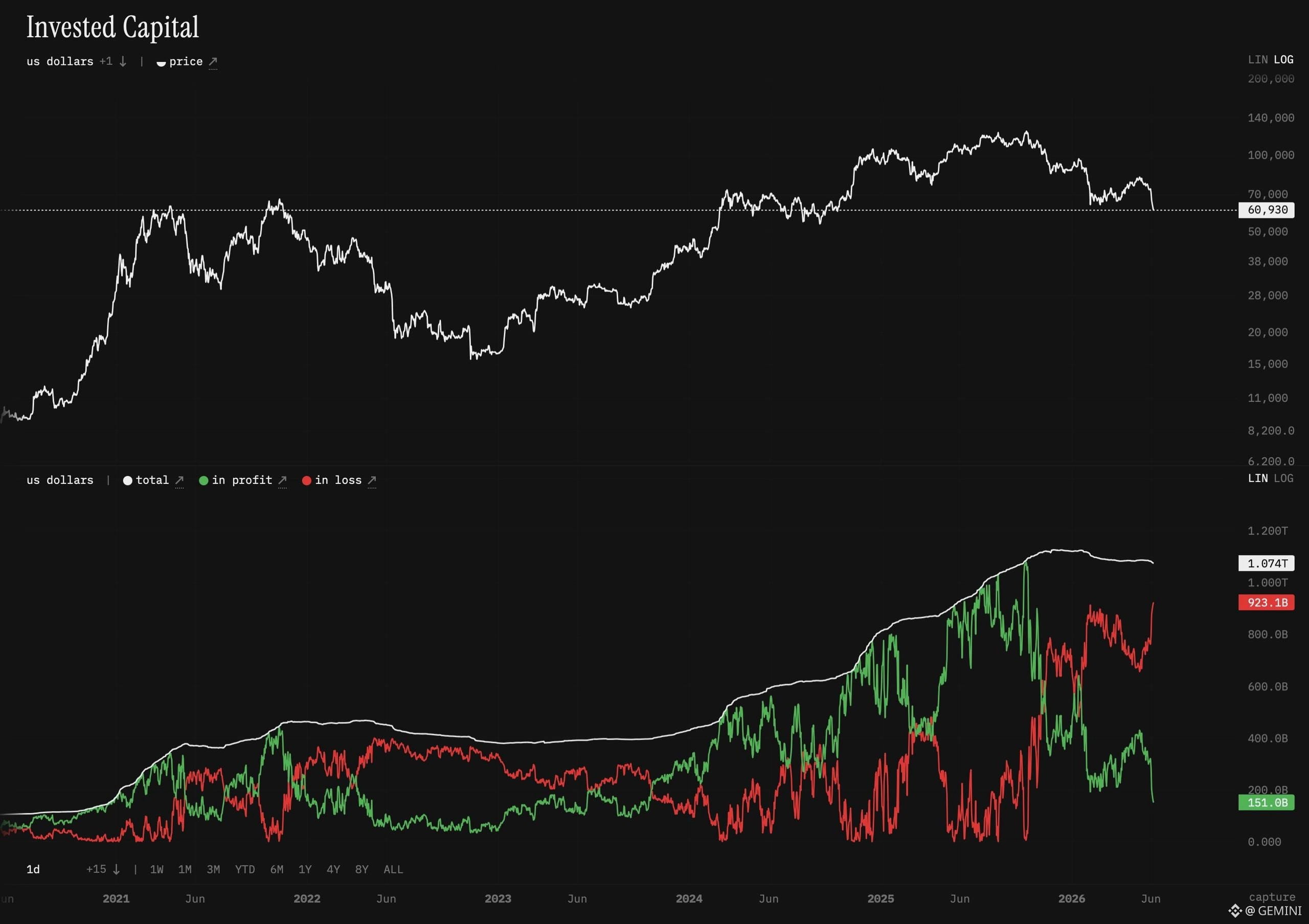
One of the most overlooked ways to assess market conditions is through invested capital rather than supply alone. Currently, a record $920 billion of capital invested in #Bitcoin is sitting at a loss, underscoring the scale of unrealized losses across the market. A #Bitcoin purchased at $126,000 represents a vastly different investment than one acquired at $1.
Which means the amount of capital at risk matters just as much as the number of coins. At the same time, only $153 billion of invested capital remains in profit, primarily because long term holders accumulated their positions at much lower prices. Viewed through this lens, the current bear market is placing substantial pressure on investor portfolios.
One of the most overlooked ways to assess market conditions is through invested capital rather than supply alone. Currently, a record $920 billion of capital invested in #Bitcoin is sitting at a loss, underscoring the scale of unrealized losses across the market. A #Bitcoin purchased at $126,000 represents a vastly different investment than one acquired at $1.
Which means the amount of capital at risk matters just as much as the number of coins. At the same time, only $153 billion of invested capital remains in profit, primarily because long term holders accumulated their positions at much lower prices. Viewed through this lens, the current bear market is placing substantial pressure on investor portfolios.
Which means the amount of capital at risk matters just as much as the number of coins. At the same time, only $153 billion of invested capital remains in profit, primarily because long term holders accumulated their positions at much lower prices. Viewed through this lens, the current bear market is placing substantial pressure on investor portfolios.
105
·
--
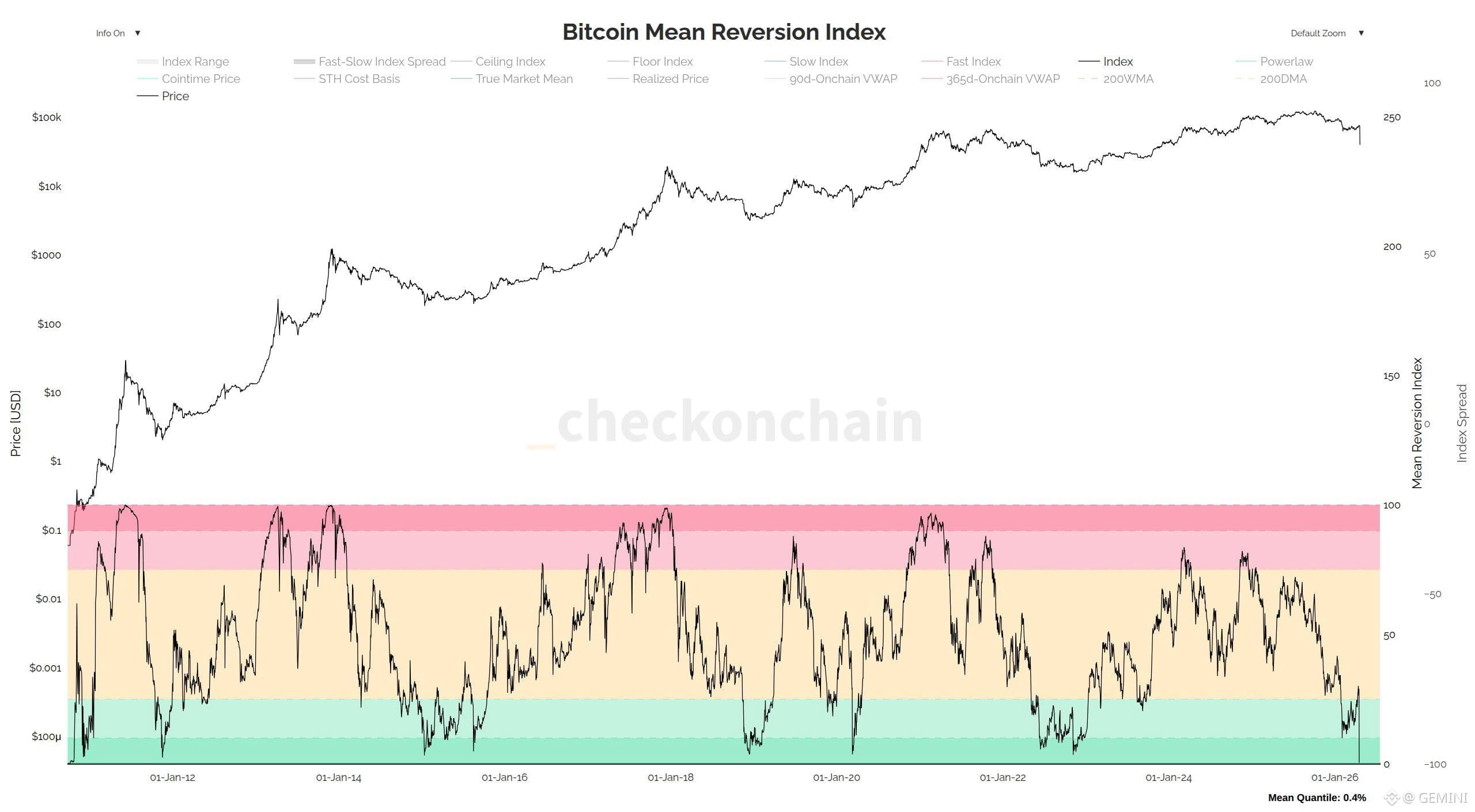
Many are calling for $40k #Bitcoin and they may still be proven right. At the same time, it’s important to recognize where the market already stands. Using a mean reversion model built from nine separate anchors, including technicals, on chain data, trend signals and both short term and long term averages, current levels represent roughly a Q0.4 event.
That places this zone in territory more statistically extreme than Bitcoin trading below $2 in 2011. Could price move lower? Of course. Markets can always stretch further than expected. But historically, conditions like this have often marked opportunity zones rather than the smartest places to panic. The louder the fear gets, the more context starts to matter.
Many are calling for $40k #Bitcoin and they may still be proven right. At the same time, it’s important to recognize where the market already stands. Using a mean reversion model built from nine separate anchors, including technicals, on chain data, trend signals and both short term and long term averages, current levels represent roughly a Q0.4 event.
That places this zone in territory more statistically extreme than Bitcoin trading below $2 in 2011. Could price move lower? Of course. Markets can always stretch further than expected. But historically, conditions like this have often marked opportunity zones rather than the smartest places to panic. The louder the fear gets, the more context starts to matter.
That places this zone in territory more statistically extreme than Bitcoin trading below $2 in 2011. Could price move lower? Of course. Markets can always stretch further than expected. But historically, conditions like this have often marked opportunity zones rather than the smartest places to panic. The louder the fear gets, the more context starts to matter.
55
·
--
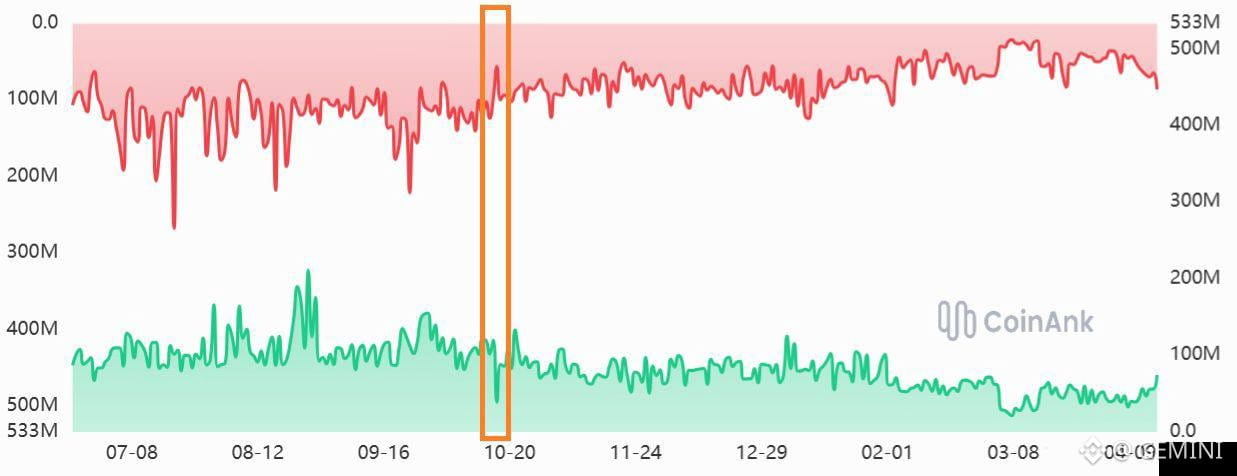
Liquidity in the #Bitcoin market has dropped by nearly 50% since September 2025, clear contraction in market depth. With fewer participants and reduced trading activity, order books have become thinner, making prices more sensitive to sudden buying or selling pressure. As a result, traders may experience higher volatility and less predictable price behavior in the current market environment...
Liquidity in the #Bitcoin market has dropped by nearly 50% since September 2025, clear contraction in market depth. With fewer participants and reduced trading activity, order books have become thinner, making prices more sensitive to sudden buying or selling pressure. As a result, traders may experience higher volatility and less predictable price behavior in the current market environment...
19
·
--
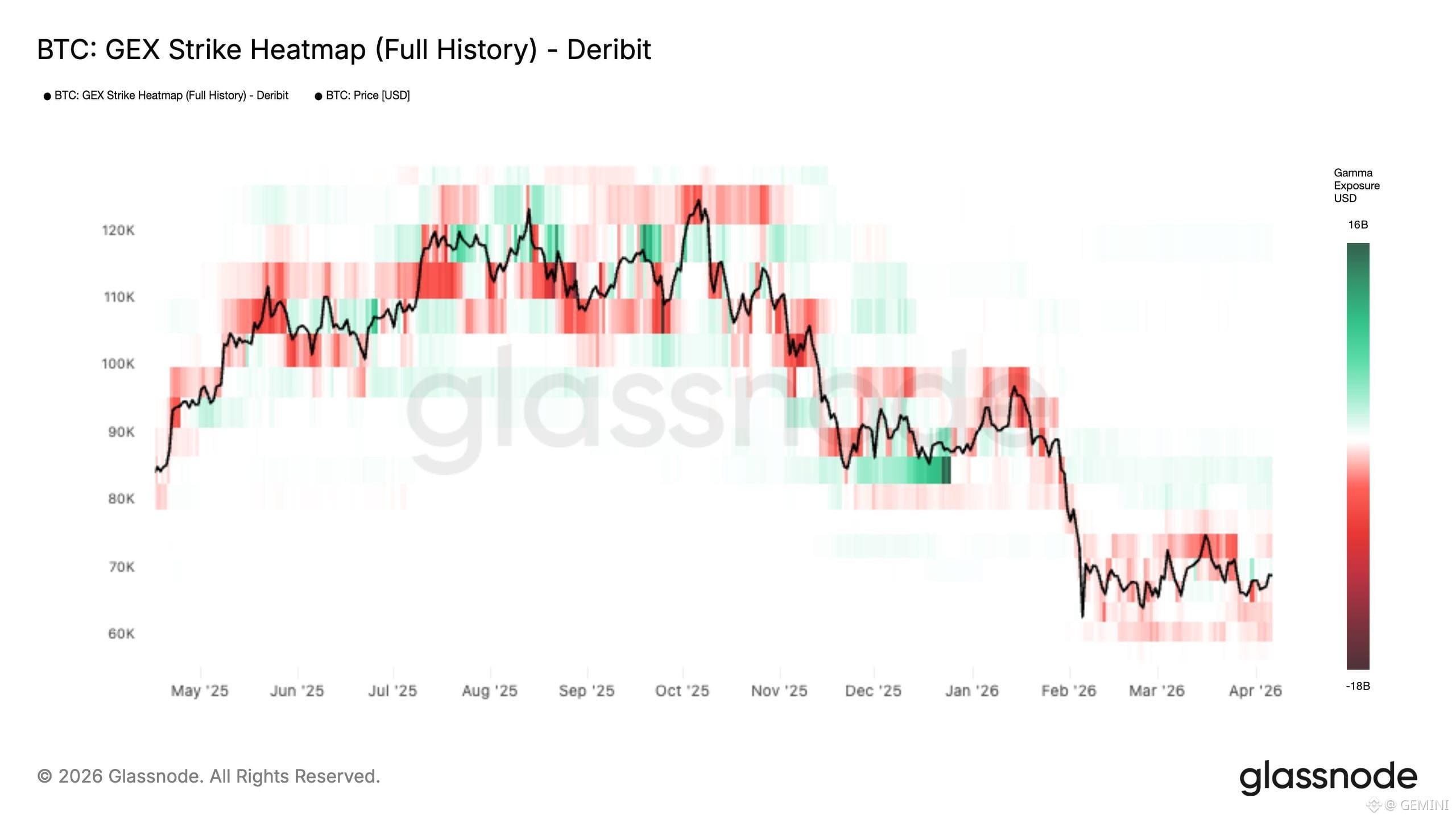
The market is currently in a sensitive position, with #Bitcoin trading inside a tight $65K-$70K range shaped by negative gamma conditions. In this setup, dealer hedging tends to amplify price action, making moves more reactive and often sharper than usual. A resistance zone is forming near $72K, which could limit upside unless strong buying pressure breaks through.
On the lower side, support appears relatively thin, increasing the risk of a quicker drop if buyers lose strength. Overall, this range doesn’t look stable for long. A breakout or breakdown from here could lead to an accelerated move rather than a gradual trend.
The market is currently in a sensitive position, with #Bitcoin trading inside a tight $65K-$70K range shaped by negative gamma conditions. In this setup, dealer hedging tends to amplify price action, making moves more reactive and often sharper than usual. A resistance zone is forming near $72K, which could limit upside unless strong buying pressure breaks through.
On the lower side, support appears relatively thin, increasing the risk of a quicker drop if buyers lose strength. Overall, this range doesn’t look stable for long. A breakout or breakdown from here could lead to an accelerated move rather than a gradual trend.
On the lower side, support appears relatively thin, increasing the risk of a quicker drop if buyers lose strength. Overall, this range doesn’t look stable for long. A breakout or breakdown from here could lead to an accelerated move rather than a gradual trend.
1
1
102
·
--
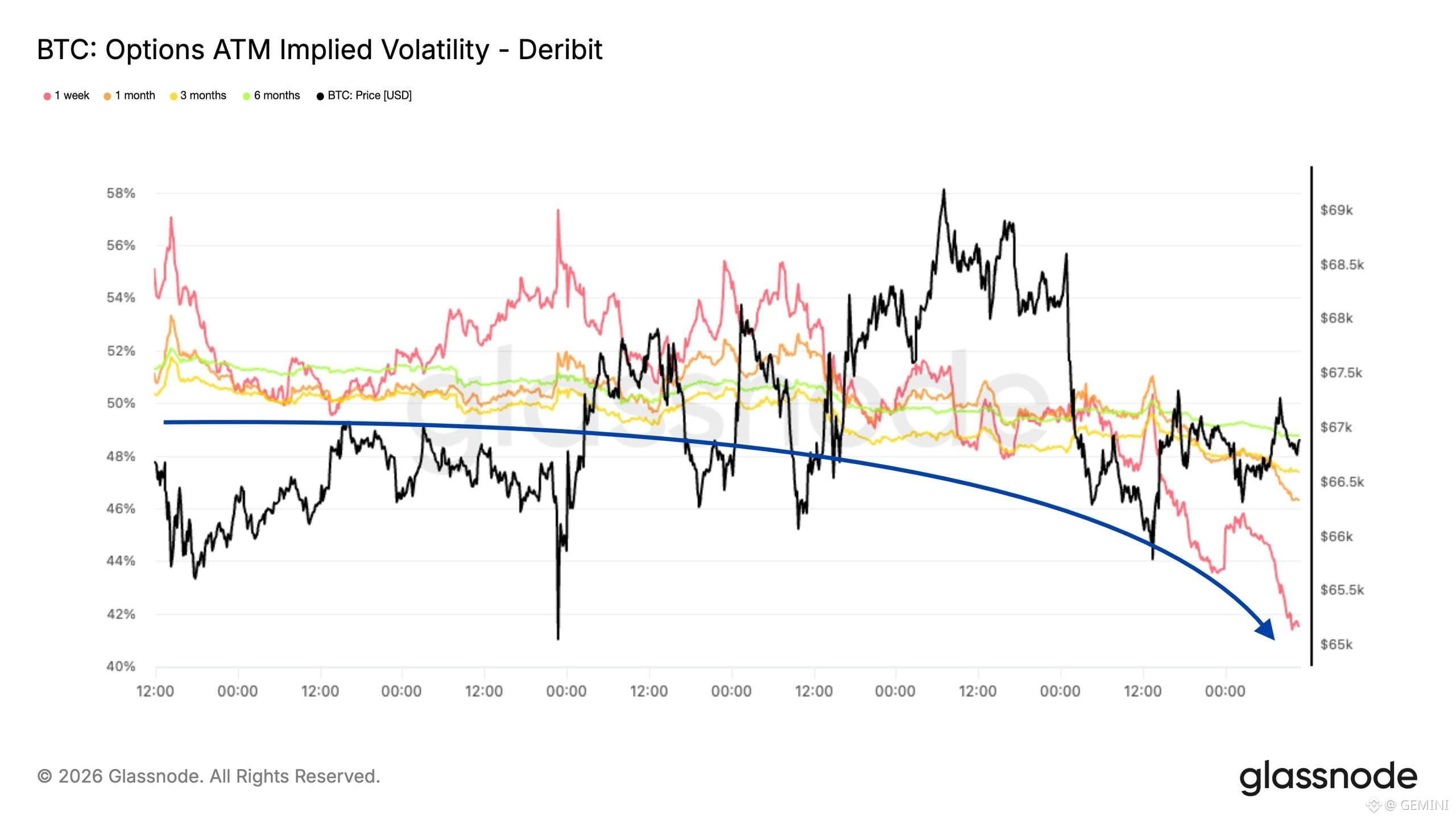
Implied volatility is easing across the curve, led by a sharp drop in the front end. The 1W tenor has slipped to around 41.5%, marking its lowest point since late January, while longer maturities are now closely packed between 46% and 48%, resulting in a flatter curve. A market that is dialing back expectations for near term catalysts.
Short dated option demand has weakened, suggesting traders are less focused on immediate risks or sudden moves. At the same time, the tighter spread between short and long tenors signals a more even distribution of uncertainty. Rather than concentrating risk in the near term, the market appears to be in a wait and see mode, holding a more measured and less reactive stance.
Implied volatility is easing across the curve, led by a sharp drop in the front end. The 1W tenor has slipped to around 41.5%, marking its lowest point since late January, while longer maturities are now closely packed between 46% and 48%, resulting in a flatter curve. A market that is dialing back expectations for near term catalysts.
Short dated option demand has weakened, suggesting traders are less focused on immediate risks or sudden moves. At the same time, the tighter spread between short and long tenors signals a more even distribution of uncertainty. Rather than concentrating risk in the near term, the market appears to be in a wait and see mode, holding a more measured and less reactive stance.
Short dated option demand has weakened, suggesting traders are less focused on immediate risks or sudden moves. At the same time, the tighter spread between short and long tenors signals a more even distribution of uncertainty. Rather than concentrating risk in the near term, the market appears to be in a wait and see mode, holding a more measured and less reactive stance.
25
·
--
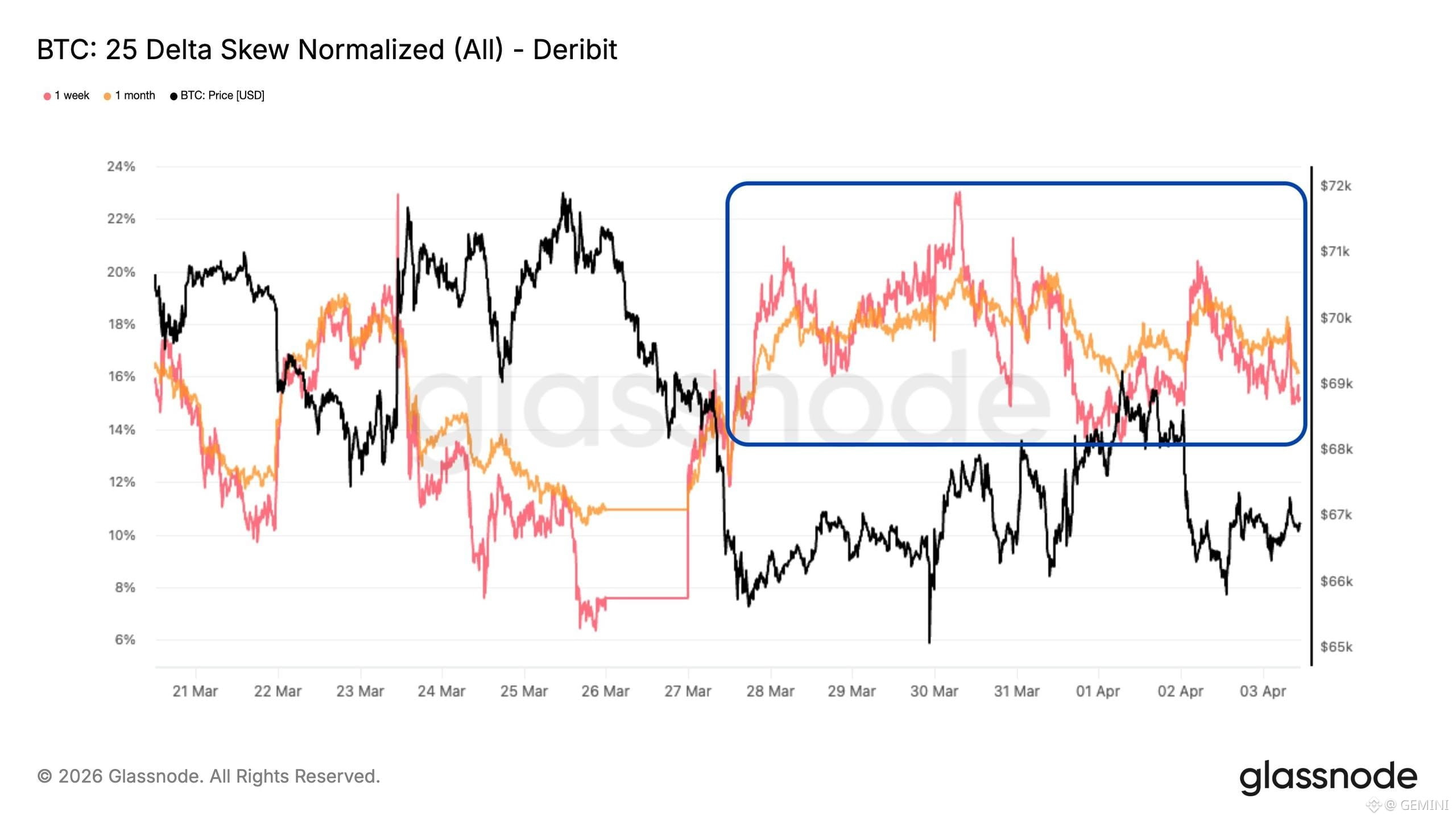
Demand for downside protection remains strong, with skew staying elevated across the curve relative to last week. The 1W and 1M tenors continue to sit around 15-16%, highlighting consistent interest in downside hedging even as overall volatility trends lower.
This setup points to a cautious market tone. Despite the recent cooling in volatility, participants are still actively protecting against potential downside risks, confidence hasn’t fully returned and the market remains defensively positioned.
Demand for downside protection remains strong, with skew staying elevated across the curve relative to last week. The 1W and 1M tenors continue to sit around 15-16%, highlighting consistent interest in downside hedging even as overall volatility trends lower.
This setup points to a cautious market tone. Despite the recent cooling in volatility, participants are still actively protecting against potential downside risks, confidence hasn’t fully returned and the market remains defensively positioned.
This setup points to a cautious market tone. Despite the recent cooling in volatility, participants are still actively protecting against potential downside risks, confidence hasn’t fully returned and the market remains defensively positioned.
12
·
--
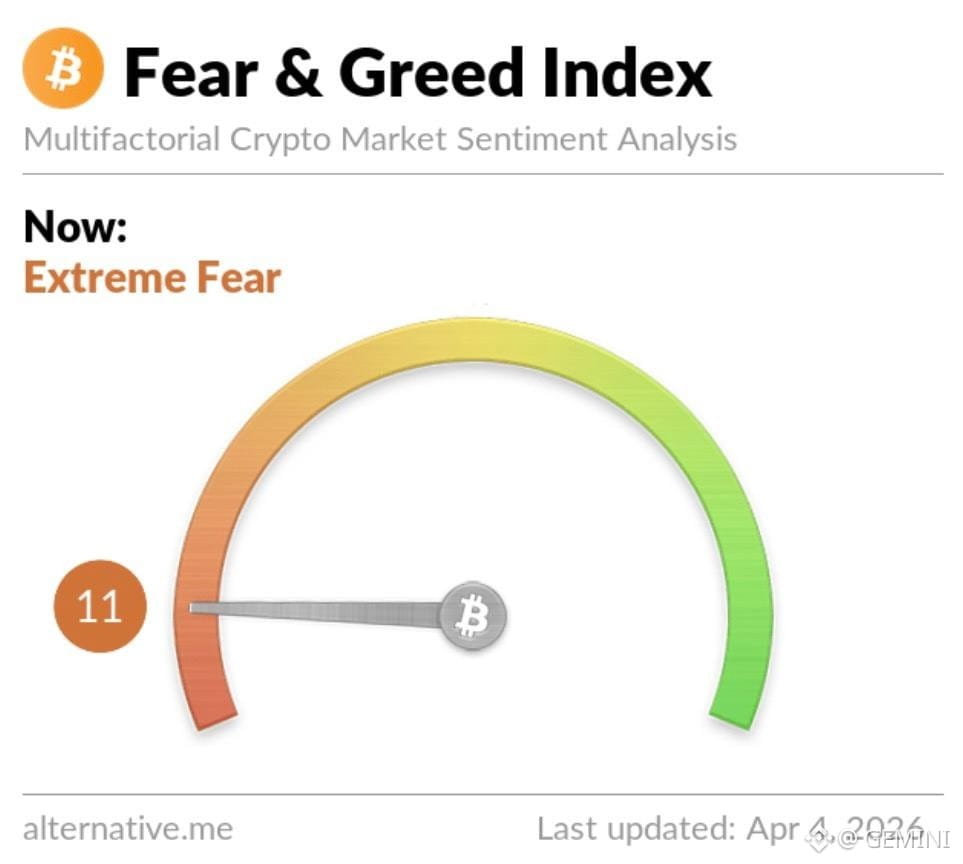
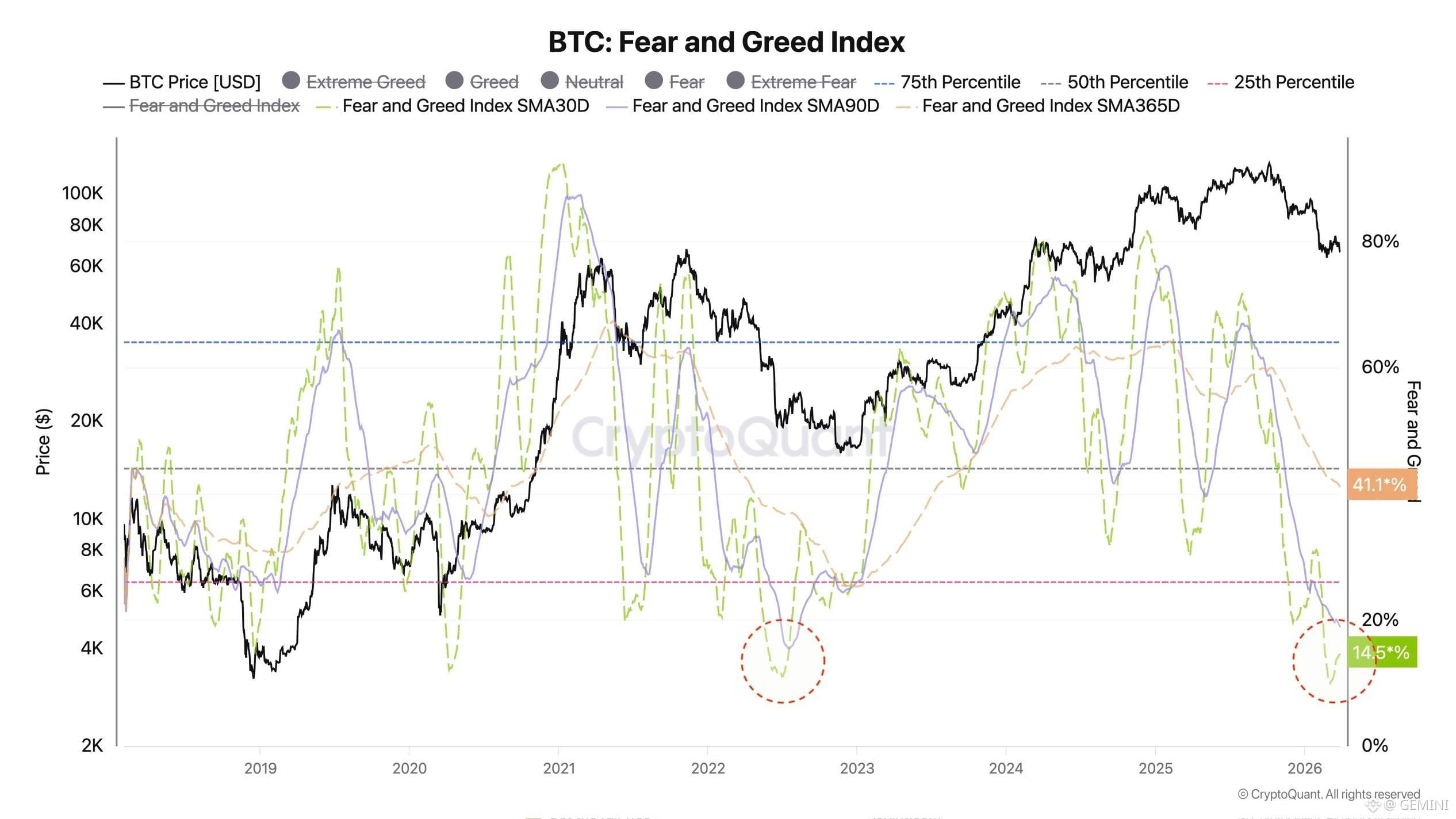
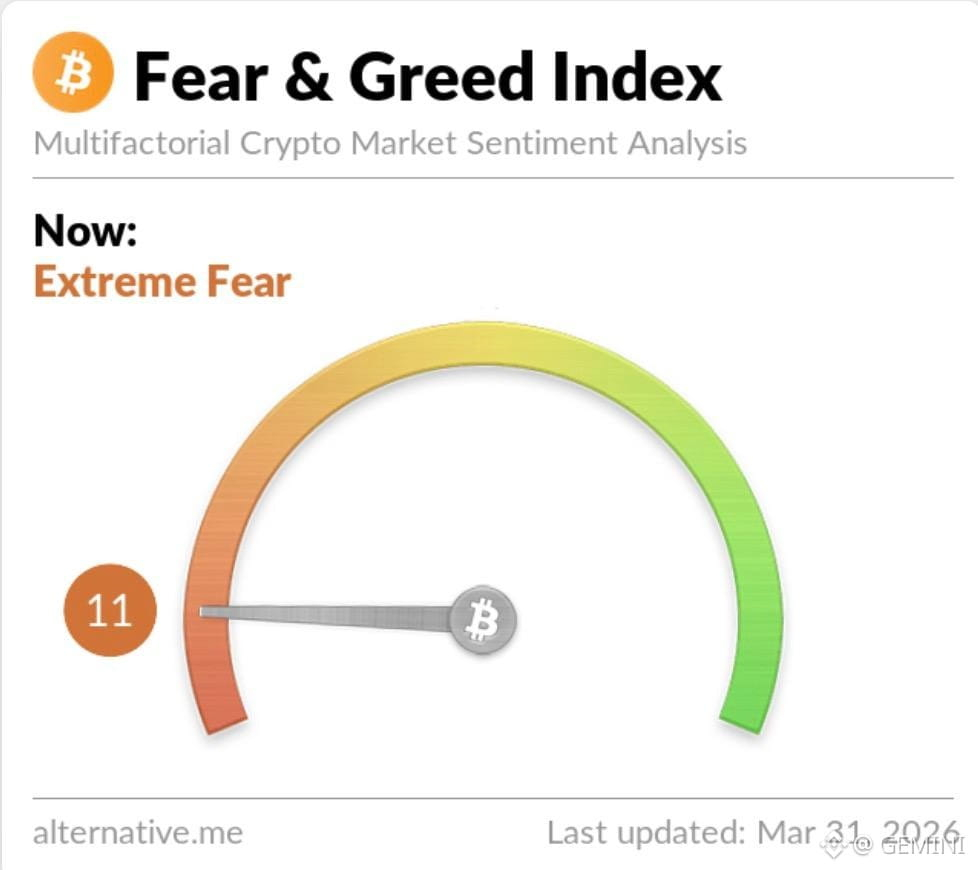
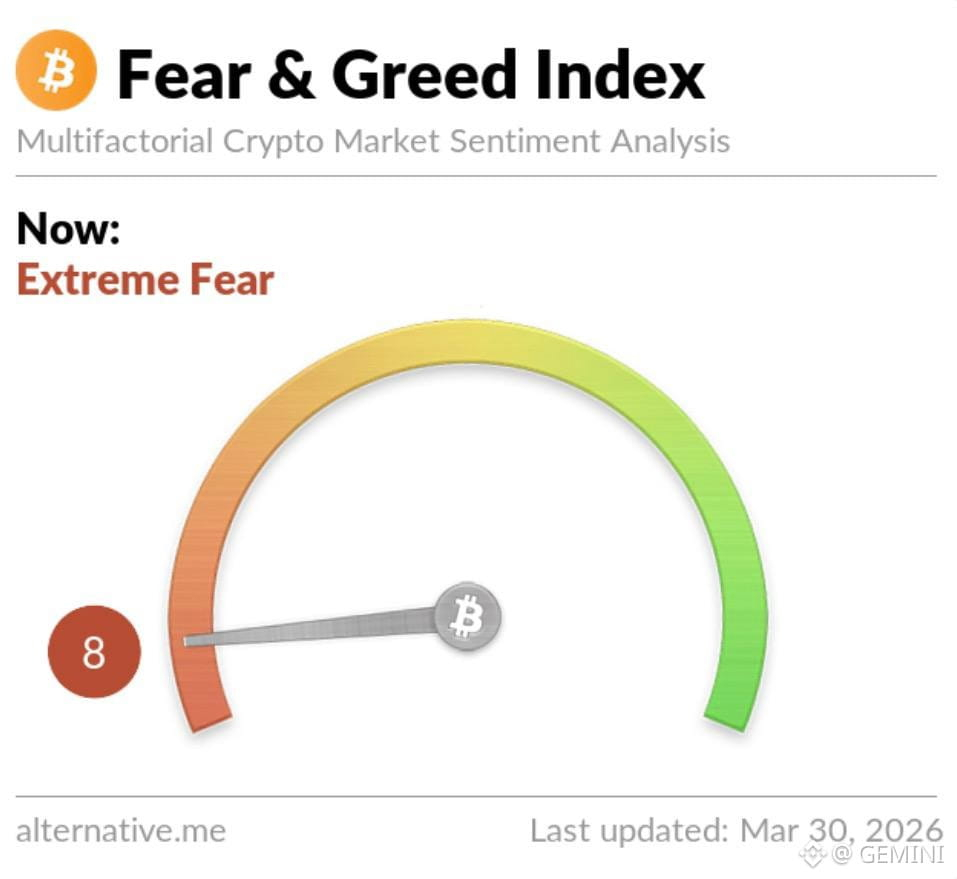
Market sentiment is beginning to echo the same pattern we saw in 2022, with the Fear & Greed Index slowly leaning toward fear. However, the 365 day moving average is still sitting at a relatively high level, which indicates that a full bear market reset hasn’t taken place yet.
While short term confidence is fading, the broader trend hasn’t fully cooled off. There’s still some residual optimism in the market, and until that gets cleared out, calling it a complete reset would be premature. Put simply, the market is showing early signs of weakness, but it hasn’t gone through the kind of deep reset that typically marks the end of a cycle.
Market sentiment is beginning to echo the same pattern we saw in 2022, with the Fear & Greed Index slowly leaning toward fear. However, the 365 day moving average is still sitting at a relatively high level, which indicates that a full bear market reset hasn’t taken place yet.
While short term confidence is fading, the broader trend hasn’t fully cooled off. There’s still some residual optimism in the market, and until that gets cleared out, calling it a complete reset would be premature. Put simply, the market is showing early signs of weakness, but it hasn’t gone through the kind of deep reset that typically marks the end of a cycle.
While short term confidence is fading, the broader trend hasn’t fully cooled off. There’s still some residual optimism in the market, and until that gets cleared out, calling it a complete reset would be premature. Put simply, the market is showing early signs of weakness, but it hasn’t gone through the kind of deep reset that typically marks the end of a cycle.
37
·
--
Bullish
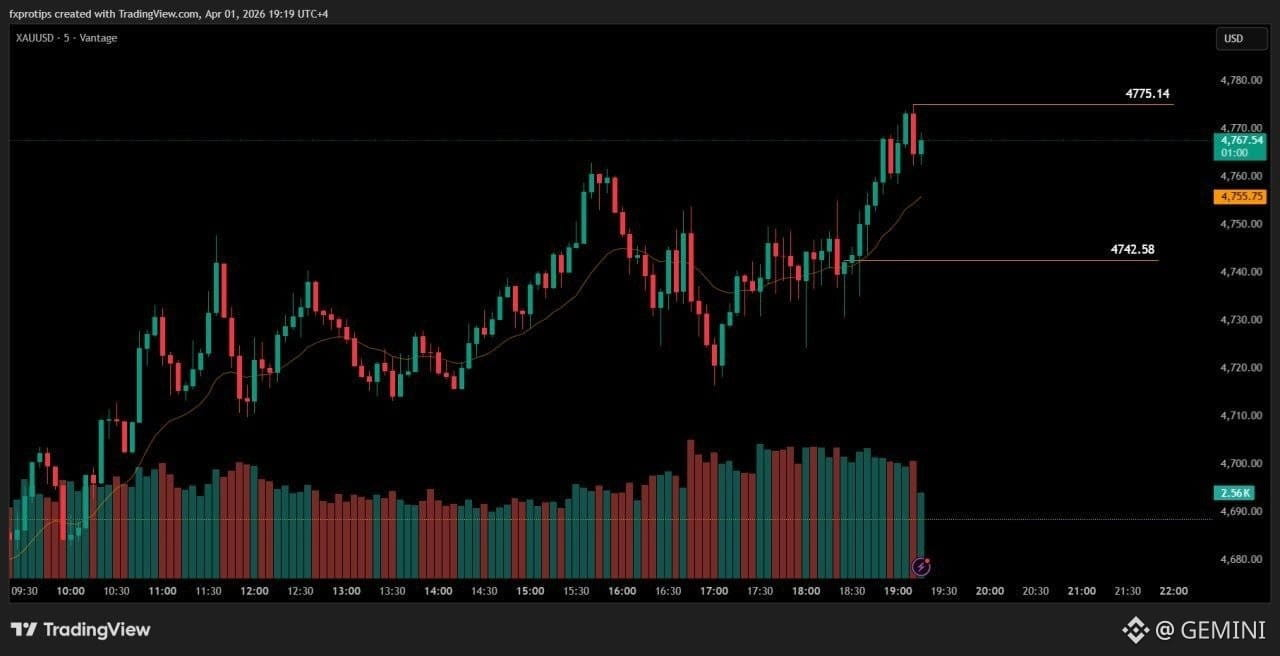
#Gold has decisively surpassed the previous peak of 4762 and reached a new high at 4775. This is the clearest evidence that the "buyers are very strong" despite the fundamental news as you noted.
The #EMA is sloping upwards, indicating that the upward momentum is at its peak. Every time the price approaches the EMA, it is immediately pushed back up.
A small red candle appeared at the 4775 peak. This is simply short-term profit-taking after a long push; there are no signs of a reversal yet.
The chart is completely defying bearish fundamental expectations. Buyers are in full control, driven by high momentum and potentially a "short squeeze" from failed sell attempts.
Do not attempt to fade this move. Look for entries on minor retracements to the support level.
#plan
#Gold has decisively surpassed the previous peak of 4762 and reached a new high at 4775. This is the clearest evidence that the "buyers are very strong" despite the fundamental news as you noted.
The #EMA is sloping upwards, indicating that the upward momentum is at its peak. Every time the price approaches the EMA, it is immediately pushed back up.
A small red candle appeared at the 4775 peak. This is simply short-term profit-taking after a long push; there are no signs of a reversal yet.
The chart is completely defying bearish fundamental expectations. Buyers are in full control, driven by high momentum and potentially a "short squeeze" from failed sell attempts.
Do not attempt to fade this move. Look for entries on minor retracements to the support level.
#plan
The #EMA is sloping upwards, indicating that the upward momentum is at its peak. Every time the price approaches the EMA, it is immediately pushed back up.
A small red candle appeared at the 4775 peak. This is simply short-term profit-taking after a long push; there are no signs of a reversal yet.
The chart is completely defying bearish fundamental expectations. Buyers are in full control, driven by high momentum and potentially a "short squeeze" from failed sell attempts.
Do not attempt to fade this move. Look for entries on minor retracements to the support level.
#plan
55
·
--
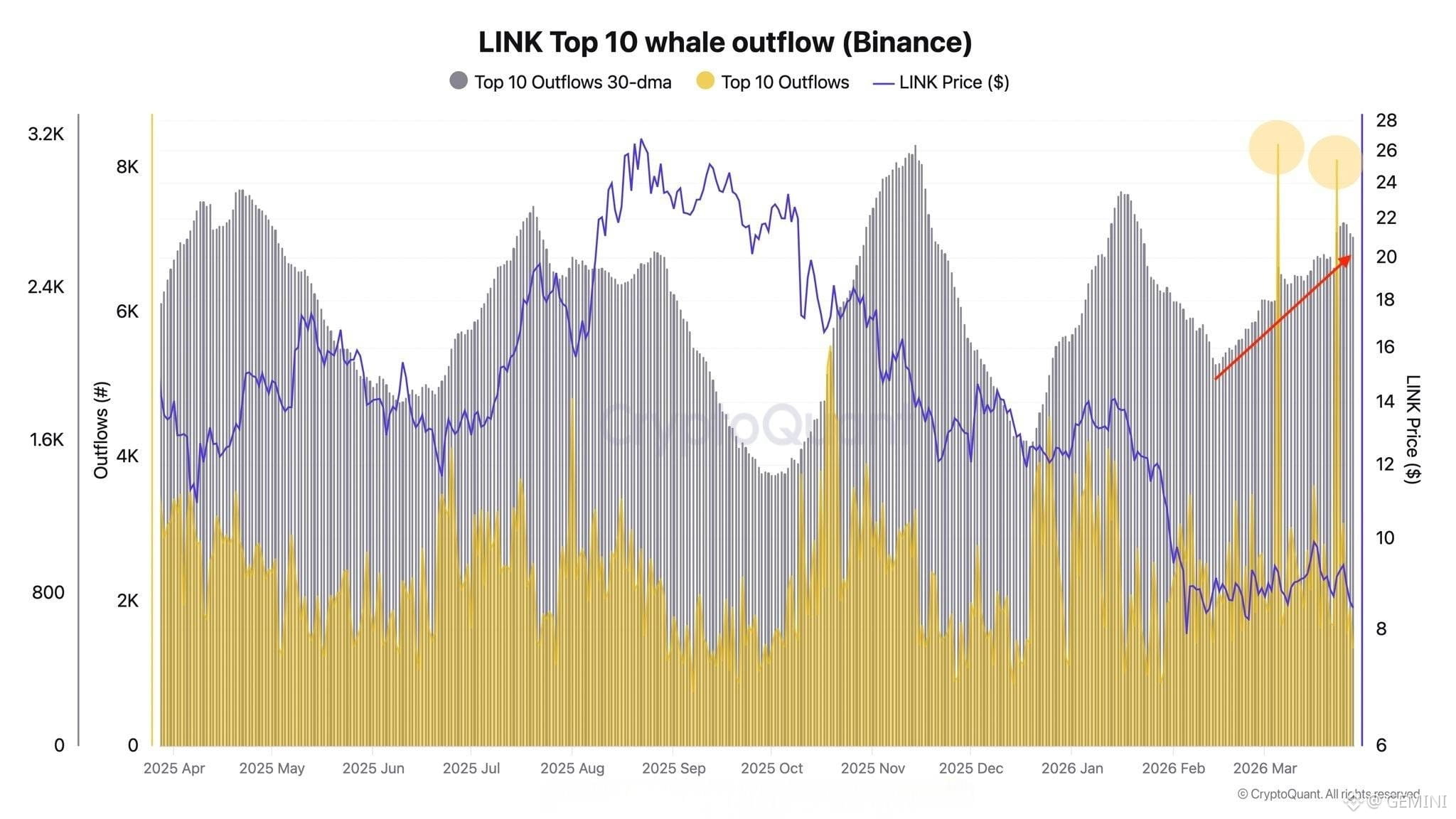
Large #LINK holders are becoming more active. Two clear daily spikes can be seen, with over 8,000 LINK withdrawn from #Binance among the top 10 transactions. At the same time, the average monthly outflow from these major transactions is increasing. Since mid February, it has risen from around 2,000 LINK per day to nearly 2,600, a steady uptick in large scale movements.
Large #LINK holders are becoming more active. Two clear daily spikes can be seen, with over 8,000 LINK withdrawn from #Binance among the top 10 transactions. At the same time, the average monthly outflow from these major transactions is increasing. Since mid February, it has risen from around 2,000 LINK per day to nearly 2,600, a steady uptick in large scale movements.
100
·
--
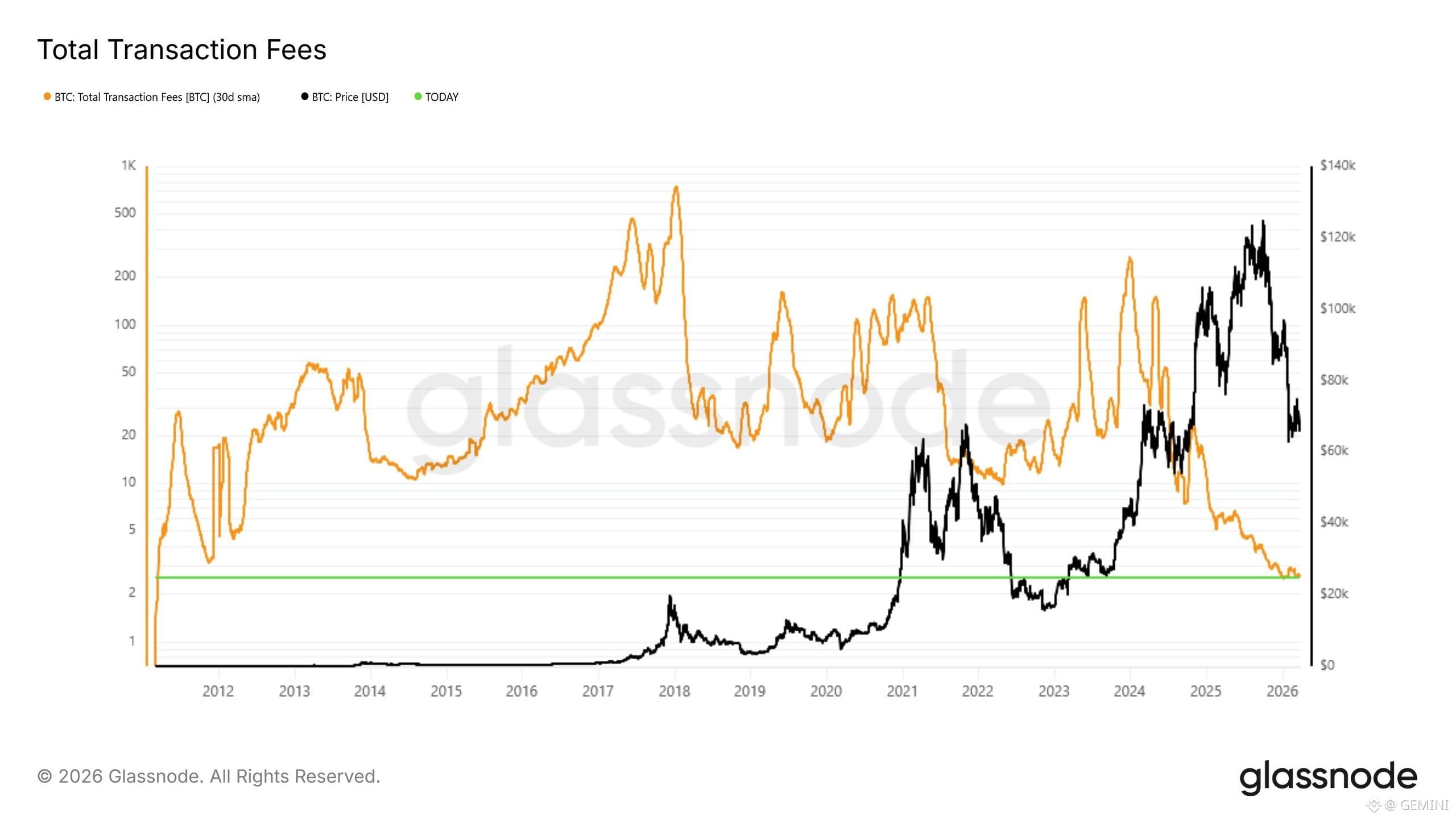
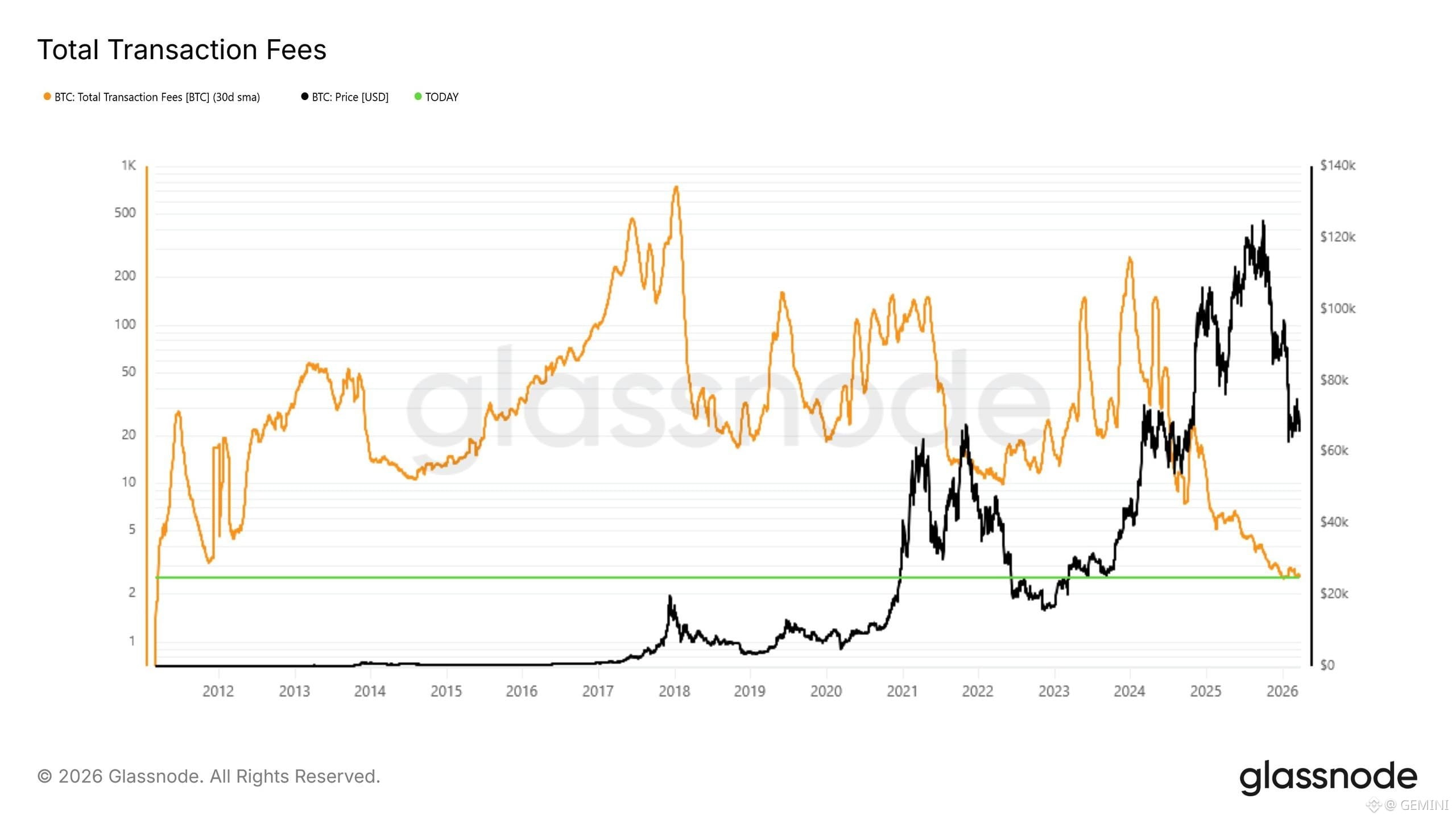
Transaction fees across the network have cooled significantly, with the 30 day average now sitting at just 2.5 #BTC per day, the lowest level observed since March 2011. This level of fee compression points to a clear drop in demand for block space, on chain activity has slowed down considerably. With fewer users competing to get transactions confirmed, the network is experiencing lighter usage and minimal congestion.
It may also reflect a broader decline in trading activity, reduced participation, or a growing shift toward off chain alternatives. Altogether, the data indicates a calm phase for the network, where transaction pressure is low and overall activity remains subdued.
Transaction fees across the network have cooled significantly, with the 30 day average now sitting at just 2.5 #BTC per day, the lowest level observed since March 2011. This level of fee compression points to a clear drop in demand for block space, on chain activity has slowed down considerably. With fewer users competing to get transactions confirmed, the network is experiencing lighter usage and minimal congestion.
It may also reflect a broader decline in trading activity, reduced participation, or a growing shift toward off chain alternatives. Altogether, the data indicates a calm phase for the network, where transaction pressure is low and overall activity remains subdued.
It may also reflect a broader decline in trading activity, reduced participation, or a growing shift toward off chain alternatives. Altogether, the data indicates a calm phase for the network, where transaction pressure is low and overall activity remains subdued.
4
·
--
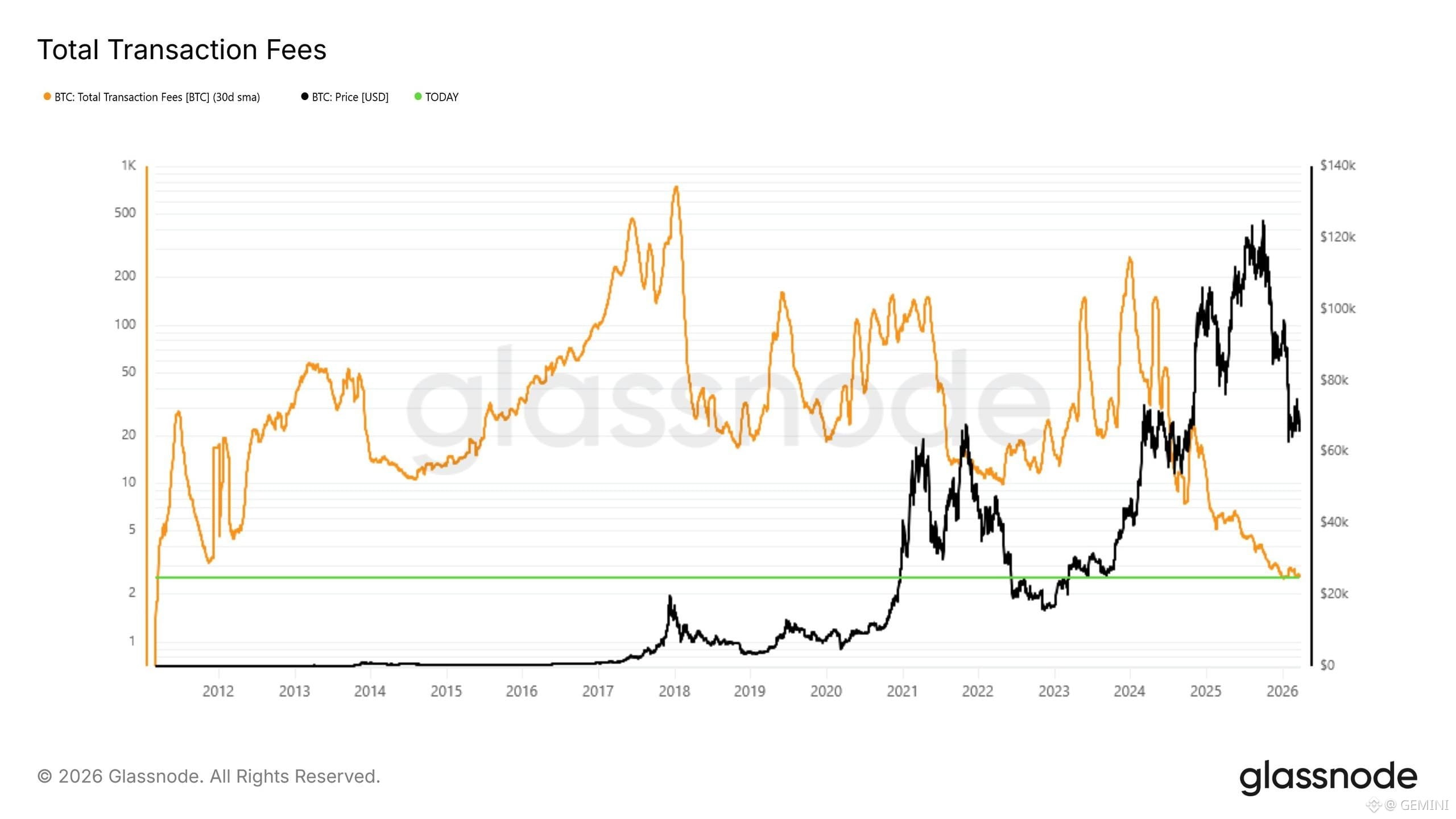
Transaction fees across the network have cooled significantly, with the 30 day average now sitting at just 2.5 #BTC per day, the lowest level observed since March 2011. This level of fee compression points to a clear drop in demand for block space, on chain activity has slowed down considerably. With fewer users competing to get transactions confirmed, the network is experiencing lighter usage and minimal congestion.
It may also reflect a broader decline in trading activity, reduced participation, or a growing shift toward off chain alternatives. Altogether, the data indicates a calm phase for the network, where transaction pressure is low and overall activity remains subdued.
Transaction fees across the network have cooled significantly, with the 30 day average now sitting at just 2.5 #BTC per day, the lowest level observed since March 2011. This level of fee compression points to a clear drop in demand for block space, on chain activity has slowed down considerably. With fewer users competing to get transactions confirmed, the network is experiencing lighter usage and minimal congestion.
It may also reflect a broader decline in trading activity, reduced participation, or a growing shift toward off chain alternatives. Altogether, the data indicates a calm phase for the network, where transaction pressure is low and overall activity remains subdued.
It may also reflect a broader decline in trading activity, reduced participation, or a growing shift toward off chain alternatives. Altogether, the data indicates a calm phase for the network, where transaction pressure is low and overall activity remains subdued.
24
·
--
Transaction fees across the network have cooled significantly, with the 30 day average now sitting at just 2.5 #BTC per day, the lowest level observed since March 2011. This level of fee compression points to a clear drop in demand for block space, on chain activity has slowed down considerably. With fewer users competing to get transactions confirmed, the network is experiencing lighter usage and minimal congestion.
It may also reflect a broader decline in trading activity, reduced participation, or a growing shift toward off chain alternatives. Altogether, the data indicates a calm phase for the network, where transaction pressure is low and overall activity remains subdued.
Transaction fees across the network have cooled significantly, with the 30 day average now sitting at just 2.5 #BTC per day, the lowest level observed since March 2011. This level of fee compression points to a clear drop in demand for block space, on chain activity has slowed down considerably. With fewer users competing to get transactions confirmed, the network is experiencing lighter usage and minimal congestion.
It may also reflect a broader decline in trading activity, reduced participation, or a growing shift toward off chain alternatives. Altogether, the data indicates a calm phase for the network, where transaction pressure is low and overall activity remains subdued.
It may also reflect a broader decline in trading activity, reduced participation, or a growing shift toward off chain alternatives. Altogether, the data indicates a calm phase for the network, where transaction pressure is low and overall activity remains subdued.
11
·
--
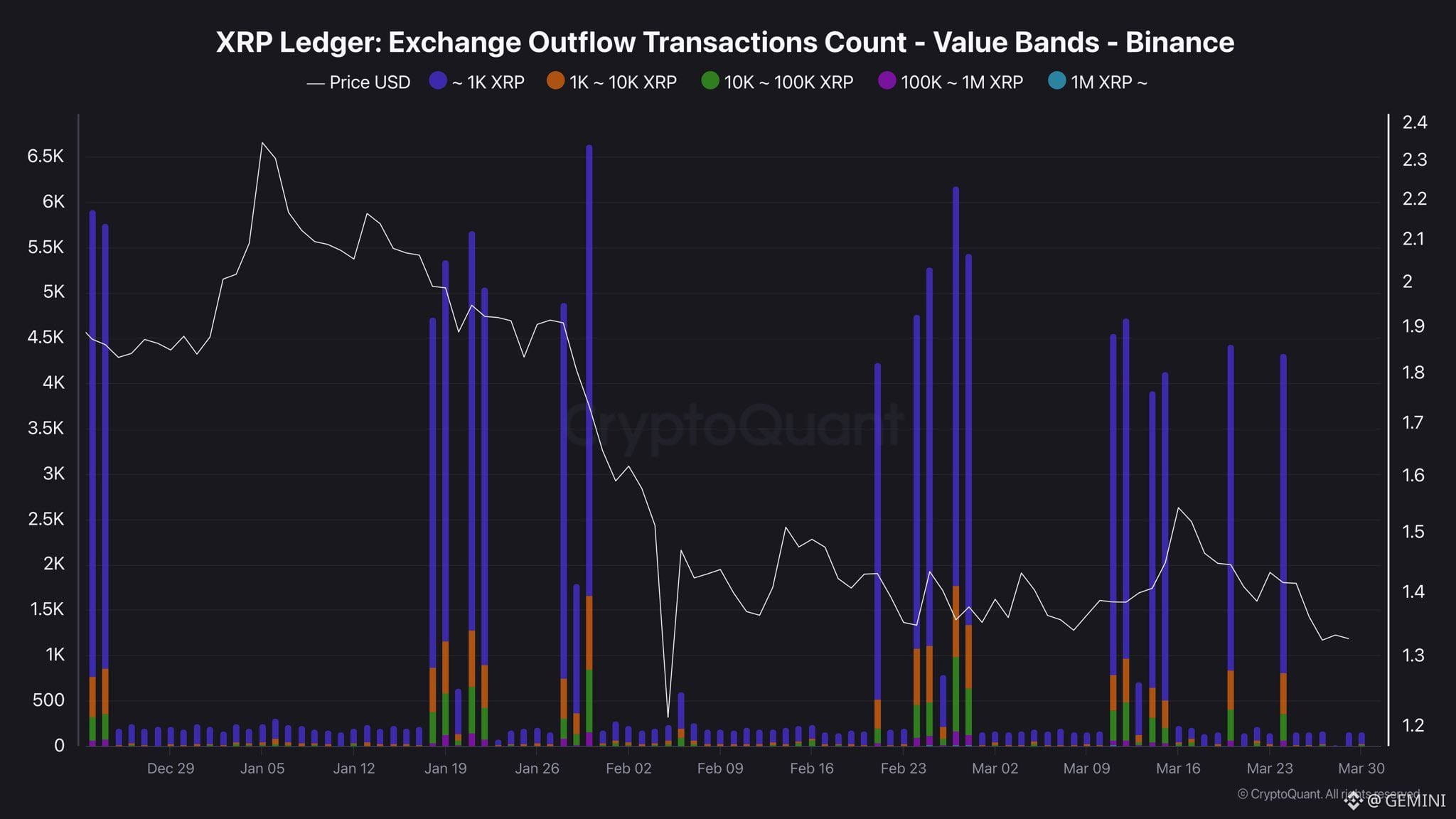
Within its current range, #XRP is showing clear signs of accumulation as activity quietly builds. Over this period, multiple days recorded more than 4,000 outflow transactions, with peaks nearing 6,000 in a single day. This steady flow suggests investors may be repositioning in anticipation of a potential move.
Within its current range, #XRP is showing clear signs of accumulation as activity quietly builds. Over this period, multiple days recorded more than 4,000 outflow transactions, with peaks nearing 6,000 in a single day. This steady flow suggests investors may be repositioning in anticipation of a potential move.
96
·
--
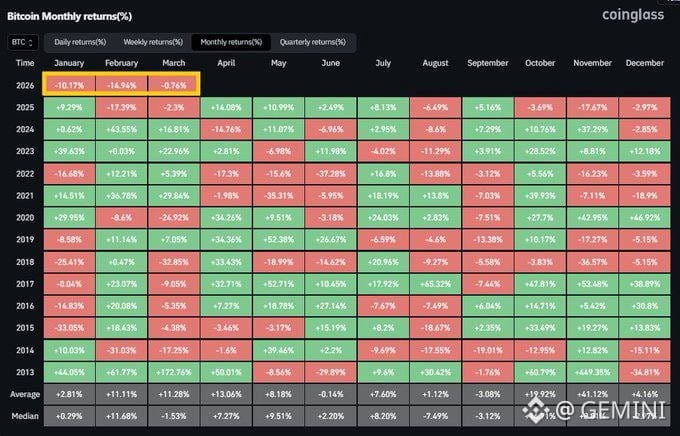
For the first time ever, #Bitcoin could close its first three months of the year in the red, marking a rare and unusual start.
For the first time ever, #Bitcoin could close its first three months of the year in the red, marking a rare and unusual start.
117
·
--
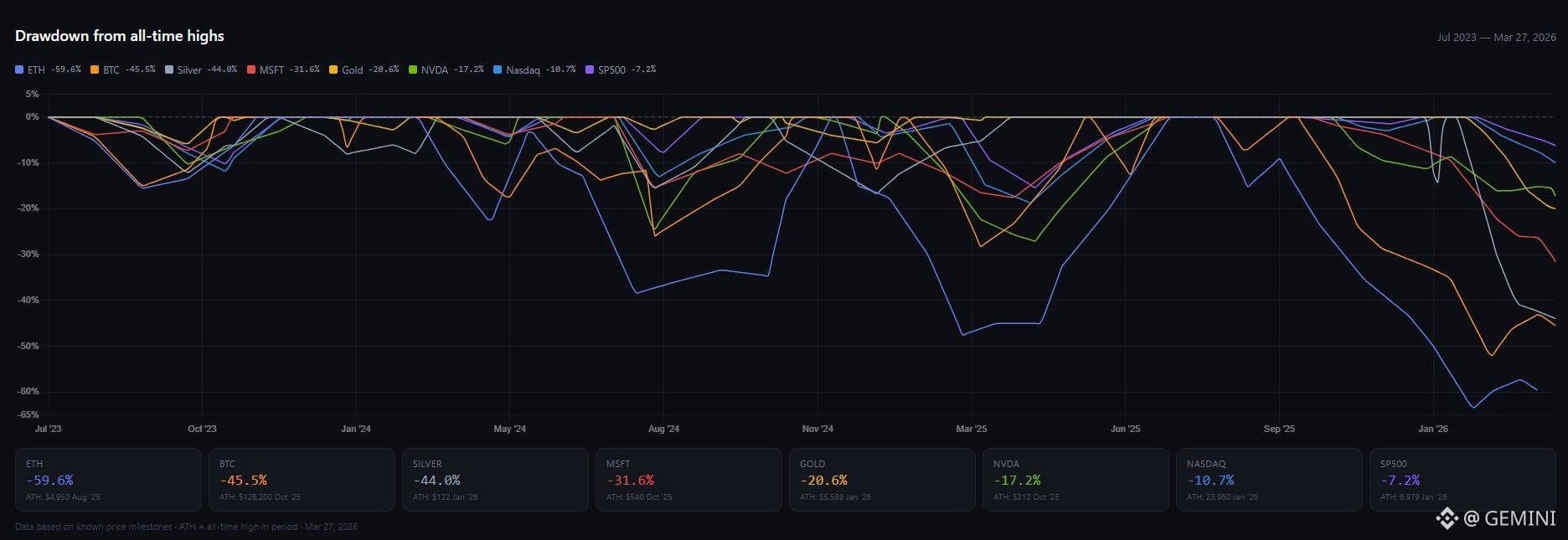
Across major markets, assets have pulled back noticeably from their all-time highs. #Ethereum has dropped nearly 60% and #Bitcoin around 45%, while traditional assets are also feeling the pressure, with silver down about 44% and Microsoft over 30%. Even relatively stronger assets like gold and Nvidia have declined by around 20% and 17%, and broader indices such as the Nasdaq and S&P 500 have slipped as well.
This kind of movement makes it clear that the slowdown isn’t isolated to crypto. It reflects a wider shift in market sentiment, where investors are becoming more cautious and reassessing risk across the board. These phases often signal a reset in valuations and can shape the direction of the next market cycle.
Across major markets, assets have pulled back noticeably from their all-time highs. #Ethereum has dropped nearly 60% and #Bitcoin around 45%, while traditional assets are also feeling the pressure, with silver down about 44% and Microsoft over 30%. Even relatively stronger assets like gold and Nvidia have declined by around 20% and 17%, and broader indices such as the Nasdaq and S&P 500 have slipped as well.
This kind of movement makes it clear that the slowdown isn’t isolated to crypto. It reflects a wider shift in market sentiment, where investors are becoming more cautious and reassessing risk across the board. These phases often signal a reset in valuations and can shape the direction of the next market cycle.
This kind of movement makes it clear that the slowdown isn’t isolated to crypto. It reflects a wider shift in market sentiment, where investors are becoming more cautious and reassessing risk across the board. These phases often signal a reset in valuations and can shape the direction of the next market cycle.
1
136
·
--
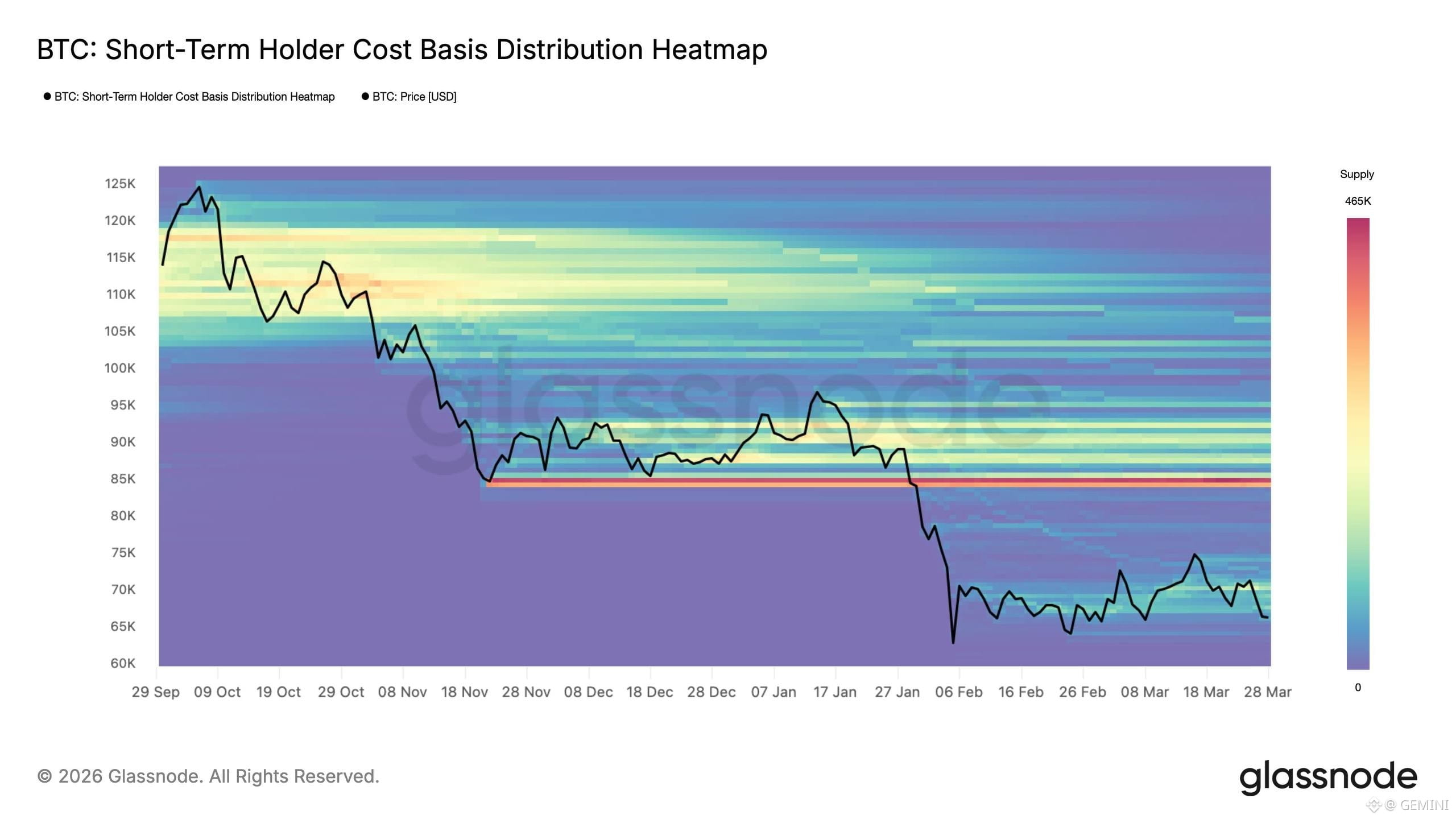
Currently, #Bitcoin is trading near the lower end of the $60K-$70K cost basis range for recent buyers, an area that’s beginning to show signs of demand stepping in. There is visible accumulation happening within this zone, indicating that new participants are gradually absorbing supply. The intensity of this accumulation is still weaker compared to past phases that led into strong recoveries.
The buyer cluster here remains relatively thin, conviction is still building rather than fully established. Overall, the structure looks constructive, but it’s not yet strong enough to confirm a solid base. Continued accumulation and a deeper concentration of holders in this range would be needed to support a more confident bullish outlook.
Currently, #Bitcoin is trading near the lower end of the $60K-$70K cost basis range for recent buyers, an area that’s beginning to show signs of demand stepping in. There is visible accumulation happening within this zone, indicating that new participants are gradually absorbing supply. The intensity of this accumulation is still weaker compared to past phases that led into strong recoveries.
The buyer cluster here remains relatively thin, conviction is still building rather than fully established. Overall, the structure looks constructive, but it’s not yet strong enough to confirm a solid base. Continued accumulation and a deeper concentration of holders in this range would be needed to support a more confident bullish outlook.
The buyer cluster here remains relatively thin, conviction is still building rather than fully established. Overall, the structure looks constructive, but it’s not yet strong enough to confirm a solid base. Continued accumulation and a deeper concentration of holders in this range would be needed to support a more confident bullish outlook.
52
·
--
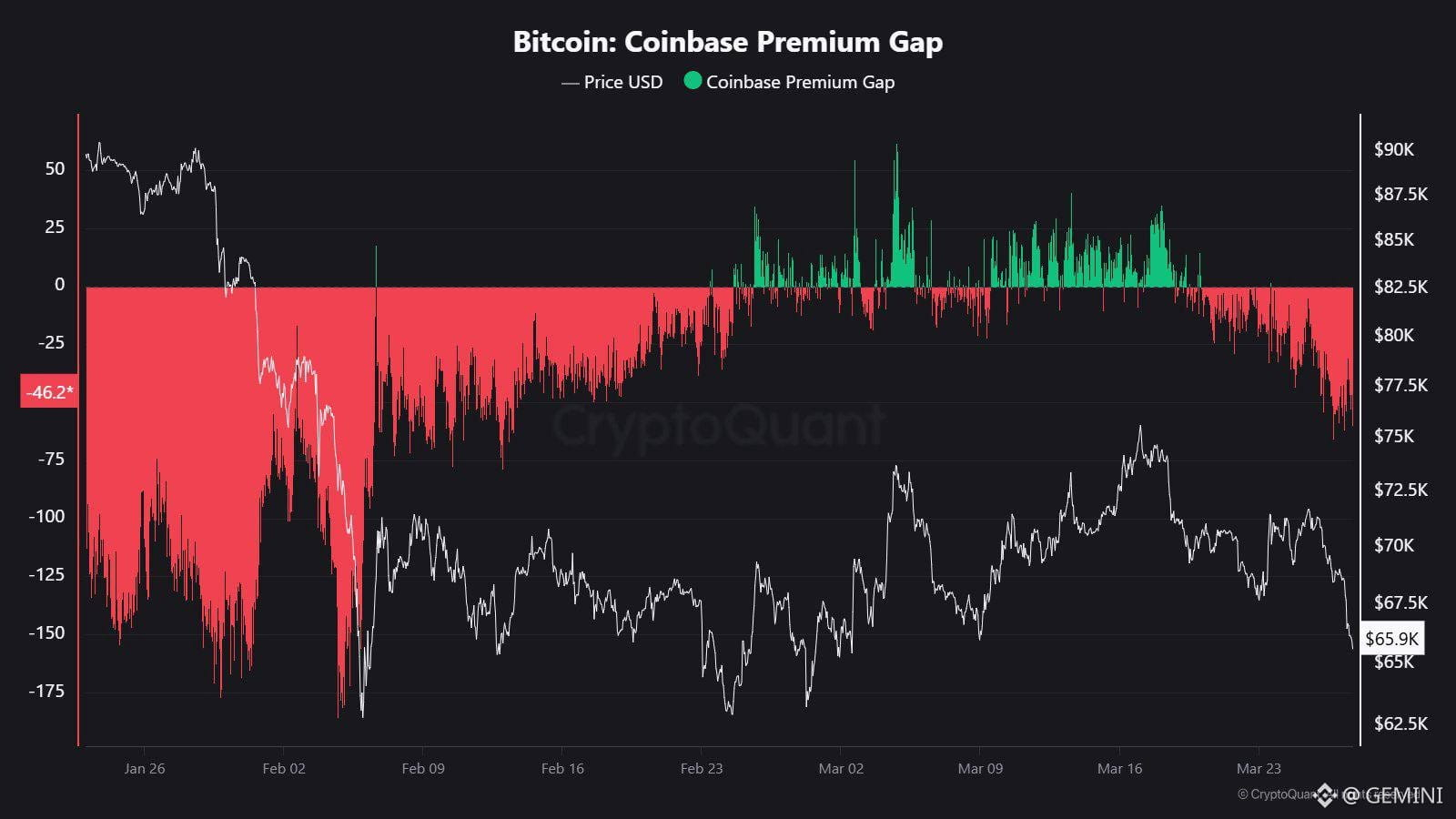
Once the Coinbase bid stepped away, the shift was pretty clear. The Premium Gap flipped negative, and price has been grinding lower ever since. That usually signals weakening U.S. spot demand and without that support, the market tends to drift down. Definitely not something to ignore.
Once the Coinbase bid stepped away, the shift was pretty clear. The Premium Gap flipped negative, and price has been grinding lower ever since. That usually signals weakening U.S. spot demand and without that support, the market tends to drift down. Definitely not something to ignore.
32
Log in to explore more content
Join global crypto users on Binance Square
⚡️ Get latest and useful information about crypto.
💬 Trusted by the world’s largest crypto exchange.
👍 Discover real insights from verified creators.
Email / Phone number