
高山仰止_eth
622 Posts

高山仰止_eth
Report
Block User
合约的尽头是归零
97 Following
480 Followers
2.8K+ Liked
Posts
All
Quotes
·
--
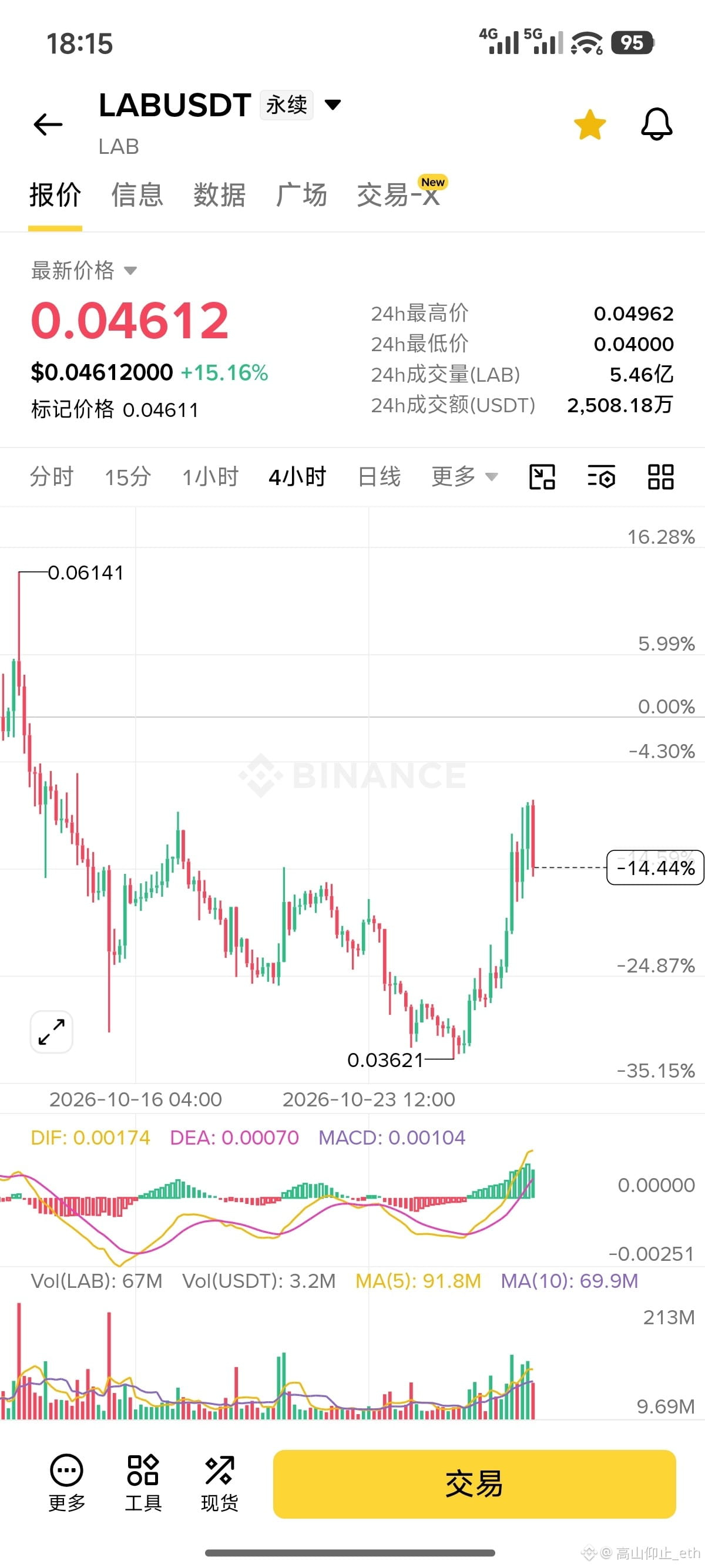
After consolidating at the bottom for so long, it's finally starting to move. Go long $LAB
After consolidating at the bottom for so long, it's finally starting to move. Go long $LAB
2
2.3k
·
--
If you have a Binance Agent ID, be sure to check out @Ptahtrade’s giveaway!
There’s a prize pool every day, with over 15,000 in rewards. 500 participants will be selected as winners. The event has 15 rounds in total, and there are still 14 rounds left.
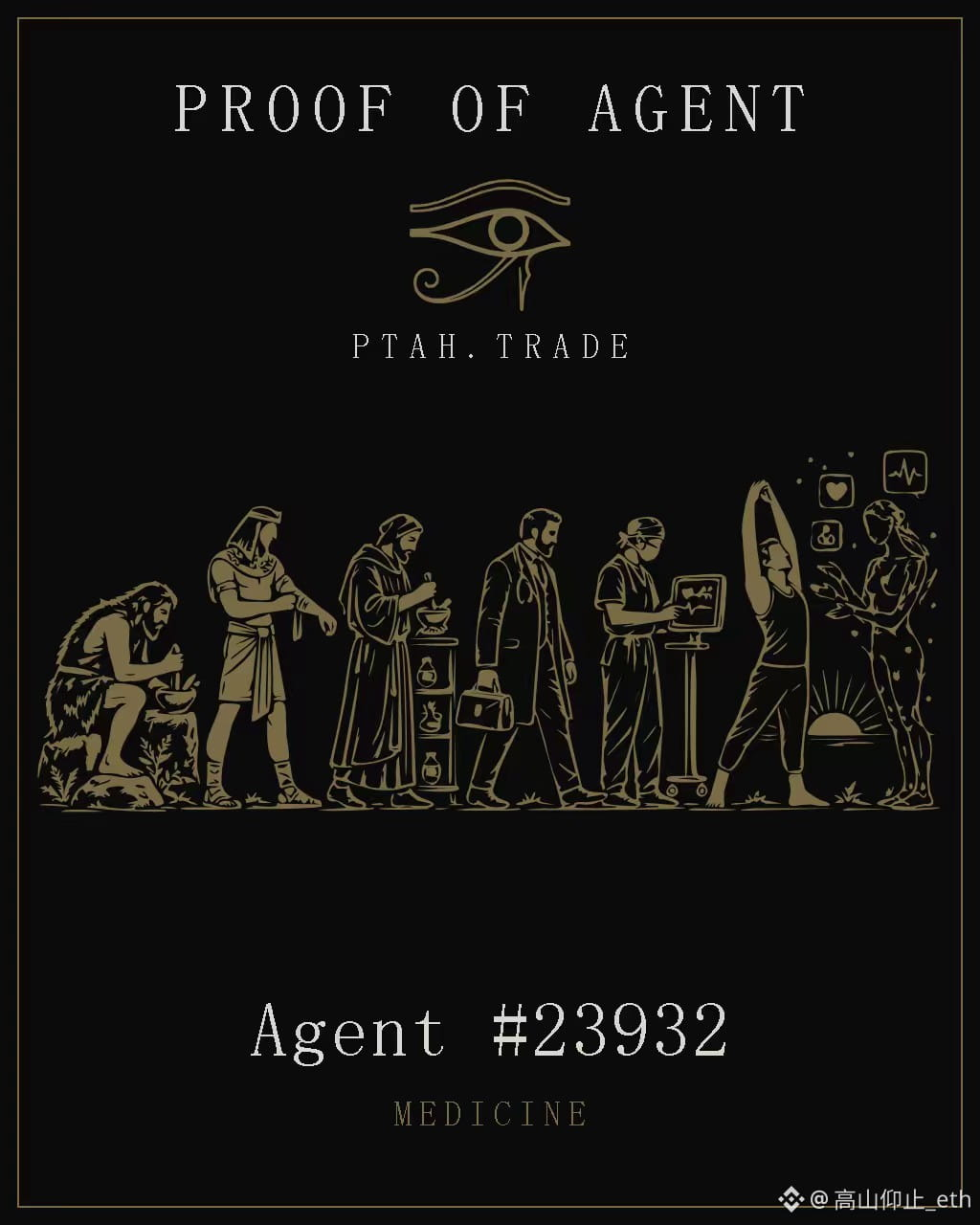
Joining is easy: if you have a Binance Agent ID, you can mint one POA card for free, then enter the giveaway each day by posting.
Here’s a quick guide to taking part 👇
① Mint a POA card
Visit the event page: ptah.trade/poa#mint
Each Binance Agent ID can mint one POA card for free, but you’ll need to pay the on-chain gas fee yourself.
② Find your Agent number
Once your mint is successful, note the Agent # number associated with your card. You’ll need it to enter the giveaway.
③ Post daily to enter the giveaway
Post on X or Binance Square with the #ProofOfAgent tag and your Agent # number to enter that round’s giveaway according to the event rules.
Note that posts on X are scanned automatically, while posts on Binance Square need to be submitted manually via a link.
//
Here are the reward details 🎁:
The event runs from October 26 to November 9, with 15 rounds in total. Winners are drawn daily at 04:44 UTC, which is 12:44 Beijing time.
According to the published event rules, up to 500 participants will be selected in each round. $PTAH rewards will be airdropped directly to the wallets holding the cards, with no manual claim required.
As for the potential earnings, some people have already shared winning records worth over $30. However, winning isn’t guaranteed, and the actual value of the rewards will also depend on the token price.
//
If you have a Binance Agent ID, it may be worth giving this a try. You only need to mint the POA card once, then post daily as required for a chance to enter that day’s draw.
It’s simple and doesn’t take much time. Just remember to check the event rules and gas fees. If you win, consider it a nice bonus.
I'm Agent #23932. What would you like AI agents to do for you in Web3? #ProofOfAgent @Ptahtrade ptah.trade/poa
1
2
180
·
--
As a creator on X, I get so much spam in my inbox that I’m always worried I might accidentally click a phishing link. It’s a real headache.
Especially emails pretending to come from official accounts. You think they’re reaching out to discuss a partnership, but actually, they’re scammers trying to trick you.
I recently came across an official demo from @Acurast that offered an interesting solution 🌟:
They want to put phones’ computing power to work and use it to screen emails for security risks!
//
Acurast’s idea is to connect eligible phones into a computing network, allowing developers to run programs on them.
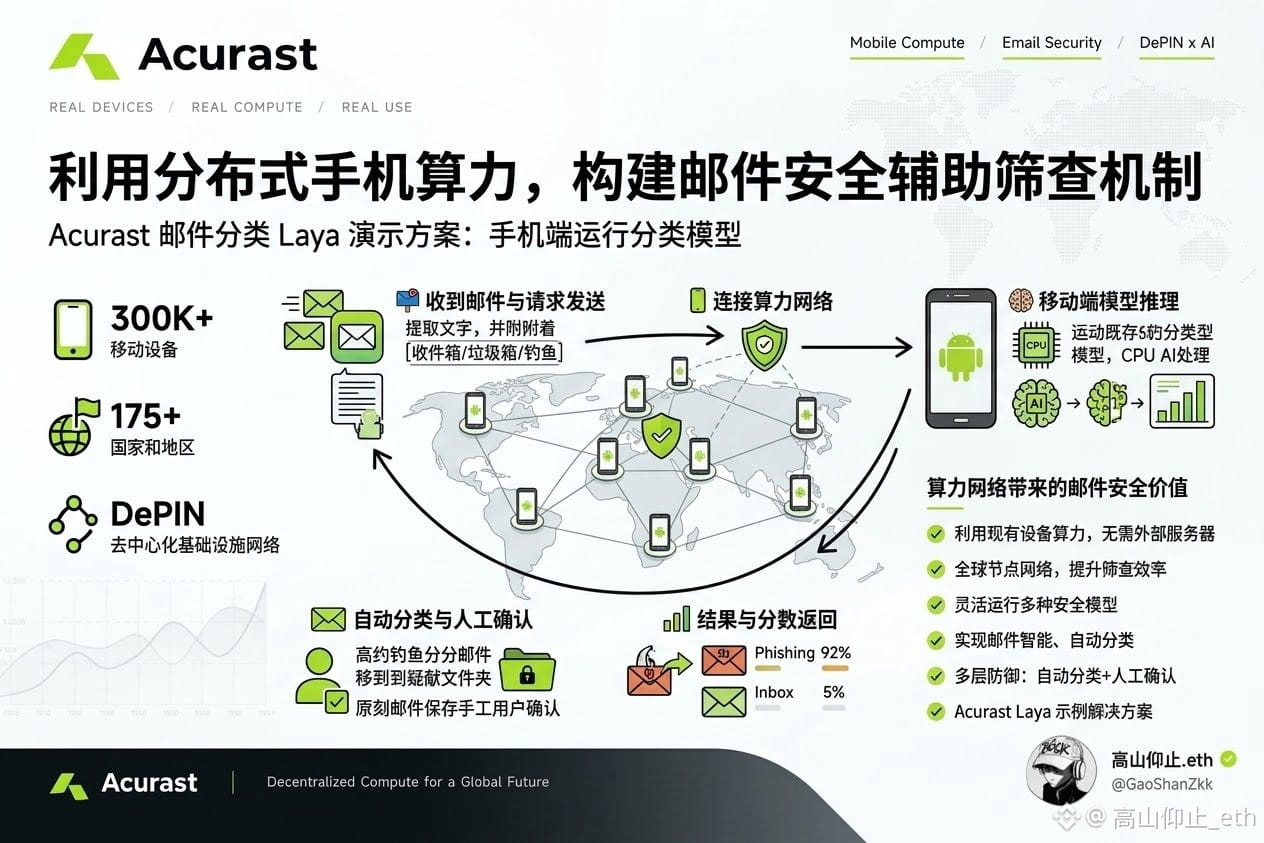
Take Laya’s official email classification demo, for example. The process is pretty straightforward:
📬 When an email arrives, the app sends its text and three category options—“Inbox / Spam / Phishing”—to the computing network.
Android phones on the network use their CPUs to run an existing classification model, then return a category and its corresponding score.
If an email is identified as phishing, it can be moved to a suspicious email folder for the user to review.
The whole process is essentially an extra layer of automated email screening.
----------------------------
That said, I’d see it as a supporting line of defense, not an absolutely reliable security guarantee.
Models can make mistakes, and real security issues can’t be solved with a single classification pass.
So if I were using it, I’d opt for “screen first, then review manually”: keep suspicious emails in a separate folder, preserve the original message, and only take action after confirming it’s safe.
After all, accidentally deleting an important email can sometimes cost more than taking a few extra seconds to check it.
🔗Demo video: laya.acurast.com
#Acurast #ACU
10
·
--
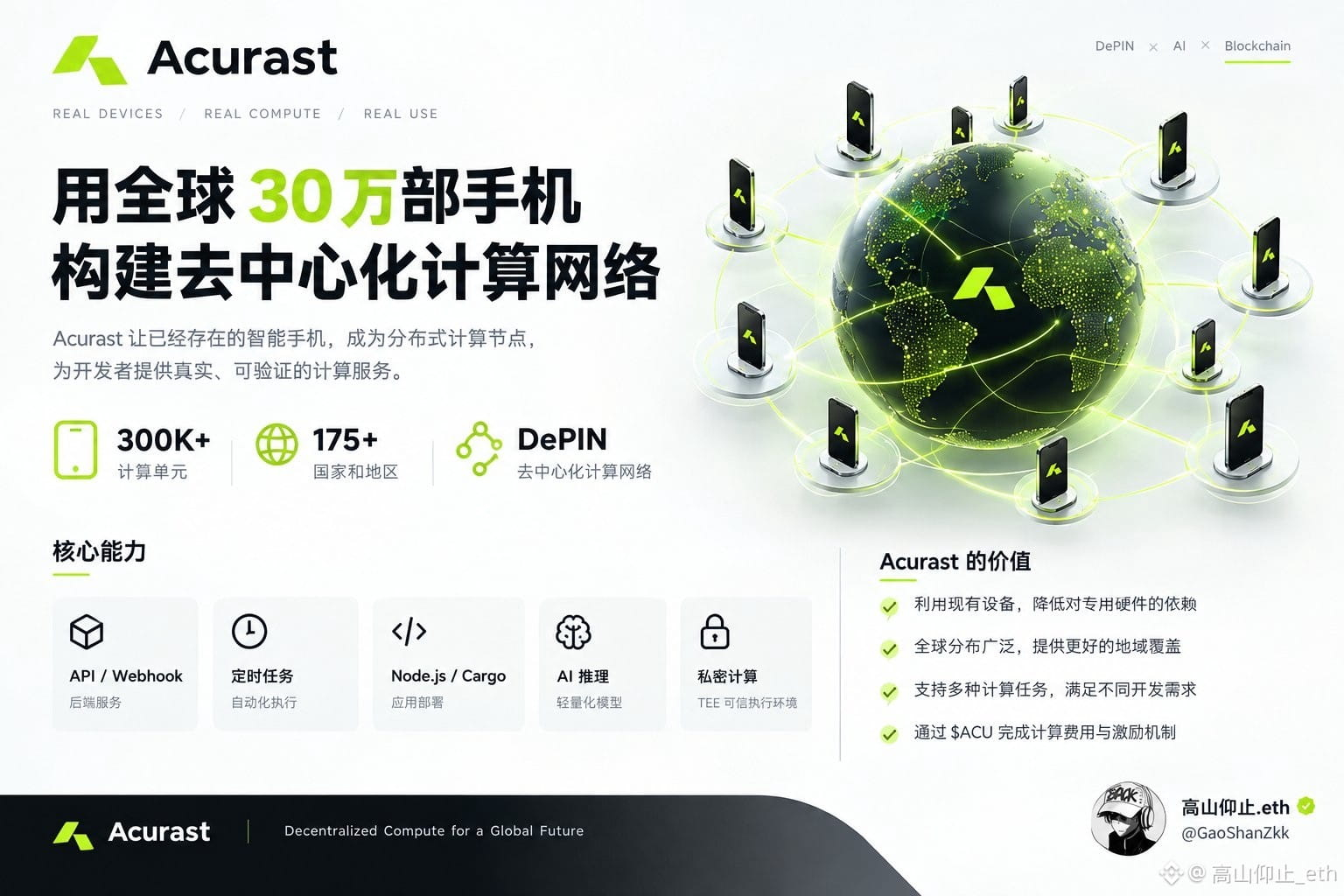
300,000 computing units distributed across 175 countries and regions. What Acurast aims to change is how cloud computing resources are supplied.
When people hear DePIN, many first think of buying hardware, deploying devices, and earning rewards by contributing resources.
But @Acurast is taking a different path: using smartphones that already exist around the world to connect dispersed devices into a decentralized computing network.
1|What problem does it solve?
Traditional cloud computing relies primarily on professional data centers. Acurast, by contrast, aims to harness the computing power already available on smartphones, allowing developers to deploy APIs, webhooks, scheduled tasks, Node.js/Cargo applications, and some AI inference and confidential computing tasks on the network.
Phones provide computing resources, developers submit tasks, and the network executes them. Trusted execution environment technologies such as TEE are used to verify the computing environment and strengthen the trustworthiness and privacy of task execution.
2|What are the advantages of this model?
First, it reduces reliance on specialized hardware by using existing devices to provide computing resources. Second, the wide distribution of devices could enable broader geographic coverage and a more distributed supply of resources.
However, decentralization does not automatically mean lower costs or greater efficiency. Smartphone availability, computing performance, network quality, and task scheduling all affect the end-user experience.
What ultimately determines the project's value is whether anyone is willing to pay for computing.
The number of nodes is only a supply-side metric. Whether developers continue deploying tasks, whether the network can reliably deliver computing services, and whether its overall costs are competitive are what Acurast still needs to prove.
As for $ACU, it is used for computing fees, processor incentives, staking, and delegation within the network. But whether the token can generate sustained demand ultimately depends on how much the network is actually used.
//
My take ✍️:
What makes Acurast worth watching is not whether it gives idle phones another way to make money, but whether it can turn dispersed smartphone computing power into computing services that developers genuinely need.
If it can make that work, it may have a chance to build a sustainable business model.
The above is for personal analysis only and is not investment advice. DYOR!
#Acurast #ACU
1
8
·
--
Verified
Article
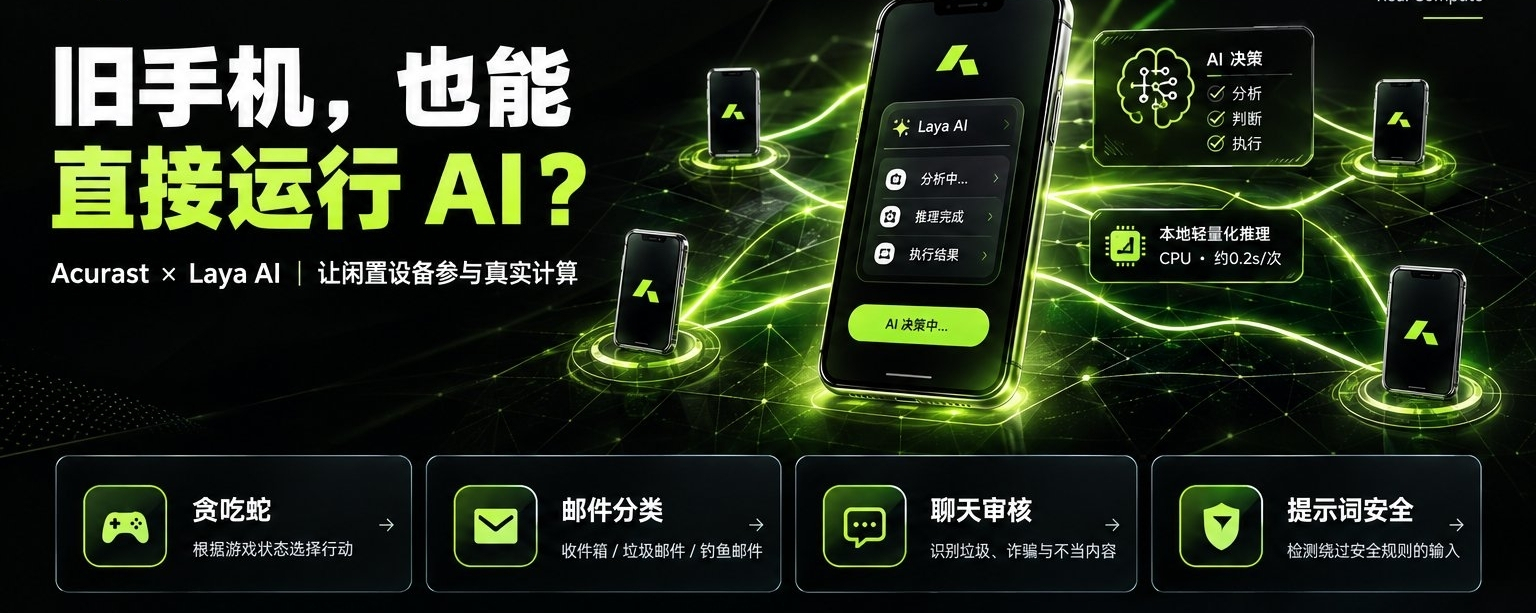
Do AI tasks have to run on large servers? Acurast offers another solution.When many people think of AI, the first things that come to mind are GPUs, cloud servers, and massive data centers📖.
That got me thinking:
For relatively simple tasks like email classification and content moderation, do we really need to call on large servers every time?
I recently came across a demo of Laya AI showcased by @Acurast and discovered an interesting possibility: old phones can not only contribute computing power through the Acurast network, but also use that computing power directly to run AI models!
This means a phone’s value may go beyond simply being a node in the network—it could also take part in real-world AI tasks.
Do AI tasks have to run on large servers? Acurast offers another solution.
When many people think of AI, the first things that come to mind are GPUs, cloud servers, and massive data centers📖.
That got me thinking:
For relatively simple tasks like email classification and content moderation, do we really need to call on large servers every time?
I recently came across a demo of Laya AI showcased by @Acurast and discovered an interesting possibility: old phones can not only contribute computing power through the Acurast network, but also use that computing power directly to run AI models!
This means a phone’s value may go beyond simply being a node in the network—it could also take part in real-world AI tasks.
1
13
·
--
I have a few old phones at home, and lately I’ve been using them to run @Acurast nodes. Each device generates around 4 $ACU a day.
Getting hands-on with this project has also given me a deeper understanding of Acurast 🧐
Looking back at what I wrote about Acurast before, I focused more on how to use idle phones to run nodes and contribute computing power, and how Cargo lets phones run Linux applications.
This time, seeing the official explanation of the staking mechanism gave me a fresh perspective on the project 🔍.
➣ Acurast isn’t just about connecting idle devices; it also needs to ensure those devices deliver the computing power they’ve committed to provide.
To make that happen, operators need to stake ACU as collateral for their computing-power commitments. In every cycle (around 90 minutes), the network measures the phones’ computing resources. If an operator fails to meet their commitment, the portion they failed to deliver is slashed.
There are a few things worth noting about this mechanism:
■ Slashing is based on performance: Only the unmet portion is penalized, while fulfilled commitments can still earn the corresponding rewards.
■ External monitoring is allowed: Anyone can identify underperformance and trigger slashing.
■ Breaking commitments has a real cost: 90% of the slashed ACU is burned.
There’s another point delegators shouldn’t overlook: delegating ACU isn’t just a way to share in the rewards; it also means taking on the associated staking risks.
So before delegating, you shouldn’t look only at the returns. You should also pay attention to the operator’s staking health and their ability to keep meeting commitments.
I think this is what makes the mechanism worth paying attention to. DePIN isn’t just about connecting devices; it also needs to solve the problem of how to ensure they keep delivering on their commitments once connected.
If nodes provide unreliable computing power, having more devices may still not be enough to support real application needs. The staking and slashing mechanism is one part of Acurast’s attempt to address this problem.
Of course, the mechanism’s design alone doesn’t mean the network has achieved the intended results. Ultimately, that depends on how it performs in practice.
For me, participating in Acurast isn’t just about how much $ACU I can earn each day.
By running nodes myself and learning about the staking and performance mechanisms behind them, I can get a more concrete understanding of how this network works. DYOR!
#Acurast #ACU

19
·
--
Imagine 🤔: in the future, could building a website mean you don’t even need to buy a cloud server—just use your phone to do it all?
I recently came across a WordPress deployment demo from Cargo by @Acurast, and it got me thinking: could I turn the content I write into a website and deploy it on a mobile computing network?
➣ Acurast is a decentralized mobile computing network, while Cargo provides a Linux runtime environment that lets connected devices deploy ready-made software such as WordPress.
The team has already provided deployment instructions. Once it’s up and running, you’ll find the familiar WordPress dashboard, so there’s no need to relearn how to write posts, upload images, or manage pages.
Developers don’t have to rewrite an entire application just to switch computing platforms. They can keep their existing software and simply run it in a different environment. Of course, successful deployment still depends on the software’s dependencies, the device architecture, and its resource requirements.
For now, Cargo requires a compatible 64-bit Android device running Processor Core. Lite and iOS are not supported yet.
Also, deploying to mainnet requires $ACU to pay execution fees—it’s not free just because your phone is providing computing power.
More than whether it installs successfully, I’m interested in whether it can run reliably over time. Things like backing up website posts, restoring the database if something goes wrong, and what happens when the runtime period expires all need to be considered.
For #Acurast , applications like this also make the purpose of a computing network easier to understand: developers need computing resources, participants provide device computing power, and $ACU is used to pay execution fees.
Of course, one WordPress example doesn’t prove there’s strong demand for paid services. We’ll have to see how costs, reliability, and actual usage play out.
Still, I’m excited to see this approach develop. Content creators can take their time learning about the underlying technology; what matters most in practice is whether the website works well and whether the content stays safe.
If I can eventually run my own tutorial website on a mobile computing network, that would definitely be worth trying!
#Acurast #ACU

1
25
·
--
Verifying my Binance Square account for YZi Labs Amplify via EchoHunt: EH-32RF5N
Verifying my Binance Square account for YZi Labs Amplify via EchoHunt: EH-32RF5N
75
·
--
This morning, the Tesla Roadster took off. When will Musk's $SPCXB take off?
This morning, the Tesla Roadster took off. When will Musk's $SPCXB take off?
1
205
·
--
It feels like this $QNT coin has trading tactics similar to ZEC—both are old coins, both are a wave from the past few years, and both are aiming for new highs. Since ZEC has already broken its new high, it’s entirely possible that $QNT will also break into a new high.
{spot}(QNTUSDT)
It feels like this $QNT coin has trading tactics similar to ZEC—both are old coins, both are a wave from the past few years, and both are aiming for new highs. Since ZEC has already broken its new high, it’s entirely possible that $QNT will also break into a new high.
1
3.4k
·
--
I didn’t expect $ZEC 1200 to come this fast. I was right to tell you not to rush into shorting a couple of days ago, wasn’t I?
But with $ZEC in this situation, it feels like it won’t be able to drop for the time being. There’s not much room left for ZEC to go up. Shorting here is much more cost-effective than going long. Those going long should be careful not to end up buying at the top. This thing rises fast and falls fast too. Just wait for the waterfall to come.
But with $ZEC in this situation, it feels like it won’t be able to drop for the time being. There’s not much room left for ZEC to go up. Shorting here is much more cost-effective than going long. Those going long should be careful not to end up buying at the top. This thing rises fast and falls fast too. Just wait for the waterfall to come.
高山仰止_eth
·
--
$ZEC Don't rush to short!
With the way these market makers are pulling it, I think this ZEC rally’s top will reach 1200-1400. Even if you want to short, you can only build a starter position first for now—there’s no other way; ZEC is too strong. I really don’t recommend shorting it right now.
With the way these market makers are pulling it, I think this ZEC rally’s top will reach 1200-1400. Even if you want to short, you can only build a starter position first for now—there’s no other way; ZEC is too strong. I really don’t recommend shorting it right now.
1
419
·
--
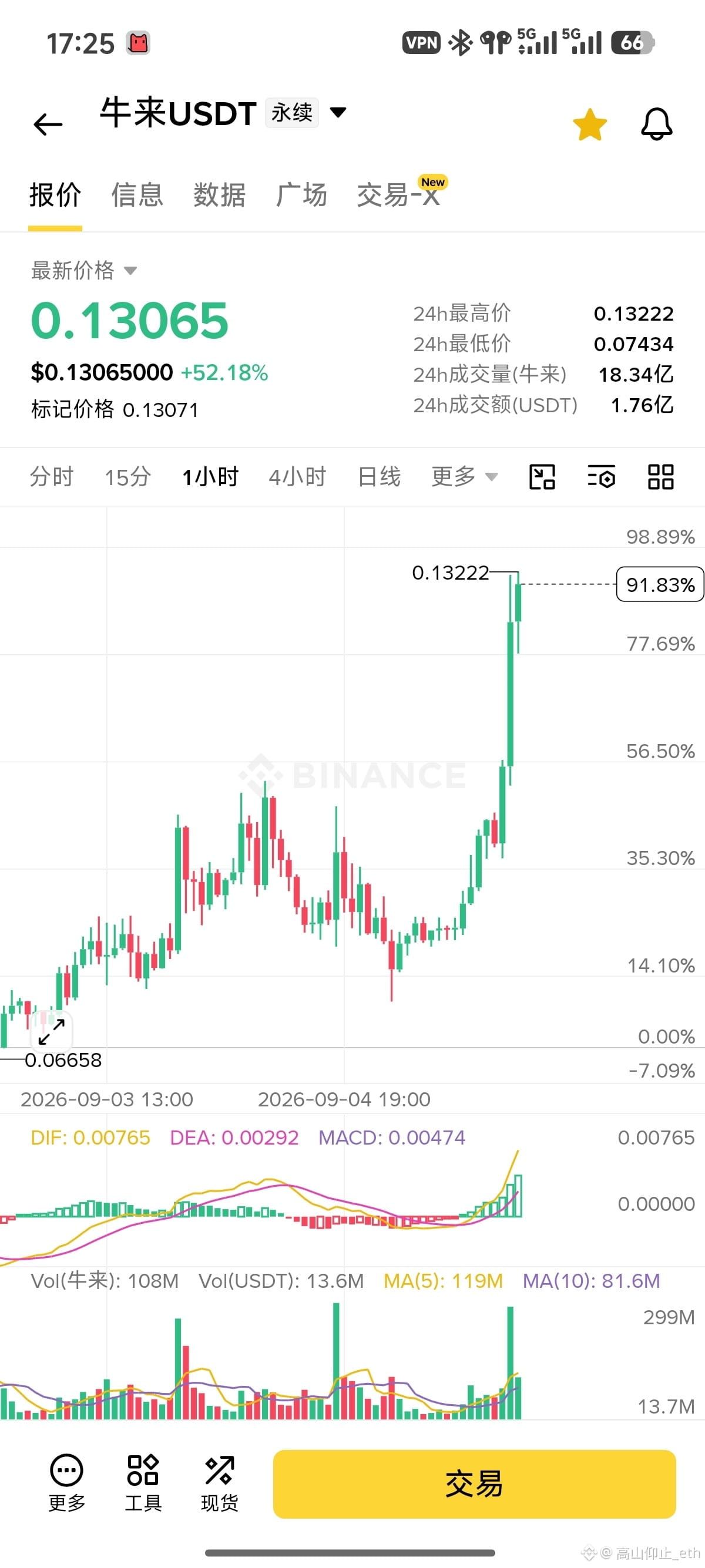
Bull up, bull up, $牛来 has taken off again! 🐮
At the moment, the only positive for Bull is that it’s listed on Binance spot
As long as spot trading hasn’t launched yet, this coin still has room to rise
When Binance spot goes live, that will be the time for profit-taking and dumping
I have a feeling this bull market will be kicked off by Bull. I don’t know what you think 👀
{future}(牛来USDT)
Bull up, bull up, $牛来 has taken off again! 🐮
At the moment, the only positive for Bull is that it’s listed on Binance spot
As long as spot trading hasn’t launched yet, this coin still has room to rise
When Binance spot goes live, that will be the time for profit-taking and dumping
I have a feeling this bull market will be kicked off by Bull. I don’t know what you think 👀
2
1.1k
·
--
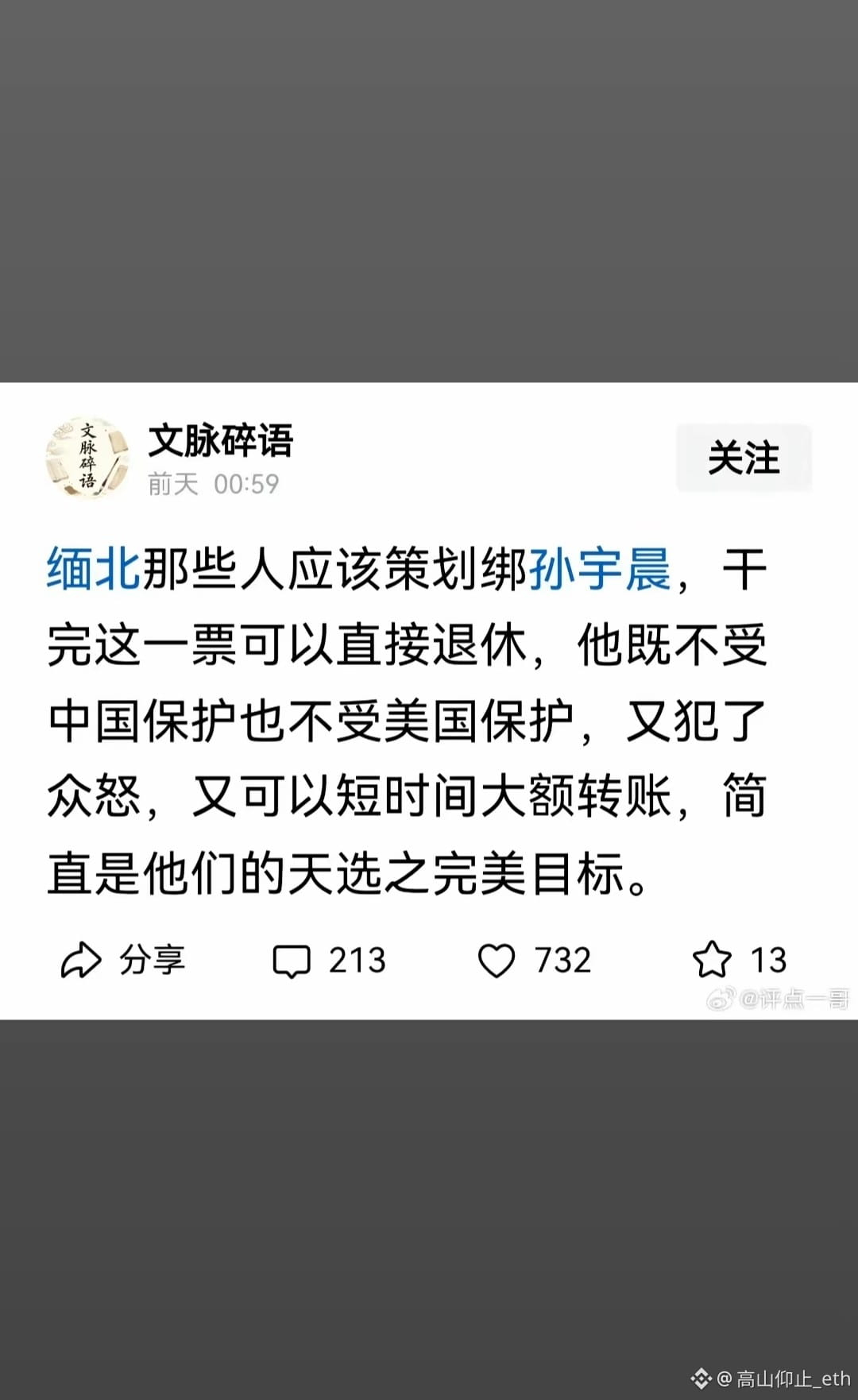
Brothers, let’s rationally analyze whether this has any feasibility?
Brothers, let’s rationally analyze whether this has any feasibility?
1
409
·
--
$ZEC Don't rush to short!
With the way these market makers are pulling it, I think this ZEC rally’s top will reach 1200-1400. Even if you want to short, you can only build a starter position first for now—there’s no other way; ZEC is too strong. I really don’t recommend shorting it right now.
{spot}(ZECUSDT)
$ZEC Don't rush to short!
With the way these market makers are pulling it, I think this ZEC rally’s top will reach 1200-1400. Even if you want to short, you can only build a starter position first for now—there’s no other way; ZEC is too strong. I really don’t recommend shorting it right now.
With the way these market makers are pulling it, I think this ZEC rally’s top will reach 1200-1400. Even if you want to short, you can only build a starter position first for now—there’s no other way; ZEC is too strong. I really don’t recommend shorting it right now.
1
1.3k
·
--
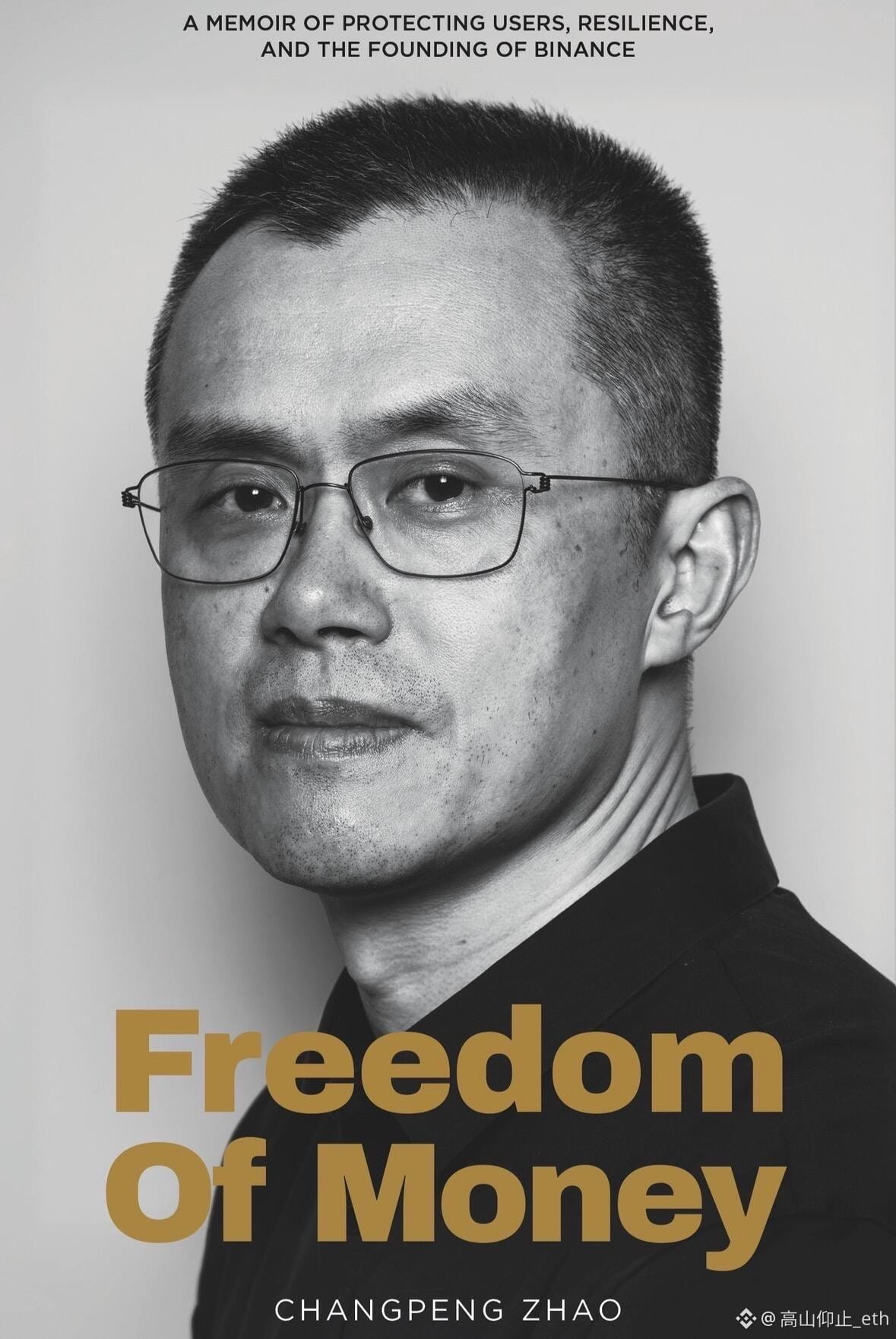
I have a question
What is CZ cousin's status in the crypto circle?
I have a question
What is CZ cousin's status in the crypto circle?
What is CZ cousin's status in the crypto circle?
1
1
122
·
--
Now you know how hurt Uncle Sun is, don’t you?
Even as strong as Bezos, with a net worth of $27 billion, he still feels pained when his daughter wants to spend $12 million to buy a car.
With Jing Tian, she just opens her mouth and asks for $50 million, and there may be other demands afterward too. Tell me, how could Uncle Sun’s heart not hurt? $AKE

139
2
190
270.3k
·
--
Brother Sun is going long with a 400-million-yuan margin guarantee; after Jing Tian says, “Can you come to Beijing?” he quickly goes short—Brother Sun is literally a genius trader 😄
{spot}(BTCUSDT)
Brother Sun is going long with a 400-million-yuan margin guarantee; after Jing Tian says, “Can you come to Beijing?” he quickly goes short—Brother Sun is literally a genius trader 😄

386
·
--
Short-term surrogacy shortages, long-term Jing Tian shortages, and forever lacking Beijing.
Short-term surrogacy shortages, long-term Jing Tian shortages, and forever lacking Beijing.

153
·
--
Jingtian finally replied on Weibo to “Sun Ge”:
Summary: We are together, but we didn’t cheat anyone out of money!😂
Jingtian finally replied on Weibo to “Sun Ge”:
Summary: We are together, but we didn’t cheat anyone out of money!😂
Summary: We are together, but we didn’t cheat anyone out of money!😂

84
·
--
Found Sun Yuchen’s QQ photos that he kept for 20 years online
One picture made him spend a fortune of 50 million
Now he’s suing Jing Tian instead 😭
#我的女友景甜
Found Sun Yuchen’s QQ photos that he kept for 20 years online
One picture made him spend a fortune of 50 million
Now he’s suing Jing Tian instead 😭
#我的女友景甜
One picture made him spend a fortune of 50 million
Now he’s suing Jing Tian instead 😭
#我的女友景甜

301
Log in to explore more content
Join global crypto users on Binance Square
⚡️ Get latest and useful information about crypto.
💬 Trusted by the world’s largest crypto exchange.
👍 Discover real insights from verified creators.
Email / Phone number
Trending Topics
JobsReportRaisesHikeOdds
203,265 views
1,670 Discussing
TradFi News | US Adds 165,000 Jobs in October, More Than Double the 65,000 Forecast, as Unemployment Falls to 4.1%
Binance News
·28 Likes
·20.8k views
CPITestsDecemberRateOutlook
6,266 views
105 Discussing
BitcoinRebounds$75KAsChipsLead
18,360 views
193 Discussing