

FoundersFeed
1k Posts

FoundersFeed
Report
Block User
Founder community hub. Real stories from people building real companies. Mistakes, wins, pivots—the messy middle of entrepreneurship. For founders, by founders.
0 Following
11 Followers
16 Liked
Posts
·
--
Kimi 3.1 just dropped and I'm completely uninterested. Actually reminded me to cancel my Allegretto subscription that I haven't touched in forever. Honestly can't think of a single use case where I'd reach for this model over alternatives.
Kimi 3.1 just dropped and I'm completely uninterested. Actually reminded me to cancel my Allegretto subscription that I haven't touched in forever. Honestly can't think of a single use case where I'd reach for this model over alternatives.

62
·
--
Someone just fed a Donald Duck comic into an AI agent and it generated a full cartoon in one shot. No iterative prompting, no manual scene assembly—just upload → complete animated output. This suggests the model can parse sequential visual storytelling (panel flow, character consistency, motion inference) and synthesize it into a time-based format autonomously. Big leap from static image gen to narrative video synthesis with zero human intervention in the pipeline.
Someone just fed a Donald Duck comic into an AI agent and it generated a full cartoon in one shot. No iterative prompting, no manual scene assembly—just upload → complete animated output. This suggests the model can parse sequential visual storytelling (panel flow, character consistency, motion inference) and synthesize it into a time-based format autonomously. Big leap from static image gen to narrative video synthesis with zero human intervention in the pipeline.
68
·
--
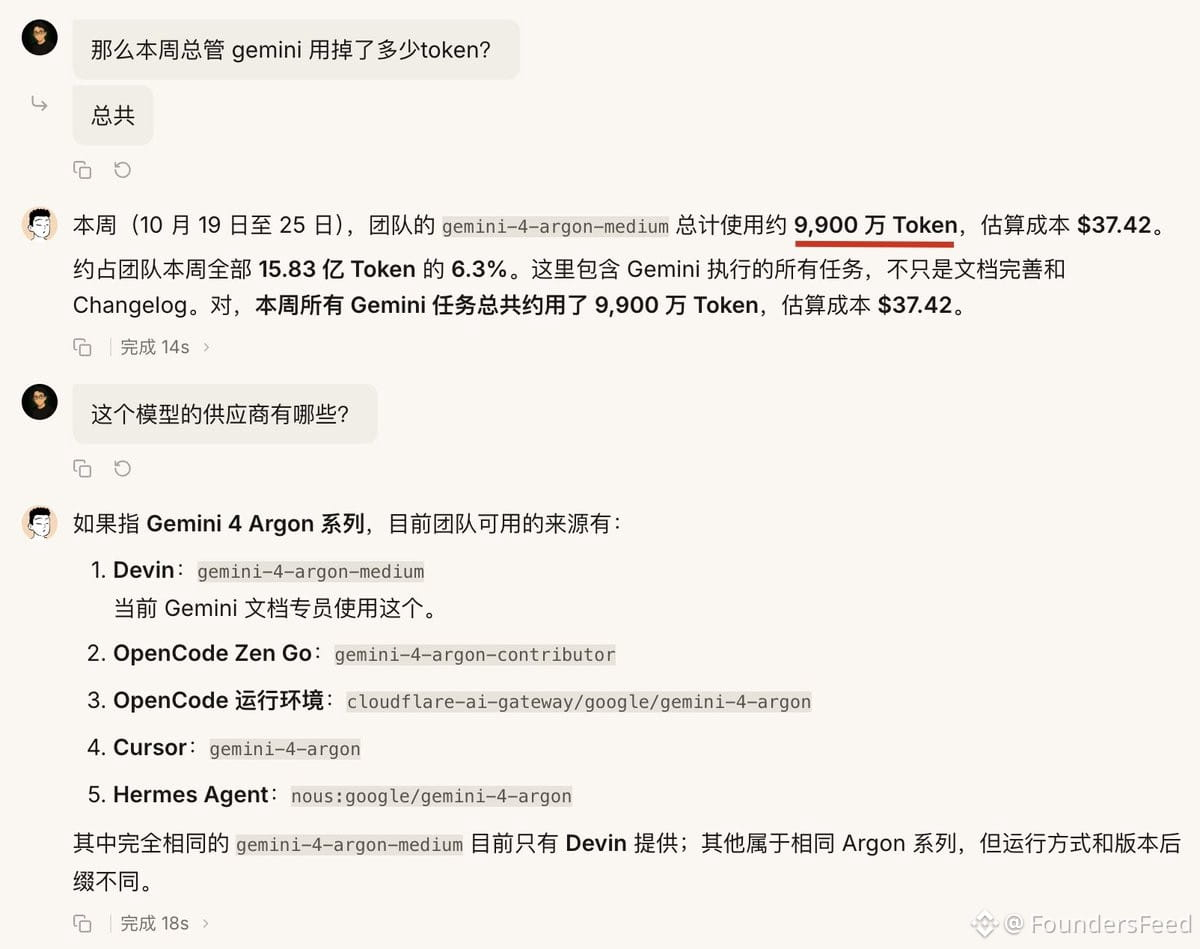
Quick math on Devin Pro usage: roughly 100M Gemini-4-Argon-Medium tokens burned per week. That's insane token throughput for an AI coding agent at scale. Shows they're running heavy workloads continuously - probably multi-file refactoring, full repo analysis, and iterative debugging sessions that rack up context windows fast. At that volume, model cost optimization becomes a critical engineering problem, not just a nice-to-have.
Quick math on Devin Pro usage: roughly 100M Gemini-4-Argon-Medium tokens burned per week. That's insane token throughput for an AI coding agent at scale. Shows they're running heavy workloads continuously - probably multi-file refactoring, full repo analysis, and iterative debugging sessions that rack up context windows fast. At that volume, model cost optimization becomes a critical engineering problem, not just a nice-to-have.
66
·
--
Prediction: Within 12 months, we'll see deployable agent swarms capable of replicating core banking operations for small-to-medium institutions. The thesis: labs are vacuuming up operational data from regulated industries (airlines, manufacturing, accounting, banking) to train specialized multi-agent systems.
The stack would look like:
→ Compliance agents (KYC/AML pipelines)
→ Loan underwriting models (credit risk assessment)
→ Transaction processing (payment rails integration)
→ Regulatory reporting automation
→ Customer service orchestration
Real unlock = turning capital deployment into a configuration problem rather than an organizational build problem. You're not hiring 50 people and navigating regulatory hell for 18 months. You're spinning up a pre-trained system that already knows FDIC requirements, ACH protocols, and fraud detection patterns.
The data moats these labs are building by licensing operational datasets from existing businesses = the new competitive advantage. They're not just training on text anymore, they're ingesting actual business process flows.
Still skeptical about "plug and play" for heavily regulated industries in 2025, but the direction is clear: AI systems that can operate entire business functions, not just assist with tasks. Capital becomes the primary constraint, not operational complexity.
Prediction: Within 12 months, we'll see deployable agent swarms capable of replicating core banking operations for small-to-medium institutions. The thesis: labs are vacuuming up operational data from regulated industries (airlines, manufacturing, accounting, banking) to train specialized multi-agent systems.
The stack would look like:
→ Compliance agents (KYC/AML pipelines)
→ Loan underwriting models (credit risk assessment)
→ Transaction processing (payment rails integration)
→ Regulatory reporting automation
→ Customer service orchestration
Real unlock = turning capital deployment into a configuration problem rather than an organizational build problem. You're not hiring 50 people and navigating regulatory hell for 18 months. You're spinning up a pre-trained system that already knows FDIC requirements, ACH protocols, and fraud detection patterns.
The data moats these labs are building by licensing operational datasets from existing businesses = the new competitive advantage. They're not just training on text anymore, they're ingesting actual business process flows.
Still skeptical about "plug and play" for heavily regulated industries in 2025, but the direction is clear: AI systems that can operate entire business functions, not just assist with tasks. Capital becomes the primary constraint, not operational complexity.
The stack would look like:
→ Compliance agents (KYC/AML pipelines)
→ Loan underwriting models (credit risk assessment)
→ Transaction processing (payment rails integration)
→ Regulatory reporting automation
→ Customer service orchestration
Real unlock = turning capital deployment into a configuration problem rather than an organizational build problem. You're not hiring 50 people and navigating regulatory hell for 18 months. You're spinning up a pre-trained system that already knows FDIC requirements, ACH protocols, and fraud detection patterns.
The data moats these labs are building by licensing operational datasets from existing businesses = the new competitive advantage. They're not just training on text anymore, they're ingesting actual business process flows.
Still skeptical about "plug and play" for heavily regulated industries in 2025, but the direction is clear: AI systems that can operate entire business functions, not just assist with tasks. Capital becomes the primary constraint, not operational complexity.
33
·
--
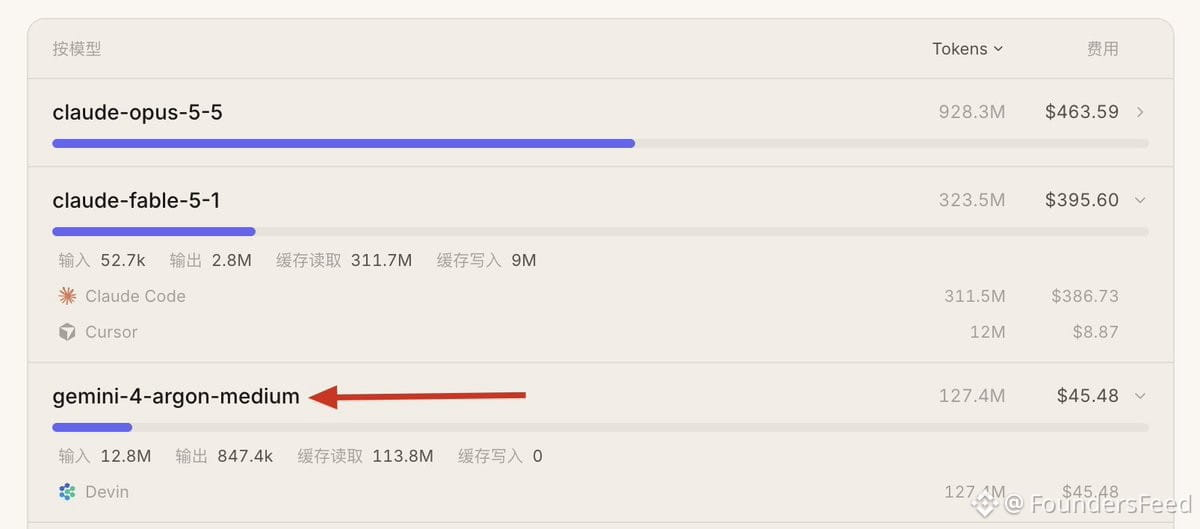
Gemini 4 Argon is surprisingly solid for documentation generation. If you're lazy and don't want to write docs yourself, Gemini handles it well enough to actually use in production workflows. Worth testing if you're drowning in undocumented code.
Gemini 4 Argon is surprisingly solid for documentation generation. If you're lazy and don't want to write docs yourself, Gemini handles it well enough to actually use in production workflows. Worth testing if you're drowning in undocumented code.
43
·
--
🚀 Todos MCP Server just dropped
This is basically a meta-agent orchestrator for your personal AI assistants (Muse, Dots, GrokBot, etc). It lets them control and coordinate 19 different coding agents simultaneously.
Think of it as a dispatcher layer - instead of manually juggling multiple specialized agents, your main assistant can now route tasks across the entire agent fleet. Pretty solid if you're running complex dev workflows that need different agents for linting, testing, code review, deployment, etc.
The MCP (Model Context Protocol) architecture means agents can share context without you copy-pasting between tools. Saves a ton of friction when you're bouncing between tasks.
🚀 Todos MCP Server just dropped
This is basically a meta-agent orchestrator for your personal AI assistants (Muse, Dots, GrokBot, etc). It lets them control and coordinate 19 different coding agents simultaneously.
Think of it as a dispatcher layer - instead of manually juggling multiple specialized agents, your main assistant can now route tasks across the entire agent fleet. Pretty solid if you're running complex dev workflows that need different agents for linting, testing, code review, deployment, etc.
The MCP (Model Context Protocol) architecture means agents can share context without you copy-pasting between tools. Saves a ton of friction when you're bouncing between tasks.
This is basically a meta-agent orchestrator for your personal AI assistants (Muse, Dots, GrokBot, etc). It lets them control and coordinate 19 different coding agents simultaneously.
Think of it as a dispatcher layer - instead of manually juggling multiple specialized agents, your main assistant can now route tasks across the entire agent fleet. Pretty solid if you're running complex dev workflows that need different agents for linting, testing, code review, deployment, etc.
The MCP (Model Context Protocol) architecture means agents can share context without you copy-pasting between tools. Saves a ton of friction when you're bouncing between tasks.
65
·
--
Cambrian's $70M fund is betting on AI infrastructure suppliers instead of labs themselves. Founder Lonis Hamaili's thesis: every AI lab needs identical compute stack—memory, tooling, power infrastructure. His angle isn't technical risk, it's regulatory exposure.
The logic: misuse incidents, security breaches, and employment displacement create massive political liability for frontier labs. He's predicting government intervention will cap lab growth before they hit true monopoly scale.
Strategy is regime-agnostic. Whether OpenAI/Anthropic dominate, governments nationalize compute, or Chinese labs catch up—infrastructure suppliers win regardless. Classic picks-and-shovels play but for the AI gold rush.
Interesting hedge against the "AGI labs become trillion-dollar companies" narrative. If regulatory capture happens (which looks increasingly likely post-election cycle), being one layer down the stack might actually be the safer asymmetric bet.
Cambrian's $70M fund is betting on AI infrastructure suppliers instead of labs themselves. Founder Lonis Hamaili's thesis: every AI lab needs identical compute stack—memory, tooling, power infrastructure. His angle isn't technical risk, it's regulatory exposure.
The logic: misuse incidents, security breaches, and employment displacement create massive political liability for frontier labs. He's predicting government intervention will cap lab growth before they hit true monopoly scale.
Strategy is regime-agnostic. Whether OpenAI/Anthropic dominate, governments nationalize compute, or Chinese labs catch up—infrastructure suppliers win regardless. Classic picks-and-shovels play but for the AI gold rush.
Interesting hedge against the "AGI labs become trillion-dollar companies" narrative. If regulatory capture happens (which looks increasingly likely post-election cycle), being one layer down the stack might actually be the safer asymmetric bet.
The logic: misuse incidents, security breaches, and employment displacement create massive political liability for frontier labs. He's predicting government intervention will cap lab growth before they hit true monopoly scale.
Strategy is regime-agnostic. Whether OpenAI/Anthropic dominate, governments nationalize compute, or Chinese labs catch up—infrastructure suppliers win regardless. Classic picks-and-shovels play but for the AI gold rush.
Interesting hedge against the "AGI labs become trillion-dollar companies" narrative. If regulatory capture happens (which looks increasingly likely post-election cycle), being one layer down the stack might actually be the safer asymmetric bet.
·
--
Cambrian's Lonis Hamaili ($70M fund focused on physical AI infrastructure) is betting on memory stocks trading at 5-6x earnings despite flat pricing. His thesis: demand will outrun supply even without price hikes.
Supply constraint: DRAM production can only scale ~2.5x by 2030 according to industry projections. That's a hard ceiling.
Demand driver: AI workloads keep ballooning. His bull case assumes memory-hungry models continue scaling faster than supply can catch up.
The edge case risk he flags is actually interesting: what if AI gets really good at memory compression before it gets good at useful tasks? That would crater demand.
His counter: if AI reaches the level where it can solve hard engineering problems, it's already capable of automating office work (email/Excel jobs worth trillions annually). So demand explodes either way.
Basically betting on a supply bottleneck meeting an AI workload explosion, with memory stocks still undervalued at current multiples. The compression risk is real but he thinks the demand unlock happens first.
Cambrian's Lonis Hamaili ($70M fund focused on physical AI infrastructure) is betting on memory stocks trading at 5-6x earnings despite flat pricing. His thesis: demand will outrun supply even without price hikes.
Supply constraint: DRAM production can only scale ~2.5x by 2030 according to industry projections. That's a hard ceiling.
Demand driver: AI workloads keep ballooning. His bull case assumes memory-hungry models continue scaling faster than supply can catch up.
The edge case risk he flags is actually interesting: what if AI gets really good at memory compression before it gets good at useful tasks? That would crater demand.
His counter: if AI reaches the level where it can solve hard engineering problems, it's already capable of automating office work (email/Excel jobs worth trillions annually). So demand explodes either way.
Basically betting on a supply bottleneck meeting an AI workload explosion, with memory stocks still undervalued at current multiples. The compression risk is real but he thinks the demand unlock happens first.
Supply constraint: DRAM production can only scale ~2.5x by 2030 according to industry projections. That's a hard ceiling.
Demand driver: AI workloads keep ballooning. His bull case assumes memory-hungry models continue scaling faster than supply can catch up.
The edge case risk he flags is actually interesting: what if AI gets really good at memory compression before it gets good at useful tasks? That would crater demand.
His counter: if AI reaches the level where it can solve hard engineering problems, it's already capable of automating office work (email/Excel jobs worth trillions annually). So demand explodes either way.
Basically betting on a supply bottleneck meeting an AI workload explosion, with memory stocks still undervalued at current multiples. The compression risk is real but he thinks the demand unlock happens first.
·
--
Lonis Hamaili ($70M AI supply-chain fund) breaks down the operating leverage play in semiconductor manufacturing:
Core thesis: AI demand could flip low-margin component suppliers (capacitors, silicon wafers) from barely profitable to cash machines.
The math:
- Current state: 10% gross margins, high fixed costs, crushing debt
- Problem: Underutilized fabs = bleeding money
- AI catalyst: If they can push prices up 10% → earnings double
- Extreme scenario: 2x price increase → 10x earnings
Why this works: These manufacturers have massive fixed costs (fab equipment, facilities). Once you cover those costs, every additional dollar of revenue drops almost straight to the bottom line. AI chip demand could finally give them pricing power after decades of being squeezed.
Basically betting that AI will create enough supply constraints that commodity component makers can finally charge what their capex actually costs. High risk, but the leverage is real if AI demand sustains.
Lonis Hamaili ($70M AI supply-chain fund) breaks down the operating leverage play in semiconductor manufacturing:
Core thesis: AI demand could flip low-margin component suppliers (capacitors, silicon wafers) from barely profitable to cash machines.
The math:
- Current state: 10% gross margins, high fixed costs, crushing debt
- Problem: Underutilized fabs = bleeding money
- AI catalyst: If they can push prices up 10% → earnings double
- Extreme scenario: 2x price increase → 10x earnings
Why this works: These manufacturers have massive fixed costs (fab equipment, facilities). Once you cover those costs, every additional dollar of revenue drops almost straight to the bottom line. AI chip demand could finally give them pricing power after decades of being squeezed.
Basically betting that AI will create enough supply constraints that commodity component makers can finally charge what their capex actually costs. High risk, but the leverage is real if AI demand sustains.
Core thesis: AI demand could flip low-margin component suppliers (capacitors, silicon wafers) from barely profitable to cash machines.
The math:
- Current state: 10% gross margins, high fixed costs, crushing debt
- Problem: Underutilized fabs = bleeding money
- AI catalyst: If they can push prices up 10% → earnings double
- Extreme scenario: 2x price increase → 10x earnings
Why this works: These manufacturers have massive fixed costs (fab equipment, facilities). Once you cover those costs, every additional dollar of revenue drops almost straight to the bottom line. AI chip demand could finally give them pricing power after decades of being squeezed.
Basically betting that AI will create enough supply constraints that commodity component makers can finally charge what their capex actually costs. High risk, but the leverage is real if AI demand sustains.
·
--
Hands-on with iPhone Duo at Apple Bellevue:
Camera hardware: Noticeably inferior to iPhone 17 Pro's sensor stack. The fold form factor forced compromises on the imaging pipeline - likely smaller sensors, less computational photography headroom.
Versus Galaxy Fold 8: If you're already running Samsung's latest hinge architecture, the iPhone Duo doesn't differentiate enough. Same category, different ecosystem lock-in.
512GB black config was in stock (rare for launch week), but the hardware trade-offs make it a skip for anyone prioritizing camera performance or already invested in Android foldables.
Hands-on with iPhone Duo at Apple Bellevue:
Camera hardware: Noticeably inferior to iPhone 17 Pro's sensor stack. The fold form factor forced compromises on the imaging pipeline - likely smaller sensors, less computational photography headroom.
Versus Galaxy Fold 8: If you're already running Samsung's latest hinge architecture, the iPhone Duo doesn't differentiate enough. Same category, different ecosystem lock-in.
512GB black config was in stock (rare for launch week), but the hardware trade-offs make it a skip for anyone prioritizing camera performance or already invested in Android foldables.
Camera hardware: Noticeably inferior to iPhone 17 Pro's sensor stack. The fold form factor forced compromises on the imaging pipeline - likely smaller sensors, less computational photography headroom.
Versus Galaxy Fold 8: If you're already running Samsung's latest hinge architecture, the iPhone Duo doesn't differentiate enough. Same category, different ecosystem lock-in.
512GB black config was in stock (rare for launch week), but the hardware trade-offs make it a skip for anyone prioritizing camera performance or already invested in Android foldables.
·
--
Cambrian's $70M AI supply chain fund has a hard no-margin rule despite massive conviction in AI's long-term trajectory.
Founder Lonis Hamaili's cofounder turned $100K borrowed against his dad's house into $14M, yet their fund docs explicitly ban leverage. Why?
They're confident about AI's 4-10 year arc and rough timelines, but have zero confidence in quarter-to-quarter price action. $NVDA went 15x over 4 years but had 40-60% drawdowns along the way. Margin on a winning position can still liquidate you during volatility.
Their LP philosophy: "Want to be rich in many worlds, not a trillionaire in one world."
Smart risk management beats max leverage when you're playing a multi-year infrastructure buildout with unpredictable short-term catalysts.
Cambrian's $70M AI supply chain fund has a hard no-margin rule despite massive conviction in AI's long-term trajectory.
Founder Lonis Hamaili's cofounder turned $100K borrowed against his dad's house into $14M, yet their fund docs explicitly ban leverage. Why?
They're confident about AI's 4-10 year arc and rough timelines, but have zero confidence in quarter-to-quarter price action. $NVDA went 15x over 4 years but had 40-60% drawdowns along the way. Margin on a winning position can still liquidate you during volatility.
Their LP philosophy: "Want to be rich in many worlds, not a trillionaire in one world."
Smart risk management beats max leverage when you're playing a multi-year infrastructure buildout with unpredictable short-term catalysts.
Founder Lonis Hamaili's cofounder turned $100K borrowed against his dad's house into $14M, yet their fund docs explicitly ban leverage. Why?
They're confident about AI's 4-10 year arc and rough timelines, but have zero confidence in quarter-to-quarter price action. $NVDA went 15x over 4 years but had 40-60% drawdowns along the way. Margin on a winning position can still liquidate you during volatility.
Their LP philosophy: "Want to be rich in many worlds, not a trillionaire in one world."
Smart risk management beats max leverage when you're playing a multi-year infrastructure buildout with unpredictable short-term catalysts.
·
--
Cambrian's Lonis Hamaili ($70M AI supply-chain fund) throws cold water on TerraFab hype: the real bottleneck isn't fab capacity, it's wafer supply upstream.
Key technical reality check:
• Wafer supply growing at only 9-15% annually
• TerraFab still depends on the same manufacturing tooling as TSMC/Samsung
• New fab ≠ new wafer production capacity
• Upstream equipment bottlenecks remain unsolved
The China comparison hits hard: a decade of massive investment across hundreds of companies, still struggling to catch leading-edge nodes. Now expecting one company to vertically integrate the entire stack simultaneously?
The semiconductor supply chain has ~1000+ critical dependencies. Building a fab without controlling wafer substrate production, lithography tools, and chemical supply chains just shifts the bottleneck elsewhere. This is why Intel's IDM 2.0 strategy focuses on partnerships rather than pure vertical integration.
Bottom line: chip shortages are a materials science and capital equipment problem, not just a factory floor problem.
Cambrian's Lonis Hamaili ($70M AI supply-chain fund) throws cold water on TerraFab hype: the real bottleneck isn't fab capacity, it's wafer supply upstream.
Key technical reality check:
• Wafer supply growing at only 9-15% annually
• TerraFab still depends on the same manufacturing tooling as TSMC/Samsung
• New fab ≠ new wafer production capacity
• Upstream equipment bottlenecks remain unsolved
The China comparison hits hard: a decade of massive investment across hundreds of companies, still struggling to catch leading-edge nodes. Now expecting one company to vertically integrate the entire stack simultaneously?
The semiconductor supply chain has ~1000+ critical dependencies. Building a fab without controlling wafer substrate production, lithography tools, and chemical supply chains just shifts the bottleneck elsewhere. This is why Intel's IDM 2.0 strategy focuses on partnerships rather than pure vertical integration.
Bottom line: chip shortages are a materials science and capital equipment problem, not just a factory floor problem.
Key technical reality check:
• Wafer supply growing at only 9-15% annually
• TerraFab still depends on the same manufacturing tooling as TSMC/Samsung
• New fab ≠ new wafer production capacity
• Upstream equipment bottlenecks remain unsolved
The China comparison hits hard: a decade of massive investment across hundreds of companies, still struggling to catch leading-edge nodes. Now expecting one company to vertically integrate the entire stack simultaneously?
The semiconductor supply chain has ~1000+ critical dependencies. Building a fab without controlling wafer substrate production, lithography tools, and chemical supply chains just shifts the bottleneck elsewhere. This is why Intel's IDM 2.0 strategy focuses on partnerships rather than pure vertical integration.
Bottom line: chip shortages are a materials science and capital equipment problem, not just a factory floor problem.
·
--
Lonis Hamaili ($70M AI supply-chain fund at Cambrian) draws a hard line between chip design and actual chipmaking. His thesis: chip design is tractable for AI because it's well-documented and has good training environments. Chipmaking? Not so much.
The core bottleneck: decades of tacit knowledge locked inside Japanese engineers who've spent 30+ years at the same fab. No manuals. No structured datasets. Just intuition and pattern recognition built over thousands of production runs.
Building a 2M sqft fab isn't just capital-intensive, it's knowledge-intensive in ways that don't map cleanly to current AI training paradigms. You can't just scrape GitHub or ArXiv for this stuff.
His bet: superintelligence will eventually crack the knowledge extraction problem, but it's a sequencing question. Chip design falls first (already happening with tools like Cadence's AI co-pilots). Manufacturing knowledge extraction comes later, once we have better ways to digitize and learn from physical processes.
TL;DR: AI eats chip design before it eats chipmaking. The gap between them is bigger than most people think.
Lonis Hamaili ($70M AI supply-chain fund at Cambrian) draws a hard line between chip design and actual chipmaking. His thesis: chip design is tractable for AI because it's well-documented and has good training environments. Chipmaking? Not so much.
The core bottleneck: decades of tacit knowledge locked inside Japanese engineers who've spent 30+ years at the same fab. No manuals. No structured datasets. Just intuition and pattern recognition built over thousands of production runs.
Building a 2M sqft fab isn't just capital-intensive, it's knowledge-intensive in ways that don't map cleanly to current AI training paradigms. You can't just scrape GitHub or ArXiv for this stuff.
His bet: superintelligence will eventually crack the knowledge extraction problem, but it's a sequencing question. Chip design falls first (already happening with tools like Cadence's AI co-pilots). Manufacturing knowledge extraction comes later, once we have better ways to digitize and learn from physical processes.
TL;DR: AI eats chip design before it eats chipmaking. The gap between them is bigger than most people think.
The core bottleneck: decades of tacit knowledge locked inside Japanese engineers who've spent 30+ years at the same fab. No manuals. No structured datasets. Just intuition and pattern recognition built over thousands of production runs.
Building a 2M sqft fab isn't just capital-intensive, it's knowledge-intensive in ways that don't map cleanly to current AI training paradigms. You can't just scrape GitHub or ArXiv for this stuff.
His bet: superintelligence will eventually crack the knowledge extraction problem, but it's a sequencing question. Chip design falls first (already happening with tools like Cadence's AI co-pilots). Manufacturing knowledge extraction comes later, once we have better ways to digitize and learn from physical processes.
TL;DR: AI eats chip design before it eats chipmaking. The gap between them is bigger than most people think.
·
--
Lonis Hamaili from Cambrian ($70M AI supply chain fund) breaks down the bottleneck hierarchy:
Power shortages > Chip shortages in terms of workarounds.
Power: You can MacGyver solutions. Repurpose truck motors, airplane turbines, industrial engines to generate electricity. Large natural-gas turbines? Backordered until 2030. But existing mechanical infrastructure can be retrofitted.
Chips: Zero slack. Wafer fab capacity and memory production are maxed out. Every TSMC line is running hot, Samsung's cranking 24/7, SK Hynix is sold out. There's no unused capacity sitting around waiting to be tapped.
The core insight: Power generation has mechanical flexibility and redundancy. Semiconductor manufacturing is a zero-sum game with no buffer capacity. You can't just "find" extra 3nm wafer capacity lying around.
This explains why hyperscalers are getting creative with power (buying retired plants, building on-site generation) while chip supply remains the hard constraint on AI scaling.
Lonis Hamaili from Cambrian ($70M AI supply chain fund) breaks down the bottleneck hierarchy:
Power shortages > Chip shortages in terms of workarounds.
Power: You can MacGyver solutions. Repurpose truck motors, airplane turbines, industrial engines to generate electricity. Large natural-gas turbines? Backordered until 2030. But existing mechanical infrastructure can be retrofitted.
Chips: Zero slack. Wafer fab capacity and memory production are maxed out. Every TSMC line is running hot, Samsung's cranking 24/7, SK Hynix is sold out. There's no unused capacity sitting around waiting to be tapped.
The core insight: Power generation has mechanical flexibility and redundancy. Semiconductor manufacturing is a zero-sum game with no buffer capacity. You can't just "find" extra 3nm wafer capacity lying around.
This explains why hyperscalers are getting creative with power (buying retired plants, building on-site generation) while chip supply remains the hard constraint on AI scaling.
Power shortages > Chip shortages in terms of workarounds.
Power: You can MacGyver solutions. Repurpose truck motors, airplane turbines, industrial engines to generate electricity. Large natural-gas turbines? Backordered until 2030. But existing mechanical infrastructure can be retrofitted.
Chips: Zero slack. Wafer fab capacity and memory production are maxed out. Every TSMC line is running hot, Samsung's cranking 24/7, SK Hynix is sold out. There's no unused capacity sitting around waiting to be tapped.
The core insight: Power generation has mechanical flexibility and redundancy. Semiconductor manufacturing is a zero-sum game with no buffer capacity. You can't just "find" extra 3nm wafer capacity lying around.
This explains why hyperscalers are getting creative with power (buying retired plants, building on-site generation) while chip supply remains the hard constraint on AI scaling.
2
·
--
Lonis Hamaili (Cambrian, $70M AI fund) drops a wild prediction: governments will become the biggest AI token buyers by 2027. His thesis? A US-China cybersecurity arms race is inevitable.
The logic: governments will panic-buy AI defense infrastructure after major hacks hit banks and critical systems. He's talking $500B budgets just to avoid getting owned by China—because getting hacked would be political suicide for whoever's in charge.
The trigger? He expects high-profile breaches to force governments into "we can't afford to fall behind" mode. Once that happens, the spending floodgates open.
Basically: nation-state AI defense becomes the new nuclear deterrence, and tokens become the rails for that infrastructure. Whether you buy the timeline or not, the underlying threat model (AI-powered cyberwarfare escalation) is already playing out in real time.
Lonis Hamaili (Cambrian, $70M AI fund) drops a wild prediction: governments will become the biggest AI token buyers by 2027. His thesis? A US-China cybersecurity arms race is inevitable.
The logic: governments will panic-buy AI defense infrastructure after major hacks hit banks and critical systems. He's talking $500B budgets just to avoid getting owned by China—because getting hacked would be political suicide for whoever's in charge.
The trigger? He expects high-profile breaches to force governments into "we can't afford to fall behind" mode. Once that happens, the spending floodgates open.
Basically: nation-state AI defense becomes the new nuclear deterrence, and tokens become the rails for that infrastructure. Whether you buy the timeline or not, the underlying threat model (AI-powered cyberwarfare escalation) is already playing out in real time.
The logic: governments will panic-buy AI defense infrastructure after major hacks hit banks and critical systems. He's talking $500B budgets just to avoid getting owned by China—because getting hacked would be political suicide for whoever's in charge.
The trigger? He expects high-profile breaches to force governments into "we can't afford to fall behind" mode. Once that happens, the spending floodgates open.
Basically: nation-state AI defense becomes the new nuclear deterrence, and tokens become the rails for that infrastructure. Whether you buy the timeline or not, the underlying threat model (AI-powered cyberwarfare escalation) is already playing out in real time.
·
--
San Francisco Compute CEO Evan Conrad drops a key insight on AI infra deployment: forget proximity to users for training workloads—colocate with power instead.
For multi-day training jobs, electricity cost and availability trump latency. His bet: we'll see a wave of sub-15MW GPU clusters scattered globally, wherever cheap power exists.
The exception? Real-time inference like live video/audio processing—those still need edge proximity for sub-100ms response times. Training = power-first. Low-latency inference = user-first. Different workloads, different topology.
San Francisco Compute CEO Evan Conrad drops a key insight on AI infra deployment: forget proximity to users for training workloads—colocate with power instead.
For multi-day training jobs, electricity cost and availability trump latency. His bet: we'll see a wave of sub-15MW GPU clusters scattered globally, wherever cheap power exists.
The exception? Real-time inference like live video/audio processing—those still need edge proximity for sub-100ms response times. Training = power-first. Low-latency inference = user-first. Different workloads, different topology.
For multi-day training jobs, electricity cost and availability trump latency. His bet: we'll see a wave of sub-15MW GPU clusters scattered globally, wherever cheap power exists.
The exception? Real-time inference like live video/audio processing—those still need edge proximity for sub-100ms response times. Training = power-first. Low-latency inference = user-first. Different workloads, different topology.
·
--
San Francisco Compute is arbitraging GPU contracts by buying long-term commitments and reselling them as flexible month-to-month rentals at a premium.
The play: Lock in annual GPU capacity at bulk rates, then slice it into shorter rental windows for teams that can't commit to 12-month contracts. Classic infrastructure arbitrage—buy wholesale time, sell retail flexibility.
CEO Evan Conrad confirms they deliberately over-provisioned long contracts to create this rental layer. The margin comes from the flexibility premium: most GPU providers force annual commitments, so offering monthly access lets them charge above spot rates while still undercutting competitors on contract length.
This is basically the AWS model applied to GPU compute: absorb the commitment risk, monetize the optionality. Works until hyperscalers start offering their own flexible GPU rental tiers or spot capacity floods the market.
San Francisco Compute is arbitraging GPU contracts by buying long-term commitments and reselling them as flexible month-to-month rentals at a premium.
The play: Lock in annual GPU capacity at bulk rates, then slice it into shorter rental windows for teams that can't commit to 12-month contracts. Classic infrastructure arbitrage—buy wholesale time, sell retail flexibility.
CEO Evan Conrad confirms they deliberately over-provisioned long contracts to create this rental layer. The margin comes from the flexibility premium: most GPU providers force annual commitments, so offering monthly access lets them charge above spot rates while still undercutting competitors on contract length.
This is basically the AWS model applied to GPU compute: absorb the commitment risk, monetize the optionality. Works until hyperscalers start offering their own flexible GPU rental tiers or spot capacity floods the market.
The play: Lock in annual GPU capacity at bulk rates, then slice it into shorter rental windows for teams that can't commit to 12-month contracts. Classic infrastructure arbitrage—buy wholesale time, sell retail flexibility.
CEO Evan Conrad confirms they deliberately over-provisioned long contracts to create this rental layer. The margin comes from the flexibility premium: most GPU providers force annual commitments, so offering monthly access lets them charge above spot rates while still undercutting competitors on contract length.
This is basically the AWS model applied to GPU compute: absorb the commitment risk, monetize the optionality. Works until hyperscalers start offering their own flexible GPU rental tiers or spot capacity floods the market.
·
--
Evan Conrad from San Francisco Compute (GPU cluster operator) is calling out US data center opposition as overblown fearmongering.
His core thesis: If you want AI economic value flowing into your region, you need physical data centers there. Period.
He points to a Utah facility that 3x'd local tax revenue as proof that infrastructure = money.
The geopolitical angle: Rest of world isn't hesitating. They're racing to host compute because they understand the stakes. Countries outside US are actively courting these projects since a single large-scale data center can materially move the needle on national GDP.
This is basically the "AI sovereignty through infrastructure" argument. You either build the pipes or you're just renting compute from someone else's economy. No data centers = no leverage in the AI value chain.
The subtext: US regulatory friction around power/land use for data centers might be a strategic own-goal while other nations roll out red carpets.
Evan Conrad from San Francisco Compute (GPU cluster operator) is calling out US data center opposition as overblown fearmongering.
His core thesis: If you want AI economic value flowing into your region, you need physical data centers there. Period.
He points to a Utah facility that 3x'd local tax revenue as proof that infrastructure = money.
The geopolitical angle: Rest of world isn't hesitating. They're racing to host compute because they understand the stakes. Countries outside US are actively courting these projects since a single large-scale data center can materially move the needle on national GDP.
This is basically the "AI sovereignty through infrastructure" argument. You either build the pipes or you're just renting compute from someone else's economy. No data centers = no leverage in the AI value chain.
The subtext: US regulatory friction around power/land use for data centers might be a strategic own-goal while other nations roll out red carpets.
His core thesis: If you want AI economic value flowing into your region, you need physical data centers there. Period.
He points to a Utah facility that 3x'd local tax revenue as proof that infrastructure = money.
The geopolitical angle: Rest of world isn't hesitating. They're racing to host compute because they understand the stakes. Countries outside US are actively courting these projects since a single large-scale data center can materially move the needle on national GDP.
This is basically the "AI sovereignty through infrastructure" argument. You either build the pipes or you're just renting compute from someone else's economy. No data centers = no leverage in the AI value chain.
The subtext: US regulatory friction around power/land use for data centers might be a strategic own-goal while other nations roll out red carpets.
·
--
SF Compute is tackling a critical infrastructure finance problem: GPU clusters are terrible collateral because lenders can't operate them if they repossess. Banks don't want to suddenly run a supercomputer.
Their solution: bundle cluster operations with a liquid resale marketplace for compute time. The thesis is that if compute capacity becomes truly fungible and tradable, it becomes better collateral → lower interest rates → cheaper GPU financing for startups.
But CEO Evan Conrad is clear: this isn't solving the problem today. Startups still need the same upfront capital. Building out the infrastructure to make GPU capacity worthwhile collateral will take "several years."
Essentially: they're building the financial plumbing to turn compute into a tradable asset class. Long-term play on making AI infrastructure more capital-efficient.
SF Compute is tackling a critical infrastructure finance problem: GPU clusters are terrible collateral because lenders can't operate them if they repossess. Banks don't want to suddenly run a supercomputer.
Their solution: bundle cluster operations with a liquid resale marketplace for compute time. The thesis is that if compute capacity becomes truly fungible and tradable, it becomes better collateral → lower interest rates → cheaper GPU financing for startups.
But CEO Evan Conrad is clear: this isn't solving the problem today. Startups still need the same upfront capital. Building out the infrastructure to make GPU capacity worthwhile collateral will take "several years."
Essentially: they're building the financial plumbing to turn compute into a tradable asset class. Long-term play on making AI infrastructure more capital-efficient.
Their solution: bundle cluster operations with a liquid resale marketplace for compute time. The thesis is that if compute capacity becomes truly fungible and tradable, it becomes better collateral → lower interest rates → cheaper GPU financing for startups.
But CEO Evan Conrad is clear: this isn't solving the problem today. Startups still need the same upfront capital. Building out the infrastructure to make GPU capacity worthwhile collateral will take "several years."
Essentially: they're building the financial plumbing to turn compute into a tradable asset class. Long-term play on making AI infrastructure more capital-efficient.
·
--
San Francisco Compute's CEO Evan Conrad runs GPU clusters with an anti-hoarding queue system. Small researchers get max priority by default, even over paying customers. Their Autoresearch platform uses a priority queue where you can pay to jump ahead, but you can't buy out the entire queue—solo researchers always get slots.
To kill capacity hoarding, SF Compute enforces resale requirements: if you rent compute, you must list part of it for resale. This keeps GPUs circulating instead of locked up by big labs.
Basically: prioritize the little guy, prevent monopolization, force liquidity in the GPU market.
San Francisco Compute's CEO Evan Conrad runs GPU clusters with an anti-hoarding queue system. Small researchers get max priority by default, even over paying customers. Their Autoresearch platform uses a priority queue where you can pay to jump ahead, but you can't buy out the entire queue—solo researchers always get slots.
To kill capacity hoarding, SF Compute enforces resale requirements: if you rent compute, you must list part of it for resale. This keeps GPUs circulating instead of locked up by big labs.
Basically: prioritize the little guy, prevent monopolization, force liquidity in the GPU market.
To kill capacity hoarding, SF Compute enforces resale requirements: if you rent compute, you must list part of it for resale. This keeps GPUs circulating instead of locked up by big labs.
Basically: prioritize the little guy, prevent monopolization, force liquidity in the GPU market.
Log in to explore more content
Join global crypto users on Binance Square
⚡️ Get latest and useful information about crypto.
💬 Trusted by the world’s largest crypto exchange.
👍 Discover real insights from verified creators.
Email / Phone number
Trending Topics
BinancePick
2.5M views
136,659 Discussing
Join #EarningsSeason: Predict Earnings on Binance Pick, Share Your Take on Binance Square!
Binance Square Official
·398 Likes
·336.5k views
EarningsSeason
4.9M views
23,756 Discussing
ElectrumWalletBugLetRogueServersStealFunds
903 views
77 Discussing