
FOOKS
259 Posts

FOOKS
Report
Block User
流水不争先,争的是滔滔不绝
7 Following
29 Followers
260 Liked
Posts
All
Quotes
·
--
See translation
☀️ 市场早报 11-27
隔夜大事:
① 美国现货比特币 ETF 11 月累计净流出 53.9 亿美元,再创单月纪录;11 月 25 日单日流出 4.53 亿美元,是连续第七个交易日流出,贝莱德 IBIT 一家就占了 3.3 亿美元。
② KuCoin 宣布 11 月 30 日下架门罗币,充币已停、提币截止到 12 月 31 日,消息一出 XMR 应声大跌,隐私币又少了一个大所出口。
③ HUMA 昨晚 21:00 解锁落地,约 4.6 亿枚到账,币价继续贴着历史低点走,不过还没破新低。
④ "大空头"迈克尔·伯里平掉了手里剩下的纳斯达克 100 看跌期权,组合暂时几乎全多头,只留了对 Palantir 和大都会人寿的看空仓位,手里还留着约四分之一现金。
⑤ 瑞士首只现货比特币 ETF(BBIT)昨天在 SIX 上市,首发 350 枚比特币、费率 0.19%,是目前欧洲唯一还在交易的现货比特币 ETF。
今日看点:
① 北京时间今天 16:00,Deribit 约 69 亿美元比特币期权到期结算,最大痛点在 7 万美元附近,离现价还有一段距离。
② 美股今天缩短交易时段,13:00 提前收盘;Anthropic 开盘看能不能守住 83 美元发行价。
③ EVAA 今天解锁约 53.5 万枚,约占流通量的 3%,刚经历一轮暴涨后迎来供应考验。
ETF 在创纪录地流出,期权到期又撞上美股半天市,这个周五注定不太平。
$BTC
$XMR
$EVAA
79
·
--
The coin that hit a new all-time low just four days ago is up more than 50% today. 🗜️
SSV fell to $1.48 just four days ago, setting a new all-time low. Today, it’s back up to $2.49, gaining about 55% in 24 hours.
It’s not being driven higher by any new news, but by two groups squeezing each other: the final batch of voting slots for DIP-51 is just 7,000 votes away from being filled, and anyone looking to earn rewards has to hold continuously for 30 days. Meanwhile, short sellers are getting squeezed hard. The funding rate has turned negative, at around 0.1%, meaning shorts are paying longs.
Open interest has doubled or tripled in a day, and futures across the market have seen nearly $200 million in trading volume in a day—more than ten times spot volume. The money is all moving through contracts, while on-chain fees are only a few thousand dollars a day.
I think this rally is being paid for by short sellers, not driven by new money setting the price. If it can’t get past $2.50, don’t chase it just yet.
If it breaks above $2.58 on strong volume and holds there, then this squeeze will have opened up new upside.
$SSV

129
·
--
Fidelity filed for a LINK ETF, but the token price only rose about 4%. 🔗
On November 25, Fidelity filed an S-1 with the SEC for the proposed Fidelity Chainlink Fund. It would be listed on Nasdaq under the ticker FLNK, hold LINK directly without staking, and use Anchorage, BitGo, and Coinbase Custody for custody.
What’s interesting is that this would already be the third spot LINK ETF. Grayscale’s GLNK launched last December, and Bitwise’s CLNK followed in January this year. Fidelity isn’t breaking new ground—it’s vying for a piece of an existing market. And the day before filing, Fidelity had just added LINK to its retail crypto platform. These moves are connected.
I think this LINK development is worth keeping an eye on. Major players lining up to enter suggests that LINK’s status as a “digital commodity” is no longer in dispute. The question now is who gets a slice of the pie. LINK is currently up against resistance at $9.55; only a break above that level would show that ETF money is really starting to price in.
If it can’t get past $9.55, it’ll just keep grinding sideways in the range.
$LINK

84
·
--
☀️ Morning Market Briefing 11-26
Overnight highlights:
① U.S. core PCE rose 3.3% year over year in October, slightly above expectations of 3.2% and the highest since November 2023. The second estimate of third-quarter GDP was sharply revised up to 4.3%, the fastest growth in three years. The probability of a 25-basis-point Fed rate hike on December 9 rose to around 98%.
② U.S. stocks plunged before rebounding on Wednesday: the Nasdaq fell as much as 4.6% intraday, while the Dow dropped more than 1,100 points at one point. Chip stocks led the losses, with Nvidia closing down more than 3%. Dip buyers stepped in late in the session, leaving the Nasdaq down just 0.62% at the close, the S&P 500 down 0.25%, and the Dow up 0.33%.
③ Bitcoin rode the roller coaster alongside U.S. stocks: it briefly fell to $57,300, with about $510 million in liquidations over 24 hours, then recovered to above $60,000. November ETF outflows totaled $4.94 billion, setting a new monthly record.
④ The U.S. Strategic Bitcoin Reserve bill advanced out of committee: H.R. 8957 was reported to the full House on November 24. The bill would require the Treasury to lock up reserve Bitcoin for at least 20 years, with no sales allowed during that period. A date for a full House vote has not yet been set.
⑤ The CFTC issued staff guidance allowing exchanges and clearinghouses to count Bitcoin, Ethereum, and payment stablecoins toward their 12-month operational reserve requirements, easing regulatory restrictions a little further.
Today's watchlist:
① HUMA unlocks tonight at 21:00: about 460 million tokens, or 14.3% of the circulating supply. The price has already fallen 4% ahead of the unlock.
② U.S. markets are closed today for Thanksgiving and will close early at 13:00 on Friday.
③ EVAA unlocks tomorrow, coinciding with the expiry of about $6.6 billion in Bitcoin options. The max pain level is around $73,000.
The data is both hot and strong, making a rate hike all but certain. But the market recovered half of its losses after falling, and dip buyers haven't gone away.
$BTC
$HUMA
$NVDA
82
·
--
81 of the top 100 coins by market cap are down, but this one jumped 65% in a day—and the game itself hasn’t budged. 🎮
Big Time’s token, BIGTIME, is up about 65% over the past 24 hours, trading at around $0.0067.
Meanwhile, Bitcoin is still hovering around $59,000, and the broader market is sliding.
I looked around and couldn’t find a single positive catalyst: no new official announcements, no news, and no new content in the game itself.
It’s not the game that’s surging—it’s the futures market: total open interest jumped 862% in a day to about $26.9 million, more than the token’s $22.1 million market cap.
Futures trading volume was about $440 million in a day, more than five times spot volume.
The funding rate is even more outrageous: on OKX, shorts have to pay longs 1% for this funding interval, right at the cap—that’s 3% a day.
The futures price is also more than 10% below spot. Liquidations hit $3.12 million in 24 hours, with shorts accounting for 70%.
I think leverage is driving this rally. The game hasn’t taken off, and the money isn’t flowing into the game either.
If it breaks above $0.0072 on strong volume and holds, then this rally won’t just be a leveraged trade.
Until it gets above that level, I’m not chasing this kind of move.
$BIGTIME

1
291
·
--
A company holding $50 billion worth of Bitcoin is now worth just $33 billion. 📉
Strategy closed at $77.55 on Tuesday, down 8.12% for the day and setting another 52-week low.
It didn’t stop falling after hours either—OKX perpetuals just quoted it at $76.51.
It’s down nearly a quarter in five days, almost half in a month, and more than 60% from its peak.
The most interesting part isn’t how far it’s fallen—it’s that the machine has started running in reverse.
The company holds 851,000 bitcoins, worth about $50.4 billion at current prices, yet its market cap is only around $32.9 billion. That’s like paying 65 cents for a dollar’s worth of Bitcoin.
To get the full picture, though: there’s $6.7 billion in debt and $13.2 billion in preferred stock ahead of common shareholders. After accounting for those, the discount isn’t quite so dramatic, but the direction hasn’t changed.
Last week, it sold 1.92 million shares, raising $177 million. It spent just $29.6 million on Bitcoin—457 coins—and used the remaining $147 million to buy back STRC preferred shares, helping keep them at their $100 par value.
It used to sell shares at a premium, buy Bitcoin, and accumulate more and more. Now it’s selling shares at a discount and buying back preferred stock—selling less and less.
I think the premium story for this stock is over.
It’s no longer a Bitcoin amplifier; it’s a discounted, leveraged Bitcoin voucher.
A sustained move back above $84 would be the sign that the market is pricing it differently again.
Buying Bitcoin at a discount sounds like a bargain, but it can be a hot potato to hold.
$MSTR

251
·
--
Down 76% in two weeks, then up 50% on the day it bounced. I scoured the entire internet and couldn’t find a single piece of good news.
⏳Tomorrow night at 9, HUMA from Huma Finance faces its first major token unlock.
Around 460 million tokens will be released, equal to 14.3% of the circulating supply and worth about $3.7 million at the current price.
That may not sound like much, but HUMA’s entire market cap is only around $13.9 million. The unlock is equivalent to a quarter of its market cap.
These tokens belong to the team, investors, and advisors. They were originally scheduled to unlock in May, but were pushed back by a full six months.
What stings even more is the token price itself: it was still worth $0.027 on November 1, then fell to $0.0066 in two weeks.
That 50% bounce in the middle came with no announcement, partnership, or upgrade. It was purely a case of people buying the dip after the price had fallen so far.
Today it’s down about 7% again, trading just above $0.008. The bounce is almost out of steam.
On Binance perpetuals, shorts are paying an annualized funding rate of around 85% and are still holding on despite the high cost.
I see this move as an oversold bounce for now, not a reversal.
Tomorrow night at 9, when the unlock actually happens, will be the real test. With 460 million new tokens on the table, if the market can’t absorb them, the price could keep sliding toward its all-time low of $0.0062.
If it breaks above $0.0092 on strong volume, then this won’t be the usual story of waiting for the unlock.
$HUMA

459
·
--
☀️ Market Morning Brief 11-25
Overnight highlights:
① U.S. stocks diverged and gave back some gains on Tuesday: the Dow rose 0.85%, closing above 50,000 for the first time ever; the Nasdaq fell 1.48% and the S&P 500 fell 0.5%, giving back some of Monday’s huge rally. Nvidia dropped more than 7%, and tech stocks fell even harder after news emerged that the White House plans to impose new tariffs on 16 trading partners, including China, Japan, and South Korea.
② Anthropic fell below its IPO price just four days after listing: shares closed at $81.91, down 6.5%, their first close below the $83 offering price, after dropping as low as $75.61 intraday. On November 20, the CEO sold 3.38 million shares at the offering price, pocketing about $281 million.
③ Dell’s earnings beat expectations across the board: third-quarter revenue doubled year over year to $54.94 billion, with adjusted earnings per share of $9.45. Its AI server backlog hit a record $132.3 billion, and it raised its full-year revenue outlook to $202 billion. The stock rose after hours.
④ Monad rose and then crashed on its unlock day: it briefly rebounded to $0.0138 around noon, then fell to around $0.0095 in the evening, setting another all-time low. It was down about 17.7% over 24 hours, wiping out the entire midday rebound.
⑤ Bitcoin remained below $60,000: it was trading at around $59,786, down 2.3% over 24 hours. Spot ETFs saw another $570 million in outflows on Monday, bringing November’s total to $4.71 billion—a monthly record.
Today’s watchlist:
① At 21:30 tonight, the U.S. October PCE report and the second estimate of third-quarter GDP are due at the same time. Core PCE is expected at 3.2%, making this the last major data release before the December rate decision.
② HUMA unlocks tomorrow. U.S. markets will be closed on Thursday during Thanksgiving week.
③ On Friday, EVAA unlocks and about $6.6 billion worth of Bitcoin options expire. U.S. markets will close early at 13:00.
Monday’s rebound lasted just one day. As soon as tariff rumors surfaced, tech stocks were the first to flinch. Tonight’s PCE report is the final piece of the puzzle before the December rate decision.
$DELL
$ANT
$MON
286
·
--
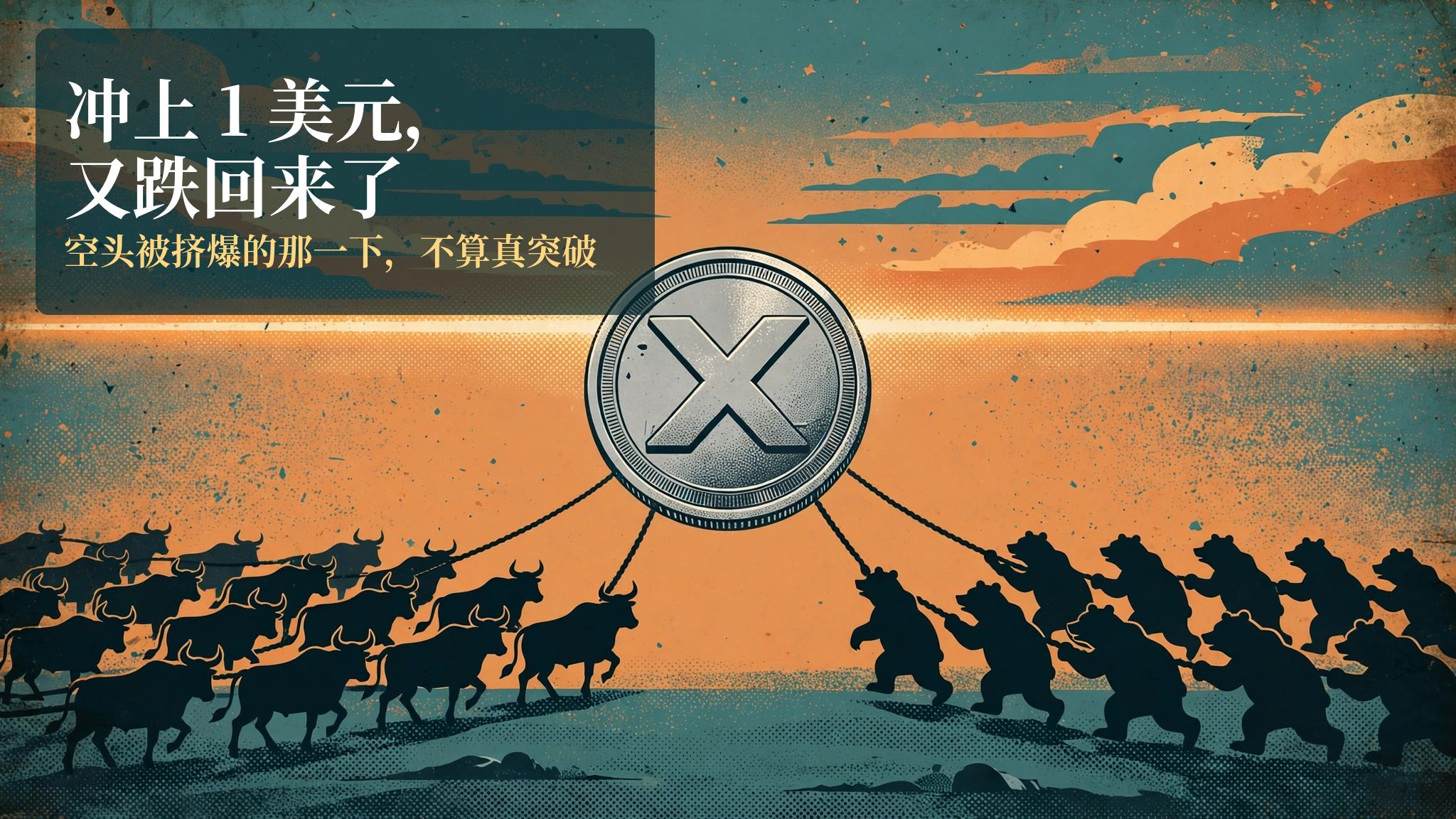
Last night, XRP briefly surged to $1.02, then fell back to $0.94 a few hours later. 📉
That move wasn’t driven by bulls charging in—it was a short squeeze: short positions were liquidated at nearly 7 times the rate of long positions. 24-hour trading volume hit $3.3 billion, up about 146% from the previous day. The price pushed above $1 but couldn’t hold there, and closed back where it started.
Interestingly, the fundamentals aren’t bad: Average daily payments on the XRP Ledger topped 1.1 million in November, more than doubling from October. RLUSD’s circulating supply also climbed to $2.85 billion, putting it among the world’s top five stablecoins.
But the money hasn’t come back yet: XRP spot ETFs saw net outflows of $33 million this month. XRP is down 25% so far in November, making this its worst November on record.
I don’t think yesterday’s move counts as a real breakout at the $1 level. Until the price holds above $1 on strong volume, I’d view this as a recovery—not a reversal.
If it breaks above $1 on strong volume and holds, then this won’t be a false breakout.
If it can’t hold $1, last night’s upper wick says it all.
$XRP
74
·
--
Earnings haven’t even come out yet, and the stock is already up 20%. It briefly surged 35% at the open, then gave back half its gains ⏰
After the U.S. market closes tonight, Dell reports its third-quarter results. The earnings call is at 5:30 a.m. Beijing time tomorrow.
The market expects revenue of about $49.3 billion and earnings per share of about $6.62. The company’s own guidance is a little lower.
The numbers probably won’t look bad: last quarter, AI server orders totaled $60.9 billion, with $95 billion in unshipped orders on the books. This quarter’s AI server revenue guidance alone is about $19 billion.
But HPE showed us yesterday how this can go: revenue up 50%, profits beat expectations, and full-year guidance raised—yet the stock still turned lower after hours, simply because next-quarter guidance and gross margins didn’t keep pace.
I think Dell’s real test tonight isn’t how many servers it sold. It’s whether orders can keep coming in, and whether pricier memory has eaten into gross margins.
Even after this 20% rise, the stock is still more than 40% below its September high of $595. Yesterday’s 20% move rode the tailwind from Nvidia’s comeback; on earnings night, Dell will have to carry that momentum on its own.
If orders don’t keep coming, yesterday’s 20% was borrowed. If they do, this is just the beginning.
$DELL

37
·
--
On the day 16.6 billion tokens unlocked, MON hit a new all-time low in the morning, then touched around $0.0133 by noon. 📈
Today marks the first anniversary of the Monad mainnet. 16.6 billion MON tokens unlocked upon expiry, worth about $190 million—1.4 times the current circulating supply. The team gets 10.7 billion, investors get 4.9 billion, and the remaining roughly 1 billion goes to the treasury.
The token price has already fallen 47% in a month. This morning, it hit a low of $0.01123, a new all-time low.
The surprising part came at noon: MON bounced all the way back to $0.0132, up 18% from the morning low and 8.5% over 24 hours, while BTC and ETH were still falling.
Funding rates were just 0.005%—not exactly a short squeeze. It looks more like someone was actively buying.
The level I mentioned yesterday was $0.0133. If it gets back above that level and holds, this move may not be about waiting for a sell-off anymore. Today, it reached that level.
I think today's green candle shows the market pricing in the unlock ahead of time: after a month of declines, the unlock had already been fully absorbed by the price.
If, over the next few days, the unlocked tokens really do move to exchanges and the price drops to a new low again, then today's candle was a bull trap.
The market has only settled half the score on the unlock today.
$MON

186
·
--
Yesterday it surged to $64,600, but just after 11 today, it had already lost $60,000. 📉
Bitcoin is now hovering around $59,700, down about 2.6% in 24 hours, with a low near $59,400.
Ethereum has also slipped back to around $1,680, and still hasn’t reclaimed the $1,758 level.
What’s troubling is that yesterday’s rebound wasn’t driven by spot buying—it was fueled by a short squeeze.
The market saw $770 million in liquidations over the past 24 hours, with shorts accounting for nearly 70%. Bitcoin alone saw $320 million in liquidations, nearly 70% of them short positions.
There’s been no sign of activity on the spot market. The Coinbase premium has been negative since September 22, so Americans simply aren’t buying.
Money is also flowing out of ETFs: another $1.79 billion flowed out last week, bringing November’s total outflows to $4.14 billion. That’s four straight weeks of net outflows.
I think this rebound was just short covering. If $60,000 doesn’t hold, the next level to watch is the weekend low of $55,000.
If volume picks up and price moves back above $62,000, then this won’t be just a technical recovery.
Thanksgiving week is usually quiet anyway. Once the short covering is over, it all comes down to whether spot buyers step in.
$BTC

150
·
--
☀️ Morning Market Brief 11-24
Overnight highlights:
① Nvidia’s return to work sent U.S. stocks soaring: On Jensen Huang’s first day back, Nvidia surged 31.48% to close at $165.05, adding $952 billion in market value in a single day—a record. The Nasdaq rose 6.51% and the S&P 500 gained 4.73%, their best days since April, while the Dow climbed 3.01%.
② Anthropic held above its IPO price: It closed Monday at $87.64, down 1.43%, after dipping to an intraday low of $84.61—just 1.61% above its $83 IPO price. The greenshoe option has already been fully exercised, and while the broader market surged 6.5%, the stock fell.
③ Bitcoin and Ethereum surged, then gave back their gains: Buoyed by news of the return, Bitcoin briefly reached $64,570 and Ethereum hit $1,845. Both closed back below key levels, at $61,242 and $1,709, respectively.
④ Monad hit another all-time low on the eve of its unlock: MON fell to a record low of $0.01152. About 16.6 billion tokens are set to arrive this afternoon, representing an unlock value of roughly $190 million—greater than its $137 million circulating market cap.
⑤ No returns before Chainflip’s bounty deadline: The deadline passed at 02:38 a.m., with no tokens sent to the return address. The stolen Bitcoin has not moved, while 2,909 Ethereum have gone into Tornado Cash. FLIP hit an all-time low, and the first part of the incident report is out.
What to watch today:
① Monad’s unlock takes place this afternoon: About 16.6 billion MON will arrive. Watch whether selling pressure materializes or the event turns out to be a non-event.
② U.S. PCE and GDP tomorrow night: October PCE and the second estimate of Q3 GDP are both due tomorrow night at 21:30. Core PCE is expected at 3.2%.
③ Thanksgiving week: U.S. markets are closed Thursday and will close early at 13:00 on Friday. HUMA unlocks Thursday and EVAA unlocks Friday, while about $6.6 billion worth of Bitcoin options expire Friday.
U.S. stocks recouped half of last week’s losses in a single day, but crypto couldn’t even hold $62,000. Before PCE takes the stage tomorrow night, let’s first see how Monad gets through this afternoon’s hurdle.
$NVDA
$MON
$BTC
325
·
--
ETH hit a weekend low of $1,539, then climbed back above $1,720 on Monday—the main force behind its rebound was short sellers being forced to close their positions.
About $292 million was liquidated across the market in the past 24 hours, with shorts accounting for nearly 80%. ETH alone saw about $74.7 million in liquidations, more than 80% of them short positions. Binance’s largest single liquidation was a $12 million ETH short.
ETF money is still flowing out: U.S. spot ETH ETFs saw another $97.4 million in net outflows last Friday, marking a fifth consecutive day of outflows. Total outflows over the seven days came to about $290 million.
The real test comes at 9:30 p.m. the day after tomorrow, when the U.S. October PCE data and the second estimate of third-quarter GDP are released at the same time. The market expects core PCE to come in at 3.2% year over year, slightly higher than September’s 3.1%. ⏳
I don’t think ETH is worth chasing at these levels before Wednesday’s PCE release. The rebound is stuck below the $1,758 seven-day moving average. Above it, the market is pricing in a greater-than-90% chance of a December rate hike; below it, ETF funds are still flowing out.
If ETH breaks decisively above $1,758 on strong volume and holds there, this rebound could turn into a reversal.
$ETH

86
·
--
A British bank has moved ordinary people’s fixed-term deposits onto a privacy chain.
Starting November 18, UK-based Monument Bank began tokenizing deposits on the Midnight chain. Its first product is a 12-month fixed-term deposit paying 5.2% annually, with an initial cap of £250 million. It’s the first British bank to do this on a public chain.
Midnight is a privacy chain created by Cardano’s founder, with zero-knowledge privacy as its main feature. Then, on November 19, its foundation signed a memorandum of understanding with a major Japanese payments company—another business where confidentiality is crucial.
NIGHT is today’s top gainer, up around 12% in 24 hours to $0.0495, just below the $0.05 mark.
But this rally is partly riding the broader market rebound, and partly pricing in old news from November 18 and 19: the MOU didn’t name the company and hasn’t been put into practice, while £250 million is a cap, not money that has already arrived.
And NIGHT is still down for the week, and remains 60% below last December’s high of $0.1185.
I think the fact that a privacy chain has, for the first time, genuinely connected to bank money is real—but today’s price isn’t worth chasing. If it breaks above $0.05 on strong volume and holds there, then this rally won’t just be following the market.
Bank money is on-chain, but the token price hasn’t caught up yet. 🔒
$NIGHT

156
·
--
☀️ Market Morning Brief 11-23
Overnight highlights:
① Bitcoin’s seven-week losing streak is confirmed: The weekly close was around $61,200, down more than 6% this week. It’s the seventh consecutive weekly loss, the longest losing streak since 2022. Saturday’s low of $55,100 was the lowest since September 2024; a weekend rebound brought it back above $60,000. SOL held above $70, and spot ETFs saw net inflows of around $4.4 million for the week, ending six consecutive weeks of outflows.
② U.S. stock futures rebound overnight: Nasdaq 100 futures rose around 2% at Monday’s open, while S&P 500 futures gained around 1%. South Korea said it was ready to deploy its market stabilization fund at any time. Taiwan stocks fell 17% last week, their worst week since 1990.
③ Nvidia investigation escalates to criminal level: After California’s attorney general issued an investigative subpoena last Thursday, Bloomberg reported on Saturday that the investigation had expanded to include possible violations of state criminal law. Reuters previously reported that the SEC is also looking into Nvidia’s accounting. Nvidia fell around 14% on Friday; its market value has shed about $2.6 trillion over seven weeks.
④ CYBER cross-chain bridge suspected of being hacked: On Saturday, 5.213 million CYBER tokens were minted without authorization on Solana, and an equal amount of tokens immediately flowed out of the Ethereum bridge’s locking contract. Within an hour, the attacker sold the tokens for around 575 ETH, worth about $970,000. Upbit and Bithumb have suspended deposits and withdrawals, and the project team is still investigating the cause.
⑤ PIEVERSE false breakout: Yesterday afternoon, a surge in volume pushed the price to $4.41, above the previous high of $3.64. The breakout lasted only around four hours before the price fell back to $3.23 in the evening, below the invalidation level.
Today’s watchlist:
① U.S. stocks open tonight: Whether the overnight rebound in futures can hold is key. Last week, the Nasdaq fell around 10% and the Philadelphia Semiconductor Index dropped around 17%. Strategy’s weekly crypto purchase disclosure and the U.S. flash PMI are also due today.
② Monad unlock tomorrow: Around 16.6 billion MON tokens are set for a cliff unlock on November 24, 1.4 times the current circulating supply. As it approaches, watch the movements of locked wallets and changes in funding rates.
③ Chainflip bounty ends tonight: The deadline for the hacker to return 90% and keep 10% is 02:38 tomorrow morning Beijing time. We’ll see whether anyone returns the roughly $12 million stolen.
Bitcoin’s seventh consecutive weekly loss is in the books, and futures have staged an initial rebound overnight. Tonight’s U.S. market open will be the real test of this recovery.
$BTC
$NVDA
$MON
59
·
--
Last Friday, Nvidia had just plunged 14%, and then Oracle popped up over the weekend to say: I’ve got all the money needed to build data centers for OpenAI.
Oracle issued a statement after Friday’s market close: funding for its contract with OpenAI is fully in place. After the final $20 billion financing round earlier this month, it said it was the first hyperscale cloud provider in this investment cycle that was “completely funded,” and added that anyone claiming it was “short on cash” was wrong.
Nvidia reported third-quarter revenue of $115.8 billion, more than double year over year, yet its shares still fell 22.9% in a week, including a 14% drop on Friday alone. The decline wasn’t about its results, but about accounting issues under SEC investigation and the board’s refusal to bring Jensen Huang back.
But Oracle’s statement only guaranteed its own finances: its free cash flow for fiscal 2026 is still negative $23.7 billion. The statement didn’t say a word about whether OpenAI can afford to pay. But the market bought the story for now: Nasdaq 100 futures rose 2.9% in Sunday’s overnight session, South Korea rolled out market-stabilization measures, and Chinese exchanges also lowered margin requirements.
I think tonight, the rebound is the side to watch. If Nvidia holds above $125, the rally can keep going. If it really breaks below $125 and heads lower, this little gain in futures will be a one-day wonder.
Someone’s got the money covered; no one’s got the investigation covered. 💰
$NVDA

2
518
·
--
Three days ago, I left a line in that post: if it broke above $3.64 on strong volume, this rally wasn’t over. 🚀
Today it held above that level and surged all the way to $4.41, leaving its previous all-time high more than 20% behind.
It’s up about 49% in 24 hours and about 126% over the week.
There was no new news today—the rally was driven by money. Open interest in perpetual contracts across all exchanges rose about 58% in a day, reaching around $238 million.
What’s interesting is that the funding rate on OKX is only 0.005%, basically neutral. This rally isn’t being driven by shorts forced to buy back; fresh money is coming in with real conviction.
I don’t think this rally is over yet. There’s no overhead supply weighing it down.
If it falls back below $3.64, then this was a false breakout.
The token supply is still concentrated: the top 25 holders control about 97% of the market cap.
$3.64 has turned from a ceiling into a floor. Now we’ll see if it can hold.
$PIEVERSE

1
233
·
--
Shorts are paying 1.5% every 8 hours just to keep a coin down—even though there’s no new news about it today. 💸
ENSO is up about 10% again today, trading at around $0.51.
A week ago, it was just $0.37—a gain of about 38% in 7 days.
I looked around, and all the supposed good news I could find today was old news resurfacing: that February article about Chainlink cross-chain integration.
No new updates, but money is definitely flowing in: Binance perpetual open interest has more than doubled in a week, and 24-hour trading volume is close to $20 million—nearly twice its market cap.
I don’t think this rally is being driven by good news. I think shorts are spending money to give longs a lift.
If it holds above $0.50, the short squeeze still has room to run.
If it drops back below $0.46, then the momentum is gone.
The money’s in, the old news has resurfaced—now let’s see how many more rounds the shorts can afford to pay for.
$ENSO

1
448
·
--
On the second day after the unlock, the low was smashed through again. 📉
At 8 a.m. yesterday, around 2.1 billion AKE tokens were unlocked on schedule, accounting for 9.25% of the circulating supply. Roughly 70% went to investors and insiders.
In yesterday’s post, I wrote: “The key is whether $0.006 can hold. If the price can’t get back above it, the unlocked tokens will sooner or later put pressure on the market again.”
That selling pressure hit today: the token price briefly fell to around $0.0031, smashing through the $0.0045 low it had just held yesterday. It’s down more than 40% in 24 hours.
Market sentiment has turned bearish too: perpetual futures funding rates have turned negative, meaning shorts are paying. Of the $1.14 million liquidated over the past 24 hours, 60% was from long positions.
I don’t see much reason to buy the dip in the short term. The next support to watch is $0.0025, where this rally began on November 13.
If the price manages to get back above $0.0045 someday, we can chalk today’s move up to an overreaction. If it can’t, another batch of the same size is due to unlock on December 21.
$AKE

1
78
Log in to explore more content
Join global crypto users on Binance Square
⚡️ Get latest and useful information about crypto.
💬 Trusted by the world’s largest crypto exchange.
👍 Discover real insights from verified creators.
Email / Phone number