

FeryX Trades
21.9k Posts

FeryX Trades
 Square Verified+
Report
Block User
فريال | متداولة شرسة لا تعرف التراجع 📊
أحلل بذكاء، أقتنص الفرص، وأبني نجاحي بثقة.
هدفي الحرية المالية وصناعة اسمي بقوة في عالم التداول.
4.3K+ Following
38.3K+ Followers
37.1K+ Liked
Posts
All
Quotes
Live
·
--
Bullish
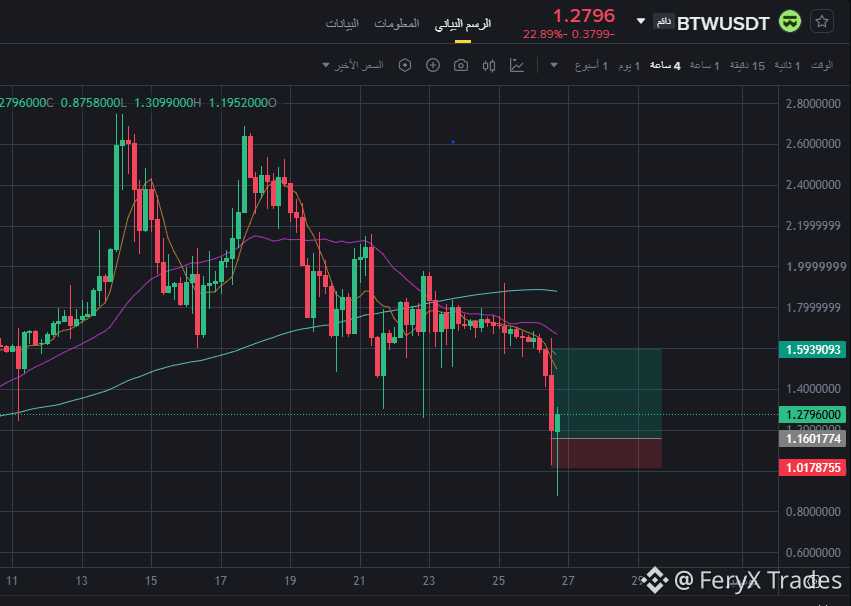
Urgent alert, traders‼️ A lightning-fast scalping trade is heating up on **$BTW **, and the bulls are gearing up for an upward surge and a sweep through resistance! 🚀⚡️
Smart money is bouncing strongly above the current support zone, while buyers are absorbing sell orders to push the price back onto an upward trajectory. Quick opportunities don't wait for the hesitant—getting positioned early can secure you the best returns before the move accelerates!
### **🟢 Buy $BTW (Long – quick scalping trade and bounce capture)**
🔹 **Entry zone:** $1.1946–$1.2013 (immediate entry and tactical positioning within the zone)
🛑 **Stop loss (SL):** $1.0176 (a tight, ironclad safety net to protect your capital)
🎯 **Target 1:** $1.2339 (quick catch and immediate profit-taking)
🎯 **Target 2:** $1.4000
🎯 **Final target:** $1.5971 (the major milestone for breaking through the peak and securing astronomical profits 🎯🚀)
**Tactical plan:**
Stick to small position sizes and strict risk management—never compromise on your stop loss. Set your orders professionally, take your positions now... and thank me later when the targets are hit! 📈⚡️💰
{future}(BTWUSDT)
Urgent alert, traders‼️ A lightning-fast scalping trade is heating up on **$BTW **, and the bulls are gearing up for an upward surge and a sweep through resistance! 🚀⚡️
Smart money is bouncing strongly above the current support zone, while buyers are absorbing sell orders to push the price back onto an upward trajectory. Quick opportunities don't wait for the hesitant—getting positioned early can secure you the best returns before the move accelerates!
### **🟢 Buy $BTW (Long – quick scalping trade and bounce capture)**
🔹 **Entry zone:** $1.1946–$1.2013 (immediate entry and tactical positioning within the zone)
🛑 **Stop loss (SL):** $1.0176 (a tight, ironclad safety net to protect your capital)
🎯 **Target 1:** $1.2339 (quick catch and immediate profit-taking)
🎯 **Target 2:** $1.4000
🎯 **Final target:** $1.5971 (the major milestone for breaking through the peak and securing astronomical profits 🎯🚀)
**Tactical plan:**
Stick to small position sizes and strict risk management—never compromise on your stop loss. Set your orders professionally, take your positions now... and thank me later when the targets are hit! 📈⚡️💰
Smart money is bouncing strongly above the current support zone, while buyers are absorbing sell orders to push the price back onto an upward trajectory. Quick opportunities don't wait for the hesitant—getting positioned early can secure you the best returns before the move accelerates!
### **🟢 Buy $BTW (Long – quick scalping trade and bounce capture)**
🔹 **Entry zone:** $1.1946–$1.2013 (immediate entry and tactical positioning within the zone)
🛑 **Stop loss (SL):** $1.0176 (a tight, ironclad safety net to protect your capital)
🎯 **Target 1:** $1.2339 (quick catch and immediate profit-taking)
🎯 **Target 2:** $1.4000
🎯 **Final target:** $1.5971 (the major milestone for breaking through the peak and securing astronomical profits 🎯🚀)
**Tactical plan:**
Stick to small position sizes and strict risk management—never compromise on your stop loss. Set your orders professionally, take your positions now... and thank me later when the targets are hit! 📈⚡️💰
1
217
·
--
Bullish
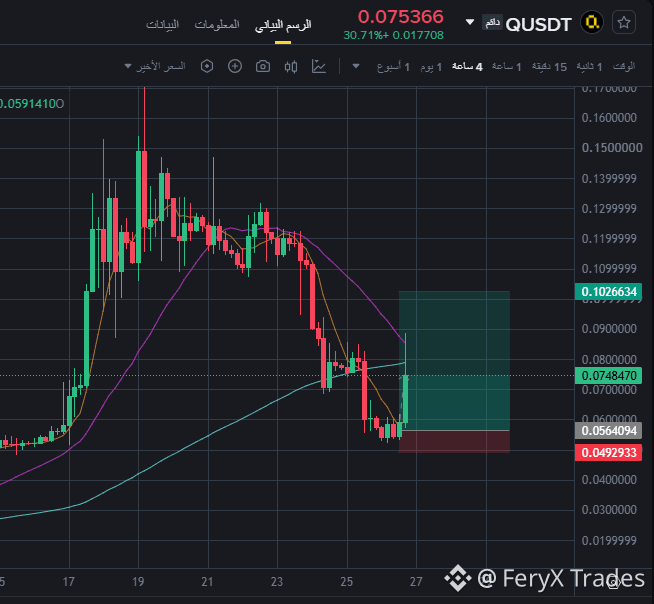
A recovery signal and a frightening reversal are igniting **$Q **, and the bulls are gearing up for a crushing comeback targeting **$0.10**, champions! 🚀🔥
After a free fall and a bearish marathon from the $0.1316 peak down to the $0.052 pivot low, the price is reaching a critical compression point, and smart money flows are starting to appear to fuel the reversal! The critical bounce from the support zone paves the way for a quick surge and a breakout through resistance levels. A break above $0.065 will be the spark that launches the rocket, sending the price soaring toward its lofty targets!
Professional snipers don’t chase green candles at the highs; they secure their positions right at the reversal bottom before the move accelerates!
### **🟢 Buy $Q (Long - Catch the major reversal and storm past $0.10)**
🔹 **Entry range:** $0.053–$0.056 (tactical entry, taking advantage of stability above key support)
🛑 **Stop loss (SL):** $0.049 (a solid, tightly secured safety belt below the low to protect capital)
🎯 **Target 1:** $0.065 (quick scalp, break the first resistance and secure positions)
🎯 **Target 2:** $0.080
🎯 **Final target:** $0.100 (the major milestone to storm the blazing peak and take astronomical profits 🎯🚀)
**Tactical plan:**
The bottom is holding firmly above $0.052, and buying momentum is building for takeoff! Buckle up, hit the buy button now, and execute your positions with complete professionalism and strict risk management... Thank me later when we smash through the targets!
A recovery signal and a frightening reversal are igniting **$Q **, and the bulls are gearing up for a crushing comeback targeting **$0.10**, champions! 🚀🔥
After a free fall and a bearish marathon from the $0.1316 peak down to the $0.052 pivot low, the price is reaching a critical compression point, and smart money flows are starting to appear to fuel the reversal! The critical bounce from the support zone paves the way for a quick surge and a breakout through resistance levels. A break above $0.065 will be the spark that launches the rocket, sending the price soaring toward its lofty targets!
Professional snipers don’t chase green candles at the highs; they secure their positions right at the reversal bottom before the move accelerates!
### **🟢 Buy $Q (Long - Catch the major reversal and storm past $0.10)**
🔹 **Entry range:** $0.053–$0.056 (tactical entry, taking advantage of stability above key support)
🛑 **Stop loss (SL):** $0.049 (a solid, tightly secured safety belt below the low to protect capital)
🎯 **Target 1:** $0.065 (quick scalp, break the first resistance and secure positions)
🎯 **Target 2:** $0.080
🎯 **Final target:** $0.100 (the major milestone to storm the blazing peak and take astronomical profits 🎯🚀)
**Tactical plan:**
The bottom is holding firmly above $0.052, and buying momentum is building for takeoff! Buckle up, hit the buy button now, and execute your positions with complete professionalism and strict risk management... Thank me later when we smash through the targets!
After a free fall and a bearish marathon from the $0.1316 peak down to the $0.052 pivot low, the price is reaching a critical compression point, and smart money flows are starting to appear to fuel the reversal! The critical bounce from the support zone paves the way for a quick surge and a breakout through resistance levels. A break above $0.065 will be the spark that launches the rocket, sending the price soaring toward its lofty targets!
Professional snipers don’t chase green candles at the highs; they secure their positions right at the reversal bottom before the move accelerates!
### **🟢 Buy $Q (Long - Catch the major reversal and storm past $0.10)**
🔹 **Entry range:** $0.053–$0.056 (tactical entry, taking advantage of stability above key support)
🛑 **Stop loss (SL):** $0.049 (a solid, tightly secured safety belt below the low to protect capital)
🎯 **Target 1:** $0.065 (quick scalp, break the first resistance and secure positions)
🎯 **Target 2:** $0.080
🎯 **Final target:** $0.100 (the major milestone to storm the blazing peak and take astronomical profits 🎯🚀)
**Tactical plan:**
The bottom is holding firmly above $0.052, and buying momentum is building for takeoff! Buckle up, hit the buy button now, and execute your positions with complete professionalism and strict risk management... Thank me later when we smash through the targets!
3
174
·
--
Bullish
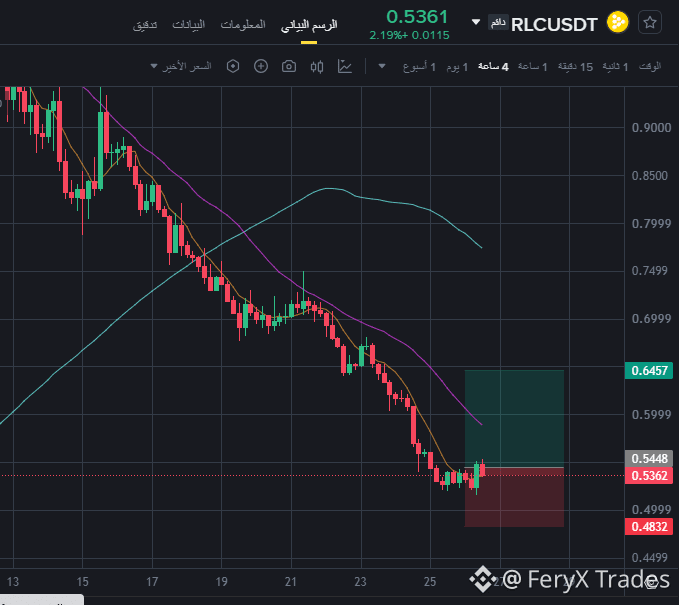
The **$RLC ** coin is catching its breath again, and the bulls are gearing up for a fierce comeback and a massive bounce off the bottom! 🚀⚡️
After a sharp correction, the price is showing a shockingly strong and sudden positive reaction, rising above the pivot line at $0.5153! Smart money is starting to flow in heavily, swallowing up all sell offers. A clean break above $0.55 will be the golden key to opening the door to a rally and fueling the move toward our higher targets!
Professional snipers aren’t sitting on the sidelines—they’re pouncing on the first wave of the reversal before the rocket takes off!
### **🟢 Buy $RLC (Long - Catch the Reversal and Smash the Targets)**
* **Entry range:** $0.5400–$0.5500 (tactical entry, taking advantage of strong consolidation)
* **🛑 Stop loss (SL):** $0.4800 (a tight, ironclad safety belt to protect your capital)
🎯 **Target 1:** $0.5800 (quick catch and initial profit-taking)
🎯 **Target 2:** $0.6100
🎯 **Final target:** $0.6400 (the major stop on the way to conquering the peak and taking astronomical profits 🎯🚀)
**Tactical plan:**
Resistance is still ahead, but the recovery signal is clear and buying momentum is building. Manage your risk with iron discipline, take your positions now... and thank me later when the targets are hit! 📈⚡️💰
The **$RLC ** coin is catching its breath again, and the bulls are gearing up for a fierce comeback and a massive bounce off the bottom! 🚀⚡️
After a sharp correction, the price is showing a shockingly strong and sudden positive reaction, rising above the pivot line at $0.5153! Smart money is starting to flow in heavily, swallowing up all sell offers. A clean break above $0.55 will be the golden key to opening the door to a rally and fueling the move toward our higher targets!
Professional snipers aren’t sitting on the sidelines—they’re pouncing on the first wave of the reversal before the rocket takes off!
### **🟢 Buy $RLC (Long - Catch the Reversal and Smash the Targets)**
* **Entry range:** $0.5400–$0.5500 (tactical entry, taking advantage of strong consolidation)
* **🛑 Stop loss (SL):** $0.4800 (a tight, ironclad safety belt to protect your capital)
🎯 **Target 1:** $0.5800 (quick catch and initial profit-taking)
🎯 **Target 2:** $0.6100
🎯 **Final target:** $0.6400 (the major stop on the way to conquering the peak and taking astronomical profits 🎯🚀)
**Tactical plan:**
Resistance is still ahead, but the recovery signal is clear and buying momentum is building. Manage your risk with iron discipline, take your positions now... and thank me later when the targets are hit! 📈⚡️💰
After a sharp correction, the price is showing a shockingly strong and sudden positive reaction, rising above the pivot line at $0.5153! Smart money is starting to flow in heavily, swallowing up all sell offers. A clean break above $0.55 will be the golden key to opening the door to a rally and fueling the move toward our higher targets!
Professional snipers aren’t sitting on the sidelines—they’re pouncing on the first wave of the reversal before the rocket takes off!
### **🟢 Buy $RLC (Long - Catch the Reversal and Smash the Targets)**
* **Entry range:** $0.5400–$0.5500 (tactical entry, taking advantage of strong consolidation)
* **🛑 Stop loss (SL):** $0.4800 (a tight, ironclad safety belt to protect your capital)
🎯 **Target 1:** $0.5800 (quick catch and initial profit-taking)
🎯 **Target 2:** $0.6100
🎯 **Final target:** $0.6400 (the major stop on the way to conquering the peak and taking astronomical profits 🎯🚀)
**Tactical plan:**
Resistance is still ahead, but the recovery signal is clear and buying momentum is building. Manage your risk with iron discipline, take your positions now... and thank me later when the targets are hit! 📈⚡️💰
1
429
·
--
Bearish
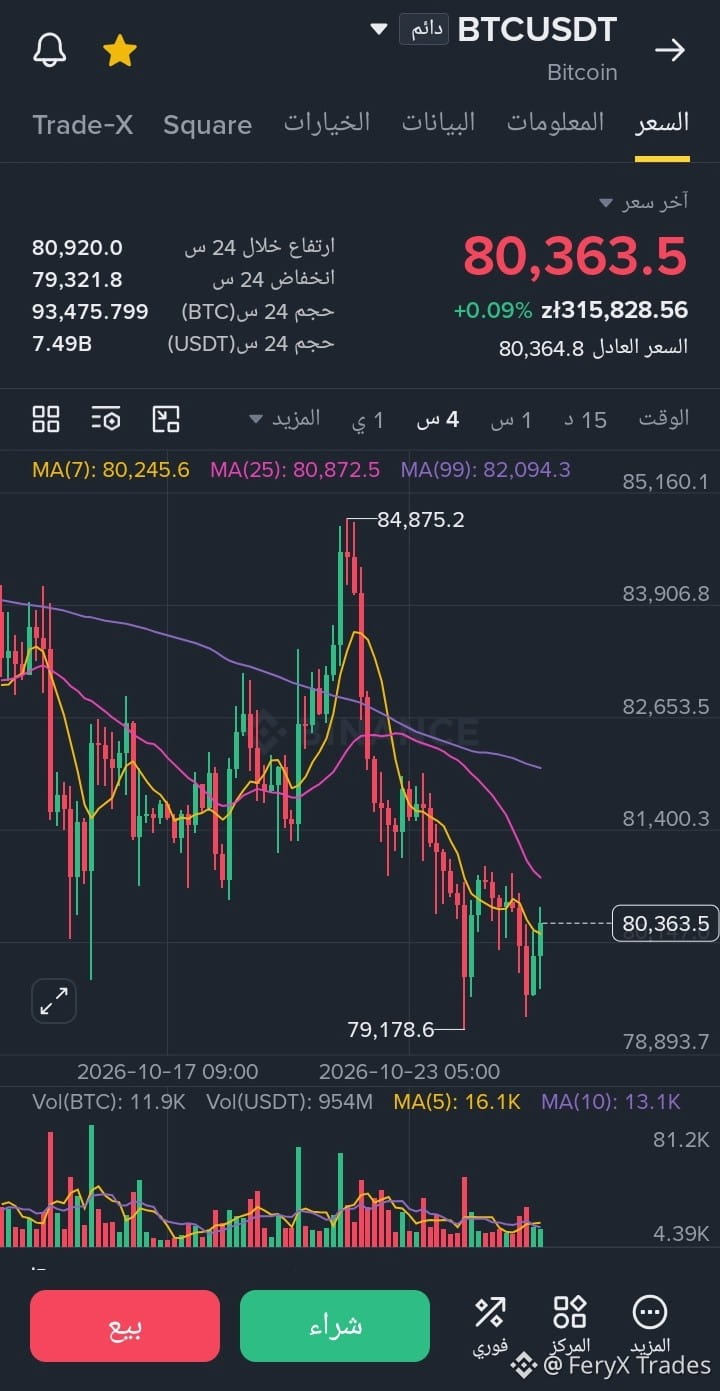
Urgent and decisive warning, champions‼️ The king **$BTC ** is showing severe signs of weakness, and selling liquidity is preparing to drive the price below the descending trendline! 📉🔥
Buyers’ desperate attempts are breaking and collapsing beneath the firm resistance line at $80,317, while the whales are imposing total dominance to defend the top and start dragging prices toward the abyss. Smart money is slowly pulling the rug, and we’re getting ahead of the crowd by opening a **massive short** to capture the coming brutal slide!
### **🔴 Short $BTC (Short sale - hunt the leader and dismantle the rally)**
* **Entry range:** $80,070–$80,110 (tight positioning and exploiting weakness below resistance)
* **🛑 Stop loss (SL):** $80,864 (an iron safety belt above the squeeze zone to eliminate traps)
🎯 **Main target:** $78,812 (the major stop to sweep the anticipated low and fully drain liquidity 🎯📉)
**Tactical plan:**
This trade depends entirely on continued rejection below resistance and bears tightening the noose. Selling momentum is building, and the bleeding is only a matter of time; manage risk with iron discipline, take your positions professionally… and thank me later at the broken low! 📉⚡️💰
Urgent and decisive warning, champions‼️ The king **$BTC ** is showing severe signs of weakness, and selling liquidity is preparing to drive the price below the descending trendline! 📉🔥
Buyers’ desperate attempts are breaking and collapsing beneath the firm resistance line at $80,317, while the whales are imposing total dominance to defend the top and start dragging prices toward the abyss. Smart money is slowly pulling the rug, and we’re getting ahead of the crowd by opening a **massive short** to capture the coming brutal slide!
### **🔴 Short $BTC (Short sale - hunt the leader and dismantle the rally)**
* **Entry range:** $80,070–$80,110 (tight positioning and exploiting weakness below resistance)
* **🛑 Stop loss (SL):** $80,864 (an iron safety belt above the squeeze zone to eliminate traps)
🎯 **Main target:** $78,812 (the major stop to sweep the anticipated low and fully drain liquidity 🎯📉)
**Tactical plan:**
This trade depends entirely on continued rejection below resistance and bears tightening the noose. Selling momentum is building, and the bleeding is only a matter of time; manage risk with iron discipline, take your positions professionally… and thank me later at the broken low! 📉⚡️💰
Buyers’ desperate attempts are breaking and collapsing beneath the firm resistance line at $80,317, while the whales are imposing total dominance to defend the top and start dragging prices toward the abyss. Smart money is slowly pulling the rug, and we’re getting ahead of the crowd by opening a **massive short** to capture the coming brutal slide!
### **🔴 Short $BTC (Short sale - hunt the leader and dismantle the rally)**
* **Entry range:** $80,070–$80,110 (tight positioning and exploiting weakness below resistance)
* **🛑 Stop loss (SL):** $80,864 (an iron safety belt above the squeeze zone to eliminate traps)
🎯 **Main target:** $78,812 (the major stop to sweep the anticipated low and fully drain liquidity 🎯📉)
**Tactical plan:**
This trade depends entirely on continued rejection below resistance and bears tightening the noose. Selling momentum is building, and the bleeding is only a matter of time; manage risk with iron discipline, take your positions professionally… and thank me later at the broken low! 📉⚡️💰
1
133
·
--
Bearish
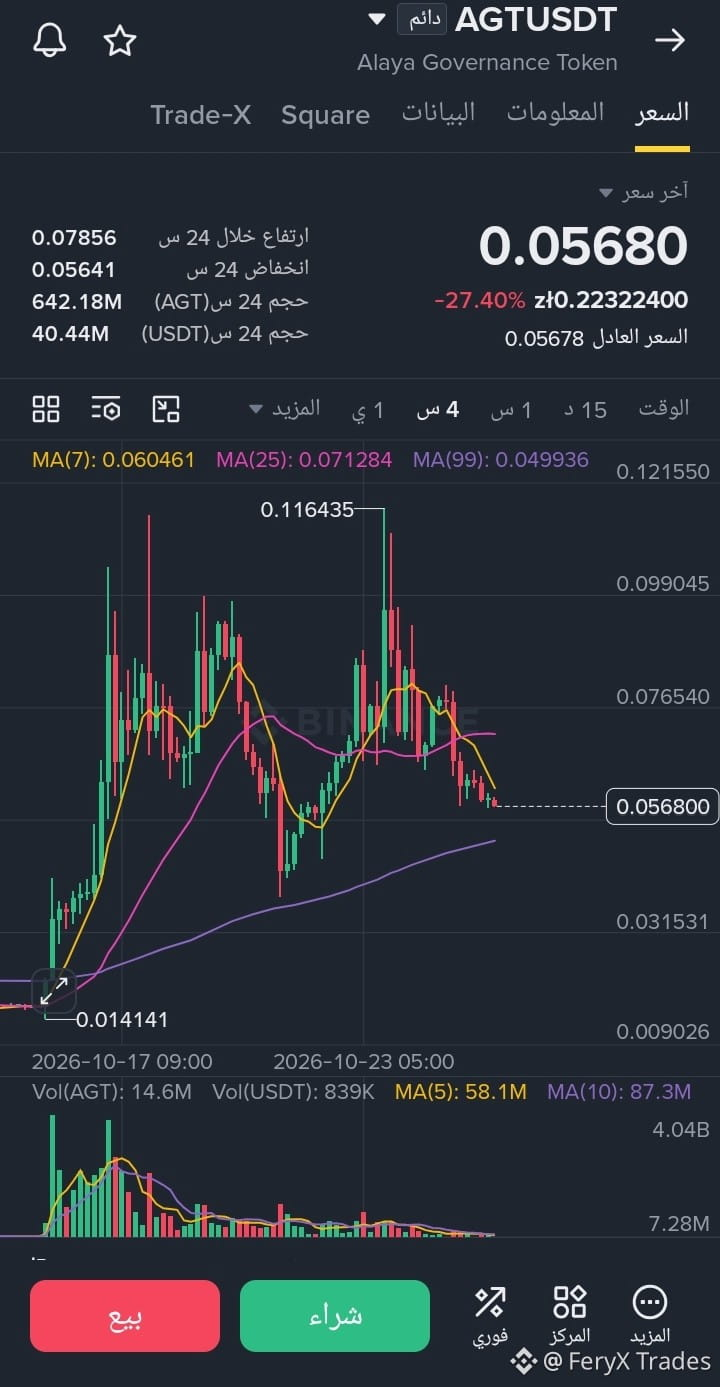
Critical support test fails for $AGT , and the bears tighten their grip to drag prices to deeper levels! 📉💀
The price is wobbling and losing its balance within the current range amid mounting selling pressure and the bulls’ lack of any real lines of defense. Smart money is sending clear signals that a collapse toward lower targets is only a matter of time, and late long positions are about to fall into the liquidation trap!
True snipers don’t wait for the bleeding to worsen; they seize the opportunity now to ride the freefall with complete professionalism!
🔴 Short $AGT (short selling — hunting the breakdown and sweeping the lows)
🔹 Entry range: 0.05634$– 0.05806$ (a precise position to take advantage of a weak bounce toward resistance)
🛑 Stop loss (SL): 0.06200$ (a solid, tightly secured safety belt above the squeeze zone to invalidate the trade)
🎯 Target 1: 0.05548$ (a quick catch and immediate downside return)
🎯 Target 2: 0.05377$
🎯 Target 3: 0.05262$ (the major stop for sweeping the anticipated low and fully draining liquidity)
Buckle up, prepare your short trades with complete discipline and strict risk management… and thank me later when we scoop up the profits with the next crash candle! 📉⚡️💰
Critical support test fails for $AGT , and the bears tighten their grip to drag prices to deeper levels! 📉💀
The price is wobbling and losing its balance within the current range amid mounting selling pressure and the bulls’ lack of any real lines of defense. Smart money is sending clear signals that a collapse toward lower targets is only a matter of time, and late long positions are about to fall into the liquidation trap!
True snipers don’t wait for the bleeding to worsen; they seize the opportunity now to ride the freefall with complete professionalism!
🔴 Short $AGT (short selling — hunting the breakdown and sweeping the lows)
🔹 Entry range: 0.05634$– 0.05806$ (a precise position to take advantage of a weak bounce toward resistance)
🛑 Stop loss (SL): 0.06200$ (a solid, tightly secured safety belt above the squeeze zone to invalidate the trade)
🎯 Target 1: 0.05548$ (a quick catch and immediate downside return)
🎯 Target 2: 0.05377$
🎯 Target 3: 0.05262$ (the major stop for sweeping the anticipated low and fully draining liquidity)
Buckle up, prepare your short trades with complete discipline and strict risk management… and thank me later when we scoop up the profits with the next crash candle! 📉⚡️💰
The price is wobbling and losing its balance within the current range amid mounting selling pressure and the bulls’ lack of any real lines of defense. Smart money is sending clear signals that a collapse toward lower targets is only a matter of time, and late long positions are about to fall into the liquidation trap!
True snipers don’t wait for the bleeding to worsen; they seize the opportunity now to ride the freefall with complete professionalism!
🔴 Short $AGT (short selling — hunting the breakdown and sweeping the lows)
🔹 Entry range: 0.05634$– 0.05806$ (a precise position to take advantage of a weak bounce toward resistance)
🛑 Stop loss (SL): 0.06200$ (a solid, tightly secured safety belt above the squeeze zone to invalidate the trade)
🎯 Target 1: 0.05548$ (a quick catch and immediate downside return)
🎯 Target 2: 0.05377$
🎯 Target 3: 0.05262$ (the major stop for sweeping the anticipated low and fully draining liquidity)
Buckle up, prepare your short trades with complete discipline and strict risk management… and thank me later when we scoop up the profits with the next crash candle! 📉⚡️💰
1
86
·
--
Bearish
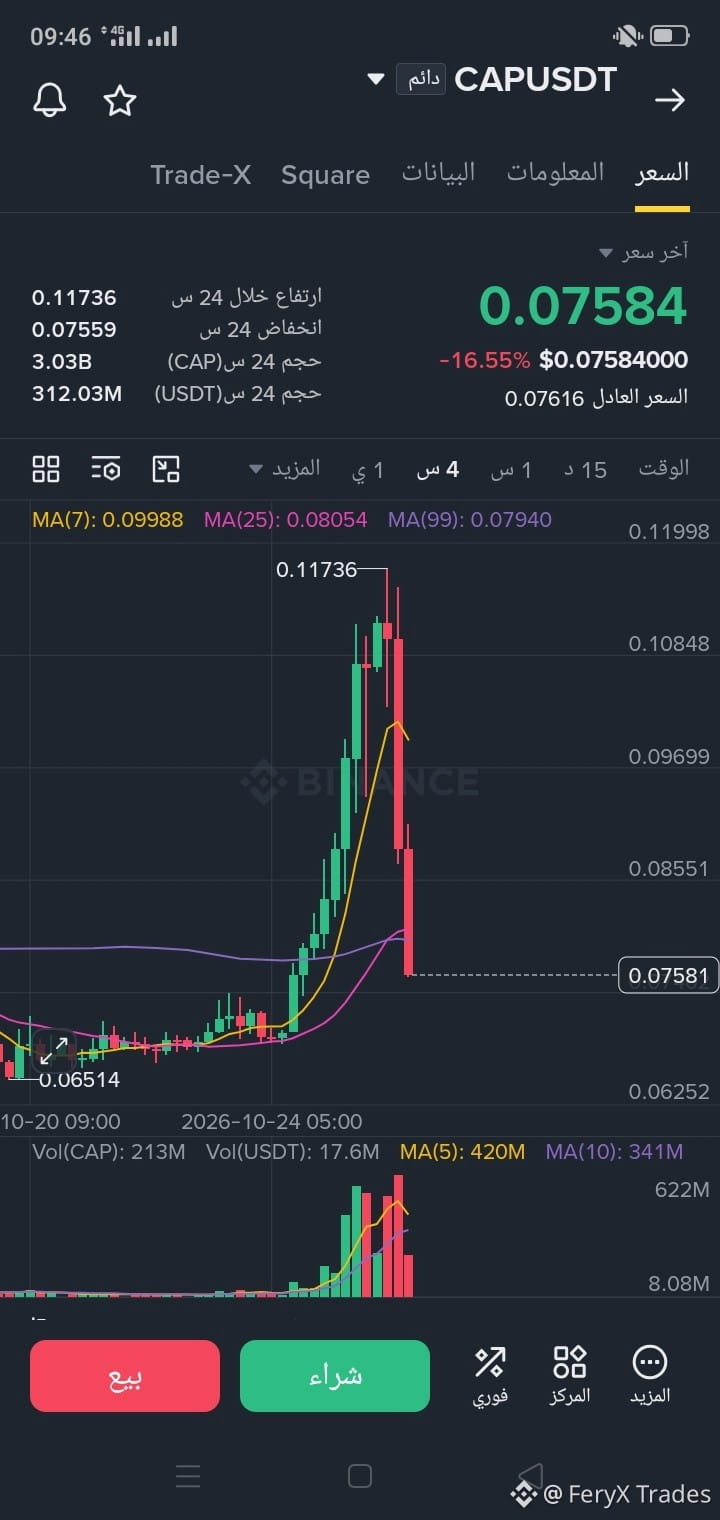
Urgent alert for everyone‼️ $CAP is undergoing a bloody slaughter and teetering under the weight of a free fall! 📉🔥
The harsh, firm rejection at $0.117 gave the bears the green light to tighten their grip with a vengeance, and the devastating break below the pivotal support at $0.01033 completely shattered the bulls’ illusions! Smart money is pulling the rug out, and we’re getting ahead of the crowd by opening a massive short position to catch the slide toward the abyss!
🔴 Short $CAP (short selling — hunting the big crash)
🔹 Entry range: $0.0961–$0.0991 (tight positioning as selling momentum continues)
🛑 Stop loss (SL): $0.11319 (an iron safety belt above the breakdown zone to protect capital)
🎯 Main target: $0.07768 (the major stop to sweep the anticipated bottom and fully drain liquidity 🎯📉)
Tactical plan:
The bleeding is accelerating, and strong momentum is pressing mercilessly toward deeper levels! The volatility is high, so manage risk with iron discipline and execute your orders professionally… and thank me later at the shattered bottom! 📉⚡️💰
Urgent alert for everyone‼️ $CAP is undergoing a bloody slaughter and teetering under the weight of a free fall! 📉🔥
The harsh, firm rejection at $0.117 gave the bears the green light to tighten their grip with a vengeance, and the devastating break below the pivotal support at $0.01033 completely shattered the bulls’ illusions! Smart money is pulling the rug out, and we’re getting ahead of the crowd by opening a massive short position to catch the slide toward the abyss!
🔴 Short $CAP (short selling — hunting the big crash)
🔹 Entry range: $0.0961–$0.0991 (tight positioning as selling momentum continues)
🛑 Stop loss (SL): $0.11319 (an iron safety belt above the breakdown zone to protect capital)
🎯 Main target: $0.07768 (the major stop to sweep the anticipated bottom and fully drain liquidity 🎯📉)
Tactical plan:
The bleeding is accelerating, and strong momentum is pressing mercilessly toward deeper levels! The volatility is high, so manage risk with iron discipline and execute your orders professionally… and thank me later at the shattered bottom! 📉⚡️💰
The harsh, firm rejection at $0.117 gave the bears the green light to tighten their grip with a vengeance, and the devastating break below the pivotal support at $0.01033 completely shattered the bulls’ illusions! Smart money is pulling the rug out, and we’re getting ahead of the crowd by opening a massive short position to catch the slide toward the abyss!
🔴 Short $CAP (short selling — hunting the big crash)
🔹 Entry range: $0.0961–$0.0991 (tight positioning as selling momentum continues)
🛑 Stop loss (SL): $0.11319 (an iron safety belt above the breakdown zone to protect capital)
🎯 Main target: $0.07768 (the major stop to sweep the anticipated bottom and fully drain liquidity 🎯📉)
Tactical plan:
The bleeding is accelerating, and strong momentum is pressing mercilessly toward deeper levels! The volatility is high, so manage risk with iron discipline and execute your orders professionally… and thank me later at the shattered bottom! 📉⚡️💰
1
115
·
--
Bearish
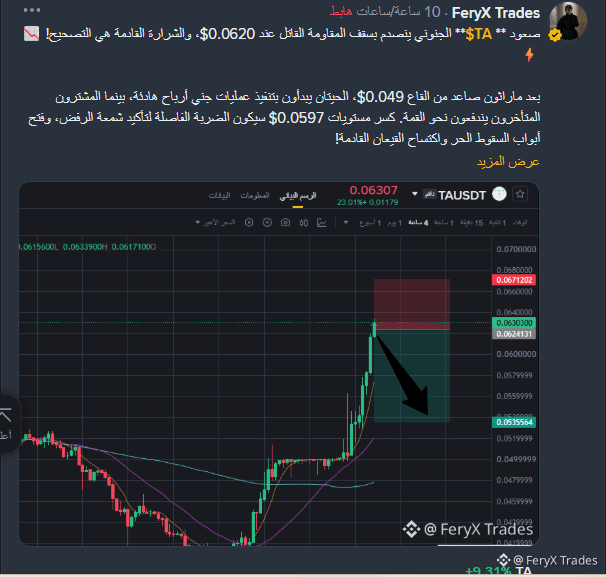
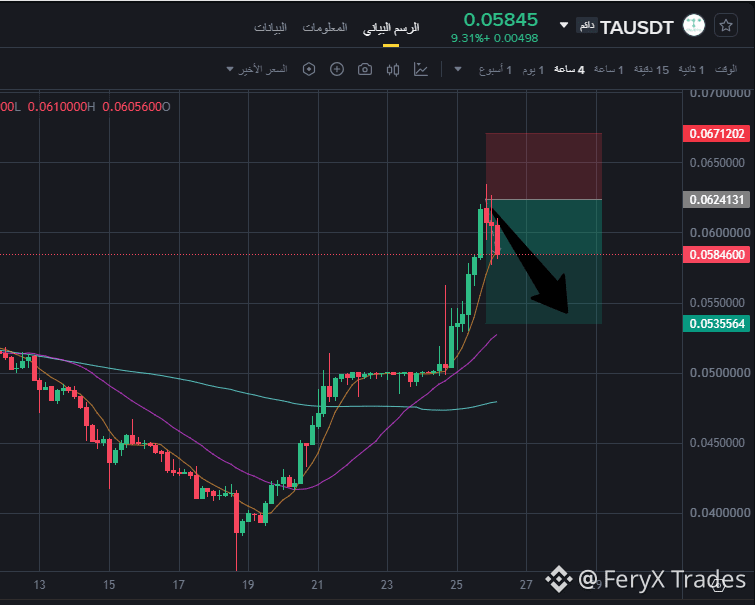
$TA The first target has been hit 😎🔥 The trend is down, exactly as we expected 😍
We’re still holding the short, guys 🤝 Don’t forget to move your stop-loss to the first target
and secure your profits!
{future}(TAUSDT)
$TA The first target has been hit 😎🔥 The trend is down, exactly as we expected 😍
We’re still holding the short, guys 🤝 Don’t forget to move your stop-loss to the first target
and secure your profits!
We’re still holding the short, guys 🤝 Don’t forget to move your stop-loss to the first target
and secure your profits!
FeryX Trades
·
--
BearishThe explosive **$TA ** rally crashes into the deadly resistance ceiling at $0.0620—and the next spark is a correction! 📉⚡️
After a bullish marathon from the $0.049 low, whales are beginning to quietly take profits, while late buyers rush toward the top. A break below $0.0597 would be the decisive signal confirming the rejection candle, opening the door to a freefall and a sweep of the upcoming lows!
Professional snipers don’t trade on emotion; they wait for signal confirmation before positioning alongside smart money!
### **🔴 Short $TA (Short sale—breakdown hunt and rocket correction)**
* **Entry zone:** $0.0610–$0.0620 (taking advantage of rejection at the resistance ceiling)
* **🛑 Stop loss (SL):** $0.0670 (a tight ironclad safety belt above the breakout to invalidate the trade)
🎯 **Target 1:** $0.0580 (a swift drop and initial profit-taking)
🎯 **Target 2:** $0.0560
🎯 **Final target:** $0.05350 (the major stop for sweeping the anticipated low)
**Tactic:**
Don’t short recklessly; wait for confirmation of a breakdown below $0.0597 to confirm selling momentum. Manage risk with ironclad discipline and secure your positions professionally… thank me later at the bottom! 📉⚡️💰
After a bullish marathon from the $0.049 low, whales are beginning to quietly take profits, while late buyers rush toward the top. A break below $0.0597 would be the decisive signal confirming the rejection candle, opening the door to a freefall and a sweep of the upcoming lows!
Professional snipers don’t trade on emotion; they wait for signal confirmation before positioning alongside smart money!
### **🔴 Short $TA (Short sale—breakdown hunt and rocket correction)**
* **Entry zone:** $0.0610–$0.0620 (taking advantage of rejection at the resistance ceiling)
* **🛑 Stop loss (SL):** $0.0670 (a tight ironclad safety belt above the breakout to invalidate the trade)
🎯 **Target 1:** $0.0580 (a swift drop and initial profit-taking)
🎯 **Target 2:** $0.0560
🎯 **Final target:** $0.05350 (the major stop for sweeping the anticipated low)
**Tactic:**
Don’t short recklessly; wait for confirmation of a breakdown below $0.0597 to confirm selling momentum. Manage risk with ironclad discipline and secure your positions professionally… thank me later at the bottom! 📉⚡️💰
3
234
·
--
Bearish
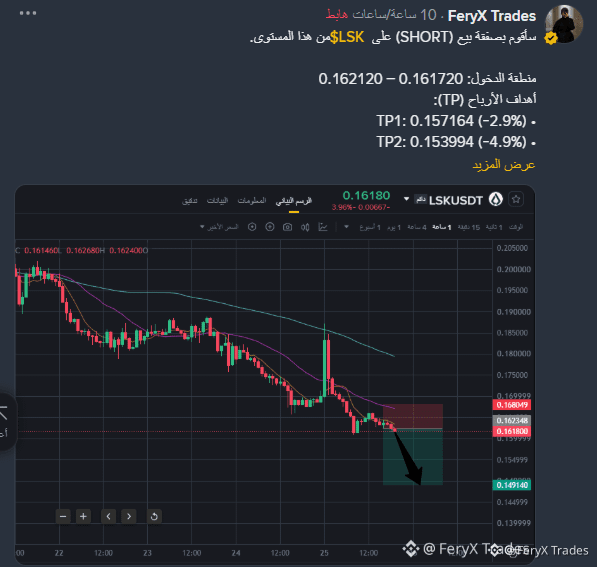
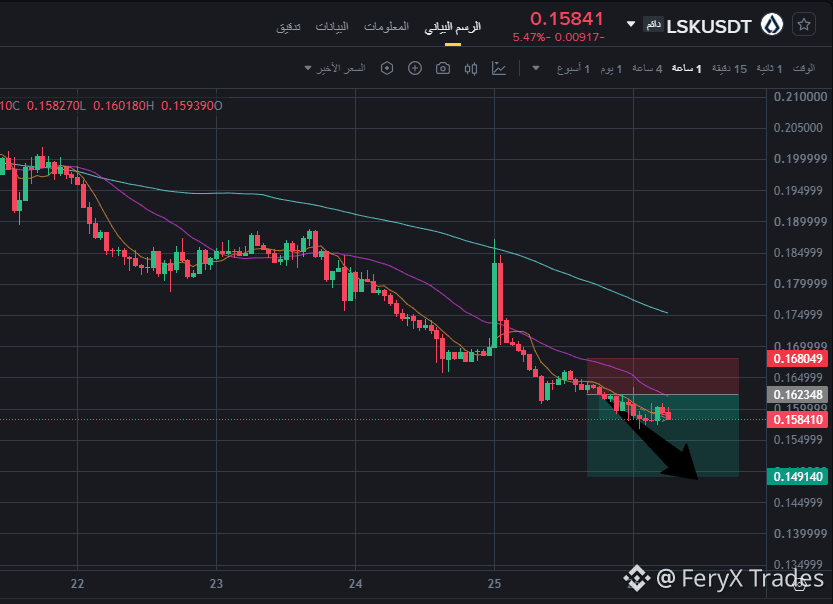
The first target of the short trade has been hit $LSK
Keep your eyes on the chart!
{future}(LSKUSDT)
The first target of the short trade has been hit $LSK
Keep your eyes on the chart!
Keep your eyes on the chart!
FeryX Trades
·
--
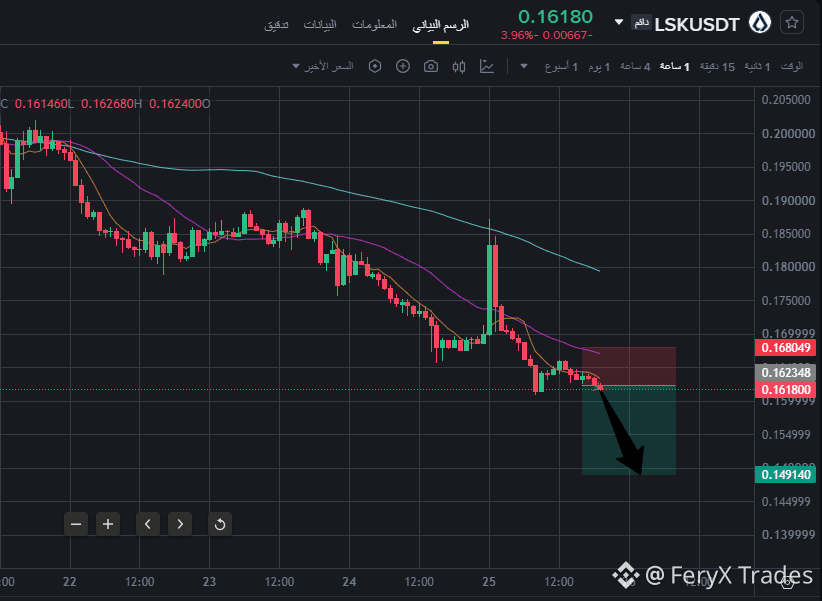
BearishI’m entering a SHORT position on $LSK at this level.
Entry zone: 0.161720–0.162120
Take-profit targets (TP):
• TP1: 0.157164 (-2.9%)
• TP2: 0.153994 (-4.9%)
• TP3: 0.149238 (-7.8%)
Stop loss (SL): 0.168261 (+3.9%)
Bounces in $LSK are still weak and fade whenever they encounter oversold zones.
I’ll only enter within the specified zone. My plan is to close half the position at the first target, a quarter at the second, and the rest at the third, while moving the stop loss to the entry point as soon as TP1 is reached. Since the trade setup has moderate strength, I’ll keep my position size small.
My bearish outlook is supported by the alignment of 5 out of 12 technical indicators in favor of a decline, as sellers continue to dominate on the 1-hour and 4-hour timeframes, pushing the price below the EMA50 and EMA200.
A temporary bounce is possible given how far the price is from its average on the 1-hour timeframe, but there’s an opportunity now to capitalize on the continued decline. If sellers remain in control, the downward move is in our favor. However, if the price rebounds above 0.168261, the setup is invalidated, and I’ll exit without hesitation.
What targets do you set for your LSK short trades?
This is my personal market analysis, not financial advice (NFA). Risk management and research (DYOR) are your responsibility. This content is for educational purposes and should not be considered a recommendation to buy or sell.
Entry zone: 0.161720–0.162120
Take-profit targets (TP):
• TP1: 0.157164 (-2.9%)
• TP2: 0.153994 (-4.9%)
• TP3: 0.149238 (-7.8%)
Stop loss (SL): 0.168261 (+3.9%)
Bounces in $LSK are still weak and fade whenever they encounter oversold zones.
I’ll only enter within the specified zone. My plan is to close half the position at the first target, a quarter at the second, and the rest at the third, while moving the stop loss to the entry point as soon as TP1 is reached. Since the trade setup has moderate strength, I’ll keep my position size small.
My bearish outlook is supported by the alignment of 5 out of 12 technical indicators in favor of a decline, as sellers continue to dominate on the 1-hour and 4-hour timeframes, pushing the price below the EMA50 and EMA200.
A temporary bounce is possible given how far the price is from its average on the 1-hour timeframe, but there’s an opportunity now to capitalize on the continued decline. If sellers remain in control, the downward move is in our favor. However, if the price rebounds above 0.168261, the setup is invalidated, and I’ll exit without hesitation.
What targets do you set for your LSK short trades?
This is my personal market analysis, not financial advice (NFA). Risk management and research (DYOR) are your responsibility. This content is for educational purposes and should not be considered a recommendation to buy or sell.
3
464
·
--
Bearish
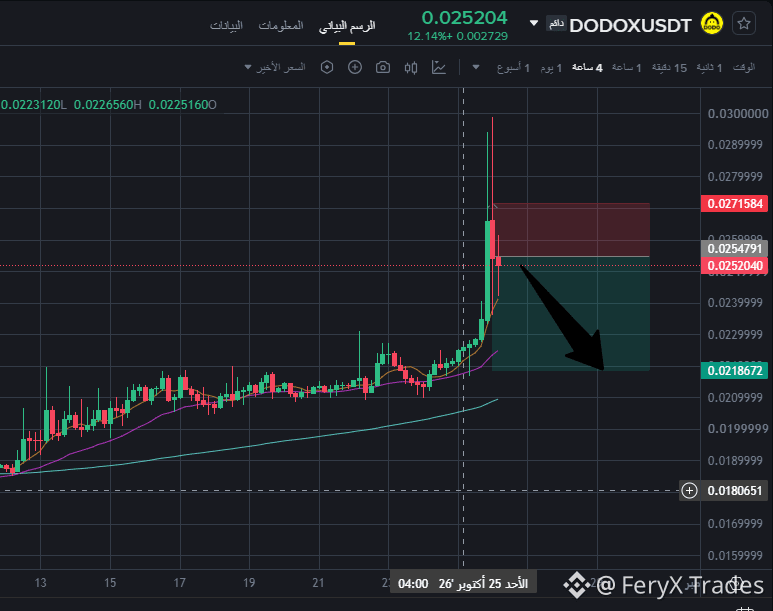
The massive rally in **$DODOX ** has slammed into a deadly resistance ceiling, and the bears are gearing up to seize the reversal and spark a plunge! 📉⚡️
After the latest bullish marathon, price action is showing clear signs of exhaustion, and bullish momentum is starting to evaporate behind the scenes. Whales are quietly distributing their holdings around current levels, paving the way for a sudden sell-off that crushes aggressive long positions and sweeps through the lows ahead!
Real snipers don't chase buys at deceptive highs; they position themselves skillfully alongside smart money before the free fall!
### **🔴 Short $DODOX (Short selling — crash hunting and rocket correction)**
* **Entry range:** $0.02540–$0.02550 (tight positioning inside the selling pressure zone)
* **🛑 Stop loss (SL):** $0.02714 (an ironclad safety belt above the rejection zone to invalidate the trade)
🎯 **Target 1:** $0.02400 (a swift drop and initial position security)
🎯 **Target 2:** $0.02300
🎯 **Final target:** $0.02180 (the major stop for sweeping the blazing low and taking profits 🎯📉)
**Tactic:**
The breakdown is imminent, and momentum is gearing up for a fierce drop! Enter with total discipline within the specified positioning range, stick to strict risk management… and thank me later at the bottom! 📉⚡️💰
The massive rally in **$DODOX ** has slammed into a deadly resistance ceiling, and the bears are gearing up to seize the reversal and spark a plunge! 📉⚡️
After the latest bullish marathon, price action is showing clear signs of exhaustion, and bullish momentum is starting to evaporate behind the scenes. Whales are quietly distributing their holdings around current levels, paving the way for a sudden sell-off that crushes aggressive long positions and sweeps through the lows ahead!
Real snipers don't chase buys at deceptive highs; they position themselves skillfully alongside smart money before the free fall!
### **🔴 Short $DODOX (Short selling — crash hunting and rocket correction)**
* **Entry range:** $0.02540–$0.02550 (tight positioning inside the selling pressure zone)
* **🛑 Stop loss (SL):** $0.02714 (an ironclad safety belt above the rejection zone to invalidate the trade)
🎯 **Target 1:** $0.02400 (a swift drop and initial position security)
🎯 **Target 2:** $0.02300
🎯 **Final target:** $0.02180 (the major stop for sweeping the blazing low and taking profits 🎯📉)
**Tactic:**
The breakdown is imminent, and momentum is gearing up for a fierce drop! Enter with total discipline within the specified positioning range, stick to strict risk management… and thank me later at the bottom! 📉⚡️💰
After the latest bullish marathon, price action is showing clear signs of exhaustion, and bullish momentum is starting to evaporate behind the scenes. Whales are quietly distributing their holdings around current levels, paving the way for a sudden sell-off that crushes aggressive long positions and sweeps through the lows ahead!
Real snipers don't chase buys at deceptive highs; they position themselves skillfully alongside smart money before the free fall!
### **🔴 Short $DODOX (Short selling — crash hunting and rocket correction)**
* **Entry range:** $0.02540–$0.02550 (tight positioning inside the selling pressure zone)
* **🛑 Stop loss (SL):** $0.02714 (an ironclad safety belt above the rejection zone to invalidate the trade)
🎯 **Target 1:** $0.02400 (a swift drop and initial position security)
🎯 **Target 2:** $0.02300
🎯 **Final target:** $0.02180 (the major stop for sweeping the blazing low and taking profits 🎯📉)
**Tactic:**
The breakdown is imminent, and momentum is gearing up for a fierce drop! Enter with total discipline within the specified positioning range, stick to strict risk management… and thank me later at the bottom! 📉⚡️💰
3
170
·
--
Bearish
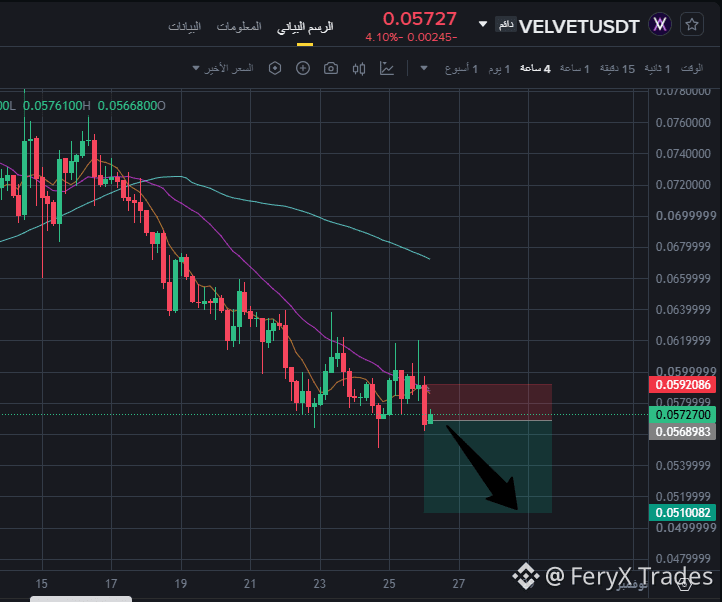
Negative pressure is devouring **$VELVET **, and the bears have absolute control across all timeframes (daily, 4-hour, and 1-hour), with price below the moving averages! 📉💀
Despite the price being near the local bottom and the possibility of a fake bounce, 7 technical signals confirm that smart-money flow is heading toward the abyss. True snipers stick to a strict strategy, watch the squeeze zone, and prepare to capture the breakdown step by step!
### **🔴 Short $VELVET (Short selling — hunting slippage and sweeping the lows)**
🔹 **Entry range:** $0.0563758–$0.0566842 (position exclusively within this zone)
🛑 **Stop loss (SL):** $0.0592565 (+4.8% — an ironclad safety belt above the resistance zone to invalidate the trade immediately)
🎯 **Target 1:** $0.0544851 (-3.6% — quick catch; take 50% profit and immediately move the stop to the entry point)
🎯 **Target 2:** $0.0531218 (-6.0% — take an additional 25% profit)
🎯 **Target 3:** $0.0510769 (-9.6% — the grand finale: sweep the burning low and close the rest of the position)
**Tactical plan:**
Strictly maintain your position within the specified zone, secure all capital after the first target, and actively follow the smart-money flow before the sell-off accelerates... Thank me later at the shattered bottom! 📉⚡️💰
{future}(VELVETUSDT)
Negative pressure is devouring **$VELVET **, and the bears have absolute control across all timeframes (daily, 4-hour, and 1-hour), with price below the moving averages! 📉💀
Despite the price being near the local bottom and the possibility of a fake bounce, 7 technical signals confirm that smart-money flow is heading toward the abyss. True snipers stick to a strict strategy, watch the squeeze zone, and prepare to capture the breakdown step by step!
### **🔴 Short $VELVET (Short selling — hunting slippage and sweeping the lows)**
🔹 **Entry range:** $0.0563758–$0.0566842 (position exclusively within this zone)
🛑 **Stop loss (SL):** $0.0592565 (+4.8% — an ironclad safety belt above the resistance zone to invalidate the trade immediately)
🎯 **Target 1:** $0.0544851 (-3.6% — quick catch; take 50% profit and immediately move the stop to the entry point)
🎯 **Target 2:** $0.0531218 (-6.0% — take an additional 25% profit)
🎯 **Target 3:** $0.0510769 (-9.6% — the grand finale: sweep the burning low and close the rest of the position)
**Tactical plan:**
Strictly maintain your position within the specified zone, secure all capital after the first target, and actively follow the smart-money flow before the sell-off accelerates... Thank me later at the shattered bottom! 📉⚡️💰
Despite the price being near the local bottom and the possibility of a fake bounce, 7 technical signals confirm that smart-money flow is heading toward the abyss. True snipers stick to a strict strategy, watch the squeeze zone, and prepare to capture the breakdown step by step!
### **🔴 Short $VELVET (Short selling — hunting slippage and sweeping the lows)**
🔹 **Entry range:** $0.0563758–$0.0566842 (position exclusively within this zone)
🛑 **Stop loss (SL):** $0.0592565 (+4.8% — an ironclad safety belt above the resistance zone to invalidate the trade immediately)
🎯 **Target 1:** $0.0544851 (-3.6% — quick catch; take 50% profit and immediately move the stop to the entry point)
🎯 **Target 2:** $0.0531218 (-6.0% — take an additional 25% profit)
🎯 **Target 3:** $0.0510769 (-9.6% — the grand finale: sweep the burning low and close the rest of the position)
**Tactical plan:**
Strictly maintain your position within the specified zone, secure all capital after the first target, and actively follow the smart-money flow before the sell-off accelerates... Thank me later at the shattered bottom! 📉⚡️💰
2
146
·
--
Bullish
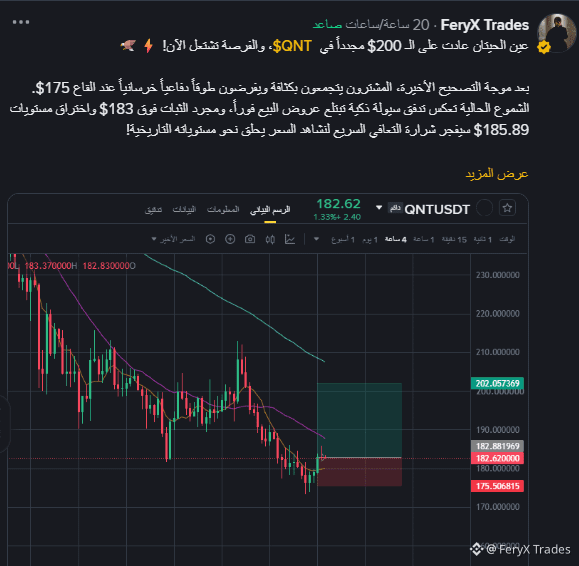
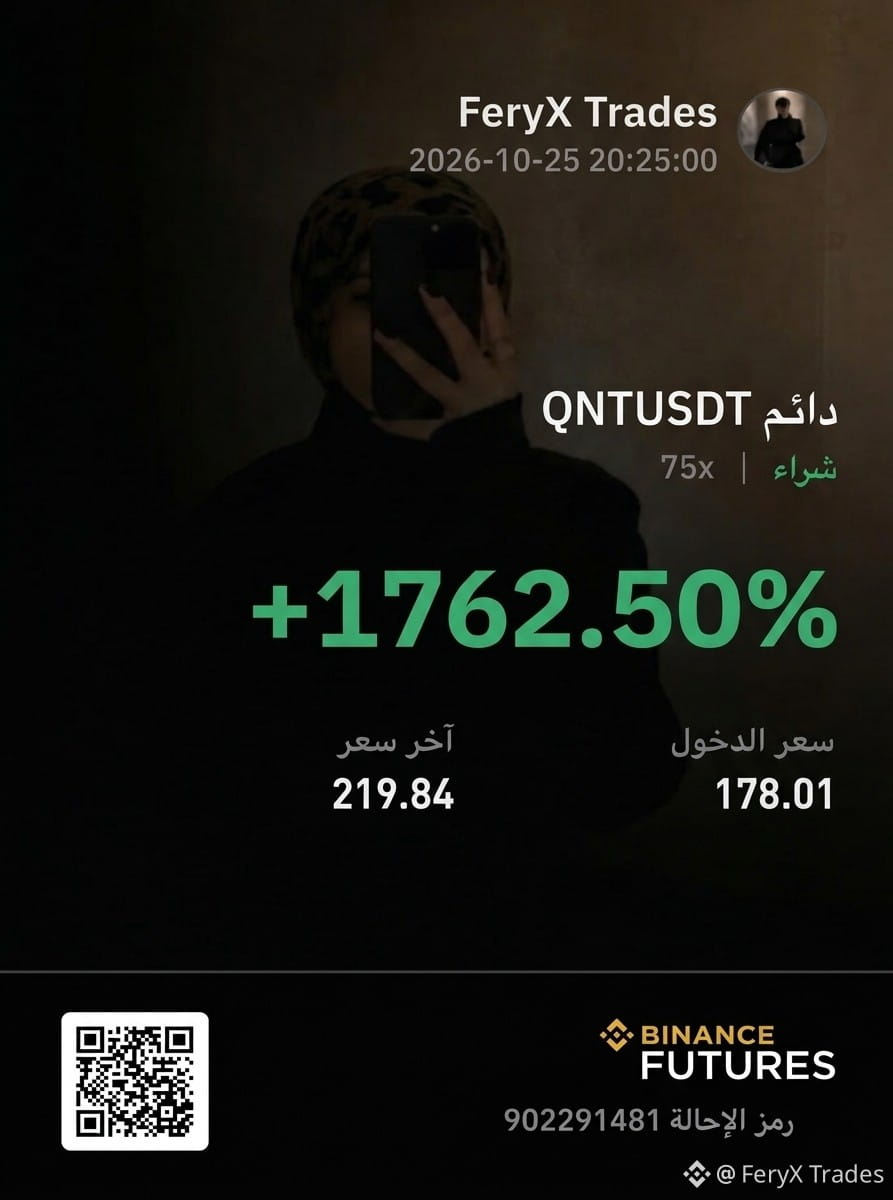
Boom! Explosion $QNT 🚀🔥
All targets were hit, reaching $219.84. Bravo, guys—we got in at $182 😎
Congratulations! Secure your profits! From FeryX’s legendary trades.
{future}(QNTUSDT)
Boom! Explosion $QNT 🚀🔥
All targets were hit, reaching $219.84. Bravo, guys—we got in at $182 😎
Congratulations! Secure your profits! From FeryX’s legendary trades.
All targets were hit, reaching $219.84. Bravo, guys—we got in at $182 😎
Congratulations! Secure your profits! From FeryX’s legendary trades.
FeryX Trades
·
--
BullishWhale eyes are back on $200 once again in $QNT , and the opportunity is heating up now! ⚡️🦅
After the latest correction wave, buyers are gathering in force and building a concrete defensive wall at the $175 bottom. The current candles reflect smart-money inflows that are instantly absorbing sell orders. Simply holding above $183 and breaking through the $185.89 levels could spark a rapid recovery, sending the price soaring toward its all-time highs!
Professional snipers pounce on the bounce from the very start—they don’t wait for the rocket to take off.
🟢 Buy $QNT (Long — catch the reversal and confirm the uptrend)
Entry range: $182.30–$184.95 (tactical entry as support holds)
🛑 Stop loss (SL): $174.40 (a safety belt below the $175 support low)
🎯 Target: $200.01 (break the peak and smash through $200)
The opportunity is ripe, and momentum is gearing up for the next jump. Manage risk carefully and secure your positions in the front rows before the move accelerates… thank me later! 📈🔥🎯
After the latest correction wave, buyers are gathering in force and building a concrete defensive wall at the $175 bottom. The current candles reflect smart-money inflows that are instantly absorbing sell orders. Simply holding above $183 and breaking through the $185.89 levels could spark a rapid recovery, sending the price soaring toward its all-time highs!
Professional snipers pounce on the bounce from the very start—they don’t wait for the rocket to take off.
🟢 Buy $QNT (Long — catch the reversal and confirm the uptrend)
Entry range: $182.30–$184.95 (tactical entry as support holds)
🛑 Stop loss (SL): $174.40 (a safety belt below the $175 support low)
🎯 Target: $200.01 (break the peak and smash through $200)
The opportunity is ripe, and momentum is gearing up for the next jump. Manage risk carefully and secure your positions in the front rows before the move accelerates… thank me later! 📈🔥🎯
4
526
·
--
Bearish
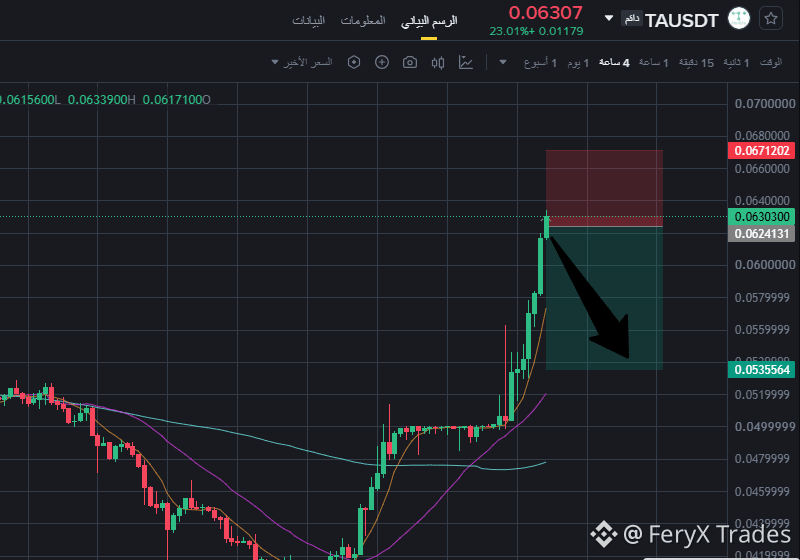
The explosive **$TA ** rally crashes into the deadly resistance ceiling at $0.0620—and the next spark is a correction! 📉⚡️
After a bullish marathon from the $0.049 low, whales are beginning to quietly take profits, while late buyers rush toward the top. A break below $0.0597 would be the decisive signal confirming the rejection candle, opening the door to a freefall and a sweep of the upcoming lows!
Professional snipers don’t trade on emotion; they wait for signal confirmation before positioning alongside smart money!
### **🔴 Short $TA (Short sale—breakdown hunt and rocket correction)**
* **Entry zone:** $0.0610–$0.0620 (taking advantage of rejection at the resistance ceiling)
* **🛑 Stop loss (SL):** $0.0670 (a tight ironclad safety belt above the breakout to invalidate the trade)
🎯 **Target 1:** $0.0580 (a swift drop and initial profit-taking)
🎯 **Target 2:** $0.0560
🎯 **Final target:** $0.05350 (the major stop for sweeping the anticipated low)
**Tactic:**
Don’t short recklessly; wait for confirmation of a breakdown below $0.0597 to confirm selling momentum. Manage risk with ironclad discipline and secure your positions professionally… thank me later at the bottom! 📉⚡️💰
The explosive **$TA ** rally crashes into the deadly resistance ceiling at $0.0620—and the next spark is a correction! 📉⚡️
After a bullish marathon from the $0.049 low, whales are beginning to quietly take profits, while late buyers rush toward the top. A break below $0.0597 would be the decisive signal confirming the rejection candle, opening the door to a freefall and a sweep of the upcoming lows!
Professional snipers don’t trade on emotion; they wait for signal confirmation before positioning alongside smart money!
### **🔴 Short $TA (Short sale—breakdown hunt and rocket correction)**
* **Entry zone:** $0.0610–$0.0620 (taking advantage of rejection at the resistance ceiling)
* **🛑 Stop loss (SL):** $0.0670 (a tight ironclad safety belt above the breakout to invalidate the trade)
🎯 **Target 1:** $0.0580 (a swift drop and initial profit-taking)
🎯 **Target 2:** $0.0560
🎯 **Final target:** $0.05350 (the major stop for sweeping the anticipated low)
**Tactic:**
Don’t short recklessly; wait for confirmation of a breakdown below $0.0597 to confirm selling momentum. Manage risk with ironclad discipline and secure your positions professionally… thank me later at the bottom! 📉⚡️💰
After a bullish marathon from the $0.049 low, whales are beginning to quietly take profits, while late buyers rush toward the top. A break below $0.0597 would be the decisive signal confirming the rejection candle, opening the door to a freefall and a sweep of the upcoming lows!
Professional snipers don’t trade on emotion; they wait for signal confirmation before positioning alongside smart money!
### **🔴 Short $TA (Short sale—breakdown hunt and rocket correction)**
* **Entry zone:** $0.0610–$0.0620 (taking advantage of rejection at the resistance ceiling)
* **🛑 Stop loss (SL):** $0.0670 (a tight ironclad safety belt above the breakout to invalidate the trade)
🎯 **Target 1:** $0.0580 (a swift drop and initial profit-taking)
🎯 **Target 2:** $0.0560
🎯 **Final target:** $0.05350 (the major stop for sweeping the anticipated low)
**Tactic:**
Don’t short recklessly; wait for confirmation of a breakdown below $0.0597 to confirm selling momentum. Manage risk with ironclad discipline and secure your positions professionally… thank me later at the bottom! 📉⚡️💰
1
2
295
·
--
Bullish
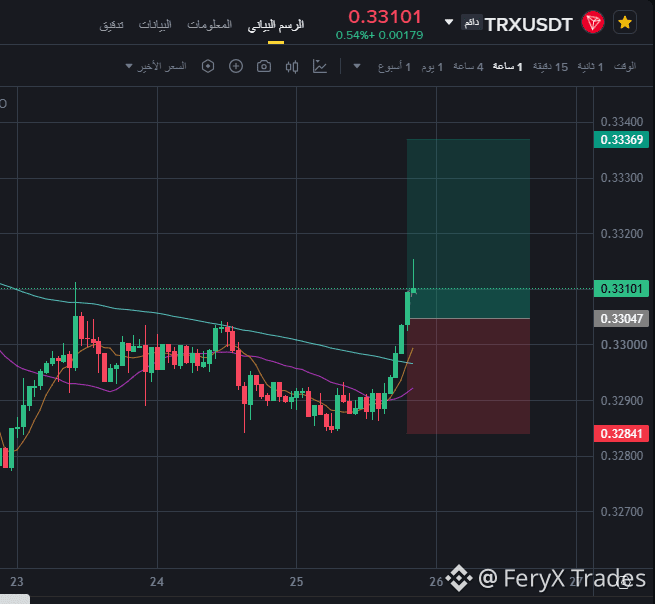
Everyone, pay attention and focus completely on **$TRX ** now, champions‼️ The bullish scalping trade is live, and smart money is starting to flow in and drive prices higher! 🚀🔥
The current stability above support levels gives the bulls a clear advantage to drive a sharp upward move. Professional snipers are moving in immediately to secure their positions as momentum starts to accelerate, before the price moves away from the entry range!
### **🟢 Buy $TRX (Long – rapid scalping and catching the upswing)**
🔹 **Entry zone:** $0.3306–$0.3308
🛑 **Stop loss (SL):** $0.3284 (an ironclad, tightly secured safety belt)
🎯 **Target 1:** $0.3320 (a quick catch and immediate profit protection)
🎯 **Target 2:** $0.3345
🎯 **Target 3:** $0.3369 (the major stop to storm the blazing peak)
The opportunity is ripe and momentum is building. Follow risk management with complete discipline, and don’t let the train leave without you… Thank me later when the targets are hit! 📈⚡️💰
{future}(TRXUSDT)
Everyone, pay attention and focus completely on **$TRX ** now, champions‼️ The bullish scalping trade is live, and smart money is starting to flow in and drive prices higher! 🚀🔥
The current stability above support levels gives the bulls a clear advantage to drive a sharp upward move. Professional snipers are moving in immediately to secure their positions as momentum starts to accelerate, before the price moves away from the entry range!
### **🟢 Buy $TRX (Long – rapid scalping and catching the upswing)**
🔹 **Entry zone:** $0.3306–$0.3308
🛑 **Stop loss (SL):** $0.3284 (an ironclad, tightly secured safety belt)
🎯 **Target 1:** $0.3320 (a quick catch and immediate profit protection)
🎯 **Target 2:** $0.3345
🎯 **Target 3:** $0.3369 (the major stop to storm the blazing peak)
The opportunity is ripe and momentum is building. Follow risk management with complete discipline, and don’t let the train leave without you… Thank me later when the targets are hit! 📈⚡️💰
The current stability above support levels gives the bulls a clear advantage to drive a sharp upward move. Professional snipers are moving in immediately to secure their positions as momentum starts to accelerate, before the price moves away from the entry range!
### **🟢 Buy $TRX (Long – rapid scalping and catching the upswing)**
🔹 **Entry zone:** $0.3306–$0.3308
🛑 **Stop loss (SL):** $0.3284 (an ironclad, tightly secured safety belt)
🎯 **Target 1:** $0.3320 (a quick catch and immediate profit protection)
🎯 **Target 2:** $0.3345
🎯 **Target 3:** $0.3369 (the major stop to storm the blazing peak)
The opportunity is ripe and momentum is building. Follow risk management with complete discipline, and don’t let the train leave without you… Thank me later when the targets are hit! 📈⚡️💰
2
260
·
--
Bearish
I’m entering a SHORT position on $LSK at this level.
Entry zone: 0.161720–0.162120
Take-profit targets (TP):
• TP1: 0.157164 (-2.9%)
• TP2: 0.153994 (-4.9%)
• TP3: 0.149238 (-7.8%)
Stop loss (SL): 0.168261 (+3.9%)
Bounces in $LSK are still weak and fade whenever they encounter oversold zones.
I’ll only enter within the specified zone. My plan is to close half the position at the first target, a quarter at the second, and the rest at the third, while moving the stop loss to the entry point as soon as TP1 is reached. Since the trade setup has moderate strength, I’ll keep my position size small.
My bearish outlook is supported by the alignment of 5 out of 12 technical indicators in favor of a decline, as sellers continue to dominate on the 1-hour and 4-hour timeframes, pushing the price below the EMA50 and EMA200.
A temporary bounce is possible given how far the price is from its average on the 1-hour timeframe, but there’s an opportunity now to capitalize on the continued decline. If sellers remain in control, the downward move is in our favor. However, if the price rebounds above 0.168261, the setup is invalidated, and I’ll exit without hesitation.
What targets do you set for your LSK short trades?
This is my personal market analysis, not financial advice (NFA). Risk management and research (DYOR) are your responsibility. This content is for educational purposes and should not be considered a recommendation to buy or sell.
I’m entering a SHORT position on $LSK at this level.
Entry zone: 0.161720–0.162120
Take-profit targets (TP):
• TP1: 0.157164 (-2.9%)
• TP2: 0.153994 (-4.9%)
• TP3: 0.149238 (-7.8%)
Stop loss (SL): 0.168261 (+3.9%)
Bounces in $LSK are still weak and fade whenever they encounter oversold zones.
I’ll only enter within the specified zone. My plan is to close half the position at the first target, a quarter at the second, and the rest at the third, while moving the stop loss to the entry point as soon as TP1 is reached. Since the trade setup has moderate strength, I’ll keep my position size small.
My bearish outlook is supported by the alignment of 5 out of 12 technical indicators in favor of a decline, as sellers continue to dominate on the 1-hour and 4-hour timeframes, pushing the price below the EMA50 and EMA200.
A temporary bounce is possible given how far the price is from its average on the 1-hour timeframe, but there’s an opportunity now to capitalize on the continued decline. If sellers remain in control, the downward move is in our favor. However, if the price rebounds above 0.168261, the setup is invalidated, and I’ll exit without hesitation.
What targets do you set for your LSK short trades?
This is my personal market analysis, not financial advice (NFA). Risk management and research (DYOR) are your responsibility. This content is for educational purposes and should not be considered a recommendation to buy or sell.
Entry zone: 0.161720–0.162120
Take-profit targets (TP):
• TP1: 0.157164 (-2.9%)
• TP2: 0.153994 (-4.9%)
• TP3: 0.149238 (-7.8%)
Stop loss (SL): 0.168261 (+3.9%)
Bounces in $LSK are still weak and fade whenever they encounter oversold zones.
I’ll only enter within the specified zone. My plan is to close half the position at the first target, a quarter at the second, and the rest at the third, while moving the stop loss to the entry point as soon as TP1 is reached. Since the trade setup has moderate strength, I’ll keep my position size small.
My bearish outlook is supported by the alignment of 5 out of 12 technical indicators in favor of a decline, as sellers continue to dominate on the 1-hour and 4-hour timeframes, pushing the price below the EMA50 and EMA200.
A temporary bounce is possible given how far the price is from its average on the 1-hour timeframe, but there’s an opportunity now to capitalize on the continued decline. If sellers remain in control, the downward move is in our favor. However, if the price rebounds above 0.168261, the setup is invalidated, and I’ll exit without hesitation.
What targets do you set for your LSK short trades?
This is my personal market analysis, not financial advice (NFA). Risk management and research (DYOR) are your responsibility. This content is for educational purposes and should not be considered a recommendation to buy or sell.
2
1
5
298
·
--
Bullish
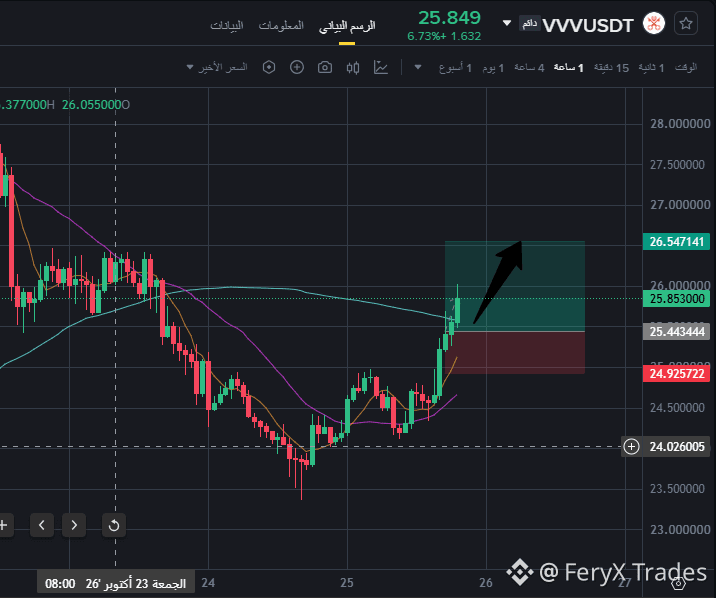
A revolutionary awakening in **$VVV **—the bulls are gearing up for the knockout blow to storm the **$26** fortress, beasts! 🚀💥
Smart money is charging fiercely above key support zones, while buyers gobble up sell offers to build a launchpad for a rocket toward our higher target of $26.50. Lightning-fast opportunities don’t wait for the hesitant; true snipers secure their positions in the front ranks before the price takes off!
### **🟢 Buy $VVV (Long - Catch the breakout and storm $26)**
* **Entry range:** $25.40–$25.60 (quick, tactical positioning)
* **🛑 Stop loss (SL):** $24.90 (a solid, tightly placed safety belt just below support)
🎯 **Target 1:** $25.80 (quick catch and initial profit-taking)
🎯 **Target 2:** $26.20
🎯 **Target 3:** $26.50 (the grand destination: conquering the blazing peak)
Momentum is heating up and the opportunity is ripe for takeoff. Manage your risk with strict discipline and secure your positions now... thank me later at the peak! 📈⚡️💰
{future}(VVVUSDT)
A revolutionary awakening in **$VVV **—the bulls are gearing up for the knockout blow to storm the **$26** fortress, beasts! 🚀💥
Smart money is charging fiercely above key support zones, while buyers gobble up sell offers to build a launchpad for a rocket toward our higher target of $26.50. Lightning-fast opportunities don’t wait for the hesitant; true snipers secure their positions in the front ranks before the price takes off!
### **🟢 Buy $VVV (Long - Catch the breakout and storm $26)**
* **Entry range:** $25.40–$25.60 (quick, tactical positioning)
* **🛑 Stop loss (SL):** $24.90 (a solid, tightly placed safety belt just below support)
🎯 **Target 1:** $25.80 (quick catch and initial profit-taking)
🎯 **Target 2:** $26.20
🎯 **Target 3:** $26.50 (the grand destination: conquering the blazing peak)
Momentum is heating up and the opportunity is ripe for takeoff. Manage your risk with strict discipline and secure your positions now... thank me later at the peak! 📈⚡️💰
Smart money is charging fiercely above key support zones, while buyers gobble up sell offers to build a launchpad for a rocket toward our higher target of $26.50. Lightning-fast opportunities don’t wait for the hesitant; true snipers secure their positions in the front ranks before the price takes off!
### **🟢 Buy $VVV (Long - Catch the breakout and storm $26)**
* **Entry range:** $25.40–$25.60 (quick, tactical positioning)
* **🛑 Stop loss (SL):** $24.90 (a solid, tightly placed safety belt just below support)
🎯 **Target 1:** $25.80 (quick catch and initial profit-taking)
🎯 **Target 2:** $26.20
🎯 **Target 3:** $26.50 (the grand destination: conquering the blazing peak)
Momentum is heating up and the opportunity is ripe for takeoff. Manage your risk with strict discipline and secure your positions now... thank me later at the peak! 📈⚡️💰
1
4
261
·
--
Bullish
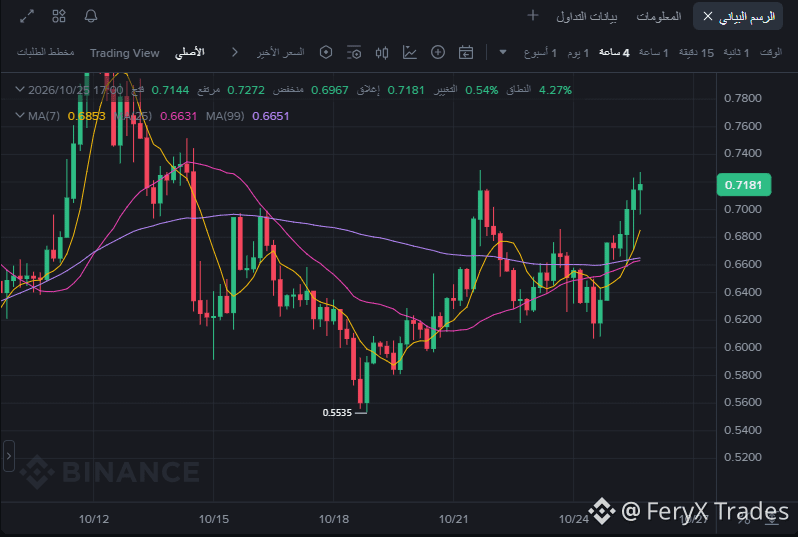
Bulls **$GRASS ** are gearing up to make another move and charge in once more, champions! 🚀🔥
Smart money is regrouping and absorbing sell orders, paving the way for a fierce rally that will sweep through resistance in seconds. Snipers don’t wait for prices to take off—they ride the wave from the starting point!
### **🟢 Buy $GRASS (Long - Catch the explosive upside and sweep through the targets)**
🔹 **Entry zone:** $0.6726–$0.7070 (enter immediately and catch the rebound)
🛑 **Stop loss (SL):** $0.6044 (a solid, tightly placed safety belt below support to protect profits)
🎯 **Target 1:** $0.7500 (quick catch and immediate returns)
🎯 **Target 2:** $0.8000
🎯 **Final target:** $0.8464 (the major stop to conquer the blazing peak and take astronomical profits 🎯🔥)
**Tactical plan:**
The rebound is holding firm, and momentum is building toward an explosive spark! Buckle up, hit the buy button now, and execute your positions with complete professionalism and strict risk management... Thank me later when we hit the targets one by one! 📈⚡💰
Bulls **$GRASS ** are gearing up to make another move and charge in once more, champions! 🚀🔥
Smart money is regrouping and absorbing sell orders, paving the way for a fierce rally that will sweep through resistance in seconds. Snipers don’t wait for prices to take off—they ride the wave from the starting point!
### **🟢 Buy $GRASS (Long - Catch the explosive upside and sweep through the targets)**
🔹 **Entry zone:** $0.6726–$0.7070 (enter immediately and catch the rebound)
🛑 **Stop loss (SL):** $0.6044 (a solid, tightly placed safety belt below support to protect profits)
🎯 **Target 1:** $0.7500 (quick catch and immediate returns)
🎯 **Target 2:** $0.8000
🎯 **Final target:** $0.8464 (the major stop to conquer the blazing peak and take astronomical profits 🎯🔥)
**Tactical plan:**
The rebound is holding firm, and momentum is building toward an explosive spark! Buckle up, hit the buy button now, and execute your positions with complete professionalism and strict risk management... Thank me later when we hit the targets one by one! 📈⚡💰
Smart money is regrouping and absorbing sell orders, paving the way for a fierce rally that will sweep through resistance in seconds. Snipers don’t wait for prices to take off—they ride the wave from the starting point!
### **🟢 Buy $GRASS (Long - Catch the explosive upside and sweep through the targets)**
🔹 **Entry zone:** $0.6726–$0.7070 (enter immediately and catch the rebound)
🛑 **Stop loss (SL):** $0.6044 (a solid, tightly placed safety belt below support to protect profits)
🎯 **Target 1:** $0.7500 (quick catch and immediate returns)
🎯 **Target 2:** $0.8000
🎯 **Final target:** $0.8464 (the major stop to conquer the blazing peak and take astronomical profits 🎯🔥)
**Tactical plan:**
The rebound is holding firm, and momentum is building toward an explosive spark! Buckle up, hit the buy button now, and execute your positions with complete professionalism and strict risk management... Thank me later when we hit the targets one by one! 📈⚡💰
3
3
178
·
--
Bullish
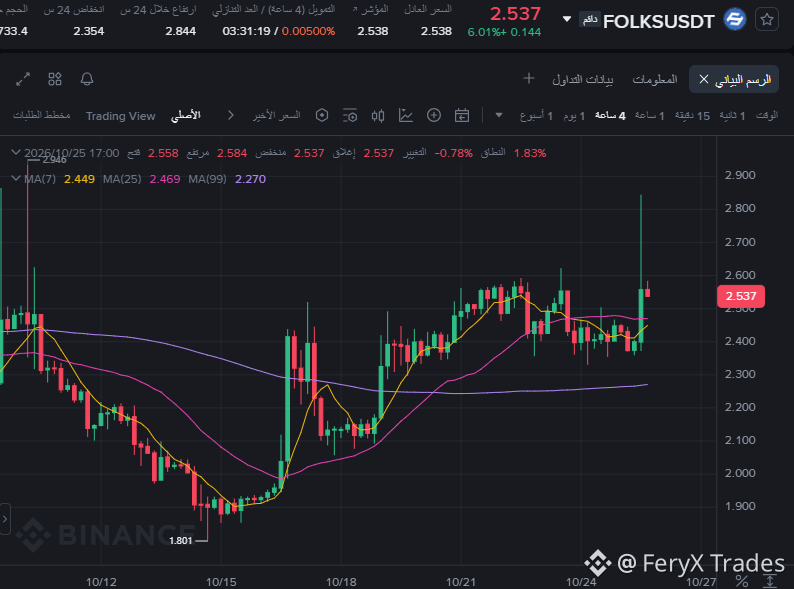
The upward momentum is igniting again in **$FOLKS **, and the bulls are charging fiercely at the $2.57 levels! 🚀⚡️
Smart money is bouncing strongly off support, while buyers are sweeping through sell orders to set the price up for a quick breakout and immediately shift the battle toward the $2.75 peak. These rapid surges don’t wait for the hesitant; the sharpshooters are positioned from the start as buying momentum pours in!
### **🟢 Buy $FOLKS (Long – fiery scalping and catching the bounce)**
* **Entry range:** $2.55–$2.58 (quick positioning within the range)
* **🛑 Stop loss (SL):** $2.44 (a solid, secure safety belt below support)
🎯 **Target 1:** $2.62 (a quick, swift catch)
🎯 **Target 2:** $2.68
🎯 **Target 3:** $2.75 (the major stop to conquer the peak)
The spark has been lit, and momentum is building to clear the way toward the targets! Stick to disciplined risk management and secure your seats… thank me later at the peak! 📈🔥💰
{future}(FOLKSUSDT)
The upward momentum is igniting again in **$FOLKS **, and the bulls are charging fiercely at the $2.57 levels! 🚀⚡️
Smart money is bouncing strongly off support, while buyers are sweeping through sell orders to set the price up for a quick breakout and immediately shift the battle toward the $2.75 peak. These rapid surges don’t wait for the hesitant; the sharpshooters are positioned from the start as buying momentum pours in!
### **🟢 Buy $FOLKS (Long – fiery scalping and catching the bounce)**
* **Entry range:** $2.55–$2.58 (quick positioning within the range)
* **🛑 Stop loss (SL):** $2.44 (a solid, secure safety belt below support)
🎯 **Target 1:** $2.62 (a quick, swift catch)
🎯 **Target 2:** $2.68
🎯 **Target 3:** $2.75 (the major stop to conquer the peak)
The spark has been lit, and momentum is building to clear the way toward the targets! Stick to disciplined risk management and secure your seats… thank me later at the peak! 📈🔥💰
Smart money is bouncing strongly off support, while buyers are sweeping through sell orders to set the price up for a quick breakout and immediately shift the battle toward the $2.75 peak. These rapid surges don’t wait for the hesitant; the sharpshooters are positioned from the start as buying momentum pours in!
### **🟢 Buy $FOLKS (Long – fiery scalping and catching the bounce)**
* **Entry range:** $2.55–$2.58 (quick positioning within the range)
* **🛑 Stop loss (SL):** $2.44 (a solid, secure safety belt below support)
🎯 **Target 1:** $2.62 (a quick, swift catch)
🎯 **Target 2:** $2.68
🎯 **Target 3:** $2.75 (the major stop to conquer the peak)
The spark has been lit, and momentum is building to clear the way toward the targets! Stick to disciplined risk management and secure your seats… thank me later at the peak! 📈🔥💰
4
159
·
--
Bearish
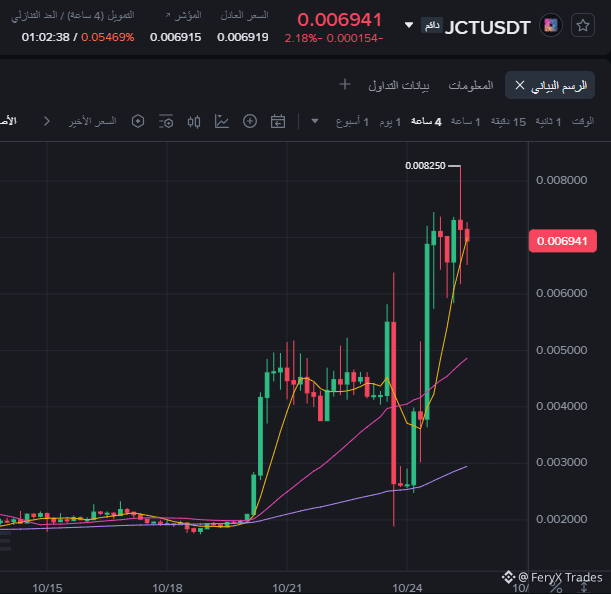
The resistance wall at $0.0074 is turning into an impenetrable prison for bulls **$JCT **, while bears prepare to launch a counterattack! 📉⚡️
Despite their desperate attempts, buyers are completely losing momentum, and repeated rejection at resistance reveals clear structural weakness. Smart money is slowly withdrawing its support, and a break below $0.0065 will be the spark that ignites a sharp downward move and sends the price bleeding rapidly toward the bottom.
Professional snipers don’t watch the fall from a distance—they position themselves early, following the flow of liquidity!
### **🔴 Short $JCT (Short selling – hunting the breakdown and liquidating buyers)**
* **Entry range:** $0.00686–$0.00699 (using a weak bounce to position for a move lower)
* **🛑 Stop loss (SL):** $0.00835 (an iron safety belt above the rejection zone)
* **🎯 Target:** $0.00420 (the major stop on the way to sweeping the anticipated bottom)
Bullish momentum is evaporating, and the opportunity is ripe for a well-timed position. Precise risk management is key in these heated conditions... Thank me later at the bottom! 📉🔥⚡️
{future}(JCTUSDT)
The resistance wall at $0.0074 is turning into an impenetrable prison for bulls **$JCT **, while bears prepare to launch a counterattack! 📉⚡️
Despite their desperate attempts, buyers are completely losing momentum, and repeated rejection at resistance reveals clear structural weakness. Smart money is slowly withdrawing its support, and a break below $0.0065 will be the spark that ignites a sharp downward move and sends the price bleeding rapidly toward the bottom.
Professional snipers don’t watch the fall from a distance—they position themselves early, following the flow of liquidity!
### **🔴 Short $JCT (Short selling – hunting the breakdown and liquidating buyers)**
* **Entry range:** $0.00686–$0.00699 (using a weak bounce to position for a move lower)
* **🛑 Stop loss (SL):** $0.00835 (an iron safety belt above the rejection zone)
* **🎯 Target:** $0.00420 (the major stop on the way to sweeping the anticipated bottom)
Bullish momentum is evaporating, and the opportunity is ripe for a well-timed position. Precise risk management is key in these heated conditions... Thank me later at the bottom! 📉🔥⚡️
Despite their desperate attempts, buyers are completely losing momentum, and repeated rejection at resistance reveals clear structural weakness. Smart money is slowly withdrawing its support, and a break below $0.0065 will be the spark that ignites a sharp downward move and sends the price bleeding rapidly toward the bottom.
Professional snipers don’t watch the fall from a distance—they position themselves early, following the flow of liquidity!
### **🔴 Short $JCT (Short selling – hunting the breakdown and liquidating buyers)**
* **Entry range:** $0.00686–$0.00699 (using a weak bounce to position for a move lower)
* **🛑 Stop loss (SL):** $0.00835 (an iron safety belt above the rejection zone)
* **🎯 Target:** $0.00420 (the major stop on the way to sweeping the anticipated bottom)
Bullish momentum is evaporating, and the opportunity is ripe for a well-timed position. Precise risk management is key in these heated conditions... Thank me later at the bottom! 📉🔥⚡️
3
244
·
--
Bullish
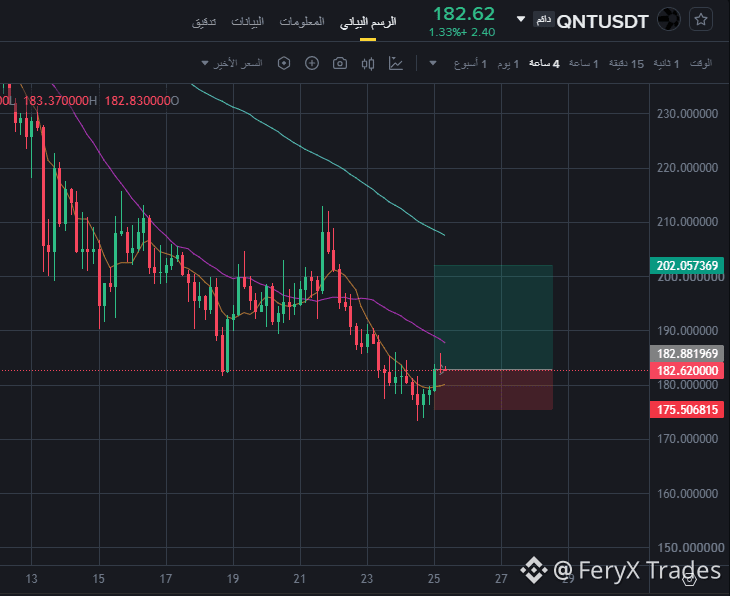
Whale eyes are back on $200 once again in $QNT , and the opportunity is heating up now! ⚡️🦅
After the latest correction wave, buyers are gathering in force and building a concrete defensive wall at the $175 bottom. The current candles reflect smart-money inflows that are instantly absorbing sell orders. Simply holding above $183 and breaking through the $185.89 levels could spark a rapid recovery, sending the price soaring toward its all-time highs!
Professional snipers pounce on the bounce from the very start—they don’t wait for the rocket to take off.
🟢 Buy $QNT (Long — catch the reversal and confirm the uptrend)
Entry range: $182.30–$184.95 (tactical entry as support holds)
🛑 Stop loss (SL): $174.40 (a safety belt below the $175 support low)
🎯 Target: $200.01 (break the peak and smash through $200)
The opportunity is ripe, and momentum is gearing up for the next jump. Manage risk carefully and secure your positions in the front rows before the move accelerates… thank me later! 📈🔥🎯
{future}(QNTUSDT)
Whale eyes are back on $200 once again in $QNT , and the opportunity is heating up now! ⚡️🦅
After the latest correction wave, buyers are gathering in force and building a concrete defensive wall at the $175 bottom. The current candles reflect smart-money inflows that are instantly absorbing sell orders. Simply holding above $183 and breaking through the $185.89 levels could spark a rapid recovery, sending the price soaring toward its all-time highs!
Professional snipers pounce on the bounce from the very start—they don’t wait for the rocket to take off.
🟢 Buy $QNT (Long — catch the reversal and confirm the uptrend)
Entry range: $182.30–$184.95 (tactical entry as support holds)
🛑 Stop loss (SL): $174.40 (a safety belt below the $175 support low)
🎯 Target: $200.01 (break the peak and smash through $200)
The opportunity is ripe, and momentum is gearing up for the next jump. Manage risk carefully and secure your positions in the front rows before the move accelerates… thank me later! 📈🔥🎯
After the latest correction wave, buyers are gathering in force and building a concrete defensive wall at the $175 bottom. The current candles reflect smart-money inflows that are instantly absorbing sell orders. Simply holding above $183 and breaking through the $185.89 levels could spark a rapid recovery, sending the price soaring toward its all-time highs!
Professional snipers pounce on the bounce from the very start—they don’t wait for the rocket to take off.
🟢 Buy $QNT (Long — catch the reversal and confirm the uptrend)
Entry range: $182.30–$184.95 (tactical entry as support holds)
🛑 Stop loss (SL): $174.40 (a safety belt below the $175 support low)
🎯 Target: $200.01 (break the peak and smash through $200)
The opportunity is ripe, and momentum is gearing up for the next jump. Manage risk carefully and secure your positions in the front rows before the move accelerates… thank me later! 📈🔥🎯
1
1
3
336
·
--
Bullish
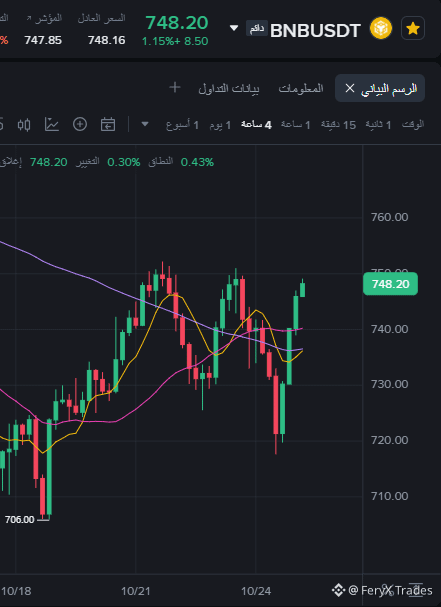
Boom $BNB , it shot up to $748
Bravo, guys! We got in at $728, while everyone else was selling.
We’re crushing every target 😎🔥
{future}(BNBUSDT)
Boom $BNB , it shot up to $748
Bravo, guys! We got in at $728, while everyone else was selling.
We’re crushing every target 😎🔥
Bravo, guys! We got in at $728, while everyone else was selling.
We’re crushing every target 😎🔥

FeryX Trades
·
--
BullishTrade **$BNB ** is heating up, and the bulls are taking absolute control right from the heart of support! 🚀🔥
Smart money is swooping in to gobble up sell orders as soon as the price touches the defensive line, while buying momentum is paving the way for a rocket-like surge toward the major highs. Real snipers don't wait for prices to take off—they ride the wave from the launch point!
### **🟢 Buy $BNB (Long - Catch the bounce and smash the targets)**
🔹 **Entry zone:** $726.04–$726.82 (catch the immediate bounce)
🛑 **Stop loss (SL):** $721.77 (a solid, tightly secured safety belt just below support to prevent any false breakout)
🎯 **Target 1:** $729.00 (quick catch and immediate return)
🎯 **Target 2:** $732.00
🎯 **Target 3:** $734.02 (the major stop to conquer the blazing peak and reap astronomical profits 🎯🔥)
**Tactic:**
The bounce is holding firm above support, and momentum is gearing up for an explosive spark! Buckle up, hit the buy button now, and execute your positions professionally with strict risk management... Thank me later when we hit the targets one by one! 📈⚡💰
Smart money is swooping in to gobble up sell orders as soon as the price touches the defensive line, while buying momentum is paving the way for a rocket-like surge toward the major highs. Real snipers don't wait for prices to take off—they ride the wave from the launch point!
### **🟢 Buy $BNB (Long - Catch the bounce and smash the targets)**
🔹 **Entry zone:** $726.04–$726.82 (catch the immediate bounce)
🛑 **Stop loss (SL):** $721.77 (a solid, tightly secured safety belt just below support to prevent any false breakout)
🎯 **Target 1:** $729.00 (quick catch and immediate return)
🎯 **Target 2:** $732.00
🎯 **Target 3:** $734.02 (the major stop to conquer the blazing peak and reap astronomical profits 🎯🔥)
**Tactic:**
The bounce is holding firm above support, and momentum is gearing up for an explosive spark! Buckle up, hit the buy button now, and execute your positions professionally with strict risk management... Thank me later when we hit the targets one by one! 📈⚡💰
2
169
Log in to explore more content
Join global crypto users on Binance Square
⚡️ Get latest and useful information about crypto.
💬 Trusted by the world’s largest crypto exchange.
👍 Discover real insights from verified creators.
Email / Phone number