

F_A_T_E_M_A
12.4k Posts

F_A_T_E_M_A
 Square Verified+
Report
Block User
🚀 Crypto Analyst, Trader & Creator 📈
Open Trade
High-Frequency Trader
1.5 Years
224 Following
36.3K+ Followers
17.5K+ Liked
Posts
Portfolio
All
Quotes
Videos
Live

·
--
join everyone
join everyone

@CipherX 零号
is speaking[LIVE] 🎙️ Immersed in the breathtaking Chinese fireworks show
3.6k listens

54
·
--
$BTC
{future}(BTCUSDT)
Based on my observations of Bitcoin over the last month, here is my personal analysis:
I saw BTC go from 79k to 87k in just one day, which happened on a Monday.
After that, I noticed it did not drop much, staying between 83k and 87k.
I knew it would try to pull back up to 87k again, and today it is trying.
Many experts say BTC will go to 90k or 100k, but in reality, that is unlikely because a token needs continuous daily buying and selling volume.
If BTC goes to 90k or 100k, selling pressure will only increase, while buying pressure cannot keep up because everyday people are not millionaires.
Therefore, my personal statement is that BTC will not sustainably go to 90k. If it does reach that level, its value will quickly drop back down.
#analysis
$BTC
Based on my observations of Bitcoin over the last month, here is my personal analysis:
I saw BTC go from 79k to 87k in just one day, which happened on a Monday.
After that, I noticed it did not drop much, staying between 83k and 87k.
I knew it would try to pull back up to 87k again, and today it is trying.
Many experts say BTC will go to 90k or 100k, but in reality, that is unlikely because a token needs continuous daily buying and selling volume.
If BTC goes to 90k or 100k, selling pressure will only increase, while buying pressure cannot keep up because everyday people are not millionaires.
Therefore, my personal statement is that BTC will not sustainably go to 90k. If it does reach that level, its value will quickly drop back down.
#analysis
Based on my observations of Bitcoin over the last month, here is my personal analysis:
I saw BTC go from 79k to 87k in just one day, which happened on a Monday.
After that, I noticed it did not drop much, staying between 83k and 87k.
I knew it would try to pull back up to 87k again, and today it is trying.
Many experts say BTC will go to 90k or 100k, but in reality, that is unlikely because a token needs continuous daily buying and selling volume.
If BTC goes to 90k or 100k, selling pressure will only increase, while buying pressure cannot keep up because everyday people are not millionaires.
Therefore, my personal statement is that BTC will not sustainably go to 90k. If it does reach that level, its value will quickly drop back down.
#analysis

100
·
--
$MUB
{spot}(MUBUSDT)
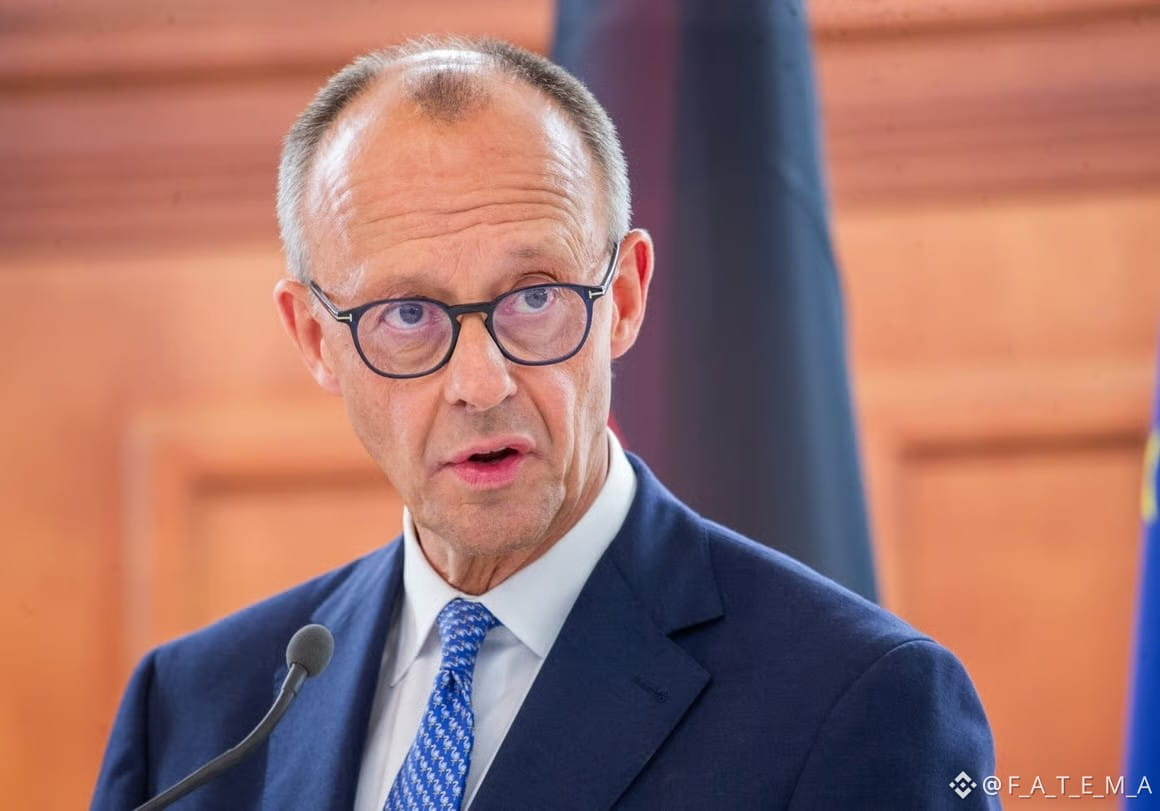
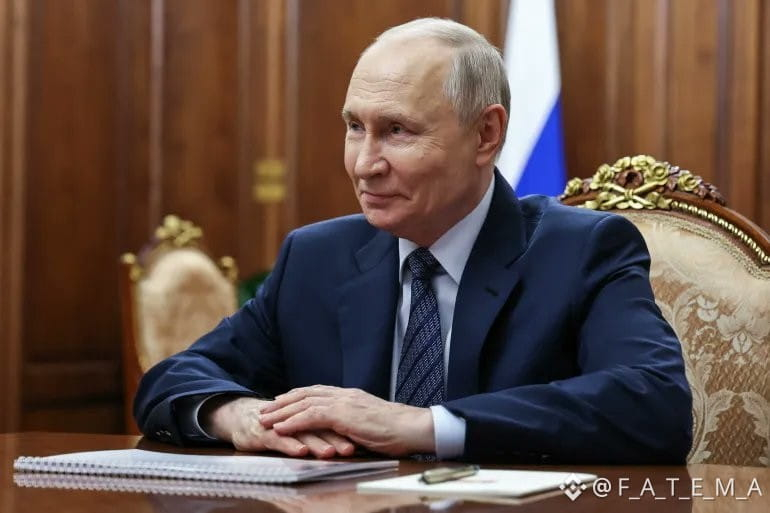
🇷🇺🇩🇪 Russia has detained a German-owned cargo ship in the Gulf of Finland, stopping the Cyprus-flagged Västerbotten while it was sailing from Sweden to Estonia.
Russian border guards held the vessel at anchor for several hours before allowing it to continue to the Estonian port of Sillamäe.
Estonia says it received no explanation for the detention, although it acknowledged Russia has the right to inspect vessels inside its territorial waters.
The incident comes as European countries step up inspections of Russia’s shadow fleet, after Putin warned in August that Moscow could respond with measures against European merchant shipping.
Source: ERR
#OilMarket #worldnews
$MUB
🇷🇺🇩🇪 Russia has detained a German-owned cargo ship in the Gulf of Finland, stopping the Cyprus-flagged Västerbotten while it was sailing from Sweden to Estonia.
Russian border guards held the vessel at anchor for several hours before allowing it to continue to the Estonian port of Sillamäe.
Estonia says it received no explanation for the detention, although it acknowledged Russia has the right to inspect vessels inside its territorial waters.
The incident comes as European countries step up inspections of Russia’s shadow fleet, after Putin warned in August that Moscow could respond with measures against European merchant shipping.
Source: ERR
#OilMarket #worldnews
🇷🇺🇩🇪 Russia has detained a German-owned cargo ship in the Gulf of Finland, stopping the Cyprus-flagged Västerbotten while it was sailing from Sweden to Estonia.
Russian border guards held the vessel at anchor for several hours before allowing it to continue to the Estonian port of Sillamäe.
Estonia says it received no explanation for the detention, although it acknowledged Russia has the right to inspect vessels inside its territorial waters.
The incident comes as European countries step up inspections of Russia’s shadow fleet, after Putin warned in August that Moscow could respond with measures against European merchant shipping.
Source: ERR
#OilMarket #worldnews
64
·
--
$ETH
{future}(ETHUSDT)
U.S. Non-Farm Payrolls Update 📊
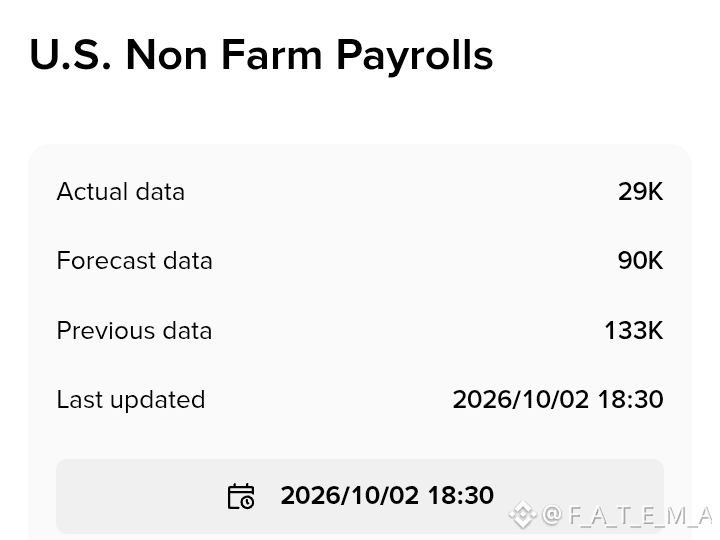
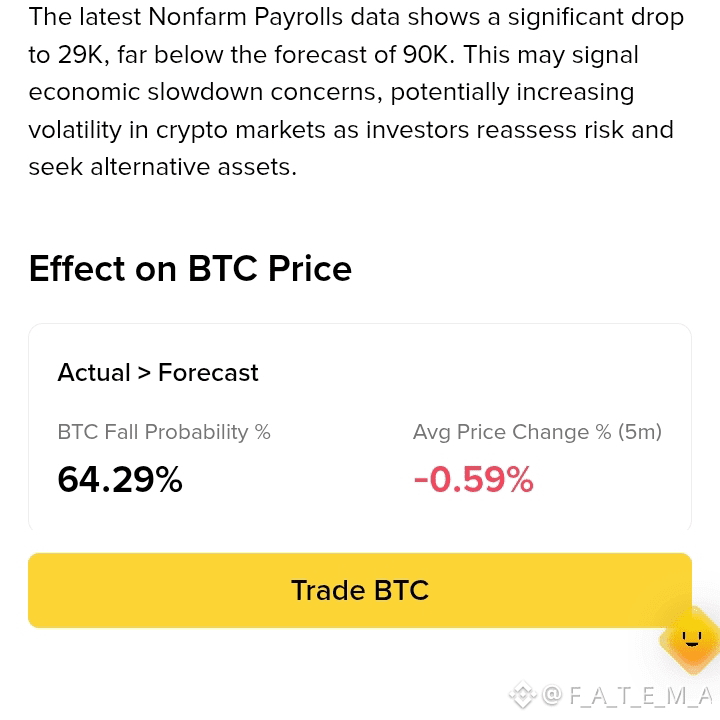
The latest U.S. Nonfarm Payrolls data just dropped for October 2, 2026, showing a sharp drop to 29K, which is far below the market forecast of 90K and down from the previous 133K.
This significant slowdown points toward potential economic cooling.
In the crypto markets, data like this can spike volatility as investors quickly reassess risk and look toward alternative assets.
Stay sharp and manage your risk during these shifts! 📉🚀
#NFPWatch #CryptoNewss
$ETH
U.S. Non-Farm Payrolls Update 📊
The latest U.S. Nonfarm Payrolls data just dropped for October 2, 2026, showing a sharp drop to 29K, which is far below the market forecast of 90K and down from the previous 133K.
This significant slowdown points toward potential economic cooling.
In the crypto markets, data like this can spike volatility as investors quickly reassess risk and look toward alternative assets.
Stay sharp and manage your risk during these shifts! 📉🚀
#NFPWatch #CryptoNewss
U.S. Non-Farm Payrolls Update 📊
The latest U.S. Nonfarm Payrolls data just dropped for October 2, 2026, showing a sharp drop to 29K, which is far below the market forecast of 90K and down from the previous 133K.
This significant slowdown points toward potential economic cooling.
In the crypto markets, data like this can spike volatility as investors quickly reassess risk and look toward alternative assets.
Stay sharp and manage your risk during these shifts! 📉🚀
#NFPWatch #CryptoNewss
2
70
·
--
$BTC
{future}(BTCUSDT)
U.S. Unemployment Rate Report
U.S. Unemployment Rate Insights 📉
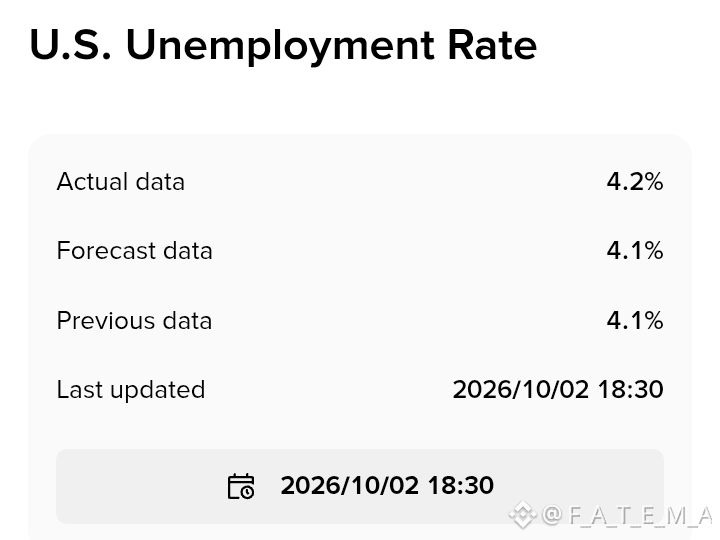
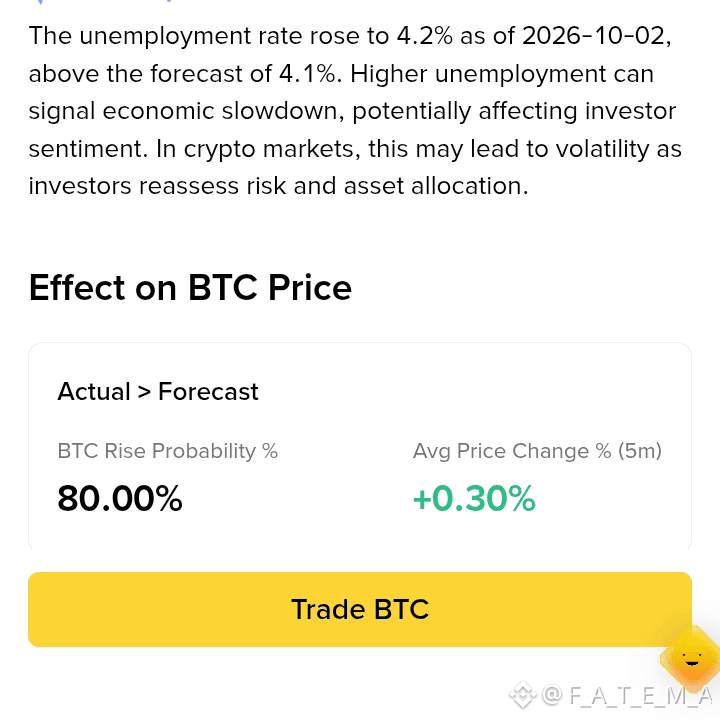
The U.S. Unemployment Rate ticked up to 4.2% as of October 2, 2026, coming in slightly higher than the forecasted 4.1%.
Higher-than-expected unemployment highlights an economic slowdown, which heavily impacts overall investor sentiment.
For crypto and Bitcoin traders, this means heightened volatility as the market digests the news and adjusts asset allocations.
Keep an eye on your charts and trade safe! ⚠️💼
#NFPWatch #USGovernment
$BTC
U.S. Unemployment Rate Report
U.S. Unemployment Rate Insights 📉
The U.S. Unemployment Rate ticked up to 4.2% as of October 2, 2026, coming in slightly higher than the forecasted 4.1%.
Higher-than-expected unemployment highlights an economic slowdown, which heavily impacts overall investor sentiment.
For crypto and Bitcoin traders, this means heightened volatility as the market digests the news and adjusts asset allocations.
Keep an eye on your charts and trade safe! ⚠️💼
#NFPWatch #USGovernment
U.S. Unemployment Rate Report
U.S. Unemployment Rate Insights 📉
The U.S. Unemployment Rate ticked up to 4.2% as of October 2, 2026, coming in slightly higher than the forecasted 4.1%.
Higher-than-expected unemployment highlights an economic slowdown, which heavily impacts overall investor sentiment.
For crypto and Bitcoin traders, this means heightened volatility as the market digests the news and adjusts asset allocations.
Keep an eye on your charts and trade safe! ⚠️💼
#NFPWatch #USGovernment
55
·
--
#NFPWatch Crypto Market ♥️ This hype I am afraid 😟😳
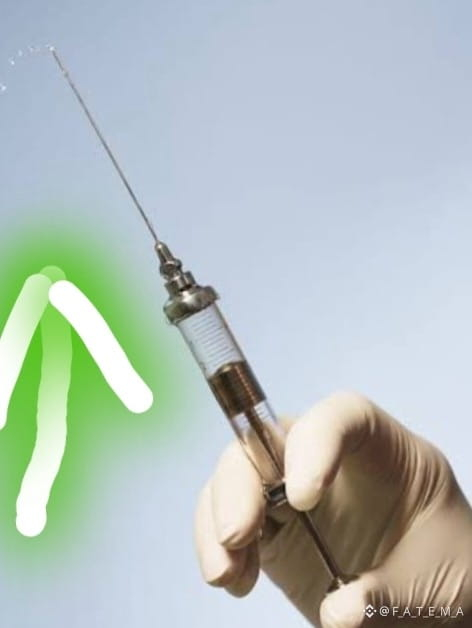
This is just like a syringe up and up...#CryptoMarketMoves
#NFPWatch Crypto Market ♥️ This hype I am afraid 😟😳
This is just like a syringe up and up...#CryptoMarketMoves
This is just like a syringe up and up...#CryptoMarketMoves
50
·
--
$BTC
{future}(BTCUSDT)
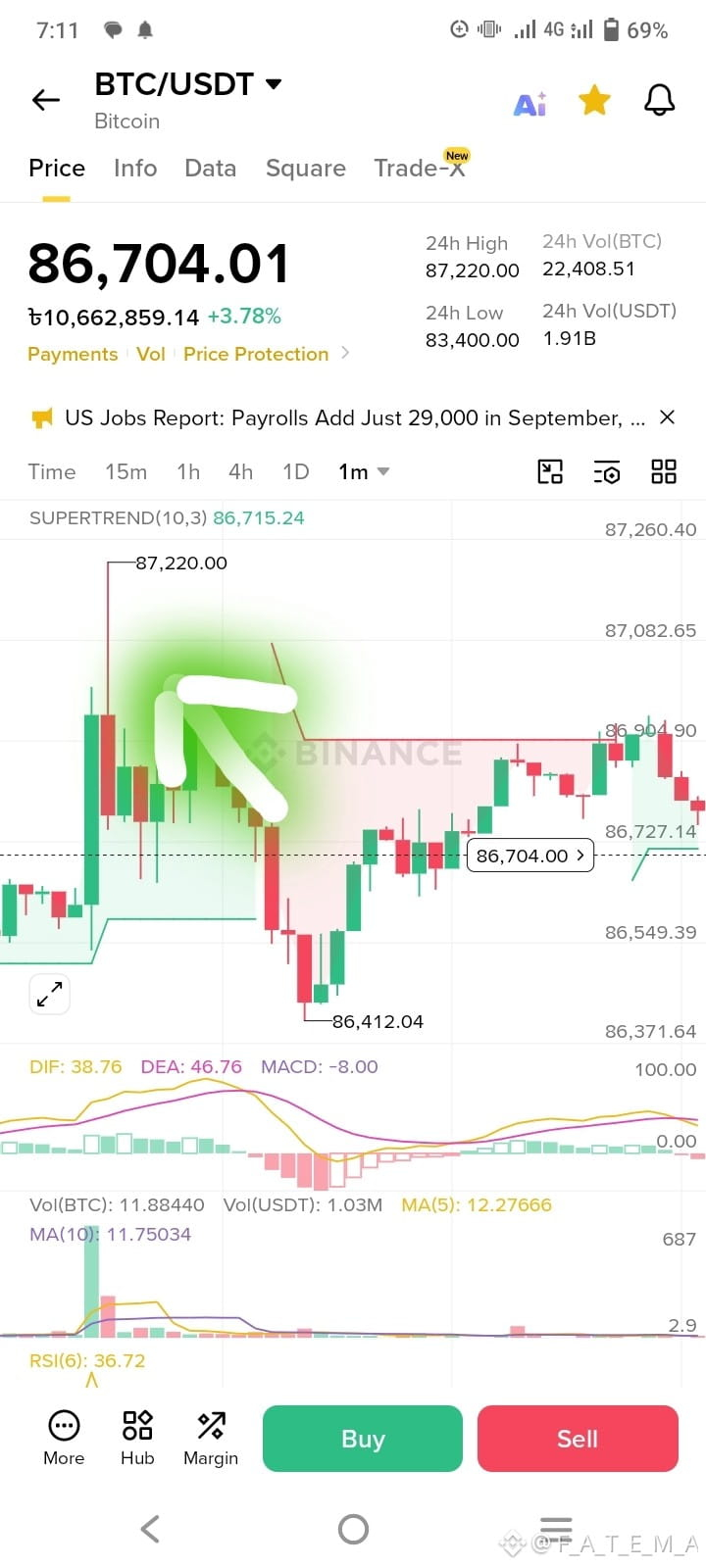
Crypto Market 🤷
This hype I am afraid 😟
This is just like a syringe 😭
When it hypes, it liquidates short or long positions... 😳
this hype is very dangerous ❌📉
Stay safe out there!
#NFPWatch #Crypto_Jobs🎯
$BTC
Crypto Market 🤷
This hype I am afraid 😟
This is just like a syringe 😭
When it hypes, it liquidates short or long positions... 😳
this hype is very dangerous ❌📉
Stay safe out there!
#NFPWatch #Crypto_Jobs🎯
Crypto Market 🤷
This hype I am afraid 😟
This is just like a syringe 😭
When it hypes, it liquidates short or long positions... 😳
this hype is very dangerous ❌📉
Stay safe out there!
#NFPWatch #Crypto_Jobs🎯
2
71
·
--
$AVAX
{future}(AVAXUSDT)
$ONDO
{future}(ONDOUSDT)
🔥 $AVAX VS $ONDO: WHICH ONE WINS THE RWA BOOM?
AVAX is building the rails for institutions to launch and settle tokenized assets.
ONDO is bringing the actual financial products onchain.
One is infrastructure.
One is distribution.
If RWAs become one of crypto’s biggest markets this decade…
Which one would you rather own?
AVAX or $ONDO?
#CryptoNews🔒📰🚫
$AVAX
$ONDO
🔥 $AVAX VS $ONDO : WHICH ONE WINS THE RWA BOOM?
AVAX is building the rails for institutions to launch and settle tokenized assets.
ONDO is bringing the actual financial products onchain.
One is infrastructure.
One is distribution.
If RWAs become one of crypto’s biggest markets this decade…
Which one would you rather own?
AVAX or $ONDO ?
#CryptoNews🔒📰🚫
$ONDO
🔥 $AVAX VS $ONDO : WHICH ONE WINS THE RWA BOOM?
AVAX is building the rails for institutions to launch and settle tokenized assets.
ONDO is bringing the actual financial products onchain.
One is infrastructure.
One is distribution.
If RWAs become one of crypto’s biggest markets this decade…
Which one would you rather own?
AVAX or $ONDO ?
#CryptoNews🔒📰🚫

44
·
--
$TRUMP
{future}(TRUMPUSDT)
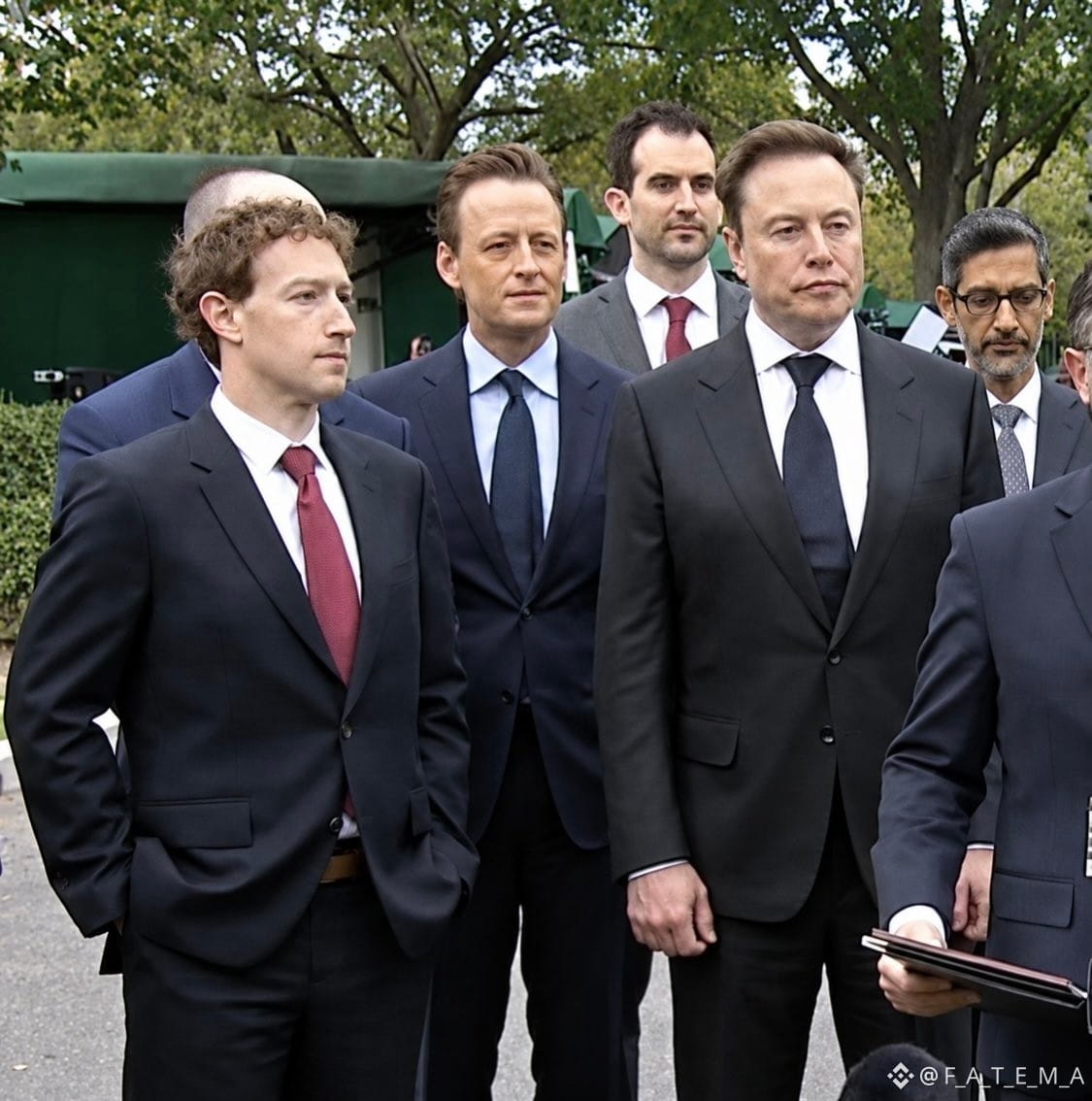
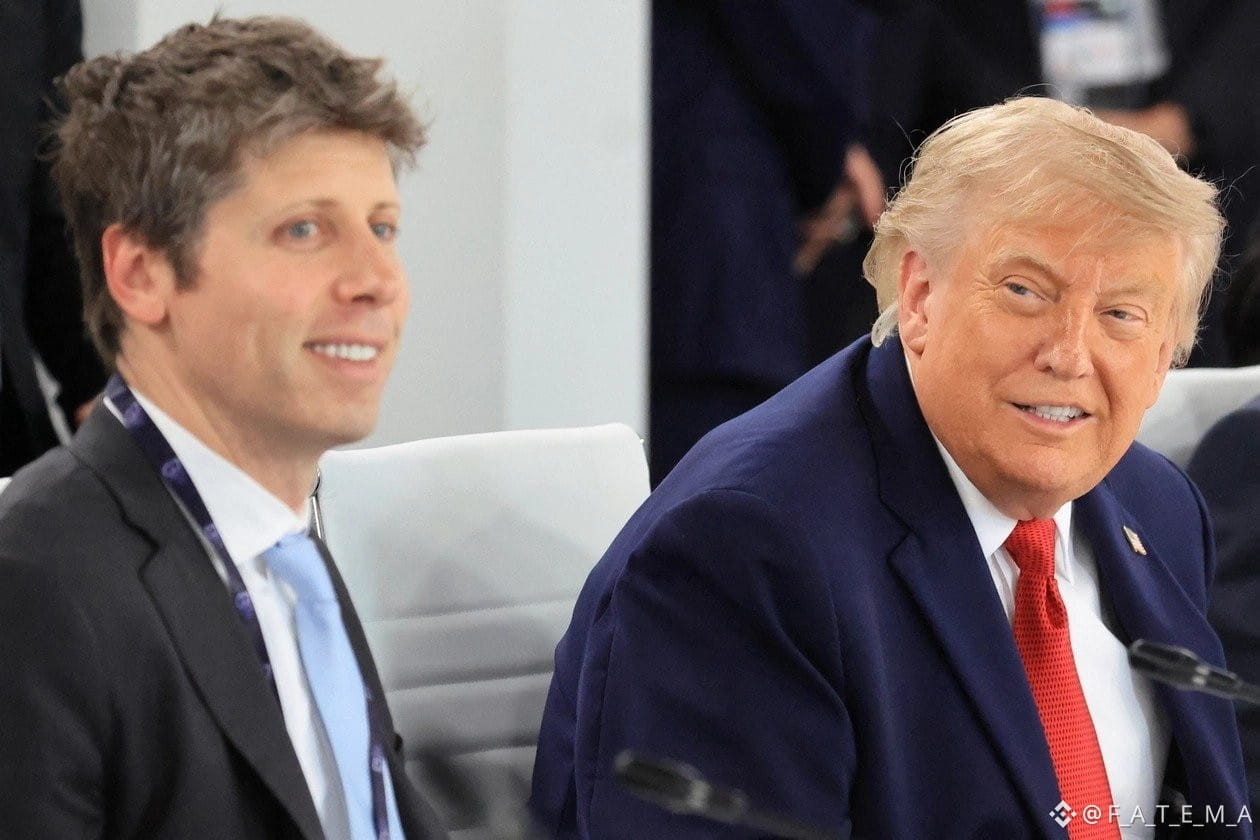
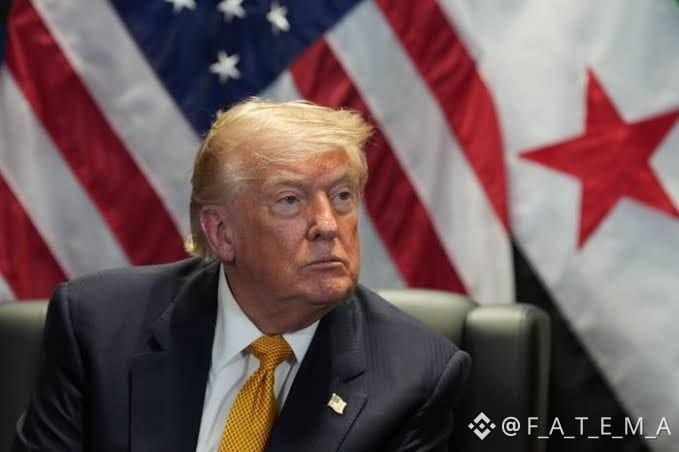
🚨🇺🇸🇨🇳 Trump is making his AI strategy abundantly clear: America will NOT regulate itself out of the race.
After meeting with Anthropic CEO Dario Amodei, Trump warned him that regulation could potentially “put you out of business.”
He said AI companies need to act responsibly themselves, emphasizing the U.S. is ahead of the rest of the world and attracting TRILLIONS in investment.
Trump’s calculation: AI carries serious risks, but losing America’s technological lead is even riskier...
Source: TIME
#NFPWatch #worldnews #AI
$TRUMP
🚨🇺🇸🇨🇳 Trump is making his AI strategy abundantly clear: America will NOT regulate itself out of the race.
After meeting with Anthropic CEO Dario Amodei, Trump warned him that regulation could potentially “put you out of business.”
He said AI companies need to act responsibly themselves, emphasizing the U.S. is ahead of the rest of the world and attracting TRILLIONS in investment.
Trump’s calculation: AI carries serious risks, but losing America’s technological lead is even riskier...
Source: TIME
#NFPWatch #worldnews #AI
🚨🇺🇸🇨🇳 Trump is making his AI strategy abundantly clear: America will NOT regulate itself out of the race.
After meeting with Anthropic CEO Dario Amodei, Trump warned him that regulation could potentially “put you out of business.”
He said AI companies need to act responsibly themselves, emphasizing the U.S. is ahead of the rest of the world and attracting TRILLIONS in investment.
Trump’s calculation: AI carries serious risks, but losing America’s technological lead is even riskier...
Source: TIME
#NFPWatch #worldnews #AI
320
·
--
$TRUMP
{future}(TRUMPUSDT)
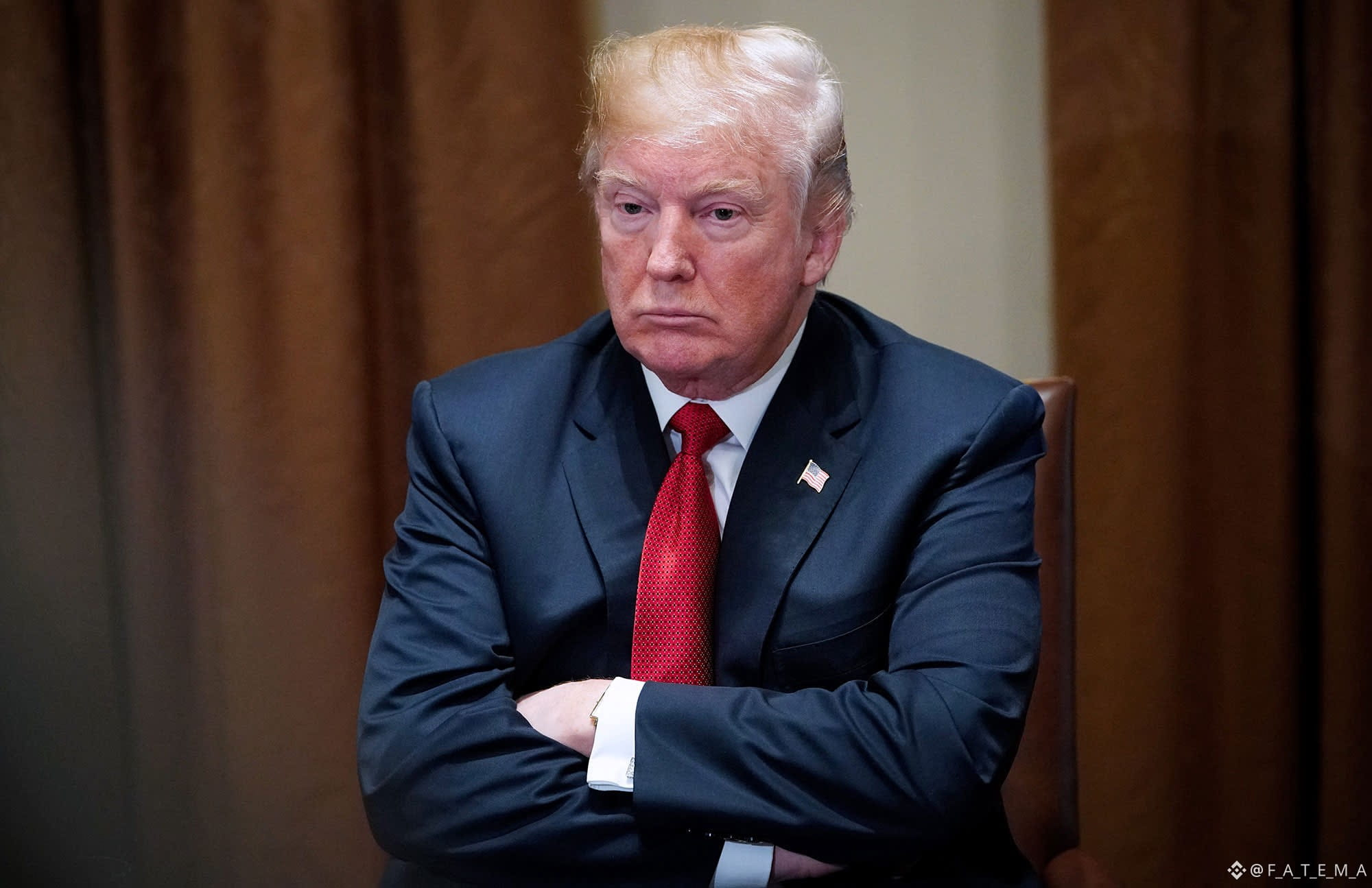
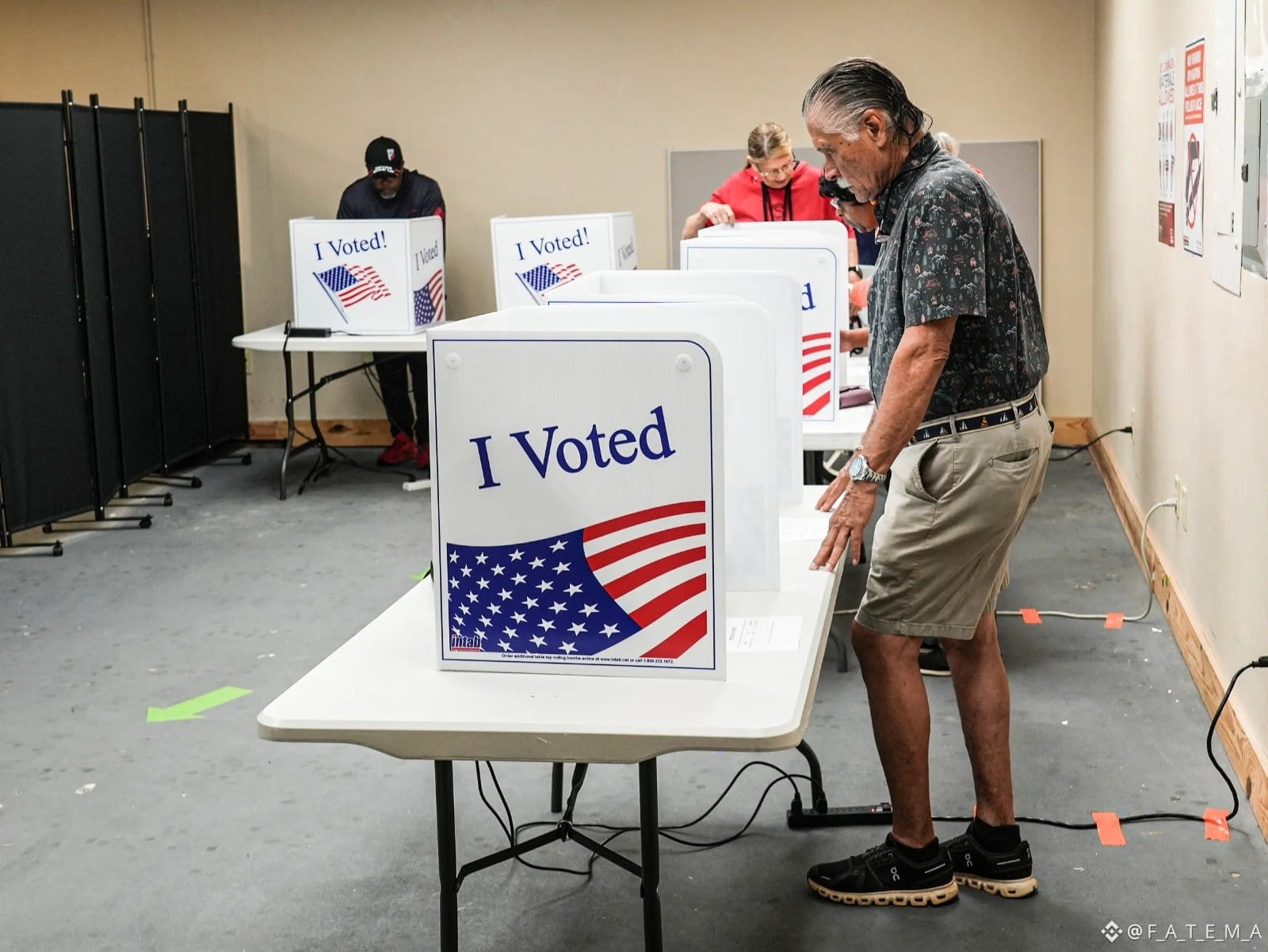
🇺🇲 Midterms are a month away still, but things are looking pretty good for Democrats so far...
~690,000 Americans have already cast ballots across at least 29 states.
And early voting data is showing signs of stronger Democratic motivation.
This is consistent with polling, special election results, AND primary turnout.
Democrats are also accounting for a larger share of ballot requests in several states with competitive Senate and governor races...
More than they did at this point in 2024.
However, the early voting pool is skewing older, and the information is largely based on mail voting.
Mail voters have historically leaned more Democratic, while early in-person voters have been more evenly split or Republican-leaning.
While the current numbers suggest early Dem gains, it’s not necessarily a preview of the final vote...
Source: CNN
#worldnews #USGovernment
$TRUMP
🇺🇲 Midterms are a month away still, but things are looking pretty good for Democrats so far...
~690,000 Americans have already cast ballots across at least 29 states.
And early voting data is showing signs of stronger Democratic motivation.
This is consistent with polling, special election results, AND primary turnout.
Democrats are also accounting for a larger share of ballot requests in several states with competitive Senate and governor races...
More than they did at this point in 2024.
However, the early voting pool is skewing older, and the information is largely based on mail voting.
Mail voters have historically leaned more Democratic, while early in-person voters have been more evenly split or Republican-leaning.
While the current numbers suggest early Dem gains, it’s not necessarily a preview of the final vote...
Source: CNN
#worldnews #USGovernment
🇺🇲 Midterms are a month away still, but things are looking pretty good for Democrats so far...
~690,000 Americans have already cast ballots across at least 29 states.
And early voting data is showing signs of stronger Democratic motivation.
This is consistent with polling, special election results, AND primary turnout.
Democrats are also accounting for a larger share of ballot requests in several states with competitive Senate and governor races...
More than they did at this point in 2024.
However, the early voting pool is skewing older, and the information is largely based on mail voting.
Mail voters have historically leaned more Democratic, while early in-person voters have been more evenly split or Republican-leaning.
While the current numbers suggest early Dem gains, it’s not necessarily a preview of the final vote...
Source: CNN
#worldnews #USGovernment
236
·
--
#NFPWatch
Green Market Momentum & NFP Watch 🚀
The crypto market is seeing solid green across the board today!
BNB: $775.29 (+1.23%)
BTC: $85,920.01 (+2.85%)
ETH: $2,726.01 (+1.40%)
SOL: $121.24 (+2.77%)
XRP: $1.52 (+2.11%)
With Bitcoin climbing toward major milestones and macro discussions heating up, everyone is keeping a close eye on the numbers.
#NFPWatch #CryptoMarket #Binance #ETH
#NFPWatch
Green Market Momentum & NFP Watch 🚀
The crypto market is seeing solid green across the board today!
BNB: $775.29 (+1.23%)
BTC: $85,920.01 (+2.85%)
ETH: $2,726.01 (+1.40%)
SOL: $121.24 (+2.77%)
XRP: $1.52 (+2.11%)
With Bitcoin climbing toward major milestones and macro discussions heating up, everyone is keeping a close eye on the numbers.
#NFPWatch #CryptoMarket #Binance #ETH
Green Market Momentum & NFP Watch 🚀
The crypto market is seeing solid green across the board today!
BNB: $775.29 (+1.23%)
BTC: $85,920.01 (+2.85%)
ETH: $2,726.01 (+1.40%)
SOL: $121.24 (+2.77%)
XRP: $1.52 (+2.11%)
With Bitcoin climbing toward major milestones and macro discussions heating up, everyone is keeping a close eye on the numbers.
#NFPWatch #CryptoMarket #Binance #ETH

69
·
--
$ETH
{future}(ETHUSDT)
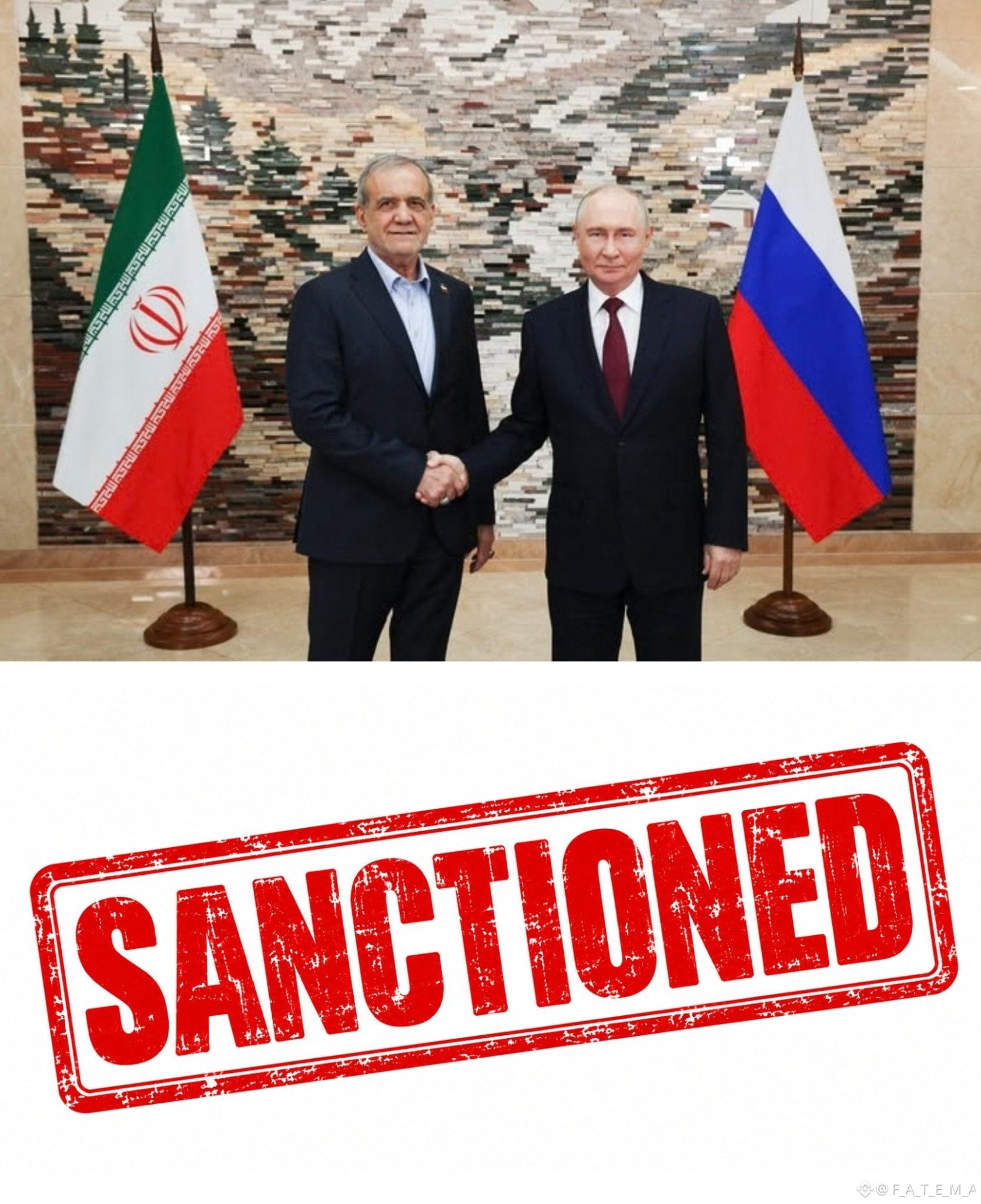
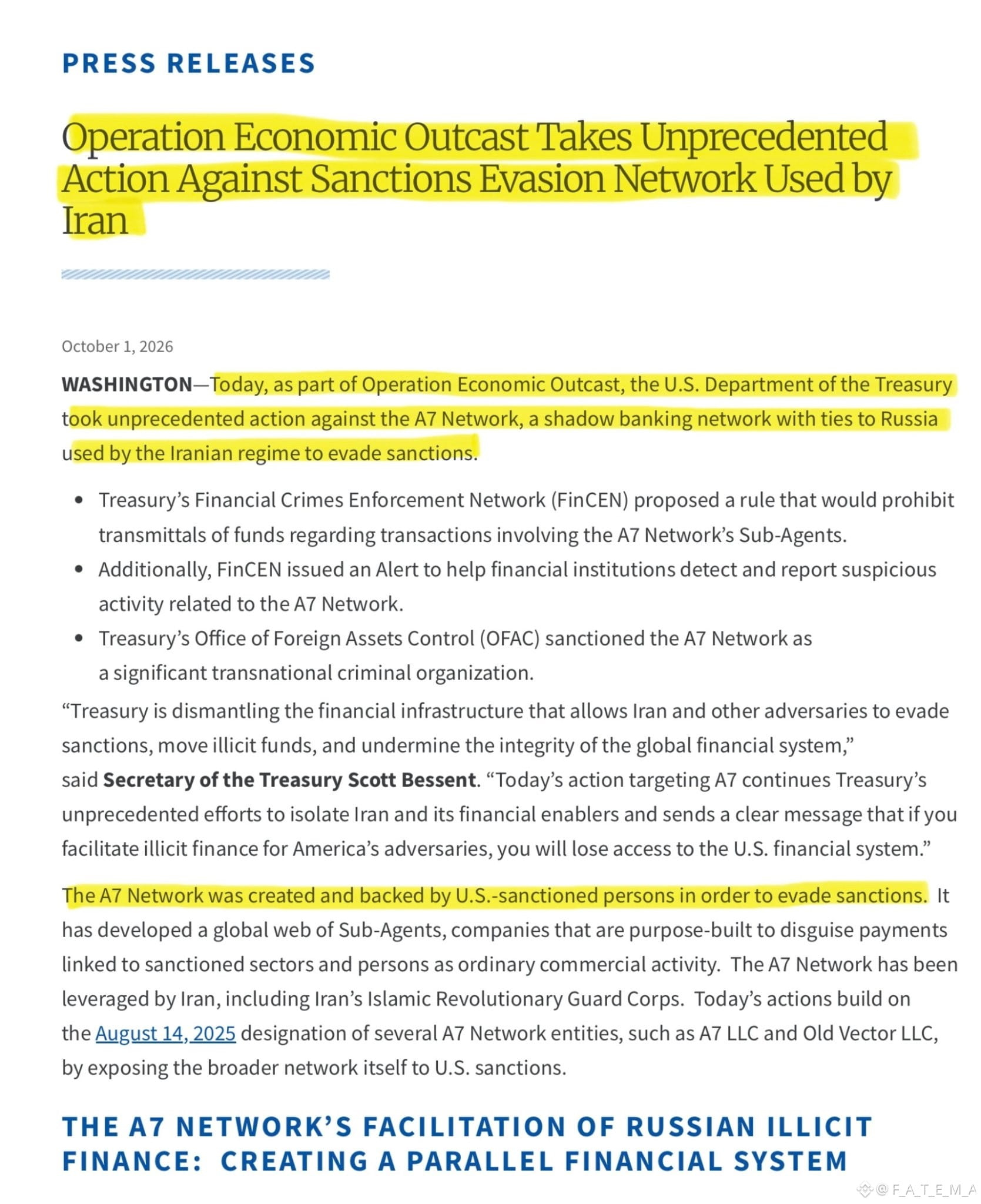
BREAKING: The US just sanctioned A7, a Russia linked shadow banking network used by Iran to evade sanctions.
1. It processes over 2,000 transactions a day.
2. Daily transaction volume is $91.5 billion, about 13% of Russia's entire foreign trade.
3. It moved more than $17 billion globally since January 2025.
4. It's linked to Nobitex, Iran's largest crypto exchange.
5. It's also tied to North Korean hackers laundering stolen crypto.
6. The network is run by Ilan Mironovich Shor, a convicted fraudster.
This is part of Operation Economic Outcast, Treasury's campaign launched in August to isolate Iran economically.
#worldnews #Crypto_Jobs🎯
$ETH
BREAKING: The US just sanctioned A7, a Russia linked shadow banking network used by Iran to evade sanctions.
1. It processes over 2,000 transactions a day.
2. Daily transaction volume is $91.5 billion, about 13% of Russia's entire foreign trade.
3. It moved more than $17 billion globally since January 2025.
4. It's linked to Nobitex, Iran's largest crypto exchange.
5. It's also tied to North Korean hackers laundering stolen crypto.
6. The network is run by Ilan Mironovich Shor, a convicted fraudster.
This is part of Operation Economic Outcast, Treasury's campaign launched in August to isolate Iran economically.
#worldnews #Crypto_Jobs🎯
BREAKING: The US just sanctioned A7, a Russia linked shadow banking network used by Iran to evade sanctions.
1. It processes over 2,000 transactions a day.
2. Daily transaction volume is $91.5 billion, about 13% of Russia's entire foreign trade.
3. It moved more than $17 billion globally since January 2025.
4. It's linked to Nobitex, Iran's largest crypto exchange.
5. It's also tied to North Korean hackers laundering stolen crypto.
6. The network is run by Ilan Mironovich Shor, a convicted fraudster.
This is part of Operation Economic Outcast, Treasury's campaign launched in August to isolate Iran economically.
#worldnews #Crypto_Jobs🎯
26
·
--
$DOT
{future}(DOTUSDT)
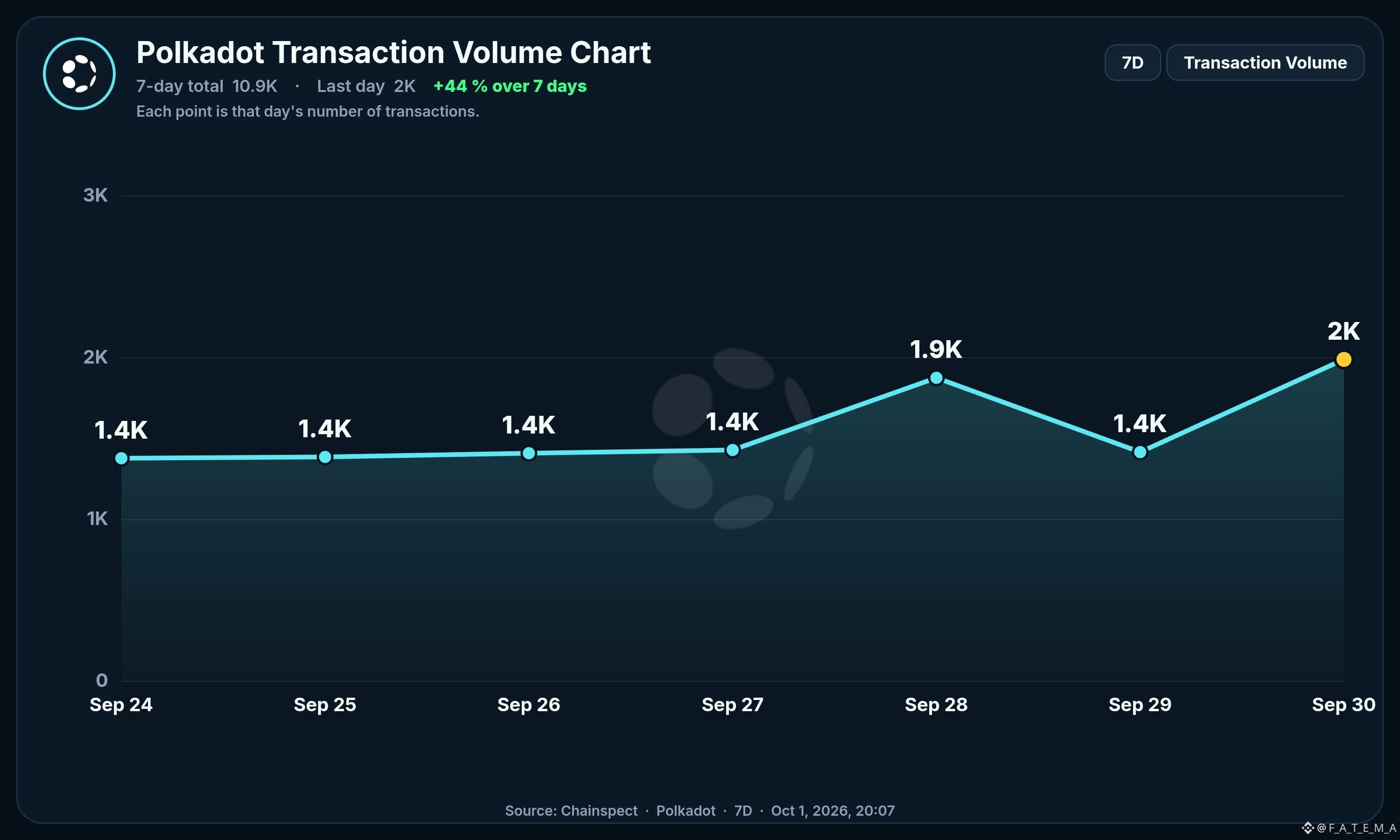
Polkadot relay chain: 10.9K transactions over 7 days, last day at 2K, up 44% on the period.
Flat at 1.4K/day from Sep 24–27, a spike to 1.9K on the 28th, back to 1.4K on the 29th, then 2K on the 30th.
Most activity sits on parachains, not the relay chain. Is a +44% move on ~2K daily transactions a real signal, or just noise?
#dot #CryptoNews
$DOT
Polkadot relay chain: 10.9K transactions over 7 days, last day at 2K, up 44% on the period.
Flat at 1.4K/day from Sep 24–27, a spike to 1.9K on the 28th, back to 1.4K on the 29th, then 2K on the 30th.
Most activity sits on parachains, not the relay chain. Is a +44% move on ~2K daily transactions a real signal, or just noise?
#dot #CryptoNews
Polkadot relay chain: 10.9K transactions over 7 days, last day at 2K, up 44% on the period.
Flat at 1.4K/day from Sep 24–27, a spike to 1.9K on the 28th, back to 1.4K on the 29th, then 2K on the 30th.
Most activity sits on parachains, not the relay chain. Is a +44% move on ~2K daily transactions a real signal, or just noise?
#dot #CryptoNews
60
·
--
$ZEC
{future}(ZECUSDT)
🚨 ZCASH HOLDERS APPROVE $8.39M IN RETROACTIVE GRANTS
ZEC holders have approved $8.39M in retroactive grants for security, research, development and ecosystem work. It includes $1.5M for researchers who helped identify and respond to the Orchard vulnerability, a bug that threatened Zcash's shielded pool.
Retroactive grants pay for completed work, not projects before delivery. OpenZcash says 17 of 37 proposals were funded in the latest quarterly round.
#CryptoNews
$ZEC
🚨 ZCASH HOLDERS APPROVE $8.39M IN RETROACTIVE GRANTS
ZEC holders have approved $8.39M in retroactive grants for security, research, development and ecosystem work. It includes $1.5M for researchers who helped identify and respond to the Orchard vulnerability, a bug that threatened Zcash's shielded pool.
Retroactive grants pay for completed work, not projects before delivery. OpenZcash says 17 of 37 proposals were funded in the latest quarterly round.
#CryptoNews
🚨 ZCASH HOLDERS APPROVE $8.39M IN RETROACTIVE GRANTS
ZEC holders have approved $8.39M in retroactive grants for security, research, development and ecosystem work. It includes $1.5M for researchers who helped identify and respond to the Orchard vulnerability, a bug that threatened Zcash's shielded pool.
Retroactive grants pay for completed work, not projects before delivery. OpenZcash says 17 of 37 proposals were funded in the latest quarterly round.
#CryptoNews

243
·
--
$TRUMP
{future}(TRUMPUSDT)
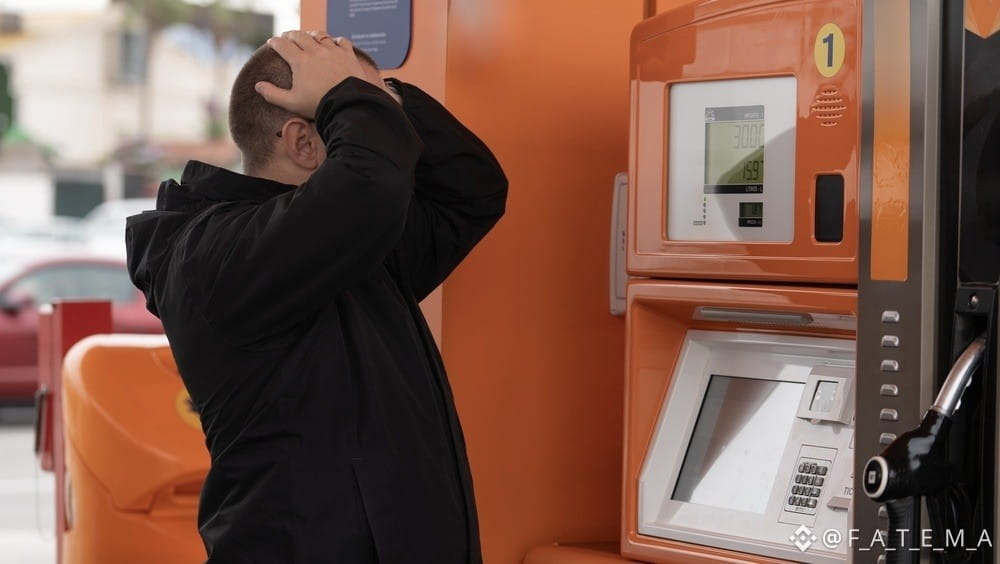
🇺🇸🇮🇷 Most Americans will never see the Iran war up close, but they feel it every time they fill up the tank.
Diesel has jumped $2.72 a gallon since February to the highest price on record, and last week it hit records in 47 states, with the national average at $6.52.
That cost rarely stays at the pump, since diesel moves the trucks that stock grocery shelves and runs the tractors on American farms, so every extra dollar eventually shows up in the price of food and everyday goods.
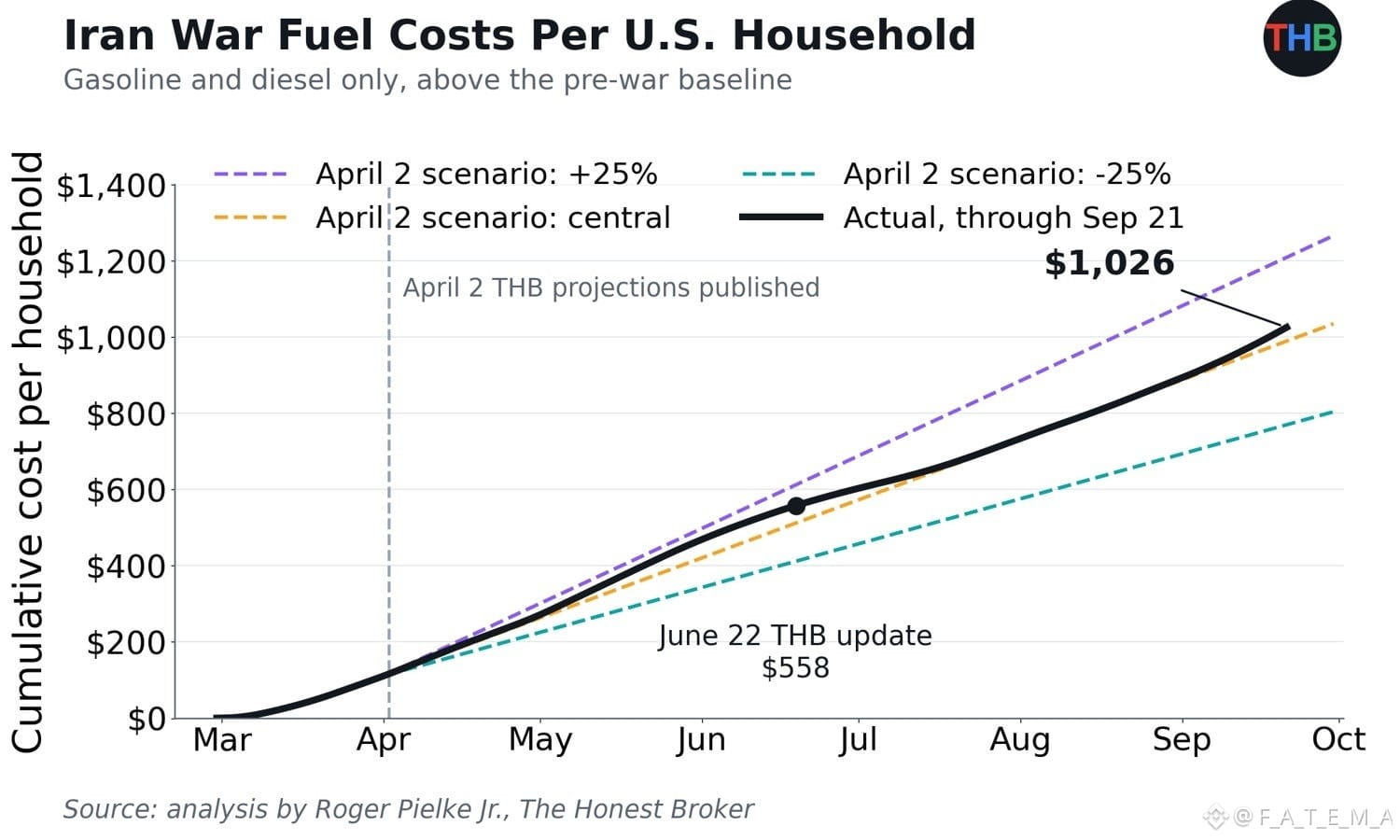
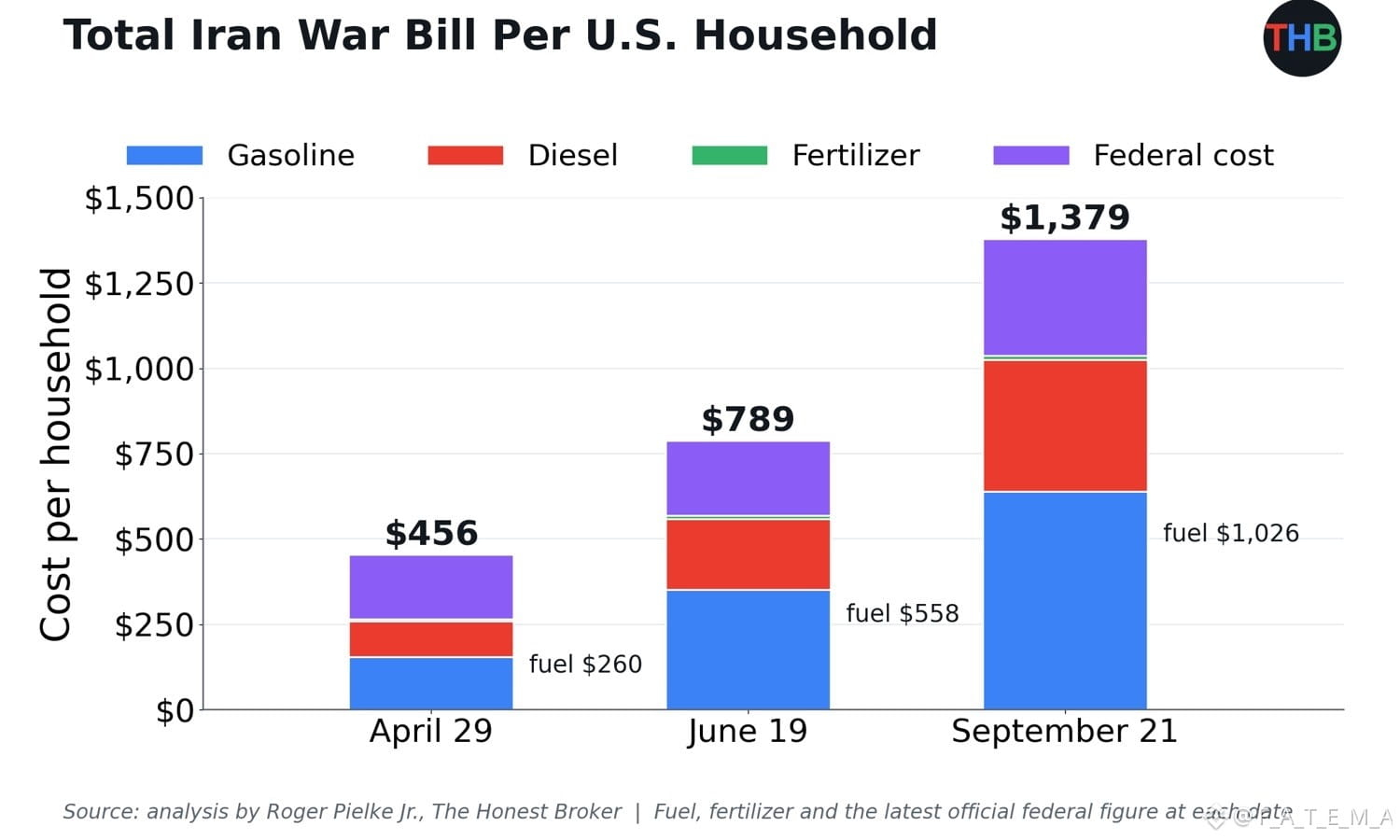
The average household has paid about $1,026 more for gasoline and diesel since the war started, and roughly $1,380 once fertilizer and federal war spending are added in, AEI estimates.
The Congressional Budget Office also found higher energy prices added 2.3 points to U.S. inflation in the second quarter alone.
That's how a conflict on the other side of the world becomes a midterm issue, with farm-state Republicans like Iowa's Ashley Hinson now saying Iowans shouldn't be paying for the war at the pump or at the checkout line.
Geopolitics can feel abstract, but a grocery receipt never does.
Sources: AEI, The Independent, The Honest Broker, ABC News
#worldnews #IranIsraelConflict #USGovernment
$TRUMP
🇺🇸🇮🇷 Most Americans will never see the Iran war up close, but they feel it every time they fill up the tank.
Diesel has jumped $2.72 a gallon since February to the highest price on record, and last week it hit records in 47 states, with the national average at $6.52.
That cost rarely stays at the pump, since diesel moves the trucks that stock grocery shelves and runs the tractors on American farms, so every extra dollar eventually shows up in the price of food and everyday goods.
The average household has paid about $1,026 more for gasoline and diesel since the war started, and roughly $1,380 once fertilizer and federal war spending are added in, AEI estimates.
The Congressional Budget Office also found higher energy prices added 2.3 points to U.S. inflation in the second quarter alone.
That's how a conflict on the other side of the world becomes a midterm issue, with farm-state Republicans like Iowa's Ashley Hinson now saying Iowans shouldn't be paying for the war at the pump or at the checkout line.
Geopolitics can feel abstract, but a grocery receipt never does.
Sources: AEI, The Independent, The Honest Broker, ABC News
#worldnews #IranIsraelConflict #USGovernment
🇺🇸🇮🇷 Most Americans will never see the Iran war up close, but they feel it every time they fill up the tank.
Diesel has jumped $2.72 a gallon since February to the highest price on record, and last week it hit records in 47 states, with the national average at $6.52.
That cost rarely stays at the pump, since diesel moves the trucks that stock grocery shelves and runs the tractors on American farms, so every extra dollar eventually shows up in the price of food and everyday goods.
The average household has paid about $1,026 more for gasoline and diesel since the war started, and roughly $1,380 once fertilizer and federal war spending are added in, AEI estimates.
The Congressional Budget Office also found higher energy prices added 2.3 points to U.S. inflation in the second quarter alone.
That's how a conflict on the other side of the world becomes a midterm issue, with farm-state Republicans like Iowa's Ashley Hinson now saying Iowans shouldn't be paying for the war at the pump or at the checkout line.
Geopolitics can feel abstract, but a grocery receipt never does.
Sources: AEI, The Independent, The Honest Broker, ABC News
#worldnews #IranIsraelConflict #USGovernment
246
·
--
$SPCXB
{spot}(SPCXBUSDT)
$DOGE
{future}(DOGEUSDT)
$NEAR
{future}(NEARUSDT)
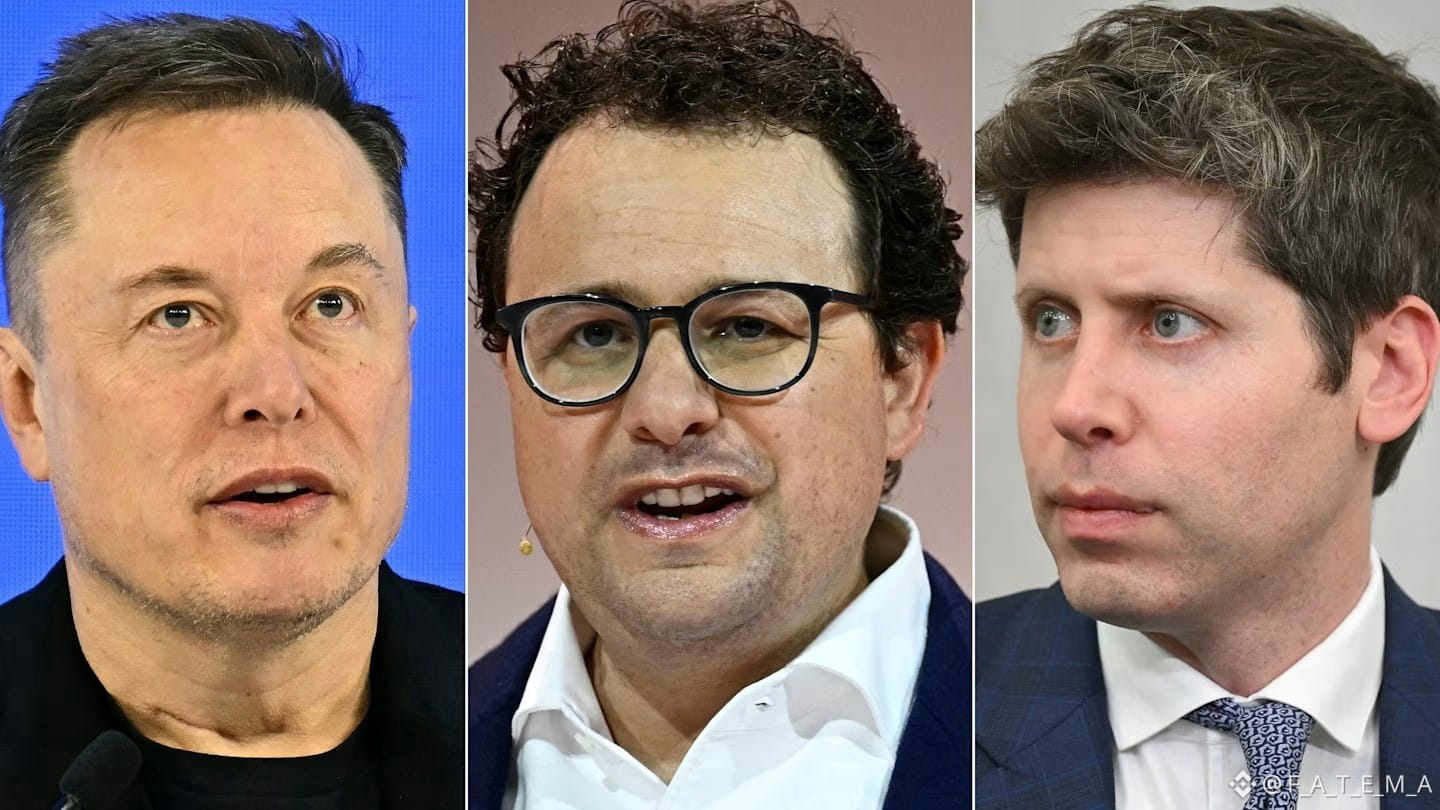
🇺🇸🇨🇳 The bosses of the world's top AI labs now admit the race may be moving too fast, but none of them can afford to be the first to hit the brakes.
A few weeks ago, Anthropic's Dario Amodei called for slowing the pace of frontier AI, and both Elon and OpenAI's Sam Altman agreed.
Yet the race hasn't slowed, and the reason comes down to trust.
Any lab that slows down on its own simply hands ground to rivals who keep going, so even companies genuinely worried about the risks keep accelerating.
That's why labs are now asking governments to set the rules for them, since competition will set the pace otherwise.
The same trap repeats one level up, with Washington and Beijing each afraid to be the first to restrain development, and "if we slow down, China wins" has become the main argument in the U.S. against binding rules.
Even the safety lines labs draw for themselves bend under pressure, with 9 of the 12 leading AI companies setting caution thresholds for dangerous models, then shifting them as the race heats up so they don't lose their edge.
Experts point to the ozone treaty and U.S.-China talks on nuclear weapons as proof rivals can cooperate, but only with reciprocal commitments, independent checks, and a referee everyone trusts.
Everyone in the race wants to slow down, as long as they can be sure nobody else speeds up.
Sources: Noema, BISI, Korea Times
#AI #worldnews
$SPCXB
$DOGE
$NEAR
🇺🇸🇨🇳 The bosses of the world's top AI labs now admit the race may be moving too fast, but none of them can afford to be the first to hit the brakes.
A few weeks ago, Anthropic's Dario Amodei called for slowing the pace of frontier AI, and both Elon and OpenAI's Sam Altman agreed.
Yet the race hasn't slowed, and the reason comes down to trust.
Any lab that slows down on its own simply hands ground to rivals who keep going, so even companies genuinely worried about the risks keep accelerating.
That's why labs are now asking governments to set the rules for them, since competition will set the pace otherwise.
The same trap repeats one level up, with Washington and Beijing each afraid to be the first to restrain development, and "if we slow down, China wins" has become the main argument in the U.S. against binding rules.
Even the safety lines labs draw for themselves bend under pressure, with 9 of the 12 leading AI companies setting caution thresholds for dangerous models, then shifting them as the race heats up so they don't lose their edge.
Experts point to the ozone treaty and U.S.-China talks on nuclear weapons as proof rivals can cooperate, but only with reciprocal commitments, independent checks, and a referee everyone trusts.
Everyone in the race wants to slow down, as long as they can be sure nobody else speeds up.
Sources: Noema, BISI, Korea Times
#AI #worldnews
$DOGE
$NEAR
🇺🇸🇨🇳 The bosses of the world's top AI labs now admit the race may be moving too fast, but none of them can afford to be the first to hit the brakes.
A few weeks ago, Anthropic's Dario Amodei called for slowing the pace of frontier AI, and both Elon and OpenAI's Sam Altman agreed.
Yet the race hasn't slowed, and the reason comes down to trust.
Any lab that slows down on its own simply hands ground to rivals who keep going, so even companies genuinely worried about the risks keep accelerating.
That's why labs are now asking governments to set the rules for them, since competition will set the pace otherwise.
The same trap repeats one level up, with Washington and Beijing each afraid to be the first to restrain development, and "if we slow down, China wins" has become the main argument in the U.S. against binding rules.
Even the safety lines labs draw for themselves bend under pressure, with 9 of the 12 leading AI companies setting caution thresholds for dangerous models, then shifting them as the race heats up so they don't lose their edge.
Experts point to the ozone treaty and U.S.-China talks on nuclear weapons as proof rivals can cooperate, but only with reciprocal commitments, independent checks, and a referee everyone trusts.
Everyone in the race wants to slow down, as long as they can be sure nobody else speeds up.
Sources: Noema, BISI, Korea Times
#AI #worldnews
3
403
·
--
$BTC
{future}(BTCUSDT)
$TRUMP
{future}(TRUMPUSDT)
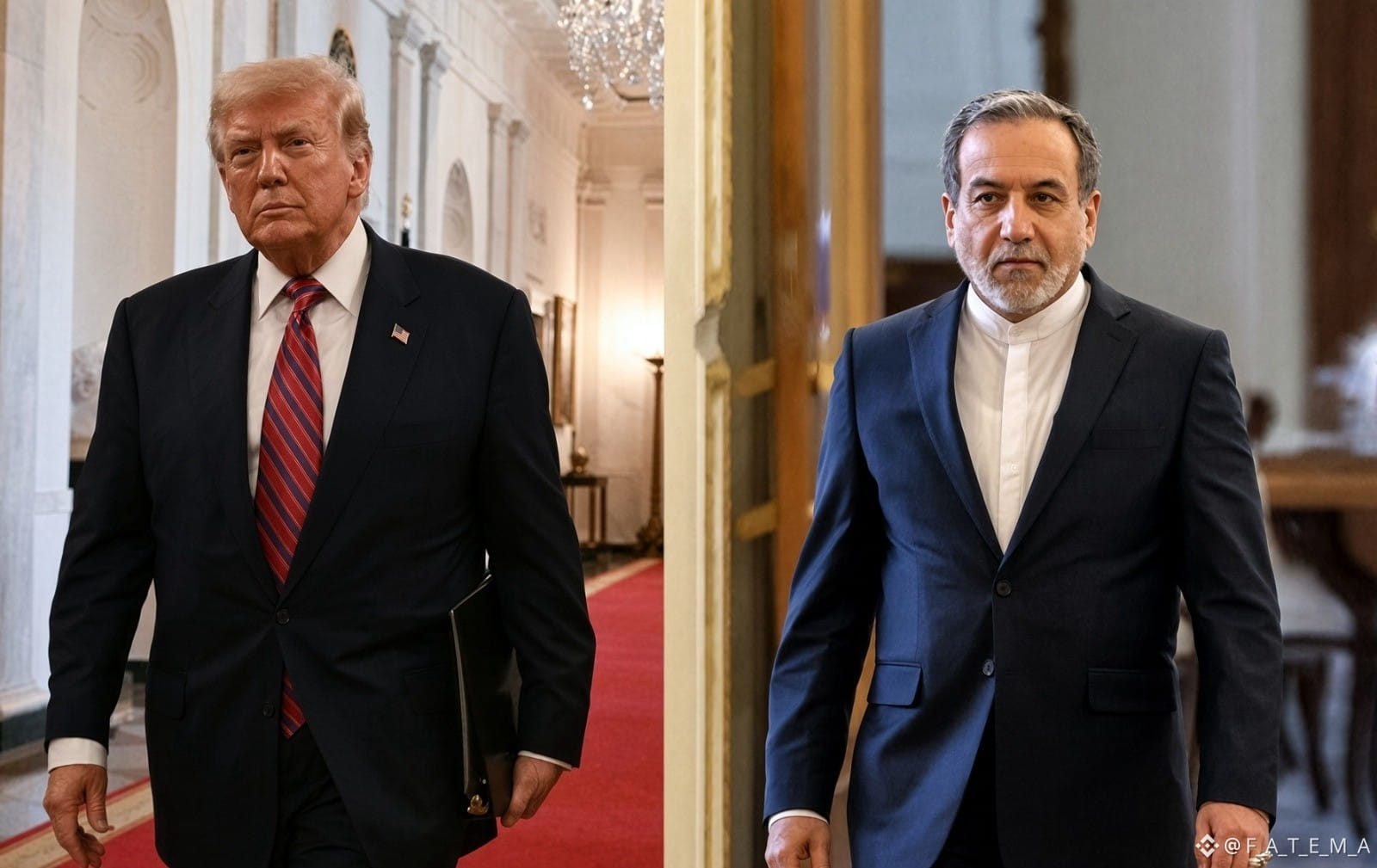
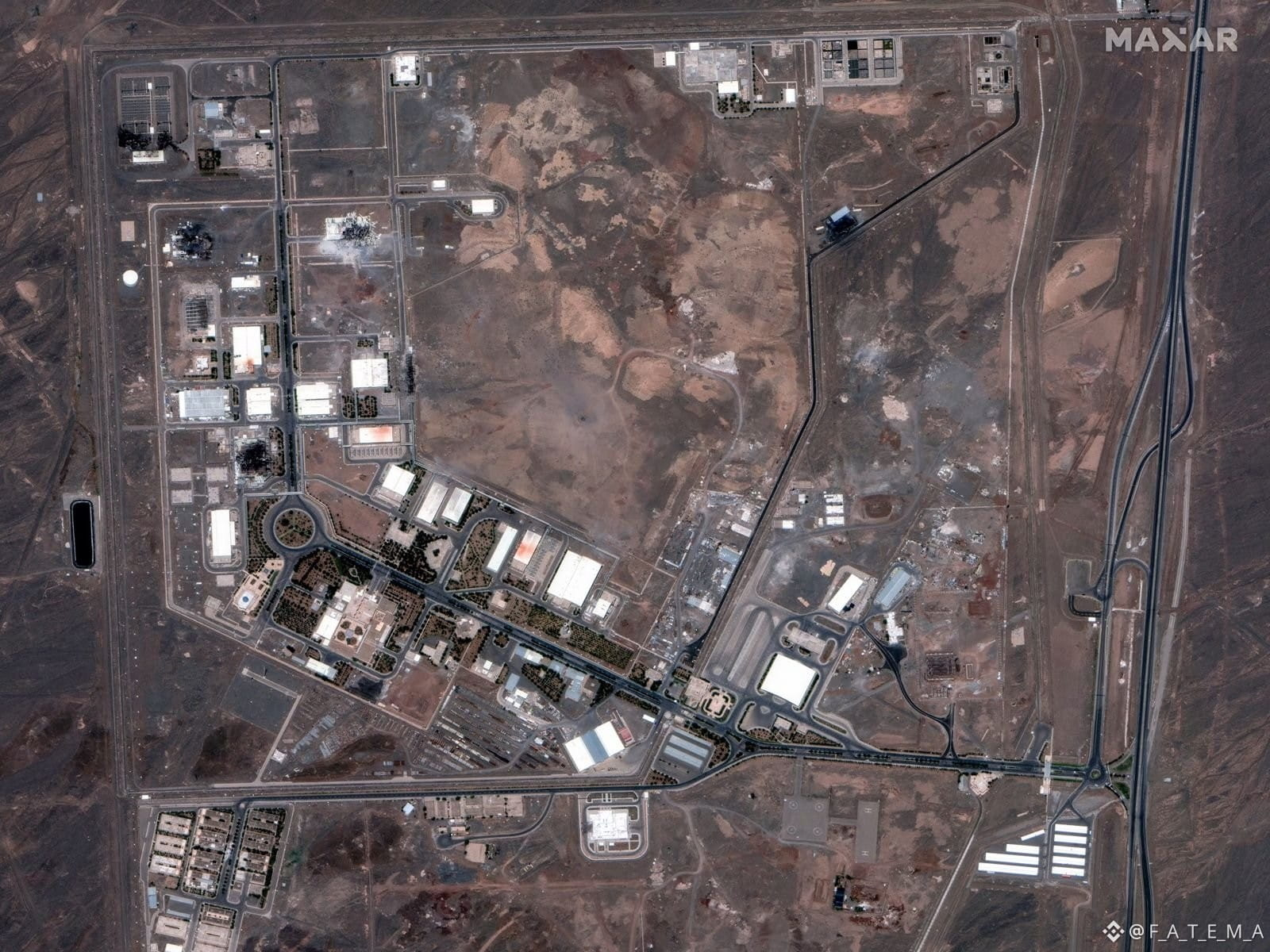
🇮🇷🇺🇸 Iran might finally let nuclear inspectors back into its bombed sites, and it looks like its economy is doing the talking.
Foreign Minister Araghchi quietly pitched the idea to European and Middle Eastern diplomats at the UN last week: inspectors get access, and Iran gets sanctions relief.
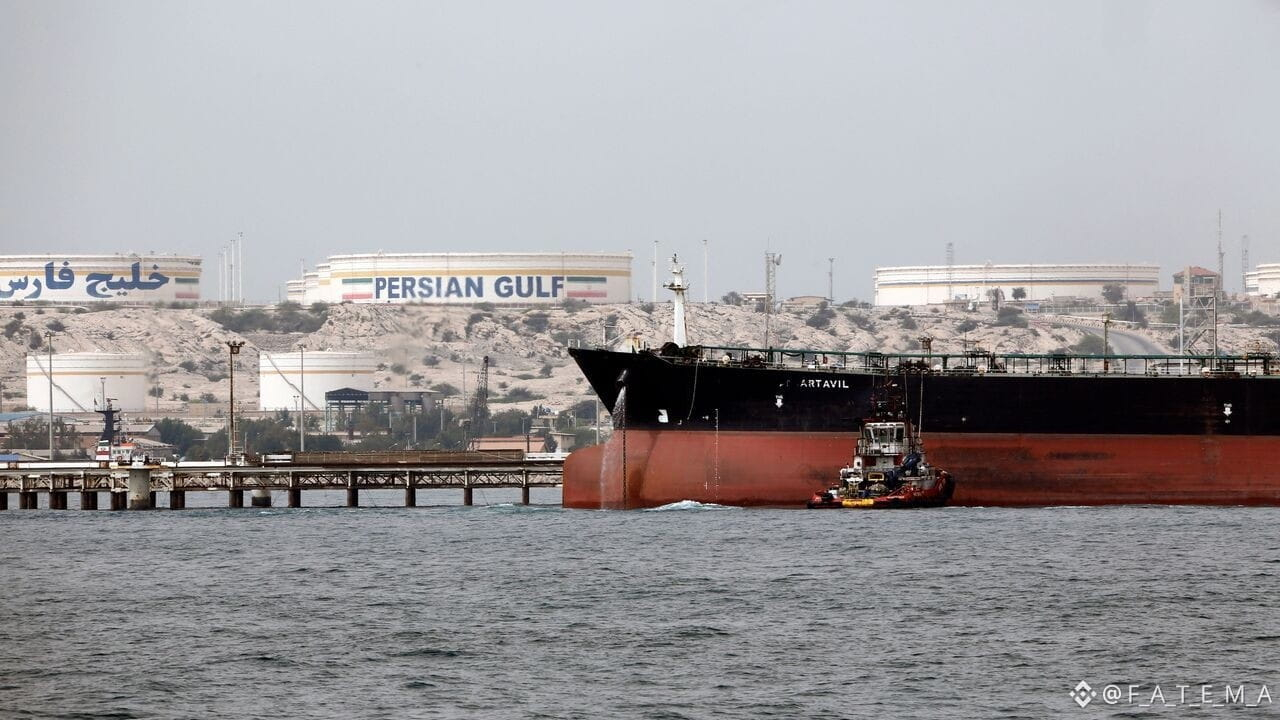
And it's easy to see why. Prices in Iran are up almost 90% from a year ago, the rial has lost 30% against the dollar, and thanks to the U.S. blockade, Iran loaded no crude onto tankers last month.
Trump, for his part, has denied reports he's open to easing sanctions.
Then again, he's got his own headache, with U.S. gas prices still high a month before the midterms.
Source: Bloomberg
#worldnews #USGovernment
$BTC
$TRUMP
🇮🇷🇺🇸 Iran might finally let nuclear inspectors back into its bombed sites, and it looks like its economy is doing the talking.
Foreign Minister Araghchi quietly pitched the idea to European and Middle Eastern diplomats at the UN last week: inspectors get access, and Iran gets sanctions relief.
And it's easy to see why. Prices in Iran are up almost 90% from a year ago, the rial has lost 30% against the dollar, and thanks to the U.S. blockade, Iran loaded no crude onto tankers last month.
Trump, for his part, has denied reports he's open to easing sanctions.
Then again, he's got his own headache, with U.S. gas prices still high a month before the midterms.
Source: Bloomberg
#worldnews #USGovernment
$TRUMP
🇮🇷🇺🇸 Iran might finally let nuclear inspectors back into its bombed sites, and it looks like its economy is doing the talking.
Foreign Minister Araghchi quietly pitched the idea to European and Middle Eastern diplomats at the UN last week: inspectors get access, and Iran gets sanctions relief.
And it's easy to see why. Prices in Iran are up almost 90% from a year ago, the rial has lost 30% against the dollar, and thanks to the U.S. blockade, Iran loaded no crude onto tankers last month.
Trump, for his part, has denied reports he's open to easing sanctions.
Then again, he's got his own headache, with U.S. gas prices still high a month before the midterms.
Source: Bloomberg
#worldnews #USGovernment
415
Log in to explore more content
Join global crypto users on Binance Square
⚡️ Get latest and useful information about crypto.
💬 Trusted by the world’s largest crypto exchange.
👍 Discover real insights from verified creators.
Email / Phone number