
evinlin
802 Posts

evinlin
Report
Block User
92 Following
11.5K+ Followers
2.1K+ Liked
Posts
All
Quotes
Live
·
--
After six years in the blockchain gaming industry, I've seen too many "first-month DAU peak, third-quarter exit" blockchain games. Pixels 2024 is also a part of that wave—earning 20 million USD annually, web3 DAU at its peak, but what happened? Token inflation, selling pressure crashing the bottom, rewards handed out to a group of locusts who only know how to withdraw. This is not the first landmine, and certainly not the last. I laughed when I opened that page of the white paper—"Mis-targeted Rewards". In simple terms, it's just the same old "work for tokens, convert tokens to fiat, run away with fiat" assembly line from three years ago, smacked in the face by the data they fed themselves. I’m not sure if this is called a pivot or a confession. #pixel
The most ruthless aspect of RORS is that it's a ratio: spend 1 unit on rewards, how much comes back to the ecosystem. Currently about 0.8, the target is to break through 1.0. Translated into plain language: for every 10 units of rewards issued, there’s a net loss of 2 units. The threshold is set above 1.0 for the entire economic model to be coherent. That said, I don’t trust those peers who write their game white papers with ARPDAU of fifteen dollars and K factor of 1.8—the more neat the numbers, the more it looks like a statistical illusion from PS. At least RORS provides a unit scale that can be audited, even if it just means I get fooled a couple of times less. $PIXEL
vPIXEL is an ERC-20c implemented spend-only token, 1:1 backed. At first, I thought it was another locking scheme, but it wasn't until I personally went through the token process that I understood—players can withdraw vPIXEL without fees, but can only spend it within the ecosystem; to withdraw PIXEL, the Farmer Fee cuts 20-50% straight off. It’s essentially a blunt barrier set for withdrawals.
What I'm concerned about is the global pool of 28 million PIXEL/month in Phase 2. Dynamic allocation sounds nice, but the staking weight essentially means whoever has the larger TVL gets the rewards. The fixed quota of 27 million for three games in Phase 1, once Phase 2 opens, the small pool will be instantly drained by the whales. Ultimately, the story of decentralized issuance will likely grow into centralized settlement.
@pixels
Don't listen to anyone making guarantees. I only dare to keep a 10% position, treating it as a field experiment in data-driven token economics. Not losing to the point of crying is considered a win.
After six years in the blockchain gaming industry, I've seen too many "first-month DAU peak, third-quarter exit" blockchain games. Pixels 2024 is also a part of that wave—earning 20 million USD annually, web3 DAU at its peak, but what happened? Token inflation, selling pressure crashing the bottom, rewards handed out to a group of locusts who only know how to withdraw. This is not the first landmine, and certainly not the last. I laughed when I opened that page of the white paper—"Mis-targeted Rewards". In simple terms, it's just the same old "work for tokens, convert tokens to fiat, run away with fiat" assembly line from three years ago, smacked in the face by the data they fed themselves. I’m not sure if this is called a pivot or a confession. #pixel
The most ruthless aspect of RORS is that it's a ratio: spend 1 unit on rewards, how much comes back to the ecosystem. Currently about 0.8, the target is to break through 1.0. Translated into plain language: for every 10 units of rewards issued, there’s a net loss of 2 units. The threshold is set above 1.0 for the entire economic model to be coherent. That said, I don’t trust those peers who write their game white papers with ARPDAU of fifteen dollars and K factor of 1.8—the more neat the numbers, the more it looks like a statistical illusion from PS. At least RORS provides a unit scale that can be audited, even if it just means I get fooled a couple of times less. $PIXEL
vPIXEL is an ERC-20c implemented spend-only token, 1:1 backed. At first, I thought it was another locking scheme, but it wasn't until I personally went through the token process that I understood—players can withdraw vPIXEL without fees, but can only spend it within the ecosystem; to withdraw PIXEL, the Farmer Fee cuts 20-50% straight off. It’s essentially a blunt barrier set for withdrawals.
What I'm concerned about is the global pool of 28 million PIXEL/month in Phase 2. Dynamic allocation sounds nice, but the staking weight essentially means whoever has the larger TVL gets the rewards. The fixed quota of 27 million for three games in Phase 1, once Phase 2 opens, the small pool will be instantly drained by the whales. Ultimately, the story of decentralized issuance will likely grow into centralized settlement.
@Pixels
Don't listen to anyone making guarantees. I only dare to keep a 10% position, treating it as a field experiment in data-driven token economics. Not losing to the point of crying is considered a win.
The most ruthless aspect of RORS is that it's a ratio: spend 1 unit on rewards, how much comes back to the ecosystem. Currently about 0.8, the target is to break through 1.0. Translated into plain language: for every 10 units of rewards issued, there’s a net loss of 2 units. The threshold is set above 1.0 for the entire economic model to be coherent. That said, I don’t trust those peers who write their game white papers with ARPDAU of fifteen dollars and K factor of 1.8—the more neat the numbers, the more it looks like a statistical illusion from PS. At least RORS provides a unit scale that can be audited, even if it just means I get fooled a couple of times less. $PIXEL
vPIXEL is an ERC-20c implemented spend-only token, 1:1 backed. At first, I thought it was another locking scheme, but it wasn't until I personally went through the token process that I understood—players can withdraw vPIXEL without fees, but can only spend it within the ecosystem; to withdraw PIXEL, the Farmer Fee cuts 20-50% straight off. It’s essentially a blunt barrier set for withdrawals.
What I'm concerned about is the global pool of 28 million PIXEL/month in Phase 2. Dynamic allocation sounds nice, but the staking weight essentially means whoever has the larger TVL gets the rewards. The fixed quota of 27 million for three games in Phase 1, once Phase 2 opens, the small pool will be instantly drained by the whales. Ultimately, the story of decentralized issuance will likely grow into centralized settlement.
@Pixels
Don't listen to anyone making guarantees. I only dare to keep a 10% position, treating it as a field experiment in data-driven token economics. Not losing to the point of crying is considered a win.
124
·
--
When all gaming companies are using AI to lay off workers, Pixels is using AI to retain players.
Today, while browsing the news, I saw that Thoughtworks released the latest issue of their technology radar, which specifically mentioned a term called 'cognitive debt'—referring to how the entire tech industry is too reliant on AI now, with code written by AI, designs produced by AI, and even decisions made with AI's assistance. It seems efficient, but in reality, the team's own judgment is deteriorating.
Then I thought of Pixels.
To be honest, Pixels has also fallen into this trap before. In 2024, they achieved the highest daily active users in Web3 blockchain games, with an annual revenue of 20 million USD; the data was impressive. But later, the team reflected and found that the token inflation was too severe, with many users just coming to withdraw their tokens and leaving afterward, making the entire economic model like a bucket with a hole in the bottom. #pixel
Interestingly, Pixels' current solution happens to be the opposite of what was mentioned in today's news. While other gaming companies use AI for layoffs to cut costs, Pixels created an AI engine called Stacked, specifically designed to analyze player behavior and accurately reward 'real players'. It’s not the kind of everyone-gets-a-piece model anymore; instead, AI looks at whether you've logged in for seven consecutive days, completed the tutorial, and invited three friends before rewarding you. @pixels
Essentially, this is just transferring the ROAS logic from the traditional advertising industry to blockchain games. Pixels refers to their version as RORS—how much can you earn back for every dollar spent on rewards. Currently, this number is 0.8, not yet positive, but at least they are seriously calculating this account.
$PIXEL
{spot}(PIXELUSDT)
So, to sum it up, while other companies use AI to save on labor costs, Pixels uses AI to identify who is a real player and who is just exploiting the system. Whether the direction is right or not is yet to be determined, but at least the thinking is quite clear. However, since RORS hasn't surpassed 1, and unlocking is just around the corner, I won't rush in at this juncture; I’ll just keep an eye on it.
What do you think? Can the idea of using AI in blockchain games to 'counter-exploit' work?
When all gaming companies are using AI to lay off workers, Pixels is using AI to retain players.
Today, while browsing the news, I saw that Thoughtworks released the latest issue of their technology radar, which specifically mentioned a term called 'cognitive debt'—referring to how the entire tech industry is too reliant on AI now, with code written by AI, designs produced by AI, and even decisions made with AI's assistance. It seems efficient, but in reality, the team's own judgment is deteriorating.
Then I thought of Pixels.
To be honest, Pixels has also fallen into this trap before. In 2024, they achieved the highest daily active users in Web3 blockchain games, with an annual revenue of 20 million USD; the data was impressive. But later, the team reflected and found that the token inflation was too severe, with many users just coming to withdraw their tokens and leaving afterward, making the entire economic model like a bucket with a hole in the bottom. #pixel
Interestingly, Pixels' current solution happens to be the opposite of what was mentioned in today's news. While other gaming companies use AI for layoffs to cut costs, Pixels created an AI engine called Stacked, specifically designed to analyze player behavior and accurately reward 'real players'. It’s not the kind of everyone-gets-a-piece model anymore; instead, AI looks at whether you've logged in for seven consecutive days, completed the tutorial, and invited three friends before rewarding you. @Pixels
Essentially, this is just transferring the ROAS logic from the traditional advertising industry to blockchain games. Pixels refers to their version as RORS—how much can you earn back for every dollar spent on rewards. Currently, this number is 0.8, not yet positive, but at least they are seriously calculating this account.
$PIXEL
So, to sum it up, while other companies use AI to save on labor costs, Pixels uses AI to identify who is a real player and who is just exploiting the system. Whether the direction is right or not is yet to be determined, but at least the thinking is quite clear. However, since RORS hasn't surpassed 1, and unlocking is just around the corner, I won't rush in at this juncture; I’ll just keep an eye on it.
What do you think? Can the idea of using AI in blockchain games to 'counter-exploit' work?
Today, while browsing the news, I saw that Thoughtworks released the latest issue of their technology radar, which specifically mentioned a term called 'cognitive debt'—referring to how the entire tech industry is too reliant on AI now, with code written by AI, designs produced by AI, and even decisions made with AI's assistance. It seems efficient, but in reality, the team's own judgment is deteriorating.
Then I thought of Pixels.
To be honest, Pixels has also fallen into this trap before. In 2024, they achieved the highest daily active users in Web3 blockchain games, with an annual revenue of 20 million USD; the data was impressive. But later, the team reflected and found that the token inflation was too severe, with many users just coming to withdraw their tokens and leaving afterward, making the entire economic model like a bucket with a hole in the bottom. #pixel
Interestingly, Pixels' current solution happens to be the opposite of what was mentioned in today's news. While other gaming companies use AI for layoffs to cut costs, Pixels created an AI engine called Stacked, specifically designed to analyze player behavior and accurately reward 'real players'. It’s not the kind of everyone-gets-a-piece model anymore; instead, AI looks at whether you've logged in for seven consecutive days, completed the tutorial, and invited three friends before rewarding you. @Pixels
Essentially, this is just transferring the ROAS logic from the traditional advertising industry to blockchain games. Pixels refers to their version as RORS—how much can you earn back for every dollar spent on rewards. Currently, this number is 0.8, not yet positive, but at least they are seriously calculating this account.
$PIXEL
So, to sum it up, while other companies use AI to save on labor costs, Pixels uses AI to identify who is a real player and who is just exploiting the system. Whether the direction is right or not is yet to be determined, but at least the thinking is quite clear. However, since RORS hasn't surpassed 1, and unlocking is just around the corner, I won't rush in at this juncture; I’ll just keep an eye on it.
What do you think? Can the idea of using AI in blockchain games to 'counter-exploit' work?
66
·
--
What is Pixels really betting on?To be honest, there are two things I fear the most when looking at blockchain game projects lately. One is when the concept sounds like a science fiction movie, but in reality, it's just a PPT; the other is when it’s clearly still in the early exploratory stage, yet it's packaged as a 'revolutionary platform that changes the gaming industry.' I've fallen into both of these traps, so now when I see similar narratives, my first reaction is to take a step back.
Pixels has indeed gotten hot again these days. Chapter 3 is out, with discussions on industrial expansion, guild systems, Yieldstone, etc., fully engaged in the community. Plus, recently the price has rebounded from a low point, increasing about eight to eleven percent in the short term, which can easily get people excited.
What is Pixels really betting on?
To be honest, there are two things I fear the most when looking at blockchain game projects lately. One is when the concept sounds like a science fiction movie, but in reality, it's just a PPT; the other is when it’s clearly still in the early exploratory stage, yet it's packaged as a 'revolutionary platform that changes the gaming industry.' I've fallen into both of these traps, so now when I see similar narratives, my first reaction is to take a step back.
Pixels has indeed gotten hot again these days. Chapter 3 is out, with discussions on industrial expansion, guild systems, Yieldstone, etc., fully engaged in the community. Plus, recently the price has rebounded from a low point, increasing about eight to eleven percent in the short term, which can easily get people excited.
Pixels has indeed gotten hot again these days. Chapter 3 is out, with discussions on industrial expansion, guild systems, Yieldstone, etc., fully engaged in the community. Plus, recently the price has rebounded from a low point, increasing about eight to eleven percent in the short term, which can easily get people excited.
1
52
·
--
Local private status. The first time many people see this thing, they might think it's outdated; after all, blockchain talks about global consensus, so how can you still keep some things local? It sounds like a step back to Web2. But the more I use it, the more I feel that this thing is like taking valuable items from a glass display case in a store and putting them back in your home safe. Outsiders know you have the qualifications and that the rules are being enforced, but they don’t know exactly what you have in your safe. The Midnight approach is not simply about 'hiding away,' but rather about separating what should be public from the data that should not be exposed. It uses zero-knowledge proofs to demonstrate 'what I say is true' without exposing the original content for everyone to see. @MidnightNetwork
My most intuitive feeling is that it transforms many on-chain scenarios from 'live broadcasting life' to 'only presenting report cards.' Many public chains used to be like transparent refrigerators; anyone passing by could see what you bought, when you bought it, and how much you have left. Midnight is more like a food delivery locker; you can verify that this item truly belongs to me, that it hasn’t been tampered with, and that it meets the conditions, but you can't easily take away my family's consumption habits. The counterintuitive part is here: what really allows a business to scale is not absolute transparency, but verifiable non-transparency. For individuals, it’s privacy; for project parties, it’s trade secrets; for institutions, it’s compliance boundaries. These three matters finally no longer conflict with each other.
#night
Technically, I value two layers the most. The first layer is the Compact approach, which separates application logic from cryptographic operations as much as possible, allowing developers to get started without needing to become cryptography PhDs first. This is crucial; otherwise, privacy chains will always just be a toy for a small group of people. The second layer separates assets and network consumption into two sets: NIGHT is responsible for governance, security, and value storage, while DUST drives transactions $NIGHT
So now when I look at Midnight, the core is not just another chain that talks about privacy, but rather it attempts to turn 'privacy' from a slogan into engineering capability. Many projects talk about privacy but only apply obfuscation at the transaction level; Midnight seems to be redoing the order at the application layer, data layer, and proof layer all together.
Local private status. The first time many people see this thing, they might think it's outdated; after all, blockchain talks about global consensus, so how can you still keep some things local? It sounds like a step back to Web2. But the more I use it, the more I feel that this thing is like taking valuable items from a glass display case in a store and putting them back in your home safe. Outsiders know you have the qualifications and that the rules are being enforced, but they don’t know exactly what you have in your safe. The Midnight approach is not simply about 'hiding away,' but rather about separating what should be public from the data that should not be exposed. It uses zero-knowledge proofs to demonstrate 'what I say is true' without exposing the original content for everyone to see. @MidnightNetwork
My most intuitive feeling is that it transforms many on-chain scenarios from 'live broadcasting life' to 'only presenting report cards.' Many public chains used to be like transparent refrigerators; anyone passing by could see what you bought, when you bought it, and how much you have left. Midnight is more like a food delivery locker; you can verify that this item truly belongs to me, that it hasn’t been tampered with, and that it meets the conditions, but you can't easily take away my family's consumption habits. The counterintuitive part is here: what really allows a business to scale is not absolute transparency, but verifiable non-transparency. For individuals, it’s privacy; for project parties, it’s trade secrets; for institutions, it’s compliance boundaries. These three matters finally no longer conflict with each other.
#night
Technically, I value two layers the most. The first layer is the Compact approach, which separates application logic from cryptographic operations as much as possible, allowing developers to get started without needing to become cryptography PhDs first. This is crucial; otherwise, privacy chains will always just be a toy for a small group of people. The second layer separates assets and network consumption into two sets: NIGHT is responsible for governance, security, and value storage, while DUST drives transactions $NIGHT
So now when I look at Midnight, the core is not just another chain that talks about privacy, but rather it attempts to turn 'privacy' from a slogan into engineering capability. Many projects talk about privacy but only apply obfuscation at the transaction level; Midnight seems to be redoing the order at the application layer, data layer, and proof layer all together.
My most intuitive feeling is that it transforms many on-chain scenarios from 'live broadcasting life' to 'only presenting report cards.' Many public chains used to be like transparent refrigerators; anyone passing by could see what you bought, when you bought it, and how much you have left. Midnight is more like a food delivery locker; you can verify that this item truly belongs to me, that it hasn’t been tampered with, and that it meets the conditions, but you can't easily take away my family's consumption habits. The counterintuitive part is here: what really allows a business to scale is not absolute transparency, but verifiable non-transparency. For individuals, it’s privacy; for project parties, it’s trade secrets; for institutions, it’s compliance boundaries. These three matters finally no longer conflict with each other.
#night
Technically, I value two layers the most. The first layer is the Compact approach, which separates application logic from cryptographic operations as much as possible, allowing developers to get started without needing to become cryptography PhDs first. This is crucial; otherwise, privacy chains will always just be a toy for a small group of people. The second layer separates assets and network consumption into two sets: NIGHT is responsible for governance, security, and value storage, while DUST drives transactions $NIGHT
So now when I look at Midnight, the core is not just another chain that talks about privacy, but rather it attempts to turn 'privacy' from a slogan into engineering capability. Many projects talk about privacy but only apply obfuscation at the transaction level; Midnight seems to be redoing the order at the application layer, data layer, and proof layer all together.
3
204
·
--
The fragmented traces left behind. What Midnight first focused on was this thing.I just casually flipped through the white paper and didn't pick any fancy words, my finger stopped at something rather unremarkable, DUST. That's it. To be honest, when I first saw this word, I wanted to laugh. Many projects love to have names that sound like they will change the fate of the universe, but here at Midnight, they chose a word like dust to describe their most critical resource model. The further down you go,
the more I feel this word has a dark connotation. Dust is something that usually goes unnoticed, but if you've lived in an old house, you know that what truly reveals the traces of your life is not gold bars, not safes, but the layer of dust on the windowsill. Has anyone been here? How long has it been since it was cleaned? Is someone living here? You can tell at a glance. It's pretty much the same on the blockchain; often, what truly exposes you is not the asset balance itself, but every time you press a button, every time you authorize, every time you make a transfer.
The fragmented traces left behind. What Midnight first focused on was this thing.
I just casually flipped through the white paper and didn't pick any fancy words, my finger stopped at something rather unremarkable, DUST. That's it. To be honest, when I first saw this word, I wanted to laugh. Many projects love to have names that sound like they will change the fate of the universe, but here at Midnight, they chose a word like dust to describe their most critical resource model. The further down you go,
the more I feel this word has a dark connotation. Dust is something that usually goes unnoticed, but if you've lived in an old house, you know that what truly reveals the traces of your life is not gold bars, not safes, but the layer of dust on the windowsill. Has anyone been here? How long has it been since it was cleaned? Is someone living here? You can tell at a glance. It's pretty much the same on the blockchain; often, what truly exposes you is not the asset balance itself, but every time you press a button, every time you authorize, every time you make a transfer.
the more I feel this word has a dark connotation. Dust is something that usually goes unnoticed, but if you've lived in an old house, you know that what truly reveals the traces of your life is not gold bars, not safes, but the layer of dust on the windowsill. Has anyone been here? How long has it been since it was cleaned? Is someone living here? You can tell at a glance. It's pretty much the same on the blockchain; often, what truly exposes you is not the asset balance itself, but every time you press a button, every time you authorize, every time you make a transfer.
2
32
·
--
MidnightNetwork is entering a value reassessment phase, and what I am more concerned about is not the short-term heat, but how it truly connects privacy computing, verifiable execution, and token resource models.In the past period, the market's attention to the privacy track has clearly rebounded, but there are not many projects worth serious study. The reason is simple: many projects treat privacy as an abstract stance without implementing it into a product structure that can be adopted by developers, understood by institutions, and long-term priced by the network. The uniqueness of Midnight lies here. It does not simply emphasize 'hiding,' but tries to incorporate programmable privacy, selective disclosure, zero-knowledge proofs, verifiable execution, and a sustainable on-chain resource model into the same system. It is precisely for this reason that I believe discussions about Midnight in the market should not stay at the level of 'Is it a popular concept?' but should move to the level of 'Does it have the opportunity to become the next stage of the privacy infrastructure entry?' The recent continuous disclosures from the official side about the mainnet launch preparations, node operation partner expansions, and developer migration information also indicate that the project has gradually shifted from the narrative phase to the execution phase.
MidnightNetwork is entering a value reassessment phase, and what I am more concerned about is not the short-term heat, but how it truly connects privacy computing, verifiable execution, and token resource models.
In the past period, the market's attention to the privacy track has clearly rebounded, but there are not many projects worth serious study. The reason is simple: many projects treat privacy as an abstract stance without implementing it into a product structure that can be adopted by developers, understood by institutions, and long-term priced by the network. The uniqueness of Midnight lies here. It does not simply emphasize 'hiding,' but tries to incorporate programmable privacy, selective disclosure, zero-knowledge proofs, verifiable execution, and a sustainable on-chain resource model into the same system. It is precisely for this reason that I believe discussions about Midnight in the market should not stay at the level of 'Is it a popular concept?' but should move to the level of 'Does it have the opportunity to become the next stage of the privacy infrastructure entry?' The recent continuous disclosures from the official side about the mainnet launch preparations, node operation partner expansions, and developer migration information also indicate that the project has gradually shifted from the narrative phase to the execution phase.
1
62
·
--
If we break down the narrative of the past round of the cryptocurrency market, what is often truly overestimated is not the technology itself, but the speed of its implementation.
Many projects can clearly articulate the future at the conceptual level, but it is difficult to form a closed loop between mainnet launch, developer migration, node expansion, and token mechanisms. The most noteworthy aspect of MidnightNetwork recently is that it is shifting from vision-driven to delivery-driven. The official announcement has made it clear that the mainnet will be launched at the end of March 2026, @MidnightNetwork
At the same time, it continues to disclose developer migration, Preprod preparation, zero-knowledge tool learning paths, and resource models needed for transaction execution, indicating that the project's focus is no longer just on discussing privacy, but on starting to solve the problem of how privacy networks can be truly utilized.
My core judgment about this project is that MidnightNetwork's competitiveness is not just privacy, but transforming privacy into a programmable, auditable, and deployable capability. Many market participants understand privacy chains as having stronger concealment, but what institutions and enterprises really need is not complete invisibility, but default protection of data,
while having the option to disclose selectively when necessary. Midnight adopts a zero-knowledge smart contract approach, which revolves around this balance. It aims to serve not just single speculative funds, but those scenarios that want to enhance efficiency on-chain while also not giving up compliance and audit requirements. This determines that its valuation logic cannot only look at sentiment but also needs to consider whether it can truly accommodate more complex application needs after the network goes live. #night
Token design is another key aspect. NIGHT does not merely serve as transaction fuel; its more important role is to participate in network security, governance, and generate DUST for transaction processing. This structure separates the value layer and the usage layer, alleviating the problem of direct transmission of token price fluctuations to on-chain costs in traditional public chains. For developers, $NIGHT
{spot}(NIGHTUSDT)
this means easier budgeting; for applications, it also provides more opportunities to make the fee experience closer to that of internet products. Such a mechanism is not just about optimizing the economic model, but also about optimizing product usability. What the privacy track has truly lacked has never been just a slogan, but a long-term mechanism that encourages developers to go live and users to dare to use it.
If we break down the narrative of the past round of the cryptocurrency market, what is often truly overestimated is not the technology itself, but the speed of its implementation.
Many projects can clearly articulate the future at the conceptual level, but it is difficult to form a closed loop between mainnet launch, developer migration, node expansion, and token mechanisms. The most noteworthy aspect of MidnightNetwork recently is that it is shifting from vision-driven to delivery-driven. The official announcement has made it clear that the mainnet will be launched at the end of March 2026, @MidnightNetwork
At the same time, it continues to disclose developer migration, Preprod preparation, zero-knowledge tool learning paths, and resource models needed for transaction execution, indicating that the project's focus is no longer just on discussing privacy, but on starting to solve the problem of how privacy networks can be truly utilized.
My core judgment about this project is that MidnightNetwork's competitiveness is not just privacy, but transforming privacy into a programmable, auditable, and deployable capability. Many market participants understand privacy chains as having stronger concealment, but what institutions and enterprises really need is not complete invisibility, but default protection of data,
while having the option to disclose selectively when necessary. Midnight adopts a zero-knowledge smart contract approach, which revolves around this balance. It aims to serve not just single speculative funds, but those scenarios that want to enhance efficiency on-chain while also not giving up compliance and audit requirements. This determines that its valuation logic cannot only look at sentiment but also needs to consider whether it can truly accommodate more complex application needs after the network goes live. #night
Token design is another key aspect. NIGHT does not merely serve as transaction fuel; its more important role is to participate in network security, governance, and generate DUST for transaction processing. This structure separates the value layer and the usage layer, alleviating the problem of direct transmission of token price fluctuations to on-chain costs in traditional public chains. For developers, $NIGHT
this means easier budgeting; for applications, it also provides more opportunities to make the fee experience closer to that of internet products. Such a mechanism is not just about optimizing the economic model, but also about optimizing product usability. What the privacy track has truly lacked has never been just a slogan, but a long-term mechanism that encourages developers to go live and users to dare to use it.
Many projects can clearly articulate the future at the conceptual level, but it is difficult to form a closed loop between mainnet launch, developer migration, node expansion, and token mechanisms. The most noteworthy aspect of MidnightNetwork recently is that it is shifting from vision-driven to delivery-driven. The official announcement has made it clear that the mainnet will be launched at the end of March 2026, @MidnightNetwork
At the same time, it continues to disclose developer migration, Preprod preparation, zero-knowledge tool learning paths, and resource models needed for transaction execution, indicating that the project's focus is no longer just on discussing privacy, but on starting to solve the problem of how privacy networks can be truly utilized.
My core judgment about this project is that MidnightNetwork's competitiveness is not just privacy, but transforming privacy into a programmable, auditable, and deployable capability. Many market participants understand privacy chains as having stronger concealment, but what institutions and enterprises really need is not complete invisibility, but default protection of data,
while having the option to disclose selectively when necessary. Midnight adopts a zero-knowledge smart contract approach, which revolves around this balance. It aims to serve not just single speculative funds, but those scenarios that want to enhance efficiency on-chain while also not giving up compliance and audit requirements. This determines that its valuation logic cannot only look at sentiment but also needs to consider whether it can truly accommodate more complex application needs after the network goes live. #night
Token design is another key aspect. NIGHT does not merely serve as transaction fuel; its more important role is to participate in network security, governance, and generate DUST for transaction processing. This structure separates the value layer and the usage layer, alleviating the problem of direct transmission of token price fluctuations to on-chain costs in traditional public chains. For developers, $NIGHT
this means easier budgeting; for applications, it also provides more opportunities to make the fee experience closer to that of internet products. Such a mechanism is not just about optimizing the economic model, but also about optimizing product usability. What the privacy track has truly lacked has never been just a slogan, but a long-term mechanism that encourages developers to go live and users to dare to use it.
42
·
--
NIGHT is currently about $0.05377, down 4.83% in 24 hours and down 10.12% over the last 7 days. The range over the past week has been approximately between $0.052281 and $0.062374, indicating that the core state of the candlestick chart in recent days is not just stagnant.
NIGHT is currently about $0.05377, down 4.83% in 24 hours and down 10.12% over the last 7 days. The range over the past week has been approximately between $0.052281 and $0.062374, indicating that the core state of the candlestick chart in recent days is not just stagnant.
evinlin
·
--
Many people look at privacy chains and first focus on how deep they can hide. But I think the more counterintuitive point about Midnight is not how deeply it hides, but that it first solves the issue of 'can ordinary developers really use it'.
The white paper clearly states that Midnight is not just about creating a chain that protects data and metadata; it deliberately lowers the development threshold: using a TypeScript interface that most people are more familiar with, paired with a language called Compact, which wraps the complex zero-knowledge parts as much as possible, allowing developers to start working without having to first become cryptography experts.
It also emphasizes the ability to create hybrid applications and cross-chain collaborations with other chains, rather than locking itself in a small black room. #night
If you make developers bite into a very heavy specialized language, complex proof systems, and a completely new toolchain right from the start, the end result is often a great concept but a thin ecosystem. Midnight thinks the opposite: first widen the road before talking about how fast the cars can go. The white paper even states directly that it wants to lower the learning curve, simplify deployment, support existing tool interfaces, and hopes to work with more blockchains in the future. In short, it does not just want to be a technical exhibit, but rather a place where developers are truly willing to move in and work.
$NIGHT
This is also why I believe Midnight's narrative is more stable than many similar projects. Because in the privacy track, what is truly lacking is not the story, but 'developable, accessible, and maintainable'. Just saying you protect privacy is useless; you need to let the team know how to write, how to test, how to connect to legacy systems, and how to collaborate with other chains. The Midnight white paper lays out this logic very clearly: it needs to protect data, allow applications to keep running, and ensure that enterprises and developers do not abandon it due to costs and complexity. @MidnightNetwork
Looking at today's market, this kind of thinking is actually very aligned with the situation. According to the latest data from CoinGecko, NIGHT is currently about $0.05377, down 4.83% in 24 hours and down 10.12% in 7 days. The past week's range has been about $0.052281 to $0.062374, indicating that the core state of the K-line these days is not just lying flat.
The white paper clearly states that Midnight is not just about creating a chain that protects data and metadata; it deliberately lowers the development threshold: using a TypeScript interface that most people are more familiar with, paired with a language called Compact, which wraps the complex zero-knowledge parts as much as possible, allowing developers to start working without having to first become cryptography experts.
It also emphasizes the ability to create hybrid applications and cross-chain collaborations with other chains, rather than locking itself in a small black room. #night
If you make developers bite into a very heavy specialized language, complex proof systems, and a completely new toolchain right from the start, the end result is often a great concept but a thin ecosystem. Midnight thinks the opposite: first widen the road before talking about how fast the cars can go. The white paper even states directly that it wants to lower the learning curve, simplify deployment, support existing tool interfaces, and hopes to work with more blockchains in the future. In short, it does not just want to be a technical exhibit, but rather a place where developers are truly willing to move in and work.
$NIGHT
This is also why I believe Midnight's narrative is more stable than many similar projects. Because in the privacy track, what is truly lacking is not the story, but 'developable, accessible, and maintainable'. Just saying you protect privacy is useless; you need to let the team know how to write, how to test, how to connect to legacy systems, and how to collaborate with other chains. The Midnight white paper lays out this logic very clearly: it needs to protect data, allow applications to keep running, and ensure that enterprises and developers do not abandon it due to costs and complexity. @MidnightNetwork
Looking at today's market, this kind of thinking is actually very aligned with the situation. According to the latest data from CoinGecko, NIGHT is currently about $0.05377, down 4.83% in 24 hours and down 10.12% in 7 days. The past week's range has been about $0.052281 to $0.062374, indicating that the core state of the K-line these days is not just lying flat.
1
102
·
--
Many people look at privacy chains and first focus on how deep they can hide. But I think the more counterintuitive point about Midnight is not how deeply it hides, but that it first solves the issue of 'can ordinary developers really use it'.
The white paper clearly states that Midnight is not just about creating a chain that protects data and metadata; it deliberately lowers the development threshold: using a TypeScript interface that most people are more familiar with, paired with a language called Compact, which wraps the complex zero-knowledge parts as much as possible, allowing developers to start working without having to first become cryptography experts.
It also emphasizes the ability to create hybrid applications and cross-chain collaborations with other chains, rather than locking itself in a small black room. #night
If you make developers bite into a very heavy specialized language, complex proof systems, and a completely new toolchain right from the start, the end result is often a great concept but a thin ecosystem. Midnight thinks the opposite: first widen the road before talking about how fast the cars can go. The white paper even states directly that it wants to lower the learning curve, simplify deployment, support existing tool interfaces, and hopes to work with more blockchains in the future. In short, it does not just want to be a technical exhibit, but rather a place where developers are truly willing to move in and work.
$NIGHT
{spot}(NIGHTUSDT)
This is also why I believe Midnight's narrative is more stable than many similar projects. Because in the privacy track, what is truly lacking is not the story, but 'developable, accessible, and maintainable'. Just saying you protect privacy is useless; you need to let the team know how to write, how to test, how to connect to legacy systems, and how to collaborate with other chains. The Midnight white paper lays out this logic very clearly: it needs to protect data, allow applications to keep running, and ensure that enterprises and developers do not abandon it due to costs and complexity. @MidnightNetwork
Looking at today's market, this kind of thinking is actually very aligned with the situation. According to the latest data from CoinGecko, NIGHT is currently about $0.05377, down 4.83% in 24 hours and down 10.12% in 7 days. The past week's range has been about $0.052281 to $0.062374, indicating that the core state of the K-line these days is not just lying flat.
Many people look at privacy chains and first focus on how deep they can hide. But I think the more counterintuitive point about Midnight is not how deeply it hides, but that it first solves the issue of 'can ordinary developers really use it'.
The white paper clearly states that Midnight is not just about creating a chain that protects data and metadata; it deliberately lowers the development threshold: using a TypeScript interface that most people are more familiar with, paired with a language called Compact, which wraps the complex zero-knowledge parts as much as possible, allowing developers to start working without having to first become cryptography experts.
It also emphasizes the ability to create hybrid applications and cross-chain collaborations with other chains, rather than locking itself in a small black room. #night
If you make developers bite into a very heavy specialized language, complex proof systems, and a completely new toolchain right from the start, the end result is often a great concept but a thin ecosystem. Midnight thinks the opposite: first widen the road before talking about how fast the cars can go. The white paper even states directly that it wants to lower the learning curve, simplify deployment, support existing tool interfaces, and hopes to work with more blockchains in the future. In short, it does not just want to be a technical exhibit, but rather a place where developers are truly willing to move in and work.
$NIGHT
This is also why I believe Midnight's narrative is more stable than many similar projects. Because in the privacy track, what is truly lacking is not the story, but 'developable, accessible, and maintainable'. Just saying you protect privacy is useless; you need to let the team know how to write, how to test, how to connect to legacy systems, and how to collaborate with other chains. The Midnight white paper lays out this logic very clearly: it needs to protect data, allow applications to keep running, and ensure that enterprises and developers do not abandon it due to costs and complexity. @MidnightNetwork
Looking at today's market, this kind of thinking is actually very aligned with the situation. According to the latest data from CoinGecko, NIGHT is currently about $0.05377, down 4.83% in 24 hours and down 10.12% in 7 days. The past week's range has been about $0.052281 to $0.062374, indicating that the core state of the K-line these days is not just lying flat.
The white paper clearly states that Midnight is not just about creating a chain that protects data and metadata; it deliberately lowers the development threshold: using a TypeScript interface that most people are more familiar with, paired with a language called Compact, which wraps the complex zero-knowledge parts as much as possible, allowing developers to start working without having to first become cryptography experts.
It also emphasizes the ability to create hybrid applications and cross-chain collaborations with other chains, rather than locking itself in a small black room. #night
If you make developers bite into a very heavy specialized language, complex proof systems, and a completely new toolchain right from the start, the end result is often a great concept but a thin ecosystem. Midnight thinks the opposite: first widen the road before talking about how fast the cars can go. The white paper even states directly that it wants to lower the learning curve, simplify deployment, support existing tool interfaces, and hopes to work with more blockchains in the future. In short, it does not just want to be a technical exhibit, but rather a place where developers are truly willing to move in and work.
$NIGHT
This is also why I believe Midnight's narrative is more stable than many similar projects. Because in the privacy track, what is truly lacking is not the story, but 'developable, accessible, and maintainable'. Just saying you protect privacy is useless; you need to let the team know how to write, how to test, how to connect to legacy systems, and how to collaborate with other chains. The Midnight white paper lays out this logic very clearly: it needs to protect data, allow applications to keep running, and ensure that enterprises and developers do not abandon it due to costs and complexity. @MidnightNetwork
Looking at today's market, this kind of thinking is actually very aligned with the situation. According to the latest data from CoinGecko, NIGHT is currently about $0.05377, down 4.83% in 24 hours and down 10.12% in 7 days. The past week's range has been about $0.052281 to $0.062374, indicating that the core state of the K-line these days is not just lying flat.
1
1
3
64
·
--
Many people's first reaction when they see the privacy track is: Isn't the biggest selling point of this thing just to hide things?But I think the truly counterintuitive point of MidnightNetwork, and the one most likely to emerge, is precisely not 'hiding', but rather 'show you what you should see, and don’t think about seeing what you shouldn’t see.' This is not just a word game, but the biggest dividing line between it and a whole bunch of old-fashioned privacy narratives. Midnight clearly states in its white paper that what it wants to solve is not simply to cover up on-chain data, but to try to bring together 'data protection, data ownership, and data availability', three things that often conflict with each other, and address them at the same table. The white paper repeatedly emphasizes programmable data protection and selective disclosure, which means programmable data protection and selective disclosure. This direction is actually harder than 'full black box', but it is also closer to the needs of the real world.#night
Many people's first reaction when they see the privacy track is: Isn't the biggest selling point of this thing just to hide things?
But I think the truly counterintuitive point of MidnightNetwork, and the one most likely to emerge, is precisely not 'hiding', but rather 'show you what you should see, and don’t think about seeing what you shouldn’t see.' This is not just a word game, but the biggest dividing line between it and a whole bunch of old-fashioned privacy narratives. Midnight clearly states in its white paper that what it wants to solve is not simply to cover up on-chain data, but to try to bring together 'data protection, data ownership, and data availability', three things that often conflict with each other, and address them at the same table. The white paper repeatedly emphasizes programmable data protection and selective disclosure, which means programmable data protection and selective disclosure. This direction is actually harder than 'full black box', but it is also closer to the needs of the real world.#night
2
54
·
--
If you took a quick glance at the market today, you might have already been overwhelmed by the ROBO project. Today, its price shot up to around $0.046, surging over ten percent in a single day, with trading volume reaching sixty to seventy million dollars.
As soon as the Korean exchange announced the launch of the Korean won trading pairs, the anxiety levels of the older generation soared, especially with various platforms launching fifty times perpetual contracts tonight.
But to be honest, if you only focus on these few candlesticks, you not only miss the biggest information gap of this era but also overlook the chilling ambition behind this project.
Last night, I stayed up all night dissecting the white paper of the Fabric protocol. These people claim to be building a decentralized universal robot network, which sounds like pie in the sky, right? But when I turned to chapter seven and saw a mechanism called "Hybrid Graph Value" (abbreviated as HGV), I gasped.
The reality is too harsh.
Think about the current ride-hailing and food delivery platforms. Who supported them during the early cold start? It was us drivers, couriers, and creators. But once the network is formed, the platform monopolizes pricing power, and ordinary people become numbers that can be optimized by algorithms at any time. If embodied intelligence in the future is also monopolized by one or two oligarchs, it would be a complete plunder of physical world labor.
This is where Fabric wants to turn the tables. They are not building a closed empire but rather creating public machine infrastructure. But here comes the problem: why should geeks and ordinary people around the world help you train robots for free?
@FabricFND
When the network just started, no one was making money. At this time, HGV tilted all rewards towards "verified activities." Did you really submit high-quality data? Did you really contribute computing power? If you did real work, the system would issue you tokens representing network ownership. #ROBO
Currently, the official airdrop portal will close on March 13th. Many early participants have already received their benefits. If you interacted before, don’t be lazy, go claim it quickly.
In the face of the surging tide of the machine economy, will you choose to play dead and wait to be eliminated, or will you grasp the information gap and become the owner of super machines? Do you want to know more about how to develop skill chips in this ecosystem?
$ROBO
{spot}(ROBOUSDT)
If you took a quick glance at the market today, you might have already been overwhelmed by the ROBO project. Today, its price shot up to around $0.046, surging over ten percent in a single day, with trading volume reaching sixty to seventy million dollars.
As soon as the Korean exchange announced the launch of the Korean won trading pairs, the anxiety levels of the older generation soared, especially with various platforms launching fifty times perpetual contracts tonight.
But to be honest, if you only focus on these few candlesticks, you not only miss the biggest information gap of this era but also overlook the chilling ambition behind this project.
Last night, I stayed up all night dissecting the white paper of the Fabric protocol. These people claim to be building a decentralized universal robot network, which sounds like pie in the sky, right? But when I turned to chapter seven and saw a mechanism called "Hybrid Graph Value" (abbreviated as HGV), I gasped.
The reality is too harsh.
Think about the current ride-hailing and food delivery platforms. Who supported them during the early cold start? It was us drivers, couriers, and creators. But once the network is formed, the platform monopolizes pricing power, and ordinary people become numbers that can be optimized by algorithms at any time. If embodied intelligence in the future is also monopolized by one or two oligarchs, it would be a complete plunder of physical world labor.
This is where Fabric wants to turn the tables. They are not building a closed empire but rather creating public machine infrastructure. But here comes the problem: why should geeks and ordinary people around the world help you train robots for free?
@Fabric Foundation
When the network just started, no one was making money. At this time, HGV tilted all rewards towards "verified activities." Did you really submit high-quality data? Did you really contribute computing power? If you did real work, the system would issue you tokens representing network ownership. #ROBO
Currently, the official airdrop portal will close on March 13th. Many early participants have already received their benefits. If you interacted before, don’t be lazy, go claim it quickly.
In the face of the surging tide of the machine economy, will you choose to play dead and wait to be eliminated, or will you grasp the information gap and become the owner of super machines? Do you want to know more about how to develop skill chips in this ecosystem?
$ROBO
As soon as the Korean exchange announced the launch of the Korean won trading pairs, the anxiety levels of the older generation soared, especially with various platforms launching fifty times perpetual contracts tonight.
But to be honest, if you only focus on these few candlesticks, you not only miss the biggest information gap of this era but also overlook the chilling ambition behind this project.
Last night, I stayed up all night dissecting the white paper of the Fabric protocol. These people claim to be building a decentralized universal robot network, which sounds like pie in the sky, right? But when I turned to chapter seven and saw a mechanism called "Hybrid Graph Value" (abbreviated as HGV), I gasped.
The reality is too harsh.
Think about the current ride-hailing and food delivery platforms. Who supported them during the early cold start? It was us drivers, couriers, and creators. But once the network is formed, the platform monopolizes pricing power, and ordinary people become numbers that can be optimized by algorithms at any time. If embodied intelligence in the future is also monopolized by one or two oligarchs, it would be a complete plunder of physical world labor.
This is where Fabric wants to turn the tables. They are not building a closed empire but rather creating public machine infrastructure. But here comes the problem: why should geeks and ordinary people around the world help you train robots for free?
@Fabric Foundation
When the network just started, no one was making money. At this time, HGV tilted all rewards towards "verified activities." Did you really submit high-quality data? Did you really contribute computing power? If you did real work, the system would issue you tokens representing network ownership. #ROBO
Currently, the official airdrop portal will close on March 13th. Many early participants have already received their benefits. If you interacted before, don’t be lazy, go claim it quickly.
In the face of the surging tide of the machine economy, will you choose to play dead and wait to be eliminated, or will you grasp the information gap and become the owner of super machines? Do you want to know more about how to develop skill chips in this ecosystem?
$ROBO
4
355
·
--
The Joke of 10,000 Hours and Silicon-Based 'Dimensionality Reduction'There is a golden rule in our human society called the '10,000-hour rule.' Do you want to be a top electrician? Go be an apprentice, pull wires, get electrocuted a few times, and after four or five years, you can earn that high salary. Do you want to be a doctor? That's even worse, starting from ten years. This is called the 'bandwidth limitation of carbon-based civilization.' We learn things too slowly, and the most frustrating part is, when I learn it, you still won't.
But the Fabric white paper throws out a very cold piece of data: if a robot masters California electrical codes and operational skills, it can instantly sync this 'skill set' to 100,000 robots.
The Joke of 10,000 Hours and Silicon-Based 'Dimensionality Reduction'
There is a golden rule in our human society called the '10,000-hour rule.' Do you want to be a top electrician? Go be an apprentice, pull wires, get electrocuted a few times, and after four or five years, you can earn that high salary. Do you want to be a doctor? That's even worse, starting from ten years. This is called the 'bandwidth limitation of carbon-based civilization.' We learn things too slowly, and the most frustrating part is, when I learn it, you still won't.
But the Fabric white paper throws out a very cold piece of data: if a robot masters California electrical codes and operational skills, it can instantly sync this 'skill set' to 100,000 robots.
But the Fabric white paper throws out a very cold piece of data: if a robot masters California electrical codes and operational skills, it can instantly sync this 'skill set' to 100,000 robots.
1
3
125
·
--
Are robots ultimately still controlled by humans?I often find myself in the quiet of the night, gazing at the flickering neon lights outside the window, recalling those stories I once read in books.
In ancient China, the confucian teachings consumed people; on the surface, it seemed refined and elegant, but deep down, it devoured living beings bite by bite.
Today, the times have changed, machines have arrived, and artificial intelligence is sweeping in like a storm; robots are no longer the clunky metal beings in factories, they are about to enter our lives, driving for us, cooking, taking care of the elderly, and even determining the traffic rhythm of certain cities.
People applaud and say this is the liberation of humanity. But I feel an unsettling familiarity, as if I can smell that familiar 'cannibalistic' scent again; only this time, the devourers are dressed in Silicon Valley suits and wearing the masks of algorithms.
Are robots ultimately still controlled by humans?
I often find myself in the quiet of the night, gazing at the flickering neon lights outside the window, recalling those stories I once read in books.
In ancient China, the confucian teachings consumed people; on the surface, it seemed refined and elegant, but deep down, it devoured living beings bite by bite.
Today, the times have changed, machines have arrived, and artificial intelligence is sweeping in like a storm; robots are no longer the clunky metal beings in factories, they are about to enter our lives, driving for us, cooking, taking care of the elderly, and even determining the traffic rhythm of certain cities.
People applaud and say this is the liberation of humanity. But I feel an unsettling familiarity, as if I can smell that familiar 'cannibalistic' scent again; only this time, the devourers are dressed in Silicon Valley suits and wearing the masks of algorithms.
In ancient China, the confucian teachings consumed people; on the surface, it seemed refined and elegant, but deep down, it devoured living beings bite by bite.
Today, the times have changed, machines have arrived, and artificial intelligence is sweeping in like a storm; robots are no longer the clunky metal beings in factories, they are about to enter our lives, driving for us, cooking, taking care of the elderly, and even determining the traffic rhythm of certain cities.
People applaud and say this is the liberation of humanity. But I feel an unsettling familiarity, as if I can smell that familiar 'cannibalistic' scent again; only this time, the devourers are dressed in Silicon Valley suits and wearing the masks of algorithms.
1
70
·
--
I went
Tether suddenly froze 6.76 million usdt! 🤔
It is said that it was because the address was identified as being related to Iran,
so it was frozen.
Turns out usdt is not safe either. Should family members convert usdt to usdc?
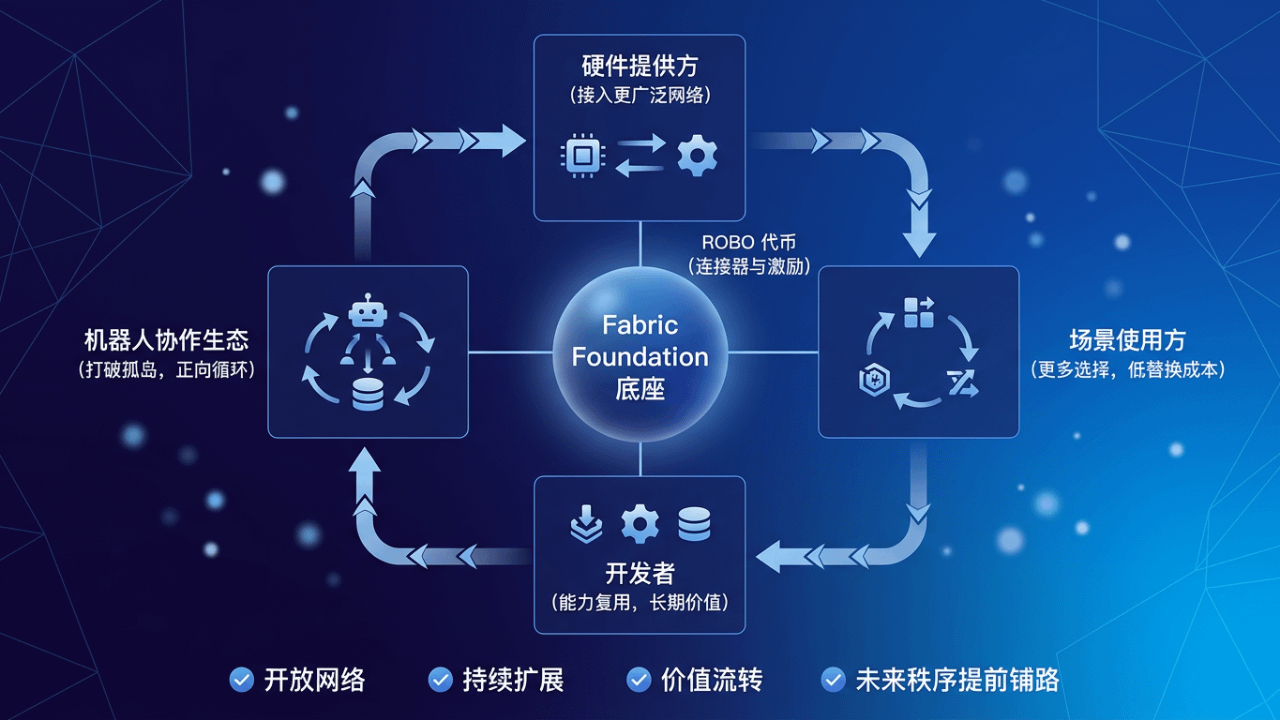
Many projects talk about robots, focusing on hardware capabilities, model capabilities, or how many actions a certain machine can perform. However, what is more worthy of attention in Fabric Foundation is that it does not stop at single-machine intelligence but focuses on a more difficult and long-term layer, which is when more and more machines enter the real world, who defines how they are recognized, how they are assigned tasks, how their behaviors are verified, how payments are completed, and what rules are followed to coordinate when disagreements arise. The officials summarize this as governance, economy, and collaborative infrastructure. I believe this is exactly the watershed for whether the robot network can ultimately scale. @FabricFND
$ROBO
Without this layer, no matter how smart the robots are, they are just closed devices. They can work, but it is difficult to form an open network. The real world is not a laboratory; task delivery requires responsibility boundaries, payment settlements need to be traceable, and machines participating in economic activities cannot directly apply human accounts and identity systems. Fabric Foundation proposes to build identities for machines and humans, decentralized task allocation and accountability, location or manual gate-controlled payments, and machine-to-machine communication channels. This indicates that it is trying to solve not just demonstration effects but the institutional friction that is most easily overlooked during large-scale deployment.
#ROBO
Therefore, the significance of ROBO cannot be understood solely from the transaction level. According to the official explanation, it bears the costs of payment, identity, and verification within the network, participates in network coordination and staking, and undertakes governance functions. What is truly important is that it compresses the coordination costs that were originally scattered across contracts, platform rules, and operator permissions into a unified network mechanism. Whoever can establish verifiable, payable, and governable public rules for robot labor is closer to mastering the underlying interface of the future robot economy. The value of ROBO is not just the token value within a certain ecosystem; it is more like the measuring unit and entry threshold of this rule system.
I went
Tether suddenly froze 6.76 million usdt! 🤔
It is said that it was because the address was identified as being related to Iran,
so it was frozen.
Turns out usdt is not safe either. Should family members convert usdt to usdc?
Many projects talk about robots, focusing on hardware capabilities, model capabilities, or how many actions a certain machine can perform. However, what is more worthy of attention in Fabric Foundation is that it does not stop at single-machine intelligence but focuses on a more difficult and long-term layer, which is when more and more machines enter the real world, who defines how they are recognized, how they are assigned tasks, how their behaviors are verified, how payments are completed, and what rules are followed to coordinate when disagreements arise. The officials summarize this as governance, economy, and collaborative infrastructure. I believe this is exactly the watershed for whether the robot network can ultimately scale. @Fabric Foundation
$ROBO
Without this layer, no matter how smart the robots are, they are just closed devices. They can work, but it is difficult to form an open network. The real world is not a laboratory; task delivery requires responsibility boundaries, payment settlements need to be traceable, and machines participating in economic activities cannot directly apply human accounts and identity systems. Fabric Foundation proposes to build identities for machines and humans, decentralized task allocation and accountability, location or manual gate-controlled payments, and machine-to-machine communication channels. This indicates that it is trying to solve not just demonstration effects but the institutional friction that is most easily overlooked during large-scale deployment.
#ROBO
Therefore, the significance of ROBO cannot be understood solely from the transaction level. According to the official explanation, it bears the costs of payment, identity, and verification within the network, participates in network coordination and staking, and undertakes governance functions. What is truly important is that it compresses the coordination costs that were originally scattered across contracts, platform rules, and operator permissions into a unified network mechanism. Whoever can establish verifiable, payable, and governable public rules for robot labor is closer to mastering the underlying interface of the future robot economy. The value of ROBO is not just the token value within a certain ecosystem; it is more like the measuring unit and entry threshold of this rule system.
Tether suddenly froze 6.76 million usdt! 🤔
It is said that it was because the address was identified as being related to Iran,
so it was frozen.
Turns out usdt is not safe either. Should family members convert usdt to usdc?
Many projects talk about robots, focusing on hardware capabilities, model capabilities, or how many actions a certain machine can perform. However, what is more worthy of attention in Fabric Foundation is that it does not stop at single-machine intelligence but focuses on a more difficult and long-term layer, which is when more and more machines enter the real world, who defines how they are recognized, how they are assigned tasks, how their behaviors are verified, how payments are completed, and what rules are followed to coordinate when disagreements arise. The officials summarize this as governance, economy, and collaborative infrastructure. I believe this is exactly the watershed for whether the robot network can ultimately scale. @Fabric Foundation
$ROBO
Without this layer, no matter how smart the robots are, they are just closed devices. They can work, but it is difficult to form an open network. The real world is not a laboratory; task delivery requires responsibility boundaries, payment settlements need to be traceable, and machines participating in economic activities cannot directly apply human accounts and identity systems. Fabric Foundation proposes to build identities for machines and humans, decentralized task allocation and accountability, location or manual gate-controlled payments, and machine-to-machine communication channels. This indicates that it is trying to solve not just demonstration effects but the institutional friction that is most easily overlooked during large-scale deployment.
#ROBO
Therefore, the significance of ROBO cannot be understood solely from the transaction level. According to the official explanation, it bears the costs of payment, identity, and verification within the network, participates in network coordination and staking, and undertakes governance functions. What is truly important is that it compresses the coordination costs that were originally scattered across contracts, platform rules, and operator permissions into a unified network mechanism. Whoever can establish verifiable, payable, and governable public rules for robot labor is closer to mastering the underlying interface of the future robot economy. The value of ROBO is not just the token value within a certain ecosystem; it is more like the measuring unit and entry threshold of this rule system.
2
149
·
--
I have to complain a bit. The old robot vacuum cleaner at my home used to battle wits with me every day. After finishing the dusting, it would go on strike. I even complained that it was as dumb as a brick $ROBO
{spot}(ROBOUSDT)
Then last week, after coming across the robotic economy project by Fabric Foundation, I was completely awakened. Imagine if robots not only listen to commands but can also open their wallets to take orders and earn money
#ROBO
How nice would it be to share some of the electricity costs? Haha, I was so excited that I stayed up late checking data
Personally, I think this wave is really different. It directly connects AI and real machines to the blockchain. Robots are transforming from tools to economic players, with data exchange and task settlement all handled on-chain. It's much more reliable than those purely speculative things. I tried a small position myself to test the waters
Although the price fluctuates wildly, in the long run, it definitely has explosive potential. Recently, as soon as the major platforms went live, the trading volume skyrocketed. I believe this is the true starting point of the robotic revolution. Hey folks, are you in?
@FabricFND
I have to complain a bit. The old robot vacuum cleaner at my home used to battle wits with me every day. After finishing the dusting, it would go on strike. I even complained that it was as dumb as a brick $ROBO
Then last week, after coming across the robotic economy project by Fabric Foundation, I was completely awakened. Imagine if robots not only listen to commands but can also open their wallets to take orders and earn money
#ROBO
How nice would it be to share some of the electricity costs? Haha, I was so excited that I stayed up late checking data
Personally, I think this wave is really different. It directly connects AI and real machines to the blockchain. Robots are transforming from tools to economic players, with data exchange and task settlement all handled on-chain. It's much more reliable than those purely speculative things. I tried a small position myself to test the waters
Although the price fluctuates wildly, in the long run, it definitely has explosive potential. Recently, as soon as the major platforms went live, the trading volume skyrocketed. I believe this is the true starting point of the robotic revolution. Hey folks, are you in?
@Fabric Foundation
Then last week, after coming across the robotic economy project by Fabric Foundation, I was completely awakened. Imagine if robots not only listen to commands but can also open their wallets to take orders and earn money
#ROBO
How nice would it be to share some of the electricity costs? Haha, I was so excited that I stayed up late checking data
Personally, I think this wave is really different. It directly connects AI and real machines to the blockchain. Robots are transforming from tools to economic players, with data exchange and task settlement all handled on-chain. It's much more reliable than those purely speculative things. I tried a small position myself to test the waters
Although the price fluctuates wildly, in the long run, it definitely has explosive potential. Recently, as soon as the major platforms went live, the trading volume skyrocketed. I believe this is the true starting point of the robotic revolution. Hey folks, are you in?
@Fabric Foundation
3
68
·
--
Why I Completely Fell in Love with Fabric Foundation and the ROBO Robot Economic Track$ROBO
Hey, old buddies. To be honest, I used to just chase trends in cryptocurrency. Today it's AI, tomorrow it's that meme. I lost so much that I was almost out of pants. It wasn't until the end of last year that I stumbled upon news about Fabric Foundation. I was lounging on the sofa scrolling through my phone, and my wife was urging me to go to bed early. Then I saw their philosophy, and I immediately sat up straight, thinking, 'This is the real future!' It's not some superficial hype; it's a hardcore project aimed at integrating robots into the economic sphere for real engagement. At that moment, I decided I needed to dig deep into this opportunity.
I remember it very clearly. That night, I stayed up late reviewing information for several hours. Fabric Foundation is a nonprofit organization dedicated to promoting open robotic technology and AGI, with the goal of enabling humans and intelligent machines to coexist safely and harmoniously. The Fabric Protocol they developed is like the ultimate game-changer in infrastructure. It allows robots to coordinate data, compute, and supervise all transparently on the blockchain. Imagine in the future, robots being more than just tools in factories; they could take tasks independently, share data, and even get paid to coordinate work. Isn't that just reality stepping out of a sci-fi movie? As an old programmer who used to write code and debug daily, seeing such a decentralized solution pumped me up, feeling like my career had just leveled up.
Why I Completely Fell in Love with Fabric Foundation and the ROBO Robot Economic Track
$ROBO
Hey, old buddies. To be honest, I used to just chase trends in cryptocurrency. Today it's AI, tomorrow it's that meme. I lost so much that I was almost out of pants. It wasn't until the end of last year that I stumbled upon news about Fabric Foundation. I was lounging on the sofa scrolling through my phone, and my wife was urging me to go to bed early. Then I saw their philosophy, and I immediately sat up straight, thinking, 'This is the real future!' It's not some superficial hype; it's a hardcore project aimed at integrating robots into the economic sphere for real engagement. At that moment, I decided I needed to dig deep into this opportunity.
I remember it very clearly. That night, I stayed up late reviewing information for several hours. Fabric Foundation is a nonprofit organization dedicated to promoting open robotic technology and AGI, with the goal of enabling humans and intelligent machines to coexist safely and harmoniously. The Fabric Protocol they developed is like the ultimate game-changer in infrastructure. It allows robots to coordinate data, compute, and supervise all transparently on the blockchain. Imagine in the future, robots being more than just tools in factories; they could take tasks independently, share data, and even get paid to coordinate work. Isn't that just reality stepping out of a sci-fi movie? As an old programmer who used to write code and debug daily, seeing such a decentralized solution pumped me up, feeling like my career had just leveled up.
Hey, old buddies. To be honest, I used to just chase trends in cryptocurrency. Today it's AI, tomorrow it's that meme. I lost so much that I was almost out of pants. It wasn't until the end of last year that I stumbled upon news about Fabric Foundation. I was lounging on the sofa scrolling through my phone, and my wife was urging me to go to bed early. Then I saw their philosophy, and I immediately sat up straight, thinking, 'This is the real future!' It's not some superficial hype; it's a hardcore project aimed at integrating robots into the economic sphere for real engagement. At that moment, I decided I needed to dig deep into this opportunity.
I remember it very clearly. That night, I stayed up late reviewing information for several hours. Fabric Foundation is a nonprofit organization dedicated to promoting open robotic technology and AGI, with the goal of enabling humans and intelligent machines to coexist safely and harmoniously. The Fabric Protocol they developed is like the ultimate game-changer in infrastructure. It allows robots to coordinate data, compute, and supervise all transparently on the blockchain. Imagine in the future, robots being more than just tools in factories; they could take tasks independently, share data, and even get paid to coordinate work. Isn't that just reality stepping out of a sci-fi movie? As an old programmer who used to write code and debug daily, seeing such a decentralized solution pumped me up, feeling like my career had just leveled up.
1
46
·
--
Article
The more I observe the development of the industry during this period, the more I feel that many people's understanding of robots and intelligent agents is still stuck at the stage of 'who performs better.'Everyone enjoys watching demonstrations, enjoys seeing agile movements, and enjoys those eye-catching landing visuals. However, what truly determines the future competitive landscape is often not these external displays, but whether there is a foundational system behind it that can continuously expand, collaborate, and allocate value.
The robotics industry cannot be driven by single-point technologies alone. It requires hardware capabilities, software scheduling, data flow, incentive mechanisms, and, most importantly, stable collaboration among different participants. The issue is that many systems in the past appeared to promote the industry, but in reality, they created new silos. Hardware incompatibility, closed software interfaces, difficulty in transferring development results, and the inability to share data have ultimately locked all participants into fragmented micro-ecosystems. It may seem lively, but in reality, efficiency is not high, and true innovation is difficult to achieve.
The more I observe the development of the industry during this period, the more I feel that many people's understanding of robots and intelligent agents is still stuck at the stage of 'who performs better.'
Everyone enjoys watching demonstrations, enjoys seeing agile movements, and enjoys those eye-catching landing visuals. However, what truly determines the future competitive landscape is often not these external displays, but whether there is a foundational system behind it that can continuously expand, collaborate, and allocate value.
The robotics industry cannot be driven by single-point technologies alone. It requires hardware capabilities, software scheduling, data flow, incentive mechanisms, and, most importantly, stable collaboration among different participants. The issue is that many systems in the past appeared to promote the industry, but in reality, they created new silos. Hardware incompatibility, closed software interfaces, difficulty in transferring development results, and the inability to share data have ultimately locked all participants into fragmented micro-ecosystems. It may seem lively, but in reality, efficiency is not high, and true innovation is difficult to achieve.
The robotics industry cannot be driven by single-point technologies alone. It requires hardware capabilities, software scheduling, data flow, incentive mechanisms, and, most importantly, stable collaboration among different participants. The issue is that many systems in the past appeared to promote the industry, but in reality, they created new silos. Hardware incompatibility, closed software interfaces, difficulty in transferring development results, and the inability to share data have ultimately locked all participants into fragmented micro-ecosystems. It may seem lively, but in reality, efficiency is not high, and true innovation is difficult to achieve.
1
47
·
--
When discussing a project, many people's first reaction is the scale of funding, the list of collaborators, and the market heat, as if the more resources there are, the better the results will be. But in today’s information environment, what is truly scarce is often not money, but high-quality attention.
$ROBO
{spot}(ROBOUSDT)
Whoever can consistently attract the attention of builders, retain the attention of users, and organize the attention of the community has a better chance of turning short-term momentum into long-term capability. The key for Fabric Foundation and ROBO to establish deeper value may be right here.
Attention is important because it determines the flow of resources in the ecosystem. Where developers invest their time, who content creators are willing to output around long-term, which community members are willing to continuously follow progress, and who partners prioritize communicating with—these seemingly scattered behaviors are actually driven by attention. A project may have funding, but it may not necessarily buy sustained attention; conversely, if it can establish a stable and high-quality attention structure, it can continuously attract talent, information, and collaboration opportunities, forming a compounding effect stronger than funding. #ROBO
The problem is that most projects have a very rough understanding of attention. They equate attention with exposure, believing that as long as there is much discussion, many shares, and pretty numbers, the ecosystem is vibrant. But exposure does not equal retention, and heat does not equal trust. Much traffic is just a short stop, neither converting into construction nor long-term recognition. Truly valuable attention is not just having seen something once, but being willing to come back repeatedly; it’s not participating in a discussion once, but being willing to continuously invest in judgment; it’s not short-term spectatorship, but long-term allocation of one’s time to this ecosystem.
@FabricFND
When discussing a project, many people's first reaction is the scale of funding, the list of collaborators, and the market heat, as if the more resources there are, the better the results will be. But in today’s information environment, what is truly scarce is often not money, but high-quality attention.
$ROBO
Whoever can consistently attract the attention of builders, retain the attention of users, and organize the attention of the community has a better chance of turning short-term momentum into long-term capability. The key for Fabric Foundation and ROBO to establish deeper value may be right here.
Attention is important because it determines the flow of resources in the ecosystem. Where developers invest their time, who content creators are willing to output around long-term, which community members are willing to continuously follow progress, and who partners prioritize communicating with—these seemingly scattered behaviors are actually driven by attention. A project may have funding, but it may not necessarily buy sustained attention; conversely, if it can establish a stable and high-quality attention structure, it can continuously attract talent, information, and collaboration opportunities, forming a compounding effect stronger than funding. #ROBO
The problem is that most projects have a very rough understanding of attention. They equate attention with exposure, believing that as long as there is much discussion, many shares, and pretty numbers, the ecosystem is vibrant. But exposure does not equal retention, and heat does not equal trust. Much traffic is just a short stop, neither converting into construction nor long-term recognition. Truly valuable attention is not just having seen something once, but being willing to come back repeatedly; it’s not participating in a discussion once, but being willing to continuously invest in judgment; it’s not short-term spectatorship, but long-term allocation of one’s time to this ecosystem.
@Fabric Foundation
$ROBO
Whoever can consistently attract the attention of builders, retain the attention of users, and organize the attention of the community has a better chance of turning short-term momentum into long-term capability. The key for Fabric Foundation and ROBO to establish deeper value may be right here.
Attention is important because it determines the flow of resources in the ecosystem. Where developers invest their time, who content creators are willing to output around long-term, which community members are willing to continuously follow progress, and who partners prioritize communicating with—these seemingly scattered behaviors are actually driven by attention. A project may have funding, but it may not necessarily buy sustained attention; conversely, if it can establish a stable and high-quality attention structure, it can continuously attract talent, information, and collaboration opportunities, forming a compounding effect stronger than funding. #ROBO
The problem is that most projects have a very rough understanding of attention. They equate attention with exposure, believing that as long as there is much discussion, many shares, and pretty numbers, the ecosystem is vibrant. But exposure does not equal retention, and heat does not equal trust. Much traffic is just a short stop, neither converting into construction nor long-term recognition. Truly valuable attention is not just having seen something once, but being willing to come back repeatedly; it’s not participating in a discussion once, but being willing to continuously invest in judgment; it’s not short-term spectatorship, but long-term allocation of one’s time to this ecosystem.
@Fabric Foundation
1
125
·
--
How Fabric Foundation Can Rewrite the Order of Robot Collaboration, and Why ROBO Might Become the True Underlying Asset in the Era of Embodied IntelligenceIn the past two years, whenever the topics of embodied intelligence, robotic automation, and intelligent terminal collaboration are mentioned, the narratives that are most easily amplified in the market are always those of the big companies standing in the spotlight. Many people instinctively think that whoever masters the more advanced humanoid robots, whoever has the flashier demonstration videos, is closer to the future. However, if we shift our focus away from a single product and truly look at the industry structure itself, we will discover a problem that has been repeatedly overlooked: the deepest contradictions in the robotics industry are never just about whether the motion capabilities are strong enough, whether the model parameters are large enough, or whether the hardware is more expensive, but rather who defines the underlying rules, who allocates the permissions in the ecosystem, and who can benefit in the long term from the value brought by machine collaboration.
How Fabric Foundation Can Rewrite the Order of Robot Collaboration, and Why ROBO Might Become the True Underlying Asset in the Era of Embodied Intelligence
In the past two years, whenever the topics of embodied intelligence, robotic automation, and intelligent terminal collaboration are mentioned, the narratives that are most easily amplified in the market are always those of the big companies standing in the spotlight. Many people instinctively think that whoever masters the more advanced humanoid robots, whoever has the flashier demonstration videos, is closer to the future. However, if we shift our focus away from a single product and truly look at the industry structure itself, we will discover a problem that has been repeatedly overlooked: the deepest contradictions in the robotics industry are never just about whether the motion capabilities are strong enough, whether the model parameters are large enough, or whether the hardware is more expensive, but rather who defines the underlying rules, who allocates the permissions in the ecosystem, and who can benefit in the long term from the value brought by machine collaboration.
1
2
51
·
--
The market always tends to focus on growth curves, community heat, and short-term transactions, but whether an ecosystem can go far ultimately depends on whether it has its own pricing power. Without pricing power, no matter how lively it is, it is just a follower; with pricing power, it can still maintain direction amidst fluctuations. One aspect worth discussing about Fabric Foundation and ROBO is whether they have the opportunity to transform 'participation value' into 'pricing ability'.
$ROBO
Many projects' issues are not due to a lack of users or narratives, but because their value always relies on external emotions. When the market is hot, everything seems promising; when the market is cold, all commitments feel like burdens. The reason is simple: such ecosystems have not established internal value judgment standards, so they can only accept whatever price the outside offers. They cannot explain why they are valuable, nor can they prove why their resource allocation is effective, so the price is left solely driven by emotions.
If Fabric Foundation wants to develop true long-term capabilities, the key is not just to grow the network, but to establish a coherent internal value measurement framework. What kind of construction deserves priority support? What kind of contributions can yield compounding effects? What kind of collaboration can be solidified into long-term assets? If these questions are not clearly answered, the ecosystem can only rely on temporary hotspots. A truly strong system does not chase every trend; instead, it can invest limited resources into positions that most enhance its own structure. #ROBO
The significance of ROBO here is not just as a trading object, but should also serve as a value scale. Its importance lies in whether it can transform the originally scattered, vague, and hard-to-compare behaviors within the ecosystem into a clearer value sequence. Development, content, promotion, collaboration, organization—these tasks are all useful for the ecosystem, but they must be placed within the same evaluative logic to form a true pricing foundation. Otherwise, each type of contribution will speak its own language, leading to increasingly chaotic resource allocation, ultimately resulting in 'those who speak up get resources, while those who build are diluted'.
The essence of pricing power is to gradually make the market accept your internal order. In other words, the reason the outside is willing to offer a higher valuation is not because you told a bigger story.
@FabricFND
The market always tends to focus on growth curves, community heat, and short-term transactions, but whether an ecosystem can go far ultimately depends on whether it has its own pricing power. Without pricing power, no matter how lively it is, it is just a follower; with pricing power, it can still maintain direction amidst fluctuations. One aspect worth discussing about Fabric Foundation and ROBO is whether they have the opportunity to transform 'participation value' into 'pricing ability'.
$ROBO
Many projects' issues are not due to a lack of users or narratives, but because their value always relies on external emotions. When the market is hot, everything seems promising; when the market is cold, all commitments feel like burdens. The reason is simple: such ecosystems have not established internal value judgment standards, so they can only accept whatever price the outside offers. They cannot explain why they are valuable, nor can they prove why their resource allocation is effective, so the price is left solely driven by emotions.
If Fabric Foundation wants to develop true long-term capabilities, the key is not just to grow the network, but to establish a coherent internal value measurement framework. What kind of construction deserves priority support? What kind of contributions can yield compounding effects? What kind of collaboration can be solidified into long-term assets? If these questions are not clearly answered, the ecosystem can only rely on temporary hotspots. A truly strong system does not chase every trend; instead, it can invest limited resources into positions that most enhance its own structure. #ROBO
The significance of ROBO here is not just as a trading object, but should also serve as a value scale. Its importance lies in whether it can transform the originally scattered, vague, and hard-to-compare behaviors within the ecosystem into a clearer value sequence. Development, content, promotion, collaboration, organization—these tasks are all useful for the ecosystem, but they must be placed within the same evaluative logic to form a true pricing foundation. Otherwise, each type of contribution will speak its own language, leading to increasingly chaotic resource allocation, ultimately resulting in 'those who speak up get resources, while those who build are diluted'.
The essence of pricing power is to gradually make the market accept your internal order. In other words, the reason the outside is willing to offer a higher valuation is not because you told a bigger story.
@Fabric Foundation
$ROBO
Many projects' issues are not due to a lack of users or narratives, but because their value always relies on external emotions. When the market is hot, everything seems promising; when the market is cold, all commitments feel like burdens. The reason is simple: such ecosystems have not established internal value judgment standards, so they can only accept whatever price the outside offers. They cannot explain why they are valuable, nor can they prove why their resource allocation is effective, so the price is left solely driven by emotions.
If Fabric Foundation wants to develop true long-term capabilities, the key is not just to grow the network, but to establish a coherent internal value measurement framework. What kind of construction deserves priority support? What kind of contributions can yield compounding effects? What kind of collaboration can be solidified into long-term assets? If these questions are not clearly answered, the ecosystem can only rely on temporary hotspots. A truly strong system does not chase every trend; instead, it can invest limited resources into positions that most enhance its own structure. #ROBO
The significance of ROBO here is not just as a trading object, but should also serve as a value scale. Its importance lies in whether it can transform the originally scattered, vague, and hard-to-compare behaviors within the ecosystem into a clearer value sequence. Development, content, promotion, collaboration, organization—these tasks are all useful for the ecosystem, but they must be placed within the same evaluative logic to form a true pricing foundation. Otherwise, each type of contribution will speak its own language, leading to increasingly chaotic resource allocation, ultimately resulting in 'those who speak up get resources, while those who build are diluted'.
The essence of pricing power is to gradually make the market accept your internal order. In other words, the reason the outside is willing to offer a higher valuation is not because you told a bigger story.
@Fabric Foundation
6
168
Log in to explore more content
Join global crypto users on Binance Square
⚡️ Get latest and useful information about crypto.
💬 Trusted by the world’s largest crypto exchange.
👍 Discover real insights from verified creators.
Email / Phone number
Trending Topics
CPIWatch
86.2M views
499,648 Discussing
Share & Win Traffic Reward in our Trending Hashtag Campaign
✨Topic: Will CPI Trigger Rate Hike?
👉How to Join:
Publish a short post or article with hashtag #CPIWatch
Create content based on the below two angles:
- Nonfarm payrolls beat expectations and CPI is around the corner, do you think the Fed will hike or hold the rate?
- Bullish or bearish? Share your take and showcase your stocks or gold trade/holdings with our trade sharing widget.
🚀Campaign Period:
- 2026-09-11 3:00 - 2026-09-12 9:00 UTC
🎁Reward:
- Qualified posts that comply with the above guidelines and contain more than 100 words will be reviewed and may receive a random traffic boost of 500 to 3,000 views. You will receive a notification from your feed secretary if your post is selected.
- Get a chance to have your article featured on Binance Square Official
Need ideas for your post? Visit the topic page #CPIWatch or the Square Guide on How to Post for Better Reach.
Binance Square Official
·280 Likes
·474.9k views
TencentBackedEnflameToStartTradingAfter$911MIPO
0 views
4 Discussing
BlockstreamRefusesToPayRansomToLiquidAttacker
22 views
25 Discussing