

Shizuka_ 22
5.6k Posts

Shizuka_ 22
Report
Block User
Crypto Enthusiast, Investor, KOL & Gem Holder Long term Holder of Memecoin
104 Following
20.2K+ Followers
5.6K+ Liked
Posts
All
Quotes
Live
·
--
amazing post
amazing post

Crazy Hami
·
--
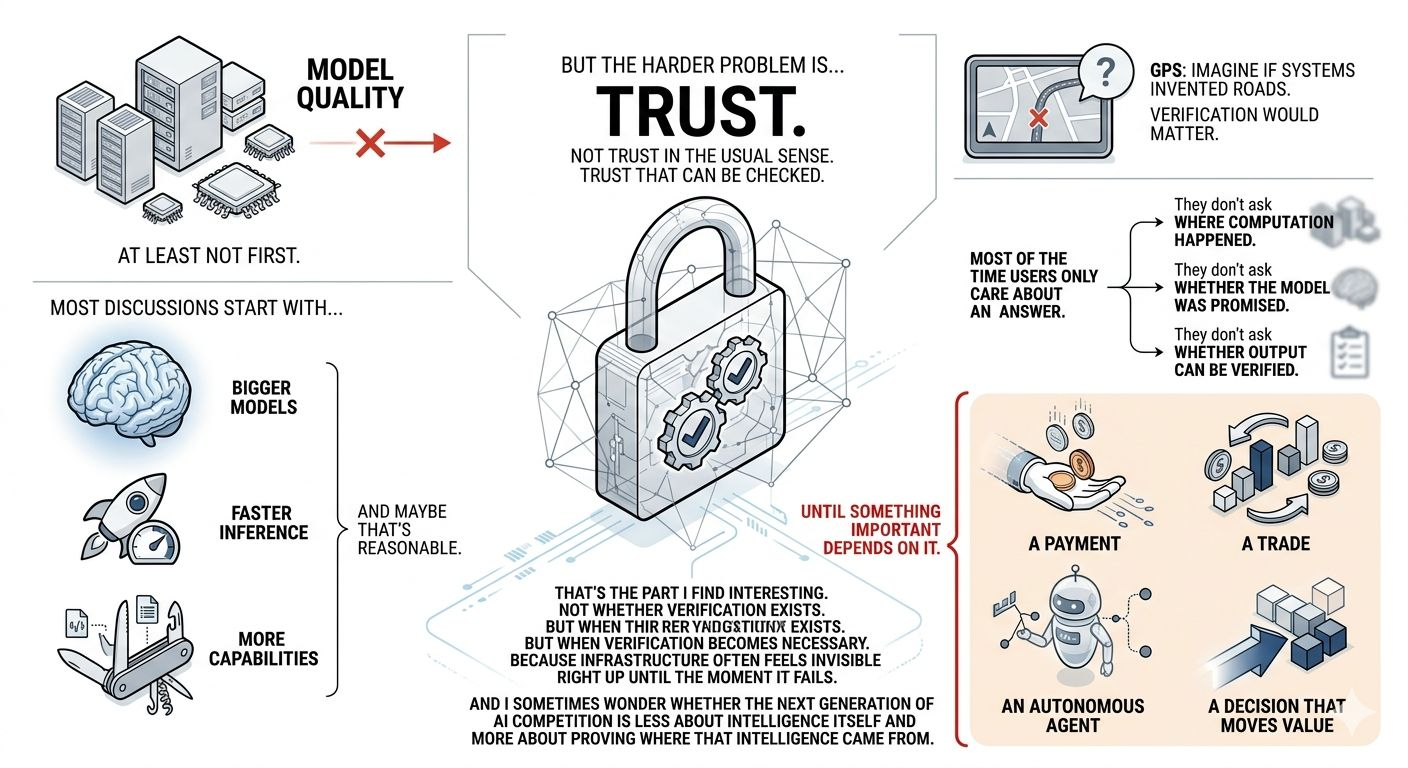
The thing I keep coming back to with decentralized AI isn't model quality.
At least not first.
Most discussions seem to start with bigger models.
OpenGradient Faster inference.
More capabilities.
And maybe that's reasonable.
But the more I think about it, the more I wonder whether the harder problem is trust.
Not trust in the usual sense.
Trust that can be checked.
I was thinking about GPS for some reason.
Most people never question it.
The route appears. #opg
They follow it.
Done.
But imagine if every navigation system occasionally invented roads that didn't exist.
Suddenly verification would matter a lot more.
Maybe AI works the same way.
Most of the time users only care about getting an answer.
They don't ask where the computation happened.The OPG token is not simply a payment tool it functions as a form of systemic pressure. Nodes are required to consistently demonstrate valid work in order to continue earning it.
They don't ask whether the model was the one that was promised.
They don't ask whether the output can be verified.
Until something important depends on it.
A payment.
A trade.
An autonomous agent.
A decision that moves value.
That's the part I find interesting.
OpenGradient very fast and unique project i like it .
Not whether verification exists.
But when verification becomes necessary.
Because infrastructure often feels invisible right up until the moment it fails.
And I sometimes wonder whether the next generation of AI competition is less about intelligence itself and more about proving where that intelligence came from.
@OpenGradient #OPG
$OPG
At least not first.
Most discussions seem to start with bigger models.
OpenGradient Faster inference.
More capabilities.
And maybe that's reasonable.
But the more I think about it, the more I wonder whether the harder problem is trust.
Not trust in the usual sense.
Trust that can be checked.
I was thinking about GPS for some reason.
Most people never question it.
The route appears. #opg
They follow it.
Done.
But imagine if every navigation system occasionally invented roads that didn't exist.
Suddenly verification would matter a lot more.
Maybe AI works the same way.
Most of the time users only care about getting an answer.
They don't ask where the computation happened.The OPG token is not simply a payment tool it functions as a form of systemic pressure. Nodes are required to consistently demonstrate valid work in order to continue earning it.
They don't ask whether the model was the one that was promised.
They don't ask whether the output can be verified.
Until something important depends on it.
A payment.
A trade.
An autonomous agent.
A decision that moves value.
That's the part I find interesting.
OpenGradient very fast and unique project i like it .
Not whether verification exists.
But when verification becomes necessary.
Because infrastructure often feels invisible right up until the moment it fails.
And I sometimes wonder whether the next generation of AI competition is less about intelligence itself and more about proving where that intelligence came from.
@OpenGradient #OPG
$OPG
62
·
--
Verified
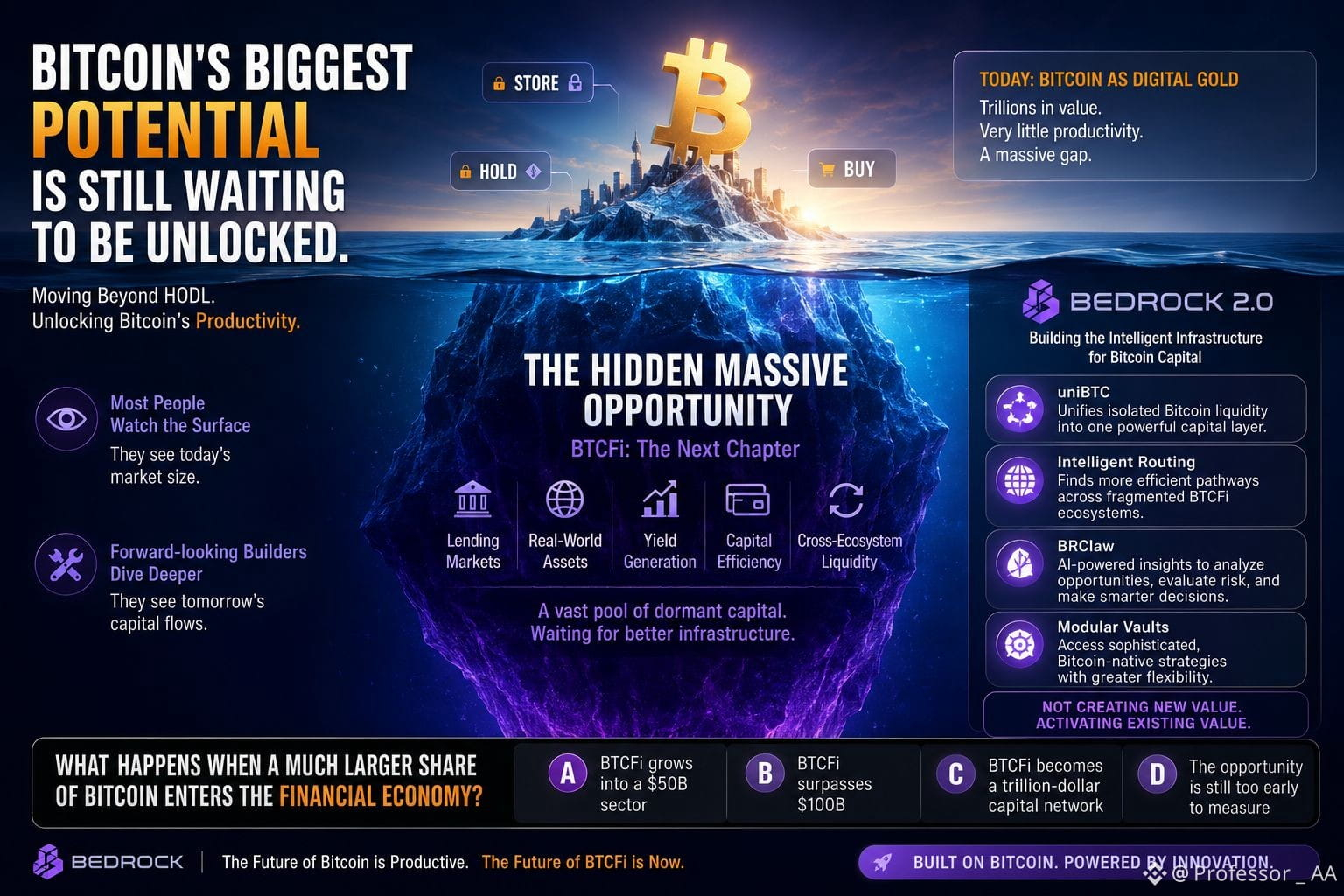
🚨 BITCOIN'S BIGGEST OPPORTUNITY HASN'T BEEN FULLY UNLOCKED YET.
Bitcoin has already proven itself as the world's leading digital asset.
But there's one question the market is starting to ask:
What if Bitcoin becomes more than a store of value?
Today, trillions of dollars sit inside Bitcoin, yet only a small percentage is actively used across financial applications.
For years, the strategy was simple:
✔ Buy
✔ Hold
✔ Wait
Now BTCFi is introducing a different possibility.
🏦 Lending Markets
🌐 Real-World Assets
📈 Yield Opportunities
💳 Greater Capital Efficiency
🔄 Cross-Ecosystem Liquidity
The iceberg analogy perfectly captures the current landscape.
What we see today is only the visible layer.
Beneath the surface lies a vast amount of dormant capital waiting for infrastructure that can put it to work.
This is where Bedrock 2.0 is focused.
uniBTC connects fragmented Bitcoin liquidity.
Intelligent Routing improves capital movement across ecosystems.
$BR Claw provides AI-powered insights for smarter decision-making.
Modular Vaults enable more advanced Bitcoin-native strategies.
The goal isn't creating new value.
It's unlocking the value Bitcoin already holds.
👇 How large can BTCFi become?
A) $50B
B) $100B+
C) $1T+ Capital Network
D) Still too early to estimate
@Bedrock
#Bedrock #BTCFi $BR
🚨 BITCOIN'S BIGGEST OPPORTUNITY HASN'T BEEN FULLY UNLOCKED YET.
Bitcoin has already proven itself as the world's leading digital asset.
But there's one question the market is starting to ask:
What if Bitcoin becomes more than a store of value?
Today, trillions of dollars sit inside Bitcoin, yet only a small percentage is actively used across financial applications.
For years, the strategy was simple:
✔ Buy
✔ Hold
✔ Wait
Now BTCFi is introducing a different possibility.
🏦 Lending Markets
🌐 Real-World Assets
📈 Yield Opportunities
💳 Greater Capital Efficiency
🔄 Cross-Ecosystem Liquidity
The iceberg analogy perfectly captures the current landscape.
What we see today is only the visible layer.
Beneath the surface lies a vast amount of dormant capital waiting for infrastructure that can put it to work.
This is where Bedrock 2.0 is focused.
uniBTC connects fragmented Bitcoin liquidity.
Intelligent Routing improves capital movement across ecosystems.
$BR Claw provides AI-powered insights for smarter decision-making.
Modular Vaults enable more advanced Bitcoin-native strategies.
The goal isn't creating new value.
It's unlocking the value Bitcoin already holds.
👇 How large can BTCFi become?
A) $50B
B) $100B+
C) $1T+ Capital Network
D) Still too early to estimate
@Bedrock
#Bedrock #BTCFi $BR
Bitcoin has already proven itself as the world's leading digital asset.
But there's one question the market is starting to ask:
What if Bitcoin becomes more than a store of value?
Today, trillions of dollars sit inside Bitcoin, yet only a small percentage is actively used across financial applications.
For years, the strategy was simple:
✔ Buy
✔ Hold
✔ Wait
Now BTCFi is introducing a different possibility.
🏦 Lending Markets
🌐 Real-World Assets
📈 Yield Opportunities
💳 Greater Capital Efficiency
🔄 Cross-Ecosystem Liquidity
The iceberg analogy perfectly captures the current landscape.
What we see today is only the visible layer.
Beneath the surface lies a vast amount of dormant capital waiting for infrastructure that can put it to work.
This is where Bedrock 2.0 is focused.
uniBTC connects fragmented Bitcoin liquidity.
Intelligent Routing improves capital movement across ecosystems.
$BR Claw provides AI-powered insights for smarter decision-making.
Modular Vaults enable more advanced Bitcoin-native strategies.
The goal isn't creating new value.
It's unlocking the value Bitcoin already holds.
👇 How large can BTCFi become?
A) $50B
B) $100B+
C) $1T+ Capital Network
D) Still too early to estimate
@Bedrock
#Bedrock #BTCFi $BR
8
5
232
·
--
Verified
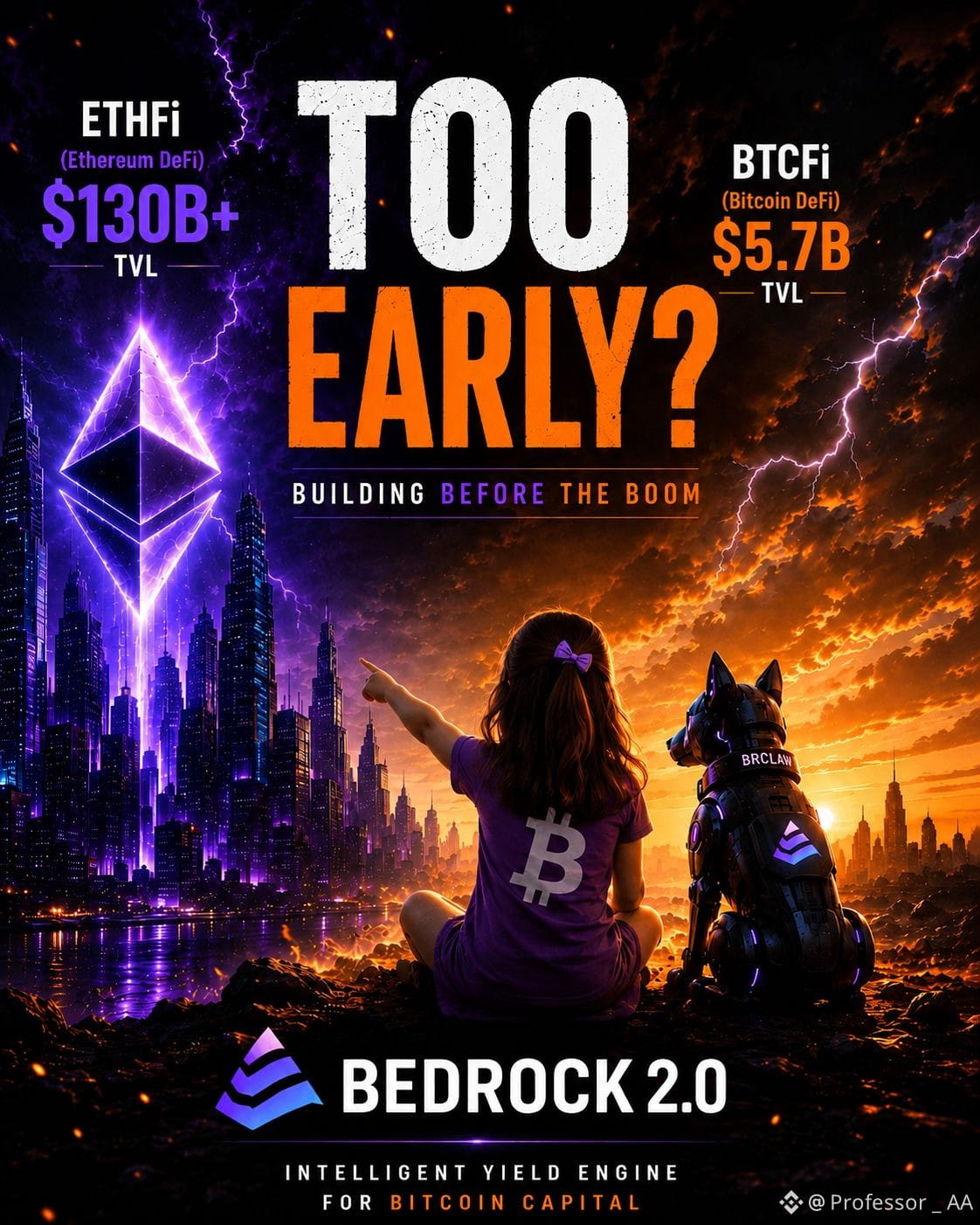
THE NEXT MAJOR OPPORTUNITY IN BITCOIN MAY STILL BE AHEAD OF US.
Most investors focus on what already exists.
The real winners often pay attention to what is only beginning to emerge.
Ethereum's DeFi ecosystem has already demonstrated the power of on-chain finance, attracting billions in liquidity and creating entirely new financial markets.
Bitcoin Finance, however, is still in its early stages.
That’s what makes BTCFi so fascinating.
The question isn't how large the market is today.
The question is how large it could become as Bitcoin evolves from a passive store of value into productive capital.
We're witnessing the foundations being laid for a new financial layer around Bitcoin.
As this ecosystem expands, capital will increasingly flow across lending protocols, tokenized real-world assets, yield strategies, and other emerging opportunities.
But growth brings complexity.
More protocols.
More choices.
More fragmented liquidity.
This is where Bedrock 2.0 stands out.
Its vision goes beyond simply participating in BTCFi—it aims to simplify and optimize Bitcoin Capital through:
🔹 uniBTC — connecting Bitcoin liquidity through a unified capital layer.
🔹 Intelligent Routing — helping capital move efficiently across opportunities.
🔹 BRClaw — an AI-powered on-chain analyst designed to support smarter decision-making and risk evaluation.
With its Modular Vault Framework, Bedrock is building infrastructure for the next phase of Bitcoin Finance.
BTCFi may reach $100B.
It may surpass it entirely.
Either way, the biggest opportunities are often discovered long before the crowd notices them.
@Bedrock
$BR
#Bedrock
THE NEXT MAJOR OPPORTUNITY IN BITCOIN MAY STILL BE AHEAD OF US.
Most investors focus on what already exists.
The real winners often pay attention to what is only beginning to emerge.
Ethereum's DeFi ecosystem has already demonstrated the power of on-chain finance, attracting billions in liquidity and creating entirely new financial markets.
Bitcoin Finance, however, is still in its early stages.
That’s what makes BTCFi so fascinating.
The question isn't how large the market is today.
The question is how large it could become as Bitcoin evolves from a passive store of value into productive capital.
We're witnessing the foundations being laid for a new financial layer around Bitcoin.
As this ecosystem expands, capital will increasingly flow across lending protocols, tokenized real-world assets, yield strategies, and other emerging opportunities.
But growth brings complexity.
More protocols.
More choices.
More fragmented liquidity.
This is where Bedrock 2.0 stands out.
Its vision goes beyond simply participating in BTCFi—it aims to simplify and optimize Bitcoin Capital through:
🔹 uniBTC — connecting Bitcoin liquidity through a unified capital layer.
🔹 Intelligent Routing — helping capital move efficiently across opportunities.
🔹 BRClaw — an AI-powered on-chain analyst designed to support smarter decision-making and risk evaluation.
With its Modular Vault Framework, Bedrock is building infrastructure for the next phase of Bitcoin Finance.
BTCFi may reach $100B.
It may surpass it entirely.
Either way, the biggest opportunities are often discovered long before the crowd notices them.
@Bedrock
$BR
#Bedrock
Most investors focus on what already exists.
The real winners often pay attention to what is only beginning to emerge.
Ethereum's DeFi ecosystem has already demonstrated the power of on-chain finance, attracting billions in liquidity and creating entirely new financial markets.
Bitcoin Finance, however, is still in its early stages.
That’s what makes BTCFi so fascinating.
The question isn't how large the market is today.
The question is how large it could become as Bitcoin evolves from a passive store of value into productive capital.
We're witnessing the foundations being laid for a new financial layer around Bitcoin.
As this ecosystem expands, capital will increasingly flow across lending protocols, tokenized real-world assets, yield strategies, and other emerging opportunities.
But growth brings complexity.
More protocols.
More choices.
More fragmented liquidity.
This is where Bedrock 2.0 stands out.
Its vision goes beyond simply participating in BTCFi—it aims to simplify and optimize Bitcoin Capital through:
🔹 uniBTC — connecting Bitcoin liquidity through a unified capital layer.
🔹 Intelligent Routing — helping capital move efficiently across opportunities.
🔹 BRClaw — an AI-powered on-chain analyst designed to support smarter decision-making and risk evaluation.
With its Modular Vault Framework, Bedrock is building infrastructure for the next phase of Bitcoin Finance.
BTCFi may reach $100B.
It may surpass it entirely.
Either way, the biggest opportunities are often discovered long before the crowd notices them.
@Bedrock
$BR
#Bedrock
9
7
220
·
--
Verified
The Governance Flywheel Behind Bedrock DAO
One of the most compelling aspects of Bedrock DAO is how it transforms governance into a growth engine rather than treating it as a simple voting system.
As the decentralized governance body behind , it gives the community a meaningful role in shaping the future of the protocol through the $BR governance token.
The governance flywheel is built on a simple but powerful idea: participation creates value, and value encourages even greater participation.
When community members actively engage in governance, contribute ideas, and vote on key proposals, the protocol becomes stronger and more responsive to its users. This can attract more liquidity, ecosystem integrations, and adoption, which in turn increases the importance and impact of governance decisions.
What stands out to me is the alignment of incentives. Instead of governance being controlled by a small group, @Bedrock DAO creates opportunities for stakeholders to directly influence the protocol’s direction while benefiting from its long-term growth. In my view, this is one of the key ingredients for building a sustainable decentralized ecosystem.
As the protocol expands, governance becomes more valuable, community involvement deepens, and the flywheel continues to accelerate—driving innovation, resilience, and long-term growth for the entire Bedrock ecosystem.
@Bedrock
$BR
#Bedrock
$FTT
The Governance Flywheel Behind Bedrock DAO
One of the most compelling aspects of Bedrock DAO is how it transforms governance into a growth engine rather than treating it as a simple voting system.
As the decentralized governance body behind , it gives the community a meaningful role in shaping the future of the protocol through the $BR governance token.
The governance flywheel is built on a simple but powerful idea: participation creates value, and value encourages even greater participation.
When community members actively engage in governance, contribute ideas, and vote on key proposals, the protocol becomes stronger and more responsive to its users. This can attract more liquidity, ecosystem integrations, and adoption, which in turn increases the importance and impact of governance decisions.
What stands out to me is the alignment of incentives. Instead of governance being controlled by a small group, @Bedrock DAO creates opportunities for stakeholders to directly influence the protocol’s direction while benefiting from its long-term growth. In my view, this is one of the key ingredients for building a sustainable decentralized ecosystem.
As the protocol expands, governance becomes more valuable, community involvement deepens, and the flywheel continues to accelerate—driving innovation, resilience, and long-term growth for the entire Bedrock ecosystem.
@Bedrock
$BR
#Bedrock
$FTT
One of the most compelling aspects of Bedrock DAO is how it transforms governance into a growth engine rather than treating it as a simple voting system.
As the decentralized governance body behind , it gives the community a meaningful role in shaping the future of the protocol through the $BR governance token.
The governance flywheel is built on a simple but powerful idea: participation creates value, and value encourages even greater participation.
When community members actively engage in governance, contribute ideas, and vote on key proposals, the protocol becomes stronger and more responsive to its users. This can attract more liquidity, ecosystem integrations, and adoption, which in turn increases the importance and impact of governance decisions.
What stands out to me is the alignment of incentives. Instead of governance being controlled by a small group, @Bedrock DAO creates opportunities for stakeholders to directly influence the protocol’s direction while benefiting from its long-term growth. In my view, this is one of the key ingredients for building a sustainable decentralized ecosystem.
As the protocol expands, governance becomes more valuable, community involvement deepens, and the flywheel continues to accelerate—driving innovation, resilience, and long-term growth for the entire Bedrock ecosystem.
@Bedrock
$BR
#Bedrock
$FTT
1
1
281
·
--
Verified
As I've spent more time exploring different DeFi protocols, one thing I've noticed is that governance often feels disconnected from actual growth. Token holders vote on proposals, decisions get made, and the protocol moves forward, but the economic benefits don't always seem closely tied to the people actively participating in governance.
While looking into Bedrock, that was one of the first things that stood out to me.
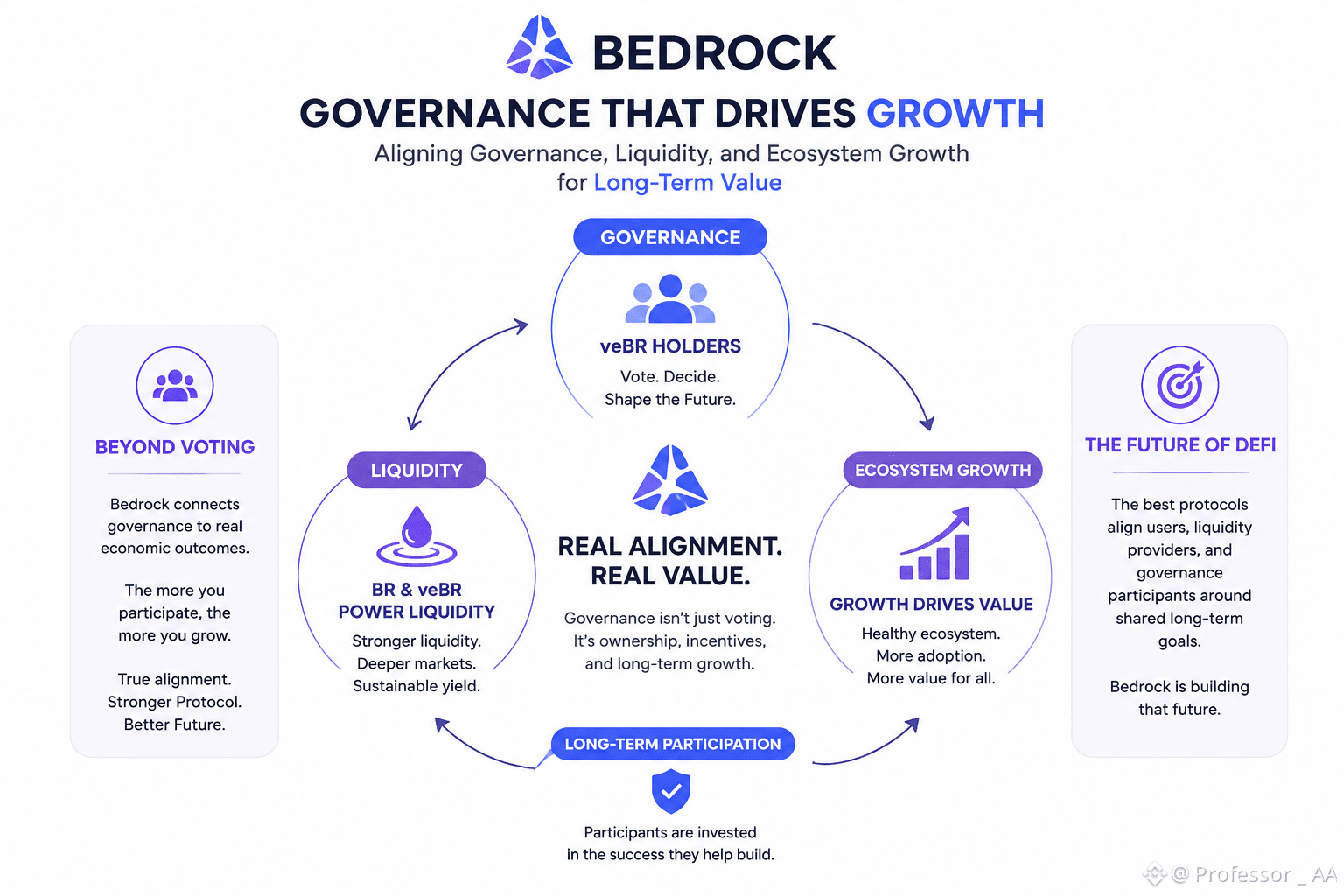
Bedrock approaches governance differently by combining $BR and veBR in a way that connects governance, liquidity, and ecosystem growth. Instead of governance being limited to voting, it becomes part of a broader economic system designed to encourage long-term participation and alignment.
What I personally like about this model is that it creates a stronger relationship between decision-making and outcomes. The people helping shape the protocol are also invested in its success. To me, that's how governance should work. When participants have real skin in the game, decisions tend to be made with a longer-term perspective rather than focusing only on short-term gains.$FIDA
Another thing that caught my attention is how @Bedrock treats governance as an active component of the ecosystem rather than a feature that exists on the sidelines. In many protocols, governance can feel like an afterthought. Here, it appears to play a more central role in directing incentives and supporting growth.
Of course, no governance model is perfect, and the true test is how it performs over time. But from my perspective, Bedrock is exploring a direction that makes a lot of sense. DeFi has matured beyond simply giving token holders voting rights. The next step is creating governance systems that generate real economic value and encourage meaningful participation.
Personally, I believe the most successful protocols in the future will be the ones that align users, liquidity providers, and governance participants around the same long-term goals. From what I've seen so far, Bedrock's approach is a compelling example of what that could look like.
@Bedrock
$BR
#Bedrock
As I've spent more time exploring different DeFi protocols, one thing I've noticed is that governance often feels disconnected from actual growth. Token holders vote on proposals, decisions get made, and the protocol moves forward, but the economic benefits don't always seem closely tied to the people actively participating in governance.
While looking into Bedrock, that was one of the first things that stood out to me.
Bedrock approaches governance differently by combining $BR and veBR in a way that connects governance, liquidity, and ecosystem growth. Instead of governance being limited to voting, it becomes part of a broader economic system designed to encourage long-term participation and alignment.
What I personally like about this model is that it creates a stronger relationship between decision-making and outcomes. The people helping shape the protocol are also invested in its success. To me, that's how governance should work. When participants have real skin in the game, decisions tend to be made with a longer-term perspective rather than focusing only on short-term gains.$FIDA
Another thing that caught my attention is how @Bedrock treats governance as an active component of the ecosystem rather than a feature that exists on the sidelines. In many protocols, governance can feel like an afterthought. Here, it appears to play a more central role in directing incentives and supporting growth.
Of course, no governance model is perfect, and the true test is how it performs over time. But from my perspective, Bedrock is exploring a direction that makes a lot of sense. DeFi has matured beyond simply giving token holders voting rights. The next step is creating governance systems that generate real economic value and encourage meaningful participation.
Personally, I believe the most successful protocols in the future will be the ones that align users, liquidity providers, and governance participants around the same long-term goals. From what I've seen so far, Bedrock's approach is a compelling example of what that could look like.
@Bedrock
$BR
#Bedrock
While looking into Bedrock, that was one of the first things that stood out to me.
Bedrock approaches governance differently by combining $BR and veBR in a way that connects governance, liquidity, and ecosystem growth. Instead of governance being limited to voting, it becomes part of a broader economic system designed to encourage long-term participation and alignment.
What I personally like about this model is that it creates a stronger relationship between decision-making and outcomes. The people helping shape the protocol are also invested in its success. To me, that's how governance should work. When participants have real skin in the game, decisions tend to be made with a longer-term perspective rather than focusing only on short-term gains.$FIDA
Another thing that caught my attention is how @Bedrock treats governance as an active component of the ecosystem rather than a feature that exists on the sidelines. In many protocols, governance can feel like an afterthought. Here, it appears to play a more central role in directing incentives and supporting growth.
Of course, no governance model is perfect, and the true test is how it performs over time. But from my perspective, Bedrock is exploring a direction that makes a lot of sense. DeFi has matured beyond simply giving token holders voting rights. The next step is creating governance systems that generate real economic value and encourage meaningful participation.
Personally, I believe the most successful protocols in the future will be the ones that align users, liquidity providers, and governance participants around the same long-term goals. From what I've seen so far, Bedrock's approach is a compelling example of what that could look like.
@Bedrock
$BR
#Bedrock
16
8
415
·
--
Verified
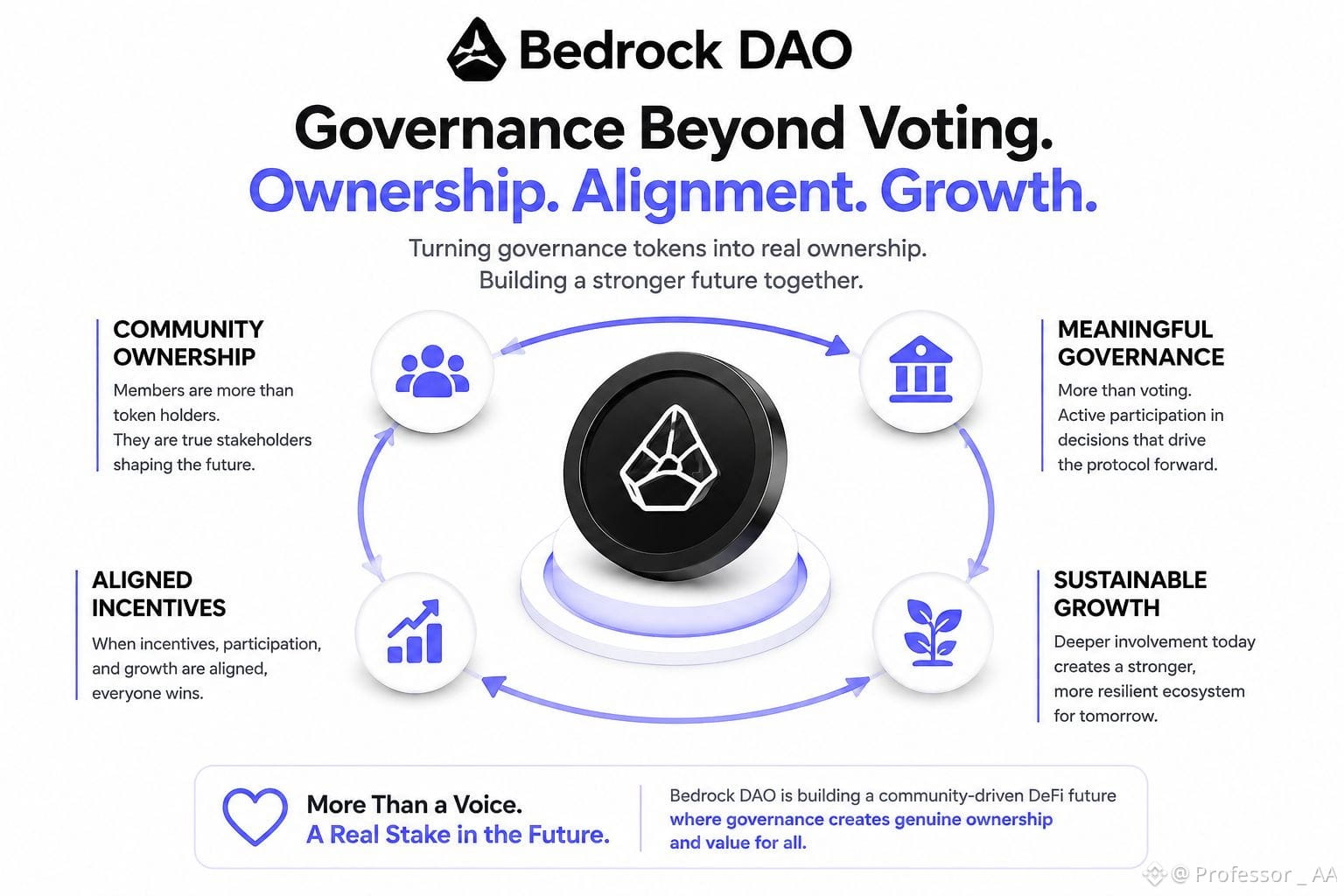
As I've been exploring @Bedrock DAO, I've found myself thinking differently about governance tokens. For most of DeFi's history, governance has mainly been about voting, but I've always felt that model leaves a lot of potential on the table. In my view, people who actively participate in shaping a protocol's future should have a stronger connection to the value they help create.
What interests me about Bedrock DAO is the idea of turning governance into something more meaningful than occasional proposal votes.
I believe the most successful communities are built when members feel like true stakeholders rather than passive token holders. When incentives, participation, and protocol growth are aligned, people are more likely to stay engaged and contribute for the long term.$BR
Personally, I don't think governance tokens should spend most of their existence sitting idle in wallets.
They should encourage deeper involvement and give community members a reason to remain invested in the ecosystem's success. That's one of the reasons Bedrock DAO has caught my attention. It reflects a broader vision of community-driven growth where governance is not just about having a voice, but about creating genuine ownership. To me, that feels like a more sustainable direction for DeFi and a model worth paying attention to as the industry continues to evolve.
@Bedrock
$BR
#Bedrock
As I've been exploring @Bedrock DAO, I've found myself thinking differently about governance tokens. For most of DeFi's history, governance has mainly been about voting, but I've always felt that model leaves a lot of potential on the table. In my view, people who actively participate in shaping a protocol's future should have a stronger connection to the value they help create.
What interests me about Bedrock DAO is the idea of turning governance into something more meaningful than occasional proposal votes.
I believe the most successful communities are built when members feel like true stakeholders rather than passive token holders. When incentives, participation, and protocol growth are aligned, people are more likely to stay engaged and contribute for the long term.$BR
Personally, I don't think governance tokens should spend most of their existence sitting idle in wallets.
They should encourage deeper involvement and give community members a reason to remain invested in the ecosystem's success. That's one of the reasons Bedrock DAO has caught my attention. It reflects a broader vision of community-driven growth where governance is not just about having a voice, but about creating genuine ownership. To me, that feels like a more sustainable direction for DeFi and a model worth paying attention to as the industry continues to evolve.
@Bedrock
$BR
#Bedrock
What interests me about Bedrock DAO is the idea of turning governance into something more meaningful than occasional proposal votes.
I believe the most successful communities are built when members feel like true stakeholders rather than passive token holders. When incentives, participation, and protocol growth are aligned, people are more likely to stay engaged and contribute for the long term.$BR
Personally, I don't think governance tokens should spend most of their existence sitting idle in wallets.
They should encourage deeper involvement and give community members a reason to remain invested in the ecosystem's success. That's one of the reasons Bedrock DAO has caught my attention. It reflects a broader vision of community-driven growth where governance is not just about having a voice, but about creating genuine ownership. To me, that feels like a more sustainable direction for DeFi and a model worth paying attention to as the industry continues to evolve.
@Bedrock
$BR
#Bedrock
12
9
196
·
--
Article
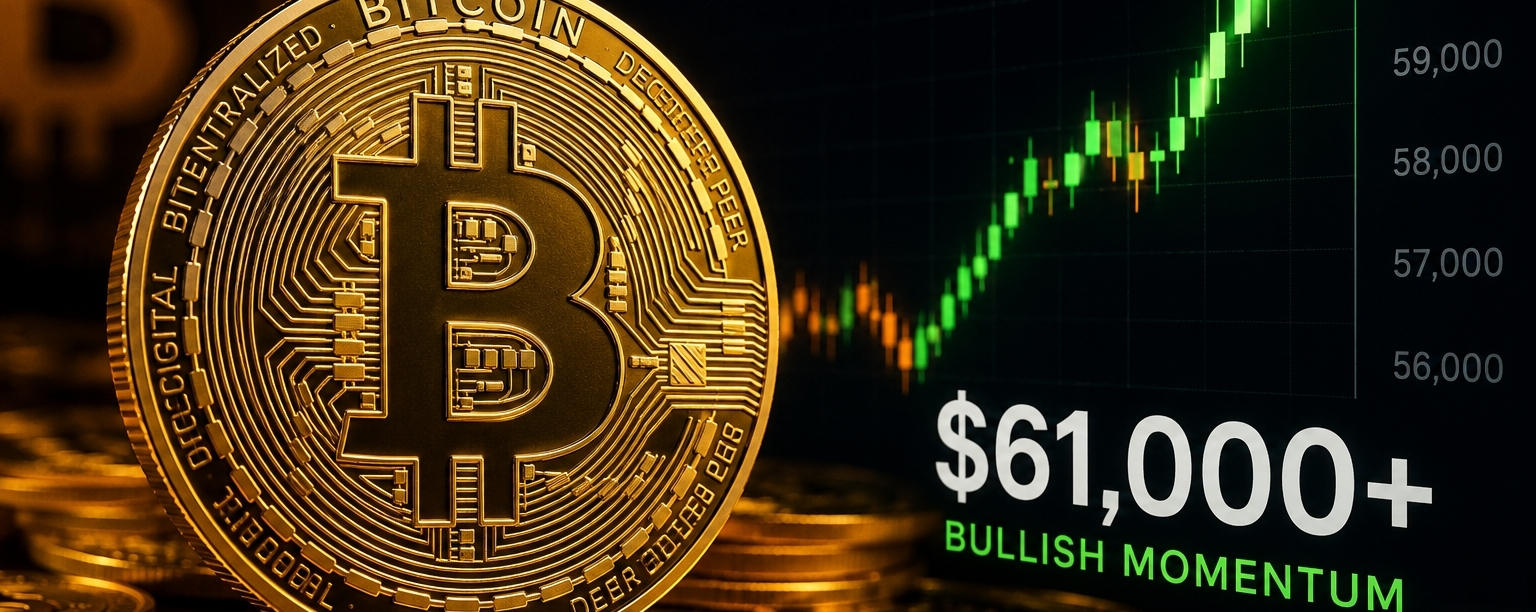
Bitcoin Breakout: $61K+ Rally Ignites Market OptimismBitcoin has once again moved above the $61,000 level, drawing attention from traders and investors across the crypto market. After spending several days trading within a relatively tight range, BTC managed to break through an important resistance area, signaling renewed strength and growing optimism among market participants.
One of the key reasons behind this move appears to be the return of positive market sentiment. Interest in Bitcoin-related investment products remains strong, and many investors continue to view Bitcoin as a valuable long-term asset. At the same time, uncertainty in traditional financial markets has encouraged some capital to flow toward alternative assets, including cryptocurrencies.$BTC
Another factor supporting the rally is the growing involvement of institutions. Over the past few years, Bitcoin has become increasingly accepted by major financial players, and that confidence continues to influence market behavior. When institutional demand remains steady, it often provides additional support during periods of market growth.
From a technical perspective, breaking above a major price level can trigger fresh buying activity. Many traders monitor resistance zones closely, and once those levels are surpassed, momentum can accelerate as more participants enter the market.
In my opinion, the most interesting aspect of this move is not just the price increase itself but the confidence behind it. Bitcoin has faced numerous challenges and corrections over the years, yet it continues to attract attention whenever momentum returns. This suggests that the asset remains a significant part of the broader digital finance landscape.$BTC
While the recent rally is encouraging for bullish investors, volatility remains an important factor to consider. Price movements in the crypto market can be rapid and unpredictable, making risk management essential. For now, Bitcoin's move above $61,000 reflects renewed optimism, but traders will be watching closely to see whether the momentum can continue in the coming days.
#BTC
$BTC
Bitcoin Breakout: $61K+ Rally Ignites Market Optimism
Bitcoin has once again moved above the $61,000 level, drawing attention from traders and investors across the crypto market. After spending several days trading within a relatively tight range, BTC managed to break through an important resistance area, signaling renewed strength and growing optimism among market participants.
One of the key reasons behind this move appears to be the return of positive market sentiment. Interest in Bitcoin-related investment products remains strong, and many investors continue to view Bitcoin as a valuable long-term asset. At the same time, uncertainty in traditional financial markets has encouraged some capital to flow toward alternative assets, including cryptocurrencies.$BTC
Another factor supporting the rally is the growing involvement of institutions. Over the past few years, Bitcoin has become increasingly accepted by major financial players, and that confidence continues to influence market behavior. When institutional demand remains steady, it often provides additional support during periods of market growth.
From a technical perspective, breaking above a major price level can trigger fresh buying activity. Many traders monitor resistance zones closely, and once those levels are surpassed, momentum can accelerate as more participants enter the market.
In my opinion, the most interesting aspect of this move is not just the price increase itself but the confidence behind it. Bitcoin has faced numerous challenges and corrections over the years, yet it continues to attract attention whenever momentum returns. This suggests that the asset remains a significant part of the broader digital finance landscape.$BTC
While the recent rally is encouraging for bullish investors, volatility remains an important factor to consider. Price movements in the crypto market can be rapid and unpredictable, making risk management essential. For now, Bitcoin's move above $61,000 reflects renewed optimism, but traders will be watching closely to see whether the momentum can continue in the coming days.
#BTC
$BTC
One of the key reasons behind this move appears to be the return of positive market sentiment. Interest in Bitcoin-related investment products remains strong, and many investors continue to view Bitcoin as a valuable long-term asset. At the same time, uncertainty in traditional financial markets has encouraged some capital to flow toward alternative assets, including cryptocurrencies.$BTC
Another factor supporting the rally is the growing involvement of institutions. Over the past few years, Bitcoin has become increasingly accepted by major financial players, and that confidence continues to influence market behavior. When institutional demand remains steady, it often provides additional support during periods of market growth.
From a technical perspective, breaking above a major price level can trigger fresh buying activity. Many traders monitor resistance zones closely, and once those levels are surpassed, momentum can accelerate as more participants enter the market.
In my opinion, the most interesting aspect of this move is not just the price increase itself but the confidence behind it. Bitcoin has faced numerous challenges and corrections over the years, yet it continues to attract attention whenever momentum returns. This suggests that the asset remains a significant part of the broader digital finance landscape.$BTC
While the recent rally is encouraging for bullish investors, volatility remains an important factor to consider. Price movements in the crypto market can be rapid and unpredictable, making risk management essential. For now, Bitcoin's move above $61,000 reflects renewed optimism, but traders will be watching closely to see whether the momentum can continue in the coming days.
#BTC
$BTC
3
3
187
·
--
Verified
Article
XRP HOLDERS: If You Have Money Sitting in a Bank Account, You Need to Read ThisOver the past few months, I've been spending a lot of time looking into the global economy, the banking sector, and where things might be headed next.
The more I dig into the data, the more concerned I become.
I'm not saying banks are going to collapse tomorrow. But there are definitely warning signs that shouldn't be ignored.
One of the biggest issues is debt.
For years, governments and corporations borrowed heavily while interest rates were near historic lows. Now that borrowing costs are much higher, refinancing that debt has become far more expensive. A massive amount of commercial real estate debt is set to mature over the next couple of years, and defaults are already starting to rise.
Commercial real estate is another area that worries me.
Remote work has permanently changed demand for office space. Many office buildings are worth significantly less than they were a few years ago. If property owners struggle to repay their loans, banks could be left holding substantial losses.
Then there's the shadow banking sector.
Private credit funds and alternative lenders have grown into a multi-trillion-dollar industry. While they play an important role in financial markets, they're often less regulated than traditional banks. Because these institutions are deeply connected to the broader financial system, problems in one area could quickly spread elsewhere.
The AI boom is another risk worth watching.
There's no doubt that artificial intelligence is transforming industries, but markets sometimes get ahead of reality. If expectations become too optimistic and growth fails to keep pace, a sharp correction could trigger broader market volatility.
Geopolitical tensions add even more uncertainty.
Trade disputes, supply chain disruptions, and energy market instability all have the potential to push inflation higher while slowing economic growth. That's a dangerous combination for businesses, consumers, and financial institutions alike.
Some economic indicators are also flashing caution signals.
Corporate bankruptcies have been increasing, unemployment pressures are beginning to build in certain sectors, and several historically reliable recession indicators have attracted attention from economists.
Long-term demographic trends create another challenge.
Many developed nations are facing aging populations and slower workforce growth. Over time, that can reduce economic expansion and make it harder for heavily indebted systems to sustain themselves.
Does all of this guarantee a banking crisis?
No.
But it does suggest that risks are building beneath the surface, and investors should pay attention rather than assume everything will continue as normal.
That's one reason I've been looking more closely at alternative financial technologies, digital assets, and blockchain-based payment systems like $XRP .
Whether these concerns develop into a major crisis or not, the next few years could be some of the most important for the global financial system in decades.
This isn't financial advice, and it's definitely not meant to spread fear.
It's simply a reminder to stay informed, think critically, and understand the risks before everyone else starts talking about them.
$XRP
XRP HOLDERS: If You Have Money Sitting in a Bank Account, You Need to Read This
Over the past few months, I've been spending a lot of time looking into the global economy, the banking sector, and where things might be headed next.
The more I dig into the data, the more concerned I become.
I'm not saying banks are going to collapse tomorrow. But there are definitely warning signs that shouldn't be ignored.
One of the biggest issues is debt.
For years, governments and corporations borrowed heavily while interest rates were near historic lows. Now that borrowing costs are much higher, refinancing that debt has become far more expensive. A massive amount of commercial real estate debt is set to mature over the next couple of years, and defaults are already starting to rise.
Commercial real estate is another area that worries me.
Remote work has permanently changed demand for office space. Many office buildings are worth significantly less than they were a few years ago. If property owners struggle to repay their loans, banks could be left holding substantial losses.
Then there's the shadow banking sector.
Private credit funds and alternative lenders have grown into a multi-trillion-dollar industry. While they play an important role in financial markets, they're often less regulated than traditional banks. Because these institutions are deeply connected to the broader financial system, problems in one area could quickly spread elsewhere.
The AI boom is another risk worth watching.
There's no doubt that artificial intelligence is transforming industries, but markets sometimes get ahead of reality. If expectations become too optimistic and growth fails to keep pace, a sharp correction could trigger broader market volatility.
Geopolitical tensions add even more uncertainty.
Trade disputes, supply chain disruptions, and energy market instability all have the potential to push inflation higher while slowing economic growth. That's a dangerous combination for businesses, consumers, and financial institutions alike.
Some economic indicators are also flashing caution signals.
Corporate bankruptcies have been increasing, unemployment pressures are beginning to build in certain sectors, and several historically reliable recession indicators have attracted attention from economists.
Long-term demographic trends create another challenge.
Many developed nations are facing aging populations and slower workforce growth. Over time, that can reduce economic expansion and make it harder for heavily indebted systems to sustain themselves.
Does all of this guarantee a banking crisis?
No.
But it does suggest that risks are building beneath the surface, and investors should pay attention rather than assume everything will continue as normal.
That's one reason I've been looking more closely at alternative financial technologies, digital assets, and blockchain-based payment systems like $XRP .
Whether these concerns develop into a major crisis or not, the next few years could be some of the most important for the global financial system in decades.
This isn't financial advice, and it's definitely not meant to spread fear.
It's simply a reminder to stay informed, think critically, and understand the risks before everyone else starts talking about them.
$XRP
The more I dig into the data, the more concerned I become.
I'm not saying banks are going to collapse tomorrow. But there are definitely warning signs that shouldn't be ignored.
One of the biggest issues is debt.
For years, governments and corporations borrowed heavily while interest rates were near historic lows. Now that borrowing costs are much higher, refinancing that debt has become far more expensive. A massive amount of commercial real estate debt is set to mature over the next couple of years, and defaults are already starting to rise.
Commercial real estate is another area that worries me.
Remote work has permanently changed demand for office space. Many office buildings are worth significantly less than they were a few years ago. If property owners struggle to repay their loans, banks could be left holding substantial losses.
Then there's the shadow banking sector.
Private credit funds and alternative lenders have grown into a multi-trillion-dollar industry. While they play an important role in financial markets, they're often less regulated than traditional banks. Because these institutions are deeply connected to the broader financial system, problems in one area could quickly spread elsewhere.
The AI boom is another risk worth watching.
There's no doubt that artificial intelligence is transforming industries, but markets sometimes get ahead of reality. If expectations become too optimistic and growth fails to keep pace, a sharp correction could trigger broader market volatility.
Geopolitical tensions add even more uncertainty.
Trade disputes, supply chain disruptions, and energy market instability all have the potential to push inflation higher while slowing economic growth. That's a dangerous combination for businesses, consumers, and financial institutions alike.
Some economic indicators are also flashing caution signals.
Corporate bankruptcies have been increasing, unemployment pressures are beginning to build in certain sectors, and several historically reliable recession indicators have attracted attention from economists.
Long-term demographic trends create another challenge.
Many developed nations are facing aging populations and slower workforce growth. Over time, that can reduce economic expansion and make it harder for heavily indebted systems to sustain themselves.
Does all of this guarantee a banking crisis?
No.
But it does suggest that risks are building beneath the surface, and investors should pay attention rather than assume everything will continue as normal.
That's one reason I've been looking more closely at alternative financial technologies, digital assets, and blockchain-based payment systems like $XRP .
Whether these concerns develop into a major crisis or not, the next few years could be some of the most important for the global financial system in decades.
This isn't financial advice, and it's definitely not meant to spread fear.
It's simply a reminder to stay informed, think critically, and understand the risks before everyone else starts talking about them.
$XRP
4
692
·
--
Why Bedrock DAO Matters in a World Full of Governance Challenges
One of the biggest challenges in crypto isn't building technology—it's building governance that people actually participate in.
Many DAOs struggle with low voter turnout, inactive communities, and decision-making that ends up concentrated among a small group of token holders. The result is governance that looks decentralized but often lacks meaningful community involvement.
Bedrock DAO was created to tackle this challenge head-on.
As the governance layer of Bedrock Protocol, @Bedrock DAO gives the community a direct role in shaping the protocol's future. Through the $BR token, participants can vote on proposals, influence ecosystem development, and contribute to important decisions affecting the protocol.
What makes this approach interesting is its focus on aligning long-term incentives.
Rather than encouraging passive token ownership, Bedrock DAO aims to create a governance system where active participation is rewarded and community members have a genuine stake in the protocol's growth.
As Bedrock continues to expand its ecosystem, the success of the protocol will increasingly depend on the strength of its community—and Bedrock DAO is designed to put that community at the center of the decision-making process.
@Bedrock
$BR
#Bedrock
Why Bedrock DAO Matters in a World Full of Governance Challenges
One of the biggest challenges in crypto isn't building technology—it's building governance that people actually participate in.
Many DAOs struggle with low voter turnout, inactive communities, and decision-making that ends up concentrated among a small group of token holders. The result is governance that looks decentralized but often lacks meaningful community involvement.
Bedrock DAO was created to tackle this challenge head-on.
As the governance layer of Bedrock Protocol, @Bedrock DAO gives the community a direct role in shaping the protocol's future. Through the $BR token, participants can vote on proposals, influence ecosystem development, and contribute to important decisions affecting the protocol.
What makes this approach interesting is its focus on aligning long-term incentives.
Rather than encouraging passive token ownership, Bedrock DAO aims to create a governance system where active participation is rewarded and community members have a genuine stake in the protocol's growth.
As Bedrock continues to expand its ecosystem, the success of the protocol will increasingly depend on the strength of its community—and Bedrock DAO is designed to put that community at the center of the decision-making process.
@Bedrock
$BR
#Bedrock
One of the biggest challenges in crypto isn't building technology—it's building governance that people actually participate in.
Many DAOs struggle with low voter turnout, inactive communities, and decision-making that ends up concentrated among a small group of token holders. The result is governance that looks decentralized but often lacks meaningful community involvement.
Bedrock DAO was created to tackle this challenge head-on.
As the governance layer of Bedrock Protocol, @Bedrock DAO gives the community a direct role in shaping the protocol's future. Through the $BR token, participants can vote on proposals, influence ecosystem development, and contribute to important decisions affecting the protocol.
What makes this approach interesting is its focus on aligning long-term incentives.
Rather than encouraging passive token ownership, Bedrock DAO aims to create a governance system where active participation is rewarded and community members have a genuine stake in the protocol's growth.
As Bedrock continues to expand its ecosystem, the success of the protocol will increasingly depend on the strength of its community—and Bedrock DAO is designed to put that community at the center of the decision-making process.
@Bedrock
$BR
#Bedrock

1
216
·
--
Article
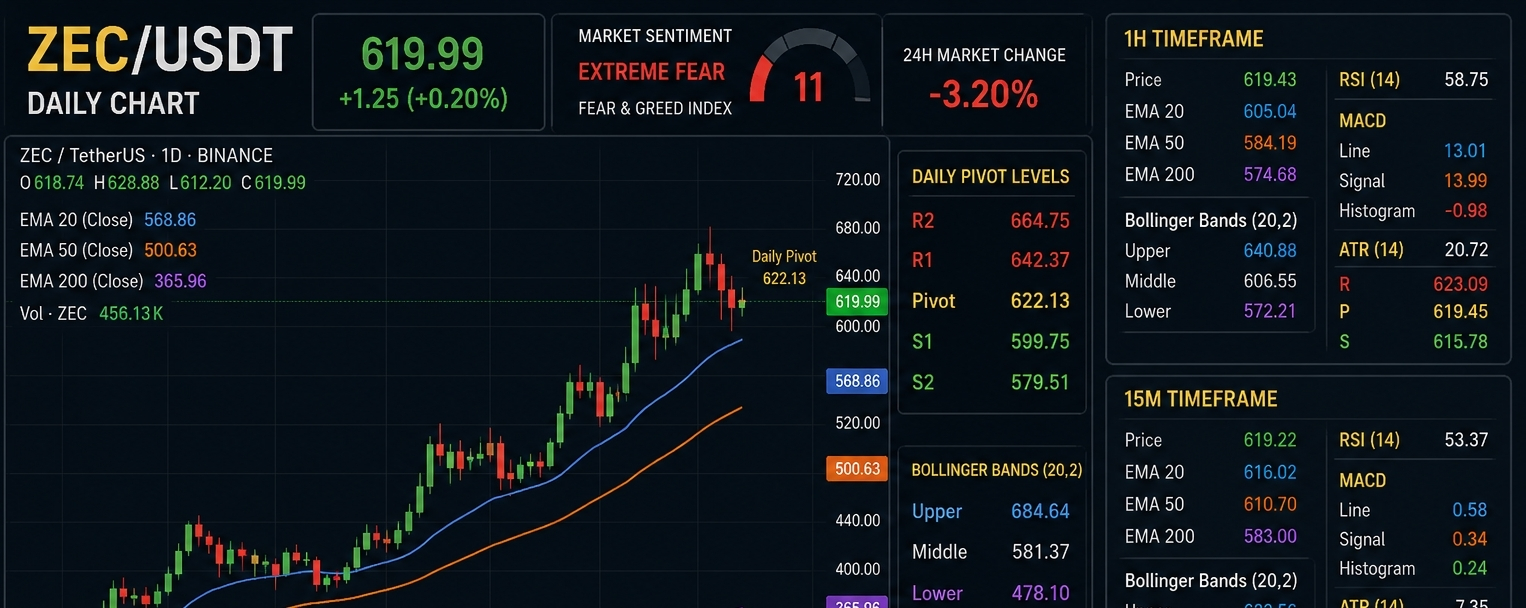
ZEC Shows Resilience Despite Market Uncertainty as Traders Watch for the Next Major Move$ZEC is currently trading near an important price zone where bullish strength and short-term caution are colliding. Although the broader cryptocurrency market has faced selling pressure recently, ZEC continues to hold above key technical levels, reflecting a market that remains structurally healthy. The asset is neither showing signs of a major breakdown nor delivering a convincing breakout, leaving traders focused on confirmation before committing to aggressive positions.
From a broader perspective, the trend remains favorable for buyers. The price continues to trade above major moving averages, a sign that the longer-term direction is still pointing upward. This alignment typically indicates that bullish sentiment remains dominant, even if temporary periods of weakness emerge. However, after a strong advance over recent weeks, momentum has started to cool. Such behavior is common after extended rallies, as markets often pause to absorb gains before choosing their next direction.
Technical indicators present a mixed but generally constructive picture. Momentum has softened compared to previous sessions, suggesting that buying pressure is no longer accelerating at the same pace. This does not automatically indicate a reversal, but it does highlight the possibility of consolidation or a moderate pullback. Meanwhile, strength indicators remain above neutral levels, showing that buyers still maintain an edge despite the slowdown.
Volatility also remains a key factor. $ZEC has historically been capable of producing large price swings in relatively short periods, which means both bullish and bearish moves can develop quickly. Because of this, traders should be prepared for sharp fluctuations without immediately assuming that the broader trend has changed.
On shorter timeframes, the market is displaying signs of stabilization. Recent price action suggests that buyers are attempting to defend important support levels, preventing sellers from gaining complete control. While these signals are encouraging, they remain relatively weak and require further confirmation before they can be considered the beginning of a stronger upward move.
For bullish momentum to regain strength, ZEC needs to overcome nearby resistance and establish support above that area. A successful breakout would likely attract additional buying interest and could create the conditions for another leg higher. If confidence returns to the wider crypto market, the probability of such a scenario would increase significantly.
On the other hand, a corrective phase remains a realistic possibility. The loss of momentum across multiple timeframes suggests that some traders may choose to secure profits after the recent rally. A retreat toward lower support zones would not necessarily damage the long-term outlook and could actually strengthen the market structure by allowing price to reset before another advance.
At the moment, the most accurate way to describe ZEC is as an asset in a healthy uptrend that is currently taking a pause. The foundation remains positive, but momentum is no longer strong enough to justify blind optimism. Traders should remain patient, monitor key support and resistance levels closely, and wait for clear confirmation before expecting a major directional move. In the current environment, disciplined decision-making is likely to be more valuable than attempting to predict every short-term fluctuation.
#BTC走势分析
ZEC Shows Resilience Despite Market Uncertainty as Traders Watch for the Next Major Move
$ZEC is currently trading near an important price zone where bullish strength and short-term caution are colliding. Although the broader cryptocurrency market has faced selling pressure recently, ZEC continues to hold above key technical levels, reflecting a market that remains structurally healthy. The asset is neither showing signs of a major breakdown nor delivering a convincing breakout, leaving traders focused on confirmation before committing to aggressive positions.
From a broader perspective, the trend remains favorable for buyers. The price continues to trade above major moving averages, a sign that the longer-term direction is still pointing upward. This alignment typically indicates that bullish sentiment remains dominant, even if temporary periods of weakness emerge. However, after a strong advance over recent weeks, momentum has started to cool. Such behavior is common after extended rallies, as markets often pause to absorb gains before choosing their next direction.
Technical indicators present a mixed but generally constructive picture. Momentum has softened compared to previous sessions, suggesting that buying pressure is no longer accelerating at the same pace. This does not automatically indicate a reversal, but it does highlight the possibility of consolidation or a moderate pullback. Meanwhile, strength indicators remain above neutral levels, showing that buyers still maintain an edge despite the slowdown.
Volatility also remains a key factor. $ZEC has historically been capable of producing large price swings in relatively short periods, which means both bullish and bearish moves can develop quickly. Because of this, traders should be prepared for sharp fluctuations without immediately assuming that the broader trend has changed.
On shorter timeframes, the market is displaying signs of stabilization. Recent price action suggests that buyers are attempting to defend important support levels, preventing sellers from gaining complete control. While these signals are encouraging, they remain relatively weak and require further confirmation before they can be considered the beginning of a stronger upward move.
For bullish momentum to regain strength, ZEC needs to overcome nearby resistance and establish support above that area. A successful breakout would likely attract additional buying interest and could create the conditions for another leg higher. If confidence returns to the wider crypto market, the probability of such a scenario would increase significantly.
On the other hand, a corrective phase remains a realistic possibility. The loss of momentum across multiple timeframes suggests that some traders may choose to secure profits after the recent rally. A retreat toward lower support zones would not necessarily damage the long-term outlook and could actually strengthen the market structure by allowing price to reset before another advance.
At the moment, the most accurate way to describe ZEC is as an asset in a healthy uptrend that is currently taking a pause. The foundation remains positive, but momentum is no longer strong enough to justify blind optimism. Traders should remain patient, monitor key support and resistance levels closely, and wait for clear confirmation before expecting a major directional move. In the current environment, disciplined decision-making is likely to be more valuable than attempting to predict every short-term fluctuation.
#BTC走势分析
From a broader perspective, the trend remains favorable for buyers. The price continues to trade above major moving averages, a sign that the longer-term direction is still pointing upward. This alignment typically indicates that bullish sentiment remains dominant, even if temporary periods of weakness emerge. However, after a strong advance over recent weeks, momentum has started to cool. Such behavior is common after extended rallies, as markets often pause to absorb gains before choosing their next direction.
Technical indicators present a mixed but generally constructive picture. Momentum has softened compared to previous sessions, suggesting that buying pressure is no longer accelerating at the same pace. This does not automatically indicate a reversal, but it does highlight the possibility of consolidation or a moderate pullback. Meanwhile, strength indicators remain above neutral levels, showing that buyers still maintain an edge despite the slowdown.
Volatility also remains a key factor. $ZEC has historically been capable of producing large price swings in relatively short periods, which means both bullish and bearish moves can develop quickly. Because of this, traders should be prepared for sharp fluctuations without immediately assuming that the broader trend has changed.
On shorter timeframes, the market is displaying signs of stabilization. Recent price action suggests that buyers are attempting to defend important support levels, preventing sellers from gaining complete control. While these signals are encouraging, they remain relatively weak and require further confirmation before they can be considered the beginning of a stronger upward move.
For bullish momentum to regain strength, ZEC needs to overcome nearby resistance and establish support above that area. A successful breakout would likely attract additional buying interest and could create the conditions for another leg higher. If confidence returns to the wider crypto market, the probability of such a scenario would increase significantly.
On the other hand, a corrective phase remains a realistic possibility. The loss of momentum across multiple timeframes suggests that some traders may choose to secure profits after the recent rally. A retreat toward lower support zones would not necessarily damage the long-term outlook and could actually strengthen the market structure by allowing price to reset before another advance.
At the moment, the most accurate way to describe ZEC is as an asset in a healthy uptrend that is currently taking a pause. The foundation remains positive, but momentum is no longer strong enough to justify blind optimism. Traders should remain patient, monitor key support and resistance levels closely, and wait for clear confirmation before expecting a major directional move. In the current environment, disciplined decision-making is likely to be more valuable than attempting to predict every short-term fluctuation.
#BTC走势分析
1
221
·
--
Bullish
Pro Tip: Strong trend assets often provide the best entries on retests rather than during impulsive moves.
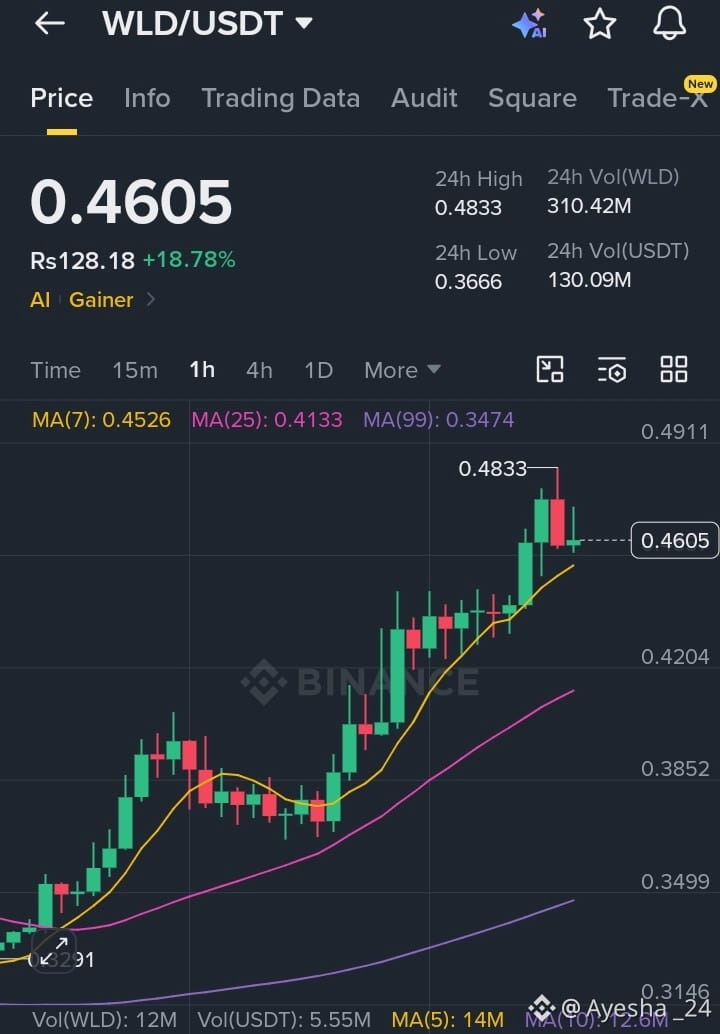
$WLD saw aggressive buying after defending a major support zone, preventing a deeper correction.
The successful defense keeps momentum pointed higher and preserves trend strength.
Entry Price (EP): Rs124.00 – Rs129.00
Take Profit (TP): Rs140.00 → Rs155.00
Stop Loss (SL): Rs118.50
Trade Targets:
TG1: Rs140.00
TG2: Rs147.50
TG3: Rs155.00
Trade Decision: Bullish above key support.
#BlockchainAssocBacks401kCrypto #JapanLDPBlockchainNationalStrategy
Pro Tip: Strong trend assets often provide the best entries on retests rather than during impulsive moves.
$WLD saw aggressive buying after defending a major support zone, preventing a deeper correction.
The successful defense keeps momentum pointed higher and preserves trend strength.
Entry Price (EP): Rs124.00 – Rs129.00
Take Profit (TP): Rs140.00 → Rs155.00
Stop Loss (SL): Rs118.50
Trade Targets:
TG1: Rs140.00
TG2: Rs147.50
TG3: Rs155.00
Trade Decision: Bullish above key support.
#BlockchainAssocBacks401kCrypto #JapanLDPBlockchainNationalStrategy
$WLD saw aggressive buying after defending a major support zone, preventing a deeper correction.
The successful defense keeps momentum pointed higher and preserves trend strength.
Entry Price (EP): Rs124.00 – Rs129.00
Take Profit (TP): Rs140.00 → Rs155.00
Stop Loss (SL): Rs118.50
Trade Targets:
TG1: Rs140.00
TG2: Rs147.50
TG3: Rs155.00
Trade Decision: Bullish above key support.
#BlockchainAssocBacks401kCrypto #JapanLDPBlockchainNationalStrategy
1
303
·
--
Bullish
Pro Tip: Breakouts with increasing volume tend to perform best when followed by a controlled consolidation.
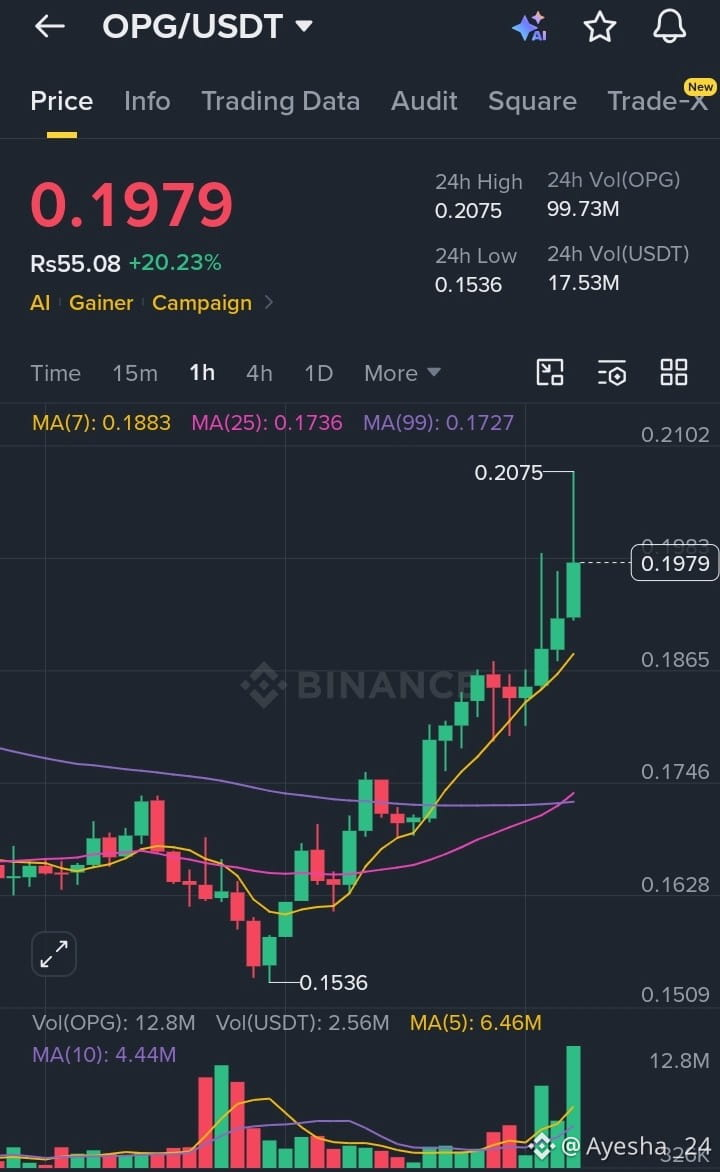
$OPG defended a key breakout level after absorbing profit-taking pressure, keeping the bullish structure intact.
The defense strengthens the case for continued upside momentum.
Entry Price (EP): Rs53.50 – Rs55.00
Take Profit (TP): Rs61.00 → Rs67.00
Stop Loss (SL): Rs50.80
Trade Targets:
TG1: Rs61.00
TG2: Rs64.00
TG3: Rs67.00
#BlockchainAssocBacks401kCrypto #AIAgentsRecreateGoogleQuantumBreakthrough
Pro Tip: Breakouts with increasing volume tend to perform best when followed by a controlled consolidation.
$OPG defended a key breakout level after absorbing profit-taking pressure, keeping the bullish structure intact.
The defense strengthens the case for continued upside momentum.
Entry Price (EP): Rs53.50 – Rs55.00
Take Profit (TP): Rs61.00 → Rs67.00
Stop Loss (SL): Rs50.80
Trade Targets:
TG1: Rs61.00
TG2: Rs64.00
TG3: Rs67.00
#BlockchainAssocBacks401kCrypto #AIAgentsRecreateGoogleQuantumBreakthrough
$OPG defended a key breakout level after absorbing profit-taking pressure, keeping the bullish structure intact.
The defense strengthens the case for continued upside momentum.
Entry Price (EP): Rs53.50 – Rs55.00
Take Profit (TP): Rs61.00 → Rs67.00
Stop Loss (SL): Rs50.80
Trade Targets:
TG1: Rs61.00
TG2: Rs64.00
TG3: Rs67.00
#BlockchainAssocBacks401kCrypto #AIAgentsRecreateGoogleQuantumBreakthrough
1
196
·
--
Bullish
Pro Tip: When liquidity is swept below support and quickly reclaimed, it often signals trapped sellers.
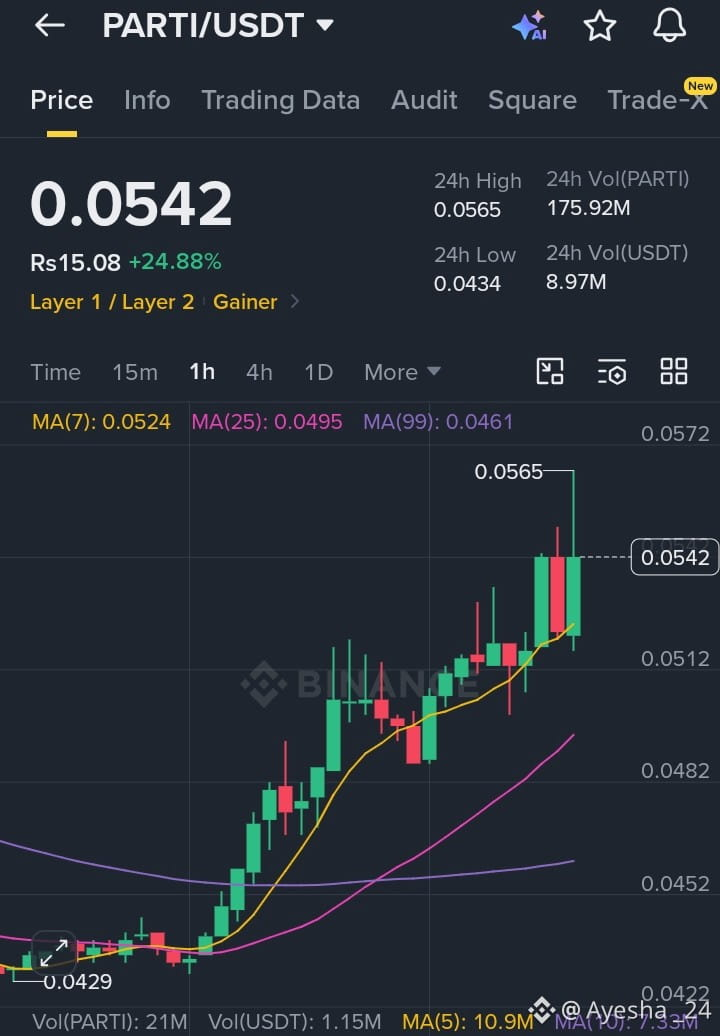
$PARTI completed a downside liquidity sweep before recovering sharply, indicating that selling pressure was absorbed.
This type of reaction typically favors trend continuation as long as the recovery zone holds.
Entry Price (EP): Rs14.80 – Rs15.30
Take Profit (TP): Rs17.20 → Rs19.00
Stop Loss (SL): Rs13.90
Trade Targets:
TG1: Rs17.20
TG2: Rs18.10
TG3: Rs19.00
Trade Decision: Bullish on pullbacks into support.
#BlockchainAssocBacks401kCrypto #JapanLDPBlockchainNationalStrategy
Pro Tip: When liquidity is swept below support and quickly reclaimed, it often signals trapped sellers.
$PARTI completed a downside liquidity sweep before recovering sharply, indicating that selling pressure was absorbed.
This type of reaction typically favors trend continuation as long as the recovery zone holds.
Entry Price (EP): Rs14.80 – Rs15.30
Take Profit (TP): Rs17.20 → Rs19.00
Stop Loss (SL): Rs13.90
Trade Targets:
TG1: Rs17.20
TG2: Rs18.10
TG3: Rs19.00
Trade Decision: Bullish on pullbacks into support.
#BlockchainAssocBacks401kCrypto #JapanLDPBlockchainNationalStrategy
$PARTI completed a downside liquidity sweep before recovering sharply, indicating that selling pressure was absorbed.
This type of reaction typically favors trend continuation as long as the recovery zone holds.
Entry Price (EP): Rs14.80 – Rs15.30
Take Profit (TP): Rs17.20 → Rs19.00
Stop Loss (SL): Rs13.90
Trade Targets:
TG1: Rs17.20
TG2: Rs18.10
TG3: Rs19.00
Trade Decision: Bullish on pullbacks into support.
#BlockchainAssocBacks401kCrypto #JapanLDPBlockchainNationalStrategy
147
·
--
Bullish
Pro Tip: Strong percentage moves often retrace first; focus on level defense rather than chasing candles.
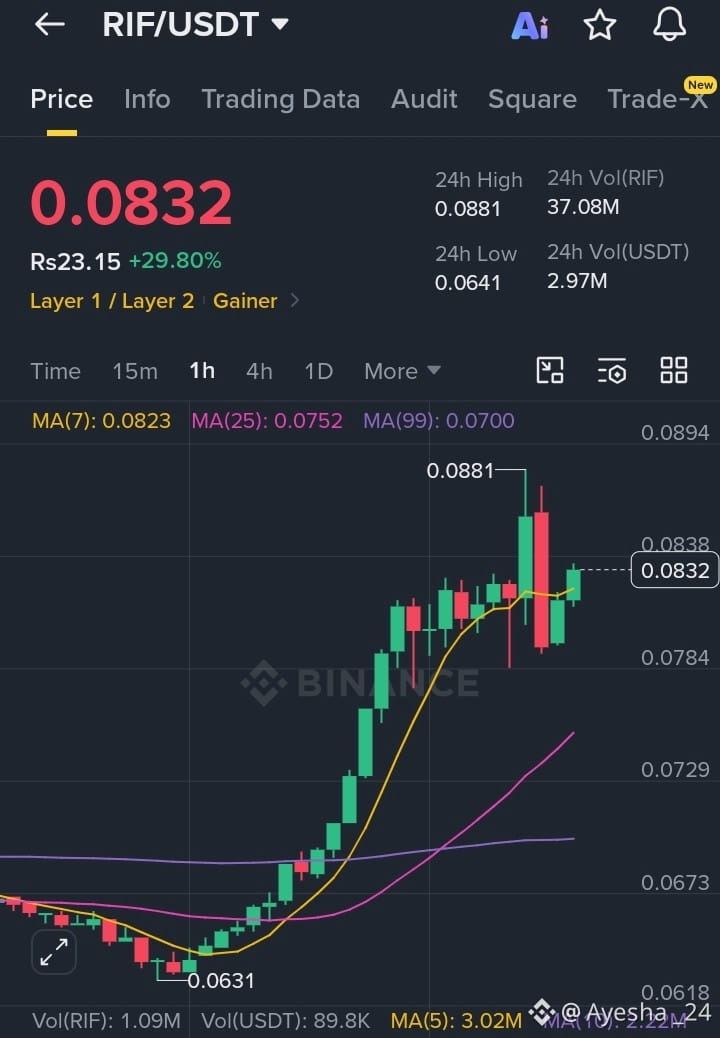
$RIF rejected lower prices and absorbed selling pressure around a key demand area, signaling renewed buyer interest.
Momentum has shifted back toward the upside, provided support remains intact.
Entry Price (EP): Rs22.60 – Rs23.30
Take Profit (TP): Rs25.80 → Rs28.50
Stop Loss (SL): Rs21.40
Trade Targets:
TG1: Rs25.80
TG2: Rs27.10
TG3: Rs28.50
Trade Decision: Moderately bullish above support.
#BlockchainAssocBacks401kCrypto #JapanLDPBlockchainNationalStrategy
Pro Tip: Strong percentage moves often retrace first; focus on level defense rather than chasing candles.
$RIF rejected lower prices and absorbed selling pressure around a key demand area, signaling renewed buyer interest.
Momentum has shifted back toward the upside, provided support remains intact.
Entry Price (EP): Rs22.60 – Rs23.30
Take Profit (TP): Rs25.80 → Rs28.50
Stop Loss (SL): Rs21.40
Trade Targets:
TG1: Rs25.80
TG2: Rs27.10
TG3: Rs28.50
Trade Decision: Moderately bullish above support.
#BlockchainAssocBacks401kCrypto #JapanLDPBlockchainNationalStrategy
$RIF rejected lower prices and absorbed selling pressure around a key demand area, signaling renewed buyer interest.
Momentum has shifted back toward the upside, provided support remains intact.
Entry Price (EP): Rs22.60 – Rs23.30
Take Profit (TP): Rs25.80 → Rs28.50
Stop Loss (SL): Rs21.40
Trade Targets:
TG1: Rs25.80
TG2: Rs27.10
TG3: Rs28.50
Trade Decision: Moderately bullish above support.
#BlockchainAssocBacks401kCrypto #JapanLDPBlockchainNationalStrategy
153
·
--
Bullish
Pro Tip: After a strong breakout, wait for price to hold above the reclaimed level before adding exposure.
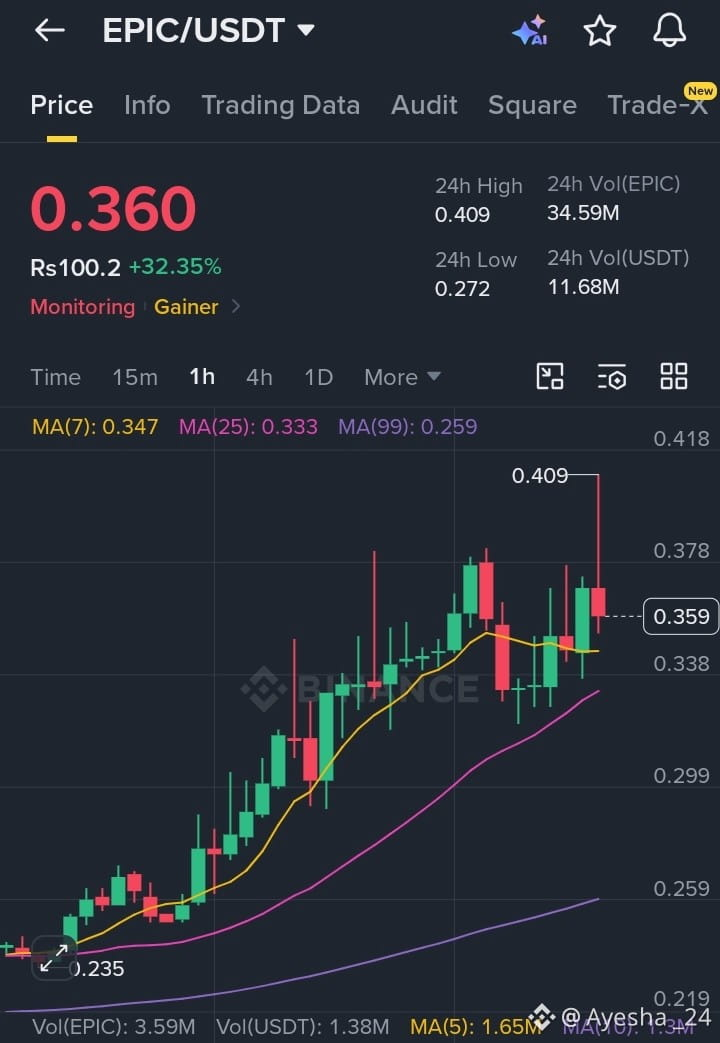
A short squeeze pushed $EPIC through nearby resistance, forcing sellers to cover and accelerating upside momentum.
The move suggests buyers remain in control while liquidity continues to rotate higher.
Entry Price (EP): Rs98.50 – Rs101.00
Take Profit (TP): Rs108.00 → Rs118.00
Stop Loss (SL): Rs92.80
Trade Targets:
TG1: Rs108.00
TG2: Rs113.50
TG3: Rs118.00
Trade Decision: Bullish while holding above the breakout zone.
#BlockchainAssocBacks401kCrypto #JapanLDPBlockchainNationalStrategy
Pro Tip: After a strong breakout, wait for price to hold above the reclaimed level before adding exposure.
A short squeeze pushed $EPIC through nearby resistance, forcing sellers to cover and accelerating upside momentum.
The move suggests buyers remain in control while liquidity continues to rotate higher.
Entry Price (EP): Rs98.50 – Rs101.00
Take Profit (TP): Rs108.00 → Rs118.00
Stop Loss (SL): Rs92.80
Trade Targets:
TG1: Rs108.00
TG2: Rs113.50
TG3: Rs118.00
Trade Decision: Bullish while holding above the breakout zone.
#BlockchainAssocBacks401kCrypto #JapanLDPBlockchainNationalStrategy
A short squeeze pushed $EPIC through nearby resistance, forcing sellers to cover and accelerating upside momentum.
The move suggests buyers remain in control while liquidity continues to rotate higher.
Entry Price (EP): Rs98.50 – Rs101.00
Take Profit (TP): Rs108.00 → Rs118.00
Stop Loss (SL): Rs92.80
Trade Targets:
TG1: Rs108.00
TG2: Rs113.50
TG3: Rs118.00
Trade Decision: Bullish while holding above the breakout zone.
#BlockchainAssocBacks401kCrypto #JapanLDPBlockchainNationalStrategy
155
·
--
Article
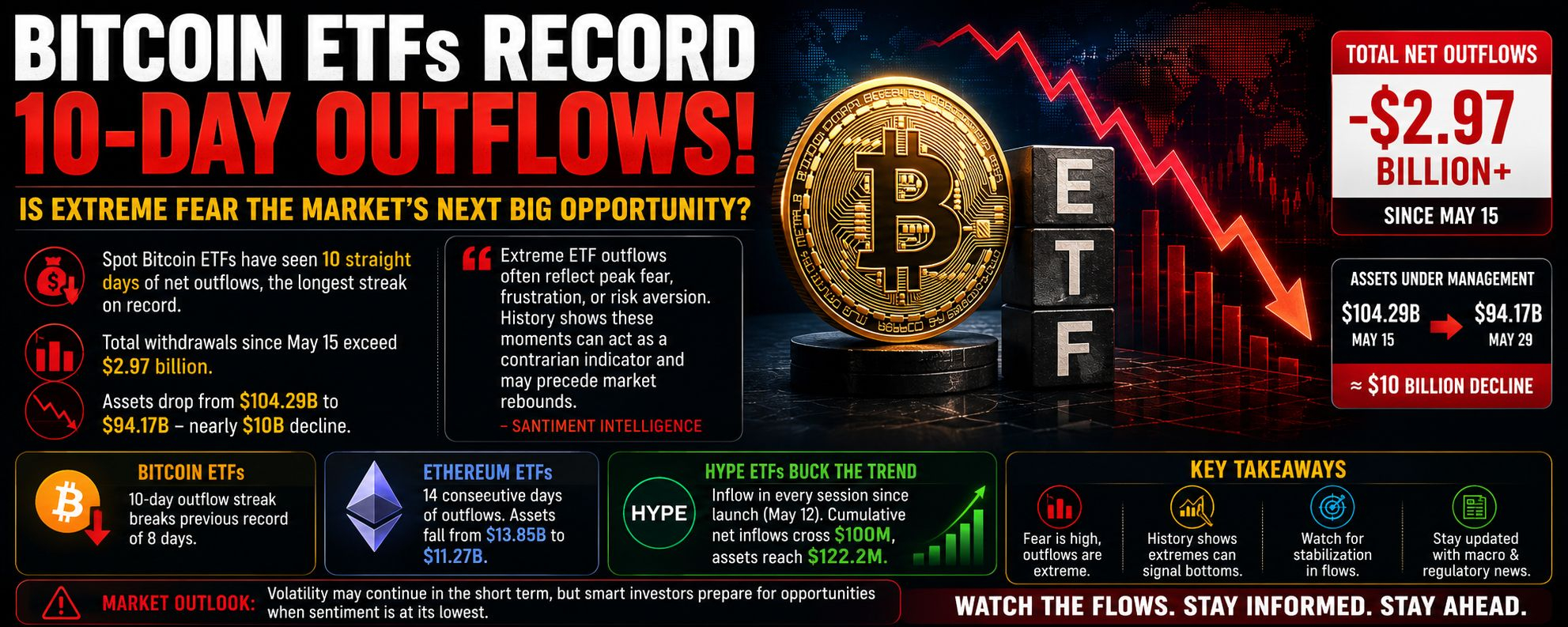
Bitcoin ETFs See Unprecedented Withdrawal Streak – Could This Signal a Market Turning Point?May 2026 – Spot Bitcoin Exchange-Traded Funds (ETFs) are experiencing one of their most challenging periods since launch, as investors continue pulling billions of dollars from crypto investment products. Recent market data reveals that Bitcoin ETFs have now recorded ten consecutive trading sessions of net outflows, highlighting growing caution among institutional investors.
Massive Capital Exits Shake Bitcoin ETF Market
Since mid-May, investors have withdrawn nearly $3 billion from spot Bitcoin ETFs. Daily redemptions have varied significantly, ranging from tens of millions of dollars to several hundred million in a single session. This persistent selling pressure has reduced total assets managed by Bitcoin ETFs by approximately $10 billion within just two weeks.
The extended outflow streak has surpassed previous records, making it the longest period of continuous withdrawals ever witnessed in the Bitcoin ETF sector. Such a trend has naturally sparked debate among traders and analysts regarding the future direction of institutional demand.
Institutional Sentiment Appears to Be Cooling
Bitcoin ETFs are widely viewed as a key indicator of institutional confidence in the cryptocurrency market. Strong inflows generally reflect increasing interest from professional investors, while prolonged outflows often signal a defensive approach toward risk assets.
Current market conditions suggest that many large investors are reducing exposure as they navigate economic uncertainty, shifting monetary policies, and broader financial market volatility. However, some analysts argue that these withdrawals may not necessarily indicate a long-term bearish outlook.
Could Extreme Fear Be a Bullish Signal?
Market intelligence firms have pointed out that significant ETF outflows have historically occurred near important market bottoms. When investor sentiment becomes overwhelmingly negative, aggressive selling can sometimes mark the final stages of a correction before prices stabilize.
This phenomenon, often referred to as a contrarian indicator, suggests that widespread fear may create opportunities for long-term investors. Previous periods of heavy ETF withdrawals have occasionally been followed by notable Bitcoin recoveries once market confidence returned.
While history never guarantees future results, many traders are closely monitoring current flow data for signs that selling pressure may soon begin to fade.
Ethereum ETFs Also Under Pressure
The weakness is not limited to Bitcoin alone. Spot Ethereum ETFs have also experienced sustained redemptions, recording multiple consecutive days of net outflows. Assets held by Ethereum-focused funds have declined substantially as investors continue reducing exposure across the broader digital asset sector.
The synchronized withdrawals from both Bitcoin and Ethereum products indicate that the trend is being driven more by overall market sentiment than by concerns surrounding any single cryptocurrency.
Alternative Crypto Products Attract Fresh Capital
Despite the weakness in traditional crypto ETFs, some newer investment products are attracting attention. Recently launched crypto-focused funds have continued to receive steady inflows, demonstrating that investor interest in digital assets remains alive, although capital is being redirected toward alternative opportunities.
This divergence highlights a changing landscape where investors are becoming increasingly selective about how they gain exposure to the crypto market.
What Investors Should Watch Next
The coming weeks could prove critical for Bitcoin and the broader cryptocurrency market. Key indicators to monitor include:
Whether Bitcoin ETF outflows begin to slow down.
Signs of renewed institutional buying activity.
Changes in macroeconomic conditions and interest rate expectations.
Regulatory developments affecting digital asset investments.
Bitcoin's ability to maintain key support levels.
If outflows begin stabilizing while market sentiment remains extremely bearish, some analysts believe the conditions for a potential recovery could emerge.
Final Thoughts
Although the current wave of Bitcoin ETF withdrawals appears alarming on the surface, experienced market participants recognize that extreme pessimism often accompanies major turning points. Whether this historic outflow streak marks the beginning of a deeper correction or the formation of a market bottom remains uncertain.
For now, investors should remain focused on long-term trends, monitor institutional activity closely, and prepare for increased volatility as the next chapter of the crypto market unfolds.
Alternative Strong Headlines:
$3 Billion Exits Bitcoin ETFs: Warning Sign or Golden Buying Opportunity?
Historic Bitcoin ETF Sell-Off Sparks Debate Over Next Crypto Rally
Institutional Investors Dump Bitcoin ETFs for 10 Straight Days – What Happens Next?
Bitcoin ETFs Bleed Billions as Market Fear Reaches Extreme Levels
Record ETF Outflows Shake Bitcoin Market: Is a Major Rebound Near?
#BTC走势分析
#hype
Bitcoin ETFs See Unprecedented Withdrawal Streak – Could This Signal a Market Turning Point?
May 2026 – Spot Bitcoin Exchange-Traded Funds (ETFs) are experiencing one of their most challenging periods since launch, as investors continue pulling billions of dollars from crypto investment products. Recent market data reveals that Bitcoin ETFs have now recorded ten consecutive trading sessions of net outflows, highlighting growing caution among institutional investors.
Massive Capital Exits Shake Bitcoin ETF Market
Since mid-May, investors have withdrawn nearly $3 billion from spot Bitcoin ETFs. Daily redemptions have varied significantly, ranging from tens of millions of dollars to several hundred million in a single session. This persistent selling pressure has reduced total assets managed by Bitcoin ETFs by approximately $10 billion within just two weeks.
The extended outflow streak has surpassed previous records, making it the longest period of continuous withdrawals ever witnessed in the Bitcoin ETF sector. Such a trend has naturally sparked debate among traders and analysts regarding the future direction of institutional demand.
Institutional Sentiment Appears to Be Cooling
Bitcoin ETFs are widely viewed as a key indicator of institutional confidence in the cryptocurrency market. Strong inflows generally reflect increasing interest from professional investors, while prolonged outflows often signal a defensive approach toward risk assets.
Current market conditions suggest that many large investors are reducing exposure as they navigate economic uncertainty, shifting monetary policies, and broader financial market volatility. However, some analysts argue that these withdrawals may not necessarily indicate a long-term bearish outlook.
Could Extreme Fear Be a Bullish Signal?
Market intelligence firms have pointed out that significant ETF outflows have historically occurred near important market bottoms. When investor sentiment becomes overwhelmingly negative, aggressive selling can sometimes mark the final stages of a correction before prices stabilize.
This phenomenon, often referred to as a contrarian indicator, suggests that widespread fear may create opportunities for long-term investors. Previous periods of heavy ETF withdrawals have occasionally been followed by notable Bitcoin recoveries once market confidence returned.
While history never guarantees future results, many traders are closely monitoring current flow data for signs that selling pressure may soon begin to fade.
Ethereum ETFs Also Under Pressure
The weakness is not limited to Bitcoin alone. Spot Ethereum ETFs have also experienced sustained redemptions, recording multiple consecutive days of net outflows. Assets held by Ethereum-focused funds have declined substantially as investors continue reducing exposure across the broader digital asset sector.
The synchronized withdrawals from both Bitcoin and Ethereum products indicate that the trend is being driven more by overall market sentiment than by concerns surrounding any single cryptocurrency.
Alternative Crypto Products Attract Fresh Capital
Despite the weakness in traditional crypto ETFs, some newer investment products are attracting attention. Recently launched crypto-focused funds have continued to receive steady inflows, demonstrating that investor interest in digital assets remains alive, although capital is being redirected toward alternative opportunities.
This divergence highlights a changing landscape where investors are becoming increasingly selective about how they gain exposure to the crypto market.
What Investors Should Watch Next
The coming weeks could prove critical for Bitcoin and the broader cryptocurrency market. Key indicators to monitor include:
Whether Bitcoin ETF outflows begin to slow down.
Signs of renewed institutional buying activity.
Changes in macroeconomic conditions and interest rate expectations.
Regulatory developments affecting digital asset investments.
Bitcoin's ability to maintain key support levels.
If outflows begin stabilizing while market sentiment remains extremely bearish, some analysts believe the conditions for a potential recovery could emerge.
Final Thoughts
Although the current wave of Bitcoin ETF withdrawals appears alarming on the surface, experienced market participants recognize that extreme pessimism often accompanies major turning points. Whether this historic outflow streak marks the beginning of a deeper correction or the formation of a market bottom remains uncertain.
For now, investors should remain focused on long-term trends, monitor institutional activity closely, and prepare for increased volatility as the next chapter of the crypto market unfolds.
Alternative Strong Headlines:
$3 Billion Exits Bitcoin ETFs: Warning Sign or Golden Buying Opportunity?
Historic Bitcoin ETF Sell-Off Sparks Debate Over Next Crypto Rally
Institutional Investors Dump Bitcoin ETFs for 10 Straight Days – What Happens Next?
Bitcoin ETFs Bleed Billions as Market Fear Reaches Extreme Levels
Record ETF Outflows Shake Bitcoin Market: Is a Major Rebound Near?
#BTC走势分析
#hype
Massive Capital Exits Shake Bitcoin ETF Market
Since mid-May, investors have withdrawn nearly $3 billion from spot Bitcoin ETFs. Daily redemptions have varied significantly, ranging from tens of millions of dollars to several hundred million in a single session. This persistent selling pressure has reduced total assets managed by Bitcoin ETFs by approximately $10 billion within just two weeks.
The extended outflow streak has surpassed previous records, making it the longest period of continuous withdrawals ever witnessed in the Bitcoin ETF sector. Such a trend has naturally sparked debate among traders and analysts regarding the future direction of institutional demand.
Institutional Sentiment Appears to Be Cooling
Bitcoin ETFs are widely viewed as a key indicator of institutional confidence in the cryptocurrency market. Strong inflows generally reflect increasing interest from professional investors, while prolonged outflows often signal a defensive approach toward risk assets.
Current market conditions suggest that many large investors are reducing exposure as they navigate economic uncertainty, shifting monetary policies, and broader financial market volatility. However, some analysts argue that these withdrawals may not necessarily indicate a long-term bearish outlook.
Could Extreme Fear Be a Bullish Signal?
Market intelligence firms have pointed out that significant ETF outflows have historically occurred near important market bottoms. When investor sentiment becomes overwhelmingly negative, aggressive selling can sometimes mark the final stages of a correction before prices stabilize.
This phenomenon, often referred to as a contrarian indicator, suggests that widespread fear may create opportunities for long-term investors. Previous periods of heavy ETF withdrawals have occasionally been followed by notable Bitcoin recoveries once market confidence returned.
While history never guarantees future results, many traders are closely monitoring current flow data for signs that selling pressure may soon begin to fade.
Ethereum ETFs Also Under Pressure
The weakness is not limited to Bitcoin alone. Spot Ethereum ETFs have also experienced sustained redemptions, recording multiple consecutive days of net outflows. Assets held by Ethereum-focused funds have declined substantially as investors continue reducing exposure across the broader digital asset sector.
The synchronized withdrawals from both Bitcoin and Ethereum products indicate that the trend is being driven more by overall market sentiment than by concerns surrounding any single cryptocurrency.
Alternative Crypto Products Attract Fresh Capital
Despite the weakness in traditional crypto ETFs, some newer investment products are attracting attention. Recently launched crypto-focused funds have continued to receive steady inflows, demonstrating that investor interest in digital assets remains alive, although capital is being redirected toward alternative opportunities.
This divergence highlights a changing landscape where investors are becoming increasingly selective about how they gain exposure to the crypto market.
What Investors Should Watch Next
The coming weeks could prove critical for Bitcoin and the broader cryptocurrency market. Key indicators to monitor include:
Whether Bitcoin ETF outflows begin to slow down.
Signs of renewed institutional buying activity.
Changes in macroeconomic conditions and interest rate expectations.
Regulatory developments affecting digital asset investments.
Bitcoin's ability to maintain key support levels.
If outflows begin stabilizing while market sentiment remains extremely bearish, some analysts believe the conditions for a potential recovery could emerge.
Final Thoughts
Although the current wave of Bitcoin ETF withdrawals appears alarming on the surface, experienced market participants recognize that extreme pessimism often accompanies major turning points. Whether this historic outflow streak marks the beginning of a deeper correction or the formation of a market bottom remains uncertain.
For now, investors should remain focused on long-term trends, monitor institutional activity closely, and prepare for increased volatility as the next chapter of the crypto market unfolds.
Alternative Strong Headlines:
$3 Billion Exits Bitcoin ETFs: Warning Sign or Golden Buying Opportunity?
Historic Bitcoin ETF Sell-Off Sparks Debate Over Next Crypto Rally
Institutional Investors Dump Bitcoin ETFs for 10 Straight Days – What Happens Next?
Bitcoin ETFs Bleed Billions as Market Fear Reaches Extreme Levels
Record ETF Outflows Shake Bitcoin Market: Is a Major Rebound Near?
#BTC走势分析
#hype
2
194
·
--
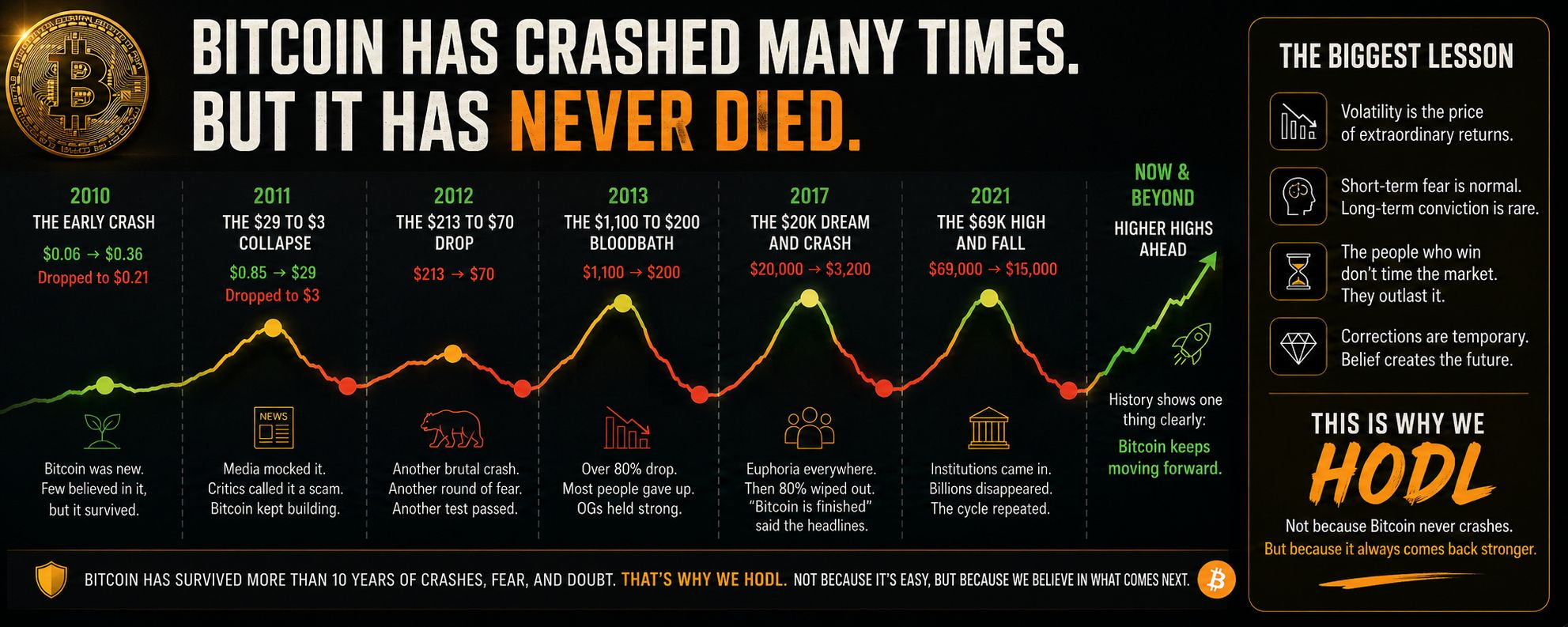
Article
WHY BITCOIN'S BIGGEST DROPS NEVER CHANGED ITS STORYI’ve noticed a pattern that repeats itself in every Bitcoin cycle.
When prices are rising, everyone wants to talk about Bitcoin. New investors rush in, social media becomes flooded with bullish predictions, and people start believing the price can only go higher.
Then the market corrects.
Fear replaces excitement. Confidence turns into doubt. And suddenly, the same people who were celebrating a few weeks earlier begin asking whether Bitcoin's journey is over.
What many people fail to understand is that sharp corrections have always been part of Bitcoin's history.
In its earliest days, Bitcoin experienced dramatic swings that would shock most investors today. Even when adoption was tiny and very few people understood the technology, major sell-offs occurred. Yet Bitcoin continued moving forward.
As the years passed, the pattern repeated again and again.
Every major bull market was followed by a painful decline.
Prices surged.
Markets became euphoric.
Then corrections arrived.
Critics declared the experiment finished. Headlines predicted failure. Investors who bought near the highs questioned everything.
But despite the panic, Bitcoin kept surviving.
It recovered from devastating bear markets.
It endured exchange failures, regulatory pressure, negative media coverage, and widespread skepticism.
Each cycle tested investors differently.
Some focused only on short-term price movements and exited during periods of fear.
Others focused on the bigger picture and viewed volatility as a natural part of an emerging asset.
The lesson I learned is simple:
Bitcoin's history has never been a straight line upward.
Its path has been filled with extreme optimism, deep corrections, and constant doubt.
Yet every major downturn eventually became another chapter in a much larger story.
That doesn't guarantee future results, but it does show that temporary market fear has repeatedly challenged long-term conviction.
Whenever I see panic during corrections, I remind myself of one thing:
Bitcoin has never built its reputation during easy markets.
Its reputation was built by surviving difficult ones.
And that is why many long-term holders remain patient during periods of uncertainty.
Not because volatility disappears.
But because Bitcoin's history has shown that the strongest convictions are usually tested when fear is at its highest.
#BTC走势分析
#BTC70K✈️
#BTC☀
WHY BITCOIN'S BIGGEST DROPS NEVER CHANGED ITS STORY
I’ve noticed a pattern that repeats itself in every Bitcoin cycle.
When prices are rising, everyone wants to talk about Bitcoin. New investors rush in, social media becomes flooded with bullish predictions, and people start believing the price can only go higher.
Then the market corrects.
Fear replaces excitement. Confidence turns into doubt. And suddenly, the same people who were celebrating a few weeks earlier begin asking whether Bitcoin's journey is over.
What many people fail to understand is that sharp corrections have always been part of Bitcoin's history.
In its earliest days, Bitcoin experienced dramatic swings that would shock most investors today. Even when adoption was tiny and very few people understood the technology, major sell-offs occurred. Yet Bitcoin continued moving forward.
As the years passed, the pattern repeated again and again.
Every major bull market was followed by a painful decline.
Prices surged.
Markets became euphoric.
Then corrections arrived.
Critics declared the experiment finished. Headlines predicted failure. Investors who bought near the highs questioned everything.
But despite the panic, Bitcoin kept surviving.
It recovered from devastating bear markets.
It endured exchange failures, regulatory pressure, negative media coverage, and widespread skepticism.
Each cycle tested investors differently.
Some focused only on short-term price movements and exited during periods of fear.
Others focused on the bigger picture and viewed volatility as a natural part of an emerging asset.
The lesson I learned is simple:
Bitcoin's history has never been a straight line upward.
Its path has been filled with extreme optimism, deep corrections, and constant doubt.
Yet every major downturn eventually became another chapter in a much larger story.
That doesn't guarantee future results, but it does show that temporary market fear has repeatedly challenged long-term conviction.
Whenever I see panic during corrections, I remind myself of one thing:
Bitcoin has never built its reputation during easy markets.
Its reputation was built by surviving difficult ones.
And that is why many long-term holders remain patient during periods of uncertainty.
Not because volatility disappears.
But because Bitcoin's history has shown that the strongest convictions are usually tested when fear is at its highest.
#BTC走势分析
#BTC70K✈️
#BTC☀
When prices are rising, everyone wants to talk about Bitcoin. New investors rush in, social media becomes flooded with bullish predictions, and people start believing the price can only go higher.
Then the market corrects.
Fear replaces excitement. Confidence turns into doubt. And suddenly, the same people who were celebrating a few weeks earlier begin asking whether Bitcoin's journey is over.
What many people fail to understand is that sharp corrections have always been part of Bitcoin's history.
In its earliest days, Bitcoin experienced dramatic swings that would shock most investors today. Even when adoption was tiny and very few people understood the technology, major sell-offs occurred. Yet Bitcoin continued moving forward.
As the years passed, the pattern repeated again and again.
Every major bull market was followed by a painful decline.
Prices surged.
Markets became euphoric.
Then corrections arrived.
Critics declared the experiment finished. Headlines predicted failure. Investors who bought near the highs questioned everything.
But despite the panic, Bitcoin kept surviving.
It recovered from devastating bear markets.
It endured exchange failures, regulatory pressure, negative media coverage, and widespread skepticism.
Each cycle tested investors differently.
Some focused only on short-term price movements and exited during periods of fear.
Others focused on the bigger picture and viewed volatility as a natural part of an emerging asset.
The lesson I learned is simple:
Bitcoin's history has never been a straight line upward.
Its path has been filled with extreme optimism, deep corrections, and constant doubt.
Yet every major downturn eventually became another chapter in a much larger story.
That doesn't guarantee future results, but it does show that temporary market fear has repeatedly challenged long-term conviction.
Whenever I see panic during corrections, I remind myself of one thing:
Bitcoin has never built its reputation during easy markets.
Its reputation was built by surviving difficult ones.
And that is why many long-term holders remain patient during periods of uncertainty.
Not because volatility disappears.
But because Bitcoin's history has shown that the strongest convictions are usually tested when fear is at its highest.
#BTC走势分析
#BTC70K✈️
#BTC☀
2
245
·
--
Why Dogecoin's Next Move Could Define Its Short-Term TrendI've been closely monitoring Dogecoin, and the current setup is starting to look increasingly important.
DOGE has entered a price range that could determine its next major move. While the market has been relatively quiet, the area around $0.10 continues to attract significant attention from traders and investors alike.
What makes this level so important is its history. In recent months, Dogecoin has repeatedly reacted around this zone, using it as both support and resistance during different market phases. Because of that, many market participants are treating it as a key decision point.
From a broader perspective, Dogecoin's fundamentals appear stronger than they were earlier this year. Growing institutional interest, expanding market accessibility, and a more defined regulatory outlook have helped strengthen confidence around the asset.
At the same time, discussions within the Dogecoin ecosystem about improving the network's long-term economic model have kept community engagement high. Although no major protocol changes have been finalized, the conversation itself highlights a growing focus on sustainability.
Despite these encouraging developments, price momentum has slowed. Following a strong advance earlier in the quarter, DOGE has entered a consolidation phase, with buyers and sellers competing for control.
One positive sign is that selling pressure remains relatively moderate. Trading activity has stayed balanced, suggesting that many participants are waiting for a clearer directional signal before increasing exposure.
In my view, the next move depends heavily on whether Dogecoin can maintain its position above the current support region. A successful defense could encourage renewed buying interest and potentially push the price toward higher resistance levels in the coming sessions.
On the other hand, a decisive breakdown below support may expose DOGE to a deeper retracement before a new recovery attempt begins.
For now, I believe patience is more valuable than speculation. The underlying narrative around Dogecoin continues to evolve, but traders will likely look for confirmation on the chart before committing to the next major trend.
The coming days could provide that answer.
#DOGECOİN
#DOGE
#CryptoNews
#cryptotrading
#BinanceSquare
Why Dogecoin's Next Move Could Define Its Short-Term Trend
I've been closely monitoring Dogecoin, and the current setup is starting to look increasingly important.
DOGE has entered a price range that could determine its next major move. While the market has been relatively quiet, the area around $0.10 continues to attract significant attention from traders and investors alike.
What makes this level so important is its history. In recent months, Dogecoin has repeatedly reacted around this zone, using it as both support and resistance during different market phases. Because of that, many market participants are treating it as a key decision point.
From a broader perspective, Dogecoin's fundamentals appear stronger than they were earlier this year. Growing institutional interest, expanding market accessibility, and a more defined regulatory outlook have helped strengthen confidence around the asset.
At the same time, discussions within the Dogecoin ecosystem about improving the network's long-term economic model have kept community engagement high. Although no major protocol changes have been finalized, the conversation itself highlights a growing focus on sustainability.
Despite these encouraging developments, price momentum has slowed. Following a strong advance earlier in the quarter, DOGE has entered a consolidation phase, with buyers and sellers competing for control.
One positive sign is that selling pressure remains relatively moderate. Trading activity has stayed balanced, suggesting that many participants are waiting for a clearer directional signal before increasing exposure.
In my view, the next move depends heavily on whether Dogecoin can maintain its position above the current support region. A successful defense could encourage renewed buying interest and potentially push the price toward higher resistance levels in the coming sessions.
On the other hand, a decisive breakdown below support may expose DOGE to a deeper retracement before a new recovery attempt begins.
For now, I believe patience is more valuable than speculation. The underlying narrative around Dogecoin continues to evolve, but traders will likely look for confirmation on the chart before committing to the next major trend.
The coming days could provide that answer.
#DOGECOİN
#DOGE
#CryptoNews
#cryptotrading
#BinanceSquare
DOGE has entered a price range that could determine its next major move. While the market has been relatively quiet, the area around $0.10 continues to attract significant attention from traders and investors alike.
What makes this level so important is its history. In recent months, Dogecoin has repeatedly reacted around this zone, using it as both support and resistance during different market phases. Because of that, many market participants are treating it as a key decision point.
From a broader perspective, Dogecoin's fundamentals appear stronger than they were earlier this year. Growing institutional interest, expanding market accessibility, and a more defined regulatory outlook have helped strengthen confidence around the asset.
At the same time, discussions within the Dogecoin ecosystem about improving the network's long-term economic model have kept community engagement high. Although no major protocol changes have been finalized, the conversation itself highlights a growing focus on sustainability.
Despite these encouraging developments, price momentum has slowed. Following a strong advance earlier in the quarter, DOGE has entered a consolidation phase, with buyers and sellers competing for control.
One positive sign is that selling pressure remains relatively moderate. Trading activity has stayed balanced, suggesting that many participants are waiting for a clearer directional signal before increasing exposure.
In my view, the next move depends heavily on whether Dogecoin can maintain its position above the current support region. A successful defense could encourage renewed buying interest and potentially push the price toward higher resistance levels in the coming sessions.
On the other hand, a decisive breakdown below support may expose DOGE to a deeper retracement before a new recovery attempt begins.
For now, I believe patience is more valuable than speculation. The underlying narrative around Dogecoin continues to evolve, but traders will likely look for confirmation on the chart before committing to the next major trend.
The coming days could provide that answer.
#DOGECOİN
#DOGE
#CryptoNews
#cryptotrading
#BinanceSquare
2
213
·
--
🚨 Crypto Is Becoming a Geopolitical Asset 🚨
Recently, I've been seeing a major shift in how digital assets are viewed around the world.
Reports suggest that U.S. authorities have confiscated nearly $1 billion in cryptocurrency allegedly connected to Iranian-linked financial operations. While the amount is significant, what really catches my attention is the broader implication.
Crypto is no longer being treated as a separate financial ecosystem. Governments are increasingly integrating blockchain activity into their strategies for sanctions enforcement, economic security, and international policy.
Not long ago, many believed crypto currencies existed beyond the influence of traditional institutions. Today, blockchain networks are becoming part of the same discussions that shape global finance and geopolitics.
No matter where you stand on crypto, it's clear that digital assets are evolving beyond technology and investment—they are becoming a factor in international affairs.
What do you think this means for the future of crypto? 👇
#CryptoNews
#BlockchainNews
#BinanceSquare
#CryptoCommunity
#Web3News
🚨 Crypto Is Becoming a Geopolitical Asset 🚨
Recently, I've been seeing a major shift in how digital assets are viewed around the world.
Reports suggest that U.S. authorities have confiscated nearly $1 billion in cryptocurrency allegedly connected to Iranian-linked financial operations. While the amount is significant, what really catches my attention is the broader implication.
Crypto is no longer being treated as a separate financial ecosystem. Governments are increasingly integrating blockchain activity into their strategies for sanctions enforcement, economic security, and international policy.
Not long ago, many believed crypto currencies existed beyond the influence of traditional institutions. Today, blockchain networks are becoming part of the same discussions that shape global finance and geopolitics.
No matter where you stand on crypto, it's clear that digital assets are evolving beyond technology and investment—they are becoming a factor in international affairs.
What do you think this means for the future of crypto? 👇
#CryptoNews
#BlockchainNews
#BinanceSquare
#CryptoCommunity
#Web3News
Recently, I've been seeing a major shift in how digital assets are viewed around the world.
Reports suggest that U.S. authorities have confiscated nearly $1 billion in cryptocurrency allegedly connected to Iranian-linked financial operations. While the amount is significant, what really catches my attention is the broader implication.
Crypto is no longer being treated as a separate financial ecosystem. Governments are increasingly integrating blockchain activity into their strategies for sanctions enforcement, economic security, and international policy.
Not long ago, many believed crypto currencies existed beyond the influence of traditional institutions. Today, blockchain networks are becoming part of the same discussions that shape global finance and geopolitics.
No matter where you stand on crypto, it's clear that digital assets are evolving beyond technology and investment—they are becoming a factor in international affairs.
What do you think this means for the future of crypto? 👇
#CryptoNews
#BlockchainNews
#BinanceSquare
#CryptoCommunity
#Web3News
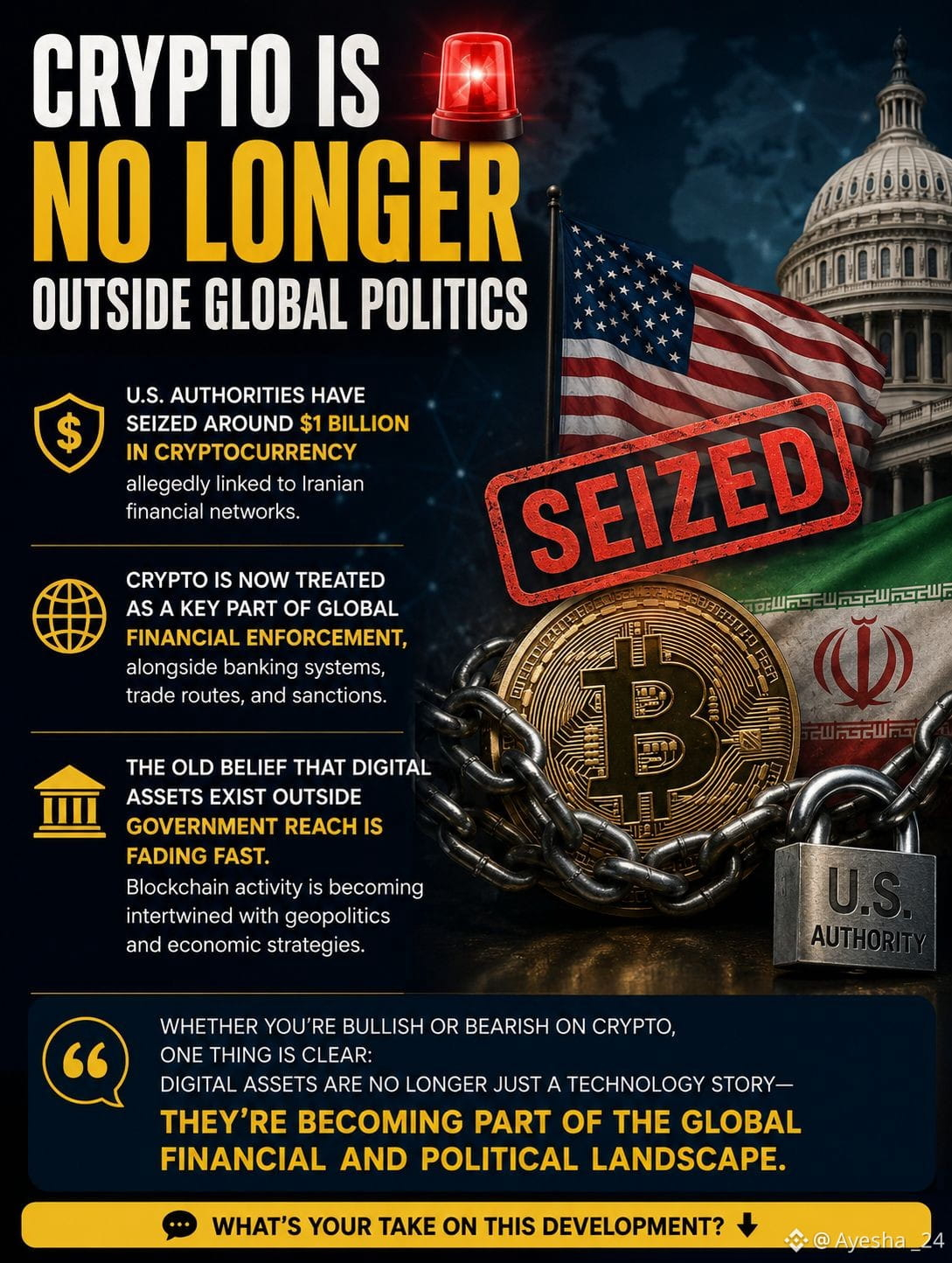
2
3
434
·
--
Bullish
Genius Terminal is redefining on-chain trading for me as a professional.
It's the first platform that delivers the speed and discretion of a CEX with complete self-custody.
Its core innovation is compliant privacy, which is crucial. The Gh0st privacy stack, launched on BNB Chain, breaks the link between my main wallet and trade execution, essentially "killing copy trading".
When I execute large positions, the Ghost Orders feature splits my orders across hundreds of temporary wallets, protecting me from front-running bots without sacrificing regulator auditability.
Beyond privacy, @GeniusOfficial unifies everything. I can trade spot, perpetuals, and pre-launch tokens across 9+ chains all from a single, non-custodial dashboard without bridging friction.
The interface is signature less and chain-invisible—no more pop-up approvals. It truly feels like an "on-chain Binance," especially with their AI-powered analytics helping me cut through market noise.
Backed by YZi Labs and with CZ as an advisor, it’s clear this is the future of DeFi execution.
@GeniusOfficial
$GENIUS
#genius
Genius Terminal is redefining on-chain trading for me as a professional.
It's the first platform that delivers the speed and discretion of a CEX with complete self-custody.
Its core innovation is compliant privacy, which is crucial. The Gh0st privacy stack, launched on BNB Chain, breaks the link between my main wallet and trade execution, essentially "killing copy trading".
When I execute large positions, the Ghost Orders feature splits my orders across hundreds of temporary wallets, protecting me from front-running bots without sacrificing regulator auditability.
Beyond privacy, @GeniusOfficial unifies everything. I can trade spot, perpetuals, and pre-launch tokens across 9+ chains all from a single, non-custodial dashboard without bridging friction.
The interface is signature less and chain-invisible—no more pop-up approvals. It truly feels like an "on-chain Binance," especially with their AI-powered analytics helping me cut through market noise.
Backed by YZi Labs and with CZ as an advisor, it’s clear this is the future of DeFi execution.
@GeniusOfficial
$GENIUS
#genius
It's the first platform that delivers the speed and discretion of a CEX with complete self-custody.
Its core innovation is compliant privacy, which is crucial. The Gh0st privacy stack, launched on BNB Chain, breaks the link between my main wallet and trade execution, essentially "killing copy trading".
When I execute large positions, the Ghost Orders feature splits my orders across hundreds of temporary wallets, protecting me from front-running bots without sacrificing regulator auditability.
Beyond privacy, @GeniusOfficial unifies everything. I can trade spot, perpetuals, and pre-launch tokens across 9+ chains all from a single, non-custodial dashboard without bridging friction.
The interface is signature less and chain-invisible—no more pop-up approvals. It truly feels like an "on-chain Binance," especially with their AI-powered analytics helping me cut through market noise.
Backed by YZi Labs and with CZ as an advisor, it’s clear this is the future of DeFi execution.
@GeniusOfficial
$GENIUS
#genius

5
3
171
Log in to explore more content
Join global crypto users on Binance Square
⚡️ Get latest and useful information about crypto.
💬 Trusted by the world’s largest crypto exchange.
👍 Discover real insights from verified creators.
Email / Phone number
Trending Topics
BinanceLaunchesBinanceIntelligence
641,031 views
3,913 Discussing
#binancelaunchesbinanceintelligence 🚨 WHAT IF THE NEXT BIG EXCHANGE BATTLE ISN’T ABOUT FEES? 👀
Binance just made a bigger move than adding another AI chatbot.
With Binance Intelligence, AI is moving deeper into the exchange — from understanding market data to building trading workflows. 🤖⚡
The real question is:
Who has the best liquidity?
Or who has the smartest AI layer?
If users can research, test ideas and manage trading workflows without switching between different tools, the exchange itself could become a financial assistant.
That could be a much bigger shift than it looks today.
If Binance Intelligence drives more users, more strategies and more trading activity, $BNB could become one of the tokens to watch. 👀
Is Binance building the future of AI-powered finance?
$BNB
#binancelaunchesbinanceintelligence #BinanceAI #CryptoAI #AITrading
Suleman Khan Haqqani
·4 Likes
·5.4k views
BTCFallsBelow$84K
8,244 views
44 Discussing
DubaiVARAIssuesReserveAssetAuditCircular
13 views
20 Discussing