

Asen森-美股Alpha
362 Posts

Asen森-美股Alpha
Report
Block User
ZeroOne联合主理人|2015进入Web3,至今仍在牛熊里学游泳🏊|交易加密和港美股,正在一个人加一群AI🤖构建一套流动性交易系统AI Liquidity OS。

BNB Holder
High-Frequency Trader
8.7 Years
13 Following
4.2K+ Followers
687 Liked
1 Badges
Posts
All
Quotes
PINNED

Article
From 'Market Dream Rate' to 'Market Actual Rate (Cash Flow)', revaluing ETH, BNB, and SOL from the perspective of technology-listed companies.Every time the market fluctuates, I always hear 'It has fallen again, this time it will go to 60,000' and 'It has risen again, this time it will break new highs.' When it rises, the bulls come; when it falls, the bears come. In too many stories of people shouting that the wolf is coming, we have all, without exception, successfully chased after gains and cut losses. The conclusion is that blindly fidgeting is worse than doing nothing at all.
Since October of last year, I believe many people, like me, are in a vague state of anxiety, as if we have missed one of the few historic opportunities in the Crypto industry during our lives. In just over three short months, we have witnessed the new high of BTC, the rise of Chinese Memes, and also witnessed the 'spectacle' of over 19.1 billion USD and 1.62 million people liquidated in a single day.
From 'Market Dream Rate' to 'Market Actual Rate (Cash Flow)', revaluing ETH, BNB, and SOL from the perspective of technology-listed companies.
Every time the market fluctuates, I always hear 'It has fallen again, this time it will go to 60,000' and 'It has risen again, this time it will break new highs.' When it rises, the bulls come; when it falls, the bears come. In too many stories of people shouting that the wolf is coming, we have all, without exception, successfully chased after gains and cut losses. The conclusion is that blindly fidgeting is worse than doing nothing at all.
Since October of last year, I believe many people, like me, are in a vague state of anxiety, as if we have missed one of the few historic opportunities in the Crypto industry during our lives. In just over three short months, we have witnessed the new high of BTC, the rise of Chinese Memes, and also witnessed the 'spectacle' of over 19.1 billion USD and 1.62 million people liquidated in a single day.
Since October of last year, I believe many people, like me, are in a vague state of anxiety, as if we have missed one of the few historic opportunities in the Crypto industry during our lives. In just over three short months, we have witnessed the new high of BTC, the rise of Chinese Memes, and also witnessed the 'spectacle' of over 19.1 billion USD and 1.62 million people liquidated in a single day.
6
1
26
715
Supply shocks first push up oil prices and inflation expectations, then raise long-end yields through expectations of rate hikes and term premium, and finally compress valuations of long-duration assets.
The US stock market is currently experiencing a mild de-risking, and the VIX at 17.2 has not yet entered panic.
In crypto, due to 24-hour continuous trading, higher leverage, and additional regulatory failures layered on top, it has borne the primary risk release.
Gold has not risen with geopolitics; instead, it has edged down slightly under high real interest rates and a strong US dollar. This suggests the market is pricing in “tighter monetary conditions caused by inflation,” rather than pure safe-haven demand.
Hong Kong stocks are only a weak confirmation end and have not yet shown an independent main theme.#美联储加息是否已成定局
Supply shocks first push up oil prices and inflation expectations, then raise long-end yields through expectations of rate hikes and term premium, and finally compress valuations of long-duration assets.
The US stock market is currently experiencing a mild de-risking, and the VIX at 17.2 has not yet entered panic.
In crypto, due to 24-hour continuous trading, higher leverage, and additional regulatory failures layered on top, it has borne the primary risk release.
Gold has not risen with geopolitics; instead, it has edged down slightly under high real interest rates and a strong US dollar. This suggests the market is pricing in “tighter monetary conditions caused by inflation,” rather than pure safe-haven demand.
Hong Kong stocks are only a weak confirmation end and have not yet shown an independent main theme.#美联储加息是否已成定局
The US stock market is currently experiencing a mild de-risking, and the VIX at 17.2 has not yet entered panic.
In crypto, due to 24-hour continuous trading, higher leverage, and additional regulatory failures layered on top, it has borne the primary risk release.
Gold has not risen with geopolitics; instead, it has edged down slightly under high real interest rates and a strong US dollar. This suggests the market is pricing in “tighter monetary conditions caused by inflation,” rather than pure safe-haven demand.
Hong Kong stocks are only a weak confirmation end and have not yet shown an independent main theme.#美联储加息是否已成定局
137
100x in one day! Is this BSC’s counterattack state?$BNB
100x in one day! Is this BSC’s counterattack state?$BNB
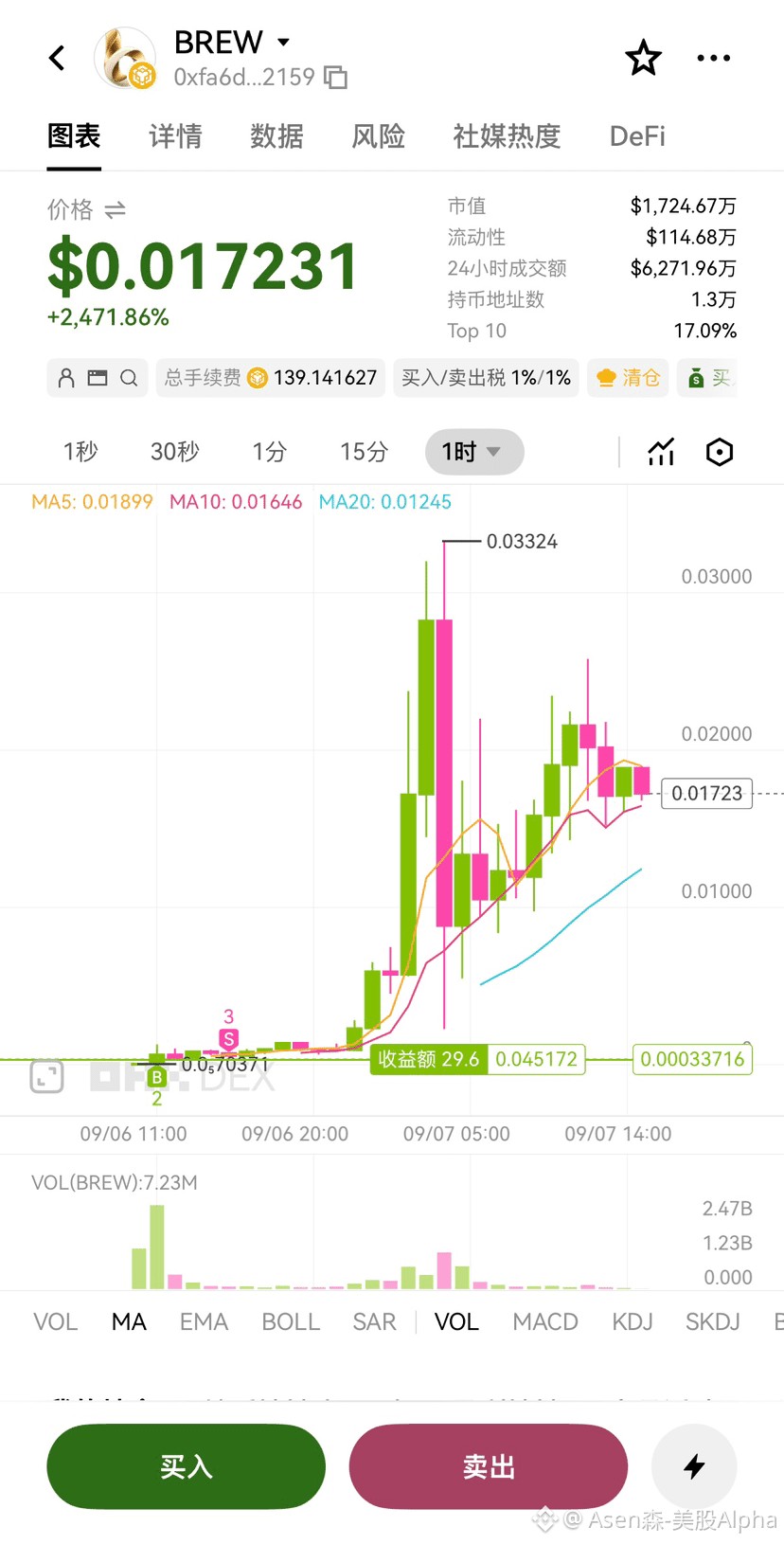
683
15 years ago invested $1,000; today it’s worth:
$BTC Bitcoin: $8,970,000
$NVDAB Nvidia: $735,000
$TSLA Tesla: $231,000
Apple: $29,000
S&P 500 Index: $8,400
Gold: $2,150
15 years ago invested $1,000; today it’s worth:
$BTC Bitcoin: $8,970,000
$NVDAB Nvidia: $735,000
$TSLA Tesla: $231,000
Apple: $29,000
S&P 500 Index: $8,400
Gold: $2,150
$BTC Bitcoin: $8,970,000
$NVDAB Nvidia: $735,000
$TSLA Tesla: $231,000
Apple: $29,000
S&P 500 Index: $8,400
Gold: $2,150
170
Short-term operational targets
SOL ecosystem: $SOL PYTH、JUP
ETH ecosystem: ETH、EIGEN、UNI、LINK
Privacy: $ZEC 、ZEN、DASH
Others: SUI、PEOPLE、WLFI、$TRUMP
Short-term operational targets
SOL ecosystem: $SOL PYTH、JUP
ETH ecosystem: ETH、EIGEN、UNI、LINK
Privacy: $ZEC 、ZEN、DASH
Others: SUI、PEOPLE、WLFI、$TRUMP
SOL ecosystem: $SOL PYTH、JUP
ETH ecosystem: ETH、EIGEN、UNI、LINK
Privacy: $ZEC 、ZEN、DASH
Others: SUI、PEOPLE、WLFI、$TRUMP
334
Now don’t short crypto. At least until the BTC structure is broken, don’t try to catch the top just because it has already run up!!!
Treasury pressure, the US dollar’s credibility, Trump’s stance on crypto, the crypto bill, and the midterm elections—all of these could form the backdrop for the mid-term narrative. But whether they can continue to drive the market depends on whether subsequent policy milestones, the US dollar, Treasury yields, gold, and crypto-related US stocks are confirmed in sync.
The more certain signals right now aren’t any single macro story, but rather the crypto market itself: price action, trading volume, and sentiment are starting to resonate together. BTC is strengthening, while ETH and SOL are rising even more—this suggests capital is beginning to rotate from BTC into mainstream assets. Overall risk appetite in US equities has also shown some recovery, but within tech stocks there is still dispersion. So at this stage, it looks more like crypto is getting the capital first, not that all risk assets are entering a full-blown bull market simultaneously.
The rise of $ZEC can also be understood as BTC’s trend spreading into the “scarcity, PoW, and privacy digital cash” narrative. But it isn’t the so-called “new BTC.” Because ZEC has a smaller market cap and less liquidity, when funds rotate the upside elasticity can be stronger—but the risk of drawdowns is also higher.
In terms of trading, don’t try to capture the entire long tail. After a sharp surge, a pullback is completely normal. The better strategy right now is to go long following the short-term trend, or wait for confirmation after the pullback. If BTC holds above $77,000, the bullish bias can still be maintained; if it gains volume and holds above $79,500, the trend may continue further. If it effectively breaks below $74,200, then it likely means this rally was just a crowded short-covering rebound—at that point you should stop longing and reassess. #比特币创2023年3月来最佳周表现
Now don’t short crypto. At least until the BTC structure is broken, don’t try to catch the top just because it has already run up!!!
Treasury pressure, the US dollar’s credibility, Trump’s stance on crypto, the crypto bill, and the midterm elections—all of these could form the backdrop for the mid-term narrative. But whether they can continue to drive the market depends on whether subsequent policy milestones, the US dollar, Treasury yields, gold, and crypto-related US stocks are confirmed in sync.
The more certain signals right now aren’t any single macro story, but rather the crypto market itself: price action, trading volume, and sentiment are starting to resonate together. BTC is strengthening, while ETH and SOL are rising even more—this suggests capital is beginning to rotate from BTC into mainstream assets. Overall risk appetite in US equities has also shown some recovery, but within tech stocks there is still dispersion. So at this stage, it looks more like crypto is getting the capital first, not that all risk assets are entering a full-blown bull market simultaneously.
The rise of $ZEC can also be understood as BTC’s trend spreading into the “scarcity, PoW, and privacy digital cash” narrative. But it isn’t the so-called “new BTC.” Because ZEC has a smaller market cap and less liquidity, when funds rotate the upside elasticity can be stronger—but the risk of drawdowns is also higher.
In terms of trading, don’t try to capture the entire long tail. After a sharp surge, a pullback is completely normal. The better strategy right now is to go long following the short-term trend, or wait for confirmation after the pullback. If BTC holds above $77,000, the bullish bias can still be maintained; if it gains volume and holds above $79,500, the trend may continue further. If it effectively breaks below $74,200, then it likely means this rally was just a crowded short-covering rebound—at that point you should stop longing and reassess. #比特币创2023年3月来最佳周表现
Treasury pressure, the US dollar’s credibility, Trump’s stance on crypto, the crypto bill, and the midterm elections—all of these could form the backdrop for the mid-term narrative. But whether they can continue to drive the market depends on whether subsequent policy milestones, the US dollar, Treasury yields, gold, and crypto-related US stocks are confirmed in sync.
The more certain signals right now aren’t any single macro story, but rather the crypto market itself: price action, trading volume, and sentiment are starting to resonate together. BTC is strengthening, while ETH and SOL are rising even more—this suggests capital is beginning to rotate from BTC into mainstream assets. Overall risk appetite in US equities has also shown some recovery, but within tech stocks there is still dispersion. So at this stage, it looks more like crypto is getting the capital first, not that all risk assets are entering a full-blown bull market simultaneously.
The rise of $ZEC can also be understood as BTC’s trend spreading into the “scarcity, PoW, and privacy digital cash” narrative. But it isn’t the so-called “new BTC.” Because ZEC has a smaller market cap and less liquidity, when funds rotate the upside elasticity can be stronger—but the risk of drawdowns is also higher.
In terms of trading, don’t try to capture the entire long tail. After a sharp surge, a pullback is completely normal. The better strategy right now is to go long following the short-term trend, or wait for confirmation after the pullback. If BTC holds above $77,000, the bullish bias can still be maintained; if it gains volume and holds above $79,500, the trend may continue further. If it effectively breaks below $74,200, then it likely means this rally was just a crowded short-covering rebound—at that point you should stop longing and reassess. #比特币创2023年3月来最佳周表现
2
4
907
$OPENAI $ANTHROPIC This wave of U.S. AI stocks is a double-edged sword: it both “drains” capital and lifts valuations, requiring both left and right brain coordination.
Buy priority: OpenAI first, Anthropic second.
Upside and flexibility: Anthropic has greater potential. Its enterprise-AI commercialization growth and IPO sentiment catalysts are more concentrated, making it easier to run out a ~20% level move in the short term.
Current price odds: OpenAI is better. At $1,267, it corresponds to a $1.234 trillion valuation, which is already cheaper than Anthropic—leaving more room for a re-rating toward the $1.5T to $1.8T range.
$OPENAI $ANTHROPIC This wave of U.S. AI stocks is a double-edged sword: it both “drains” capital and lifts valuations, requiring both left and right brain coordination.
Buy priority: OpenAI first, Anthropic second.
Upside and flexibility: Anthropic has greater potential. Its enterprise-AI commercialization growth and IPO sentiment catalysts are more concentrated, making it easier to run out a ~20% level move in the short term.
Current price odds: OpenAI is better. At $1,267, it corresponds to a $1.234 trillion valuation, which is already cheaper than Anthropic—leaving more room for a re-rating toward the $1.5T to $1.8T range.
Buy priority: OpenAI first, Anthropic second.
Upside and flexibility: Anthropic has greater potential. Its enterprise-AI commercialization growth and IPO sentiment catalysts are more concentrated, making it easier to run out a ~20% level move in the short term.
Current price odds: OpenAI is better. At $1,267, it corresponds to a $1.234 trillion valuation, which is already cheaper than Anthropic—leaving more room for a re-rating toward the $1.5T to $1.8T range.
292
I’m speechless at this order I placed. It would’ve been better if they checked it more carefully.$ANTHROPIC
I’m speechless at this order I placed. It would’ve been better if they checked it more carefully.$ANTHROPIC
2
1
408
$CATI within the same minute: 20% quick buys and sells, 😂 60% take-profit, 40% gets stopped out—this is exactly being targeted.
$CATI within the same minute: 20% quick buys and sells, 😂 60% take-profit, 40% gets stopped out—this is exactly being targeted.
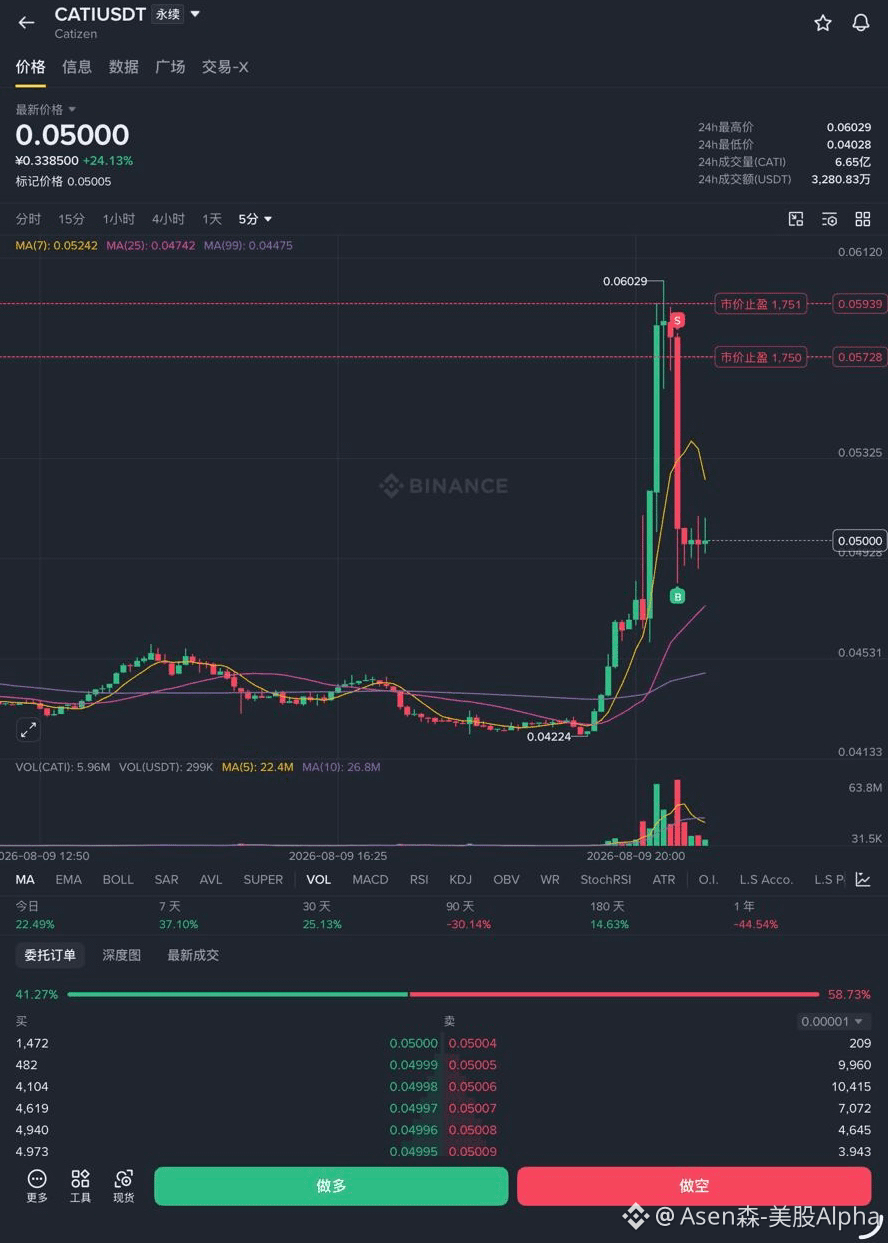
349
$TUT This weekend’s fake-market action is pretty lively—another 12R, but unfortunately the live trade was blocked by the security gate.
$TUT This weekend’s fake-market action is pretty lively—another 12R, but unfortunately the live trade was blocked by the security gate.
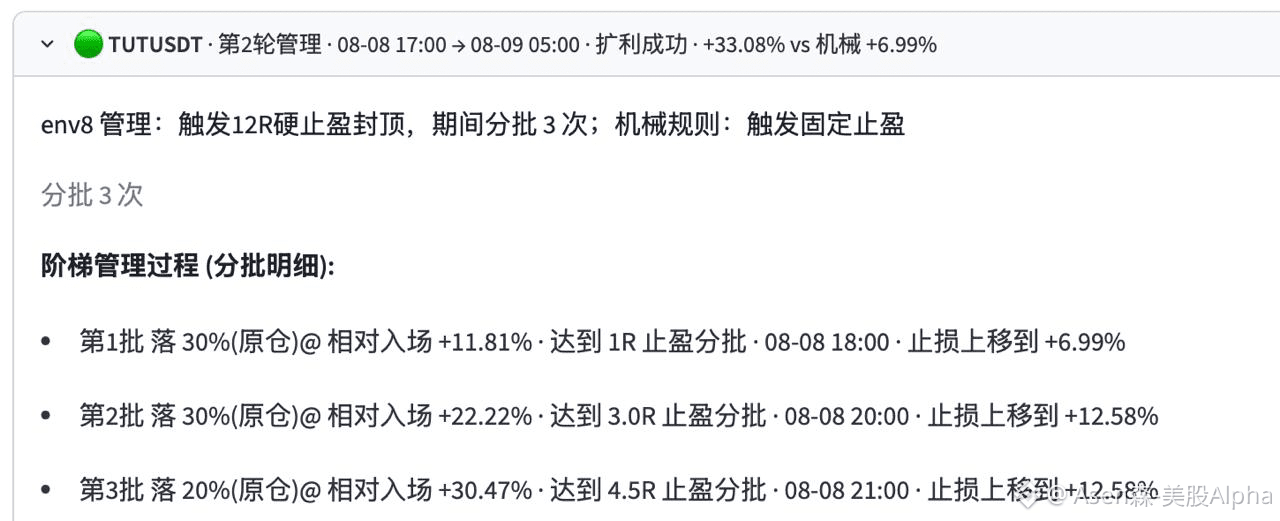
440
$AAPL Now it is suitable to hedge with the semiconductor sector, and it is also suitable for a long-term hold. If the physical AI expectations are released, or if the probability of becoming the global largest market-cap company increases #美股收盘涨跌不一英伟达提振道指
$AAPL Now it is suitable to hedge with the semiconductor sector, and it is also suitable for a long-term hold. If the physical AI expectations are released, or if the probability of becoming the global largest market-cap company increases #美股收盘涨跌不一英伟达提振道指
303
$LITE How many months should optical communication be enough to speculate before you can’t hold on to it 😂
$LITE How many months should optical communication be enough to speculate before you can’t hold on to it 😂
2
286
More important than whether bulls or bears: This week’s US stock trading strategy—view the current market in three layers:
1. Bottom layer: The US stock market has entered a phase of high valuation, high yield, followed by highly differentiated performance, high sensitivity, and high volatility.
2. Middle layer: Market confidence is insufficient. People hesitate, doubt, and therefore don’t dare to launch a full attack—but they also aren’t willing to leave the core main theme.
3. Surface layer: Macroeconomic and external information has an increasing impact on market fluctuations. Especially now facing:
Japanese yen / carry trade
US Treasury yields
US dollar
AI earnings reports and regulation
geopolitics and commodities
crypto leveraged funds
In a low-confidence phase, the market becomes overly sensitive to external variables, so prices naturally show high volatility.
This week’s core strategy: Don’t chase upward moves. Macro and external variables determine direction; internal dissemination determines win rate.
Rebound quality is not high, and the breadth of the rally is weak—so take shorts on the rebound.
Typical signals: The index rises but SOXX/NVDA/QQQ don’t follow; HYG is not strong; BTC/ETH are weak; VIX does not fall.
If there are no new macro/external bearish catalysts, then when a pullback is met with support, go long.
Typical signals: yields do not spike higher, the dollar does not sharply strengthen, USDJPY no longer fluctuates dramatically, HYG stays stable, and the index’s pullback does not break key support.#美伊谈判将启动
More important than whether bulls or bears: This week’s US stock trading strategy—view the current market in three layers:
1. Bottom layer: The US stock market has entered a phase of high valuation, high yield, followed by highly differentiated performance, high sensitivity, and high volatility.
2. Middle layer: Market confidence is insufficient. People hesitate, doubt, and therefore don’t dare to launch a full attack—but they also aren’t willing to leave the core main theme.
3. Surface layer: Macroeconomic and external information has an increasing impact on market fluctuations. Especially now facing:
Japanese yen / carry trade
US Treasury yields
US dollar
AI earnings reports and regulation
geopolitics and commodities
crypto leveraged funds
In a low-confidence phase, the market becomes overly sensitive to external variables, so prices naturally show high volatility.
This week’s core strategy: Don’t chase upward moves. Macro and external variables determine direction; internal dissemination determines win rate.
Rebound quality is not high, and the breadth of the rally is weak—so take shorts on the rebound.
Typical signals: The index rises but SOXX/NVDA/QQQ don’t follow; HYG is not strong; BTC/ETH are weak; VIX does not fall.
If there are no new macro/external bearish catalysts, then when a pullback is met with support, go long.
Typical signals: yields do not spike higher, the dollar does not sharply strengthen, USDJPY no longer fluctuates dramatically, HYG stays stable, and the index’s pullback does not break key support.#美伊谈判将启动
1. Bottom layer: The US stock market has entered a phase of high valuation, high yield, followed by highly differentiated performance, high sensitivity, and high volatility.
2. Middle layer: Market confidence is insufficient. People hesitate, doubt, and therefore don’t dare to launch a full attack—but they also aren’t willing to leave the core main theme.
3. Surface layer: Macroeconomic and external information has an increasing impact on market fluctuations. Especially now facing:
Japanese yen / carry trade
US Treasury yields
US dollar
AI earnings reports and regulation
geopolitics and commodities
crypto leveraged funds
In a low-confidence phase, the market becomes overly sensitive to external variables, so prices naturally show high volatility.
This week’s core strategy: Don’t chase upward moves. Macro and external variables determine direction; internal dissemination determines win rate.
Rebound quality is not high, and the breadth of the rally is weak—so take shorts on the rebound.
Typical signals: The index rises but SOXX/NVDA/QQQ don’t follow; HYG is not strong; BTC/ETH are weak; VIX does not fall.
If there are no new macro/external bearish catalysts, then when a pullback is met with support, go long.
Typical signals: yields do not spike higher, the dollar does not sharply strengthen, USDJPY no longer fluctuates dramatically, HYG stays stable, and the index’s pullback does not break key support.#美伊谈判将启动
3
178
US stocks $SNDK $SKHY $MU fell again?!
Let me talk about my analysis after looking at the US stock market.
I see this decline as profit-taking after the AI sector’s oversold, rapid rebound (the biggest drop comes from the rebound storage segment—i.e., the most severe retracement).
On top of that, there’s the “Black Friday” position adjustment, the conflict between Iran and the US, and the lure created by rising predictions of interest-rate hikes due to internal disagreements within the Federal Reserve.
Finally, the psychological shadow from being oversold hasn’t been erased, so the market is unusually sensitive.
My main judgment: in the short term, compared with a direct trend reversal, the probability of continuing to slide is still there—but the odds of first consolidating and bottoming out, or staging a rebound, have clearly increased. Watch the key levels for a confirmation of the sell-off ending. #苹果芯片短缺拖累销售预期
US stocks $SNDK $SKHY $MU fell again?!
Let me talk about my analysis after looking at the US stock market.
I see this decline as profit-taking after the AI sector’s oversold, rapid rebound (the biggest drop comes from the rebound storage segment—i.e., the most severe retracement).
On top of that, there’s the “Black Friday” position adjustment, the conflict between Iran and the US, and the lure created by rising predictions of interest-rate hikes due to internal disagreements within the Federal Reserve.
Finally, the psychological shadow from being oversold hasn’t been erased, so the market is unusually sensitive.
My main judgment: in the short term, compared with a direct trend reversal, the probability of continuing to slide is still there—but the odds of first consolidating and bottoming out, or staging a rebound, have clearly increased. Watch the key levels for a confirmation of the sell-off ending. #苹果芯片短缺拖累销售预期
Let me talk about my analysis after looking at the US stock market.
I see this decline as profit-taking after the AI sector’s oversold, rapid rebound (the biggest drop comes from the rebound storage segment—i.e., the most severe retracement).
On top of that, there’s the “Black Friday” position adjustment, the conflict between Iran and the US, and the lure created by rising predictions of interest-rate hikes due to internal disagreements within the Federal Reserve.
Finally, the psychological shadow from being oversold hasn’t been erased, so the market is unusually sensitive.
My main judgment: in the short term, compared with a direct trend reversal, the probability of continuing to slide is still there—but the odds of first consolidating and bottoming out, or staging a rebound, have clearly increased. Watch the key levels for a confirmation of the sell-off ending. #苹果芯片短缺拖累销售预期
288
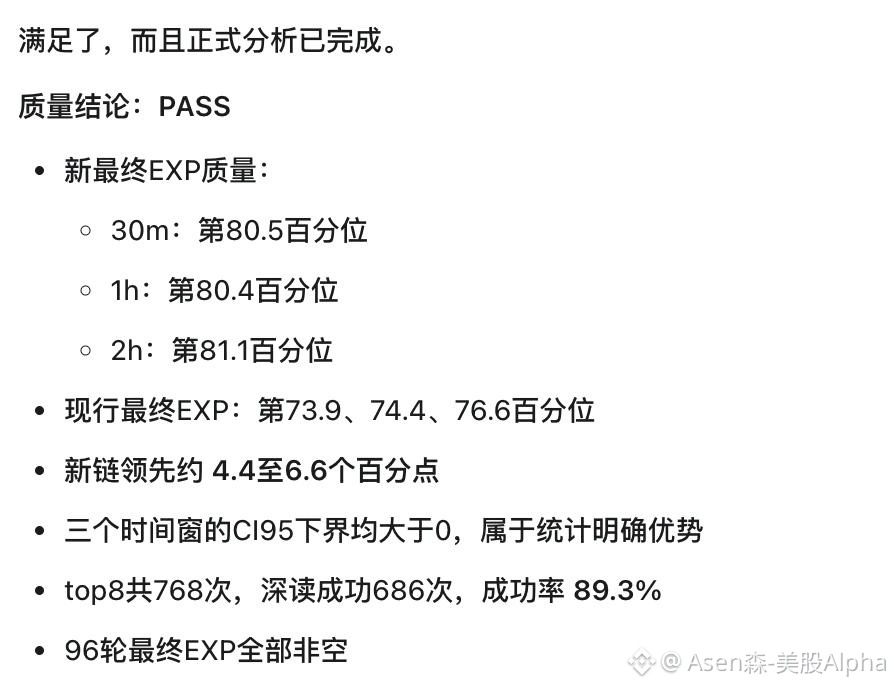
Once again, boost by 4.4-6.6 percentage points!
The end of trading is mathematics—good luck may be good for a while, and bad luck may be bad for a day, but only mathematics never lies! #美股开盘走高存储股反弹
Once again, boost by 4.4-6.6 percentage points!
The end of trading is mathematics—good luck may be good for a while, and bad luck may be bad for a day, but only mathematics never lies! #美股开盘走高存储股反弹
The end of trading is mathematics—good luck may be good for a while, and bad luck may be bad for a day, but only mathematics never lies! #美股开盘走高存储股反弹
1
1
131
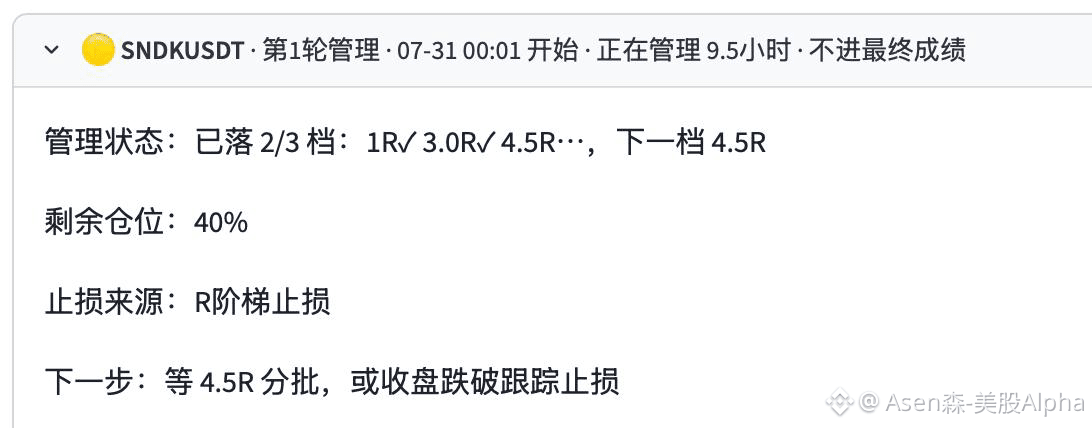
$SNDK Machines really are, with one’s ears not hearing the affairs outside the window.
$SNDK Machines really are, with one’s ears not hearing the affairs outside the window.
2
360
There’s no logic—Hong Kong stocks always just follow.$ZHIPU
There’s no logic—Hong Kong stocks always just follow.$ZHIPU
2
508
I saw someone shouting to “pick the bottom” in the plaza at $SKHYNIX $SNDK $MU — but I’m just afraid.
On the one hand, it shows there are quite a lot of people trapped in losses;
on the other hand, from a small perspective we can see a bigger picture: this round of deleveraging, driven by macro pressure and concerns about AI capital expenditures, hasn’t run its course yet.
So in terms of operations, it’s still mainly about shorting the bounce, and don’t let your position size affect your judgment.#Meta财报不及预期股价跌10%
I saw someone shouting to “pick the bottom” in the plaza at $SKHYNIX $SNDK $MU — but I’m just afraid.
On the one hand, it shows there are quite a lot of people trapped in losses;
on the other hand, from a small perspective we can see a bigger picture: this round of deleveraging, driven by macro pressure and concerns about AI capital expenditures, hasn’t run its course yet.
So in terms of operations, it’s still mainly about shorting the bounce, and don’t let your position size affect your judgment.#Meta财报不及预期股价跌10%
On the one hand, it shows there are quite a lot of people trapped in losses;
on the other hand, from a small perspective we can see a bigger picture: this round of deleveraging, driven by macro pressure and concerns about AI capital expenditures, hasn’t run its course yet.
So in terms of operations, it’s still mainly about shorting the bounce, and don’t let your position size affect your judgment.#Meta财报不及预期股价跌10%
259
$MU 再测780,甚至刺破 770 的概率上升。
A recent plunge in AI stocks has triggered margin pressure, with Wall Street banks requiring hedge funds to add collateral.
The key point isn’t that AI stocks are falling—it’s that AI trading has moved from an earnings/valuation selloff into a leverage-deleveraging / passive selling phase.
This isn’t a normal pullback; the leverage chain has been triggered.
The logic chain is: AI stocks decline
fund NAV falls, volatility rises
the prime broker increases margin / demands additional collateral
funds are forced to reduce leverage
sell the most crowded, most profitable, and most liquid positions
AI / semiconductors continue to fall
trigger even more margin pressure
This is the typical de-grossing / deleveraging cascade.
So in the short term, fundamentals—good or bad—will temporarily stop mattering.
SK hynix’s earnings are strong, yet it’s still falling for this reason: the market isn’t re-pricing performance right now; it’s managing position risk.#韩国KOSPI暴跌11%因中国DUV威胁
$MU 再测780,甚至刺破 770 的概率上升。
A recent plunge in AI stocks has triggered margin pressure, with Wall Street banks requiring hedge funds to add collateral.
The key point isn’t that AI stocks are falling—it’s that AI trading has moved from an earnings/valuation selloff into a leverage-deleveraging / passive selling phase.
This isn’t a normal pullback; the leverage chain has been triggered.
The logic chain is: AI stocks decline
fund NAV falls, volatility rises
the prime broker increases margin / demands additional collateral
funds are forced to reduce leverage
sell the most crowded, most profitable, and most liquid positions
AI / semiconductors continue to fall
trigger even more margin pressure
This is the typical de-grossing / deleveraging cascade.
So in the short term, fundamentals—good or bad—will temporarily stop mattering.
SK hynix’s earnings are strong, yet it’s still falling for this reason: the market isn’t re-pricing performance right now; it’s managing position risk.#韩国KOSPI暴跌11%因中国DUV威胁
A recent plunge in AI stocks has triggered margin pressure, with Wall Street banks requiring hedge funds to add collateral.
The key point isn’t that AI stocks are falling—it’s that AI trading has moved from an earnings/valuation selloff into a leverage-deleveraging / passive selling phase.
This isn’t a normal pullback; the leverage chain has been triggered.
The logic chain is: AI stocks decline
fund NAV falls, volatility rises
the prime broker increases margin / demands additional collateral
funds are forced to reduce leverage
sell the most crowded, most profitable, and most liquid positions
AI / semiconductors continue to fall
trigger even more margin pressure
This is the typical de-grossing / deleveraging cascade.
So in the short term, fundamentals—good or bad—will temporarily stop mattering.
SK hynix’s earnings are strong, yet it’s still falling for this reason: the market isn’t re-pricing performance right now; it’s managing position risk.#韩国KOSPI暴跌11%因中国DUV威胁
1
390
Market is weak; today we have 6 orders, including two 12R. $RE $BANK
Market is weak; today we have 6 orders, including two 12R. $RE $BANK



1
1.7k
Log in to explore more content
Join global crypto users on Binance Square
⚡️ Get latest and useful information about crypto.
💬 Trusted by the world’s largest crypto exchange.
👍 Discover real insights from verified creators.
Email / Phone number
Trending Topics
BNBSurpasses$790
20,225 views
149 Discussing
$BNB strategic long plan -> FOCUS NOW
BNB has created 2 strong lows after taking out internal liquidity
I'm expecting a move towards swing high $815-$830 and looking for a long on a retest of the green box
#BNBSurpasses$790 #bnb
Ghost Writer
·6 Likes
·11.5k views
ZamaRises15.99%ToIntradayHigh$0.09
18,342 views
106 Discussing
BitcoinSpotETFsDraw$6.34BInflowsInQ3
6,218 views
92 Discussing