

Magnus_eth
9 Posts

Magnus_eth
Report
Block User
Verifying my Binance Square account for YZi Labs Amplify via EchoHunt: EH-DER8FH
Open Trade
Occasional Trader
4.5 Years
39 Following
2 Followers
7 Liked
Posts
Portfolio
·
--
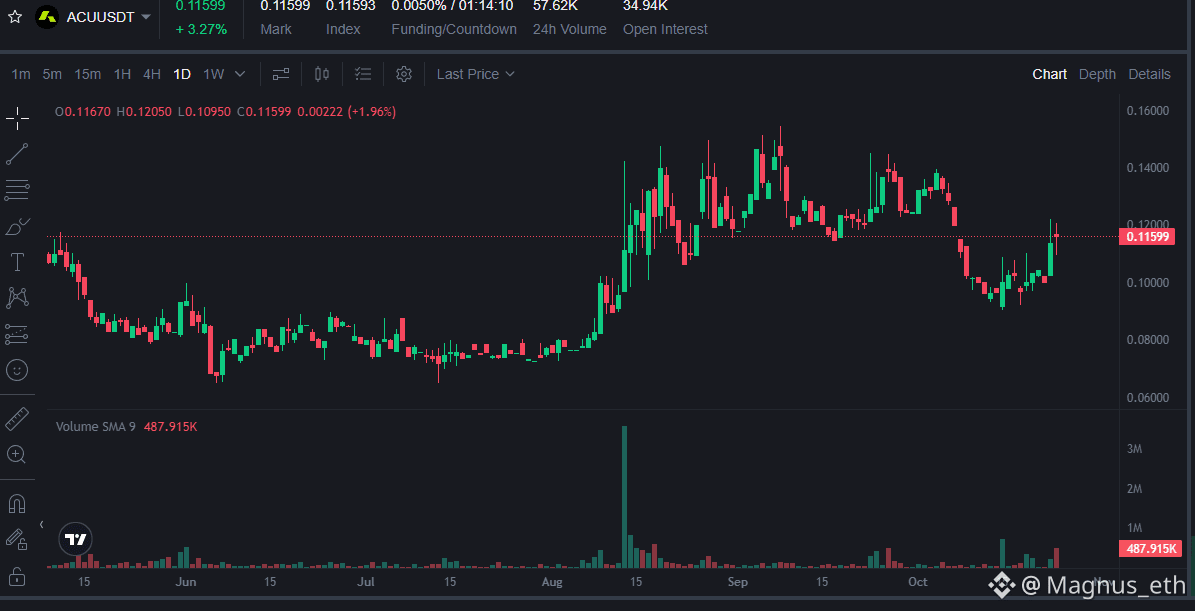
$ACU is showing signs of a rebound, but confirmation matters.
After its sharp breakout in August and consolidation around the $0.12–$0.15 range, $ACU has pulled back significantly. The latest chart shows price recovering to around $0.11599, with a fresh move upward that traders will want to watch closely.
Here are the key levels on my radar:
Current price: $0.11599
Resistance: $0.12, followed by the $0.13–$0.14 zone
Support: $0.11, then $0.10
If price can reclaim and hold above $0.12, momentum may strengthen. If it gets rejected, a retest of lower support levels remains possible.
I’m watching volume and price action before drawing any firm conclusions. A rebound is a signal to observe, not proof that the downtrend has ended.
Explore Acurast with my referral code: 8hi98j
$ACU is showing signs of a rebound, but confirmation matters.
After its sharp breakout in August and consolidation around the $0.12–$0.15 range, $ACU has pulled back significantly. The latest chart shows price recovering to around $0.11599, with a fresh move upward that traders will want to watch closely.
Here are the key levels on my radar:
Current price: $0.11599
Resistance: $0.12, followed by the $0.13–$0.14 zone
Support: $0.11, then $0.10
If price can reclaim and hold above $0.12, momentum may strengthen. If it gets rejected, a retest of lower support levels remains possible.
I’m watching volume and price action before drawing any firm conclusions. A rebound is a signal to observe, not proof that the downtrend has ended.
Explore Acurast with my referral code: 8hi98j
After its sharp breakout in August and consolidation around the $0.12–$0.15 range, $ACU has pulled back significantly. The latest chart shows price recovering to around $0.11599, with a fresh move upward that traders will want to watch closely.
Here are the key levels on my radar:
Current price: $0.11599
Resistance: $0.12, followed by the $0.13–$0.14 zone
Support: $0.11, then $0.10
If price can reclaim and hold above $0.12, momentum may strengthen. If it gets rejected, a retest of lower support levels remains possible.
I’m watching volume and price action before drawing any firm conclusions. A rebound is a signal to observe, not proof that the downtrend has ended.
Explore Acurast with my referral code: 8hi98j
1
·
--
Bullish
What if AI didn’t need a data center to make a decision?
Most AI conversations focus on larger models, more GPUs, and bigger infrastructure. But Acurast is exploring a different question: how much useful AI work can run on phones people already own?
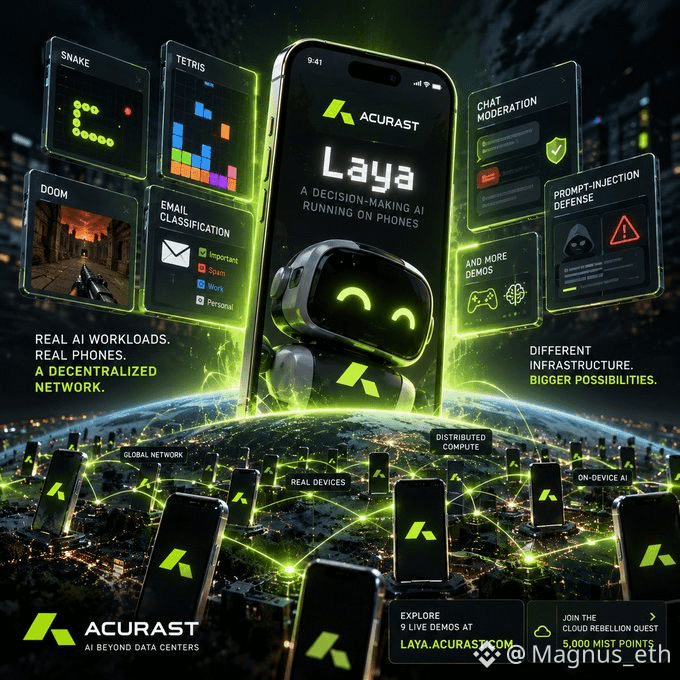
Meet Laya, a decision-making model running on Acurast’s decentralized smartphone network.
Its nine live demos go beyond gaming. Snake, Tetris, and Doom show how AI can choose actions, while email classification, chat moderation, and prompt-injection screening point toward practical software applications.
That distinction matters. Not every AI task needs a massive model generating paragraphs. Some tasks need fast, structured decisions and those may be suitable for smaller models running on everyday hardware.
Acurast’s approach connects these workloads to a distributed compute network rather than relying exclusively on centralized infrastructure. Of course, real-world adoption will still depend on accuracy, latency, reliability, and cost.
I think the interesting question isn’t whether a phone can run AI. It’s which useful AI workloads can a network of phones handle consistently at scale?
There’s also a Cloud Rebellion quest offering 5,000 MIST points for sharing your experience on X and submitting the post URL. MIST are campaign points, not the ACU token.
$ACU
What if AI didn’t need a data center to make a decision?
Most AI conversations focus on larger models, more GPUs, and bigger infrastructure. But Acurast is exploring a different question: how much useful AI work can run on phones people already own?
Meet Laya, a decision-making model running on Acurast’s decentralized smartphone network.
Its nine live demos go beyond gaming. Snake, Tetris, and Doom show how AI can choose actions, while email classification, chat moderation, and prompt-injection screening point toward practical software applications.
That distinction matters. Not every AI task needs a massive model generating paragraphs. Some tasks need fast, structured decisions and those may be suitable for smaller models running on everyday hardware.
Acurast’s approach connects these workloads to a distributed compute network rather than relying exclusively on centralized infrastructure. Of course, real-world adoption will still depend on accuracy, latency, reliability, and cost.
I think the interesting question isn’t whether a phone can run AI. It’s which useful AI workloads can a network of phones handle consistently at scale?
There’s also a Cloud Rebellion quest offering 5,000 MIST points for sharing your experience on X and submitting the post URL. MIST are campaign points, not the ACU token.
$ACU
Most AI conversations focus on larger models, more GPUs, and bigger infrastructure. But Acurast is exploring a different question: how much useful AI work can run on phones people already own?
Meet Laya, a decision-making model running on Acurast’s decentralized smartphone network.
Its nine live demos go beyond gaming. Snake, Tetris, and Doom show how AI can choose actions, while email classification, chat moderation, and prompt-injection screening point toward practical software applications.
That distinction matters. Not every AI task needs a massive model generating paragraphs. Some tasks need fast, structured decisions and those may be suitable for smaller models running on everyday hardware.
Acurast’s approach connects these workloads to a distributed compute network rather than relying exclusively on centralized infrastructure. Of course, real-world adoption will still depend on accuracy, latency, reliability, and cost.
I think the interesting question isn’t whether a phone can run AI. It’s which useful AI workloads can a network of phones handle consistently at scale?
There’s also a Cloud Rebellion quest offering 5,000 MIST points for sharing your experience on X and submitting the post URL. MIST are campaign points, not the ACU token.
$ACU
·
--
What if the next generation of AI infrastructure wasn’t built entirely on data centers?
That’s the idea behind Acurast
Instead of relying solely on centralized cloud providers, Acurast turns smartphones into a decentralized compute network. Its hardware-backed Trusted Execution Environments (TEEs) help verify execution while protecting sensitive workloads.
Why does this matter?
→ AI applications can access alternative compute infrastructure.
→ Developers can explore confidential AI inference and data processing.
→ People can contribute computing resources using compatible smartphones.
What interests me most is the combination of decentralization and verifiability. Distributed compute is useful, but knowing where and how workloads execute matters just as much.
The next AI infrastructure race may not be only about bigger models. It could also be about who provides the compute and how much users can trust it.
$ACU Watching for the next move.
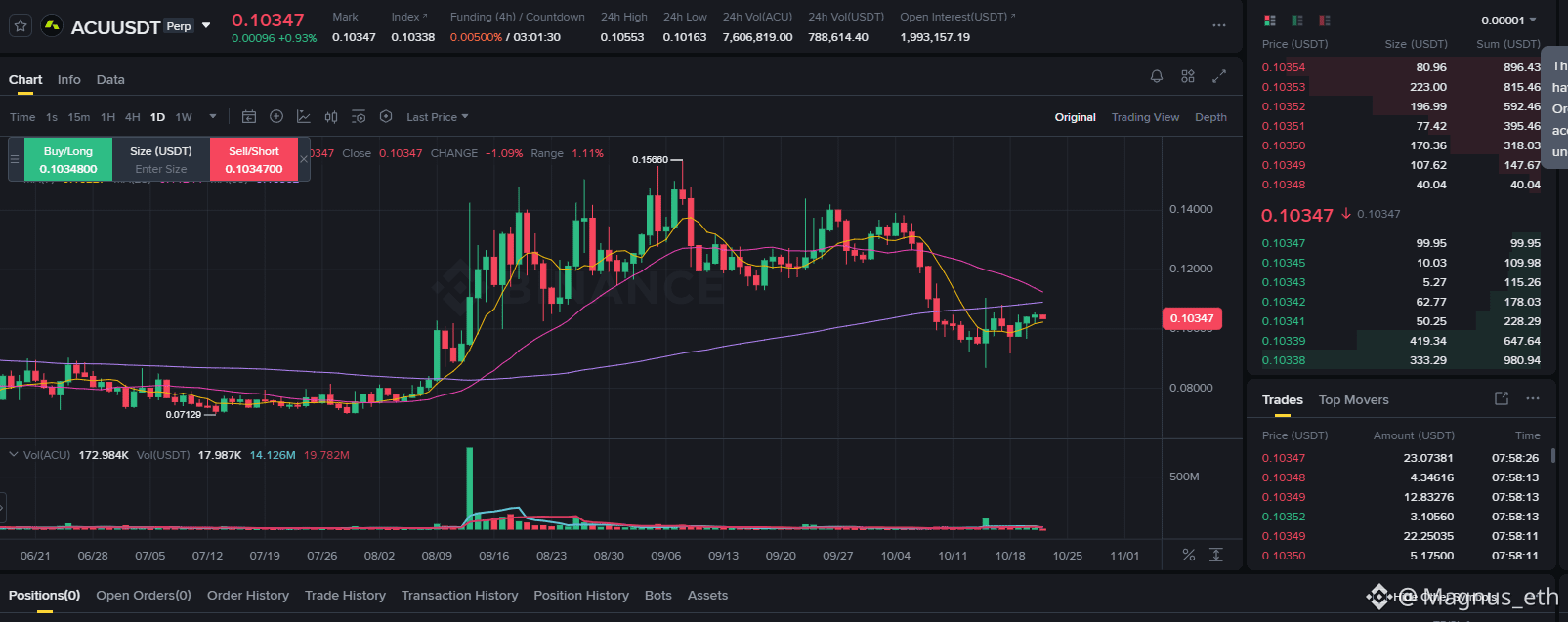
After a strong breakout in August, $ACU pulled back from its September highs and recently dropped toward the $0.10 area. Price is now showing a modest rebound, but confirmation is still needed.
Key levels from my chart:
• Current price: $0.10347
• Resistance: $0.1055, then $0.11–$0.12
• Support: $0.1000, then $0.0968
My trade plan:
Entry zone: $0.0985–$0.1000
TP: $0.1030
SL: $0.0968
Note: Price is already above the planned TP, so this setup would need reassessment rather than a fresh entry at current levels. These are my technical levels, not a guaranteed outcome.
Explore Acurast with my referral code: 8hi98j
What if the next generation of AI infrastructure wasn’t built entirely on data centers?
That’s the idea behind Acurast
Instead of relying solely on centralized cloud providers, Acurast turns smartphones into a decentralized compute network. Its hardware-backed Trusted Execution Environments (TEEs) help verify execution while protecting sensitive workloads.
Why does this matter?
→ AI applications can access alternative compute infrastructure.
→ Developers can explore confidential AI inference and data processing.
→ People can contribute computing resources using compatible smartphones.
What interests me most is the combination of decentralization and verifiability. Distributed compute is useful, but knowing where and how workloads execute matters just as much.
The next AI infrastructure race may not be only about bigger models. It could also be about who provides the compute and how much users can trust it.
$ACU Watching for the next move.
After a strong breakout in August, $ACU pulled back from its September highs and recently dropped toward the $0.10 area. Price is now showing a modest rebound, but confirmation is still needed.
Key levels from my chart:
• Current price: $0.10347
• Resistance: $0.1055, then $0.11–$0.12
• Support: $0.1000, then $0.0968
My trade plan:
Entry zone: $0.0985–$0.1000
TP: $0.1030
SL: $0.0968
Note: Price is already above the planned TP, so this setup would need reassessment rather than a fresh entry at current levels. These are my technical levels, not a guaranteed outcome.
Explore Acurast with my referral code: 8hi98j
That’s the idea behind Acurast
Instead of relying solely on centralized cloud providers, Acurast turns smartphones into a decentralized compute network. Its hardware-backed Trusted Execution Environments (TEEs) help verify execution while protecting sensitive workloads.
Why does this matter?
→ AI applications can access alternative compute infrastructure.
→ Developers can explore confidential AI inference and data processing.
→ People can contribute computing resources using compatible smartphones.
What interests me most is the combination of decentralization and verifiability. Distributed compute is useful, but knowing where and how workloads execute matters just as much.
The next AI infrastructure race may not be only about bigger models. It could also be about who provides the compute and how much users can trust it.
$ACU Watching for the next move.
After a strong breakout in August, $ACU pulled back from its September highs and recently dropped toward the $0.10 area. Price is now showing a modest rebound, but confirmation is still needed.
Key levels from my chart:
• Current price: $0.10347
• Resistance: $0.1055, then $0.11–$0.12
• Support: $0.1000, then $0.0968
My trade plan:
Entry zone: $0.0985–$0.1000
TP: $0.1030
SL: $0.0968
Note: Price is already above the planned TP, so this setup would need reassessment rather than a fresh entry at current levels. These are my technical levels, not a guaranteed outcome.
Explore Acurast with my referral code: 8hi98j
2
·
--
Verifying my Binance Square account for YZi Labs Amplify via EchoHunt: EH-DER8FH
Verifying my Binance Square account for YZi Labs Amplify via EchoHunt: EH-DER8FH
1
1
12
·
--
Bitcoin has always been the most trusted store of value, but using BTC in DeFi has often meant sacrificing self-custody through bridges, wrappers, or custodians.
That's why Trustless Bitcoin Vaults (TBV) from @babylonlabs_io stand out.
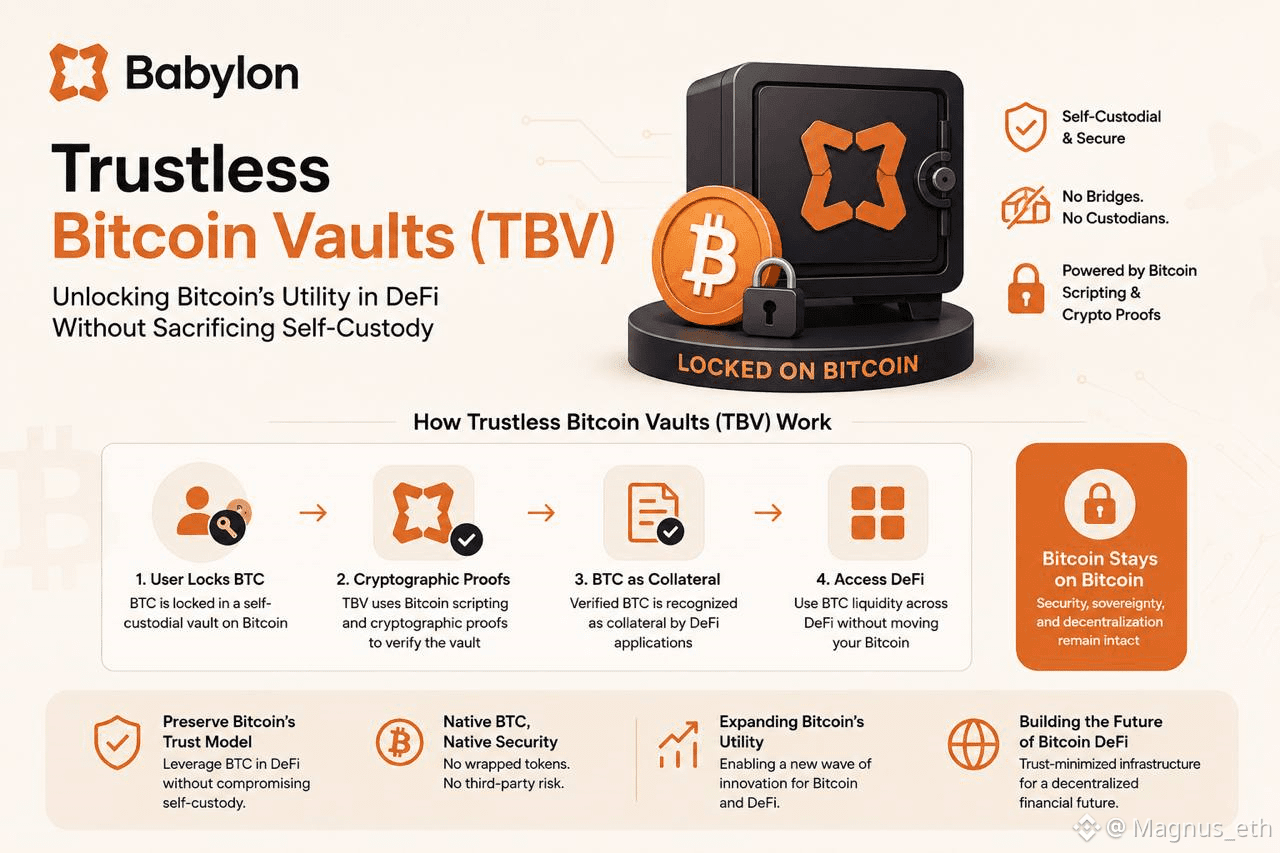
Instead of moving BTC off Bitcoin, TBV allows native BTC to remain locked on the Bitcoin network in a self-custodial vault while being used as collateral for DeFi applications. The protocol relies on cryptographic proofs and Bitcoin's scripting capabilities rather than trusted intermediaries, reducing the need for custodial bridges or wrapped assets.
For me, this shifts the conversation from "How do we bridge Bitcoin?" to "How do we preserve Bitcoin's trust model while expanding its utility?"
If Bitcoin is going to play a larger role in DeFi, trust-minimized infrastructure like TBV is an important direction to watch.
@babylonlabs_io $BABY #baby
Bitcoin has always been the most trusted store of value, but using BTC in DeFi has often meant sacrificing self-custody through bridges, wrappers, or custodians.
That's why Trustless Bitcoin Vaults (TBV) from @BabylonLabs_io stand out.
Instead of moving BTC off Bitcoin, TBV allows native BTC to remain locked on the Bitcoin network in a self-custodial vault while being used as collateral for DeFi applications. The protocol relies on cryptographic proofs and Bitcoin's scripting capabilities rather than trusted intermediaries, reducing the need for custodial bridges or wrapped assets.
For me, this shifts the conversation from "How do we bridge Bitcoin?" to "How do we preserve Bitcoin's trust model while expanding its utility?"
If Bitcoin is going to play a larger role in DeFi, trust-minimized infrastructure like TBV is an important direction to watch.
@BabylonLabs_io $BABY #baby
That's why Trustless Bitcoin Vaults (TBV) from @BabylonLabs_io stand out.
Instead of moving BTC off Bitcoin, TBV allows native BTC to remain locked on the Bitcoin network in a self-custodial vault while being used as collateral for DeFi applications. The protocol relies on cryptographic proofs and Bitcoin's scripting capabilities rather than trusted intermediaries, reducing the need for custodial bridges or wrapped assets.
For me, this shifts the conversation from "How do we bridge Bitcoin?" to "How do we preserve Bitcoin's trust model while expanding its utility?"
If Bitcoin is going to play a larger role in DeFi, trust-minimized infrastructure like TBV is an important direction to watch.
@BabylonLabs_io $BABY #baby
1
51
·
--
Bearish
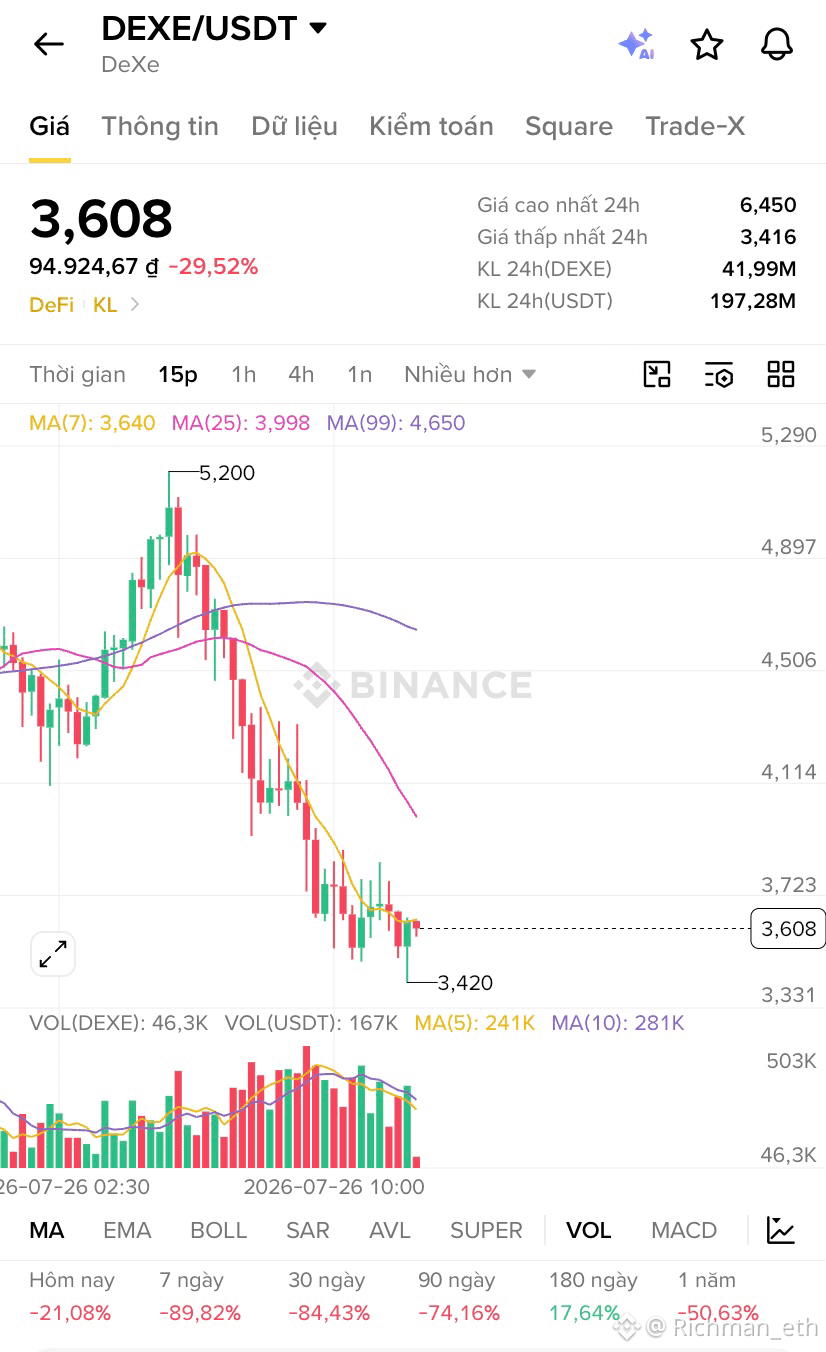
$DEXE is under heavy selling pressure today.
A sharp correction doesn’t always mean the trend is over, but it does remind us that risk management comes first.
$DEXE is under heavy selling pressure today.
A sharp correction doesn’t always mean the trend is over, but it does remind us that risk management comes first.
A sharp correction doesn’t always mean the trend is over, but it does remind us that risk management comes first.
3
485
·
--
Article
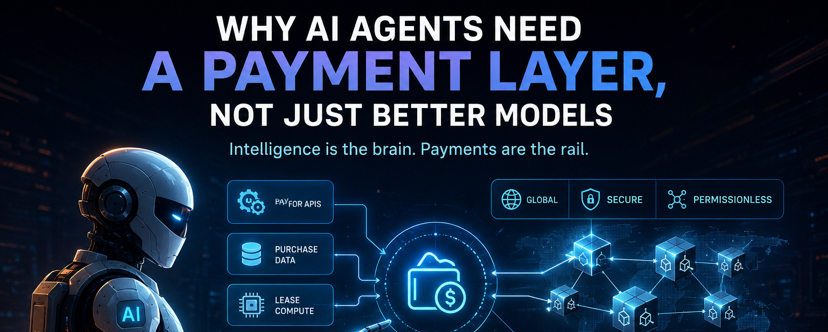
Why AI Agents Need a Payment Layer, Not Just Better ModelsArtificial intelligence is evolving quickly, but intelligence alone isn’t enough to create a true AI economy.
As AI agents become capable of making decisions, they’ll need to pay for APIs, purchase data, lease computing power, and interact with other autonomous agents. Without a reliable payment layer, these interactions remain limited.
Traditional payment systems weren’t designed for machines. They often require human verification, depend on banking hours, involve high fees, or are restricted by geography. These limitations make them inefficient for autonomous, real-time transactions.
This is why blockchain infrastructure is becoming an important part of the conversation. A programmable settlement layer enables AI agents to transact globally, securely, and without relying on centralized intermediaries.
What interests me most is that the next wave of innovation may not come from building larger AI models, but from creating the infrastructure that allows AI to participate in the digital economy.
The AI race isn’t just about who builds the smartest model.
It’s also about who builds the rails that let intelligent machines exchange value.$
Why AI Agents Need a Payment Layer, Not Just Better Models
Artificial intelligence is evolving quickly, but intelligence alone isn’t enough to create a true AI economy.
As AI agents become capable of making decisions, they’ll need to pay for APIs, purchase data, lease computing power, and interact with other autonomous agents. Without a reliable payment layer, these interactions remain limited.
Traditional payment systems weren’t designed for machines. They often require human verification, depend on banking hours, involve high fees, or are restricted by geography. These limitations make them inefficient for autonomous, real-time transactions.
This is why blockchain infrastructure is becoming an important part of the conversation. A programmable settlement layer enables AI agents to transact globally, securely, and without relying on centralized intermediaries.
What interests me most is that the next wave of innovation may not come from building larger AI models, but from creating the infrastructure that allows AI to participate in the digital economy.
The AI race isn’t just about who builds the smartest model.
It’s also about who builds the rails that let intelligent machines exchange value.$
As AI agents become capable of making decisions, they’ll need to pay for APIs, purchase data, lease computing power, and interact with other autonomous agents. Without a reliable payment layer, these interactions remain limited.
Traditional payment systems weren’t designed for machines. They often require human verification, depend on banking hours, involve high fees, or are restricted by geography. These limitations make them inefficient for autonomous, real-time transactions.
This is why blockchain infrastructure is becoming an important part of the conversation. A programmable settlement layer enables AI agents to transact globally, securely, and without relying on centralized intermediaries.
What interests me most is that the next wave of innovation may not come from building larger AI models, but from creating the infrastructure that allows AI to participate in the digital economy.
The AI race isn’t just about who builds the smartest model.
It’s also about who builds the rails that let intelligent machines exchange value.$
1
167
Log in to explore more content
Join global crypto users on Binance Square
⚡️ Get latest and useful information about crypto.
💬 Trusted by the world’s largest crypto exchange.
👍 Discover real insights from verified creators.
Email / Phone number