
Dire CryptoMedia
2.4k Posts

Dire CryptoMedia
Report
Block User
direcryptomedia delivers sharp crypto news, insights, and analysis—cutting through the noise to spotlight key trends shaping Web3 and decentralized finance.
Open Trade
Frequent Trader
2.6 Years
2.3K+ Following
4.2K+ Followers
5.0K+ Liked
Posts
Portfolio
All
Quotes
Videos
Live
PINNED
GLOBAL FINANCE EARTHQUAKE — BLACKROCK LOSES HALF A BILLION IN A MASTERFUL SCAM! 💣
The unthinkable has happened — BlackRock, the world’s financial titan, has fallen victim to a jaw-dropping $500 million fraud that’s shaking Wall Street to its core.
The alleged mastermind? Bankim Brahmbhat — an Indian entrepreneur who reportedly orchestrated one of the slickest financial deceptions in modern history. Using forged contracts, fake invoices, and an illusion of legitimacy, he managed to convince BlackRock that they were investing in authentic receivables. Everything checked out — until it didn’t.
Once the money hit, Brahmbhat disappeared into the shadows — funneling funds through India and Mauritius before declaring bankruptcy in the U.S. and vanishing from his New York office overnight. The money trail? Ice cold.
Now, panic is spreading through financial circles as whispers grow louder that this may not be an isolated hit — but the opening act of a larger global con. If other institutions were duped, the fallout could ripple through markets for months.
Half a billion dollars. Gone.
The world’s most powerful asset manager, outplayed.
This isn’t just financial fraud — it’s a brutal reminder that in the age of high finance, even giants can bleed.
#KITEBinanceLaunchpool #DireCryptoMedia #Write2Earn

27
15
112
107.3k
#FedNomineeHearingDelay The confirmation hearing for Kevin Warsh, President Trump’s nominee to lead the Federal Reserve, has been delayed from its originally planned date of April 16, 2026. While the White House remains confident Warsh will be confirmed by mid-May, several procedural and political hurdles have stalled the timeline.
CNBC +4
Key Reasons for the Delay
Missing Paperwork: The Senate Banking Committee has not yet received the required financial and ethics disclosure paperwork from Warsh. This documentation is especially complex due to his marriage into the billionaire Lauder family.
Senate Deadlock: Republican Senator Thom Tillis has pledged to vote against any nominee until the Department of Justice drops its criminal investigation into current Fed Chair Jerome Powell. With a committee split of 13 Republicans to 11 Democrats, Tillis’s opposition effectively blocks the nomination from moving to the full Senate floor.
Democratic Demands: Ranking member Elizabeth Warren and other committee Democrats have also demanded a delay until investigations into Powell and Governor Lisa Cook are resolved
#FedNomineeHearingDelay #Write2Earn #DireCryptomedia
1
138
Article
How to write beginner-friendly SIGN articles
Writing beginner-friendly signwriting (or SIGN)I still laugh (and groan) thinking back to that week I helped a buddy register his tiny online business. Simple idea. Not-so-simple process. We kept submitting the same documents—seriously, I thought we’d go broke buying printer ink. Every step, there was this anxious wait, weeks dragging on, never really sure if some paper-pushing department would approve or toss our paperwork, and never for reasons that made any sense
friendly signwriting (or SIGN) articles involves breaking down complex artistic techniques into simple, actionable steps, focusing on clarity, structure, and visual aids. Beginner-friendly content should assume the reader has limited knowledge, focusing on foundational skills like proper brush handling, paint consistency, andbasic lettering styles.
Here is a guide to creating beginner-friendly signwriting articles:
Start with Fundamentals: Beginners need to know the basics first, such as learning four essential styles: normal block, script, freestyle, and condensed block.
Inverted Pyramid: Place the most important information first (e.g., proper lettering spacing or paint mix ratio), followed by supporting details.
Use Lists: Utilize bullet points and numbered lists to simplify complex information.
Focus on One Goal: Keep the article focused on a single topic, such as "How to Paint a Straight Line" rather than "Everything About Signwriting".
Explain Jargon: Define technical terms immediately, such as "mahl stick," "size," or "letter spacing," to ensure accessibility.
Provide Actionable Tips: Focus on the "how" rather than just the "what." Explain how to mix paint for a specific surface or how to position the body for better control.
Weave in stories or scenarios, such as "when painting on metal,
I figured, “Hey, maybe it’s just how things are”—especially in places where the red tape is thicker than your grandma’s lasagna. But the more I dug into why it felt like spinning our wheels, the more I realized it wasn’t just slow processing. The whole mess stemmed from the fact nobody trusted anyone else’s data. Every department—or whatever they call themselves—had to double-check and triple-check the same info. Not because they liked wasting time, but because there’s no single source of truth they all can lean on.
Once I saw that, I stopped obsessing over how fast blockchain tech could push transactions. Instead, I started getting hung up on the bigger problem—what if you could fix trust at the data level? In real life, it isn’t the tech that gums up the system. It’s coordination. Because nobody trusts the info unless they re-check it themselves, even if it’s been vetted twelve times before.
Now, imagine if governments could just issue credentials—licenses, whatever—that people anywhere could check instantly without all those tedious manual reviews. Kind of wild, right? That’s exactly why Sign got under my skin. Not because it’s promising lightning-fast transactions or flashy pitch decks—plenty of projects do that—but because it’s poking at the foundation. It’s saying, “Hey, maybe the whole way institutions trust each other is broken. Let’s fix that.”
I mean, for business licensing? Suddenly, it gets real. Most startups aren’t killed by bad ideas. They’re slowed to a crawl by the same old legitimacy checks—every time, across every system, like starting from zero. You want to scale? Good luck, if proving you exist is a never-ending loop.
Diving into Sign's docs, it’s basically a protocol for issuing and checking digital credentials on-chain. No need to spill your secret info everywhere—or, you know, risk handing over your passport to a random coffee shop. It uses cryptographic proofs, so a government (or any authority really) drops a credential on the blockchain. Now, anyone else can check that credential instantly without ever re-verifying the full data. Cleaner, right?
So, can an idea like Sign really create a universal layer of trust? One where credentials are secure and instantly accepted, no matter who’s asking? Try thinking of it like a verification layer—plugs in with different platforms and across borders. Every institution stops running the same checks, and just trusts a shared proof system. The token ties it all together—credential issuance, validation, governance; it’s all about keeping the incentives in line, so the network isn’t just some ghost town.
Now, take the Middle East. Over here, digital services and startups are blowing up. Cross-border business is the new normal. But if trust stays fragmented, inefficiency doesn’t shrink—it actually gets worse as things grow. A single, shared credential layer isn’t about shaving off a few hours—it’s about making a dozen systems work together without the usual drama. That’s a game-changer for economies trying to level up.
And the market’s catching on. Sign’s token pops up in more discussions, and communities are building around digital identity stuff. Trading seems steady and interest is spreading—this isn’t just a pump-and-dump crowd, from what I can tell.
But here’s where the real test starts. Forget technical hurdles; adoption is everything. Credentials have to actually be used—again and again—not just stuck in a drawer somewhere and forgotten. If people aren’t using these credentials in real interactions, no network effects, no impact. The real value comes when each new participant boosts the usefulness for everyone. If it’s all one-off, underutilized, then who cares how slick the tech is?
Especially in the Middle East, where public and private sectors have to play nice together. If Sign manages to worm its way into actual workflows, it becomes infrastructure—a backbone. If it doesn’t, it stays a cool idea, isolated and irrelevant.
are chasing the same dream—on-chain IDs that actually work, improving trust and transparency. But again, the big question: Will institutions trust it enough to use it day in, day out—not just as some experimental side project?
What gets people excited is proof—like, real evidence. Authorities consistently issuing credentials, seamless interoperability across platforms, businesses building real apps around these credentials. These are signs the tech is moving from curiosity to backbone. If you see limited issuance, no real-world adoption, or just liquidity with nothing functional, then it’s all just talk.
So, if you’re eyeing Sign (or similar projects), ignore the usual crypto hype. Watch how often credentials are issued and reused. That’s where the value lives—inside repeated, trusted, everyday exchanges.
A business license that can be instantly checked across borders? That isn’t just tech fluff. That changes the pace of how economies move. In digital systems, the gap between a cool idea and real impact comes down to this: The projects that matter are the ones everyone uses—so often, they stop being noticed. That’s how the world really changes—quietly, under the surface, in a thousand routine moments.
#SignDigitakSovereignInfra @SignOfficial $SIGN
How to write beginner-friendly SIGN articles Writing beginner-friendly signwriting (or SIGN)
I still laugh (and groan) thinking back to that week I helped a buddy register his tiny online business. Simple idea. Not-so-simple process. We kept submitting the same documents—seriously, I thought we’d go broke buying printer ink. Every step, there was this anxious wait, weeks dragging on, never really sure if some paper-pushing department would approve or toss our paperwork, and never for reasons that made any sense
friendly signwriting (or SIGN) articles involves breaking down complex artistic techniques into simple, actionable steps, focusing on clarity, structure, and visual aids. Beginner-friendly content should assume the reader has limited knowledge, focusing on foundational skills like proper brush handling, paint consistency, andbasic lettering styles.
Here is a guide to creating beginner-friendly signwriting articles:
Start with Fundamentals: Beginners need to know the basics first, such as learning four essential styles: normal block, script, freestyle, and condensed block.
Inverted Pyramid: Place the most important information first (e.g., proper lettering spacing or paint mix ratio), followed by supporting details.
Use Lists: Utilize bullet points and numbered lists to simplify complex information.
Focus on One Goal: Keep the article focused on a single topic, such as "How to Paint a Straight Line" rather than "Everything About Signwriting".
Explain Jargon: Define technical terms immediately, such as "mahl stick," "size," or "letter spacing," to ensure accessibility.
Provide Actionable Tips: Focus on the "how" rather than just the "what." Explain how to mix paint for a specific surface or how to position the body for better control.
Weave in stories or scenarios, such as "when painting on metal,
I figured, “Hey, maybe it’s just how things are”—especially in places where the red tape is thicker than your grandma’s lasagna. But the more I dug into why it felt like spinning our wheels, the more I realized it wasn’t just slow processing. The whole mess stemmed from the fact nobody trusted anyone else’s data. Every department—or whatever they call themselves—had to double-check and triple-check the same info. Not because they liked wasting time, but because there’s no single source of truth they all can lean on.
Once I saw that, I stopped obsessing over how fast blockchain tech could push transactions. Instead, I started getting hung up on the bigger problem—what if you could fix trust at the data level? In real life, it isn’t the tech that gums up the system. It’s coordination. Because nobody trusts the info unless they re-check it themselves, even if it’s been vetted twelve times before.
Now, imagine if governments could just issue credentials—licenses, whatever—that people anywhere could check instantly without all those tedious manual reviews. Kind of wild, right? That’s exactly why Sign got under my skin. Not because it’s promising lightning-fast transactions or flashy pitch decks—plenty of projects do that—but because it’s poking at the foundation. It’s saying, “Hey, maybe the whole way institutions trust each other is broken. Let’s fix that.”
I mean, for business licensing? Suddenly, it gets real. Most startups aren’t killed by bad ideas. They’re slowed to a crawl by the same old legitimacy checks—every time, across every system, like starting from zero. You want to scale? Good luck, if proving you exist is a never-ending loop.
Diving into Sign's docs, it’s basically a protocol for issuing and checking digital credentials on-chain. No need to spill your secret info everywhere—or, you know, risk handing over your passport to a random coffee shop. It uses cryptographic proofs, so a government (or any authority really) drops a credential on the blockchain. Now, anyone else can check that credential instantly without ever re-verifying the full data. Cleaner, right?
So, can an idea like Sign really create a universal layer of trust? One where credentials are secure and instantly accepted, no matter who’s asking? Try thinking of it like a verification layer—plugs in with different platforms and across borders. Every institution stops running the same checks, and just trusts a shared proof system. The token ties it all together—credential issuance, validation, governance; it’s all about keeping the incentives in line, so the network isn’t just some ghost town.
Now, take the Middle East. Over here, digital services and startups are blowing up. Cross-border business is the new normal. But if trust stays fragmented, inefficiency doesn’t shrink—it actually gets worse as things grow. A single, shared credential layer isn’t about shaving off a few hours—it’s about making a dozen systems work together without the usual drama. That’s a game-changer for economies trying to level up.
And the market’s catching on. Sign’s token pops up in more discussions, and communities are building around digital identity stuff. Trading seems steady and interest is spreading—this isn’t just a pump-and-dump crowd, from what I can tell.
But here’s where the real test starts. Forget technical hurdles; adoption is everything. Credentials have to actually be used—again and again—not just stuck in a drawer somewhere and forgotten. If people aren’t using these credentials in real interactions, no network effects, no impact. The real value comes when each new participant boosts the usefulness for everyone. If it’s all one-off, underutilized, then who cares how slick the tech is?
Especially in the Middle East, where public and private sectors have to play nice together. If Sign manages to worm its way into actual workflows, it becomes infrastructure—a backbone. If it doesn’t, it stays a cool idea, isolated and irrelevant.
are chasing the same dream—on-chain IDs that actually work, improving trust and transparency. But again, the big question: Will institutions trust it enough to use it day in, day out—not just as some experimental side project?
What gets people excited is proof—like, real evidence. Authorities consistently issuing credentials, seamless interoperability across platforms, businesses building real apps around these credentials. These are signs the tech is moving from curiosity to backbone. If you see limited issuance, no real-world adoption, or just liquidity with nothing functional, then it’s all just talk.
So, if you’re eyeing Sign (or similar projects), ignore the usual crypto hype. Watch how often credentials are issued and reused. That’s where the value lives—inside repeated, trusted, everyday exchanges.
A business license that can be instantly checked across borders? That isn’t just tech fluff. That changes the pace of how economies move. In digital systems, the gap between a cool idea and real impact comes down to this: The projects that matter are the ones everyone uses—so often, they stop being noticed. That’s how the world really changes—quietly, under the surface, in a thousand routine moments.
#SignDigitakSovereignInfra @SignOfficial $SIGN
2
9
#night $NIGHT Data ownership in the digital economy boils down to who really controls, uses, and benefits from digital information. It answers questions like: Who decides where the data goes? Who gets to see it? Who profits?
These days, just about every click and swipe creates a trail of data. With so much information flying around, it’s vital to know who actually owns it. Without clear ownership, privacy slips away, innovation slows down, and data can turn into a problem instead of an advantage.
Why does data ownership matter? First, privacy. When you own your data, you guard your digital life. You decide who gets in and for what reason, keeping out identity thieves and nosy third parties. It’s about being in control of your own story.
Security is another big one. When people don’t know who owns a set of data, it tends to fall through the cracks—bad news for security. Clear ownership means someone’s always on the hook for keeping data safe, which brings down the odds of a cyberattack.
And let’s not forget money. Data has real value, but too often, outside parties swoop in and take advantage. When the original creators—individuals or companies—truly own their data, they can use it, license it, or even sell it themselves. In other words, they keep the profits instead of watching others cash in on their information.
@MidnightNetwork #night $NIGHT
3
20

Article
Midnight Network Explained with Simple Examples#night $NIGHT Midnight Network Explained with Simple ExamplesHonestly, watching crypto narratives spin around feels like déjà vu sometimes. They show up all loud and chaotic, grab everyone’s attention, then vanish for a bit. But they keep coming back, quieter—almost sneaky—and a heck of a lot more useful. I remember when smart contracts were the Next Big Thing, everyone tweeting nonstop. Then boom, DeFi. Then L2s. Couldn’t turn around without someone yelling about those. And lately, it’s been AI everywhere—projects slapping “artificial intelligence” on anything they can touch.
But here’s what’s wild: while the spotlight’s on AI, something else is creeping up again. Privacy. It’s not the old privacy—the “down-with-the-system” kind that sounded like a rally cry at a protest.
A few years back, privacy in crypto felt like a badge people wore. I swear, entire Twitter threads were just arguments: “We need privacy to stick it to the man!” But that whole vibe fizzled out. Not ’cause folks got tired of the idea, just… the timing? The way it was pitched? Didn’t fit what everyone needed.
Now, privacy’s sneaking in. Quiet, woven right into the fabric. It’s like—okay, Midnight Network caught my eye recently. Not because it’s trending, but because it slipped in, almost unnoticed, as crypto’s nuts-and-bolts evolve. Maybe I’m weird, but I love thinking about it like this:
Picture using a public blockchain like editing a huge Google Doc where anyone can peek at your changes. Great for openness, but terrible if you want a bit of privacy. The new angle? You can hide some parts—maybe your comments, maybe your edits—but everyone still knows nothing’s gone off the rails. That’s where Web3 privacy’s headed. It’s not trying to bury everything; it’s about picking what gets shown.
Honestly, that change matters. I’ve run into it myself—companies want to use blockchain, but they say, “Ugh, we can’t put our customer data out there for the world!” People don’t want total secrecy, just the option. A little flex. Move on-chain, hide sensitive bits, keep the rest public.
Feels like privacy’s finally growing up. Not shouting—just whispering, “Hey, I’ve actually got a solution now.”
But here’s the kicker: nobody’s falling for hype alone anymore. I remember the days when some clever logo, a snazzy whitepaper, and three tweets would send tokens mooning. Now? People want real stuff. Products that work. Teams that actually launch features, integrate in the real world. Privacy projects aren’t just selling dreams—they have to show up, build, and blend in seamlessly.
And, weirdly enough, Binance communities give me clues. Not because they’re the center of the universe, but because they’re where the quieter conversations bubble up. Recently, I’ve seen folks talking privacy infrastructure—like, actual discussions, not just hype. When that happens, I know something serious is brewing. We’re still early, but the mood’s different.
Makes sense, really. After wave after wave of speculative craziness—DeFi, NFTs, AI tokens—the market drifts back to basics. Things under the hood. That never make headlines at first, but end up rewriting the whole game.
So when I look at privacy nowadays, especially the teams flying under the radar? I don’t see another “pump-and-dump” cycle begging for attention. I see slow, careful reconstruction. Like fixing the foundation instead of just painting the walls.
#nigt @MidnightNetwork $NIGHT
The question bugging me lately: Is privacy about to stop being its own headline—and start being the default setting for all of Web3? That’d be kind of wild, huh?
Midnight Network Explained with Simple Examples
#night $NIGHT Midnight Network Explained with Simple ExamplesHonestly, watching crypto narratives spin around feels like déjà vu sometimes. They show up all loud and chaotic, grab everyone’s attention, then vanish for a bit. But they keep coming back, quieter—almost sneaky—and a heck of a lot more useful. I remember when smart contracts were the Next Big Thing, everyone tweeting nonstop. Then boom, DeFi. Then L2s. Couldn’t turn around without someone yelling about those. And lately, it’s been AI everywhere—projects slapping “artificial intelligence” on anything they can touch.
But here’s what’s wild: while the spotlight’s on AI, something else is creeping up again. Privacy. It’s not the old privacy—the “down-with-the-system” kind that sounded like a rally cry at a protest.
A few years back, privacy in crypto felt like a badge people wore. I swear, entire Twitter threads were just arguments: “We need privacy to stick it to the man!” But that whole vibe fizzled out. Not ’cause folks got tired of the idea, just… the timing? The way it was pitched? Didn’t fit what everyone needed.
Now, privacy’s sneaking in. Quiet, woven right into the fabric. It’s like—okay, Midnight Network caught my eye recently. Not because it’s trending, but because it slipped in, almost unnoticed, as crypto’s nuts-and-bolts evolve. Maybe I’m weird, but I love thinking about it like this:
Picture using a public blockchain like editing a huge Google Doc where anyone can peek at your changes. Great for openness, but terrible if you want a bit of privacy. The new angle? You can hide some parts—maybe your comments, maybe your edits—but everyone still knows nothing’s gone off the rails. That’s where Web3 privacy’s headed. It’s not trying to bury everything; it’s about picking what gets shown.
Honestly, that change matters. I’ve run into it myself—companies want to use blockchain, but they say, “Ugh, we can’t put our customer data out there for the world!” People don’t want total secrecy, just the option. A little flex. Move on-chain, hide sensitive bits, keep the rest public.
Feels like privacy’s finally growing up. Not shouting—just whispering, “Hey, I’ve actually got a solution now.”
But here’s the kicker: nobody’s falling for hype alone anymore. I remember the days when some clever logo, a snazzy whitepaper, and three tweets would send tokens mooning. Now? People want real stuff. Products that work. Teams that actually launch features, integrate in the real world. Privacy projects aren’t just selling dreams—they have to show up, build, and blend in seamlessly.
And, weirdly enough, Binance communities give me clues. Not because they’re the center of the universe, but because they’re where the quieter conversations bubble up. Recently, I’ve seen folks talking privacy infrastructure—like, actual discussions, not just hype. When that happens, I know something serious is brewing. We’re still early, but the mood’s different.
Makes sense, really. After wave after wave of speculative craziness—DeFi, NFTs, AI tokens—the market drifts back to basics. Things under the hood. That never make headlines at first, but end up rewriting the whole game.
So when I look at privacy nowadays, especially the teams flying under the radar? I don’t see another “pump-and-dump” cycle begging for attention. I see slow, careful reconstruction. Like fixing the foundation instead of just painting the walls.
#nigt @MidnightNetwork $NIGHT
The question bugging me lately: Is privacy about to stop being its own headline—and start being the default setting for all of Web3? That’d be kind of wild, huh?
2
14
#signdigitalsovereigninfra $SIGN private crypto used to be... I mean, remember That year felt like living inside a casino where every alarm kept going off. My phone was basically a slot machine: Twitter spaces blowing up, Telegram going haywire, some altcoin tripling before breakfast and tanking by brunch. You really couldn’t tune it out, even if you wanted to. I kind of miss the chaos—now it feels like the scene’s gotten tired. Not dead, just quieter, like someone swapped the playlist from head-thumping EDM to that chill lo-fi beat, and nobody at the party noticed.
Funny thing, though: these cycles always repeat. It’s almost like clockwork. People lose their minds over something brand-new, only to act like they never saw it coming. I got swept up too—the first time smart contracts hit, suddenly everyone was convinced we’d rebuilt finance. Next came DeFi. “Yield farming” turned into a buzzword, and I’ll be honest, half my friends had no clue what it meant but went full degen anyway. Then layer-2s showed up and, man, everyone had opinions. Endless debate threads. By the end, my brain just kind of fizzled out on that stuff.
But here’s the weirdest part—there’s stuff happening under the radar. Totally off-trend, won’t show up in your trending feed. But it’s there, bubbling. It’s geeky—okay, super geeky. Lately I’ve been messing around with private, privacy-first SEO ideas like SIGN. Not exactly stuff I’d bring up at a dinner party (unless everyone there writes smart contracts for fun), but fascinating all the same. This overlap between “owning your data” and “being findable” is just so messy and kind of cool. I keep thinking, how do you give people real control over what they share and still let the good stuff be discoverable, especially with the wild west that is Web3?
#signdiditalsovereigninfra @SignOfficial $SIGN
4
41
Article
Crypto's Whiplash: Navigating the Hype Cycles and SIGN's PotentialCrypto's Whiplash: Navigating the Hype Cycles and SIGN's Potential.One week it feels like every third tweet is some Seriously, you can’t even doomscroll without seeing another bot hyping “the next big wave.” Then overnight—bam—the whole narrative flips. Suddenly everybody’s deep into Layer-2s, DeFi, or claiming “smart contracts are taking over everything.” It’s nuts. This space has the attention span of my nephew after two cans of Monster. You blink, and now there’s some new hot topic. Weren’t folks just losing their minds about DAOs? That was, like, three weeks ago? My memory’s fuzzy, but I swear yesterday was all about NFT mints.
these hype cycles just scramble your brain. I still remember sitting at my desk during the peak memecoin craze in—what was it, May 2021? I’d watch charts for hours, popcorn in the microwave, thinking, “Nothing’s happening, did I miss the boat?” Then out of nowhere, coins start blasting off and alerts pop up, and I’m scrambling to catch up. Look away for half a minute—boom, the whole market’s melted. Burned popcorn, burned projects. My microwave still smells like a wallet liquidation. Timing sucks. Hit the launch button at the right second? You’re a legend. Miss by barely a breath, and people act like you never existed. I’ll admit, it stings more than I hoped.
So now everyone’s buzzing about SIGN. Feels different. Not just another “we Frankensteined chatbots into Ethereum and called it progress”—like, seriously, Binance chat is allergic to that kind of thing. Say “AI” and you get a swarm of SmartDogAICoin clones, just flooding the feed. But SIGN’s got people interested in decentralized content and these hashtag-powered influence games. Maybe the project’s about actually giving folks a shot at real ownership. What’s wild: I’m seeing less spam, more real users. They’re locking posts, sharing stuff, saving it—not just auto-liking anything trending. Almost feels organic, almost. There’s a pulse here, not just another FOMO frenzy. Or maybe there is, who knows. Still feels early.
I’m way less gullible than I used to be. Back in 2026, I went all-in on some project with killer branding—logo slapped, Discord hopping, whitepaper just dripping with inspiration. Few weeks in, though, crickets. Team went ghost, updates froze, everyone vanished. Now one of their dead tokens just sits in my wallet, haunting me every time I check my balance. Feels like it’s just sitting there, laughing. Lesson learned: hype is temporary, builders stick, and everybody else disappears.
So, about SIGN—timing actually feels good. For once, people seem to genuinely care about the content, not just chasing dopamine hits. Less rapid-fire scrolling, more “hey, maybe this post is worth something.” Nobody’s psyched to get rekt by some dumb algorithm or lose their best stuff to some digital vault. It’s subtle, but I see real effort, like people are aiming for traction that lasts, not just chasing the usual rush. Or maybe I’m just overanalyzing—crypto paranoia, it’s baked in. Big question: did SIGN luck into the hype, or are they about to shake things up for real? Hype’s always a beast—tech promises, big vision, memes everywhere—but when markets cool and bags get heavy, only the good stuff lasts. Give it time. That’s the only real truth in crypto.
#SignDigitakSovereignInfra @SignOfficial $SIGN
Crypto's Whiplash: Navigating the Hype Cycles and SIGN's Potential
Crypto's Whiplash: Navigating the Hype Cycles and SIGN's Potential.One week it feels like every third tweet is some Seriously, you can’t even doomscroll without seeing another bot hyping “the next big wave.” Then overnight—bam—the whole narrative flips. Suddenly everybody’s deep into Layer-2s, DeFi, or claiming “smart contracts are taking over everything.” It’s nuts. This space has the attention span of my nephew after two cans of Monster. You blink, and now there’s some new hot topic. Weren’t folks just losing their minds about DAOs? That was, like, three weeks ago? My memory’s fuzzy, but I swear yesterday was all about NFT mints.
these hype cycles just scramble your brain. I still remember sitting at my desk during the peak memecoin craze in—what was it, May 2021? I’d watch charts for hours, popcorn in the microwave, thinking, “Nothing’s happening, did I miss the boat?” Then out of nowhere, coins start blasting off and alerts pop up, and I’m scrambling to catch up. Look away for half a minute—boom, the whole market’s melted. Burned popcorn, burned projects. My microwave still smells like a wallet liquidation. Timing sucks. Hit the launch button at the right second? You’re a legend. Miss by barely a breath, and people act like you never existed. I’ll admit, it stings more than I hoped.
So now everyone’s buzzing about SIGN. Feels different. Not just another “we Frankensteined chatbots into Ethereum and called it progress”—like, seriously, Binance chat is allergic to that kind of thing. Say “AI” and you get a swarm of SmartDogAICoin clones, just flooding the feed. But SIGN’s got people interested in decentralized content and these hashtag-powered influence games. Maybe the project’s about actually giving folks a shot at real ownership. What’s wild: I’m seeing less spam, more real users. They’re locking posts, sharing stuff, saving it—not just auto-liking anything trending. Almost feels organic, almost. There’s a pulse here, not just another FOMO frenzy. Or maybe there is, who knows. Still feels early.
I’m way less gullible than I used to be. Back in 2026, I went all-in on some project with killer branding—logo slapped, Discord hopping, whitepaper just dripping with inspiration. Few weeks in, though, crickets. Team went ghost, updates froze, everyone vanished. Now one of their dead tokens just sits in my wallet, haunting me every time I check my balance. Feels like it’s just sitting there, laughing. Lesson learned: hype is temporary, builders stick, and everybody else disappears.
So, about SIGN—timing actually feels good. For once, people seem to genuinely care about the content, not just chasing dopamine hits. Less rapid-fire scrolling, more “hey, maybe this post is worth something.” Nobody’s psyched to get rekt by some dumb algorithm or lose their best stuff to some digital vault. It’s subtle, but I see real effort, like people are aiming for traction that lasts, not just chasing the usual rush. Or maybe I’m just overanalyzing—crypto paranoia, it’s baked in. Big question: did SIGN luck into the hype, or are they about to shake things up for real? Hype’s always a beast—tech promises, big vision, memes everywhere—but when markets cool and bags get heavy, only the good stuff lasts. Give it time. That’s the only real truth in crypto.
#SignDigitakSovereignInfra @SignOfficial $SIGN
2
30
#night $NIGHT why jumping back into crypto always gives me this weird sense of déjà vu—like, you sort of know what's about to happen, but it’s never the exact same song. There’s a familiar buzz, a low rumble that makes you feel like you should be able to predict the next curve… then something shifts, and nope, it’s a twist.
Looking back, all the big waves start with some shiny idea. I remember the early days—“programmable money” was like this magic bullet against the banks. Every Twitter thread was screaming about it. Around December 2018, my friends were practically shouting, “regular dollars are dead, dude!” I swear I got texts at midnight, totally hyped. Then DeFi showed up outta nowhere—built actual tools, real stuff. Folks finally relaxed, but right then Layer 2s burst in. Turns out, scalability was the real choke point, not all the lending circus.
Fast forward, there’s this underground trend. Not loud at all—more like you catch a quiet whisper drifting from the next room. The vibe’s changed: instead of obsessing over what goofy tricks smart contracts can pull, people are getting curious about the nuts and bolts—how they actually run. Who thinks about execution cycles unless you’re deep in the trenches? But now? Random late-night threads, people dropping “off-cycle,” “midnight execution”—whatever you wanna call it. Contracts that go dormant, then pop back to life on their own schedules. Insta headlines aren’t blasting it, but it’s bubbling up in Telegram channels, Discord chats around 1AM… devs nerding out, tossing code back and forth.
Thing is, this isn’t some brand new shiny superpower. It just—changes the rhythm. Contracts used to tick along, one block at a time. Now, they finish stuff at weird intervals, unexpected moments. It sounds tiny, right? But honestly, I’ve seen these tweaks mess up the whole vibe. Users expect their apps to just glide along, devs suddenly have new pieces to play with, everything gets fuzzy. It’s always these micro-moves—little quirk."
#night @MidnightNetwork $NIGHT
3
22
Article
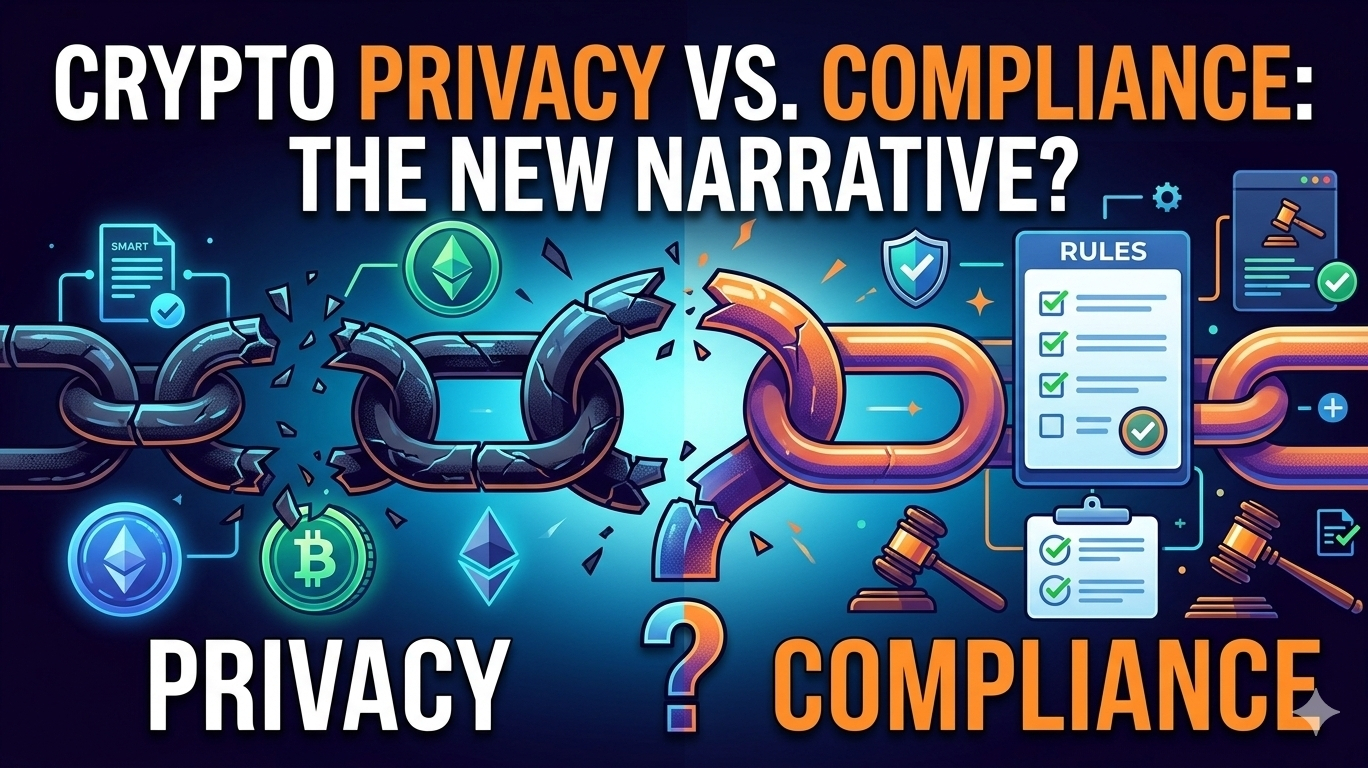
The Compliance Conundrum: Can Crypto Privacy Survive the Regulators?tracking crypto narratives feels like watching a soap opera—just when you think you know where it’s going, bam, plot twist. Take it back to, what, 2016? I remember when “smart contracts” sounded like something out of sci-fi. The pitch was simple: let’s rebuild trust. Then, DeFi entered the scene around 2019, blowing doors open with these “financial primitives” everyone was talking about. Suddenly, it was all about yield farming and liquidity pools—my Telegram was basically non-stop alerts. By 2021, every other conversation was about Layer 2s, and how the whole thing would scale without crumbling.
But lately, the talk’s shifting. Privacy versus regulation. You know, the juicy stuff where actual stakes meet real-world rules. Crypto’s privacy angle used to feel like some underground club—whispers about Monero, ZCash, maybe a Telegram group or two where you’d hear people say things like, “Hey, this chain is almost invisible to regulators.” Regulators would side-eye it, almost like, “What are you folks hiding?”
Recently, though, I’m seeing something else. No one’s pitching “privacy vs compliance.” The new question is, “Can privacy live inside compliance?” Weirdly, it’s not just a semantic tweak—it’s a totally different mindset. And honestly, that’s what makes projects like Midnight pop up on my radar. Not because they’re splashing banners everywhere. If anything, they’re the quiet ones. But they’re caught in between two worlds: users screaming for secrecy (I’ve had friends DM me about wallet trackers—paranoia is real), and institutions demanding transparency.
That intersection? Where privacy and transparency butt heads, then awkwardly hug it out—that’s where the next clutch infrastructure probably gets built. If history’s any guide, the market loves shiny narratives first. Execution? Meh, that comes later, if at all. Think back to DeFi summer 2020—protocols pumped on pure hype—remember SushiSwap drama? Most of those projects fizzled out. Only a tiny set stuck around, because, yeah, utility wins in the long run. Layer 2s followed the same rinse-and-repeat, honestly.
So privacy—feels like we’re still just warming up the story arc. But this cycle? The regulatory warning lights are flashing everywhere. Builders can’t just close their eyes and hope regulators miss their party. And now, users are waking up to how public chains aren’t exactly private—sometimes to the point where you wonder: Do people really want every transaction engraved forever? Makes you rethink posting that ENS wallet address, honestly.
The challenge? You can’t just slap privacy on and hope for the best. You have to build it in a way that regulators will give a nod—not a cease-and-desist. That’s a pretty tight window. Midnight’s approach seems, well, practical—Maybe they’ll nail it, maybe not. Selective disclosure, programmable privacy... these ideas sound good, but do they actually work in real life, where everyone’s watching the rules? Open question.
And let’s be real—narratives don’t just spread in a vacuum. Sometimes, the platforms shape the hype more than the projects themselves. Binance Square, for example, has started featuring privacy chatter a bit more—maybe it’s subtle, but you notice these things if you scroll enough (I spend way too much time doomscrolling). Exchanges and their communities basically amplify tiny trends. Once a project pops up there, it tends to signal narrative formation, almost before everyone else gets the memo.
But timing? Always matters. Right now, privacy’s still lurking on the edge. Everyone’s gabbing about AI and modular blockchains. It’s the “hot” stuff. But narratives always rotate—like, I swear, they just hibernate until suddenly someone wakes them up and they return, sharper, more polished. So the question that bugs me is: Are we close to the moment when privacy isn’t just some tick-box but gets rebuilt to fit the whole system, rules and all?
If that shift happens—if privacy gets its act together and meshes with compliance—then the quiet projects working away today could end up being the giants, not the back-benchers. Funny how that works.
#night @MidnightNetwork $NIGHT
So—what do you think? Is privacy still just a fringe thing in crypto, or are we watching it slowly slip into the core, where it becomes impossible to ignore? I’d love to hear some real takes.
The Compliance Conundrum: Can Crypto Privacy Survive the Regulators?
tracking crypto narratives feels like watching a soap opera—just when you think you know where it’s going, bam, plot twist. Take it back to, what, 2016? I remember when “smart contracts” sounded like something out of sci-fi. The pitch was simple: let’s rebuild trust. Then, DeFi entered the scene around 2019, blowing doors open with these “financial primitives” everyone was talking about. Suddenly, it was all about yield farming and liquidity pools—my Telegram was basically non-stop alerts. By 2021, every other conversation was about Layer 2s, and how the whole thing would scale without crumbling.
But lately, the talk’s shifting. Privacy versus regulation. You know, the juicy stuff where actual stakes meet real-world rules. Crypto’s privacy angle used to feel like some underground club—whispers about Monero, ZCash, maybe a Telegram group or two where you’d hear people say things like, “Hey, this chain is almost invisible to regulators.” Regulators would side-eye it, almost like, “What are you folks hiding?”
Recently, though, I’m seeing something else. No one’s pitching “privacy vs compliance.” The new question is, “Can privacy live inside compliance?” Weirdly, it’s not just a semantic tweak—it’s a totally different mindset. And honestly, that’s what makes projects like Midnight pop up on my radar. Not because they’re splashing banners everywhere. If anything, they’re the quiet ones. But they’re caught in between two worlds: users screaming for secrecy (I’ve had friends DM me about wallet trackers—paranoia is real), and institutions demanding transparency.
That intersection? Where privacy and transparency butt heads, then awkwardly hug it out—that’s where the next clutch infrastructure probably gets built. If history’s any guide, the market loves shiny narratives first. Execution? Meh, that comes later, if at all. Think back to DeFi summer 2020—protocols pumped on pure hype—remember SushiSwap drama? Most of those projects fizzled out. Only a tiny set stuck around, because, yeah, utility wins in the long run. Layer 2s followed the same rinse-and-repeat, honestly.
So privacy—feels like we’re still just warming up the story arc. But this cycle? The regulatory warning lights are flashing everywhere. Builders can’t just close their eyes and hope regulators miss their party. And now, users are waking up to how public chains aren’t exactly private—sometimes to the point where you wonder: Do people really want every transaction engraved forever? Makes you rethink posting that ENS wallet address, honestly.
The challenge? You can’t just slap privacy on and hope for the best. You have to build it in a way that regulators will give a nod—not a cease-and-desist. That’s a pretty tight window. Midnight’s approach seems, well, practical—Maybe they’ll nail it, maybe not. Selective disclosure, programmable privacy... these ideas sound good, but do they actually work in real life, where everyone’s watching the rules? Open question.
And let’s be real—narratives don’t just spread in a vacuum. Sometimes, the platforms shape the hype more than the projects themselves. Binance Square, for example, has started featuring privacy chatter a bit more—maybe it’s subtle, but you notice these things if you scroll enough (I spend way too much time doomscrolling). Exchanges and their communities basically amplify tiny trends. Once a project pops up there, it tends to signal narrative formation, almost before everyone else gets the memo.
But timing? Always matters. Right now, privacy’s still lurking on the edge. Everyone’s gabbing about AI and modular blockchains. It’s the “hot” stuff. But narratives always rotate—like, I swear, they just hibernate until suddenly someone wakes them up and they return, sharper, more polished. So the question that bugs me is: Are we close to the moment when privacy isn’t just some tick-box but gets rebuilt to fit the whole system, rules and all?
If that shift happens—if privacy gets its act together and meshes with compliance—then the quiet projects working away today could end up being the giants, not the back-benchers. Funny how that works.
#night @MidnightNetwork $NIGHT
So—what do you think? Is privacy still just a fringe thing in crypto, or are we watching it slowly slip into the core, where it becomes impossible to ignore? I’d love to hear some real takes.
1
3
35
Article
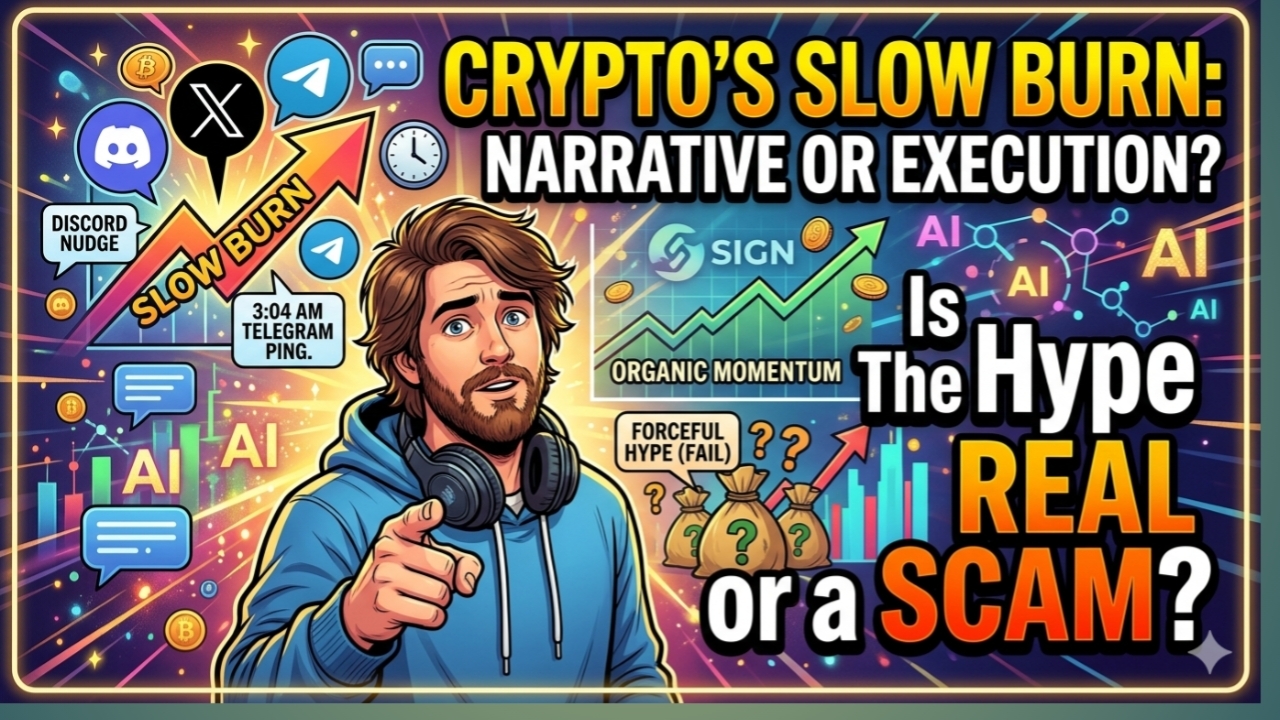
PR strategies for SIGN contentMan, watching stories blow up in crypto is honestly a trip. It never happens with some dramatic launch or a week of banner ads—nah, it’s always this weird, slow burn. Like, everybody’s just echoing and tweaking the same catchphrase, spreading it like wildfire—Discords, Twitter threads, those Telegram channels that seriously never sleep (once got pinged at, what, 3:04 AM? I thought my phone was haunted).
If you look way back—say, 2017? It’s hilarious. Each wave gets its own flavor. Mid-2017, the big thing on Reddit was Ethereum being “internet money that thinks.” I remember seeing it everywhere, even in random threads about pizza. Then by 2020, the whole DeFi rush. Yield farms dropped out of nowhere. My group chat split in two—half totally lost, half just buying anything with a vegetable name. After that, Layer 2 came on strong. Suddenly “AI” was on everything, but honestly, it wasn’t even about the actual tech most days. Just “AI” slapped on as bait—like some magic word for investors. None of these trends stuck because people built amazing stuff (though sometimes, sure)—they stuck because someone made the story stick. Made people actually care.
Now, projects like SIGN? They’re doing this thing—pretty understated. No logo spam, no thread blitz, barely any announcements. They just keep popping up, quietly, almost like they’re everywhere and nowhere at the same time. Feels deliberate. And this is where PR stops being about shouting—it gets tricky. Seen so many projects bomb because they went too hard, just begging for attention. The best PR? It’s sneaky, really. You seed an idea, and let people grab it and run. Binance Square? Gold for that—not just a newsfeed. If something’s alive there, the whole crowd is chewing it over.
There’s something different when a name surfaces organically. Like, someone random asks, “Yo, you see what SIGN did?” or an analyst mentions it just because—not because they got paid. That’s not just a fat marketing budget; that’s actual buzz. Suddenly everyone’s referencing it and you’re thinking, “Wait, is this real?”
What sticks with me on SIGN is how they layer things. It’s not blast-all-channels, it’s this steady hum—a post here, a quote there, an analysis lost deep in Discord. People aren’t chasing headlines much now. Everyone waits, kinda side-eyes the market, just watching to see if their friends care first. Sometimes it’s like the community’s a bit paranoid—nobody wants to be first, but nobody wants to be late either.
But, honestly, if the story’s slick but there’s nothing underneath? All that hype melts away. Seen it happen, sometimes even in one weekend. Other side: someone crushes execution but nobody knows about it—project stays invisible. Getting both right? Yeah, that’s tough.
Timing is huge too. Nobody’s just jumping on hype anymore, not like 2021 when money felt infinite. Now, everyone’s picky, slow to move. If you nail the story, keep progress steady, and luck out a bit, that’s your shot to grow before the big whales roll in.
I mostly pay attention to where a project’s popping up, not just what they’re yelling about. Are they showing up in places the market actually cares about? Are their updates part of real conversations, or just generic press blasts? Tells me almost everything.
PR in crypto isn’t about yelling anymore—it’s more like dropping breadcrumbs, watering, waiting for something to sprout. You just can’t force it, no matter how loud you go.
#signdiditalsovereigninfra @SignOfficial $SIGN
Maybe it’s just me overthinking the shift. Are narratives still ruling, or is execution finally getting some love? Probably both. Or, I dunno, maybe you’ve seen something totally different?
PR strategies for SIGN content
Man, watching stories blow up in crypto is honestly a trip. It never happens with some dramatic launch or a week of banner ads—nah, it’s always this weird, slow burn. Like, everybody’s just echoing and tweaking the same catchphrase, spreading it like wildfire—Discords, Twitter threads, those Telegram channels that seriously never sleep (once got pinged at, what, 3:04 AM? I thought my phone was haunted).
If you look way back—say, 2017? It’s hilarious. Each wave gets its own flavor. Mid-2017, the big thing on Reddit was Ethereum being “internet money that thinks.” I remember seeing it everywhere, even in random threads about pizza. Then by 2020, the whole DeFi rush. Yield farms dropped out of nowhere. My group chat split in two—half totally lost, half just buying anything with a vegetable name. After that, Layer 2 came on strong. Suddenly “AI” was on everything, but honestly, it wasn’t even about the actual tech most days. Just “AI” slapped on as bait—like some magic word for investors. None of these trends stuck because people built amazing stuff (though sometimes, sure)—they stuck because someone made the story stick. Made people actually care.
Now, projects like SIGN? They’re doing this thing—pretty understated. No logo spam, no thread blitz, barely any announcements. They just keep popping up, quietly, almost like they’re everywhere and nowhere at the same time. Feels deliberate. And this is where PR stops being about shouting—it gets tricky. Seen so many projects bomb because they went too hard, just begging for attention. The best PR? It’s sneaky, really. You seed an idea, and let people grab it and run. Binance Square? Gold for that—not just a newsfeed. If something’s alive there, the whole crowd is chewing it over.
There’s something different when a name surfaces organically. Like, someone random asks, “Yo, you see what SIGN did?” or an analyst mentions it just because—not because they got paid. That’s not just a fat marketing budget; that’s actual buzz. Suddenly everyone’s referencing it and you’re thinking, “Wait, is this real?”
What sticks with me on SIGN is how they layer things. It’s not blast-all-channels, it’s this steady hum—a post here, a quote there, an analysis lost deep in Discord. People aren’t chasing headlines much now. Everyone waits, kinda side-eyes the market, just watching to see if their friends care first. Sometimes it’s like the community’s a bit paranoid—nobody wants to be first, but nobody wants to be late either.
But, honestly, if the story’s slick but there’s nothing underneath? All that hype melts away. Seen it happen, sometimes even in one weekend. Other side: someone crushes execution but nobody knows about it—project stays invisible. Getting both right? Yeah, that’s tough.
Timing is huge too. Nobody’s just jumping on hype anymore, not like 2021 when money felt infinite. Now, everyone’s picky, slow to move. If you nail the story, keep progress steady, and luck out a bit, that’s your shot to grow before the big whales roll in.
I mostly pay attention to where a project’s popping up, not just what they’re yelling about. Are they showing up in places the market actually cares about? Are their updates part of real conversations, or just generic press blasts? Tells me almost everything.
PR in crypto isn’t about yelling anymore—it’s more like dropping breadcrumbs, watering, waiting for something to sprout. You just can’t force it, no matter how loud you go.
#signdiditalsovereigninfra @SignOfficial $SIGN
Maybe it’s just me overthinking the shift. Are narratives still ruling, or is execution finally getting some love? Probably both. Or, I dunno, maybe you’ve seen something totally different?
1
2
48
#signdigitalsovereigninfra $SIGN how crypto stories float around now. I mean, they don’t just pop out of nowhere—they ricochet all over the place. I swear, it’s nuts. It’s not just “which project’s trending,” it’s more like watching some wild thread on Twitter turn into a TikTok reel, then morph again on Binance Square or whatever, like a weird internet game of telephone. And suddenly, everyone’s talking about it, even folks who probably just stumbled onto a meme.
A few cycles ago, honestly, things were way less chaotic. I remember the smart contract days—just scrolling Bitcointalk, Reddit, and early Twitter. Felt like places where you could actually breathe; slow drip, easy lurk. Then DeFi summer hit, and, geez, there were dashboards left and right, random Discord communities cropping up like weeds. L2s started rolling out, people buried juicy drama inside GitHub comments or these monster research docs. I’d lose whole evenings chasing some nonsense down a rabbit hole and forget what I was even looking for.
Now though? It’s messy—a kind of beautiful mess. Distribution isn’t just some behind-the-scenes thing—it’s literally reshaping the whole vibe. Like, you watch a hot take thread blow up, get chopped into a TikTok, rewritten in a newsletter, and by the time you read it on a Square post, it’s almost unrecognizable. Feels like how memes mutate: one core idea, all these new flavors.
And honestly, the way this changes the landscape? It’s wild. Catching that “early trend” isn’t enough anymore—doesn’t matter if it’s RWA, DePIN, whatever. It’s the remixing. Same news, folded and blasted and spun so many ways that, you know, you see it everywhere and start thinking it’s gotta be legit. I mean, I catch myself falling for stuff I barely understand just from sheer repetition. DePIN, for example—lately, I keep hearing it’s the next big thing, but maybe that’s just because every feed I check won’t shut up about it.
#signDigitalSovereignlnfra @SignOfficial $SIGN
2
13
Article
Crypto’s Secret Weapon: Visibility First!Why spent way too much time watching how hype travels in crypto. One thing keeps smacking me in the face: everyone notices the shiny new thing before they actually get what’s going on under the hood.
It happened with smart contracts—remember 2017? Then DeFi, and after that, Layer 2 scaling. Every single time, the stuff that everyone was talking about early wasn’t necessarily the most clever tech out there. It was just the easiest to stumble across, chew through, and, you know, brag about to your friends.
Now we’ve got these new waves crypto, identity layers, modular stuff. There’s something funny going on. SEO—yeah, Search Engine Optimization, the stuff marketers ramble about—is turning into a quiet superpower in Web3 again.
You don’t see folks FOMO-ing into “SEO tokens” (that’d be wild). But I swear, visibility always comes before adoption. If you can’t find it, you can’t use it.
Case in point: take $SIGN . I tripped over these guys because their story kept popping up when I wasn’t even searching for them. It wasn’t really the tech specs or tokenomics that grabbed me—it was how dang easy their whole narrative was to find. Most teams obsess over their product and how their token works. Super few are thinking, “Wait, how do people actually land inside our world?” I mean, before they’re even users, do they Google us? Do they see us around? No one ever talks about that.
And that, right there, is where Web3 SEO splits off from old-school SEO.
In the early days, you’d discover new projects on Twitter—long threads, Discord rooms blowing up, or maybe some random listing on Binance. But that’s… fading. Now that a bunch of new folks are dipping their toes in, the search bar is quietly coming back. These people aren’t just looking to gamble—they want to figure things out.
And yeah, Web3 SEO isn’t just about jacking your Google rank anymore.
It’s more like making your info “travel-friendly”—so it pops up everywhere, not just in search engines:
Docs that actually get linked in Reddit threads, not just buried away.
Terms that match what people actually type in when they’re lost.
Content that doesn’t drown you in jargon but still has real meat under the hood.
I’ve seen it happen: projects that skip this step wind up with fractured narratives. Folks know the name, maybe even the ticker, but they have zero clue what these teams actually do or why it matters.
But every project I’ve seen dial in discoverability early? Their ideas get picked up and passed around, and people talk about them correctly (instead of mangling what they're about). Their “positioning”—that’s a marketing word, but whatever—sticks. You see it on Binance Square, too. Communities just start echoing back the story until it becomes lore.
That’s another thing: exchanges don’t just pump liquidity now—they shape the conversation. When a project’s story gets shared in these places, it’s not just influencing price; it’s nudging perception. Basically, SEO is now baked inside crypto’s social layer, not just something you do to rank higher or show up on Google.
We’re still in the messy early phase of whatever this new cycle is. That’s when the stories get etched in stone. By the time everyone knows what’s cool, the projects that nailed clarity and made themselves easy to find have already won the mindshare game.
So yeah, when I check out SIGN, I don’t really care about today’s price swings or the latest Discord drama. I’m looking at how they’re staking out their turf—can you get what they’re about in a minute? Is their story clear, or do you need a PhD to figure it out? Because I’ve seen it over and over: just building something slick isn’t enough. If people don’t understand it, you’re toast.
#SignDigitalSovereignty @SignOfficial $SIGN
Honestly, I keep circling back to this: in a market where everyone’s chasing attention, do you really have to build the best product—or do you just need to be the easiest to find? I’m not sure there’s a clear answer, but man, it feels like discoverability is half the battle these days.]
Crypto’s Secret Weapon: Visibility First!
Why spent way too much time watching how hype travels in crypto. One thing keeps smacking me in the face: everyone notices the shiny new thing before they actually get what’s going on under the hood.
It happened with smart contracts—remember 2017? Then DeFi, and after that, Layer 2 scaling. Every single time, the stuff that everyone was talking about early wasn’t necessarily the most clever tech out there. It was just the easiest to stumble across, chew through, and, you know, brag about to your friends.
Now we’ve got these new waves crypto, identity layers, modular stuff. There’s something funny going on. SEO—yeah, Search Engine Optimization, the stuff marketers ramble about—is turning into a quiet superpower in Web3 again.
You don’t see folks FOMO-ing into “SEO tokens” (that’d be wild). But I swear, visibility always comes before adoption. If you can’t find it, you can’t use it.
Case in point: take $SIGN . I tripped over these guys because their story kept popping up when I wasn’t even searching for them. It wasn’t really the tech specs or tokenomics that grabbed me—it was how dang easy their whole narrative was to find. Most teams obsess over their product and how their token works. Super few are thinking, “Wait, how do people actually land inside our world?” I mean, before they’re even users, do they Google us? Do they see us around? No one ever talks about that.
And that, right there, is where Web3 SEO splits off from old-school SEO.
In the early days, you’d discover new projects on Twitter—long threads, Discord rooms blowing up, or maybe some random listing on Binance. But that’s… fading. Now that a bunch of new folks are dipping their toes in, the search bar is quietly coming back. These people aren’t just looking to gamble—they want to figure things out.
And yeah, Web3 SEO isn’t just about jacking your Google rank anymore.
It’s more like making your info “travel-friendly”—so it pops up everywhere, not just in search engines:
Docs that actually get linked in Reddit threads, not just buried away.
Terms that match what people actually type in when they’re lost.
Content that doesn’t drown you in jargon but still has real meat under the hood.
I’ve seen it happen: projects that skip this step wind up with fractured narratives. Folks know the name, maybe even the ticker, but they have zero clue what these teams actually do or why it matters.
But every project I’ve seen dial in discoverability early? Their ideas get picked up and passed around, and people talk about them correctly (instead of mangling what they're about). Their “positioning”—that’s a marketing word, but whatever—sticks. You see it on Binance Square, too. Communities just start echoing back the story until it becomes lore.
That’s another thing: exchanges don’t just pump liquidity now—they shape the conversation. When a project’s story gets shared in these places, it’s not just influencing price; it’s nudging perception. Basically, SEO is now baked inside crypto’s social layer, not just something you do to rank higher or show up on Google.
We’re still in the messy early phase of whatever this new cycle is. That’s when the stories get etched in stone. By the time everyone knows what’s cool, the projects that nailed clarity and made themselves easy to find have already won the mindshare game.
So yeah, when I check out SIGN, I don’t really care about today’s price swings or the latest Discord drama. I’m looking at how they’re staking out their turf—can you get what they’re about in a minute? Is their story clear, or do you need a PhD to figure it out? Because I’ve seen it over and over: just building something slick isn’t enough. If people don’t understand it, you’re toast.
#SignDigitalSovereignty @SignOfficial $SIGN
Honestly, I keep circling back to this: in a market where everyone’s chasing attention, do you really have to build the best product—or do you just need to be the easiest to find? I’m not sure there’s a clear answer, but man, it feels like discoverability is half the battle these days.]
2
24
Article
Narrative > Tech: Is SIGN Proof? (My Honest Take)the way stories take shape in crypto these days is kind of wild. I used to think innovation was everything—new tech, fancy features, all that jazz. But now? If a project doesn’t know how to spin a good yarn, it just gets lost. People want something they can believe in, something that sticks.
#SignDigitalSovereignIntra
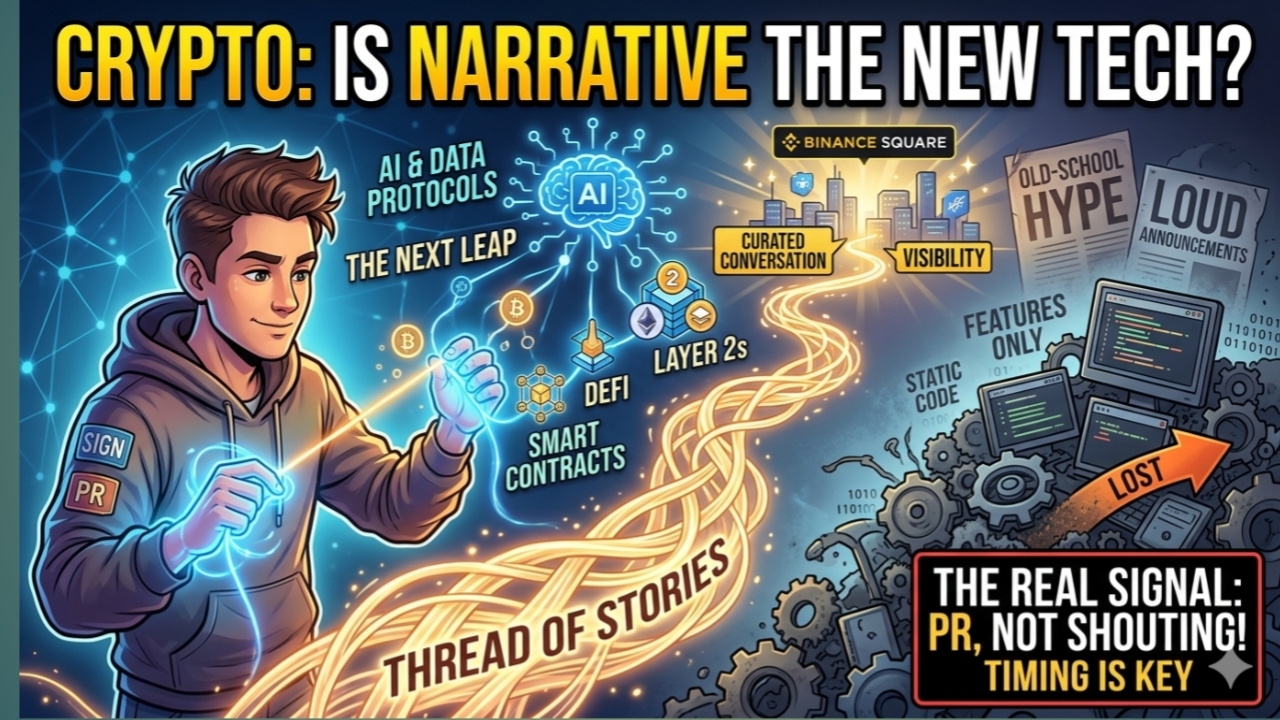
When I look back at the big moments in crypto, each era had its own buzzwords. Smart contracts kicked things off—it felt like magic, code replacing trust. DeFi followed, and suddenly everyone was talking about taking control of their own money (I remember messing around with the early DeFi protocols and, man, half the time I barely understood what was happening). Then Layer 2s came in, trying to fix scaling headaches. And now? AI and data protocols are popping up everywhere. Feels like every chat is about models, automation, and the next leap forward.
But here’s the twist: the winners weren’t always the biggest brains or the slickest code. They got the vibe right. Timing, storytelling, visibility. That’s what made them pop.
Lately, I’ve been watching newer projects and how they handle PR. Not just what they’re building, but how they’re weaving themselves into this bigger drama that’s playing out. SIGN’s been interesting to watch—it’s not out there shouting, but you keep seeing the name pop up, just enough to notice. Honestly, that’s usually a signal of smart positioning, not just deep pockets.
It’s funny—PR used to be all about hype, big launches, loud announcements. Now, it feels more like they’re building a scaffold, one piece at a time. You get a story that actually connects the dots: product updates, ecosystem moves, even casual community banter. There’s a thread to follow, and that matters way more than most folks realize.
Because here’s the thing. You can build something cool, but if people don’t see it, you’re stuck. There’s this gap—between what’s made and what’s noticed. PR fills that gap, but only if it’s done right. Mess it up, and you’re just static. Do it well, and you’re shaping how people think, even if they don’t know it.
Platforms like Binance Square are in the mix too. Not just blasting info—they curate the conversation. Stuff gets discussed over and over, and suddenly it feels like it matters, even if it came from nowhere. I’ve seen little projects get way more attention than you’d expect, just because they showed up in all the right spots. I mean, it almost feels unfair, but that’s just the game.
Timing’s a big deal. We aren’t in that full-blown hype cycle right now—which, honestly, is when the smart projects make moves. Lay the groundwork while it’s quiet, and when things pick up, they’re suddenly everywhere. I’ve fallen for it myself, thinking, “Wow, this project blew up overnight!” Nah—they just planted seeds early.
So when I track SIGN, I don’t care so much about the latest headline. I’m watching for deeper stuff—how they fit into the bigger trends, whether they’re tapping into the next wave before everyone else, and if their PR is teaching, not just shouting. That’s the real signal.
Because in crypto, fame piles up fast. Visibility’s like compounding interest—it builds and builds.
And sometimes, what looks like “just PR”? It’s actually the birth of a whole new story, happening right in front of us.
#SignDigitalSovereignt @SignOfficial $SIGN
Anyway, what’s your take? Are we still in the early innings of this narrative cycle, or is stuff getting saturated and I’m just slow to catch on?]
Narrative > Tech: Is SIGN Proof? (My Honest Take)
the way stories take shape in crypto these days is kind of wild. I used to think innovation was everything—new tech, fancy features, all that jazz. But now? If a project doesn’t know how to spin a good yarn, it just gets lost. People want something they can believe in, something that sticks.
#SignDigitalSovereignIntra
When I look back at the big moments in crypto, each era had its own buzzwords. Smart contracts kicked things off—it felt like magic, code replacing trust. DeFi followed, and suddenly everyone was talking about taking control of their own money (I remember messing around with the early DeFi protocols and, man, half the time I barely understood what was happening). Then Layer 2s came in, trying to fix scaling headaches. And now? AI and data protocols are popping up everywhere. Feels like every chat is about models, automation, and the next leap forward.
But here’s the twist: the winners weren’t always the biggest brains or the slickest code. They got the vibe right. Timing, storytelling, visibility. That’s what made them pop.
Lately, I’ve been watching newer projects and how they handle PR. Not just what they’re building, but how they’re weaving themselves into this bigger drama that’s playing out. SIGN’s been interesting to watch—it’s not out there shouting, but you keep seeing the name pop up, just enough to notice. Honestly, that’s usually a signal of smart positioning, not just deep pockets.
It’s funny—PR used to be all about hype, big launches, loud announcements. Now, it feels more like they’re building a scaffold, one piece at a time. You get a story that actually connects the dots: product updates, ecosystem moves, even casual community banter. There’s a thread to follow, and that matters way more than most folks realize.
Because here’s the thing. You can build something cool, but if people don’t see it, you’re stuck. There’s this gap—between what’s made and what’s noticed. PR fills that gap, but only if it’s done right. Mess it up, and you’re just static. Do it well, and you’re shaping how people think, even if they don’t know it.
Platforms like Binance Square are in the mix too. Not just blasting info—they curate the conversation. Stuff gets discussed over and over, and suddenly it feels like it matters, even if it came from nowhere. I’ve seen little projects get way more attention than you’d expect, just because they showed up in all the right spots. I mean, it almost feels unfair, but that’s just the game.
Timing’s a big deal. We aren’t in that full-blown hype cycle right now—which, honestly, is when the smart projects make moves. Lay the groundwork while it’s quiet, and when things pick up, they’re suddenly everywhere. I’ve fallen for it myself, thinking, “Wow, this project blew up overnight!” Nah—they just planted seeds early.
So when I track SIGN, I don’t care so much about the latest headline. I’m watching for deeper stuff—how they fit into the bigger trends, whether they’re tapping into the next wave before everyone else, and if their PR is teaching, not just shouting. That’s the real signal.
Because in crypto, fame piles up fast. Visibility’s like compounding interest—it builds and builds.
And sometimes, what looks like “just PR”? It’s actually the birth of a whole new story, happening right in front of us.
#SignDigitalSovereignt @SignOfficial $SIGN
Anyway, what’s your take? Are we still in the early innings of this narrative cycle, or is stuff getting saturated and I’m just slow to catch on?]
2
22

Article
Simple Wins in Crypto AgainIt’s wild, the stuff that actually gets traction in crypto these days. You look around, and what’s working isn’t always what you’d expect—seriously, it throws me off sometimes.
I remember when every cycle had its “Big Idea”—smart contracts were the hot topic, then DeFi came crashing in, Layer 2 scaling had its moment… and lately, AI keeps grabbing headlines left and right, bleeding over from tech into crypto. But while all those flashy trends hog the spotlight, there’s this quieter, almost sneaky layer that hardly anyone mentions: how the info actually gets packaged and passed around.
Honestly, after watching cycles come and go, I’ve noticed it’s not always the tech geniuses or the next-level products that pull in all the attention. It's the folks who can take these gnarly, complicated ideas and break them down just right, at exactly the moment people need it.
And that’s kind of where things get interesting for me now.
Lately, I see these “SIGN-style” articles—you know, the classic beginner stuff. Easy reads. Straightforward explanations. The stuff anyone can pick up and follow. It’s not that this approach is anything new; it’s just, the environment keeps flipping. After a crazy hype phase where people get overwhelmed, everything resets. New faces rush in. Suddenly, the real challenge isn’t the fancy new tech—it’s figuring out what the heck is going on.
I've been watching this on platforms like Binance Square. The old-school way—waiting for whitepapers, developer tweets—feels almost out of touch. Now, narratives get chewed over in comment sections and chat threads, then blasted into the ether in snack-sized posts. Clarity, man—it’s almost the secret weapon.
What really strikes me about this SIGN-style writing isn’t just that it’s for beginners. It’s that it fits how people pay attention now. Short bits. Clean structure. One thing at a time. It doesn’t assume you already know your way around the lingo or have a PhD in blockchain. Just cuts out all that friction, lets people actually get in the door.
It’s funny, though. There’s a trap here. Just because something’s simple to read doesn’t mean it actually matters. Honestly, some of the most valuable stuff—even game-changing insights—gets totally ignored because it's way over people’s heads or buried under jargon.
The winners? It feels like they’re the ones walking that tightrope—making things digestible but not watering it all down.
Oh—and timing’s everything. The market isn’t going crazy right now, but it’s not dead either. We’re in that weird in-between zone. Not full-blown euphoric, definitely not apocalyptic. People are poking around, learning, shifting their game plan. That’s when content that teaches, instead of just flexing, starts shining.
So, when I think about pumping out these accessible crypto guides—or SIGN articles or whatever—I don’t just see it as “content strategy.” It’s like staking your claim in the middle of the cycle, right as the crowd’s quietly rebuilding what it knows.
Feels important. Because if narratives actually shape what happens in these markets, then the way we tell those stories matters just as much as the tech itself.
#signDigitalSovereignlnfra $SIGN
Anyone else feeling this shift? Are we heading back into the “simple is king” era? I’d love to know if I’m seeing ghosts or there’s really something bubbling under the surface.@SignOfficial
Simple Wins in Crypto Again
It’s wild, the stuff that actually gets traction in crypto these days. You look around, and what’s working isn’t always what you’d expect—seriously, it throws me off sometimes.
I remember when every cycle had its “Big Idea”—smart contracts were the hot topic, then DeFi came crashing in, Layer 2 scaling had its moment… and lately, AI keeps grabbing headlines left and right, bleeding over from tech into crypto. But while all those flashy trends hog the spotlight, there’s this quieter, almost sneaky layer that hardly anyone mentions: how the info actually gets packaged and passed around.
Honestly, after watching cycles come and go, I’ve noticed it’s not always the tech geniuses or the next-level products that pull in all the attention. It's the folks who can take these gnarly, complicated ideas and break them down just right, at exactly the moment people need it.
And that’s kind of where things get interesting for me now.
Lately, I see these “SIGN-style” articles—you know, the classic beginner stuff. Easy reads. Straightforward explanations. The stuff anyone can pick up and follow. It’s not that this approach is anything new; it’s just, the environment keeps flipping. After a crazy hype phase where people get overwhelmed, everything resets. New faces rush in. Suddenly, the real challenge isn’t the fancy new tech—it’s figuring out what the heck is going on.
I've been watching this on platforms like Binance Square. The old-school way—waiting for whitepapers, developer tweets—feels almost out of touch. Now, narratives get chewed over in comment sections and chat threads, then blasted into the ether in snack-sized posts. Clarity, man—it’s almost the secret weapon.
What really strikes me about this SIGN-style writing isn’t just that it’s for beginners. It’s that it fits how people pay attention now. Short bits. Clean structure. One thing at a time. It doesn’t assume you already know your way around the lingo or have a PhD in blockchain. Just cuts out all that friction, lets people actually get in the door.
It’s funny, though. There’s a trap here. Just because something’s simple to read doesn’t mean it actually matters. Honestly, some of the most valuable stuff—even game-changing insights—gets totally ignored because it's way over people’s heads or buried under jargon.
The winners? It feels like they’re the ones walking that tightrope—making things digestible but not watering it all down.
Oh—and timing’s everything. The market isn’t going crazy right now, but it’s not dead either. We’re in that weird in-between zone. Not full-blown euphoric, definitely not apocalyptic. People are poking around, learning, shifting their game plan. That’s when content that teaches, instead of just flexing, starts shining.
So, when I think about pumping out these accessible crypto guides—or SIGN articles or whatever—I don’t just see it as “content strategy.” It’s like staking your claim in the middle of the cycle, right as the crowd’s quietly rebuilding what it knows.
Feels important. Because if narratives actually shape what happens in these markets, then the way we tell those stories matters just as much as the tech itself.
#signDigitalSovereignlnfra $SIGN
Anyone else feeling this shift? Are we heading back into the “simple is king” era? I’d love to know if I’m seeing ghosts or there’s really something bubbling under the surface.@SignOfficial
1
43
Article
US Labor Shortage: Who Will Do the WorkU.S. workforce growth is expected to slow over the next decade, highlighting the urgent need for employers to prepare
Demographic and labor market trends in the U.S. point to an ominous scenario. The nation potentially faces a shortfall of millions of workers in the decade to come — especially in the critical health care sector — due to a projected reduction in workforce participation.
The U.S. Bureau of Labor Statistics (BLS) projects that 6.7 million jobs will be added to the economy by 2033. However, the number of workers available to fill those jobs is expected to be constrained by an ongoing wave of retiring Baby Boomers, slowing population growth among working age adults, and immigration levels coming up short of what’s needed to maintain employment growth.
Although the number of Americans ages 16 and older is projected to increase by 16.4 million people by 2033, that’s 5 million less than the increase that occurred in 2013-2023. On top of that, there are already hundreds of thousands of open jobs without people to fill them for reasons such as a mismatch of skills and some people deciding not to take part in the labor force.
SHRM’s data brief on understanding the U.S. labor shortage found that as of July 2025, 32.7% of job openings could not be filled by unemployed individuals whose most recent employment was in the same job group.
While employment is projected to grow 0.4% annually through 2033, population growth isn’t expected to keep up because the largest increase is projected among older people, who are less likely to work. As a result, there will be a continued decline in the labor force participation rate, dropping from 62.7% in August 2024 to a projected 61.2% in 2033, said Kevin Dubina, an economist in the BLS Office of Occupational Statistics and Employment Projections.
The situation is expected to worsen as industries such as health care will see demand for workers skyrocket in the years ahead. On the other hand, some occupations will continue to be thinned out by advancements in technology and changing consumer habits.
“The news is not comforting,” said Ron Hetrick, senior economist at Lightcast, a labor market data analytics firm in Moscow, Idaho. “The most acute shortages of workers will arrive in under a decade, and the industries hardest hit are among those our society relies on most.”
There’s a caveat, however. While the BLS “does the best they can to give us projections based on recent trends — and they have been fairly accurate on average — there’s no way to capture everything that will happen over a decade,” said Harry Holzer, professor of public policy at the McCourt School of Public Policy at Georgetown University in Washington, D.C., and former chief economist for the U.S. Department of Labor during the Clinton administration. “So, these projections need to be taken with some caution.”
Toolkit: Workforce Planning: Aligning Talent with Strategic Objectives
Workforce Participation Squeezed at Both Ends
Population aging, which occurs when the birth rate falls while life expectancy increases, has been a long-term trend in the U.S. and around the world for decades, explained Justin Ladner, senior labor economist at SHRM.
“The fact that the population continues to age comes as no surprise, though I think its rapid pace in recent years has caught people off guard,” he said.
Older people are less likely to work, and the retirement of the Baby Boomer generation — an enormous demographic of 76.4 million that has dominated the workforce since the 1970s — is in full swing,” Holzer said. “Over the next decade, that will likely accelerate to include later members of that group born in the late 1950s and early 1960s.”
The pandemic accelerated Baby Boomer retirements, which were already on course to be more disruptive than those of previous generations, both because of the unprecedented size of the generation born between 1946 and 1964 and the contrasting smaller size of the generations that followed.
“This steep rise and fall of U.S. birth rates means we no longer have enough young people to replace millions of Boomer retirees,” Holzer said.
Making matters worse, labor force participation of younger people ages 16 to 24 has been declining for years, and the rate for the all-important prime-age cohort of 25 to 54 has stalled, driven by fewer men working than before, Dubina explained. Men’s prime age participation rate has been trending down since the 1950s, with some of the decline — especially since the 2000s — potentially attributable to fewer available manufacturing jobs, he said.
“The problem isn’t that men make up a smaller piece of the pie, it’s that they are opting out of the pie entirely,” Hetrick said. “Gen X, Millennial, and Gen Z men do not participate in the labor force at anywhere near the rates that prior generations once did. Millennials now outnumber living Baby Boomers, but fewer Millennial men are choosing to get jobs.”
That said, women’s prime-age participation rate increased during the second half of the 20th century, recently reaching a new peak in 2023.
A Structural Problem
A major dilemma is that the demographic transition taking place in the U.S. and other highly industrialized societies is structural, not cyclical. The prime factors that affect population growth, and, ultimately, labor force participation, are native-born fertility rates, which fell in 2023 to their lowest point in a century, and immigration. What happens with immigration depends on government policy, making it a big unknown.
“Growth in the workforce will absolutely depend on immigration,” Ladner said. “According to the Census Bureau’s main population projection for 2023-2100, the prime-age population will grow slowly until the mid-2040s and decline thereafter. However, this projection depends heavily on immigration levels. In the no-immigration scenario, the prime-age population is essentially already in decline; under the high-immigration scenario, this population would continue to grow through 2100.”
#JobPortalInnovation #Write2Earn $USDC
US Labor Shortage: Who Will Do the Work
U.S. workforce growth is expected to slow over the next decade, highlighting the urgent need for employers to prepare
Demographic and labor market trends in the U.S. point to an ominous scenario. The nation potentially faces a shortfall of millions of workers in the decade to come — especially in the critical health care sector — due to a projected reduction in workforce participation.
The U.S. Bureau of Labor Statistics (BLS) projects that 6.7 million jobs will be added to the economy by 2033. However, the number of workers available to fill those jobs is expected to be constrained by an ongoing wave of retiring Baby Boomers, slowing population growth among working age adults, and immigration levels coming up short of what’s needed to maintain employment growth.
Although the number of Americans ages 16 and older is projected to increase by 16.4 million people by 2033, that’s 5 million less than the increase that occurred in 2013-2023. On top of that, there are already hundreds of thousands of open jobs without people to fill them for reasons such as a mismatch of skills and some people deciding not to take part in the labor force.
SHRM’s data brief on understanding the U.S. labor shortage found that as of July 2025, 32.7% of job openings could not be filled by unemployed individuals whose most recent employment was in the same job group.
While employment is projected to grow 0.4% annually through 2033, population growth isn’t expected to keep up because the largest increase is projected among older people, who are less likely to work. As a result, there will be a continued decline in the labor force participation rate, dropping from 62.7% in August 2024 to a projected 61.2% in 2033, said Kevin Dubina, an economist in the BLS Office of Occupational Statistics and Employment Projections.
The situation is expected to worsen as industries such as health care will see demand for workers skyrocket in the years ahead. On the other hand, some occupations will continue to be thinned out by advancements in technology and changing consumer habits.
“The news is not comforting,” said Ron Hetrick, senior economist at Lightcast, a labor market data analytics firm in Moscow, Idaho. “The most acute shortages of workers will arrive in under a decade, and the industries hardest hit are among those our society relies on most.”
There’s a caveat, however. While the BLS “does the best they can to give us projections based on recent trends — and they have been fairly accurate on average — there’s no way to capture everything that will happen over a decade,” said Harry Holzer, professor of public policy at the McCourt School of Public Policy at Georgetown University in Washington, D.C., and former chief economist for the U.S. Department of Labor during the Clinton administration. “So, these projections need to be taken with some caution.”
Toolkit: Workforce Planning: Aligning Talent with Strategic Objectives
Workforce Participation Squeezed at Both Ends
Population aging, which occurs when the birth rate falls while life expectancy increases, has been a long-term trend in the U.S. and around the world for decades, explained Justin Ladner, senior labor economist at SHRM.
“The fact that the population continues to age comes as no surprise, though I think its rapid pace in recent years has caught people off guard,” he said.
Older people are less likely to work, and the retirement of the Baby Boomer generation — an enormous demographic of 76.4 million that has dominated the workforce since the 1970s — is in full swing,” Holzer said. “Over the next decade, that will likely accelerate to include later members of that group born in the late 1950s and early 1960s.”
The pandemic accelerated Baby Boomer retirements, which were already on course to be more disruptive than those of previous generations, both because of the unprecedented size of the generation born between 1946 and 1964 and the contrasting smaller size of the generations that followed.
“This steep rise and fall of U.S. birth rates means we no longer have enough young people to replace millions of Boomer retirees,” Holzer said.
Making matters worse, labor force participation of younger people ages 16 to 24 has been declining for years, and the rate for the all-important prime-age cohort of 25 to 54 has stalled, driven by fewer men working than before, Dubina explained. Men’s prime age participation rate has been trending down since the 1950s, with some of the decline — especially since the 2000s — potentially attributable to fewer available manufacturing jobs, he said.
“The problem isn’t that men make up a smaller piece of the pie, it’s that they are opting out of the pie entirely,” Hetrick said. “Gen X, Millennial, and Gen Z men do not participate in the labor force at anywhere near the rates that prior generations once did. Millennials now outnumber living Baby Boomers, but fewer Millennial men are choosing to get jobs.”
That said, women’s prime-age participation rate increased during the second half of the 20th century, recently reaching a new peak in 2023.
A Structural Problem
A major dilemma is that the demographic transition taking place in the U.S. and other highly industrialized societies is structural, not cyclical. The prime factors that affect population growth, and, ultimately, labor force participation, are native-born fertility rates, which fell in 2023 to their lowest point in a century, and immigration. What happens with immigration depends on government policy, making it a big unknown.
“Growth in the workforce will absolutely depend on immigration,” Ladner said. “According to the Census Bureau’s main population projection for 2023-2100, the prime-age population will grow slowly until the mid-2040s and decline thereafter. However, this projection depends heavily on immigration levels. In the no-immigration scenario, the prime-age population is essentially already in decline; under the high-immigration scenario, this population would continue to grow through 2100.”
#JobPortalInnovation #Write2Earn $USDC
2
242
$ETH #SECApprovesNasdaqTokenizedStocksPilo Nasdaq has received SEC approval to launch a pilot program for trading tokenized securities, marking a significant move for Wall Street into blockchain infrastructure.
However, the process remains tied to existing centralized clearing systems. The pilot will enable Nasdaq to trade tokenized versions of major stocks and select index ETFs, acknowledging “Real World Assets” (RWAs) at a federal level.
While embracing new technology, the model maintains traditional rules and prioritizes safety over decentralization. This approval comes as crypto markets stabilize, with traditional finance firms racing to modernize legacy settlement systems.
This news comes as the broader crypto market dropped -4.5% overnight, losing the crucial $2.5 trillion level, with Bitcoin flirting dangerously close to $70,000 after a -5.2% slump over the past 24 hours.
The Nasdaq Pilot Program: How Wall Street Goes On-Chain
To grasp the significance of this pilot, it’s important to understand the stock market’s “plumbing.” Currently, buying a stock feels instant, but it takes one to two days for money and shares to exchange, creating a delay that ties up billions daily.
Tokenization transforms stocks into digital tokens on a blockchain. In Nasdaq’s pilot, this involves creating a “digital twin” of shares that retain the same rights, ticker symbols, and values as traditional stocks.
The process is mostly invisible to traders but transformative for brokers. When an order is marked for “tokenized settlement,” Nasdaq relays this to the Depository Trust & Clearing Corporation (DTC). If the buyer’s wallet and technology match, the trade settles on the blockchain.
Importantly, if an issue arises, the trade defaults to the traditional method, providing a hybrid system that combines blockchain and traditional safety measures.
See how institutional giants like BlackRock are bridging TradFi and crypto with ETFs.
#SECApprovesNasdaqTokenizedStocksPilot #Write2Earn $ETH $USDC
2
94
Article
Trust Without a Middleman: Signing and Attestation in Universal Microservices#SignDigitalSovereignlntra a evidence must live where it is checked. it is saying evidence must remain attributable and consistent across where it is placed.
that split gets even stranger once the infrastructure layer shows up, because now SignScan and the query interfaces are recomposing data from different chains and storage modes into one readable surface.
people look at that explorer or API response and feel like they are seeing the protocol. not really. they are seeing the infrastructure layer make the protocol legible.
the attestation layer produced a record, the storage layer anchored it somewhere, and the infrastructure layer pulled it back together into something searchable enough for audits, reporting, compliance checks, or just ordinary reuse.
that is not a cosmetic layer. without it, the evidence would exist but stay operationally thin. with it, retrieval becomes the practical form of verification for everyone downstream.
above all of that sits the trust layer, which is maybe the most important architectural fact and also the easiest to miss because it barely looks like code.
issuers, institutions, accredited authorities, off-chain organizations, whatever source is actually allowed to say this claim is worth signing, that part is outside the protocol. Sign does not create authority out of nowhere. it captures authority, structures it, and makes it portable
so the architecture is not replacing trust. it is separating trust source from trust representation. the issuer lives in one domain. the evidence record lives in another. other systems consume the second one because they cannot practically keep going back to the first one every time they need to act.
From e‑Signatures to Sovereign Infrastructure: Sign’s Institutional Pivot
I do not believe in a crypto firm discussing government infrastructure. It normally translates to the fact that the firm is not growing anymore and requires a large eye-catching target. Therefore, when Sign presented S.I.G.N. (Sovereign Infrastructure for Global Nations), I was about to roll my eyes and go.
And then I read the entire story. It began to get sense and that was frustrating yet interesting.
It is not the new name that made me change my mind. That was the way the company changed with time.
Sign did not choose one day to sell software to governments. It became that role virtually by accident. In 2019, the project was initiated under the name of EthSign, a decentralized analogue of DocuSign, which was developed at ETHWaterloo. Initially it was easy: sign documents on a public registry. Not a big deal.
I later came to know that a signature is not the only type of evidence. It is not just the development of a signing tool once a company begins to think about the idea of attestations, which are verifiable records that could be created, changed, or cancelled. It is creating a system that is trustworthy by people.
Once a system has the ability to add value to tens of millions of wallets reliably, it is no longer the preserve of crypto startups. It works around the same practical issues that governments encounter in the process of translocation of money or verifying identity on a large scale.
Technically the design is so simple. Instead of pushing governments towards an entirely public arrangement, Sign proposes a dual-chain solution. An authorized Hyperledger Fabric-based Sovereign Chain deals with sensitive tasks such as CBDC issuance, identity systems, internal settlements. Next to it is a community Layer-2 on BNB Chain that provides market access and transparency.
The two chains are not distinct. Privately issued CBDCs can be swapped to publicly issued stablecoins immediately using a special bridge. It brings equilibrium between government control and public network liquidity and visibility.
This is topped well by other pieces of Sign that exist. Identity attestations are still done by Sign. TokenTable will be the layer of distribution of subsidies, welfare, or tokenized assets. What initially was crypto technology is now like infrastructure.
Naturally there is the dark side also. The revenue of TokenTable depends on the new crypto projects, which are being launched and releasing tokens. Slowing market also slows revenue. On the contrary, governments do not vanish away during a bear cycle. They possess funds, regularity and huge issues to resolve.
The incentive is self-explanatory by the numbers. In the year 2024, the global software expenditure reached 675 billion dollars. That is approximately 300 million annually in case blockchain claims 5 percent of that and Sign claims 1 percent of that portion. A different league than the current one of TokenTable of about $15 million. The government systems are also characterized by high switching costs. Once embedded, they stay.
Still, ideas are cheap. The thing that attracted my attention is that Sign is already doing deals in the real world.
#signDigitalSovereignlnfra @SignOfficial $SIGN
Trust Without a Middleman: Signing and Attestation in Universal Microservices
#SignDigitalSovereignlntra a evidence must live where it is checked. it is saying evidence must remain attributable and consistent across where it is placed.
that split gets even stranger once the infrastructure layer shows up, because now SignScan and the query interfaces are recomposing data from different chains and storage modes into one readable surface.
people look at that explorer or API response and feel like they are seeing the protocol. not really. they are seeing the infrastructure layer make the protocol legible.
the attestation layer produced a record, the storage layer anchored it somewhere, and the infrastructure layer pulled it back together into something searchable enough for audits, reporting, compliance checks, or just ordinary reuse.
that is not a cosmetic layer. without it, the evidence would exist but stay operationally thin. with it, retrieval becomes the practical form of verification for everyone downstream.
above all of that sits the trust layer, which is maybe the most important architectural fact and also the easiest to miss because it barely looks like code.
issuers, institutions, accredited authorities, off-chain organizations, whatever source is actually allowed to say this claim is worth signing, that part is outside the protocol. Sign does not create authority out of nowhere. it captures authority, structures it, and makes it portable
so the architecture is not replacing trust. it is separating trust source from trust representation. the issuer lives in one domain. the evidence record lives in another. other systems consume the second one because they cannot practically keep going back to the first one every time they need to act.
From e‑Signatures to Sovereign Infrastructure: Sign’s Institutional Pivot
I do not believe in a crypto firm discussing government infrastructure. It normally translates to the fact that the firm is not growing anymore and requires a large eye-catching target. Therefore, when Sign presented S.I.G.N. (Sovereign Infrastructure for Global Nations), I was about to roll my eyes and go.
And then I read the entire story. It began to get sense and that was frustrating yet interesting.
It is not the new name that made me change my mind. That was the way the company changed with time.
Sign did not choose one day to sell software to governments. It became that role virtually by accident. In 2019, the project was initiated under the name of EthSign, a decentralized analogue of DocuSign, which was developed at ETHWaterloo. Initially it was easy: sign documents on a public registry. Not a big deal.
I later came to know that a signature is not the only type of evidence. It is not just the development of a signing tool once a company begins to think about the idea of attestations, which are verifiable records that could be created, changed, or cancelled. It is creating a system that is trustworthy by people.
Once a system has the ability to add value to tens of millions of wallets reliably, it is no longer the preserve of crypto startups. It works around the same practical issues that governments encounter in the process of translocation of money or verifying identity on a large scale.
Technically the design is so simple. Instead of pushing governments towards an entirely public arrangement, Sign proposes a dual-chain solution. An authorized Hyperledger Fabric-based Sovereign Chain deals with sensitive tasks such as CBDC issuance, identity systems, internal settlements. Next to it is a community Layer-2 on BNB Chain that provides market access and transparency.
The two chains are not distinct. Privately issued CBDCs can be swapped to publicly issued stablecoins immediately using a special bridge. It brings equilibrium between government control and public network liquidity and visibility.
This is topped well by other pieces of Sign that exist. Identity attestations are still done by Sign. TokenTable will be the layer of distribution of subsidies, welfare, or tokenized assets. What initially was crypto technology is now like infrastructure.
Naturally there is the dark side also. The revenue of TokenTable depends on the new crypto projects, which are being launched and releasing tokens. Slowing market also slows revenue. On the contrary, governments do not vanish away during a bear cycle. They possess funds, regularity and huge issues to resolve.
The incentive is self-explanatory by the numbers. In the year 2024, the global software expenditure reached 675 billion dollars. That is approximately 300 million annually in case blockchain claims 5 percent of that and Sign claims 1 percent of that portion. A different league than the current one of TokenTable of about $15 million. The government systems are also characterized by high switching costs. Once embedded, they stay.
Still, ideas are cheap. The thing that attracted my attention is that Sign is already doing deals in the real world.
#signDigitalSovereignlnfra @SignOfficial $SIGN
2
43
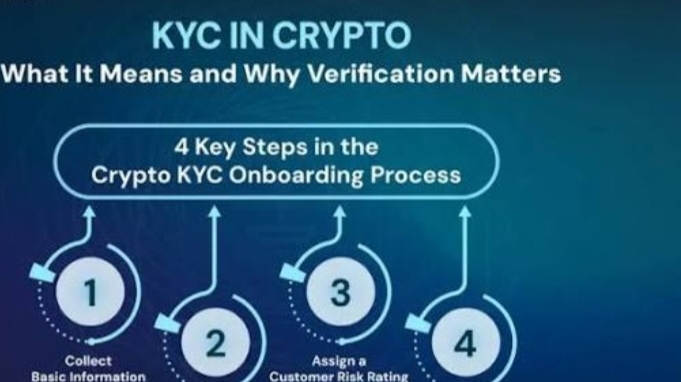
Article
Why Digital Sovereignty ON Works When It Becomes Infrastructure:why #SignDigitalSovereignty caught my attention. Not because digital identity is a new story, but because it raises a more practical question. Can identity infrastructure be both user-controlled and verifiable across multiple environments without depending on a central authority. That is where most systems struggle. So the real question becomes whether this model can move beyond theory and become something developers and users actually rely on in everyday interactions.From what I understand, the protocol is designed around verifiable identity that remains under user ownership. Instead of storing identity in a single database, it distributes trust through cryptographic proofs. This allows users to prove specific attributes without exposing unnecessary data. A simple way to think about it is like accessing multiple platforms with the same identity, but without handing over full control to each one. The system verifies what is required while keeping the rest private. This matters because it changes how data moves between applications. Instead of platforms owning identity, users carry it across ecosystems in a way that is both secure and interoperable.$EDGE and $UAI connect with Sign by enabling AI systems to generate, process, and validate identity-related data off-chain, while Sign ensures those identities remain user-owned, verifiable, and usable across different ENGINEERING BEHIND SIGN
How do you make a piece of data provable, portable, and still usable across completely different systems?
At the center of it is this idea of attestations. Basically, you’re making a claim structured, signed, verifiable
But the way SIGN handle storage is where it gets practical. You can throw the full data on-chain if you care about maximum trust. Expensive, but clean. Or you just anchor a hash and keep the actual payload off-chain. Way cheaper. Or mix both depending on what you’re doing.
They’re just templates, but portable ones. Like, everyone agrees on the shape of the data first, then you can move that logic across chains without rewriting everything
That alone saves so much pain. I’ve rebuilt the same validation logic across different environments more times than I want to admit.
And yeah, Sign is using asymmetric crypto and zero-knowledge proofs under the hood
So instead of exposing raw data, you’re proving properties about it. I’m over 18 without showing your ID.
SignScan is in there too. It’s basically an explorer for all this. One place to query attestations across chains. Honestly, this is one of those why didn’t this exist already? things.
Instead of building custom indexers or juggling APIs, you just hit one layer.
But the part I keep coming back to the one that’s kind of living rent-free in my head is the cross-chain verification setup with Lit Protocol and TEEs.
Because this is usually where everything falls apart.
Bridges are messy. Oracles are messy. Anything that tries to move “truth” between chains ends up either too centralized or too fragile. And Sign’s approach is different enough that I had to read it twice.
You’ve got these TEE nodes trusted execution environments. Think of them like sealed boxes. Code runs inside, and you trust the output because the box itself is locked down. Now instead of one box, you’ve got a network of them.
When Chain B wants to verify something from Chain A, a node in this network grabs the metadata, decodes it, fetches the actual attestation (maybe from Arweave, maybe from somewhere else), and then signs off on it.
You need a threshold like two-thirds of the network to agree before that signature is considered valid. Then that aggregated signature gets posted back onto the destination chain through a hook.
fetch → decode → verify → threshold sign → push result on-chain
It’s a pipeline
And honestly, this is where I’m both impressed and slightly uneasy.
Because on one hand, it’s clean. You’re not relying on a single relayer. You’re not hardcoding trust into one system. It’s distributed, verifiable, and uses real cryptographic guarantees. That’s solid.
But on the other hand there are so many moving parts.
Like, what happens when one of those steps lags? Or the data source is slow? Or the encoding changes on one chain but not another? You’re coordinating across environments that don’t even agree on how data should look half the time.
I’m still wrapping my head around how resilient this actually is under pressure. It works on paper. It even works on testnet. But production is different. It always is.
Above that, they’ve got Signchain. Their own L2. Built on the OP Stack, using Celestia for data availability. Honestly… this part is standard stuff. You spin up a rollup, offload computation, keep costs down. It makes sense. Nothing crazy there.
They did push a decent amount of load through testnet. Over a million attestations, hundreds of thousands of users. That’s not nothing. It shows the system can breathe a bit.
#SingDigitalSoreveingInfra @SignOfficial $SIGN
Why Digital Sovereignty ON Works When It Becomes Infrastructure:
why #SignDigitalSovereignty caught my attention. Not because digital identity is a new story, but because it raises a more practical question. Can identity infrastructure be both user-controlled and verifiable across multiple environments without depending on a central authority. That is where most systems struggle. So the real question becomes whether this model can move beyond theory and become something developers and users actually rely on in everyday interactions.From what I understand, the protocol is designed around verifiable identity that remains under user ownership. Instead of storing identity in a single database, it distributes trust through cryptographic proofs. This allows users to prove specific attributes without exposing unnecessary data. A simple way to think about it is like accessing multiple platforms with the same identity, but without handing over full control to each one. The system verifies what is required while keeping the rest private. This matters because it changes how data moves between applications. Instead of platforms owning identity, users carry it across ecosystems in a way that is both secure and interoperable.$EDGE and $UAI connect with Sign by enabling AI systems to generate, process, and validate identity-related data off-chain, while Sign ensures those identities remain user-owned, verifiable, and usable across different ENGINEERING BEHIND SIGN
How do you make a piece of data provable, portable, and still usable across completely different systems?
At the center of it is this idea of attestations. Basically, you’re making a claim structured, signed, verifiable
But the way SIGN handle storage is where it gets practical. You can throw the full data on-chain if you care about maximum trust. Expensive, but clean. Or you just anchor a hash and keep the actual payload off-chain. Way cheaper. Or mix both depending on what you’re doing.
They’re just templates, but portable ones. Like, everyone agrees on the shape of the data first, then you can move that logic across chains without rewriting everything
That alone saves so much pain. I’ve rebuilt the same validation logic across different environments more times than I want to admit.
And yeah, Sign is using asymmetric crypto and zero-knowledge proofs under the hood
So instead of exposing raw data, you’re proving properties about it. I’m over 18 without showing your ID.
SignScan is in there too. It’s basically an explorer for all this. One place to query attestations across chains. Honestly, this is one of those why didn’t this exist already? things.
Instead of building custom indexers or juggling APIs, you just hit one layer.
But the part I keep coming back to the one that’s kind of living rent-free in my head is the cross-chain verification setup with Lit Protocol and TEEs.
Because this is usually where everything falls apart.
Bridges are messy. Oracles are messy. Anything that tries to move “truth” between chains ends up either too centralized or too fragile. And Sign’s approach is different enough that I had to read it twice.
You’ve got these TEE nodes trusted execution environments. Think of them like sealed boxes. Code runs inside, and you trust the output because the box itself is locked down. Now instead of one box, you’ve got a network of them.
When Chain B wants to verify something from Chain A, a node in this network grabs the metadata, decodes it, fetches the actual attestation (maybe from Arweave, maybe from somewhere else), and then signs off on it.
You need a threshold like two-thirds of the network to agree before that signature is considered valid. Then that aggregated signature gets posted back onto the destination chain through a hook.
fetch → decode → verify → threshold sign → push result on-chain
It’s a pipeline
And honestly, this is where I’m both impressed and slightly uneasy.
Because on one hand, it’s clean. You’re not relying on a single relayer. You’re not hardcoding trust into one system. It’s distributed, verifiable, and uses real cryptographic guarantees. That’s solid.
But on the other hand there are so many moving parts.
Like, what happens when one of those steps lags? Or the data source is slow? Or the encoding changes on one chain but not another? You’re coordinating across environments that don’t even agree on how data should look half the time.
I’m still wrapping my head around how resilient this actually is under pressure. It works on paper. It even works on testnet. But production is different. It always is.
Above that, they’ve got Signchain. Their own L2. Built on the OP Stack, using Celestia for data availability. Honestly… this part is standard stuff. You spin up a rollup, offload computation, keep costs down. It makes sense. Nothing crazy there.
They did push a decent amount of load through testnet. Over a million attestations, hundreds of thousands of users. That’s not nothing. It shows the system can breathe a bit.
#SingDigitalSoreveingInfra @SignOfficial $SIGN
1
426

Article
Keyword research for SIGN-related contentIf you want your SIGN-related content to rank well—especially in Web3, identity, and credential verification—here’s a simple plan. It covers what keywords to focus on, how to approach search intent, and how to get moving fast.
First, hit the core keyword clusters. These are your best bet for quick wins:
Branded keywords are low competition and high intent: SIGN Network, SIGN Protocol, SIGN Web3 identity, SIGN credential verification, “What is SIGN Network,” “How SIGN works.” Just go for these–they’re easy to rank on and bring targeted traffic.
Decentralized identity (DID) keywords are next: decentralized identity, Web3 identity solutions, self-sovereign identity, blockchain identity verification, digital identity Web3. SIGN fits right in, so include topics like these for added visibility.
Credential and verification keywords matter, too: on-chain credential verification, verifiable credentials blockchain, proof of credentials crypto, trustless verification systems, credential tokenization. These terms grow in demand and stay relevant.
If SIGN does anything with tokens or rewards, add: token distribution platforms, Web3 airdrop infrastructure, crypto reward distribution, on-chain incentives system, fair token allocation blockchain. These help expand your reach among crypto enthusiasts.
Don’t overlook practical use case keywords: secure document verification Web3, DAO identity verification, Web3 reputation systems, Sybil resistance solutions, KYC alternatives blockchain. These attract folks searching for real-world solutions.
Now, go after long-tail keywords. They’re hidden gems—faster to rank and bring targeted visitors:
- “How to verify credentials on blockchain”
- “Best decentralized identity platforms 2026”
- “How SIGN protocol works step by step”
- “Web3 identity without KYC”
- “Blockchain-based certificate verification”
- “Use cases of decentralized identity in crypto”
- “How to prevent Sybil attacks in Web3”
Long-tail brings less competition and way better conversions.
For engagement-driven content (think Binance Square, blogs), use these ideas:
For educational posts: “Beginner guide to Web3 identity,” “What are verifiable credentials,” “Why decentralized identity matters.”
For thought leadership: “Future of identity in Web3,” “Problems with centralized identity systems,” “Privacy vs compliance in crypto.”
For comparisons: “SIGN vs traditional KYC,” “Decentralized identity vs centralized identity,” “Best DID projects in crypto.”
Map keywords to intent. Match what people want:
- Informational: “What is SIGN Network?” — write guides or articles
- Educational: “How credential verification works” — do tutorials
- Comparative: “Best DID platforms” — listicles are great
- Transactional: “Use SIGN protocol” — walkthroughs or product demos
Use SEO tools like Google Keyword Planner, Ahrefs, SEMrush, or Ubersuggest to track volume, difficulty, and related terms.
Here are a few sample content ideas ready for action:
- “What Is SIGN Network? The Future of Credential Verification in Web3”
- “How Decentralized Identity Is Replacing KYC (And Where SIGN Fits In)”
- “Top 5 Use Cases of On-Chain Credential Verification”
- “SIGN Protocol Explained: A Beginner’s Guide”
- “How to Build Trustless Systems with Verifiable Credentials”
#signDigitalSovereignlnfra @SignOfficial $SIGN
Start with branded and long-tail keywords,
Build authority around identity and verification,
Link between posts (SIGN ↔ DID ↔ credentials),
And keep publishing consistently, both on your blog and sites like Binance Square.
If you need more, I can whip up a full SEO content calendar for SIGN with daily topics for a month. Just ask.
Keyword research for SIGN-related content
If you want your SIGN-related content to rank well—especially in Web3, identity, and credential verification—here’s a simple plan. It covers what keywords to focus on, how to approach search intent, and how to get moving fast.
First, hit the core keyword clusters. These are your best bet for quick wins:
Branded keywords are low competition and high intent: SIGN Network, SIGN Protocol, SIGN Web3 identity, SIGN credential verification, “What is SIGN Network,” “How SIGN works.” Just go for these–they’re easy to rank on and bring targeted traffic.
Decentralized identity (DID) keywords are next: decentralized identity, Web3 identity solutions, self-sovereign identity, blockchain identity verification, digital identity Web3. SIGN fits right in, so include topics like these for added visibility.
Credential and verification keywords matter, too: on-chain credential verification, verifiable credentials blockchain, proof of credentials crypto, trustless verification systems, credential tokenization. These terms grow in demand and stay relevant.
If SIGN does anything with tokens or rewards, add: token distribution platforms, Web3 airdrop infrastructure, crypto reward distribution, on-chain incentives system, fair token allocation blockchain. These help expand your reach among crypto enthusiasts.
Don’t overlook practical use case keywords: secure document verification Web3, DAO identity verification, Web3 reputation systems, Sybil resistance solutions, KYC alternatives blockchain. These attract folks searching for real-world solutions.
Now, go after long-tail keywords. They’re hidden gems—faster to rank and bring targeted visitors:
- “How to verify credentials on blockchain”
- “Best decentralized identity platforms 2026”
- “How SIGN protocol works step by step”
- “Web3 identity without KYC”
- “Blockchain-based certificate verification”
- “Use cases of decentralized identity in crypto”
- “How to prevent Sybil attacks in Web3”
Long-tail brings less competition and way better conversions.
For engagement-driven content (think Binance Square, blogs), use these ideas:
For educational posts: “Beginner guide to Web3 identity,” “What are verifiable credentials,” “Why decentralized identity matters.”
For thought leadership: “Future of identity in Web3,” “Problems with centralized identity systems,” “Privacy vs compliance in crypto.”
For comparisons: “SIGN vs traditional KYC,” “Decentralized identity vs centralized identity,” “Best DID projects in crypto.”
Map keywords to intent. Match what people want:
- Informational: “What is SIGN Network?” — write guides or articles
- Educational: “How credential verification works” — do tutorials
- Comparative: “Best DID platforms” — listicles are great
- Transactional: “Use SIGN protocol” — walkthroughs or product demos
Use SEO tools like Google Keyword Planner, Ahrefs, SEMrush, or Ubersuggest to track volume, difficulty, and related terms.
Here are a few sample content ideas ready for action:
- “What Is SIGN Network? The Future of Credential Verification in Web3”
- “How Decentralized Identity Is Replacing KYC (And Where SIGN Fits In)”
- “Top 5 Use Cases of On-Chain Credential Verification”
- “SIGN Protocol Explained: A Beginner’s Guide”
- “How to Build Trustless Systems with Verifiable Credentials”
#signDigitalSovereignlnfra @SignOfficial $SIGN
Start with branded and long-tail keywords,
Build authority around identity and verification,
Link between posts (SIGN ↔ DID ↔ credentials),
And keep publishing consistently, both on your blog and sites like Binance Square.
If you need more, I can whip up a full SEO content calendar for SIGN with daily topics for a month. Just ask.
2
105
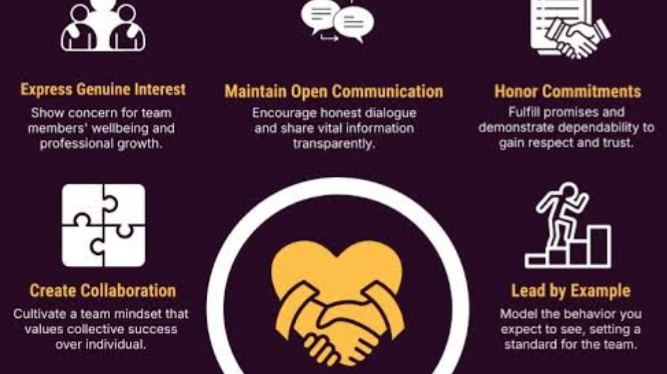
Article
The SIGN: Future of Digital Trust Identity-Backed InteractionsAI impersonation, and stolen credentials grow more common, familiar signals of trust like signatures, logins, or visual ID checks are no longer enough. Trust now depends on knowing that every interaction can be tied to a verified legal identity.
Most organizations can tell you what happened in a digital transaction. A form was signed. A document was uploaded. A video was recorded.
But very few can prove who actually did it.
That gap between action and identity is where fraud thrives. As deepfakes, AI impersonation, and stolen credentials grow more common, familiar signals of trust like signatures, logins, or visual ID checks are no longer enough. Trust now depends on knowing that every interaction can be tied to a verified legal identity.
This is the foundation of identity-backed interactions. And it is what Proof’s Certify was built to deliver.
Digital trust is too easy to fake
Every day, millions of online actions depend on identity. Opening an account. Approving a contract. Sharing sensitive data. Authorizing a payment. Each moment is an opportunity for someone to pretend to be someone else.
Fraudsters no longer need to steal an entire identity. They only need to mimic a few pieces of it. AI tools can generate a realistic face, voice, or document in seconds. Even experts struggle to tell what is real.
The result is a cycle of mistrust. Businesses tighten controls. Customers face more checkpoints. And despite all the added friction, fraud still finds a way through.
From trusting documents to trusting people
For years, digital security focused on protecting the artifact—the document, the file, the image. But files can be copied, edited, and distributed endlessly. Protecting them is not the same as proving who created them.
Identity-backed interactions (also called verifiable records) reverse that equation. Instead of asking “Can we trust this file?” you can ask “Can we trust the person behind it?”
When every interaction is verified at the source, each signature, approval, or upload carries a cryptographic link to a real verified identity. That link travels with the data wherever it goes. It cannot be separated, erased, or forged.
This shift removes the guesswork from trust. It means you no longer rely on context, screenshots, or policies to defend what happened. You have evidence of who acted and when.
Proof’s Certify turns every digital interaction into a verifiable record. It proves who performed an action, what they did, and when they did it, all without adding unnecessary steps for the user.
Each record is identity-anchored and cryptographically sealed. If someone tries to alter it, the verification instantly fails. Whether it is a document, a photo, or a video recording, Certify preserves the integrity of the moment it captures.
For customers, that creates confidence. For compliance teams, it creates clarity. For your business, it creates proof strong enough to stand on its own.
Identity-backed interactions are not a future concept. They are already reshaping how high-trust industries work:
Financial services rely on them to confirm that a payment truly came from an authorized person.Real estate and title companies use them to ensure that every signer in a closing is verified and present.Healthcare organizations need them to validate patient consent and protect record integrity.Government agencies depend on them to prevent benefits fraud, identity theft, and false filings.
Digital trust, built on Proof
The question is no longer whether identity matters. It is how to make identity the foundation of every interaction without slowing business down.
Certify gives you that foundation. It transforms every record into proof of who, what, and when. It makes every transaction defensible, every workflow faster, and every customer experience more trustworthy.
Digital trust is no longer built on belief. It is built on Proof.
#signDigitalSovereignlnfra @SignOfficial $SIGN
The SIGN: Future of Digital Trust Identity-Backed Interactions
AI impersonation, and stolen credentials grow more common, familiar signals of trust like signatures, logins, or visual ID checks are no longer enough. Trust now depends on knowing that every interaction can be tied to a verified legal identity.
Most organizations can tell you what happened in a digital transaction. A form was signed. A document was uploaded. A video was recorded.
But very few can prove who actually did it.
That gap between action and identity is where fraud thrives. As deepfakes, AI impersonation, and stolen credentials grow more common, familiar signals of trust like signatures, logins, or visual ID checks are no longer enough. Trust now depends on knowing that every interaction can be tied to a verified legal identity.
This is the foundation of identity-backed interactions. And it is what Proof’s Certify was built to deliver.
Digital trust is too easy to fake
Every day, millions of online actions depend on identity. Opening an account. Approving a contract. Sharing sensitive data. Authorizing a payment. Each moment is an opportunity for someone to pretend to be someone else.
Fraudsters no longer need to steal an entire identity. They only need to mimic a few pieces of it. AI tools can generate a realistic face, voice, or document in seconds. Even experts struggle to tell what is real.
The result is a cycle of mistrust. Businesses tighten controls. Customers face more checkpoints. And despite all the added friction, fraud still finds a way through.
From trusting documents to trusting people
For years, digital security focused on protecting the artifact—the document, the file, the image. But files can be copied, edited, and distributed endlessly. Protecting them is not the same as proving who created them.
Identity-backed interactions (also called verifiable records) reverse that equation. Instead of asking “Can we trust this file?” you can ask “Can we trust the person behind it?”
When every interaction is verified at the source, each signature, approval, or upload carries a cryptographic link to a real verified identity. That link travels with the data wherever it goes. It cannot be separated, erased, or forged.
This shift removes the guesswork from trust. It means you no longer rely on context, screenshots, or policies to defend what happened. You have evidence of who acted and when.
Proof’s Certify turns every digital interaction into a verifiable record. It proves who performed an action, what they did, and when they did it, all without adding unnecessary steps for the user.
Each record is identity-anchored and cryptographically sealed. If someone tries to alter it, the verification instantly fails. Whether it is a document, a photo, or a video recording, Certify preserves the integrity of the moment it captures.
For customers, that creates confidence. For compliance teams, it creates clarity. For your business, it creates proof strong enough to stand on its own.
Identity-backed interactions are not a future concept. They are already reshaping how high-trust industries work:
Financial services rely on them to confirm that a payment truly came from an authorized person.Real estate and title companies use them to ensure that every signer in a closing is verified and present.Healthcare organizations need them to validate patient consent and protect record integrity.Government agencies depend on them to prevent benefits fraud, identity theft, and false filings.
Digital trust, built on Proof
The question is no longer whether identity matters. It is how to make identity the foundation of every interaction without slowing business down.
Certify gives you that foundation. It transforms every record into proof of who, what, and when. It makes every transaction defensible, every workflow faster, and every customer experience more trustworthy.
Digital trust is no longer built on belief. It is built on Proof.
#signDigitalSovereignlnfra @SignOfficial $SIGN
2
156
Log in to explore more content
Join global crypto users on Binance Square
⚡️ Get latest and useful information about crypto.
💬 Trusted by the world’s largest crypto exchange.
👍 Discover real insights from verified creators.
Email / Phone number
Trending Topics
USMidterms-WhatAreMarketsExpecting?
411 views
53 Discussing
𝐒𝐓𝐎𝐏..... 𝐒𝐓𝐎𝐏..... 𝐒𝐓𝐎𝐏 🚨
$BTC 🇺🇸 THE US MIDTERMS COULD BE A BIG CATALYST FOR Bitcoin
History offers an interesting pattern.
Bitcoin recorded positive returns in the 12 months following the last three US midterm elections:
📊 2014 → BTC gained 24.5% in the following 12 months.
📊 2018 → BTC gained 44.9%.
📊 2022 → BTC gained 92.3%.
But this election carries another layer of uncertainty: crypto regulation.
The CLARITY Act remains stuck in the Senate, and a shift in political power could change the regulatory outlook for the entire industry.
Geopolitical tensions, oil prices, inflation, and monetary policy could also create short-term turbulence.
Here's what I'm watching:
The election may create volatility, but the bigger picture is liquidity.
If political uncertainty fades, macroeconomic conditions improve, and liquidity begins flowing back into risk assets, Bitcoin and the broader crypto market could have room for another major expansion.
Don't trade the headlines. Watch the liquidity.
History doesn't guarantee a repeat, but it's certainly a pattern worth watching.
#Bitcoin #BTC #Crypto #USMidterms #CryptoMarket #CLARITYAct #Liquidity
Jessica Elizabeth
·7 Likes
·19.8k views
USOctoberNFP-AreRateCutsStillPossible
192,818 views
1,439 Discussing
AMDBeatsExpectations-AINarrativeContinues
122 views
34 Discussing