
datahoffmann
32 Posts

datahoffmann
Data Analyst
4 Following
41 Followers
29 Liked
Posts
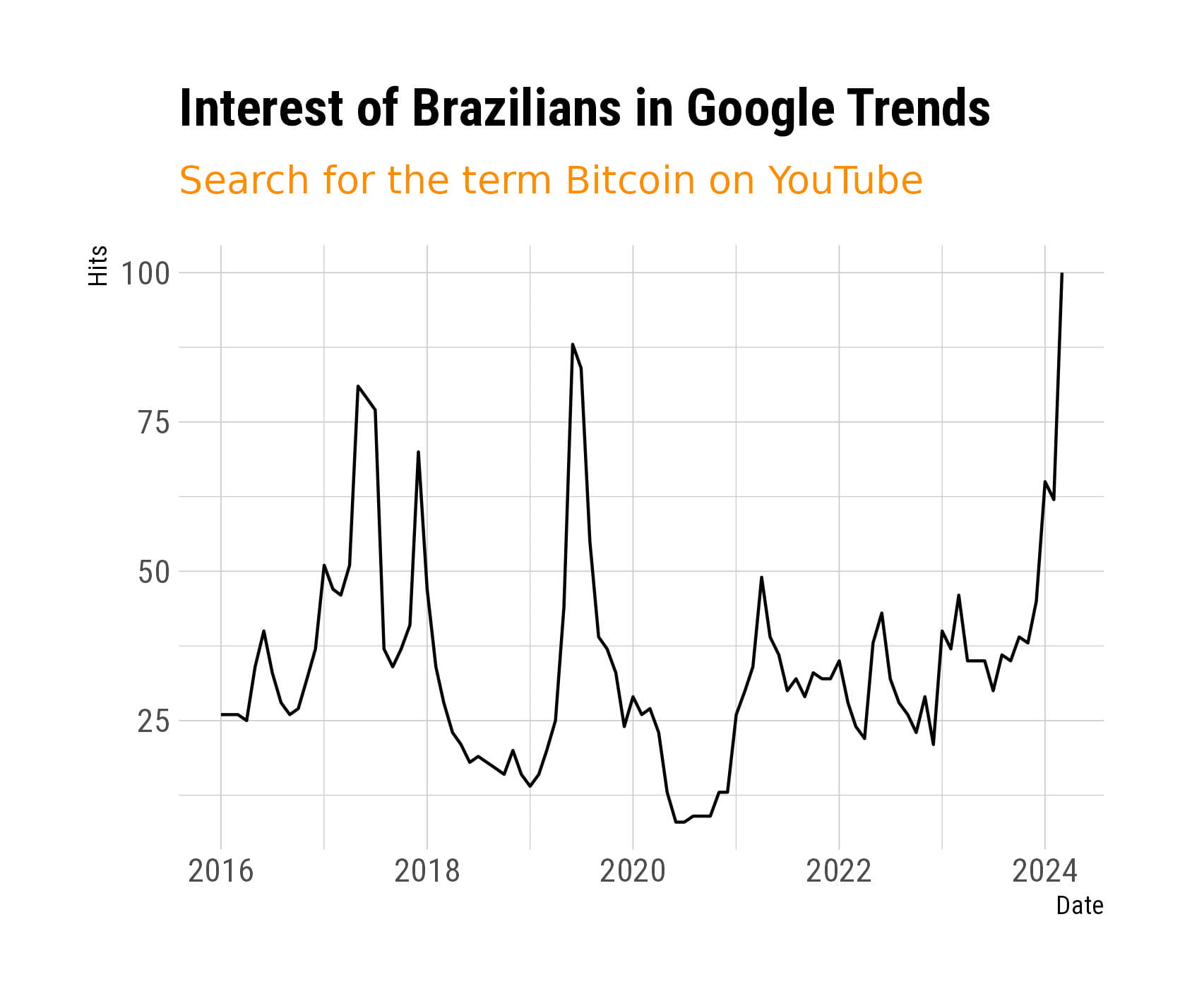
While in 2024 the search for the term "Bitcoin" on YouTube reached just over 50% of hits worldwide, in Brazil it reached almost double and the highest value since 2016.
These data suggest that in this country there may be greater production of content on this social network or that the population is beginning to look for alternatives to the local fiat currency (real) which has been gradually reducing the population's purchasing power.
To give an example, in relation to the US dollar, the real has devalued around 120% since the year 2000, when US$1 was worth R$1.80 and today it is worth R$5.23.
In relation to inflation, the real lost around 80% of its purchasing power, that is, R$100 in 2000 is equivalent to R$20 in 2024.
These factors combined with a voracious increase in ways of collecting taxes promoted by the current left-wing government may explain Brazilians' interest in trying to understand the deflationary mechanism of $BTC
These data suggest that in this country there may be greater production of content on this social network or that the population is beginning to look for alternatives to the local fiat currency (real) which has been gradually reducing the population's purchasing power.
To give an example, in relation to the US dollar, the real has devalued around 120% since the year 2000, when US$1 was worth R$1.80 and today it is worth R$5.23.
In relation to inflation, the real lost around 80% of its purchasing power, that is, R$100 in 2000 is equivalent to R$20 in 2024.
These factors combined with a voracious increase in ways of collecting taxes promoted by the current left-wing government may explain Brazilians' interest in trying to understand the deflationary mechanism of $BTC
🤔 What was the impact of the last halving on the average price of $BTC ?
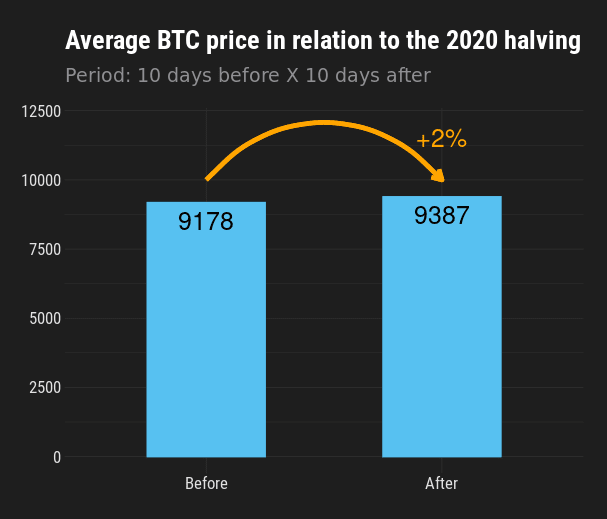
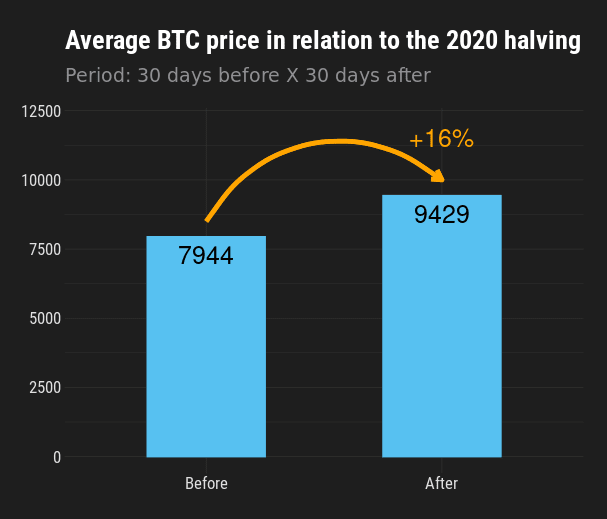
Knowing that the last halving took place on May 11, 2020, I made two comparisons, one with a shorter period and the other with a longer period.
Comparing 10 days before and 10 days after we observed practically no change in the average price, however, when comparing 30 days before with 30 days after the average price increased by 16%.
Knowing that the last halving took place on May 11, 2020, I made two comparisons, one with a shorter period and the other with a longer period.
Comparing 10 days before and 10 days after we observed practically no change in the average price, however, when comparing 30 days before with 30 days after the average price increased by 16%.
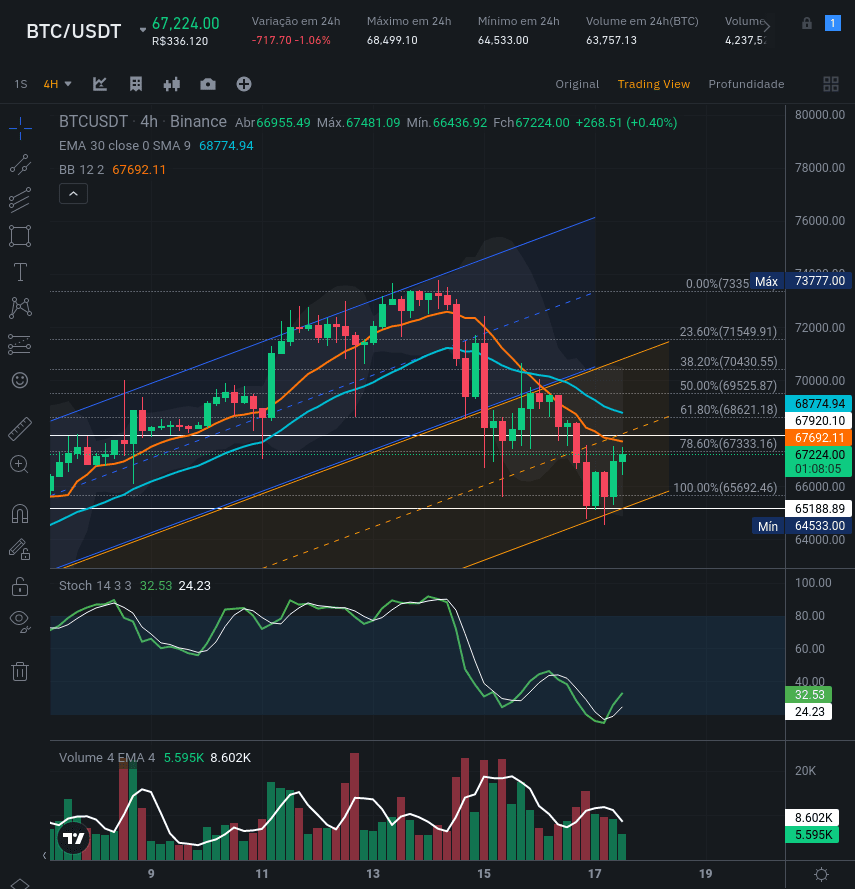
4-hour chart of $BTC shows a breakout of the bullish channel support (blue channel) on the highest day in a high volatility candle.
By doubling the same channel downwards (orange channel) we realize that today it reached an oversold region right in the channel's support area and is starting to show a new upward movement.
We have to pay attention to the volume of these recovery candles. The current one (last on the chart) is indicating that it will present a volume greater than the average volume in the last 4 candles.
By doubling the same channel downwards (orange channel) we realize that today it reached an oversold region right in the channel's support area and is starting to show a new upward movement.
We have to pay attention to the volume of these recovery candles. The current one (last on the chart) is indicating that it will present a volume greater than the average volume in the last 4 candles.
😖 Be careful with emotional analyzes intentionally created with the aim of triggering fear and making you make a hasty decision.
🚀 In technical analysis we make decisions based on signals, or indicators. In the case of $BTC , I observe some signs that indicate only a normal correction and maintenance of the upward trend:
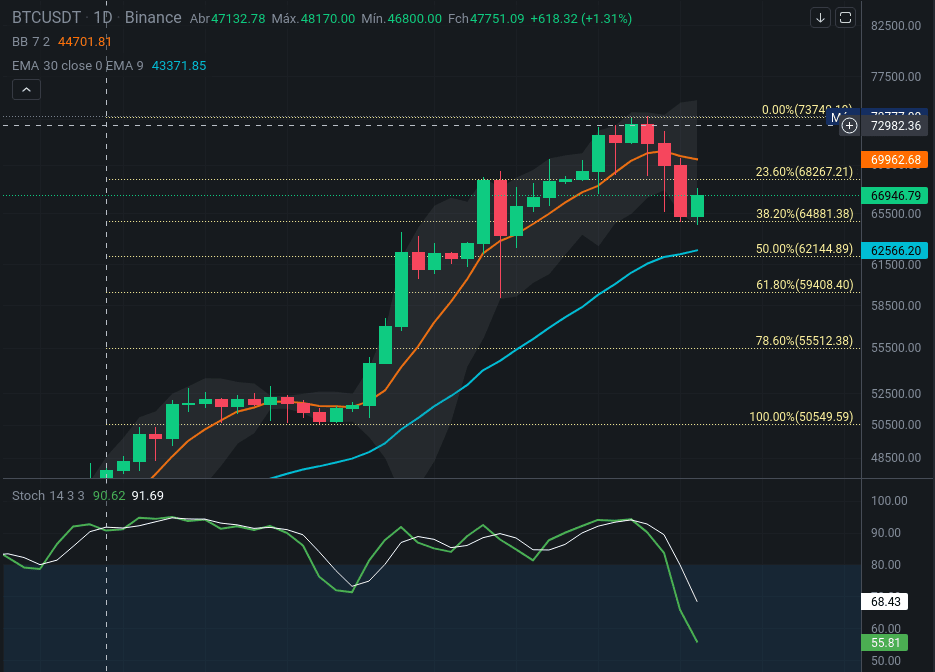
1. After falling for 3 days in a row, the price respected 38% of the Fibonacci retracement line and rose again on the daily chart.
2. The last of the 3 days of decline (03/16) demonstrated volume below the 7-day exponential moving average, suggesting a decrease in selling force.
3. The 14-day stochastic is close to the oversold zone and is at its lowest value since the end of January.
4. On the weekly chart the current week's low (64533) is still 9% above the previous week's low (59005).
🚀 In technical analysis we make decisions based on signals, or indicators. In the case of $BTC , I observe some signs that indicate only a normal correction and maintenance of the upward trend:
1. After falling for 3 days in a row, the price respected 38% of the Fibonacci retracement line and rose again on the daily chart.
2. The last of the 3 days of decline (03/16) demonstrated volume below the 7-day exponential moving average, suggesting a decrease in selling force.
3. The 14-day stochastic is close to the oversold zone and is at its lowest value since the end of January.
4. On the weekly chart the current week's low (64533) is still 9% above the previous week's low (59005).
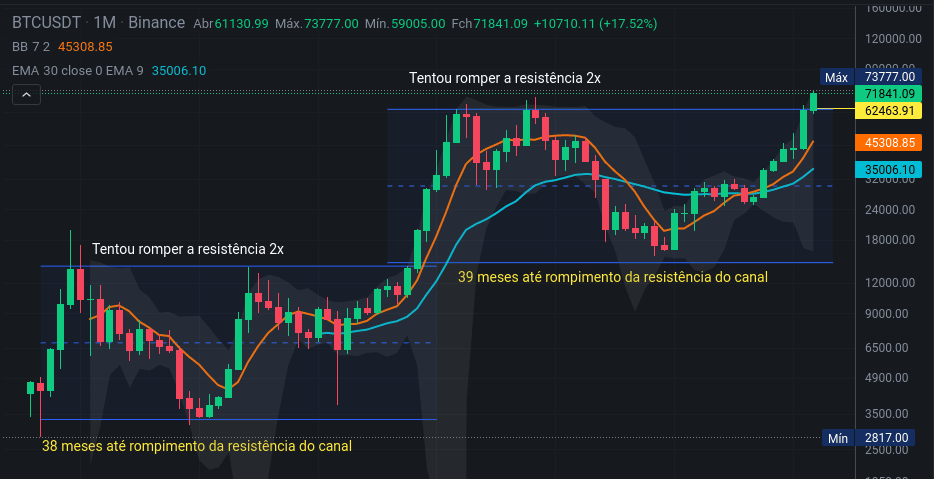
On the monthly chart of $BTC we can observe a pattern, every 3-year period the price manages to break the channel resistance after two attempts.
If the break is confirmed in March/2024, we will start a new channel that, if doubled upwards, would reach values of up to 260 thousand dollars.
If the break is confirmed in March/2024, we will start a new channel that, if doubled upwards, would reach values of up to 260 thousand dollars.
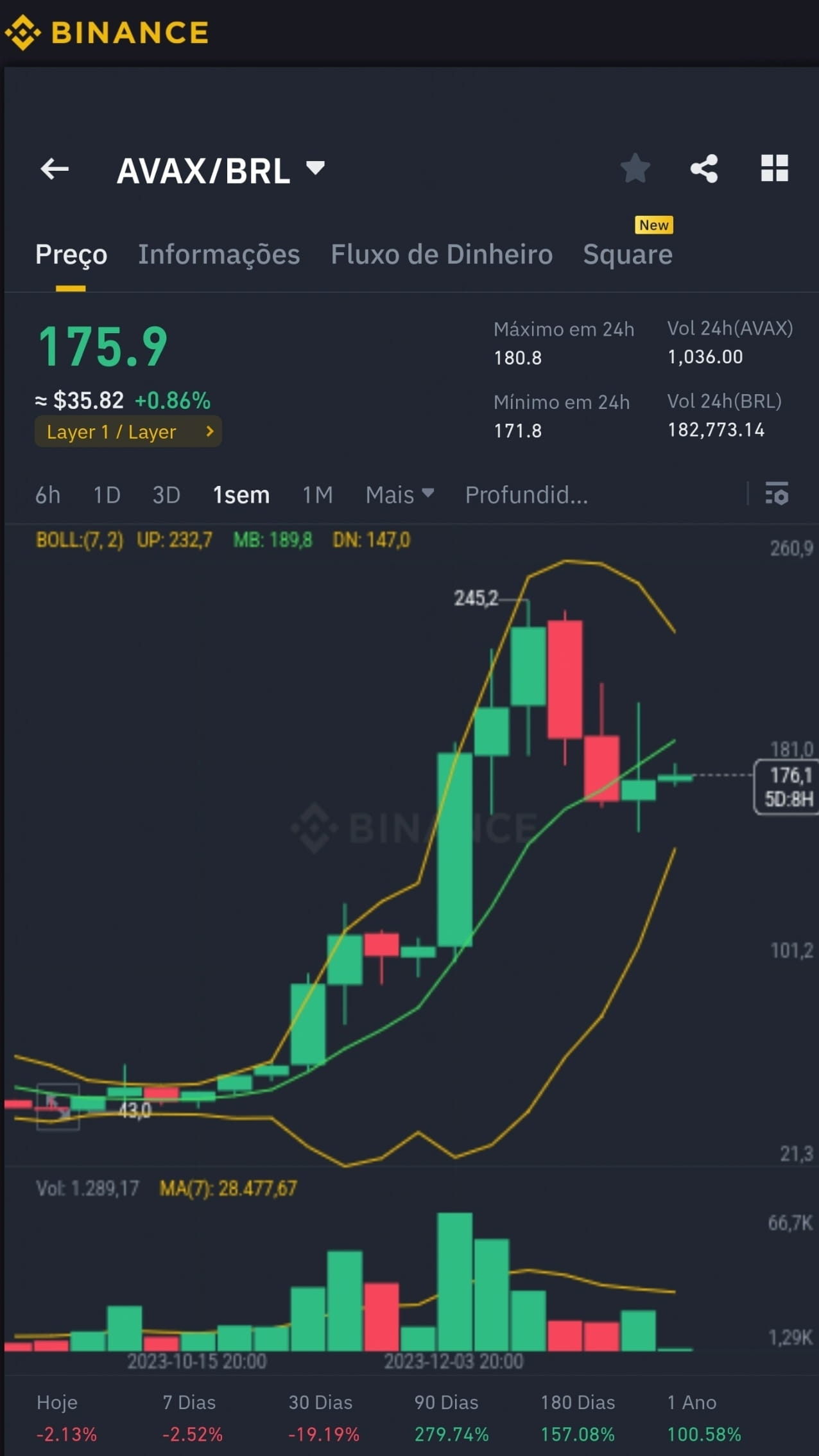
$AVAX Starting possible pullback on the weekly chart, considering the beginning of the upward movement from the first week of November, the retracement remained in the 0.382 Fibonacci region accompanied by a reduction in volume, suggesting maintenance of the upward trend. I would consider a down payment when the price reaches R$190.
Log in to explore more content