
大叔的要饭之路
148 Posts

大叔的要饭之路
Report
Block User
29 Following
14 Followers
22 Liked
Posts
·
--
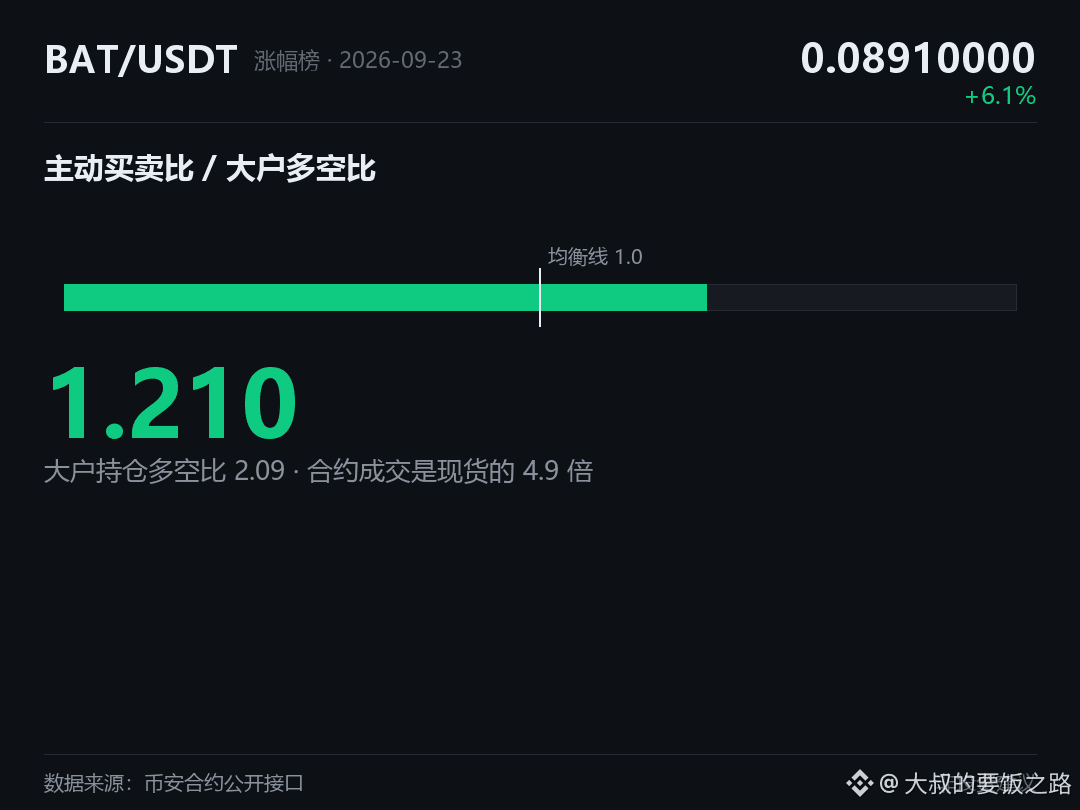
$BAT active buy/sell ratio is 1.210, and active buys clearly outweigh sells. I’ve been seeing sell orders with an advantage for a while, so this figure surprises me a bit. Do you think active buy orders explain the situation better? Not investment advice
#Buy Orders
{future}(BATUSDT)
$BAT active buy/sell ratio is 1.210, and active buys clearly outweigh sells. I’ve been seeing sell orders with an advantage for a while, so this figure surprises me a bit. Do you think active buy orders explain the situation better? Not investment advice
#Buy Orders
#Buy Orders
17
·
--
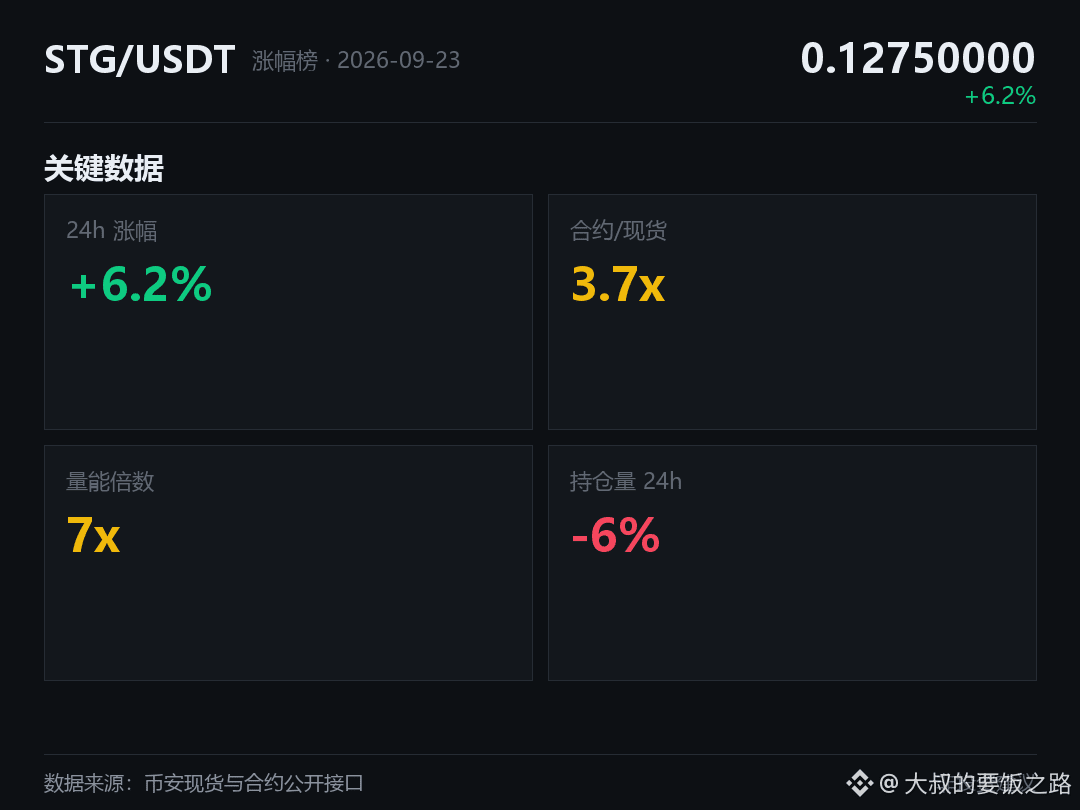
The funding rate of $STG is +0.1094%, the highest in this batch — longs have to pay quite a bit every day to hold positions. Even stranger is that in the past 7 days it still went down. With such a high rate but the price not rising, I find it rather unusual. Has anyone analyzed it? Not investment advice
#FundingRateAnomaly
{future}(STGUSDT)
The funding rate of $STG is +0.1094%, the highest in this batch — longs have to pay quite a bit every day to hold positions. Even stranger is that in the past 7 days it still went down. With such a high rate but the price not rising, I find it rather unusual. Has anyone analyzed it? Not investment advice
#FundingRateAnomaly
#FundingRateAnomaly
43
·
--
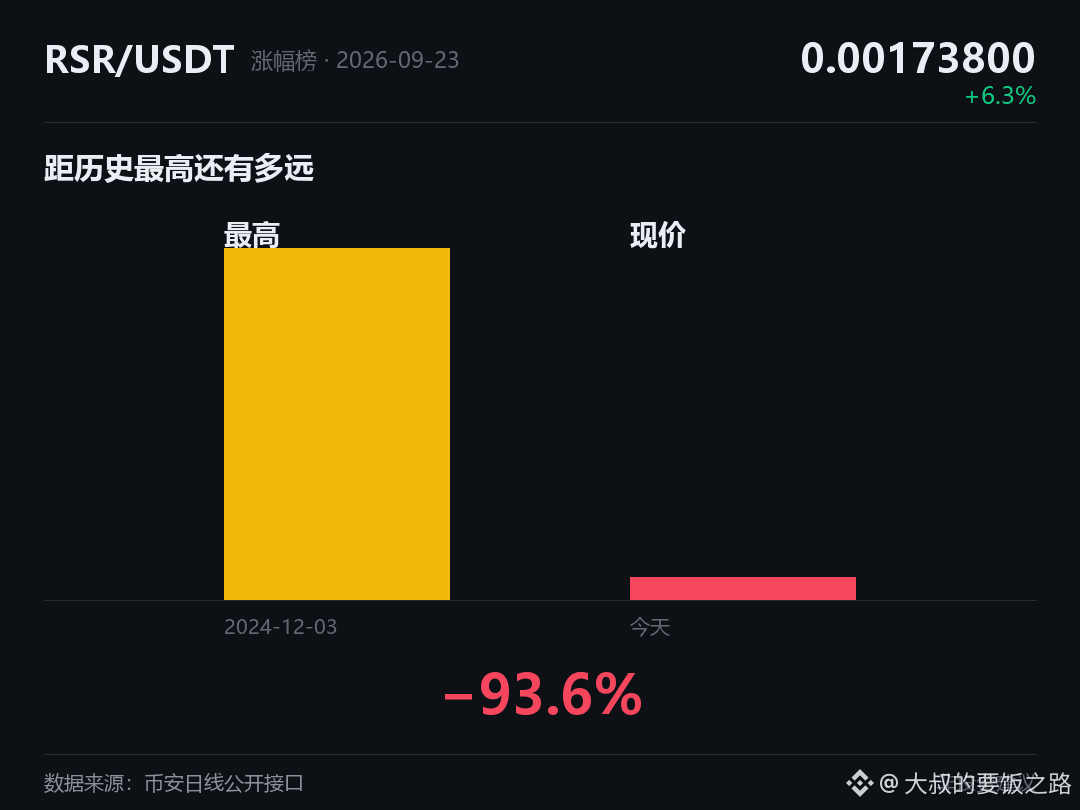
$RSR 7 The surge is up 28%, but there’s still 94% left to the high. In the short term it’s very strong, but long term it’s in a pit—this combination makes me usually think one more layer, and it feels strange. Does anyone prefer this kind of setup? Not investment advice
#rebound
{future}(RSRUSDT)
$RSR 7 The surge is up 28%, but there’s still 94% left to the high. In the short term it’s very strong, but long term it’s in a pit—this combination makes me usually think one more layer, and it feels strange. Does anyone prefer this kind of setup? Not investment advice
#rebound
#rebound
25
·
--
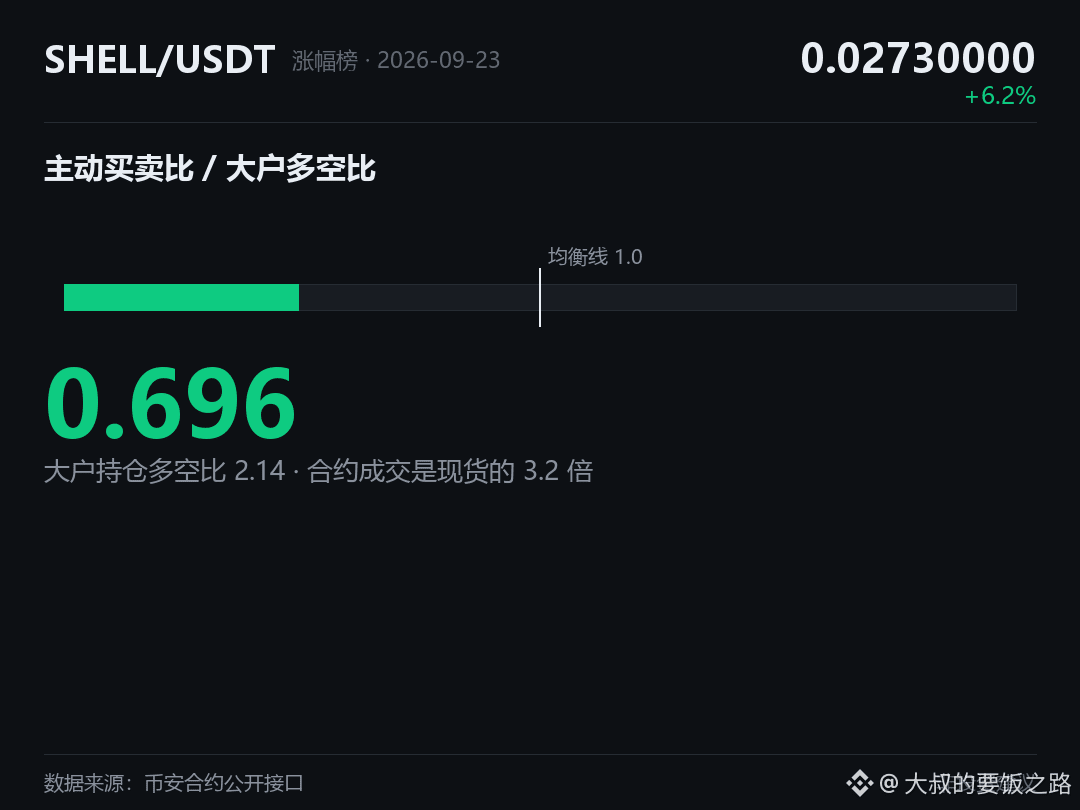
$SHELL rose 6.2%, with active buy/sell ratio of 0.696. The sell orders are higher than the buy orders, yet the price is still going up—this combination looks a bit off to me. Does anyone understand fund flow? I’d like to ask. Not investment advice
# Price-Volume Divergence
{future}(SHELLUSDT)
$SHELL rose 6.2%, with active buy/sell ratio of 0.696. The sell orders are higher than the buy orders, yet the price is still going up—this combination looks a bit off to me. Does anyone understand fund flow? I’d like to ask. Not investment advice
# Price-Volume Divergence
# Price-Volume Divergence
36
·
--
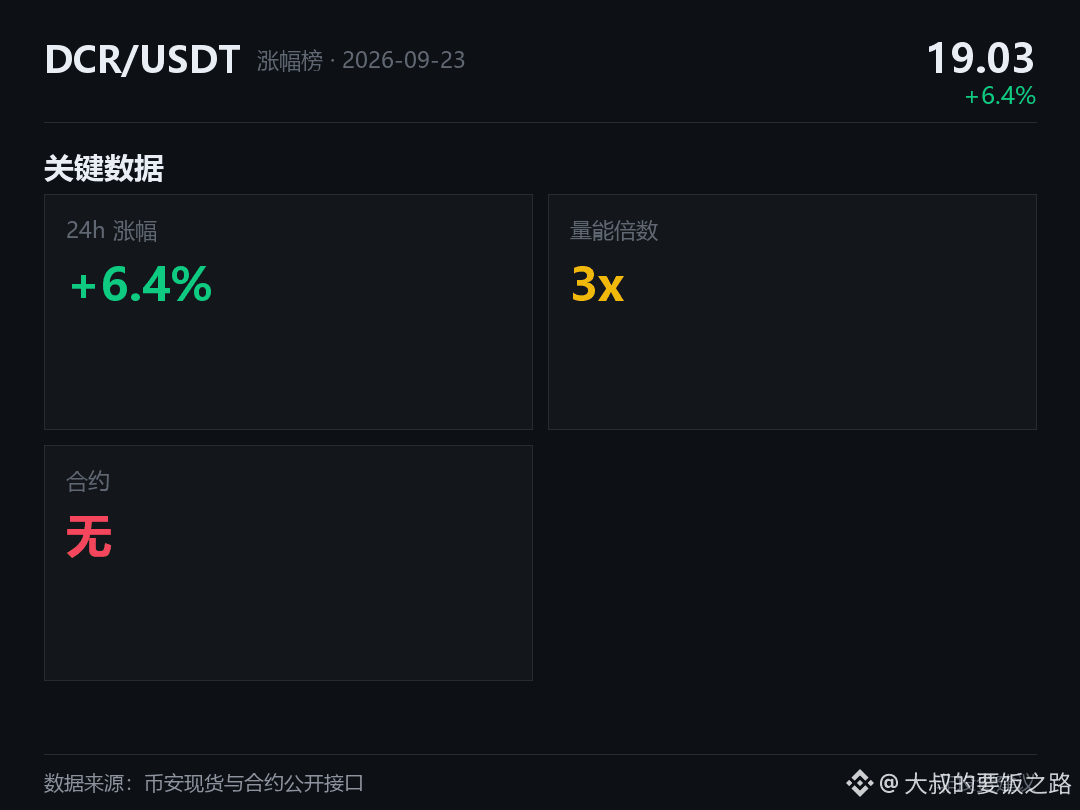
$DCR is among the few in this batch that has no contracts; we can only do spot. — I can’t fully check the rate, open interest, or the large-holder long/short ratio. Since an entire chunk of information is missing, I’m not confident in my assessment, and I’m quite curious how other people handle this. Is anyone specifically looking at this kind of situation? Not investment advice
#Spot
{future}(DCRUSDT)
$DCR is among the few in this batch that has no contracts; we can only do spot. — I can’t fully check the rate, open interest, or the large-holder long/short ratio. Since an entire chunk of information is missing, I’m not confident in my assessment, and I’m quite curious how other people handle this. Is anyone specifically looking at this kind of situation? Not investment advice
#Spot
#Spot
35
·
--
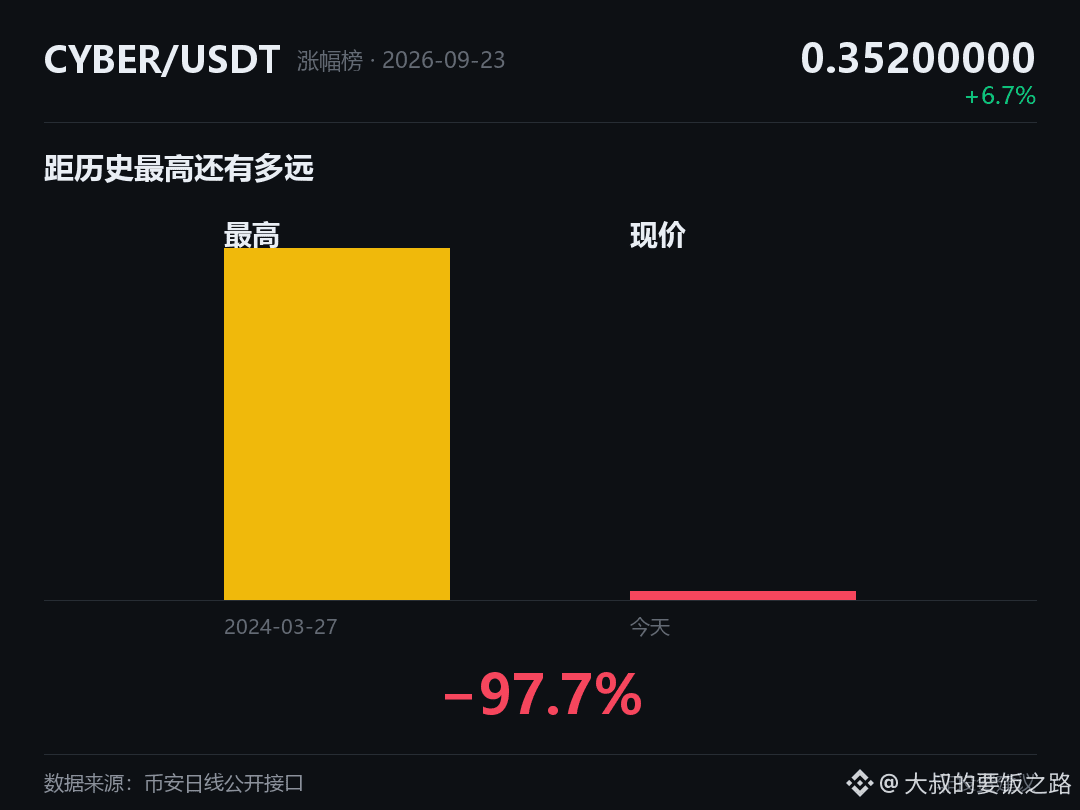
$CYBER is still 98% away from the highest point. Up 6.7%—with this kind of background, I can’t tell whether it’s a rebound or just noise. It’s a bit confusing. Has anyone done deep-drop entries? I’d like to ask what the basis is. Not investment advice
#Deep Drop
{future}(CYBERUSDT)
$CYBER is still 98% away from the highest point. Up 6.7%—with this kind of background, I can’t tell whether it’s a rebound or just noise. It’s a bit confusing. Has anyone done deep-drop entries? I’d like to ask what the basis is. Not investment advice
#Deep Drop
#Deep Drop
33
·
--
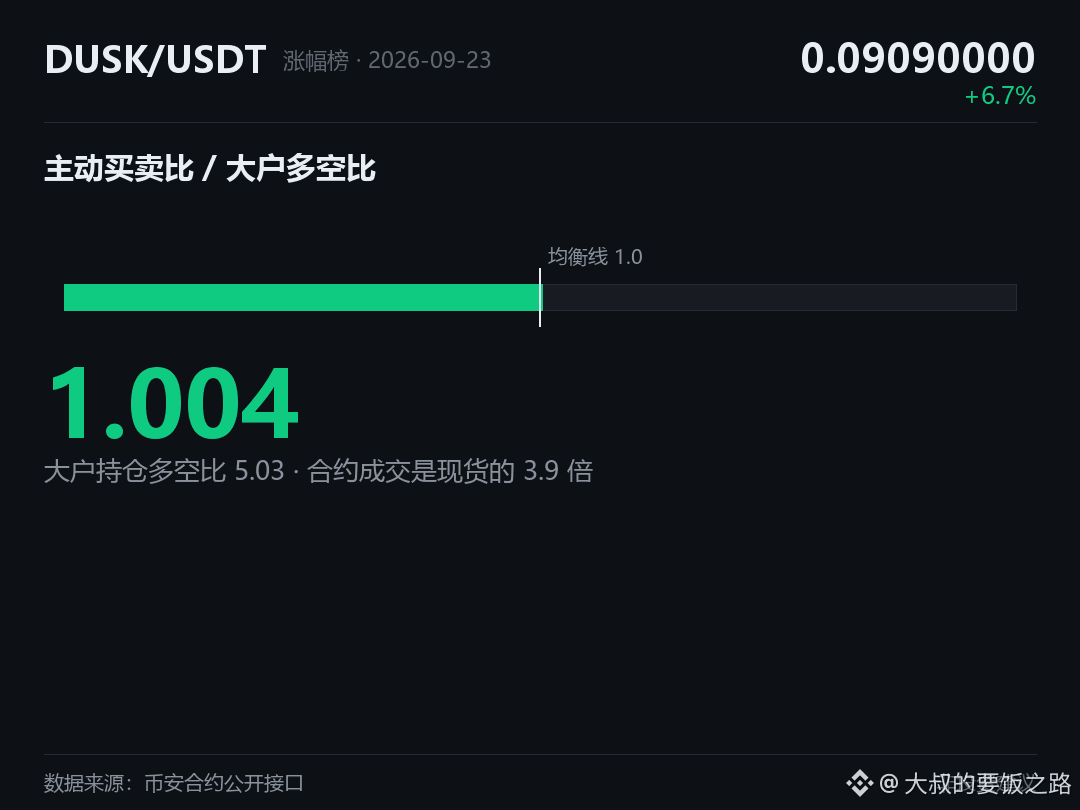
$DUSK large-holder long/short ratio 5.03; long positions are five times short positions. This number is a bit more than I expected. When large holders are this consistent, do you think it’s a signal or a contrarian indicator? Not investment advice
#Large-holder positions
{future}(DUSKUSDT)
$DUSK large-holder long/short ratio 5.03; long positions are five times short positions. This number is a bit more than I expected. When large holders are this consistent, do you think it’s a signal or a contrarian indicator? Not investment advice
#Large-holder positions
#Large-holder positions
1
58
·
--
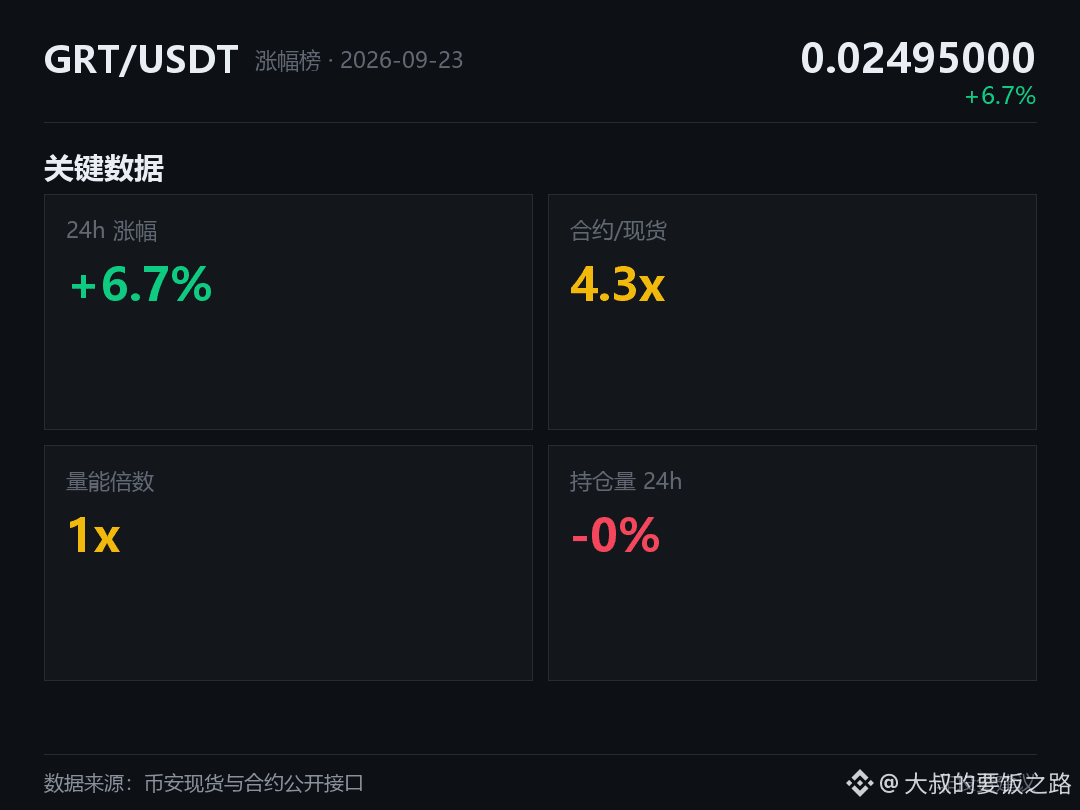
There’s a number I find pretty strange: $GRT is up 6.7%, but the contract open interest hasn’t moved much in the past 24 hours. The price is rising while the position stays unchanged, which suggests this move wasn’t driven by leverage. I don’t see this kind of structure very often—it looks a bit odd. Has anyone run into this? Not investment advice
#Open interest unchanged
{future}(GRTUSDT)
There’s a number I find pretty strange: $GRT is up 6.7%, but the contract open interest hasn’t moved much in the past 24 hours. The price is rising while the position stays unchanged, which suggests this move wasn’t driven by leverage. I don’t see this kind of structure very often—it looks a bit odd. Has anyone run into this? Not investment advice
#Open interest unchanged
#Open interest unchanged
82
·
--
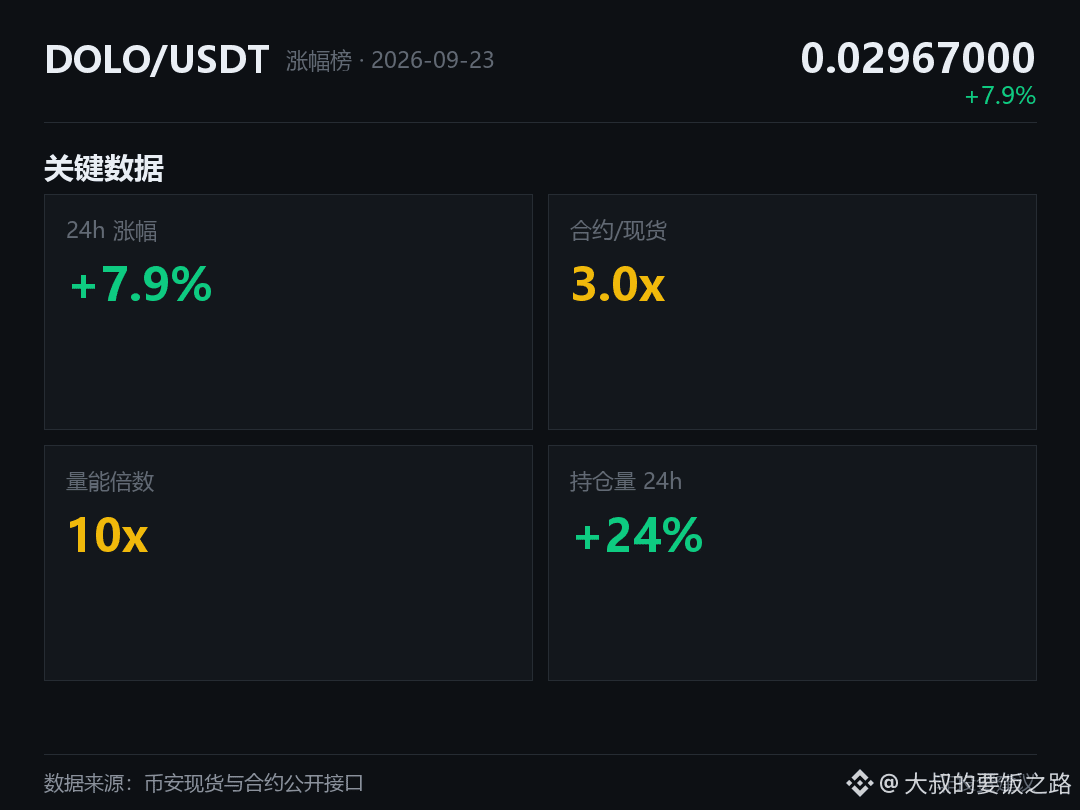
$DOLO holdings volume up 24% over 24 hours, price up 7.9%. The position price moves in tandem—I can’t tell whether it’s new capital or existing positions adding leverage. I’m quite curious. Can anyone tell the difference? Not investment advice
#Holdings
{future}(DOLOUSDT)
$DOLO holdings volume up 24% over 24 hours, price up 7.9%. The position price moves in tandem—I can’t tell whether it’s new capital or existing positions adding leverage. I’m quite curious. Can anyone tell the difference? Not investment advice
#Holdings
#Holdings
23
·
--
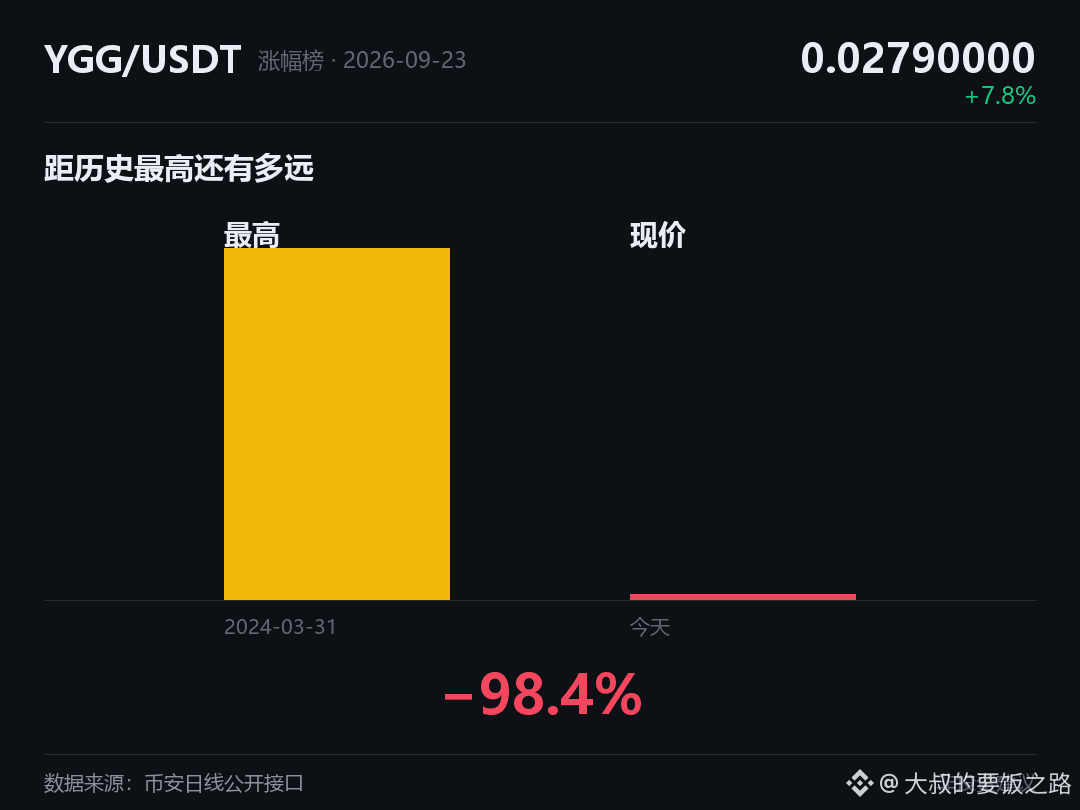
$YGG is 98% away from the historical high. I paused when I saw this number — up 7.8%, yet still so far from the bottom of the pit. Has anyone calculated how many times it would take for this kind of instrument to return to the previous high? Not investment advice
#deep_dip
{future}(YGGUSDT)
$YGG is 98% away from the historical high. I paused when I saw this number — up 7.8%, yet still so far from the bottom of the pit. Has anyone calculated how many times it would take for this kind of instrument to return to the previous high? Not investment advice
#deep_dip
#deep_dip
77
·
--
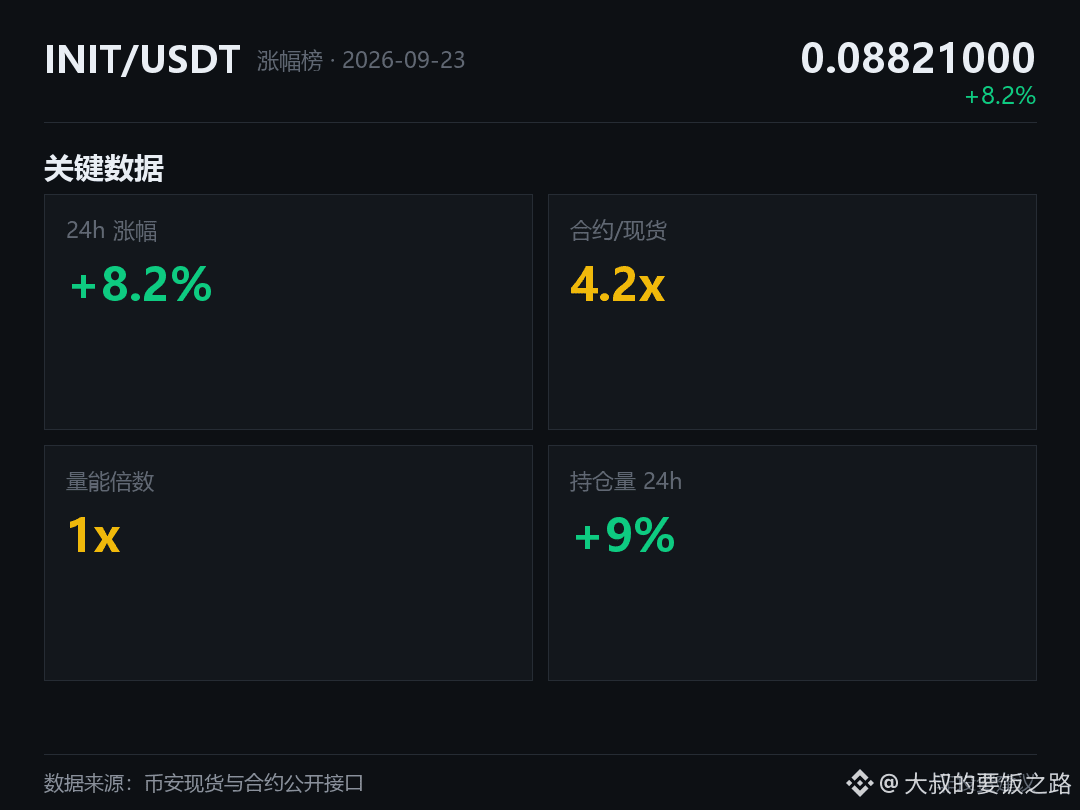
I counted the trend after each single-day rise of more than 20% since the listing of $INIT . There are only 517 days of sample data—not much. The sample is insufficient for a conclusion, yet it’s quite tempting. This kind of situation looks a bit off to me, and I would usually be on alert. Has anyone done similar statistics? Not investment advice
# Historical statistics
{future}(INITUSDT)
I counted the trend after each single-day rise of more than 20% since the listing of $INIT . There are only 517 days of sample data—not much. The sample is insufficient for a conclusion, yet it’s quite tempting. This kind of situation looks a bit off to me, and I would usually be on alert. Has anyone done similar statistics? Not investment advice
# Historical statistics
# Historical statistics
28
·
--
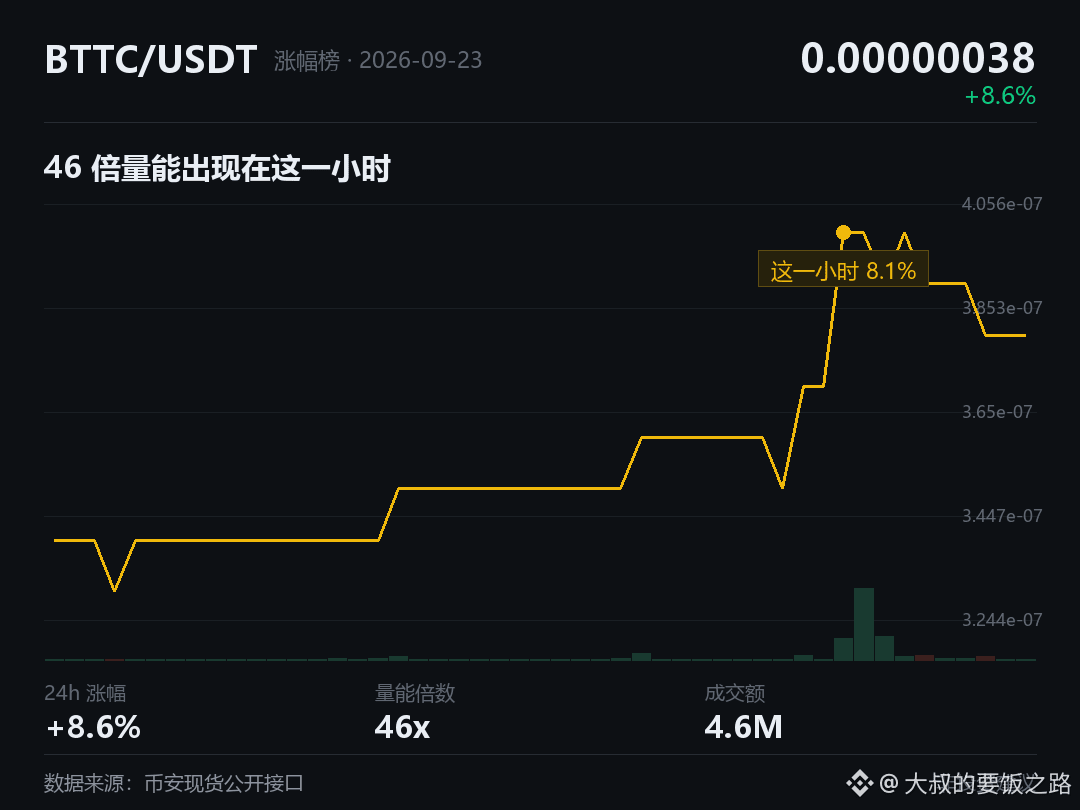
$BTTC rose 8.6%, with the most intense one-hour trading volume at 46 times the 24-hour average. This kind of pulse is a bit surprising to me—I want to know whether it’s due to news or just pure capital flows. Is anyone following it? Not investment advice
#Pulse Volume
{future}(BTTCUSDT)
$BTTC rose 8.6%, with the most intense one-hour trading volume at 46 times the 24-hour average. This kind of pulse is a bit surprising to me—I want to know whether it’s due to news or just pure capital flows. Is anyone following it? Not investment advice
#Pulse Volume
#Pulse Volume
177
·
--
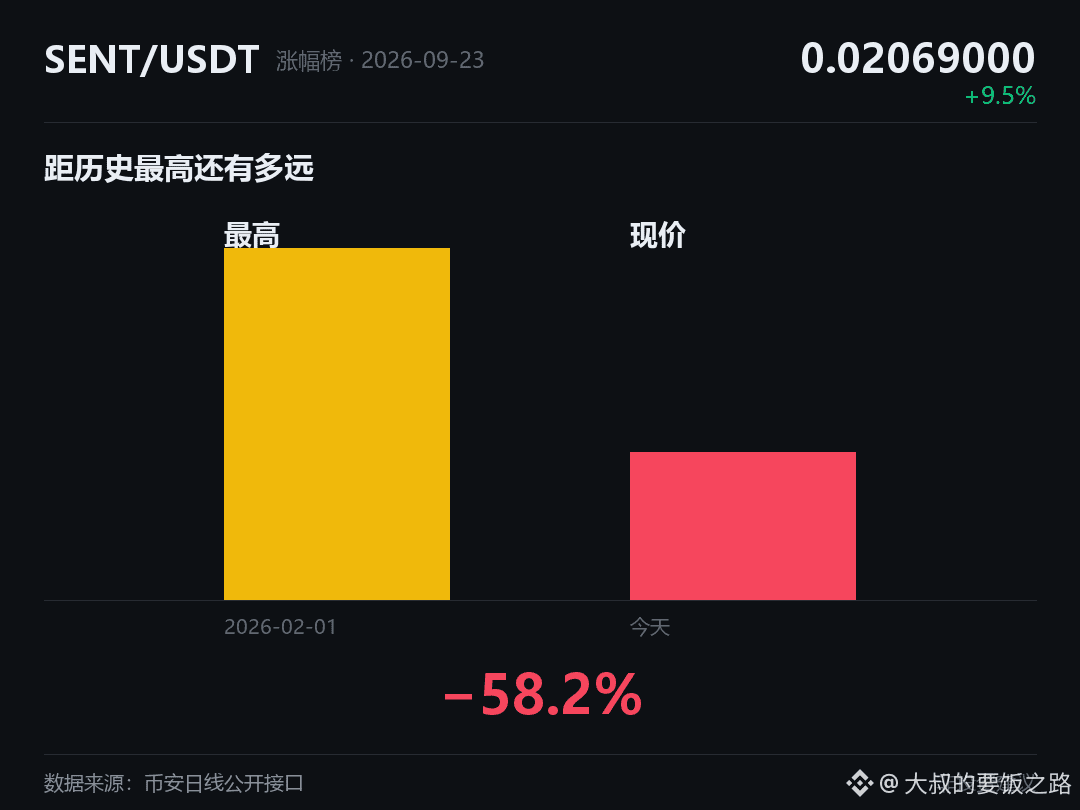
$SENT only launched for 244 days, yet from the peak it’s only down 58%—the highest position among this batch. I have to say I’m a bit surprised by how resilient it is. Has anyone studied the relative strength of new coins? I’d like to ask for your input. Not investment advice
#NewCoins
{future}(SENTUSDT)
$SENT only launched for 244 days, yet from the peak it’s only down 58%—the highest position among this batch. I have to say I’m a bit surprised by how resilient it is. Has anyone studied the relative strength of new coins? I’d like to ask for your input. Not investment advice
#NewCoins
#NewCoins
82
·
--
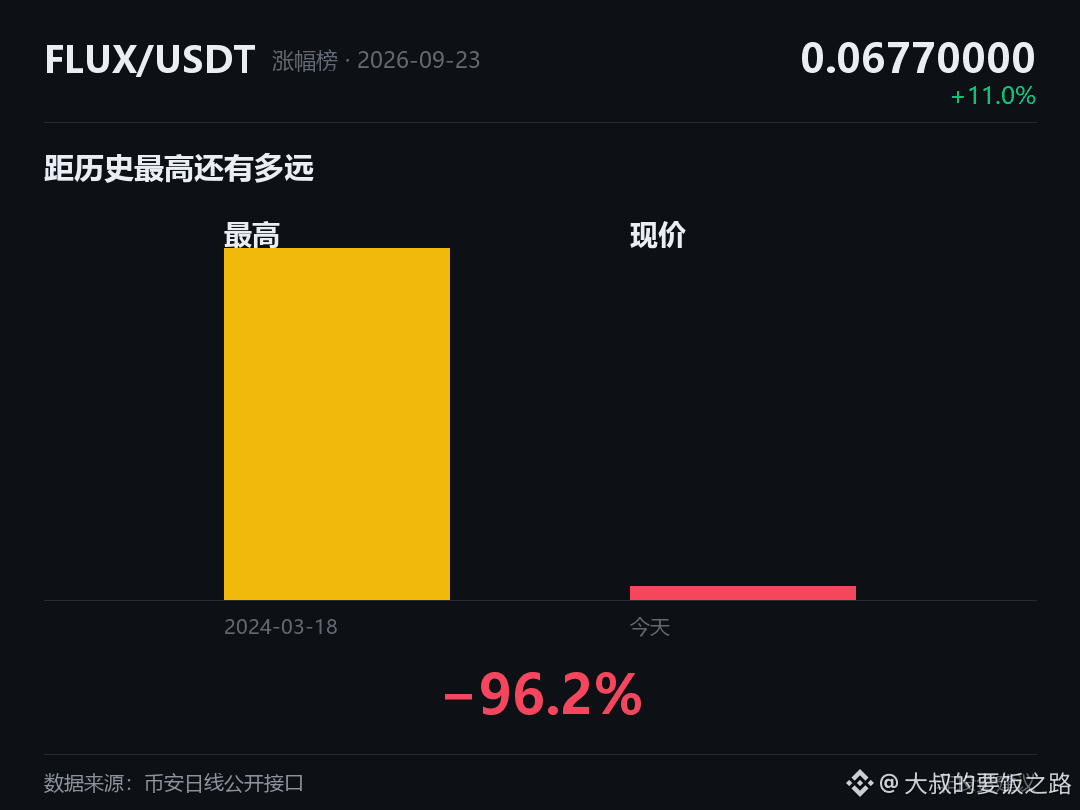
The history of “$FLUX ” scared me a bit: there’s still 96% left from the highest point. Even after a 11% rise, it’s still in the same spot—I’m quite surprised. Does anyone else keep following coins that keep deep-drawing (falling hard)? Not investment advice
#deep-draw
{future}(FLUXUSDT)
The history of “$FLUX ” scared me a bit: there’s still 96% left from the highest point. Even after a 11% rise, it’s still in the same spot—I’m quite surprised. Does anyone else keep following coins that keep deep-drawing (falling hard)? Not investment advice
#deep-draw
#deep-draw
30
·
--
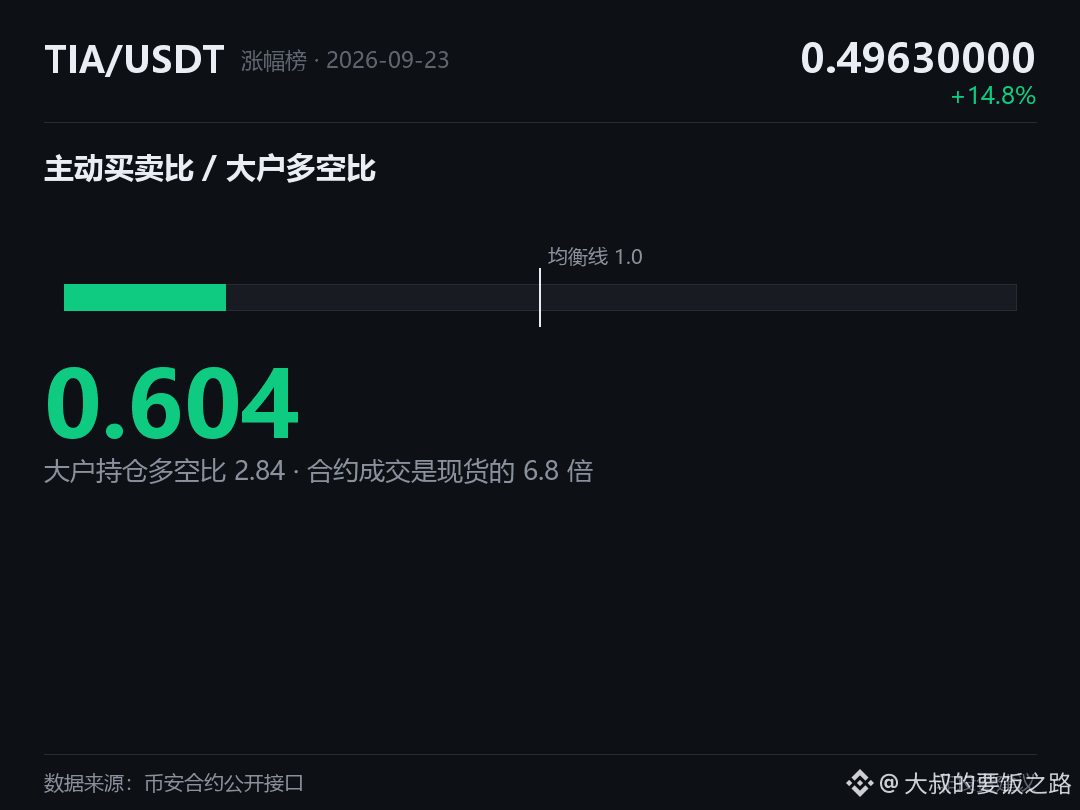
$TIA Today it rose 14.8%, but the ratio of active buying/selling is only 0.604—meaning active selling is far higher than buying. The price and the capital flow are going in opposite directions; I'm watching this number and it's a bit confusing. Has anyone tested the order book? I'd like to ask for advice. Not investment advice
#Price-Volume Divergence
{future}(TIAUSDT)
$TIA Today it rose 14.8%, but the ratio of active buying/selling is only 0.604—meaning active selling is far higher than buying. The price and the capital flow are going in opposite directions; I'm watching this number and it's a bit confusing. Has anyone tested the order book? I'd like to ask for advice. Not investment advice
#Price-Volume Divergence
#Price-Volume Divergence
78
·
--
Article
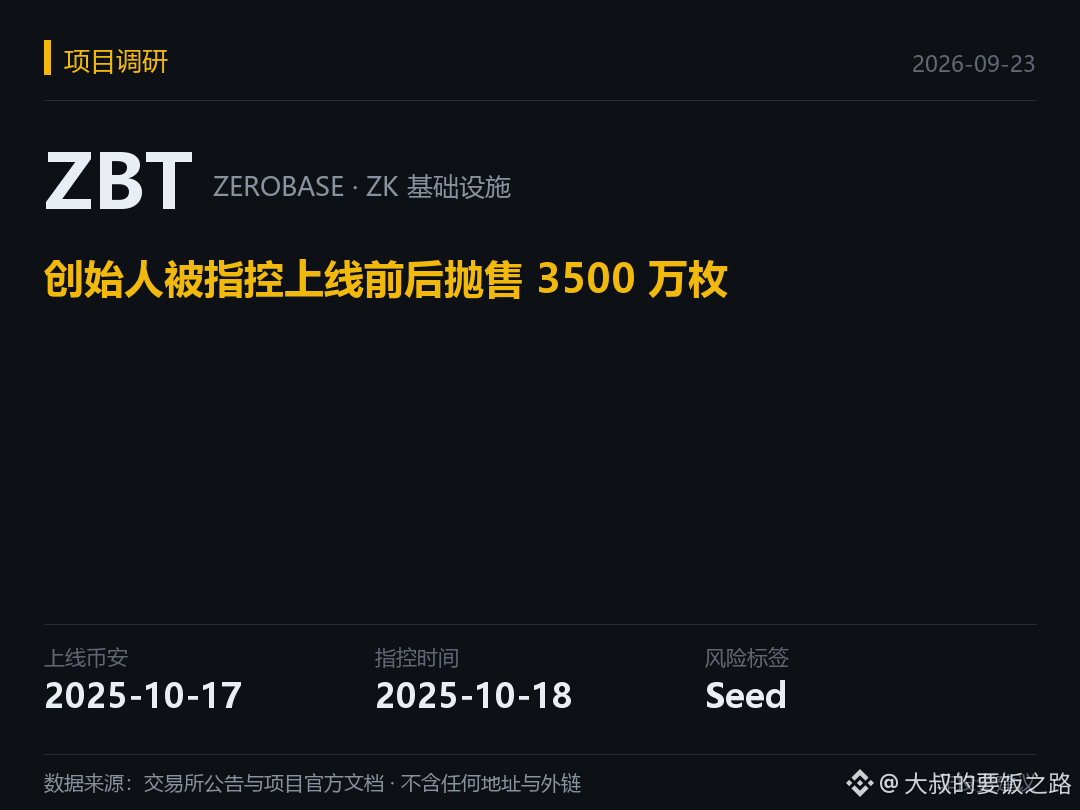
ZBT’s Founder Accused by the Community of Selling 35 Million Tokens Around the Time They Went Live on a Korean ExchangeFirst, let’s clarify one point: in this article, any parts that involve individuals are all community and media allegations—there is no regulatory classification or judicial finding. I separate the allegations from the verified facts.
$ZBT Its full name is ZEROBASE. As described in Binance’s HODLer airdrop announcement, it is a “prover network,” serving as zero-knowledge proof infrastructure for verifiable computation and on-chain rewards. Its product lineup includes zkLogin, zkDarkpool, zkFi, and zkCEX. The official claims it generates more than 100,000 zero-knowledge proofs per day on average, with an average processing time of about 200 milliseconds.
Binance launched its spot market on October 17, 2025 at 1:00 PM, offering five trading pairs. The announcement text confirms that it will “add a seed tag.” Its tag is DeFi + Seed.
ZBT’s Founder Accused by the Community of Selling 35 Million Tokens Around the Time They Went Live on a Korean Exchange
First, let’s clarify one point: in this article, any parts that involve individuals are all community and media allegations—there is no regulatory classification or judicial finding. I separate the allegations from the verified facts.
$ZBT Its full name is ZEROBASE. As described in Binance’s HODLer airdrop announcement, it is a “prover network,” serving as zero-knowledge proof infrastructure for verifiable computation and on-chain rewards. Its product lineup includes zkLogin, zkDarkpool, zkFi, and zkCEX. The official claims it generates more than 100,000 zero-knowledge proofs per day on average, with an average processing time of about 200 milliseconds.
Binance launched its spot market on October 17, 2025 at 1:00 PM, offering five trading pairs. The announcement text confirms that it will “add a seed tag.” Its tag is DeFi + Seed.
$ZBT Its full name is ZEROBASE. As described in Binance’s HODLer airdrop announcement, it is a “prover network,” serving as zero-knowledge proof infrastructure for verifiable computation and on-chain rewards. Its product lineup includes zkLogin, zkDarkpool, zkFi, and zkCEX. The official claims it generates more than 100,000 zero-knowledge proofs per day on average, with an average processing time of about 200 milliseconds.
Binance launched its spot market on October 17, 2025 at 1:00 PM, offering five trading pairs. The announcement text confirms that it will “add a seed tag.” Its tag is DeFi + Seed.
63
·
--
Article
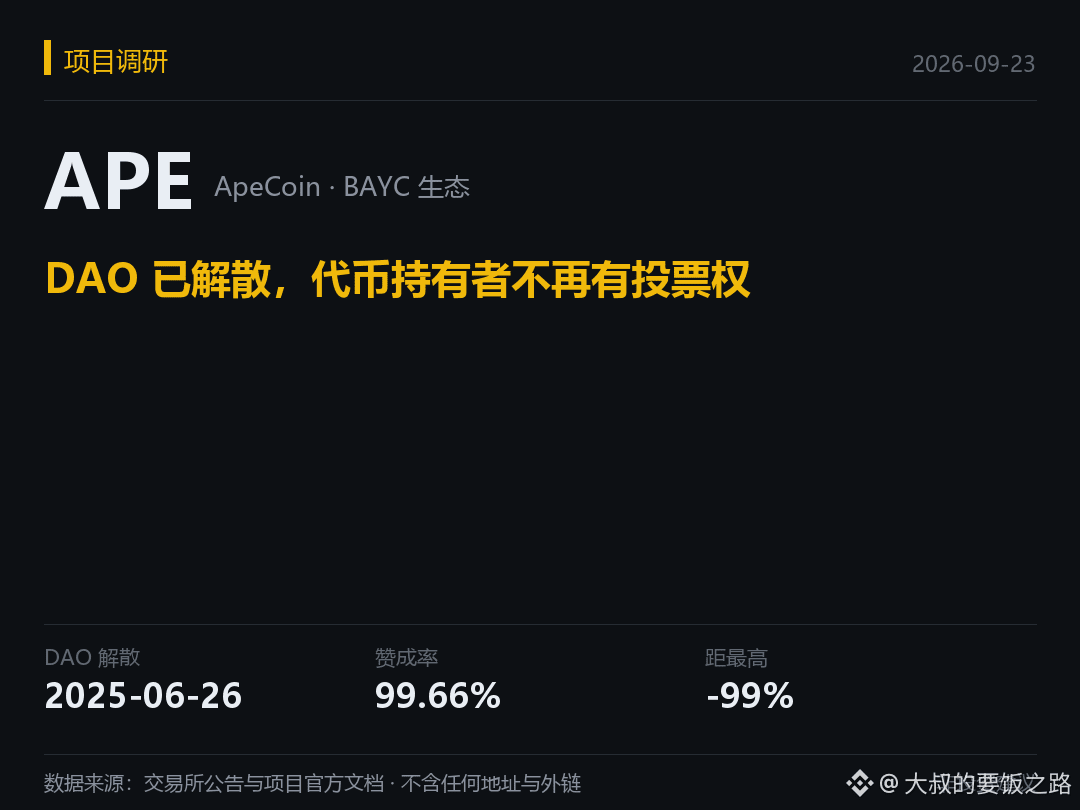
The APE DAO was dissolved in June 2025; token holders no longer had voting rightsWhen you buy a “governance token,” what exactly are you buying?$APE This experience over more than a year is the most direct case of that question.
On June 26, 2025, the AIP-596 proposal passed with a 99.66% approval rate. The content was to dissolve the ApeCoin DAO and transfer the APE treasury of roughly $168 million to a corporate entity called ApeCo.
It’s worth pausing on the figure 99.66%: this wasn’t a contentious passage—it was nearly unanimous agreement to hand over governance power.
Then less than a year later, on May 29, 2026, ApeCo’s head Cam stepped down. The role of independent chair was abolished, and ApeChain’s core technology and BD teams were directly folded into Yuga Labs, with the transition completed before June 5. Going further back, on April 17, 2026, Yuga Labs had just made another management reshuffle: Greg Solano became Chairman of the Board and Michael Figge became CEO.
The APE DAO was dissolved in June 2025; token holders no longer had voting rights
When you buy a “governance token,” what exactly are you buying?$APE This experience over more than a year is the most direct case of that question.
On June 26, 2025, the AIP-596 proposal passed with a 99.66% approval rate. The content was to dissolve the ApeCoin DAO and transfer the APE treasury of roughly $168 million to a corporate entity called ApeCo.
It’s worth pausing on the figure 99.66%: this wasn’t a contentious passage—it was nearly unanimous agreement to hand over governance power.
Then less than a year later, on May 29, 2026, ApeCo’s head Cam stepped down. The role of independent chair was abolished, and ApeChain’s core technology and BD teams were directly folded into Yuga Labs, with the transition completed before June 5. Going further back, on April 17, 2026, Yuga Labs had just made another management reshuffle: Greg Solano became Chairman of the Board and Michael Figge became CEO.
On June 26, 2025, the AIP-596 proposal passed with a 99.66% approval rate. The content was to dissolve the ApeCoin DAO and transfer the APE treasury of roughly $168 million to a corporate entity called ApeCo.
It’s worth pausing on the figure 99.66%: this wasn’t a contentious passage—it was nearly unanimous agreement to hand over governance power.
Then less than a year later, on May 29, 2026, ApeCo’s head Cam stepped down. The role of independent chair was abolished, and ApeChain’s core technology and BD teams were directly folded into Yuga Labs, with the transition completed before June 5. Going further back, on April 17, 2026, Yuga Labs had just made another management reshuffle: Greg Solano became Chairman of the Board and Michael Figge became CEO.
128
·
--
Article
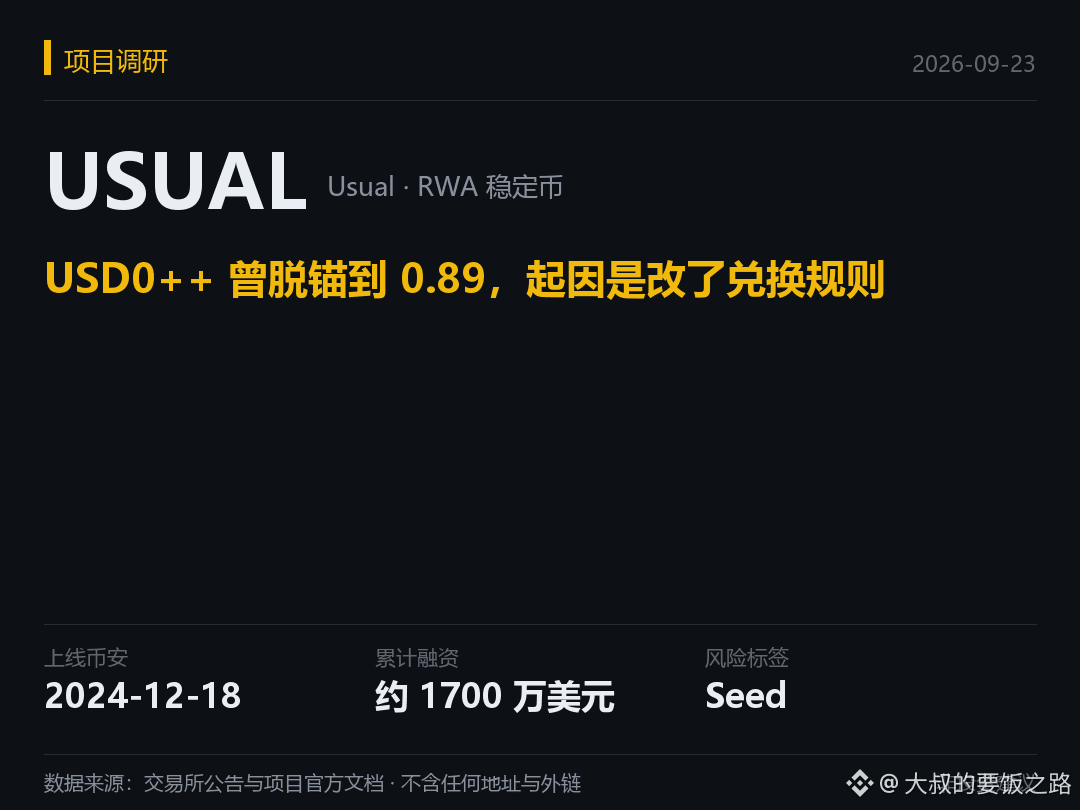
Usual’s USD0++ once de-anchored to $0.89—the cause was the team unilaterally changing the rulesWrite $USUAL I want to start with one thing, because it shows where the risk lies better than any discussion of mechanisms.
In January 2025, Usual’s USD0++ de-anchored to $0.89 and triggered a round of liquidations. The immediate cause wasn’t a market crash or an attack—it was the team unilaterally changing the redemption rules. Users originally held this asset under one set of rules; once the rules changed, the price could no longer hold.
I put this matter right at the beginning because it reveals a kind of structural risk: when the redemption terms of a stablecoin-like asset can be modified unilaterally by the issuer, the holders bear not only market risk.
Usual’s USD0++ once de-anchored to $0.89—the cause was the team unilaterally changing the rules
Write $USUAL I want to start with one thing, because it shows where the risk lies better than any discussion of mechanisms.
In January 2025, Usual’s USD0++ de-anchored to $0.89 and triggered a round of liquidations. The immediate cause wasn’t a market crash or an attack—it was the team unilaterally changing the redemption rules. Users originally held this asset under one set of rules; once the rules changed, the price could no longer hold.
I put this matter right at the beginning because it reveals a kind of structural risk: when the redemption terms of a stablecoin-like asset can be modified unilaterally by the issuer, the holders bear not only market risk.
In January 2025, Usual’s USD0++ de-anchored to $0.89 and triggered a round of liquidations. The immediate cause wasn’t a market crash or an attack—it was the team unilaterally changing the redemption rules. Users originally held this asset under one set of rules; once the rules changed, the price could no longer hold.
I put this matter right at the beginning because it reveals a kind of structural risk: when the redemption terms of a stablecoin-like asset can be modified unilaterally by the issuer, the holders bear not only market risk.
1
1
181
·
--
Article
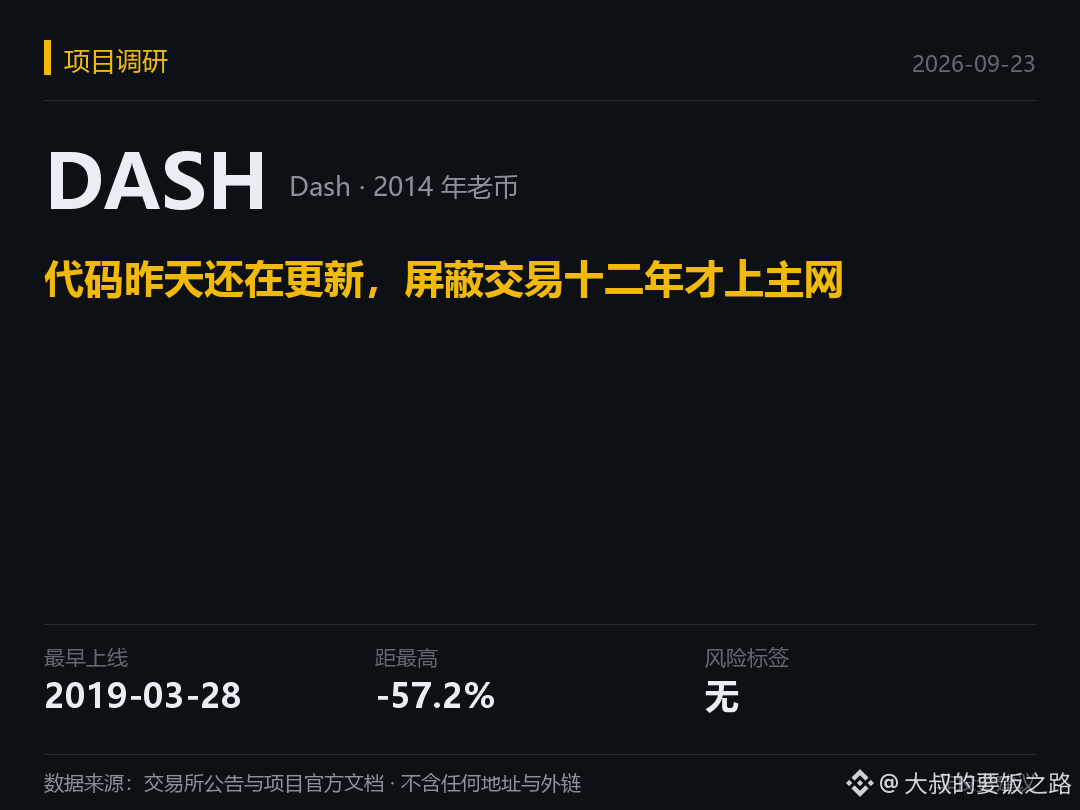
DASH is a coin from 2014, but its code was still being updated yesterday$DASH is the oldest one among these 16 assets — it was founded in 2014 by Evan Duffield under the name "Darkcoin," and later renamed Dash. The direction it has focused on has stayed the same: privacy payments plus masternode governance. Of the block rewards, 20% goes directly into the DAO treasury; this mechanism has been running since 2015 up to now, making it one of the earliest on-chain treasury governance practices.
The two most common fates for older projects are: either they slowly stop being maintained, or they quietly pivot to a different track. Dash appears to be the third case: it’s still working on its original direction.
From a code perspective, the last commit to the code repository was on September 22, 2026 — that’s yesterday. The latest version, v23.1.8, was released on August 3, 2026.
DASH is a coin from 2014, but its code was still being updated yesterday
$DASH is the oldest one among these 16 assets — it was founded in 2014 by Evan Duffield under the name "Darkcoin," and later renamed Dash. The direction it has focused on has stayed the same: privacy payments plus masternode governance. Of the block rewards, 20% goes directly into the DAO treasury; this mechanism has been running since 2015 up to now, making it one of the earliest on-chain treasury governance practices.
The two most common fates for older projects are: either they slowly stop being maintained, or they quietly pivot to a different track. Dash appears to be the third case: it’s still working on its original direction.
From a code perspective, the last commit to the code repository was on September 22, 2026 — that’s yesterday. The latest version, v23.1.8, was released on August 3, 2026.
The two most common fates for older projects are: either they slowly stop being maintained, or they quietly pivot to a different track. Dash appears to be the third case: it’s still working on its original direction.
From a code perspective, the last commit to the code repository was on September 22, 2026 — that’s yesterday. The latest version, v23.1.8, was released on August 3, 2026.
399
·
--
Verified
Article
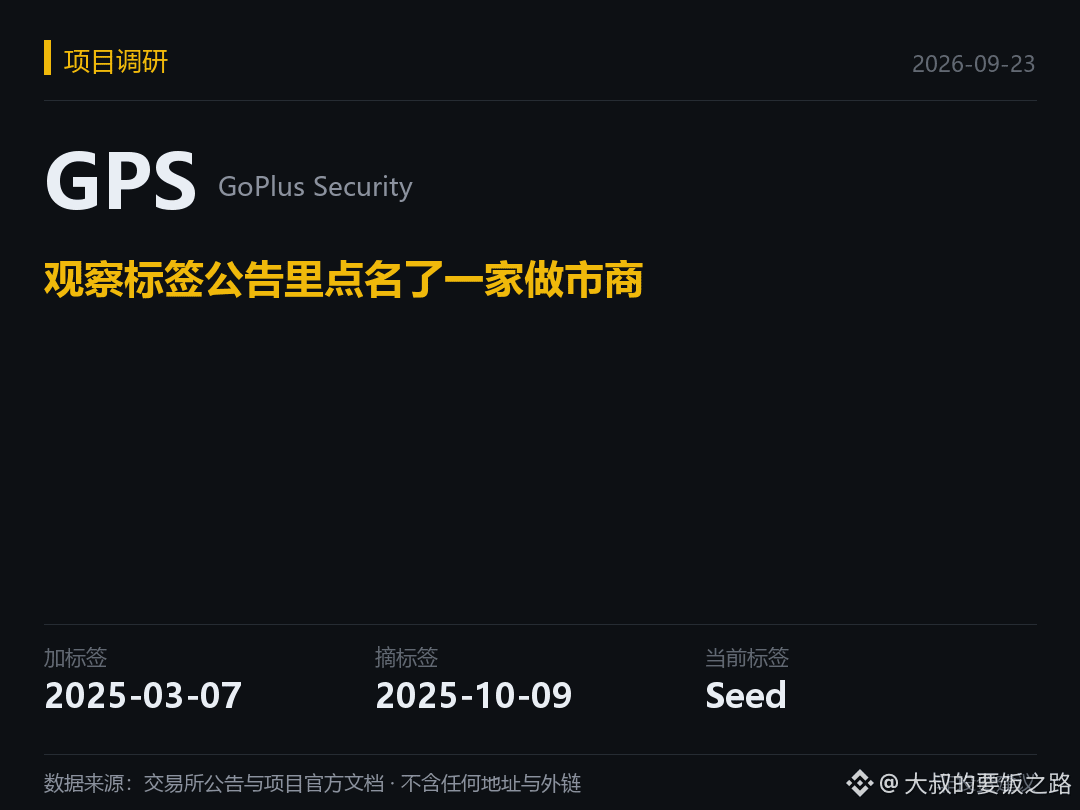
When Binance added an observation tag to GPS, the announcement included the name of a market makerThis is the single best case I found today among all the materials I reviewed for explaining how exchanges view market-making behavior.
$GPS is GoPlus Security, a Web3 security layer. It went live on March 4, 2025 at 1:00 PM via Binance HODLer Airdrop, Episode 11.
Three days later, on March 7, 2025, Binance added an observation tag to it. And this time, the announcement unusually provided a specific reason—typically, observation tag announcements only use risk wording and do not name the specific matter. The announcement says:
There is a market maker that, between 1:00 PM on March 4, 2025 and 9:55 AM on March 5, sold off approximately 70 million GPS tokens. During that period, it placed no buy orders; it was the top earner by profit during that time, at about 5 million USDT. The market maker’s Binance account has been suspended.
When Binance added an observation tag to GPS, the announcement included the name of a market maker
This is the single best case I found today among all the materials I reviewed for explaining how exchanges view market-making behavior.
$GPS is GoPlus Security, a Web3 security layer. It went live on March 4, 2025 at 1:00 PM via Binance HODLer Airdrop, Episode 11.
Three days later, on March 7, 2025, Binance added an observation tag to it. And this time, the announcement unusually provided a specific reason—typically, observation tag announcements only use risk wording and do not name the specific matter. The announcement says:
There is a market maker that, between 1:00 PM on March 4, 2025 and 9:55 AM on March 5, sold off approximately 70 million GPS tokens. During that period, it placed no buy orders; it was the top earner by profit during that time, at about 5 million USDT. The market maker’s Binance account has been suspended.
$GPS is GoPlus Security, a Web3 security layer. It went live on March 4, 2025 at 1:00 PM via Binance HODLer Airdrop, Episode 11.
Three days later, on March 7, 2025, Binance added an observation tag to it. And this time, the announcement unusually provided a specific reason—typically, observation tag announcements only use risk wording and do not name the specific matter. The announcement says:
There is a market maker that, between 1:00 PM on March 4, 2025 and 9:55 AM on March 5, sold off approximately 70 million GPS tokens. During that period, it placed no buy orders; it was the top earner by profit during that time, at about 5 million USDT. The market maker’s Binance account has been suspended.
1
68
Log in to explore more content
Join global crypto users on Binance Square
⚡️ Get latest and useful information about crypto.
💬 Trusted by the world’s largest crypto exchange.
👍 Discover real insights from verified creators.
Email / Phone number
Trending Topics
AIStocksWhatNext
353,849 views
2,944 Discussing
Share & Win Traffic Reward in our Trending Hashtag Campaign
✨Topic: What Other Investment Opportunities Remain as AI Stocks Keep Rising?
👉How to Join:
Publish a short post or article with hashtag #AIStocksWhatNext
Share whether you’re bullish or bearish, and post your AI stock holdings or trade — using the trade widget may improve your eligibility.
You can also strengthen your post by sharing data or charts, and avoiding AI-generated images.
✍️Create content based on the below angles:
- Nvidia says chip sales will double next year, and top AI companies keep hitting record revenue, the compute spend behind it is just as staggering. Is AI demand really taking off? And how long can it last? AI stocks are up across the board. Is this a real breakout, or just a short-term bounce?
- Industry leaders are calling to slow down AI development, while Trump plans to build an “AI Force”, claiming AI could account for 25% of U.S. GDP in the future. Whose side are you on? Will state-level backing be a long-term win for AI stocks?
- Are you buying AI stocks? Share your AI-related trade/holdings with our trade sharing widget.
⏰Campaign Period:
- 2026-09-22 7:00 - 2026-09-24 4:00 UTC
🎁Reward:
- Qualified posts that comply with the above guidelines and contain more than 100 words will be reviewed and may receive a random traffic boost of 500 to 3,000 views. You will receive a notification from your feed secretary if your post is selected.
- Get a chance to have your article featured on Binance Square Official
Need ideas for your post? Visit the topic page #AIStocksWhatNext or the Square Guide on How to Post for Better Reach.
Binance Square Official
·359 Likes
·879.3k views
BitcoinBreaksAboveMayHighNears$86K
14,185 views
188 Discussing
DogecoinRises15%
44,635 views
972 Discussing