
DANBARE IBRAHIM
14 Posts
DANBARE IBRAHIM
Report
Block User
Web3 Content Creator
13 Following
4 Followers
12 Liked
Posts
·
--
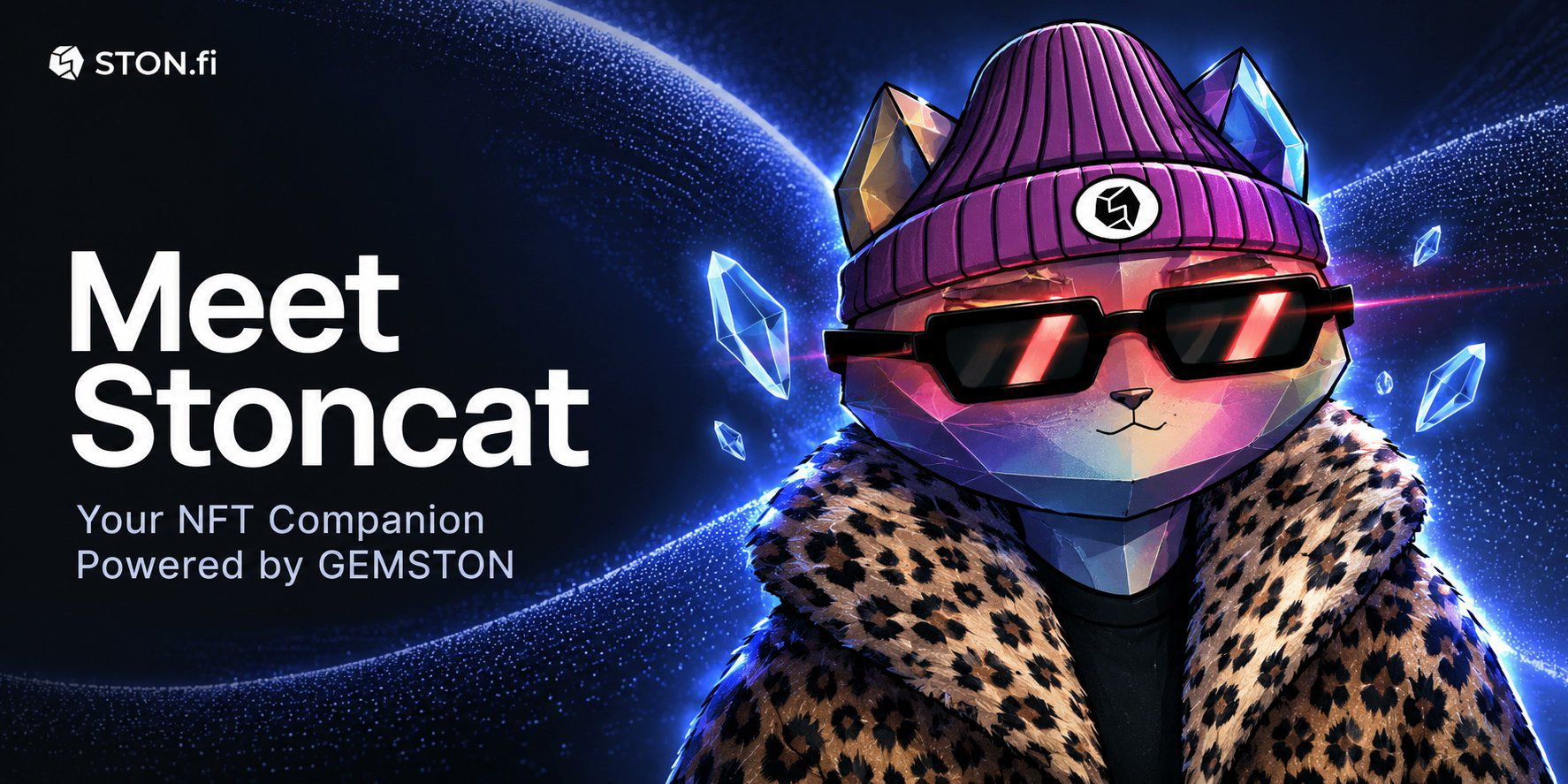
🐱 What if your NFT didn’t stop evolving after the mint?
That’s the idea behind Stoncat.
You start with a base Stoncat on TON.
Then the fun begins.
💎 Feed it GEMSTON
🎲 Roll Purrks
🎨 Dress it up
📈 Unlock new stages
🏆 Climb the rarity ranks
Purrks are the visual traits that shape your cat.
Body, face, ears, clothes, background, hair, hats, glasses and more.
The interesting part?
Your stage and rarity are different.
Stage rises as you spend GEMSTON and unlocks access to rarer Purrks.
Rarity depends on the Purrks you actually equip.
So your Stoncat can evolve from:
Stray → Trained → Elite → Cosmic → Mythic
While rarity can move through:
Paper → Hodl → Whale → Genesis → Diamond → Satoshi
And no, spending more doesn’t guarantee a rare trait.
Rolls are random.
You simply get access to better pools as your stage rises.
That’s what makes Stoncat more interesting than a static NFT.
You don’t just mint it.
You build it. 🐱
Mint your Stoncat
→ Mint your Stoncat and start playing: stoncat.com
#STONfi #Stoncat #GEMSTON #TON
🐱 What if your NFT didn’t stop evolving after the mint?
That’s the idea behind Stoncat.
You start with a base Stoncat on TON.
Then the fun begins.
💎 Feed it GEMSTON
🎲 Roll Purrks
🎨 Dress it up
📈 Unlock new stages
🏆 Climb the rarity ranks
Purrks are the visual traits that shape your cat.
Body, face, ears, clothes, background, hair, hats, glasses and more.
The interesting part?
Your stage and rarity are different.
Stage rises as you spend GEMSTON and unlocks access to rarer Purrks.
Rarity depends on the Purrks you actually equip.
So your Stoncat can evolve from:
Stray → Trained → Elite → Cosmic → Mythic
While rarity can move through:
Paper → Hodl → Whale → Genesis → Diamond → Satoshi
And no, spending more doesn’t guarantee a rare trait.
Rolls are random.
You simply get access to better pools as your stage rises.
That’s what makes Stoncat more interesting than a static NFT.
You don’t just mint it.
You build it. 🐱
Mint your Stoncat
→ Mint your Stoncat and start playing: stoncat.com
#STONfi #Stoncat #GEMSTON #TON
That’s the idea behind Stoncat.
You start with a base Stoncat on TON.
Then the fun begins.
💎 Feed it GEMSTON
🎲 Roll Purrks
🎨 Dress it up
📈 Unlock new stages
🏆 Climb the rarity ranks
Purrks are the visual traits that shape your cat.
Body, face, ears, clothes, background, hair, hats, glasses and more.
The interesting part?
Your stage and rarity are different.
Stage rises as you spend GEMSTON and unlocks access to rarer Purrks.
Rarity depends on the Purrks you actually equip.
So your Stoncat can evolve from:
Stray → Trained → Elite → Cosmic → Mythic
While rarity can move through:
Paper → Hodl → Whale → Genesis → Diamond → Satoshi
And no, spending more doesn’t guarantee a rare trait.
Rolls are random.
You simply get access to better pools as your stage rises.
That’s what makes Stoncat more interesting than a static NFT.
You don’t just mint it.
You build it. 🐱
Mint your Stoncat
→ Mint your Stoncat and start playing: stoncat.com
#STONfi #Stoncat #GEMSTON #TON
1
65
·
--

Article
Omniston Has Passed $3 Million In Cross-Chain VolumeThree million dollars is a milestone.
But in crypto, numbers can sometimes lose meaning quickly.
A protocol reaches a new volume record.
A platform announces millions of dollars in activity.
The community celebrates.
Then everyone moves on to the next number.
But Omniston passing $3 million in all-time cross-chain swap volume raises a more interesting question:
What does that activity actually tell us about the direction of cross-chain DeFi?
The answer is not simply that $3 million is a large number.
The more important point is that users beginning to use a different model for moving assets between blockchain ecosystems.
Instead of manually combining bridges, swaps and multiple applications, Omniston is designed to turn that process into one cross-chain transaction.
And the $3 million milestone gives us an early look at whether users are interested in that experience.
Moving Between Blockchains Has Traditionally Been a Multi-Step Process
Imagine you have USDC on one blockchain.
But you need a different asset on another blockchain.
Traditionally, the process might look something like this:
First, bridge your assets.
Then wait for the bridge transaction.
Receive a wrapped or bridged version of the asset.
Switch networks.
Open another application.
Find a liquidity pool.
Swap into the asset you actually want.
And hope every step works correctly.
For experienced DeFi users, this process may feel normal.
For everyone else, it can feel unnecessarily complicated.
The problem is not that blockchain technology cannot move assets across networks.
The problem is the number of decisions users are often forced to make.
Which bridge should I use?
Which token will arrive on the destination chain?
Where should I swap it?
How much gas do I need?
What happens if one step fails?
Cross-chain infrastructure has often placed that complexity directly on the user.
Omniston is attempting to change that.
The Goal Is One Swap Instead of Several Separate Actions
Omniston’s cross-chain infrastructure is designed around a simpler user experience.
You choose the asset you have.
You choose the asset and blockchain you want to receive.
Then the system handles the routing and execution underneath.
According to STON.fi’s cross-chain documentation, Omniston coordinates cross-chain swaps using a request-for-quote system and resolver-provided liquidity.
Resolvers compete to provide executable quotes for the requested transaction.
The selected route is then settled using linked Hashed Timelock Contracts, or HTLCs.
The important idea for users is simpler than the technical architecture:
The cross-chain movement and swap are designed to happen as one coordinated process.
That is fundamentally different from manually stitching together a bridge and multiple swaps.
Why $3 Million in Volume Is More Than Just a Number
Volume alone does not tell us everything.
It does not tell us how many unique users participated.
It does not tell us whether every user had a positive experience.
And it certainly does not guarantee future adoption.
But volume does tell us one important thing:
Transactions happened.
Users were willing to move real assets through this system.
For a cross-chain execution product, that matters.
Cross-chain infrastructure faces a difficult challenge.
Users are often cautious about moving funds between networks.
Bridges and interoperability systems have historically introduced additional security and operational risks.
So adoption is not just about building the technology.
It is also about convincing users that the experience is useful enough to try.
Passing $3 million in all-time swap volume suggests that Omniston is beginning to generate real usage beyond a purely technical demonstration.
The Real Competition Is Not Another DEX
This is where the story becomes more interesting.
Omniston is not necessarily competing only with other decentralized exchanges.
In many cases, its real competition is the user’s existing workflow.
That workflow might involve:
Bridge → Switch network → Swap → Bridge again
Or:
Centralized exchange → Withdraw → Deposit → Swap
Or simply:
Don’t move the assets at all because the process is too complicated.
That last option is easy to underestimate.
Complexity can prevent activity.
If moving assets between ecosystems requires too many steps, users may decide it is not worth the effort.
A simpler cross-chain experience can therefore unlock activity that might otherwise never happen.
The goal is not simply to provide another way to swap.
The goal is to reduce the number of separate decisions required to complete a cross-chain transaction.
Omniston Is Trying to Hide the Infrastructure
One of the most interesting trends in crypto is that the technology is becoming more complicated while the user experience is slowly becoming simpler.
Users should not necessarily need to understand:
What an HTLC is.
How resolver liquidity works.
How cross-chain settlement is coordinated
Or how different networks communicate.
Those details matter for developers and security researchers.
But most users simply want an outcome.
For example:
I have USDC here.
I want USDT there.
The infrastructure should ideally handle the rest.
That is the philosophy behind the broader idea of chain abstraction.
Users care about what they want to do.
They do not necessarily care about the technical route required to make it happen.
The “One Swap. Across Chains” Idea Is Bigger Than a Campaign
STON.fi’s “One Swap. Across Chains” campaign turns this concept into an interactive user journey.
But the underlying idea is bigger than the campaign itself.
It represents a shift in how cross-chain products can be designed.
Instead of teaching users how to become experts in:
BridgesWrapped assetsNetwork switchingLiquidity routing
• Cross-chain settlement
The product attempts to guide users toward a simpler outcome.
One swap.
Across multiple chains.
The campaign encourages users to explore that experience through a structured journey rather than simply presenting them with another technical interface.
That may sound like a small design decision.
But onboarding is one of the biggest challenges in DeFi.
Technology can be powerful and still fail to attract users if the experience is too confusing.
The $3 Million Milestone Comes Early in the Journey
This point is important.
$3 million in all-time cross-chain volume should not be interpreted as Omniston having reached maturity.
STON.fi itself describes the milestone as an early stage of the journey.
And that is probably the most accurate way to look at it
Cross-chain functionality is still developing.
More chains can be connected.
More assets can become available.
More applications can integrate the infrastructure.
And resolver liquidity can potentially expand as demand grows.
The current milestone is therefore better understood as an early signal rather than a final destination.
The question now is whether the product can continue turning experimentation into sustained usage.
Cross-Chain Swaps Need More Than Good Technology
Building the technology is only one part of the challenge
For cross-chain infrastructure to grow, several things need to work together.
Users need a clear reason to use it.
The experience needs to be understandable.
Execution needs to be reliable.
Quotes need to remain competitive.
Liquidity providers and resolvers need incentives to participate.
And the supported ecosystem needs to be useful enough for users to move assets between chains in the first place.
This creates a network effect.
More supported routes can attract more users.
More users can create more transaction opportunities.
More activity can make participation more attractive for liquidity providers and resolvers.
And stronger liquidity can potentially improve the available execution environment.
But none of this is automatic.
Growth depends on real demand.
The Interesting Metric to Watch Next Is Not Just Total Volume
$3 million is an important milestone.
But future growth will require more than one cumulative number.
Some of the more interesting questions will be:
How quickly is new volume being added?
Are users returning after their first swap?
Which chain pairs are generating the most demand?
Are transactions becoming larger or more frequent?
How broad is the supported asset selection?
Are more applications integrating Omniston directly?
Total volume tells us that activity has happened.
But the next stage of analysis is understanding the quality and sustainability of that activity.
A rapidly growing ecosystem should not only produce bigger numbers.
It should produce repeat usage.
From TON Liquidity Aggregation to Multi-Chain Execution
Omniston did not begin as a cross-chain product.
It started as infrastructure focused on liquidity aggregation and routing within the TON ecosystem.
Its role was to help address fragmented liquidity by comparing available sources and routes.
The cross-chain expansion takes that idea further.
Now the fragmentation problem is not only:
Liquidity is spread across multiple DEXs.
It becomes:
Liquidity and assets are spread across multiple blockchains.
The same basic challenge exists at a larger scale.
Users want an asset.
But the liquidity or asset they need may exist somewhere else.
Cross-chain execution is an attempt to reduce the complexity of reaching it.
The Bigger Goal Is to Make Chains Less Visible
Blockchain ecosystems are becoming increasingly specialized.
One chain may have a particular DeFi market.
Another may have deeper stablecoin liquidity.
Another may host a specific application.
Another may offer lower transaction costs.
This creates opportunities.
But it also creates fragmentation.
Users are forced to think in terms of networks.
Where are my funds?
Where is the application?
Which bridge connects these chains?
Which wallet supports the network?
The long-term goal of chain abstraction is to make many of these questions less visible.
Users should increasingly be able to focus on the outcome.
Not the infrastructure
Omniston cross-chain model fits into that broader direction.
What the $3 Million Milestone Really Represents.
At the surface level, the announcement is simple
Omniston has processed more than $3 million in all-time cross-chain swap volume.
But underneath that number is a larger story.
It represents users experimenting with a different way of moving value between blockchain ecosystems.
A model designed to reduce the number of separate tools involved.
A system using resolver-provided quotes and atomic settlement to coordinate the transaction.
And an attempt to make cross-chain movement feel more like a normal swap.
The $3 million figure does not prove that cross-chain complexity has been solved.
It does not guarantee future growth.
And it does not mean traditional bridges are disappearing.
But it does provide an early signal that users are willing to try a simpler, coordinated alternative.
The Journey Is More Important Than the Milestone
The announcement compares three million kilometers to travelling to the Moon and back almost four times.
It is a fun comparison.
But the more meaningful journey is happening inside the product.
Cross-chain DeFi is slowly moving away from workflows where users must manually connect every piece of infrastructure.
The next generation of products is trying to combine those pieces.
One interface.
One request.
One coordinated execution process.
Omniston passing $3 million in cross-chain volume is an early milestone on that journey.
The real test comes next.
Can the infrastructure attract repeat users?
Can it expand useful routes?
Can it connect more liquidity?
And can moving between blockchains eventually feel as simple as swapping tokens on one chain?
If that happens, users may stop asking:
“How do I move from Chain A to Chain B?”
An simply ask:
“How do I get the asset I want?”
That may be the bigger destination Omniston is trying to reach.
Omniston Has Passed $3 Million In Cross-Chain Volume
Three million dollars is a milestone.
But in crypto, numbers can sometimes lose meaning quickly.
A protocol reaches a new volume record.
A platform announces millions of dollars in activity.
The community celebrates.
Then everyone moves on to the next number.
But Omniston passing $3 million in all-time cross-chain swap volume raises a more interesting question:
What does that activity actually tell us about the direction of cross-chain DeFi?
The answer is not simply that $3 million is a large number.
The more important point is that users beginning to use a different model for moving assets between blockchain ecosystems.
Instead of manually combining bridges, swaps and multiple applications, Omniston is designed to turn that process into one cross-chain transaction.
And the $3 million milestone gives us an early look at whether users are interested in that experience.
Moving Between Blockchains Has Traditionally Been a Multi-Step Process
Imagine you have USDC on one blockchain.
But you need a different asset on another blockchain.
Traditionally, the process might look something like this:
First, bridge your assets.
Then wait for the bridge transaction.
Receive a wrapped or bridged version of the asset.
Switch networks.
Open another application.
Find a liquidity pool.
Swap into the asset you actually want.
And hope every step works correctly.
For experienced DeFi users, this process may feel normal.
For everyone else, it can feel unnecessarily complicated.
The problem is not that blockchain technology cannot move assets across networks.
The problem is the number of decisions users are often forced to make.
Which bridge should I use?
Which token will arrive on the destination chain?
Where should I swap it?
How much gas do I need?
What happens if one step fails?
Cross-chain infrastructure has often placed that complexity directly on the user.
Omniston is attempting to change that.
The Goal Is One Swap Instead of Several Separate Actions
Omniston’s cross-chain infrastructure is designed around a simpler user experience.
You choose the asset you have.
You choose the asset and blockchain you want to receive.
Then the system handles the routing and execution underneath.
According to STON.fi’s cross-chain documentation, Omniston coordinates cross-chain swaps using a request-for-quote system and resolver-provided liquidity.
Resolvers compete to provide executable quotes for the requested transaction.
The selected route is then settled using linked Hashed Timelock Contracts, or HTLCs.
The important idea for users is simpler than the technical architecture:
The cross-chain movement and swap are designed to happen as one coordinated process.
That is fundamentally different from manually stitching together a bridge and multiple swaps.
Why $3 Million in Volume Is More Than Just a Number
Volume alone does not tell us everything.
It does not tell us how many unique users participated.
It does not tell us whether every user had a positive experience.
And it certainly does not guarantee future adoption.
But volume does tell us one important thing:
Transactions happened.
Users were willing to move real assets through this system.
For a cross-chain execution product, that matters.
Cross-chain infrastructure faces a difficult challenge.
Users are often cautious about moving funds between networks.
Bridges and interoperability systems have historically introduced additional security and operational risks.
So adoption is not just about building the technology.
It is also about convincing users that the experience is useful enough to try.
Passing $3 million in all-time swap volume suggests that Omniston is beginning to generate real usage beyond a purely technical demonstration.
The Real Competition Is Not Another DEX
This is where the story becomes more interesting.
Omniston is not necessarily competing only with other decentralized exchanges.
In many cases, its real competition is the user’s existing workflow.
That workflow might involve:
Bridge → Switch network → Swap → Bridge again
Or:
Centralized exchange → Withdraw → Deposit → Swap
Or simply:
Don’t move the assets at all because the process is too complicated.
That last option is easy to underestimate.
Complexity can prevent activity.
If moving assets between ecosystems requires too many steps, users may decide it is not worth the effort.
A simpler cross-chain experience can therefore unlock activity that might otherwise never happen.
The goal is not simply to provide another way to swap.
The goal is to reduce the number of separate decisions required to complete a cross-chain transaction.
Omniston Is Trying to Hide the Infrastructure
One of the most interesting trends in crypto is that the technology is becoming more complicated while the user experience is slowly becoming simpler.
Users should not necessarily need to understand:
What an HTLC is.
How resolver liquidity works.
How cross-chain settlement is coordinated
Or how different networks communicate.
Those details matter for developers and security researchers.
But most users simply want an outcome.
For example:
I have USDC here.
I want USDT there.
The infrastructure should ideally handle the rest.
That is the philosophy behind the broader idea of chain abstraction.
Users care about what they want to do.
They do not necessarily care about the technical route required to make it happen.
The “One Swap. Across Chains” Idea Is Bigger Than a Campaign
STON.fi’s “One Swap. Across Chains” campaign turns this concept into an interactive user journey.
But the underlying idea is bigger than the campaign itself.
It represents a shift in how cross-chain products can be designed.
Instead of teaching users how to become experts in:
BridgesWrapped assetsNetwork switchingLiquidity routing
• Cross-chain settlement
The product attempts to guide users toward a simpler outcome.
One swap.
Across multiple chains.
The campaign encourages users to explore that experience through a structured journey rather than simply presenting them with another technical interface.
That may sound like a small design decision.
But onboarding is one of the biggest challenges in DeFi.
Technology can be powerful and still fail to attract users if the experience is too confusing.
The $3 Million Milestone Comes Early in the Journey
This point is important.
$3 million in all-time cross-chain volume should not be interpreted as Omniston having reached maturity.
STON.fi itself describes the milestone as an early stage of the journey.
And that is probably the most accurate way to look at it
Cross-chain functionality is still developing.
More chains can be connected.
More assets can become available.
More applications can integrate the infrastructure.
And resolver liquidity can potentially expand as demand grows.
The current milestone is therefore better understood as an early signal rather than a final destination.
The question now is whether the product can continue turning experimentation into sustained usage.
Cross-Chain Swaps Need More Than Good Technology
Building the technology is only one part of the challenge
For cross-chain infrastructure to grow, several things need to work together.
Users need a clear reason to use it.
The experience needs to be understandable.
Execution needs to be reliable.
Quotes need to remain competitive.
Liquidity providers and resolvers need incentives to participate.
And the supported ecosystem needs to be useful enough for users to move assets between chains in the first place.
This creates a network effect.
More supported routes can attract more users.
More users can create more transaction opportunities.
More activity can make participation more attractive for liquidity providers and resolvers.
And stronger liquidity can potentially improve the available execution environment.
But none of this is automatic.
Growth depends on real demand.
The Interesting Metric to Watch Next Is Not Just Total Volume
$3 million is an important milestone.
But future growth will require more than one cumulative number.
Some of the more interesting questions will be:
How quickly is new volume being added?
Are users returning after their first swap?
Which chain pairs are generating the most demand?
Are transactions becoming larger or more frequent?
How broad is the supported asset selection?
Are more applications integrating Omniston directly?
Total volume tells us that activity has happened.
But the next stage of analysis is understanding the quality and sustainability of that activity.
A rapidly growing ecosystem should not only produce bigger numbers.
It should produce repeat usage.
From TON Liquidity Aggregation to Multi-Chain Execution
Omniston did not begin as a cross-chain product.
It started as infrastructure focused on liquidity aggregation and routing within the TON ecosystem.
Its role was to help address fragmented liquidity by comparing available sources and routes.
The cross-chain expansion takes that idea further.
Now the fragmentation problem is not only:
Liquidity is spread across multiple DEXs.
It becomes:
Liquidity and assets are spread across multiple blockchains.
The same basic challenge exists at a larger scale.
Users want an asset.
But the liquidity or asset they need may exist somewhere else.
Cross-chain execution is an attempt to reduce the complexity of reaching it.
The Bigger Goal Is to Make Chains Less Visible
Blockchain ecosystems are becoming increasingly specialized.
One chain may have a particular DeFi market.
Another may have deeper stablecoin liquidity.
Another may host a specific application.
Another may offer lower transaction costs.
This creates opportunities.
But it also creates fragmentation.
Users are forced to think in terms of networks.
Where are my funds?
Where is the application?
Which bridge connects these chains?
Which wallet supports the network?
The long-term goal of chain abstraction is to make many of these questions less visible.
Users should increasingly be able to focus on the outcome.
Not the infrastructure
Omniston cross-chain model fits into that broader direction.
What the $3 Million Milestone Really Represents.
At the surface level, the announcement is simple
Omniston has processed more than $3 million in all-time cross-chain swap volume.
But underneath that number is a larger story.
It represents users experimenting with a different way of moving value between blockchain ecosystems.
A model designed to reduce the number of separate tools involved.
A system using resolver-provided quotes and atomic settlement to coordinate the transaction.
And an attempt to make cross-chain movement feel more like a normal swap.
The $3 million figure does not prove that cross-chain complexity has been solved.
It does not guarantee future growth.
And it does not mean traditional bridges are disappearing.
But it does provide an early signal that users are willing to try a simpler, coordinated alternative.
The Journey Is More Important Than the Milestone
The announcement compares three million kilometers to travelling to the Moon and back almost four times.
It is a fun comparison.
But the more meaningful journey is happening inside the product.
Cross-chain DeFi is slowly moving away from workflows where users must manually connect every piece of infrastructure.
The next generation of products is trying to combine those pieces.
One interface.
One request.
One coordinated execution process.
Omniston passing $3 million in cross-chain volume is an early milestone on that journey.
The real test comes next.
Can the infrastructure attract repeat users?
Can it expand useful routes?
Can it connect more liquidity?
And can moving between blockchains eventually feel as simple as swapping tokens on one chain?
If that happens, users may stop asking:
“How do I move from Chain A to Chain B?”
An simply ask:
“How do I get the asset I want?”
That may be the bigger destination Omniston is trying to reach.
But in crypto, numbers can sometimes lose meaning quickly.
A protocol reaches a new volume record.
A platform announces millions of dollars in activity.
The community celebrates.
Then everyone moves on to the next number.
But Omniston passing $3 million in all-time cross-chain swap volume raises a more interesting question:
What does that activity actually tell us about the direction of cross-chain DeFi?
The answer is not simply that $3 million is a large number.
The more important point is that users beginning to use a different model for moving assets between blockchain ecosystems.
Instead of manually combining bridges, swaps and multiple applications, Omniston is designed to turn that process into one cross-chain transaction.
And the $3 million milestone gives us an early look at whether users are interested in that experience.
Moving Between Blockchains Has Traditionally Been a Multi-Step Process
Imagine you have USDC on one blockchain.
But you need a different asset on another blockchain.
Traditionally, the process might look something like this:
First, bridge your assets.
Then wait for the bridge transaction.
Receive a wrapped or bridged version of the asset.
Switch networks.
Open another application.
Find a liquidity pool.
Swap into the asset you actually want.
And hope every step works correctly.
For experienced DeFi users, this process may feel normal.
For everyone else, it can feel unnecessarily complicated.
The problem is not that blockchain technology cannot move assets across networks.
The problem is the number of decisions users are often forced to make.
Which bridge should I use?
Which token will arrive on the destination chain?
Where should I swap it?
How much gas do I need?
What happens if one step fails?
Cross-chain infrastructure has often placed that complexity directly on the user.
Omniston is attempting to change that.
The Goal Is One Swap Instead of Several Separate Actions
Omniston’s cross-chain infrastructure is designed around a simpler user experience.
You choose the asset you have.
You choose the asset and blockchain you want to receive.
Then the system handles the routing and execution underneath.
According to STON.fi’s cross-chain documentation, Omniston coordinates cross-chain swaps using a request-for-quote system and resolver-provided liquidity.
Resolvers compete to provide executable quotes for the requested transaction.
The selected route is then settled using linked Hashed Timelock Contracts, or HTLCs.
The important idea for users is simpler than the technical architecture:
The cross-chain movement and swap are designed to happen as one coordinated process.
That is fundamentally different from manually stitching together a bridge and multiple swaps.
Why $3 Million in Volume Is More Than Just a Number
Volume alone does not tell us everything.
It does not tell us how many unique users participated.
It does not tell us whether every user had a positive experience.
And it certainly does not guarantee future adoption.
But volume does tell us one important thing:
Transactions happened.
Users were willing to move real assets through this system.
For a cross-chain execution product, that matters.
Cross-chain infrastructure faces a difficult challenge.
Users are often cautious about moving funds between networks.
Bridges and interoperability systems have historically introduced additional security and operational risks.
So adoption is not just about building the technology.
It is also about convincing users that the experience is useful enough to try.
Passing $3 million in all-time swap volume suggests that Omniston is beginning to generate real usage beyond a purely technical demonstration.
The Real Competition Is Not Another DEX
This is where the story becomes more interesting.
Omniston is not necessarily competing only with other decentralized exchanges.
In many cases, its real competition is the user’s existing workflow.
That workflow might involve:
Bridge → Switch network → Swap → Bridge again
Or:
Centralized exchange → Withdraw → Deposit → Swap
Or simply:
Don’t move the assets at all because the process is too complicated.
That last option is easy to underestimate.
Complexity can prevent activity.
If moving assets between ecosystems requires too many steps, users may decide it is not worth the effort.
A simpler cross-chain experience can therefore unlock activity that might otherwise never happen.
The goal is not simply to provide another way to swap.
The goal is to reduce the number of separate decisions required to complete a cross-chain transaction.
Omniston Is Trying to Hide the Infrastructure
One of the most interesting trends in crypto is that the technology is becoming more complicated while the user experience is slowly becoming simpler.
Users should not necessarily need to understand:
What an HTLC is.
How resolver liquidity works.
How cross-chain settlement is coordinated
Or how different networks communicate.
Those details matter for developers and security researchers.
But most users simply want an outcome.
For example:
I have USDC here.
I want USDT there.
The infrastructure should ideally handle the rest.
That is the philosophy behind the broader idea of chain abstraction.
Users care about what they want to do.
They do not necessarily care about the technical route required to make it happen.
The “One Swap. Across Chains” Idea Is Bigger Than a Campaign
STON.fi’s “One Swap. Across Chains” campaign turns this concept into an interactive user journey.
But the underlying idea is bigger than the campaign itself.
It represents a shift in how cross-chain products can be designed.
Instead of teaching users how to become experts in:
BridgesWrapped assetsNetwork switchingLiquidity routing
• Cross-chain settlement
The product attempts to guide users toward a simpler outcome.
One swap.
Across multiple chains.
The campaign encourages users to explore that experience through a structured journey rather than simply presenting them with another technical interface.
That may sound like a small design decision.
But onboarding is one of the biggest challenges in DeFi.
Technology can be powerful and still fail to attract users if the experience is too confusing.
The $3 Million Milestone Comes Early in the Journey
This point is important.
$3 million in all-time cross-chain volume should not be interpreted as Omniston having reached maturity.
STON.fi itself describes the milestone as an early stage of the journey.
And that is probably the most accurate way to look at it
Cross-chain functionality is still developing.
More chains can be connected.
More assets can become available.
More applications can integrate the infrastructure.
And resolver liquidity can potentially expand as demand grows.
The current milestone is therefore better understood as an early signal rather than a final destination.
The question now is whether the product can continue turning experimentation into sustained usage.
Cross-Chain Swaps Need More Than Good Technology
Building the technology is only one part of the challenge
For cross-chain infrastructure to grow, several things need to work together.
Users need a clear reason to use it.
The experience needs to be understandable.
Execution needs to be reliable.
Quotes need to remain competitive.
Liquidity providers and resolvers need incentives to participate.
And the supported ecosystem needs to be useful enough for users to move assets between chains in the first place.
This creates a network effect.
More supported routes can attract more users.
More users can create more transaction opportunities.
More activity can make participation more attractive for liquidity providers and resolvers.
And stronger liquidity can potentially improve the available execution environment.
But none of this is automatic.
Growth depends on real demand.
The Interesting Metric to Watch Next Is Not Just Total Volume
$3 million is an important milestone.
But future growth will require more than one cumulative number.
Some of the more interesting questions will be:
How quickly is new volume being added?
Are users returning after their first swap?
Which chain pairs are generating the most demand?
Are transactions becoming larger or more frequent?
How broad is the supported asset selection?
Are more applications integrating Omniston directly?
Total volume tells us that activity has happened.
But the next stage of analysis is understanding the quality and sustainability of that activity.
A rapidly growing ecosystem should not only produce bigger numbers.
It should produce repeat usage.
From TON Liquidity Aggregation to Multi-Chain Execution
Omniston did not begin as a cross-chain product.
It started as infrastructure focused on liquidity aggregation and routing within the TON ecosystem.
Its role was to help address fragmented liquidity by comparing available sources and routes.
The cross-chain expansion takes that idea further.
Now the fragmentation problem is not only:
Liquidity is spread across multiple DEXs.
It becomes:
Liquidity and assets are spread across multiple blockchains.
The same basic challenge exists at a larger scale.
Users want an asset.
But the liquidity or asset they need may exist somewhere else.
Cross-chain execution is an attempt to reduce the complexity of reaching it.
The Bigger Goal Is to Make Chains Less Visible
Blockchain ecosystems are becoming increasingly specialized.
One chain may have a particular DeFi market.
Another may have deeper stablecoin liquidity.
Another may host a specific application.
Another may offer lower transaction costs.
This creates opportunities.
But it also creates fragmentation.
Users are forced to think in terms of networks.
Where are my funds?
Where is the application?
Which bridge connects these chains?
Which wallet supports the network?
The long-term goal of chain abstraction is to make many of these questions less visible.
Users should increasingly be able to focus on the outcome.
Not the infrastructure
Omniston cross-chain model fits into that broader direction.
What the $3 Million Milestone Really Represents.
At the surface level, the announcement is simple
Omniston has processed more than $3 million in all-time cross-chain swap volume.
But underneath that number is a larger story.
It represents users experimenting with a different way of moving value between blockchain ecosystems.
A model designed to reduce the number of separate tools involved.
A system using resolver-provided quotes and atomic settlement to coordinate the transaction.
And an attempt to make cross-chain movement feel more like a normal swap.
The $3 million figure does not prove that cross-chain complexity has been solved.
It does not guarantee future growth.
And it does not mean traditional bridges are disappearing.
But it does provide an early signal that users are willing to try a simpler, coordinated alternative.
The Journey Is More Important Than the Milestone
The announcement compares three million kilometers to travelling to the Moon and back almost four times.
It is a fun comparison.
But the more meaningful journey is happening inside the product.
Cross-chain DeFi is slowly moving away from workflows where users must manually connect every piece of infrastructure.
The next generation of products is trying to combine those pieces.
One interface.
One request.
One coordinated execution process.
Omniston passing $3 million in cross-chain volume is an early milestone on that journey.
The real test comes next.
Can the infrastructure attract repeat users?
Can it expand useful routes?
Can it connect more liquidity?
And can moving between blockchains eventually feel as simple as swapping tokens on one chain?
If that happens, users may stop asking:
“How do I move from Chain A to Chain B?”
An simply ask:
“How do I get the asset I want?”
That may be the bigger destination Omniston is trying to reach.
2
99
·
--
More Routes, Better Swaps: Omniston Expands TON Liquidity with DeDust v2 and Tonco v2More Routes, Better Swaps: Omniston Expands TON Liquidity with DeDust v2 and Tonco v2
When you swap tokens on a DEX, the obvious question is
“What price am I getting?”
But there is another question that matters just as much:
“Did I get the best route available?”
On a fragmented DeFi market, liquidity can be spread across different protocols and pools. One pool might offer a better price for a particular trade, while another could provide better execution for a different amount.
This is where routing becomes important.
And it is also where the latest Omniston update caught my attention.
Omniston Just Got More Routes
Omniston, the cross-chain liquidity and execution layer from STON.fi, has expanded its TON liquidity coverage.
It can now scan DeDust CPMM v2 and Tonco v2 pools alongside other available TON routes when looking for a swap path.
In simple terms, Omniston has more places to look before deciding how your swap should be executed.
That might sound like a small infrastructure update.
It isn’t.
More available liquidity sources can mean more competition between routes, giving the routing system more options to work with.
Why Liquidity Fragmentation Matters
Imagine you want to swap 10,000 TON for another token.
There are several liquidity pools across TON.
Pool A might give you one price.
Pool B might give you another.
Pool C might have enough liquidity to handle the trade with less price impact.
If you manually check each pool, compare prices, calculate the expected output and then execute the trade, the process becomes complicated very quickly.
Most users don’t want to do that.
They just want to enter the amount, confirm the transaction and receive the best practical execution available.
That’s the problem smart routing is designed to solve.
Omniston’s Role
Omniston acts as an execution layer that searches across liquidity sources instead of treating one pool as the only option
With DeDust v2 and Tonco v2 now included in its TON routing coverage, Omniston has additional liquidity venues to consider.
The basic idea is:
More routes → more options → better opportunity for efficient execution.
It doesn’t mean every swap will automatically become cheaper.
Markets move.
Liquidity changes.
Trade sizes are different.
And execution can vary from one asset pair to another.
But having more routes available gives the system more room to find an efficient path.
What DeDust v2 and Tonco v2 Add
DeDust and Tonco are already part of the TON DeFi landscape.
The important part of this update isn’t simply that their names are being added to a list.
It is that their relevant pools can now become part of the routing decision.
So instead of liquidity existing in separate islands, Omniston can consider more of that liquidity when determining where a swap should go.
Think of it like having more roads available when navigating through a city.
If one road is congested, another route may be better.
If one route has better conditions, the system can choose it.
The goal isn’t to make users think about the roads.
The goal is to get them where they need to go efficiently.
What This Means for STON.fi Users
This is probably the biggest practical benefit.
Users don’t need to manually compare every available pool.
Omniston handles the route discovery in the background.
You simply initiate your swap, while the infrastructure searches the available routes and compares the options.
That creates a smoother experience.
Instead of asking:
“Which TON pool should I use?”
You can focus on the only thing that really matters:
“How much am I getting for my swap?”
More Liquidity Can Improve Execution
Liquidity is one of the most important pieces of any DEX ecosystem.
When liquidity is fragmented, larger trades can experience greater price impact.
When more liquidity sources become accessible through a routing layer, there is a greater opportunity to find better execution.
This is particularly important as TON DeFi continues to grow.
More protocols means more liquidity.
More liquidity means more potential routes.
But without good infrastructure connecting those sources, users may not fully benefit from that liquidity.
That’s why routing infrastructure matters.
This Is Bigger Than One Update
What I find interesting about this announcement is the direction it represents.
TON DeFi doesn’t need every protocol to become identical.
Different DEXs can have different designs, liquidity providers and trading environments.
The important thing is making that liquidity accessible in a way that doesn’t force users to understand the entire backend.
That’s where an aggregator or execution layer becomes valuable.
Instead of liquidity competing only within individual applications, it can increasingly compete at the routing level.
And competition between routes is good for users.
The User Shouldn’t Have to Think About It
Good infrastructure is often invisible.
You don’t need to know which server processed a payment.
You don’t need to understand how a search engine ranks every result.
And ideally, you shouldn’t need to manually inspect every liquidity pool before making a swap.
That’s the experience Omniston is moving toward.
More liquidity sources behind the scenes.
Simpler decisions in front of the user.
The technology can remain complicated underneath while the user experience stays simple.
What Comes Next?
As TON DeFi expands, liquidity fragmentation will become an increasingly important problem to solve.
There will likely be more pools, more DEXs, more assets and eventually more cross-chain opportunities.
The challenge won’t simply be creating liquidity.
It will be connecting that liquidity efficiently.
Omniston’s latest integration with DeDust v2 and Tonco v2 is another step in that direction.
It gives the routing system more options to consider and gives users access to a broader part of TON’s liquidity landscape.
The Bigger Picture
For me, the interesting part isn’t simply:
“DeDust v2 and Tonco v2 are now supported.”
The bigger story is what happens when fragmented liquidity starts becoming easier to access.
Users shouldn’t have to care where the best route is hiding.
They should be able to make a swap and let the infrastructure do the searching.
That’s the promise behind better routing.
More routes.
More competition.
More liquidity to search.
Less work for the user.
And with Omniston now scanning DeDust CPMM v2 and Tonco v2 alongside other TON routes, STON.fi is continuing to build toward a more connected TON DeFi trading experience.
The best route shouldn’t be something you have to find yourself.
It should find you.
More Routes, Better Swaps: Omniston Expands TON Liquidity with DeDust v2 and Tonco v2
More Routes, Better Swaps: Omniston Expands TON Liquidity with DeDust v2 and Tonco v2
When you swap tokens on a DEX, the obvious question is
“What price am I getting?”
But there is another question that matters just as much:
“Did I get the best route available?”
On a fragmented DeFi market, liquidity can be spread across different protocols and pools. One pool might offer a better price for a particular trade, while another could provide better execution for a different amount.
This is where routing becomes important.
And it is also where the latest Omniston update caught my attention.
Omniston Just Got More Routes
Omniston, the cross-chain liquidity and execution layer from STON.fi, has expanded its TON liquidity coverage.
It can now scan DeDust CPMM v2 and Tonco v2 pools alongside other available TON routes when looking for a swap path.
In simple terms, Omniston has more places to look before deciding how your swap should be executed.
That might sound like a small infrastructure update.
It isn’t.
More available liquidity sources can mean more competition between routes, giving the routing system more options to work with.
Why Liquidity Fragmentation Matters
Imagine you want to swap 10,000 TON for another token.
There are several liquidity pools across TON.
Pool A might give you one price.
Pool B might give you another.
Pool C might have enough liquidity to handle the trade with less price impact.
If you manually check each pool, compare prices, calculate the expected output and then execute the trade, the process becomes complicated very quickly.
Most users don’t want to do that.
They just want to enter the amount, confirm the transaction and receive the best practical execution available.
That’s the problem smart routing is designed to solve.
Omniston’s Role
Omniston acts as an execution layer that searches across liquidity sources instead of treating one pool as the only option
With DeDust v2 and Tonco v2 now included in its TON routing coverage, Omniston has additional liquidity venues to consider.
The basic idea is:
More routes → more options → better opportunity for efficient execution.
It doesn’t mean every swap will automatically become cheaper.
Markets move.
Liquidity changes.
Trade sizes are different.
And execution can vary from one asset pair to another.
But having more routes available gives the system more room to find an efficient path.
What DeDust v2 and Tonco v2 Add
DeDust and Tonco are already part of the TON DeFi landscape.
The important part of this update isn’t simply that their names are being added to a list.
It is that their relevant pools can now become part of the routing decision.
So instead of liquidity existing in separate islands, Omniston can consider more of that liquidity when determining where a swap should go.
Think of it like having more roads available when navigating through a city.
If one road is congested, another route may be better.
If one route has better conditions, the system can choose it.
The goal isn’t to make users think about the roads.
The goal is to get them where they need to go efficiently.
What This Means for STON.fi Users
This is probably the biggest practical benefit.
Users don’t need to manually compare every available pool.
Omniston handles the route discovery in the background.
You simply initiate your swap, while the infrastructure searches the available routes and compares the options.
That creates a smoother experience.
Instead of asking:
“Which TON pool should I use?”
You can focus on the only thing that really matters:
“How much am I getting for my swap?”
More Liquidity Can Improve Execution
Liquidity is one of the most important pieces of any DEX ecosystem.
When liquidity is fragmented, larger trades can experience greater price impact.
When more liquidity sources become accessible through a routing layer, there is a greater opportunity to find better execution.
This is particularly important as TON DeFi continues to grow.
More protocols means more liquidity.
More liquidity means more potential routes.
But without good infrastructure connecting those sources, users may not fully benefit from that liquidity.
That’s why routing infrastructure matters.
This Is Bigger Than One Update
What I find interesting about this announcement is the direction it represents.
TON DeFi doesn’t need every protocol to become identical.
Different DEXs can have different designs, liquidity providers and trading environments.
The important thing is making that liquidity accessible in a way that doesn’t force users to understand the entire backend.
That’s where an aggregator or execution layer becomes valuable.
Instead of liquidity competing only within individual applications, it can increasingly compete at the routing level.
And competition between routes is good for users.
The User Shouldn’t Have to Think About It
Good infrastructure is often invisible.
You don’t need to know which server processed a payment.
You don’t need to understand how a search engine ranks every result.
And ideally, you shouldn’t need to manually inspect every liquidity pool before making a swap.
That’s the experience Omniston is moving toward.
More liquidity sources behind the scenes.
Simpler decisions in front of the user.
The technology can remain complicated underneath while the user experience stays simple.
What Comes Next?
As TON DeFi expands, liquidity fragmentation will become an increasingly important problem to solve.
There will likely be more pools, more DEXs, more assets and eventually more cross-chain opportunities.
The challenge won’t simply be creating liquidity.
It will be connecting that liquidity efficiently.
Omniston’s latest integration with DeDust v2 and Tonco v2 is another step in that direction.
It gives the routing system more options to consider and gives users access to a broader part of TON’s liquidity landscape.
The Bigger Picture
For me, the interesting part isn’t simply:
“DeDust v2 and Tonco v2 are now supported.”
The bigger story is what happens when fragmented liquidity starts becoming easier to access.
Users shouldn’t have to care where the best route is hiding.
They should be able to make a swap and let the infrastructure do the searching.
That’s the promise behind better routing.
More routes.
More competition.
More liquidity to search.
Less work for the user.
And with Omniston now scanning DeDust CPMM v2 and Tonco v2 alongside other TON routes, STON.fi is continuing to build toward a more connected TON DeFi trading experience.
The best route shouldn’t be something you have to find yourself.
It should find you.
When you swap tokens on a DEX, the obvious question is
“What price am I getting?”
But there is another question that matters just as much:
“Did I get the best route available?”
On a fragmented DeFi market, liquidity can be spread across different protocols and pools. One pool might offer a better price for a particular trade, while another could provide better execution for a different amount.
This is where routing becomes important.
And it is also where the latest Omniston update caught my attention.
Omniston Just Got More Routes
Omniston, the cross-chain liquidity and execution layer from STON.fi, has expanded its TON liquidity coverage.
It can now scan DeDust CPMM v2 and Tonco v2 pools alongside other available TON routes when looking for a swap path.
In simple terms, Omniston has more places to look before deciding how your swap should be executed.
That might sound like a small infrastructure update.
It isn’t.
More available liquidity sources can mean more competition between routes, giving the routing system more options to work with.
Why Liquidity Fragmentation Matters
Imagine you want to swap 10,000 TON for another token.
There are several liquidity pools across TON.
Pool A might give you one price.
Pool B might give you another.
Pool C might have enough liquidity to handle the trade with less price impact.
If you manually check each pool, compare prices, calculate the expected output and then execute the trade, the process becomes complicated very quickly.
Most users don’t want to do that.
They just want to enter the amount, confirm the transaction and receive the best practical execution available.
That’s the problem smart routing is designed to solve.
Omniston’s Role
Omniston acts as an execution layer that searches across liquidity sources instead of treating one pool as the only option
With DeDust v2 and Tonco v2 now included in its TON routing coverage, Omniston has additional liquidity venues to consider.
The basic idea is:
More routes → more options → better opportunity for efficient execution.
It doesn’t mean every swap will automatically become cheaper.
Markets move.
Liquidity changes.
Trade sizes are different.
And execution can vary from one asset pair to another.
But having more routes available gives the system more room to find an efficient path.
What DeDust v2 and Tonco v2 Add
DeDust and Tonco are already part of the TON DeFi landscape.
The important part of this update isn’t simply that their names are being added to a list.
It is that their relevant pools can now become part of the routing decision.
So instead of liquidity existing in separate islands, Omniston can consider more of that liquidity when determining where a swap should go.
Think of it like having more roads available when navigating through a city.
If one road is congested, another route may be better.
If one route has better conditions, the system can choose it.
The goal isn’t to make users think about the roads.
The goal is to get them where they need to go efficiently.
What This Means for STON.fi Users
This is probably the biggest practical benefit.
Users don’t need to manually compare every available pool.
Omniston handles the route discovery in the background.
You simply initiate your swap, while the infrastructure searches the available routes and compares the options.
That creates a smoother experience.
Instead of asking:
“Which TON pool should I use?”
You can focus on the only thing that really matters:
“How much am I getting for my swap?”
More Liquidity Can Improve Execution
Liquidity is one of the most important pieces of any DEX ecosystem.
When liquidity is fragmented, larger trades can experience greater price impact.
When more liquidity sources become accessible through a routing layer, there is a greater opportunity to find better execution.
This is particularly important as TON DeFi continues to grow.
More protocols means more liquidity.
More liquidity means more potential routes.
But without good infrastructure connecting those sources, users may not fully benefit from that liquidity.
That’s why routing infrastructure matters.
This Is Bigger Than One Update
What I find interesting about this announcement is the direction it represents.
TON DeFi doesn’t need every protocol to become identical.
Different DEXs can have different designs, liquidity providers and trading environments.
The important thing is making that liquidity accessible in a way that doesn’t force users to understand the entire backend.
That’s where an aggregator or execution layer becomes valuable.
Instead of liquidity competing only within individual applications, it can increasingly compete at the routing level.
And competition between routes is good for users.
The User Shouldn’t Have to Think About It
Good infrastructure is often invisible.
You don’t need to know which server processed a payment.
You don’t need to understand how a search engine ranks every result.
And ideally, you shouldn’t need to manually inspect every liquidity pool before making a swap.
That’s the experience Omniston is moving toward.
More liquidity sources behind the scenes.
Simpler decisions in front of the user.
The technology can remain complicated underneath while the user experience stays simple.
What Comes Next?
As TON DeFi expands, liquidity fragmentation will become an increasingly important problem to solve.
There will likely be more pools, more DEXs, more assets and eventually more cross-chain opportunities.
The challenge won’t simply be creating liquidity.
It will be connecting that liquidity efficiently.
Omniston’s latest integration with DeDust v2 and Tonco v2 is another step in that direction.
It gives the routing system more options to consider and gives users access to a broader part of TON’s liquidity landscape.
The Bigger Picture
For me, the interesting part isn’t simply:
“DeDust v2 and Tonco v2 are now supported.”
The bigger story is what happens when fragmented liquidity starts becoming easier to access.
Users shouldn’t have to care where the best route is hiding.
They should be able to make a swap and let the infrastructure do the searching.
That’s the promise behind better routing.
More routes.
More competition.
More liquidity to search.
Less work for the user.
And with Omniston now scanning DeDust CPMM v2 and Tonco v2 alongside other TON routes, STON.fi is continuing to build toward a more connected TON DeFi trading experience.
The best route shouldn’t be something you have to find yourself.
It should find you.
2
88
Log in to explore more content
Join global crypto users on Binance Square
⚡️ Get latest and useful information about crypto.
💬 Trusted by the world’s largest crypto exchange.
👍 Discover real insights from verified creators.
Email / Phone number
Trending Topics
USAugustPPIRisesLessThanExpected
23,267 views
521 Discussing
🚨 US AUG PPI: Rises LESS Than Expected! Bullish for Crypto? 🚀
PPI +0.4% MoM as expected, but CORE PPI only +0.2% vs +0.3% expected - cooling!
What it means:
• Wholesale inflation softer than feared
• Fed rate hike chance now 62% - but dovish signals coming
• Core PCE revisions expected downward - bullish
• BTC usually pumps on softer PPI
Fed meeting Sep 15-16 - Market now expects pause, not hike?
Is this the green light for Q4 rally?
#Bitcoin #PPI #Fed #CryptoNews #BTC#usaugustppiriseslessthanexpected
True News
·1 Likes
·1.2k views
SECApprovesNasdaqTexasCommodityTrustRule
16,108 views
431 Discussing
ECBRaisesRatesSecondTimeTo2.5%
12,912 views
309 Discussing