
大梦
98 Posts

大梦
Report
Block User
叫我大梦,来自链上另一端。看行情,看人性,也看笑话。
39 Following
771 Followers
493 Liked
Posts
All
Quotes
PINNED
·
--
She is such a girl. In 2018, she bought some Bitcoin because of her friend's trust and then stopped asking about it. Because she didn't know what Bitcoin was. At this time, she started her entrepreneurial journey, entered the clothing industry, founded her own chain brand, and invested in the beauty industry and yoga studios... It was because of these experiences in traditional industries that she fell in love with the atmosphere of freedom, love and creation in the WEB3 industry.
She is such a girl. In 2018, she bought some Bitcoin because of her friend's trust and then stopped asking about it. Because she didn't know what Bitcoin was. At this time, she started her entrepreneurial journey, entered the clothing industry, founded her own chain brand, and invested in the beauty industry and yoga studios... It was because of these experiences in traditional industries that she fell in love with the atmosphere of freedom, love and creation in the WEB3 industry.
23
2
20
58.5k
·
--
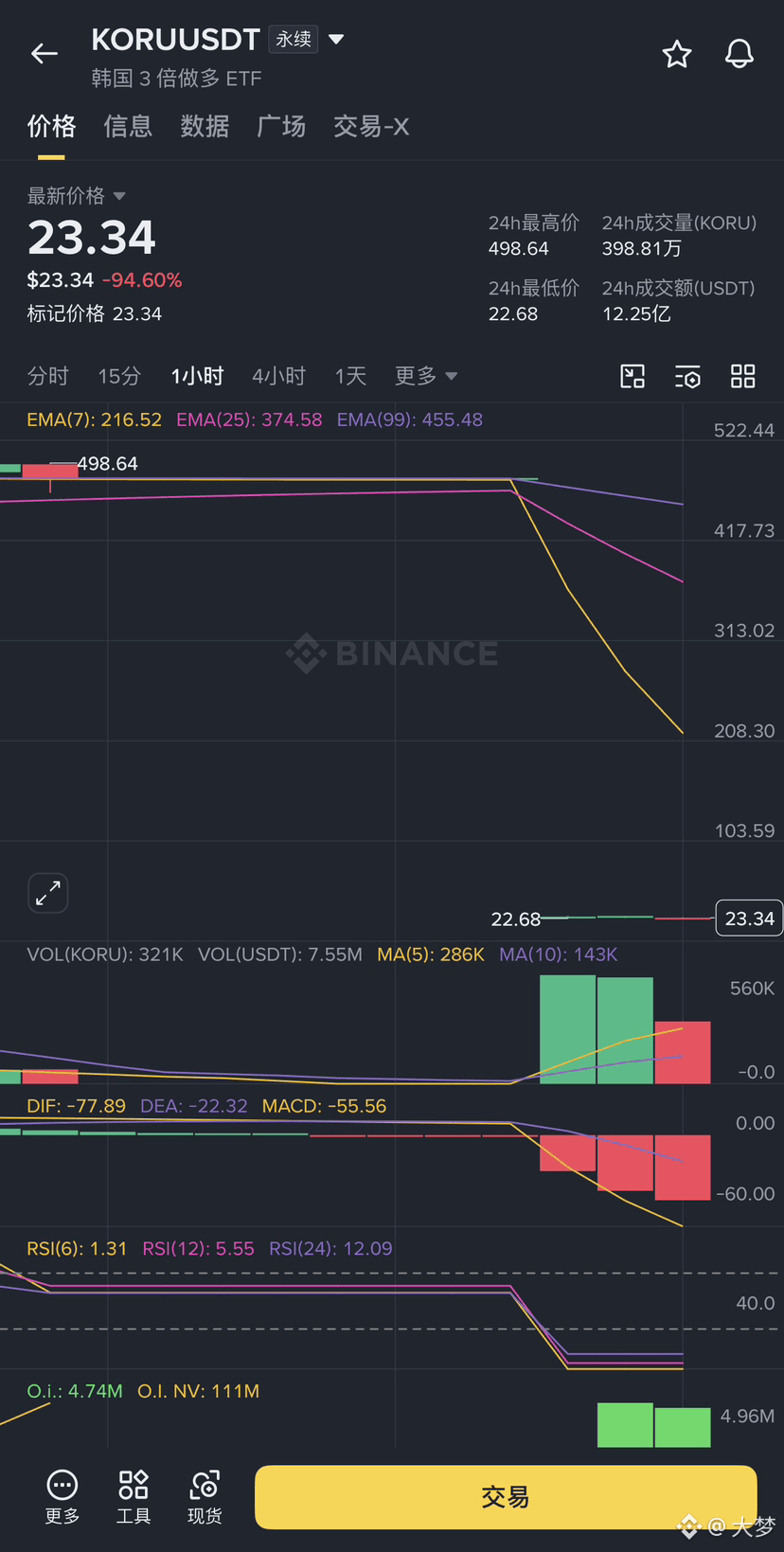
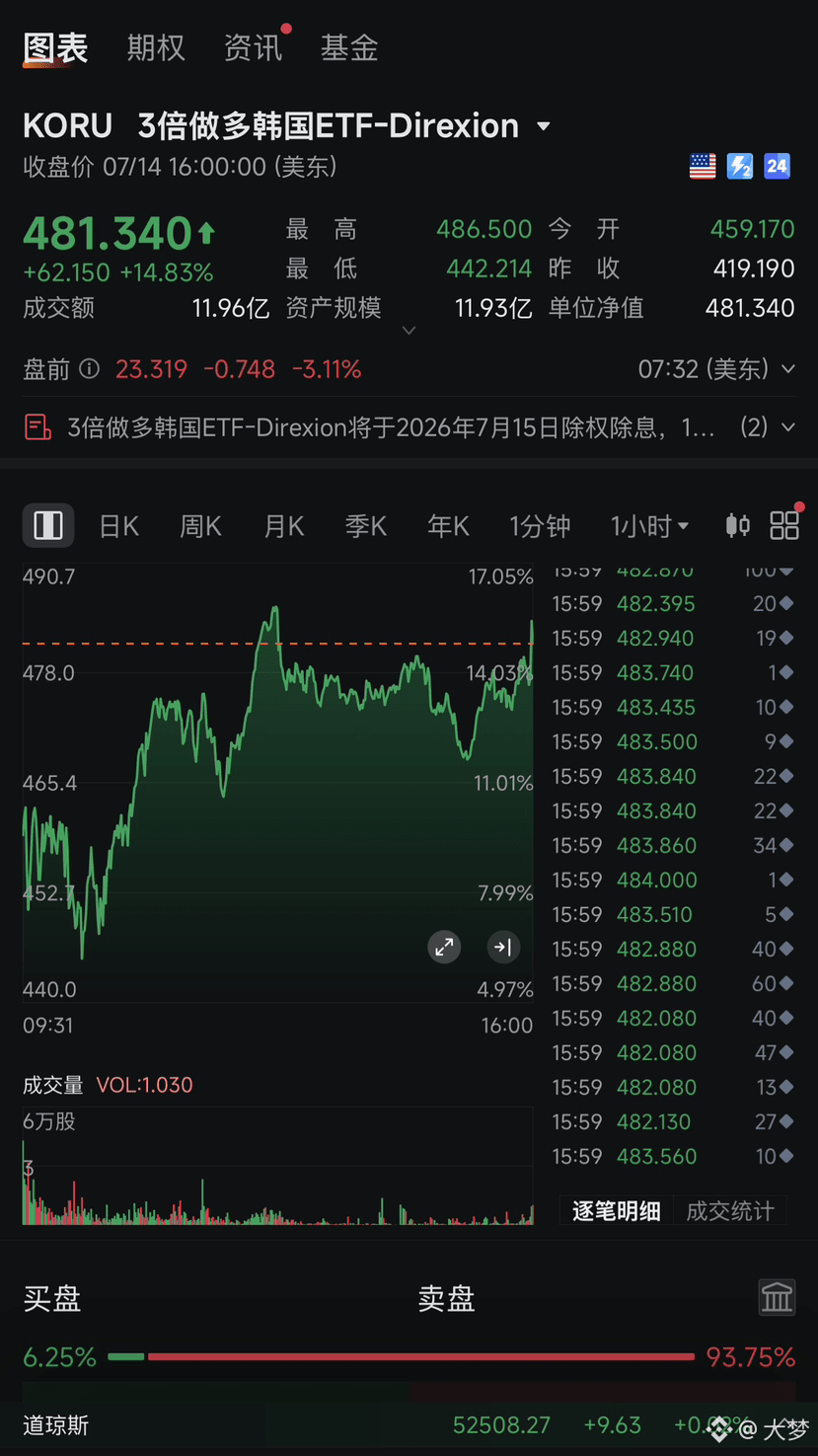
I thought it was time to get a bargain. Turns out they just did a stock split.
I thought it was time to get a bargain. Turns out they just did a stock split.
1
1
2.1k
·
--
That ruling from the Supreme Court last night was quite interesting—it blocked Trump’s effort to replace Fed Governor Cook. On the surface, it looks like the Fed’s independence has been preserved, so the market should be able to relax. But the way I’m reading the charts, this isn’t over at all—the script for the White House and the Fed going head-to-head has only just begun. How the rate-cut pace will unfold next, and ultimately who has the final say—everything is still a variable.
For the crypto world, what’s truly valuable isn’t the outcome of this ruling, but the signal it hints at: the battle over who controls monetary policy is now on full display. Once the market starts to doubt the credibility of the interest-rate path, risk-off sentiment and liquidity expectations will swing back and forth repeatedly. Assets that are most sensitive to liquidity—like $ETH $SOL —will only see volatility increase, not decrease.
Don’t rush to believe that everything is settled just because there’s a ruling like this. Political standoffs like this often get messier the longer they drag on 🤷
#美最高法院阻止特朗普罢免美联储理事库克 #美联储 $ETH
That ruling from the Supreme Court last night was quite interesting—it blocked Trump’s effort to replace Fed Governor Cook. On the surface, it looks like the Fed’s independence has been preserved, so the market should be able to relax. But the way I’m reading the charts, this isn’t over at all—the script for the White House and the Fed going head-to-head has only just begun. How the rate-cut pace will unfold next, and ultimately who has the final say—everything is still a variable.
For the crypto world, what’s truly valuable isn’t the outcome of this ruling, but the signal it hints at: the battle over who controls monetary policy is now on full display. Once the market starts to doubt the credibility of the interest-rate path, risk-off sentiment and liquidity expectations will swing back and forth repeatedly. Assets that are most sensitive to liquidity—like $ETH $SOL —will only see volatility increase, not decrease.
Don’t rush to believe that everything is settled just because there’s a ruling like this. Political standoffs like this often get messier the longer they drag on 🤷
#美最高法院阻止特朗普罢免美联储理事库克 #美联储 $ETH
For the crypto world, what’s truly valuable isn’t the outcome of this ruling, but the signal it hints at: the battle over who controls monetary policy is now on full display. Once the market starts to doubt the credibility of the interest-rate path, risk-off sentiment and liquidity expectations will swing back and forth repeatedly. Assets that are most sensitive to liquidity—like $ETH $SOL —will only see volatility increase, not decrease.
Don’t rush to believe that everything is settled just because there’s a ruling like this. Political standoffs like this often get messier the longer they drag on 🤷
#美最高法院阻止特朗普罢免美联储理事库克 #美联储 $ETH
3
3.3k
·
--
Partly True
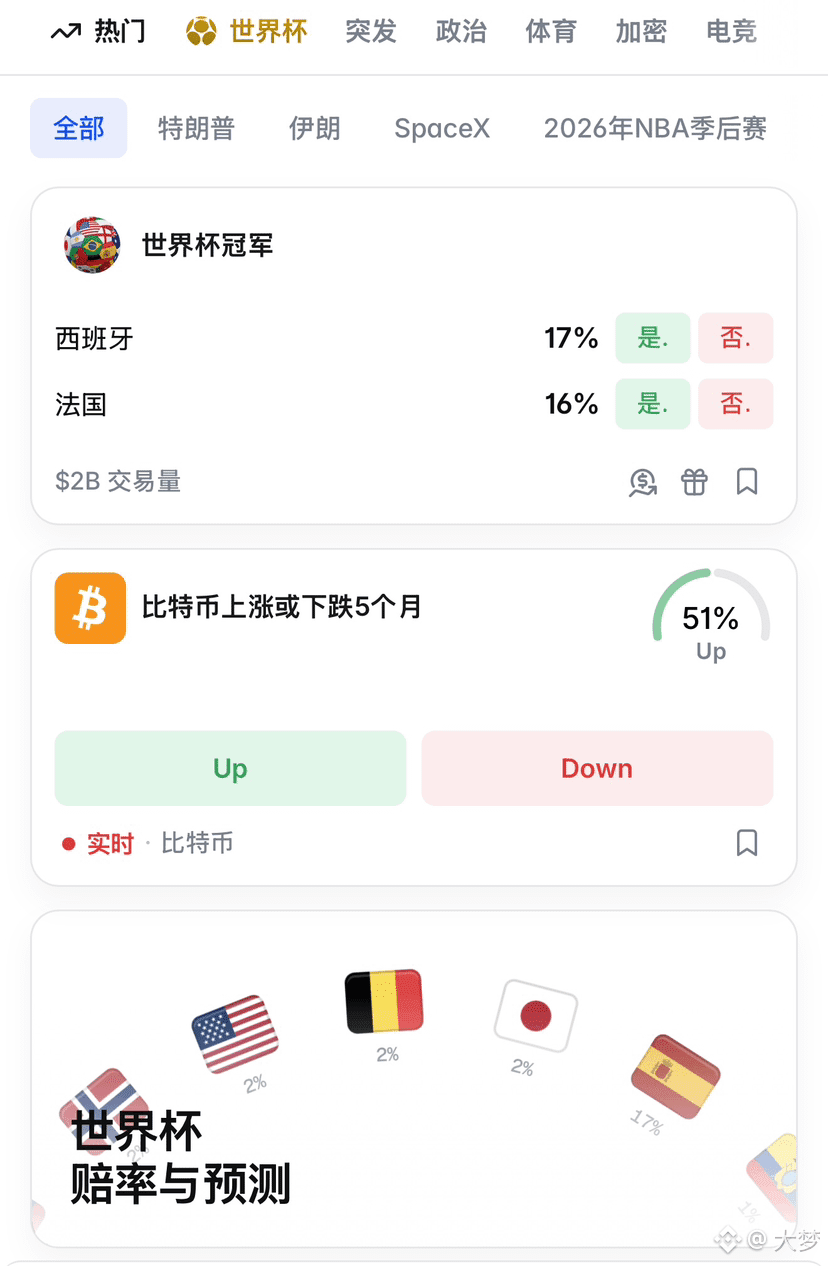
Polymarket has opened 464 markets for the World Cup, which is ten times more than the combined NBA, MLB, and NHL.
On-chain betting is quickly taking a slice of the traditional betting pie. The reason is simple: no KYC, instant settlement, and transparent, verifiable odds. With 48 teams and 104 matches in the World Cup, each match has at least 5 markets for win/draw/loss + point spread + over/under, with liquidity that is on a whole different level compared to the last tournament.
Reflecting on the crypto prices, $GNO has risen 8% today and 16% over the week, quietly hitting new highs. Gnosis is the underlying chain for Polymarket—every on-chain bet contributes to its gas and TVL.
In contrast, the former star $CHZ has dropped 6.6% today. Fan tokens lack real use cases and rely solely on emotional trading for a quick pump. Prediction markets, however, are backed by real trading volume, which is a completely different ballgame.
The biggest crypto winner of this World Cup is likely not some fan token, but rather the on-chain betting infrastructure.
#世界币 #预测市场竞争加剧
$GNO
---
Polymarket has opened 464 markets for the World Cup, which is ten times more than the combined NBA, MLB, and NHL.
On-chain betting is quickly taking a slice of the traditional betting pie. The reason is simple: no KYC, instant settlement, and transparent, verifiable odds. With 48 teams and 104 matches in the World Cup, each match has at least 5 markets for win/draw/loss + point spread + over/under, with liquidity that is on a whole different level compared to the last tournament.
Reflecting on the crypto prices, $GNO has risen 8% today and 16% over the week, quietly hitting new highs. Gnosis is the underlying chain for Polymarket—every on-chain bet contributes to its gas and TVL.
In contrast, the former star $CHZ has dropped 6.6% today. Fan tokens lack real use cases and rely solely on emotional trading for a quick pump. Prediction markets, however, are backed by real trading volume, which is a completely different ballgame.
The biggest crypto winner of this World Cup is likely not some fan token, but rather the on-chain betting infrastructure.
#世界币 #预测市场竞争加剧
$GNO
---
On-chain betting is quickly taking a slice of the traditional betting pie. The reason is simple: no KYC, instant settlement, and transparent, verifiable odds. With 48 teams and 104 matches in the World Cup, each match has at least 5 markets for win/draw/loss + point spread + over/under, with liquidity that is on a whole different level compared to the last tournament.
Reflecting on the crypto prices, $GNO has risen 8% today and 16% over the week, quietly hitting new highs. Gnosis is the underlying chain for Polymarket—every on-chain bet contributes to its gas and TVL.
In contrast, the former star $CHZ has dropped 6.6% today. Fan tokens lack real use cases and rely solely on emotional trading for a quick pump. Prediction markets, however, are backed by real trading volume, which is a completely different ballgame.
The biggest crypto winner of this World Cup is likely not some fan token, but rather the on-chain betting infrastructure.
#世界币 #预测市场竞争加剧
$GNO
---
2
1.4k
·
--
$ZEC Today's price action has me questioning if the market is collectively suffering from amnesia.
A privacy coin that was exposed for having an "infinite minting exploit" has shot up 17% in 24 hours, with a trading volume of $340 million, even higher than SOL. Are you telling me that's normal?
I dug into the details: the exploit is said to be patched, and the team claims it was never actually exploited. The market logic seems to be "bad news is fully priced in, so good news follows." But there are a few uncomfortable points I want to discuss:
The privacy feature of ZEC is the most ironic aspect of this situation. If someone actually exploited the minting, the nature of a privacy chain means you can't audit whether there's been any inflation. This isn't something that can simply be fixed with a patch to restore trust.
Then there's the liquidity aspect. The Fear & Greed Index is at 15, signaling extreme fear across the market, and the NASDAQ just plummeted 4%. In this environment, someone is throwing over $300 million into a coin that just had a vulnerability exposed? Retail traders don't have that kind of guts or capital.
ZEC has dropped over 90% from its peak. Is it possible that some funds think it can't drop any further and are using the exploit panic to wash out the last batch of weak hands? I'm not sure, but I've seen this play out too many times with other coins.
I’m not holding any position and I don’t plan to jump in now. In an extremely fearful market, this kind of anomaly feels more like a hunter setting up than an opportunity for retail traders. Just observing for now.
#Zcash发现可无限铸币漏洞 #NASDAQ falls 4.18%, marking the largest single-day drop in over a year
$ZEC
$ZEC Today's price action has me questioning if the market is collectively suffering from amnesia.
A privacy coin that was exposed for having an "infinite minting exploit" has shot up 17% in 24 hours, with a trading volume of $340 million, even higher than SOL. Are you telling me that's normal?
I dug into the details: the exploit is said to be patched, and the team claims it was never actually exploited. The market logic seems to be "bad news is fully priced in, so good news follows." But there are a few uncomfortable points I want to discuss:
The privacy feature of ZEC is the most ironic aspect of this situation. If someone actually exploited the minting, the nature of a privacy chain means you can't audit whether there's been any inflation. This isn't something that can simply be fixed with a patch to restore trust.
Then there's the liquidity aspect. The Fear & Greed Index is at 15, signaling extreme fear across the market, and the NASDAQ just plummeted 4%. In this environment, someone is throwing over $300 million into a coin that just had a vulnerability exposed? Retail traders don't have that kind of guts or capital.
ZEC has dropped over 90% from its peak. Is it possible that some funds think it can't drop any further and are using the exploit panic to wash out the last batch of weak hands? I'm not sure, but I've seen this play out too many times with other coins.
I’m not holding any position and I don’t plan to jump in now. In an extremely fearful market, this kind of anomaly feels more like a hunter setting up than an opportunity for retail traders. Just observing for now.
#Zcash发现可无限铸币漏洞 #NASDAQ falls 4.18%, marking the largest single-day drop in over a year
$ZEC
A privacy coin that was exposed for having an "infinite minting exploit" has shot up 17% in 24 hours, with a trading volume of $340 million, even higher than SOL. Are you telling me that's normal?
I dug into the details: the exploit is said to be patched, and the team claims it was never actually exploited. The market logic seems to be "bad news is fully priced in, so good news follows." But there are a few uncomfortable points I want to discuss:
The privacy feature of ZEC is the most ironic aspect of this situation. If someone actually exploited the minting, the nature of a privacy chain means you can't audit whether there's been any inflation. This isn't something that can simply be fixed with a patch to restore trust.
Then there's the liquidity aspect. The Fear & Greed Index is at 15, signaling extreme fear across the market, and the NASDAQ just plummeted 4%. In this environment, someone is throwing over $300 million into a coin that just had a vulnerability exposed? Retail traders don't have that kind of guts or capital.
ZEC has dropped over 90% from its peak. Is it possible that some funds think it can't drop any further and are using the exploit panic to wash out the last batch of weak hands? I'm not sure, but I've seen this play out too many times with other coins.
I’m not holding any position and I don’t plan to jump in now. In an extremely fearful market, this kind of anomaly feels more like a hunter setting up than an opportunity for retail traders. Just observing for now.
#Zcash发现可无限铸币漏洞 #NASDAQ falls 4.18%, marking the largest single-day drop in over a year
$ZEC
5
7
5.4k
·
--
Verified
Last night, before hitting the sack, I was scrolling through Twitter and saw the technical details of the ZEC privacy pool vulnerability laid bare—there’s theoretically a window where unlimited minting could happen. My first thought wasn’t about the price; it was a simple question: has anyone actually exploited this vulnerability?
That question is the game-changer. The nature of privacy coins means you can't audit their actual circulating supply. If someone quietly minted a bunch during that window, say $ZEC , nobody in the market would be able to catch that. The value of the coins you hold really hinges on whether the total supply is what you think it is.
With a 24-hour trading volume pushing nearly $1 billion, that's unprecedented for ZEC. The price of 385 is being tugged back and forth between panic sellers and those betting on a rebound; essentially, the market is pricing in the possibility that 'the vulnerability has been exploited.'
My take on the privacy coin space has always been straightforward: the tech is sleek, the narrative is sexy, but the issues it aims to solve make it a target for regulatory pushback. Zcash has been around for nearly a decade, a pioneer in zero-knowledge proofs, and yet one minting vulnerability can wipe out trust. This tech debt thing is invisible most of the time, but when it blows up, it’s deadly.
Now, add in today’s macro environment—non-farm payrolls have exceeded expectations three times in a row, interest rate cuts have been pushed further out, and the fear-greed index is at 16. BTC itself has dipped below 61000, and with ZEC facing issues now, nobody's coming to the rescue.
I’m staying away. It’s not that I don’t think it could rebound, it’s just that the floor on this asset is impossible to calculate. How do you value an asset with a questionable total supply?
#ZcashPrivacyPoolMajorVulnerabilityZECPlummetsOver40% #USNonFarmPayrollsThreeTimesExceededExpectations
$ZEC
Last night, before hitting the sack, I was scrolling through Twitter and saw the technical details of the ZEC privacy pool vulnerability laid bare—there’s theoretically a window where unlimited minting could happen. My first thought wasn’t about the price; it was a simple question: has anyone actually exploited this vulnerability?
That question is the game-changer. The nature of privacy coins means you can't audit their actual circulating supply. If someone quietly minted a bunch during that window, say $ZEC , nobody in the market would be able to catch that. The value of the coins you hold really hinges on whether the total supply is what you think it is.
With a 24-hour trading volume pushing nearly $1 billion, that's unprecedented for ZEC. The price of 385 is being tugged back and forth between panic sellers and those betting on a rebound; essentially, the market is pricing in the possibility that 'the vulnerability has been exploited.'
My take on the privacy coin space has always been straightforward: the tech is sleek, the narrative is sexy, but the issues it aims to solve make it a target for regulatory pushback. Zcash has been around for nearly a decade, a pioneer in zero-knowledge proofs, and yet one minting vulnerability can wipe out trust. This tech debt thing is invisible most of the time, but when it blows up, it’s deadly.
Now, add in today’s macro environment—non-farm payrolls have exceeded expectations three times in a row, interest rate cuts have been pushed further out, and the fear-greed index is at 16. BTC itself has dipped below 61000, and with ZEC facing issues now, nobody's coming to the rescue.
I’m staying away. It’s not that I don’t think it could rebound, it’s just that the floor on this asset is impossible to calculate. How do you value an asset with a questionable total supply?
#ZcashPrivacyPoolMajorVulnerabilityZECPlummetsOver40% #USNonFarmPayrollsThreeTimesExceededExpectations
$ZEC
That question is the game-changer. The nature of privacy coins means you can't audit their actual circulating supply. If someone quietly minted a bunch during that window, say $ZEC , nobody in the market would be able to catch that. The value of the coins you hold really hinges on whether the total supply is what you think it is.
With a 24-hour trading volume pushing nearly $1 billion, that's unprecedented for ZEC. The price of 385 is being tugged back and forth between panic sellers and those betting on a rebound; essentially, the market is pricing in the possibility that 'the vulnerability has been exploited.'
My take on the privacy coin space has always been straightforward: the tech is sleek, the narrative is sexy, but the issues it aims to solve make it a target for regulatory pushback. Zcash has been around for nearly a decade, a pioneer in zero-knowledge proofs, and yet one minting vulnerability can wipe out trust. This tech debt thing is invisible most of the time, but when it blows up, it’s deadly.
Now, add in today’s macro environment—non-farm payrolls have exceeded expectations three times in a row, interest rate cuts have been pushed further out, and the fear-greed index is at 16. BTC itself has dipped below 61000, and with ZEC facing issues now, nobody's coming to the rescue.
I’m staying away. It’s not that I don’t think it could rebound, it’s just that the floor on this asset is impossible to calculate. How do you value an asset with a questionable total supply?
#ZcashPrivacyPoolMajorVulnerabilityZECPlummetsOver40% #USNonFarmPayrollsThreeTimesExceededExpectations
$ZEC
2
6
3.9k
·
--
Verified
SpaceX is going public on Nasdaq with an issue price of $135, a valuation of $1.77 trillion, the largest IPO in history, no contest.
But have you noticed that the most interesting part isn't how the US stock market handles the IPO, but rather that Binance already launched a contract with $SPCX running. The pre-market price is at $173, nearly 30% above the issue price, and both bulls and bears are having a field day.
Think about it—there's a stock that hasn't officially listed yet, but price discovery is happening on a crypto exchange first. This was previously unheard of. Traditional brokers are still lining up for allocation while some folks here are already sitting on a 46% loss.
Elon Musk holds 82% voting power, so the difference between the company being listed or not is almost negligible; retail investors are just buying into the hype. Meanwhile, the crypto market reacted faster, with $BTC dropping to a fear index of 18, and funds are rushing to chase the SpaceX excitement. I can't shake the feeling that this IPO might actually siphon some cash out of the crypto market, which short-term isn't great for $BTC .
Just wait and see; let's talk again after it officially lists on the 12th.
#SpaceX申请纳斯达克上市 #USStockMarketBuzz
$SPCX $BTC
SpaceX is going public on Nasdaq with an issue price of $135, a valuation of $1.77 trillion, the largest IPO in history, no contest.
But have you noticed that the most interesting part isn't how the US stock market handles the IPO, but rather that Binance already launched a contract with $SPCX running. The pre-market price is at $173, nearly 30% above the issue price, and both bulls and bears are having a field day.
Think about it—there's a stock that hasn't officially listed yet, but price discovery is happening on a crypto exchange first. This was previously unheard of. Traditional brokers are still lining up for allocation while some folks here are already sitting on a 46% loss.
Elon Musk holds 82% voting power, so the difference between the company being listed or not is almost negligible; retail investors are just buying into the hype. Meanwhile, the crypto market reacted faster, with $BTC dropping to a fear index of 18, and funds are rushing to chase the SpaceX excitement. I can't shake the feeling that this IPO might actually siphon some cash out of the crypto market, which short-term isn't great for $BTC .
Just wait and see; let's talk again after it officially lists on the 12th.
#SpaceX申请纳斯达克上市 #USStockMarketBuzz
$SPCX $BTC
But have you noticed that the most interesting part isn't how the US stock market handles the IPO, but rather that Binance already launched a contract with $SPCX running. The pre-market price is at $173, nearly 30% above the issue price, and both bulls and bears are having a field day.
Think about it—there's a stock that hasn't officially listed yet, but price discovery is happening on a crypto exchange first. This was previously unheard of. Traditional brokers are still lining up for allocation while some folks here are already sitting on a 46% loss.
Elon Musk holds 82% voting power, so the difference between the company being listed or not is almost negligible; retail investors are just buying into the hype. Meanwhile, the crypto market reacted faster, with $BTC dropping to a fear index of 18, and funds are rushing to chase the SpaceX excitement. I can't shake the feeling that this IPO might actually siphon some cash out of the crypto market, which short-term isn't great for $BTC .
Just wait and see; let's talk again after it officially lists on the 12th.
#SpaceX申请纳斯达克上市 #USStockMarketBuzz
$SPCX $BTC
2
3
1.5k
·
--
$BTC last night took a hit at 74300, setting a new low for May, with the fear index at 38, causing many to cut losses and run. But interestingly, today two coins defied the trend and surged, completely ignoring Bitcoin's behavior—$NEAR and $ONDO.
First, let's talk about $NEAR, which jumped nearly 13% in 24 hours with a trading volume of 155 million dollars; that's explosive in the altcoin space. Why the rise? First, news about Sui offering gas-free transfers boosted the sentiment across the entire L1 sector, with funds starting to hunt for "undervalued L1" assets to catch up. NEAR's sharding tech + AI narrative perfectly aligned with this wave of interest. Second, it shot from 2.01 to 2.47, with an intraday volatility exceeding 20%, clearly indicating that major funds were accumulating at the bottom before pushing it up. Third, NEAR has been making frequent moves in the AI + blockchain space, keeping the narrative alive. For those holding positions, it’s wise to take profits by selling half around 2.4, with the rest protected by a stop-loss to see if it can push to 2.6. For those who missed the boat, don’t chase the highs; consider entering on a pullback to 2.2-2.25, as chasing at the peak could leave you getting wrecked when it falls.
Now, about $ONDO, the RWA sector leader surged nearly 12% today with a trading volume of 44 million dollars. The reasoning is clear: first, BTC ETFs have seen 12.6 billion flowing out over six consecutive days, with traditional funds withdrawing, but the RWA sector is viewed as a "compliance narrative safe haven," attracting certainty-seeking capital. Second, ONDO jumped from 0.374 directly to 0.428, breaking through the upper boundary of the past week’s consolidation, opening up technical space. Third, BlackRock's BUIDL fund continues to grow in scale, and as an RWA infrastructure, ONDO directly benefits. For those holding, stay in above 0.42, with a stop-loss set below 0.38. If you're sitting on cash, a pullback to 0.40-0.41 would be a more comfortable entry point; don’t FOMO in.
Commonality between the two coins: while Bitcoin plummets, they’re rallying, indicating independent funds at play, not just following the crowd. But be cautious, if $BTC continues to break down toward 72000, these rebound coins will likely struggle to hold up, so don’t mistake a short-term bounce for a trend reversal.
#BTC breaks below 75k, new low for May #BTCETFSixDayOutflow #Sui免Gas稳定币转账 $NEAR $ONDO $BTC
$BTC last night took a hit at 74300, setting a new low for May, with the fear index at 38, causing many to cut losses and run. But interestingly, today two coins defied the trend and surged, completely ignoring Bitcoin's behavior—$NEAR and $ONDO .
First, let's talk about $NEAR , which jumped nearly 13% in 24 hours with a trading volume of 155 million dollars; that's explosive in the altcoin space. Why the rise? First, news about Sui offering gas-free transfers boosted the sentiment across the entire L1 sector, with funds starting to hunt for "undervalued L1" assets to catch up. NEAR's sharding tech + AI narrative perfectly aligned with this wave of interest. Second, it shot from 2.01 to 2.47, with an intraday volatility exceeding 20%, clearly indicating that major funds were accumulating at the bottom before pushing it up. Third, NEAR has been making frequent moves in the AI + blockchain space, keeping the narrative alive. For those holding positions, it’s wise to take profits by selling half around 2.4, with the rest protected by a stop-loss to see if it can push to 2.6. For those who missed the boat, don’t chase the highs; consider entering on a pullback to 2.2-2.25, as chasing at the peak could leave you getting wrecked when it falls.
Now, about $ONDO , the RWA sector leader surged nearly 12% today with a trading volume of 44 million dollars. The reasoning is clear: first, BTC ETFs have seen 12.6 billion flowing out over six consecutive days, with traditional funds withdrawing, but the RWA sector is viewed as a "compliance narrative safe haven," attracting certainty-seeking capital. Second, ONDO jumped from 0.374 directly to 0.428, breaking through the upper boundary of the past week’s consolidation, opening up technical space. Third, BlackRock's BUIDL fund continues to grow in scale, and as an RWA infrastructure, ONDO directly benefits. For those holding, stay in above 0.42, with a stop-loss set below 0.38. If you're sitting on cash, a pullback to 0.40-0.41 would be a more comfortable entry point; don’t FOMO in.
Commonality between the two coins: while Bitcoin plummets, they’re rallying, indicating independent funds at play, not just following the crowd. But be cautious, if $BTC continues to break down toward 72000, these rebound coins will likely struggle to hold up, so don’t mistake a short-term bounce for a trend reversal.
#BTC breaks below 75k, new low for May #BTCETFSixDayOutflow #Sui免Gas稳定币转账 $NEAR $ONDO $BTC
First, let's talk about $NEAR , which jumped nearly 13% in 24 hours with a trading volume of 155 million dollars; that's explosive in the altcoin space. Why the rise? First, news about Sui offering gas-free transfers boosted the sentiment across the entire L1 sector, with funds starting to hunt for "undervalued L1" assets to catch up. NEAR's sharding tech + AI narrative perfectly aligned with this wave of interest. Second, it shot from 2.01 to 2.47, with an intraday volatility exceeding 20%, clearly indicating that major funds were accumulating at the bottom before pushing it up. Third, NEAR has been making frequent moves in the AI + blockchain space, keeping the narrative alive. For those holding positions, it’s wise to take profits by selling half around 2.4, with the rest protected by a stop-loss to see if it can push to 2.6. For those who missed the boat, don’t chase the highs; consider entering on a pullback to 2.2-2.25, as chasing at the peak could leave you getting wrecked when it falls.
Now, about $ONDO , the RWA sector leader surged nearly 12% today with a trading volume of 44 million dollars. The reasoning is clear: first, BTC ETFs have seen 12.6 billion flowing out over six consecutive days, with traditional funds withdrawing, but the RWA sector is viewed as a "compliance narrative safe haven," attracting certainty-seeking capital. Second, ONDO jumped from 0.374 directly to 0.428, breaking through the upper boundary of the past week’s consolidation, opening up technical space. Third, BlackRock's BUIDL fund continues to grow in scale, and as an RWA infrastructure, ONDO directly benefits. For those holding, stay in above 0.42, with a stop-loss set below 0.38. If you're sitting on cash, a pullback to 0.40-0.41 would be a more comfortable entry point; don’t FOMO in.
Commonality between the two coins: while Bitcoin plummets, they’re rallying, indicating independent funds at play, not just following the crowd. But be cautious, if $BTC continues to break down toward 72000, these rebound coins will likely struggle to hold up, so don’t mistake a short-term bounce for a trend reversal.
#BTC breaks below 75k, new low for May #BTCETFSixDayOutflow #Sui免Gas稳定币转账 $NEAR $ONDO $BTC
3
2.3k
·
--
Today, the top gainers and hot searches are $NEAR and $GENIUS . One is rallying due to a tech upgrade while the other is riding the coattails of legislative hype. Both are news-driven, but the logic is completely different, so let’s break it down.
$NEAR is up 6.9% today, with a 24h trading volume of $181 million. This volume indicates that it’s not just retail traders getting hyped, but real capital is entering the market. The catalyst is clear: the implementation of the dynamic sharding upgrade, which is part of NEAR's Nightshade 2.0 that has been in the works since last year. The core of this upgrade allows the network’s throughput to scale automatically based on demand, eliminating the need for manual sharding. For developers, the deployment experience is approaching Web2 levels, and for holders, it means the ecosystem can accommodate more applications, leading to increased TVL inflow. The current price is around 2.11. If you’re already holding, consider cashing out half to lock in profits, and see if it can hold above the 2.2 resistance level. If you haven’t jumped on yet, don’t chase; wait for a retracement to the 2.0 round number before considering entry. Chasing a news-driven rally could trap you. Risk point: the market fear index is at 39, indicating overall weak sentiment, and the sustainability of $NEAR 's strength is questionable.
$GENIUS is up a whopping 41.9% today, with a trading volume of $36 million, which is absurd 😂. But to be honest, this coin has mediocre fundamentals and is likely just riding the hype of the U.S. GENIUS stablecoin bill. The bill is progressing smoothly in the Senate, and retail traders are rushing in just because of the similar name, a classic "buy the name" scenario. This kind of pure emotion-driven spike is most vulnerable to a pullback; once the hype from the bill fades or if the market corrects, it could drop faster than it rose. If you’re already holding, set your take-profit targets and don’t be greedy; if it dips below 0.55, exit decisively. If you haven’t bought in, just watch; don’t get tempted to catch falling knives—chasing after a 41% spike is likely just lifting someone else’s bags.
Both coins are driven by news today, but the difference is that $NEAR has actual tech support, while $GENIUS is purely name speculation. Choose wisely.
#NEAR动态分片升级 #GENIUSAct #加密货币 #BinanceSquare
Today, the top gainers and hot searches are $NEAR and $GENIUS . One is rallying due to a tech upgrade while the other is riding the coattails of legislative hype. Both are news-driven, but the logic is completely different, so let’s break it down.
$NEAR is up 6.9% today, with a 24h trading volume of $181 million. This volume indicates that it’s not just retail traders getting hyped, but real capital is entering the market. The catalyst is clear: the implementation of the dynamic sharding upgrade, which is part of NEAR's Nightshade 2.0 that has been in the works since last year. The core of this upgrade allows the network’s throughput to scale automatically based on demand, eliminating the need for manual sharding. For developers, the deployment experience is approaching Web2 levels, and for holders, it means the ecosystem can accommodate more applications, leading to increased TVL inflow. The current price is around 2.11. If you’re already holding, consider cashing out half to lock in profits, and see if it can hold above the 2.2 resistance level. If you haven’t jumped on yet, don’t chase; wait for a retracement to the 2.0 round number before considering entry. Chasing a news-driven rally could trap you. Risk point: the market fear index is at 39, indicating overall weak sentiment, and the sustainability of $NEAR 's strength is questionable.
$GENIUS is up a whopping 41.9% today, with a trading volume of $36 million, which is absurd 😂. But to be honest, this coin has mediocre fundamentals and is likely just riding the hype of the U.S. GENIUS stablecoin bill. The bill is progressing smoothly in the Senate, and retail traders are rushing in just because of the similar name, a classic "buy the name" scenario. This kind of pure emotion-driven spike is most vulnerable to a pullback; once the hype from the bill fades or if the market corrects, it could drop faster than it rose. If you’re already holding, set your take-profit targets and don’t be greedy; if it dips below 0.55, exit decisively. If you haven’t bought in, just watch; don’t get tempted to catch falling knives—chasing after a 41% spike is likely just lifting someone else’s bags.
Both coins are driven by news today, but the difference is that $NEAR has actual tech support, while $GENIUS is purely name speculation. Choose wisely.
#NEAR动态分片升级 #GENIUSAct #加密货币 #BinanceSquare
$NEAR is up 6.9% today, with a 24h trading volume of $181 million. This volume indicates that it’s not just retail traders getting hyped, but real capital is entering the market. The catalyst is clear: the implementation of the dynamic sharding upgrade, which is part of NEAR's Nightshade 2.0 that has been in the works since last year. The core of this upgrade allows the network’s throughput to scale automatically based on demand, eliminating the need for manual sharding. For developers, the deployment experience is approaching Web2 levels, and for holders, it means the ecosystem can accommodate more applications, leading to increased TVL inflow. The current price is around 2.11. If you’re already holding, consider cashing out half to lock in profits, and see if it can hold above the 2.2 resistance level. If you haven’t jumped on yet, don’t chase; wait for a retracement to the 2.0 round number before considering entry. Chasing a news-driven rally could trap you. Risk point: the market fear index is at 39, indicating overall weak sentiment, and the sustainability of $NEAR 's strength is questionable.
$GENIUS is up a whopping 41.9% today, with a trading volume of $36 million, which is absurd 😂. But to be honest, this coin has mediocre fundamentals and is likely just riding the hype of the U.S. GENIUS stablecoin bill. The bill is progressing smoothly in the Senate, and retail traders are rushing in just because of the similar name, a classic "buy the name" scenario. This kind of pure emotion-driven spike is most vulnerable to a pullback; once the hype from the bill fades or if the market corrects, it could drop faster than it rose. If you’re already holding, set your take-profit targets and don’t be greedy; if it dips below 0.55, exit decisively. If you haven’t bought in, just watch; don’t get tempted to catch falling knives—chasing after a 41% spike is likely just lifting someone else’s bags.
Both coins are driven by news today, but the difference is that $NEAR has actual tech support, while $GENIUS is purely name speculation. Choose wisely.
#NEAR动态分片升级 #GENIUSAct #加密货币 #BinanceSquare
4
1.7k
·
--
The market's Fear and Greed Index is at 45. BTC ETF had a net inflow of $131 million yesterday. Overall sentiment is neutral, but today two infrastructure tokens are defying the trend and are worth discussing.
$STORJ surged 31% in 24 hours, climbing from $0.10 to $0.159, and now it’s pulled back to around $0.143 with a trading volume of $16.5 million. This pump has three main reasons: first, the decentralized storage sector has recently gained traction thanks to Filecoin, attracting funds looking for low market cap assets in the same space; second, STORJ has a small circulating supply, making it easy to pump; third, technically, it had been ranging near $0.10 for nearly two weeks, and the breakout triggered a cascade of short stop-losses. If you’re holding, consider taking profit by selling half in the $0.15-$0.16 range and set a stop-loss at $0.12 for the remainder to see if it can push higher again. If you missed the boat, don't chase; it’s already pulled back 10% from its peak, and chasing now is likely to leave you holding the bag. Wait for a pullback to the $0.12-$0.13 zone to consider a small position.
$GPS jumped nearly 10% today and is trending on search engines with a trading volume of $4.1 million. GoPlus is working in the Web3 security middleware space, similarly falling under the infrastructure narrative as STORJ. This token moved from $0.0077 to $0.0089, which isn’t outrageous but is showing a steady trend. Being on trending searches indicates growing retail interest, so there might be another wave of emotional premium in the short term. To be honest, this token has average liquidity and thin order books; it can pump quickly but can drop just as fast. If you’re holding, set a stop-loss at $0.008 and aim for $0.009-$0.0095. If you're out of the market, consider testing a small position around $0.0080-$0.0083 on a dip, but don’t go heavy; a large order can easily catch you off guard 😂
In summary: when the broader market is ranging, funds tend to flock to small caps in search of alpha, and today the infrastructure sector clearly saw some money rotation. But remember, small caps can rally hard but also pull back just as fiercely; don’t be greedy, and take profits when you hit your targets.
#Bitcoin ETF net inflow of $131 million #Web3 #STORJ #GPS $BTC $ETH
The market's Fear and Greed Index is at 45. BTC ETF had a net inflow of $131 million yesterday. Overall sentiment is neutral, but today two infrastructure tokens are defying the trend and are worth discussing.
$STORJ surged 31% in 24 hours, climbing from $0.10 to $0.159, and now it’s pulled back to around $0.143 with a trading volume of $16.5 million. This pump has three main reasons: first, the decentralized storage sector has recently gained traction thanks to Filecoin, attracting funds looking for low market cap assets in the same space; second, STORJ has a small circulating supply, making it easy to pump; third, technically, it had been ranging near $0.10 for nearly two weeks, and the breakout triggered a cascade of short stop-losses. If you’re holding, consider taking profit by selling half in the $0.15-$0.16 range and set a stop-loss at $0.12 for the remainder to see if it can push higher again. If you missed the boat, don't chase; it’s already pulled back 10% from its peak, and chasing now is likely to leave you holding the bag. Wait for a pullback to the $0.12-$0.13 zone to consider a small position.
$GPS jumped nearly 10% today and is trending on search engines with a trading volume of $4.1 million. GoPlus is working in the Web3 security middleware space, similarly falling under the infrastructure narrative as STORJ. This token moved from $0.0077 to $0.0089, which isn’t outrageous but is showing a steady trend. Being on trending searches indicates growing retail interest, so there might be another wave of emotional premium in the short term. To be honest, this token has average liquidity and thin order books; it can pump quickly but can drop just as fast. If you’re holding, set a stop-loss at $0.008 and aim for $0.009-$0.0095. If you're out of the market, consider testing a small position around $0.0080-$0.0083 on a dip, but don’t go heavy; a large order can easily catch you off guard 😂
In summary: when the broader market is ranging, funds tend to flock to small caps in search of alpha, and today the infrastructure sector clearly saw some money rotation. But remember, small caps can rally hard but also pull back just as fiercely; don’t be greedy, and take profits when you hit your targets.
#Bitcoin ETF net inflow of $131 million #Web3 #STORJ #GPS $BTC $ETH
$STORJ surged 31% in 24 hours, climbing from $0.10 to $0.159, and now it’s pulled back to around $0.143 with a trading volume of $16.5 million. This pump has three main reasons: first, the decentralized storage sector has recently gained traction thanks to Filecoin, attracting funds looking for low market cap assets in the same space; second, STORJ has a small circulating supply, making it easy to pump; third, technically, it had been ranging near $0.10 for nearly two weeks, and the breakout triggered a cascade of short stop-losses. If you’re holding, consider taking profit by selling half in the $0.15-$0.16 range and set a stop-loss at $0.12 for the remainder to see if it can push higher again. If you missed the boat, don't chase; it’s already pulled back 10% from its peak, and chasing now is likely to leave you holding the bag. Wait for a pullback to the $0.12-$0.13 zone to consider a small position.
$GPS jumped nearly 10% today and is trending on search engines with a trading volume of $4.1 million. GoPlus is working in the Web3 security middleware space, similarly falling under the infrastructure narrative as STORJ. This token moved from $0.0077 to $0.0089, which isn’t outrageous but is showing a steady trend. Being on trending searches indicates growing retail interest, so there might be another wave of emotional premium in the short term. To be honest, this token has average liquidity and thin order books; it can pump quickly but can drop just as fast. If you’re holding, set a stop-loss at $0.008 and aim for $0.009-$0.0095. If you're out of the market, consider testing a small position around $0.0080-$0.0083 on a dip, but don’t go heavy; a large order can easily catch you off guard 😂
In summary: when the broader market is ranging, funds tend to flock to small caps in search of alpha, and today the infrastructure sector clearly saw some money rotation. But remember, small caps can rally hard but also pull back just as fiercely; don’t be greedy, and take profits when you hit your targets.
#Bitcoin ETF net inflow of $131 million #Web3 #STORJ #GPS $BTC $ETH
1
1.1k
·
--
The AI sector just exploded today 😂
$AIGENSYN skyrocketed 67% in 24 hours, jumping from 0.025 all the way to a peak of 0.053, effectively doubling during the day with a trading volume of $23 million. This token is all about a decentralized AI training network, riding the wave of both AI and DePIN narratives. Why the sudden explosion? First, BinanceOnline2026 kicked off today, and funds have been eyeing the AI sector collectively; second, traditional AI stocks have been hitting new highs lately, spilling that sentiment into the crypto AI space; third, the project team just announced a new training node incentive plan, providing some solid fundamentals. Now the price has pulled back from the peak to 0.041, marking a 20% retracement. If you’re holding, set a stop-loss at 0.038, with 0.05 acting as a resistance level where you might want to take profits. If you missed the boat, don’t chase it; wait for a pullback to 0.035 before considering a small position—chasing highs could likely get you wrecked.
$AI in the same sector rose 23% today, climbing from 0.024 to a peak of 0.037, with a trading volume also at the $23 million level. It had been consolidating around 0.024-0.025 for almost a week, and today’s volume breakout indicates that there’s been enough accumulation at the bottom before action started. Compared to $AIGENSYN, $AI has a smaller market cap and more volatile movements—it’s like the little brother riding the trend. Currently at 0.030, there's room to move up but not far from the bottom either. For those holding, set a stop-loss below 0.028, targeting the previous highs around 0.035-0.037. For those without positions, wait for a pullback to 0.027-0.028 to grab a little, but don’t exceed 5% of your portfolio—these small-cap coins can crash hard, so avoid the temptation to go all in.
The AI sector today was catalyzed by the BinanceOnline conference and the heat from the traditional AI market, with $BTC stabilizing at 81,500 giving altcoins some breathing space. But the fear and greed index is only at 47, indicating a cautious market sentiment. Don’t let a single day of explosive growth fool you into thinking the bull market is back—managing your position sizes is more crucial than anything else.
#BinanceOnline2026 kicks off today #AI sector $AIGENSYN $AI $BTC
The AI sector just exploded today 😂
$AIGENSYN skyrocketed 67% in 24 hours, jumping from 0.025 all the way to a peak of 0.053, effectively doubling during the day with a trading volume of $23 million. This token is all about a decentralized AI training network, riding the wave of both AI and DePIN narratives. Why the sudden explosion? First, BinanceOnline2026 kicked off today, and funds have been eyeing the AI sector collectively; second, traditional AI stocks have been hitting new highs lately, spilling that sentiment into the crypto AI space; third, the project team just announced a new training node incentive plan, providing some solid fundamentals. Now the price has pulled back from the peak to 0.041, marking a 20% retracement. If you’re holding, set a stop-loss at 0.038, with 0.05 acting as a resistance level where you might want to take profits. If you missed the boat, don’t chase it; wait for a pullback to 0.035 before considering a small position—chasing highs could likely get you wrecked.
$AI in the same sector rose 23% today, climbing from 0.024 to a peak of 0.037, with a trading volume also at the $23 million level. It had been consolidating around 0.024-0.025 for almost a week, and today’s volume breakout indicates that there’s been enough accumulation at the bottom before action started. Compared to $AIGENSYN, $AI has a smaller market cap and more volatile movements—it’s like the little brother riding the trend. Currently at 0.030, there's room to move up but not far from the bottom either. For those holding, set a stop-loss below 0.028, targeting the previous highs around 0.035-0.037. For those without positions, wait for a pullback to 0.027-0.028 to grab a little, but don’t exceed 5% of your portfolio—these small-cap coins can crash hard, so avoid the temptation to go all in.
The AI sector today was catalyzed by the BinanceOnline conference and the heat from the traditional AI market, with $BTC stabilizing at 81,500 giving altcoins some breathing space. But the fear and greed index is only at 47, indicating a cautious market sentiment. Don’t let a single day of explosive growth fool you into thinking the bull market is back—managing your position sizes is more crucial than anything else.
#BinanceOnline2026 kicks off today #AI sector $AIGENSYN $AI $BTC
$AIGENSYN skyrocketed 67% in 24 hours, jumping from 0.025 all the way to a peak of 0.053, effectively doubling during the day with a trading volume of $23 million. This token is all about a decentralized AI training network, riding the wave of both AI and DePIN narratives. Why the sudden explosion? First, BinanceOnline2026 kicked off today, and funds have been eyeing the AI sector collectively; second, traditional AI stocks have been hitting new highs lately, spilling that sentiment into the crypto AI space; third, the project team just announced a new training node incentive plan, providing some solid fundamentals. Now the price has pulled back from the peak to 0.041, marking a 20% retracement. If you’re holding, set a stop-loss at 0.038, with 0.05 acting as a resistance level where you might want to take profits. If you missed the boat, don’t chase it; wait for a pullback to 0.035 before considering a small position—chasing highs could likely get you wrecked.
$AI in the same sector rose 23% today, climbing from 0.024 to a peak of 0.037, with a trading volume also at the $23 million level. It had been consolidating around 0.024-0.025 for almost a week, and today’s volume breakout indicates that there’s been enough accumulation at the bottom before action started. Compared to $AIGENSYN, $AI has a smaller market cap and more volatile movements—it’s like the little brother riding the trend. Currently at 0.030, there's room to move up but not far from the bottom either. For those holding, set a stop-loss below 0.028, targeting the previous highs around 0.035-0.037. For those without positions, wait for a pullback to 0.027-0.028 to grab a little, but don’t exceed 5% of your portfolio—these small-cap coins can crash hard, so avoid the temptation to go all in.
The AI sector today was catalyzed by the BinanceOnline conference and the heat from the traditional AI market, with $BTC stabilizing at 81,500 giving altcoins some breathing space. But the fear and greed index is only at 47, indicating a cautious market sentiment. Don’t let a single day of explosive growth fool you into thinking the bull market is back—managing your position sizes is more crucial than anything else.
#BinanceOnline2026 kicks off today #AI sector $AIGENSYN $AI $BTC
1
1.5k
·
--
The Cosmos ecosystem is taking off today, with $SAGA and $DYM both surging over 26%, and even the big guy $ATOM is trending with almost a 5% increase. This wave is clearly pointing towards modular blockchains in the sector rotation.
First up, $SAGA has seen a 24-hour gain of 27%, with trading volume skyrocketing from the usual 1-2M to 164M—almost a 100x increase. It peaked at 0.068 and has now pulled back to around 0.035. Looking at the daily charts, it's doubled from 0.018. So, what's the sudden explosion? One reason is that the Cosmos ecosystem is currently upgrading cross-chain interoperability, and SAGA, being a modular chain, is riding that wave perfectly; secondly, the concentration of chips on the market is high, making it low-cost for the whales to pump. In terms of trading strategy, if you're already on the ride, consider locking in profits by selling half at 0.035, and keep a stop-loss at 0.028 to see if we can hit a second peak. If you haven't jumped on yet, don’t chase it; going from 0.018 to 0.068 has already been almost a 3x increase, and entering now would just be lifting someone else's bags. Wait for a dip to 0.025-0.028 before reconsidering. Be cautious—if the volume continues to shrink today, it's likely to drop further.
Next, $DYM is up 26% with a trading volume of 26M. While it’s not as outrageous as SAGA, it’s still 8-10 times the usual volume. Its trend is much healthier than SAGA's, steadily climbing from 0.020 to 0.031 without the wild spikes and crashes typical of meme coins. DYM focuses on modular data availability layers, competing in the same space as Celestia, but with a much smaller market cap, making it more sensitive to capital flows. Over the past 7 days, it rose from 0.020 to 0.031, a 55% gain without significant retracement, indicating solid chip locking. If you hold, keep riding it with a stop-loss at 0.025, aiming for 0.038-0.040. If you don’t hold, you might want to wait for a pullback to 0.028-0.029 to dip your toes in lightly. The modular narrative still has legs, but don’t go all-in on small caps; you could get hit with a sudden drop.
The common logic for both coins is the Cosmos modular narrative + small market cap + whale control, which can be exhilarating in the short term but carries high risks—don’t be greedy 😂
#CosmosEcosystem #SAGA #DYM #ModularBlockchain #AltcoinSurge $SAGA $DYM $ATOM
The Cosmos ecosystem is taking off today, with $SAGA and $DYM both surging over 26%, and even the big guy $ATOM is trending with almost a 5% increase. This wave is clearly pointing towards modular blockchains in the sector rotation.
First up, $SAGA has seen a 24-hour gain of 27%, with trading volume skyrocketing from the usual 1-2M to 164M—almost a 100x increase. It peaked at 0.068 and has now pulled back to around 0.035. Looking at the daily charts, it's doubled from 0.018. So, what's the sudden explosion? One reason is that the Cosmos ecosystem is currently upgrading cross-chain interoperability, and SAGA, being a modular chain, is riding that wave perfectly; secondly, the concentration of chips on the market is high, making it low-cost for the whales to pump. In terms of trading strategy, if you're already on the ride, consider locking in profits by selling half at 0.035, and keep a stop-loss at 0.028 to see if we can hit a second peak. If you haven't jumped on yet, don’t chase it; going from 0.018 to 0.068 has already been almost a 3x increase, and entering now would just be lifting someone else's bags. Wait for a dip to 0.025-0.028 before reconsidering. Be cautious—if the volume continues to shrink today, it's likely to drop further.
Next, $DYM is up 26% with a trading volume of 26M. While it’s not as outrageous as SAGA, it’s still 8-10 times the usual volume. Its trend is much healthier than SAGA's, steadily climbing from 0.020 to 0.031 without the wild spikes and crashes typical of meme coins. DYM focuses on modular data availability layers, competing in the same space as Celestia, but with a much smaller market cap, making it more sensitive to capital flows. Over the past 7 days, it rose from 0.020 to 0.031, a 55% gain without significant retracement, indicating solid chip locking. If you hold, keep riding it with a stop-loss at 0.025, aiming for 0.038-0.040. If you don’t hold, you might want to wait for a pullback to 0.028-0.029 to dip your toes in lightly. The modular narrative still has legs, but don’t go all-in on small caps; you could get hit with a sudden drop.
The common logic for both coins is the Cosmos modular narrative + small market cap + whale control, which can be exhilarating in the short term but carries high risks—don’t be greedy 😂
#CosmosEcosystem #SAGA #DYM #ModularBlockchain #AltcoinSurge $SAGA $DYM $ATOM
First up, $SAGA has seen a 24-hour gain of 27%, with trading volume skyrocketing from the usual 1-2M to 164M—almost a 100x increase. It peaked at 0.068 and has now pulled back to around 0.035. Looking at the daily charts, it's doubled from 0.018. So, what's the sudden explosion? One reason is that the Cosmos ecosystem is currently upgrading cross-chain interoperability, and SAGA, being a modular chain, is riding that wave perfectly; secondly, the concentration of chips on the market is high, making it low-cost for the whales to pump. In terms of trading strategy, if you're already on the ride, consider locking in profits by selling half at 0.035, and keep a stop-loss at 0.028 to see if we can hit a second peak. If you haven't jumped on yet, don’t chase it; going from 0.018 to 0.068 has already been almost a 3x increase, and entering now would just be lifting someone else's bags. Wait for a dip to 0.025-0.028 before reconsidering. Be cautious—if the volume continues to shrink today, it's likely to drop further.
Next, $DYM is up 26% with a trading volume of 26M. While it’s not as outrageous as SAGA, it’s still 8-10 times the usual volume. Its trend is much healthier than SAGA's, steadily climbing from 0.020 to 0.031 without the wild spikes and crashes typical of meme coins. DYM focuses on modular data availability layers, competing in the same space as Celestia, but with a much smaller market cap, making it more sensitive to capital flows. Over the past 7 days, it rose from 0.020 to 0.031, a 55% gain without significant retracement, indicating solid chip locking. If you hold, keep riding it with a stop-loss at 0.025, aiming for 0.038-0.040. If you don’t hold, you might want to wait for a pullback to 0.028-0.029 to dip your toes in lightly. The modular narrative still has legs, but don’t go all-in on small caps; you could get hit with a sudden drop.
The common logic for both coins is the Cosmos modular narrative + small market cap + whale control, which can be exhilarating in the short term but carries high risks—don’t be greedy 😂
#CosmosEcosystem #SAGA #DYM #ModularBlockchain #AltcoinSurge $SAGA $DYM $ATOM
1
2
1.1k
·
--
Yesterday I said not to chase the TON pump; those chasing high prices are usually bag holders. Today’s answer came: it shot up to 2.8 and then crashed down to 2.5, retracing over 10% from the peak. For those who jumped in, how's that pain feeling?
This kind of hard pump without a pullback confirmation is designed to collect the funds of those chasing highs. It’s currently stabilizing around 2.56, but I'm still not in a rush; let’s chat again near the 2 mark 📉
To the bros who liked yesterday’s post, are you satisfied with this verification?
Yesterday I said not to chase the TON pump; those chasing high prices are usually bag holders. Today’s answer came: it shot up to 2.8 and then crashed down to 2.5, retracing over 10% from the peak. For those who jumped in, how's that pain feeling?
This kind of hard pump without a pullback confirmation is designed to collect the funds of those chasing highs. It’s currently stabilizing around 2.56, but I'm still not in a rush; let’s chat again near the 2 mark 📉
To the bros who liked yesterday’s post, are you satisfied with this verification?
This kind of hard pump without a pullback confirmation is designed to collect the funds of those chasing highs. It’s currently stabilizing around 2.56, but I'm still not in a rush; let’s chat again near the 2 mark 📉
To the bros who liked yesterday’s post, are you satisfied with this verification?
2
1
1.5k
·
--
🔥 The TON ecosystem is going wild today
$TON surged +37% in a single day, market cap back to 5 billion
$DOGS is even crazier, doubling up +109% in 24h
⚠️ Should we chase now?
Chasing TON is risky; wait for a pullback to 3.5-3.8 before entering
DOGS is pure speculation, a frenzy after getting delisted
If you're serious, look at the untouched tokens on the TON chain—NOT, STON
Did you catch this wave today?
#TON #DOGS #Telegram
🔥 The TON ecosystem is going wild today
$TON surged +37% in a single day, market cap back to 5 billion
$DOGS is even crazier, doubling up +109% in 24h
⚠️ Should we chase now?
Chasing TON is risky; wait for a pullback to 3.5-3.8 before entering
DOGS is pure speculation, a frenzy after getting delisted
If you're serious, look at the untouched tokens on the TON chain—NOT, STON
Did you catch this wave today?
#TON #DOGS #Telegram
$TON surged +37% in a single day, market cap back to 5 billion
$DOGS is even crazier, doubling up +109% in 24h
⚠️ Should we chase now?
Chasing TON is risky; wait for a pullback to 3.5-3.8 before entering
DOGS is pure speculation, a frenzy after getting delisted
If you're serious, look at the untouched tokens on the TON chain—NOT, STON
Did you catch this wave today?
#TON #DOGS #Telegram
3
1
27
9.4k
·
--
$BTC broke below 77000, scaring off some traders, but quickly bounced back to 78300, with over 2% gains in the last 24 hours.
Last night, the positive signals from the US-Iran peace agreement caused oil prices to plummet and US stocks to rebound, dragging Bitcoin along for the ride. However, the charts are pretty twisted — the fear and greed index is only at 40, and the short rates are still negative, so the shorts haven't exited yet.
There’s a massive buy wall of 20 billion below 73000, while the 80000 level is a crucial resistance point. The shorts are too crowded; if we break through that, we’ll likely see a short squeeze 🔥
Ark Invest just called for a $16 trillion market cap for $BTC by 2030, and Canadian pension funds are bottom-fishing MSTR. Retail traders are in fear, while institutions are loading up.
Are you following the smart money or riding the emotions?
#BTC drops below $77K #Bitcoin #USIranAgreement #CryptoMarket
$BTC broke below 77000, scaring off some traders, but quickly bounced back to 78300, with over 2% gains in the last 24 hours.
Last night, the positive signals from the US-Iran peace agreement caused oil prices to plummet and US stocks to rebound, dragging Bitcoin along for the ride. However, the charts are pretty twisted — the fear and greed index is only at 40, and the short rates are still negative, so the shorts haven't exited yet.
There’s a massive buy wall of 20 billion below 73000, while the 80000 level is a crucial resistance point. The shorts are too crowded; if we break through that, we’ll likely see a short squeeze 🔥
Ark Invest just called for a $16 trillion market cap for $BTC by 2030, and Canadian pension funds are bottom-fishing MSTR. Retail traders are in fear, while institutions are loading up.
Are you following the smart money or riding the emotions?
#BTC drops below $77K #Bitcoin #USIranAgreement #CryptoMarket
Last night, the positive signals from the US-Iran peace agreement caused oil prices to plummet and US stocks to rebound, dragging Bitcoin along for the ride. However, the charts are pretty twisted — the fear and greed index is only at 40, and the short rates are still negative, so the shorts haven't exited yet.
There’s a massive buy wall of 20 billion below 73000, while the 80000 level is a crucial resistance point. The shorts are too crowded; if we break through that, we’ll likely see a short squeeze 🔥
Ark Invest just called for a $16 trillion market cap for $BTC by 2030, and Canadian pension funds are bottom-fishing MSTR. Retail traders are in fear, while institutions are loading up.
Are you following the smart money or riding the emotions?
#BTC drops below $77K #Bitcoin #USIranAgreement #CryptoMarket
13
5
5.2k
·
--
Using AI is like a guy cheating: it's either 0 times or countless times.
Today I got the Claude code sorted out, not a middleman, it's just that smooth. There's a satisfaction here that's even better than making gains on a contract.
Using AI is like a guy cheating: it's either 0 times or countless times.
Today I got the Claude code sorted out, not a middleman, it's just that smooth. There's a satisfaction here that's even better than making gains on a contract.
Today I got the Claude code sorted out, not a middleman, it's just that smooth. There's a satisfaction here that's even better than making gains on a contract.

3
2
219
·
--
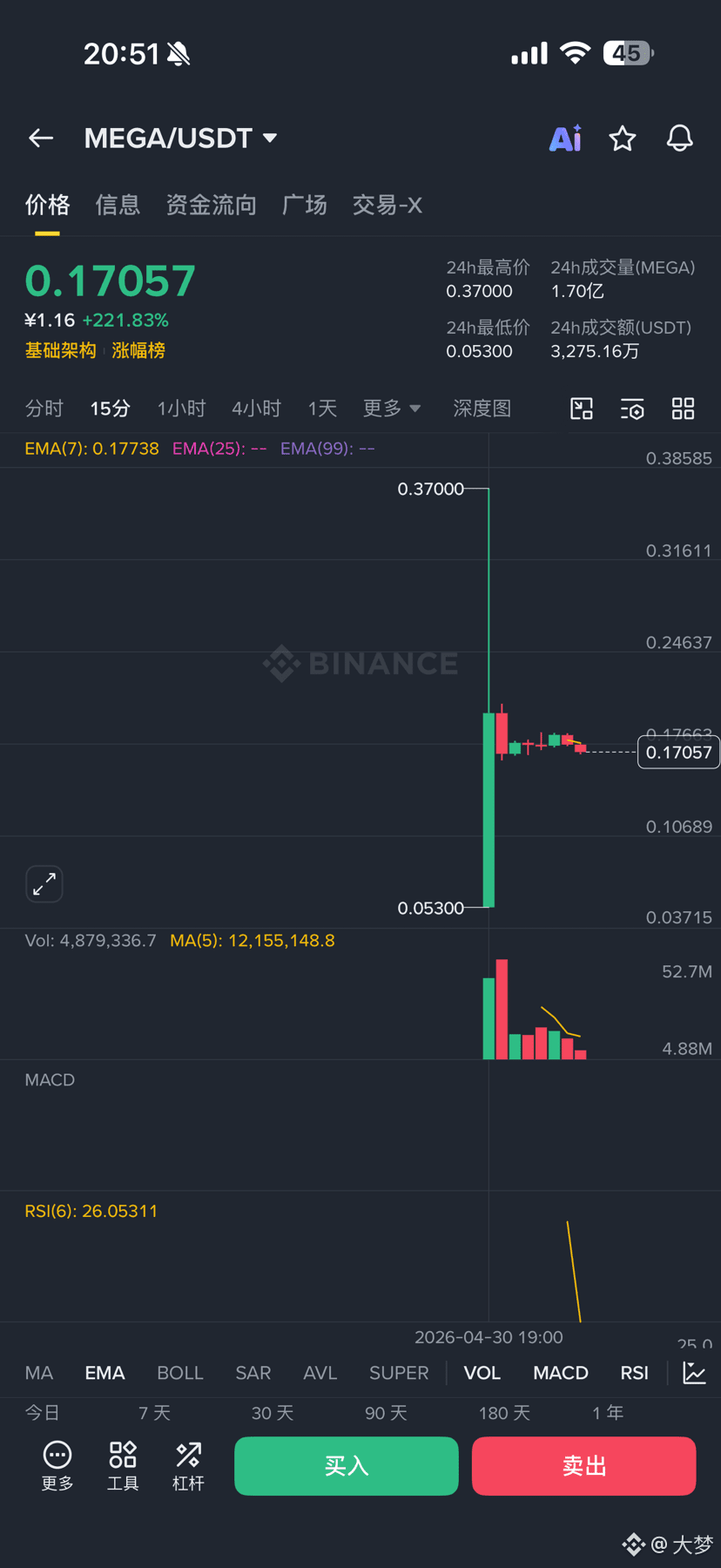
$MEGA today just pumped 225%, from 5 cents to 17 cents. That's how it goes when a new coin hits Binance. While the whole market is down, it triples against the trend. Either there's serious capital buying in, or it’s just the old trick of pumping and dumping. The first day's action on a new coin looks great, but nine out of ten chasing the highs are bag holders. Let's think calmly, who built their positions at the bottom? Definitely not you or me 😏 Anyone dive in?
$MEGA today just pumped 225%, from 5 cents to 17 cents. That's how it goes when a new coin hits Binance. While the whole market is down, it triples against the trend. Either there's serious capital buying in, or it’s just the old trick of pumping and dumping. The first day's action on a new coin looks great, but nine out of ten chasing the highs are bag holders. Let's think calmly, who built their positions at the bottom? Definitely not you or me 😏 Anyone dive in?
13
1
5
18.7k
·
--
The White House dinner went off the rails, and Trump had to evacuate but came back to finish his meal—this script is something even Hollywood wouldn't dare to write. $TRUMP took a nosedive that day, sending the whole market into a tailspin. Honestly, you can't hedge against these black swan events, but the real threat isn't the bullets—it's the potential for Iran to blow up at any moment. Trump is in a tight spot now; he can't go full-on aggressive nor can he back down in talks, leaving the market hanging. What do you guys think—has the bearish sentiment on $BTC played out, or is this just the beginning?
The White House dinner went off the rails, and Trump had to evacuate but came back to finish his meal—this script is something even Hollywood wouldn't dare to write. $TRUMP took a nosedive that day, sending the whole market into a tailspin. Honestly, you can't hedge against these black swan events, but the real threat isn't the bullets—it's the potential for Iran to blow up at any moment. Trump is in a tight spot now; he can't go full-on aggressive nor can he back down in talks, leaving the market hanging. What do you guys think—has the bearish sentiment on $BTC played out, or is this just the beginning?
2
5
1.8k
·
--
RAVE is a coin that really maximizes human emotions, APE is one of those coins that pumped hard only to crash back down, and CHIP is a coin that skyrockets while making you question your life choices.
Because as long as there are folks who believe it can still pump, that means there are buyers ready to catch the dip.
Which side are you on today?
$RAVE $APE $CHIP
RAVE is a coin that really maximizes human emotions, APE is one of those coins that pumped hard only to crash back down, and CHIP is a coin that skyrockets while making you question your life choices.
Because as long as there are folks who believe it can still pump, that means there are buyers ready to catch the dip.
Which side are you on today?
$RAVE $APE $CHIP
Because as long as there are folks who believe it can still pump, that means there are buyers ready to catch the dip.
Which side are you on today?
$RAVE $APE $CHIP
1
1.1k
·
--
APE is pumping, and AXS is starting to move too. The real danger here isn’t the lack of opportunities, but rather that every bounce looks like an opportunity.
What we really need to differentiate is whether this surge is just a sentiment bounce-back, or if GameFi is actually seeing fresh bets coming in.
$APE $AXS $BTC
APE is pumping, and AXS is starting to move too. The real danger here isn’t the lack of opportunities, but rather that every bounce looks like an opportunity.
What we really need to differentiate is whether this surge is just a sentiment bounce-back, or if GameFi is actually seeing fresh bets coming in.
$APE $AXS $BTC
What we really need to differentiate is whether this surge is just a sentiment bounce-back, or if GameFi is actually seeing fresh bets coming in.
$APE $AXS $BTC
1
2.3k
Log in to explore more content
Join global crypto users on Binance Square
⚡️ Get latest and useful information about crypto.
💬 Trusted by the world’s largest crypto exchange.
👍 Discover real insights from verified creators.
Email / Phone number
Trending Topics
USAugustPPIRisesLessThanExpected
47,440 views
787 Discussing
🚨 US AUG PPI: Rises LESS Than Expected! Bullish for Crypto? 🚀
PPI +0.4% MoM as expected, but CORE PPI only +0.2% vs +0.3% expected - cooling!
What it means:
• Wholesale inflation softer than feared
• Fed rate hike chance now 62% - but dovish signals coming
• Core PCE revisions expected downward - bullish
• BTC usually pumps on softer PPI
Fed meeting Sep 15-16 - Market now expects pause, not hike?
Is this the green light for Q4 rally?
#Bitcoin #PPI #Fed #CryptoNews #BTC#usaugustppiriseslessthanexpected
True News
·1 Likes
·1.4k views
SECApprovesNasdaqTexasCommodityTrustRule
26,075 views
575 Discussing
ECBRaisesRatesSecondTimeTo2.5%
23,719 views
416 Discussing