

交易员船长
5k Posts

交易员船长
Report
Block User
币安手续费八折邀请码:DHG888
38 Following
754 Followers
640 Liked
Posts
All
Quotes
Videos
Live
PINNED
·
--
A Comprehensive Understanding|Summary of CZ's Bilingual AMA: Analysis of Market, Ecology, and Future TracksTonight, CZ held a bilingual online AMA in 'Binance Square', engaging in deep interactive communication with global community users. He addressed the most concerning topics such as market trends, MEME coin investment, regulatory compliance, and the integration of AI and blockchain.
Regarding hot issues like ecology, content platform construction, etc., CZ provided clear viewpoints one by one.
Brother Hai has distilled and categorized all the essential information, removing verbal redundancy and retaining only the core judgments, making it easier for everyone to quickly grasp key information.
1. Market and trend judgment
How long will the bear market last? Where is the turning point?
A Comprehensive Understanding|Summary of CZ's Bilingual AMA: Analysis of Market, Ecology, and Future Tracks
Tonight, CZ held a bilingual online AMA in 'Binance Square', engaging in deep interactive communication with global community users. He addressed the most concerning topics such as market trends, MEME coin investment, regulatory compliance, and the integration of AI and blockchain.
Regarding hot issues like ecology, content platform construction, etc., CZ provided clear viewpoints one by one.
Brother Hai has distilled and categorized all the essential information, removing verbal redundancy and retaining only the core judgments, making it easier for everyone to quickly grasp key information.
1. Market and trend judgment
How long will the bear market last? Where is the turning point?
Regarding hot issues like ecology, content platform construction, etc., CZ provided clear viewpoints one by one.
Brother Hai has distilled and categorized all the essential information, removing verbal redundancy and retaining only the core judgments, making it easier for everyone to quickly grasp key information.
1. Market and trend judgment
How long will the bear market last? Where is the turning point?
2
640
·
--
Bullish
$BTC Damn it, it was early.
It was already on the way before the big cake took off
$BTC Damn it, it was early.
It was already on the way before the big cake took off
It was already on the way before the big cake took off
1
997

·
--
Bearish
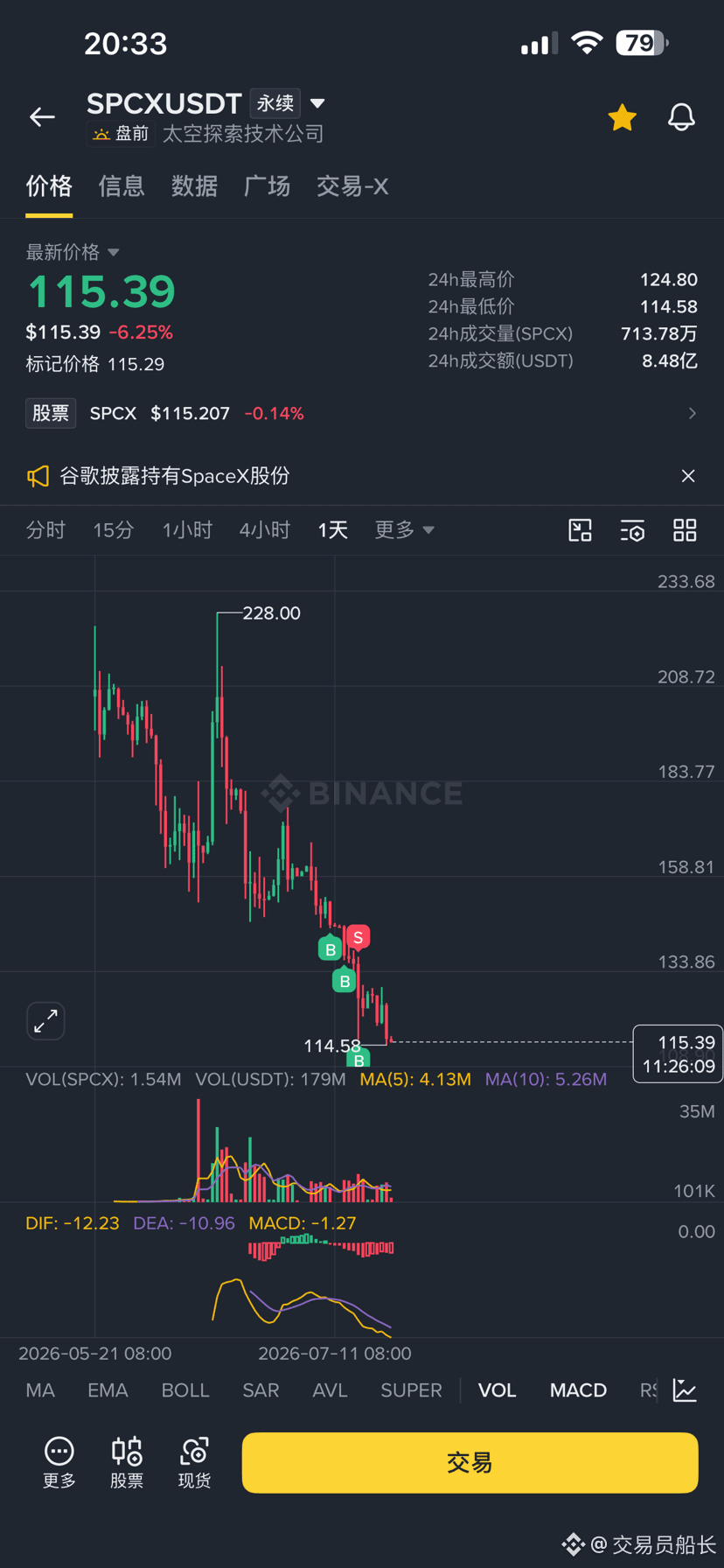
$SPCX tens of trillions of market value rocket
Playing it like a counterfeit
$SPCX tens of trillions of market value rocket
Playing it like a counterfeit
Playing it like a counterfeit
1
911
·
--
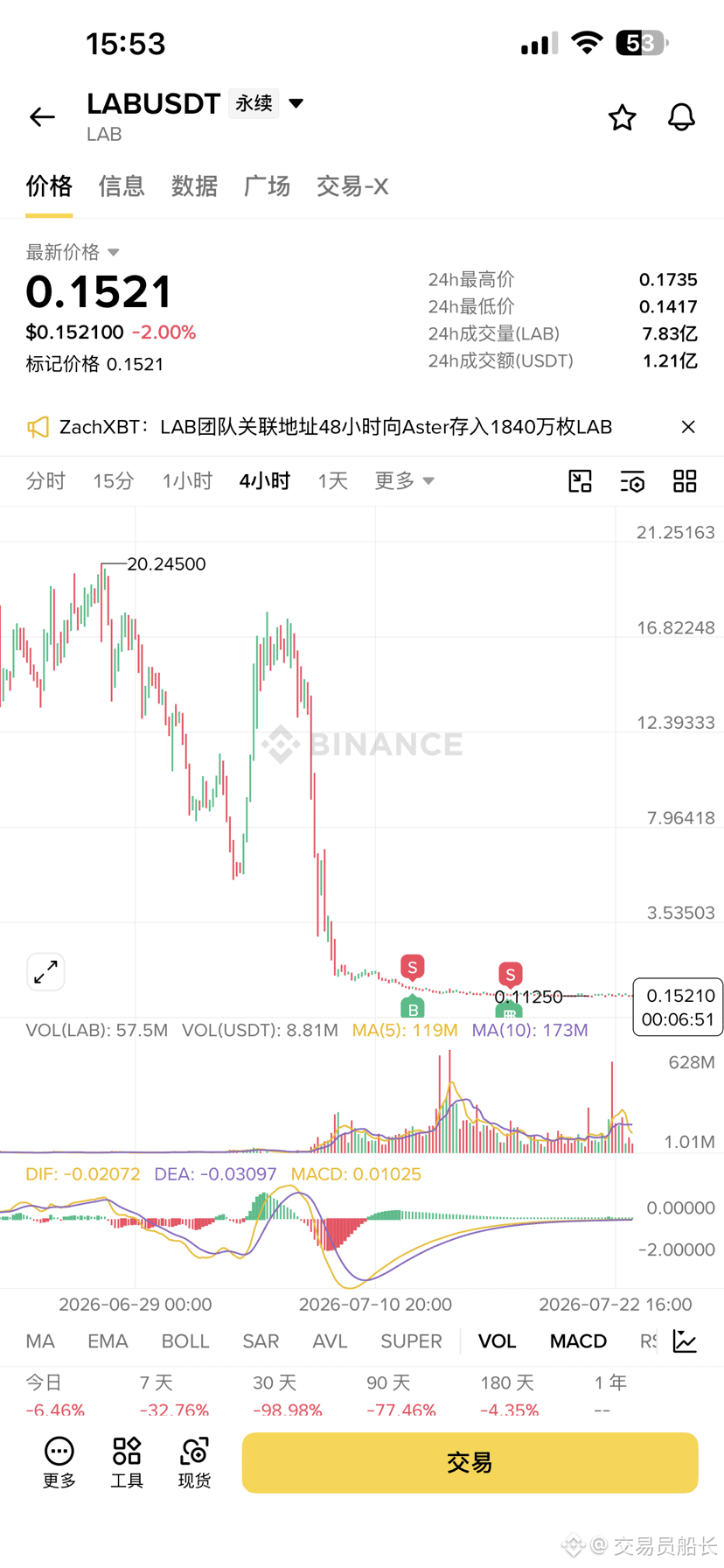
$LAB lab dog Zhuang is all gone
A rebound is a chance to go in emptily
$LAB lab dog Zhuang is all gone
A rebound is a chance to go in emptily
A rebound is a chance to go in emptily
79
·
--
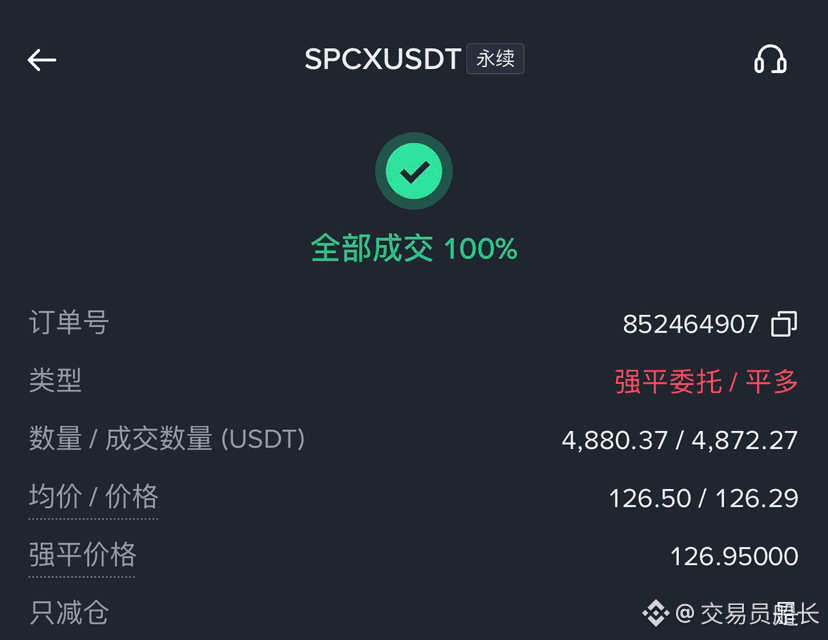
$SPCX Mom's spcx doesn't have a bottom?
Just liquidate me directly.
$SPCX Mom's spcx doesn't have a bottom?
Just liquidate me directly.
Just liquidate me directly.
1
1.9k
·
--
The prediction market platform Predict.fun shows that the group stage match of Group H for the 2026 World Cup between Saudi Arabia and Spain will kick off at midnight on the 22nd Beijing time. The latest odds indicate that Spain (ESP) has an 89% chance of winning, Saudi Arabia (KSA) has a 4% chance, and the probability of a draw is 9%. Currently, the market is giving stronger support to Spain's overall strength ahead of the match.
The prediction market platform Predict.fun shows that the group stage match of Group H for the 2026 World Cup between Saudi Arabia and Spain will kick off at midnight on the 22nd Beijing time. The latest odds indicate that Spain (ESP) has an 89% chance of winning, Saudi Arabia (KSA) has a 4% chance, and the probability of a draw is 9%. Currently, the market is giving stronger support to Spain's overall strength ahead of the match.
199
·
--
Technology entrepreneur Peter Diamandis recently shared a prediction made by Musk. Musk said that, assuming current trends continue and a third world war does not break out, the global economy could grow 10-fold over the next 10 years, while humans would establish a permanent base on the Moon during the same period. Musk added that this outlook “sounds possibly quite crazy,” but he believes it is actually a “rather conservative prediction.” He also emphasized that geopolitical risk is the biggest variable in the above scenario—“If something like a third world war were to break out, it would cause these plans or expectations to deviate significantly.” Musk then reshared the post and commented, “Wild times ahead! (The days ahead will be full of crazy, turbulent and thrilling moments.)”
Technology entrepreneur Peter Diamandis recently shared a prediction made by Musk. Musk said that, assuming current trends continue and a third world war does not break out, the global economy could grow 10-fold over the next 10 years, while humans would establish a permanent base on the Moon during the same period. Musk added that this outlook “sounds possibly quite crazy,” but he believes it is actually a “rather conservative prediction.” He also emphasized that geopolitical risk is the biggest variable in the above scenario—“If something like a third world war were to break out, it would cause these plans or expectations to deviate significantly.” Musk then reshared the post and commented, “Wild times ahead! (The days ahead will be full of crazy, turbulent and thrilling moments.)”
103
·
--
According to CNN, Sina Azodi, director of the Middle East Studies program at George Washington University, said that even though both the United States and Iran accuse each other of violations, both countries have sent senior officials to Switzerland for negotiations because both have “vested interests” in ending the conflict. Azodi noted that Israel’s strikes on Lebanon are violations of the memorandum for Iran, and the U.S. may also interpret Tehran’s alleged plan to close the Strait of Hormuz as a violation of the agreement memorandum. Azodi also said that Tehran may want to “test and see” whether Washington can rein in Israel and end its hostilities toward Lebanon. As of the time of publication, Pakistan’s Prime Minister Shehref and Chief of Army Staff Munir have arrived in Switzerland and will participate in U.S.-Iran technical talks held within the framework of the Islamabad memorandum of understanding.
According to CNN, Sina Azodi, director of the Middle East Studies program at George Washington University, said that even though both the United States and Iran accuse each other of violations, both countries have sent senior officials to Switzerland for negotiations because both have “vested interests” in ending the conflict. Azodi noted that Israel’s strikes on Lebanon are violations of the memorandum for Iran, and the U.S. may also interpret Tehran’s alleged plan to close the Strait of Hormuz as a violation of the agreement memorandum. Azodi also said that Tehran may want to “test and see” whether Washington can rein in Israel and end its hostilities toward Lebanon. As of the time of publication, Pakistan’s Prime Minister Shehref and Chief of Army Staff Munir have arrived in Switzerland and will participate in U.S.-Iran technical talks held within the framework of the Islamabad memorandum of understanding.
52
·
--
Encryption venture capital firm 1confirmation recently issued a public letter to LPs, announcing that the cumulative cash distributions of its funds have reached approximately $317 million, exceeding the combined total capital contributions of its funds by about $286 million, achieving a positive-return milestone. In terms of incubation, 1confirmation revealed that it is incubating the physical collectibles tokenization platform Grail.xyz, which focuses on putting physical assets such as sports trading cards and jerseys on-chain, and provides access channels for users worldwide, especially in emerging markets. The project went live in early May, and has already accumulated over 9,000 users; platform total trading volume exceeds $1.15 million, with revenue of over $165,000. Regarding investment focus, 1confirmation said that trading volume on prediction markets continues to set record highs, with Polymarket and Limitless leading on-chain trading share. Meanwhile, stablecoin consumption applications continue to penetrate mainstream users. The firm also laid early groundwork for projects including Littio, Munify, Ruvo, and Karsa, and plans to further increase investment in this sector. In the public letter, the firm also issued a warning about the state of the industry, pointing to the prevalence of crony capitalism and doubts over institutional credibility, and called for returning to the original intent of using cryptographic technology as a tool to empower humanity.
Encryption venture capital firm 1confirmation recently issued a public letter to LPs, announcing that the cumulative cash distributions of its funds have reached approximately $317 million, exceeding the combined total capital contributions of its funds by about $286 million, achieving a positive-return milestone. In terms of incubation, 1confirmation revealed that it is incubating the physical collectibles tokenization platform Grail.xyz, which focuses on putting physical assets such as sports trading cards and jerseys on-chain, and provides access channels for users worldwide, especially in emerging markets. The project went live in early May, and has already accumulated over 9,000 users; platform total trading volume exceeds $1.15 million, with revenue of over $165,000. Regarding investment focus, 1confirmation said that trading volume on prediction markets continues to set record highs, with Polymarket and Limitless leading on-chain trading share. Meanwhile, stablecoin consumption applications continue to penetrate mainstream users. The firm also laid early groundwork for projects including Littio, Munify, Ruvo, and Karsa, and plans to further increase investment in this sector. In the public letter, the firm also issued a warning about the state of the industry, pointing to the prevalence of crony capitalism and doubts over institutional credibility, and called for returning to the original intent of using cryptographic technology as a tool to empower humanity.
28
·
--
Ben Goertzel, chair of the AGI Association and chief scientist of the Sophia robot, stated that general artificial intelligence (AGI) is 'too important to be controlled by venture capitalists or a handful of tech companies.' He advocates for building an open, decentralized AGI system via blockchain networks, as an alternative to the closed models of OpenAI and Anthropic. Goertzel is pushing this agenda through his project SingularityNET and the 'Artificial Superintelligence Alliance,' which operates on a crypto network aimed at allowing AI capabilities to be collectively owned and maintained by global users. He emphasized that simply having open-source code isn't enough; AGI must run on distributed infrastructure, or it will still be dominated by a few computational giants. He proposed the 'AI agent economy' concept, where users can deploy multiple AI agents to collaborate on tasks and execute trades. The related systems will offer paid AI services in the future while concealing the blockchain's underlying structure from the user side, maintaining a decentralized backend architecture. Goertzel expects AGI to emerge between 2027 and 2030 and warned that if technological development is concentrated in a few countries or companies, it could exacerbate global inequality. He announced that his first AI agent product, Omega Claw, will be launched soon.--------------------------------- Click the original link below to join the Beating · Feishu AI news channel, which monitors global AI hotspots and news 24/7.
Ben Goertzel, chair of the AGI Association and chief scientist of the Sophia robot, stated that general artificial intelligence (AGI) is 'too important to be controlled by venture capitalists or a handful of tech companies.' He advocates for building an open, decentralized AGI system via blockchain networks, as an alternative to the closed models of OpenAI and Anthropic. Goertzel is pushing this agenda through his project SingularityNET and the 'Artificial Superintelligence Alliance,' which operates on a crypto network aimed at allowing AI capabilities to be collectively owned and maintained by global users. He emphasized that simply having open-source code isn't enough; AGI must run on distributed infrastructure, or it will still be dominated by a few computational giants. He proposed the 'AI agent economy' concept, where users can deploy multiple AI agents to collaborate on tasks and execute trades. The related systems will offer paid AI services in the future while concealing the blockchain's underlying structure from the user side, maintaining a decentralized backend architecture. Goertzel expects AGI to emerge between 2027 and 2030 and warned that if technological development is concentrated in a few countries or companies, it could exacerbate global inequality. He announced that his first AI agent product, Omega Claw, will be launched soon.--------------------------------- Click the original link below to join the Beating · Feishu AI news channel, which monitors global AI hotspots and news 24/7.
23
·
--
According to Galaxy Research data, US-listed spot Bitcoin ETFs recorded net outflows of approximately $6.35 billion over the past 30 trading days, marking the largest 30-day outflow since they were launched in January 2024, indicating that institutional sentiment has clearly cooled. The data show that Bitcoin ETFs have experienced net outflows for six consecutive weeks, bringing cumulative net inflows down to about $53.4 billion—significantly lower than the peak in October 2025. Galaxy Research noted that daily outflows are still continuing to expand. Market participants believe that the outflows may reflect institutional investors’ reduced risk appetite for Bitcoin in the short term. Meanwhile, Bitcoin’s price has fallen by about 17% over the past month to around $64,167, pressured by factors including rising macro inflation and geopolitical conflicts. However, a spokesperson for BlackRock said that ETF fund flows are influenced by a range of factors, and that single-day or short-term outflows do not necessarily indicate a change in the long-term trend. They also emphasized that it still views Bitcoin as a global, decentralized asset class.
According to Galaxy Research data, US-listed spot Bitcoin ETFs recorded net outflows of approximately $6.35 billion over the past 30 trading days, marking the largest 30-day outflow since they were launched in January 2024, indicating that institutional sentiment has clearly cooled. The data show that Bitcoin ETFs have experienced net outflows for six consecutive weeks, bringing cumulative net inflows down to about $53.4 billion—significantly lower than the peak in October 2025. Galaxy Research noted that daily outflows are still continuing to expand. Market participants believe that the outflows may reflect institutional investors’ reduced risk appetite for Bitcoin in the short term. Meanwhile, Bitcoin’s price has fallen by about 17% over the past month to around $64,167, pressured by factors including rising macro inflation and geopolitical conflicts. However, a spokesperson for BlackRock said that ETF fund flows are influenced by a range of factors, and that single-day or short-term outflows do not necessarily indicate a change in the long-term trend. They also emphasized that it still views Bitcoin as a global, decentralized asset class.
22
·
--
GPU seller Tinygrad posted that, according to reliable reports, the GLM 5.2 model can achieve an inference speed of 120 tokens per second on two networked Blackwell-architecture tinybox systems. This configuration is priced at $150,000 and can be either a dual standard tinybox setup or a single tinybox Pro, both delivering the performance mentioned above. Tinygrad is promoting this as a selling point, focusing on a private deployment route with the tagline “one-time purchase, never paying cloud fees,” directly targeting pay-as-you-go cloud inference services. As of now, the message has not been confirmed by GLM, and Tinygrad has not disclosed additional technical details.---------------------------------Click the link to the original article below to join the Beating · Feishu AI News channel and get 24/7 continuous monitoring of global AI hotspots and news.
GPU seller Tinygrad posted that, according to reliable reports, the GLM 5.2 model can achieve an inference speed of 120 tokens per second on two networked Blackwell-architecture tinybox systems. This configuration is priced at $150,000 and can be either a dual standard tinybox setup or a single tinybox Pro, both delivering the performance mentioned above. Tinygrad is promoting this as a selling point, focusing on a private deployment route with the tagline “one-time purchase, never paying cloud fees,” directly targeting pay-as-you-go cloud inference services. As of now, the message has not been confirmed by GLM, and Tinygrad has not disclosed additional technical details.---------------------------------Click the link to the original article below to join the Beating · Feishu AI News channel and get 24/7 continuous monitoring of global AI hotspots and news.
88
·
--
Palantir’s CEO recently made controversial remarks, directly saying that AI will cause a major disruption to the economic position of high-educated white-collar workers—and that this group is precisely the core voting bloc of the Democratic Party. He said that AI technology will “significantly weaken” the economic influence of high-educated voters, and he issued a strong warning to anyone who believes that this will not lead to political consequences, saying such views are “no different from being in a mental institution.” He further stressed that “we must not allow this technology to overturn the democratic voter base of humanity.” These remarks link AI’s economic impact directly to party politics, drawing widespread attention in both the tech and political circles. As of now, Palantir has not provided any further clarification on the comments.---------------------------------Click the original link below to join the Beating · Feishu AI News channel, which provides 24/7 monitoring of global AI hot topics and news.
Palantir’s CEO recently made controversial remarks, directly saying that AI will cause a major disruption to the economic position of high-educated white-collar workers—and that this group is precisely the core voting bloc of the Democratic Party. He said that AI technology will “significantly weaken” the economic influence of high-educated voters, and he issued a strong warning to anyone who believes that this will not lead to political consequences, saying such views are “no different from being in a mental institution.” He further stressed that “we must not allow this technology to overturn the democratic voter base of humanity.” These remarks link AI’s economic impact directly to party politics, drawing widespread attention in both the tech and political circles. As of now, Palantir has not provided any further clarification on the comments.---------------------------------Click the original link below to join the Beating · Feishu AI News channel, which provides 24/7 monitoring of global AI hot topics and news.
18
·
--
According to the Financial Times, index provider MSCI assigned SpaceX a bottom-tier environmental, social, and governance (ESG) rating of 'CCC' ahead of its record-breaking $75 billion IPO this month. MSCI stated that this puts SpaceX 'behind the industry due to its high-risk exposure and failure to manage significant ESG risks.' Frédéric Ducoulombier, project director at EDHEC Business School's Climate Research Institute, commented, 'The company's poor controversy assessment, terrible governance score, and low overall ESG rating shouldn't come as a surprise to anyone. For public market investors, this is very close to a governance-level horror story.'
According to the Financial Times, index provider MSCI assigned SpaceX a bottom-tier environmental, social, and governance (ESG) rating of 'CCC' ahead of its record-breaking $75 billion IPO this month. MSCI stated that this puts SpaceX 'behind the industry due to its high-risk exposure and failure to manage significant ESG risks.' Frédéric Ducoulombier, project director at EDHEC Business School's Climate Research Institute, commented, 'The company's poor controversy assessment, terrible governance score, and low overall ESG rating shouldn't come as a surprise to anyone. For public market investors, this is very close to a governance-level horror story.'
38
·
--
With the rise and widespread adoption of AI-driven security tools like Mythos, the costs of smart contract audits in the crypto space are plummeting. Researchers believe this could fundamentally shift the industry standard for 'reasonable due diligence' before a project goes live. Reports indicate that AI security systems can detect vulnerabilities at a fraction of the cost of traditional manual audits and support ongoing code reviews, moving from 'one-time audits' to 'real-time continuous monitoring.' Industry insiders suggest this change could drive the foundational security audit costs close to zero. Security experts note that AI can not only uncover traditional code vulnerabilities but also simulate attacker behaviors, predicting how code performs in real-world adversarial environments, significantly boosting vulnerability detection efficiency. However, they stress that AI still struggles to identify complex risks such as economic model flaws, privilege abuse, and social engineering attacks. Researchers further point out that as AI audit tools become low-cost and easily accessible, industry expectations for developer security accountability may rise in tandem, with projects that do not undergo AI-assisted audits potentially being viewed as 'negligent.' Nevertheless, experts also caution that AI cannot replace human auditors' judgment capabilities regarding game structures and incentive mechanisms, indicating that crypto security will continue to be a system combining 'AI tools + human experience.'---------------------------------Click the original link below to join the Beating · Feishu AI news channel, monitoring global AI hotspots and news 24/7.
With the rise and widespread adoption of AI-driven security tools like Mythos, the costs of smart contract audits in the crypto space are plummeting. Researchers believe this could fundamentally shift the industry standard for 'reasonable due diligence' before a project goes live. Reports indicate that AI security systems can detect vulnerabilities at a fraction of the cost of traditional manual audits and support ongoing code reviews, moving from 'one-time audits' to 'real-time continuous monitoring.' Industry insiders suggest this change could drive the foundational security audit costs close to zero. Security experts note that AI can not only uncover traditional code vulnerabilities but also simulate attacker behaviors, predicting how code performs in real-world adversarial environments, significantly boosting vulnerability detection efficiency. However, they stress that AI still struggles to identify complex risks such as economic model flaws, privilege abuse, and social engineering attacks. Researchers further point out that as AI audit tools become low-cost and easily accessible, industry expectations for developer security accountability may rise in tandem, with projects that do not undergo AI-assisted audits potentially being viewed as 'negligent.' Nevertheless, experts also caution that AI cannot replace human auditors' judgment capabilities regarding game structures and incentive mechanisms, indicating that crypto security will continue to be a system combining 'AI tools + human experience.'---------------------------------Click the original link below to join the Beating · Feishu AI news channel, monitoring global AI hotspots and news 24/7.
40
·
--
Serenity’s post-analysis suggests that the Trump administration may be realizing that the real leverage in the trade war is not traditional commodity exports, but rather cutting-edge supply chains in quantum computing, artificial intelligence, and robotics. However, nearly all of the core nodes in these critical supply chains are currently controlled by U.S. allies: the Netherlands’ ASML monopolizes extreme ultraviolet (EUV) lithography machines; Japan’s TOWA, Ibiden, and Ajinomoto control key materials and equipment for advanced packaging; and Taiwan, South Korea, and the European Union each hold irreplaceable “chokepoint” positions across different stages of chip manufacturing. Serenity says that imposing comprehensive tariffs on allies would instead weaken the United States’ ability to integrate these resources. Under the current circumstances, if the Trump administration wants more favorable terms in trade negotiations, repairing relations with allies and turning global supply chains into strategic leverage may be more effective than unilateral pressure—and it may not be too late yet.
Serenity’s post-analysis suggests that the Trump administration may be realizing that the real leverage in the trade war is not traditional commodity exports, but rather cutting-edge supply chains in quantum computing, artificial intelligence, and robotics. However, nearly all of the core nodes in these critical supply chains are currently controlled by U.S. allies: the Netherlands’ ASML monopolizes extreme ultraviolet (EUV) lithography machines; Japan’s TOWA, Ibiden, and Ajinomoto control key materials and equipment for advanced packaging; and Taiwan, South Korea, and the European Union each hold irreplaceable “chokepoint” positions across different stages of chip manufacturing. Serenity says that imposing comprehensive tariffs on allies would instead weaken the United States’ ability to integrate these resources. Under the current circumstances, if the Trump administration wants more favorable terms in trade negotiations, repairing relations with allies and turning global supply chains into strategic leverage may be more effective than unilateral pressure—and it may not be too late yet.
91
·
--
Blockchain security firm Blockaid reports that its detection system has flagged signs of a frontend attack on the Gitcoin subdomain files[.]gitcoin[.]co. The site seems to contain malicious code dubbed "Eleven drainer," which is designed for wallet asset theft. Blockaid warns users to refrain from interacting with the site for now, as the issue is under investigation and being worked on.
Blockchain security firm Blockaid reports that its detection system has flagged signs of a frontend attack on the Gitcoin subdomain files[.]gitcoin[.]co. The site seems to contain malicious code dubbed "Eleven drainer," which is designed for wallet asset theft. Blockaid warns users to refrain from interacting with the site for now, as the issue is under investigation and being worked on.
32
Log in to explore more content
Join global crypto users on Binance Square
⚡️ Get latest and useful information about crypto.
💬 Trusted by the world’s largest crypto exchange.
👍 Discover real insights from verified creators.
Email / Phone number
Trending Topics
BitcoinClears$85200
12,979 views
217 Discussing
We got the move, and $BTC is standing exactly where we were before the data. That’s what actual patience for a trade looks like.
The data came in mixed but with some important numbers. ADP Non-Farm Employment Change came at 90K vs 73K forecast, while Core PCE came in at 0.2% vs 0.3% expected. Final GDP was also stronger at 2.2% vs 1.5% forecast, while Personal Spending came in at 0.9% vs 0.8% expected. At the same time, Personal Income missed at 0.2% vs 0.5% forecast.
BTC initially surged to $85,600 and is now back where it needs to be. I’m still looking toward the lower ranges at $82,759 and the $80,000 liquidity, because the overhead liquidity is done and dusted.
We had a live session during the data, and during that session we saw the market at $83,800, then $85,600, and then back toward $83,000 and we still didn’t enter a trade.
That’s what patience is.
We can’t force an entry when the market has no clear direction. The same range is still in focus, and we’ll wait for the market to give us the setup.
Let me know, guys, how was the session? And should we have more regular sessions with our respected members so we can have proper discussions regarding the market?
#BitcoinClears$85200 #AltcoinSeasonIndexHoldsAbove60For5Days #USADPAdds90000JobsInSeptember #BitcoinSlipsBelow$84000 #SECToClarifyOnChainFundraisingRules
Crypto_LUX
·26 Likes
·19.8k views
AltcoinSeasonIndexHoldsAbove60For5Days
62,865 views
1,191 Discussing
USADPAdds90000JobsInSeptember
29,302 views
672 Discussing