

Tanish_gupta
213 Posts

Tanish_gupta
Report
Block User
124 Following
13 Followers
6 Liked
Posts
All
Quotes
·
--
The "Whale Footprint" Entry Setup (High Comments & Debate)
Traders love setups that explain why breakouts fail and how to enter right before real expansions.
How to spot a real breakout before it pumps 40% (and avoid the fakeout trap). 📈👀
Stop buying the green candle at resistance. That is where retail provides exit liquidity to institutional limit orders.
Look for this 3-step Volume Absorption Checklist instead:
1️⃣ The Squeeze: Price tightens into a multi-day range while Bollinger Bands contract to historic lows. Volatility compression always precedes expansion.
2️⃣ Volume Divergence: Price tests resistance, but spot volume steadily climbs while open interest (futures) stays flat. That means real spot buyers are absorbing supply—not over-leveraged degens. 3️⃣ The Retest Trigger: Don't chase the initial wick. Wait for the 4H candle to close above resistance, followed by a low-volume retest of the previous ceiling turned floor.
Your Invalidaton: A 4H close back inside the old consolidation range. If it closes back inside, cut immediately with minimal loss.
📌 Bookmark this checklist for your next chart scan.
Which coin on your watchlist is consolidating right now? Drop the ticker below and let's check the volume profile! 👇
#TechnicalAnalysis #ChartPatterns #PriceAction #altcoins #CryptoSignals
The "Whale Footprint" Entry Setup (High Comments & Debate)
Traders love setups that explain why breakouts fail and how to enter right before real expansions.
How to spot a real breakout before it pumps 40% (and avoid the fakeout trap). 📈👀
Stop buying the green candle at resistance. That is where retail provides exit liquidity to institutional limit orders.
Look for this 3-step Volume Absorption Checklist instead:
1️⃣ The Squeeze: Price tightens into a multi-day range while Bollinger Bands contract to historic lows. Volatility compression always precedes expansion.
2️⃣ Volume Divergence: Price tests resistance, but spot volume steadily climbs while open interest (futures) stays flat. That means real spot buyers are absorbing supply—not over-leveraged degens. 3️⃣ The Retest Trigger: Don't chase the initial wick. Wait for the 4H candle to close above resistance, followed by a low-volume retest of the previous ceiling turned floor.
Your Invalidaton: A 4H close back inside the old consolidation range. If it closes back inside, cut immediately with minimal loss.
📌 Bookmark this checklist for your next chart scan.
Which coin on your watchlist is consolidating right now? Drop the ticker below and let's check the volume profile! 👇
#TechnicalAnalysis #ChartPatterns #PriceAction #altcoins #CryptoSignals
Traders love setups that explain why breakouts fail and how to enter right before real expansions.
How to spot a real breakout before it pumps 40% (and avoid the fakeout trap). 📈👀
Stop buying the green candle at resistance. That is where retail provides exit liquidity to institutional limit orders.
Look for this 3-step Volume Absorption Checklist instead:
1️⃣ The Squeeze: Price tightens into a multi-day range while Bollinger Bands contract to historic lows. Volatility compression always precedes expansion.
2️⃣ Volume Divergence: Price tests resistance, but spot volume steadily climbs while open interest (futures) stays flat. That means real spot buyers are absorbing supply—not over-leveraged degens. 3️⃣ The Retest Trigger: Don't chase the initial wick. Wait for the 4H candle to close above resistance, followed by a low-volume retest of the previous ceiling turned floor.
Your Invalidaton: A 4H close back inside the old consolidation range. If it closes back inside, cut immediately with minimal loss.
📌 Bookmark this checklist for your next chart scan.
Which coin on your watchlist is consolidating right now? Drop the ticker below and let's check the volume profile! 👇
#TechnicalAnalysis #ChartPatterns #PriceAction #altcoins #CryptoSignals
22
·
--
Bullish
The "Barbell" Capital Allocation Rule (High Saves & Shares)
Most traders blow accounts by going 100% into high-leverage altcoins. This post presents the exact capital framework used by profitable desk traders.
The $10,000 Portfolio Rule: Why 95% of accounts bleed out before the bull run peak. 🧵👇
If you allocate 100% of your portfolio to volatile altcoins or high leverage, you are mathematically guaranteed to wipe out on a 30% flash crash.
Here is the exact Barbell Allocation Framework that protects your capital while capturing explosive upside:
🛡️ 1. The Core Anchor (60%): • Major assets ($BTC,$ETH) held in spot or locked in high-yield staking. • Purpose: Absorbs macro volatility and gives you borrowing power without liquidation panic.
⚡ 2. Asymmetric Trend Runners (30%): • High-conviction mid-caps leading the current narrative (AI, L1s, DeFi infrastructure). • Rule: DCA during panic dips, take initial capital off the table on a 2x pump.
🎯 3. The Alpha Engine (10%): • High-beta plays: Breakout trades, low-cap narrative momentum, and low-leverage swing setups. • Never add capital to this bucket. All profits generated here get swept directly back into the 60% Core Anchor.
You don't need 100x trades to build life-changing wealth. You need to keep what you make when the market turns.
💬 Tell me in the replies: What percentage of your portfolio is currently sitting in $USDT / stablecoins . #NFPWatch #BitcoinFundingRateTriplesTo10%
{spot}(NVDABUSDT)
#CryptoTips #RiskControl
The "Barbell" Capital Allocation Rule (High Saves & Shares)
Most traders blow accounts by going 100% into high-leverage altcoins. This post presents the exact capital framework used by profitable desk traders.
The $10,000 Portfolio Rule: Why 95% of accounts bleed out before the bull run peak. 🧵👇
If you allocate 100% of your portfolio to volatile altcoins or high leverage, you are mathematically guaranteed to wipe out on a 30% flash crash.
Here is the exact Barbell Allocation Framework that protects your capital while capturing explosive upside:
🛡️ 1. The Core Anchor (60%): • Major assets ($BTC,$ETH) held in spot or locked in high-yield staking. • Purpose: Absorbs macro volatility and gives you borrowing power without liquidation panic.
⚡ 2. Asymmetric Trend Runners (30%): • High-conviction mid-caps leading the current narrative (AI, L1s, DeFi infrastructure). • Rule: DCA during panic dips, take initial capital off the table on a 2x pump.
🎯 3. The Alpha Engine (10%): • High-beta plays: Breakout trades, low-cap narrative momentum, and low-leverage swing setups. • Never add capital to this bucket. All profits generated here get swept directly back into the 60% Core Anchor.
You don't need 100x trades to build life-changing wealth. You need to keep what you make when the market turns.
💬 Tell me in the replies: What percentage of your portfolio is currently sitting in $USDT / stablecoins . #NFPWatch #BitcoinFundingRateTriplesTo10%
#CryptoTips #RiskControl
Most traders blow accounts by going 100% into high-leverage altcoins. This post presents the exact capital framework used by profitable desk traders.
The $10,000 Portfolio Rule: Why 95% of accounts bleed out before the bull run peak. 🧵👇
If you allocate 100% of your portfolio to volatile altcoins or high leverage, you are mathematically guaranteed to wipe out on a 30% flash crash.
Here is the exact Barbell Allocation Framework that protects your capital while capturing explosive upside:
🛡️ 1. The Core Anchor (60%): • Major assets ($BTC,$ETH) held in spot or locked in high-yield staking. • Purpose: Absorbs macro volatility and gives you borrowing power without liquidation panic.
⚡ 2. Asymmetric Trend Runners (30%): • High-conviction mid-caps leading the current narrative (AI, L1s, DeFi infrastructure). • Rule: DCA during panic dips, take initial capital off the table on a 2x pump.
🎯 3. The Alpha Engine (10%): • High-beta plays: Breakout trades, low-cap narrative momentum, and low-leverage swing setups. • Never add capital to this bucket. All profits generated here get swept directly back into the 60% Core Anchor.
You don't need 100x trades to build life-changing wealth. You need to keep what you make when the market turns.
💬 Tell me in the replies: What percentage of your portfolio is currently sitting in $USDT / stablecoins . #NFPWatch #BitcoinFundingRateTriplesTo10%
#CryptoTips #RiskControl
1
85
·
--
How to make consistent profit even if you are wrong 60% of the time. 🧠💰
Most traders fail not because their entries are bad, but because they have zero profit-taking strategy. They turn green trades into red trades out of pure greed.
Save this post before your next trade. Here is the 1:3 Asymmetric
Profit Blueprint:
📌 1. The Math Most Retail Ignores:
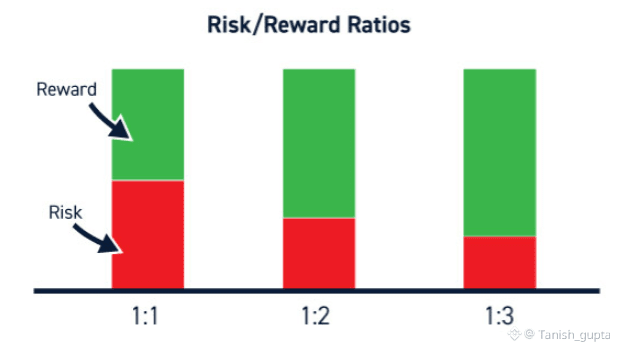
If you take trades with a 1:3 Risk-to-Reward ratio:
Risk: $100 per trade
Reward: $300 target
Out of 10 trades, you lose 6 and only win 4:
6 Losses × $100 = -$600
4 Wins × $300 = +$1,200
Net Profit: +$600 with just a 40% win rate!
You don't need a crystal ball. You need risk asymmetry.
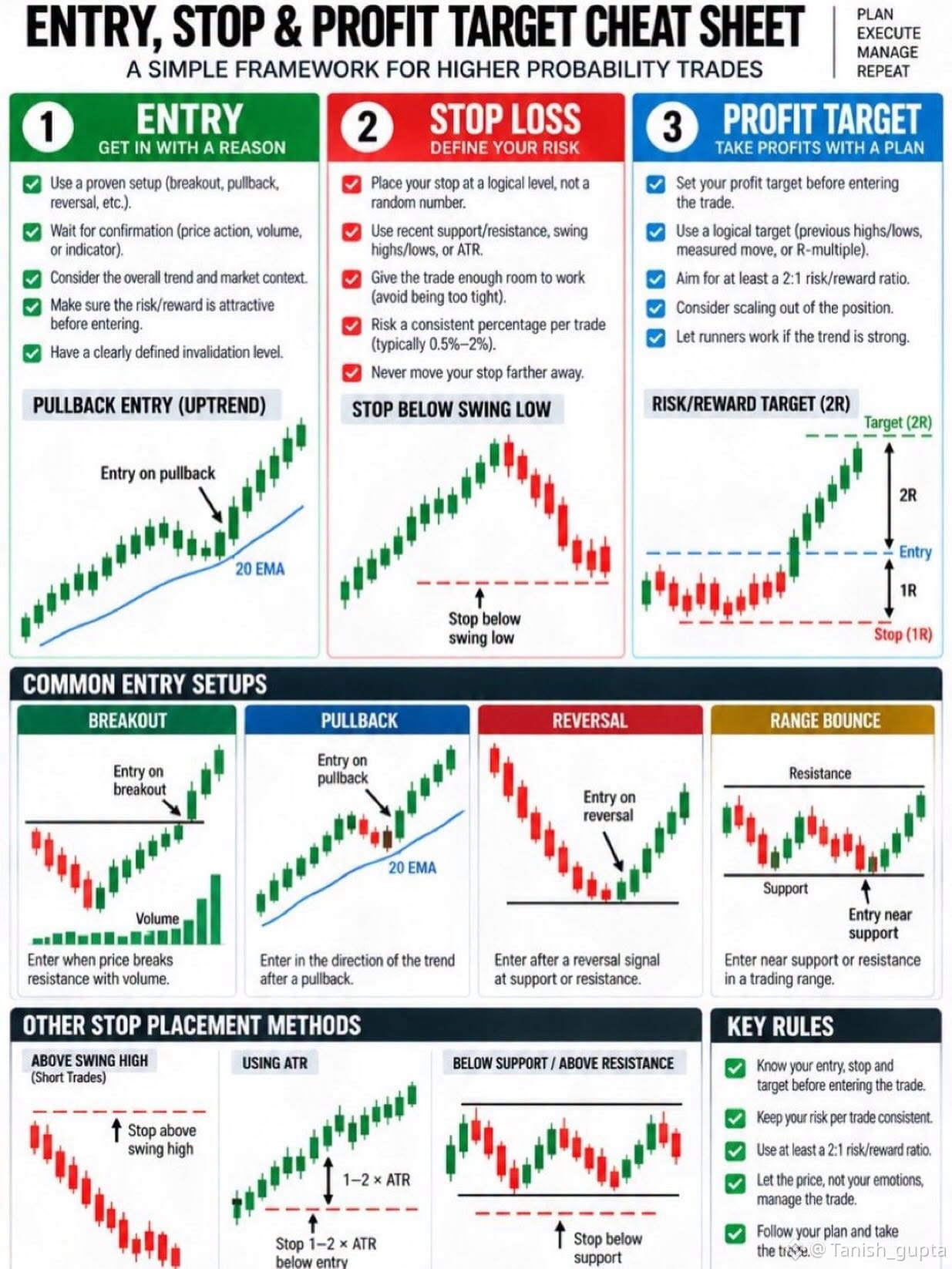
📌 2. The 3-Step "Ladder Out" Rule (Never Round-Trip Again):
• TP1 (Target 1 - 1.5R): Close 40% of the position. Move your Stop Loss to Breakeven. You are now in a risk-free trade.
• TP2 (Target 2 - 3R): Close another 40% at major resistance. Profit is banked into $USDT.
• Runner (Moonbag - 20%): Trail your stop along the 20 EMA / key structure to catch parabolic runners without anxiety.
Stop letting the market take your unrealized gains back.
👇 Drop a comment: What is your biggest struggle right now—finding entries, setting stop losses, or knowing when to take profits? Let's fix it in the replies!
#crytocurency #BitcoinFundingRateTriplesTo10% #ZcashFalls21%FromSeptemberPeak #BitcoinRisesToward$85K $
{spot}(BTCUSDT)
{spot}(NVDABUSDT)
{spot}(AAPLBUSDT)
How to make consistent profit even if you are wrong 60% of the time. 🧠💰
Most traders fail not because their entries are bad, but because they have zero profit-taking strategy. They turn green trades into red trades out of pure greed.
Save this post before your next trade. Here is the 1:3 Asymmetric
Profit Blueprint:
📌 1. The Math Most Retail Ignores:
If you take trades with a 1:3 Risk-to-Reward ratio:
Risk: $100 per trade
Reward: $300 target
Out of 10 trades, you lose 6 and only win 4:
6 Losses × $100 = -$600
4 Wins × $300 = +$1,200
Net Profit: +$600 with just a 40% win rate!
You don't need a crystal ball. You need risk asymmetry.
📌 2. The 3-Step "Ladder Out" Rule (Never Round-Trip Again):
• TP1 (Target 1 - 1.5R): Close 40% of the position. Move your Stop Loss to Breakeven. You are now in a risk-free trade.
• TP2 (Target 2 - 3R): Close another 40% at major resistance. Profit is banked into $USDT.
• Runner (Moonbag - 20%): Trail your stop along the 20 EMA / key structure to catch parabolic runners without anxiety.
Stop letting the market take your unrealized gains back.
👇 Drop a comment: What is your biggest struggle right now—finding entries, setting stop losses, or knowing when to take profits? Let's fix it in the replies!
#crytocurency #BitcoinFundingRateTriplesTo10% #ZcashFalls21%FromSeptemberPeak #BitcoinRisesToward$85K $
Most traders fail not because their entries are bad, but because they have zero profit-taking strategy. They turn green trades into red trades out of pure greed.
Save this post before your next trade. Here is the 1:3 Asymmetric
Profit Blueprint:
📌 1. The Math Most Retail Ignores:
If you take trades with a 1:3 Risk-to-Reward ratio:
Risk: $100 per trade
Reward: $300 target
Out of 10 trades, you lose 6 and only win 4:
6 Losses × $100 = -$600
4 Wins × $300 = +$1,200
Net Profit: +$600 with just a 40% win rate!
You don't need a crystal ball. You need risk asymmetry.
📌 2. The 3-Step "Ladder Out" Rule (Never Round-Trip Again):
• TP1 (Target 1 - 1.5R): Close 40% of the position. Move your Stop Loss to Breakeven. You are now in a risk-free trade.
• TP2 (Target 2 - 3R): Close another 40% at major resistance. Profit is banked into $USDT.
• Runner (Moonbag - 20%): Trail your stop along the 20 EMA / key structure to catch parabolic runners without anxiety.
Stop letting the market take your unrealized gains back.
👇 Drop a comment: What is your biggest struggle right now—finding entries, setting stop losses, or knowing when to take profits? Let's fix it in the replies!
#crytocurency #BitcoinFundingRateTriplesTo10% #ZcashFalls21%FromSeptemberPeak #BitcoinRisesToward$85K $
56
·
--
Technical Analysis & Liquidity Trap
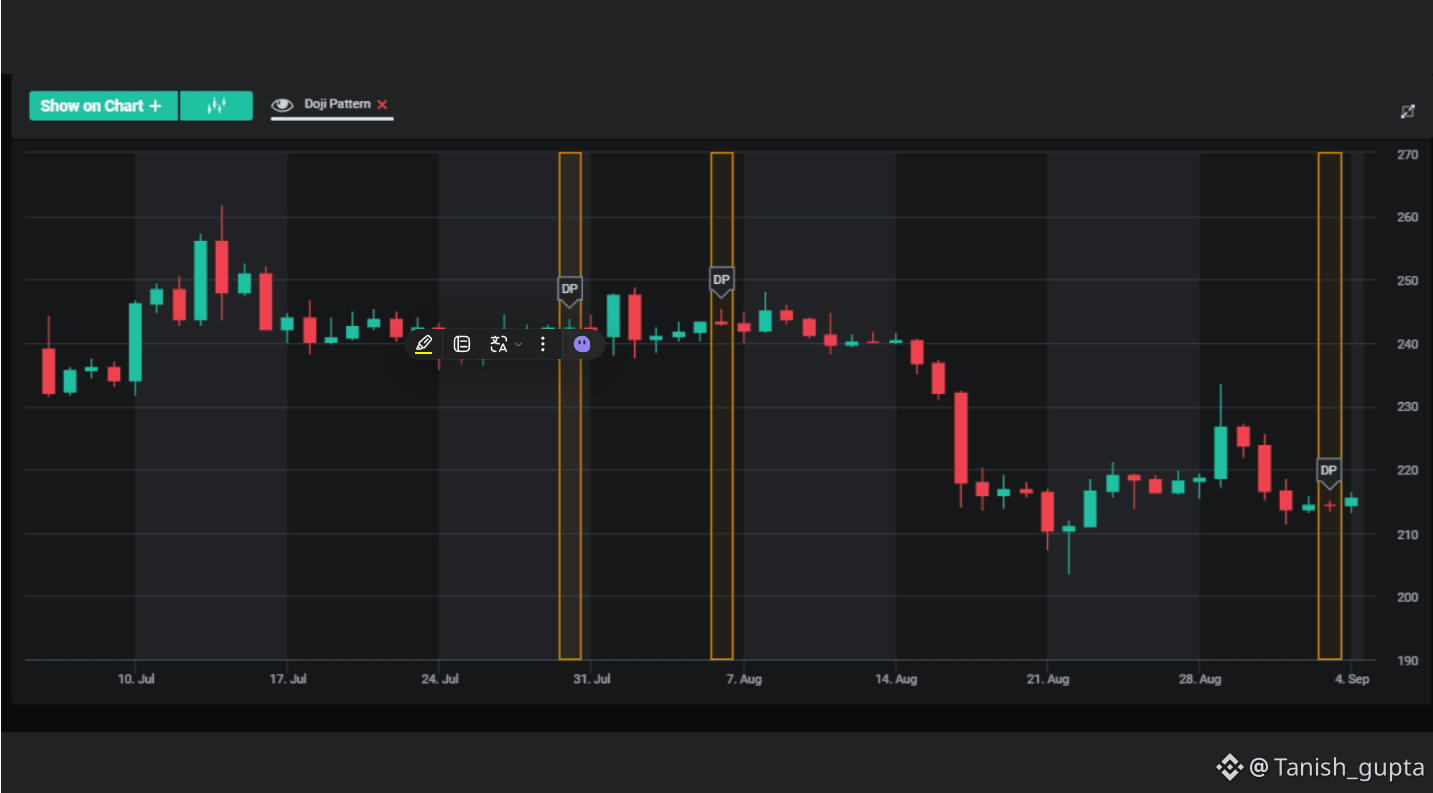
Pair the "Retail Trap vs. Smart Money" post with a clean candlestick chart showing support/resistance breaks or consolidation.
$NVDAB $AAPLB
{spot}(NVDABUSDT)
{spot}(AAPLBUSDT)
Technical Analysis & Liquidity Trap
Pair the "Retail Trap vs. Smart Money" post with a clean candlestick chart showing support/resistance breaks or consolidation.
$NVDAB $AAPLB
Pair the "Retail Trap vs. Smart Money" post with a clean candlestick chart showing support/resistance breaks or consolidation.
$NVDAB $AAPLB
63
·
--
claim four gift now $PEPE #SOLFI
claim four gift now $PEPE #SOLFI

Best Wishes!
From Tanish_gupta
1
42
·
--
claim
claim

龙虾量化带单
·
--
BullishFollow me to get your bonus. I'll also pick 3 people from the sharers, and each will get $5
Follow me to get your bonus. 3 reposters will win $5 each.#ETH $BTC
Follow me to get your bonus. 3 reposters will win $5 each.#ETH $BTC

1
·
--
The evolution of @PixelsThe evolution of @Pixels represents a meaningful shift in how Web3 games design sustainable economies. Rather than relying purely on speculation, the Stacked ecosystem integrates layered utility, production cycles, and player ownership into a cohesive economic model powered by $PIXEL.
At the core of Pixels is land-based productivity. Players are not simply participants; they are operators within a digital economy. Farming, crafting, upgrading, and trading all connect back to token utility. This creates a circular flow where $PIXEL is not just a reward token, but an essential medium for progression, upgrades, and ecosystem expansion.
What makes the Stacked ecosystem particularly compelling is how it aligns incentives. Active players generate value through gameplay, landowners benefit from productivity, and token holders gain exposure to a system where utility expands as mechanics deepen. Each new feature strengthens the economic flywheel rather than diluting it.
As Web3 gaming matures, projects must prove they can balance engagement with sustainability. @Pixels demonstrates how structured token design, meaningful sinks, and layered gameplay loops can support long-term ecosystem growth. The continued development of the Stacked model suggests that $PIXEL is positioned not just as a game asset, but as foundational infrastructure within a growing digital economy.
The future of #pixel lies in expanding this economic network while maintaining balance between reward, utility, and participation.
The evolution of @Pixels
The evolution of @Pixels represents a meaningful shift in how Web3 games design sustainable economies. Rather than relying purely on speculation, the Stacked ecosystem integrates layered utility, production cycles, and player ownership into a cohesive economic model powered by $PIXEL.
At the core of Pixels is land-based productivity. Players are not simply participants; they are operators within a digital economy. Farming, crafting, upgrading, and trading all connect back to token utility. This creates a circular flow where $PIXEL is not just a reward token, but an essential medium for progression, upgrades, and ecosystem expansion.
What makes the Stacked ecosystem particularly compelling is how it aligns incentives. Active players generate value through gameplay, landowners benefit from productivity, and token holders gain exposure to a system where utility expands as mechanics deepen. Each new feature strengthens the economic flywheel rather than diluting it.
As Web3 gaming matures, projects must prove they can balance engagement with sustainability. @Pixels demonstrates how structured token design, meaningful sinks, and layered gameplay loops can support long-term ecosystem growth. The continued development of the Stacked model suggests that $PIXEL is positioned not just as a game asset, but as foundational infrastructure within a growing digital economy.
The future of #pixel lies in expanding this economic network while maintaining balance between reward, utility, and participation.
At the core of Pixels is land-based productivity. Players are not simply participants; they are operators within a digital economy. Farming, crafting, upgrading, and trading all connect back to token utility. This creates a circular flow where $PIXEL is not just a reward token, but an essential medium for progression, upgrades, and ecosystem expansion.
What makes the Stacked ecosystem particularly compelling is how it aligns incentives. Active players generate value through gameplay, landowners benefit from productivity, and token holders gain exposure to a system where utility expands as mechanics deepen. Each new feature strengthens the economic flywheel rather than diluting it.
As Web3 gaming matures, projects must prove they can balance engagement with sustainability. @Pixels demonstrates how structured token design, meaningful sinks, and layered gameplay loops can support long-term ecosystem growth. The continued development of the Stacked model suggests that $PIXEL is positioned not just as a game asset, but as foundational infrastructure within a growing digital economy.
The future of #pixel lies in expanding this economic network while maintaining balance between reward, utility, and participation.
1
17
·
--
The evolution of PixelsThe evolution of @Pixels $represents a meaningful shift in how Web3 games design sustainable economies. Rather than relying purely on speculation, the Stacked ecosystem integrates layered utility, production cycles, and player ownership into a cohesive economic model powered by $PIXEL.
At the core of Pixels is land-based productivity. Players are not simply participants; they are operators within a digital economy. Farming, crafting, upgrading, and trading all connect back to token utility. This creates a circular flow where $PIXEL is not just a reward token, but an essential medium for progression, upgrades, and ecosystem expansion.
What makes the Stacked ecosystem particularly compelling is how it aligns incentives. Active players generate value through gameplay, landowners benefit from productivity, and token holders gain exposure to a system where utility expands as mechanics deepen. Each new feature strengthens the economic flywheel rather than diluting it.
As Web3 gaming matures, projects must prove they can balance engagement with sustainability. @Pixels demonstrates how structured token design, meaningful sinks, and layered gameplay loops can support long-term ecosystem growth. The continued development of the Stacked model suggests that $PIXEL is positioned not just as a game asset, but as foundational infrastructure within a growing digital economy.
The future of #pixel lies in expanding this economic network while maintaining balance between reward, utility, and participation.
The evolution of Pixels
The evolution of @Pixels $represents a meaningful shift in how Web3 games design sustainable economies. Rather than relying purely on speculation, the Stacked ecosystem integrates layered utility, production cycles, and player ownership into a cohesive economic model powered by $PIXEL.
At the core of Pixels is land-based productivity. Players are not simply participants; they are operators within a digital economy. Farming, crafting, upgrading, and trading all connect back to token utility. This creates a circular flow where $PIXEL is not just a reward token, but an essential medium for progression, upgrades, and ecosystem expansion.
What makes the Stacked ecosystem particularly compelling is how it aligns incentives. Active players generate value through gameplay, landowners benefit from productivity, and token holders gain exposure to a system where utility expands as mechanics deepen. Each new feature strengthens the economic flywheel rather than diluting it.
As Web3 gaming matures, projects must prove they can balance engagement with sustainability. @Pixels demonstrates how structured token design, meaningful sinks, and layered gameplay loops can support long-term ecosystem growth. The continued development of the Stacked model suggests that $PIXEL is positioned not just as a game asset, but as foundational infrastructure within a growing digital economy.
The future of #pixel lies in expanding this economic network while maintaining balance between reward, utility, and participation.
At the core of Pixels is land-based productivity. Players are not simply participants; they are operators within a digital economy. Farming, crafting, upgrading, and trading all connect back to token utility. This creates a circular flow where $PIXEL is not just a reward token, but an essential medium for progression, upgrades, and ecosystem expansion.
What makes the Stacked ecosystem particularly compelling is how it aligns incentives. Active players generate value through gameplay, landowners benefit from productivity, and token holders gain exposure to a system where utility expands as mechanics deepen. Each new feature strengthens the economic flywheel rather than diluting it.
As Web3 gaming matures, projects must prove they can balance engagement with sustainability. @Pixels demonstrates how structured token design, meaningful sinks, and layered gameplay loops can support long-term ecosystem growth. The continued development of the Stacked model suggests that $PIXEL is positioned not just as a game asset, but as foundational infrastructure within a growing digital economy.
The future of #pixel lies in expanding this economic network while maintaining balance between reward, utility, and participation.
19
Log in to explore more content
Join global crypto users on Binance Square
⚡️ Get latest and useful information about crypto.
💬 Trusted by the world’s largest crypto exchange.
👍 Discover real insights from verified creators.
Email / Phone number
Trending Topics
SECProposesCryptoCustodyRules
271 views
34 Discussing
🚨 SEC PROPOSES NEW CRYPTO CUSTODY RULES 🇺🇸🔐
The U.S. Securities and Exchange Commission has proposed a new framework for how investment advisers and regulated funds can custody crypto assets.
📌 The proposal would allow self-custody in certain circumstances, particularly when no qualified custodian is available.
📌 State-chartered trust companies could also qualify as crypto custodians under specific conditions.
📌 The framework includes safeguards around private keys, cybersecurity, asset segregation and oversight.
📌 The proposal is not final yet. A 60-day public comment period will begin after publication in the Federal Register.
💡 Why it matters:
Clearer custody rules could give investment advisers and regulated funds a defined regulatory pathway for holding digital assets, potentially expanding institutional access to crypto.
⚠️ This is a proposed rule, not an immediate change to existing requirements. Crypto remains highly volatile. DYOR and manage risk.
What do you think about the SEC's new crypto custody framework? 👇
#Bitcoin #BTC #Ethereum #CryptoNews #SECProposesCryptoCustodyRules
md-rana-sikdar-1232
·0 Likes
·23 views
SECApproves3xLongCryptoCommodityETPs
1,094 views
79 Discussing
G7PlansToReleaseUpTo100MBarrelsOilDiesel
2,657 views
129 Discussing