
Crypto Solutions
3k Posts

Crypto Solutions
 Square Verified
Report
Block User
Event Coordinator | X: @creptosolutions | Content Creator | Community Builder

Creator Awards 2024

Top Voices

Level 2 Creator
53 Following
95.5K+ Followers
70.2K+ Liked
3 Badges
Posts
All
Quotes
Videos
Live
Trending

Article
Binance to Introduce Bonk (BONK) Listing with Unique Seed Tag ApplicationIn a significant move for crypto enthusiasts, Binance is gearing up to list Bonk (BONK), marking a strategic step in the ever-evolving landscape of digital assets. Scheduled to commence spot trading on December 15, 2023, at 08:00 (UTC), the introduction of BONK on Binance brings forth exciting opportunities for traders worldwide.Spot Trading Pairs and DepositsBinance users can anticipate the availability of spot trading pairs, including BONK/USDT, BONK/FDUSD, and BONK/TRY. The deposit option for BONK is already open, allowing users to prepare for trading activities.Withdrawals and Listing FeeCome December 16, 2023, at 08:00 (UTC), the withdrawal option for BONK will be activated, providing users with the flexibility to manage their assets. Notably, the listing fee for BONK stands at 0 BNB, offering a user-friendly approach to engaging with this new addition to the Binance platform.BONK as a Borrowable Asset on Isolated MarginIn an additional development, Binance is set to integrate BONK as a borrowable asset on Isolated Margin, introducing a new margin pair, BONK/USDT. This strategic move reflects Binance's commitment to expanding its offerings and catering to diverse trading preferences.Seed Tag ApplicationIt's essential to highlight that BONK will be distinguished with a Seed Tag. This designation underscores its classification as an innovative project, potentially exhibiting higher volatility and risks compared to other listed tokens on Binance.Understanding Bonk (BONK)BONK is recognized as the largest meme coin on Solana, created by an anonymous team. Its listing on Binance opens up new avenues for traders to engage with this unique digital asset.Risk Considerations and Seed Tag QuizzesAs a reminder, traders are urged to exercise caution when dealing with BONK, acknowledging its status as a relatively new token carrying higher-than-normal risk. It is advised to conduct thorough research on BONK's fundamentals and fully comprehend the project before participating in trading activities.The Seed Tag, an emblem of innovative projects with potential volatility and risks, will be applied to BONK. Traders seeking access to tokens with Seed Tags are required to pass corresponding quizzes every 90 days on Binance Spot and/or Binance Margin platforms. This ensures users are aware of associated risks before engaging in transactions with tokens carrying Seed Tags. The Seed Tags, along with a risk warning banner, will be prominently displayed on relevant Binance pages.ConclusionBinance's decision to list Bonk (BONK) reflects the platform's commitment to providing a diverse range of digital assets while prioritizing user awareness and risk management. The introduction of BONK with its unique Seed Tag marks a notable chapter in Binance's ongoing efforts to evolve and meet the dynamic demands of the crypto community. Traders are encouraged to stay informed, exercise due diligence, and embrace the opportunities presented by this latest addition to the Binance ecosystem. The crypto journey continues with BONK on board.#BinanceListing #BONK #cryptosolutions
Binance to Introduce Bonk (BONK) Listing with Unique Seed Tag Application
In a significant move for crypto enthusiasts, Binance is gearing up to list Bonk (BONK), marking a strategic step in the ever-evolving landscape of digital assets. Scheduled to commence spot trading on December 15, 2023, at 08:00 (UTC), the introduction of BONK on Binance brings forth exciting opportunities for traders worldwide.Spot Trading Pairs and DepositsBinance users can anticipate the availability of spot trading pairs, including BONK/USDT, BONK/FDUSD, and BONK/TRY. The deposit option for BONK is already open, allowing users to prepare for trading activities.Withdrawals and Listing FeeCome December 16, 2023, at 08:00 (UTC), the withdrawal option for BONK will be activated, providing users with the flexibility to manage their assets. Notably, the listing fee for BONK stands at 0 BNB, offering a user-friendly approach to engaging with this new addition to the Binance platform.BONK as a Borrowable Asset on Isolated MarginIn an additional development, Binance is set to integrate BONK as a borrowable asset on Isolated Margin, introducing a new margin pair, BONK/USDT. This strategic move reflects Binance's commitment to expanding its offerings and catering to diverse trading preferences.Seed Tag ApplicationIt's essential to highlight that BONK will be distinguished with a Seed Tag. This designation underscores its classification as an innovative project, potentially exhibiting higher volatility and risks compared to other listed tokens on Binance.Understanding Bonk (BONK)BONK is recognized as the largest meme coin on Solana, created by an anonymous team. Its listing on Binance opens up new avenues for traders to engage with this unique digital asset.Risk Considerations and Seed Tag QuizzesAs a reminder, traders are urged to exercise caution when dealing with BONK, acknowledging its status as a relatively new token carrying higher-than-normal risk. It is advised to conduct thorough research on BONK's fundamentals and fully comprehend the project before participating in trading activities.The Seed Tag, an emblem of innovative projects with potential volatility and risks, will be applied to BONK. Traders seeking access to tokens with Seed Tags are required to pass corresponding quizzes every 90 days on Binance Spot and/or Binance Margin platforms. This ensures users are aware of associated risks before engaging in transactions with tokens carrying Seed Tags. The Seed Tags, along with a risk warning banner, will be prominently displayed on relevant Binance pages.ConclusionBinance's decision to list Bonk (BONK) reflects the platform's commitment to providing a diverse range of digital assets while prioritizing user awareness and risk management. The introduction of BONK with its unique Seed Tag marks a notable chapter in Binance's ongoing efforts to evolve and meet the dynamic demands of the crypto community. Traders are encouraged to stay informed, exercise due diligence, and embrace the opportunities presented by this latest addition to the Binance ecosystem. The crypto journey continues with BONK on board.#BinanceListing #BONK #cryptosolutions
45
34
488
20.4k
Trending

Article
The Incredible Story of Zhao Tong and BitcoinicaIn 2010, a Chinese teenager named Zhao Tong bought Bitcoin for $10. Fascinated by the idea of a global digital currency, Zhao, at just 16 years old, dove headfirst into the world of cryptocurrency.
Early Interest and Challenges
Zhao was captivated by Bitcoin's potential and eagerly shared his enthusiasm with friends. However, buying Bitcoin in 2011 was not easy. The largest exchange, Mt. Gox, frequently went offline and even experienced a flash crash that saw Bitcoin's price plummet to $0.01 shortly after Zhao's purchase.
Building Bitcoinica
A self-taught coder, Zhao built Bitcoinica in just four days. Unlike other exchanges, Bitcoinica allowed for margin trading, enabling users to speculate on Bitcoin's future price. Traders and miners could bet up to 50 BTC instantly. Bitcoinica quickly gained popularity, trading as much as $40 million per month, second only to Mt. Gox. Zhao earned $10,000, or about 2,000 BTC, in the first two weeks alone.
Growth and Concerns
Despite its rapid growth, Bitcoinica faced skepticism. Critics questioned Zhao’s age and experience and were concerned about the exchange's security measures. Despite these worries, Bitcoinica continued to trade hundreds of thousands of Bitcoins each month.
The Handover and Subsequent Hacks
In late 2011, overwhelmed by his school exams, Zhao sold Bitcoinica to Wendon Group. The new owners sought to audit the exchange, enlisting the help of veteran Bitcoin developers, including the outspoken hacktivist Amir Taaki. Wendon Group invested heavily in Bitcoinica, even purchasing the Bitcoin.com domain for $1 million.
However, disaster struck in March 2012 when Bitcoinica was hacked, losing 43,000 BTC. The situation worsened with two more attacks later that month, resulting in the theft of another 48,000 BTC. This period was before the advent of hardware wallets or multi-signature security, making the exchange vulnerable to password resets.
Aftermath and Legacy
The hacks triggered outrage among users, many of whom, like Roger Ver, suffered significant losses. The exact details of what happened remain unclear, but Zhao's reputation was severely damaged. The term "Zhao Tonged" became a meme in the Bitcoin community, describing investors who have been robbed and cheated.
Zhao's final act in the crypto world was to invest 1,000 BTC in a rare solid gold Casascius coin, one of only three in existence, now valued at over $60 million. After this, Zhao left the industry.
Lessons Learned
Exchange hacks continue to plague the cryptocurrency world. Serious investors are advised to use hardware wallets or multi-signature custody to mitigate the risk of exchange hacks. These security measures are crucial to protect against the loss of funds. Today, it's estimated that over 1 million Bitcoins, worth $65 billion, have been lost due to exchange hacks. Bitcoinica remains the third largest hack by total Bitcoin lost, serving as a $6 billion reminder to take custody seriously and avoid becoming a victim Zhao Tong.
#cryptosolutions
The Incredible Story of Zhao Tong and Bitcoinica
In 2010, a Chinese teenager named Zhao Tong bought Bitcoin for $10. Fascinated by the idea of a global digital currency, Zhao, at just 16 years old, dove headfirst into the world of cryptocurrency.
Early Interest and Challenges
Zhao was captivated by Bitcoin's potential and eagerly shared his enthusiasm with friends. However, buying Bitcoin in 2011 was not easy. The largest exchange, Mt. Gox, frequently went offline and even experienced a flash crash that saw Bitcoin's price plummet to $0.01 shortly after Zhao's purchase.
Building Bitcoinica
A self-taught coder, Zhao built Bitcoinica in just four days. Unlike other exchanges, Bitcoinica allowed for margin trading, enabling users to speculate on Bitcoin's future price. Traders and miners could bet up to 50 BTC instantly. Bitcoinica quickly gained popularity, trading as much as $40 million per month, second only to Mt. Gox. Zhao earned $10,000, or about 2,000 BTC, in the first two weeks alone.
Growth and Concerns
Despite its rapid growth, Bitcoinica faced skepticism. Critics questioned Zhao’s age and experience and were concerned about the exchange's security measures. Despite these worries, Bitcoinica continued to trade hundreds of thousands of Bitcoins each month.
The Handover and Subsequent Hacks
In late 2011, overwhelmed by his school exams, Zhao sold Bitcoinica to Wendon Group. The new owners sought to audit the exchange, enlisting the help of veteran Bitcoin developers, including the outspoken hacktivist Amir Taaki. Wendon Group invested heavily in Bitcoinica, even purchasing the Bitcoin.com domain for $1 million.
However, disaster struck in March 2012 when Bitcoinica was hacked, losing 43,000 BTC. The situation worsened with two more attacks later that month, resulting in the theft of another 48,000 BTC. This period was before the advent of hardware wallets or multi-signature security, making the exchange vulnerable to password resets.
Aftermath and Legacy
The hacks triggered outrage among users, many of whom, like Roger Ver, suffered significant losses. The exact details of what happened remain unclear, but Zhao's reputation was severely damaged. The term "Zhao Tonged" became a meme in the Bitcoin community, describing investors who have been robbed and cheated.
Zhao's final act in the crypto world was to invest 1,000 BTC in a rare solid gold Casascius coin, one of only three in existence, now valued at over $60 million. After this, Zhao left the industry.
Lessons Learned
Exchange hacks continue to plague the cryptocurrency world. Serious investors are advised to use hardware wallets or multi-signature custody to mitigate the risk of exchange hacks. These security measures are crucial to protect against the loss of funds. Today, it's estimated that over 1 million Bitcoins, worth $65 billion, have been lost due to exchange hacks. Bitcoinica remains the third largest hack by total Bitcoin lost, serving as a $6 billion reminder to take custody seriously and avoid becoming a victim Zhao Tong.
#cryptosolutions
9
3
258
113.1k
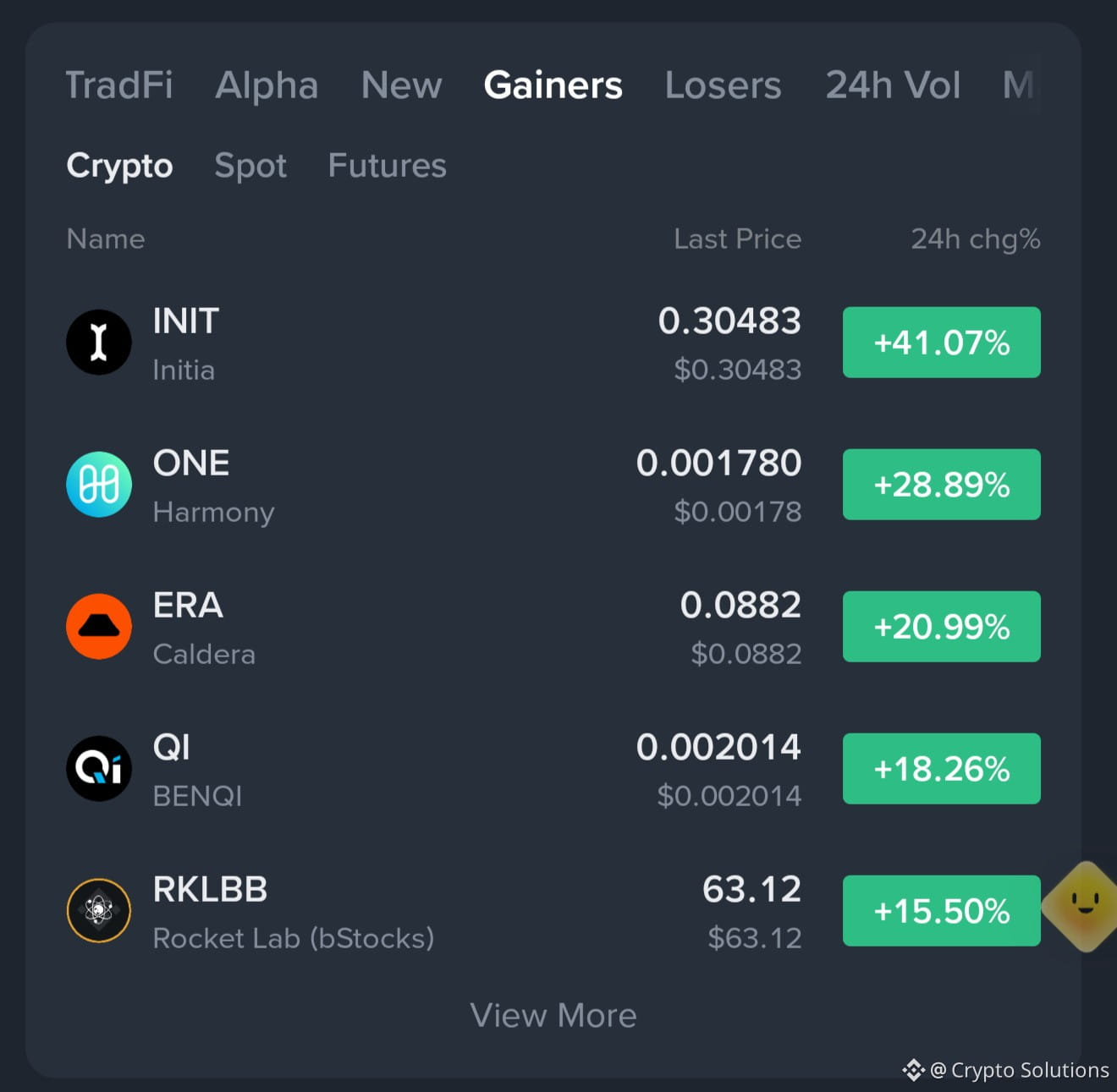
Which of these five tokens do you think has the fuel to deliver the biggest move next? $INIT , $ONE, $ERA , $QI or $RKLBB? 👀
Let's hear your picks in the comments. 👇
Which of these five tokens do you think has the fuel to deliver the biggest move next? $INIT , $ONE, $ERA , $QI or $RKLBB? 👀
Let's hear your picks in the comments. 👇
Let's hear your picks in the comments. 👇
796
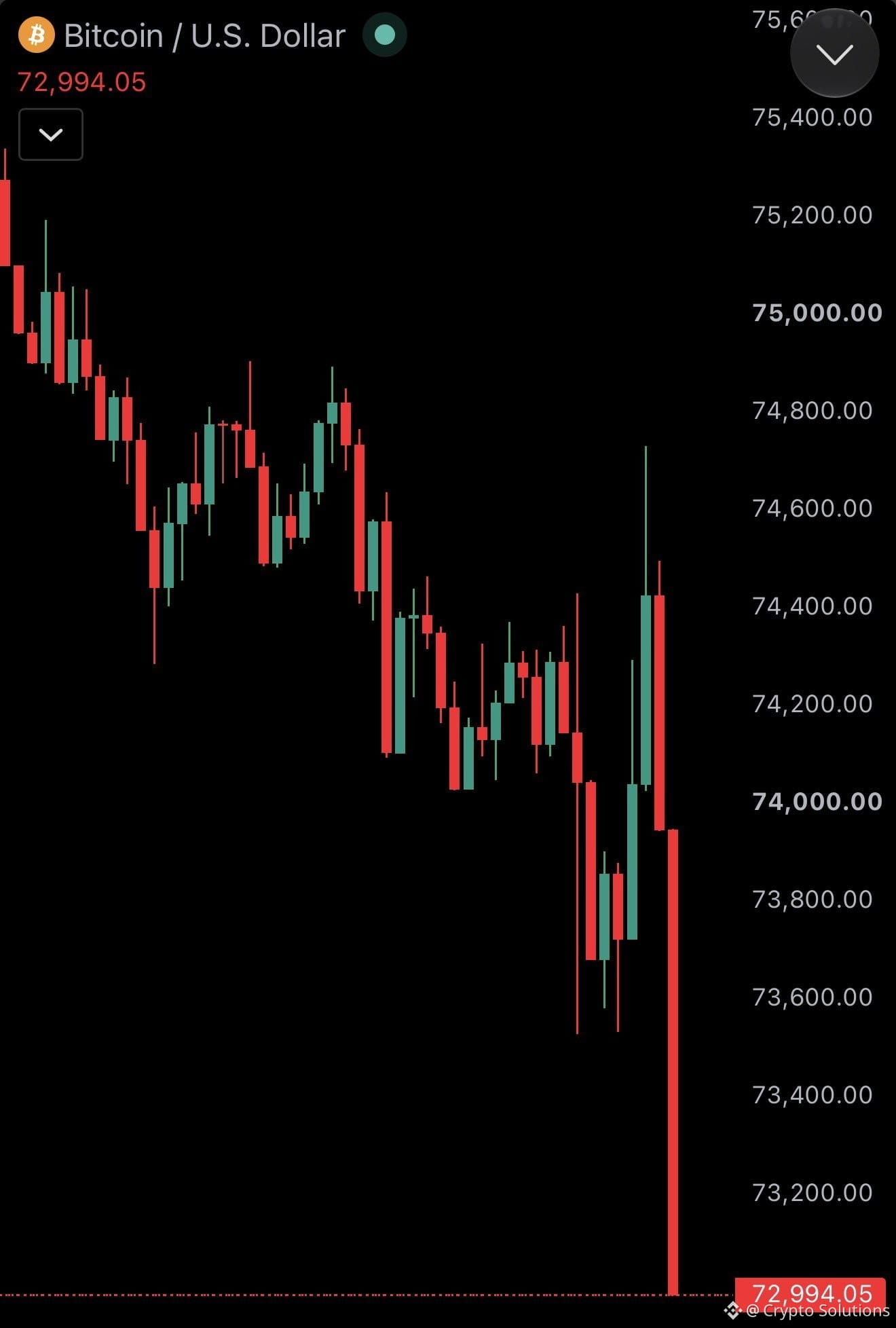
JUST IN: Bitcoin falls under $73,000
$200,000,000 worth of crypto longs liquidated in the past 15 minutes.
JUST IN: Bitcoin falls under $73,000
$200,000,000 worth of crypto longs liquidated in the past 15 minutes.
$200,000,000 worth of crypto longs liquidated in the past 15 minutes.
1
196
The market is always full of surprises. 👀
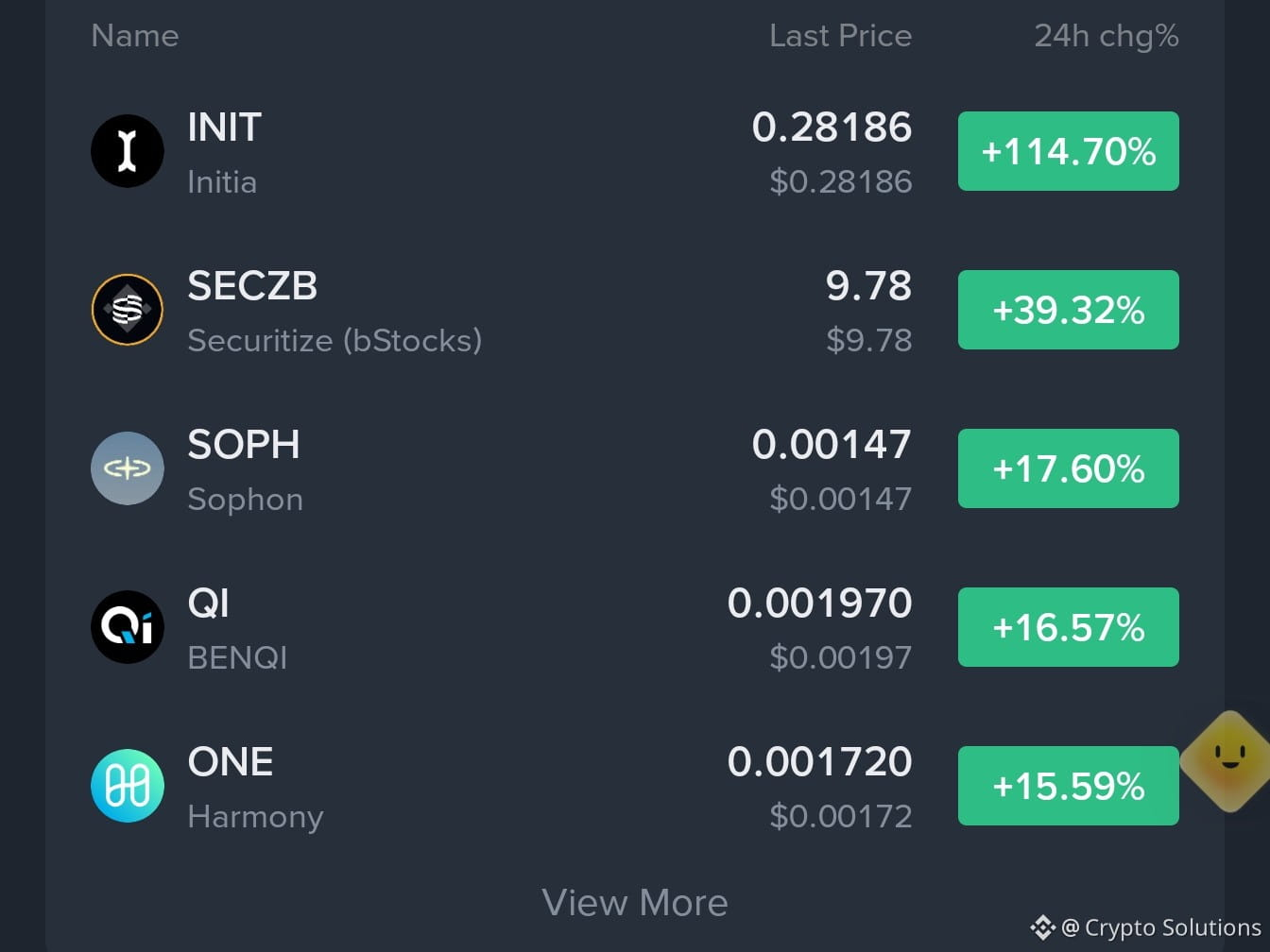
$INIT is leading the Binance top gainers with an impressive +114.69%, followed by $SECZB at +39.32%.
$SOPH, $QI and $ONE are also showing strength.
Volatility creates opportunities. Stay alert, do your research, and never underestimate what the market can do.
Binance is where the action is! 🚀
$INIT is leading the Binance top gainers with an impressive +114.69%, followed by $SECZB at +39.32%.
$SOPH, $QI and $ONE are also showing strength.
Volatility creates opportunities. Stay alert, do your research, and never underestimate what the market can do.
Binance is where the action is! 🚀
1
791
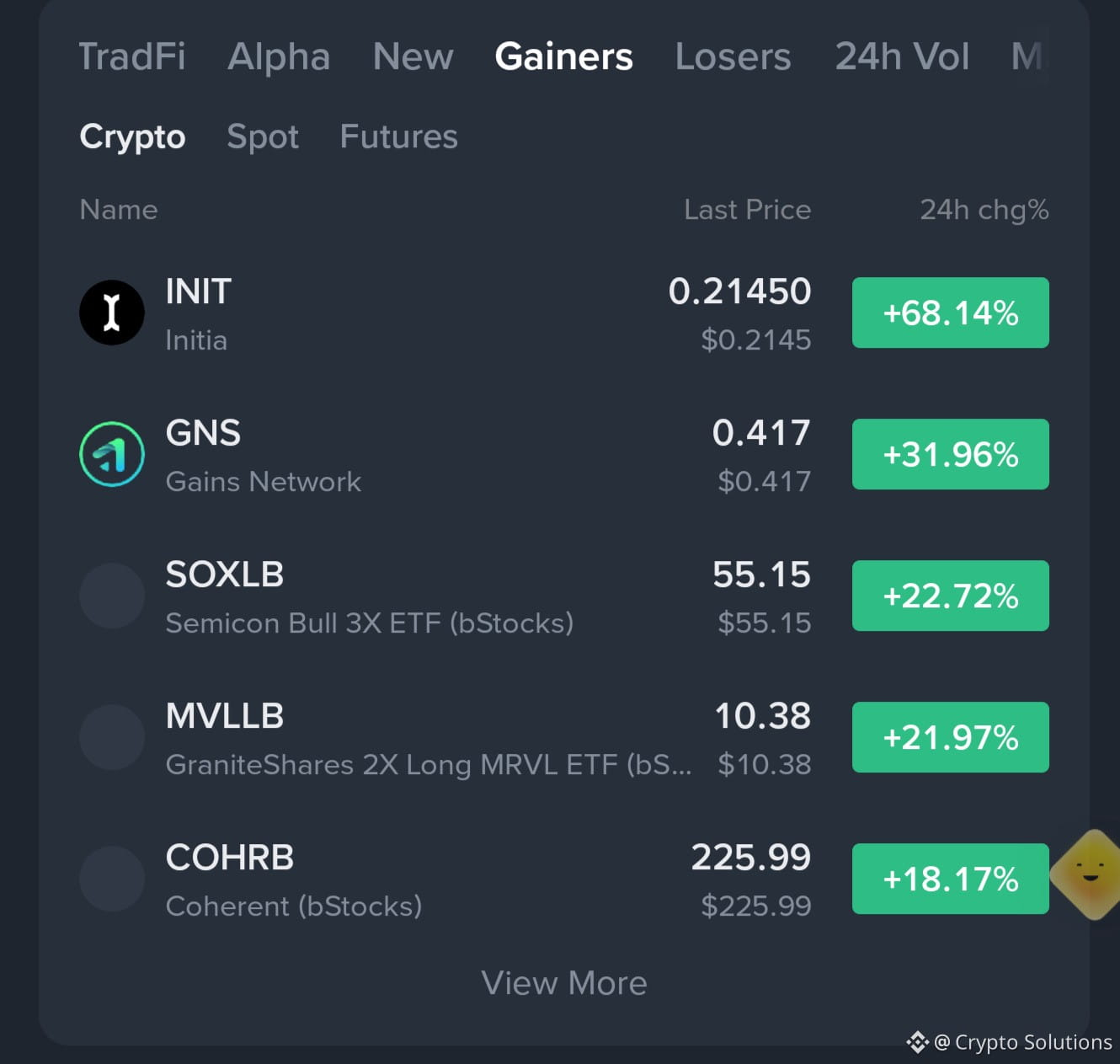
🚀 Binance top gainers are showing some serious green!
Look at the momentum:
🔥 $INIT +68.14%
🔥 $GNS +31.96%
🔥 $SOXLB +22.72%
🔥 $MVLLB +21.97%
🔥 $COHRB +18.17%
The market is never short of opportunities for those paying attention.
Volatility creates movement, and movement creates opportunities.
Stay informed, manage your risk, and never stop DYOR.
Bullish on the opportunities ahead! 📈
#Binance #crypto
1
857
JUST IN: $13 trillion Charles Schwab adds Solana, Avalanche, and Chainlink trading to its crypto accounts.
$SOL $LINK $AVAX
JUST IN: $13 trillion Charles Schwab adds Solana, Avalanche, and Chainlink trading to its crypto accounts.
$SOL $LINK $AVAX
$SOL $LINK $AVAX
362
Privacy is not a luxury in crypto. It's an important part of its future.
Projects I'd keep researching as we approach 2027:
Zcash ($ZEC )
Aztec (AZTEC)
Mina Protocol ($MINA )
Aleo (ALEO)
As blockchain adoption grows, privacy and zero-knowledge technology could become increasingly important.
DYOR. 🔐
Privacy is not a luxury in crypto. It's an important part of its future.
Projects I'd keep researching as we approach 2027:
Zcash ($ZEC )
Aztec (AZTEC)
Mina Protocol ($MINA )
Aleo (ALEO)
As blockchain adoption grows, privacy and zero-knowledge technology could become increasingly important.
DYOR. 🔐
Projects I'd keep researching as we approach 2027:
Zcash ($ZEC )
Aztec (AZTEC)
Mina Protocol ($MINA )
Aleo (ALEO)
As blockchain adoption grows, privacy and zero-knowledge technology could become increasingly important.
DYOR. 🔐
829
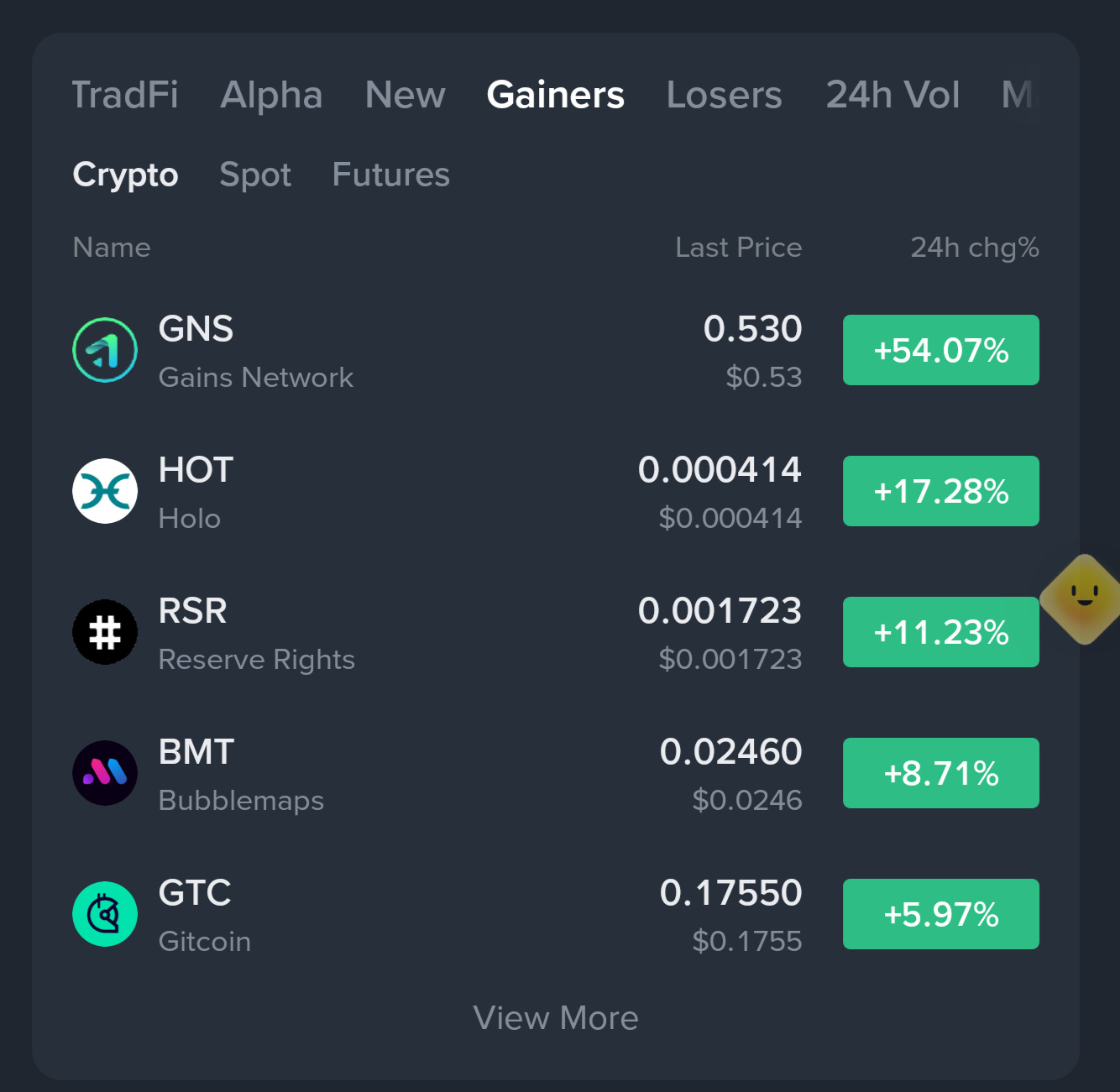
Some altcoins are starting to catch attention! 👀🚀
Here are 5 gainers worth keeping on your radar:
Gains Network ($GNS) +54.07%
Holo ($HOT ) +17.28%
Reserve Rights ($RSR ) +11.23%
Bubblemaps ($BMT ) +8.71%
Gitcoin ($GTC) +5.97%
The market always creates new opportunities, but the real question is which projects can sustain their momentum.
Keep researching, stay ahead and don't FOMO into green candles.
DYOR. 📊
1
2
6.3k
Tokenisation of real-world assets is a narrative worth watching closely.
Here are four projects I'd be researching ahead of 2027:
Ondo Finance ($ONDO )
Chainlink ($LINK )
Centrifuge ($CFG )
Stellar ($XLM)
Bringing traditional finance and blockchain closer together could create significant opportunities.
DYOR. ⚠️
Here are four projects I'd be researching ahead of 2027:
Ondo Finance ($ONDO )
Chainlink ($LINK )
Centrifuge ($CFG )
Stellar ($XLM)
Bringing traditional finance and blockchain closer together could create significant opportunities.
DYOR. ⚠️
1
692
Never mistake people's laughter and applause for genuine support as you climb the ladder. 🪜
Some people will celebrate every step you take, but the moment you make one mistake or experience a setback, those same people will be the first to point fingers and laugh.
That's why you must learn to recognise the difference between people who enjoy watching your success and those who genuinely care about you.
Real ones don't just stand with you when you're winning. They stand with you when life gets difficult too.
Value those who support you in both seasons. Not everyone clapping for you wants to see you win.
Hope someone needs this reminder today. ❤️
100
Central Bank of Nigeria just released regulation for Non Security Virtual Asset Operation in NigeriaHere are the summary for quick read:
Three token categories stand out:
📌1. Class 1 – Naira Stablecoins
📍Application fee: ₦10m.
📍Minimum paid-up capital: ₦10bn.
📍Fully backed by eligible Naira-denominated reserves.
📍Permitted for payments, settlement and treasury management.
📍No interest or yield for simply holding tokens.
📌2. Class 2 – Foreign Currency Stablecoins
E.g USDT, USDC ETC (illustrative, mentioned in guideline).
📍Application fee: ₦10m.
📍Minimum paid-up capital: ₦15bn.
📍Foreign currency-denominated reserve backing in a Nigerian Bank.
📍Permitted for cross-border payments, remittances and international trade settlement.
📍Domestic Naira obligations and Naira conversion remain subject to FX controls.
📌3. Deposit Money Tokens (DMTs)
E.g: Tokenised Naira deposits issued by commercial banks.
📍Exclusively issued by CBN-licensed banks with prior approval.
📍Subject to existing banking capital requirements.
📍Every token must represent an actual deposit liability.
📍Interbank transfers through CBN-approved settlement infrastructure, potentially RTGS.
📍The issuing bank remains liable for the underlying deposit.
📌4. Other Services – VASP Licence/Authorisation
📍Minimum paid-up capital: ₦1bn. Application fees are separately prescribed by the CBN.
Covered services include:
📍Custodial and non-custodial wallet services.
📍Crypto custody and private-key administration.
📍Fiat-to-crypto and crypto-to-crypto exchange/conversion.
📍Naira and foreign currency on/off-ramp services.
📍Domestic and cross-border transfers and remittances.
📍Token distribution and market access.
📍Payment gateways and merchant acceptance.
📍Virtual asset stored-value facilities.
📍Platform-facilitated P2P services (subject to specific approval).
Financial institutions can apply for approval to extend their existing permitted activities, while SEC-regulated entities require the relevant CBN authorisation for non-security services. The additional ₦1bn capital requirement applies to these routes as well.
My biggest takeaway is that the framework is sound on it merit as it sets a clear distinction between privately issued stablecoins and tokenised commercial bank deposits, while bringing Foreign issued stablecoin are brought under a new regulatory regime in Nigeria.
But i see a lacuna around the paid-up capital requirements for a fully-reserved stablecoin is factually a duplication of prudence. issuers dont lend out stablecoin reserves, no fractional banking considerations is involved, and strict reserve composition already expected and regulated. An additional N10 Billion paid up capital looks like an overkill for a non existing local Naira stablecoin industry as it serves no purpose like we have with fractional bank deposits
Central Bank of Nigeria just released regulation for Non Security Virtual Asset Operation in Nigeria
Here are the summary for quick read:
Three token categories stand out:
📌1. Class 1 – Naira Stablecoins
📍Application fee: ₦10m.
📍Minimum paid-up capital: ₦10bn.
📍Fully backed by eligible Naira-denominated reserves.
📍Permitted for payments, settlement and treasury management.
📍No interest or yield for simply holding tokens.
📌2. Class 2 – Foreign Currency Stablecoins
E.g USDT, USDC ETC (illustrative, mentioned in guideline).
📍Application fee: ₦10m.
📍Minimum paid-up capital: ₦15bn.
📍Foreign currency-denominated reserve backing in a Nigerian Bank.
📍Permitted for cross-border payments, remittances and international trade settlement.
📍Domestic Naira obligations and Naira conversion remain subject to FX controls.
📌3. Deposit Money Tokens (DMTs)
E.g: Tokenised Naira deposits issued by commercial banks.
📍Exclusively issued by CBN-licensed banks with prior approval.
📍Subject to existing banking capital requirements.
📍Every token must represent an actual deposit liability.
📍Interbank transfers through CBN-approved settlement infrastructure, potentially RTGS.
📍The issuing bank remains liable for the underlying deposit.
📌4. Other Services – VASP Licence/Authorisation
📍Minimum paid-up capital: ₦1bn. Application fees are separately prescribed by the CBN.
Covered services include:
📍Custodial and non-custodial wallet services.
📍Crypto custody and private-key administration.
📍Fiat-to-crypto and crypto-to-crypto exchange/conversion.
📍Naira and foreign currency on/off-ramp services.
📍Domestic and cross-border transfers and remittances.
📍Token distribution and market access.
📍Payment gateways and merchant acceptance.
📍Virtual asset stored-value facilities.
📍Platform-facilitated P2P services (subject to specific approval).
Financial institutions can apply for approval to extend their existing permitted activities, while SEC-regulated entities require the relevant CBN authorisation for non-security services. The additional ₦1bn capital requirement applies to these routes as well.
My biggest takeaway is that the framework is sound on it merit as it sets a clear distinction between privately issued stablecoins and tokenised commercial bank deposits, while bringing Foreign issued stablecoin are brought under a new regulatory regime in Nigeria.
But i see a lacuna around the paid-up capital requirements for a fully-reserved stablecoin is factually a duplication of prudence. issuers dont lend out stablecoin reserves, no fractional banking considerations is involved, and strict reserve composition already expected and regulated. An additional N10 Billion paid up capital looks like an overkill for a non existing local Naira stablecoin industry as it serves no purpose like we have with fractional bank deposits
427
🚨 BREAKING: CBN Sets ₦15bn Capital Requirement for Dollar Stablecoin Issuers
The Central Bank of Nigeria has introduced new capital requirements for virtual asset operators:
🟡₦15bn for foreign currency-backed stablecoin issuers (e.g. USD-pegged).
🟡₦10bn for naira-backed stablecoin issuers.
🟡₦1bn for other non-security virtual asset service providers.
The new rules also require 100% stablecoin reserve backing plus a 2% buffer, stricter AML/KYC compliance and redemption at face value, generally by the next business day.
The regulations took effect on November 5, 2026, marking a new chapter in Nigeria's crypto regulatory landscape.
276
Partly True
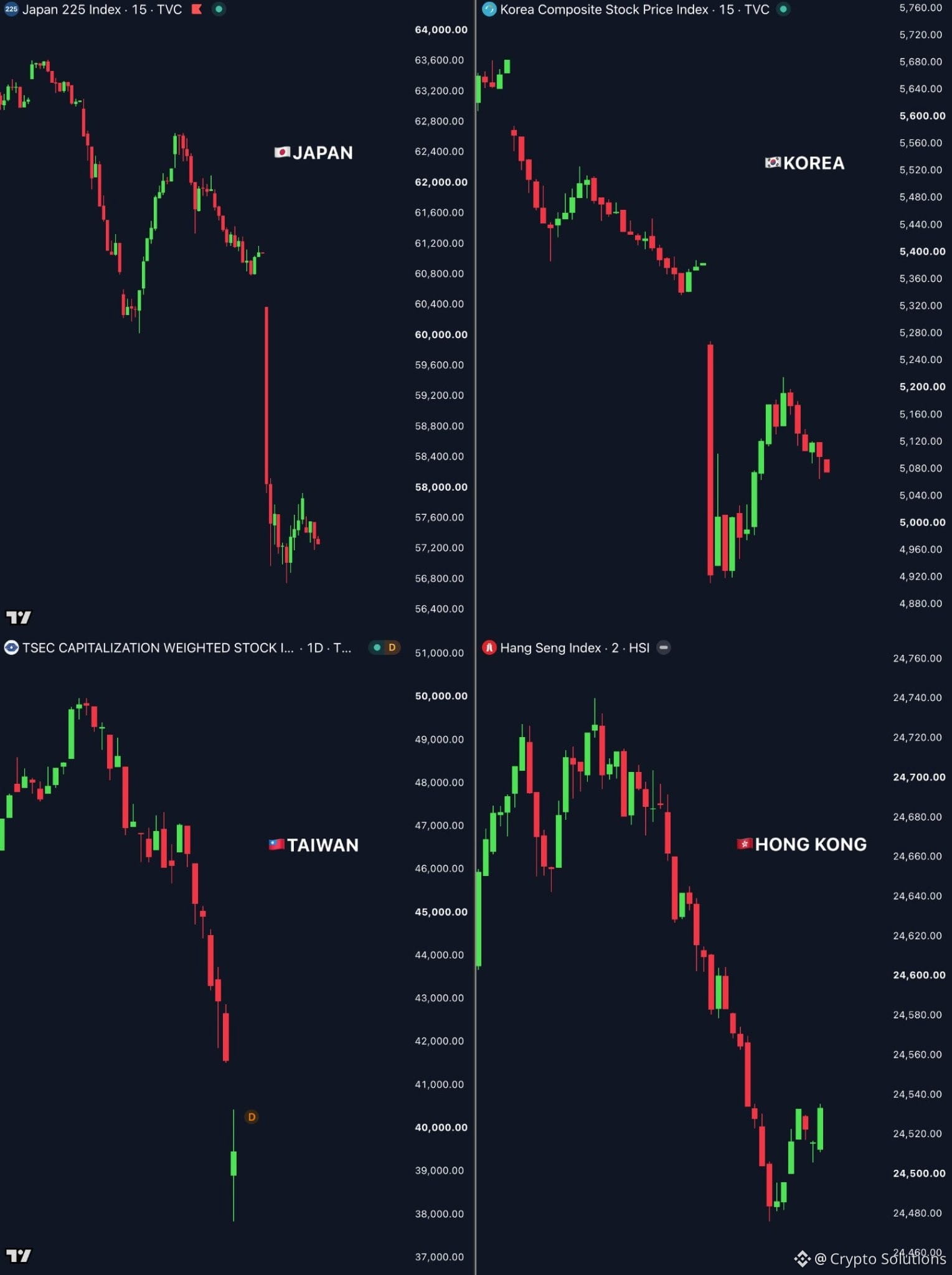
🚨 THE AI BUBBLE CRASH HAS STARTED IN ASIA.
Over $1.2 TRILLION has been wiped out from Asian stock markets today.
• Japan's Nikkei: -7.1%
• South Korea's Kospi: -8.8%
• Taiwan's TAIEX: -9.0%
• Hong Kong's Hang Seng: -1.8%
All four major Asian markets are now in a bear market:
• Nikkei: -22% from its all time high
• Kospi: -48% from its all time high
• TAIEX: -24% from its all time high
• Hang Seng: -27% from its all time high
2
3k
In 1989, a 17-year-old Elon Musk landed in Montreal with about $4,000, half from his mom, Maye, who cashed out a stock account she had opened with money she'd won in a beauty contest as a teenager, and a list of relatives he had never met.
The uncle he planned to call had already left town, so he checked into a youth hostel, shared a room with five strangers, and after a week bought a $100 Greyhound pass to cross Canada to a cousin's farm in Saskatchewan.
Somewhere along the way the driver unloaded his suitcase with his traveler's checks and clothes, and all he had left was a backpack full of books, while getting the checks replaced took weeks.
Elon called his cousin with the coins in his pocket and spent weeks cleaning grain bins and helping raise a barn, celebrating his 18th birthday with a homemade cake on his cousin’s farm. Then he rode on to Vancouver and chose the hardest job on the board, cleaning lumber mill boilers for $18 an hour.
Elon has always been strong-willed and never shied away from the most challenging work to achieve his goals. That is true determination! I admire him for that 🩵

474
BREAKING: BINANCE FIAT WITHDRAWALS UPDATE!
Good news for Binance users! Fiat withdrawals are now available for 5 additional currencies:
🆕 USD 🇺🇸
🆕 AED 🇦🇪
🆕 VND 🇻🇳
🆕 PHP 🇵🇭
🆕 IDR 🇮🇩
These join the currencies already supported for fiat withdrawals, including EUR, JPY, BRL, MXN, CHF, KES, UGX, and several others.
Binance says it will continue sharing further updates through its official communication channels.
Always check Binance's official channels for the latest updates.
More options. More access. 🌍
1
1
466
🚨 BE CAREFUL! SCAMMERS ARE LOOKING FOR THEIR NEXT VICTIMS!
As news spreads about Binance's compensation for the recent security incident, scammers are taking advantage of the situation to target unsuspecting users.
They are circulating fake compensation announcements, phishing links and impersonating Binance representatives to steal login details, passwords and funds.
Please remember:
🔸 Binance will never ask for your password or 2FA codes.
🔸 Don't click random compensation links sent through DMs or Telegram groups.
🔸 Never connect your wallet to an unverified website.
🔸 Always stick to Binance's official announcement channels for accurate information.
🔸 Even if you see a link being shared, verify it first before clicking. Don't assume it's genuine because someone shared it in a trusted community.
🔸 Never share your seed phrase or private keys with anyone.
Scammers are always looking for opportunities to exploit people's emotions and urgency. Don't let them turn an unfortunate incident into another loss for you.
Stay alert. Stay SAFU. 🛡️
1
406
🚨 TL;DR: BINANCE HAS NOW REPLENISHED 90% OF THE STOLEN ASSETS!
Here are the key updates:
🔸 Binance has increased loss coverage from 80% to 90%, using SAFU, Futures Insurance Funds and corporate treasury.
🔸 10 major assets, including BTC, ETH, BNB, SOL, USDT and USDC, are now 100% backed.
🔸 Binance will absorb the financial impact. Users will not bear the losses.
🔸 The remaining 10% involves less-liquid tokens that Binance is still sourcing through market and OTC channels.
🔸 A fresh Proof of Reserves snapshot has been published, with full ZK verification expected by November 3.
🔸 Binance remains on track to resume withdrawals on Sunday, November 1, subject to its further confirmation.
🔸 Binance also commits to replenishing SAFU to approximately $1 billion.
The message is clear: protecting users, taking responsibility and restoring normal operations remain the priorities. 🧡
4
427
BREAKING: Binance says it already replenished 90% of the $6.3 BILLION lost in the crypto hack.
10 cryptocurrencies, including $BTC, $ETH and $SOL, are now fully backed.
HUGE WIN FOR CRYPTO! 🚀
BREAKING: Binance says it already replenished 90% of the $6.3 BILLION lost in the crypto hack.
10 cryptocurrencies, including $BTC, $ETH and $SOL, are now fully backed.
HUGE WIN FOR CRYPTO! 🚀
10 cryptocurrencies, including $BTC, $ETH and $SOL, are now fully backed.
HUGE WIN FOR CRYPTO! 🚀
305

Article
The Quiet Opening: Inside Miden’s Partner MainnetMost blockchain launches feel like flipping a switch for the whole world at once. Miden chose a different kind of start. On October 26, 2026, it opened what it calls partner mainnet an invite-only network where real money can move for the first time, but only for a limited group of people and partners. It is not fully public yet, and it is not the final version of the system. It is a carefully controlled first step with real assets on a privacy-focused chain.
Think of it as opening a new bank branch to a small list of customers before the doors open to everyone. The goal is to test the real system with actual value while the team watches closely, fixes issues, and builds confidence.
What Makes This Mainnet “Private”
Two meanings of private apply here. First, access is limited. Only people who receive an invitation code can use the Bread wallet to enter. Codes go out in waves to people who joined an early-access list. Launch partners also bring their infrastructure and apps onto the network. Anyone can try to join the list, but spots during this phase are limited.
Second, the technology itself is built for privacy. Transactions still run on the user’s own device. The device creates a zero-knowledge proof showing the action is valid, and the network stores only a short cryptographic fingerprint instead of the full private details. Balances and counterparties stay hidden from the public. Most of these proofs finish in under three seconds on a phone.
During this early phase, extra safety measures are in place. Validators can see certain private inputs so they can double-check the proofs. Transaction details are also stored in a threshold-encrypted form that a group of validators could unlock only in extreme cases, such as a major hack. These “guardrails” mean activity is hidden from the general public but not completely invisible to the operators running the network right now. Miden has said these limits are temporary and will be removed once the system is more thoroughly tested and verified.
What You Can Actually Do
Invited users can send and receive funds, pay network fees with USDCx (a Circle-backed stablecoin issued on Miden), bridge assets from other chains, and make simple swaps through a built-in exchange. Accounts can be protected by Guardians operators who back up and sync private account state so recovery works across devices without taking control of the keys. Private multisig and issuer controls for assets are also live, letting teams set approval rules and token issuers apply limits without publishing full account details.
There are practical limits while this phase runs. Total balances inside Bread are capped below about $1,232. Wallets arrive pre-funded with a small amount of USDCx for fees. The network is temporary: before the later switch to public mainnet, users will need to withdraw their funds ahead of a planned reset. Miden has advised people to only use amounts they can afford to lose during this testing period.
Why Start This Way
Building a privacy system that also supports team approvals, recovery, asset rules, and compliance is complicated. Launching fully open on day one would put real money at higher risk while the network is still new. The partner phase lets the team, partners, and early users experience the real privacy features client-side proving, private accounts, Guardians, and stablecoin fees while keeping the circle small enough to monitor closely.
It also connects Miden to wider liquidity through Polygon’s Agglayer, making it one of the early non-EVM chains linked that way. Partners across custody, banking, identity, and real-world assets are already involved.
What Comes Next
Public mainnet is expected in the following months. That transition will bring changes, including a different hash function (moving away from the current one toward a Blake3-based version), a stronger fee model, fuller zero-knowledge proofs at the block level, and the gradual removal of the current guardrails. The partner network is a stepping stone, not the finished product.
For now, the opening is quiet by design. Real value is moving on a chain built so that most financial details stay private, but only a limited group can enter and only under temporary safety rules. It is an early, careful look at how practical privacy might actually work once the wider doors open.
The Quiet Opening: Inside Miden’s Partner Mainnet
Most blockchain launches feel like flipping a switch for the whole world at once. Miden chose a different kind of start. On October 26, 2026, it opened what it calls partner mainnet an invite-only network where real money can move for the first time, but only for a limited group of people and partners. It is not fully public yet, and it is not the final version of the system. It is a carefully controlled first step with real assets on a privacy-focused chain.
Think of it as opening a new bank branch to a small list of customers before the doors open to everyone. The goal is to test the real system with actual value while the team watches closely, fixes issues, and builds confidence.
What Makes This Mainnet “Private”
Two meanings of private apply here. First, access is limited. Only people who receive an invitation code can use the Bread wallet to enter. Codes go out in waves to people who joined an early-access list. Launch partners also bring their infrastructure and apps onto the network. Anyone can try to join the list, but spots during this phase are limited.
Second, the technology itself is built for privacy. Transactions still run on the user’s own device. The device creates a zero-knowledge proof showing the action is valid, and the network stores only a short cryptographic fingerprint instead of the full private details. Balances and counterparties stay hidden from the public. Most of these proofs finish in under three seconds on a phone.
During this early phase, extra safety measures are in place. Validators can see certain private inputs so they can double-check the proofs. Transaction details are also stored in a threshold-encrypted form that a group of validators could unlock only in extreme cases, such as a major hack. These “guardrails” mean activity is hidden from the general public but not completely invisible to the operators running the network right now. Miden has said these limits are temporary and will be removed once the system is more thoroughly tested and verified.
What You Can Actually Do
Invited users can send and receive funds, pay network fees with USDCx (a Circle-backed stablecoin issued on Miden), bridge assets from other chains, and make simple swaps through a built-in exchange. Accounts can be protected by Guardians operators who back up and sync private account state so recovery works across devices without taking control of the keys. Private multisig and issuer controls for assets are also live, letting teams set approval rules and token issuers apply limits without publishing full account details.
There are practical limits while this phase runs. Total balances inside Bread are capped below about $1,232. Wallets arrive pre-funded with a small amount of USDCx for fees. The network is temporary: before the later switch to public mainnet, users will need to withdraw their funds ahead of a planned reset. Miden has advised people to only use amounts they can afford to lose during this testing period.
Why Start This Way
Building a privacy system that also supports team approvals, recovery, asset rules, and compliance is complicated. Launching fully open on day one would put real money at higher risk while the network is still new. The partner phase lets the team, partners, and early users experience the real privacy features client-side proving, private accounts, Guardians, and stablecoin fees while keeping the circle small enough to monitor closely.
It also connects Miden to wider liquidity through Polygon’s Agglayer, making it one of the early non-EVM chains linked that way. Partners across custody, banking, identity, and real-world assets are already involved.
What Comes Next
Public mainnet is expected in the following months. That transition will bring changes, including a different hash function (moving away from the current one toward a Blake3-based version), a stronger fee model, fuller zero-knowledge proofs at the block level, and the gradual removal of the current guardrails. The partner network is a stepping stone, not the finished product.
For now, the opening is quiet by design. Real value is moving on a chain built so that most financial details stay private, but only a limited group can enter and only under temporary safety rules. It is an early, careful look at how practical privacy might actually work once the wider doors open.
455
Log in to explore more content
Join global crypto users on Binance Square
⚡️ Get latest and useful information about crypto.
💬 Trusted by the world’s largest crypto exchange.
👍 Discover real insights from verified creators.
Email / Phone number
Trending Topics
HuangRisksOusterOverReportedAffairWithSubordinate
5,961 views
97 Discussing
Nvidia Board Meets to Decide Jensen Huang's Future as Crisis Deepens
Binance News
·6 Likes
·2.7k views
AnthropicRejectsIPODelayValuationinQuestion
428,877 views
3,639 Discussing
CoreWeaveJumps10%On168%RevenueGrowth
47,740 views
694 Discussing