
BlurMask 1
71 Posts

BlurMask 1
Report
Block User
I share quick daily news & Al moves + doing a Web3 research.
0 Following
11 Followers
13 Liked
Posts
·
--
Justin Sun. History Graduate. Blockchain Billionaire.
Most people know the name. Few know the full story, the early struggles, the Bitcoin article that changed everything, the $7.9 trillion stablecoin rail nobody planned for, and the controversies that made him one of crypto's most polarizing builders.
I wrote the complete breakdown on my X profile.
Read it in full. https://x.com/blurmask/status/2082114852512846179
$TRX $USDT
Justin Sun. History Graduate. Blockchain Billionaire.
Most people know the name. Few know the full story, the early struggles, the Bitcoin article that changed everything, the $7.9 trillion stablecoin rail nobody planned for, and the controversies that made him one of crypto's most polarizing builders.
I wrote the complete breakdown on my X profile.
Read it in full. https://x.com/blurmask/status/2082114852512846179
$TRX $USDT
Most people know the name. Few know the full story, the early struggles, the Bitcoin article that changed everything, the $7.9 trillion stablecoin rail nobody planned for, and the controversies that made him one of crypto's most polarizing builders.
I wrote the complete breakdown on my X profile.
Read it in full. https://x.com/blurmask/status/2082114852512846179
$TRX $USDT

75
·
--
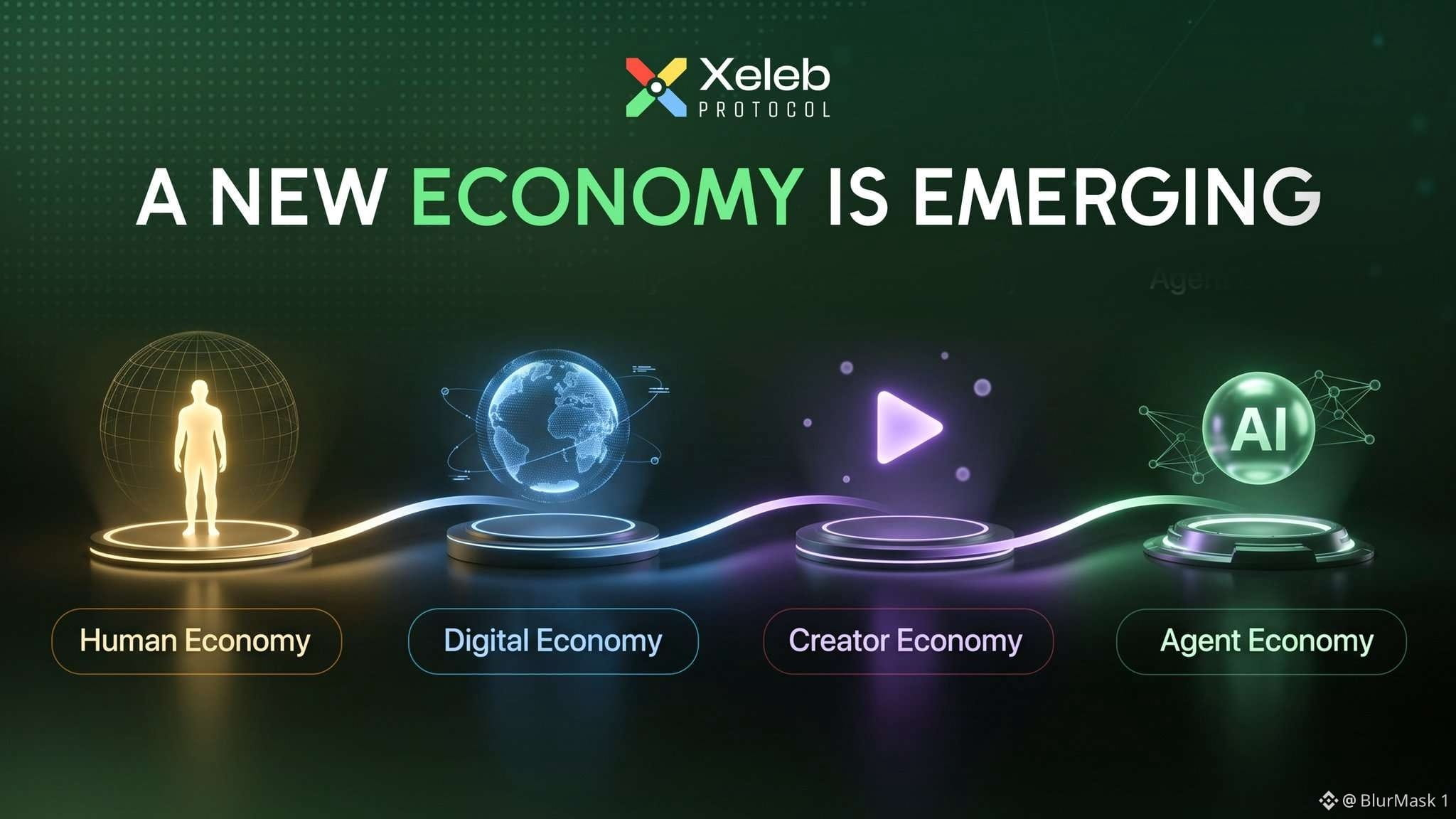
Every Major Economic Shift Came Down to Removing a Constraint That Determined Who Could Participate.
The Human Economy required physical presence. You needed to be somewhere, at a specific time, to create value.
The Digital Economy removed geography. An internet connection was enough to build, sell, and earn across borders.
The Creator Economy removed capital. Attention became the asset. Individuals became businesses.
Each shift expanded the circle of who could participate. Each one felt radical at the time and obvious in hindsight.
The Agent Economy removes the final constraint which is TIME.
An AI agent doesn't sleep. It doesn't lose focus switching between tasks. It doesn't wait for business hours or a calendar opening. It analyzes, engages, negotiates, transacts, and coordinates continuously at a scale no individual human can sustain alone.
That's not an efficiency story. That's the emergence of an entirely new class of economic participant. One that operates without the biological limits that have defined economic participation since the beginning of human history.
The creators building agents today are writing the early rules of an economy that genuinely didn't exist five years ago, deciding what agents are allowed to own, what they're trusted to do, and what role they play inside the systems humans already built.
That is a rare position to be in. And the window to define those rules from the inside is not permanently open.
🔗 Xeleb.io | #XelebProtocol #AIAgents #BNBChain
$BNB $XCX
Every Major Economic Shift Came Down to Removing a Constraint That Determined Who Could Participate.
The Human Economy required physical presence. You needed to be somewhere, at a specific time, to create value.
The Digital Economy removed geography. An internet connection was enough to build, sell, and earn across borders.
The Creator Economy removed capital. Attention became the asset. Individuals became businesses.
Each shift expanded the circle of who could participate. Each one felt radical at the time and obvious in hindsight.
The Agent Economy removes the final constraint which is TIME.
An AI agent doesn't sleep. It doesn't lose focus switching between tasks. It doesn't wait for business hours or a calendar opening. It analyzes, engages, negotiates, transacts, and coordinates continuously at a scale no individual human can sustain alone.
That's not an efficiency story. That's the emergence of an entirely new class of economic participant. One that operates without the biological limits that have defined economic participation since the beginning of human history.
The creators building agents today are writing the early rules of an economy that genuinely didn't exist five years ago, deciding what agents are allowed to own, what they're trusted to do, and what role they play inside the systems humans already built.
That is a rare position to be in. And the window to define those rules from the inside is not permanently open.
🔗 Xeleb.io | #XelebProtocol #AIAgents #BNBChain
$BNB $XCX
The Human Economy required physical presence. You needed to be somewhere, at a specific time, to create value.
The Digital Economy removed geography. An internet connection was enough to build, sell, and earn across borders.
The Creator Economy removed capital. Attention became the asset. Individuals became businesses.
Each shift expanded the circle of who could participate. Each one felt radical at the time and obvious in hindsight.
The Agent Economy removes the final constraint which is TIME.
An AI agent doesn't sleep. It doesn't lose focus switching between tasks. It doesn't wait for business hours or a calendar opening. It analyzes, engages, negotiates, transacts, and coordinates continuously at a scale no individual human can sustain alone.
That's not an efficiency story. That's the emergence of an entirely new class of economic participant. One that operates without the biological limits that have defined economic participation since the beginning of human history.
The creators building agents today are writing the early rules of an economy that genuinely didn't exist five years ago, deciding what agents are allowed to own, what they're trusted to do, and what role they play inside the systems humans already built.
That is a rare position to be in. And the window to define those rules from the inside is not permanently open.
🔗 Xeleb.io | #XelebProtocol #AIAgents #BNBChain
$BNB $XCX
56
·
--
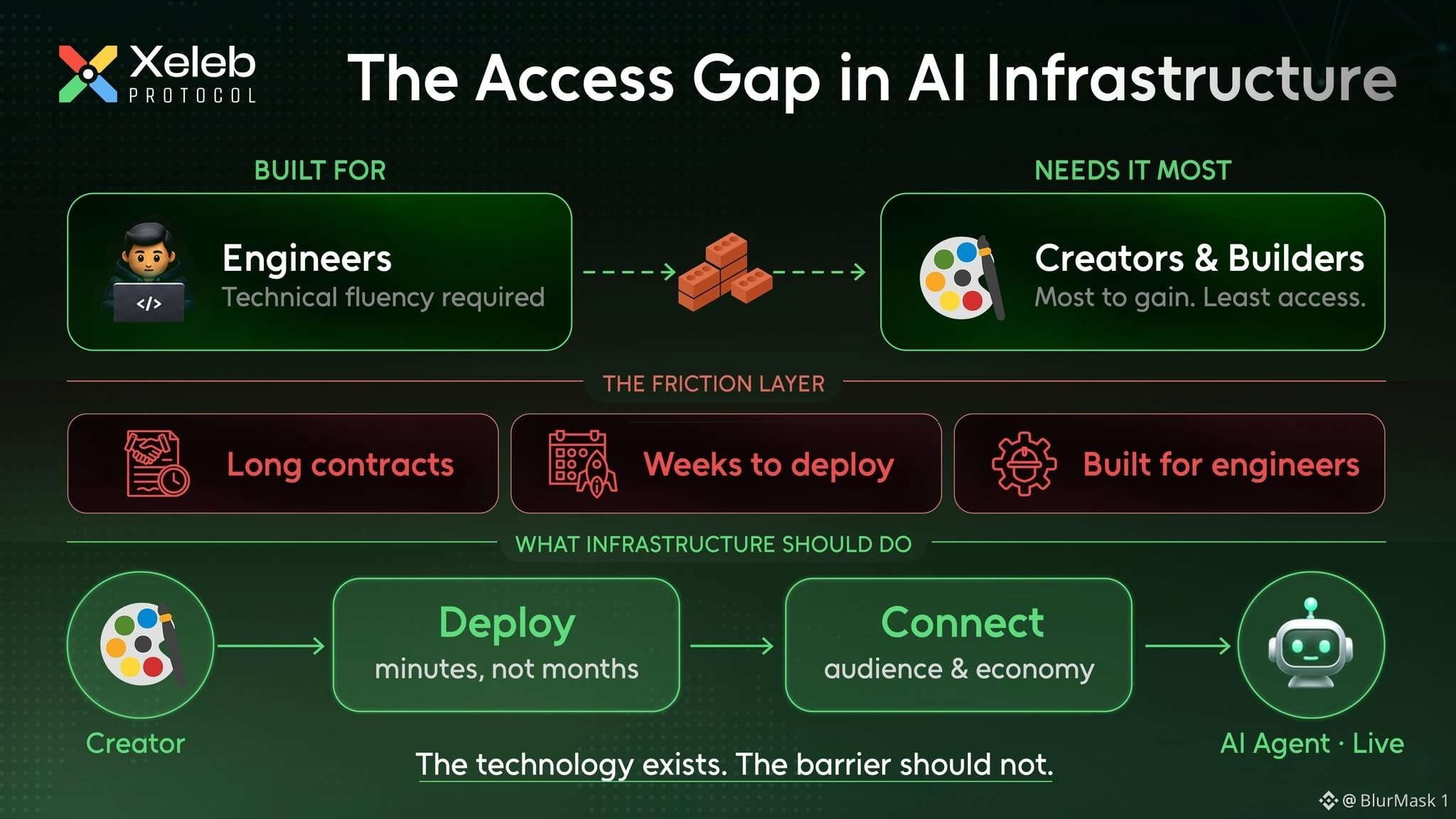
The Real Bottleneck in AI Agent Adoption Isn't Intelligence. It's Access.
Everyone building in the AI agent space right now is racing toward the same finish line with smarter models, faster compute, better reasoning. That race is real and it matters. But it's not the bottleneck.
The actual problem is simpler and more frustrating. Most AI infrastructure was built by engineers, for engineers. It assumes technical fluency, development resources, and the patience to navigate integrations that were never designed with non-technical operators in mind.
Which means the people who stand to benefit most from AI agents include creators, independent builders, and community operators are the exact people with the least access to the infrastructure that powers them. Not because they lack the vision. Because the tools weren't built for them.
That gap is the real unlock. Not a marginally smarter model. Infrastructure designed from the ground up for the people actually deploying agents where spinning up an AI influencer, connecting it to an audience, and plugging into an economic layer takes minutes, not months of engineering time.
The technology already exists to do this. What's been missing is infrastructure built specifically for the Agent Economy and the creators operating inside it.
🔗 Xeleb.io | $XCX $KOMA
#XelebProtocol #AIAgents #BNBChain
The Real Bottleneck in AI Agent Adoption Isn't Intelligence. It's Access.
Everyone building in the AI agent space right now is racing toward the same finish line with smarter models, faster compute, better reasoning. That race is real and it matters. But it's not the bottleneck.
The actual problem is simpler and more frustrating. Most AI infrastructure was built by engineers, for engineers. It assumes technical fluency, development resources, and the patience to navigate integrations that were never designed with non-technical operators in mind.
Which means the people who stand to benefit most from AI agents include creators, independent builders, and community operators are the exact people with the least access to the infrastructure that powers them. Not because they lack the vision. Because the tools weren't built for them.
That gap is the real unlock. Not a marginally smarter model. Infrastructure designed from the ground up for the people actually deploying agents where spinning up an AI influencer, connecting it to an audience, and plugging into an economic layer takes minutes, not months of engineering time.
The technology already exists to do this. What's been missing is infrastructure built specifically for the Agent Economy and the creators operating inside it.
🔗 Xeleb.io | $XCX $KOMA
#XelebProtocol #AIAgents #BNBChain
Everyone building in the AI agent space right now is racing toward the same finish line with smarter models, faster compute, better reasoning. That race is real and it matters. But it's not the bottleneck.
The actual problem is simpler and more frustrating. Most AI infrastructure was built by engineers, for engineers. It assumes technical fluency, development resources, and the patience to navigate integrations that were never designed with non-technical operators in mind.
Which means the people who stand to benefit most from AI agents include creators, independent builders, and community operators are the exact people with the least access to the infrastructure that powers them. Not because they lack the vision. Because the tools weren't built for them.
That gap is the real unlock. Not a marginally smarter model. Infrastructure designed from the ground up for the people actually deploying agents where spinning up an AI influencer, connecting it to an audience, and plugging into an economic layer takes minutes, not months of engineering time.
The technology already exists to do this. What's been missing is infrastructure built specifically for the Agent Economy and the creators operating inside it.
🔗 Xeleb.io | $XCX $KOMA
#XelebProtocol #AIAgents #BNBChain
73
·
--
A video that demonstrates, recommends, localizes the pitch, and moves someone toward a purchase isn't really content in the traditional sense.
It's a lightweight agent wearing the aesthetic of content. The wrapper looks familiar. What's happening underneath it doesn't.
This is why the "better synthetic faces" race misses the point entirely. Realism was never the moat. The creators who built durable audiences weren't the most polished ones, they were the ones whose audiences felt genuinely guided by them. That relationship is what converted attention into action.
AI influencers that replicate that relationship at scale with memory, with personalization, with the ability to move someone from awareness to decision in a single interaction aren't just more efficient creators. They're a new distribution primitive.
@xeleb_protocol has been thinking at this layer for a while. And the gap between where most teams are building and where this is actually heading is larger than the market currently reflects.
Xeleb.io - #XelebProtocol $QQQB $BNB
A video that demonstrates, recommends, localizes the pitch, and moves someone toward a purchase isn't really content in the traditional sense.
It's a lightweight agent wearing the aesthetic of content. The wrapper looks familiar. What's happening underneath it doesn't.
This is why the "better synthetic faces" race misses the point entirely. Realism was never the moat. The creators who built durable audiences weren't the most polished ones, they were the ones whose audiences felt genuinely guided by them. That relationship is what converted attention into action.
AI influencers that replicate that relationship at scale with memory, with personalization, with the ability to move someone from awareness to decision in a single interaction aren't just more efficient creators. They're a new distribution primitive.
@xeleb_protocol has been thinking at this layer for a while. And the gap between where most teams are building and where this is actually heading is larger than the market currently reflects.
Xeleb.io - #XelebProtocol $QQQB $BNB
It's a lightweight agent wearing the aesthetic of content. The wrapper looks familiar. What's happening underneath it doesn't.
This is why the "better synthetic faces" race misses the point entirely. Realism was never the moat. The creators who built durable audiences weren't the most polished ones, they were the ones whose audiences felt genuinely guided by them. That relationship is what converted attention into action.
AI influencers that replicate that relationship at scale with memory, with personalization, with the ability to move someone from awareness to decision in a single interaction aren't just more efficient creators. They're a new distribution primitive.
@xeleb_protocol has been thinking at this layer for a while. And the gap between where most teams are building and where this is actually heading is larger than the market currently reflects.
Xeleb.io - #XelebProtocol $QQQB $BNB

61
·
--
A powerful AI agent without boundaries is not a product. It is an open tab with authority.
The failure is almost always the same, autonomy handed over before anyone defined where it stops. Demo runs clean. Product breaks in production.
Constraint isn't a limitation on a good agent. It's what makes it trustworthy enough to actually use.
#XelebProtocol #XCX #BNBChain
$QQQB $BNB
A powerful AI agent without boundaries is not a product. It is an open tab with authority.
The failure is almost always the same, autonomy handed over before anyone defined where it stops. Demo runs clean. Product breaks in production.
Constraint isn't a limitation on a good agent. It's what makes it trustworthy enough to actually use.
#XelebProtocol #XCX #BNBChain
$QQQB $BNB
The failure is almost always the same, autonomy handed over before anyone defined where it stops. Demo runs clean. Product breaks in production.
Constraint isn't a limitation on a good agent. It's what makes it trustworthy enough to actually use.
#XelebProtocol #XCX #BNBChain
$QQQB $BNB
67
·
--
Most crypto sits idle because spending it is still friction-heavy, wrong platforms, conversion delays, and geographic walls.
Biya EasyCard converts USDT, Bitcoin, and Ethereum instantly into fiat for transactions accepted across 190+ countries, shopping, subscriptions, AI tools, travel, all from one virtual card with no physical card required.
That's the gap between holding crypto and actually using it.
Learn more: biyapay.com/en/virtualcard/apply
For informational purposes only. Service availability may vary by jurisdiction. Not financial advice.
#crypto #BiyaPay $BTC $ETH
Most crypto sits idle because spending it is still friction-heavy, wrong platforms, conversion delays, and geographic walls.
Biya EasyCard converts USDT, Bitcoin, and Ethereum instantly into fiat for transactions accepted across 190+ countries, shopping, subscriptions, AI tools, travel, all from one virtual card with no physical card required.
That's the gap between holding crypto and actually using it.
Learn more: biyapay.com/en/virtualcard/apply
For informational purposes only. Service availability may vary by jurisdiction. Not financial advice.
#crypto #BiyaPay $BTC $ETH
Biya EasyCard converts USDT, Bitcoin, and Ethereum instantly into fiat for transactions accepted across 190+ countries, shopping, subscriptions, AI tools, travel, all from one virtual card with no physical card required.
That's the gap between holding crypto and actually using it.
Learn more: biyapay.com/en/virtualcard/apply
For informational purposes only. Service availability may vary by jurisdiction. Not financial advice.
#crypto #BiyaPay $BTC $ETH

26
·
--
There's a huge difference between an AI that tells you what to do and one that just does it.
That's the shift being describing here. The first wave answered questions. Everyday AI Agents complete the task, books the meeting, compares prices, and makes the purchase.
You barely don't act on the response. The agent always acts for you.
The moment AI starts moving money and managing your calendar, intelligence alone isn't enough to monitor it. It also needs to know when NOT to act.
And that's where trust becomes the actual product.
$BNB $XCX
There's a huge difference between an AI that tells you what to do and one that just does it.
That's the shift being describing here. The first wave answered questions. Everyday AI Agents complete the task, books the meeting, compares prices, and makes the purchase.
You barely don't act on the response. The agent always acts for you.
The moment AI starts moving money and managing your calendar, intelligence alone isn't enough to monitor it. It also needs to know when NOT to act.
And that's where trust becomes the actual product.
$BNB $XCX
That's the shift being describing here. The first wave answered questions. Everyday AI Agents complete the task, books the meeting, compares prices, and makes the purchase.
You barely don't act on the response. The agent always acts for you.
The moment AI starts moving money and managing your calendar, intelligence alone isn't enough to monitor it. It also needs to know when NOT to act.
And that's where trust becomes the actual product.
$BNB $XCX

47
·
--
The Most Underrated Shift in AI Agents Has Nothing to Do With What They Can Do at Launch.
It's what they become after running the same workflow a thousand times.
Most people evaluating AI agents today are looking at the wrong thing. Benchmark scores, reasoning depth, response quality on the first interaction, but none of that tells you whether the agent is actually getting better over time or quietly making the same mistakes on loop.
An agent that executes a workflow once is a tool. An agent that executes it a thousand times, learning which paths fail, which data sources drift, which edge cases keep showing up, starts to become something closer to institutional knowledge. That's a completely different kind of asset.
The problem is most agent infrastructure wasn't designed for this. It was optimized for the clean handoff. Input comes in, output goes out, session ends. Nobody built for ambiguous instructions, partial failures mid-task, or users who change direction halfway through.
Production agents don't live in clean environments. The ones that survive aren't the most capable at inference time. They're the ones with the strongest memory, the most reliable error recovery, and feedback loops that actually improve the next execution based on what went wrong in the last one.
The competitive edge in agentic AI was never going to live in the foundation model. It was always going to live in the quality of infrastructure underneath and how well the system captures what the agent learned and uses it to make every subsequent run more reliable than the one before it.
#XelebProtocol #AIAgents #BNBChain
$BTC $BNB
The Most Underrated Shift in AI Agents Has Nothing to Do With What They Can Do at Launch.
It's what they become after running the same workflow a thousand times.
Most people evaluating AI agents today are looking at the wrong thing. Benchmark scores, reasoning depth, response quality on the first interaction, but none of that tells you whether the agent is actually getting better over time or quietly making the same mistakes on loop.
An agent that executes a workflow once is a tool. An agent that executes it a thousand times, learning which paths fail, which data sources drift, which edge cases keep showing up, starts to become something closer to institutional knowledge. That's a completely different kind of asset.
The problem is most agent infrastructure wasn't designed for this. It was optimized for the clean handoff. Input comes in, output goes out, session ends. Nobody built for ambiguous instructions, partial failures mid-task, or users who change direction halfway through.
Production agents don't live in clean environments. The ones that survive aren't the most capable at inference time. They're the ones with the strongest memory, the most reliable error recovery, and feedback loops that actually improve the next execution based on what went wrong in the last one.
The competitive edge in agentic AI was never going to live in the foundation model. It was always going to live in the quality of infrastructure underneath and how well the system captures what the agent learned and uses it to make every subsequent run more reliable than the one before it.
#XelebProtocol #AIAgents #BNBChain
$BTC $BNB
It's what they become after running the same workflow a thousand times.
Most people evaluating AI agents today are looking at the wrong thing. Benchmark scores, reasoning depth, response quality on the first interaction, but none of that tells you whether the agent is actually getting better over time or quietly making the same mistakes on loop.
An agent that executes a workflow once is a tool. An agent that executes it a thousand times, learning which paths fail, which data sources drift, which edge cases keep showing up, starts to become something closer to institutional knowledge. That's a completely different kind of asset.
The problem is most agent infrastructure wasn't designed for this. It was optimized for the clean handoff. Input comes in, output goes out, session ends. Nobody built for ambiguous instructions, partial failures mid-task, or users who change direction halfway through.
Production agents don't live in clean environments. The ones that survive aren't the most capable at inference time. They're the ones with the strongest memory, the most reliable error recovery, and feedback loops that actually improve the next execution based on what went wrong in the last one.
The competitive edge in agentic AI was never going to live in the foundation model. It was always going to live in the quality of infrastructure underneath and how well the system captures what the agent learned and uses it to make every subsequent run more reliable than the one before it.
#XelebProtocol #AIAgents #BNBChain
$BTC $BNB

92
·
--
The Era of Prompt Engineering Is Ending. Here's What's Replacing It.
For the past two years, getting good results from AI meant one thing, writing better prompts. More detail, more context, more hand-holding through every step. But that model is breaking down in 2026.
What's replacing it is agentic workflow.
Instead of answering one question at a time, agents now decompose a complex goal, reason through each step, connect to tools and other agents, and execute the full process without a human prompting every move.
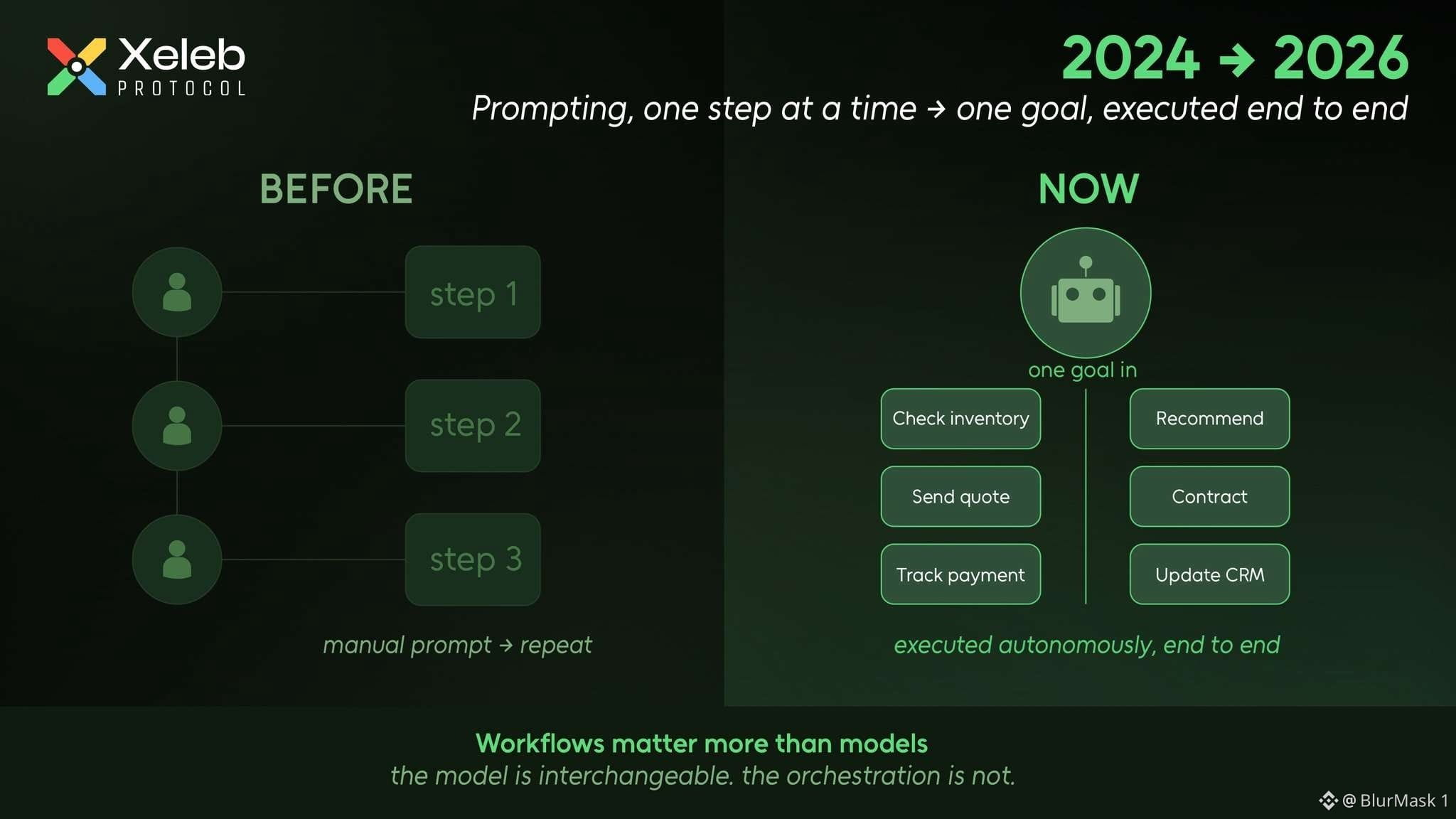
The sales agent example makes it concrete. It no longer just answers questions. It checks inventory, recommends a product, generates a quote, sends a contract, tracks payment, and updates the CRM. End to end. Autonomously. No one steering it through each step.
And the lesson from Google Cloud, Microsoft, and a16z points to the same conclusion, workflows matter more than models.
The model you use is almost interchangeable at this point. Most frontier models are capable enough. The orchestration layer, how the agent decomposes goals, sequences actions, handles failures, and coordinates with other agents is what actually determines whether the system delivers real value or just impressive output.
This is the shift most builders are still underestimating. The competitive edge stopped being about which model you chose. It became about how well you designed the workflow around it.
@xeleb_protocol keeps pushing the AI agent conversation to exactly the right place.
#XelebProtocol #AIAgents #BNBChain
$BNB $XCX $ANSEM
The Era of Prompt Engineering Is Ending. Here's What's Replacing It.
For the past two years, getting good results from AI meant one thing, writing better prompts. More detail, more context, more hand-holding through every step. But that model is breaking down in 2026.
What's replacing it is agentic workflow.
Instead of answering one question at a time, agents now decompose a complex goal, reason through each step, connect to tools and other agents, and execute the full process without a human prompting every move.
The sales agent example makes it concrete. It no longer just answers questions. It checks inventory, recommends a product, generates a quote, sends a contract, tracks payment, and updates the CRM. End to end. Autonomously. No one steering it through each step.
And the lesson from Google Cloud, Microsoft, and a16z points to the same conclusion, workflows matter more than models.
The model you use is almost interchangeable at this point. Most frontier models are capable enough. The orchestration layer, how the agent decomposes goals, sequences actions, handles failures, and coordinates with other agents is what actually determines whether the system delivers real value or just impressive output.
This is the shift most builders are still underestimating. The competitive edge stopped being about which model you chose. It became about how well you designed the workflow around it.
@xeleb_protocol keeps pushing the AI agent conversation to exactly the right place.
#XelebProtocol #AIAgents #BNBChain
$BNB $XCX $ANSEM
For the past two years, getting good results from AI meant one thing, writing better prompts. More detail, more context, more hand-holding through every step. But that model is breaking down in 2026.
What's replacing it is agentic workflow.
Instead of answering one question at a time, agents now decompose a complex goal, reason through each step, connect to tools and other agents, and execute the full process without a human prompting every move.
The sales agent example makes it concrete. It no longer just answers questions. It checks inventory, recommends a product, generates a quote, sends a contract, tracks payment, and updates the CRM. End to end. Autonomously. No one steering it through each step.
And the lesson from Google Cloud, Microsoft, and a16z points to the same conclusion, workflows matter more than models.
The model you use is almost interchangeable at this point. Most frontier models are capable enough. The orchestration layer, how the agent decomposes goals, sequences actions, handles failures, and coordinates with other agents is what actually determines whether the system delivers real value or just impressive output.
This is the shift most builders are still underestimating. The competitive edge stopped being about which model you chose. It became about how well you designed the workflow around it.
@xeleb_protocol keeps pushing the AI agent conversation to exactly the right place.
#XelebProtocol #AIAgents #BNBChain
$BNB $XCX $ANSEM
73
·
--
Control Is the Biggest Bottleneck Nobody Sees Coming in Al Agents.
AUTONOMY is the part that gets applause, while OBSERVABILITY is the part that gets ignored until an agent makes a decision that costs someone something real and there's no trail explaining why.
CAPABILITY earns the demo.
TRACEABILITY earns the trust that lets it actually scale.
Xeleb.io | #XelebProtocol #AIAgents #BNBChain $DEXE $BNB
Control Is the Biggest Bottleneck Nobody Sees Coming in Al Agents.
AUTONOMY is the part that gets applause, while OBSERVABILITY is the part that gets ignored until an agent makes a decision that costs someone something real and there's no trail explaining why.
CAPABILITY earns the demo.
TRACEABILITY earns the trust that lets it actually scale.
Xeleb.io | #XelebProtocol #AIAgents #BNBChain $DEXE $BNB
AUTONOMY is the part that gets applause, while OBSERVABILITY is the part that gets ignored until an agent makes a decision that costs someone something real and there's no trail explaining why.
CAPABILITY earns the demo.
TRACEABILITY earns the trust that lets it actually scale.
Xeleb.io | #XelebProtocol #AIAgents #BNBChain $DEXE $BNB

52
·
--
Control Is the Bottleneck Nobody Sees Coming in AI Agents.
Autonomy is the part that gets applause. Observability is the part that gets ignored until an agent makes a decision that costs someone something real and there's no trail explaining why.
Capability earns the demo.
Traceability earns the trust that lets it actually scale.
#XelebProtocol #AIAgents #BNBChain $BNB $BASE $SOL
Control Is the Bottleneck Nobody Sees Coming in AI Agents.
Autonomy is the part that gets applause. Observability is the part that gets ignored until an agent makes a decision that costs someone something real and there's no trail explaining why.
Capability earns the demo.
Traceability earns the trust that lets it actually scale.
#XelebProtocol #AIAgents #BNBChain $BNB $BASE $SOL
Autonomy is the part that gets applause. Observability is the part that gets ignored until an agent makes a decision that costs someone something real and there's no trail explaining why.
Capability earns the demo.
Traceability earns the trust that lets it actually scale.
#XelebProtocol #AIAgents #BNBChain $BNB $BASE $SOL

83
·
--
We've Been Thinking About Agent Identity Wrong.
We treat it as a wallet address with a personality attached. A name, some transaction history, maybe a profile. That's where our thinking stops. But identity doesn't actually work that way, not for humans, and not for agents either.
You don't experience your own memory as separate folders. A conversation, a voice note, a document, or an image, it all blends into one continuous sense of context. That's what makes you recognizably *you* across every interaction.
Multimodal embedding models are starting to give agents exactly that.
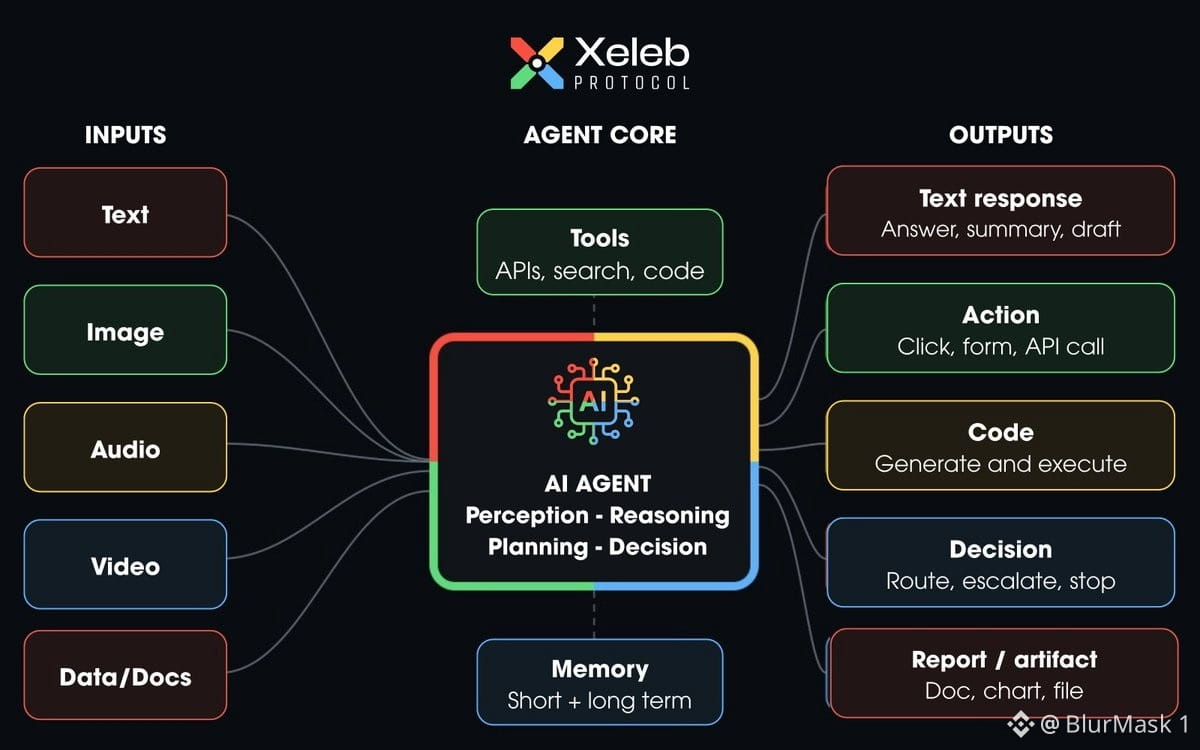
Instead of treating text, images, audio, and video as separate pipelines, these models map everything into the same meaning-based space. A voice note and a transaction log become part of the same continuous context.
An agent would be defined by a consistent pattern of behavior across everything it has ever seen, heard, and done. And that pattern is much harder to fake than a username. It's closer to a fingerprint than a login.
This is the infrastructure layer we overlook because it doesn't trend. But memory, trust, reputation, and verification all trace back to whether an agent's identity is real and continuous or just a label.
Shout-out to @xeleb_protocol for this 🗣
#XelebProtocol #AIAgents #BNBChain
$HYPE $BNB
We've Been Thinking About Agent Identity Wrong.
We treat it as a wallet address with a personality attached. A name, some transaction history, maybe a profile. That's where our thinking stops. But identity doesn't actually work that way, not for humans, and not for agents either.
You don't experience your own memory as separate folders. A conversation, a voice note, a document, or an image, it all blends into one continuous sense of context. That's what makes you recognizably *you* across every interaction.
Multimodal embedding models are starting to give agents exactly that.
Instead of treating text, images, audio, and video as separate pipelines, these models map everything into the same meaning-based space. A voice note and a transaction log become part of the same continuous context.
An agent would be defined by a consistent pattern of behavior across everything it has ever seen, heard, and done. And that pattern is much harder to fake than a username. It's closer to a fingerprint than a login.
This is the infrastructure layer we overlook because it doesn't trend. But memory, trust, reputation, and verification all trace back to whether an agent's identity is real and continuous or just a label.
Shout-out to @xeleb_protocol for this 🗣
#XelebProtocol #AIAgents #BNBChain
$HYPE $BNB
We treat it as a wallet address with a personality attached. A name, some transaction history, maybe a profile. That's where our thinking stops. But identity doesn't actually work that way, not for humans, and not for agents either.
You don't experience your own memory as separate folders. A conversation, a voice note, a document, or an image, it all blends into one continuous sense of context. That's what makes you recognizably *you* across every interaction.
Multimodal embedding models are starting to give agents exactly that.
Instead of treating text, images, audio, and video as separate pipelines, these models map everything into the same meaning-based space. A voice note and a transaction log become part of the same continuous context.
An agent would be defined by a consistent pattern of behavior across everything it has ever seen, heard, and done. And that pattern is much harder to fake than a username. It's closer to a fingerprint than a login.
This is the infrastructure layer we overlook because it doesn't trend. But memory, trust, reputation, and verification all trace back to whether an agent's identity is real and continuous or just a label.
Shout-out to @xeleb_protocol for this 🗣
#XelebProtocol #AIAgents #BNBChain
$HYPE $BNB
64
·
--
Most Teams Building AI Agents Are Optimizing the Wrong Layer
Everyone's swapping models from GPT-4, Claude, Gemini, and came back again chasing a reasoning bump that moves the needle maybe 5-8%. Meanwhile the real problems sit elsewhere.
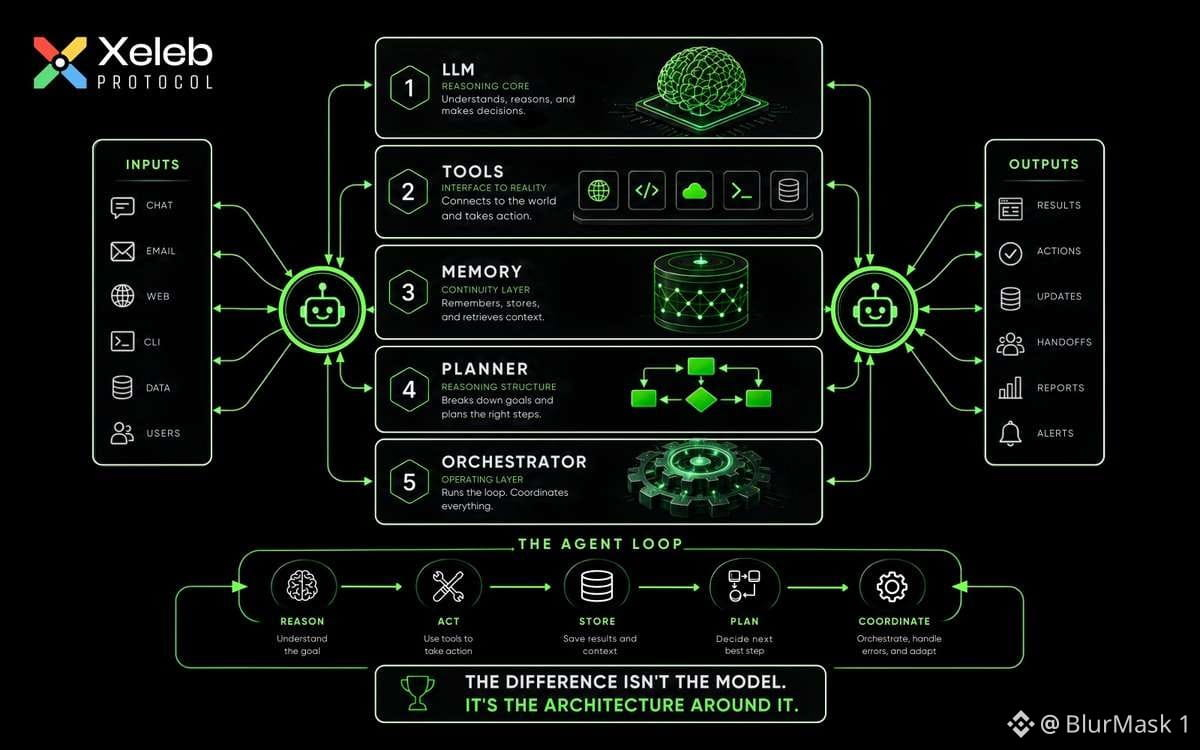
Memory resets every session. The planner breaks when conditions shift mid-task. The orchestrator has no real error recovery when something fails three steps in.
The model is the part everyone sees and the part that matters least once you've crossed a basic capability threshold. Most teams crossed that threshold months ago without noticing. The reasoning is good enough but the architecture around it isn't.
What separates agents running reliably in production from agents that looked great in a demo isn't model choice. It's whether the agent remembers what it learned last week, recovers when a tool call fails mid-task, and coordinates cleanly when multiple agents work the same problem.
To answer @xeleb_protocol's question directly, memory is the most underbuilt layer in almost every agent stack today. Most treat it as an afterthought. The agents that compound in value treat it as the foundation everything else sits on.
#AIAgents #BNBChain #Xeleb $BEAT $BNB
Most Teams Building AI Agents Are Optimizing the Wrong Layer
Everyone's swapping models from GPT-4, Claude, Gemini, and came back again chasing a reasoning bump that moves the needle maybe 5-8%. Meanwhile the real problems sit elsewhere.
Memory resets every session. The planner breaks when conditions shift mid-task. The orchestrator has no real error recovery when something fails three steps in.
The model is the part everyone sees and the part that matters least once you've crossed a basic capability threshold. Most teams crossed that threshold months ago without noticing. The reasoning is good enough but the architecture around it isn't.
What separates agents running reliably in production from agents that looked great in a demo isn't model choice. It's whether the agent remembers what it learned last week, recovers when a tool call fails mid-task, and coordinates cleanly when multiple agents work the same problem.
To answer @xeleb_protocol's question directly, memory is the most underbuilt layer in almost every agent stack today. Most treat it as an afterthought. The agents that compound in value treat it as the foundation everything else sits on.
#AIAgents #BNBChain #Xeleb $BEAT $BNB
Everyone's swapping models from GPT-4, Claude, Gemini, and came back again chasing a reasoning bump that moves the needle maybe 5-8%. Meanwhile the real problems sit elsewhere.
Memory resets every session. The planner breaks when conditions shift mid-task. The orchestrator has no real error recovery when something fails three steps in.
The model is the part everyone sees and the part that matters least once you've crossed a basic capability threshold. Most teams crossed that threshold months ago without noticing. The reasoning is good enough but the architecture around it isn't.
What separates agents running reliably in production from agents that looked great in a demo isn't model choice. It's whether the agent remembers what it learned last week, recovers when a tool call fails mid-task, and coordinates cleanly when multiple agents work the same problem.
To answer @xeleb_protocol's question directly, memory is the most underbuilt layer in almost every agent stack today. Most treat it as an afterthought. The agents that compound in value treat it as the foundation everything else sits on.
#AIAgents #BNBChain #Xeleb $BEAT $BNB
65
·
--
Saylor Sold. 0.0038% of the Stack. 100% of the Psychology.
32 Bitcoin. $2.5 million. A market drop, $142M in ETF outflows, and a prediction market resolved in six hours. The math didn't matter. The signal did.
The number is almost laughably small. 32 Bitcoin. $2.5 million. Out of an 843,706 BTC stack worth approximately $61 billion. That is 0.0038% of Strategy's holdings, a rounding error on a rounding error. By any rational financial analysis, this sale changes nothing.
And yet Bitcoin dropped from $76,000 to $72,400 within six hours. IBIT bled $142 million in outflows. Polymarket's long-running prediction market "Will Strategy ever sell Bitcoin?" resolved YES. The math was irrelevant. The psychology was everything.
• 32 BTC Sold - May 26–31
• $72.4K BTC floor within 6 hours
• $142M IBIT outflows same day
Strategy's thesis was never purely financial. It was psychological. The "never sell" stance wasn't just a policy, it was the entire moat. Every institution, every retail holder, every copycat treasury that followed Saylor's lead did so partly because they believed the floor was permanent. That belief created demand that supported prices. The demand didn't come from the Bitcoin. It came from the conviction that the Bitcoin would never come back to market.
The question is is this a controlled, pre-planned dividend mechanism, or one-time move that actually demonstrates discipline. Strategy carries $1.5 billion in annual preferred stock dividend obligations. The math of that obligation doesn't go away. And if selling becomes an accepted tool for managing it, the market will price in future sales permanently.
32 Bitcoin is not a meaningful number in the context of an 843,706 BTC portfolio. But markets don't run on math alone, they run on expectations. And the expectation that Strategy would never sell was priced into every Bitcoin chart, every institutional allocation thesis, and every copycat treasury that followed Saylor's lead since 2020. $BTC
Saylor Sold. 0.0038% of the Stack. 100% of the Psychology.
32 Bitcoin. $2.5 million. A market drop, $142M in ETF outflows, and a prediction market resolved in six hours. The math didn't matter. The signal did.
The number is almost laughably small. 32 Bitcoin. $2.5 million. Out of an 843,706 BTC stack worth approximately $61 billion. That is 0.0038% of Strategy's holdings, a rounding error on a rounding error. By any rational financial analysis, this sale changes nothing.
And yet Bitcoin dropped from $76,000 to $72,400 within six hours. IBIT bled $142 million in outflows. Polymarket's long-running prediction market "Will Strategy ever sell Bitcoin?" resolved YES. The math was irrelevant. The psychology was everything.
• 32 BTC Sold - May 26–31
• $72.4K BTC floor within 6 hours
• $142M IBIT outflows same day
Strategy's thesis was never purely financial. It was psychological. The "never sell" stance wasn't just a policy, it was the entire moat. Every institution, every retail holder, every copycat treasury that followed Saylor's lead did so partly because they believed the floor was permanent. That belief created demand that supported prices. The demand didn't come from the Bitcoin. It came from the conviction that the Bitcoin would never come back to market.
The question is is this a controlled, pre-planned dividend mechanism, or one-time move that actually demonstrates discipline. Strategy carries $1.5 billion in annual preferred stock dividend obligations. The math of that obligation doesn't go away. And if selling becomes an accepted tool for managing it, the market will price in future sales permanently.
32 Bitcoin is not a meaningful number in the context of an 843,706 BTC portfolio. But markets don't run on math alone, they run on expectations. And the expectation that Strategy would never sell was priced into every Bitcoin chart, every institutional allocation thesis, and every copycat treasury that followed Saylor's lead since 2020. $BTC
32 Bitcoin. $2.5 million. A market drop, $142M in ETF outflows, and a prediction market resolved in six hours. The math didn't matter. The signal did.
The number is almost laughably small. 32 Bitcoin. $2.5 million. Out of an 843,706 BTC stack worth approximately $61 billion. That is 0.0038% of Strategy's holdings, a rounding error on a rounding error. By any rational financial analysis, this sale changes nothing.
And yet Bitcoin dropped from $76,000 to $72,400 within six hours. IBIT bled $142 million in outflows. Polymarket's long-running prediction market "Will Strategy ever sell Bitcoin?" resolved YES. The math was irrelevant. The psychology was everything.
• 32 BTC Sold - May 26–31
• $72.4K BTC floor within 6 hours
• $142M IBIT outflows same day
Strategy's thesis was never purely financial. It was psychological. The "never sell" stance wasn't just a policy, it was the entire moat. Every institution, every retail holder, every copycat treasury that followed Saylor's lead did so partly because they believed the floor was permanent. That belief created demand that supported prices. The demand didn't come from the Bitcoin. It came from the conviction that the Bitcoin would never come back to market.
The question is is this a controlled, pre-planned dividend mechanism, or one-time move that actually demonstrates discipline. Strategy carries $1.5 billion in annual preferred stock dividend obligations. The math of that obligation doesn't go away. And if selling becomes an accepted tool for managing it, the market will price in future sales permanently.
32 Bitcoin is not a meaningful number in the context of an 843,706 BTC portfolio. But markets don't run on math alone, they run on expectations. And the expectation that Strategy would never sell was priced into every Bitcoin chart, every institutional allocation thesis, and every copycat treasury that followed Saylor's lead since 2020. $BTC

71
·
--
CONFIRMED: Michael Saylor's 'Strategy' sold 32 $BTC worth $2.5 million.
CONFIRMED: Michael Saylor's 'Strategy' sold 32 $BTC worth $2.5 million.


50
·
--
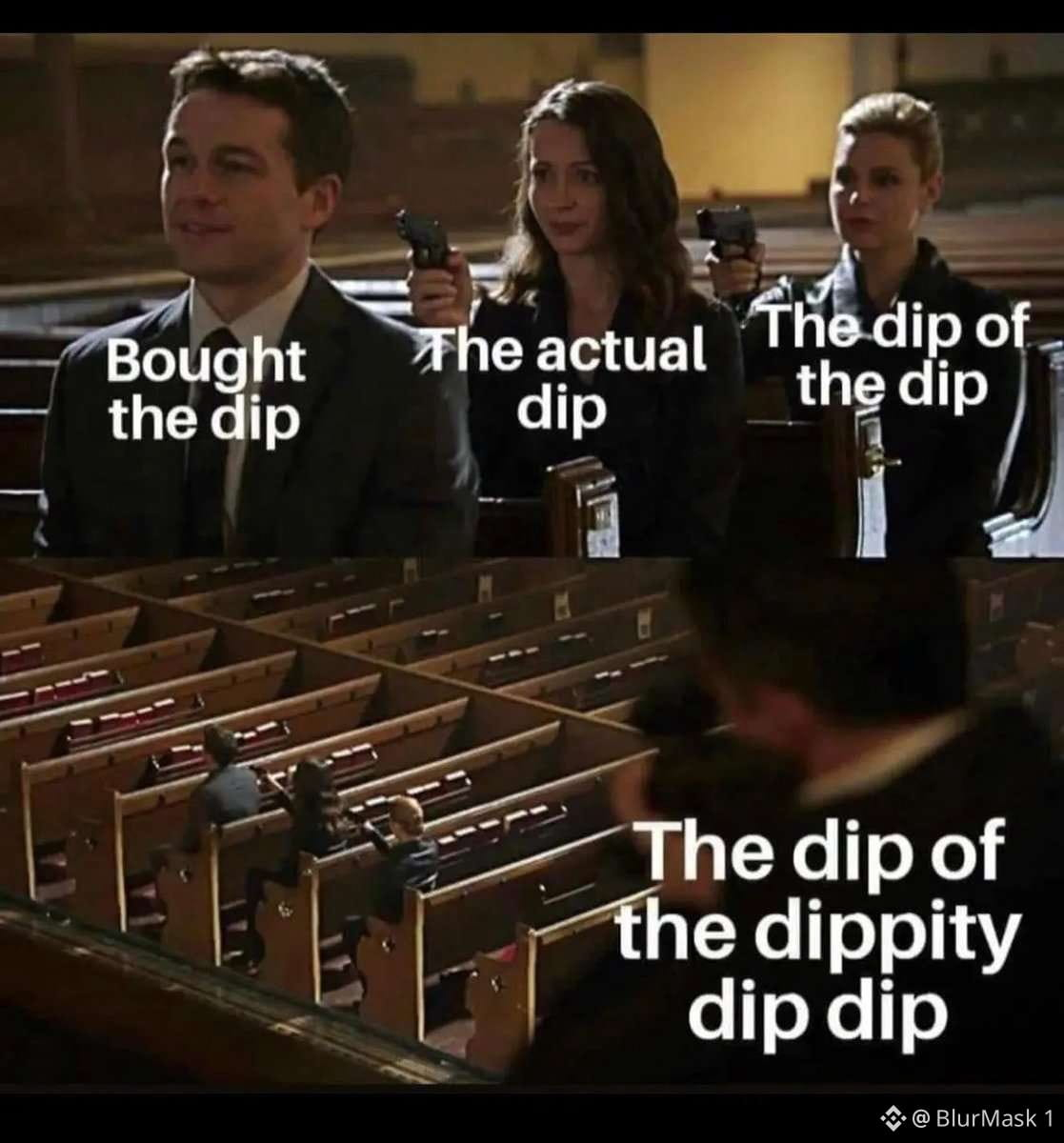
From 60% to 65% chances of $BTC falling below $60k.
The dip keep dipping guys
From 60% to 65% chances of $BTC falling below $60k.
The dip keep dipping guys
The dip keep dipping guys
84
·
--
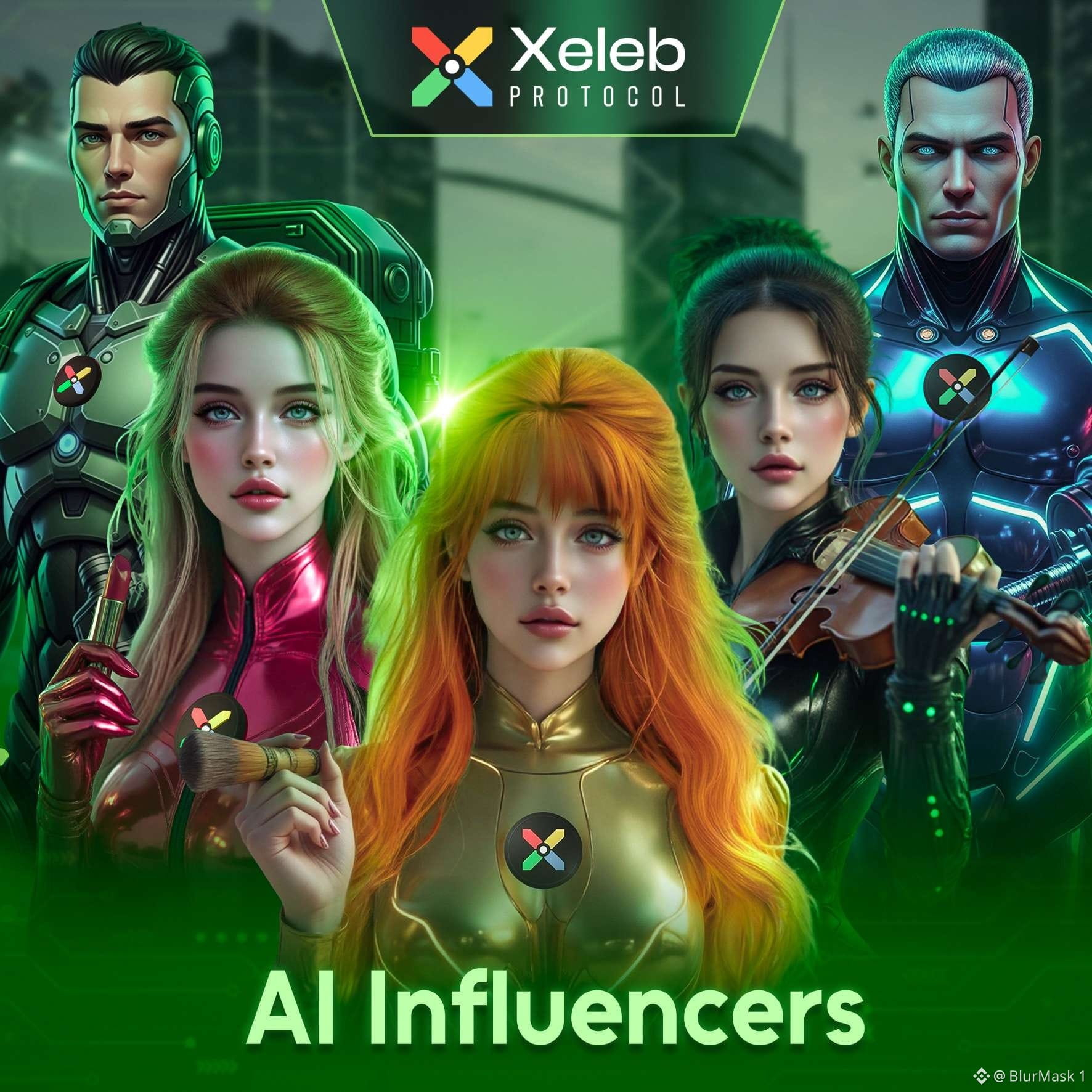
The AI Influencer Race Is Being Run in the Wrong Direction.
Right now, every team building in the creator AI space is optimizing for the same thing, realism. Better faces. More natural speech patterns. Smoother on-camera presence. The assumption is that the closer an AI influencer looks and sounds to a human, the more valuable it becomes.
But that assumption is wrong. And the market will prove it sooner.
Personality gets the initial follow here. It earns the first impression and maybe the first few minutes of attention. But personality alone has never sustained a creator long-term, human or AI. What builds a durable audience is something much harder to manufacture than a convincing face.
It's repeated UTILITY.
The creators who built real communities with audiences that actually convert, show up consistently, and drive real economic activity built them by being genuinely useful. They helped people make decisions. They guided communities through uncertainty. They delivered something worth returning for, every single time.
That's the exact standard AI influencers will eventually be held to. Not how real they look. But how useful they actually are to the people following them.
Can the agent help someone choose a product they'll actually like? Can it guide a community through a market shift? Can it deliver personalized recommendations that feel earned rather than algorithmic? Can it build the kind of trust over time that turns a follower into a participant?
Those are the metrics that matter.
That's the gap. And it's a significant one.
The future of AI influence isn't an agent that looks like a creator. It's one that functions like one, consistently, reliably, and with genuine value flowing back to the audience it serves.
The face was never the moat.
The function always was.
🔗 Xeleb.io #XCX #XelebProtocol #AIagents $BNB
The AI Influencer Race Is Being Run in the Wrong Direction.
Right now, every team building in the creator AI space is optimizing for the same thing, realism. Better faces. More natural speech patterns. Smoother on-camera presence. The assumption is that the closer an AI influencer looks and sounds to a human, the more valuable it becomes.
But that assumption is wrong. And the market will prove it sooner.
Personality gets the initial follow here. It earns the first impression and maybe the first few minutes of attention. But personality alone has never sustained a creator long-term, human or AI. What builds a durable audience is something much harder to manufacture than a convincing face.
It's repeated UTILITY.
The creators who built real communities with audiences that actually convert, show up consistently, and drive real economic activity built them by being genuinely useful. They helped people make decisions. They guided communities through uncertainty. They delivered something worth returning for, every single time.
That's the exact standard AI influencers will eventually be held to. Not how real they look. But how useful they actually are to the people following them.
Can the agent help someone choose a product they'll actually like? Can it guide a community through a market shift? Can it deliver personalized recommendations that feel earned rather than algorithmic? Can it build the kind of trust over time that turns a follower into a participant?
Those are the metrics that matter.
That's the gap. And it's a significant one.
The future of AI influence isn't an agent that looks like a creator. It's one that functions like one, consistently, reliably, and with genuine value flowing back to the audience it serves.
The face was never the moat.
The function always was.
🔗 Xeleb.io #XCX #XelebProtocol #AIagents $BNB
Right now, every team building in the creator AI space is optimizing for the same thing, realism. Better faces. More natural speech patterns. Smoother on-camera presence. The assumption is that the closer an AI influencer looks and sounds to a human, the more valuable it becomes.
But that assumption is wrong. And the market will prove it sooner.
Personality gets the initial follow here. It earns the first impression and maybe the first few minutes of attention. But personality alone has never sustained a creator long-term, human or AI. What builds a durable audience is something much harder to manufacture than a convincing face.
It's repeated UTILITY.
The creators who built real communities with audiences that actually convert, show up consistently, and drive real economic activity built them by being genuinely useful. They helped people make decisions. They guided communities through uncertainty. They delivered something worth returning for, every single time.
That's the exact standard AI influencers will eventually be held to. Not how real they look. But how useful they actually are to the people following them.
Can the agent help someone choose a product they'll actually like? Can it guide a community through a market shift? Can it deliver personalized recommendations that feel earned rather than algorithmic? Can it build the kind of trust over time that turns a follower into a participant?
Those are the metrics that matter.
That's the gap. And it's a significant one.
The future of AI influence isn't an agent that looks like a creator. It's one that functions like one, consistently, reliably, and with genuine value flowing back to the audience it serves.
The face was never the moat.
The function always was.
🔗 Xeleb.io #XCX #XelebProtocol #AIagents $BNB
1
182
·
--
The Agentic AI Market Just Crossed a Threshold Most People Missed.
The signal wasn't a model release. It wasn't a benchmark. It wasn't a viral demo. It was a language change.
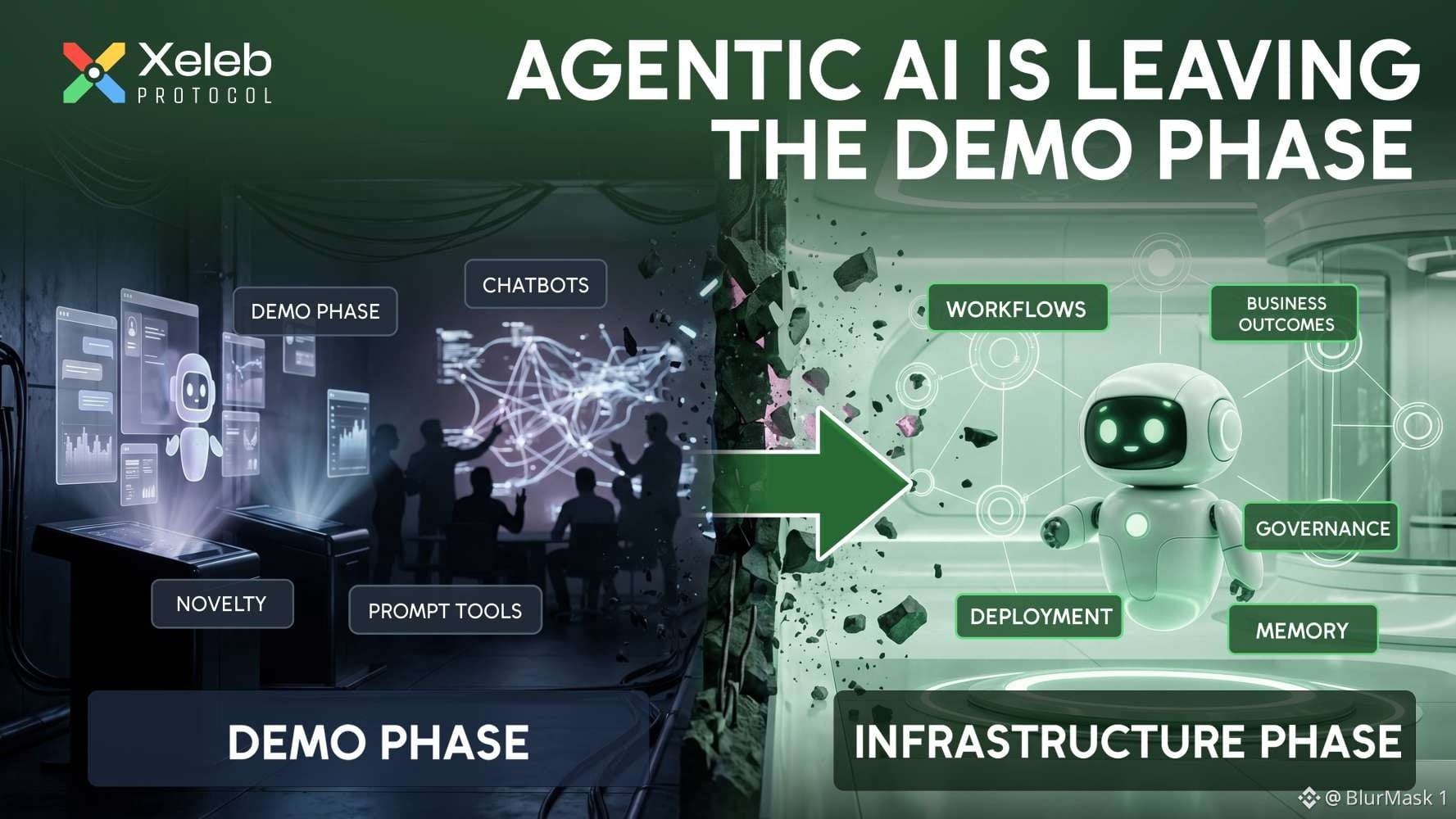
Twelve months ago, every conversation about AI agents centered on capability. What they could generate. How fast they could respond. How impressive the output looked in a controlled setting. That language dominated the space because we were still in the demo phase, and in the demo phase, capability is everything.
That language has shifted. Quietly but unmistakably
The conversations happening at the enterprise level today are about memory management, permission structures, deployment environments, monitoring frameworks, and outcome accountability. Not "look what it can do" but "how does it behave when it's running inside our real systems with real consequences." That shift matters more than any product announcement.
When a market stops being impressed and starts asking operational questions, it means buyer expectations have evolved past the novelty stage. It means the people writing the actual checks are no longer evaluating prototypes. They're evaluating infrastructure. And infrastructure gets held to a completely different standard than a demo, one built around reliability, auditability, and consistent performance under real-world conditions.
Agentic AI is moving from impressive outputs to operational usefulness. That is a significantly harder game. The companies that built for the demo phase will struggle. The ones that built for the infrastructure phase are just getting started.
Shout-out to @xeleb_protocol for consistently pushing the agentic AI conversation to where it actually matters, not capability in isolation, but reliable operation with real identity, real accountability, and real economic presence on-chain.
That's the conversation worth having in 2026.
#XCX #XelebProtocol #AIagents $BTC $BNB
The Agentic AI Market Just Crossed a Threshold Most People Missed.
The signal wasn't a model release. It wasn't a benchmark. It wasn't a viral demo. It was a language change.
Twelve months ago, every conversation about AI agents centered on capability. What they could generate. How fast they could respond. How impressive the output looked in a controlled setting. That language dominated the space because we were still in the demo phase, and in the demo phase, capability is everything.
That language has shifted. Quietly but unmistakably
The conversations happening at the enterprise level today are about memory management, permission structures, deployment environments, monitoring frameworks, and outcome accountability. Not "look what it can do" but "how does it behave when it's running inside our real systems with real consequences." That shift matters more than any product announcement.
When a market stops being impressed and starts asking operational questions, it means buyer expectations have evolved past the novelty stage. It means the people writing the actual checks are no longer evaluating prototypes. They're evaluating infrastructure. And infrastructure gets held to a completely different standard than a demo, one built around reliability, auditability, and consistent performance under real-world conditions.
Agentic AI is moving from impressive outputs to operational usefulness. That is a significantly harder game. The companies that built for the demo phase will struggle. The ones that built for the infrastructure phase are just getting started.
Shout-out to @xeleb_protocol for consistently pushing the agentic AI conversation to where it actually matters, not capability in isolation, but reliable operation with real identity, real accountability, and real economic presence on-chain.
That's the conversation worth having in 2026.
#XCX #XelebProtocol #AIagents $BTC $BNB
The signal wasn't a model release. It wasn't a benchmark. It wasn't a viral demo. It was a language change.
Twelve months ago, every conversation about AI agents centered on capability. What they could generate. How fast they could respond. How impressive the output looked in a controlled setting. That language dominated the space because we were still in the demo phase, and in the demo phase, capability is everything.
That language has shifted. Quietly but unmistakably
The conversations happening at the enterprise level today are about memory management, permission structures, deployment environments, monitoring frameworks, and outcome accountability. Not "look what it can do" but "how does it behave when it's running inside our real systems with real consequences." That shift matters more than any product announcement.
When a market stops being impressed and starts asking operational questions, it means buyer expectations have evolved past the novelty stage. It means the people writing the actual checks are no longer evaluating prototypes. They're evaluating infrastructure. And infrastructure gets held to a completely different standard than a demo, one built around reliability, auditability, and consistent performance under real-world conditions.
Agentic AI is moving from impressive outputs to operational usefulness. That is a significantly harder game. The companies that built for the demo phase will struggle. The ones that built for the infrastructure phase are just getting started.
Shout-out to @xeleb_protocol for consistently pushing the agentic AI conversation to where it actually matters, not capability in isolation, but reliable operation with real identity, real accountability, and real economic presence on-chain.
That's the conversation worth having in 2026.
#XCX #XelebProtocol #AIagents $BTC $BNB
58
Log in to explore more content
Join global crypto users on Binance Square
⚡️ Get latest and useful information about crypto.
💬 Trusted by the world’s largest crypto exchange.
👍 Discover real insights from verified creators.
Email / Phone number
Trending Topics
AIStocksWhatNext
233,044 views
2,414 Discussing
Share & Win Traffic Reward in our Trending Hashtag Campaign
✨Topic: What Other Investment Opportunities Remain as AI Stocks Keep Rising?
👉How to Join:
Publish a short post or article with hashtag #AIStocksWhatNext
Share whether you’re bullish or bearish, and post your AI stock holdings or trade — using the trade widget may improve your eligibility.
You can also strengthen your post by sharing data or charts, and avoiding AI-generated images.
✍️Create content based on the below angles:
- Nvidia says chip sales will double next year, and top AI companies keep hitting record revenue, the compute spend behind it is just as staggering. Is AI demand really taking off? And how long can it last? AI stocks are up across the board. Is this a real breakout, or just a short-term bounce?
- Industry leaders are calling to slow down AI development, while Trump plans to build an “AI Force”, claiming AI could account for 25% of U.S. GDP in the future. Whose side are you on? Will state-level backing be a long-term win for AI stocks?
- Are you buying AI stocks? Share your AI-related trade/holdings with our trade sharing widget.
⏰Campaign Period:
- 2026-09-22 7:00 - 2026-09-24 4:00 UTC
🎁Reward:
- Qualified posts that comply with the above guidelines and contain more than 100 words will be reviewed and may receive a random traffic boost of 500 to 3,000 views. You will receive a notification from your feed secretary if your post is selected.
- Get a chance to have your article featured on Binance Square Official
Need ideas for your post? Visit the topic page #AIStocksWhatNext or the Square Guide on How to Post for Better Reach.
Binance Square Official
·311 Likes
·682.9k views
BitcoinBreaksAboveMayHighNears$86K
8,170 views
138 Discussing
DogecoinRises15%
20,652 views
730 Discussing