
CryptoAnonym
37 Posts

CryptoAnonym
Report
Block User
11 Following
37 Followers
102 Liked
Posts
Portfolio
·
--
Hybrid portfolio: what a modern asset allocation looks like
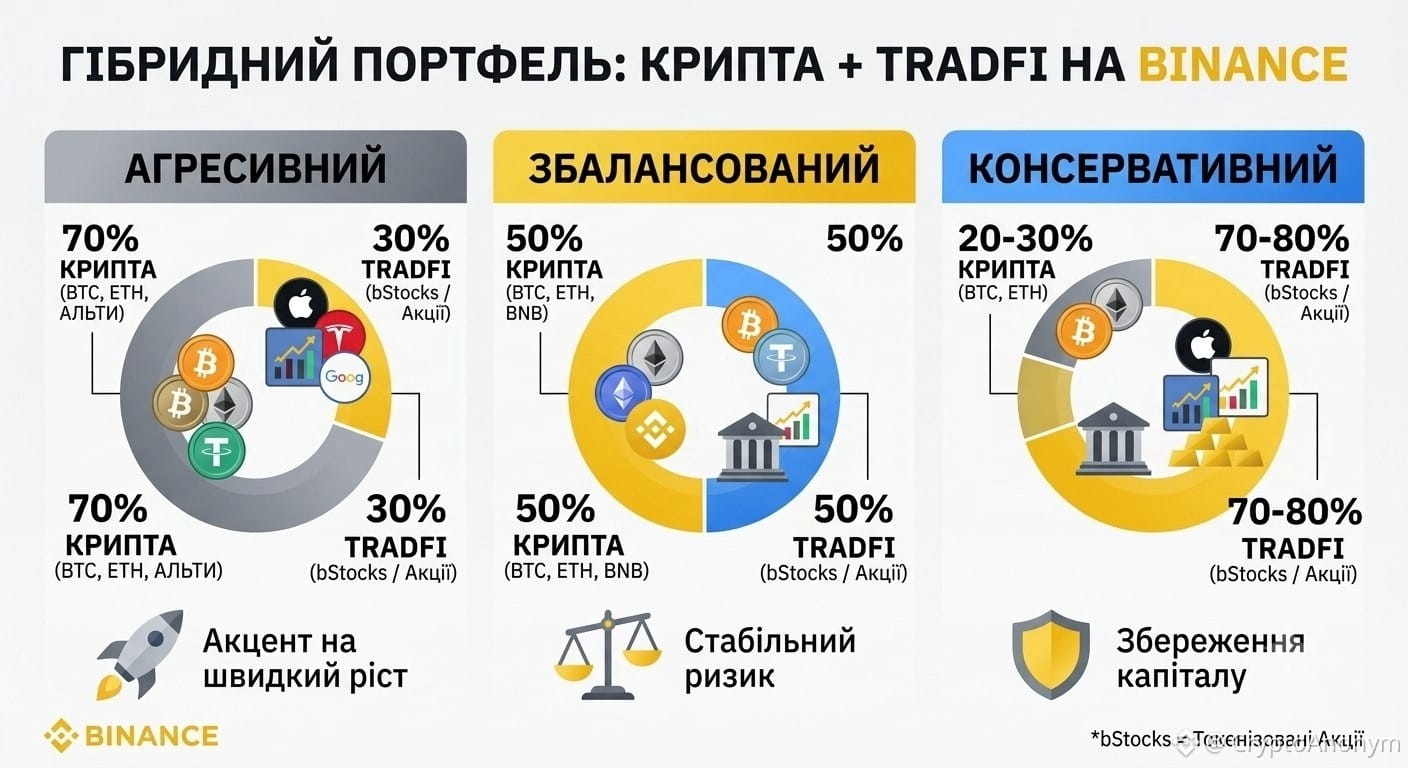
Forget the classic “only crypto” or “only stocks.” The future belongs to hybrid portfolios. Binance tools (TradFi, bStocks) make creating such a portfolio a matter of just a few minutes.
Which allocation should you choose?
It depends on your risk appetite:
Aggressive: 70% crypto (BTC, ETH, altcoins) / 30% TradFi (stocks via bStocks). Focus on fast growth, with TradFi serving only as a small hedge.
Balanced: 50% crypto / 50% TradFi. The best option for mid-term investing with a stable risk level.
Conservative: 20–30% crypto (mainly fundamental coins) / 70–80% TradFi. Suitable for large capital where the main goal is preservation and protection from inflation, with a small bonus from the crypto market.
Which strategy is closest to your investing style?
1
249
·
--
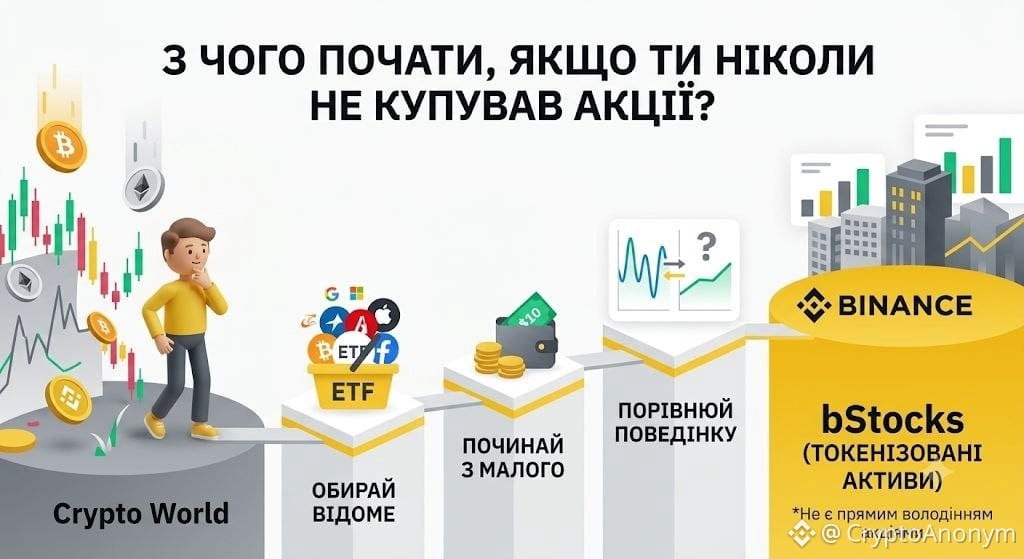
Where to start if you've never bought stocks?
If you came to Binance from crypto, the stock market at first can look complicated.
Stocks, ETFs, indexes, company reports… Where do you even start?
I wouldn’t begin with a large amount.
Here’s a simple algorithm:
1. Choose what you understand
You don’t necessarily have to look for an unknown company right away. For your first introduction, you can consider a large company or an ETF if it’s available in your region.
2. Start with a small amount
You don’t need to move a significant part of your portfolio right away.
Take an amount that you’re comfortable with—so you can see both the potential profit and the drawdown.
3. Compare behavior
Watch how this asset moves during market dips and during growth in the crypto market.
You’ll quickly see the main point: stocks and crypto can react to the same events in completely different ways.
And this is where bStocks can be interesting for a crypto investor: they give access to tokenized securities right within the Binance ecosystem. At the same time, it’s important to remember—bStocks are not direct ownership of stocks and do not grant shareholder rights.
You don’t need to become a market expert right away.
Start with a small amount, figure out how the tool works, and only then decide whether it suits you.
1
141
·
--
"The best protection against ""crypto winter"" ❄️
The bear market sooner or later arrives, and then most crypto portfolios show sad downsides. How can you protect your deposit from deep drawdowns?
The answer is asset correlation. Most cryptocurrencies move following Bitcoin. If it falls, everything falls. But traditional markets (TradFi) often have negative or zero correlation with crypto.
When you add bStocks instruments (stocks, indices) to your portfolio, you create balance. Even if the crypto market dips, your traditional assets keep working, supported by the real economy, companies’ quarterly reports, and global macroeconomic factors.
Don’t keep all your eggs in one basket. Diversification is not just a word—it’s your financial shield."
1
104
·
--
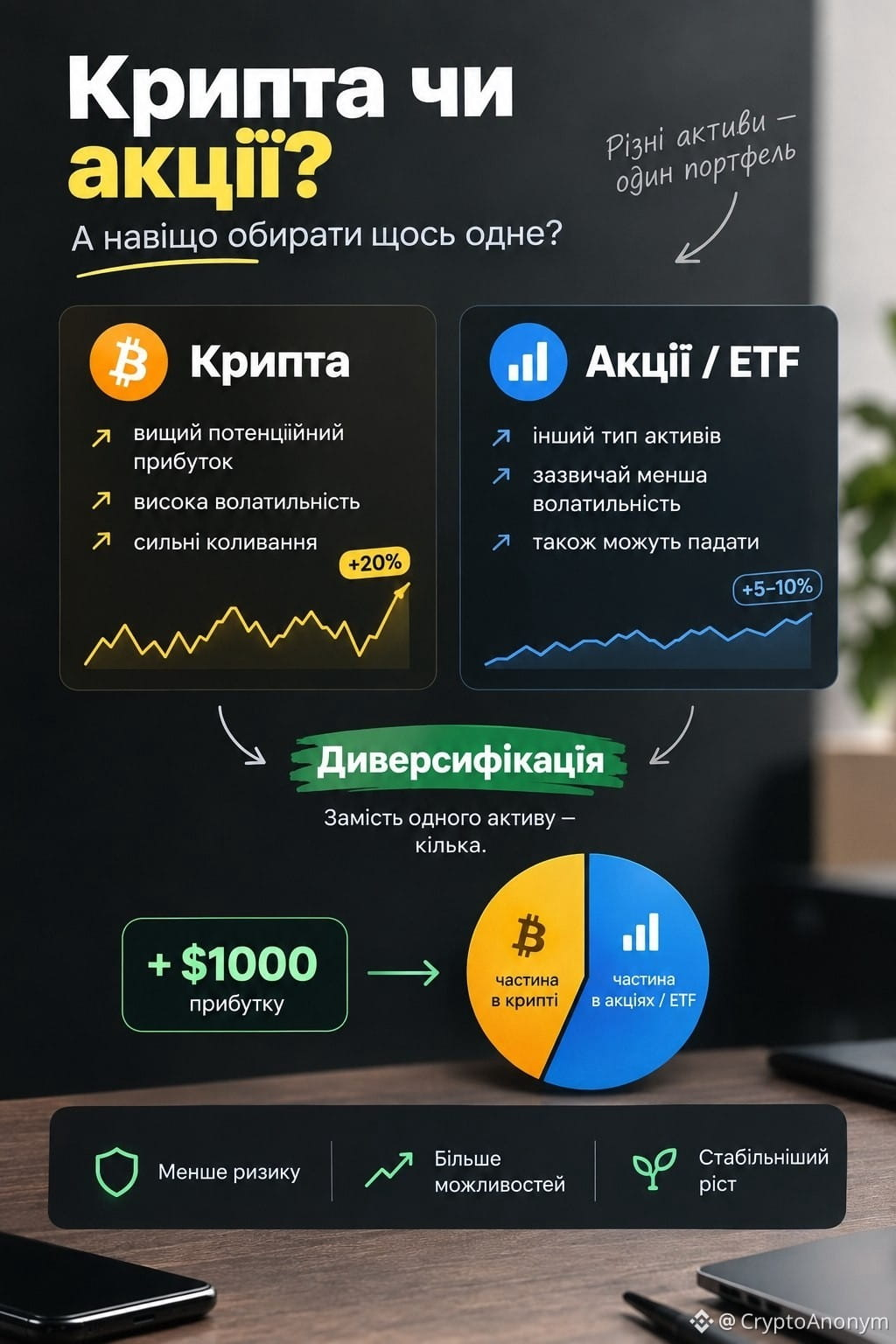
Crypto or stocks?
Why choose only one at all?
If you’re used to crypto, the stock market can seem very slow.
In crypto, a coin can easily grow by 20% in a day—and then fall just as quickly.
Stocks usually have different dynamics. Price movements are often calmer, but that doesn’t mean they’re risk-free. That’s why I started looking at them not as competitors, but as different parts of the same portfolio.
In other words:
CRYPTO
→ higher potential profit
→ higher volatility
→ bigger swings
STOCKS / ETF
→ a different type of asset
→ usually lower volatility than many crypto assets
→ they can still drop significantly
And now the most interesting part.
Let’s say your crypto portfolio grew by $1000.
Instead of leaving all the profit in the same risky asset, you can lock in part of it and move it into other assets.
For example:
$1000 profit
↓
part stays in crypto
+
part → stocks / ETF via bStocks
So the point isn’t that “stocks are safe and crypto is dangerous.”
It’s not about guessing when the drop will start, either.
The point is diversification: not keeping all your capital dependent on just one type of asset.
1
532
·
--
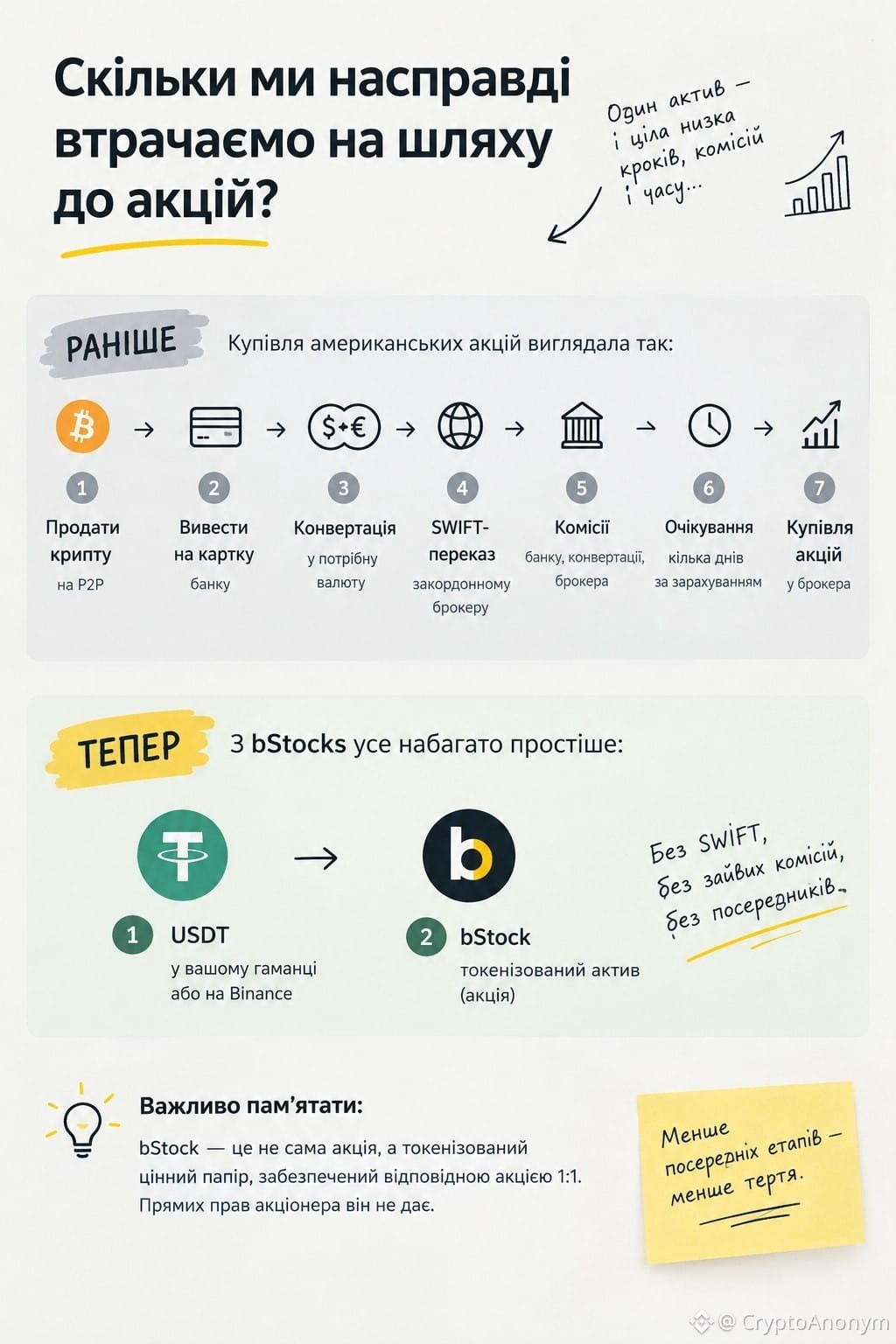
How much do we really lose on the way to shares?
Previously, buying US stocks looked something like this for me:
crypto → P2P → bank card → conversion → SWIFT → broker → waiting for settlement.
And even if each individual step doesn’t seem too scary on its own, together they add up to extra fees, time, and a few points where something can go wrong.
bStocks changed exactly this part of the process for me.
Now the logic is much simpler:
USDT → bStock.
No separate transfer of funds to a broker. bStocks are traded on Binance Spot, and Binance also supports their conversion and trading within the crypto ecosystem.
At the same time, it’s important to understand the difference: bStock isn’t the stock itself, but a tokenized security backed by the corresponding stock 1:1. It doesn’t grant direct shareholder rights.
For me, the biggest advantage here isn’t even the technology itself.
It’s that the path from crypto capital to exposure to US stocks has become significantly shorter.
Fewer intermediaries—less friction.
2
517
·
--
Why smart money is erasing the line between crypto and Wall Street?
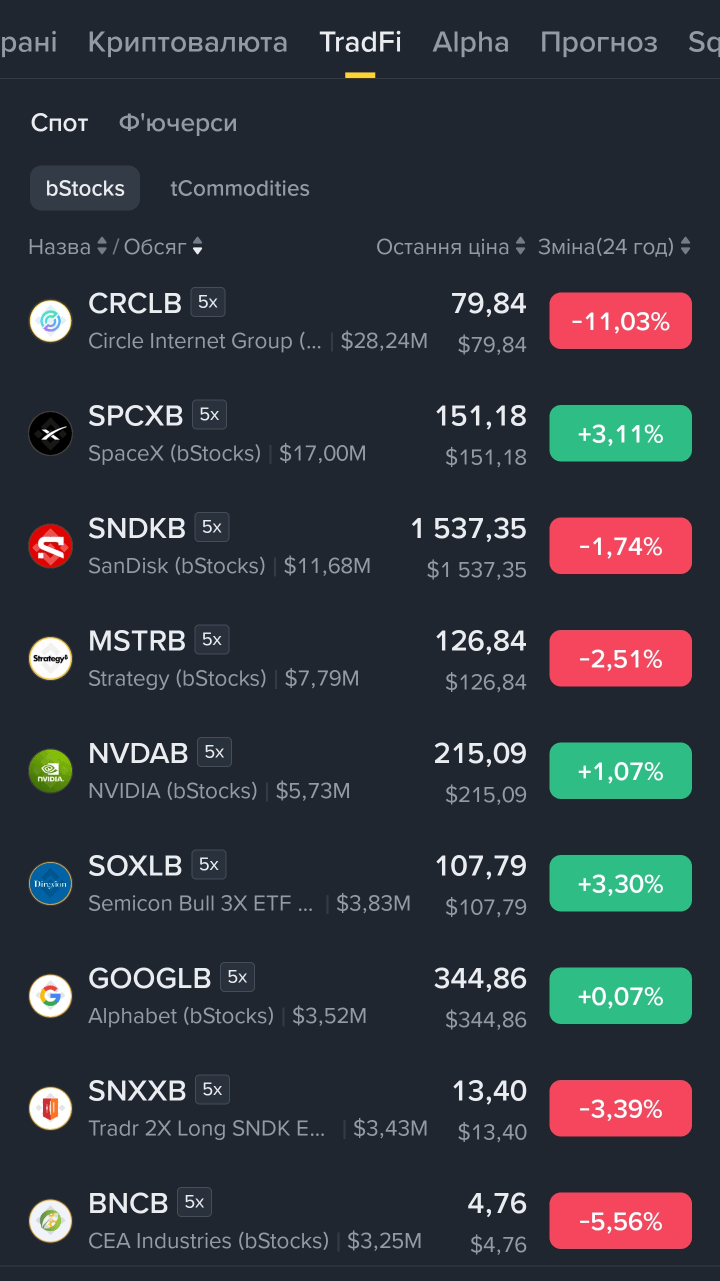
The era when crypto traders and traditional investors were enemies is officially over. The main market trend this year is the tokenization of real-world assets (RWA) and the convergence of TradFi with DeFi.
What does this mean for us, everyday users? We no longer need to pick sides. Binance is expanding its product lineup (such as bStocks) so we can move liquidity from Bitcoin directly into shares of tech giants or into indices, without ever leaving fiat.
This liquidity is now creating an entirely new type of market. If you’re still ignoring traditional financial instruments while holding crypto, you’re simply cutting yourself off from half of your maneuvering options. Watch the macroeconomy—it runs the markets.
1
130
·
--
Why bStocks break crypto’s main rule
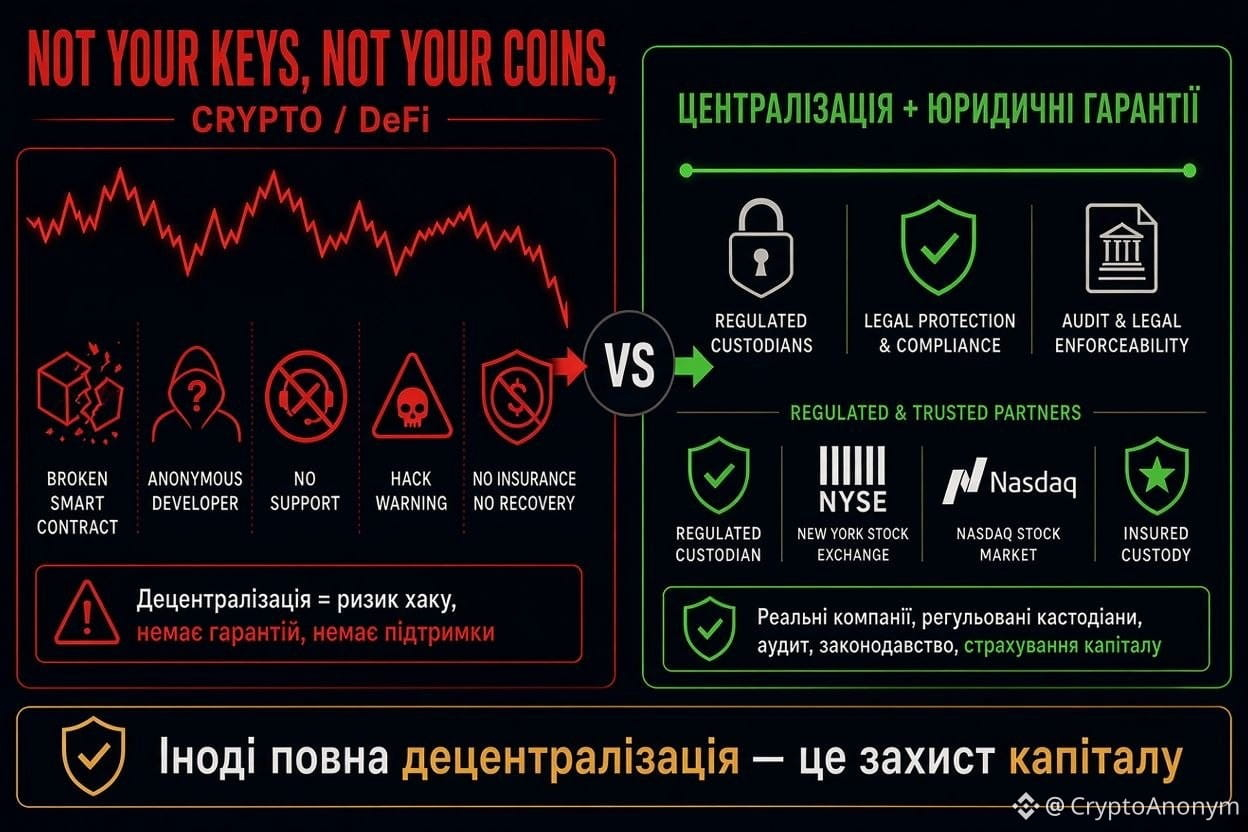
In Web3, we’re taught a basic principle: “Not your keys, not your coins.” We’re used to trusting only decentralized smart contracts where there are no admins and no third parties. It seems that any centralized asset is a step back.
But bStocks deliberately break this rule—and that’s their main strength.
They are fully centralized. Real companies are behind them: traditional exchanges (NYSE, NASDAQ) and regulated European custodians. In this system, you place full trust in the intermediary.
Why is this “flaw” actually an advantage?
Because a decentralized smart contract can be hacked, and you’ll have no one to return your money. In DeFi, there’s no customer support or deposit insurance.
With bStocks, you trade crypto anarchy for boring—but rock-solid—legal guarantees. The custodian’s activities are strictly audited by regulators. If something goes wrong, your asset is backed by real legislation—not an anonymous developer.
Sometimes full centralization and legal control is exactly what you need to preserve your capital.
#bstockscis @BinanceCIS
1
3
101
·
--
#bstockscis @BinanceCIS
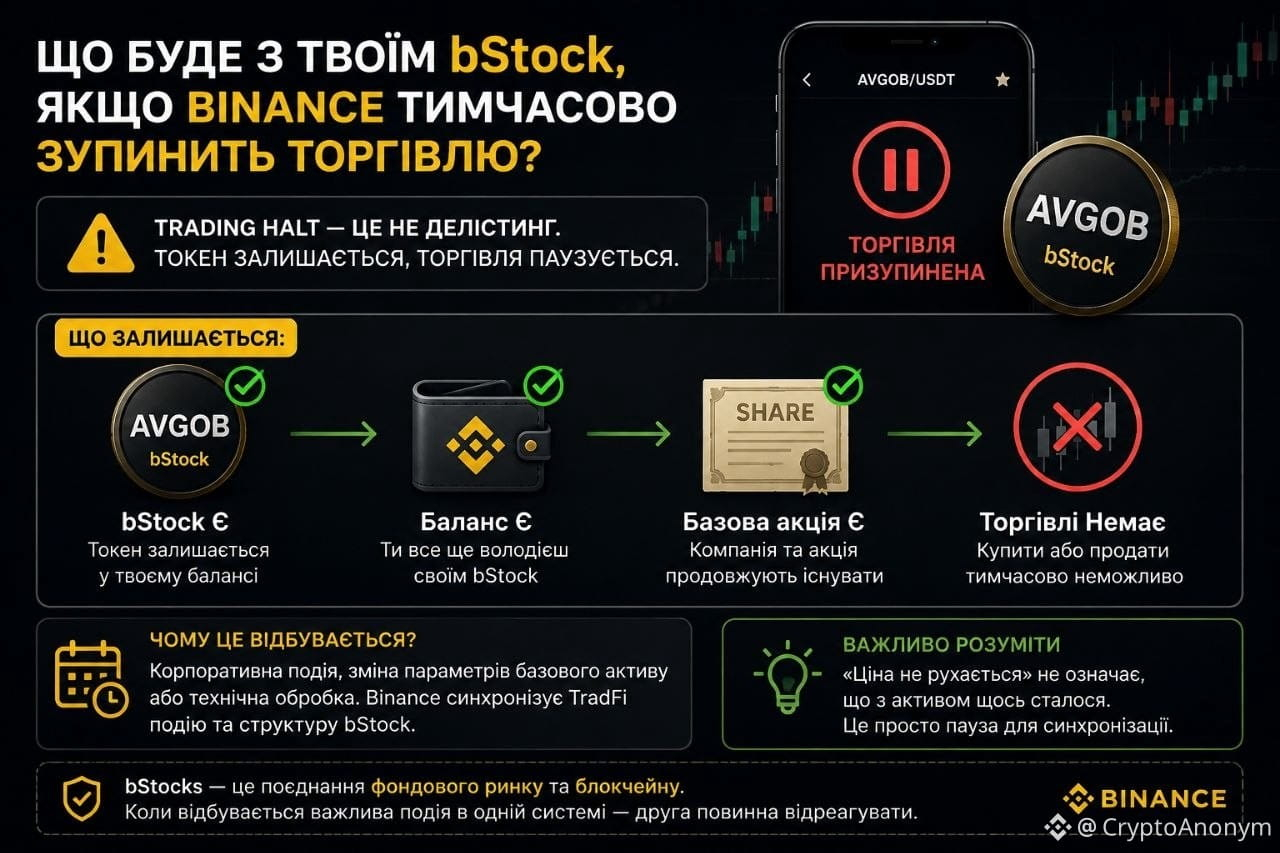
What happens to your bStock if Binance temporarily stops trading?
Let’s imagine this: you hold $AVGOB, and then Binance pauses trading of this bStock.
First thought: “Can I no longer sell it?”
Not quite.
Trading Halt is not the same as delisting. The token can remain in your balance, while the underlying asset continues to exist.
But trading on Binance is temporarily stopped.
So:
bStock is → balance is → underlying asset is → there is no trading.
And this is where it gets most interesting.
The reason for the pause may be related to a corporate event or the need to process changes regarding the underlying asset.
At this time, not only trading may be limited, but also certain operations with bStock—such as deposits, withdrawals, or conversion.
That’s why “the price doesn’t move” at this moment doesn’t mean something happened to the asset.
Sometimes the exchange simply pauses trading while the system synchronizes the event in TradFi and the structure of the tokenized asset.
That’s exactly why bStocks aren’t just a chart in an app.
Behind each token are two systems at once: the stock market and the blockchain.
And when an important event happens in one of them, the other one has to respond too.
1
88
·
--
#bstockscis @BinanceCIS Is your campaign real or painted with code? bStocks vs Synthetic
Before, I thought that any “tokenized stock” works the same way: it just copies the price from the chart.
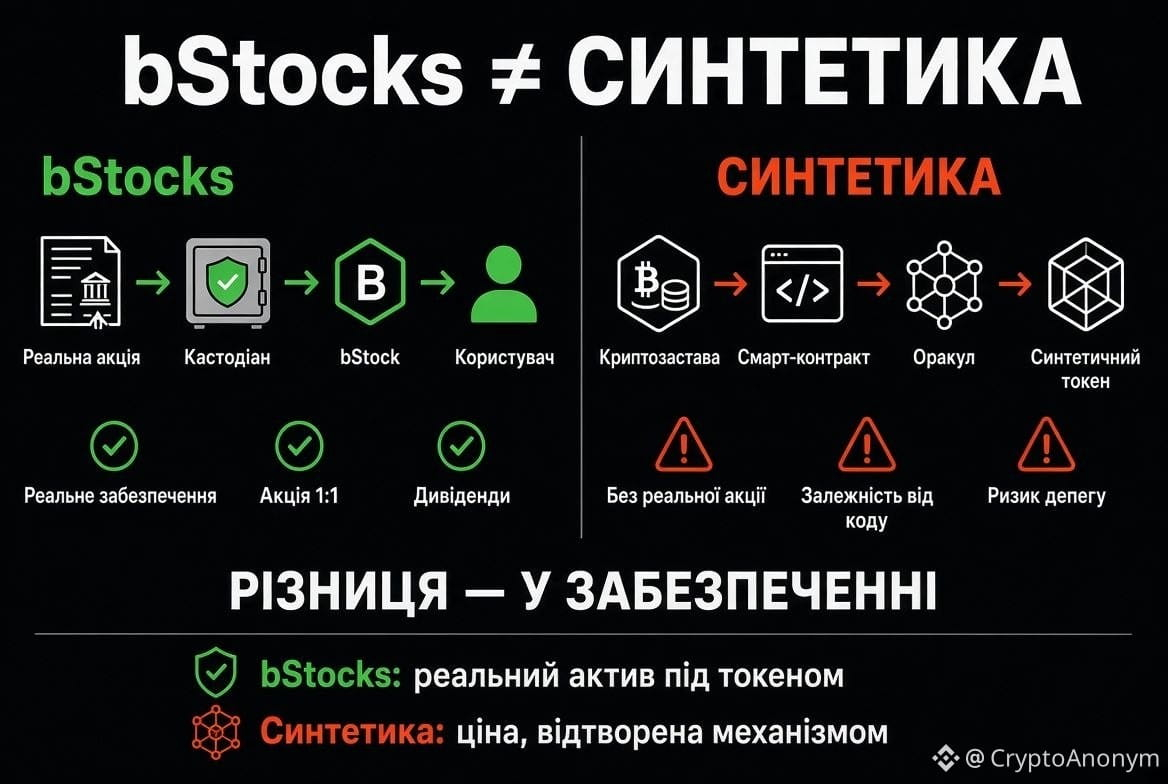
But there’s a fundamental difference. In DeFi, “stocks” are often created artificially: a smart contract takes the price from an oracle under collateral of another crypto asset. If the market suddenly crashes, such synthetic assets may lose their peg (depeg) or be automatically liquidated.
With bStocks, everything is different. Each token is backed by a real, physically purchased stock held by a regulated custodian. Their price isn’t maintained by algorithms and stablecoins, but by actual assets.
That’s why I always evaluate 3 vectors:
• Nature of collateral: crypto or a real security.
• Stability: will the token price break when BTC drops by 20%.
• Dividends: real payments from the company or a synthetic imitation.
By buying bStock, you rely on the reliability of a traditional custodian. With synthetics—you rely on the smart contract code and crypto liquidity. Understanding this boundary is your risk management.
3
103
·
--
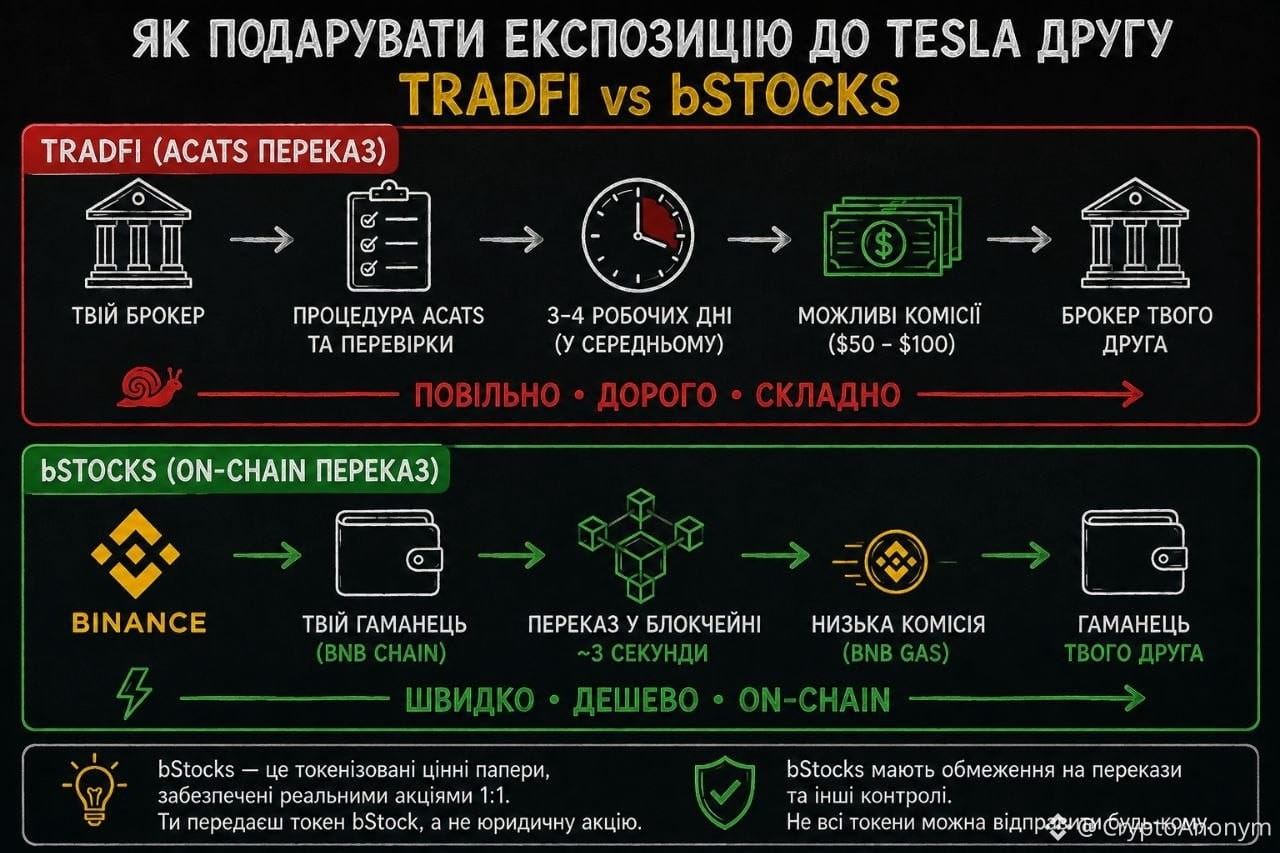
#bstockscis How to gift a second Tesla exposure to a friend in a few seconds — without transferring shares between brokers?
The transfer of regular shares between brokerage accounts goes through separate infrastructure. With ACATS, it can take several business days.
But with bStocks the mechanics are different.
$TSLAB is a token on the BNB Smart Chain that can be withdrawn to a compatible Web3 wallet.
The scheme:
Binance → your wallet → your friend’s wallet
In other words, you send a tokenized asset via a blockchain transaction, not transfer the position between brokers.
But an important nuance: you’re sending the bStock itself, not a legal Tesla share. The actual share remains in the custodian’s collateral structure.
So:
Real share → custody
bStock → BNB Smart Chain → your wallet → your friend’s wallet
And this is where blockchain changes the way the asset is transferred.
No need to move a brokerage account or wait for ACATS to complete.
However, bStocks have transfer restrictions, so you can’t send the token to anyone unconditionally.
I especially like bStocks such cases: blockchain here doesn’t change the share itself, but changes how it’s transferred.
@BinanceCIS #bStocksCIS
3
124
·
--
Bullish
Yes, next 32$ from Binance Alpha.
$KII
Do you still have a drop?
Yes, next 32$ from Binance Alpha.
$KII
Do you still have a drop?
$KII
Do you still have a drop?
2
247
·
--
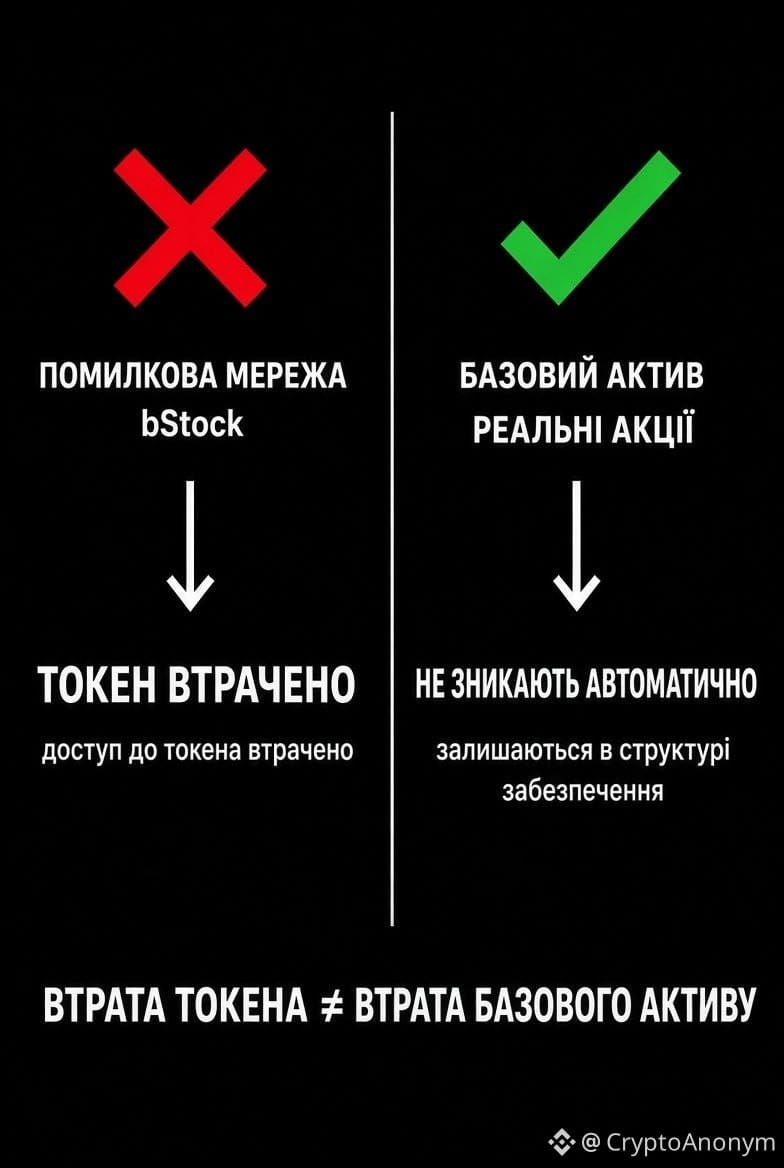
#bstockscis You accidentally sent your bStocks on the wrong network. Tokens cannot be recovered. So what happened to the real shares underneath?
Let’s imagine: 100 NVDAB → sent not via BNB Smart Chain → tokens are lost. Binance warns: an incorrect network can lead to permanent loss of funds.
But did the real NVIDIA shares disappear along with them? No.
bStock is a tokenized security, not the actual share. The real shares remain in the collateral structure with a regulated custodian.
That means:
100 NVDAB ❌ lost
Underlying asset ✅ does not automatically disappear
Losing a token does not mean an automatic sale or destruction of the underlying shares. What happens to them next depends on the product mechanics, redemption, and the accounting of collateral.
That’s why bStocks are not just “a stock on a blockchain.” There are separate components here: a token, the underlying asset, the issuer, the custodian, and the collateral mechanism.
Have you thought about what happens to the real share if its token is lost forever?
@BinanceCIS #bStocksCIS
2
81
·
--
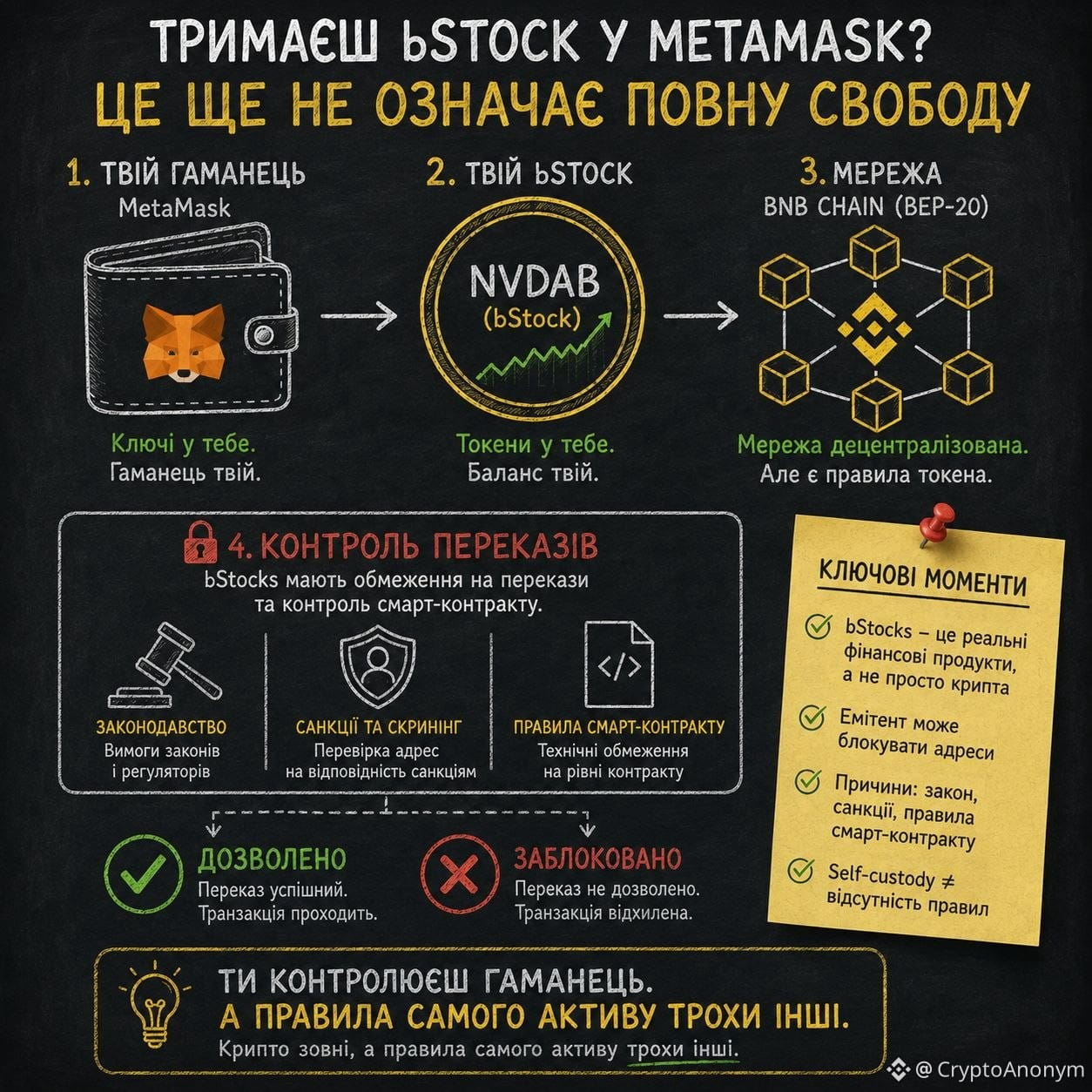
#bstockscis Hold bStock in MetaMask — that doesn’t mean the token is completely beyond the system’s control.
Imagine you withdrew $NVDAB from Binance to your Web3 wallet.
You have the keys.
The tokens are yours.
BNB Chain is decentralized.
Seems like: “Okay, now nobody can do anything.”
But there’s a catch.
bStocks have transfer restrictions and smart-contract controls.
Binance explicitly states that the issuer can blacklist specific wallet addresses if required by law, sanctions rules, or smart-contract control.
So:
MetaMask → your wallet
$NVDAB → your balance
But Transfer → isn’t always just “hit send and ship it.”
And this is the interesting difference between bStocks and a regular crypto token.
You control the wallet.
But not all the rules of the token itself.
Crypto on the outside. The rules of the asset itself are a bit different.
@BinanceCIS #bStocksCIS
3
97
·
--
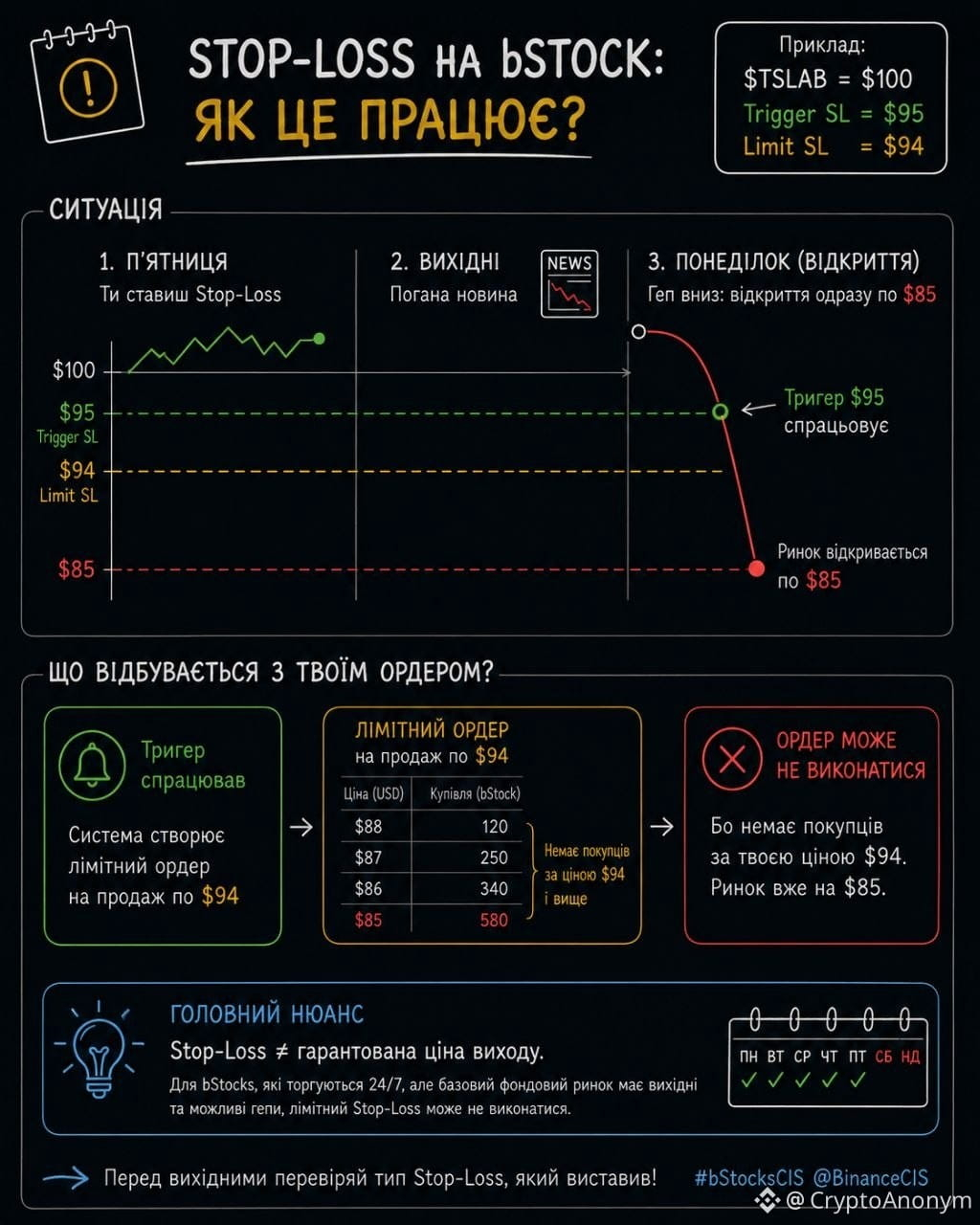
#bstockscis Placed a Stop-Loss on bStock on Friday? There’s one catch that’s easy to forget 👀
On bStocks, you can set a Stop-Loss with a trigger and a limit price.
Now imagine this:
$TSLAB = $100
Trigger SL = $95
Limit SL = $94
Over the weekend, bad news comes out, and on Monday the actual stock opens immediately at $85.
The $95 trigger fires.
But your order has a limit of $94—while the market is already at $85.
That means your order might NOT get filled because there are no buyers at your $94 price.
And here’s the main catch:
Stop-Loss ≠ a guaranteed exit price.
Especially for tokenized stocks that trade 24/7, while the underlying stock market has weekends and possible gaps.
That’s why, before the weekend, you should understand exactly what type of SL you set.
Because one small parameter in the settings can drastically change the outcome 👀
#bStocksCIS @BinanceCIS
1
2
276
·
--
#bstockscis
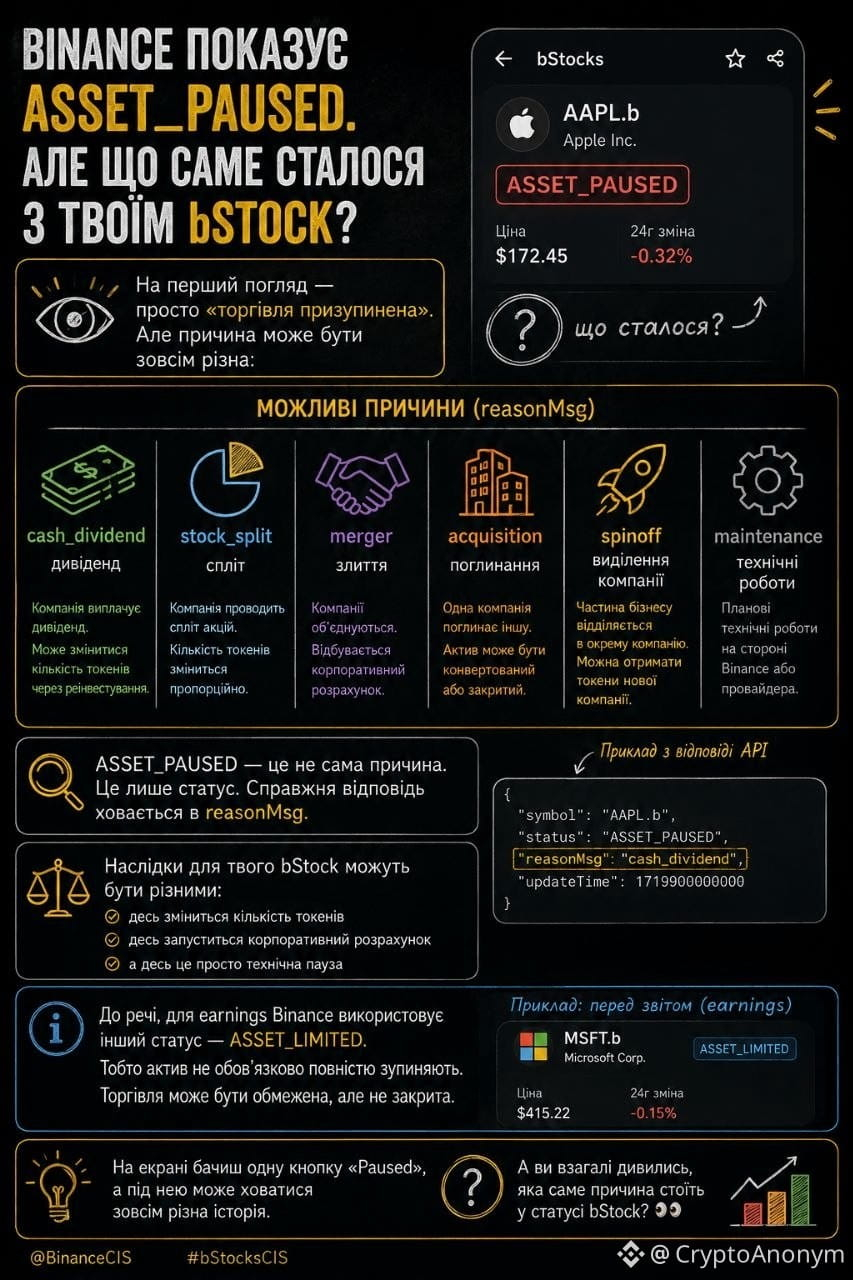
Binance shows ASSET_PAUSED. But what exactly happened to your bStock? 👀
At first glance — it’s just “trading paused”.
But the reason can be completely different:
→ cash_dividend — dividend
→ stock_split — stock split
→ merger — merger
→ acquisition — acquisition
→ spinoff — spin-off
→ maintenance — maintenance
So ASSET_PAUSED is not the actual reason. It’s only a status.
And the real answer is hidden in reasonMsg.
And that’s important, because the consequences for your bStock can vary: somewhere the number of tokens may change, somewhere a corporate settlement may start, and somewhere it’s simply a technical pause.
By the way, for earnings Binance uses a different status — ASSET_LIMITED, meaning the asset isn’t necessarily fully stopped. �
Binance +1
That’s the kind of details I like in bStocks 😅
On the screen you see one button “Paused”, and underneath it there may be a completely different story.
Have you ever checked which exact reason is behind your bStock status? 👀
@BinanceCIS #bStocksCIS
2
118
·
--
What happens to your bStocks if one company buys another? 👀
M&A is a common story for the stock market. But what’s interesting is what happens to the tokenized version of the share.
There are two possible scenarios.
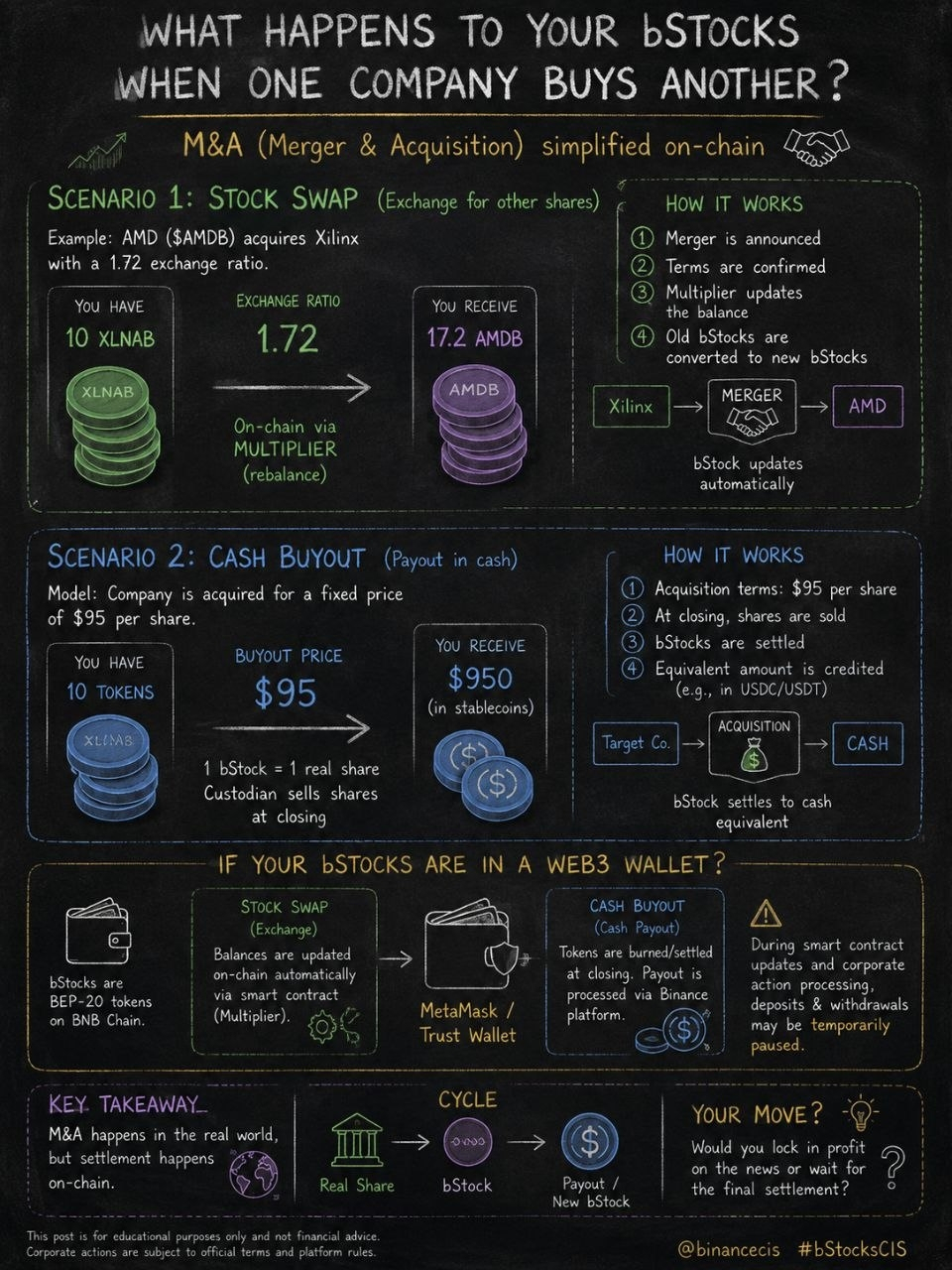
Scenario 1 — Stock Swap.
Let’s imagine that company X is bought with company Y shares at a ratio of 1.72.
You have 10 tokens of X: 10 × 1.72 = 17.2 tokens of Y
With bStocks, corporate events can be handled via an on-chain mechanism called a Multiplier, which recalculates the number of tokens according to the event terms.
Scenario 2 — Cash Buyout.
The company is bought out for $95 per share.
You have 10 tokens:
10 × $95 = $950
So after the deal, your position must be calculated according to the buyout terms, not simply continue trading like a regular stock.
And here’s the most interesting part 👇
bStocks can trade 24/7, but during a merger, acquisition, or another corporate event, the specific asset may be temporarily paused to process the event.
So the main takeaway:
bought bStock → the company changed its structure → the token doesn’t necessarily behave the same way as a regular share.
Behind it is a whole system of corporate actions, Multiplier, and calculations.
And that’s more interesting than just watching a green candle 😅
Would you hold the shares of the company being acquired?
@BinanceCIS #bstockscis
2
174
·
--
Mirage for $280, or why a beautiful price on the order book still isn’t your money 📊
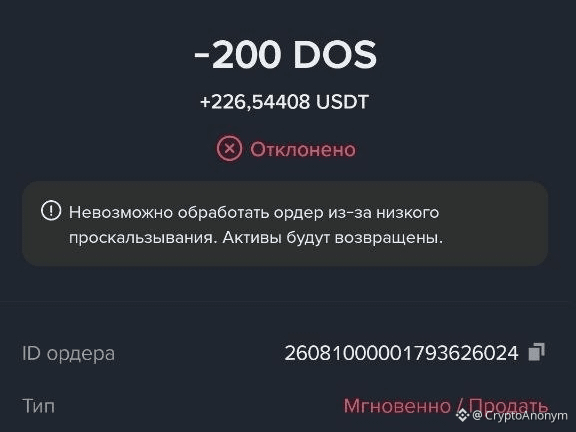
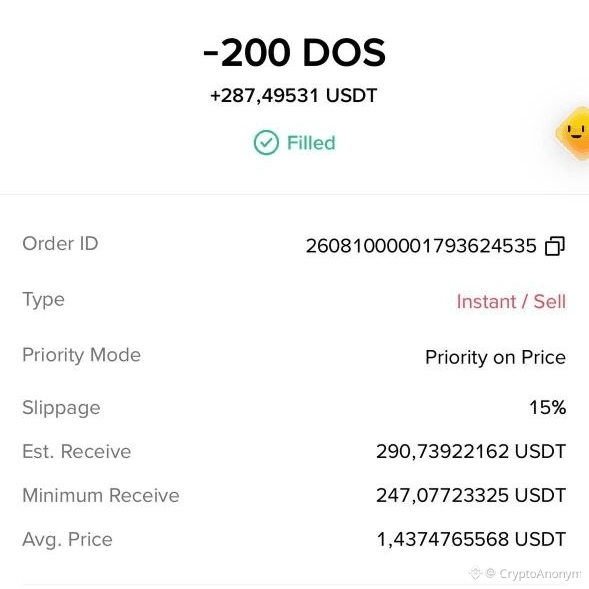
Today, Binance Alpha handed out 200 $DOS tokens. At the start, the price broke through the psychological level of $1. Seemed like the perfect spot to lock in a profit.
I acted without greed: I placed a limit order at 0.8. But the market is ruthless. Due to the absolute lack of liquidity, my order simply turned into a ghost.
However, the most exciting part is this: someone actually managed to catch that micro-liquidity! There are real cases where users poured 200 $DOS into the order book and took out 280. 🤑
Conclusion: Binance Alpha still offers great opportunities, but only those who understand the specifics of a “thin” market, have lightning-fast speed, and nerve get them. 😳
Who of you managed to sell on this candle today, or did you also catch the mirage? 👇
2
2.2k
·
--
Bearish
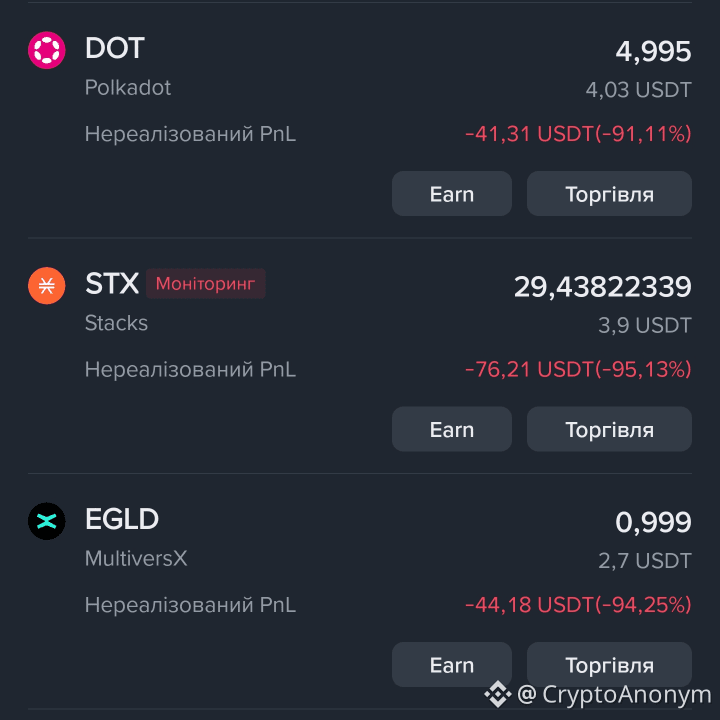
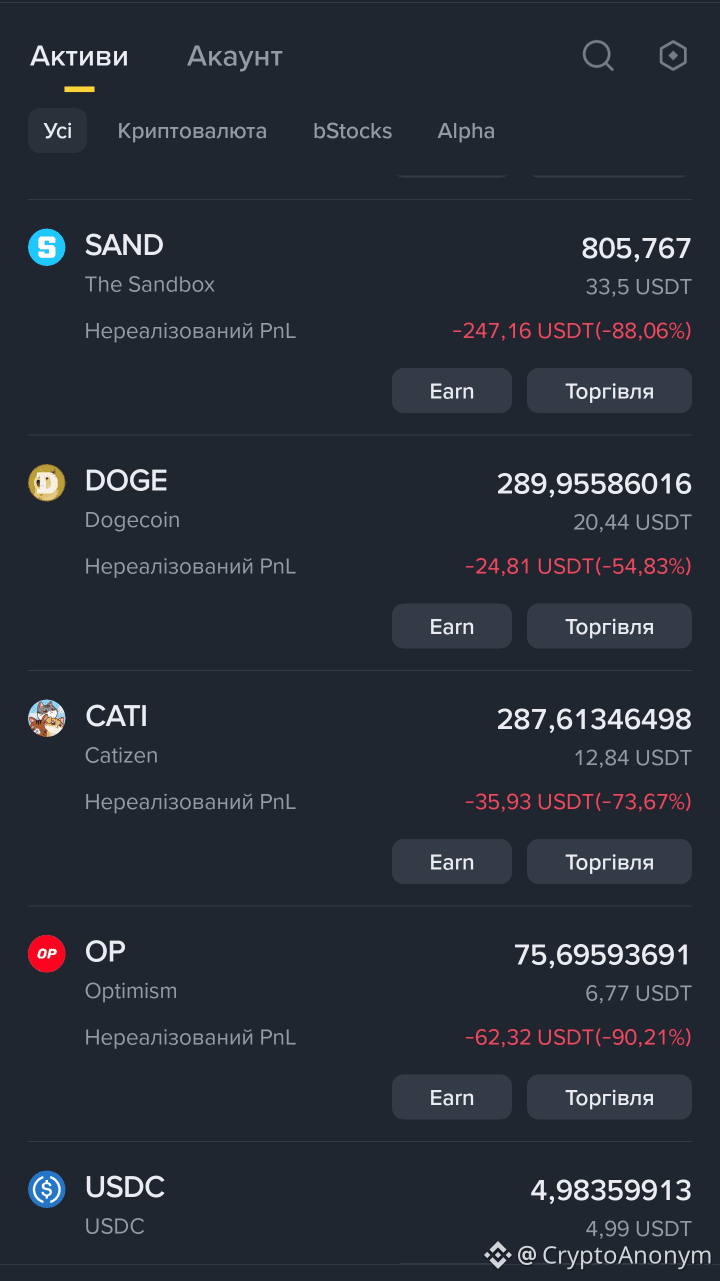
I’m a successful investor. Just a very long-term one 😂
In 2024, I bought coins for $50–100 each hoping for profit.
And then these coins went down by -70%, -90%, and some by almost -95%.
And $SAND i $CATI—got it in airdrops altogether.
So what did I do?
I didn’t sell. Because “what if it goes up” 🤡
Now I have a portfolio where red isn’t a color—it’s a way of life.
The main thing is not to lock in the loss, then it supposedly doesn’t exist 😂
I’m only happy that I earned these funds through various Aidrops and promo campaigns.
$SAND $DOGE
Who else has such “long-term investments”? 👇
9
9
10.5k
·
--
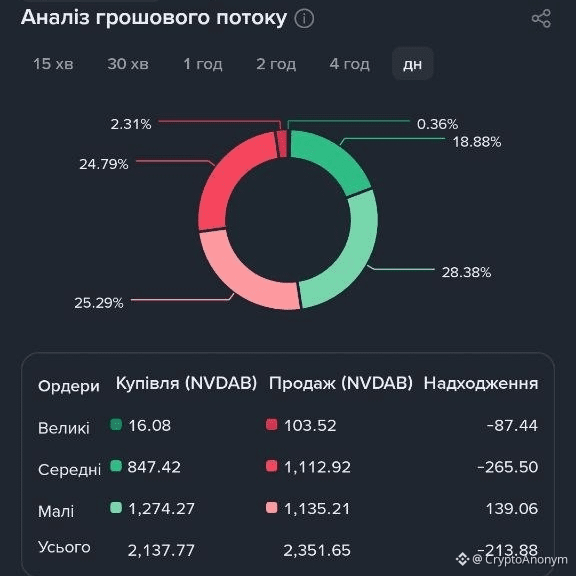
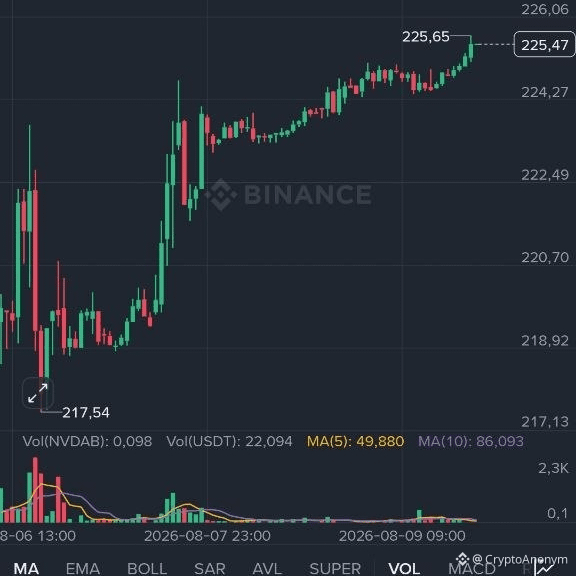
#bstockscis On the weekend, it’s interesting to look not only at the price in bStocks, but also at the size of trades.
I picked up $NVDAB — bStock NVIDIA.
In 24 hours:
≈ $504K in volume
≈ 2,244 NVDAB
But according to the current stats, most trades are small.
Small:
🟢 $1,274 buys
🔴 $1,135 sells
Medium:
🟢 $847
🔴 $1,113
Large:
🟢 only $16
🔴 $104
So large trades are almost nonexistent.
At the same time, $NVDAB moved from about ~$223.94 to $225.65, and is currently around $225.6.
Even more interesting: net flow in the shown stats is ≈ -$214 — there are slightly more sells.
And here’s the key point 🤔
On weekends, the US stock market is closed, but bStocks continue trading. With thinner liquidity, even relatively small orders can move the price more.
So +0.7% on the chart doesn’t necessarily mean that big money has come in here.
Sometimes it’s just movement in a thin market.@BinanceCIS
2
137
·
--
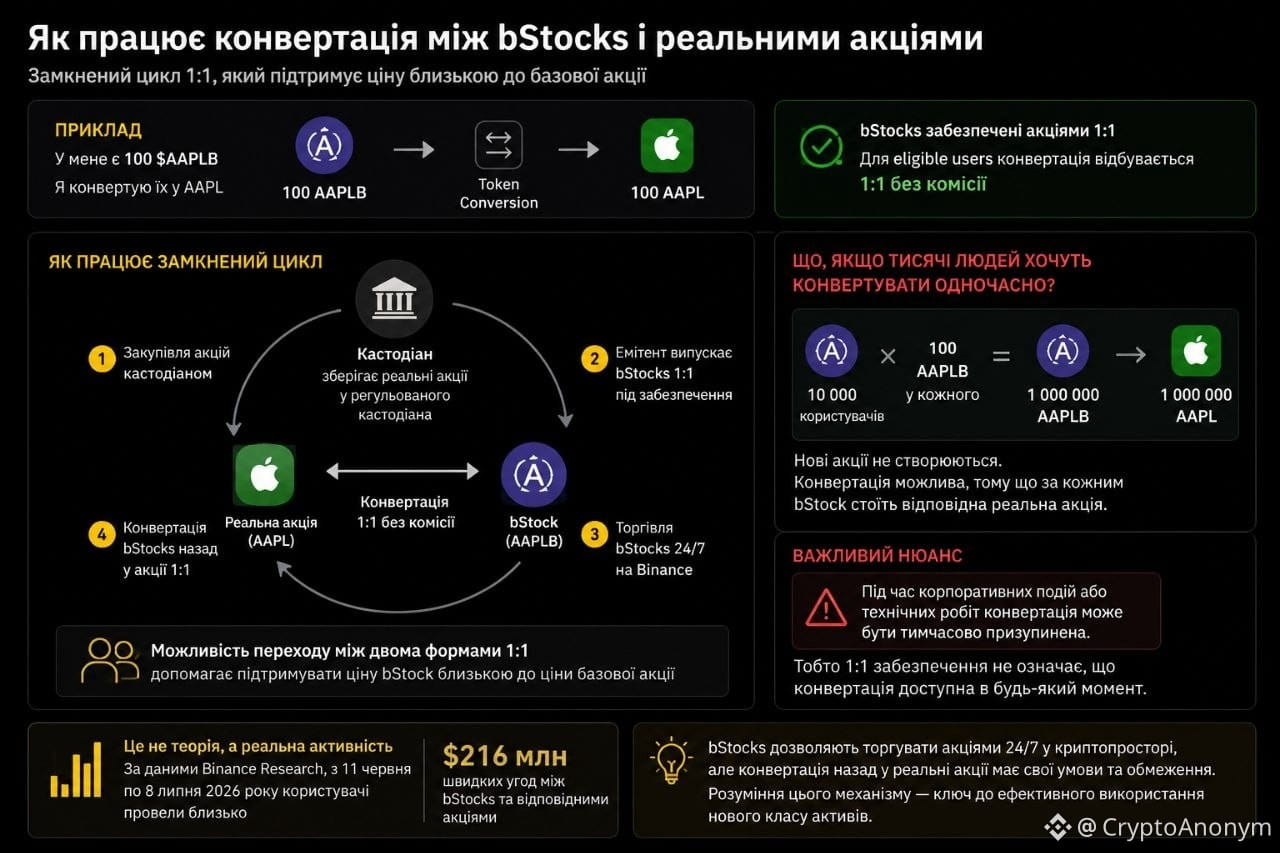
What happens if thousands of people want to exchange bStocks back for shares at the same time? 👀
Let’s imagine: I have 100 AAPLB and I convert them:
100 AAPLB → 100 AAPL
This is possible because bStock is backed by the corresponding real stock on a 1:1 basis, and for eligible users the conversion is available with no fee.
Now, imagine 10,000 users want to do the same thing:
10 000 × 100 AAPLB = 1,000,000 AAPL
These shares aren’t created out of thin air. Real shares back the bStocks, and they’re held with a regulated custodian.
In effect, it works like a closed loop:
Real share → bStock → trading → bStock → real share
The ability to move between the two 1:1 forms helps keep the bStock price close to the underlying share.
But there’s a catch 👆
During corporate actions or technical maintenance, certain operations may be temporarily paused.
So bStocks can trade 24/7, but conversion has its own terms and limitations.
And this, in my opinion, is one of the most interesting things about bStocks: behind the token there’s an entire infrastructure that we usually don’t see.
@BinanceCIS
#bStocksCIS
1
3
132
Log in to explore more content
Join global crypto users on Binance Square
⚡️ Get latest and useful information about crypto.
💬 Trusted by the world’s largest crypto exchange.
👍 Discover real insights from verified creators.
Email / Phone number
Trending Topics
IsAnthropic’s$1.5TMarketCapJustified?
24,093 views
125 Discussing
Anthropic Set to Open at $105 in Record Nasdaq Debut
Binance News
·12 Likes
·17.1k views
13FInstitutionsBitcoinSpotETPHoldingsHitRecord
1,164 views
27 Discussing
BTCRemainsUnderPressureAfterHawkishFOMCMinutes
297,698 views
2,229 Discussing