

Crypto_GR
1.6k Posts

Crypto_GR
 Square Verified+
Report
Block User
Trader | Binance Square creator | Investor | Streamer | In crypto since 2020

Creator Awards 2024

#BinanceTurns7 task 2

#BinanceTurns7
40 Following
38.5K+ Followers
26.3K+ Liked
4 Badges
Posts
All
Quotes
Videos
Live
PINNED
·
--

Article
From Wall Street to My Wallet: My First Experience with bStocks on BinanceI had been wanting to invest in companies like NVIDIA or Tesla for a while, but the hours of the traditional market and the difficulties of accessing it always made it complicated for me. Everything changed when Binance launched bStocks and I decided to give them a shot.
What exactly are bStocks?
They are tokenized assets issued by BTech Holdings Limited (a Binance affiliate) and backed 1:1 by real U.S. stocks that are held in regulated custody. You don't buy the stock directly, but you track its price in real time, with quick trades and without having to wait for Wall Street to open or close.
From Wall Street to My Wallet: My First Experience with bStocks on Binance
I had been wanting to invest in companies like NVIDIA or Tesla for a while, but the hours of the traditional market and the difficulties of accessing it always made it complicated for me. Everything changed when Binance launched bStocks and I decided to give them a shot.
What exactly are bStocks?
They are tokenized assets issued by BTech Holdings Limited (a Binance affiliate) and backed 1:1 by real U.S. stocks that are held in regulated custody. You don't buy the stock directly, but you track its price in real time, with quick trades and without having to wait for Wall Street to open or close.
What exactly are bStocks?
They are tokenized assets issued by BTech Holdings Limited (a Binance affiliate) and backed 1:1 by real U.S. stocks that are held in regulated custody. You don't buy the stock directly, but you track its price in real time, with quick trades and without having to wait for Wall Street to open or close.
4
11
7.3k
PINNED
·
--
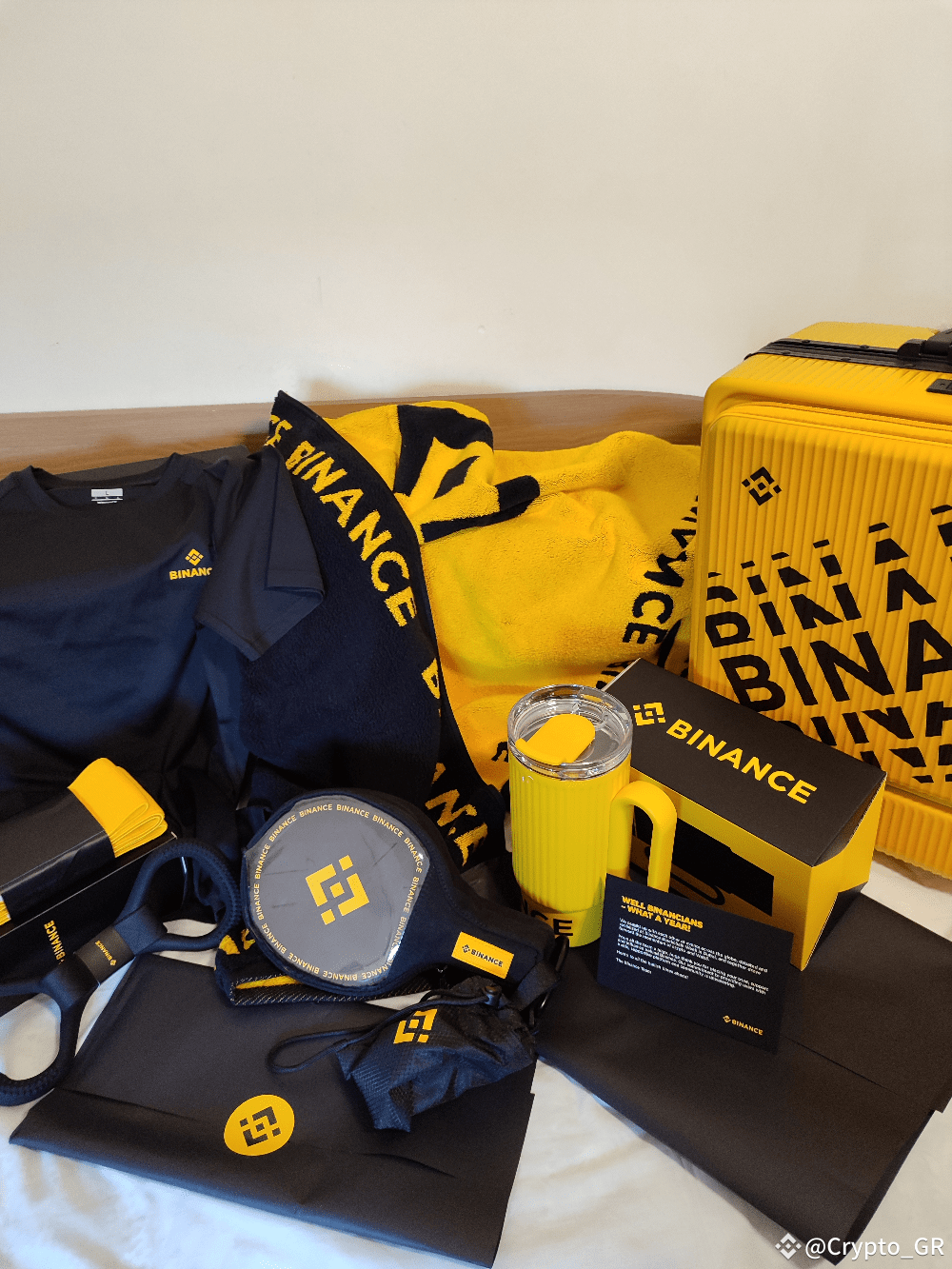
🫂🤝 Many thanks to Binance for this gift. Another dream come true. I am very happy and grateful. Many thanks also to everyone who supports me daily.
Let's keep building Binance Square ❤️
🫂🤝 Many thanks to Binance for this gift. Another dream come true. I am very happy and grateful. Many thanks also to everyone who supports me daily.
Let's keep building Binance Square ❤️
Let's keep building Binance Square ❤️
25
12
62
9.5k
·
--
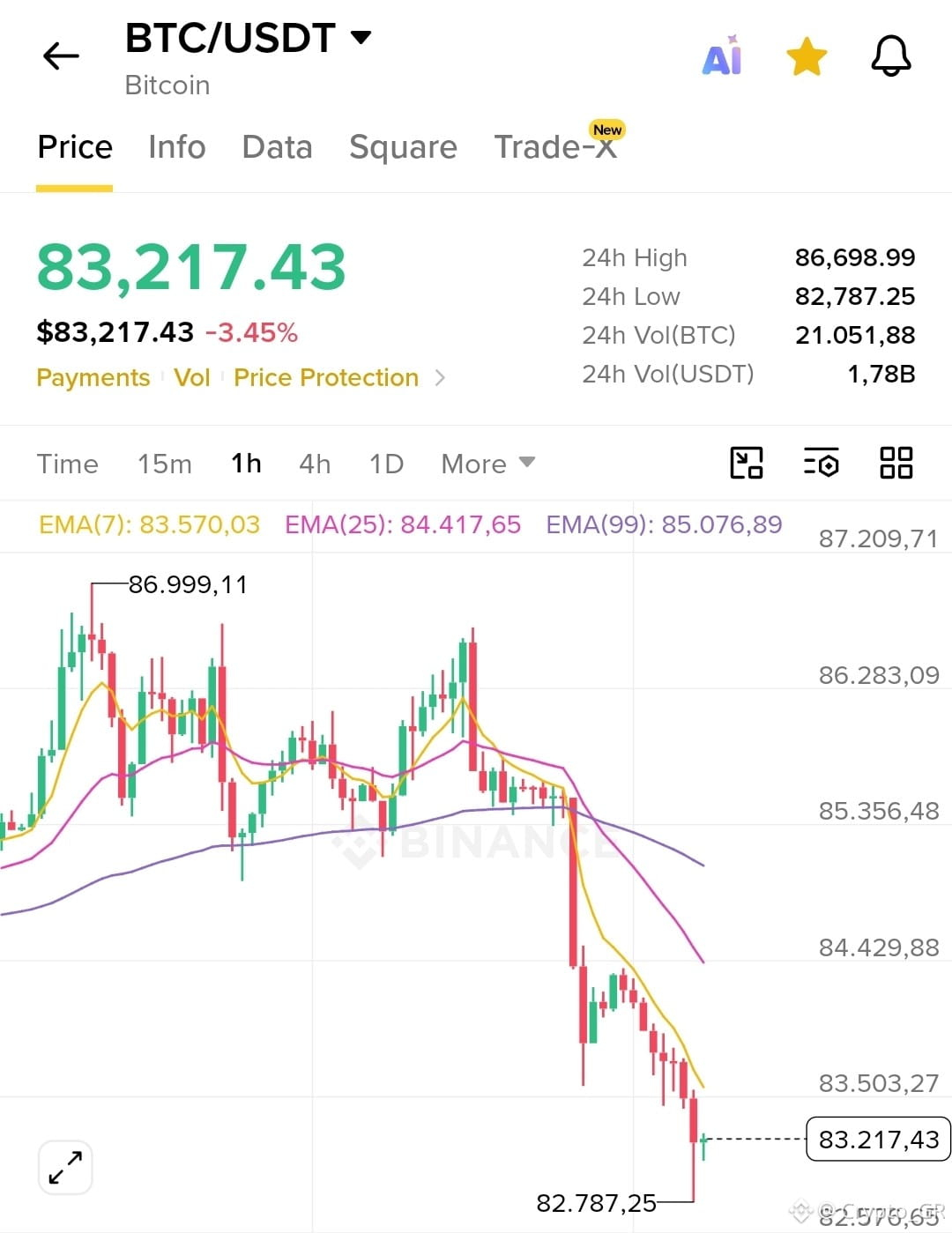
$BTC has dropped today from around $85,500 to about $82,790 and is now holding above $83,200.
$695.8M in crypto positions were liquidated over the past 24 hours, including $643.8M in long positions.
Yesterday, $BTC and $ETH ETFs had a combined $83.1M net outflow. Bitcoin ETFs saw a $118.8M inflow, but Ethereum ETFs had a much larger $201.9M outflow, marking their sixth straight day of withdrawals.
$BTC has dropped today from around $85,500 to about $82,790 and is now holding above $83,200.
$695.8M in crypto positions were liquidated over the past 24 hours, including $643.8M in long positions.
Yesterday, $BTC and $ETH ETFs had a combined $83.1M net outflow. Bitcoin ETFs saw a $118.8M inflow, but Ethereum ETFs had a much larger $201.9M outflow, marking their sixth straight day of withdrawals.
$695.8M in crypto positions were liquidated over the past 24 hours, including $643.8M in long positions.
Yesterday, $BTC and $ETH ETFs had a combined $83.1M net outflow. Bitcoin ETFs saw a $118.8M inflow, but Ethereum ETFs had a much larger $201.9M outflow, marking their sixth straight day of withdrawals.
1
3
3.4k
·
--
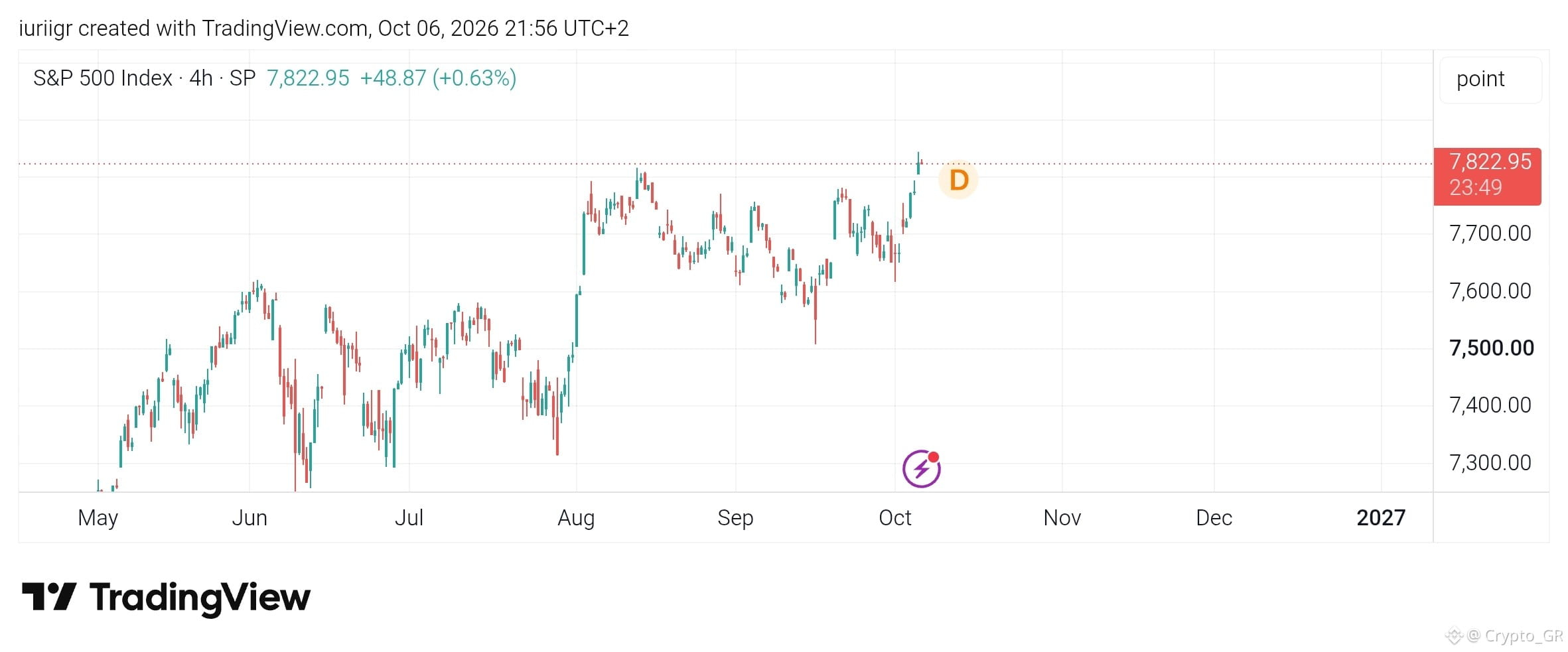
S&P 500 hits a new all-time high
The S&P 500 has reached a new record above 7,835, pushing the total market value of its companies above $71 trillion for the first time.
The rise is mainly being led by technology and AI stocks, while investors are also expecting strong results from major US companies. Lower oil prices and lower Treasury yields have also helped improve market sentiment.
S&P 500 hits a new all-time high
The S&P 500 has reached a new record above 7,835, pushing the total market value of its companies above $71 trillion for the first time.
The rise is mainly being led by technology and AI stocks, while investors are also expecting strong results from major US companies. Lower oil prices and lower Treasury yields have also helped improve market sentiment.
The S&P 500 has reached a new record above 7,835, pushing the total market value of its companies above $71 trillion for the first time.
The rise is mainly being led by technology and AI stocks, while investors are also expecting strong results from major US companies. Lower oil prices and lower Treasury yields have also helped improve market sentiment.
1
504
·
--
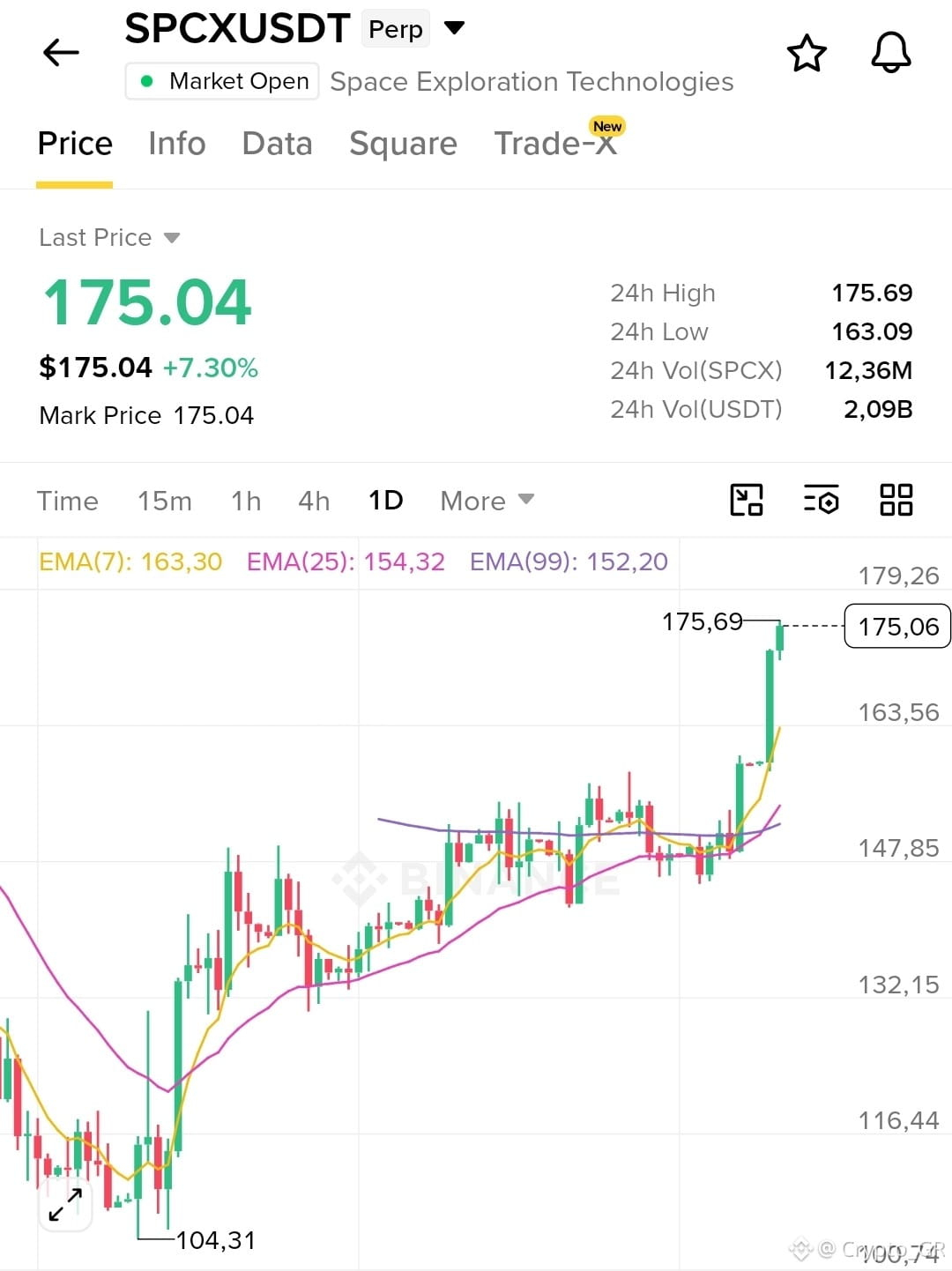
Elon Musk is a trillionaire again.
Musk's net worth reached $1 trillion on Monday as SpaceX $SPCX shares jumped more than 5%. The stock has continued moving higher and is now trading around $175.
One of the main reasons was a positive report from Morgan Stanley, which kept its $300 price target for SpaceX and said the stock could have more room to grow compared with major AI companies.
Investors are also watching the next Starship test flight, expected later this month or in early November.
SpaceX has also seen strong business growth. Its revenue nearly doubled from a year earlier, mainly helped by Starlink and its growing AI business.
Elon Musk is a trillionaire again.
Musk's net worth reached $1 trillion on Monday as SpaceX $SPCX shares jumped more than 5%. The stock has continued moving higher and is now trading around $175.
One of the main reasons was a positive report from Morgan Stanley, which kept its $300 price target for SpaceX and said the stock could have more room to grow compared with major AI companies.
Investors are also watching the next Starship test flight, expected later this month or in early November.
SpaceX has also seen strong business growth. Its revenue nearly doubled from a year earlier, mainly helped by Starlink and its growing AI business.
Musk's net worth reached $1 trillion on Monday as SpaceX $SPCX shares jumped more than 5%. The stock has continued moving higher and is now trading around $175.
One of the main reasons was a positive report from Morgan Stanley, which kept its $300 price target for SpaceX and said the stock could have more room to grow compared with major AI companies.
Investors are also watching the next Starship test flight, expected later this month or in early November.
SpaceX has also seen strong business growth. Its revenue nearly doubled from a year earlier, mainly helped by Starlink and its growing AI business.
3
7.7k
·
--
Could $BTC reach $500,000 this cycle?
Matthew Sigel from VanEck believes $BTC may have already reached its bottom, while more investors are buying when prices fall.
VanEck’s long-term model sees Bitcoin reaching $3M by 2050 if it becomes widely used in global trade. Sigel also believes miners could benefit from the AI boom, as their access to electricity becomes more valuable.
Quantum computing remains a risk for Bitcoin, and Sigel believes the crypto industry needs to find a solution in the coming years.
Could $BTC reach $500,000 this cycle?
Matthew Sigel from VanEck believes $BTC may have already reached its bottom, while more investors are buying when prices fall.
VanEck’s long-term model sees Bitcoin reaching $3M by 2050 if it becomes widely used in global trade. Sigel also believes miners could benefit from the AI boom, as their access to electricity becomes more valuable.
Quantum computing remains a risk for Bitcoin, and Sigel believes the crypto industry needs to find a solution in the coming years.
Matthew Sigel from VanEck believes $BTC may have already reached its bottom, while more investors are buying when prices fall.
VanEck’s long-term model sees Bitcoin reaching $3M by 2050 if it becomes widely used in global trade. Sigel also believes miners could benefit from the AI boom, as their access to electricity becomes more valuable.
Quantum computing remains a risk for Bitcoin, and Sigel believes the crypto industry needs to find a solution in the coming years.
3
1.2k
·
--
Verified
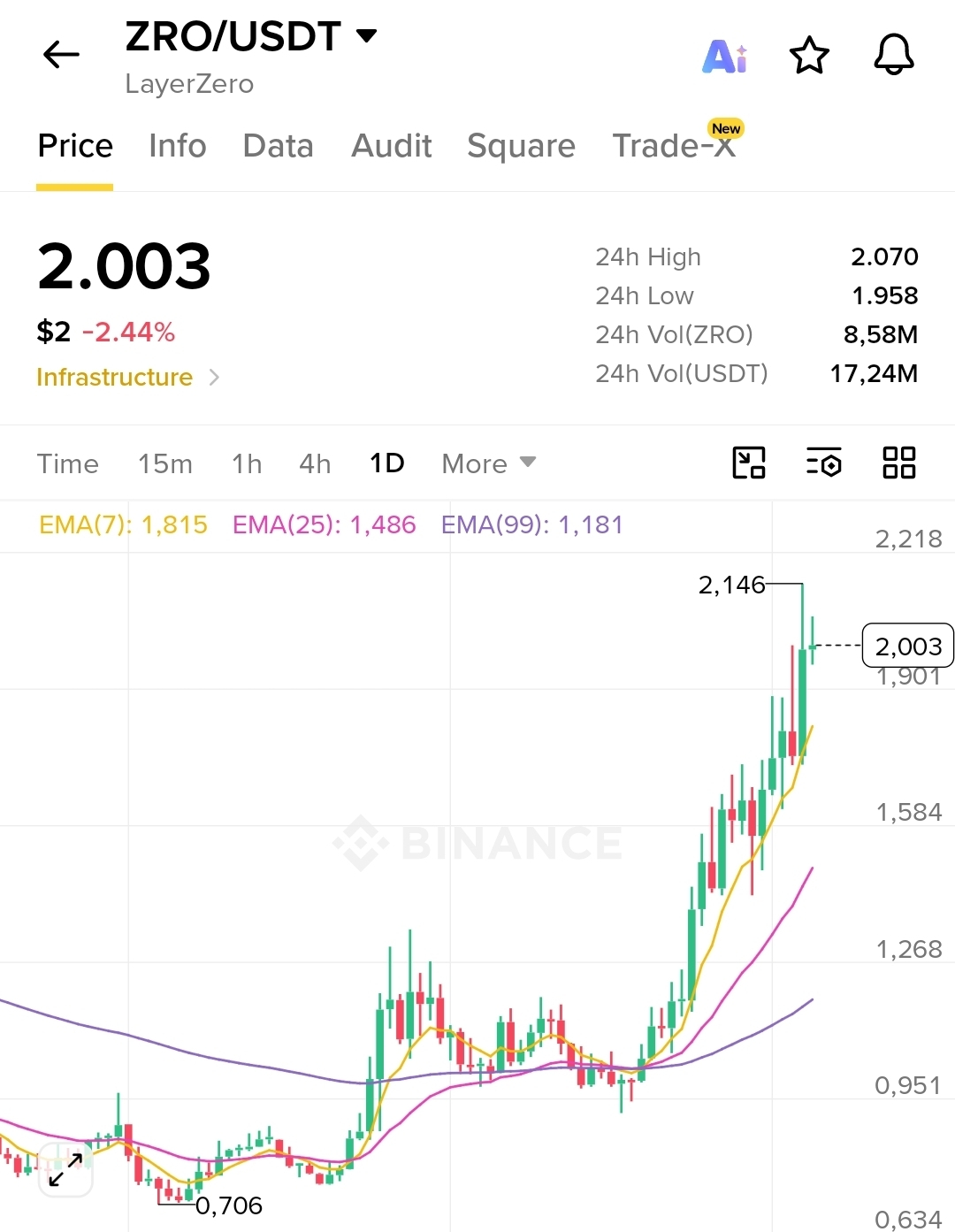
$ZRO has risen from around $1 to above $2 in less than three weeks.
One of the main reasons is growing interest in LayerZero's cross-chain infrastructure. CEO Bryan Pellegrino recently highlighted around $10B–$15B in monthly cross-chain volume, with LayerZero handling a large share of this activity.
Another important factor is ATLAS, LayerZero's new trading infrastructure. The system is designed to create more demand for $ZRO, while part of the fees can be used to buy and burn the token.
LayerZero is also continuing its $ZRO buyback strategy, adding another potential source of demand.
The main risk is supply. More $ZRO tokens are still being unlocked, which could create selling pressure if demand does not keep growing.
$ZRO has risen from around $1 to above $2 in less than three weeks.
One of the main reasons is growing interest in LayerZero's cross-chain infrastructure. CEO Bryan Pellegrino recently highlighted around $10B–$15B in monthly cross-chain volume, with LayerZero handling a large share of this activity.
Another important factor is ATLAS, LayerZero's new trading infrastructure. The system is designed to create more demand for $ZRO , while part of the fees can be used to buy and burn the token.
LayerZero is also continuing its $ZRO buyback strategy, adding another potential source of demand.
The main risk is supply. More $ZRO tokens are still being unlocked, which could create selling pressure if demand does not keep growing.
One of the main reasons is growing interest in LayerZero's cross-chain infrastructure. CEO Bryan Pellegrino recently highlighted around $10B–$15B in monthly cross-chain volume, with LayerZero handling a large share of this activity.
Another important factor is ATLAS, LayerZero's new trading infrastructure. The system is designed to create more demand for $ZRO , while part of the fees can be used to buy and burn the token.
LayerZero is also continuing its $ZRO buyback strategy, adding another potential source of demand.
The main risk is supply. More $ZRO tokens are still being unlocked, which could create selling pressure if demand does not keep growing.
1
5
2.9k
·
--
Verified
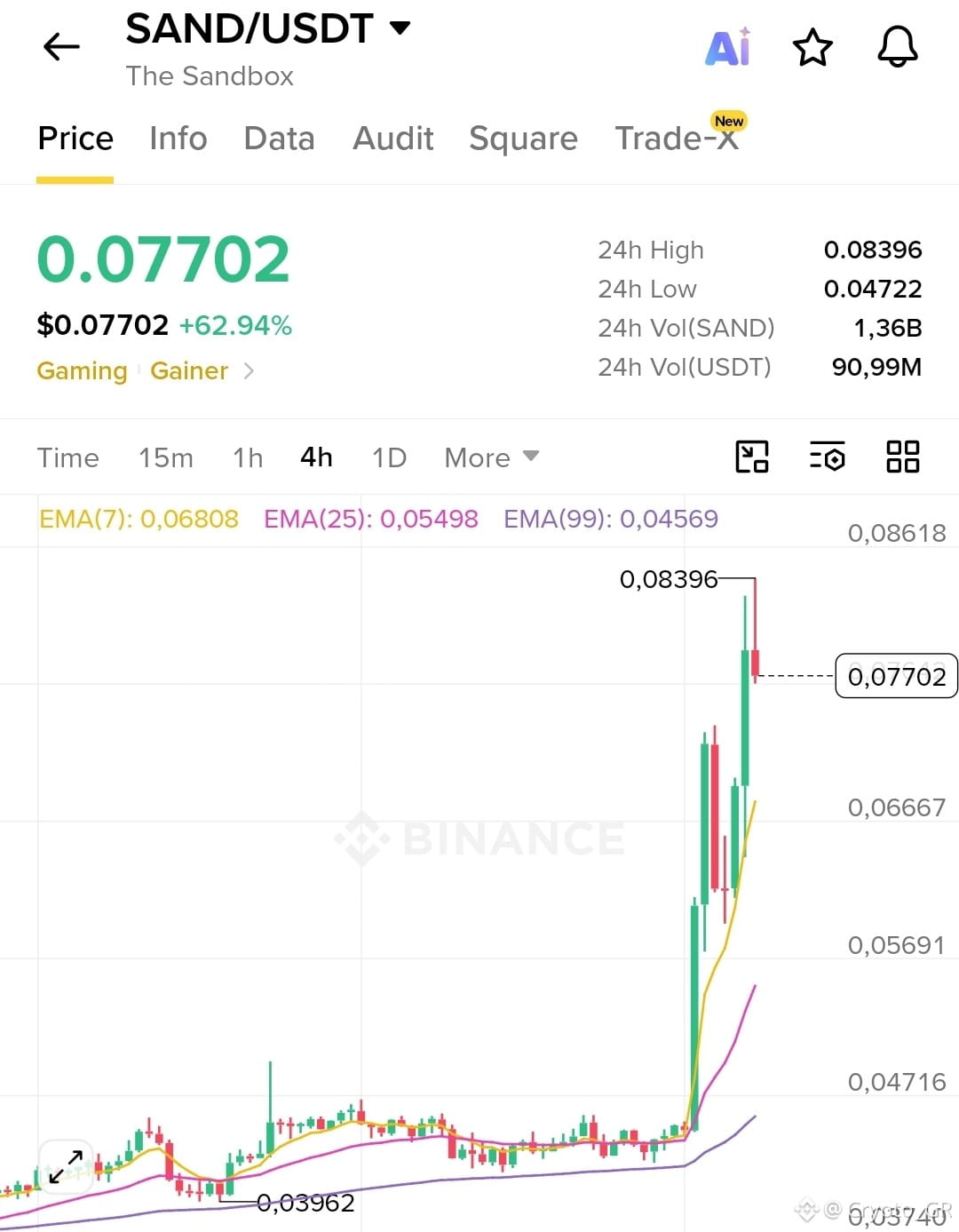
Why has $SAND risen more than 60%?
$SAND has surged more than 60% after South Korean exchanges removed their trading warnings on the token.
The warnings were added after the August security issue with The Sandbox's cross-chain bridge. After reviewing the situation, the exchanges decided to remove the warnings.
This led to a big increase in trading activity, with $SAND moving from around $0.045 to above $0.07. Trading volume also jumped as more buyers entered the market.
The Sandbox is also working on new updates, including easier access to its games through a browser and new tools for creators.
Why has $SAND risen more than 60%?
$SAND has surged more than 60% after South Korean exchanges removed their trading warnings on the token.
The warnings were added after the August security issue with The Sandbox's cross-chain bridge. After reviewing the situation, the exchanges decided to remove the warnings.
This led to a big increase in trading activity, with $SAND moving from around $0.045 to above $0.07. Trading volume also jumped as more buyers entered the market.
The Sandbox is also working on new updates, including easier access to its games through a browser and new tools for creators.
$SAND has surged more than 60% after South Korean exchanges removed their trading warnings on the token.
The warnings were added after the August security issue with The Sandbox's cross-chain bridge. After reviewing the situation, the exchanges decided to remove the warnings.
This led to a big increase in trading activity, with $SAND moving from around $0.045 to above $0.07. Trading volume also jumped as more buyers entered the market.
The Sandbox is also working on new updates, including easier access to its games through a browser and new tools for creators.
5
5.8k
·
--
Why is October called “Uptober”?
The name comes from Bitcoin’s historical performance. From 2013 to 2025, $BTC ended October higher in 10 out of 13 years. The average October return over that period was around +19%.
This is why the crypto community often enters October with hopes of a strong month. Of course, history does not guarantee the same performance every year.
Why is October called “Uptober”?
The name comes from Bitcoin’s historical performance. From 2013 to 2025, $BTC ended October higher in 10 out of 13 years. The average October return over that period was around +19%.
This is why the crypto community often enters October with hopes of a strong month. Of course, history does not guarantee the same performance every year.
The name comes from Bitcoin’s historical performance. From 2013 to 2025, $BTC ended October higher in 10 out of 13 years. The average October return over that period was around +19%.
This is why the crypto community often enters October with hopes of a strong month. Of course, history does not guarantee the same performance every year.

1
2
2.6k
·
--
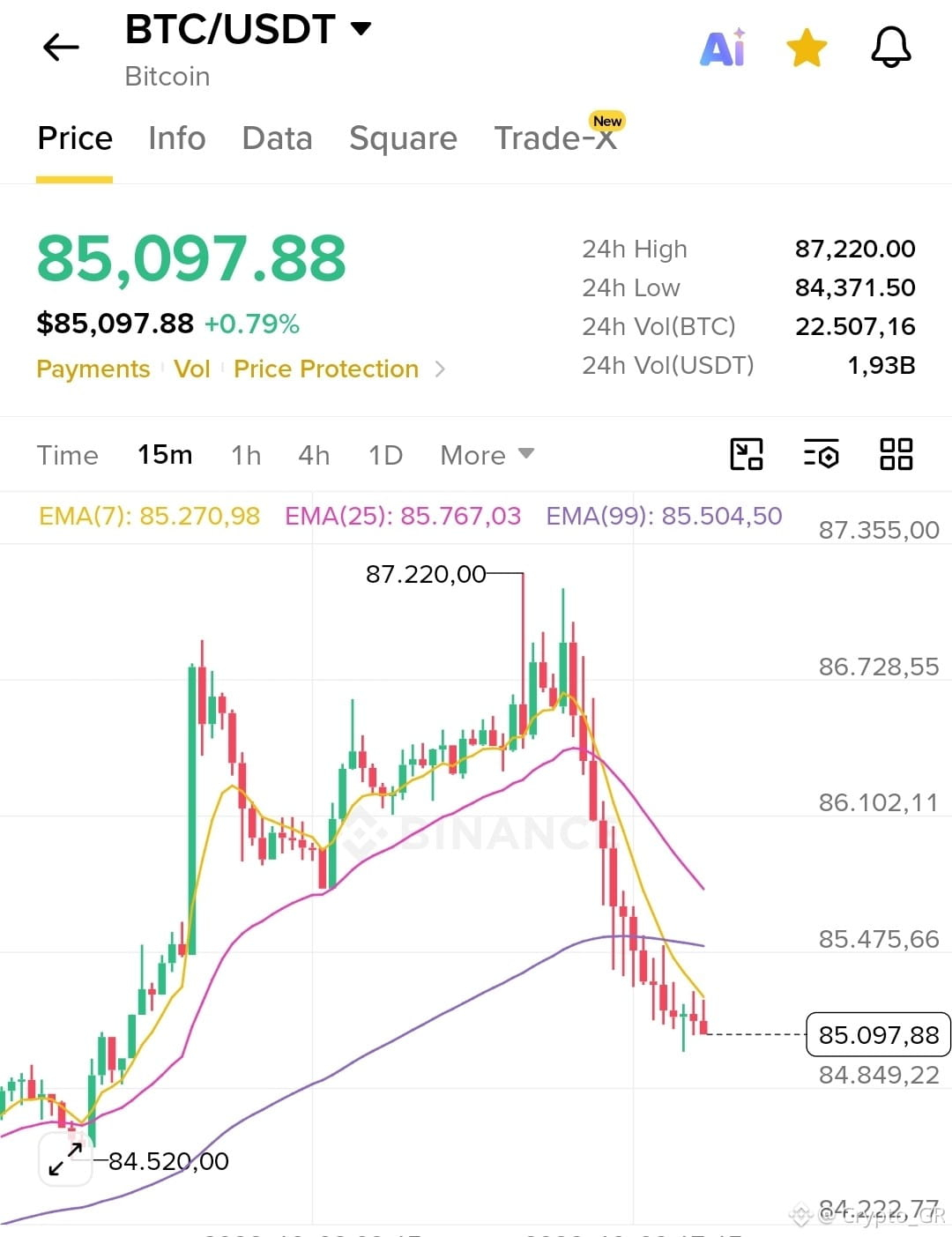
Why did crypto pump this morning?
The US jobs report came in weaker than expected, while unemployment rose. This increased expectations that the Fed could keep rates unchanged, with markets pricing around an 85% chance of a hold.
The market structure has also improved. After holding support, prices started moving higher, leading to a strong move up during the morning.
The market has since pulled back a bit, with $BTC now trading around $85,100.
Why did crypto pump this morning?
The US jobs report came in weaker than expected, while unemployment rose. This increased expectations that the Fed could keep rates unchanged, with markets pricing around an 85% chance of a hold.
The market structure has also improved. After holding support, prices started moving higher, leading to a strong move up during the morning.
The market has since pulled back a bit, with $BTC now trading around $85,100.
The US jobs report came in weaker than expected, while unemployment rose. This increased expectations that the Fed could keep rates unchanged, with markets pricing around an 85% chance of a hold.
The market structure has also improved. After holding support, prices started moving higher, leading to a strong move up during the morning.
The market has since pulled back a bit, with $BTC now trading around $85,100.
2
1.4k
·
--
Verified
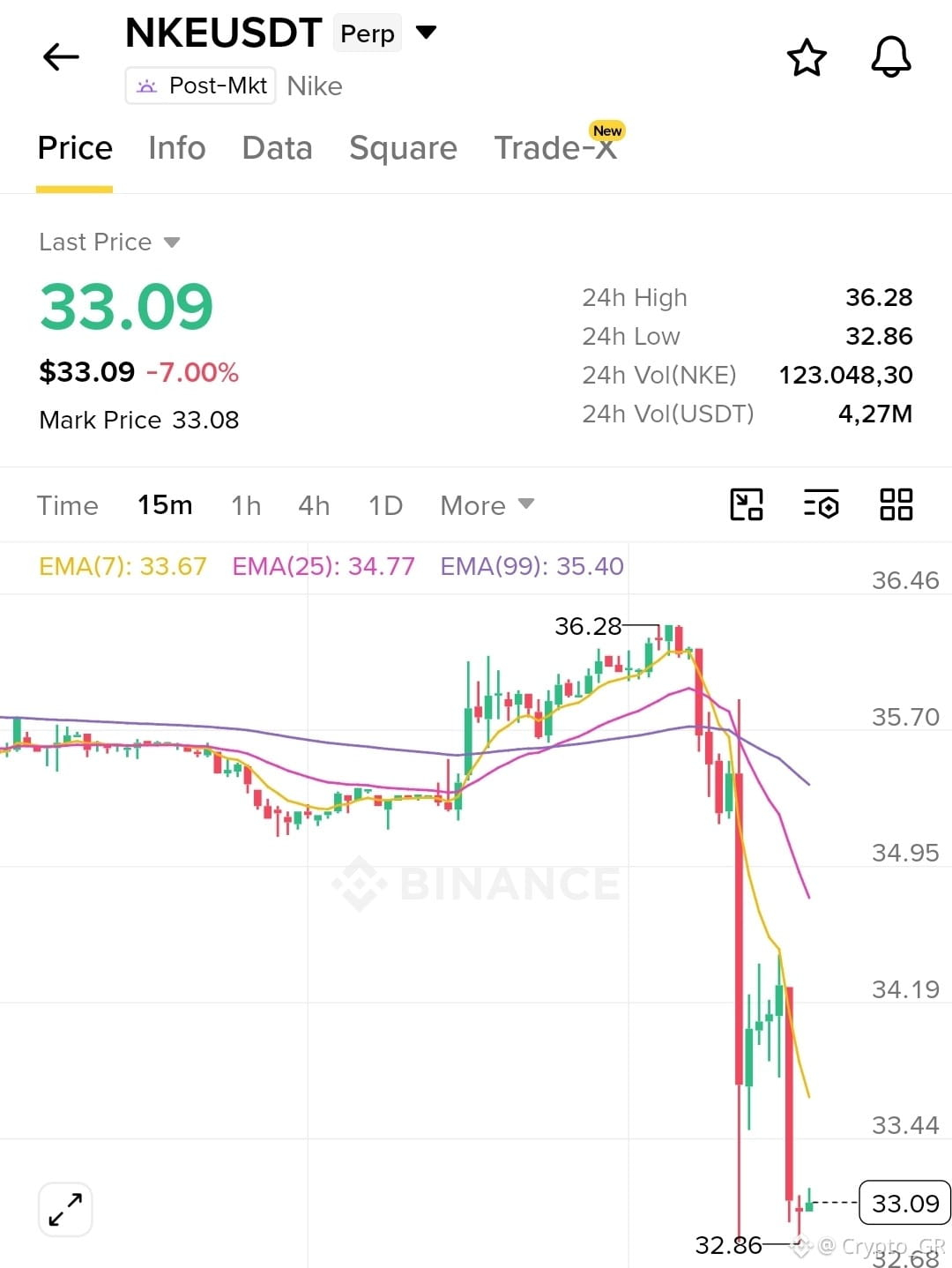
Nike $NKE falls to its lowest level since 2013 after earnings.
Nike reported $11.21B in revenue for the first quarter, below the $11.33B expected by analysts. Revenue also fell 4% compared with last year.
The bigger concern was the outlook. Nike now expects revenue to fall by a high-single-digit percentage in fiscal 2027, worse than previously expected.
China remains one of the biggest problems, with sales in the region falling 26% during the quarter.
The company is also starting a new cost-cutting plan, aiming to save around $2.5B through fiscal 2031 and announcing more job cuts.
Nike $NKE falls to its lowest level since 2013 after earnings.
Nike reported $11.21B in revenue for the first quarter, below the $11.33B expected by analysts. Revenue also fell 4% compared with last year.
The bigger concern was the outlook. Nike now expects revenue to fall by a high-single-digit percentage in fiscal 2027, worse than previously expected.
China remains one of the biggest problems, with sales in the region falling 26% during the quarter.
The company is also starting a new cost-cutting plan, aiming to save around $2.5B through fiscal 2031 and announcing more job cuts.
Nike reported $11.21B in revenue for the first quarter, below the $11.33B expected by analysts. Revenue also fell 4% compared with last year.
The bigger concern was the outlook. Nike now expects revenue to fall by a high-single-digit percentage in fiscal 2027, worse than previously expected.
China remains one of the biggest problems, with sales in the region falling 26% during the quarter.
The company is also starting a new cost-cutting plan, aiming to save around $2.5B through fiscal 2031 and announcing more job cuts.
2
2
2.9k
·
--
$NEAR Intents hit by $3.8M exploit
NEAR Intents was affected by a security issue that led to around $3.8 million in losses.
The attackers exploited a bug in how Omni’s input and output system interacted with the NEAR Intents smart contract. The service was paused after the issue was detected.
The team says the vulnerability has now been fixed and that affected users will be fully compensated.
$NEAR Intents hit by $3.8M exploit
NEAR Intents was affected by a security issue that led to around $3.8 million in losses.
The attackers exploited a bug in how Omni’s input and output system interacted with the NEAR Intents smart contract. The service was paused after the issue was detected.
The team says the vulnerability has now been fixed and that affected users will be fully compensated.
NEAR Intents was affected by a security issue that led to around $3.8 million in losses.
The attackers exploited a bug in how Omni’s input and output system interacted with the NEAR Intents smart contract. The service was paused after the issue was detected.
The team says the vulnerability has now been fixed and that affected users will be fully compensated.
1
9
4.7k
·
--
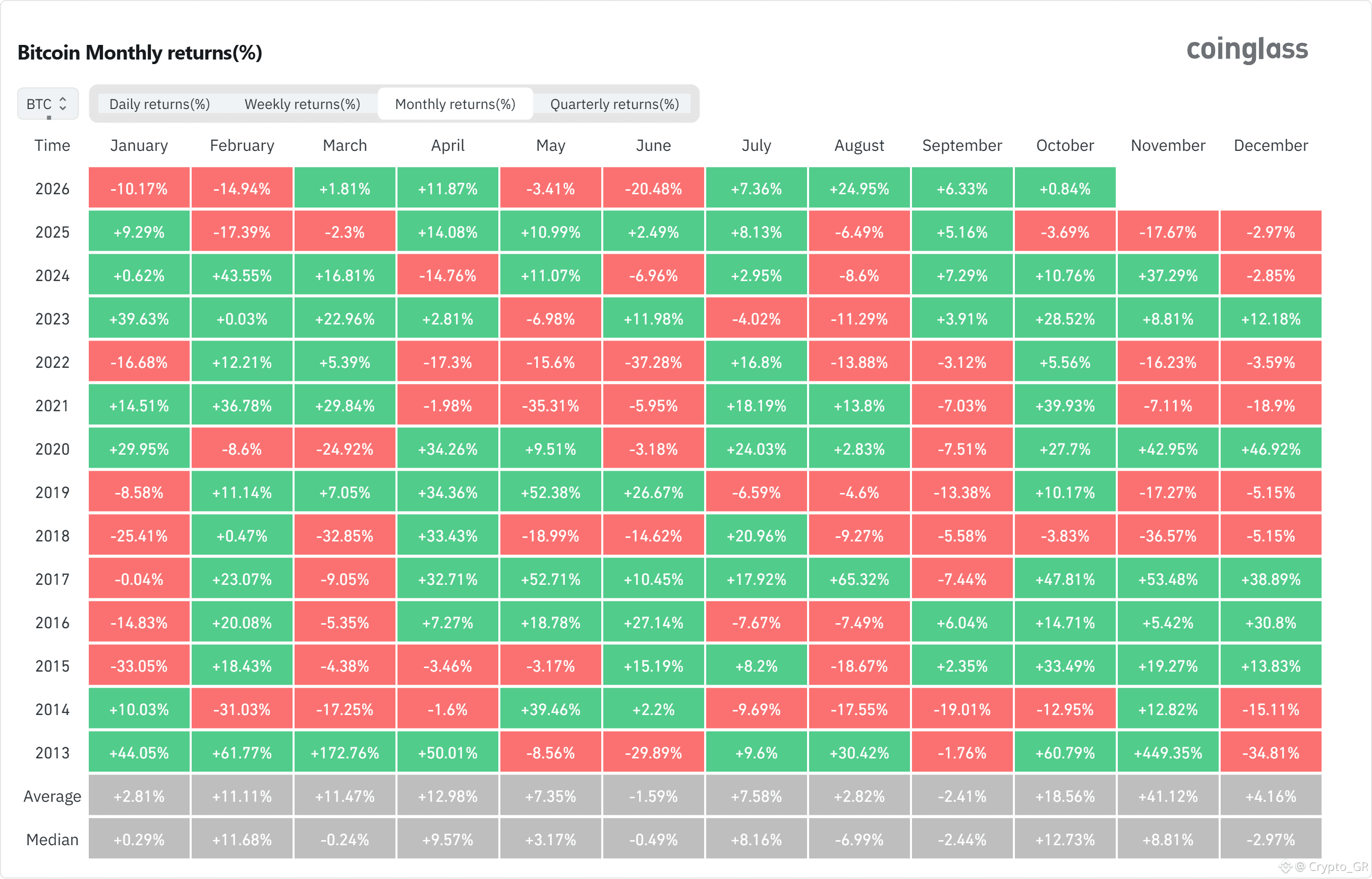
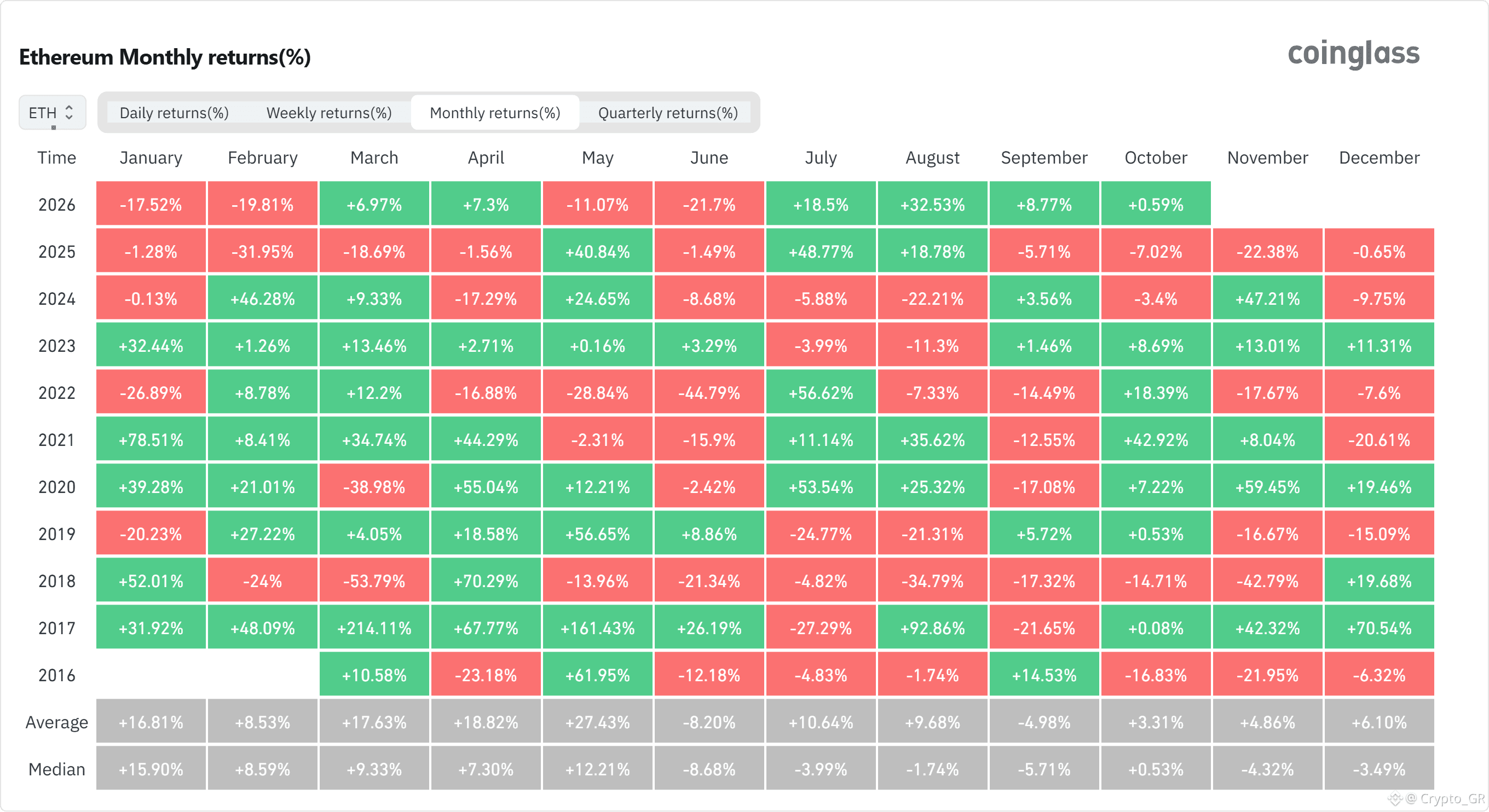
$BTC closed September with a 6.33% gain, while $ETH gained 8.77%. This is especially notable because September has historically been one of Bitcoin’s weaker months.
During the month, Bitcoin dropped below $75,000 before recovering to around $87,000. Ethereum also moved higher, reaching above $2,800 before pulling back.
Now comes October, often called “Uptober” in crypto. Historically, October has been one of Bitcoin’s strongest months, with an average return of around 18.56%.
$BTC closed September with a 6.33% gain, while $ETH gained 8.77%. This is especially notable because September has historically been one of Bitcoin’s weaker months.
During the month, Bitcoin dropped below $75,000 before recovering to around $87,000. Ethereum also moved higher, reaching above $2,800 before pulling back.
Now comes October, often called “Uptober” in crypto. Historically, October has been one of Bitcoin’s strongest months, with an average return of around 18.56%.
During the month, Bitcoin dropped below $75,000 before recovering to around $87,000. Ethereum also moved higher, reaching above $2,800 before pulling back.
Now comes October, often called “Uptober” in crypto. Historically, October has been one of Bitcoin’s strongest months, with an average return of around 18.56%.
2
3
2.8k
·
--
Verified
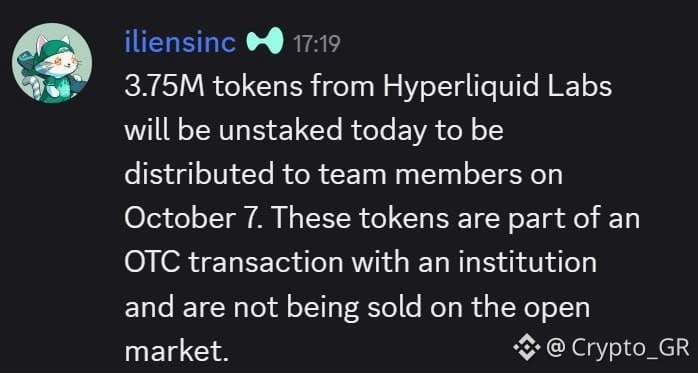
Hyperliquid Labs is unstaking around 3.75M $HYPE , worth roughly $320M at current prices.
According to reports, the tokens are planned for an OTC deal with one institutional buyer rather than being sold on the open market.
$HYPE spot ETFs have already recorded around $349M in total net inflows, according to Farside data. Now, a single institutional transaction is reportedly involving another ~$320M worth of $HYPE .
Hyperliquid Labs is unstaking around 3.75M $HYPE , worth roughly $320M at current prices.
According to reports, the tokens are planned for an OTC deal with one institutional buyer rather than being sold on the open market.
$HYPE spot ETFs have already recorded around $349M in total net inflows, according to Farside data. Now, a single institutional transaction is reportedly involving another ~$320M worth of $HYPE .
According to reports, the tokens are planned for an OTC deal with one institutional buyer rather than being sold on the open market.
$HYPE spot ETFs have already recorded around $349M in total net inflows, according to Farside data. Now, a single institutional transaction is reportedly involving another ~$320M worth of $HYPE .
3
1
3.5k
·
--
Verified
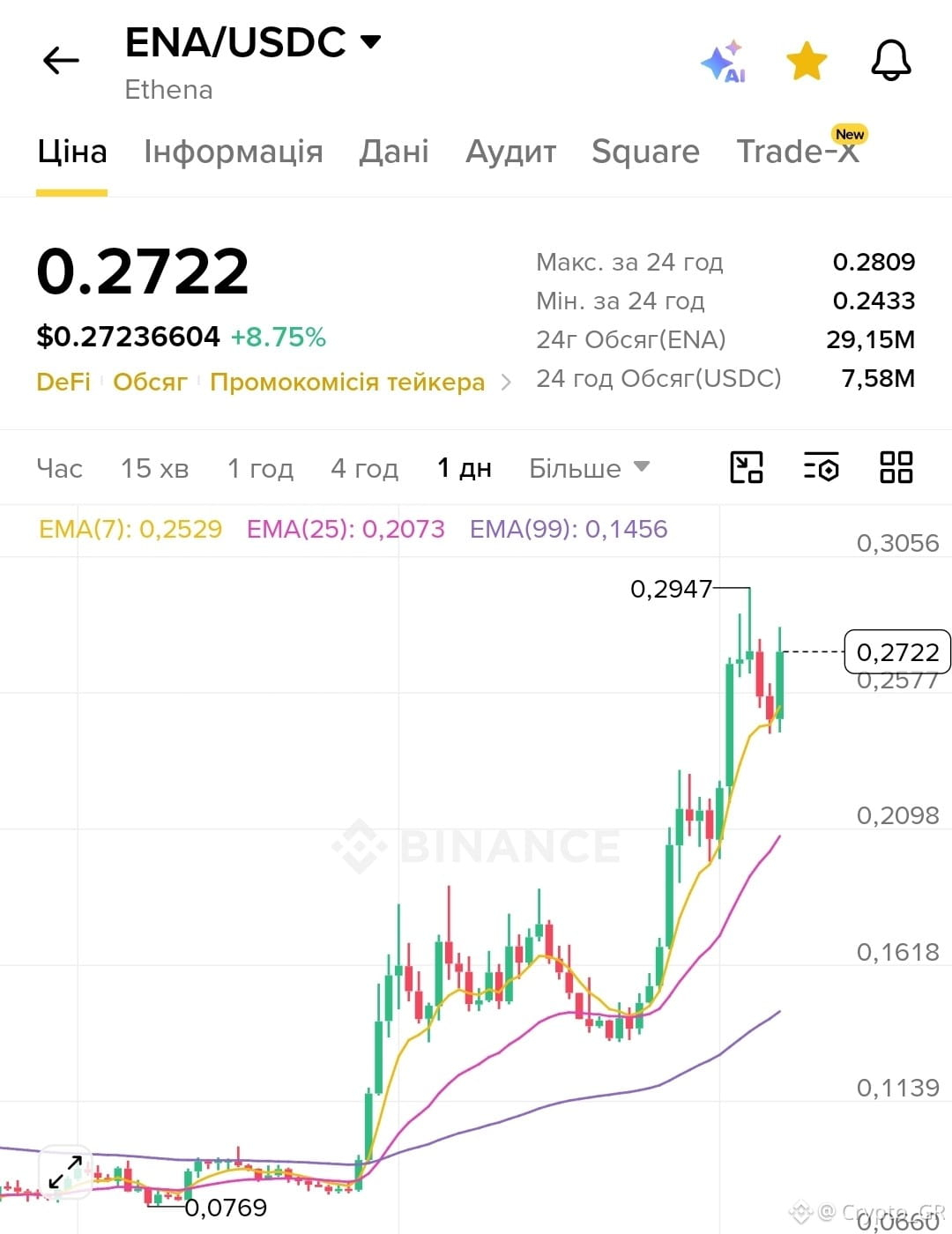
$ENA could reach $2?
Standard Chartered analyst Geoff Kendrick expects $ENA to reach $2 by the end of 2028. $ENA was trading at around $0.25 when the forecast was made.
Here are the main reasons behind the forecast:
- USDe growth: Ethena’s stablecoin could grow from $4.9B to $40B.
- ENA purchases: If USDe passes $7.5B, 95% of the protocol’s net income could be used to buy ENA.
- New income: Ethena is also working on lending services for large clients through FalconX.
$ENA could reach $2?
Standard Chartered analyst Geoff Kendrick expects $ENA to reach $2 by the end of 2028. $ENA was trading at around $0.25 when the forecast was made.
Here are the main reasons behind the forecast:
- USDe growth: Ethena’s stablecoin could grow from $4.9B to $40B.
- ENA purchases: If USDe passes $7.5B, 95% of the protocol’s net income could be used to buy ENA.
- New income: Ethena is also working on lending services for large clients through FalconX.
Standard Chartered analyst Geoff Kendrick expects $ENA to reach $2 by the end of 2028. $ENA was trading at around $0.25 when the forecast was made.
Here are the main reasons behind the forecast:
- USDe growth: Ethena’s stablecoin could grow from $4.9B to $40B.
- ENA purchases: If USDe passes $7.5B, 95% of the protocol’s net income could be used to buy ENA.
- New income: Ethena is also working on lending services for large clients through FalconX.
3
1
1.5k
·
--
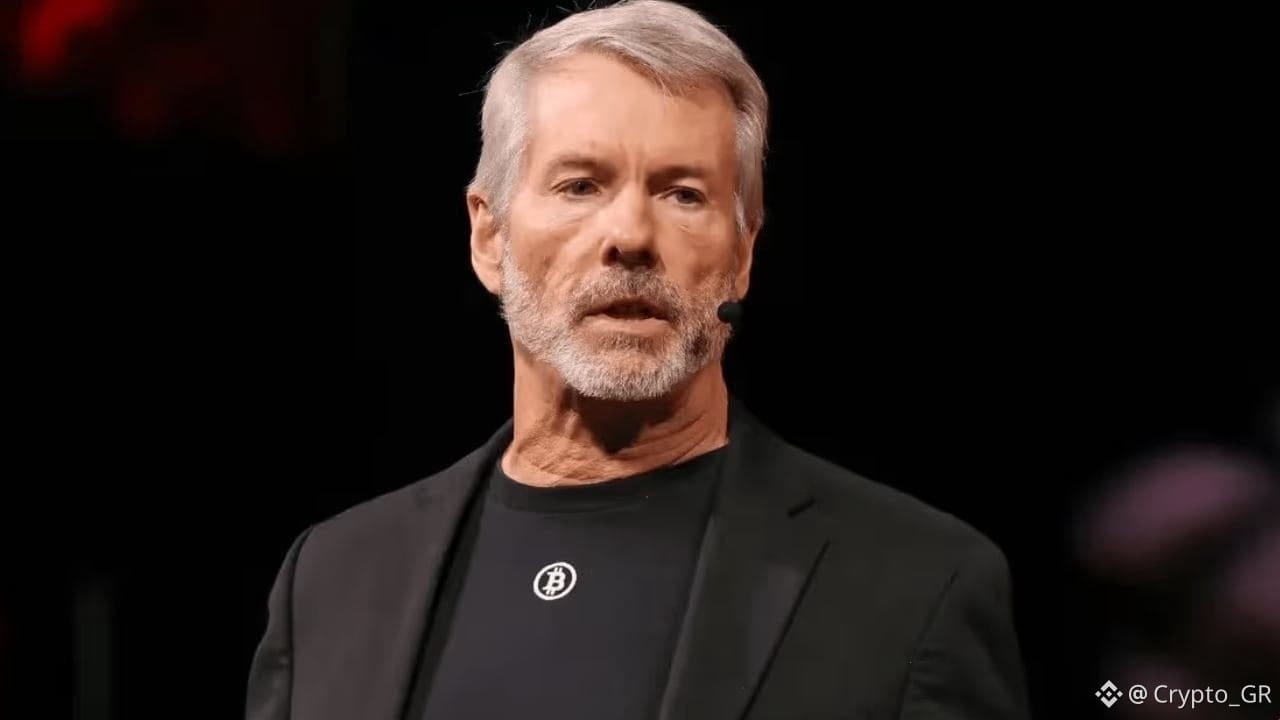
Michael Saylor, co-founder of Strategy, believes Bitcoin and the crypto market are still in the early stages of growth.
The crypto market is currently worth around $3 trillion. Saylor says that if crypto reaches around 10% of the value of global assets, Bitcoin and the entire crypto market could grow to around $120 trillion.
Saylor sees Bitcoin-backed bank loans as one possible driver in the coming years. This could let people borrow money using $BTC as collateral without selling their coins.
In the long term, Saylor expects Bitcoin to grow by around 20–30% per year.
Michael Saylor, co-founder of Strategy, believes Bitcoin and the crypto market are still in the early stages of growth.
The crypto market is currently worth around $3 trillion. Saylor says that if crypto reaches around 10% of the value of global assets, Bitcoin and the entire crypto market could grow to around $120 trillion.
Saylor sees Bitcoin-backed bank loans as one possible driver in the coming years. This could let people borrow money using $BTC as collateral without selling their coins.
In the long term, Saylor expects Bitcoin to grow by around 20–30% per year.
The crypto market is currently worth around $3 trillion. Saylor says that if crypto reaches around 10% of the value of global assets, Bitcoin and the entire crypto market could grow to around $120 trillion.
Saylor sees Bitcoin-backed bank loans as one possible driver in the coming years. This could let people borrow money using $BTC as collateral without selling their coins.
In the long term, Saylor expects Bitcoin to grow by around 20–30% per year.
3
14
5.4k
·
--
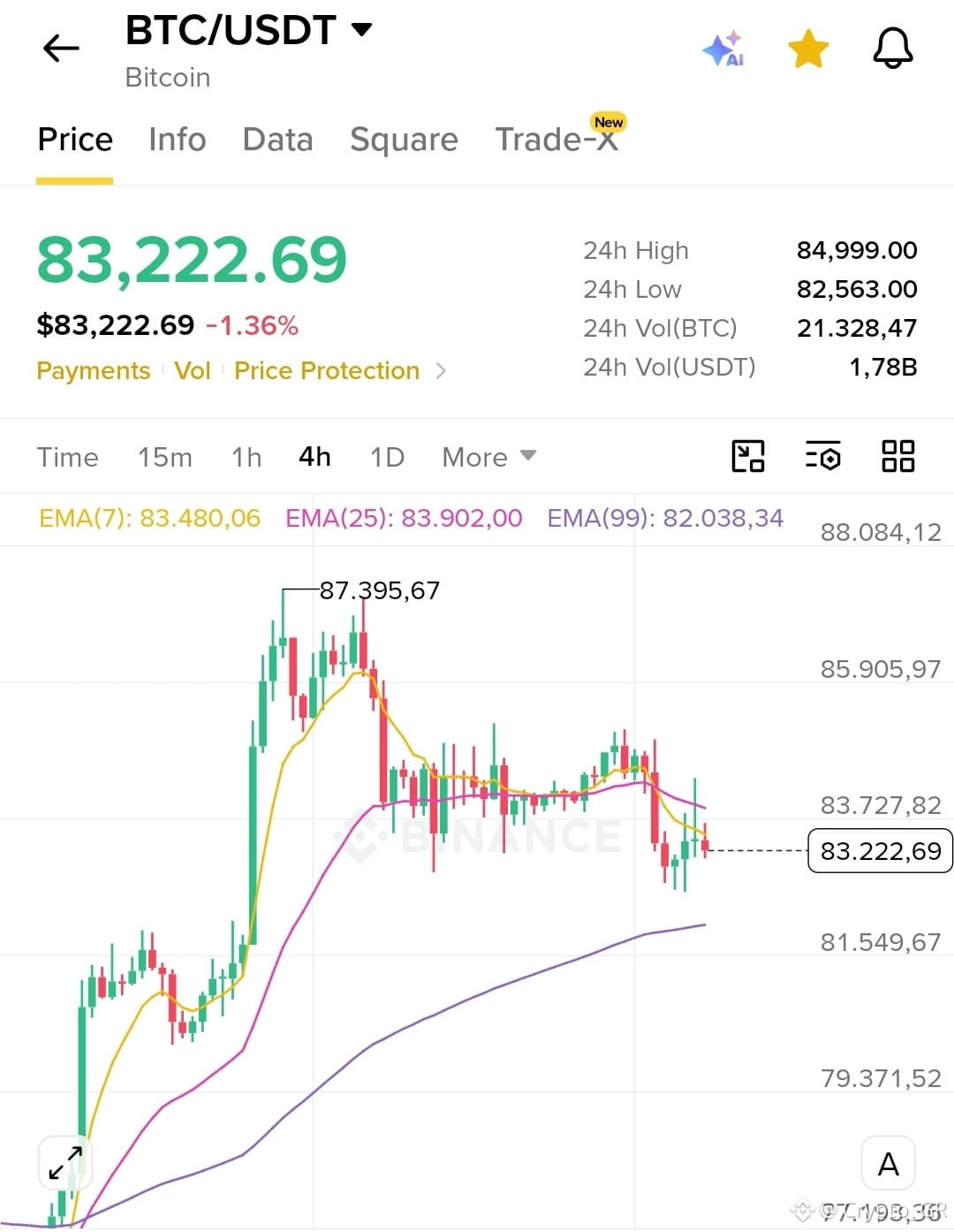
Bitcoin has pulled back from the $85,000 level and is now trading around $83,000–$83,200.
If Bitcoin continues lower and moves back toward $81,000, that would not be a great sign.
If Bitcoin manages to break through $85,000 again, the next levels I would watch are around $87,000–$88,000.
What makes this correction interesting is that there haven't really been any major or specific negative news behind the move.
For now, I don't want to get too involved in futures, especially while the market is in a phase where there isn't much clear direction. If I start accumulating spot, the coins I'll be watching are mainly $ETH , $SOL and $NEAR .
Bitcoin has pulled back from the $85,000 level and is now trading around $83,000–$83,200.
If Bitcoin continues lower and moves back toward $81,000, that would not be a great sign.
If Bitcoin manages to break through $85,000 again, the next levels I would watch are around $87,000–$88,000.
What makes this correction interesting is that there haven't really been any major or specific negative news behind the move.
For now, I don't want to get too involved in futures, especially while the market is in a phase where there isn't much clear direction. If I start accumulating spot, the coins I'll be watching are mainly $ETH , $SOL and $NEAR .
If Bitcoin continues lower and moves back toward $81,000, that would not be a great sign.
If Bitcoin manages to break through $85,000 again, the next levels I would watch are around $87,000–$88,000.
What makes this correction interesting is that there haven't really been any major or specific negative news behind the move.
For now, I don't want to get too involved in futures, especially while the market is in a phase where there isn't much clear direction. If I start accumulating spot, the coins I'll be watching are mainly $ETH , $SOL and $NEAR .
10
3
35
32.2k
·
--
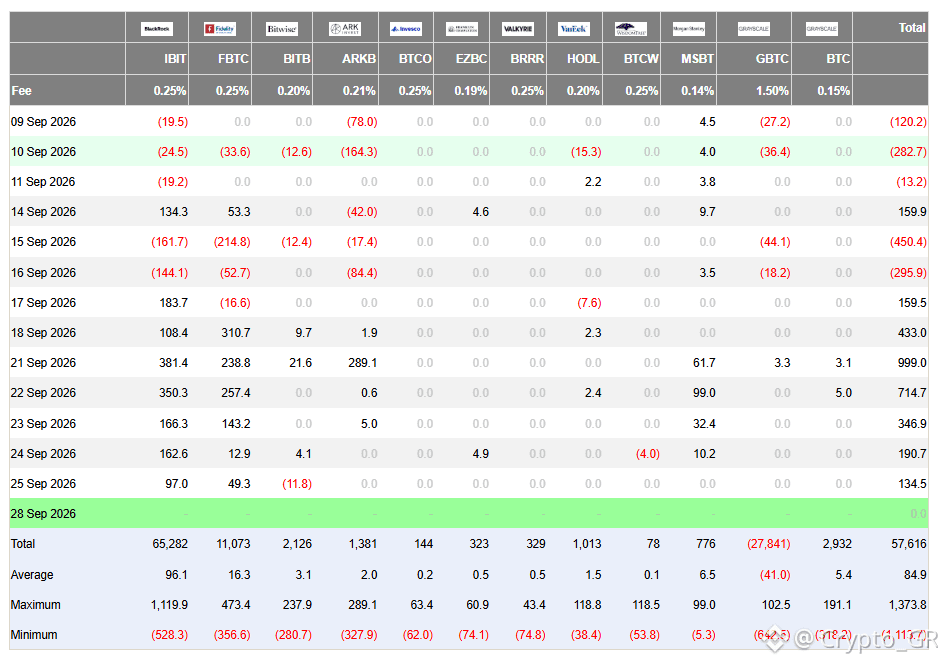
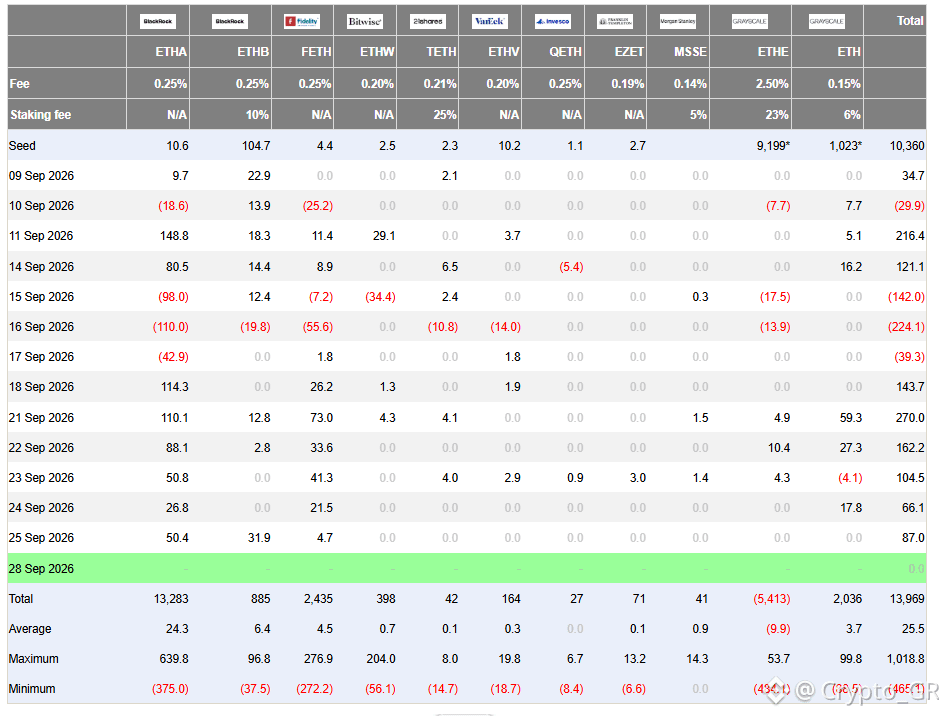
Bitcoin ETFs just recorded their strongest week of 2026.
US spot $BTC ETFs attracted around $2.39 billion in inflows last week, marking their best weekly performance of the year and the highest level since October 2025.
Crypto ETFs received approximately $3.4 billion in total. $ETH ETFs brought in nearly $690 million, while $SOL ETFs recorded around $188 million in inflows.
Bitcoin ETFs just recorded their strongest week of 2026.
US spot $BTC ETFs attracted around $2.39 billion in inflows last week, marking their best weekly performance of the year and the highest level since October 2025.
Crypto ETFs received approximately $3.4 billion in total. $ETH ETFs brought in nearly $690 million, while $SOL ETFs recorded around $188 million in inflows.
US spot $BTC ETFs attracted around $2.39 billion in inflows last week, marking their best weekly performance of the year and the highest level since October 2025.
Crypto ETFs received approximately $3.4 billion in total. $ETH ETFs brought in nearly $690 million, while $SOL ETFs recorded around $188 million in inflows.
1
1.2k
·
--
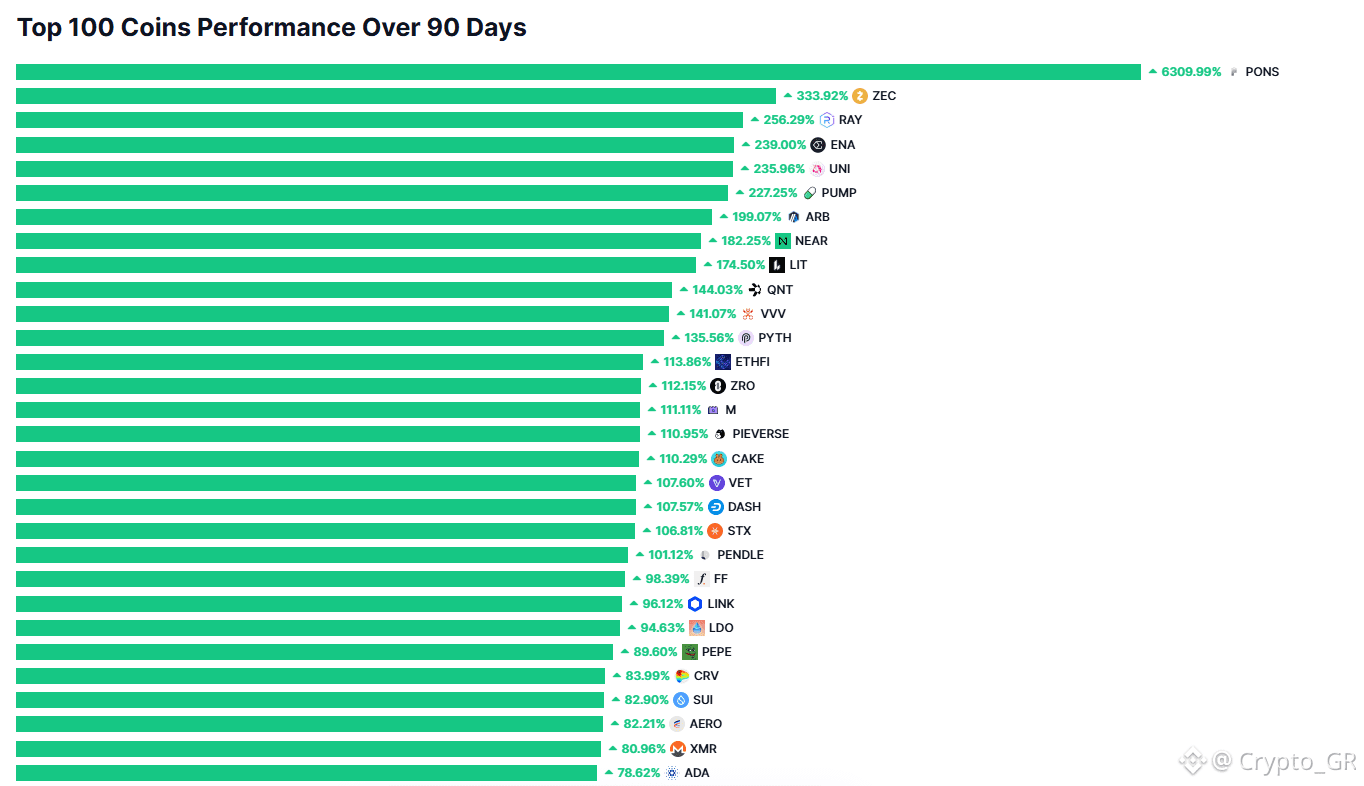
These are the 30 best-performing cryptocurrencies among the top 100 by market cap over the past 90 days.
PONS leads the list with an incredible +6,309.99%, followed by $ZEC at +333.92% and RAY at +256.29%.
Meanwhile, $BTC has gained around 42% and $ETH around 72% over the past 90 days.
These are the 30 best-performing cryptocurrencies among the top 100 by market cap over the past 90 days.
PONS leads the list with an incredible +6,309.99%, followed by $ZEC at +333.92% and RAY at +256.29%.
Meanwhile, $BTC has gained around 42% and $ETH around 72% over the past 90 days.
PONS leads the list with an incredible +6,309.99%, followed by $ZEC at +333.92% and RAY at +256.29%.
Meanwhile, $BTC has gained around 42% and $ETH around 72% over the past 90 days.
23
18
57
54.7k
·
--
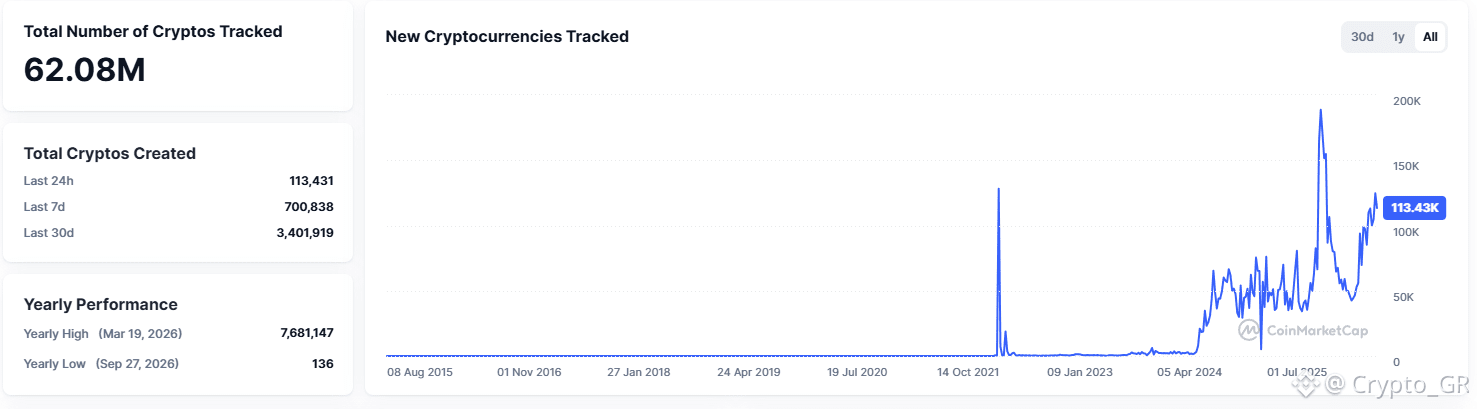
There are now more than 62 million cryptocurrencies in the crypto market.
More than 113,000 new cryptocurrencies were added in the last 24 hours. Over the past 30 days, that number reaches more than 3.4 million new cryptocurrencies.
But look at how much things have changed.
In June 2022, CoinMarketCap tracked around 26,900 cryptocurrencies. Today, that number is above 62 million, more than 2,300 times higher in just over four years.
Of course, this does not mean that all of these cryptocurrencies are still active. Many have lost liquidity, fallen to almost zero or simply been forgotten. A large number are also meme coins and short-lived tokens.
There are now more than 62 million cryptocurrencies in the crypto market.
More than 113,000 new cryptocurrencies were added in the last 24 hours. Over the past 30 days, that number reaches more than 3.4 million new cryptocurrencies.
But look at how much things have changed.
In June 2022, CoinMarketCap tracked around 26,900 cryptocurrencies. Today, that number is above 62 million, more than 2,300 times higher in just over four years.
Of course, this does not mean that all of these cryptocurrencies are still active. Many have lost liquidity, fallen to almost zero or simply been forgotten. A large number are also meme coins and short-lived tokens.
More than 113,000 new cryptocurrencies were added in the last 24 hours. Over the past 30 days, that number reaches more than 3.4 million new cryptocurrencies.
But look at how much things have changed.
In June 2022, CoinMarketCap tracked around 26,900 cryptocurrencies. Today, that number is above 62 million, more than 2,300 times higher in just over four years.
Of course, this does not mean that all of these cryptocurrencies are still active. Many have lost liquidity, fallen to almost zero or simply been forgotten. A large number are also meme coins and short-lived tokens.
1
3.1k
Log in to explore more content
Join global crypto users on Binance Square
⚡️ Get latest and useful information about crypto.
💬 Trusted by the world’s largest crypto exchange.
👍 Discover real insights from verified creators.
Email / Phone number
Trending Topics
FedMinutesFocusOnOctoberPause
205,400 views
1,421 Discussing
🚨 HIGH ALERT ‼️ PLEASE DON’T TRADE BLINDLY FOR THE NEXT HOUR 🚨
Guys, we have FOMC Minutes coming in less than 1 hour.
And after the kind of volatility we already saw today, I really don’t want anyone opening random high-leverage positions just before this release.
The biggest reaction I’m watching will be in Gold (XAU), Silver (XAG), BTC and ETH. Then coins like SOL and other highly leveraged mid/low-cap alts can exaggerate whatever move BTC makes.
Gold and Silver are especially sensitive tonight because the market is already reacting to the US dollar + Treasury yields, and both metals have been under heavy pressure ahead of the Fed minutes.
Briefly speaking
📉Hawkish Fed Minutes → Dollar/yields can push higher → pressure on BTC, crypto, Gold & silver
📈Dovish Fed Minutes → Dollar/yields can cool → BTC, Gold, Silver and risk assets can bounce hard.
And please remember the first candle can be a trap. We can get a pump, immediate dump, liquidations on both sides, and then the real direction.
So for now, protect your positions, reduce unnecessary leverage and don’t FOMO into the first move.
Tonight I’m watching $XAU , $XAG and $BTC first. These will tell us very quickly how the market is reading the Fed.
I will Update you guys on time
Follow @Panda Traders and Turn on Your notifications right now
#FedMinutesFocusOnOctoberPause
Panda Traders
·19 Likes
·4.2k views
BinanceLaunchesBinanceIntelligence
1.1M views
6,601 Discussing
EvernorthDelaysNasdaqDebutToOct12
17,969 views
328 Discussing