
Cripto_Cript
18.3k Posts

Cripto_Cript
Report
Block User
Open Trade
High-Frequency Trader
3.3 Years
1.8K+ Following
235 Followers
68 Liked
Posts
Portfolio
All
Quotes
·
--
See translation
公开提前发文
公开提前发文


首席操盘手
·
--
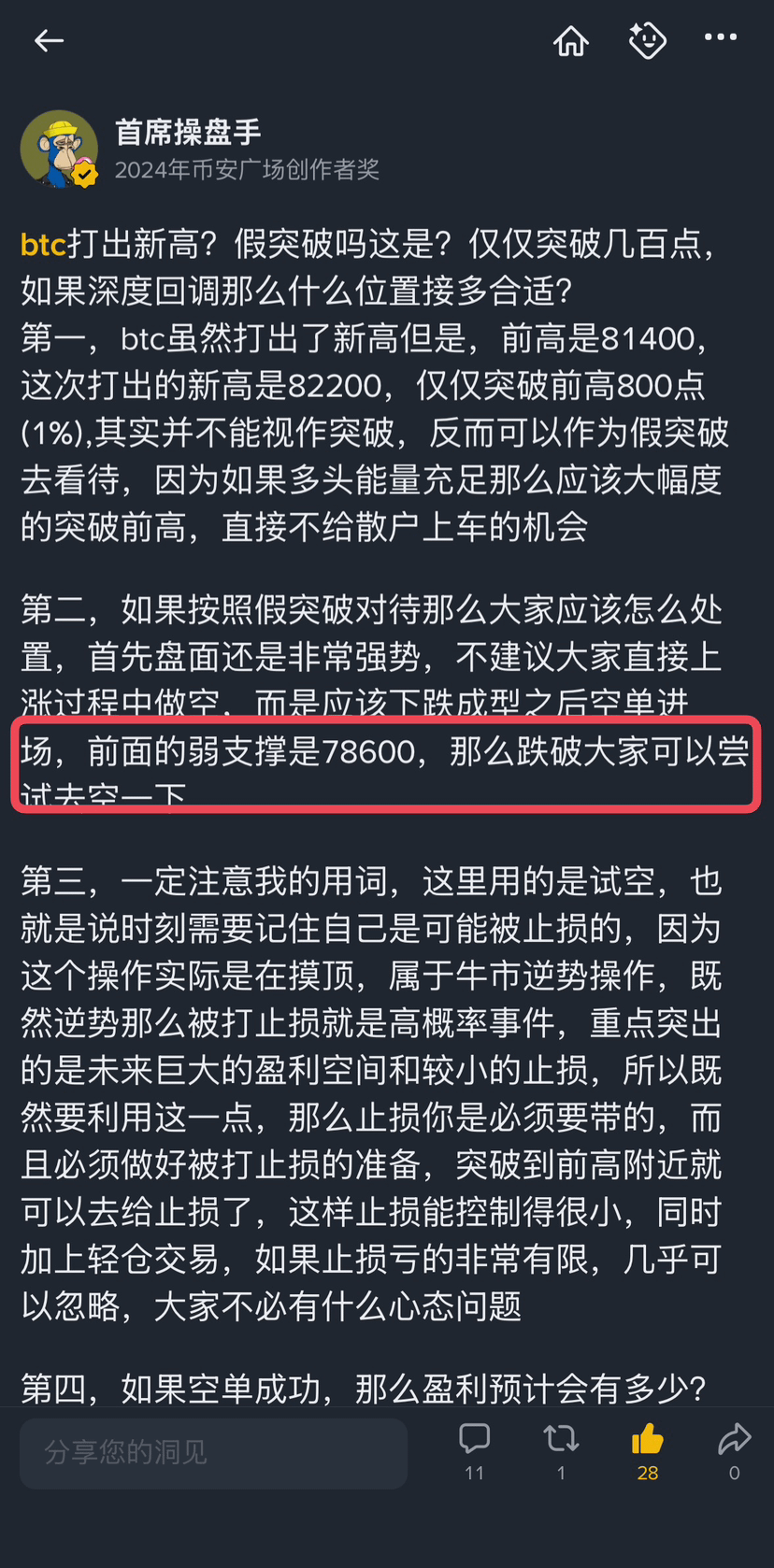
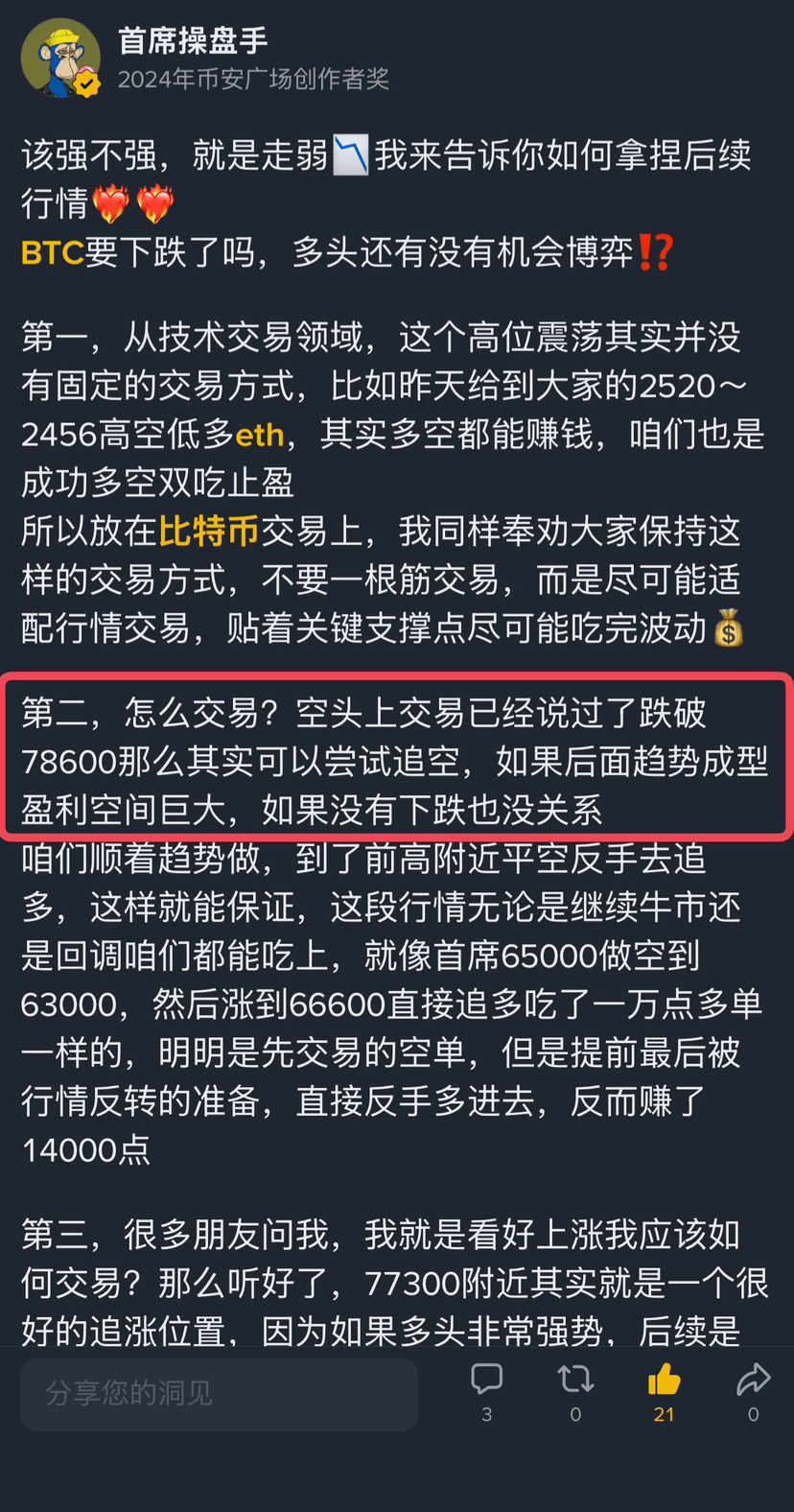
BTC short order 78600 breaks below entry point
Profit 2000 points after the CPI release
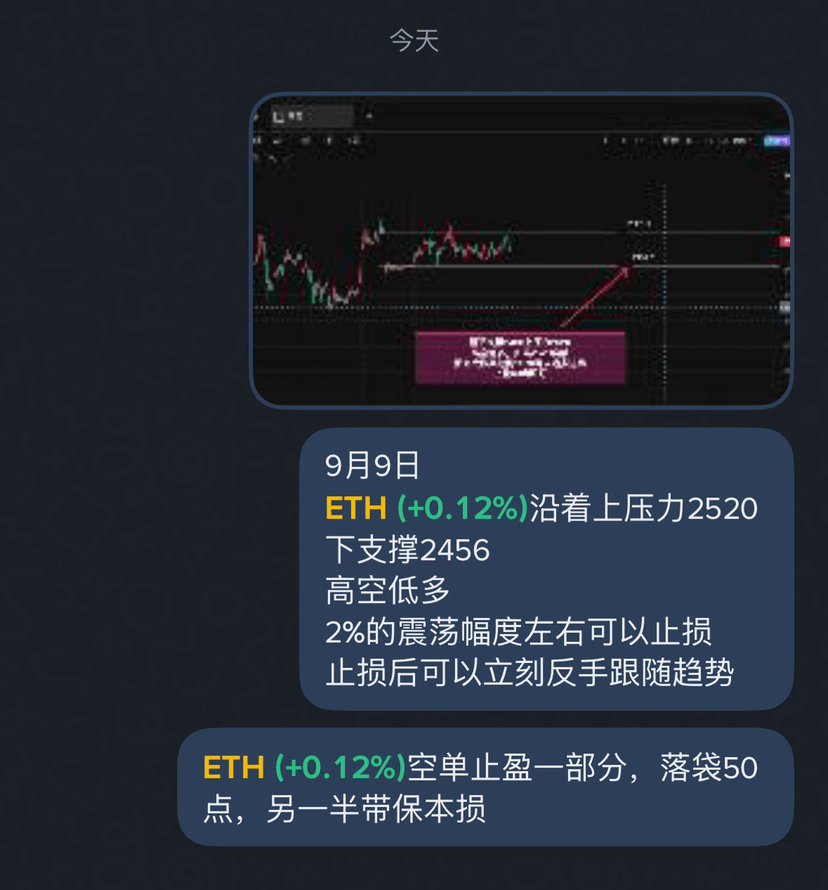
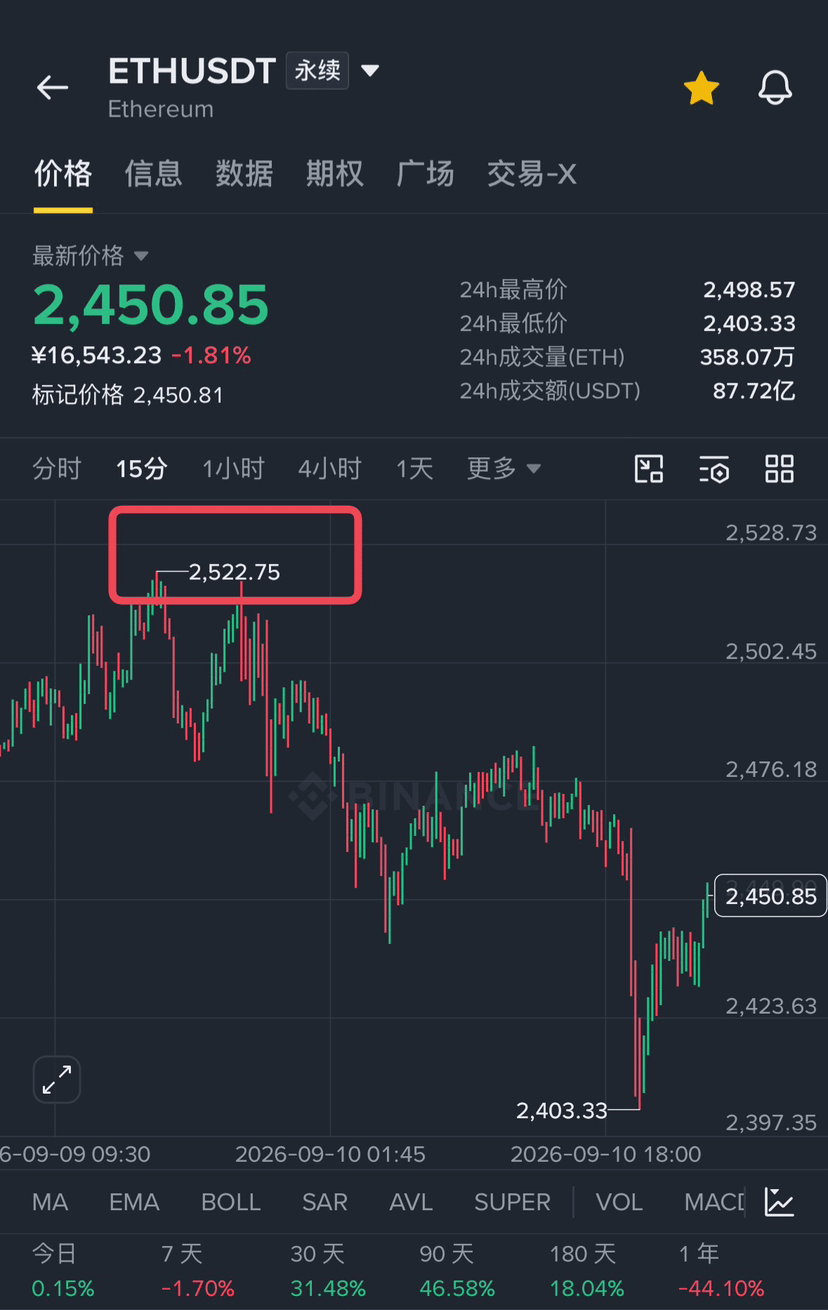
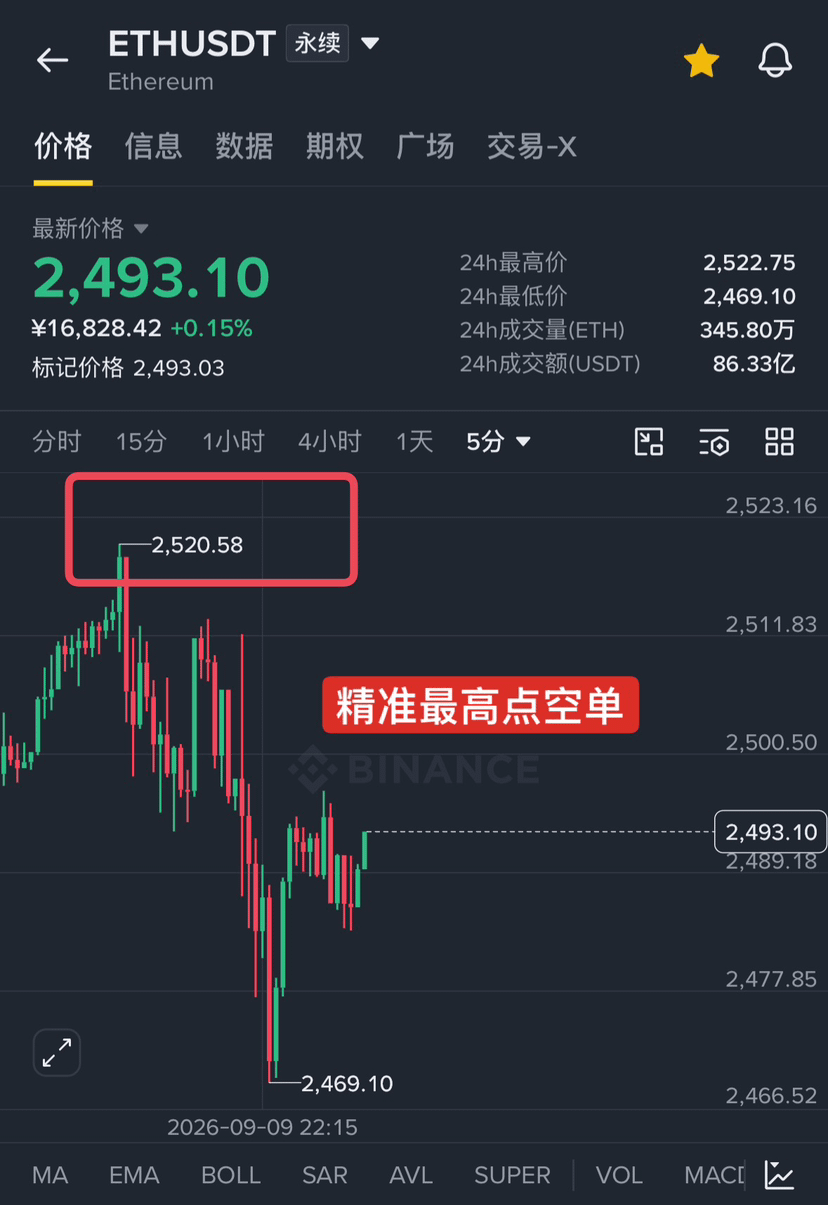
ETH short order 2520 enters on the left side of the highest point
Take profit: 120 points
Published the entire process in advance with no after-the-fact commentary 🤑 who else?
Profit 2000 points after the CPI release
ETH short order 2520 enters on the left side of the highest point
Take profit: 120 points
Published the entire process in advance with no after-the-fact commentary 🤑 who else?
57
·
--
good lucky
good lucky
首席操盘手
·
--
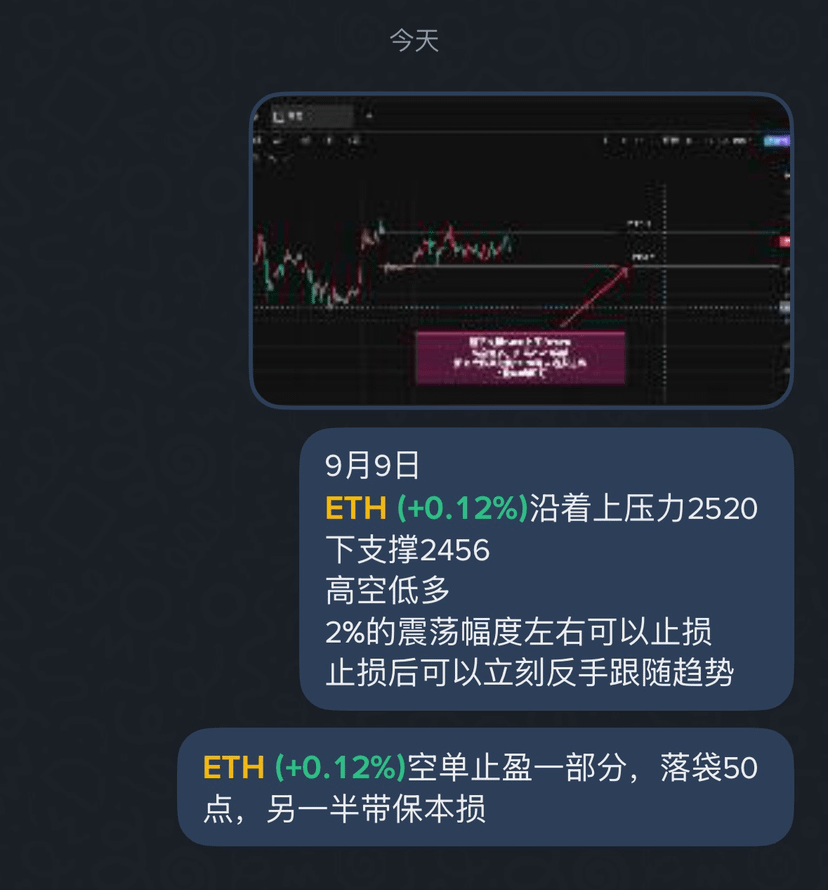
Public posts have already reminded everyone
The highest probability for ETH is to trade in a box range
Entered using the ETH spot single 2520 at the highest point
I’ve already taken profit on half; in a community, what value the market should judge for itself—what does “entering at the highest point” mean? Isn’t it flawless?
In one hour, ETH took profit of 50 points 🤷♂️ With this kind of range-bound market, who can trade with such precise timing?
Do you need to pay for such an accurate strategy? It’s released publicly in advance—set up a referral commission. Not only does it save trading fees, but you can also watch top-tier trading strategies for free 🤷♂️
The highest probability for ETH is to trade in a box range
Entered using the ETH spot single 2520 at the highest point
I’ve already taken profit on half; in a community, what value the market should judge for itself—what does “entering at the highest point” mean? Isn’t it flawless?
In one hour, ETH took profit of 50 points 🤷♂️ With this kind of range-bound market, who can trade with such precise timing?
Do you need to pay for such an accurate strategy? It’s released publicly in advance—set up a referral commission. Not only does it save trading fees, but you can also watch top-tier trading strategies for free 🤷♂️
·
--
2222 pepe
answer:
Good night Kroha_9000
2222 pepe
answer:
Good night Kroha_9000
answer:
Good night Kroha_9000

Kroha_9000
·
--
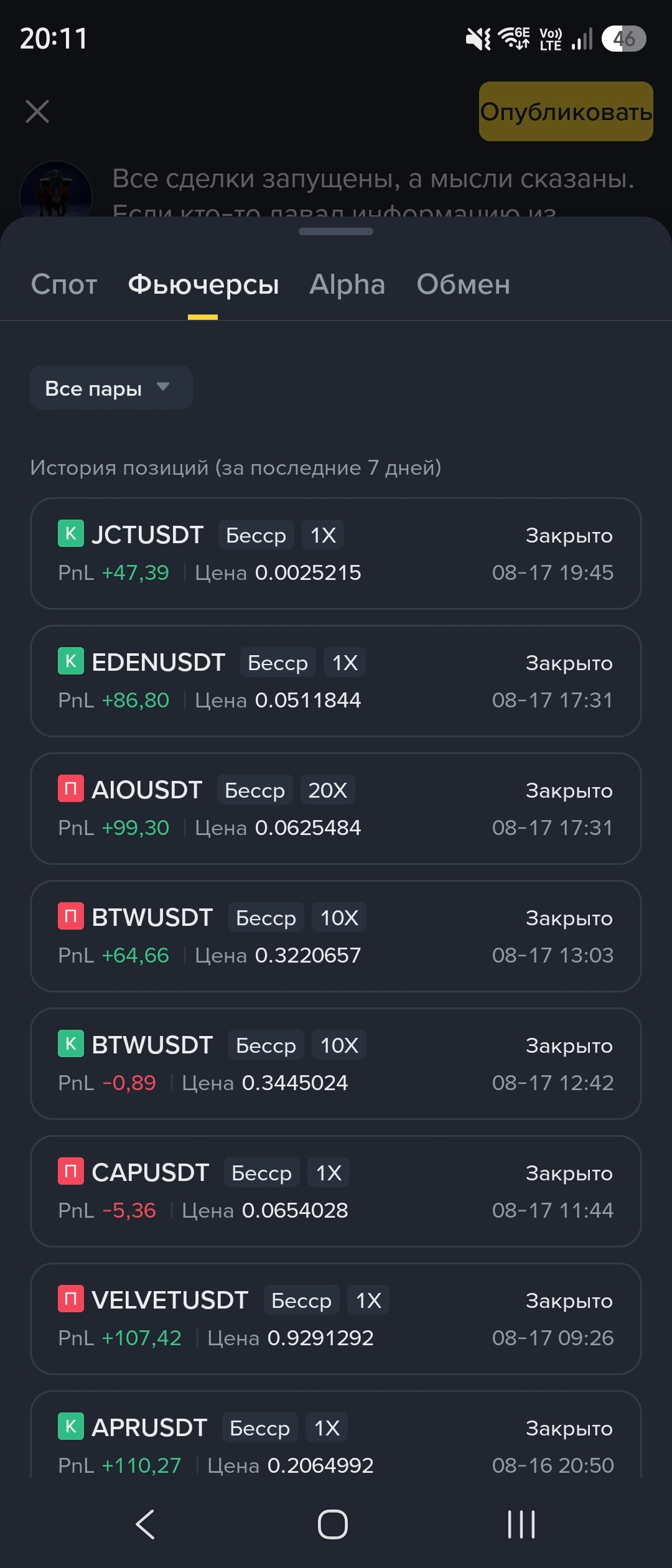
All deals have been launched, and the thoughts have been shared.
If someone provided information from the screenshot to start the deal and didn’t receive their reward, please write to me under the last post. I’ve lost track of you.
And one important point: in the morning post I accidentally selected the wrong Red Pocket, and the rewards were given out randomly. The evening and subsequent ones will definitely be under control—if the number of rewards doesn’t match the number of bonus points you received, please let me know!
Good night!
If someone provided information from the screenshot to start the deal and didn’t receive their reward, please write to me under the last post. I’ve lost track of you.
And one important point: in the morning post I accidentally selected the wrong Red Pocket, and the rewards were given out randomly. The evening and subsequent ones will definitely be under control—if the number of rewards doesn’t match the number of bonus points you received, please let me know!
Good night!
3
·
--
90
90

Khaled zarga
·
--
Good evening, roses to you. Here is your gift, oh monsters. Answer the question, then take your gift forward. ✌️✌️✌️✌️
Please, everyone, share the post and put a like, please, if you want good for others.
Please, everyone, share the post and put a like, please, if you want good for others.
1
·
--
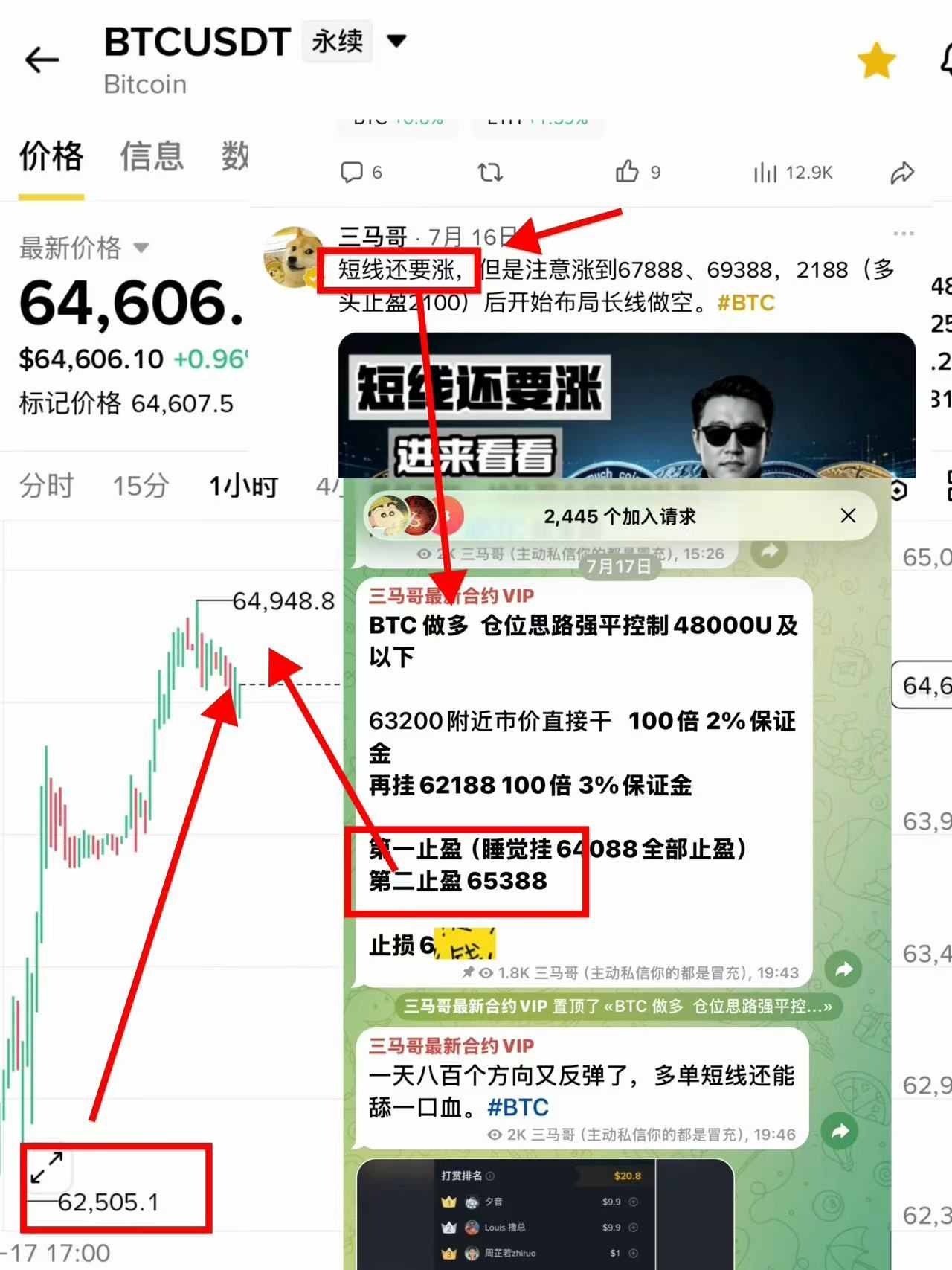
Sanma Brother’s strategy has a high win rate
Sanma Brother’s strategy has a high win rate

三马哥
·
--
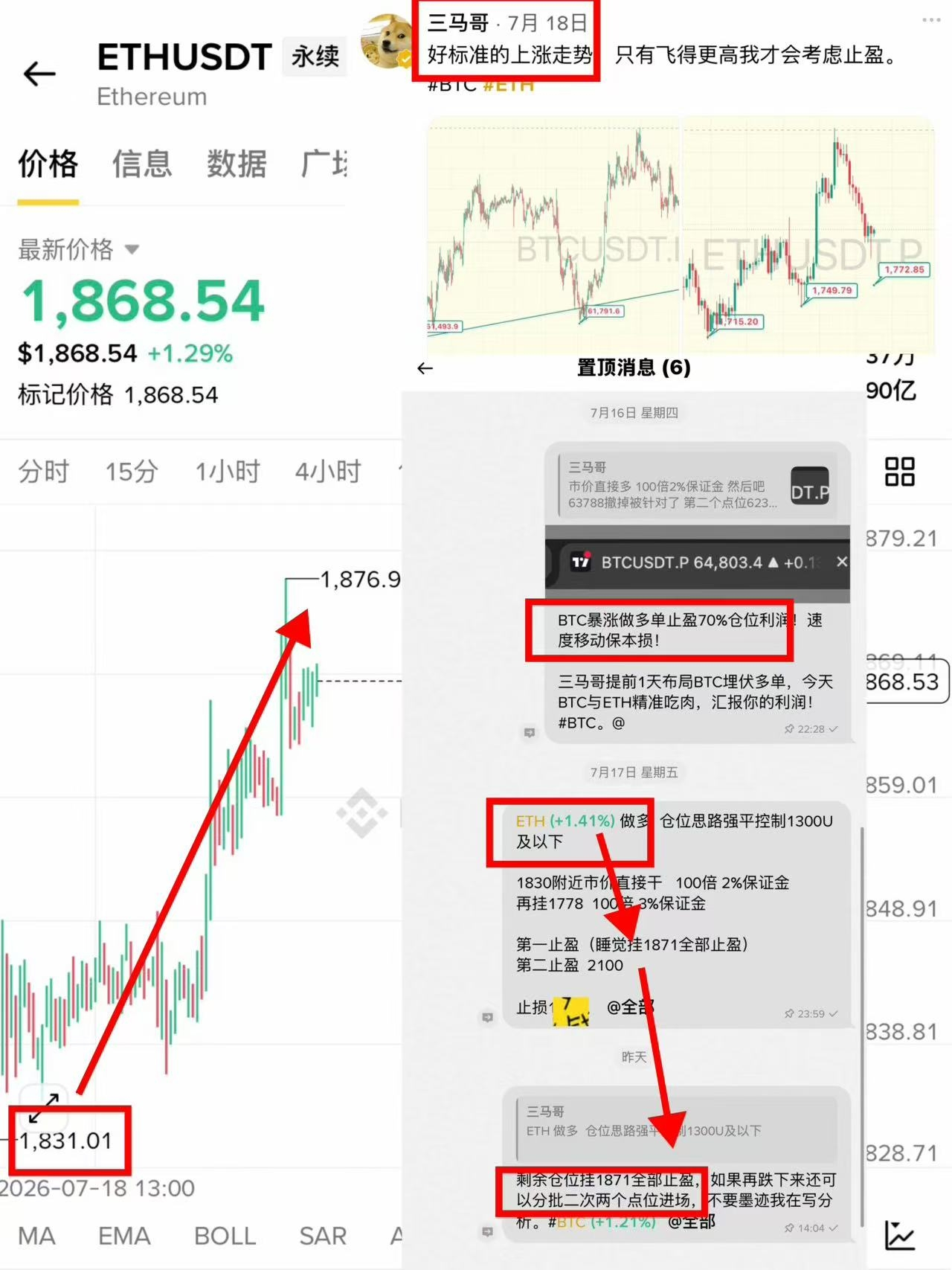
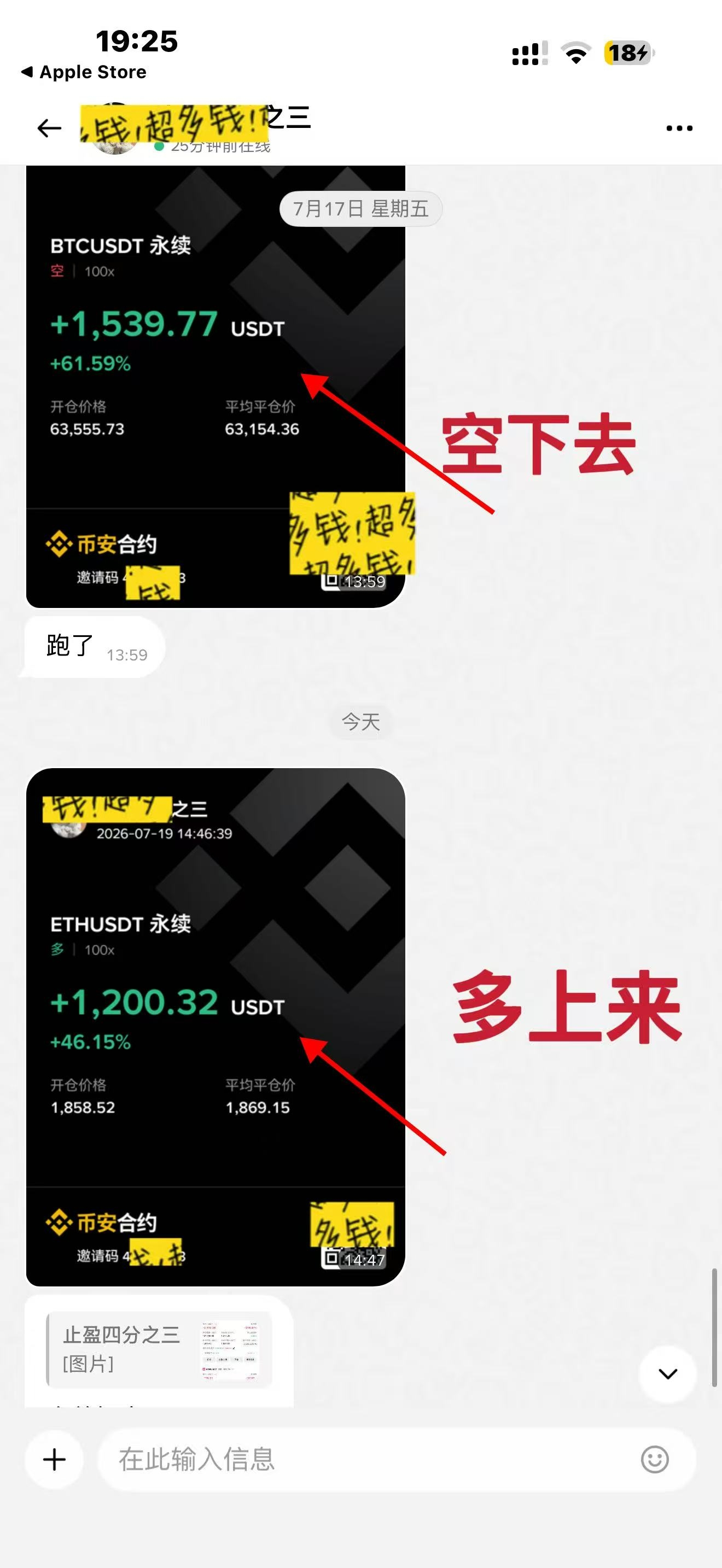
We really got smashed in this market move—BTC managed to profit from both longs and shorts, and even the ETH long position on its own also took a big bite.
From the drop after the high, we went in blindly and went long at 64100 and automatically take-profit at 64788.👉马前炮了
After waking up, we blindly shorted near 63520 and set it to automatically take profit on all at 63888.👉马前炮
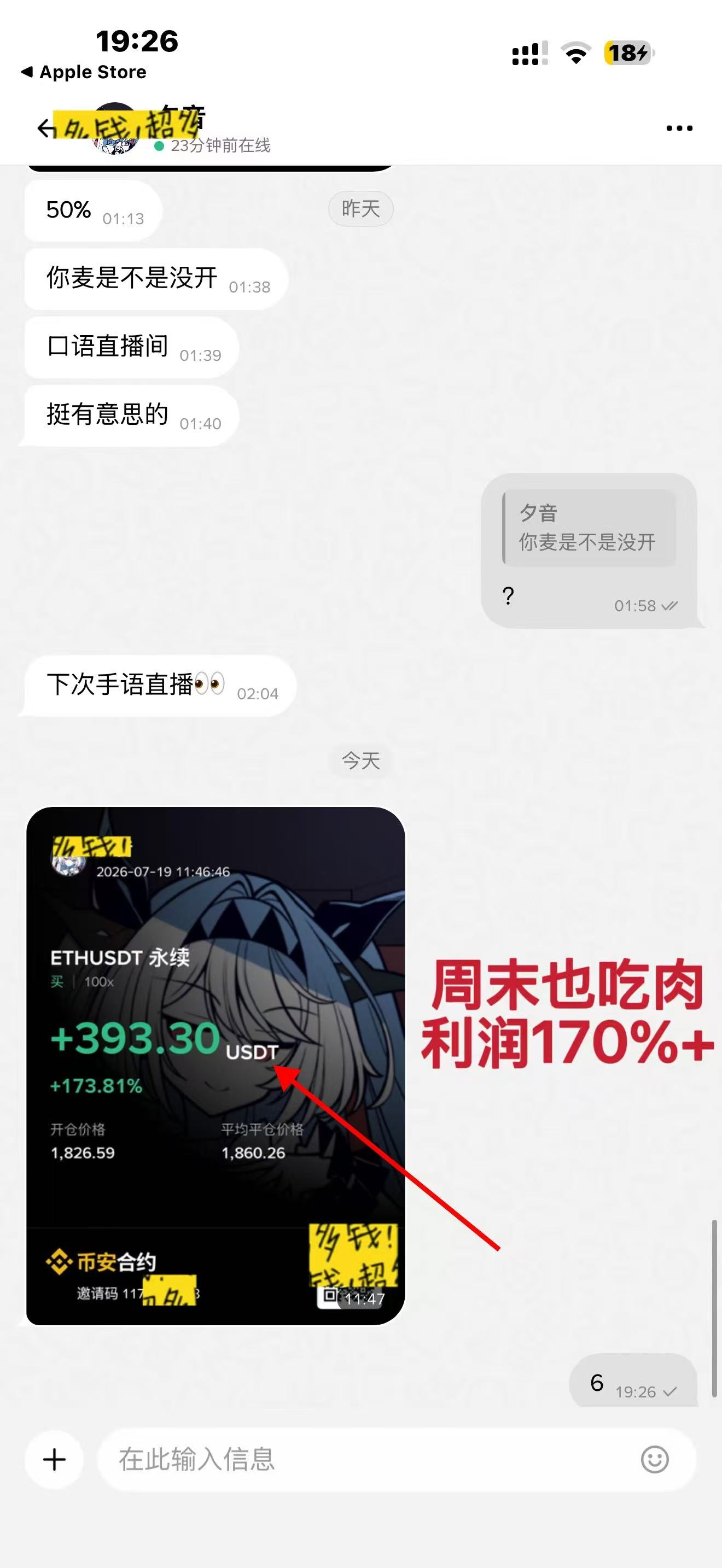
At night, after the BTC move, we did a long strategy at 63200. Then we thought it was more suitable to sleep and to focus on ETH over the weekend, so we rebalanced—switching to ETH, going long twice at 1830 to take-profit automatically at 1871.👉马前炮策略
The ranging market still isn’t over. Our thinking of going short at highs and long at lows remains unchanged—we’ll keep going today! Brothers who have been following Sanma Ge to get rich can register for a rebate. The invite code has been newly upgraded: after registering as a new user, use SANMAG (case-insensitive) as the invite code and you can automatically activate a lifetime + real-time rebate. Or you can use any link below. #rebate
Chinese-language region🔗:https://www.bsmkweb.cc/zh-CN/join?ref=SANMAG
From the drop after the high, we went in blindly and went long at 64100 and automatically take-profit at 64788.👉马前炮了
After waking up, we blindly shorted near 63520 and set it to automatically take profit on all at 63888.👉马前炮
At night, after the BTC move, we did a long strategy at 63200. Then we thought it was more suitable to sleep and to focus on ETH over the weekend, so we rebalanced—switching to ETH, going long twice at 1830 to take-profit automatically at 1871.👉马前炮策略
The ranging market still isn’t over. Our thinking of going short at highs and long at lows remains unchanged—we’ll keep going today! Brothers who have been following Sanma Ge to get rich can register for a rebate. The invite code has been newly upgraded: after registering as a new user, use SANMAG (case-insensitive) as the invite code and you can automatically activate a lifetime + real-time rebate. Or you can use any link below. #rebate
Chinese-language region🔗:https://www.bsmkweb.cc/zh-CN/join?ref=SANMAG
1
·
--
claim fast
claim fast

BaBuI90
·
--
Bullish$BTC $TSLAB $SPCXB #SOLRises9% BitcoinTests$58000SolanaRisesTo$72#ModernaRisesOver12% USCrudeSettlesAt$69.23Down3.74%#ModernaRisesOver12% #KioxiaADRFallsOver14% #SpaceXToJoinNasdaq100




2
·
--
good Usdt
answer: 1
good Usdt
answer: 1
answer: 1

元气小宇
·
--
Tonight's event has left me feeling jittery, drop a tip and I'll help you guys claw back that $BTC $ETH .
3
·
--

Article
What Is Pixels (PIXEL)?As the digital asset ecosystem grows, crypto projects focused on gaming and NFTs have also begun to attract more attention. One such project, $PIXEL coin, is a crypto asset designed for use in digital artworks, in-game assets, and NFT-focused platforms. The token is evaluated primarily through use cases related to digital content and gaming ecosystems. In this context, the question “ What is PIXEL coin?” is addressed in line with the project's technical structure and targeted use cases.
What is PIXEL Coin?
@pixels coin is the native cryptocurrency used in the ecosystem of the blockchain-based game called Pixels. Developed on the Ethereum network as an ERC-20 token, it is designed to support the technical infrastructure of in-game transactions.
Pixels is defined as a metaverse game that offers players the opportunity to build farms, develop areas, and interact with various in-game activities in a virtual world. Within this structure, the PIXEL token is used for functions such as acquiring in-game items, character development, and accessing specific content.
The #pixel coin also plays a functional role in NFT production and membership systems integrated into the platform, in addition to game mechanics. Users have the ability to create digital assets and perform transactions within the framework of platform rules. Furthermore, access to special areas within the game can be provided through specific membership models.
The general purpose of the token is to provide a blockchain-based transaction tool for digital content, gaming, and NFT-focused applications. In this regard, the $PIXEL coin is considered among entertainment and content production-based projects in the digital asset ecosystem.
Who are the Founders of the Pixels Project?
The Pixels (PIXEL) project was launched by a team led by Luke Barwikowski, who has a background in computer science. The project's management and development process is coordinated by Barwikowski, who also serves as CEO.
A graduate of the University of Michigan, Luke Barwikowski, has focused on blockchain and Web3 technologies throughout his career, playing a role in establishing the technical and visionary framework of the Pixels project. The Pixels team is positioned as a globally active structure consisting of developers and designers from different disciplines.
What Makes the Pixels Project Unique?
Pixels (PIXEL) is positioned as a project that combines the concept of farming and construction-based multiplayer online gaming with blockchain technology. While the game offers gameplay similar to traditional MMOs, it aims to technically support the in-game economy through the representation of digital assets on blockchain. In this context, NFTs and the PIXEL token are among the tools used in in-game interactions.
One of the key elements that distinguishes Pixels from similar blockchain based games is its interoperability approach. Rather than building a structure based solely on its own NFT collection, the project aims to integrate digital assets from different collections into its ecosystem. Pixels' technical documentation states that this approach initially started with only its own virtual land model; however, it was designed to be expanded over time to support other NFT-based lands.
What Is Pixels (PIXEL)?
As the digital asset ecosystem grows, crypto projects focused on gaming and NFTs have also begun to attract more attention. One such project, $PIXEL coin, is a crypto asset designed for use in digital artworks, in-game assets, and NFT-focused platforms. The token is evaluated primarily through use cases related to digital content and gaming ecosystems. In this context, the question “ What is PIXEL coin?” is addressed in line with the project's technical structure and targeted use cases.
What is PIXEL Coin?
@Pixels coin is the native cryptocurrency used in the ecosystem of the blockchain-based game called Pixels. Developed on the Ethereum network as an ERC-20 token, it is designed to support the technical infrastructure of in-game transactions.
Pixels is defined as a metaverse game that offers players the opportunity to build farms, develop areas, and interact with various in-game activities in a virtual world. Within this structure, the PIXEL token is used for functions such as acquiring in-game items, character development, and accessing specific content.
The #pixel coin also plays a functional role in NFT production and membership systems integrated into the platform, in addition to game mechanics. Users have the ability to create digital assets and perform transactions within the framework of platform rules. Furthermore, access to special areas within the game can be provided through specific membership models.
The general purpose of the token is to provide a blockchain-based transaction tool for digital content, gaming, and NFT-focused applications. In this regard, the $PIXEL coin is considered among entertainment and content production-based projects in the digital asset ecosystem.
Who are the Founders of the Pixels Project?
The Pixels (PIXEL) project was launched by a team led by Luke Barwikowski, who has a background in computer science. The project's management and development process is coordinated by Barwikowski, who also serves as CEO.
A graduate of the University of Michigan, Luke Barwikowski, has focused on blockchain and Web3 technologies throughout his career, playing a role in establishing the technical and visionary framework of the Pixels project. The Pixels team is positioned as a globally active structure consisting of developers and designers from different disciplines.
What Makes the Pixels Project Unique?
Pixels (PIXEL) is positioned as a project that combines the concept of farming and construction-based multiplayer online gaming with blockchain technology. While the game offers gameplay similar to traditional MMOs, it aims to technically support the in-game economy through the representation of digital assets on blockchain. In this context, NFTs and the PIXEL token are among the tools used in in-game interactions.
One of the key elements that distinguishes Pixels from similar blockchain based games is its interoperability approach. Rather than building a structure based solely on its own NFT collection, the project aims to integrate digital assets from different collections into its ecosystem. Pixels' technical documentation states that this approach initially started with only its own virtual land model; however, it was designed to be expanded over time to support other NFT-based lands.
What is PIXEL Coin?
@Pixels coin is the native cryptocurrency used in the ecosystem of the blockchain-based game called Pixels. Developed on the Ethereum network as an ERC-20 token, it is designed to support the technical infrastructure of in-game transactions.
Pixels is defined as a metaverse game that offers players the opportunity to build farms, develop areas, and interact with various in-game activities in a virtual world. Within this structure, the PIXEL token is used for functions such as acquiring in-game items, character development, and accessing specific content.
The #pixel coin also plays a functional role in NFT production and membership systems integrated into the platform, in addition to game mechanics. Users have the ability to create digital assets and perform transactions within the framework of platform rules. Furthermore, access to special areas within the game can be provided through specific membership models.
The general purpose of the token is to provide a blockchain-based transaction tool for digital content, gaming, and NFT-focused applications. In this regard, the $PIXEL coin is considered among entertainment and content production-based projects in the digital asset ecosystem.
Who are the Founders of the Pixels Project?
The Pixels (PIXEL) project was launched by a team led by Luke Barwikowski, who has a background in computer science. The project's management and development process is coordinated by Barwikowski, who also serves as CEO.
A graduate of the University of Michigan, Luke Barwikowski, has focused on blockchain and Web3 technologies throughout his career, playing a role in establishing the technical and visionary framework of the Pixels project. The Pixels team is positioned as a globally active structure consisting of developers and designers from different disciplines.
What Makes the Pixels Project Unique?
Pixels (PIXEL) is positioned as a project that combines the concept of farming and construction-based multiplayer online gaming with blockchain technology. While the game offers gameplay similar to traditional MMOs, it aims to technically support the in-game economy through the representation of digital assets on blockchain. In this context, NFTs and the PIXEL token are among the tools used in in-game interactions.
One of the key elements that distinguishes Pixels from similar blockchain based games is its interoperability approach. Rather than building a structure based solely on its own NFT collection, the project aims to integrate digital assets from different collections into its ecosystem. Pixels' technical documentation states that this approach initially started with only its own virtual land model; however, it was designed to be expanded over time to support other NFT-based lands.
84
·
--

Article
pixelWhat do you think of the PIXEL price today?
The community is optimistic today about @Pixels (PIXEL).
About Tokenomics Security Support Exchange Flows
Where can you buy Pixels?
PIXEL tokens can be traded on centralized exchange platforms. The most popular exchange for buying and trading Pixels is Binance, where the most active pair PIXEL/USDT has a trading volume of 1,498,936 USD in the last 24 hours. Other popular options include OKX and Deepcoin.
pixel
What do you think of the PIXEL price today?
The community is optimistic today about @Pixels (PIXEL).
About Tokenomics Security Support Exchange Flows
Where can you buy Pixels?
PIXEL tokens can be traded on centralized exchange platforms. The most popular exchange for buying and trading Pixels is Binance, where the most active pair PIXEL/USDT has a trading volume of 1,498,936 USD in the last 24 hours. Other popular options include OKX and Deepcoin.
The community is optimistic today about @Pixels (PIXEL).
About Tokenomics Security Support Exchange Flows
Where can you buy Pixels?
PIXEL tokens can be traded on centralized exchange platforms. The most popular exchange for buying and trading Pixels is Binance, where the most active pair PIXEL/USDT has a trading volume of 1,498,936 USD in the last 24 hours. Other popular options include OKX and Deepcoin.
130
·
--
#pixel $PIXEL
Where can you buy Pixels?
The tokens @PIXEL can be exchanged on centralized exchange platforms. The most popular exchange for buying and trading Pixels is Binance, where the most active pair PIXEL/USDT has a trading volume of $1,497,878 in the last 24 hours. Other popular options include OKX and Deepcoin.
#pixel $PIXEL
Where can you buy Pixels?
The tokens @PIXEL can be exchanged on centralized exchange platforms. The most popular exchange for buying and trading Pixels is Binance, where the most active pair PIXEL/USDT has a trading volume of $1,497,878 in the last 24 hours. Other popular options include OKX and Deepcoin.
Where can you buy Pixels?
The tokens @PIXEL can be exchanged on centralized exchange platforms. The most popular exchange for buying and trading Pixels is Binance, where the most active pair PIXEL/USDT has a trading volume of $1,497,878 in the last 24 hours. Other popular options include OKX and Deepcoin.
99
·
--
Ethereum Transaction Fees Hit Their Lowest Level in 9 yrs. Why It Matters
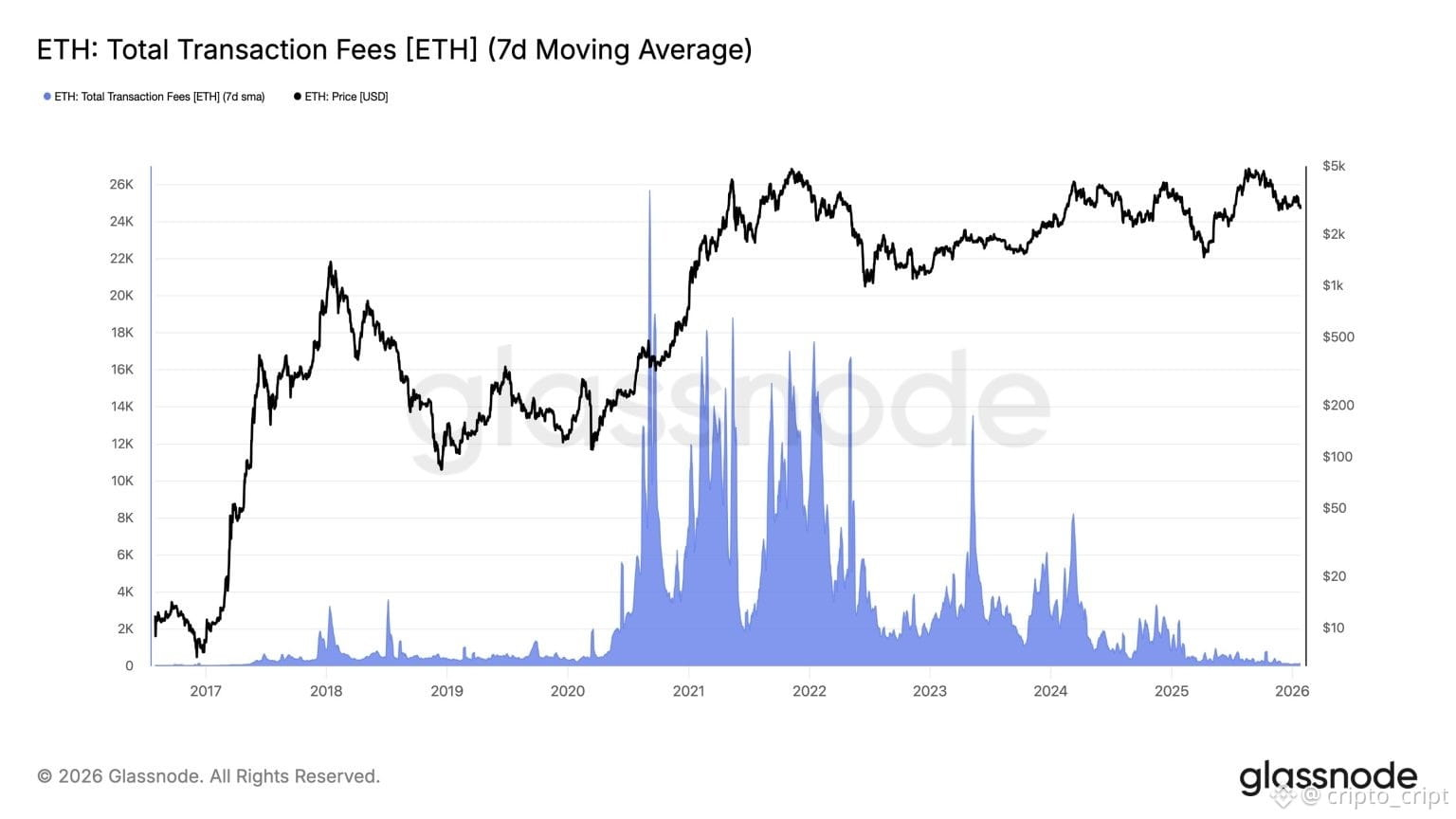
Ethereum network fees have dropped to their lowest level since 2017, with the average cost of sending a transaction over the blockchain falling from a peak of $200 to $0.14 this year, according to data from Glassnode.
The decline is, in part, thanks to a series of upgrades to the blockchain. Since 2021, Ethereum has undergone several scaling upgrades, including the switch to Proof-of-Stake (PoS) and the so-called Fusaka and Dencun upgrades, which improved network capacity and efficiency.
More users have moved to Layer 2 (L2) networks like Arbitrum and Base, reducing congestion on the underlying Ethereum blockchain, or mainnet. Validators also agreed to increase the gas limit per block from 30 million to 36 million, meaning that each block can now process more transactions.
“Cheap transactions on mainnet are definitely a net positive for the industry,” Ivo Georgiev, cofounder and CEO of Ethereum-focused Ambire Wallet, told Cryptonews. “Users gain more confidence in the protocol, they concentrate more of their assets on mainnet, leading to better UX.”
Georgiev added that lower fees could “even unlock new possibilities such as new cryptographic protocols that would otherwise be prohibitively expensive, for example, quantum-proof ones.”
ETH transaction fees averaged $50-$200 during the NFT boom of 2021-2022 as network activity shot through the roof. Data shows that the fees fell sharply in November 2022 to under $2 before spiking to $35 in March 2024.
Fees have headed down ever since, with a sustained downturn starting in February 2025. In total, the amount of fees paid to validators – the people that help secure the network – has dropped from a peak of about 25,668 ETH (~$77M) five years ago to 153 ETH (~$450K), on a seven-day average, according to Glassnode.
Ethereum Transaction Fees Hit Their Lowest Level in 9 yrs. Why It Matters
Ethereum network fees have dropped to their lowest level since 2017, with the average cost of sending a transaction over the blockchain falling from a peak of $200 to $0.14 this year, according to data from Glassnode.
The decline is, in part, thanks to a series of upgrades to the blockchain. Since 2021, Ethereum has undergone several scaling upgrades, including the switch to Proof-of-Stake (PoS) and the so-called Fusaka and Dencun upgrades, which improved network capacity and efficiency.
More users have moved to Layer 2 (L2) networks like Arbitrum and Base, reducing congestion on the underlying Ethereum blockchain, or mainnet. Validators also agreed to increase the gas limit per block from 30 million to 36 million, meaning that each block can now process more transactions.
“Cheap transactions on mainnet are definitely a net positive for the industry,” Ivo Georgiev, cofounder and CEO of Ethereum-focused Ambire Wallet, told Cryptonews. “Users gain more confidence in the protocol, they concentrate more of their assets on mainnet, leading to better UX.”
Georgiev added that lower fees could “even unlock new possibilities such as new cryptographic protocols that would otherwise be prohibitively expensive, for example, quantum-proof ones.”
ETH transaction fees averaged $50-$200 during the NFT boom of 2021-2022 as network activity shot through the roof. Data shows that the fees fell sharply in November 2022 to under $2 before spiking to $35 in March 2024.
Fees have headed down ever since, with a sustained downturn starting in February 2025. In total, the amount of fees paid to validators – the people that help secure the network – has dropped from a peak of about 25,668 ETH (~$77M) five years ago to 153 ETH (~$450K), on a seven-day average, according to Glassnode.
Ethereum network fees have dropped to their lowest level since 2017, with the average cost of sending a transaction over the blockchain falling from a peak of $200 to $0.14 this year, according to data from Glassnode.
The decline is, in part, thanks to a series of upgrades to the blockchain. Since 2021, Ethereum has undergone several scaling upgrades, including the switch to Proof-of-Stake (PoS) and the so-called Fusaka and Dencun upgrades, which improved network capacity and efficiency.
More users have moved to Layer 2 (L2) networks like Arbitrum and Base, reducing congestion on the underlying Ethereum blockchain, or mainnet. Validators also agreed to increase the gas limit per block from 30 million to 36 million, meaning that each block can now process more transactions.
“Cheap transactions on mainnet are definitely a net positive for the industry,” Ivo Georgiev, cofounder and CEO of Ethereum-focused Ambire Wallet, told Cryptonews. “Users gain more confidence in the protocol, they concentrate more of their assets on mainnet, leading to better UX.”
Georgiev added that lower fees could “even unlock new possibilities such as new cryptographic protocols that would otherwise be prohibitively expensive, for example, quantum-proof ones.”
ETH transaction fees averaged $50-$200 during the NFT boom of 2021-2022 as network activity shot through the roof. Data shows that the fees fell sharply in November 2022 to under $2 before spiking to $35 in March 2024.
Fees have headed down ever since, with a sustained downturn starting in February 2025. In total, the amount of fees paid to validators – the people that help secure the network – has dropped from a peak of about 25,668 ETH (~$77M) five years ago to 153 ETH (~$450K), on a seven-day average, according to Glassnode.
108
·
--
Why the Bitcoin Price Might Bottom Soon
Something went wrong with the Bitcoin price, says Galaxy Digital founder and CEO Mike Novogratz, as the search for the bottom grows more frantic, while another Michael – the Burry kind – sees a “death spiral” ahead for the BTC price.
Of course, Novogratz has skin in the game, so when he told Bloomberg TV yesterday that the bottom would form in the $70,000 to $100,000 range, it is understandable that some might want to view his reasoning with scepticism.
However, an equally quizzical line of attack might be applied to the musings of Michael Burry, who, after all, is the king of shorts – he’s always on the lookout for assets to sell.
If you can stay away from the panic button and have the risk tolerance that permits measured analysis and decision-making, then it’s worth pausing to listen to Novogratz:
On Monday, Bitcoin fell below $73,000, wiping out all of the Trump bounce. At these levels ($75k at the time of writing), they are minded to keep an eagle-eyed watch on Strategy as its net asset value flips from premium to discount.
If the Bitcoin price falls another 10% to around $65,000, then, according to Burry, Strategy will “find capital markets essentially closed.”
As Digital Asset Treasury (DAT) stocks tumble (194 public companies and 72 private companies are holding Bitcoin in treasury), bear in mind that some unrealized losses are more real than others. Fears of imminent bankruptcy are probably overdone.
Next up will be the miners, all adding to the death spiral’s velocity. For Burry, there is no bottom. There is no valuation model for Bitcoin because “there is no organic use case reason for Bitcoin to slow or stop its descent.”
And humming away in the background are the ETFs, whose emergence was heralded with great fanfare but, more than any other instrument, have made it easier for retail investors to speculate and have tightened the correlation with equity markets.
Why the Bitcoin Price Might Bottom Soon
Something went wrong with the Bitcoin price, says Galaxy Digital founder and CEO Mike Novogratz, as the search for the bottom grows more frantic, while another Michael – the Burry kind – sees a “death spiral” ahead for the BTC price.
Of course, Novogratz has skin in the game, so when he told Bloomberg TV yesterday that the bottom would form in the $70,000 to $100,000 range, it is understandable that some might want to view his reasoning with scepticism.
However, an equally quizzical line of attack might be applied to the musings of Michael Burry, who, after all, is the king of shorts – he’s always on the lookout for assets to sell.
If you can stay away from the panic button and have the risk tolerance that permits measured analysis and decision-making, then it’s worth pausing to listen to Novogratz:
On Monday, Bitcoin fell below $73,000, wiping out all of the Trump bounce. At these levels ($75k at the time of writing), they are minded to keep an eagle-eyed watch on Strategy as its net asset value flips from premium to discount.
If the Bitcoin price falls another 10% to around $65,000, then, according to Burry, Strategy will “find capital markets essentially closed.”
As Digital Asset Treasury (DAT) stocks tumble (194 public companies and 72 private companies are holding Bitcoin in treasury), bear in mind that some unrealized losses are more real than others. Fears of imminent bankruptcy are probably overdone.
Next up will be the miners, all adding to the death spiral’s velocity. For Burry, there is no bottom. There is no valuation model for Bitcoin because “there is no organic use case reason for Bitcoin to slow or stop its descent.”
And humming away in the background are the ETFs, whose emergence was heralded with great fanfare but, more than any other instrument, have made it easier for retail investors to speculate and have tightened the correlation with equity markets.
Something went wrong with the Bitcoin price, says Galaxy Digital founder and CEO Mike Novogratz, as the search for the bottom grows more frantic, while another Michael – the Burry kind – sees a “death spiral” ahead for the BTC price.
Of course, Novogratz has skin in the game, so when he told Bloomberg TV yesterday that the bottom would form in the $70,000 to $100,000 range, it is understandable that some might want to view his reasoning with scepticism.
However, an equally quizzical line of attack might be applied to the musings of Michael Burry, who, after all, is the king of shorts – he’s always on the lookout for assets to sell.
If you can stay away from the panic button and have the risk tolerance that permits measured analysis and decision-making, then it’s worth pausing to listen to Novogratz:
On Monday, Bitcoin fell below $73,000, wiping out all of the Trump bounce. At these levels ($75k at the time of writing), they are minded to keep an eagle-eyed watch on Strategy as its net asset value flips from premium to discount.
If the Bitcoin price falls another 10% to around $65,000, then, according to Burry, Strategy will “find capital markets essentially closed.”
As Digital Asset Treasury (DAT) stocks tumble (194 public companies and 72 private companies are holding Bitcoin in treasury), bear in mind that some unrealized losses are more real than others. Fears of imminent bankruptcy are probably overdone.
Next up will be the miners, all adding to the death spiral’s velocity. For Burry, there is no bottom. There is no valuation model for Bitcoin because “there is no organic use case reason for Bitcoin to slow or stop its descent.”
And humming away in the background are the ETFs, whose emergence was heralded with great fanfare but, more than any other instrument, have made it easier for retail investors to speculate and have tightened the correlation with equity markets.

35
·
--
Bitcoin Hyper Targets Early-Mover Upside as BTC Waits for Confirmation
Bitcoin at $76,000 is recovery territory, not discovery territory. From the current market cap, a 2x requires roughly $3 trillion in new capital. That math is why some traders running the numbers are rotating a portion of exposure earlier on the risk curve, specifically toward infrastructure plays being built on top of Bitcoin itself.
Bitcoin Hyper ($HYPER) is positioning as the first Bitcoin Layer 2 with Solana Virtual Machine (SVM) integration, combining Bitcoin’s security with smart contract execution that the project claims outpaces Solana on latency.
The pitch targets Bitcoin’s three structural weaknesses: slow transactions, high fees, and zero programmability. The presale has raised $32 million at a current token price of $0.0136, with staking active at a high APY for early participants.
Bitcoin Hyper Targets Early-Mover Upside as BTC Waits for Confirmation
Bitcoin at $76,000 is recovery territory, not discovery territory. From the current market cap, a 2x requires roughly $3 trillion in new capital. That math is why some traders running the numbers are rotating a portion of exposure earlier on the risk curve, specifically toward infrastructure plays being built on top of Bitcoin itself.
Bitcoin Hyper ($HYPER) is positioning as the first Bitcoin Layer 2 with Solana Virtual Machine (SVM) integration, combining Bitcoin’s security with smart contract execution that the project claims outpaces Solana on latency.
The pitch targets Bitcoin’s three structural weaknesses: slow transactions, high fees, and zero programmability. The presale has raised $32 million at a current token price of $0.0136, with staking active at a high APY for early participants.
Bitcoin at $76,000 is recovery territory, not discovery territory. From the current market cap, a 2x requires roughly $3 trillion in new capital. That math is why some traders running the numbers are rotating a portion of exposure earlier on the risk curve, specifically toward infrastructure plays being built on top of Bitcoin itself.
Bitcoin Hyper ($HYPER) is positioning as the first Bitcoin Layer 2 with Solana Virtual Machine (SVM) integration, combining Bitcoin’s security with smart contract execution that the project claims outpaces Solana on latency.
The pitch targets Bitcoin’s three structural weaknesses: slow transactions, high fees, and zero programmability. The presale has raised $32 million at a current token price of $0.0136, with staking active at a high APY for early participants.
171
·
--
Can Bitcoin Price Break $80,000 Before Ceasefire Expiration?
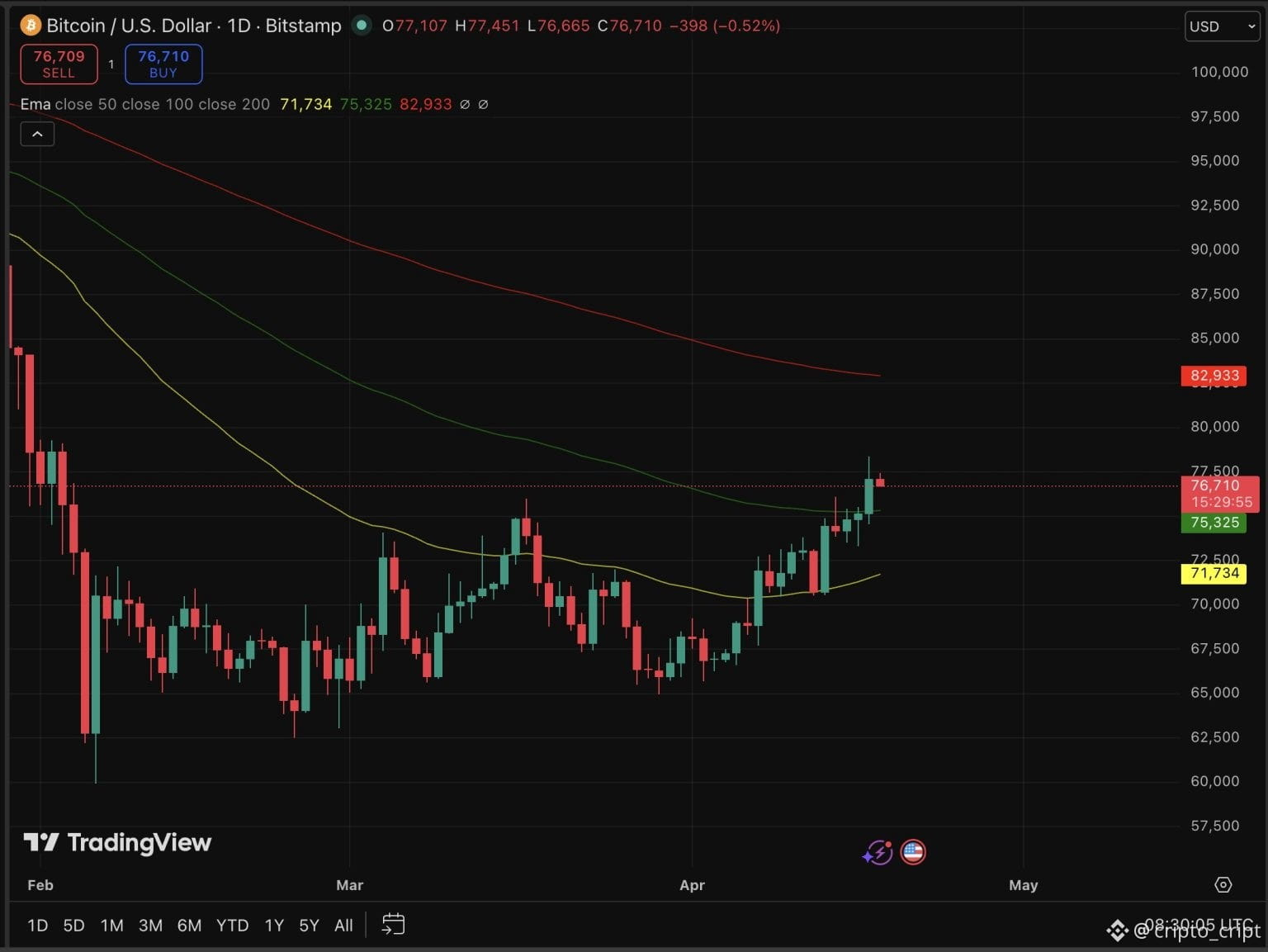
Having already reclaimed the 50-day EMA during the ceasefire-driven relief rally, Bitcoin trading volume spiked on the short squeeze, with $6 billion in leveraged shorts remaining clustered between $72,200 and $73,500, with peak density around $72,500. That zone has already been breached; those liquidations fueled the current leg.
The technical setup now pits $75,000–$80,000 resistance against $62,000 support at the bottom of the two-month consolidation range.
If the ceasefire holds, Fed rate-cut expectations could firm up on lower oil/inflation data, and spot demand then can push BTC through $80,000. Forecast models average $78,600 with a ceiling near $82,500.
Whale data adds a nuanced wrinkle. For only the second time in 2026, wallets holding more than 10,000 BTC recorded net inflows, suggesting organic accumulation. Some analysts, including Canary Capital’s Steve McClurg, argue 2026 is still the “bear leg” of Bitcoin’s four-year cycle, which historically a period of 60–80% drawdowns from peaks.
Can Bitcoin Price Break $80,000 Before Ceasefire Expiration?
Having already reclaimed the 50-day EMA during the ceasefire-driven relief rally, Bitcoin trading volume spiked on the short squeeze, with $6 billion in leveraged shorts remaining clustered between $72,200 and $73,500, with peak density around $72,500. That zone has already been breached; those liquidations fueled the current leg.
The technical setup now pits $75,000–$80,000 resistance against $62,000 support at the bottom of the two-month consolidation range.
If the ceasefire holds, Fed rate-cut expectations could firm up on lower oil/inflation data, and spot demand then can push BTC through $80,000. Forecast models average $78,600 with a ceiling near $82,500.
Whale data adds a nuanced wrinkle. For only the second time in 2026, wallets holding more than 10,000 BTC recorded net inflows, suggesting organic accumulation. Some analysts, including Canary Capital’s Steve McClurg, argue 2026 is still the “bear leg” of Bitcoin’s four-year cycle, which historically a period of 60–80% drawdowns from peaks.
Having already reclaimed the 50-day EMA during the ceasefire-driven relief rally, Bitcoin trading volume spiked on the short squeeze, with $6 billion in leveraged shorts remaining clustered between $72,200 and $73,500, with peak density around $72,500. That zone has already been breached; those liquidations fueled the current leg.
The technical setup now pits $75,000–$80,000 resistance against $62,000 support at the bottom of the two-month consolidation range.
If the ceasefire holds, Fed rate-cut expectations could firm up on lower oil/inflation data, and spot demand then can push BTC through $80,000. Forecast models average $78,600 with a ceiling near $82,500.
Whale data adds a nuanced wrinkle. For only the second time in 2026, wallets holding more than 10,000 BTC recorded net inflows, suggesting organic accumulation. Some analysts, including Canary Capital’s Steve McClurg, argue 2026 is still the “bear leg” of Bitcoin’s four-year cycle, which historically a period of 60–80% drawdowns from peaks.
101
·
--
Bitcoin Price Prediction: Hormuz, Iran War, Oil Price, Metals, and Stocks vs Crypto
Bitcoin price briefly cracked $78,000 yesterday, a level untouched since early February, before pulling back and stabilizing. The catalyst is a two-week U.S.-Iran ceasefire that collapsed crude prices and triggered $427 million in short liquidations, compressing the Strait of Hormuz risk premium that had been suffocating risk assets for months.
Crypto-linked equities outran Bitcoin itself in the recovery. Coinbase, Robinhood, and Strategy each surged at least 25% through Friday’s close, while BTC posted just under 7% gains over the same five trading days. It’s strong in isolation, modest by comparison.
Meanwhile, Tether resumed BTC accumulation, blockchain data from Arkham Intelligence confirms 951 BTC moved to a wallet labeled “Tether: BTC Reserve,” adding a quiet but significant buy.
Bitcoin Price Prediction: Hormuz, Iran War, Oil Price, Metals, and Stocks vs Crypto
Bitcoin price briefly cracked $78,000 yesterday, a level untouched since early February, before pulling back and stabilizing. The catalyst is a two-week U.S.-Iran ceasefire that collapsed crude prices and triggered $427 million in short liquidations, compressing the Strait of Hormuz risk premium that had been suffocating risk assets for months.
Crypto-linked equities outran Bitcoin itself in the recovery. Coinbase, Robinhood, and Strategy each surged at least 25% through Friday’s close, while BTC posted just under 7% gains over the same five trading days. It’s strong in isolation, modest by comparison.
Meanwhile, Tether resumed BTC accumulation, blockchain data from Arkham Intelligence confirms 951 BTC moved to a wallet labeled “Tether: BTC Reserve,” adding a quiet but significant buy.
Bitcoin price briefly cracked $78,000 yesterday, a level untouched since early February, before pulling back and stabilizing. The catalyst is a two-week U.S.-Iran ceasefire that collapsed crude prices and triggered $427 million in short liquidations, compressing the Strait of Hormuz risk premium that had been suffocating risk assets for months.
Crypto-linked equities outran Bitcoin itself in the recovery. Coinbase, Robinhood, and Strategy each surged at least 25% through Friday’s close, while BTC posted just under 7% gains over the same five trading days. It’s strong in isolation, modest by comparison.
Meanwhile, Tether resumed BTC accumulation, blockchain data from Arkham Intelligence confirms 951 BTC moved to a wallet labeled “Tether: BTC Reserve,” adding a quiet but significant buy.
1
Log in to explore more content
Join global crypto users on Binance Square
⚡️ Get latest and useful information about crypto.
💬 Trusted by the world’s largest crypto exchange.
👍 Discover real insights from verified creators.
Email / Phone number
Trending Topics
USAugustPPIRisesLessThanExpected
48,425 views
795 Discussing
🚨 US AUG PPI: Rises LESS Than Expected! Bullish for Crypto? 🚀
PPI +0.4% MoM as expected, but CORE PPI only +0.2% vs +0.3% expected - cooling!
What it means:
• Wholesale inflation softer than feared
• Fed rate hike chance now 62% - but dovish signals coming
• Core PCE revisions expected downward - bullish
• BTC usually pumps on softer PPI
Fed meeting Sep 15-16 - Market now expects pause, not hike?
Is this the green light for Q4 rally?
#Bitcoin #PPI #Fed #CryptoNews #BTC#usaugustppiriseslessthanexpected
True News
·1 Likes
·1.4k views
SECApprovesNasdaqTexasCommodityTrustRule
26,971 views
580 Discussing
ECBRaisesRatesSecondTimeTo2.5%
24,517 views
418 Discussing