

Financialallday
8 Posts

Financialallday
Report
Block User
0 Following
1 Followers
10 Liked
Posts
Article
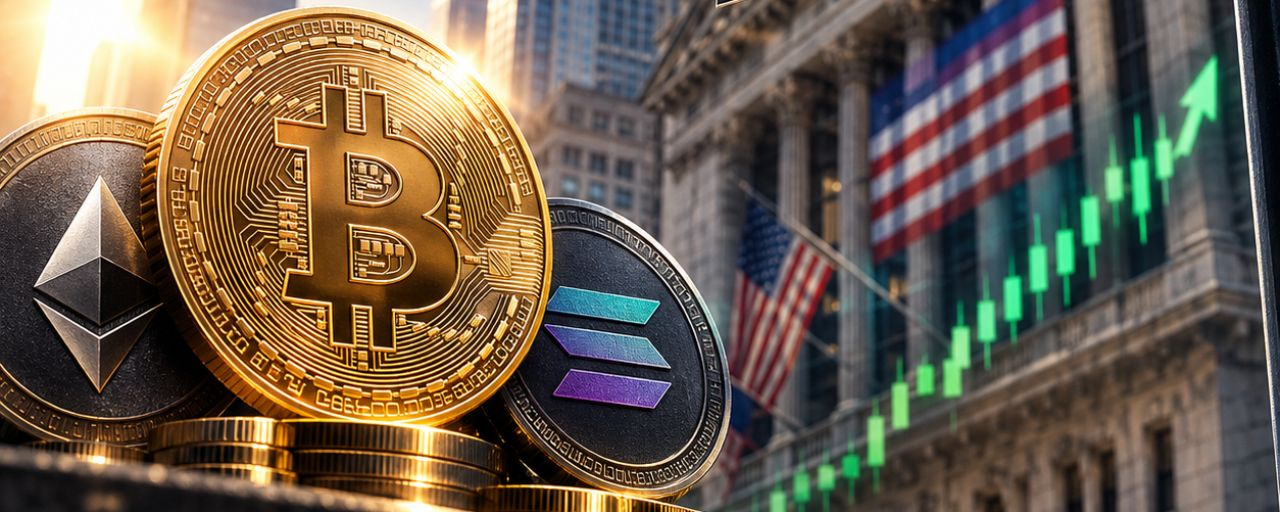
CRYPTO IS ENTERING A NEW ERA: AND THIS TIME, THE CHANGE IS COMING FROM WALL STREET.The world of cryptocurrencies is undergoing a transformation that goes far beyond the price of Bitcoin.
The SEC (U.S. Securities and Exchange Commission) has proposed new rules related to the custody of digital assets by funds and financial advisers—an action that brings a key question back to the forefront: how will cryptocurrencies be integrated into the traditional financial system?
Among the most relevant digital assets within this landscape, we find Bitcoin (BTC), Ethereum (ETH), and stablecoins such as USDC and USDT. However, it is important to clarify that the proposal is not aimed exclusively at these cryptocurrencies, nor does it mention them as specifically selected assets.
CRYPTO IS ENTERING A NEW ERA: AND THIS TIME, THE CHANGE IS COMING FROM WALL STREET.
The world of cryptocurrencies is undergoing a transformation that goes far beyond the price of Bitcoin.
The SEC (U.S. Securities and Exchange Commission) has proposed new rules related to the custody of digital assets by funds and financial advisers—an action that brings a key question back to the forefront: how will cryptocurrencies be integrated into the traditional financial system?
Among the most relevant digital assets within this landscape, we find Bitcoin (BTC), Ethereum (ETH), and stablecoins such as USDC and USDT. However, it is important to clarify that the proposal is not aimed exclusively at these cryptocurrencies, nor does it mention them as specifically selected assets.
The SEC (U.S. Securities and Exchange Commission) has proposed new rules related to the custody of digital assets by funds and financial advisers—an action that brings a key question back to the forefront: how will cryptocurrencies be integrated into the traditional financial system?
Among the most relevant digital assets within this landscape, we find Bitcoin (BTC), Ethereum (ETH), and stablecoins such as USDC and USDT. However, it is important to clarify that the proposal is not aimed exclusively at these cryptocurrencies, nor does it mention them as specifically selected assets.
3
304
·
--
Bearish
Verified
Oil is moving everything again. 🛢️📈
Today, markets are reminding us that the global economy is interconnected.
Oil surged once again, and Brent is edging back toward US$100 per barrel, while the dollar holds its strength and U.S. stocks start the session lower.
Why?
Tensions between the United States and Iran, along with uncertainty about the passage of oil through the Strait of Hormuz, are increasing fears that energy will once again feed inflation.
And here’s the interesting part:
Oil ↑ → inflation ↑ → higher rates for longer → bond yields ↑ → pressure on stocks and gold.
In fact, today gold is falling sharply, precisely because more expensive oil can make it harder for central banks to ease monetary policy.
And what about Colombia?
The dollar is moving back above $3,300, while the market keeps a close watch on what’s happening with oil, U.S. interest rates, and international inflation.
This shows something we often forget:
The price of the dollar doesn’t depend only on Colombia.
What happens in the Middle East can end up affecting fuel prices, inflation, interest rates, investments, and even the cost of living in our country.
So when you see the dollar rising, oil increasing, or gold falling, don’t treat them as isolated news.
They’re pieces of the same board.
And this week, that board could move quite a bit.
$USDT
$USO.ETF
$GLD.ETF
{spot}(BTCUSDT)
{etf_us}(GLD.ETF)
{etf_us}(USO.ETF)
Oil is moving everything again. 🛢️📈
Today, markets are reminding us that the global economy is interconnected.
Oil surged once again, and Brent is edging back toward US$100 per barrel, while the dollar holds its strength and U.S. stocks start the session lower.
Why?
Tensions between the United States and Iran, along with uncertainty about the passage of oil through the Strait of Hormuz, are increasing fears that energy will once again feed inflation.
And here’s the interesting part:
Oil ↑ → inflation ↑ → higher rates for longer → bond yields ↑ → pressure on stocks and gold.
In fact, today gold is falling sharply, precisely because more expensive oil can make it harder for central banks to ease monetary policy.
And what about Colombia?
The dollar is moving back above $3,300, while the market keeps a close watch on what’s happening with oil, U.S. interest rates, and international inflation.
This shows something we often forget:
The price of the dollar doesn’t depend only on Colombia.
What happens in the Middle East can end up affecting fuel prices, inflation, interest rates, investments, and even the cost of living in our country.
So when you see the dollar rising, oil increasing, or gold falling, don’t treat them as isolated news.
They’re pieces of the same board.
And this week, that board could move quite a bit.
$USDT
$USO.ETF
$GLD.ETF
Today, markets are reminding us that the global economy is interconnected.
Oil surged once again, and Brent is edging back toward US$100 per barrel, while the dollar holds its strength and U.S. stocks start the session lower.
Why?
Tensions between the United States and Iran, along with uncertainty about the passage of oil through the Strait of Hormuz, are increasing fears that energy will once again feed inflation.
And here’s the interesting part:
Oil ↑ → inflation ↑ → higher rates for longer → bond yields ↑ → pressure on stocks and gold.
In fact, today gold is falling sharply, precisely because more expensive oil can make it harder for central banks to ease monetary policy.
And what about Colombia?
The dollar is moving back above $3,300, while the market keeps a close watch on what’s happening with oil, U.S. interest rates, and international inflation.
This shows something we often forget:
The price of the dollar doesn’t depend only on Colombia.
What happens in the Middle East can end up affecting fuel prices, inflation, interest rates, investments, and even the cost of living in our country.
So when you see the dollar rising, oil increasing, or gold falling, don’t treat them as isolated news.
They’re pieces of the same board.
And this week, that board could move quite a bit.
$USDT
$USO.ETF
$GLD.ETF
Invertiría en Oro
Invertiría en Petróleo
Invertiría en Dolares
10 hr(s) left
1
1.1k
·
--
Bullish
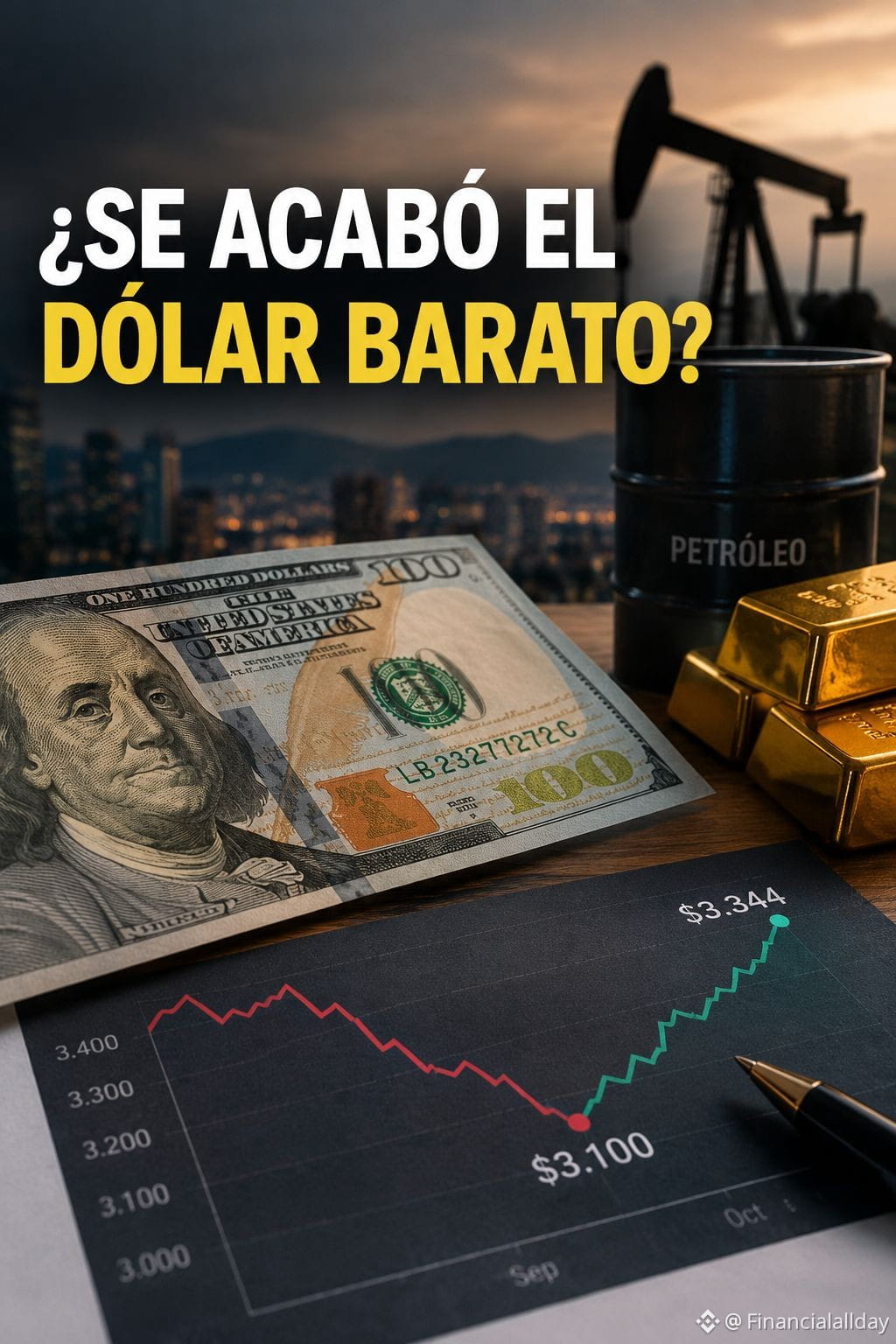
💸 DID THE CHEAP DOLLAR END WITH THE COLOMBIAN CURRENCY?
For months we saw the Colombian peso gain ground against the dollar, reaching levels close to $3,100. But this week the story changed: the dollar rose again and closed around $3,344.
Does this mean a new trend is beginning? Not necessarily. But it is a sign that markets remain very sensitive to what happens abroad.
And here’s what matters: the dollar, oil, inflation, interest rates, and gold are much more connected than they seem.
A lower dollar can help imports and some consumers, but it doesn’t automatically mean prices will fall. Cumulative inflation, transportation costs, raw materials, and rates also weigh in.
Meanwhile, any move in oil—or in expectations about U.S. interest rates—can change again how currencies and markets behave.
That’s why, more than obsessing over whether the dollar will be tomorrow at $3,200 or $3,400, it’s worth looking at what is causing the move.
Because in the end, behind a number on a screen there’s something much closer:
The cost of living, getting into debt, saving, traveling, and investing.
The economy isn’t standing still. And the dollar just reminded us of that.
$USDC
$GLD.ETF
$IEF.ETF
{spot}(BNBUSDT)
{spot}(BTCUSDT)
{etf_us}(GLD.ETF)
💸 DID THE CHEAP DOLLAR END WITH THE COLOMBIAN CURRENCY?
For months we saw the Colombian peso gain ground against the dollar, reaching levels close to $3,100. But this week the story changed: the dollar rose again and closed around $3,344.
Does this mean a new trend is beginning? Not necessarily. But it is a sign that markets remain very sensitive to what happens abroad.
And here’s what matters: the dollar, oil, inflation, interest rates, and gold are much more connected than they seem.
A lower dollar can help imports and some consumers, but it doesn’t automatically mean prices will fall. Cumulative inflation, transportation costs, raw materials, and rates also weigh in.
Meanwhile, any move in oil—or in expectations about U.S. interest rates—can change again how currencies and markets behave.
That’s why, more than obsessing over whether the dollar will be tomorrow at $3,200 or $3,400, it’s worth looking at what is causing the move.
Because in the end, behind a number on a screen there’s something much closer:
The cost of living, getting into debt, saving, traveling, and investing.
The economy isn’t standing still. And the dollar just reminded us of that.
$USDC
$GLD.ETF
$IEF.ETF
For months we saw the Colombian peso gain ground against the dollar, reaching levels close to $3,100. But this week the story changed: the dollar rose again and closed around $3,344.
Does this mean a new trend is beginning? Not necessarily. But it is a sign that markets remain very sensitive to what happens abroad.
And here’s what matters: the dollar, oil, inflation, interest rates, and gold are much more connected than they seem.
A lower dollar can help imports and some consumers, but it doesn’t automatically mean prices will fall. Cumulative inflation, transportation costs, raw materials, and rates also weigh in.
Meanwhile, any move in oil—or in expectations about U.S. interest rates—can change again how currencies and markets behave.
That’s why, more than obsessing over whether the dollar will be tomorrow at $3,200 or $3,400, it’s worth looking at what is causing the move.
Because in the end, behind a number on a screen there’s something much closer:
The cost of living, getting into debt, saving, traveling, and investing.
The economy isn’t standing still. And the dollar just reminded us of that.
$USDC
$GLD.ETF
$IEF.ETF
1
138
Invest with strategy, not emotion
In the world of investing, emotions and impulses can be very costly. Learn to control your emotions and make decisions with strategy and rationality.
Just as an investment can double or triple, you can also lose part of it—or even all of your capital. That’s why invest only money you can afford to lose without affecting your life or your peace of mind.
Never blindly trust someone who promises you: “I’m going to multiply your money” or “With me, you’ll become a millionaire.” Research, study, and educate yourself before investing.
Don’t compare yourself to anyone else’s process. Keep your goals clear, move at your own pace, and learn to differentiate between analyzing an opportunity and simply being afraid to act.
Because investing always involves risk. It’s not about eliminating it, but understanding it, sizing it up, and consciously accepting it.
Not all the people who offer you an opportunity want to hurt you. Some genuinely want to help you and are happy to see others grow and generate wealth. But that doesn’t mean you should trust blindly: listen, research, study, and make your own decisions. Learn to recognize who truly wants to contribute to your growth and who only wants to benefit from you.
$BTC
$BNB
$ETH
{future}(SPYUSDT)
{spot}(GOOGLBUSDT)
{spot}(NVDABUSDT)
Before you act, ask yourself:
What can I gain?
What can I lose?
Am I prepared to take it on?
And once you have clarity, act with calmness, discipline, and resolve.
Your money needs strategy. Your mind needs control. And your future needs conscious decisions.
Invest with strategy, not emotion
In the world of investing, emotions and impulses can be very costly. Learn to control your emotions and make decisions with strategy and rationality.
Just as an investment can double or triple, you can also lose part of it—or even all of your capital. That’s why invest only money you can afford to lose without affecting your life or your peace of mind.
Never blindly trust someone who promises you: “I’m going to multiply your money” or “With me, you’ll become a millionaire.” Research, study, and educate yourself before investing.
Don’t compare yourself to anyone else’s process. Keep your goals clear, move at your own pace, and learn to differentiate between analyzing an opportunity and simply being afraid to act.
Because investing always involves risk. It’s not about eliminating it, but understanding it, sizing it up, and consciously accepting it.
Not all the people who offer you an opportunity want to hurt you. Some genuinely want to help you and are happy to see others grow and generate wealth. But that doesn’t mean you should trust blindly: listen, research, study, and make your own decisions. Learn to recognize who truly wants to contribute to your growth and who only wants to benefit from you.
$BTC
$BNB
$ETH
Before you act, ask yourself:
What can I gain?
What can I lose?
Am I prepared to take it on?
And once you have clarity, act with calmness, discipline, and resolve.
Your money needs strategy. Your mind needs control. And your future needs conscious decisions.
In the world of investing, emotions and impulses can be very costly. Learn to control your emotions and make decisions with strategy and rationality.
Just as an investment can double or triple, you can also lose part of it—or even all of your capital. That’s why invest only money you can afford to lose without affecting your life or your peace of mind.
Never blindly trust someone who promises you: “I’m going to multiply your money” or “With me, you’ll become a millionaire.” Research, study, and educate yourself before investing.
Don’t compare yourself to anyone else’s process. Keep your goals clear, move at your own pace, and learn to differentiate between analyzing an opportunity and simply being afraid to act.
Because investing always involves risk. It’s not about eliminating it, but understanding it, sizing it up, and consciously accepting it.
Not all the people who offer you an opportunity want to hurt you. Some genuinely want to help you and are happy to see others grow and generate wealth. But that doesn’t mean you should trust blindly: listen, research, study, and make your own decisions. Learn to recognize who truly wants to contribute to your growth and who only wants to benefit from you.
$BTC
$BNB
$ETH
Before you act, ask yourself:
What can I gain?
What can I lose?
Am I prepared to take it on?
And once you have clarity, act with calmness, discipline, and resolve.
Your money needs strategy. Your mind needs control. And your future needs conscious decisions.
Invierto con control
80%
No pienso en el riesgo
20%
Me cuesta avanzar
0%
5 votes • Voting closed
1
349
·
--
Bullish
🚨 Bitcoin and Wall Street: money returns to risk
The market is closing the week with a signal that deserves attention: spot Bitcoin ETFs received nearly US$2.4 billion between September 21 and 25, their largest weekly inflow since October, bringing their accumulated 2026 flows back into positive territory. Ethereum ETFs also received about US$690 million.
But it’s not just Bitcoin. Wall Street continues to show strength in technology and artificial intelligence: AMD reached a US$1 trillion market capitalization for the first time, while the Nasdaq hit a record during the week, driven by AI-linked stocks.
The interesting signal lies in the coincidence: capital flowing back into crypto as investors continue to bet on technology and AI.
However, there is a warning: inflows into Bitcoin were declining throughout the week, from nearly US$999 million on Monday to US$134 million on Friday. Bitcoin also pulled back from highs above US$87,000 to the US$84,000 area.
Next week will be key: are we seeing the start of a new risk-on phase, or just a temporary rebound?
$BTC
$BNB
$ETH
{spot}(BTCUSDT)
{spot}(ETHUSDT)
{spot}(BNBUSDT)
🚨 Bitcoin and Wall Street: money returns to risk
The market is closing the week with a signal that deserves attention: spot Bitcoin ETFs received nearly US$2.4 billion between September 21 and 25, their largest weekly inflow since October, bringing their accumulated 2026 flows back into positive territory. Ethereum ETFs also received about US$690 million.
But it’s not just Bitcoin. Wall Street continues to show strength in technology and artificial intelligence: AMD reached a US$1 trillion market capitalization for the first time, while the Nasdaq hit a record during the week, driven by AI-linked stocks.
The interesting signal lies in the coincidence: capital flowing back into crypto as investors continue to bet on technology and AI.
However, there is a warning: inflows into Bitcoin were declining throughout the week, from nearly US$999 million on Monday to US$134 million on Friday. Bitcoin also pulled back from highs above US$87,000 to the US$84,000 area.
Next week will be key: are we seeing the start of a new risk-on phase, or just a temporary rebound?
$BTC
$BNB
$ETH
The market is closing the week with a signal that deserves attention: spot Bitcoin ETFs received nearly US$2.4 billion between September 21 and 25, their largest weekly inflow since October, bringing their accumulated 2026 flows back into positive territory. Ethereum ETFs also received about US$690 million.
But it’s not just Bitcoin. Wall Street continues to show strength in technology and artificial intelligence: AMD reached a US$1 trillion market capitalization for the first time, while the Nasdaq hit a record during the week, driven by AI-linked stocks.
The interesting signal lies in the coincidence: capital flowing back into crypto as investors continue to bet on technology and AI.
However, there is a warning: inflows into Bitcoin were declining throughout the week, from nearly US$999 million on Monday to US$134 million on Friday. Bitcoin also pulled back from highs above US$87,000 to the US$84,000 area.
Next week will be key: are we seeing the start of a new risk-on phase, or just a temporary rebound?
$BTC
$BNB
$ETH
Amplia la información
0%
No es relevante
33%
Contenido de valor
67%
3 votes • Voting closed
1
721
📉 Markets under pressure: oil, rates and Bitcoin face off
September 25, 2026.
Financial markets go through a tense day as investors keep a close eye on how oil and U.S. bonds are behaving. The 10-year Treasury yield has reached above 5.15%, levels not seen since 2007, increasing concerns about inflation and a possible new rate hike by the Federal Reserve.
The impact has already been felt on Wall Street. The S&P 500 fell 0.75% and the Nasdaq 1.13% on Thursday’s session, while Bitcoin pulled back to about US$83,455.
However, the outlook for cryptocurrencies is not completely negative. Bitcoin had reached close to US$87,000 during the week, and U.S. Bitcoin ETFs recorded approximately US$2.65 billion in inflows over five sessions, showing that there is still institutional demand.
🎯 What to do in this scenario?
More than trying to guess the next move, the key is to prepare for both possibilities. If bond yields and oil continue rising, pressure on tech stocks and cryptocurrencies could increase. If, on the contrary, oil declines and expectations for further rate hikes cool, risk assets could find support again.
For an investor, the variables worth watching over the coming days are Bitcoin, the Nasdaq, Brent oil, and the 10-year Treasury. In addition, next week’s U.S. employment and inflation data will be important, as they could influence expectations about rates.
The opportunity is not necessarily in reacting first, but in being prepared before the market decides its direction.
$BTC
$ETH
$BNB
{spot}(ETHUSDT)
{spot}(BTCUSDT)
📉 Markets under pressure: oil, rates and Bitcoin face off
September 25, 2026.
Financial markets go through a tense day as investors keep a close eye on how oil and U.S. bonds are behaving. The 10-year Treasury yield has reached above 5.15%, levels not seen since 2007, increasing concerns about inflation and a possible new rate hike by the Federal Reserve.
The impact has already been felt on Wall Street. The S&P 500 fell 0.75% and the Nasdaq 1.13% on Thursday’s session, while Bitcoin pulled back to about US$83,455.
However, the outlook for cryptocurrencies is not completely negative. Bitcoin had reached close to US$87,000 during the week, and U.S. Bitcoin ETFs recorded approximately US$2.65 billion in inflows over five sessions, showing that there is still institutional demand.
🎯 What to do in this scenario?
More than trying to guess the next move, the key is to prepare for both possibilities. If bond yields and oil continue rising, pressure on tech stocks and cryptocurrencies could increase. If, on the contrary, oil declines and expectations for further rate hikes cool, risk assets could find support again.
For an investor, the variables worth watching over the coming days are Bitcoin, the Nasdaq, Brent oil, and the 10-year Treasury. In addition, next week’s U.S. employment and inflation data will be important, as they could influence expectations about rates.
The opportunity is not necessarily in reacting first, but in being prepared before the market decides its direction.
$BTC
$ETH
$BNB
September 25, 2026.
Financial markets go through a tense day as investors keep a close eye on how oil and U.S. bonds are behaving. The 10-year Treasury yield has reached above 5.15%, levels not seen since 2007, increasing concerns about inflation and a possible new rate hike by the Federal Reserve.
The impact has already been felt on Wall Street. The S&P 500 fell 0.75% and the Nasdaq 1.13% on Thursday’s session, while Bitcoin pulled back to about US$83,455.
However, the outlook for cryptocurrencies is not completely negative. Bitcoin had reached close to US$87,000 during the week, and U.S. Bitcoin ETFs recorded approximately US$2.65 billion in inflows over five sessions, showing that there is still institutional demand.
🎯 What to do in this scenario?
More than trying to guess the next move, the key is to prepare for both possibilities. If bond yields and oil continue rising, pressure on tech stocks and cryptocurrencies could increase. If, on the contrary, oil declines and expectations for further rate hikes cool, risk assets could find support again.
For an investor, the variables worth watching over the coming days are Bitcoin, the Nasdaq, Brent oil, and the 10-year Treasury. In addition, next week’s U.S. employment and inflation data will be important, as they could influence expectations about rates.
The opportunity is not necessarily in reacting first, but in being prepared before the market decides its direction.
$BTC
$ETH
$BNB
Muy interesante
75%
No me interesa
0%
Sigue informando
25%
4 votes • Voting closed
1
520
Article
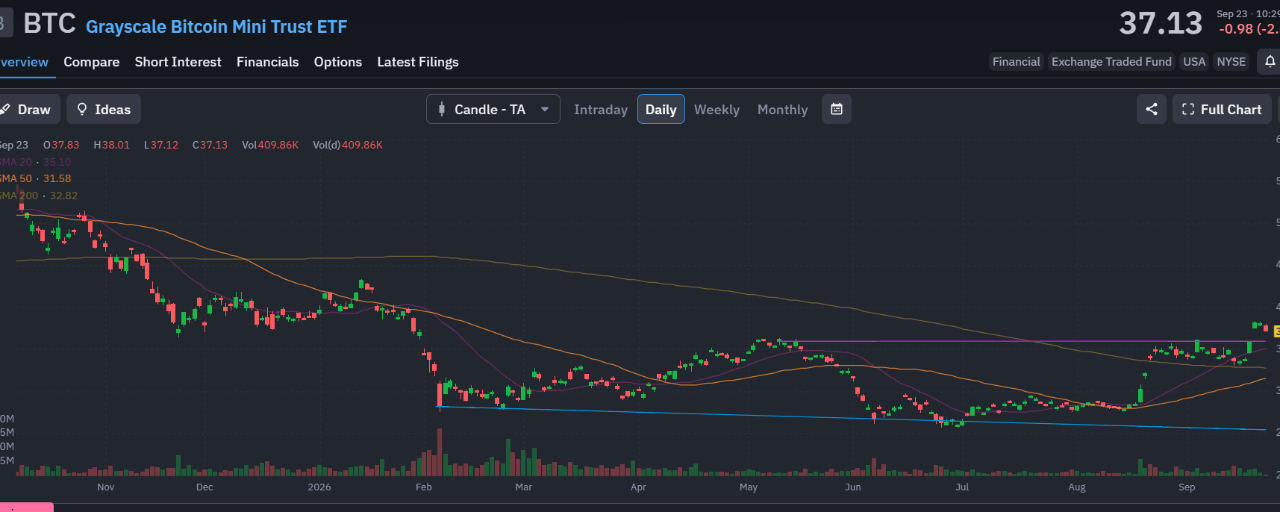
Grayscale Bitcoin Mini Trust (BTC) — September 23What’s happening?
Price: $37.13 | Today: -2.57%
BTC has been showing a strong recovery after touching the $27–28 area in July. In recent weeks, it rose to exceed $35–36, a zone that previously acted as resistance.
🔹 Resistance: $38–38.50
🔹 Key support: $35–36
🔹 SMA 20: $35.10
🔹 SMA 50: $31.58
🔹 SMA 200: $32.82
What’s happening today?
The 2.57% pullback comes after hitting $38.01. For now, it looks like profit-taking, not necessarily a trend change.
Grayscale Bitcoin Mini Trust (BTC) — September 23
What’s happening?
Price: $37.13 | Today: -2.57%
BTC has been showing a strong recovery after touching the $27–28 area in July. In recent weeks, it rose to exceed $35–36, a zone that previously acted as resistance.
🔹 Resistance: $38–38.50
🔹 Key support: $35–36
🔹 SMA 20: $35.10
🔹 SMA 50: $31.58
🔹 SMA 200: $32.82
What’s happening today?
The 2.57% pullback comes after hitting $38.01. For now, it looks like profit-taking, not necessarily a trend change.
Price: $37.13 | Today: -2.57%
BTC has been showing a strong recovery after touching the $27–28 area in July. In recent weeks, it rose to exceed $35–36, a zone that previously acted as resistance.
🔹 Resistance: $38–38.50
🔹 Key support: $35–36
🔹 SMA 20: $35.10
🔹 SMA 50: $31.58
🔹 SMA 200: $32.82
What’s happening today?
The 2.57% pullback comes after hitting $38.01. For now, it looks like profit-taking, not necessarily a trend change.
1
206
See translation
📊 ¿Por qué son importantes las reuniones del FOMC?
¿Sabías que las reuniones del FOMC (Federal Open Market Committee) pueden generar movimientos importantes en los mercados financieros y, especialmente, en el mercado de criptomonedas? 📈📉
El FOMC es el comité de la Reserva Federal de Estados Unidos (Fed) encargado de analizar la economía, la inflación y el empleo, y tomar decisiones de política monetaria. Entre las más importantes está decidir si suben, mantienen o bajan las tasas de interés. Estas decisiones pueden afectar el dólar, la liquidez y el apetito de los inversores por activos de riesgo.
El pasado miércoles 16 de septiembre se tomó una decisión importante: la Fed aumentó su tasa de referencia en 0,25 puntos porcentuales, llevándola al rango de 3,75%–4,00%.
🗓️ La próxima reunión del FOMC será el 27 y 28 de octubre de 2026. La Fed realiza ocho reuniones programadas durante el año.
⚠️ Ten muy presentes estas fechas si realizas operaciones: durante las reuniones y especialmente alrededor de la publicación de las decisiones, el mercado puede presentar mayor volatilidad y movimientos diferentes a los habituales. Por eso es importante conocer el calendario, estar atento a las decisiones sobre tasas y al mensaje de la Fed antes de tomar decisiones de trading.
No significa que el mercado necesariamente vaya a subir o bajar, sino que estos eventos pueden generar movimientos fuertes e inesperados en cuestión de minutos. 📉📈
$BTC
$ETH
$BNB
{spot}(DOGEUSDT)
{spot}(TRXUSDT)
{spot}(SOLUSDT)
📊 ¿Por qué son importantes las reuniones del FOMC?
¿Sabías que las reuniones del FOMC (Federal Open Market Committee) pueden generar movimientos importantes en los mercados financieros y, especialmente, en el mercado de criptomonedas? 📈📉
El FOMC es el comité de la Reserva Federal de Estados Unidos (Fed) encargado de analizar la economía, la inflación y el empleo, y tomar decisiones de política monetaria. Entre las más importantes está decidir si suben, mantienen o bajan las tasas de interés. Estas decisiones pueden afectar el dólar, la liquidez y el apetito de los inversores por activos de riesgo.
El pasado miércoles 16 de septiembre se tomó una decisión importante: la Fed aumentó su tasa de referencia en 0,25 puntos porcentuales, llevándola al rango de 3,75%–4,00%.
🗓️ La próxima reunión del FOMC será el 27 y 28 de octubre de 2026. La Fed realiza ocho reuniones programadas durante el año.
⚠️ Ten muy presentes estas fechas si realizas operaciones: durante las reuniones y especialmente alrededor de la publicación de las decisiones, el mercado puede presentar mayor volatilidad y movimientos diferentes a los habituales. Por eso es importante conocer el calendario, estar atento a las decisiones sobre tasas y al mensaje de la Fed antes de tomar decisiones de trading.
No significa que el mercado necesariamente vaya a subir o bajar, sino que estos eventos pueden generar movimientos fuertes e inesperados en cuestión de minutos. 📉📈
$BTC
$ETH
$BNB
¿Sabías que las reuniones del FOMC (Federal Open Market Committee) pueden generar movimientos importantes en los mercados financieros y, especialmente, en el mercado de criptomonedas? 📈📉
El FOMC es el comité de la Reserva Federal de Estados Unidos (Fed) encargado de analizar la economía, la inflación y el empleo, y tomar decisiones de política monetaria. Entre las más importantes está decidir si suben, mantienen o bajan las tasas de interés. Estas decisiones pueden afectar el dólar, la liquidez y el apetito de los inversores por activos de riesgo.
El pasado miércoles 16 de septiembre se tomó una decisión importante: la Fed aumentó su tasa de referencia en 0,25 puntos porcentuales, llevándola al rango de 3,75%–4,00%.
🗓️ La próxima reunión del FOMC será el 27 y 28 de octubre de 2026. La Fed realiza ocho reuniones programadas durante el año.
⚠️ Ten muy presentes estas fechas si realizas operaciones: durante las reuniones y especialmente alrededor de la publicación de las decisiones, el mercado puede presentar mayor volatilidad y movimientos diferentes a los habituales. Por eso es importante conocer el calendario, estar atento a las decisiones sobre tasas y al mensaje de la Fed antes de tomar decisiones de trading.
No significa que el mercado necesariamente vaya a subir o bajar, sino que estos eventos pueden generar movimientos fuertes e inesperados en cuestión de minutos. 📉📈
$BTC
$ETH
$BNB
Información importante
100%
No me parece relevante
0%
Sigue informando
0%
1 votes • Voting closed
1
4
Log in to explore more content
Join global crypto users on Binance Square
⚡️ Get latest and useful information about crypto.
💬 Trusted by the world’s largest crypto exchange.
👍 Discover real insights from verified creators.
Email / Phone number
Trending Topics
DriftHackVictimsBeginClaims
32,430 views
488 Discussing
🚨 DRIFT HACK VICTIMS CAN FINALLY START CLAIMING RECOVERY!
Victims of Drift’s April 2026 exploit are now able to claim DFX recovery tokens. The attack caused roughly $295.4M in verified losses, while the initial recovery pool held about $3.11M.
At launch, 1 DFX represented $1 of verified loss, but the initial redemption value was only around $0.0104 per DFX — roughly 1 cent recovered for every $1 lost. Users can redeem, sell, or hold DFX for potentially larger future recoveries as the pool receives additional funding.
⚠️ Important: Redeeming DFX burns the tokens, meaning users give up their share of future recovery funding for those tokens.
Could Drift victims eventually recover a much larger portion of their losses? 👇
#drifthackvictimsbeginclaims
#PEPE $PEPE
ASHFAQ NAEEM
·4 Likes
·9.8k views
SolanaTokenizedStockVolumeTops$4.4BInSeptember
5,127 views
58 Discussing
BitcoinSpotETFsDraw$6.34BInflowsInQ3
16,767 views
175 Discussing