
和成天下口味王
2.8k Posts

和成天下口味王
精品大果畅游web3宇宙这一块!let’s go!
158 Following
14.4K+ Followers
5.6K+ Liked
Posts
All
Quotes
Live
PINNED
🚨 Sprinting to 20K Followers Milestone! 🚨
Contributing my part to the Binance platform
As a token of appreciation, a generous USDT red envelope rain 🧧🧧🧧 has already been distributed!
In the final moments, I rely on my brothers to lend me a helping hand! 🔥
#红包
Contributing my part to the Binance platform
As a token of appreciation, a generous USDT red envelope rain 🧧🧧🧧 has already been distributed!
In the final moments, I rely on my brothers to lend me a helping hand! 🔥
#红包

Play games or be the shopkeeper? Let's chat about the staking ecosystem of Pixels
Let's have a chat with everyone. Those who have done business would definitely understand that running your own store and going to buy things in someone else's store is a completely different mindset.
When you usually go to the supermarket, after paying, you just walk out with your items, who cares if the store is leaking? But if you’ve invested real money in that coffee stall on the corner, even if you don’t go there every day, you will still subconsciously glance at it when passing by: How's the customer flow today? Is the sign lit up?
Recently, the more I play, the more I feel that the staking ecosystem in Pixels is actually grasping this “investment” mentality.
Many tokens in chain games are sold off right after being mined; they are just passersby who come and go. But the guild seat staking in Pixels is designed particularly cleverly. When you use $PIXEL to buy a guild pass, you are essentially staking your assets here, becoming a community of interests with these brothers.
It is definitely not a cold, hard digital lock-up, but rather it subtly pulls a string in your heart. You will genuinely start to care about how high the guild's ranking is and how well the resources of rare plots are being snatched up. You are no longer forced to log in just to mechanically complete daily tasks, but you sincerely want to see how well “your shop” is developing today.
This staking mechanism that transforms players from mere “workers” into guild “partners” is what gives tokens real social stickiness and the confidence to keep people on this continent for the long term.
@Pixels
$PIXEL
#pixel
Let's have a chat with everyone. Those who have done business would definitely understand that running your own store and going to buy things in someone else's store is a completely different mindset.
When you usually go to the supermarket, after paying, you just walk out with your items, who cares if the store is leaking? But if you’ve invested real money in that coffee stall on the corner, even if you don’t go there every day, you will still subconsciously glance at it when passing by: How's the customer flow today? Is the sign lit up?
Recently, the more I play, the more I feel that the staking ecosystem in Pixels is actually grasping this “investment” mentality.
Many tokens in chain games are sold off right after being mined; they are just passersby who come and go. But the guild seat staking in Pixels is designed particularly cleverly. When you use $PIXEL to buy a guild pass, you are essentially staking your assets here, becoming a community of interests with these brothers.
It is definitely not a cold, hard digital lock-up, but rather it subtly pulls a string in your heart. You will genuinely start to care about how high the guild's ranking is and how well the resources of rare plots are being snatched up. You are no longer forced to log in just to mechanically complete daily tasks, but you sincerely want to see how well “your shop” is developing today.
This staking mechanism that transforms players from mere “workers” into guild “partners” is what gives tokens real social stickiness and the confidence to keep people on this continent for the long term.
@Pixels
$PIXEL
#pixel


Don't talk about getting rich quickly; let's break down the 'cyber loyalty contract' in the Pixels staking ecosystem.
Last night, I stayed up late to closely examine the on-chain data, and I couldn't help but slap my thigh. This team is indeed very savvy. In today's blockchain gaming circle, most are crude funding schemes like 'deposit a hundred and get back one every day'; a big player can cause it to collapse in an instant. But the staking ecology of Pixels is not fundamentally a cash machine for you to earn interest while lying down; it is essentially more like a 'cyber loyalty contract'.
Think carefully, do you want to join a big guild? Want to benefit from land yield bonuses? Fine, stake your tokens.
It cleverly transforms tokens into your social status in the game. You are no longer a heartless mining and selling machine, but are firmly tied to the guild's war chariot. This tactic is called social entrapment. Major guilds compete for rankings and resources; management may even lead the charge to buy and lock assets. This staking method, which pays for privileges, quietly digests a massive sell pressure internally.
To put it simply, in the farm, staking is definitely not static wealth management, but a dynamic ticket. If you don't lock tokens, you can only act as a retail investor; if you lock tokens, you become part of a community of interests. This logic is cold yet clever; without talking about faith, let's just grab you by the neck with solid game experience. As long as players still want to stay in the game, this pool of water will never run dry. The long-term strategic game is indeed brilliant.
@Pixels
$PIXEL
#pixel
Last night, I stayed up late to closely examine the on-chain data, and I couldn't help but slap my thigh. This team is indeed very savvy. In today's blockchain gaming circle, most are crude funding schemes like 'deposit a hundred and get back one every day'; a big player can cause it to collapse in an instant. But the staking ecology of Pixels is not fundamentally a cash machine for you to earn interest while lying down; it is essentially more like a 'cyber loyalty contract'.
Think carefully, do you want to join a big guild? Want to benefit from land yield bonuses? Fine, stake your tokens.
It cleverly transforms tokens into your social status in the game. You are no longer a heartless mining and selling machine, but are firmly tied to the guild's war chariot. This tactic is called social entrapment. Major guilds compete for rankings and resources; management may even lead the charge to buy and lock assets. This staking method, which pays for privileges, quietly digests a massive sell pressure internally.
To put it simply, in the farm, staking is definitely not static wealth management, but a dynamic ticket. If you don't lock tokens, you can only act as a retail investor; if you lock tokens, you become part of a community of interests. This logic is cold yet clever; without talking about faith, let's just grab you by the neck with solid game experience. As long as players still want to stay in the game, this pool of water will never run dry. The long-term strategic game is indeed brilliant.
@Pixels
$PIXEL
#pixel


Peeling Off the Layer of Cross-Game Staking: Is the PIXEL Staking Ecosystem a Lifeline or a Delaying Tactic?
Brothers, let's speak plainly, no fluff. Recently, there has been a lot of talk about the multi-game staking and guild ecosystem of Pixels being part of a grand scheme. As someone who has been through various blockchain games, I can't help but scoff while doing my homework these days: in the past, which of those projects that ultimately failed didn't rely on staking and locking to make on-chain data look spectacular? So, facing this wave of staking updates, my stance is simple: the conclusion is not absolute; it's about survival first.
Let's evaluate this staking system by looking at the evidence. The team has forcefully transformed the previous single-track consumption based purely on farming for gold into a staking hub bound to guild passes, VIP, and ecosystem sub-games (like Chubkins), and they've even distributed USDC rewards within the staking system. I tend to believe that the officials are very aware that relying solely on farming cannot contain the massive token inflation, so they must use "staking dividends" to forcibly raise the exit threshold for players, using pre-locked staking to buy time for the entire game economy to operate.
Transforming tokens into ecological golden shovels does make logical sense. But here lies the most fatal question: do the new games integrated into this staking ecosystem truly possess external blood-generating capabilities? If there is no fresh blood coming in to spend, then aren't the rewards generated by staking just a disguised inflation of shifting money from one foot to the other? For this, I'm not sure, but how will I verify it? This matter is actually not complicated; I will focus closely on the following two core indicators:
• The real distribution of staking chips: Keep a close eye on the ratio of large holders to retail investors in the staking pool. If resources are completely skewed towards top guilds, and ordinary players don't even qualify to sip soup, then it's just giant whales sucking blood, and a collapse is only a matter of time.
In summary, using a staking mechanism to hedge against selling pressure is a clever engineering attempt, but it is far from the time to boast about the conclusion. I suggest everyone hold tight to their wallets, see the real operational efficiency of the staking engine at the bottom layer before making a decision. In this circle, surviving gives you the qualification to talk about profits.
@Pixels
$PIXEL
#pixel
Brothers, let's speak plainly, no fluff. Recently, there has been a lot of talk about the multi-game staking and guild ecosystem of Pixels being part of a grand scheme. As someone who has been through various blockchain games, I can't help but scoff while doing my homework these days: in the past, which of those projects that ultimately failed didn't rely on staking and locking to make on-chain data look spectacular? So, facing this wave of staking updates, my stance is simple: the conclusion is not absolute; it's about survival first.
Let's evaluate this staking system by looking at the evidence. The team has forcefully transformed the previous single-track consumption based purely on farming for gold into a staking hub bound to guild passes, VIP, and ecosystem sub-games (like Chubkins), and they've even distributed USDC rewards within the staking system. I tend to believe that the officials are very aware that relying solely on farming cannot contain the massive token inflation, so they must use "staking dividends" to forcibly raise the exit threshold for players, using pre-locked staking to buy time for the entire game economy to operate.
Transforming tokens into ecological golden shovels does make logical sense. But here lies the most fatal question: do the new games integrated into this staking ecosystem truly possess external blood-generating capabilities? If there is no fresh blood coming in to spend, then aren't the rewards generated by staking just a disguised inflation of shifting money from one foot to the other? For this, I'm not sure, but how will I verify it? This matter is actually not complicated; I will focus closely on the following two core indicators:
• The real distribution of staking chips: Keep a close eye on the ratio of large holders to retail investors in the staking pool. If resources are completely skewed towards top guilds, and ordinary players don't even qualify to sip soup, then it's just giant whales sucking blood, and a collapse is only a matter of time.
In summary, using a staking mechanism to hedge against selling pressure is a clever engineering attempt, but it is far from the time to boast about the conclusion. I suggest everyone hold tight to their wallets, see the real operational efficiency of the staking engine at the bottom layer before making a decision. In this circle, surviving gives you the qualification to talk about profits.
@Pixels
$PIXEL
#pixel


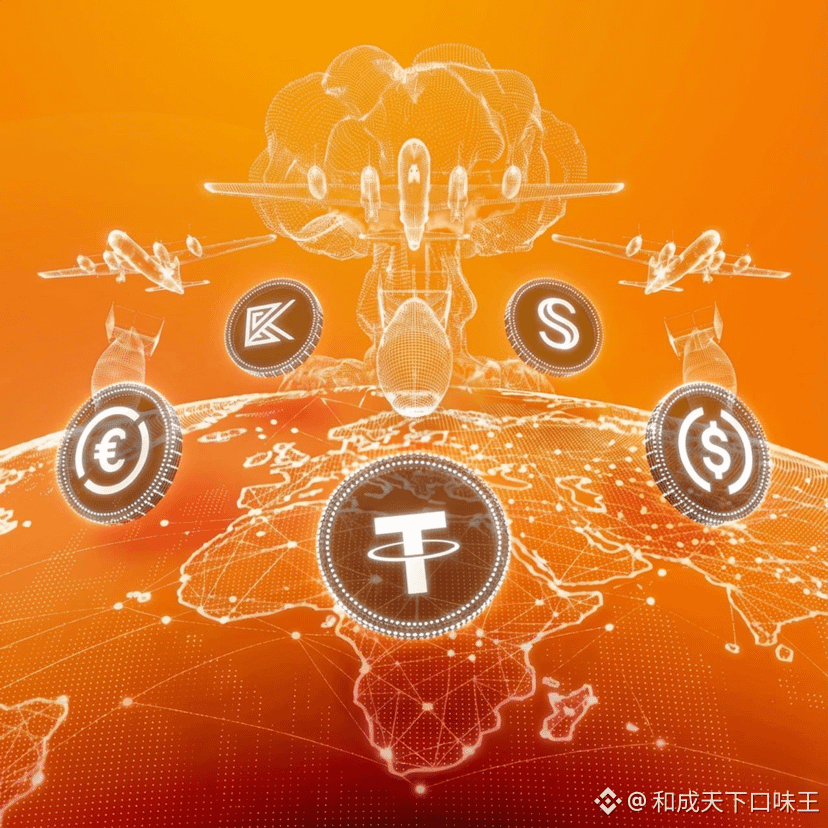
Refusing to paint a pie in the sky, uncovering the real underlying cards of this geopolitical infrastructure]
Currently, most of the proof agreements in this circle are engaged in self-satisfied self-rescue. Either they lock a soul-bound token on a single chain, grandly named 'identity sovereignty', but in reality, it becomes a data island; or they lock the verification logic in inefficient centralized oracles. Airdrops are fine, but when it comes to complex cross-border trade, it directly falls apart. I am indeed tired of this kind of empty talk without settlement ability.
Recently, while doing my homework, I analyzed the foundation of this project and discovered a hardcore mechanism: full-chain consensus proof topology. In simple terms, it does not blindly create public chains, but separates business verification and underlying evidence using structured hooks. For example, when you do business in the Middle East, you do not need to show your bank transactions to the entire network; just pull out the issued encrypted seal, and without exposing business secrets, you can instantly self-verify your strength.
Now the entire network is rushing for meme coins, and sticking to the underlying infrastructure is indeed stubborn. But the geopolitical situation is like a powder keg, and centralized clearing can cut your network connection at any time; blindly trusting tradition is too naive. It is actually forcefully smashing a trust anchor point in the gap of sovereign tearing. Of course, no narrative or conclusion is absolute; infrastructure cycles are long, so we should prioritize survival before taking risks, and definitely avoid reckless gambles.
@SignOfficial
$SIGN
#Sign地缘政治基建
Currently, most of the proof agreements in this circle are engaged in self-satisfied self-rescue. Either they lock a soul-bound token on a single chain, grandly named 'identity sovereignty', but in reality, it becomes a data island; or they lock the verification logic in inefficient centralized oracles. Airdrops are fine, but when it comes to complex cross-border trade, it directly falls apart. I am indeed tired of this kind of empty talk without settlement ability.
Recently, while doing my homework, I analyzed the foundation of this project and discovered a hardcore mechanism: full-chain consensus proof topology. In simple terms, it does not blindly create public chains, but separates business verification and underlying evidence using structured hooks. For example, when you do business in the Middle East, you do not need to show your bank transactions to the entire network; just pull out the issued encrypted seal, and without exposing business secrets, you can instantly self-verify your strength.
Now the entire network is rushing for meme coins, and sticking to the underlying infrastructure is indeed stubborn. But the geopolitical situation is like a powder keg, and centralized clearing can cut your network connection at any time; blindly trusting tradition is too naive. It is actually forcefully smashing a trust anchor point in the gap of sovereign tearing. Of course, no narrative or conclusion is absolute; infrastructure cycles are long, so we should prioritize survival before taking risks, and definitely avoid reckless gambles.
@SignOfficial
$SIGN
#Sign地缘政治基建
诈骗画饼代币
100%
走向人生巅峰
0%
不是更清楚这个项目
0%
1 votes • Voting closed
The "Digital Private Property" of Middle Eastern Tycoons: What exactly is Sign up to?!
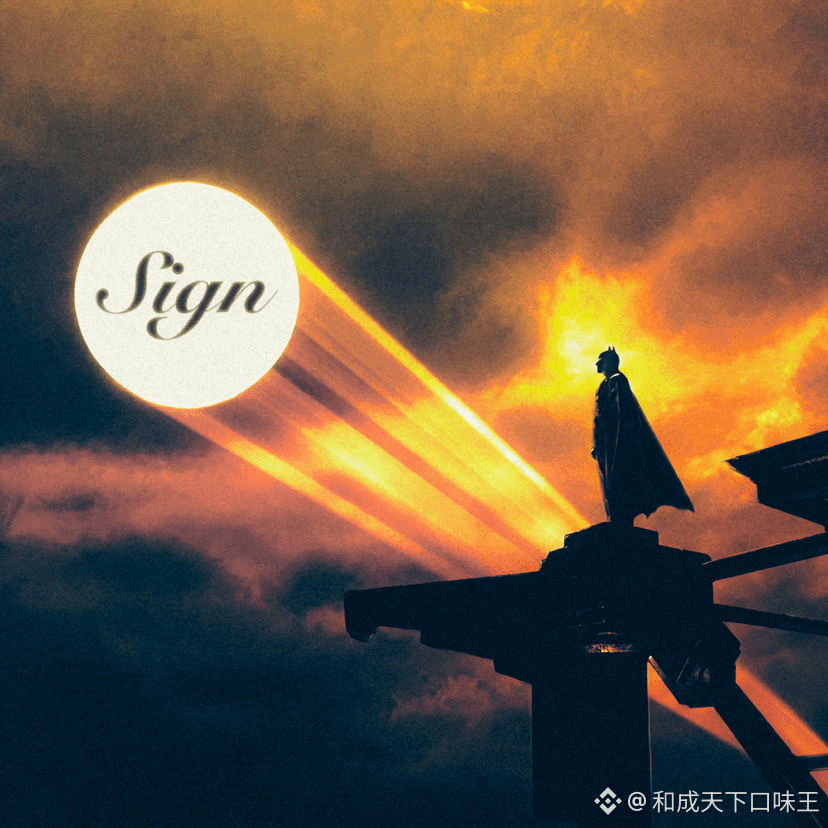
Recently, I've been looking at cases of digital transformation in the Middle East and keep coming across @SignOfficial . To be honest, my first reaction was: Is this pie being drawn a bit too large? To figure out whether they are selling "air" or building a "foundation" in that area, I've indeed spent a lot of time buried in books over the past few days. Let's set aside the flowery words in those research reports and take a cold look at the real quality of $SIGN .
In simple terms, Saudi Arabia and the UAE really don't lack money; what they lack is "digital sovereignty." Think about it, if core government and financial data runs on someone else's chain, isn't their lifeline being held? The smartest thing about Sign is that it doesn't deal in illusions but rather provides a set of privately deployable SIGN Stack infrastructure. Nodes are locked in data centers in Abu Dhabi, keys are held by sovereign funds, data stays within borders, and consensus is managed internally. This sense of control, where "I am in charge of my territory," is the underlying logic that makes tycoons willing to spend money.
As I complain while watching, Sign's current role is more like a "digital gatekeeper." For the Middle East to achieve economic transformation, it relies on multinational trade and digital finance, where the most expensive factor is the "cost of trust." Sign’s on-chain identity and proof serve as an automatic verification system for such large-scale collaborations. If this really comes to fruition, it will become the default layer of the future Middle Eastern digital economy, directly linked to GDP.
Don't be too rigid in your conclusions; infrastructure work has always been slow. But compared to a landscape full of air, this kind of geopolitical narrative is much sturdier. This solution holds immense value. Let's focus on survival for now and see if it can truly take off.
@SignOfficial
$SIGN
#Sign地缘政治基建
Recently, I've been looking at cases of digital transformation in the Middle East and keep coming across @SignOfficial . To be honest, my first reaction was: Is this pie being drawn a bit too large? To figure out whether they are selling "air" or building a "foundation" in that area, I've indeed spent a lot of time buried in books over the past few days. Let's set aside the flowery words in those research reports and take a cold look at the real quality of $SIGN .
In simple terms, Saudi Arabia and the UAE really don't lack money; what they lack is "digital sovereignty." Think about it, if core government and financial data runs on someone else's chain, isn't their lifeline being held? The smartest thing about Sign is that it doesn't deal in illusions but rather provides a set of privately deployable SIGN Stack infrastructure. Nodes are locked in data centers in Abu Dhabi, keys are held by sovereign funds, data stays within borders, and consensus is managed internally. This sense of control, where "I am in charge of my territory," is the underlying logic that makes tycoons willing to spend money.
As I complain while watching, Sign's current role is more like a "digital gatekeeper." For the Middle East to achieve economic transformation, it relies on multinational trade and digital finance, where the most expensive factor is the "cost of trust." Sign’s on-chain identity and proof serve as an automatic verification system for such large-scale collaborations. If this really comes to fruition, it will become the default layer of the future Middle Eastern digital economy, directly linked to GDP.
Don't be too rigid in your conclusions; infrastructure work has always been slow. But compared to a landscape full of air, this kind of geopolitical narrative is much sturdier. This solution holds immense value. Let's focus on survival for now and see if it can truly take off.
@SignOfficial
$SIGN
#Sign地缘政治基建
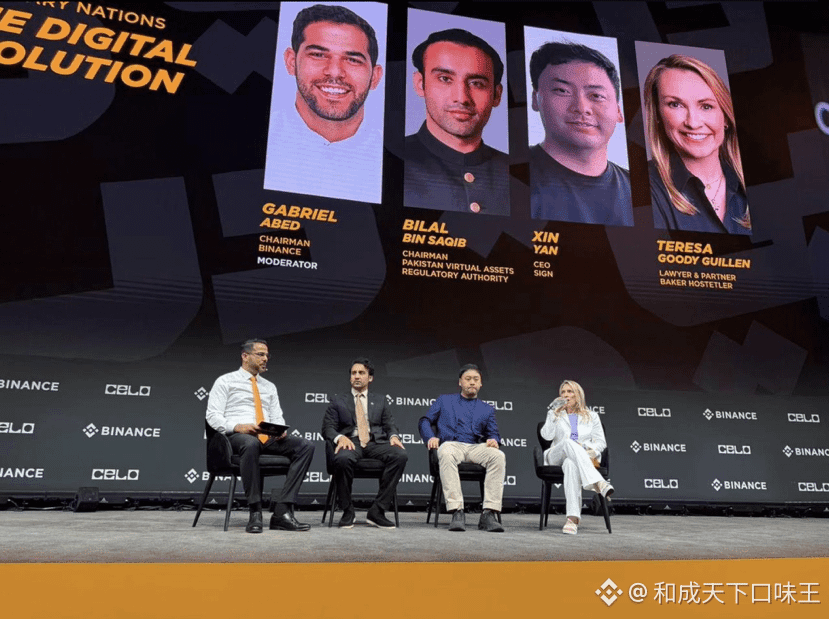
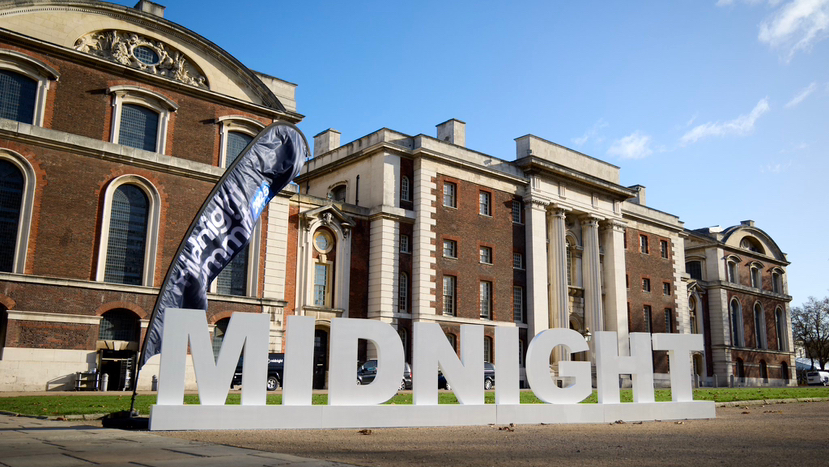

Before $NIGHT : Don't just look at the IOG sign, first calculate the compliance and selling pressure accounts.
Brothers, let's speak plainly. Recently, everyone has been hyping the expectations for Midnight's mainnet and IOG's background. Looking at this heat, I just want to say: stop hyping, first look at the evidence. The story of privacy plus compliance is indeed top-notch, but whether it can be executed is another matter.
Their 'selective disclosure' is very clever; they don't confront regulators head-on. But I tend to believe that the project's moat is not in the fanciness of the ZK algorithm, but in the real operational costs. How expensive is it to run zero-knowledge proofs on-chain? I'm not sure, but how will I verify it? Once the mainnet goes live, I'll directly see if there are any real DApps that dare to run high-frequency interactions on it. Stop hyping how amazing the underlying technology is; if there are no institutions or retail investors using it, then it's just a high-end shell.
Looking at the chips, the total supply is 10 billion, with about 30% in circulation. The current rise is driven by localized liquidity exhaustion, but that 70% of unlocked selling pressure in the future is very real. The conclusion is not absolute; the short-term speculation on the mainnet landing sentiment is reasonable, but long-term? First ensure survival before taking risks. I will only focus on the real on-chain activity and the concentration of token holdings after the mainnet launches; no rabbit, no hawk.
@MidnightNetwork
$NIGHT
#night
Brothers, let's speak plainly. Recently, everyone has been hyping the expectations for Midnight's mainnet and IOG's background. Looking at this heat, I just want to say: stop hyping, first look at the evidence. The story of privacy plus compliance is indeed top-notch, but whether it can be executed is another matter.
Their 'selective disclosure' is very clever; they don't confront regulators head-on. But I tend to believe that the project's moat is not in the fanciness of the ZK algorithm, but in the real operational costs. How expensive is it to run zero-knowledge proofs on-chain? I'm not sure, but how will I verify it? Once the mainnet goes live, I'll directly see if there are any real DApps that dare to run high-frequency interactions on it. Stop hyping how amazing the underlying technology is; if there are no institutions or retail investors using it, then it's just a high-end shell.
Looking at the chips, the total supply is 10 billion, with about 30% in circulation. The current rise is driven by localized liquidity exhaustion, but that 70% of unlocked selling pressure in the future is very real. The conclusion is not absolute; the short-term speculation on the mainnet landing sentiment is reasonable, but long-term? First ensure survival before taking risks. I will only focus on the real on-chain activity and the concentration of token holdings after the mainnet launches; no rabbit, no hawk.
@MidnightNetwork
$NIGHT
#night
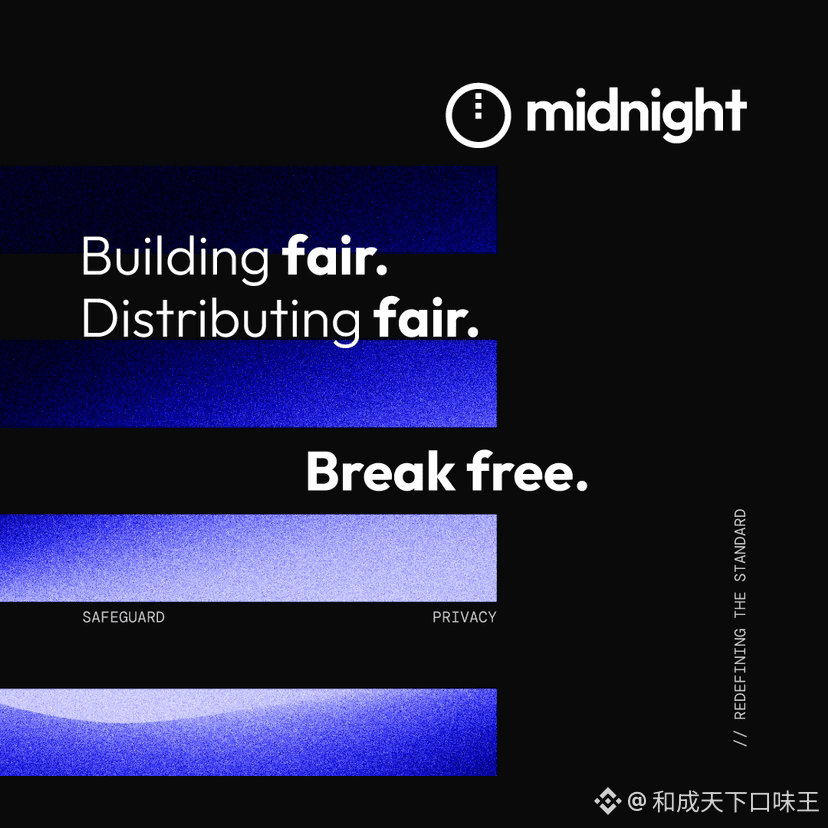

Don't blow hot air about disruption; first, clarify the company's financial mess.
Brothers, let's speak plainly. The biggest Achilles' heel for traditional industrial bosses hesitant to go on-chain isn't their inability to understand geek code, but rather that their finances can't be accounted for. When you tell the auditor that today's on-chain transfer gas fee is only 5 bucks, and tomorrow, due to congestion, it skyrockets to 500 bucks—how do you expect businesses to categorize that? How do they create an annual budget? The finance teams of industrial companies will definitely teach you a lesson right there.
Stop with the empty talk about world-changing, epoch-making revolutions; let’s look at the evidence first. Recently, I stayed up late reviewing the white paper of Midnight. Its dual-currency architecture involving $NIGHT and DUST truly hits the compliance pain points of these old money folks precisely. When a company buys $NIGHT and locks it up, on the books, it becomes a solid fixed asset, and it will automatically and continuously generate DUST to offset on-chain consumption costs. This is like a company paying for a stable annual broadband service; the underlying asset doesn't deplete, and the daily usage costs are also transparent, allowing tax and audit departments to finally shut up and let it pass.
I tend to think this is the right strategy to attract B-end institutions into the game. But in this circle, conclusions aren't absolute; we must prioritize survival before ambition. You should know that DUST comes with a decay and cap mechanism. Once the mainnet fully operates, and the overall holdings increase, leading to diluted generation efficiency, will there be enough generated fuel for those real-world businesses that require extremely high-frequency interactions? That remains a huge unknown.
So, I'm not sure if this set of parameters will collapse in an extremely congested environment, but how will I verify it? Once it truly lands, I will closely monitor the actual consumption flow of the first batch of compliant institutional nodes on-chain. Until I see real commercial deployment data involving those old money folks, I absolutely won't go all in. Do you have any industrial bosses around you who are stuck due to compliance and want to use blockchain but are afraid to?
@MidnightNetwork
$NIGHT
#night
Brothers, let's speak plainly. The biggest Achilles' heel for traditional industrial bosses hesitant to go on-chain isn't their inability to understand geek code, but rather that their finances can't be accounted for. When you tell the auditor that today's on-chain transfer gas fee is only 5 bucks, and tomorrow, due to congestion, it skyrockets to 500 bucks—how do you expect businesses to categorize that? How do they create an annual budget? The finance teams of industrial companies will definitely teach you a lesson right there.
Stop with the empty talk about world-changing, epoch-making revolutions; let’s look at the evidence first. Recently, I stayed up late reviewing the white paper of Midnight. Its dual-currency architecture involving $NIGHT and DUST truly hits the compliance pain points of these old money folks precisely. When a company buys $NIGHT and locks it up, on the books, it becomes a solid fixed asset, and it will automatically and continuously generate DUST to offset on-chain consumption costs. This is like a company paying for a stable annual broadband service; the underlying asset doesn't deplete, and the daily usage costs are also transparent, allowing tax and audit departments to finally shut up and let it pass.
I tend to think this is the right strategy to attract B-end institutions into the game. But in this circle, conclusions aren't absolute; we must prioritize survival before ambition. You should know that DUST comes with a decay and cap mechanism. Once the mainnet fully operates, and the overall holdings increase, leading to diluted generation efficiency, will there be enough generated fuel for those real-world businesses that require extremely high-frequency interactions? That remains a huge unknown.
So, I'm not sure if this set of parameters will collapse in an extremely congested environment, but how will I verify it? Once it truly lands, I will closely monitor the actual consumption flow of the first batch of compliant institutional nodes on-chain. Until I see real commercial deployment data involving those old money folks, I absolutely won't go all in. Do you have any industrial bosses around you who are stuck due to compliance and want to use blockchain but are afraid to?
@MidnightNetwork
$NIGHT
#night
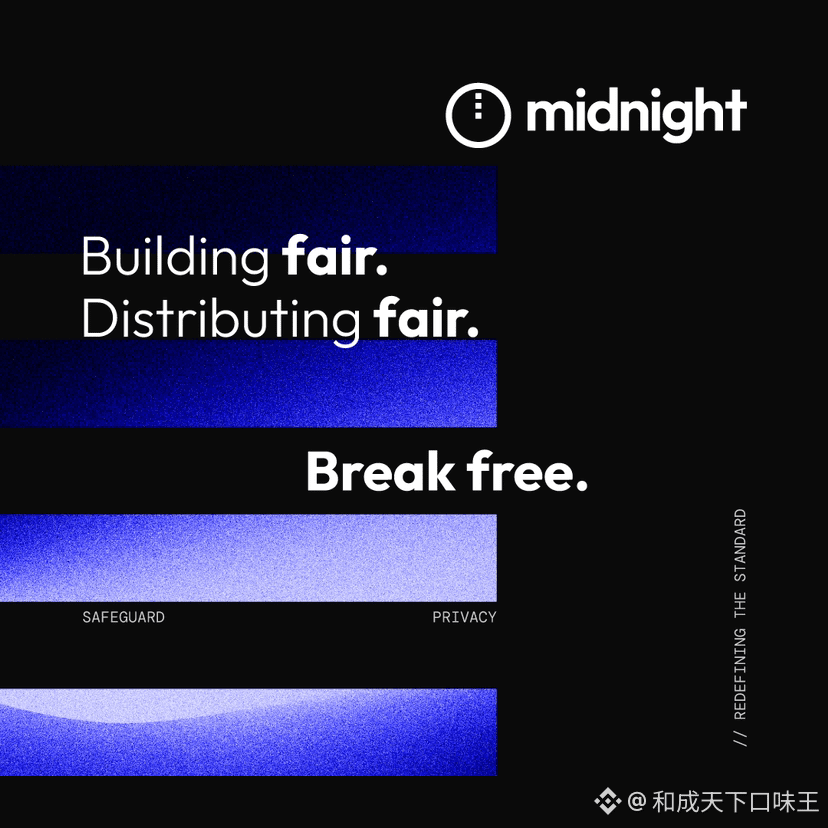
In the realm of Middle Eastern tycoons, who is Sign really collecting the "trust tax" from?
Yesterday, I had a drink with my friend Old Zhou, who is involved in Middle Eastern trade. He complained that the hardest part about striking gold in Dubai is not finding clients, but proving one's innocence. Demonstrating that the funds are clean and the entities are compliant, with layers of audits and official seals, can drive a person crazy. This friction of trust is precisely the juicy target that $SIGN has set its sights on. Many people perceive @SignOfficial as merely a certificate issuance on the blockchain; in reality, it has grand ambitions, targeting the most anxious concern of Middle Eastern tycoons—"digital sovereignty."
The Middle East is desperately trying to escape Western financial jurisdiction and urgently needs a set of infrastructure that they can control while also being recognized globally. The evidence layer logic of Sign is to provide a decentralized digital stamp for sovereign credit. It utilizes Schema and Hooks mechanisms to make verification as cold and unyielding as a turnstile. Whether you are compliant or not is determined by the code, with no regard for bureaucratic faces. This kind of geo-level infrastructure has indeed an unfathomable growth potential in a fragmented world.
However, I must pour a bucket of cold water on this. Don't get too excited when you hear "sovereign infrastructure." When Web3 technology becomes a tool for sovereign control, is it really liberating efficiency or reinforcing a steel cage? Sign is in the business of rule passports, and it's hard to reach a definitive conclusion at this point. We need to clearly understand whether the toll station can genuinely collect taxes before we talk about dreams.
@SignOfficial $SIGN #Sign地缘政治基建
Yesterday, I had a drink with my friend Old Zhou, who is involved in Middle Eastern trade. He complained that the hardest part about striking gold in Dubai is not finding clients, but proving one's innocence. Demonstrating that the funds are clean and the entities are compliant, with layers of audits and official seals, can drive a person crazy. This friction of trust is precisely the juicy target that $SIGN has set its sights on. Many people perceive @SignOfficial as merely a certificate issuance on the blockchain; in reality, it has grand ambitions, targeting the most anxious concern of Middle Eastern tycoons—"digital sovereignty."
The Middle East is desperately trying to escape Western financial jurisdiction and urgently needs a set of infrastructure that they can control while also being recognized globally. The evidence layer logic of Sign is to provide a decentralized digital stamp for sovereign credit. It utilizes Schema and Hooks mechanisms to make verification as cold and unyielding as a turnstile. Whether you are compliant or not is determined by the code, with no regard for bureaucratic faces. This kind of geo-level infrastructure has indeed an unfathomable growth potential in a fragmented world.
However, I must pour a bucket of cold water on this. Don't get too excited when you hear "sovereign infrastructure." When Web3 technology becomes a tool for sovereign control, is it really liberating efficiency or reinforcing a steel cage? Sign is in the business of rule passports, and it's hard to reach a definitive conclusion at this point. We need to clearly understand whether the toll station can genuinely collect taxes before we talk about dreams.
@SignOfficial $SIGN #Sign地缘政治基建

【Why are institutions afraid of public chains? Understanding the privacy boundaries of Midnight】
Brothers, let's talk about something real. Everyone in the circle is shouting to let big companies in, but a purely public blockchain simply can't do it. Let's be frank, which serious company would be willing to expose its business secrets and cash flow on a transparent ledger for all to see? Stripping down to your underwear does not align with commercial logic.
This is also the reason I reconsidered Midnight. Don’t boast about absolute anonymity; let’s look at the evidence first. Its main feature of "selective disclosure" is very practical: compliance data that needs to be shown to regulators gets the green light, while core secrets are securely hidden using zero-knowledge proofs. I tend to believe that this kind of privacy with boundaries is the foundational infrastructure that institutions are truly willing to use.
Now let’s look at consumption. Many chains have astronomical fees when congested, but it has implemented a dual-token system. It captures value using NIGHT and generates DUST as fuel, completely separating speculation from actual usage costs. I’m not sure if the mechanism will collapse under high concurrency, but how will I verify it? Waiting for the mainnet to see the real nodes running and the wear and tear on-chain.
The conclusion is not absolute; survival first, then we can think about more. If we can truly bite off this piece of meat, the future potential is enormous.
@MidnightNetwork $NIGHT #night
Brothers, let's talk about something real. Everyone in the circle is shouting to let big companies in, but a purely public blockchain simply can't do it. Let's be frank, which serious company would be willing to expose its business secrets and cash flow on a transparent ledger for all to see? Stripping down to your underwear does not align with commercial logic.
This is also the reason I reconsidered Midnight. Don’t boast about absolute anonymity; let’s look at the evidence first. Its main feature of "selective disclosure" is very practical: compliance data that needs to be shown to regulators gets the green light, while core secrets are securely hidden using zero-knowledge proofs. I tend to believe that this kind of privacy with boundaries is the foundational infrastructure that institutions are truly willing to use.
Now let’s look at consumption. Many chains have astronomical fees when congested, but it has implemented a dual-token system. It captures value using NIGHT and generates DUST as fuel, completely separating speculation from actual usage costs. I’m not sure if the mechanism will collapse under high concurrency, but how will I verify it? Waiting for the mainnet to see the real nodes running and the wear and tear on-chain.
The conclusion is not absolute; survival first, then we can think about more. If we can truly bite off this piece of meat, the future potential is enormous.
@MidnightNetwork $NIGHT #night
Middle Eastern tycoons are working on digital sovereignty infrastructure. Is Sign a hardcore infrastructure or just a large-scale fantasy?
In the past few days, while reviewing the homework on the digital economy in the Middle East, I found that Saudi Arabia and the UAE have big ambitions to achieve "digital sovereignty." In simple terms, they don't want to outsource all their core data to Western tech giants. At this moment, @SignOfficial pops up to act as the infrastructure, and logically, it does seem very solid.
This underlying proof protocol essentially serves as a "digital notary" for national-level digitization. Whether it's RWA asset on-chain or government verification, as long as this Attestation becomes the standard, the future growth potential is outrageous. The demand at the sovereign level is essential, and once it is rolled out, it will be a game-changer.
But I want to complain that this infrastructure work is not only tiring but also has a long cycle. Don't be too definitive in your conclusions; prioritize survival before getting too ambitious. The real value of $SIGN depends on whether the system can generate volume. If the verification frequency skyrockets, the token will naturally stabilize in value as collateral and fees.
In short, the geopolitical infrastructure looks enticing, but whether it can be effectively leveraged depends on the penetration speed. Retail investors should just focus on the data and not get swayed by emotions. Better check the codes quickly.
@SignOfficial $SIGN #Sign地缘政治基建
In the past few days, while reviewing the homework on the digital economy in the Middle East, I found that Saudi Arabia and the UAE have big ambitions to achieve "digital sovereignty." In simple terms, they don't want to outsource all their core data to Western tech giants. At this moment, @SignOfficial pops up to act as the infrastructure, and logically, it does seem very solid.
This underlying proof protocol essentially serves as a "digital notary" for national-level digitization. Whether it's RWA asset on-chain or government verification, as long as this Attestation becomes the standard, the future growth potential is outrageous. The demand at the sovereign level is essential, and once it is rolled out, it will be a game-changer.
But I want to complain that this infrastructure work is not only tiring but also has a long cycle. Don't be too definitive in your conclusions; prioritize survival before getting too ambitious. The real value of $SIGN depends on whether the system can generate volume. If the verification frequency skyrockets, the token will naturally stabilize in value as collateral and fees.
In short, the geopolitical infrastructure looks enticing, but whether it can be effectively leveraged depends on the penetration speed. Retail investors should just focus on the data and not get swayed by emotions. Better check the codes quickly.
@SignOfficial $SIGN #Sign地缘政治基建


Log in to explore more content