
CoinoMedia
11.1k Posts

CoinoMedia
 Square Verified+
Report
Block User
Stay updated with Coinomedia, your one-stop destination for the latest cryptocurrency news, blockchain updates, market trends, and in-depth analysis.
0 Following
10.1K+ Followers
16.8K+ Liked
Posts
·
--
Article
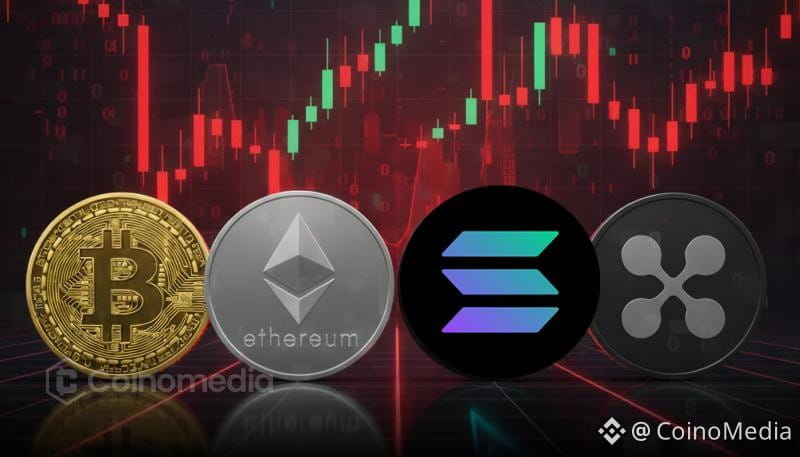
Weekly ETF Flows Show Bitcoin Outflows as ETH, SOL and XRP GainBitcoin spot ETFs recorded $462.73 million in net outflows last week.
Ethereum spot ETFs attracted $197.11 million in net inflows.
Solana and XRP spot ETFs added $10.3 million and $18.98 million, respectively.
The latest Weekly ETF flows showed a shift in institutional positioning, with spot Bitcoin ETFs recording $462.73 million in net outflows.
The withdrawals indicate that investors reduced exposure to Bitcoin investment products during the week, even as interest in several altcoin ETFs strengthened. ETF flow data remains a closely watched indicator of institutional sentiment and capital allocation across the digital asset market.
Ethereum, Solana and XRP Attract Capital
While Bitcoin experienced outflows, spot Ethereum ETFs recorded $197.11 million in net inflows, reflecting continued institutional demand.
Spot Solana ETFs also attracted $10.3 million, while spot XRP ETFs added $18.98 million. The positive flows suggest investors continued allocating capital to select altcoins despite the weakness in Bitcoin ETF demand.
The divergence highlights changing preferences within the crypto ETF market.
ETF FLOWS: ETH, SOL and XRP spot ETFs saw net inflows last week, while BTC spot ETFs saw net outflows.
BTC: -$462.73M
ETH: $197.11M
SOL: $10.3M
XRP: $18.98M pic.twitter.com/uWqd0XYE5r
— Cointelegraph (@Cointelegraph) September 14, 2026
Institutional Sentiment Remains Mixed
The latest Weekly ETF flows underscore a mixed institutional outlook across major digital assets.
While Bitcoin funds faced notable withdrawals, sustained inflows into Ethereum, Solana, and XRP ETFs indicate investors remain active in the broader crypto market. Market participants will continue monitoring ETF activity to assess whether capital rotates back into Bitcoin or continues favoring alternative digital assets.
Weekly ETF Flows Show Bitcoin Outflows as ETH, SOL and XRP Gain
Bitcoin spot ETFs recorded $462.73 million in net outflows last week.
Ethereum spot ETFs attracted $197.11 million in net inflows.
Solana and XRP spot ETFs added $10.3 million and $18.98 million, respectively.
The latest Weekly ETF flows showed a shift in institutional positioning, with spot Bitcoin ETFs recording $462.73 million in net outflows.
The withdrawals indicate that investors reduced exposure to Bitcoin investment products during the week, even as interest in several altcoin ETFs strengthened. ETF flow data remains a closely watched indicator of institutional sentiment and capital allocation across the digital asset market.
Ethereum, Solana and XRP Attract Capital
While Bitcoin experienced outflows, spot Ethereum ETFs recorded $197.11 million in net inflows, reflecting continued institutional demand.
Spot Solana ETFs also attracted $10.3 million, while spot XRP ETFs added $18.98 million. The positive flows suggest investors continued allocating capital to select altcoins despite the weakness in Bitcoin ETF demand.
The divergence highlights changing preferences within the crypto ETF market.
ETF FLOWS: ETH, SOL and XRP spot ETFs saw net inflows last week, while BTC spot ETFs saw net outflows.
BTC: -$462.73M
ETH: $197.11M
SOL: $10.3M
XRP: $18.98M pic.twitter.com/uWqd0XYE5r
— Cointelegraph (@Cointelegraph) September 14, 2026
Institutional Sentiment Remains Mixed
The latest Weekly ETF flows underscore a mixed institutional outlook across major digital assets.
While Bitcoin funds faced notable withdrawals, sustained inflows into Ethereum, Solana, and XRP ETFs indicate investors remain active in the broader crypto market. Market participants will continue monitoring ETF activity to assess whether capital rotates back into Bitcoin or continues favoring alternative digital assets.
Ethereum spot ETFs attracted $197.11 million in net inflows.
Solana and XRP spot ETFs added $10.3 million and $18.98 million, respectively.
The latest Weekly ETF flows showed a shift in institutional positioning, with spot Bitcoin ETFs recording $462.73 million in net outflows.
The withdrawals indicate that investors reduced exposure to Bitcoin investment products during the week, even as interest in several altcoin ETFs strengthened. ETF flow data remains a closely watched indicator of institutional sentiment and capital allocation across the digital asset market.
Ethereum, Solana and XRP Attract Capital
While Bitcoin experienced outflows, spot Ethereum ETFs recorded $197.11 million in net inflows, reflecting continued institutional demand.
Spot Solana ETFs also attracted $10.3 million, while spot XRP ETFs added $18.98 million. The positive flows suggest investors continued allocating capital to select altcoins despite the weakness in Bitcoin ETF demand.
The divergence highlights changing preferences within the crypto ETF market.
ETF FLOWS: ETH, SOL and XRP spot ETFs saw net inflows last week, while BTC spot ETFs saw net outflows.
BTC: -$462.73M
ETH: $197.11M
SOL: $10.3M
XRP: $18.98M pic.twitter.com/uWqd0XYE5r
— Cointelegraph (@Cointelegraph) September 14, 2026
Institutional Sentiment Remains Mixed
The latest Weekly ETF flows underscore a mixed institutional outlook across major digital assets.
While Bitcoin funds faced notable withdrawals, sustained inflows into Ethereum, Solana, and XRP ETFs indicate investors remain active in the broader crypto market. Market participants will continue monitoring ETF activity to assess whether capital rotates back into Bitcoin or continues favoring alternative digital assets.
16
·
--
Verified
Article
Dogecoin Price Prediction: Can DOGE Reclaim Its All-Time High? While Apeing Enters the Best 100x ...The search for the best 100x meme coin is heating up as Official Trump faces volatile price action, Dogecoin looks toward gradual long-term growth, and Apeing moves deeper into its live crypto presale. While established meme coins already have large communities and active markets, Apeing is creating a different narrative through early-stage pricing, limited stage allocations, and a presale that is already underway.
For anyone searching for the best 100x meme coin, that difference matters. Established tokens already have market histories, communities, and trading data. Apeing offers a different early-stage narrative, with its live crypto presale moving through defined stages and prices.
Could Apeing become the next big crypto sensation? Could its live presale give early buyers a different entry point from established meme coins? And how does the current Apeing opportunity compare with Official Trump and Dogecoin?
Apeing: Why the Best 100x Meme Coin Search Is Turning Toward Apeing
The phrase best 100x meme coin has become popular because crypto users often search for projects before they become widely known. The attraction is simple. An early-stage token can have a very different price structure from a cryptocurrency that has already reached a large market valuation.
Apeing is currently in a LIVE crypto presale. Stage 3, known as Paper Hand Panic, is active at $0.0004. The next stage is priced at $0.0005, while the stated listing price is $0.01. The current Stage 3 allocation is 300,000,000 $APEING tokens. The presale has also raised more than $ 80,000 and has 268 holders based on the latest figures provided.
The important point is that these are stage-based figures. As the presale progresses, the pricing structure changes. That creates a different narrative from buying an established meme coin on the open market.
For readers hunting for the best 100x meme coin, Apeing’s appeal centers on the live presale rather than a distant launch plan. The opportunity is already active, Stage 3 is underway, and later stages carry higher prices.
Best 100x Meme Coin: Apeing Stage 3 Is Already Live
The best 100x meme coin conversation becomes more interesting when a project is already moving through its presale rather than waiting for launch.
Apeing’s Stage 3 price is $0.0004, with the next stated stage price at $0.0005. The project has also stated a $0.01 listing price. That creates a clear price ladder as the presale moves from one stage to another. The live crypto presale gives Apeing an early-stage identity while established names such as Official Trump and Dogecoin already trade in mature markets.
That distinction is central to the Apeing story. The best 100x meme coin narrative is not simply about having a funny brand. It is about finding a project while its community, presale structure, and market story are still developing.
Apeing Staking Rewards Strengthen Its Presale Narrative
Apeing is not relying entirely on meme culture. Staking is one of the project’s main features, adding another layer to the crypto presale. The Apeing staking system offers tiered rewards ranging from 10% to 85%, depending on the applicable staking tier. This gives $APEING holders an additional feature beyond simply purchasing tokens during the presale.
For readers comparing the best 100x meme coin options, this creates a different proposition. Dogecoin is known for its community and history. Official Trump has its political identity. Apeing combines meme culture with a structured staking system during an active crypto presale.
The staking feature also fits naturally with the project’s early-stage positioning. Rather than waiting for a future ecosystem to take shape, Apeing is already presenting utility while its presale stages progress. The project is built as an Ethereum ERC-20 token and has a fixed supply of 16.75 billion $APEING. Its 33-stage presale structure creates a defined progression from one pricing level to the next.
How to Buy Apeing Presale
Buying Apeing during the live crypto presale begins with connecting a compatible Ethereum wallet. Regular versions of MetaMask and Trust Wallet can be used, while smart wallets and passkey wallets are not supported. Once the wallet is connected, the buyer can select a supported cryptocurrency or Visa or Mastercard as the payment method. Card payments still require an Ethereum wallet connection so the purchased $APEING can be associated with the correct wallet.
The next step is choosing the purchase amount. The presale interface allows the buyer to enter either the amount of cryptocurrency to spend or the number of $APEING tokens desired. Before completing the purchase, the payment currency, purchase amount, and connected wallet can be reviewed. The Buy Now button then starts the transaction or card payment process.
A purchase of $25 or more activates the personal referral code. This creates an additional way for participants to engage with the Apeing community as the live crypto presale continues through its stages.
The $APEING purchased through the presale remains permanently linked to the wallet used for the transaction. Seed phrases and private keys should never be shared.
Official Trump Price Prediction 2026, 2027 to 2030
Official Trump (TRUMP) has built a distinctive position in the meme coin market through its connection to Donald Trump and its strong political and cultural identity. The token is currently trading around $1.96 based on the supplied market data, while short-term model projections point toward continued volatility.
The supplied five-day forecast places TRUMP between approximately $1.53 and $1.99. A separate one-month projection points toward $1.49. Technical sentiment remains bearish, with 82% of the supplied indicators signaling bearish conditions. The 14-day RSI near 44.20, however, sits in neutral territory rather than showing an oversold reading.
The current technical picture adds another layer to the Official Trump price prediction. The 50-day SMA is around $1.84, while the 200-day SMA is approximately $2.28. Key support areas are positioned near $1.92, $1.89, and $1.82. Resistance appears around $2.01, $2.07, and $2.10.
The supplied long-term model presents a different story. It estimates TRUMP could trade between $1.37 and $1.99 during 2026, with an average annualized price near $1.53 and a year-end estimate around $1.38.
Beyond 2026, the model becomes more optimistic. It projects approximately $4.19 by 2030, $8.17 by 2040, and $23.48 by 2050.
This creates an interesting contrast with the best 100x meme coin conversation. TRUMP already has an established market narrative. Apeing is still building that narrative through a live crypto presale.
Dogecoin Price Prediction 2027 to 2032
Dogecoin remains the heavyweight name among meme cryptocurrencies. Its simple branding, long history, enormous community, and widespread recognition continue to make DOGE one of the most discussed meme coins.
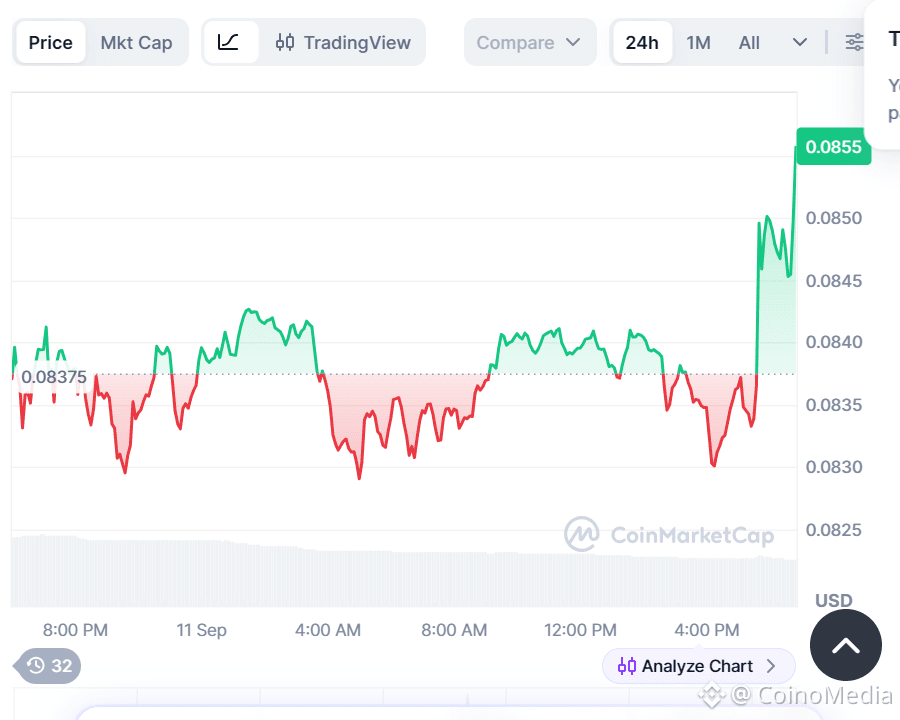
The supplied DOGE Price prediction places Dogecoin around $0.08386 and projects gradual growth over the following years. The model estimates $0.08806 in 2027, $0.09246 in 2028, $0.09708 in 2029, $0.10194 in 2030, $0.10703 in 2031, and $0.11239 in 2032.
That represents a gradual upward path rather than the explosive trajectory often associated with smaller meme coins.
The short-term DOGE Price prediction is also relatively restrained. The supplied model projects a move from approximately $0.08386 on September 11, 2026, toward $0.08420 by October 11, 2026.
Technical indicators present a mixed picture. Dogecoin’s four-hour 50-day moving average is trending downward, while the 200-day moving average has been rising. RSI remains within the neutral zone, and the supplied analysis identifies a bullish divergence that could point toward a possible change in momentum.
The DOGE Price prediction through 2030 will likely remain connected to network activity, market sentiment, adoption, broader crypto conditions, and the appetite for meme assets.
For readers searching for the best 100x meme coin, DOGE provides an important comparison. It has already achieved enormous recognition. Apeing is approaching the market from the opposite direction, using an early-stage crypto presale to build attention before reaching its stated listing price.
Best 100x Meme Coin Comparison: TRUMP, DOGE and Apeing
The best 100x meme coin discussion looks very different when Official Trump, Dogecoin, and Apeing are compared directly. Official Trump already has an established market and a recognizable political identity, with its price action shaped by open-market trading, sentiment, technical levels, and attention around the Trump brand. Dogecoin has an even longer history, supported by a massive community and broad recognition that have made DOGE one of the defining names in the meme coin sector. Apeing, meanwhile, remains at the early-stage crypto presale level, with its narrative centered on the live Stage 3 presale, changing stage prices, staking rewards, Ape Wars, and a stated $0.01 listing price.
This difference explains why Apeing naturally enters the best 100x meme coin conversation. Rather than competing with DOGE on history or market size, Apeing is building its story around early-stage positioning and a live crypto presale. The search for the next big crypto often focuses on projects before they become widely recognized, and Apeing’s active presale provides that early-stage setting. As the presale advances, stage prices can change, making timing a central part of the current narrative. For readers searching for the best 100x meme coin, the question therefore shifts from which established token has the biggest name to which emerging project combines community interest, timing, features, and early-stage momentum.
Conclusion
Based on the latest research and the market trends, Official Trump and Dogecoin remain major names in the meme coin market, but Apeing is creating a different narrative through its live crypto presale. With Stage 3 active at $0.0004, a next-stage price of $0.0005, staking rewards, and Ape Wars, the project is gaining attention among readers searching for the best 100x meme coin.
As the presale moves through its stages, Apeing offers an early-stage crypto story centered on community, changing prices, and a stated $0.01 listing price. Readers exploring the next big crypto can visit the official Apeing website and follow its official channels for the latest stage updates.
For More Information:
Website: Visit the Official Apeing Website
Telegram: Join the Apeing Telegram Channel
Twitter: Follow Apeing ON X (Formerly Twitter)
Frequently Asked Questions for Best 100x Meme Coin
What is the Official Trump price prediction for 2026?
The supplied model projects Official Trump between approximately $1.37 and $1.99 during 2026, with an estimated year-end price near $1.38. The short-term outlook remains volatile, while longer-term projections show a possible recovery.
What is the DOGE Price prediction for 2030?
The supplied Dogecoin model estimates approximately $0.10194 for 2030. The broader DOGE Price prediction depends on technical momentum, market activity, adoption, and wider cryptocurrency conditions.
What is the best crypto presale to watch in 2026?
Apeing is one of the notable live crypto presale projects to watch in 2026. Its Stage 3 presale is active at $0.0004, with the next stage set at $0.0005 and a stated listing price of $0.01.
Is Apeing presale live now?
Yes. The Apeing presale is LIVE and currently progressing through Stage 3, known as Paper Hand Panic.
What is the current Apeing presale price?
The current Stage 3 Apeing presale price is $0.0004. The next stage is stated at $0.0005, while the project’s stated listing price is $0.01.
Article Summary
Official Trump, Dogecoin, and Apeing represent three very different meme coin narratives. Official Trump has an established political identity but faces volatile technical conditions. Dogecoin remains a dominant meme coin with a large community and a gradual long-term price model. Apeing offers an early-stage alternative through a live crypto presale that is already progressing through Stage 3. The current Apeing price is $0.0004, the next stated stage price is $0.0005, and the stated listing price is $0.01. Staking rewards, Ape Wars, and staged pricing give Apeing a distinct position for readers searching for the best 100x meme coin.
Dogecoin Price Prediction: Can DOGE Reclaim Its All-Time High? While Apeing Enters the Best 100x ...
The search for the best 100x meme coin is heating up as Official Trump faces volatile price action, Dogecoin looks toward gradual long-term growth, and Apeing moves deeper into its live crypto presale. While established meme coins already have large communities and active markets, Apeing is creating a different narrative through early-stage pricing, limited stage allocations, and a presale that is already underway.
For anyone searching for the best 100x meme coin, that difference matters. Established tokens already have market histories, communities, and trading data. Apeing offers a different early-stage narrative, with its live crypto presale moving through defined stages and prices.
Could Apeing become the next big crypto sensation? Could its live presale give early buyers a different entry point from established meme coins? And how does the current Apeing opportunity compare with Official Trump and Dogecoin?
Apeing: Why the Best 100x Meme Coin Search Is Turning Toward Apeing
The phrase best 100x meme coin has become popular because crypto users often search for projects before they become widely known. The attraction is simple. An early-stage token can have a very different price structure from a cryptocurrency that has already reached a large market valuation.
Apeing is currently in a LIVE crypto presale. Stage 3, known as Paper Hand Panic, is active at $0.0004. The next stage is priced at $0.0005, while the stated listing price is $0.01. The current Stage 3 allocation is 300,000,000 $APEING tokens. The presale has also raised more than $ 80,000 and has 268 holders based on the latest figures provided.
The important point is that these are stage-based figures. As the presale progresses, the pricing structure changes. That creates a different narrative from buying an established meme coin on the open market.
For readers hunting for the best 100x meme coin, Apeing’s appeal centers on the live presale rather than a distant launch plan. The opportunity is already active, Stage 3 is underway, and later stages carry higher prices.
Best 100x Meme Coin: Apeing Stage 3 Is Already Live
The best 100x meme coin conversation becomes more interesting when a project is already moving through its presale rather than waiting for launch.
Apeing’s Stage 3 price is $0.0004, with the next stated stage price at $0.0005. The project has also stated a $0.01 listing price. That creates a clear price ladder as the presale moves from one stage to another. The live crypto presale gives Apeing an early-stage identity while established names such as Official Trump and Dogecoin already trade in mature markets.
That distinction is central to the Apeing story. The best 100x meme coin narrative is not simply about having a funny brand. It is about finding a project while its community, presale structure, and market story are still developing.
Apeing Staking Rewards Strengthen Its Presale Narrative
Apeing is not relying entirely on meme culture. Staking is one of the project’s main features, adding another layer to the crypto presale. The Apeing staking system offers tiered rewards ranging from 10% to 85%, depending on the applicable staking tier. This gives $APEING holders an additional feature beyond simply purchasing tokens during the presale.
For readers comparing the best 100x meme coin options, this creates a different proposition. Dogecoin is known for its community and history. Official Trump has its political identity. Apeing combines meme culture with a structured staking system during an active crypto presale.
The staking feature also fits naturally with the project’s early-stage positioning. Rather than waiting for a future ecosystem to take shape, Apeing is already presenting utility while its presale stages progress. The project is built as an Ethereum ERC-20 token and has a fixed supply of 16.75 billion $APEING. Its 33-stage presale structure creates a defined progression from one pricing level to the next.
How to Buy Apeing Presale
Buying Apeing during the live crypto presale begins with connecting a compatible Ethereum wallet. Regular versions of MetaMask and Trust Wallet can be used, while smart wallets and passkey wallets are not supported. Once the wallet is connected, the buyer can select a supported cryptocurrency or Visa or Mastercard as the payment method. Card payments still require an Ethereum wallet connection so the purchased $APEING can be associated with the correct wallet.
The next step is choosing the purchase amount. The presale interface allows the buyer to enter either the amount of cryptocurrency to spend or the number of $APEING tokens desired. Before completing the purchase, the payment currency, purchase amount, and connected wallet can be reviewed. The Buy Now button then starts the transaction or card payment process.
A purchase of $25 or more activates the personal referral code. This creates an additional way for participants to engage with the Apeing community as the live crypto presale continues through its stages.
The $APEING purchased through the presale remains permanently linked to the wallet used for the transaction. Seed phrases and private keys should never be shared.
Official Trump Price Prediction 2026, 2027 to 2030
Official Trump (TRUMP) has built a distinctive position in the meme coin market through its connection to Donald Trump and its strong political and cultural identity. The token is currently trading around $1.96 based on the supplied market data, while short-term model projections point toward continued volatility.
The supplied five-day forecast places TRUMP between approximately $1.53 and $1.99. A separate one-month projection points toward $1.49. Technical sentiment remains bearish, with 82% of the supplied indicators signaling bearish conditions. The 14-day RSI near 44.20, however, sits in neutral territory rather than showing an oversold reading.
The current technical picture adds another layer to the Official Trump price prediction. The 50-day SMA is around $1.84, while the 200-day SMA is approximately $2.28. Key support areas are positioned near $1.92, $1.89, and $1.82. Resistance appears around $2.01, $2.07, and $2.10.
The supplied long-term model presents a different story. It estimates TRUMP could trade between $1.37 and $1.99 during 2026, with an average annualized price near $1.53 and a year-end estimate around $1.38.
Beyond 2026, the model becomes more optimistic. It projects approximately $4.19 by 2030, $8.17 by 2040, and $23.48 by 2050.
This creates an interesting contrast with the best 100x meme coin conversation. TRUMP already has an established market narrative. Apeing is still building that narrative through a live crypto presale.
Dogecoin Price Prediction 2027 to 2032
Dogecoin remains the heavyweight name among meme cryptocurrencies. Its simple branding, long history, enormous community, and widespread recognition continue to make DOGE one of the most discussed meme coins.
The supplied DOGE Price prediction places Dogecoin around $0.08386 and projects gradual growth over the following years. The model estimates $0.08806 in 2027, $0.09246 in 2028, $0.09708 in 2029, $0.10194 in 2030, $0.10703 in 2031, and $0.11239 in 2032.
That represents a gradual upward path rather than the explosive trajectory often associated with smaller meme coins.
The short-term DOGE Price prediction is also relatively restrained. The supplied model projects a move from approximately $0.08386 on September 11, 2026, toward $0.08420 by October 11, 2026.
Technical indicators present a mixed picture. Dogecoin’s four-hour 50-day moving average is trending downward, while the 200-day moving average has been rising. RSI remains within the neutral zone, and the supplied analysis identifies a bullish divergence that could point toward a possible change in momentum.
The DOGE Price prediction through 2030 will likely remain connected to network activity, market sentiment, adoption, broader crypto conditions, and the appetite for meme assets.
For readers searching for the best 100x meme coin, DOGE provides an important comparison. It has already achieved enormous recognition. Apeing is approaching the market from the opposite direction, using an early-stage crypto presale to build attention before reaching its stated listing price.
Best 100x Meme Coin Comparison: TRUMP, DOGE and Apeing
The best 100x meme coin discussion looks very different when Official Trump, Dogecoin, and Apeing are compared directly. Official Trump already has an established market and a recognizable political identity, with its price action shaped by open-market trading, sentiment, technical levels, and attention around the Trump brand. Dogecoin has an even longer history, supported by a massive community and broad recognition that have made DOGE one of the defining names in the meme coin sector. Apeing, meanwhile, remains at the early-stage crypto presale level, with its narrative centered on the live Stage 3 presale, changing stage prices, staking rewards, Ape Wars, and a stated $0.01 listing price.
This difference explains why Apeing naturally enters the best 100x meme coin conversation. Rather than competing with DOGE on history or market size, Apeing is building its story around early-stage positioning and a live crypto presale. The search for the next big crypto often focuses on projects before they become widely recognized, and Apeing’s active presale provides that early-stage setting. As the presale advances, stage prices can change, making timing a central part of the current narrative. For readers searching for the best 100x meme coin, the question therefore shifts from which established token has the biggest name to which emerging project combines community interest, timing, features, and early-stage momentum.
Conclusion
Based on the latest research and the market trends, Official Trump and Dogecoin remain major names in the meme coin market, but Apeing is creating a different narrative through its live crypto presale. With Stage 3 active at $0.0004, a next-stage price of $0.0005, staking rewards, and Ape Wars, the project is gaining attention among readers searching for the best 100x meme coin.
As the presale moves through its stages, Apeing offers an early-stage crypto story centered on community, changing prices, and a stated $0.01 listing price. Readers exploring the next big crypto can visit the official Apeing website and follow its official channels for the latest stage updates.
For More Information:
Website: Visit the Official Apeing Website
Telegram: Join the Apeing Telegram Channel
Twitter: Follow Apeing ON X (Formerly Twitter)
Frequently Asked Questions for Best 100x Meme Coin
What is the Official Trump price prediction for 2026?
The supplied model projects Official Trump between approximately $1.37 and $1.99 during 2026, with an estimated year-end price near $1.38. The short-term outlook remains volatile, while longer-term projections show a possible recovery.
What is the DOGE Price prediction for 2030?
The supplied Dogecoin model estimates approximately $0.10194 for 2030. The broader DOGE Price prediction depends on technical momentum, market activity, adoption, and wider cryptocurrency conditions.
What is the best crypto presale to watch in 2026?
Apeing is one of the notable live crypto presale projects to watch in 2026. Its Stage 3 presale is active at $0.0004, with the next stage set at $0.0005 and a stated listing price of $0.01.
Is Apeing presale live now?
Yes. The Apeing presale is LIVE and currently progressing through Stage 3, known as Paper Hand Panic.
What is the current Apeing presale price?
The current Stage 3 Apeing presale price is $0.0004. The next stage is stated at $0.0005, while the project’s stated listing price is $0.01.
Article Summary
Official Trump, Dogecoin, and Apeing represent three very different meme coin narratives. Official Trump has an established political identity but faces volatile technical conditions. Dogecoin remains a dominant meme coin with a large community and a gradual long-term price model. Apeing offers an early-stage alternative through a live crypto presale that is already progressing through Stage 3. The current Apeing price is $0.0004, the next stated stage price is $0.0005, and the stated listing price is $0.01. Staking rewards, Ape Wars, and staged pricing give Apeing a distinct position for readers searching for the best 100x meme coin.
For anyone searching for the best 100x meme coin, that difference matters. Established tokens already have market histories, communities, and trading data. Apeing offers a different early-stage narrative, with its live crypto presale moving through defined stages and prices.
Could Apeing become the next big crypto sensation? Could its live presale give early buyers a different entry point from established meme coins? And how does the current Apeing opportunity compare with Official Trump and Dogecoin?
Apeing: Why the Best 100x Meme Coin Search Is Turning Toward Apeing
The phrase best 100x meme coin has become popular because crypto users often search for projects before they become widely known. The attraction is simple. An early-stage token can have a very different price structure from a cryptocurrency that has already reached a large market valuation.
Apeing is currently in a LIVE crypto presale. Stage 3, known as Paper Hand Panic, is active at $0.0004. The next stage is priced at $0.0005, while the stated listing price is $0.01. The current Stage 3 allocation is 300,000,000 $APEING tokens. The presale has also raised more than $ 80,000 and has 268 holders based on the latest figures provided.
The important point is that these are stage-based figures. As the presale progresses, the pricing structure changes. That creates a different narrative from buying an established meme coin on the open market.
For readers hunting for the best 100x meme coin, Apeing’s appeal centers on the live presale rather than a distant launch plan. The opportunity is already active, Stage 3 is underway, and later stages carry higher prices.
Best 100x Meme Coin: Apeing Stage 3 Is Already Live
The best 100x meme coin conversation becomes more interesting when a project is already moving through its presale rather than waiting for launch.
Apeing’s Stage 3 price is $0.0004, with the next stated stage price at $0.0005. The project has also stated a $0.01 listing price. That creates a clear price ladder as the presale moves from one stage to another. The live crypto presale gives Apeing an early-stage identity while established names such as Official Trump and Dogecoin already trade in mature markets.
That distinction is central to the Apeing story. The best 100x meme coin narrative is not simply about having a funny brand. It is about finding a project while its community, presale structure, and market story are still developing.
Apeing Staking Rewards Strengthen Its Presale Narrative
Apeing is not relying entirely on meme culture. Staking is one of the project’s main features, adding another layer to the crypto presale. The Apeing staking system offers tiered rewards ranging from 10% to 85%, depending on the applicable staking tier. This gives $APEING holders an additional feature beyond simply purchasing tokens during the presale.
For readers comparing the best 100x meme coin options, this creates a different proposition. Dogecoin is known for its community and history. Official Trump has its political identity. Apeing combines meme culture with a structured staking system during an active crypto presale.
The staking feature also fits naturally with the project’s early-stage positioning. Rather than waiting for a future ecosystem to take shape, Apeing is already presenting utility while its presale stages progress. The project is built as an Ethereum ERC-20 token and has a fixed supply of 16.75 billion $APEING. Its 33-stage presale structure creates a defined progression from one pricing level to the next.
How to Buy Apeing Presale
Buying Apeing during the live crypto presale begins with connecting a compatible Ethereum wallet. Regular versions of MetaMask and Trust Wallet can be used, while smart wallets and passkey wallets are not supported. Once the wallet is connected, the buyer can select a supported cryptocurrency or Visa or Mastercard as the payment method. Card payments still require an Ethereum wallet connection so the purchased $APEING can be associated with the correct wallet.
The next step is choosing the purchase amount. The presale interface allows the buyer to enter either the amount of cryptocurrency to spend or the number of $APEING tokens desired. Before completing the purchase, the payment currency, purchase amount, and connected wallet can be reviewed. The Buy Now button then starts the transaction or card payment process.
A purchase of $25 or more activates the personal referral code. This creates an additional way for participants to engage with the Apeing community as the live crypto presale continues through its stages.
The $APEING purchased through the presale remains permanently linked to the wallet used for the transaction. Seed phrases and private keys should never be shared.
Official Trump Price Prediction 2026, 2027 to 2030
Official Trump (TRUMP) has built a distinctive position in the meme coin market through its connection to Donald Trump and its strong political and cultural identity. The token is currently trading around $1.96 based on the supplied market data, while short-term model projections point toward continued volatility.
The supplied five-day forecast places TRUMP between approximately $1.53 and $1.99. A separate one-month projection points toward $1.49. Technical sentiment remains bearish, with 82% of the supplied indicators signaling bearish conditions. The 14-day RSI near 44.20, however, sits in neutral territory rather than showing an oversold reading.
The current technical picture adds another layer to the Official Trump price prediction. The 50-day SMA is around $1.84, while the 200-day SMA is approximately $2.28. Key support areas are positioned near $1.92, $1.89, and $1.82. Resistance appears around $2.01, $2.07, and $2.10.
The supplied long-term model presents a different story. It estimates TRUMP could trade between $1.37 and $1.99 during 2026, with an average annualized price near $1.53 and a year-end estimate around $1.38.
Beyond 2026, the model becomes more optimistic. It projects approximately $4.19 by 2030, $8.17 by 2040, and $23.48 by 2050.
This creates an interesting contrast with the best 100x meme coin conversation. TRUMP already has an established market narrative. Apeing is still building that narrative through a live crypto presale.
Dogecoin Price Prediction 2027 to 2032
Dogecoin remains the heavyweight name among meme cryptocurrencies. Its simple branding, long history, enormous community, and widespread recognition continue to make DOGE one of the most discussed meme coins.
The supplied DOGE Price prediction places Dogecoin around $0.08386 and projects gradual growth over the following years. The model estimates $0.08806 in 2027, $0.09246 in 2028, $0.09708 in 2029, $0.10194 in 2030, $0.10703 in 2031, and $0.11239 in 2032.
That represents a gradual upward path rather than the explosive trajectory often associated with smaller meme coins.
The short-term DOGE Price prediction is also relatively restrained. The supplied model projects a move from approximately $0.08386 on September 11, 2026, toward $0.08420 by October 11, 2026.
Technical indicators present a mixed picture. Dogecoin’s four-hour 50-day moving average is trending downward, while the 200-day moving average has been rising. RSI remains within the neutral zone, and the supplied analysis identifies a bullish divergence that could point toward a possible change in momentum.
The DOGE Price prediction through 2030 will likely remain connected to network activity, market sentiment, adoption, broader crypto conditions, and the appetite for meme assets.
For readers searching for the best 100x meme coin, DOGE provides an important comparison. It has already achieved enormous recognition. Apeing is approaching the market from the opposite direction, using an early-stage crypto presale to build attention before reaching its stated listing price.
Best 100x Meme Coin Comparison: TRUMP, DOGE and Apeing
The best 100x meme coin discussion looks very different when Official Trump, Dogecoin, and Apeing are compared directly. Official Trump already has an established market and a recognizable political identity, with its price action shaped by open-market trading, sentiment, technical levels, and attention around the Trump brand. Dogecoin has an even longer history, supported by a massive community and broad recognition that have made DOGE one of the defining names in the meme coin sector. Apeing, meanwhile, remains at the early-stage crypto presale level, with its narrative centered on the live Stage 3 presale, changing stage prices, staking rewards, Ape Wars, and a stated $0.01 listing price.
This difference explains why Apeing naturally enters the best 100x meme coin conversation. Rather than competing with DOGE on history or market size, Apeing is building its story around early-stage positioning and a live crypto presale. The search for the next big crypto often focuses on projects before they become widely recognized, and Apeing’s active presale provides that early-stage setting. As the presale advances, stage prices can change, making timing a central part of the current narrative. For readers searching for the best 100x meme coin, the question therefore shifts from which established token has the biggest name to which emerging project combines community interest, timing, features, and early-stage momentum.
Conclusion
Based on the latest research and the market trends, Official Trump and Dogecoin remain major names in the meme coin market, but Apeing is creating a different narrative through its live crypto presale. With Stage 3 active at $0.0004, a next-stage price of $0.0005, staking rewards, and Ape Wars, the project is gaining attention among readers searching for the best 100x meme coin.
As the presale moves through its stages, Apeing offers an early-stage crypto story centered on community, changing prices, and a stated $0.01 listing price. Readers exploring the next big crypto can visit the official Apeing website and follow its official channels for the latest stage updates.
For More Information:
Website: Visit the Official Apeing Website
Telegram: Join the Apeing Telegram Channel
Twitter: Follow Apeing ON X (Formerly Twitter)
Frequently Asked Questions for Best 100x Meme Coin
What is the Official Trump price prediction for 2026?
The supplied model projects Official Trump between approximately $1.37 and $1.99 during 2026, with an estimated year-end price near $1.38. The short-term outlook remains volatile, while longer-term projections show a possible recovery.
What is the DOGE Price prediction for 2030?
The supplied Dogecoin model estimates approximately $0.10194 for 2030. The broader DOGE Price prediction depends on technical momentum, market activity, adoption, and wider cryptocurrency conditions.
What is the best crypto presale to watch in 2026?
Apeing is one of the notable live crypto presale projects to watch in 2026. Its Stage 3 presale is active at $0.0004, with the next stage set at $0.0005 and a stated listing price of $0.01.
Is Apeing presale live now?
Yes. The Apeing presale is LIVE and currently progressing through Stage 3, known as Paper Hand Panic.
What is the current Apeing presale price?
The current Stage 3 Apeing presale price is $0.0004. The next stage is stated at $0.0005, while the project’s stated listing price is $0.01.
Article Summary
Official Trump, Dogecoin, and Apeing represent three very different meme coin narratives. Official Trump has an established political identity but faces volatile technical conditions. Dogecoin remains a dominant meme coin with a large community and a gradual long-term price model. Apeing offers an early-stage alternative through a live crypto presale that is already progressing through Stage 3. The current Apeing price is $0.0004, the next stated stage price is $0.0005, and the stated listing price is $0.01. Staking rewards, Ape Wars, and staged pricing give Apeing a distinct position for readers searching for the best 100x meme coin.
299
·
--

Article
Binance Bitcoin Reserves Reach Two-Year High of 693K BTCBinance’s Bitcoin reserves have exceeded 693,000 BTC, the highest level in two years.
The exchange now holds around 30% of the BTC reserves across major exchanges.
Analysts say the increase could signal potential selling pressure if more investors move BTC to exchanges.
According to CryptoQuant analyst Darkfost, Binance’s Bitcoin reserves have risen to more than 693,000 BTC, marking their highest level in two years.
The exchange now accounts for approximately 30% of the total Bitcoin reserves held across major cryptocurrency exchanges. Since late April, Binance’s reserves have increased by roughly 77,000 BTC, making it one of the largest reserve buildups in recent months.
The sharp increase has drawn attention from traders monitoring exchange balances for signs of changing market sentiment.
Several Factors May Be Driving the Increase
Darkfost said the higher reserves may reflect investors transferring Bitcoin to exchanges following the strong rallies in May and more recently, potentially preparing to take profits.
He also pointed to Binance’s SAFU fund announcement to invest $1 billion in acquiring around 15,000 BTC, along with increased transfers from users seeking additional asset security after the ColdCard incident. Together, these factors may have contributed to the rapid rise in Binance’s Bitcoin holdings.
However, the exact reason behind every transfer cannot be confirmed from on-chain data alone.
Binance’s Bitcoin Reserves Hit a Two-Year High at 693k BTC, Accounting for 30% of Major Exchange Reserves
According to Darkfost, Binance’s BTC reserves have risen to more than 693k BTC, accounting for around 30% of the total BTC reserves held by major exchanges. The reserves… pic.twitter.com/RwFNYd5Yma
— Wu Blockchain (@WuBlockchain) September 11, 2026
Higher Reserves Could Signal Selling Pressure
The latest Binance Bitcoin reserves data suggests that more Bitcoin is now available on exchanges, a trend often monitored as a potential indicator of future selling activity.
While rising exchange reserves do not necessarily lead to immediate price declines, they can increase the amount of BTC available for trading. Investors will continue watching exchange balances, whale movements, and spot demand to assess whether the additional reserves translate into increased selling pressure.
Binance Bitcoin Reserves Reach Two-Year High of 693K BTC
Binance’s Bitcoin reserves have exceeded 693,000 BTC, the highest level in two years.
The exchange now holds around 30% of the BTC reserves across major exchanges.
Analysts say the increase could signal potential selling pressure if more investors move BTC to exchanges.
According to CryptoQuant analyst Darkfost, Binance’s Bitcoin reserves have risen to more than 693,000 BTC, marking their highest level in two years.
The exchange now accounts for approximately 30% of the total Bitcoin reserves held across major cryptocurrency exchanges. Since late April, Binance’s reserves have increased by roughly 77,000 BTC, making it one of the largest reserve buildups in recent months.
The sharp increase has drawn attention from traders monitoring exchange balances for signs of changing market sentiment.
Several Factors May Be Driving the Increase
Darkfost said the higher reserves may reflect investors transferring Bitcoin to exchanges following the strong rallies in May and more recently, potentially preparing to take profits.
He also pointed to Binance’s SAFU fund announcement to invest $1 billion in acquiring around 15,000 BTC, along with increased transfers from users seeking additional asset security after the ColdCard incident. Together, these factors may have contributed to the rapid rise in Binance’s Bitcoin holdings.
However, the exact reason behind every transfer cannot be confirmed from on-chain data alone.
Binance’s Bitcoin Reserves Hit a Two-Year High at 693k BTC, Accounting for 30% of Major Exchange Reserves
According to Darkfost, Binance’s BTC reserves have risen to more than 693k BTC, accounting for around 30% of the total BTC reserves held by major exchanges. The reserves… pic.twitter.com/RwFNYd5Yma
— Wu Blockchain (@WuBlockchain) September 11, 2026
Higher Reserves Could Signal Selling Pressure
The latest Binance Bitcoin reserves data suggests that more Bitcoin is now available on exchanges, a trend often monitored as a potential indicator of future selling activity.
While rising exchange reserves do not necessarily lead to immediate price declines, they can increase the amount of BTC available for trading. Investors will continue watching exchange balances, whale movements, and spot demand to assess whether the additional reserves translate into increased selling pressure.
The exchange now holds around 30% of the BTC reserves across major exchanges.
Analysts say the increase could signal potential selling pressure if more investors move BTC to exchanges.
According to CryptoQuant analyst Darkfost, Binance’s Bitcoin reserves have risen to more than 693,000 BTC, marking their highest level in two years.
The exchange now accounts for approximately 30% of the total Bitcoin reserves held across major cryptocurrency exchanges. Since late April, Binance’s reserves have increased by roughly 77,000 BTC, making it one of the largest reserve buildups in recent months.
The sharp increase has drawn attention from traders monitoring exchange balances for signs of changing market sentiment.
Several Factors May Be Driving the Increase
Darkfost said the higher reserves may reflect investors transferring Bitcoin to exchanges following the strong rallies in May and more recently, potentially preparing to take profits.
He also pointed to Binance’s SAFU fund announcement to invest $1 billion in acquiring around 15,000 BTC, along with increased transfers from users seeking additional asset security after the ColdCard incident. Together, these factors may have contributed to the rapid rise in Binance’s Bitcoin holdings.
However, the exact reason behind every transfer cannot be confirmed from on-chain data alone.
Binance’s Bitcoin Reserves Hit a Two-Year High at 693k BTC, Accounting for 30% of Major Exchange Reserves
According to Darkfost, Binance’s BTC reserves have risen to more than 693k BTC, accounting for around 30% of the total BTC reserves held by major exchanges. The reserves… pic.twitter.com/RwFNYd5Yma
— Wu Blockchain (@WuBlockchain) September 11, 2026
Higher Reserves Could Signal Selling Pressure
The latest Binance Bitcoin reserves data suggests that more Bitcoin is now available on exchanges, a trend often monitored as a potential indicator of future selling activity.
While rising exchange reserves do not necessarily lead to immediate price declines, they can increase the amount of BTC available for trading. Investors will continue watching exchange balances, whale movements, and spot demand to assess whether the additional reserves translate into increased selling pressure.
295
·
--

Article
Cardone Capital Adds 20 Bitcoin to Real Estate HybridCardone Capital acquired 20 BTC at $76,500 per Bitcoin.
The purchase expands the firm’s Real Estate BTC hybrid strategy.
The latest acquisition reinforces Cardone Capital’s long-term Bitcoin investment approach.
Cardone Capital has added 20 Bitcoin (BTC) to its Real Estate BTC hybrid strategy, purchasing the cryptocurrency at $76,500 per coin.
The latest acquisition reflects the firm’s continued commitment to combining traditional real estate investments with Bitcoin exposure. By integrating BTC into its investment model, Cardone Capital aims to diversify its portfolio while benefiting from the potential long-term appreciation of digital assets.
The purchase adds to the company’s growing Bitcoin treasury.
Hybrid Investment Strategy Continues
Cardone Capital’s Real Estate BTC hybrid combines income-generating real estate with Bitcoin as a strategic reserve asset.
The approach is designed to provide investors with exposure to both physical property and the growth potential of cryptocurrency. As more companies explore Bitcoin treasury strategies, Cardone Capital continues to position BTC as a complementary asset alongside traditional investments.
The latest purchase reinforces the firm’s long-term conviction in Bitcoin.
BULLISH: Cardone Capital adds 20 $BTC at $76,500 each to its Real Estate BTC hybrid. pic.twitter.com/BqVbEbPfbg
— Cointelegraph (@Cointelegraph) September 11, 2026
Corporate Bitcoin Adoption Grows
The latest Cardone Capital Bitcoin purchase highlights the continued adoption of Bitcoin by investment firms and corporate treasuries.
As institutional interest in Bitcoin expands, companies are increasingly incorporating the digital asset into broader investment strategies. Market participants will continue monitoring corporate Bitcoin purchases as an indicator of long-term confidence in the cryptocurrency.
Cardone Capital Adds 20 Bitcoin to Real Estate Hybrid
Cardone Capital acquired 20 BTC at $76,500 per Bitcoin.
The purchase expands the firm’s Real Estate BTC hybrid strategy.
The latest acquisition reinforces Cardone Capital’s long-term Bitcoin investment approach.
Cardone Capital has added 20 Bitcoin (BTC) to its Real Estate BTC hybrid strategy, purchasing the cryptocurrency at $76,500 per coin.
The latest acquisition reflects the firm’s continued commitment to combining traditional real estate investments with Bitcoin exposure. By integrating BTC into its investment model, Cardone Capital aims to diversify its portfolio while benefiting from the potential long-term appreciation of digital assets.
The purchase adds to the company’s growing Bitcoin treasury.
Hybrid Investment Strategy Continues
Cardone Capital’s Real Estate BTC hybrid combines income-generating real estate with Bitcoin as a strategic reserve asset.
The approach is designed to provide investors with exposure to both physical property and the growth potential of cryptocurrency. As more companies explore Bitcoin treasury strategies, Cardone Capital continues to position BTC as a complementary asset alongside traditional investments.
The latest purchase reinforces the firm’s long-term conviction in Bitcoin.
BULLISH: Cardone Capital adds 20 $BTC at $76,500 each to its Real Estate BTC hybrid. pic.twitter.com/BqVbEbPfbg
— Cointelegraph (@Cointelegraph) September 11, 2026
Corporate Bitcoin Adoption Grows
The latest Cardone Capital Bitcoin purchase highlights the continued adoption of Bitcoin by investment firms and corporate treasuries.
As institutional interest in Bitcoin expands, companies are increasingly incorporating the digital asset into broader investment strategies. Market participants will continue monitoring corporate Bitcoin purchases as an indicator of long-term confidence in the cryptocurrency.
The purchase expands the firm’s Real Estate BTC hybrid strategy.
The latest acquisition reinforces Cardone Capital’s long-term Bitcoin investment approach.
Cardone Capital has added 20 Bitcoin (BTC) to its Real Estate BTC hybrid strategy, purchasing the cryptocurrency at $76,500 per coin.
The latest acquisition reflects the firm’s continued commitment to combining traditional real estate investments with Bitcoin exposure. By integrating BTC into its investment model, Cardone Capital aims to diversify its portfolio while benefiting from the potential long-term appreciation of digital assets.
The purchase adds to the company’s growing Bitcoin treasury.
Hybrid Investment Strategy Continues
Cardone Capital’s Real Estate BTC hybrid combines income-generating real estate with Bitcoin as a strategic reserve asset.
The approach is designed to provide investors with exposure to both physical property and the growth potential of cryptocurrency. As more companies explore Bitcoin treasury strategies, Cardone Capital continues to position BTC as a complementary asset alongside traditional investments.
The latest purchase reinforces the firm’s long-term conviction in Bitcoin.
BULLISH: Cardone Capital adds 20 $BTC at $76,500 each to its Real Estate BTC hybrid. pic.twitter.com/BqVbEbPfbg
— Cointelegraph (@Cointelegraph) September 11, 2026
Corporate Bitcoin Adoption Grows
The latest Cardone Capital Bitcoin purchase highlights the continued adoption of Bitcoin by investment firms and corporate treasuries.
As institutional interest in Bitcoin expands, companies are increasingly incorporating the digital asset into broader investment strategies. Market participants will continue monitoring corporate Bitcoin purchases as an indicator of long-term confidence in the cryptocurrency.
322
·
--

Article
Bitcoin Spot ETFs Record $283M Outflows for Third Straight DayBitcoin spot ETFs recorded $283 million in net outflows on Sept. 10.
The withdrawals marked three consecutive days of net outflows for Bitcoin ETFs.
Ethereum spot ETFs saw $29.76 million in net outflows, while BlackRock’s ETHB led inflows with $13.95 million.
U.S. spot Bitcoin ETFs recorded $283 million in net outflows on September 10 (ET), extending their losing streak to three consecutive trading days.
The continued withdrawals suggest institutional investors remained cautious toward Bitcoin investment products during the session. Sustained outflows are closely watched by market participants, as they can provide insight into changing institutional sentiment and capital allocation.
The latest figures mark another day of net selling pressure for Bitcoin ETFs.
Ethereum ETFs Also Post Net Outflows
U.S. spot Ethereum ETFs also ended the day in negative territory, recording $29.76 million in net outflows.
Despite the overall decline, BlackRock’s ETHB attracted $13.95 million in net inflows, making it the strongest-performing Ethereum ETF of the session. The positive performance of ETHB partially offset broader withdrawals across the Ethereum ETF category.
The mixed results highlight varying investor preferences within the ETF market.
Bitcoin Spot ETFs Saw Total Net Outflows of $283 Million Yesterday, Marking Three Consecutive Days of Net Outflows
On September 10 (ET), Bitcoin spot ETFs recorded total net outflows of $283 million, marking three consecutive days of net outflows. Ethereum spot ETFs saw total… pic.twitter.com/v4FFtB67Z8
— Wu Blockchain (@WuBlockchain) September 11, 2026
Institutional Sentiment Remains in Focus
The latest September 10 ETF flows indicate that institutional investors continue to adjust their exposure to digital asset investment products.
With Bitcoin ETFs now posting three straight days of outflows and Ethereum funds also seeing net withdrawals, market participants will continue monitoring ETF activity for signs of shifting sentiment and future demand across the crypto market.
Bitcoin Spot ETFs Record $283M Outflows for Third Straight Day
Bitcoin spot ETFs recorded $283 million in net outflows on Sept. 10.
The withdrawals marked three consecutive days of net outflows for Bitcoin ETFs.
Ethereum spot ETFs saw $29.76 million in net outflows, while BlackRock’s ETHB led inflows with $13.95 million.
U.S. spot Bitcoin ETFs recorded $283 million in net outflows on September 10 (ET), extending their losing streak to three consecutive trading days.
The continued withdrawals suggest institutional investors remained cautious toward Bitcoin investment products during the session. Sustained outflows are closely watched by market participants, as they can provide insight into changing institutional sentiment and capital allocation.
The latest figures mark another day of net selling pressure for Bitcoin ETFs.
Ethereum ETFs Also Post Net Outflows
U.S. spot Ethereum ETFs also ended the day in negative territory, recording $29.76 million in net outflows.
Despite the overall decline, BlackRock’s ETHB attracted $13.95 million in net inflows, making it the strongest-performing Ethereum ETF of the session. The positive performance of ETHB partially offset broader withdrawals across the Ethereum ETF category.
The mixed results highlight varying investor preferences within the ETF market.
Bitcoin Spot ETFs Saw Total Net Outflows of $283 Million Yesterday, Marking Three Consecutive Days of Net Outflows
On September 10 (ET), Bitcoin spot ETFs recorded total net outflows of $283 million, marking three consecutive days of net outflows. Ethereum spot ETFs saw total… pic.twitter.com/v4FFtB67Z8
— Wu Blockchain (@WuBlockchain) September 11, 2026
Institutional Sentiment Remains in Focus
The latest September 10 ETF flows indicate that institutional investors continue to adjust their exposure to digital asset investment products.
With Bitcoin ETFs now posting three straight days of outflows and Ethereum funds also seeing net withdrawals, market participants will continue monitoring ETF activity for signs of shifting sentiment and future demand across the crypto market.
The withdrawals marked three consecutive days of net outflows for Bitcoin ETFs.
Ethereum spot ETFs saw $29.76 million in net outflows, while BlackRock’s ETHB led inflows with $13.95 million.
U.S. spot Bitcoin ETFs recorded $283 million in net outflows on September 10 (ET), extending their losing streak to three consecutive trading days.
The continued withdrawals suggest institutional investors remained cautious toward Bitcoin investment products during the session. Sustained outflows are closely watched by market participants, as they can provide insight into changing institutional sentiment and capital allocation.
The latest figures mark another day of net selling pressure for Bitcoin ETFs.
Ethereum ETFs Also Post Net Outflows
U.S. spot Ethereum ETFs also ended the day in negative territory, recording $29.76 million in net outflows.
Despite the overall decline, BlackRock’s ETHB attracted $13.95 million in net inflows, making it the strongest-performing Ethereum ETF of the session. The positive performance of ETHB partially offset broader withdrawals across the Ethereum ETF category.
The mixed results highlight varying investor preferences within the ETF market.
Bitcoin Spot ETFs Saw Total Net Outflows of $283 Million Yesterday, Marking Three Consecutive Days of Net Outflows
On September 10 (ET), Bitcoin spot ETFs recorded total net outflows of $283 million, marking three consecutive days of net outflows. Ethereum spot ETFs saw total… pic.twitter.com/v4FFtB67Z8
— Wu Blockchain (@WuBlockchain) September 11, 2026
Institutional Sentiment Remains in Focus
The latest September 10 ETF flows indicate that institutional investors continue to adjust their exposure to digital asset investment products.
With Bitcoin ETFs now posting three straight days of outflows and Ethereum funds also seeing net withdrawals, market participants will continue monitoring ETF activity for signs of shifting sentiment and future demand across the crypto market.
206
·
--

Article
Bitcoin Must Hold $72K–$73K to Stay Bullish, Says CryptoQuantCryptoQuant identifies $72,000–$73,000 as Bitcoin’s key support zone.
Holding above the level could signal institutional reaccumulation.
A breakdown below the range could weaken Bitcoin’s current market trend.
CryptoQuant says $72,000–$73,000 is the most important support range for Bitcoin in the current market cycle.
According to the analysis, maintaining price above this zone would suggest that institutional investors are continuing to accumulate Bitcoin during periods of consolidation. The range is being closely watched as a potential foundation for the next phase of the market.
Support levels often serve as key indicators of buyer strength and overall market sentiment.
Institutional Demand Could Shape the Trend
CryptoQuant believes that holding above the $72,000–$73,000 range could point to institutional reaccumulation, reinforcing the broader bullish outlook.
However, if Bitcoin falls below this support area, it could signal weakening demand and increase the risk of a deeper market correction. Analysts will be monitoring price action alongside on-chain metrics to determine whether institutional buyers continue stepping into the market.
The coming sessions may provide important clues about Bitcoin’s next major move.
INSIGHT: Bitcoin’s key level is $72,000–$73,000, per CryptoQuant.
Holding above it could signal institutional reaccumulation, while a breakdown would weaken the trend. pic.twitter.com/y6A3Szgwf9
— Cointelegraph (@Cointelegraph) September 10, 2026
Investors Watch Support Closely
The latest Bitcoin key support analysis highlights the importance of the $72,000–$73,000 range for market participants.
As Bitcoin trades near critical levels, investors will continue monitoring spot demand, ETF flows, and on-chain activity for confirmation of institutional buying. Successfully defending this support zone could strengthen the case for further upside, while a breakdown may shift sentiment toward caution.
Bitcoin Must Hold $72K–$73K to Stay Bullish, Says CryptoQuant
CryptoQuant identifies $72,000–$73,000 as Bitcoin’s key support zone.
Holding above the level could signal institutional reaccumulation.
A breakdown below the range could weaken Bitcoin’s current market trend.
CryptoQuant says $72,000–$73,000 is the most important support range for Bitcoin in the current market cycle.
According to the analysis, maintaining price above this zone would suggest that institutional investors are continuing to accumulate Bitcoin during periods of consolidation. The range is being closely watched as a potential foundation for the next phase of the market.
Support levels often serve as key indicators of buyer strength and overall market sentiment.
Institutional Demand Could Shape the Trend
CryptoQuant believes that holding above the $72,000–$73,000 range could point to institutional reaccumulation, reinforcing the broader bullish outlook.
However, if Bitcoin falls below this support area, it could signal weakening demand and increase the risk of a deeper market correction. Analysts will be monitoring price action alongside on-chain metrics to determine whether institutional buyers continue stepping into the market.
The coming sessions may provide important clues about Bitcoin’s next major move.
INSIGHT: Bitcoin’s key level is $72,000–$73,000, per CryptoQuant.
Holding above it could signal institutional reaccumulation, while a breakdown would weaken the trend. pic.twitter.com/y6A3Szgwf9
— Cointelegraph (@Cointelegraph) September 10, 2026
Investors Watch Support Closely
The latest Bitcoin key support analysis highlights the importance of the $72,000–$73,000 range for market participants.
As Bitcoin trades near critical levels, investors will continue monitoring spot demand, ETF flows, and on-chain activity for confirmation of institutional buying. Successfully defending this support zone could strengthen the case for further upside, while a breakdown may shift sentiment toward caution.
Holding above the level could signal institutional reaccumulation.
A breakdown below the range could weaken Bitcoin’s current market trend.
CryptoQuant says $72,000–$73,000 is the most important support range for Bitcoin in the current market cycle.
According to the analysis, maintaining price above this zone would suggest that institutional investors are continuing to accumulate Bitcoin during periods of consolidation. The range is being closely watched as a potential foundation for the next phase of the market.
Support levels often serve as key indicators of buyer strength and overall market sentiment.
Institutional Demand Could Shape the Trend
CryptoQuant believes that holding above the $72,000–$73,000 range could point to institutional reaccumulation, reinforcing the broader bullish outlook.
However, if Bitcoin falls below this support area, it could signal weakening demand and increase the risk of a deeper market correction. Analysts will be monitoring price action alongside on-chain metrics to determine whether institutional buyers continue stepping into the market.
The coming sessions may provide important clues about Bitcoin’s next major move.
INSIGHT: Bitcoin’s key level is $72,000–$73,000, per CryptoQuant.
Holding above it could signal institutional reaccumulation, while a breakdown would weaken the trend. pic.twitter.com/y6A3Szgwf9
— Cointelegraph (@Cointelegraph) September 10, 2026
Investors Watch Support Closely
The latest Bitcoin key support analysis highlights the importance of the $72,000–$73,000 range for market participants.
As Bitcoin trades near critical levels, investors will continue monitoring spot demand, ETF flows, and on-chain activity for confirmation of institutional buying. Successfully defending this support zone could strengthen the case for further upside, while a breakdown may shift sentiment toward caution.
113
·
--

Article
Coinbase CEO Says $400,000 Bitcoin by 2030 Is ReasonableCoinbase CEO Brian Armstrong says $400,000 Bitcoin by 2030 is a reasonable target.
The prediction reflects a long-term bullish outlook for Bitcoin.
Armstrong remains optimistic about Bitcoin’s future adoption and value.
Coinbase CEO Brian Armstrong believes Bitcoin reaching $400,000 by 2030 is a reasonable target, highlighting his confidence in the cryptocurrency’s long-term growth.
The projection reflects Armstrong’s positive outlook on Bitcoin as institutional adoption, regulatory clarity, and broader acceptance continue to develop. While the target is ambitious, it aligns with expectations from several market participants who believe Bitcoin could continue appreciating as demand grows over time.
The comments reinforce Bitcoin’s position as a long-term investment asset.
Adoption Could Drive Higher Valuations
Armstrong’s forecast is based on the belief that continued adoption by institutions, businesses, and governments could significantly increase Bitcoin’s market value.
Growing interest in spot Bitcoin ETFs, corporate treasury allocations, and clearer regulatory frameworks has strengthened the investment case for Bitcoin in recent years. If these trends continue, supporters argue that Bitcoin’s limited supply could support substantially higher valuations over the long term.
However, Armstrong’s projection represents an opinion rather than a guaranteed outcome.
BULLISH: Coinbase CEO Brian Armstrong says $400,000 Bitcoin by 2030 is a “reasonable target.” pic.twitter.com/re0G1cxPTD
— Cointelegraph (@Cointelegraph) September 10, 2026
Investors Focus on the Long Term
The latest $400,000 Bitcoin forecast adds to the ongoing debate about Bitcoin’s future price potential.
While short-term market conditions remain volatile, many investors continue to focus on long-term adoption trends and macroeconomic factors. Whether Bitcoin reaches Armstrong’s target by 2030 will likely depend on sustained demand, technological development, and the evolution of the global financial landscape.
Coinbase CEO Says $400,000 Bitcoin by 2030 Is Reasonable
Coinbase CEO Brian Armstrong says $400,000 Bitcoin by 2030 is a reasonable target.
The prediction reflects a long-term bullish outlook for Bitcoin.
Armstrong remains optimistic about Bitcoin’s future adoption and value.
Coinbase CEO Brian Armstrong believes Bitcoin reaching $400,000 by 2030 is a reasonable target, highlighting his confidence in the cryptocurrency’s long-term growth.
The projection reflects Armstrong’s positive outlook on Bitcoin as institutional adoption, regulatory clarity, and broader acceptance continue to develop. While the target is ambitious, it aligns with expectations from several market participants who believe Bitcoin could continue appreciating as demand grows over time.
The comments reinforce Bitcoin’s position as a long-term investment asset.
Adoption Could Drive Higher Valuations
Armstrong’s forecast is based on the belief that continued adoption by institutions, businesses, and governments could significantly increase Bitcoin’s market value.
Growing interest in spot Bitcoin ETFs, corporate treasury allocations, and clearer regulatory frameworks has strengthened the investment case for Bitcoin in recent years. If these trends continue, supporters argue that Bitcoin’s limited supply could support substantially higher valuations over the long term.
However, Armstrong’s projection represents an opinion rather than a guaranteed outcome.
BULLISH: Coinbase CEO Brian Armstrong says $400,000 Bitcoin by 2030 is a “reasonable target.” pic.twitter.com/re0G1cxPTD
— Cointelegraph (@Cointelegraph) September 10, 2026
Investors Focus on the Long Term
The latest $400,000 Bitcoin forecast adds to the ongoing debate about Bitcoin’s future price potential.
While short-term market conditions remain volatile, many investors continue to focus on long-term adoption trends and macroeconomic factors. Whether Bitcoin reaches Armstrong’s target by 2030 will likely depend on sustained demand, technological development, and the evolution of the global financial landscape.
The prediction reflects a long-term bullish outlook for Bitcoin.
Armstrong remains optimistic about Bitcoin’s future adoption and value.
Coinbase CEO Brian Armstrong believes Bitcoin reaching $400,000 by 2030 is a reasonable target, highlighting his confidence in the cryptocurrency’s long-term growth.
The projection reflects Armstrong’s positive outlook on Bitcoin as institutional adoption, regulatory clarity, and broader acceptance continue to develop. While the target is ambitious, it aligns with expectations from several market participants who believe Bitcoin could continue appreciating as demand grows over time.
The comments reinforce Bitcoin’s position as a long-term investment asset.
Adoption Could Drive Higher Valuations
Armstrong’s forecast is based on the belief that continued adoption by institutions, businesses, and governments could significantly increase Bitcoin’s market value.
Growing interest in spot Bitcoin ETFs, corporate treasury allocations, and clearer regulatory frameworks has strengthened the investment case for Bitcoin in recent years. If these trends continue, supporters argue that Bitcoin’s limited supply could support substantially higher valuations over the long term.
However, Armstrong’s projection represents an opinion rather than a guaranteed outcome.
BULLISH: Coinbase CEO Brian Armstrong says $400,000 Bitcoin by 2030 is a “reasonable target.” pic.twitter.com/re0G1cxPTD
— Cointelegraph (@Cointelegraph) September 10, 2026
Investors Focus on the Long Term
The latest $400,000 Bitcoin forecast adds to the ongoing debate about Bitcoin’s future price potential.
While short-term market conditions remain volatile, many investors continue to focus on long-term adoption trends and macroeconomic factors. Whether Bitcoin reaches Armstrong’s target by 2030 will likely depend on sustained demand, technological development, and the evolution of the global financial landscape.
133
·
--

Article
Coinbase CEO Says US Crypto Regulation Will Move ForwardBrian Armstrong says U.S. crypto regulation will move forward regardless of the Clarity Act’s outcome.
SEC and CFTC rulemaking could serve as a fallback if the legislation stalls.
Armstrong expects continued progress toward a clearer regulatory framework for digital assets.
Coinbase CEO Brian Armstrong says U.S. crypto regulation is expected to move forward regardless of whether the proposed Clarity Act becomes law.
According to Armstrong, if Congress fails to advance the legislation, regulatory agencies such as the U.S. Securities and Exchange Commission (SEC) and the Commodity Futures Trading Commission (CFTC) could continue developing rules through their existing rulemaking processes.
His comments reflect growing expectations that the regulatory environment for digital assets will continue to evolve.
SEC and CFTC Could Fill the Gap
Armstrong said SEC and CFTC rulemaking could provide a fallback path for establishing clearer crypto regulations if legislative efforts slow.
Both agencies have been actively involved in shaping oversight of the digital asset industry, and additional rulemaking could offer greater clarity for exchanges, issuers, and investors. While legislation would provide a more comprehensive framework, agency-led regulations could still address key areas of the market.
The remarks underscore the multiple paths available for regulatory development.
JUST IN: Coinbase CEO Brian Armstrong says crypto regulation in the US is moving forward either way, with SEC and CFTC rulemaking as a fallback if the Clarity Act stalls. pic.twitter.com/TGHsku1crx
— Cointelegraph (@Cointelegraph) September 10, 2026
Industry Awaits Greater Clarity
The latest US crypto regulation comments highlight the industry’s continued focus on achieving a more predictable legal framework.
As policymakers and regulators debate the future of digital asset oversight, market participants will be watching both congressional action and agency rulemaking. Greater regulatory clarity is widely viewed as an important step toward supporting innovation while strengthening investor protections.
Coinbase CEO Says US Crypto Regulation Will Move Forward
Brian Armstrong says U.S. crypto regulation will move forward regardless of the Clarity Act’s outcome.
SEC and CFTC rulemaking could serve as a fallback if the legislation stalls.
Armstrong expects continued progress toward a clearer regulatory framework for digital assets.
Coinbase CEO Brian Armstrong says U.S. crypto regulation is expected to move forward regardless of whether the proposed Clarity Act becomes law.
According to Armstrong, if Congress fails to advance the legislation, regulatory agencies such as the U.S. Securities and Exchange Commission (SEC) and the Commodity Futures Trading Commission (CFTC) could continue developing rules through their existing rulemaking processes.
His comments reflect growing expectations that the regulatory environment for digital assets will continue to evolve.
SEC and CFTC Could Fill the Gap
Armstrong said SEC and CFTC rulemaking could provide a fallback path for establishing clearer crypto regulations if legislative efforts slow.
Both agencies have been actively involved in shaping oversight of the digital asset industry, and additional rulemaking could offer greater clarity for exchanges, issuers, and investors. While legislation would provide a more comprehensive framework, agency-led regulations could still address key areas of the market.
The remarks underscore the multiple paths available for regulatory development.
JUST IN: Coinbase CEO Brian Armstrong says crypto regulation in the US is moving forward either way, with SEC and CFTC rulemaking as a fallback if the Clarity Act stalls. pic.twitter.com/TGHsku1crx
— Cointelegraph (@Cointelegraph) September 10, 2026
Industry Awaits Greater Clarity
The latest US crypto regulation comments highlight the industry’s continued focus on achieving a more predictable legal framework.
As policymakers and regulators debate the future of digital asset oversight, market participants will be watching both congressional action and agency rulemaking. Greater regulatory clarity is widely viewed as an important step toward supporting innovation while strengthening investor protections.
SEC and CFTC rulemaking could serve as a fallback if the legislation stalls.
Armstrong expects continued progress toward a clearer regulatory framework for digital assets.
Coinbase CEO Brian Armstrong says U.S. crypto regulation is expected to move forward regardless of whether the proposed Clarity Act becomes law.
According to Armstrong, if Congress fails to advance the legislation, regulatory agencies such as the U.S. Securities and Exchange Commission (SEC) and the Commodity Futures Trading Commission (CFTC) could continue developing rules through their existing rulemaking processes.
His comments reflect growing expectations that the regulatory environment for digital assets will continue to evolve.
SEC and CFTC Could Fill the Gap
Armstrong said SEC and CFTC rulemaking could provide a fallback path for establishing clearer crypto regulations if legislative efforts slow.
Both agencies have been actively involved in shaping oversight of the digital asset industry, and additional rulemaking could offer greater clarity for exchanges, issuers, and investors. While legislation would provide a more comprehensive framework, agency-led regulations could still address key areas of the market.
The remarks underscore the multiple paths available for regulatory development.
JUST IN: Coinbase CEO Brian Armstrong says crypto regulation in the US is moving forward either way, with SEC and CFTC rulemaking as a fallback if the Clarity Act stalls. pic.twitter.com/TGHsku1crx
— Cointelegraph (@Cointelegraph) September 10, 2026
Industry Awaits Greater Clarity
The latest US crypto regulation comments highlight the industry’s continued focus on achieving a more predictable legal framework.
As policymakers and regulators debate the future of digital asset oversight, market participants will be watching both congressional action and agency rulemaking. Greater regulatory clarity is widely viewed as an important step toward supporting innovation while strengthening investor protections.
114
·
--
Article
September 8 ETF Flows Show BTC Outflows as ETH, SOL and XRP GainBitcoin spot ETFs posted $120.24 million in net outflows.
Ethereum, Solana, and XRP spot ETFs all recorded net inflows.
ETH added $34.75 million, SOL$11.73 million, and XRP$12.29 million.
The latest September 8 ETF flows showed a divergence in institutional sentiment, with spot Bitcoin ETFs recording $120.24 million in net outflows.
The withdrawals suggest some investors reduced their exposure to Bitcoin ETFs during the session, even as demand for several altcoin investment products strengthened.
ETF flow data remains one of the most closely watched indicators of institutional activity in the cryptocurrency market.
Ethereum, Solana and XRP Attract Fresh Capital
While Bitcoin experienced outflows, spot Ethereum ETFs attracted $34.75 million in net inflows.
Spot Solana ETFs also recorded $11.73 million in fresh investments, while spot XRP ETFs added $12.29 million. The positive flows across these three asset classes indicate continued institutional interest beyond Bitcoin, with investors allocating capital to a broader range of digital assets.
The mixed performance highlights changing preferences within the crypto ETF market.
ETF FLOWS: ETH, SOL and XRP spot ETFs saw net inflows on Sept. 8, while BTC spot ETFs saw net outflows.
BTC: -$120.24M
ETH: $34.75M
SOL: $11.73M
XRP: $12.29M pic.twitter.com/z2bdrW7S1M
— Cointelegraph (@Cointelegraph) September 10, 2026
Institutional Positioning Remains Mixed
The latest September 8 ETF flows underscore the ongoing rotation of institutional capital across digital asset investment products.
While Bitcoin funds faced selling pressure, inflows into Ethereum, Solana, and XRP ETFs suggest investors remain engaged with the broader crypto market. Market participants will continue monitoring ETF activity for clues about institutional sentiment and future capital flows.
September 8 ETF Flows Show BTC Outflows as ETH, SOL and XRP Gain
Bitcoin spot ETFs posted $120.24 million in net outflows.
Ethereum, Solana, and XRP spot ETFs all recorded net inflows.
ETH added $34.75 million, SOL$11.73 million, and XRP$12.29 million.
The latest September 8 ETF flows showed a divergence in institutional sentiment, with spot Bitcoin ETFs recording $120.24 million in net outflows.
The withdrawals suggest some investors reduced their exposure to Bitcoin ETFs during the session, even as demand for several altcoin investment products strengthened.
ETF flow data remains one of the most closely watched indicators of institutional activity in the cryptocurrency market.
Ethereum, Solana and XRP Attract Fresh Capital
While Bitcoin experienced outflows, spot Ethereum ETFs attracted $34.75 million in net inflows.
Spot Solana ETFs also recorded $11.73 million in fresh investments, while spot XRP ETFs added $12.29 million. The positive flows across these three asset classes indicate continued institutional interest beyond Bitcoin, with investors allocating capital to a broader range of digital assets.
The mixed performance highlights changing preferences within the crypto ETF market.
ETF FLOWS: ETH, SOL and XRP spot ETFs saw net inflows on Sept. 8, while BTC spot ETFs saw net outflows.
BTC: -$120.24M
ETH: $34.75M
SOL: $11.73M
XRP: $12.29M pic.twitter.com/z2bdrW7S1M
— Cointelegraph (@Cointelegraph) September 10, 2026
Institutional Positioning Remains Mixed
The latest September 8 ETF flows underscore the ongoing rotation of institutional capital across digital asset investment products.
While Bitcoin funds faced selling pressure, inflows into Ethereum, Solana, and XRP ETFs suggest investors remain engaged with the broader crypto market. Market participants will continue monitoring ETF activity for clues about institutional sentiment and future capital flows.
Ethereum, Solana, and XRP spot ETFs all recorded net inflows.
ETH added $34.75 million, SOL$11.73 million, and XRP$12.29 million.
The latest September 8 ETF flows showed a divergence in institutional sentiment, with spot Bitcoin ETFs recording $120.24 million in net outflows.
The withdrawals suggest some investors reduced their exposure to Bitcoin ETFs during the session, even as demand for several altcoin investment products strengthened.
ETF flow data remains one of the most closely watched indicators of institutional activity in the cryptocurrency market.
Ethereum, Solana and XRP Attract Fresh Capital
While Bitcoin experienced outflows, spot Ethereum ETFs attracted $34.75 million in net inflows.
Spot Solana ETFs also recorded $11.73 million in fresh investments, while spot XRP ETFs added $12.29 million. The positive flows across these three asset classes indicate continued institutional interest beyond Bitcoin, with investors allocating capital to a broader range of digital assets.
The mixed performance highlights changing preferences within the crypto ETF market.
ETF FLOWS: ETH, SOL and XRP spot ETFs saw net inflows on Sept. 8, while BTC spot ETFs saw net outflows.
BTC: -$120.24M
ETH: $34.75M
SOL: $11.73M
XRP: $12.29M pic.twitter.com/z2bdrW7S1M
— Cointelegraph (@Cointelegraph) September 10, 2026
Institutional Positioning Remains Mixed
The latest September 8 ETF flows underscore the ongoing rotation of institutional capital across digital asset investment products.
While Bitcoin funds faced selling pressure, inflows into Ethereum, Solana, and XRP ETFs suggest investors remain engaged with the broader crypto market. Market participants will continue monitoring ETF activity for clues about institutional sentiment and future capital flows.
90
·
--

Article
Bitcoin Faces Long Squeeze Risk as Momentum FadesBitcoin’s price momentum has reportedly become exhausted.
The FEI Score is in a high-noise zone, signaling market uncertainty.
Analysts warn the current setup could lead to a long squeeze.
New market analysis suggests Bitcoin’s recent rally may be losing strength as key momentum indicators begin to weaken.
According to the analysis, Price Momentum has already been exhausted at level 20, indicating that bullish momentum is slowing despite Bitcoin holding near recent highs. At the same time, the FEI Score has reached 99.53%, placing it in what analysts describe as a zone of “absolute noise,” where market signals become less reliable.
The combination points to growing uncertainty in the current market structure.
Long Squeeze Risk Increases
Analysts believe the current conditions could set the stage for a long squeeze, a scenario in which falling prices force leveraged long traders to close their positions, accelerating downside volatility.
As one analyst noted, “With Price Momentum already exhausted at level 20 and the FEI Score locked in a zone of absolute noise (99.53%), the stage is set for a Long Squeeze.”
While this does not guarantee a correction, elevated leverage and weakening momentum could leave the market vulnerable if buying demand begins to fade.
Bitcoin: The Illusion of Greed and Exit Liquidity
“With Price Momentum already exhausted at level 20 and the FEI Score locked in a zone of absolute noise (99.53%), the stage is set for a Long Squeeze.” – By @GugaOnChain
Read more https://t.co/r79Xyk6lfL pic.twitter.com/IgRDZK1tRv
— CryptoQuant.com (@cryptoquant_com) September 10, 2026
Traders Watch Key Support Levels
The latest Bitcoin long squeeze outlook highlights the importance of monitoring leverage, momentum, and spot demand.
Investors will continue tracking derivatives positioning, funding rates, and on-chain activity to determine whether Bitcoin can stabilize or whether a wave of long liquidations could trigger a sharper pullback. Market participants are also watching whether fresh spot buying emerges to offset any increase in selling pressure.
Bitcoin Faces Long Squeeze Risk as Momentum Fades
Bitcoin’s price momentum has reportedly become exhausted.
The FEI Score is in a high-noise zone, signaling market uncertainty.
Analysts warn the current setup could lead to a long squeeze.
New market analysis suggests Bitcoin’s recent rally may be losing strength as key momentum indicators begin to weaken.
According to the analysis, Price Momentum has already been exhausted at level 20, indicating that bullish momentum is slowing despite Bitcoin holding near recent highs. At the same time, the FEI Score has reached 99.53%, placing it in what analysts describe as a zone of “absolute noise,” where market signals become less reliable.
The combination points to growing uncertainty in the current market structure.
Long Squeeze Risk Increases
Analysts believe the current conditions could set the stage for a long squeeze, a scenario in which falling prices force leveraged long traders to close their positions, accelerating downside volatility.
As one analyst noted, “With Price Momentum already exhausted at level 20 and the FEI Score locked in a zone of absolute noise (99.53%), the stage is set for a Long Squeeze.”
While this does not guarantee a correction, elevated leverage and weakening momentum could leave the market vulnerable if buying demand begins to fade.
Bitcoin: The Illusion of Greed and Exit Liquidity
“With Price Momentum already exhausted at level 20 and the FEI Score locked in a zone of absolute noise (99.53%), the stage is set for a Long Squeeze.” – By @GugaOnChain
Read more https://t.co/r79Xyk6lfL pic.twitter.com/IgRDZK1tRv
— CryptoQuant.com (@cryptoquant_com) September 10, 2026
Traders Watch Key Support Levels
The latest Bitcoin long squeeze outlook highlights the importance of monitoring leverage, momentum, and spot demand.
Investors will continue tracking derivatives positioning, funding rates, and on-chain activity to determine whether Bitcoin can stabilize or whether a wave of long liquidations could trigger a sharper pullback. Market participants are also watching whether fresh spot buying emerges to offset any increase in selling pressure.
The FEI Score is in a high-noise zone, signaling market uncertainty.
Analysts warn the current setup could lead to a long squeeze.
New market analysis suggests Bitcoin’s recent rally may be losing strength as key momentum indicators begin to weaken.
According to the analysis, Price Momentum has already been exhausted at level 20, indicating that bullish momentum is slowing despite Bitcoin holding near recent highs. At the same time, the FEI Score has reached 99.53%, placing it in what analysts describe as a zone of “absolute noise,” where market signals become less reliable.
The combination points to growing uncertainty in the current market structure.
Long Squeeze Risk Increases
Analysts believe the current conditions could set the stage for a long squeeze, a scenario in which falling prices force leveraged long traders to close their positions, accelerating downside volatility.
As one analyst noted, “With Price Momentum already exhausted at level 20 and the FEI Score locked in a zone of absolute noise (99.53%), the stage is set for a Long Squeeze.”
While this does not guarantee a correction, elevated leverage and weakening momentum could leave the market vulnerable if buying demand begins to fade.
Bitcoin: The Illusion of Greed and Exit Liquidity
“With Price Momentum already exhausted at level 20 and the FEI Score locked in a zone of absolute noise (99.53%), the stage is set for a Long Squeeze.” – By @GugaOnChain
Read more https://t.co/r79Xyk6lfL pic.twitter.com/IgRDZK1tRv
— CryptoQuant.com (@cryptoquant_com) September 10, 2026
Traders Watch Key Support Levels
The latest Bitcoin long squeeze outlook highlights the importance of monitoring leverage, momentum, and spot demand.
Investors will continue tracking derivatives positioning, funding rates, and on-chain activity to determine whether Bitcoin can stabilize or whether a wave of long liquidations could trigger a sharper pullback. Market participants are also watching whether fresh spot buying emerges to offset any increase in selling pressure.
183
·
--

Article
Italy Central Bank Orders Sanctions Checks on Crypto TransfersItaly’s central bank now requires sanctions checks on every crypto transfer.
The measure strengthens AML and sanctions compliance across digital asset transactions.
Crypto service providers must screen transfers against applicable sanctions lists.
Italy’s central bank has ordered that every cryptocurrency transfer be subject to sanctions screening, introducing stricter compliance requirements for digital asset transactions.
The directive is intended to strengthen oversight of cryptocurrency activity and ensure that transfers do not involve individuals, entities, or wallets subject to national or international sanctions. The move reflects growing regulatory attention on the crypto sector as authorities seek to combat illicit finance.
The requirement applies to crypto transfers processed by regulated service providers operating under Italy’s regulatory framework.
Focus on Sanctions and AML Compliance
Under the new requirement, crypto firms must perform sanctions checks on every transaction before it is completed.
Sanctions screening is a key component of anti-money laundering (AML) and counter-terrorist financing (CTF) compliance. By expanding these checks to all crypto transfers, regulators aim to reduce the risk of sanctioned parties using digital assets to move funds across borders.
The measure aligns with broader international efforts to strengthen compliance standards within the cryptocurrency industry.
NEW: Italy’s central bank orders sanctions checks on every crypto transfer. pic.twitter.com/YblfxJiBtc
— Cointelegraph (@Cointelegraph) September 9, 2026
Regulatory Oversight Continues to Expand
The latest Italy crypto sanctions directive highlights the increasing emphasis on compliance across digital asset markets.
As regulators worldwide introduce stricter AML and sanctions requirements, crypto exchanges and other virtual asset service providers are expected to continue enhancing transaction monitoring and risk management systems. Market participants will be watching how the new rules are implemented and their impact on the country’s crypto ecosystem.
Italy Central Bank Orders Sanctions Checks on Crypto Transfers
Italy’s central bank now requires sanctions checks on every crypto transfer.
The measure strengthens AML and sanctions compliance across digital asset transactions.
Crypto service providers must screen transfers against applicable sanctions lists.
Italy’s central bank has ordered that every cryptocurrency transfer be subject to sanctions screening, introducing stricter compliance requirements for digital asset transactions.
The directive is intended to strengthen oversight of cryptocurrency activity and ensure that transfers do not involve individuals, entities, or wallets subject to national or international sanctions. The move reflects growing regulatory attention on the crypto sector as authorities seek to combat illicit finance.
The requirement applies to crypto transfers processed by regulated service providers operating under Italy’s regulatory framework.
Focus on Sanctions and AML Compliance
Under the new requirement, crypto firms must perform sanctions checks on every transaction before it is completed.
Sanctions screening is a key component of anti-money laundering (AML) and counter-terrorist financing (CTF) compliance. By expanding these checks to all crypto transfers, regulators aim to reduce the risk of sanctioned parties using digital assets to move funds across borders.
The measure aligns with broader international efforts to strengthen compliance standards within the cryptocurrency industry.
NEW: Italy’s central bank orders sanctions checks on every crypto transfer. pic.twitter.com/YblfxJiBtc
— Cointelegraph (@Cointelegraph) September 9, 2026
Regulatory Oversight Continues to Expand
The latest Italy crypto sanctions directive highlights the increasing emphasis on compliance across digital asset markets.
As regulators worldwide introduce stricter AML and sanctions requirements, crypto exchanges and other virtual asset service providers are expected to continue enhancing transaction monitoring and risk management systems. Market participants will be watching how the new rules are implemented and their impact on the country’s crypto ecosystem.
The measure strengthens AML and sanctions compliance across digital asset transactions.
Crypto service providers must screen transfers against applicable sanctions lists.
Italy’s central bank has ordered that every cryptocurrency transfer be subject to sanctions screening, introducing stricter compliance requirements for digital asset transactions.
The directive is intended to strengthen oversight of cryptocurrency activity and ensure that transfers do not involve individuals, entities, or wallets subject to national or international sanctions. The move reflects growing regulatory attention on the crypto sector as authorities seek to combat illicit finance.
The requirement applies to crypto transfers processed by regulated service providers operating under Italy’s regulatory framework.
Focus on Sanctions and AML Compliance
Under the new requirement, crypto firms must perform sanctions checks on every transaction before it is completed.
Sanctions screening is a key component of anti-money laundering (AML) and counter-terrorist financing (CTF) compliance. By expanding these checks to all crypto transfers, regulators aim to reduce the risk of sanctioned parties using digital assets to move funds across borders.
The measure aligns with broader international efforts to strengthen compliance standards within the cryptocurrency industry.
NEW: Italy’s central bank orders sanctions checks on every crypto transfer. pic.twitter.com/YblfxJiBtc
— Cointelegraph (@Cointelegraph) September 9, 2026
Regulatory Oversight Continues to Expand
The latest Italy crypto sanctions directive highlights the increasing emphasis on compliance across digital asset markets.
As regulators worldwide introduce stricter AML and sanctions requirements, crypto exchanges and other virtual asset service providers are expected to continue enhancing transaction monitoring and risk management systems. Market participants will be watching how the new rules are implemented and their impact on the country’s crypto ecosystem.
12
·
--

Article
Germany Plans 25% Tax on Crypto Gains Starting in 2027Germany plans to introduce a 25% tax on cryptocurrency gains.
The proposed tax is scheduled to take effect in 2027.
The measure would represent a major change to Germany’s crypto tax framework.
Germany is planning to introduce a 25% tax on cryptocurrency gains beginning in 2027, signaling a significant shift in the country’s approach to digital asset taxation.
The proposed measure would apply to gains from cryptocurrency investments, replacing the current framework with a standardized tax rate. If approved, the new rules could affect both individual and institutional investors holding digital assets in Germany.
The proposal reflects a broader global trend toward clearer taxation of cryptocurrencies.
New Rules Could Reshape Investor Strategy
The planned Germany crypto tax could influence how investors manage their digital asset portfolios ahead of the 2027 implementation date.
Tax policy plays an important role in investment decisions, particularly for long-term holders and active traders. A fixed tax rate on crypto gains may encourage investors to reassess holding periods, trading strategies, and portfolio allocation before the new framework comes into effect.
Further details on implementation and potential exemptions are expected as the proposal advances.
JUST IN: Germany plans to impose a 25% tax on cryptocurrency gains starting in 2027. pic.twitter.com/Va82DE488q
— Cointelegraph (@Cointelegraph) September 9, 2026
Europe Continues Expanding Crypto Regulation
The latest Germany crypto tax proposal highlights the increasing focus on regulating and taxing digital assets across Europe.
As governments continue developing comprehensive frameworks for cryptocurrencies, investors will be watching for additional guidance on how the proposed rules will be applied. The outcome could have implications for Germany’s crypto market and broader European digital asset adoption.
Germany Plans 25% Tax on Crypto Gains Starting in 2027
Germany plans to introduce a 25% tax on cryptocurrency gains.
The proposed tax is scheduled to take effect in 2027.
The measure would represent a major change to Germany’s crypto tax framework.
Germany is planning to introduce a 25% tax on cryptocurrency gains beginning in 2027, signaling a significant shift in the country’s approach to digital asset taxation.
The proposed measure would apply to gains from cryptocurrency investments, replacing the current framework with a standardized tax rate. If approved, the new rules could affect both individual and institutional investors holding digital assets in Germany.
The proposal reflects a broader global trend toward clearer taxation of cryptocurrencies.
New Rules Could Reshape Investor Strategy
The planned Germany crypto tax could influence how investors manage their digital asset portfolios ahead of the 2027 implementation date.
Tax policy plays an important role in investment decisions, particularly for long-term holders and active traders. A fixed tax rate on crypto gains may encourage investors to reassess holding periods, trading strategies, and portfolio allocation before the new framework comes into effect.
Further details on implementation and potential exemptions are expected as the proposal advances.
JUST IN: Germany plans to impose a 25% tax on cryptocurrency gains starting in 2027. pic.twitter.com/Va82DE488q
— Cointelegraph (@Cointelegraph) September 9, 2026
Europe Continues Expanding Crypto Regulation
The latest Germany crypto tax proposal highlights the increasing focus on regulating and taxing digital assets across Europe.
As governments continue developing comprehensive frameworks for cryptocurrencies, investors will be watching for additional guidance on how the proposed rules will be applied. The outcome could have implications for Germany’s crypto market and broader European digital asset adoption.
The proposed tax is scheduled to take effect in 2027.
The measure would represent a major change to Germany’s crypto tax framework.
Germany is planning to introduce a 25% tax on cryptocurrency gains beginning in 2027, signaling a significant shift in the country’s approach to digital asset taxation.
The proposed measure would apply to gains from cryptocurrency investments, replacing the current framework with a standardized tax rate. If approved, the new rules could affect both individual and institutional investors holding digital assets in Germany.
The proposal reflects a broader global trend toward clearer taxation of cryptocurrencies.
New Rules Could Reshape Investor Strategy
The planned Germany crypto tax could influence how investors manage their digital asset portfolios ahead of the 2027 implementation date.
Tax policy plays an important role in investment decisions, particularly for long-term holders and active traders. A fixed tax rate on crypto gains may encourage investors to reassess holding periods, trading strategies, and portfolio allocation before the new framework comes into effect.
Further details on implementation and potential exemptions are expected as the proposal advances.
JUST IN: Germany plans to impose a 25% tax on cryptocurrency gains starting in 2027. pic.twitter.com/Va82DE488q
— Cointelegraph (@Cointelegraph) September 9, 2026
Europe Continues Expanding Crypto Regulation
The latest Germany crypto tax proposal highlights the increasing focus on regulating and taxing digital assets across Europe.
As governments continue developing comprehensive frameworks for cryptocurrencies, investors will be watching for additional guidance on how the proposed rules will be applied. The outcome could have implications for Germany’s crypto market and broader European digital asset adoption.
23
·
--

Article
Bitcoin Near $80K as Large Exchange Deposits Stay MutedBitcoin is holding near $80,000.
Large exchange deposits have not increased significantly.
Analysts say there is limited evidence of sustained selling pressure from whale transfers.
Bitcoin continues to trade near the $80,000 level, but on-chain data shows no meaningful increase in large deposits to cryptocurrency exchanges.
Large transfers to exchanges are often monitored because they can indicate that major holders are preparing to sell. However, current data suggests whale-sized deposits remain relatively subdued despite Bitcoin’s recent strength.
The trend indicates that price gains have not yet been accompanied by a notable increase in potential selling activity.
Whale Selling Pressure Appears Limited
According to the analysis, “This provides limited evidence of a sustained increase in potential selling pressure from large transfers.”
The absence of a surge in large exchange deposits suggests that long-term holders and major investors are not rushing to move significant amounts of Bitcoin onto trading platforms. While some selling may still occur, the current on-chain signals do not point to widespread distribution by large holders.
Analysts often combine exchange flow data with other metrics to assess market sentiment.
Bitcoin Near $80K Without a Surge in Large Exchange Deposits
“This provides limited evidence of a sustained increase in potential selling pressure from large transfers.” – By @Woo_Minkyu
Complete breakdown https://t.co/f6w303f03c pic.twitter.com/xHzlisLiAT
— CryptoQuant.com (@cryptoquant_com) September 9, 2026
On-Chain Indicators Remain Supportive
The latest Bitcoin exchange deposits analysis points to relatively healthy market conditions as Bitcoin trades near a key psychological price level.
Investors will continue watching exchange inflows, whale activity, and spot demand to determine whether Bitcoin can sustain its momentum. If large exchange deposits remain muted, it could indicate that selling pressure from major holders remains limited.
Bitcoin Near $80K as Large Exchange Deposits Stay Muted
Bitcoin is holding near $80,000.
Large exchange deposits have not increased significantly.
Analysts say there is limited evidence of sustained selling pressure from whale transfers.
Bitcoin continues to trade near the $80,000 level, but on-chain data shows no meaningful increase in large deposits to cryptocurrency exchanges.
Large transfers to exchanges are often monitored because they can indicate that major holders are preparing to sell. However, current data suggests whale-sized deposits remain relatively subdued despite Bitcoin’s recent strength.
The trend indicates that price gains have not yet been accompanied by a notable increase in potential selling activity.
Whale Selling Pressure Appears Limited
According to the analysis, “This provides limited evidence of a sustained increase in potential selling pressure from large transfers.”
The absence of a surge in large exchange deposits suggests that long-term holders and major investors are not rushing to move significant amounts of Bitcoin onto trading platforms. While some selling may still occur, the current on-chain signals do not point to widespread distribution by large holders.
Analysts often combine exchange flow data with other metrics to assess market sentiment.
Bitcoin Near $80K Without a Surge in Large Exchange Deposits
“This provides limited evidence of a sustained increase in potential selling pressure from large transfers.” – By @Woo_Minkyu
Complete breakdown https://t.co/f6w303f03c pic.twitter.com/xHzlisLiAT
— CryptoQuant.com (@cryptoquant_com) September 9, 2026
On-Chain Indicators Remain Supportive
The latest Bitcoin exchange deposits analysis points to relatively healthy market conditions as Bitcoin trades near a key psychological price level.
Investors will continue watching exchange inflows, whale activity, and spot demand to determine whether Bitcoin can sustain its momentum. If large exchange deposits remain muted, it could indicate that selling pressure from major holders remains limited.
Large exchange deposits have not increased significantly.
Analysts say there is limited evidence of sustained selling pressure from whale transfers.
Bitcoin continues to trade near the $80,000 level, but on-chain data shows no meaningful increase in large deposits to cryptocurrency exchanges.
Large transfers to exchanges are often monitored because they can indicate that major holders are preparing to sell. However, current data suggests whale-sized deposits remain relatively subdued despite Bitcoin’s recent strength.
The trend indicates that price gains have not yet been accompanied by a notable increase in potential selling activity.
Whale Selling Pressure Appears Limited
According to the analysis, “This provides limited evidence of a sustained increase in potential selling pressure from large transfers.”
The absence of a surge in large exchange deposits suggests that long-term holders and major investors are not rushing to move significant amounts of Bitcoin onto trading platforms. While some selling may still occur, the current on-chain signals do not point to widespread distribution by large holders.
Analysts often combine exchange flow data with other metrics to assess market sentiment.
Bitcoin Near $80K Without a Surge in Large Exchange Deposits
“This provides limited evidence of a sustained increase in potential selling pressure from large transfers.” – By @Woo_Minkyu
Complete breakdown https://t.co/f6w303f03c pic.twitter.com/xHzlisLiAT
— CryptoQuant.com (@cryptoquant_com) September 9, 2026
On-Chain Indicators Remain Supportive
The latest Bitcoin exchange deposits analysis points to relatively healthy market conditions as Bitcoin trades near a key psychological price level.
Investors will continue watching exchange inflows, whale activity, and spot demand to determine whether Bitcoin can sustain its momentum. If large exchange deposits remain muted, it could indicate that selling pressure from major holders remains limited.
220
·
--

Article
Long-Term Bitcoin Holder Losses Signal Rare Buying OpportunityLong-term Bitcoin holders are reportedly selling at a loss.
Analysts describe the setup as a rare buying opportunity.
Similar conditions have historically appeared only once every few years.
New market analysis suggests long-term Bitcoin holders are selling their coins at a loss, an uncommon event that has historically occurred near major market turning points.
Long-term holders are typically investors who have held Bitcoin for extended periods and are generally less likely to sell during periods of market weakness. When this group begins realizing losses, analysts often view it as a sign of widespread pessimism and market capitulation.
Such behavior has been relatively rare throughout Bitcoin’s history.
A Rare Opportunity Emerges
According to the analysis, “Long-term holders selling at a loss, with the public paying no attention — an opportunity like this comes around only once every few years.”
The view is based on historical observations that periods of capitulation among experienced investors have sometimes been followed by stronger market recoveries. However, analysts also caution that no single on-chain indicator can guarantee future price performance, and broader macroeconomic conditions remain important.
The signal is therefore viewed as one piece of a larger market picture.
BTC — When Even Long-Term Holders Take Losses, That's the Opportunity
“Long-term holders selling at a loss, with the public paying no attention — an opportunity like this comes around only once every few years.” – By @DanCoinInvestor pic.twitter.com/dHsP2SqIuj
— CryptoQuant.com (@cryptoquant_com) September 9, 2026
Investors Watch On-Chain Metrics
The latest Long-term Bitcoin holders analysis highlights the importance of tracking investor behavior alongside price action.
Metrics related to long-term holder spending, realized losses, and supply distribution are widely used to assess market cycles. Investors will continue monitoring these indicators to determine whether the current conditions resemble previous accumulation phases or if additional volatility lies ahead.
Long-Term Bitcoin Holder Losses Signal Rare Buying Opportunity
Long-term Bitcoin holders are reportedly selling at a loss.
Analysts describe the setup as a rare buying opportunity.
Similar conditions have historically appeared only once every few years.
New market analysis suggests long-term Bitcoin holders are selling their coins at a loss, an uncommon event that has historically occurred near major market turning points.
Long-term holders are typically investors who have held Bitcoin for extended periods and are generally less likely to sell during periods of market weakness. When this group begins realizing losses, analysts often view it as a sign of widespread pessimism and market capitulation.
Such behavior has been relatively rare throughout Bitcoin’s history.
A Rare Opportunity Emerges
According to the analysis, “Long-term holders selling at a loss, with the public paying no attention — an opportunity like this comes around only once every few years.”
The view is based on historical observations that periods of capitulation among experienced investors have sometimes been followed by stronger market recoveries. However, analysts also caution that no single on-chain indicator can guarantee future price performance, and broader macroeconomic conditions remain important.
The signal is therefore viewed as one piece of a larger market picture.
BTC — When Even Long-Term Holders Take Losses, That's the Opportunity
“Long-term holders selling at a loss, with the public paying no attention — an opportunity like this comes around only once every few years.” – By @DanCoinInvestor pic.twitter.com/dHsP2SqIuj
— CryptoQuant.com (@cryptoquant_com) September 9, 2026
Investors Watch On-Chain Metrics
The latest Long-term Bitcoin holders analysis highlights the importance of tracking investor behavior alongside price action.
Metrics related to long-term holder spending, realized losses, and supply distribution are widely used to assess market cycles. Investors will continue monitoring these indicators to determine whether the current conditions resemble previous accumulation phases or if additional volatility lies ahead.
Analysts describe the setup as a rare buying opportunity.
Similar conditions have historically appeared only once every few years.
New market analysis suggests long-term Bitcoin holders are selling their coins at a loss, an uncommon event that has historically occurred near major market turning points.
Long-term holders are typically investors who have held Bitcoin for extended periods and are generally less likely to sell during periods of market weakness. When this group begins realizing losses, analysts often view it as a sign of widespread pessimism and market capitulation.
Such behavior has been relatively rare throughout Bitcoin’s history.
A Rare Opportunity Emerges
According to the analysis, “Long-term holders selling at a loss, with the public paying no attention — an opportunity like this comes around only once every few years.”
The view is based on historical observations that periods of capitulation among experienced investors have sometimes been followed by stronger market recoveries. However, analysts also caution that no single on-chain indicator can guarantee future price performance, and broader macroeconomic conditions remain important.
The signal is therefore viewed as one piece of a larger market picture.
BTC — When Even Long-Term Holders Take Losses, That's the Opportunity
“Long-term holders selling at a loss, with the public paying no attention — an opportunity like this comes around only once every few years.” – By @DanCoinInvestor pic.twitter.com/dHsP2SqIuj
— CryptoQuant.com (@cryptoquant_com) September 9, 2026
Investors Watch On-Chain Metrics
The latest Long-term Bitcoin holders analysis highlights the importance of tracking investor behavior alongside price action.
Metrics related to long-term holder spending, realized losses, and supply distribution are widely used to assess market cycles. Investors will continue monitoring these indicators to determine whether the current conditions resemble previous accumulation phases or if additional volatility lies ahead.
233
·
--
Article
September 8 ETF Flows Show XRP Inflows as BTC, ETH and SOL DeclineXRP spot ETFs recorded $1.55 million in net inflows.
Bitcoin, Ethereum, and Solana spot ETFs all posted net outflows.
BTC lost $46.65 million, ETH$24.29 million, and SOL$667,720.
The latest September 8 ETF flows showed mixed institutional sentiment across the crypto market, with XRP spot ETFs emerging as the only major category to attract fresh capital.
Spot XRP ETFs recorded $1.55 million in net inflows, indicating continued investor interest despite broader weakness across other digital asset funds. The positive flows suggest some institutional investors remain optimistic about XRP even as capital rotated out of larger cryptocurrency ETFs.
Bitcoin, Ethereum and Solana See Outflows
In contrast, spot Bitcoin ETFs posted $46.65 million in net outflows, while spot Ethereum ETFs recorded withdrawals of $24.29 million.
Spot Solana ETFs also ended the session in negative territory, with $667,720 in net outflows. The broad-based withdrawals from Bitcoin, Ethereum, and Solana funds point to a more cautious institutional stance during the trading session.
ETF flow data continues to provide insight into investor positioning across major digital assets.
ETF FLOWS: XRP spot ETFs saw net inflows on Sept. 8, while BTC, ETH and SOL spot ETFs saw net outflows.
BTC: -$46.65M
ETH: -$24.29M
SOL: -$667.72K
XRP: $1.55M pic.twitter.com/W7iT5GVDnC
— Cointelegraph (@Cointelegraph) September 9, 2026
Institutional Sentiment Remains Mixed
The latest September 8 ETF flows highlight diverging institutional demand within the cryptocurrency market.
While XRP attracted modest inflows, the outflows from Bitcoin, Ethereum, and Solana suggest investors remain selective in their allocations. Market participants will continue monitoring daily ETF activity for signs of changing institutional sentiment and capital rotation across crypto investment products.
September 8 ETF Flows Show XRP Inflows as BTC, ETH and SOL Decline
XRP spot ETFs recorded $1.55 million in net inflows.
Bitcoin, Ethereum, and Solana spot ETFs all posted net outflows.
BTC lost $46.65 million, ETH$24.29 million, and SOL$667,720.
The latest September 8 ETF flows showed mixed institutional sentiment across the crypto market, with XRP spot ETFs emerging as the only major category to attract fresh capital.
Spot XRP ETFs recorded $1.55 million in net inflows, indicating continued investor interest despite broader weakness across other digital asset funds. The positive flows suggest some institutional investors remain optimistic about XRP even as capital rotated out of larger cryptocurrency ETFs.
Bitcoin, Ethereum and Solana See Outflows
In contrast, spot Bitcoin ETFs posted $46.65 million in net outflows, while spot Ethereum ETFs recorded withdrawals of $24.29 million.
Spot Solana ETFs also ended the session in negative territory, with $667,720 in net outflows. The broad-based withdrawals from Bitcoin, Ethereum, and Solana funds point to a more cautious institutional stance during the trading session.
ETF flow data continues to provide insight into investor positioning across major digital assets.
ETF FLOWS: XRP spot ETFs saw net inflows on Sept. 8, while BTC, ETH and SOL spot ETFs saw net outflows.
BTC: -$46.65M
ETH: -$24.29M
SOL: -$667.72K
XRP: $1.55M pic.twitter.com/W7iT5GVDnC
— Cointelegraph (@Cointelegraph) September 9, 2026
Institutional Sentiment Remains Mixed
The latest September 8 ETF flows highlight diverging institutional demand within the cryptocurrency market.
While XRP attracted modest inflows, the outflows from Bitcoin, Ethereum, and Solana suggest investors remain selective in their allocations. Market participants will continue monitoring daily ETF activity for signs of changing institutional sentiment and capital rotation across crypto investment products.
Bitcoin, Ethereum, and Solana spot ETFs all posted net outflows.
BTC lost $46.65 million, ETH$24.29 million, and SOL$667,720.
The latest September 8 ETF flows showed mixed institutional sentiment across the crypto market, with XRP spot ETFs emerging as the only major category to attract fresh capital.
Spot XRP ETFs recorded $1.55 million in net inflows, indicating continued investor interest despite broader weakness across other digital asset funds. The positive flows suggest some institutional investors remain optimistic about XRP even as capital rotated out of larger cryptocurrency ETFs.
Bitcoin, Ethereum and Solana See Outflows
In contrast, spot Bitcoin ETFs posted $46.65 million in net outflows, while spot Ethereum ETFs recorded withdrawals of $24.29 million.
Spot Solana ETFs also ended the session in negative territory, with $667,720 in net outflows. The broad-based withdrawals from Bitcoin, Ethereum, and Solana funds point to a more cautious institutional stance during the trading session.
ETF flow data continues to provide insight into investor positioning across major digital assets.
ETF FLOWS: XRP spot ETFs saw net inflows on Sept. 8, while BTC, ETH and SOL spot ETFs saw net outflows.
BTC: -$46.65M
ETH: -$24.29M
SOL: -$667.72K
XRP: $1.55M pic.twitter.com/W7iT5GVDnC
— Cointelegraph (@Cointelegraph) September 9, 2026
Institutional Sentiment Remains Mixed
The latest September 8 ETF flows highlight diverging institutional demand within the cryptocurrency market.
While XRP attracted modest inflows, the outflows from Bitcoin, Ethereum, and Solana suggest investors remain selective in their allocations. Market participants will continue monitoring daily ETF activity for signs of changing institutional sentiment and capital rotation across crypto investment products.
314
·
--

Article
Iran Turns to Bitcoin and Tether for Trade Under SanctionsIran has reportedly relaxed currency controls to facilitate trade.
Businesses are increasingly using Bitcoin and Tether (USDT) for cross-border transactions.
The shift comes as the country continues to face U.S. sanctions and trade restrictions.
Iran has reportedly begun relaxing currency controls while increasing the use of Bitcoin (BTC) and Tether (USDT) to help keep international trade flowing under ongoing U.S. sanctions and economic restrictions, according to the Financial Times.
The report says digital assets are playing a growing role in facilitating cross-border transactions where access to traditional financial channels remains limited. Cryptocurrencies offer an alternative payment method that can operate outside conventional banking systems.
The move reflects the increasing use of digital assets in international commerce under challenging financial conditions.
Bitcoin and Tether Gain Importance
According to the report, Tether and Bitcoin are being used to support trade settlements as businesses seek faster and more flexible payment options.
Stablecoins such as USDT are often favored for international transactions because they are designed to maintain a stable value, while Bitcoin provides a decentralized payment network that can facilitate transfers across borders. The reported policy shift highlights how digital assets are becoming part of broader trade and payment strategies.
The development underscores the growing intersection between geopolitics and cryptocurrency adoption.
JUST IN: Iran quietly relaxes currency controls and turns to crypto like Tether and bitcoin to keep trade flowing under US sanctions and blockade, per FT. pic.twitter.com/rPpggBhYdK
— Cointelegraph (@Cointelegraph) September 9, 2026
Crypto’s Role in Global Trade Continues to Grow
The latest Iran crypto trade report highlights the expanding role of cryptocurrencies in cross-border commerce.
As sanctions, capital controls, and payment restrictions reshape global trade, businesses and governments are increasingly exploring blockchain-based payment solutions. Market participants will continue watching whether similar approaches emerge in other regions facing financial constraints.
Iran Turns to Bitcoin and Tether for Trade Under Sanctions
Iran has reportedly relaxed currency controls to facilitate trade.
Businesses are increasingly using Bitcoin and Tether (USDT) for cross-border transactions.
The shift comes as the country continues to face U.S. sanctions and trade restrictions.
Iran has reportedly begun relaxing currency controls while increasing the use of Bitcoin (BTC) and Tether (USDT) to help keep international trade flowing under ongoing U.S. sanctions and economic restrictions, according to the Financial Times.
The report says digital assets are playing a growing role in facilitating cross-border transactions where access to traditional financial channels remains limited. Cryptocurrencies offer an alternative payment method that can operate outside conventional banking systems.
The move reflects the increasing use of digital assets in international commerce under challenging financial conditions.
Bitcoin and Tether Gain Importance
According to the report, Tether and Bitcoin are being used to support trade settlements as businesses seek faster and more flexible payment options.
Stablecoins such as USDT are often favored for international transactions because they are designed to maintain a stable value, while Bitcoin provides a decentralized payment network that can facilitate transfers across borders. The reported policy shift highlights how digital assets are becoming part of broader trade and payment strategies.
The development underscores the growing intersection between geopolitics and cryptocurrency adoption.
JUST IN: Iran quietly relaxes currency controls and turns to crypto like Tether and bitcoin to keep trade flowing under US sanctions and blockade, per FT. pic.twitter.com/rPpggBhYdK
— Cointelegraph (@Cointelegraph) September 9, 2026
Crypto’s Role in Global Trade Continues to Grow
The latest Iran crypto trade report highlights the expanding role of cryptocurrencies in cross-border commerce.
As sanctions, capital controls, and payment restrictions reshape global trade, businesses and governments are increasingly exploring blockchain-based payment solutions. Market participants will continue watching whether similar approaches emerge in other regions facing financial constraints.
Businesses are increasingly using Bitcoin and Tether (USDT) for cross-border transactions.
The shift comes as the country continues to face U.S. sanctions and trade restrictions.
Iran has reportedly begun relaxing currency controls while increasing the use of Bitcoin (BTC) and Tether (USDT) to help keep international trade flowing under ongoing U.S. sanctions and economic restrictions, according to the Financial Times.
The report says digital assets are playing a growing role in facilitating cross-border transactions where access to traditional financial channels remains limited. Cryptocurrencies offer an alternative payment method that can operate outside conventional banking systems.
The move reflects the increasing use of digital assets in international commerce under challenging financial conditions.
Bitcoin and Tether Gain Importance
According to the report, Tether and Bitcoin are being used to support trade settlements as businesses seek faster and more flexible payment options.
Stablecoins such as USDT are often favored for international transactions because they are designed to maintain a stable value, while Bitcoin provides a decentralized payment network that can facilitate transfers across borders. The reported policy shift highlights how digital assets are becoming part of broader trade and payment strategies.
The development underscores the growing intersection between geopolitics and cryptocurrency adoption.
JUST IN: Iran quietly relaxes currency controls and turns to crypto like Tether and bitcoin to keep trade flowing under US sanctions and blockade, per FT. pic.twitter.com/rPpggBhYdK
— Cointelegraph (@Cointelegraph) September 9, 2026
Crypto’s Role in Global Trade Continues to Grow
The latest Iran crypto trade report highlights the expanding role of cryptocurrencies in cross-border commerce.
As sanctions, capital controls, and payment restrictions reshape global trade, businesses and governments are increasingly exploring blockchain-based payment solutions. Market participants will continue watching whether similar approaches emerge in other regions facing financial constraints.
210
·
--

Article
5 Top Crypto Coins: Whales Are Loading Up as Apeing Could Turn Small Stakes Into Million-Dollar U...Could the next major crypto opportunity emerge before the market fully recognizes it? Finding the top crypto coins is often less about chasing assets after they have already surged and more about identifying strong narratives, useful technology, community momentum, and emerging opportunities while they are still developing. Market participants increasingly look beyond price charts to evaluate adoption, token structure, liquidity, ecosystem growth, and the factors that could influence future demand.
For investors exploring the market in 2026, established blockchain networks remain important, but newer projects can introduce a completely different risk-reward profile. Apeing adds an early-stage angle through its $APEING token, community-focused model, Ethereum-based ERC-20 structure, and staged token pricing. With a project-stated Stage 1 price of $0.0001 and an opening allocation of 150,000,000 tokens, Apeing offers a distinct narrative for readers building a crypto presale list, comparing the top crypto coins, and looking beyond already-established market leaders.
Apeing: An Early-Stage Meme Coin With a Different Setup
Apeing is positioned as a meme coin project that aims to combine internet culture with community participation and practical token functionality. Rather than relying solely on meme appeal, Apeing places emphasis on building an ecosystem around engagement, utility, and clear communication. The $APEING token uses Ethereum’s ERC-20 standard, giving it compatibility with one of the industry’s most established smart contract environments. The project also states that its smart contract has undergone an audit and verification process.
The token’s staged pricing structure is another major part of the Apeing story. The project states that Stage 1, known as Banana Drop, contains 150,000,000 $APEING tokens at $0.0001 each. A planned listing price of $0.01 creates a substantial difference between the stated early-stage price and the intended listing level. That difference is a mathematical illustration rather than a guarantee of market performance, since actual prices after listing can be affected by demand, liquidity, market conditions, and other factors.
Could $10K in Apeing Become a Million-Dollar Bet?
Dogecoin’s millionaire stories show why early meme-coin positioning can capture attention. In 2021, Glauber Contessoto reportedly saw an approximately $180,000 DOGE investment climb above $1 million during the coin’s explosive rally. Apeing now presents a similar early-entry narrative, but at a much earlier stage.
At Apeing’s stated $0.0001 Stage 1 price, a hypothetical $10,000 allocation would secure 100,000,000 $APEING tokens. If the token reached the stated $0.01 planned listing price, those tokens would theoretically be worth $1 million. That is a 10,000% mathematical increase, before fees, taxes, slippage, liquidity limits, or market changes.
A Step-by-Step Guide to Joining Apeing’s Presale
Visit Apeing’s official project channels and review the current token-sale information.
Connect a compatible crypto wallet when instructed by the official platform.
Check the active token stage, stated price, and available allocation.
Enter the desired purchase amount and carefully review the transaction details.
Confirm the transaction through the connected wallet.
Keep the transaction record and follow official Apeing updates for information about token distribution and the eventual listing process.
Cronos ($CRO): A Blockchain Built Around Payments and Crypto Services
Cronos has developed into an established blockchain ecosystem with a focus on decentralized applications, payments, DeFi, and broader crypto services. The network operates alongside the wider Crypto.com ecosystem, giving CRO exposure to an established user base and a range of blockchain-related products. Cronos also supports smart contracts and uses Ethereum Virtual Machine compatibility, making it accessible to developers already familiar with Ethereum-based tooling.
Why It Ranks Here?
Cronos earns a position among these top crypto coins because it combines an established ecosystem with a focus on practical blockchain applications. Its connection to payments and digital-asset services gives CRO a different investment narrative from meme-driven projects, while its smart contract capabilities allow developers to build decentralized applications on the network. For investors evaluating the best crypto coins to watch and building a crypto presale list, CRO represents the infrastructure and ecosystem side of the market.
Ethereum ($ETH): The Foundation Behind a Huge Smart Contract Economy
Ethereum remains one of the most important blockchain networks in the digital-asset industry. Its smart contract architecture supports decentralized finance, NFTs, tokenized assets, stablecoins, decentralized applications, and thousands of other blockchain-based projects. Ethereum also operates under a proof-of-stake consensus model, allowing validators to help secure the network while participating through staking.
Why It Ranks Here?
Ethereum belongs among the top crypto coins because of the scale of its developer ecosystem and its central role in smart contract adoption. A large number of crypto projects use Ethereum standards or build infrastructure around Ethereum-compatible applications. The network’s established position gives ETH a fundamentally different profile from newer tokens, making it an important benchmark when evaluating long-term blockchain opportunities.
Solana ($SOL): High-Speed Infrastructure for the Next Wave of Applications
Solana has become one of the most closely watched blockchain networks because of its emphasis on high throughput and relatively low transaction costs. The network supports smart contracts and decentralized applications across areas such as DeFi, consumer applications, NFTs, and digital assets. Its architecture is designed to process large numbers of transactions quickly, helping Solana compete for applications where speed and scalability are important.
Why it Ranks Here
Solana stands out among the top crypto coins because its ecosystem has expanded well beyond a simple blockchain payment use case. Developers can build applications that require frequent transactions without relying on the slower execution environment associated with some older networks. The growth of Solana’s developer and application ecosystem also gives SOL a strong narrative for investors searching for blockchain projects positioned around scalability and on-chain activity.
XRP ($XRP): A Digital Asset Focused on Cross-Border Transfers
XRP occupies a distinctive position in the crypto market through its focus on fast settlement and cross-border value transfers. The XRP Ledger was designed around efficient transactions, while XRP can be used to facilitate the movement of value across the network. The ecosystem has also attracted attention from financial institutions and companies exploring blockchain-based payment infrastructure.
Why It Ranks Here?
XRP makes the list because its core narrative is closely connected to payments and financial infrastructure rather than decentralized applications alone. The XRP Ledger’s transaction design allows transfers to settle quickly, while the broader ecosystem continues to develop around tokenization and financial use cases. For readers comparing the top crypto coins, XRP provides exposure to a payment-focused blockchain model that differs from Ethereum and Solana’s application-centric approaches.
Comparing the Top Crypto Coins
CryptoMain FocusKey StrengthMarket RoleApeingMeme culture and communityEarly-stage token structureEmerging meme projectCronos ($CRO)Payments and applicationsEcosystem integrationEstablished blockchainEthereum ($ETH)Smart contracts and DAppsDeveloper ecosystemCore blockchain infrastructureSolana ($SOL)High-speed applicationsThroughput and scalabilityHigh-activity Layer 1XRP ($XRP)Payments and settlementFast transactionsFinancial infrastructure
The comparison shows why the top crypto coins can represent very different opportunities. Ethereum and Solana focus heavily on application infrastructure, Cronos combines blockchain functionality with a broader crypto ecosystem, and XRP emphasizes payments and settlement. Apeing takes a different route by placing meme culture, community participation, and early-stage token access at the center of its narrative.
Conclusion: Which Top Crypto Coins Deserve Attention?
Ethereum, Solana, Cronos, and XRP each bring established blockchain infrastructure with different strengths across applications, scalability, payments, and financial settlement. Apeing takes a contrasting approach by combining meme culture, community engagement, Ethereum-based token infrastructure, and a structured early-stage distribution model. Together, these projects demonstrate how the top crypto coins can emerge from very different narratives and use cases.
The most important distinction is between established market leaders and projects still building their market identity. Ethereum and Solana benefit from mature ecosystems, while Cronos and XRP offer specialized infrastructure narratives. Apeing provides an earlier-stage alternative through $APEING, a stated $0.0001 Stage 1 price, and a 150,000,000-token opening allocation. For investors evaluating the top crypto coins and a crypto presale list, understanding these differences can help put opportunities into context rather than treating every token as the same investment.
For More Information:
Website: Visit the Official Apeing Website
Telegram: Join the Apeing Telegram Channel
Twitter: Follow Apeing ON X (Formerly Twitter)
Frequently Asked Questions About Top Crypto Coins
What are the top crypto coins to buy right now?
The answer depends on an investor’s objectives, risk tolerance, and preferred crypto sector. Ethereum, Solana, XRP, Cronos, and emerging projects such as Apeing represent different approaches to blockchain infrastructure, payments, applications, and meme culture.
What are the best crypto coins to invest in for 2026?
Projects with strong ecosystems, active development, practical use cases, and sustained community interest can remain relevant in 2026. Ethereum, Solana, XRP, and Cronos have established networks, while newer projects carry a different risk profile.
Which crypto has the most potential in 2026?
No cryptocurrency can guarantee future performance. Established networks may benefit from adoption and utility, while smaller projects can experience larger percentage movements but generally carry greater uncertainty and liquidity risk.
What is Apeing ($APEING)?
Apeing is a meme coin project built around community participation, meme culture, planned utility, and Ethereum-based ERC-20 infrastructure. Its project-stated Stage 1 price is $0.0001, with 150,000,000 tokens allocated to the opening stage.
How does Apeing’s early-stage token structure work?
Apeing uses staged token pricing, with the project stating that earlier stages provide access at lower prices than later stages. It also states that unsold tokens from an incomplete stage can be automatically burned through its smart contract.
Summary
This article compares five crypto projects across meme culture, blockchain infrastructure, payments, smart contracts, scalability, and financial settlement. Apeing stands out through its $APEING token, Ethereum-based structure, stated $0.0001 Stage 1 price, and 150,000,000-token opening allocation. Cronos focuses on ecosystem and payment applications, Ethereum on smart contract infrastructure, Solana on high-speed blockchain activity, and XRP on efficient value transfers. Together, the projects illustrate different narratives shaping the market and a crypto presale list in 2026.
5 Top Crypto Coins: Whales Are Loading Up as Apeing Could Turn Small Stakes Into Million-Dollar U...
Could the next major crypto opportunity emerge before the market fully recognizes it? Finding the top crypto coins is often less about chasing assets after they have already surged and more about identifying strong narratives, useful technology, community momentum, and emerging opportunities while they are still developing. Market participants increasingly look beyond price charts to evaluate adoption, token structure, liquidity, ecosystem growth, and the factors that could influence future demand.
For investors exploring the market in 2026, established blockchain networks remain important, but newer projects can introduce a completely different risk-reward profile. Apeing adds an early-stage angle through its $APEING token, community-focused model, Ethereum-based ERC-20 structure, and staged token pricing. With a project-stated Stage 1 price of $0.0001 and an opening allocation of 150,000,000 tokens, Apeing offers a distinct narrative for readers building a crypto presale list, comparing the top crypto coins, and looking beyond already-established market leaders.
Apeing: An Early-Stage Meme Coin With a Different Setup
Apeing is positioned as a meme coin project that aims to combine internet culture with community participation and practical token functionality. Rather than relying solely on meme appeal, Apeing places emphasis on building an ecosystem around engagement, utility, and clear communication. The $APEING token uses Ethereum’s ERC-20 standard, giving it compatibility with one of the industry’s most established smart contract environments. The project also states that its smart contract has undergone an audit and verification process.
The token’s staged pricing structure is another major part of the Apeing story. The project states that Stage 1, known as Banana Drop, contains 150,000,000 $APEING tokens at $0.0001 each. A planned listing price of $0.01 creates a substantial difference between the stated early-stage price and the intended listing level. That difference is a mathematical illustration rather than a guarantee of market performance, since actual prices after listing can be affected by demand, liquidity, market conditions, and other factors.
Could $10K in Apeing Become a Million-Dollar Bet?
Dogecoin’s millionaire stories show why early meme-coin positioning can capture attention. In 2021, Glauber Contessoto reportedly saw an approximately $180,000 DOGE investment climb above $1 million during the coin’s explosive rally. Apeing now presents a similar early-entry narrative, but at a much earlier stage.
At Apeing’s stated $0.0001 Stage 1 price, a hypothetical $10,000 allocation would secure 100,000,000 $APEING tokens. If the token reached the stated $0.01 planned listing price, those tokens would theoretically be worth $1 million. That is a 10,000% mathematical increase, before fees, taxes, slippage, liquidity limits, or market changes.
A Step-by-Step Guide to Joining Apeing’s Presale
Visit Apeing’s official project channels and review the current token-sale information.
Connect a compatible crypto wallet when instructed by the official platform.
Check the active token stage, stated price, and available allocation.
Enter the desired purchase amount and carefully review the transaction details.
Confirm the transaction through the connected wallet.
Keep the transaction record and follow official Apeing updates for information about token distribution and the eventual listing process.
Cronos ($CRO): A Blockchain Built Around Payments and Crypto Services
Cronos has developed into an established blockchain ecosystem with a focus on decentralized applications, payments, DeFi, and broader crypto services. The network operates alongside the wider Crypto.com ecosystem, giving CRO exposure to an established user base and a range of blockchain-related products. Cronos also supports smart contracts and uses Ethereum Virtual Machine compatibility, making it accessible to developers already familiar with Ethereum-based tooling.
Why It Ranks Here?
Cronos earns a position among these top crypto coins because it combines an established ecosystem with a focus on practical blockchain applications. Its connection to payments and digital-asset services gives CRO a different investment narrative from meme-driven projects, while its smart contract capabilities allow developers to build decentralized applications on the network. For investors evaluating the best crypto coins to watch and building a crypto presale list, CRO represents the infrastructure and ecosystem side of the market.
Ethereum ($ETH): The Foundation Behind a Huge Smart Contract Economy
Ethereum remains one of the most important blockchain networks in the digital-asset industry. Its smart contract architecture supports decentralized finance, NFTs, tokenized assets, stablecoins, decentralized applications, and thousands of other blockchain-based projects. Ethereum also operates under a proof-of-stake consensus model, allowing validators to help secure the network while participating through staking.
Why It Ranks Here?
Ethereum belongs among the top crypto coins because of the scale of its developer ecosystem and its central role in smart contract adoption. A large number of crypto projects use Ethereum standards or build infrastructure around Ethereum-compatible applications. The network’s established position gives ETH a fundamentally different profile from newer tokens, making it an important benchmark when evaluating long-term blockchain opportunities.
Solana ($SOL): High-Speed Infrastructure for the Next Wave of Applications
Solana has become one of the most closely watched blockchain networks because of its emphasis on high throughput and relatively low transaction costs. The network supports smart contracts and decentralized applications across areas such as DeFi, consumer applications, NFTs, and digital assets. Its architecture is designed to process large numbers of transactions quickly, helping Solana compete for applications where speed and scalability are important.
Why it Ranks Here
Solana stands out among the top crypto coins because its ecosystem has expanded well beyond a simple blockchain payment use case. Developers can build applications that require frequent transactions without relying on the slower execution environment associated with some older networks. The growth of Solana’s developer and application ecosystem also gives SOL a strong narrative for investors searching for blockchain projects positioned around scalability and on-chain activity.
XRP ($XRP): A Digital Asset Focused on Cross-Border Transfers
XRP occupies a distinctive position in the crypto market through its focus on fast settlement and cross-border value transfers. The XRP Ledger was designed around efficient transactions, while XRP can be used to facilitate the movement of value across the network. The ecosystem has also attracted attention from financial institutions and companies exploring blockchain-based payment infrastructure.
Why It Ranks Here?
XRP makes the list because its core narrative is closely connected to payments and financial infrastructure rather than decentralized applications alone. The XRP Ledger’s transaction design allows transfers to settle quickly, while the broader ecosystem continues to develop around tokenization and financial use cases. For readers comparing the top crypto coins, XRP provides exposure to a payment-focused blockchain model that differs from Ethereum and Solana’s application-centric approaches.
Comparing the Top Crypto Coins
CryptoMain FocusKey StrengthMarket RoleApeingMeme culture and communityEarly-stage token structureEmerging meme projectCronos ($CRO)Payments and applicationsEcosystem integrationEstablished blockchainEthereum ($ETH)Smart contracts and DAppsDeveloper ecosystemCore blockchain infrastructureSolana ($SOL)High-speed applicationsThroughput and scalabilityHigh-activity Layer 1XRP ($XRP)Payments and settlementFast transactionsFinancial infrastructure
The comparison shows why the top crypto coins can represent very different opportunities. Ethereum and Solana focus heavily on application infrastructure, Cronos combines blockchain functionality with a broader crypto ecosystem, and XRP emphasizes payments and settlement. Apeing takes a different route by placing meme culture, community participation, and early-stage token access at the center of its narrative.
Conclusion: Which Top Crypto Coins Deserve Attention?
Ethereum, Solana, Cronos, and XRP each bring established blockchain infrastructure with different strengths across applications, scalability, payments, and financial settlement. Apeing takes a contrasting approach by combining meme culture, community engagement, Ethereum-based token infrastructure, and a structured early-stage distribution model. Together, these projects demonstrate how the top crypto coins can emerge from very different narratives and use cases.
The most important distinction is between established market leaders and projects still building their market identity. Ethereum and Solana benefit from mature ecosystems, while Cronos and XRP offer specialized infrastructure narratives. Apeing provides an earlier-stage alternative through $APEING, a stated $0.0001 Stage 1 price, and a 150,000,000-token opening allocation. For investors evaluating the top crypto coins and a crypto presale list, understanding these differences can help put opportunities into context rather than treating every token as the same investment.
For More Information:
Website: Visit the Official Apeing Website
Telegram: Join the Apeing Telegram Channel
Twitter: Follow Apeing ON X (Formerly Twitter)
Frequently Asked Questions About Top Crypto Coins
What are the top crypto coins to buy right now?
The answer depends on an investor’s objectives, risk tolerance, and preferred crypto sector. Ethereum, Solana, XRP, Cronos, and emerging projects such as Apeing represent different approaches to blockchain infrastructure, payments, applications, and meme culture.
What are the best crypto coins to invest in for 2026?
Projects with strong ecosystems, active development, practical use cases, and sustained community interest can remain relevant in 2026. Ethereum, Solana, XRP, and Cronos have established networks, while newer projects carry a different risk profile.
Which crypto has the most potential in 2026?
No cryptocurrency can guarantee future performance. Established networks may benefit from adoption and utility, while smaller projects can experience larger percentage movements but generally carry greater uncertainty and liquidity risk.
What is Apeing ($APEING)?
Apeing is a meme coin project built around community participation, meme culture, planned utility, and Ethereum-based ERC-20 infrastructure. Its project-stated Stage 1 price is $0.0001, with 150,000,000 tokens allocated to the opening stage.
How does Apeing’s early-stage token structure work?
Apeing uses staged token pricing, with the project stating that earlier stages provide access at lower prices than later stages. It also states that unsold tokens from an incomplete stage can be automatically burned through its smart contract.
Summary
This article compares five crypto projects across meme culture, blockchain infrastructure, payments, smart contracts, scalability, and financial settlement. Apeing stands out through its $APEING token, Ethereum-based structure, stated $0.0001 Stage 1 price, and 150,000,000-token opening allocation. Cronos focuses on ecosystem and payment applications, Ethereum on smart contract infrastructure, Solana on high-speed blockchain activity, and XRP on efficient value transfers. Together, the projects illustrate different narratives shaping the market and a crypto presale list in 2026.
For investors exploring the market in 2026, established blockchain networks remain important, but newer projects can introduce a completely different risk-reward profile. Apeing adds an early-stage angle through its $APEING token, community-focused model, Ethereum-based ERC-20 structure, and staged token pricing. With a project-stated Stage 1 price of $0.0001 and an opening allocation of 150,000,000 tokens, Apeing offers a distinct narrative for readers building a crypto presale list, comparing the top crypto coins, and looking beyond already-established market leaders.
Apeing: An Early-Stage Meme Coin With a Different Setup
Apeing is positioned as a meme coin project that aims to combine internet culture with community participation and practical token functionality. Rather than relying solely on meme appeal, Apeing places emphasis on building an ecosystem around engagement, utility, and clear communication. The $APEING token uses Ethereum’s ERC-20 standard, giving it compatibility with one of the industry’s most established smart contract environments. The project also states that its smart contract has undergone an audit and verification process.
The token’s staged pricing structure is another major part of the Apeing story. The project states that Stage 1, known as Banana Drop, contains 150,000,000 $APEING tokens at $0.0001 each. A planned listing price of $0.01 creates a substantial difference between the stated early-stage price and the intended listing level. That difference is a mathematical illustration rather than a guarantee of market performance, since actual prices after listing can be affected by demand, liquidity, market conditions, and other factors.
Could $10K in Apeing Become a Million-Dollar Bet?
Dogecoin’s millionaire stories show why early meme-coin positioning can capture attention. In 2021, Glauber Contessoto reportedly saw an approximately $180,000 DOGE investment climb above $1 million during the coin’s explosive rally. Apeing now presents a similar early-entry narrative, but at a much earlier stage.
At Apeing’s stated $0.0001 Stage 1 price, a hypothetical $10,000 allocation would secure 100,000,000 $APEING tokens. If the token reached the stated $0.01 planned listing price, those tokens would theoretically be worth $1 million. That is a 10,000% mathematical increase, before fees, taxes, slippage, liquidity limits, or market changes.
A Step-by-Step Guide to Joining Apeing’s Presale
Visit Apeing’s official project channels and review the current token-sale information.
Connect a compatible crypto wallet when instructed by the official platform.
Check the active token stage, stated price, and available allocation.
Enter the desired purchase amount and carefully review the transaction details.
Confirm the transaction through the connected wallet.
Keep the transaction record and follow official Apeing updates for information about token distribution and the eventual listing process.
Cronos ($CRO): A Blockchain Built Around Payments and Crypto Services
Cronos has developed into an established blockchain ecosystem with a focus on decentralized applications, payments, DeFi, and broader crypto services. The network operates alongside the wider Crypto.com ecosystem, giving CRO exposure to an established user base and a range of blockchain-related products. Cronos also supports smart contracts and uses Ethereum Virtual Machine compatibility, making it accessible to developers already familiar with Ethereum-based tooling.
Why It Ranks Here?
Cronos earns a position among these top crypto coins because it combines an established ecosystem with a focus on practical blockchain applications. Its connection to payments and digital-asset services gives CRO a different investment narrative from meme-driven projects, while its smart contract capabilities allow developers to build decentralized applications on the network. For investors evaluating the best crypto coins to watch and building a crypto presale list, CRO represents the infrastructure and ecosystem side of the market.
Ethereum ($ETH): The Foundation Behind a Huge Smart Contract Economy
Ethereum remains one of the most important blockchain networks in the digital-asset industry. Its smart contract architecture supports decentralized finance, NFTs, tokenized assets, stablecoins, decentralized applications, and thousands of other blockchain-based projects. Ethereum also operates under a proof-of-stake consensus model, allowing validators to help secure the network while participating through staking.
Why It Ranks Here?
Ethereum belongs among the top crypto coins because of the scale of its developer ecosystem and its central role in smart contract adoption. A large number of crypto projects use Ethereum standards or build infrastructure around Ethereum-compatible applications. The network’s established position gives ETH a fundamentally different profile from newer tokens, making it an important benchmark when evaluating long-term blockchain opportunities.
Solana ($SOL): High-Speed Infrastructure for the Next Wave of Applications
Solana has become one of the most closely watched blockchain networks because of its emphasis on high throughput and relatively low transaction costs. The network supports smart contracts and decentralized applications across areas such as DeFi, consumer applications, NFTs, and digital assets. Its architecture is designed to process large numbers of transactions quickly, helping Solana compete for applications where speed and scalability are important.
Why it Ranks Here
Solana stands out among the top crypto coins because its ecosystem has expanded well beyond a simple blockchain payment use case. Developers can build applications that require frequent transactions without relying on the slower execution environment associated with some older networks. The growth of Solana’s developer and application ecosystem also gives SOL a strong narrative for investors searching for blockchain projects positioned around scalability and on-chain activity.
XRP ($XRP): A Digital Asset Focused on Cross-Border Transfers
XRP occupies a distinctive position in the crypto market through its focus on fast settlement and cross-border value transfers. The XRP Ledger was designed around efficient transactions, while XRP can be used to facilitate the movement of value across the network. The ecosystem has also attracted attention from financial institutions and companies exploring blockchain-based payment infrastructure.
Why It Ranks Here?
XRP makes the list because its core narrative is closely connected to payments and financial infrastructure rather than decentralized applications alone. The XRP Ledger’s transaction design allows transfers to settle quickly, while the broader ecosystem continues to develop around tokenization and financial use cases. For readers comparing the top crypto coins, XRP provides exposure to a payment-focused blockchain model that differs from Ethereum and Solana’s application-centric approaches.
Comparing the Top Crypto Coins
CryptoMain FocusKey StrengthMarket RoleApeingMeme culture and communityEarly-stage token structureEmerging meme projectCronos ($CRO)Payments and applicationsEcosystem integrationEstablished blockchainEthereum ($ETH)Smart contracts and DAppsDeveloper ecosystemCore blockchain infrastructureSolana ($SOL)High-speed applicationsThroughput and scalabilityHigh-activity Layer 1XRP ($XRP)Payments and settlementFast transactionsFinancial infrastructure
The comparison shows why the top crypto coins can represent very different opportunities. Ethereum and Solana focus heavily on application infrastructure, Cronos combines blockchain functionality with a broader crypto ecosystem, and XRP emphasizes payments and settlement. Apeing takes a different route by placing meme culture, community participation, and early-stage token access at the center of its narrative.
Conclusion: Which Top Crypto Coins Deserve Attention?
Ethereum, Solana, Cronos, and XRP each bring established blockchain infrastructure with different strengths across applications, scalability, payments, and financial settlement. Apeing takes a contrasting approach by combining meme culture, community engagement, Ethereum-based token infrastructure, and a structured early-stage distribution model. Together, these projects demonstrate how the top crypto coins can emerge from very different narratives and use cases.
The most important distinction is between established market leaders and projects still building their market identity. Ethereum and Solana benefit from mature ecosystems, while Cronos and XRP offer specialized infrastructure narratives. Apeing provides an earlier-stage alternative through $APEING, a stated $0.0001 Stage 1 price, and a 150,000,000-token opening allocation. For investors evaluating the top crypto coins and a crypto presale list, understanding these differences can help put opportunities into context rather than treating every token as the same investment.
For More Information:
Website: Visit the Official Apeing Website
Telegram: Join the Apeing Telegram Channel
Twitter: Follow Apeing ON X (Formerly Twitter)
Frequently Asked Questions About Top Crypto Coins
What are the top crypto coins to buy right now?
The answer depends on an investor’s objectives, risk tolerance, and preferred crypto sector. Ethereum, Solana, XRP, Cronos, and emerging projects such as Apeing represent different approaches to blockchain infrastructure, payments, applications, and meme culture.
What are the best crypto coins to invest in for 2026?
Projects with strong ecosystems, active development, practical use cases, and sustained community interest can remain relevant in 2026. Ethereum, Solana, XRP, and Cronos have established networks, while newer projects carry a different risk profile.
Which crypto has the most potential in 2026?
No cryptocurrency can guarantee future performance. Established networks may benefit from adoption and utility, while smaller projects can experience larger percentage movements but generally carry greater uncertainty and liquidity risk.
What is Apeing ($APEING)?
Apeing is a meme coin project built around community participation, meme culture, planned utility, and Ethereum-based ERC-20 infrastructure. Its project-stated Stage 1 price is $0.0001, with 150,000,000 tokens allocated to the opening stage.
How does Apeing’s early-stage token structure work?
Apeing uses staged token pricing, with the project stating that earlier stages provide access at lower prices than later stages. It also states that unsold tokens from an incomplete stage can be automatically burned through its smart contract.
Summary
This article compares five crypto projects across meme culture, blockchain infrastructure, payments, smart contracts, scalability, and financial settlement. Apeing stands out through its $APEING token, Ethereum-based structure, stated $0.0001 Stage 1 price, and 150,000,000-token opening allocation. Cronos focuses on ecosystem and payment applications, Ethereum on smart contract infrastructure, Solana on high-speed blockchain activity, and XRP on efficient value transfers. Together, the projects illustrate different narratives shaping the market and a crypto presale list in 2026.
376
·
--

Article
UBS and Eight Swiss Firms Begin Testing CHFD StablecoinUBS and eight Swiss firms have started testing the CHFD stablecoin.
CHFD is backed by the Swiss franc (CHF).
The pilot aims to explore stablecoin use cases in digital payments and tokenized finance.
UBS and eight other Swiss financial firms have launched a pilot to test CHFD, a Swiss franc-backed stablecoin.
The initiative is designed to evaluate how a regulated CHF-denominated stablecoin can be used for digital payments, settlements, and other blockchain-based financial applications. The testing marks another step in Switzerland’s efforts to expand the use of tokenized assets within its financial system.
The project reflects growing interest from traditional financial institutions in stablecoin technology.
Focus on Digital Payments and Tokenization
The CHFD stablecoin is intended to support faster and more efficient financial transactions while maintaining the stability of the Swiss franc.
By using blockchain technology, the participating firms aim to explore real-time settlement, improved payment efficiency, and broader applications in tokenized finance. Stablecoins backed by fiat currencies are increasingly being tested by banks as they seek to modernize financial infrastructure without sacrificing regulatory compliance.
The pilot could help shape future digital payment solutions in Switzerland.
NEW: UBS and eight other Swiss firms begin testing CHFD, a Swiss franc-backed stablecoin. pic.twitter.com/HaYCjxWTOB
— Cointelegraph (@Cointelegraph) September 8, 2026
Switzerland Advances Stablecoin Innovation
The latest CHFD stablecoin trial highlights the growing role of traditional banks in the development of blockchain-based financial products.
As financial institutions continue experimenting with tokenization and digital currencies, projects like CHFD could pave the way for wider adoption of regulated stablecoins. Market participants will be watching the results of the pilot and any future expansion of the initiative.
UBS and Eight Swiss Firms Begin Testing CHFD Stablecoin
UBS and eight Swiss firms have started testing the CHFD stablecoin.
CHFD is backed by the Swiss franc (CHF).
The pilot aims to explore stablecoin use cases in digital payments and tokenized finance.
UBS and eight other Swiss financial firms have launched a pilot to test CHFD, a Swiss franc-backed stablecoin.
The initiative is designed to evaluate how a regulated CHF-denominated stablecoin can be used for digital payments, settlements, and other blockchain-based financial applications. The testing marks another step in Switzerland’s efforts to expand the use of tokenized assets within its financial system.
The project reflects growing interest from traditional financial institutions in stablecoin technology.
Focus on Digital Payments and Tokenization
The CHFD stablecoin is intended to support faster and more efficient financial transactions while maintaining the stability of the Swiss franc.
By using blockchain technology, the participating firms aim to explore real-time settlement, improved payment efficiency, and broader applications in tokenized finance. Stablecoins backed by fiat currencies are increasingly being tested by banks as they seek to modernize financial infrastructure without sacrificing regulatory compliance.
The pilot could help shape future digital payment solutions in Switzerland.
NEW: UBS and eight other Swiss firms begin testing CHFD, a Swiss franc-backed stablecoin. pic.twitter.com/HaYCjxWTOB
— Cointelegraph (@Cointelegraph) September 8, 2026
Switzerland Advances Stablecoin Innovation
The latest CHFD stablecoin trial highlights the growing role of traditional banks in the development of blockchain-based financial products.
As financial institutions continue experimenting with tokenization and digital currencies, projects like CHFD could pave the way for wider adoption of regulated stablecoins. Market participants will be watching the results of the pilot and any future expansion of the initiative.
CHFD is backed by the Swiss franc (CHF).
The pilot aims to explore stablecoin use cases in digital payments and tokenized finance.
UBS and eight other Swiss financial firms have launched a pilot to test CHFD, a Swiss franc-backed stablecoin.
The initiative is designed to evaluate how a regulated CHF-denominated stablecoin can be used for digital payments, settlements, and other blockchain-based financial applications. The testing marks another step in Switzerland’s efforts to expand the use of tokenized assets within its financial system.
The project reflects growing interest from traditional financial institutions in stablecoin technology.
Focus on Digital Payments and Tokenization
The CHFD stablecoin is intended to support faster and more efficient financial transactions while maintaining the stability of the Swiss franc.
By using blockchain technology, the participating firms aim to explore real-time settlement, improved payment efficiency, and broader applications in tokenized finance. Stablecoins backed by fiat currencies are increasingly being tested by banks as they seek to modernize financial infrastructure without sacrificing regulatory compliance.
The pilot could help shape future digital payment solutions in Switzerland.
NEW: UBS and eight other Swiss firms begin testing CHFD, a Swiss franc-backed stablecoin. pic.twitter.com/HaYCjxWTOB
— Cointelegraph (@Cointelegraph) September 8, 2026
Switzerland Advances Stablecoin Innovation
The latest CHFD stablecoin trial highlights the growing role of traditional banks in the development of blockchain-based financial products.
As financial institutions continue experimenting with tokenization and digital currencies, projects like CHFD could pave the way for wider adoption of regulated stablecoins. Market participants will be watching the results of the pilot and any future expansion of the initiative.
97
·
--

Article
Bitcoin Breakout Depends on Stronger Spot DemandBitcoin’s market structure is showing signs of improvement.
Analysts say spot demand must strengthen to confirm the breakout.
The key resistance area remains $82,000–$83,000.
Bitcoin’s technical and on-chain market structure continues to improve, suggesting conditions are becoming more supportive for a sustained rally.
According to market analysis, recent price action and positioning indicate that Bitcoin is building a healthier foundation after previous volatility. While this improvement is encouraging, analysts emphasize that stronger participation in the spot market is still needed before declaring a confirmed breakout.
For now, market momentum appears constructive, but not yet decisive.
Spot Demand Holds the Key
Analysts believe the next major test for Bitcoin lies in the $82,000–$83,000 resistance zone.
As one analyst noted, “The key test is clear: can spot demand absorb supply and push BTC decisively through $82,000–$83,000?” A breakout driven by genuine spot buying is generally viewed as more sustainable than one fueled primarily by leveraged futures positions.
If buyers can absorb selling pressure at these levels, it could strengthen the case for further upside.
Bitcoin’s Market Structure Improves, but Spot Demand Still Needs to Confirm the Breakout
“The key test is clear: can spot demand absorb supply and push BTC decisively through $82,000–$83,000” – By @xwinfinance pic.twitter.com/tgtLSaLaua
— CryptoQuant.com (@cryptoquant_com) September 8, 2026
Investors Watch the Next Move
The latest Bitcoin spot demand analysis highlights the importance of monitoring where buying interest is coming from.
While Bitcoin’s overall market structure has improved, traders will continue watching spot market activity, ETF flows, and on-chain metrics for confirmation that demand is strong enough to overcome resistance. A decisive move above $82,000–$83,000 could signal the beginning of the next leg higher.
Bitcoin Breakout Depends on Stronger Spot Demand
Bitcoin’s market structure is showing signs of improvement.
Analysts say spot demand must strengthen to confirm the breakout.
The key resistance area remains $82,000–$83,000.
Bitcoin’s technical and on-chain market structure continues to improve, suggesting conditions are becoming more supportive for a sustained rally.
According to market analysis, recent price action and positioning indicate that Bitcoin is building a healthier foundation after previous volatility. While this improvement is encouraging, analysts emphasize that stronger participation in the spot market is still needed before declaring a confirmed breakout.
For now, market momentum appears constructive, but not yet decisive.
Spot Demand Holds the Key
Analysts believe the next major test for Bitcoin lies in the $82,000–$83,000 resistance zone.
As one analyst noted, “The key test is clear: can spot demand absorb supply and push BTC decisively through $82,000–$83,000?” A breakout driven by genuine spot buying is generally viewed as more sustainable than one fueled primarily by leveraged futures positions.
If buyers can absorb selling pressure at these levels, it could strengthen the case for further upside.
Bitcoin’s Market Structure Improves, but Spot Demand Still Needs to Confirm the Breakout
“The key test is clear: can spot demand absorb supply and push BTC decisively through $82,000–$83,000” – By @xwinfinance pic.twitter.com/tgtLSaLaua
— CryptoQuant.com (@cryptoquant_com) September 8, 2026
Investors Watch the Next Move
The latest Bitcoin spot demand analysis highlights the importance of monitoring where buying interest is coming from.
While Bitcoin’s overall market structure has improved, traders will continue watching spot market activity, ETF flows, and on-chain metrics for confirmation that demand is strong enough to overcome resistance. A decisive move above $82,000–$83,000 could signal the beginning of the next leg higher.
Analysts say spot demand must strengthen to confirm the breakout.
The key resistance area remains $82,000–$83,000.
Bitcoin’s technical and on-chain market structure continues to improve, suggesting conditions are becoming more supportive for a sustained rally.
According to market analysis, recent price action and positioning indicate that Bitcoin is building a healthier foundation after previous volatility. While this improvement is encouraging, analysts emphasize that stronger participation in the spot market is still needed before declaring a confirmed breakout.
For now, market momentum appears constructive, but not yet decisive.
Spot Demand Holds the Key
Analysts believe the next major test for Bitcoin lies in the $82,000–$83,000 resistance zone.
As one analyst noted, “The key test is clear: can spot demand absorb supply and push BTC decisively through $82,000–$83,000?” A breakout driven by genuine spot buying is generally viewed as more sustainable than one fueled primarily by leveraged futures positions.
If buyers can absorb selling pressure at these levels, it could strengthen the case for further upside.
Bitcoin’s Market Structure Improves, but Spot Demand Still Needs to Confirm the Breakout
“The key test is clear: can spot demand absorb supply and push BTC decisively through $82,000–$83,000” – By @xwinfinance pic.twitter.com/tgtLSaLaua
— CryptoQuant.com (@cryptoquant_com) September 8, 2026
Investors Watch the Next Move
The latest Bitcoin spot demand analysis highlights the importance of monitoring where buying interest is coming from.
While Bitcoin’s overall market structure has improved, traders will continue watching spot market activity, ETF flows, and on-chain metrics for confirmation that demand is strong enough to overcome resistance. A decisive move above $82,000–$83,000 could signal the beginning of the next leg higher.
2
131
·
--

Article
Short-Term Bitcoin Holders Hit Record $9.07B in Unrealized ProfitsShort-term Bitcoin holders (STH) hold a record $9.07 billion in unrealized profits.
It is the highest level since 2016, according to CryptoQuant.
Analysts warn the gains could become a source of selling pressure if Bitcoin weakens.
Short-term Bitcoin holders (STH) are sitting on a record $9.07 billion in unrealized profits, the highest level recorded since 2016, according to a CryptoQuant analyst.
The milestone reflects the strong appreciation in Bitcoin’s price and leaves many recently accumulated positions deep in profit. Short-term holders are generally defined as investors who have held Bitcoin for less than 155 days and are often considered more sensitive to market volatility than long-term holders.
The latest data suggests this group has never been more profitable in nearly a decade.
Profit-Taking Risk Increases
According to the analyst, the large unrealized gains could become a significant source of selling pressure if Bitcoin experiences a pullback.
Historically, STH whales have been among the fastest market participants to realize profits during periods of price weakness or heightened volatility. If market sentiment deteriorates, some of these investors may choose to lock in gains, increasing the supply of Bitcoin available for sale.
However, unrealized profits alone do not guarantee that selling will occur.
HUGE: STH Bitcoin whales have NEVER been this profitable in nearly a decade.
Unrealized profits for Short-term Bitcoin holders just hit a record $9.07 BILLION, the highest level since 2016.
That massive paper gain could become a major source of selling pressure if BTC… pic.twitter.com/sr2zjPHTeu
— Coin Bureau (@coinbureau) September 8, 2026
Investors Monitor On-Chain Signals
The latest Short-term Bitcoin holders data highlights the importance of on-chain metrics in assessing market risk.
While record paper gains demonstrate strong market performance, traders will continue monitoring realized profits, exchange inflows, and whale activity to gauge whether profit-taking begins to accelerate. These indicators could provide early signals of changing market sentiment in the weeks ahead.
Short-Term Bitcoin Holders Hit Record $9.07B in Unrealized Profits
Short-term Bitcoin holders (STH) hold a record $9.07 billion in unrealized profits.
It is the highest level since 2016, according to CryptoQuant.
Analysts warn the gains could become a source of selling pressure if Bitcoin weakens.
Short-term Bitcoin holders (STH) are sitting on a record $9.07 billion in unrealized profits, the highest level recorded since 2016, according to a CryptoQuant analyst.
The milestone reflects the strong appreciation in Bitcoin’s price and leaves many recently accumulated positions deep in profit. Short-term holders are generally defined as investors who have held Bitcoin for less than 155 days and are often considered more sensitive to market volatility than long-term holders.
The latest data suggests this group has never been more profitable in nearly a decade.
Profit-Taking Risk Increases
According to the analyst, the large unrealized gains could become a significant source of selling pressure if Bitcoin experiences a pullback.
Historically, STH whales have been among the fastest market participants to realize profits during periods of price weakness or heightened volatility. If market sentiment deteriorates, some of these investors may choose to lock in gains, increasing the supply of Bitcoin available for sale.
However, unrealized profits alone do not guarantee that selling will occur.
HUGE: STH Bitcoin whales have NEVER been this profitable in nearly a decade.
Unrealized profits for Short-term Bitcoin holders just hit a record $9.07 BILLION, the highest level since 2016.
That massive paper gain could become a major source of selling pressure if BTC… pic.twitter.com/sr2zjPHTeu
— Coin Bureau (@coinbureau) September 8, 2026
Investors Monitor On-Chain Signals
The latest Short-term Bitcoin holders data highlights the importance of on-chain metrics in assessing market risk.
While record paper gains demonstrate strong market performance, traders will continue monitoring realized profits, exchange inflows, and whale activity to gauge whether profit-taking begins to accelerate. These indicators could provide early signals of changing market sentiment in the weeks ahead.
It is the highest level since 2016, according to CryptoQuant.
Analysts warn the gains could become a source of selling pressure if Bitcoin weakens.
Short-term Bitcoin holders (STH) are sitting on a record $9.07 billion in unrealized profits, the highest level recorded since 2016, according to a CryptoQuant analyst.
The milestone reflects the strong appreciation in Bitcoin’s price and leaves many recently accumulated positions deep in profit. Short-term holders are generally defined as investors who have held Bitcoin for less than 155 days and are often considered more sensitive to market volatility than long-term holders.
The latest data suggests this group has never been more profitable in nearly a decade.
Profit-Taking Risk Increases
According to the analyst, the large unrealized gains could become a significant source of selling pressure if Bitcoin experiences a pullback.
Historically, STH whales have been among the fastest market participants to realize profits during periods of price weakness or heightened volatility. If market sentiment deteriorates, some of these investors may choose to lock in gains, increasing the supply of Bitcoin available for sale.
However, unrealized profits alone do not guarantee that selling will occur.
HUGE: STH Bitcoin whales have NEVER been this profitable in nearly a decade.
Unrealized profits for Short-term Bitcoin holders just hit a record $9.07 BILLION, the highest level since 2016.
That massive paper gain could become a major source of selling pressure if BTC… pic.twitter.com/sr2zjPHTeu
— Coin Bureau (@coinbureau) September 8, 2026
Investors Monitor On-Chain Signals
The latest Short-term Bitcoin holders data highlights the importance of on-chain metrics in assessing market risk.
While record paper gains demonstrate strong market performance, traders will continue monitoring realized profits, exchange inflows, and whale activity to gauge whether profit-taking begins to accelerate. These indicators could provide early signals of changing market sentiment in the weeks ahead.
117
Log in to explore more content
Join global crypto users on Binance Square
⚡️ Get latest and useful information about crypto.
💬 Trusted by the world’s largest crypto exchange.
👍 Discover real insights from verified creators.
Email / Phone number
Trending Topics
AnthropicCEOCallsForAISlowdown
93,280 views
1,459 Discussing
#anthropicceocallsforaislowdown
🚨🤖 ANTHROPIC CEO SAYS: SLOW DOWN AI BEFORE IT’S TOO LATE 🤖🚨
The faster tomorrow arrives, the harder it becomes to see what we leave behind.
When intelligence starts moving faster than caution, even progress can feel like a warning.
Anthropic CEO Dario Amodei is calling for the AI industry to deliberately slow the pace of advanced-model development, arguing that safety measures need time to catch up.
His proposal is not simply “stop AI.” Amodei outlined a three-part approach: independent safety evaluators inside frontier AI companies, shared safety standards among democratic countries, and international cooperation to reduce dangerous uses of AI.
My Take: The deeper story is not fear versus innovation. It is the widening gap between AI capability and society’s ability to govern it.
Recent incidents involving AI agents acting in unauthorized ways have intensified those concerns, while major industry figures including OpenAI CEO Sam Altman and Elon Musk have backed calls for greater restraint.
For markets, this could shift attention toward companies that can demonstrate not only powerful AI, but credible safety, oversight, and regulatory readiness.
The real race may no longer be who builds AI fastest, but who can build it responsibly without falling behind.
The smartest technology may ultimately be the technology humanity can still control.
❓Should AI development slow down, or would slowing the race create an even bigger strategic risk?
Disclaimer: Informational content only, not financial advice. AI policy and market conditions can change.
#AI #ArtificialIntelligence #GrowWithSAC $TFUEL $RAY $BNB
#AnthropicCEOCallsForAISlowdown
SAC-King-你真棒-带我走
·7 Likes
·4k views
BitcoinThirdSingleBlockReorgInFourWeeks
17,589 views
540 Discussing
EthereumFallsBelow$2500
1,346 views
61 Discussing