
币老板coinboss
1.5k Posts

币老板coinboss
Report
Block User
4 Following
47 Followers
57 Liked
Posts
All
Quotes
Videos
·
--
Article
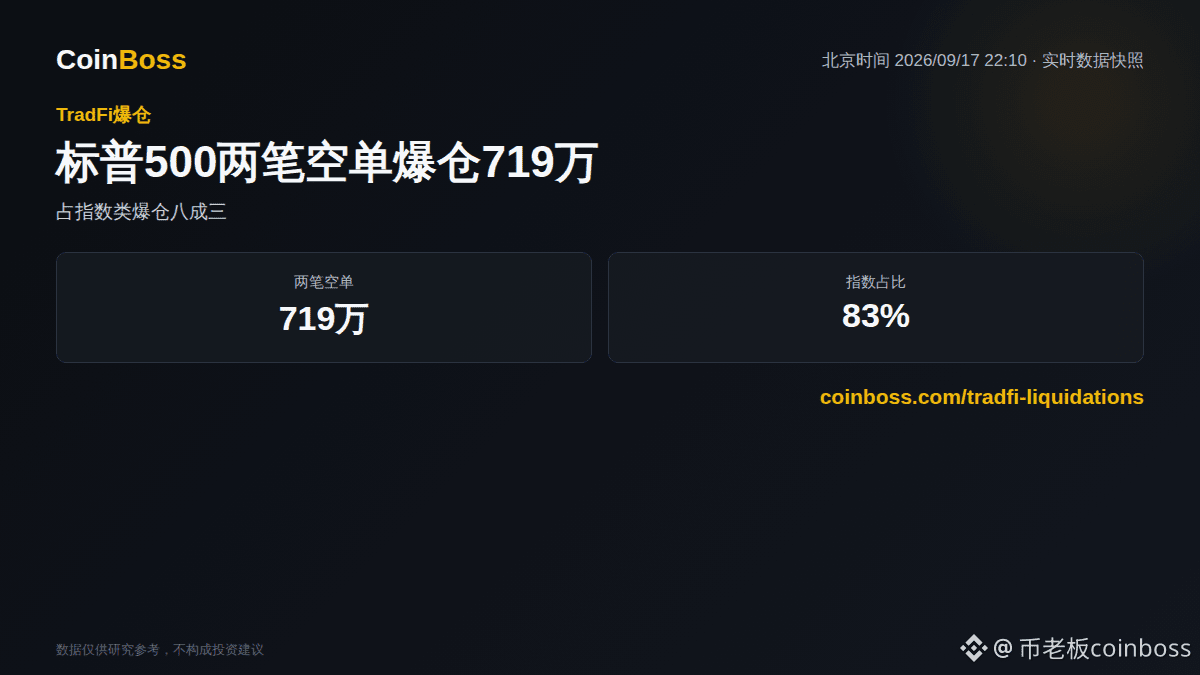
Two S&P 500 short orders liquidated for $7.19 million, accounting for 83% of index-style liquidationsTwo short orders on the S&P 500 were blown up, with the index-style liquidations absorbing 83% of the cleared amount.
Over the past 24 hours, TradFi (stocks + commodities + indices) saw total liquidations of $47.04 million across the whole network. The most intense wasn’t stocks—it was the S&P 500. Two short orders were liquidated on Hyperliquid for a total of $7.19 million; the prices were pinned at 7,651 and 7,648, accounting for 83% of the entire index-style liquidations ($8.66 million).
In 24-hour index-style liquidation events, 98% are shorts—on the day of the short on the S&P, basically the whole force was wiped out.
Looking ahead, the wind direction is shifting too: over the past 1 hour, TradFi liquidated $3.24 million, with 71% being short positions; over 4 hours, $20.54 million, with 68% shorts—these hours of chasing the downside hurt more than the hours of chasing the upside.
Two S&P 500 short orders liquidated for $7.19 million, accounting for 83% of index-style liquidations
Two short orders on the S&P 500 were blown up, with the index-style liquidations absorbing 83% of the cleared amount.
Over the past 24 hours, TradFi (stocks + commodities + indices) saw total liquidations of $47.04 million across the whole network. The most intense wasn’t stocks—it was the S&P 500. Two short orders were liquidated on Hyperliquid for a total of $7.19 million; the prices were pinned at 7,651 and 7,648, accounting for 83% of the entire index-style liquidations ($8.66 million).
In 24-hour index-style liquidation events, 98% are shorts—on the day of the short on the S&P, basically the whole force was wiped out.
Looking ahead, the wind direction is shifting too: over the past 1 hour, TradFi liquidated $3.24 million, with 71% being short positions; over 4 hours, $20.54 million, with 68% shorts—these hours of chasing the downside hurt more than the hours of chasing the upside.
Over the past 24 hours, TradFi (stocks + commodities + indices) saw total liquidations of $47.04 million across the whole network. The most intense wasn’t stocks—it was the S&P 500. Two short orders were liquidated on Hyperliquid for a total of $7.19 million; the prices were pinned at 7,651 and 7,648, accounting for 83% of the entire index-style liquidations ($8.66 million).
In 24-hour index-style liquidation events, 98% are shorts—on the day of the short on the S&P, basically the whole force was wiped out.
Looking ahead, the wind direction is shifting too: over the past 1 hour, TradFi liquidated $3.24 million, with 71% being short positions; over 4 hours, $20.54 million, with 68% shorts—these hours of chasing the downside hurt more than the hours of chasing the upside.
3
·
--
Article
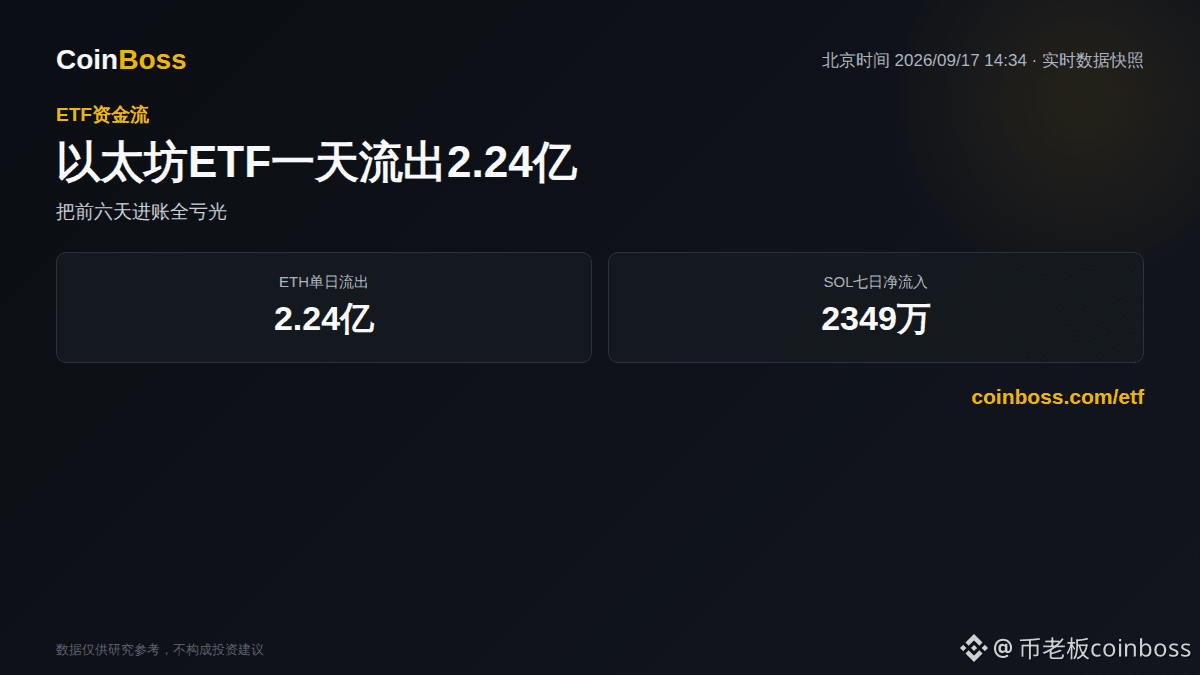
Ethereum ETF sees a $224M outflow in one day, wiping out all the gains from the first six daysToday, Ethereum ETF saw a single-day outflow of $224 million—more than the total net inflows from the previous six days ($177 million). In one day, it wiped out all the gains they’d accumulated before.
Bitcoin has no turnaround drama: today there was an outflow of $296 million, and over the past seven days the cumulative outflow is $1.049 billion. It’s been bleeding steadily.
Instead, it’s SOL: its assets under management are only $1.38 billion. Today there was a net inflow of $837,000. Over the past seven days it made $23.49 million—among the three, it’s the only one not to have been abandoned.
The three ETFs together have total assets under management of $111.7 billion. Today, the overall net outflow is $520 million. Funds have clearly been withdrawing these past few days—doesn’t look like a bargain-hunting rhythm.
Do you think this round of divestment is driven by sentiment, or is it that the trend is about to reverse?
Ethereum ETF sees a $224M outflow in one day, wiping out all the gains from the first six days
Today, Ethereum ETF saw a single-day outflow of $224 million—more than the total net inflows from the previous six days ($177 million). In one day, it wiped out all the gains they’d accumulated before.
Bitcoin has no turnaround drama: today there was an outflow of $296 million, and over the past seven days the cumulative outflow is $1.049 billion. It’s been bleeding steadily.
Instead, it’s SOL: its assets under management are only $1.38 billion. Today there was a net inflow of $837,000. Over the past seven days it made $23.49 million—among the three, it’s the only one not to have been abandoned.
The three ETFs together have total assets under management of $111.7 billion. Today, the overall net outflow is $520 million. Funds have clearly been withdrawing these past few days—doesn’t look like a bargain-hunting rhythm.
Do you think this round of divestment is driven by sentiment, or is it that the trend is about to reverse?
Bitcoin has no turnaround drama: today there was an outflow of $296 million, and over the past seven days the cumulative outflow is $1.049 billion. It’s been bleeding steadily.
Instead, it’s SOL: its assets under management are only $1.38 billion. Today there was a net inflow of $837,000. Over the past seven days it made $23.49 million—among the three, it’s the only one not to have been abandoned.
The three ETFs together have total assets under management of $111.7 billion. Today, the overall net outflow is $520 million. Funds have clearly been withdrawing these past few days—doesn’t look like a bargain-hunting rhythm.
Do you think this round of divestment is driven by sentiment, or is it that the trend is about to reverse?
7
·
--
Article
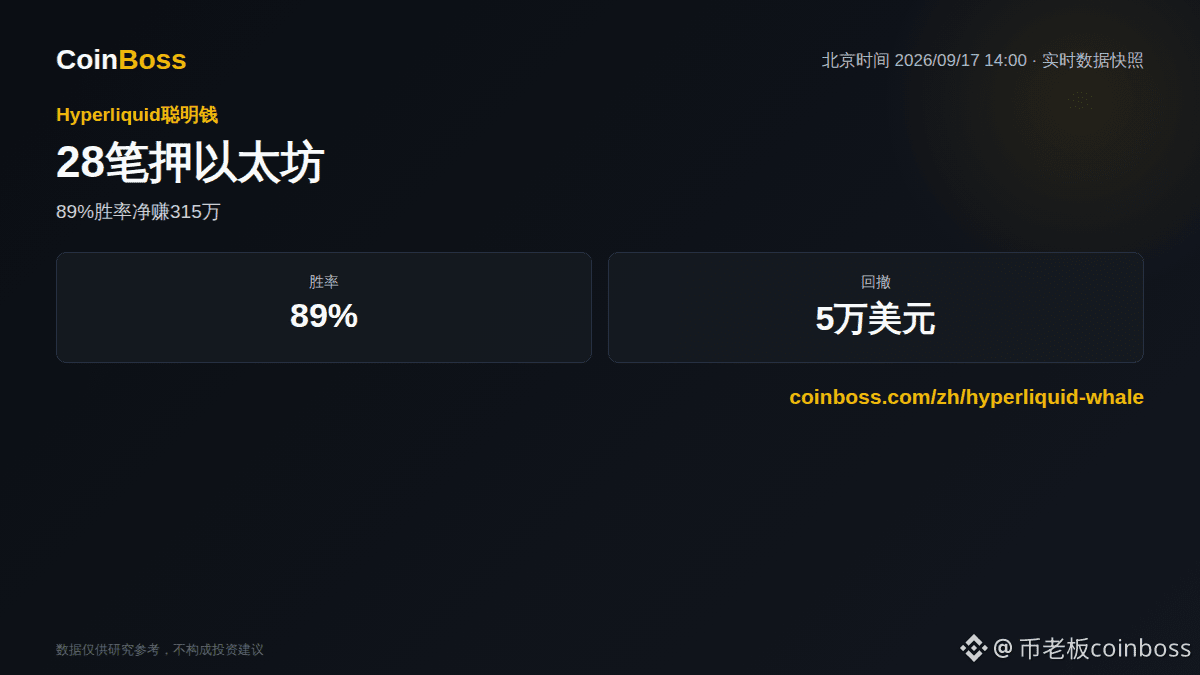
Only 28 trades on Ethereum, 89% win rate, net $3.15 million profit, drawdown only $50kConclusion first: over 420 days, this address did just one thing—bet on Ethereum. All 28 trades were fully closed out; 25 were profitable. Win rate 89%, net profit $3.15 million, and the maximum drawdown was only $50,000.
Full address: 0x47818abc02d61af1e586d3ceb035591aeae4548f. Total traded volume: $41.29 million. Out of 233 original fills, 28 clean closing records were filtered out. The number of trades isn’t high, but every one of them was Ethereum—never touched any other coin.
In the process of making $3.15 million, the fees were only $148,000, accounting for less than five-thousandths of the profit. The drawdown control is the most striking part of this address: over 420 days, the maximum drawdown was just $50,000—nearly negligible compared with the $3.15 million profit. It wasn’t made by holding out through extreme market conditions with a one-shot all-in.
Only 28 trades on Ethereum, 89% win rate, net $3.15 million profit, drawdown only $50k
Conclusion first: over 420 days, this address did just one thing—bet on Ethereum. All 28 trades were fully closed out; 25 were profitable. Win rate 89%, net profit $3.15 million, and the maximum drawdown was only $50,000.
Full address: 0x47818abc02d61af1e586d3ceb035591aeae4548f. Total traded volume: $41.29 million. Out of 233 original fills, 28 clean closing records were filtered out. The number of trades isn’t high, but every one of them was Ethereum—never touched any other coin.
In the process of making $3.15 million, the fees were only $148,000, accounting for less than five-thousandths of the profit. The drawdown control is the most striking part of this address: over 420 days, the maximum drawdown was just $50,000—nearly negligible compared with the $3.15 million profit. It wasn’t made by holding out through extreme market conditions with a one-shot all-in.
Full address: 0x47818abc02d61af1e586d3ceb035591aeae4548f. Total traded volume: $41.29 million. Out of 233 original fills, 28 clean closing records were filtered out. The number of trades isn’t high, but every one of them was Ethereum—never touched any other coin.
In the process of making $3.15 million, the fees were only $148,000, accounting for less than five-thousandths of the profit. The drawdown control is the most striking part of this address: over 420 days, the maximum drawdown was just $50,000—nearly negligible compared with the $3.15 million profit. It wasn’t made by holding out through extreme market conditions with a one-shot all-in.
46
·
--
Article
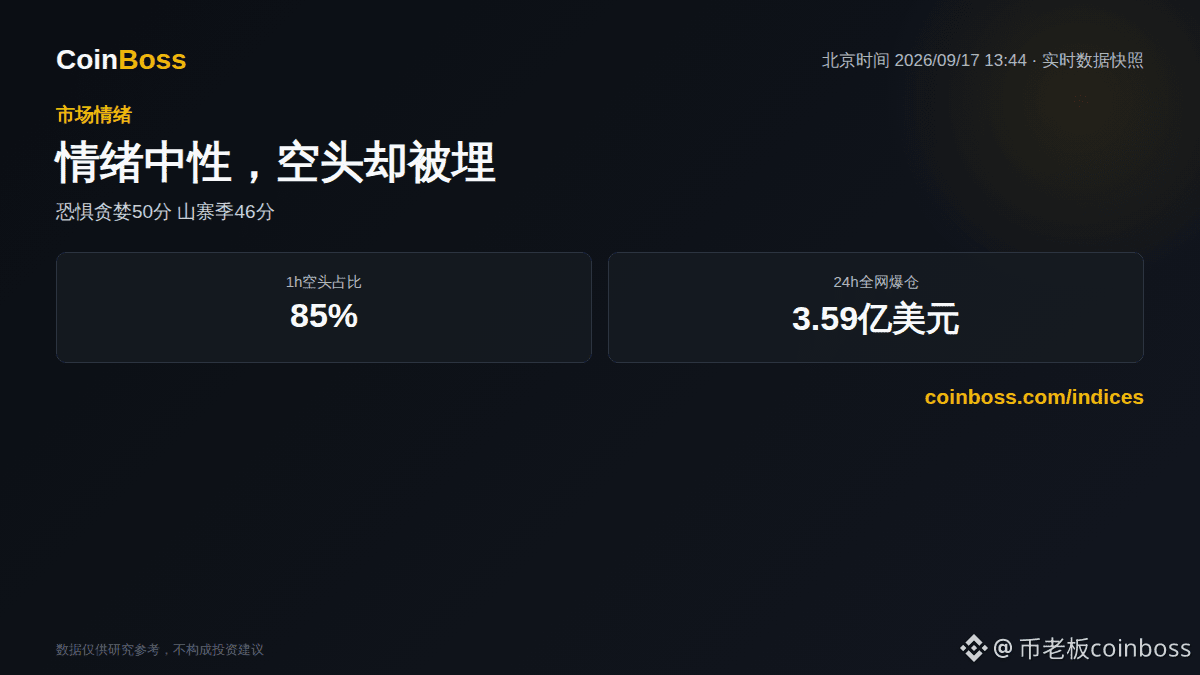
Fear & Greed Index: 50. In the last hour, 85% of liquidations were shorts.Conclusion first: Fear & Greed scores 50 points, and the copycat/“shanzhai” season scores 46 points. Both indicators are stuck in the neutral range, looking calm and uneventful.
But the actual order book isn’t like that. Over the past 24 hours, liquidations across the whole network totaled $359 million, with 62% being shorts. On the 4-hour basis, shorts are also 63%, with the ratio not changing much. In the last hour, it’s even more extreme: of the $3.10 million liquidated, $2.64 million was shorts, pushing the share up to 85%.
What isn’t showing in the data is that during this period, shorts have been passively taking hits; the closer you look, the higher the proportion—it's not just a one-off move pulled up by a couple of orders.
It may still take a bit longer before sentiment truly turns optimistic or pessimistic. In the short-term, the long-versus-short tug-of-war has already decided the winner.
Fear & Greed Index: 50. In the last hour, 85% of liquidations were shorts.
Conclusion first: Fear & Greed scores 50 points, and the copycat/“shanzhai” season scores 46 points. Both indicators are stuck in the neutral range, looking calm and uneventful.
But the actual order book isn’t like that. Over the past 24 hours, liquidations across the whole network totaled $359 million, with 62% being shorts. On the 4-hour basis, shorts are also 63%, with the ratio not changing much. In the last hour, it’s even more extreme: of the $3.10 million liquidated, $2.64 million was shorts, pushing the share up to 85%.
What isn’t showing in the data is that during this period, shorts have been passively taking hits; the closer you look, the higher the proportion—it's not just a one-off move pulled up by a couple of orders.
It may still take a bit longer before sentiment truly turns optimistic or pessimistic. In the short-term, the long-versus-short tug-of-war has already decided the winner.
But the actual order book isn’t like that. Over the past 24 hours, liquidations across the whole network totaled $359 million, with 62% being shorts. On the 4-hour basis, shorts are also 63%, with the ratio not changing much. In the last hour, it’s even more extreme: of the $3.10 million liquidated, $2.64 million was shorts, pushing the share up to 85%.
What isn’t showing in the data is that during this period, shorts have been passively taking hits; the closer you look, the higher the proportion—it's not just a one-off move pulled up by a couple of orders.
It may still take a bit longer before sentiment truly turns optimistic or pessimistic. In the short-term, the long-versus-short tug-of-war has already decided the winner.
48
·
--
Article
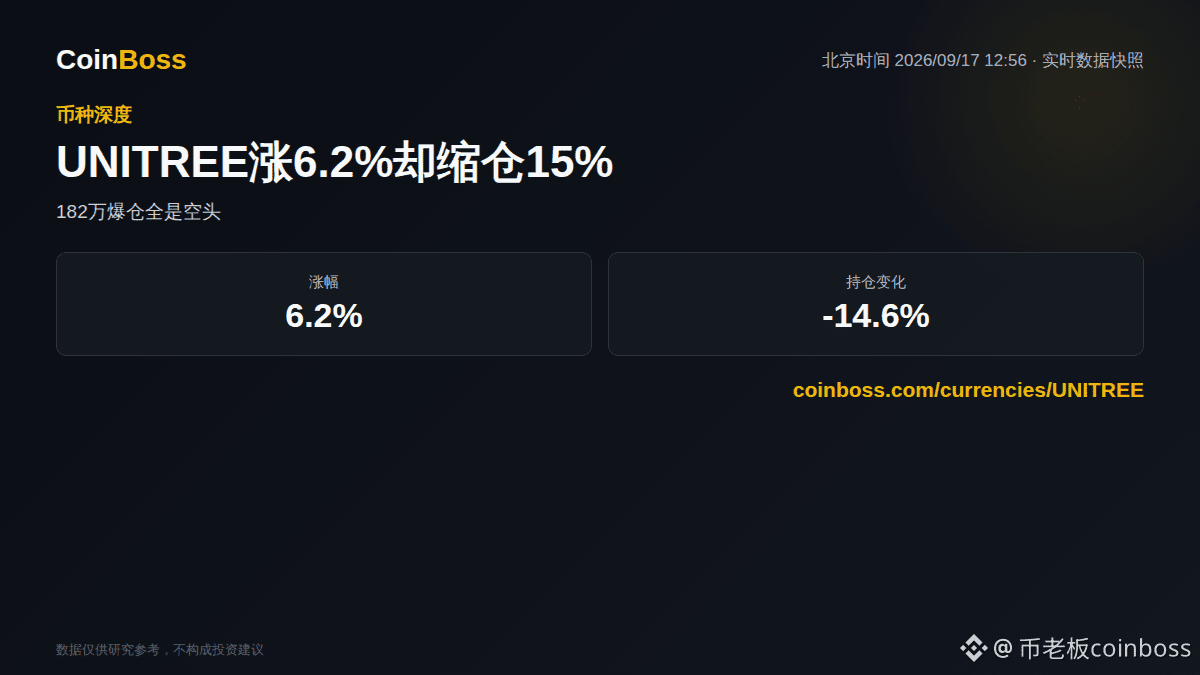
UNITREE rose 6.2% but reduced positions by 15%; $1.82 million in liquidations were all shortsLet’s state the conclusion first: UNITREE’s latest price increase didn’t rely on new capital entering—it was shorts being forcibly squeezed into liquidation.
Current price is 74.92. The 24-hour high is 78, the low is 69.3. On both Binance and OKX, the gains are capped at around 6.2%.
In the past 4 hours, liquidations across the entire network totaled $1.82 million. Those going long lost less than $650, while the remaining $1.819 million was all paid by shorts. On a 24-hour basis it’s pretty similar: in $1.857 million worth of liquidations, 99% were shorts.
What’s unusual is the open interest: while the price rose 6.2%, total derivatives open interest across the whole network shrank 14.6% over 24 hours, down to $180 million. Prices went up but positions were reduced instead—suggesting this rally mainly squeezed shorts out of the market, not new real money flowing in. OKX alone carried 35% of the positions, and Bitget’s positions evaporated by 60% in a day.
UNITREE rose 6.2% but reduced positions by 15%; $1.82 million in liquidations were all shorts
Let’s state the conclusion first: UNITREE’s latest price increase didn’t rely on new capital entering—it was shorts being forcibly squeezed into liquidation.
Current price is 74.92. The 24-hour high is 78, the low is 69.3. On both Binance and OKX, the gains are capped at around 6.2%.
In the past 4 hours, liquidations across the entire network totaled $1.82 million. Those going long lost less than $650, while the remaining $1.819 million was all paid by shorts. On a 24-hour basis it’s pretty similar: in $1.857 million worth of liquidations, 99% were shorts.
What’s unusual is the open interest: while the price rose 6.2%, total derivatives open interest across the whole network shrank 14.6% over 24 hours, down to $180 million. Prices went up but positions were reduced instead—suggesting this rally mainly squeezed shorts out of the market, not new real money flowing in. OKX alone carried 35% of the positions, and Bitget’s positions evaporated by 60% in a day.
Current price is 74.92. The 24-hour high is 78, the low is 69.3. On both Binance and OKX, the gains are capped at around 6.2%.
In the past 4 hours, liquidations across the entire network totaled $1.82 million. Those going long lost less than $650, while the remaining $1.819 million was all paid by shorts. On a 24-hour basis it’s pretty similar: in $1.857 million worth of liquidations, 99% were shorts.
What’s unusual is the open interest: while the price rose 6.2%, total derivatives open interest across the whole network shrank 14.6% over 24 hours, down to $180 million. Prices went up but positions were reduced instead—suggesting this rally mainly squeezed shorts out of the market, not new real money flowing in. OKX alone carried 35% of the positions, and Bitget’s positions evaporated by 60% in a day.
452
·
--
Article
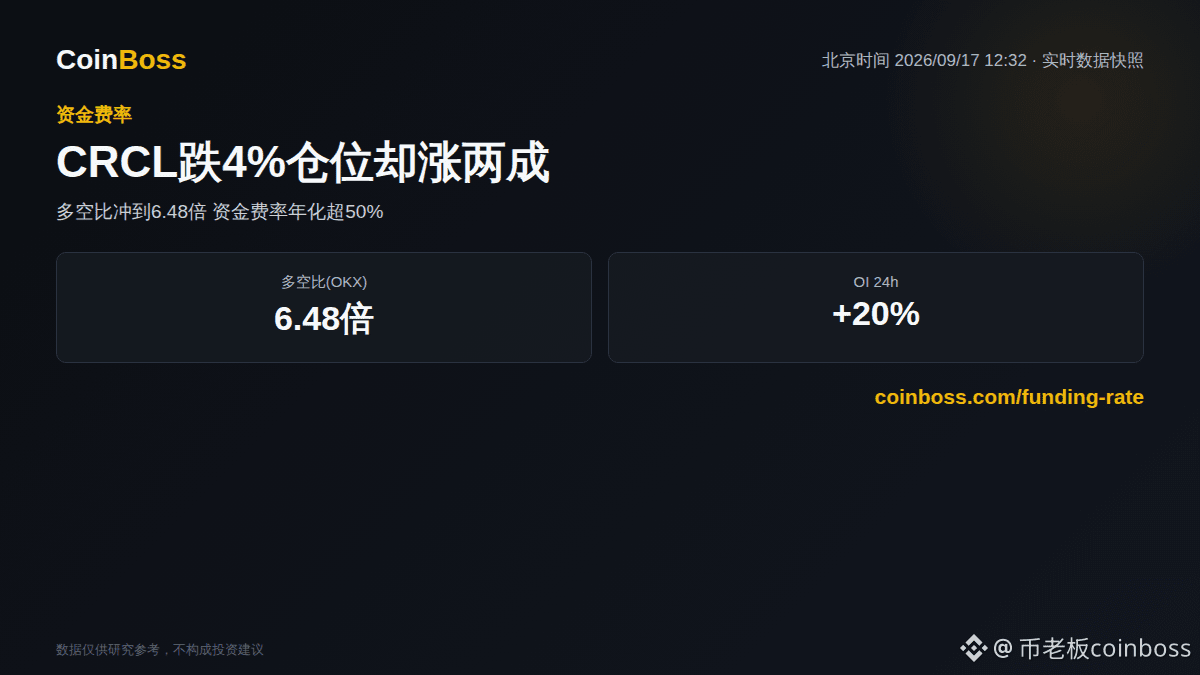
CRCL down 4% but positions up 20%—the long/short ratio spikes to six timesThe CRCL price is down nearly 4%. Binance and OKX are both hovering at around a 3.9% drop, with the price action moving in sync. But open interest doesn’t fall—instead it rises: it’s up by about 20% in a day. This suggests someone is rushing in during the decline, not taking profit and exiting.
What’s even more striking is the long/short ratio: on Binance, longs account for 80.7%, for a long/short ratio of 4.19x; on OKX it’s even more extreme—longs are 86.6%, with the ratio surging to 6.48x. Funding fees are still positive, with an annualized rate over 50%. Longs haven’t pulled out; they’re still “paying to stay,” keeping their positions despite the cost.
Three signals overlap: price falling, positions increasing, and fees turning positive. In this round of pullback, the basic reason for adding to positions is mostly long exposure. If they can’t hold, it’s the kind of setup that leads to cascading liquidations.
CRCL down 4% but positions up 20%—the long/short ratio spikes to six times
The CRCL price is down nearly 4%. Binance and OKX are both hovering at around a 3.9% drop, with the price action moving in sync. But open interest doesn’t fall—instead it rises: it’s up by about 20% in a day. This suggests someone is rushing in during the decline, not taking profit and exiting.
What’s even more striking is the long/short ratio: on Binance, longs account for 80.7%, for a long/short ratio of 4.19x; on OKX it’s even more extreme—longs are 86.6%, with the ratio surging to 6.48x. Funding fees are still positive, with an annualized rate over 50%. Longs haven’t pulled out; they’re still “paying to stay,” keeping their positions despite the cost.
Three signals overlap: price falling, positions increasing, and fees turning positive. In this round of pullback, the basic reason for adding to positions is mostly long exposure. If they can’t hold, it’s the kind of setup that leads to cascading liquidations.
What’s even more striking is the long/short ratio: on Binance, longs account for 80.7%, for a long/short ratio of 4.19x; on OKX it’s even more extreme—longs are 86.6%, with the ratio surging to 6.48x. Funding fees are still positive, with an annualized rate over 50%. Longs haven’t pulled out; they’re still “paying to stay,” keeping their positions despite the cost.
Three signals overlap: price falling, positions increasing, and fees turning positive. In this round of pullback, the basic reason for adding to positions is mostly long exposure. If they can’t hold, it’s the kind of setup that leads to cascading liquidations.
52
·
--
Article
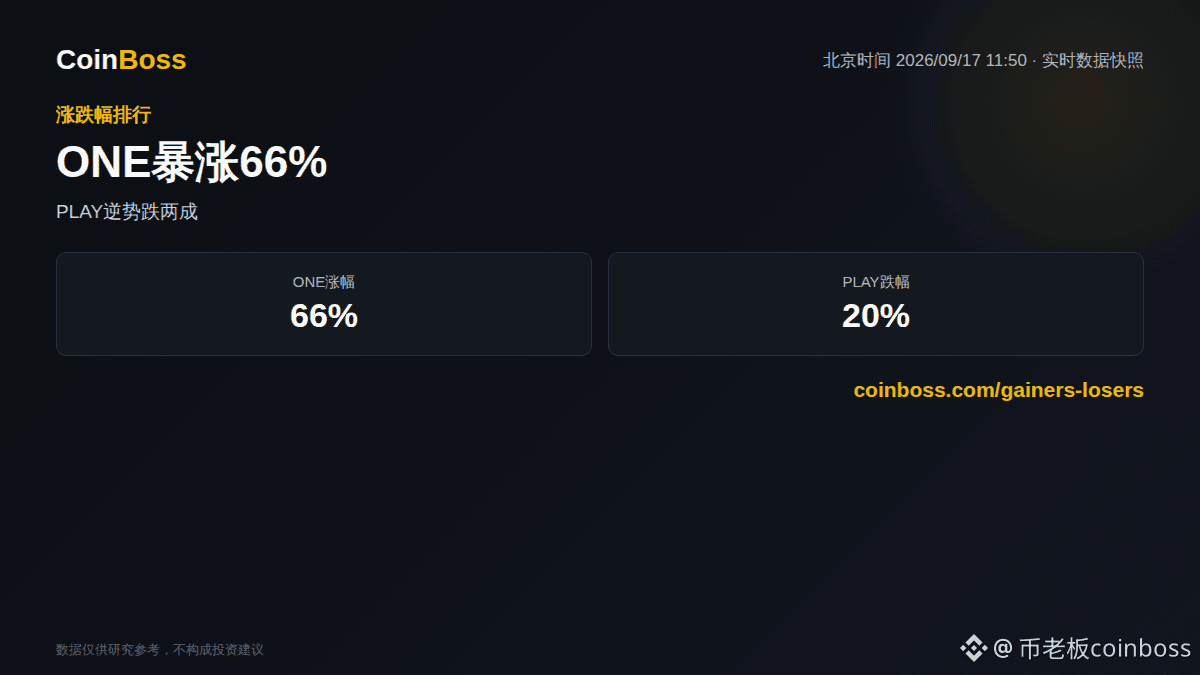
ONE rockets 66% in a day, trades over $150M—while PLAY drops 20% and still tops the losers listThe most eye-catching on today’s top gainers/losers list isn’t the newly emerged meme coins, but the established layer-1 chain token ONE. Over the past 24 hours, it’s up 66% with trading volume exceeding $150 million. On Binance and OKX, the percentage gains are both stuck between 64% and 67%—clearly driven by real buy orders.
On the losers list, PLAY moves in the opposite direction: it’s down nearly 20%. On Binance, Aster, Gate, and Lbank, the declines are all capped at around 19.9%. The drop is very uniform—not a single exchange getting an outlier.
$ONE $PLAY
#涨跌幅排行 #Market
Who do you think will reverse first?
View in real time: https://www.coinboss.com/gainers-losers
ONE rockets 66% in a day, trades over $150M—while PLAY drops 20% and still tops the losers list
The most eye-catching on today’s top gainers/losers list isn’t the newly emerged meme coins, but the established layer-1 chain token ONE. Over the past 24 hours, it’s up 66% with trading volume exceeding $150 million. On Binance and OKX, the percentage gains are both stuck between 64% and 67%—clearly driven by real buy orders.
On the losers list, PLAY moves in the opposite direction: it’s down nearly 20%. On Binance, Aster, Gate, and Lbank, the declines are all capped at around 19.9%. The drop is very uniform—not a single exchange getting an outlier.
$ONE $PLAY
#涨跌幅排行 #Market
Who do you think will reverse first?
View in real time: https://www.coinboss.com/gainers-losers
On the losers list, PLAY moves in the opposite direction: it’s down nearly 20%. On Binance, Aster, Gate, and Lbank, the declines are all capped at around 19.9%. The drop is very uniform—not a single exchange getting an outlier.
$ONE $PLAY
#涨跌幅排行 #Market
Who do you think will reverse first?
View in real time: https://www.coinboss.com/gainers-losers
199
·
--
Article
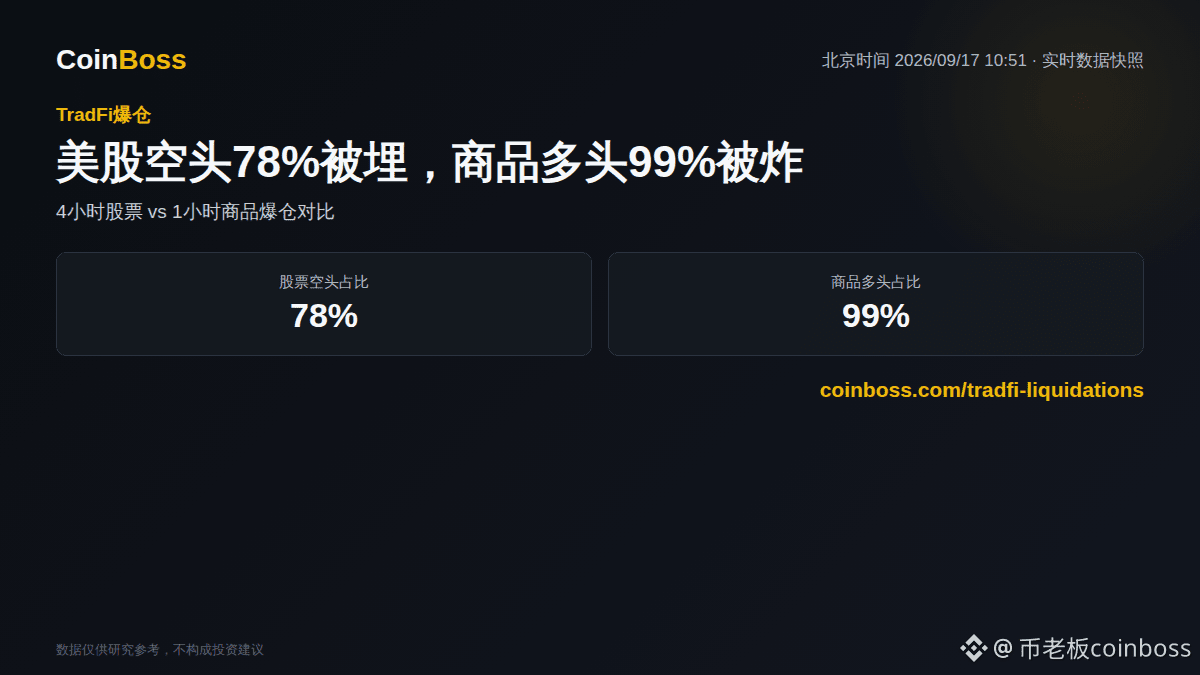
US stocks liquidate $1.36M in 4 hours—nearly 80% shorts; in the past hour, commodities get wiped out, longs dominateIn the past 4 hours, US stocks saw a $1.36 million liquidation event, 78% of which was shorts. On OKX, a single SanDisk short position was directly liquidated for a loss of $145,000—showing that this stock is pushing upward and the shorts can’t hold it anymore.
In the last hour, the trend flipped: commodities saw a $175,000 liquidation, and 99% was longs—all concentrated in crude oil and precious metals. Gate liquidated a crude oil long position for $50,000, indicating that in this past hour, commodity prices have been dropping fast, burying the chase-long crowd.
Just like that, in TradFi, stocks are taking in money from short sellers, while commodities are taking in money from long buyers—both sides have people making and people losing.
US stocks liquidate $1.36M in 4 hours—nearly 80% shorts; in the past hour, commodities get wiped out, longs dominate
In the past 4 hours, US stocks saw a $1.36 million liquidation event, 78% of which was shorts. On OKX, a single SanDisk short position was directly liquidated for a loss of $145,000—showing that this stock is pushing upward and the shorts can’t hold it anymore.
In the last hour, the trend flipped: commodities saw a $175,000 liquidation, and 99% was longs—all concentrated in crude oil and precious metals. Gate liquidated a crude oil long position for $50,000, indicating that in this past hour, commodity prices have been dropping fast, burying the chase-long crowd.
Just like that, in TradFi, stocks are taking in money from short sellers, while commodities are taking in money from long buyers—both sides have people making and people losing.
In the last hour, the trend flipped: commodities saw a $175,000 liquidation, and 99% was longs—all concentrated in crude oil and precious metals. Gate liquidated a crude oil long position for $50,000, indicating that in this past hour, commodity prices have been dropping fast, burying the chase-long crowd.
Just like that, in TradFi, stocks are taking in money from short sellers, while commodities are taking in money from long buyers—both sides have people making and people losing.
168
·
--
Article
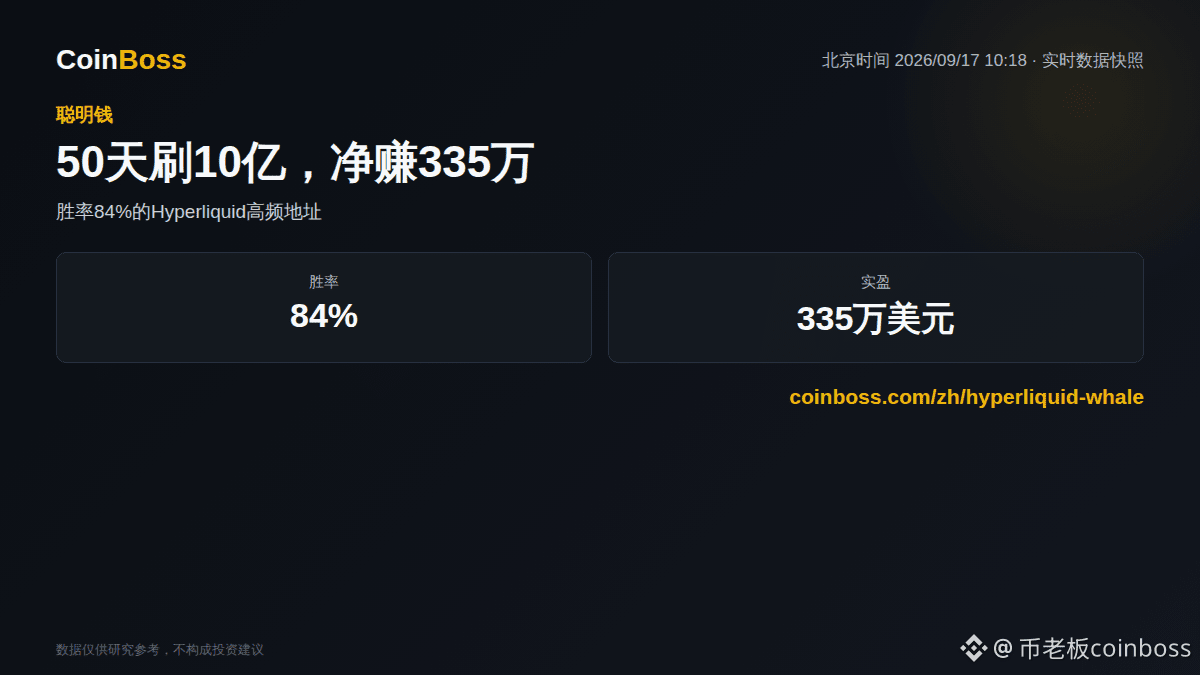
In 50 days, this Hyperliquid address traded $1 billion—net profit is only 0.3%Let’s state the conclusion first: in 50 days, this Hyperliquid address churned through $1 billion in trading volume, with a win rate of 84%. But the amount actually realized was only $3.35 million. The money was ground out trade by trade—not through one big all-in.
Within the 50-day window, out of 2,000 trades, 398 were filtered as fully closed positions; 334 were winners and 64 were losers, for a win rate of 83.9%. Total traded volume was $1.001 billion. The realized profit recovered was $3.35 million—roughly, you only make $1 for every $300 of volume traded. That’s a typical high-frequency, thin-margin strategy.
The fee was $248,500, accounting for 7.4% of realized profit. It’s noticeably higher than the fee rates of many long-term orders, which indicates this isn’t a “bet once and hope” approach. The stable returns come from building up results through frequency. In the entire period, the maximum drawdown was $853,000, or 25.5% of realized profit. Along the way, I got hurt too—but I made it through.
In 50 days, this Hyperliquid address traded $1 billion—net profit is only 0.3%
Let’s state the conclusion first: in 50 days, this Hyperliquid address churned through $1 billion in trading volume, with a win rate of 84%. But the amount actually realized was only $3.35 million. The money was ground out trade by trade—not through one big all-in.
Within the 50-day window, out of 2,000 trades, 398 were filtered as fully closed positions; 334 were winners and 64 were losers, for a win rate of 83.9%. Total traded volume was $1.001 billion. The realized profit recovered was $3.35 million—roughly, you only make $1 for every $300 of volume traded. That’s a typical high-frequency, thin-margin strategy.
The fee was $248,500, accounting for 7.4% of realized profit. It’s noticeably higher than the fee rates of many long-term orders, which indicates this isn’t a “bet once and hope” approach. The stable returns come from building up results through frequency. In the entire period, the maximum drawdown was $853,000, or 25.5% of realized profit. Along the way, I got hurt too—but I made it through.
Within the 50-day window, out of 2,000 trades, 398 were filtered as fully closed positions; 334 were winners and 64 were losers, for a win rate of 83.9%. Total traded volume was $1.001 billion. The realized profit recovered was $3.35 million—roughly, you only make $1 for every $300 of volume traded. That’s a typical high-frequency, thin-margin strategy.
The fee was $248,500, accounting for 7.4% of realized profit. It’s noticeably higher than the fee rates of many long-term orders, which indicates this isn’t a “bet once and hope” approach. The stable returns come from building up results through frequency. In the entire period, the maximum drawdown was $853,000, or 25.5% of realized profit. Along the way, I got hurt too—but I made it through.
205
·
--
Article
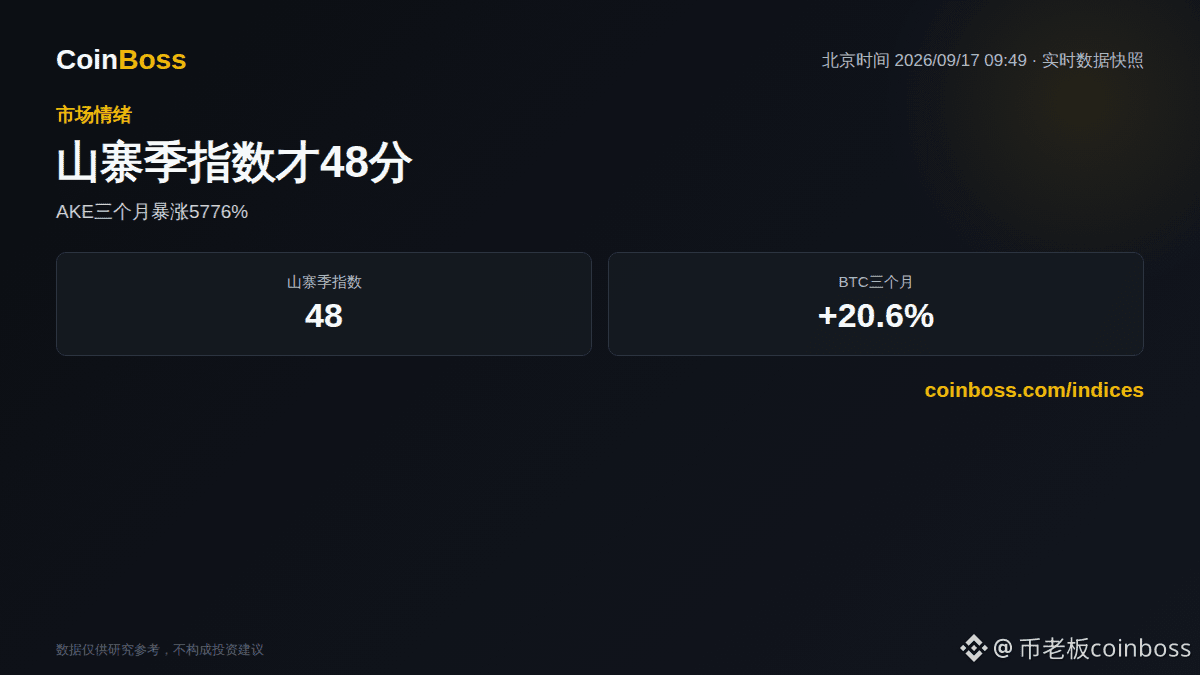
The shanzhai season index is only 48 points, yet AKE has exploded 5,776% in three monthsThe “shanzhai season” index today is 48 points, not yet reaching the 50-point passing line. Theoretically, at this level, the shanzhai season hasn’t truly kicked off yet.
But that doesn’t mean there’s no action in the shanzhai space. Over the past three months, an AKE coin surged 5,776%, nearly 59x, with BULLA coming next at up 2,266%. But out of 50 main samples, only 24 managed to outperform Bitcoin’s concurrent 20.6% rise—less than half. This round is a very rare case of holding up the index; it’s not a broad-based surge.
More eye-catching is the bottom-placer AIN, which fell 71.77% in the same period. The leaders went absolutely crazy, while the tail-end got cut in half. Yesterday the index was still 40; it rebounded by 8 points in a day, but it’s still 2 points short of the passing line.
The shanzhai season index is only 48 points, yet AKE has exploded 5,776% in three months
The “shanzhai season” index today is 48 points, not yet reaching the 50-point passing line. Theoretically, at this level, the shanzhai season hasn’t truly kicked off yet.
But that doesn’t mean there’s no action in the shanzhai space. Over the past three months, an AKE coin surged 5,776%, nearly 59x, with BULLA coming next at up 2,266%. But out of 50 main samples, only 24 managed to outperform Bitcoin’s concurrent 20.6% rise—less than half. This round is a very rare case of holding up the index; it’s not a broad-based surge.
More eye-catching is the bottom-placer AIN, which fell 71.77% in the same period. The leaders went absolutely crazy, while the tail-end got cut in half. Yesterday the index was still 40; it rebounded by 8 points in a day, but it’s still 2 points short of the passing line.
But that doesn’t mean there’s no action in the shanzhai space. Over the past three months, an AKE coin surged 5,776%, nearly 59x, with BULLA coming next at up 2,266%. But out of 50 main samples, only 24 managed to outperform Bitcoin’s concurrent 20.6% rise—less than half. This round is a very rare case of holding up the index; it’s not a broad-based surge.
More eye-catching is the bottom-placer AIN, which fell 71.77% in the same period. The leaders went absolutely crazy, while the tail-end got cut in half. Yesterday the index was still 40; it rebounded by 8 points in a day, but it’s still 2 points short of the passing line.
387
·
--
Article
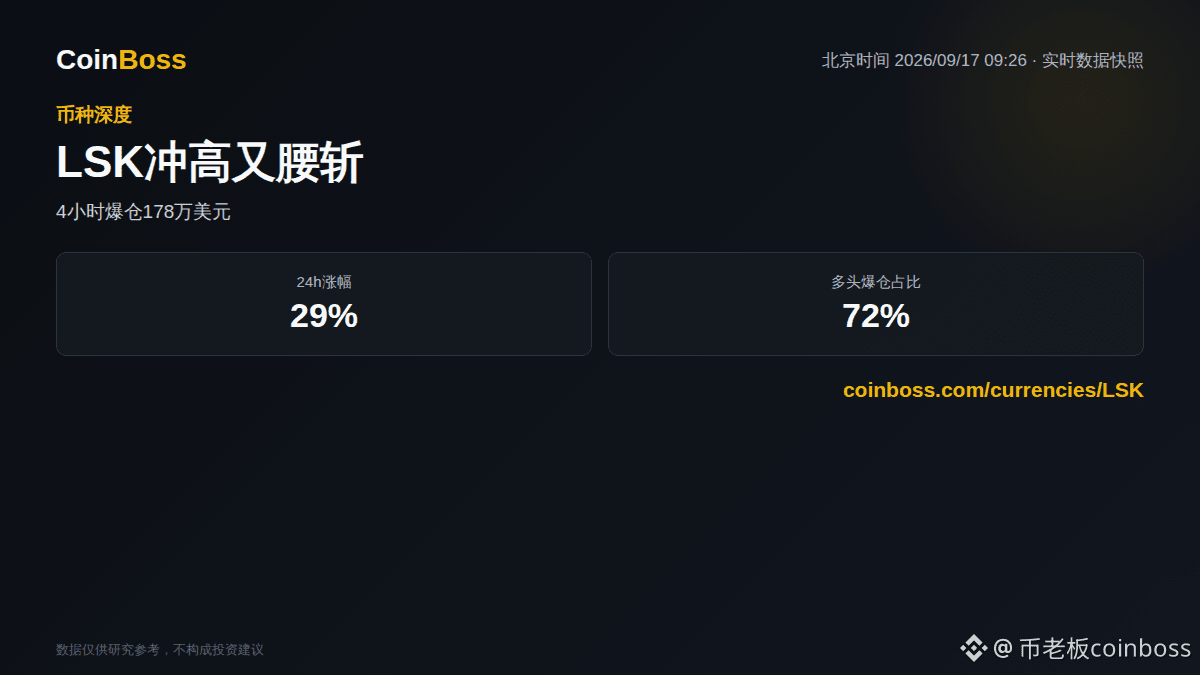
LSK surged 110% and then halved—current price gains now only around 29%First, the conclusion: LSK played a roller coaster today. In the past 24 hours, it surged to more than 110% above the opening price at its peak, then slumped and fell by over 40% after halving. Now the net gain is only around 29%.
At the current price near 0.51, the 24-hour high was 0.867 and the low was 0.362. The gains on Binance, Bybit, and Gate are all capped between 28% and 30%.
This batch of people chasing the rally is really uncomfortable right now. In the past 4 hours, the entire network has exploded with a total of $1.78 million worth of LSK positions liquidation, of which 72% were long positions. When the high was smashed downward, those who added leverage and chased in were buried.
What explains the situation even better is the positioning: Binance’s LSK futures open interest saw a brutal reduction of 39% within 4 hours. Total open interest across the market was $41.8 million, while over the past 24 hours it actually fell by 9.6%. Leverage funds are rapidly running for the exits. This surge looks more like spot sentiment, not like a futures stack propping it up.
LSK surged 110% and then halved—current price gains now only around 29%
First, the conclusion: LSK played a roller coaster today. In the past 24 hours, it surged to more than 110% above the opening price at its peak, then slumped and fell by over 40% after halving. Now the net gain is only around 29%.
At the current price near 0.51, the 24-hour high was 0.867 and the low was 0.362. The gains on Binance, Bybit, and Gate are all capped between 28% and 30%.
This batch of people chasing the rally is really uncomfortable right now. In the past 4 hours, the entire network has exploded with a total of $1.78 million worth of LSK positions liquidation, of which 72% were long positions. When the high was smashed downward, those who added leverage and chased in were buried.
What explains the situation even better is the positioning: Binance’s LSK futures open interest saw a brutal reduction of 39% within 4 hours. Total open interest across the market was $41.8 million, while over the past 24 hours it actually fell by 9.6%. Leverage funds are rapidly running for the exits. This surge looks more like spot sentiment, not like a futures stack propping it up.
At the current price near 0.51, the 24-hour high was 0.867 and the low was 0.362. The gains on Binance, Bybit, and Gate are all capped between 28% and 30%.
This batch of people chasing the rally is really uncomfortable right now. In the past 4 hours, the entire network has exploded with a total of $1.78 million worth of LSK positions liquidation, of which 72% were long positions. When the high was smashed downward, those who added leverage and chased in were buried.
What explains the situation even better is the positioning: Binance’s LSK futures open interest saw a brutal reduction of 39% within 4 hours. Total open interest across the market was $41.8 million, while over the past 24 hours it actually fell by 9.6%. Leverage funds are rapidly running for the exits. This surge looks more like spot sentiment, not like a futures stack propping it up.
76
·
--
Article
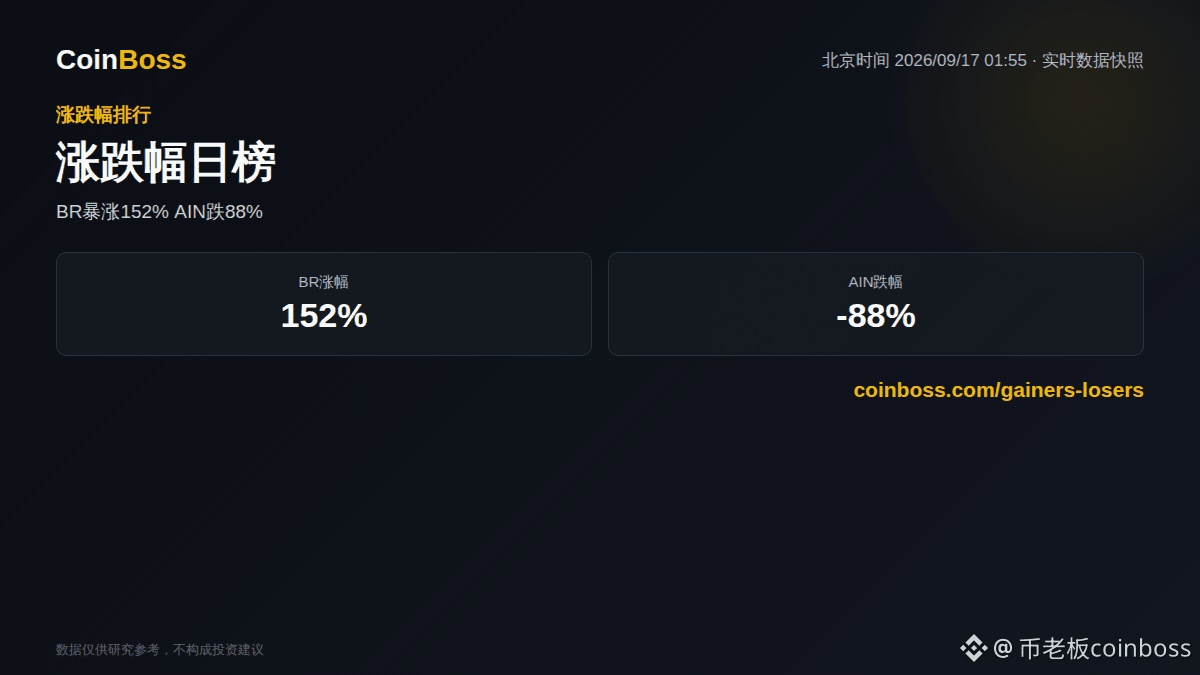
BR rockets up 152% to top the gainers’ board; AIN drops 88% the same dayToday’s price swings on both sides are brutal—none of it is a mirage pulled up by thin liquidity.
The #1 gainer today is BR: up 152% in a day, with trading volume of $500 million. Real buy orders are pushing it. SYN is up 116%, LSK is up 97%—all three have more than doubled, and then some.
On the losers’ board: AIN dropped 88% in a single day, and the trading volume is still over $300 million. It’s not that nobody’s taking over—people really are cutting positions and exiting.
Those who chased the rally got hit with losses of 152%; those who missed the move managed to dodge an 88% drop. The way altcoins are splitting is that straightforward.
$BR $AIN
#涨跌幅榜 #altcoins
What position are you holding today—on the gainers’ board or the losers’ board?
Check in real time: https://www.coinboss.com/gainers-losers
BR rockets up 152% to top the gainers’ board; AIN drops 88% the same day
Today’s price swings on both sides are brutal—none of it is a mirage pulled up by thin liquidity.
The #1 gainer today is BR: up 152% in a day, with trading volume of $500 million. Real buy orders are pushing it. SYN is up 116%, LSK is up 97%—all three have more than doubled, and then some.
On the losers’ board: AIN dropped 88% in a single day, and the trading volume is still over $300 million. It’s not that nobody’s taking over—people really are cutting positions and exiting.
Those who chased the rally got hit with losses of 152%; those who missed the move managed to dodge an 88% drop. The way altcoins are splitting is that straightforward.
$BR $AIN
#涨跌幅榜 #altcoins
What position are you holding today—on the gainers’ board or the losers’ board?
Check in real time: https://www.coinboss.com/gainers-losers
The #1 gainer today is BR: up 152% in a day, with trading volume of $500 million. Real buy orders are pushing it. SYN is up 116%, LSK is up 97%—all three have more than doubled, and then some.
On the losers’ board: AIN dropped 88% in a single day, and the trading volume is still over $300 million. It’s not that nobody’s taking over—people really are cutting positions and exiting.
Those who chased the rally got hit with losses of 152%; those who missed the move managed to dodge an 88% drop. The way altcoins are splitting is that straightforward.
$BR $AIN
#涨跌幅榜 #altcoins
What position are you holding today—on the gainers’ board or the losers’ board?
Check in real time: https://www.coinboss.com/gainers-losers
361
·
--
Article
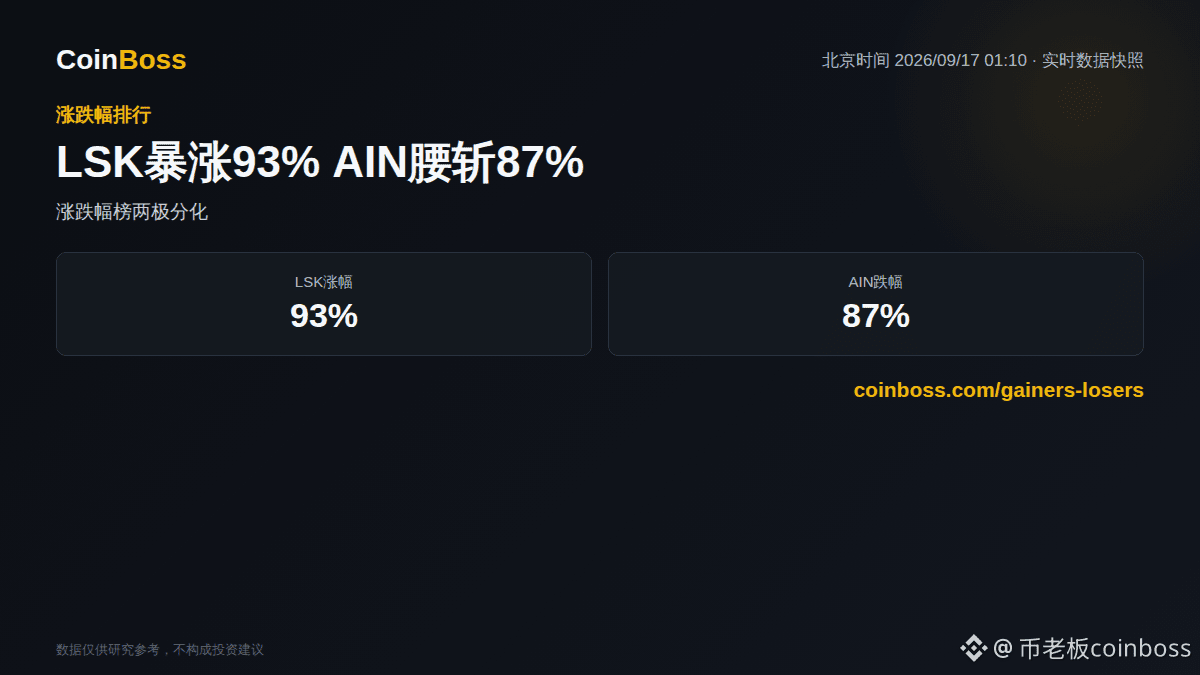
LSK surged 93% in a day, but AIN was cut in half and left with scrapsToday’s top gainers and losers are equally striking. LSK surged 93% in a day—its current price is $0.81. Binance and Bybit data match: over the past 24 hours, the highest was $0.85 and the lowest was $0.32—up nearly 3x. Trading volume was $1.1 billion.
With AIN, it’s the opposite. In the past 24 hours it fell from 0.217 to 0.024, a crash of 87%. Binance and Bitget numbers are consistent, and trading volume is still $350 million.
On the same day, some people saw a threefold increase, while others were cut in half; being on the wrong side made the gap more than tenfold.
$LSK $AIN
#涨跌幅榜 #cryptocurrency
Would you rather catch a backpass (a flying knife) or chase a limit-up rally?
View in real time: https://www.coinboss.com/gainers-losers
LSK surged 93% in a day, but AIN was cut in half and left with scraps
Today’s top gainers and losers are equally striking. LSK surged 93% in a day—its current price is $0.81. Binance and Bybit data match: over the past 24 hours, the highest was $0.85 and the lowest was $0.32—up nearly 3x. Trading volume was $1.1 billion.
With AIN, it’s the opposite. In the past 24 hours it fell from 0.217 to 0.024, a crash of 87%. Binance and Bitget numbers are consistent, and trading volume is still $350 million.
On the same day, some people saw a threefold increase, while others were cut in half; being on the wrong side made the gap more than tenfold.
$LSK $AIN
#涨跌幅榜 #cryptocurrency
Would you rather catch a backpass (a flying knife) or chase a limit-up rally?
View in real time: https://www.coinboss.com/gainers-losers
With AIN, it’s the opposite. In the past 24 hours it fell from 0.217 to 0.024, a crash of 87%. Binance and Bitget numbers are consistent, and trading volume is still $350 million.
On the same day, some people saw a threefold increase, while others were cut in half; being on the wrong side made the gap more than tenfold.
$LSK $AIN
#涨跌幅榜 #cryptocurrency
Would you rather catch a backpass (a flying knife) or chase a limit-up rally?
View in real time: https://www.coinboss.com/gainers-losers
349
·
--
Article
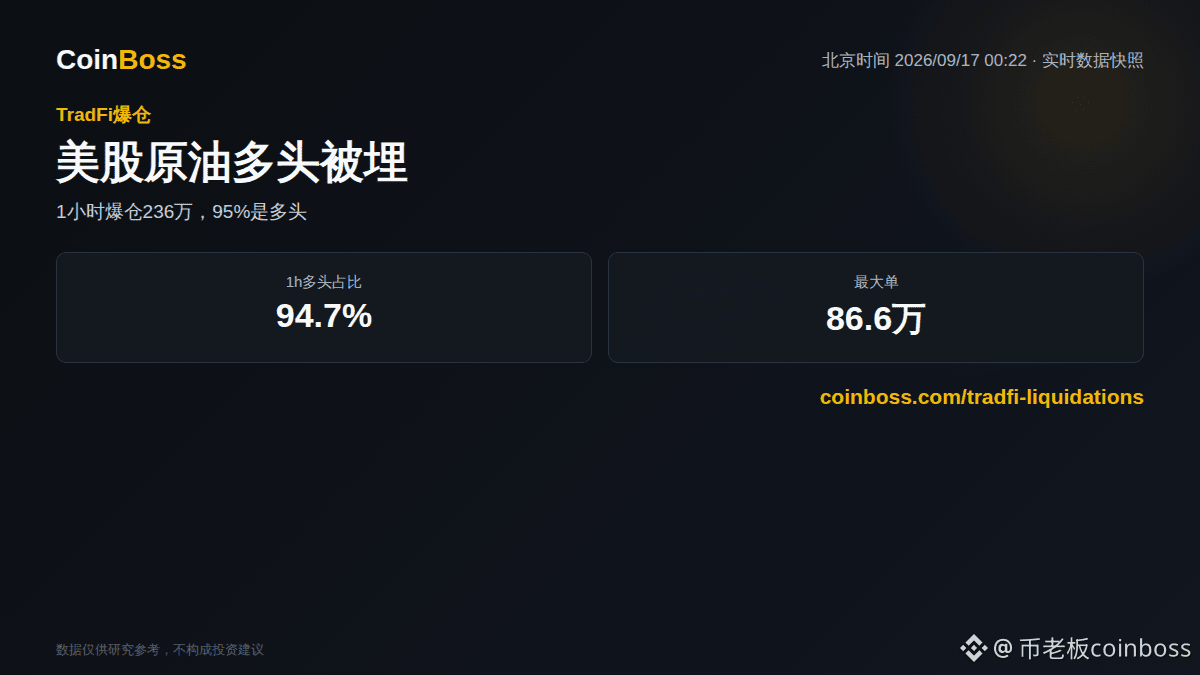
U.S. stocks and crude oil liquidated $2.36 million in the last hour, 95% of it was longsConclusion up front: over the past hour, almost all the U.S. stock and commodities liquidations were longs—nobody was shorting, yet everyone got buried.
Across all of TradFi, $2.36 million was liquidated; $2.24 million was longs, accounting for 94.7%. Oil (CL) longs were up to 96.7%, and stock longs were 93.2%.
On Hyperliquid, the biggest single position was a 7,274-share Robinhood (HOOD) long, liquidated with $104.64, a single trade of $866,000; in the same second, another $217,000 was added in the same direction. On OKX, four crude oil long orders were swept just around $96, totaling over $320,000.
In the 4-hour period, longs make up 75%, and in the 24-hour period, 65%—this is a new rhythm that was only hammered out within this hour. Contract traders should watch the leverage direction closely right now.
U.S. stocks and crude oil liquidated $2.36 million in the last hour, 95% of it was longs
Conclusion up front: over the past hour, almost all the U.S. stock and commodities liquidations were longs—nobody was shorting, yet everyone got buried.
Across all of TradFi, $2.36 million was liquidated; $2.24 million was longs, accounting for 94.7%. Oil (CL) longs were up to 96.7%, and stock longs were 93.2%.
On Hyperliquid, the biggest single position was a 7,274-share Robinhood (HOOD) long, liquidated with $104.64, a single trade of $866,000; in the same second, another $217,000 was added in the same direction. On OKX, four crude oil long orders were swept just around $96, totaling over $320,000.
In the 4-hour period, longs make up 75%, and in the 24-hour period, 65%—this is a new rhythm that was only hammered out within this hour. Contract traders should watch the leverage direction closely right now.
Across all of TradFi, $2.36 million was liquidated; $2.24 million was longs, accounting for 94.7%. Oil (CL) longs were up to 96.7%, and stock longs were 93.2%.
On Hyperliquid, the biggest single position was a 7,274-share Robinhood (HOOD) long, liquidated with $104.64, a single trade of $866,000; in the same second, another $217,000 was added in the same direction. On OKX, four crude oil long orders were swept just around $96, totaling over $320,000.
In the 4-hour period, longs make up 75%, and in the 24-hour period, 65%—this is a new rhythm that was only hammered out within this hour. Contract traders should watch the leverage direction closely right now.
411
·
--
Article
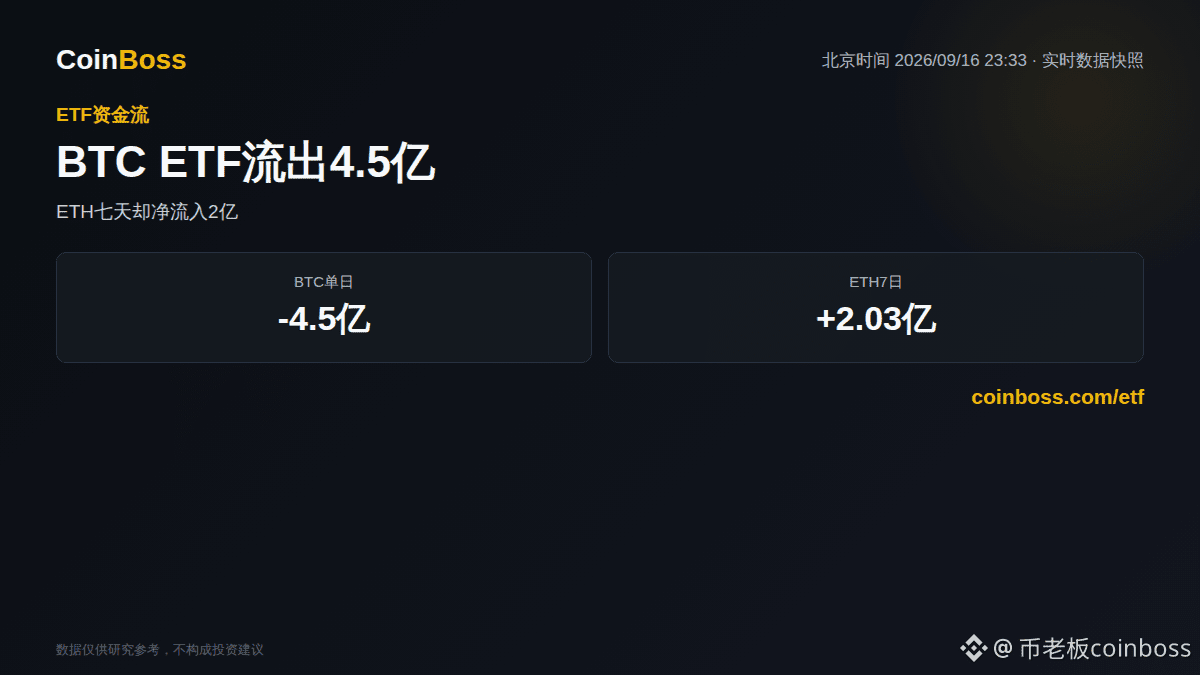
BTC ETF outflow of $450M in a day, yet ETH has net inflow of $200M over seven daysConclusion up front: yesterday, crypto ETFs saw an overall net outflow of $590 million, but Bitcoin and Ethereum moved in completely different directions.
Bitcoin ETF outflows totaled $450 million in a single day; over the past 7 days, cumulative outflows reached $580 million, and the funds are still being pulled out. Ethereum also saw an outflow of $140 million yesterday, but over a longer 7-day window, net inflows exceeded $200 million. Short-term panic can't override the fact that, in the medium term, it's still being bought.
SOL ETF inflow was $1.34 million; although the scale is small, the direction is positive—it's not been running with the broader market. Currently, across 35 crypto ETFs, the total size is $112.5 billion, managed by 13 issuers.
BTC ETF outflow of $450M in a day, yet ETH has net inflow of $200M over seven days
Conclusion up front: yesterday, crypto ETFs saw an overall net outflow of $590 million, but Bitcoin and Ethereum moved in completely different directions.
Bitcoin ETF outflows totaled $450 million in a single day; over the past 7 days, cumulative outflows reached $580 million, and the funds are still being pulled out. Ethereum also saw an outflow of $140 million yesterday, but over a longer 7-day window, net inflows exceeded $200 million. Short-term panic can't override the fact that, in the medium term, it's still being bought.
SOL ETF inflow was $1.34 million; although the scale is small, the direction is positive—it's not been running with the broader market. Currently, across 35 crypto ETFs, the total size is $112.5 billion, managed by 13 issuers.
Bitcoin ETF outflows totaled $450 million in a single day; over the past 7 days, cumulative outflows reached $580 million, and the funds are still being pulled out. Ethereum also saw an outflow of $140 million yesterday, but over a longer 7-day window, net inflows exceeded $200 million. Short-term panic can't override the fact that, in the medium term, it's still being bought.
SOL ETF inflow was $1.34 million; although the scale is small, the direction is positive—it's not been running with the broader market. Currently, across 35 crypto ETFs, the total size is $112.5 billion, managed by 13 issuers.
26
·
--
Article
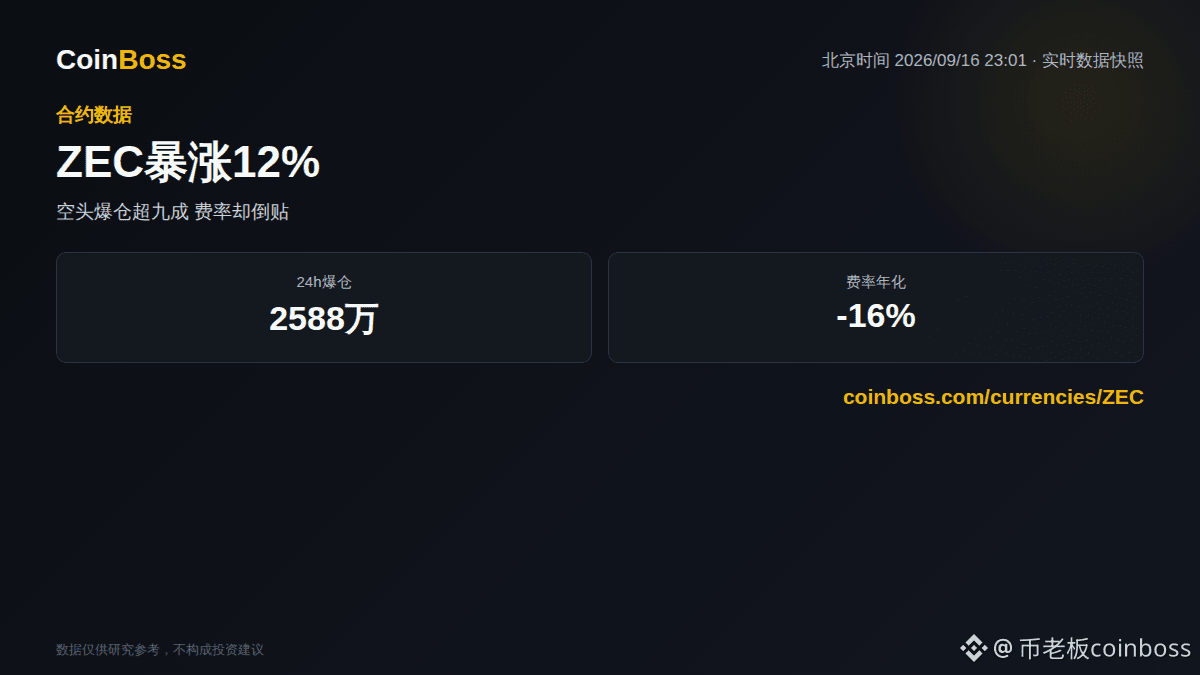
ZEC surges 12%; in the last 4 hours, more than 90% of liquidations were shorts, but funding rates are still negativeConclusion first: ZEC is up 12% in a day. In the last 4 hours, more than 90% of liquidations were dumped toward shorts, but funding rates are still negative—this shows the short positions holding on haven’t left.
Current price is around 1,238; over the past 24 hours the high was 1,275 and the low was 1,085. Binance and OKX are both capping their gains at roughly 12%.
In 24 hours, the entire network liquidated $258.8 million, with 78% being long liquidations. In the last 4 hours it got even more extreme: out of the $9.92 million liquidated, more than 90% were liquidations of shorts. An OKX order with 28,000 ETH worth of short positions was force-closed, causing a loss of $356,000. Over the past hour, the market mood has shifted again—more than half has flipped to longs.
Open interest surged 24% in a single day to $2.44 billion. Hyperliquid’s on-chain market share climbed to 28.6%, surpassing Binance’s 27.3% for the first time, making it the biggest player. Yet most exchanges’ funding rates are still negative, with an annualized figure around -16%, meaning shorts are still paying to hold on.
ZEC surges 12%; in the last 4 hours, more than 90% of liquidations were shorts, but funding rates are still negative
Conclusion first: ZEC is up 12% in a day. In the last 4 hours, more than 90% of liquidations were dumped toward shorts, but funding rates are still negative—this shows the short positions holding on haven’t left.
Current price is around 1,238; over the past 24 hours the high was 1,275 and the low was 1,085. Binance and OKX are both capping their gains at roughly 12%.
In 24 hours, the entire network liquidated $258.8 million, with 78% being long liquidations. In the last 4 hours it got even more extreme: out of the $9.92 million liquidated, more than 90% were liquidations of shorts. An OKX order with 28,000 ETH worth of short positions was force-closed, causing a loss of $356,000. Over the past hour, the market mood has shifted again—more than half has flipped to longs.
Open interest surged 24% in a single day to $2.44 billion. Hyperliquid’s on-chain market share climbed to 28.6%, surpassing Binance’s 27.3% for the first time, making it the biggest player. Yet most exchanges’ funding rates are still negative, with an annualized figure around -16%, meaning shorts are still paying to hold on.
Current price is around 1,238; over the past 24 hours the high was 1,275 and the low was 1,085. Binance and OKX are both capping their gains at roughly 12%.
In 24 hours, the entire network liquidated $258.8 million, with 78% being long liquidations. In the last 4 hours it got even more extreme: out of the $9.92 million liquidated, more than 90% were liquidations of shorts. An OKX order with 28,000 ETH worth of short positions was force-closed, causing a loss of $356,000. Over the past hour, the market mood has shifted again—more than half has flipped to longs.
Open interest surged 24% in a single day to $2.44 billion. Hyperliquid’s on-chain market share climbed to 28.6%, surpassing Binance’s 27.3% for the first time, making it the biggest player. Yet most exchanges’ funding rates are still negative, with an annualized figure around -16%, meaning shorts are still paying to hold on.
285
·
--
Article
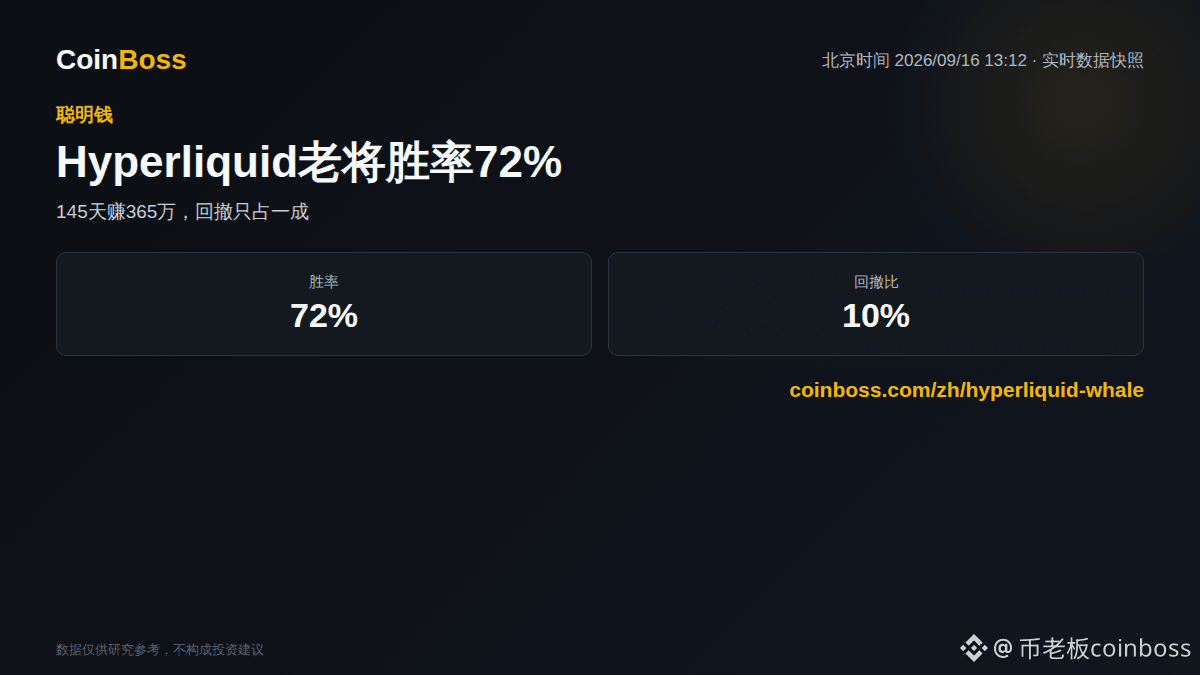
Hyperliquid veteran made $3.65M in 145 days, with drawdown only ~10%Conclusion first: this long-time Hyperliquid player has been flat on 677 positions over the past 145 days—490 profitable, only 187 losing, with a win rate of 72%.
Full address: 0xfce053a5e461683454bf37ad66d20344c0e3f4c0. Total trading volume was $46.98 million, generating $3.65 million in profit. They only paid $8,679 in fees—so low relative to trading volume that it’s effectively negligible.
The most eye-catching part is drawdown control: over 145 days, the maximum drawdown was only $366,000, and compared with $3.65 million in profits, it accounts for a little over 10%. Most people make money with a single all-in bet—once a drawdown hits, they give most of the profits back. This one relies on stable odds; even when losing, they can still keep it under control.
Hyperliquid veteran made $3.65M in 145 days, with drawdown only ~10%
Conclusion first: this long-time Hyperliquid player has been flat on 677 positions over the past 145 days—490 profitable, only 187 losing, with a win rate of 72%.
Full address: 0xfce053a5e461683454bf37ad66d20344c0e3f4c0. Total trading volume was $46.98 million, generating $3.65 million in profit. They only paid $8,679 in fees—so low relative to trading volume that it’s effectively negligible.
The most eye-catching part is drawdown control: over 145 days, the maximum drawdown was only $366,000, and compared with $3.65 million in profits, it accounts for a little over 10%. Most people make money with a single all-in bet—once a drawdown hits, they give most of the profits back. This one relies on stable odds; even when losing, they can still keep it under control.
Full address: 0xfce053a5e461683454bf37ad66d20344c0e3f4c0. Total trading volume was $46.98 million, generating $3.65 million in profit. They only paid $8,679 in fees—so low relative to trading volume that it’s effectively negligible.
The most eye-catching part is drawdown control: over 145 days, the maximum drawdown was only $366,000, and compared with $3.65 million in profits, it accounts for a little over 10%. Most people make money with a single all-in bet—once a drawdown hits, they give most of the profits back. This one relies on stable odds; even when losing, they can still keep it under control.
66
·
--
Article
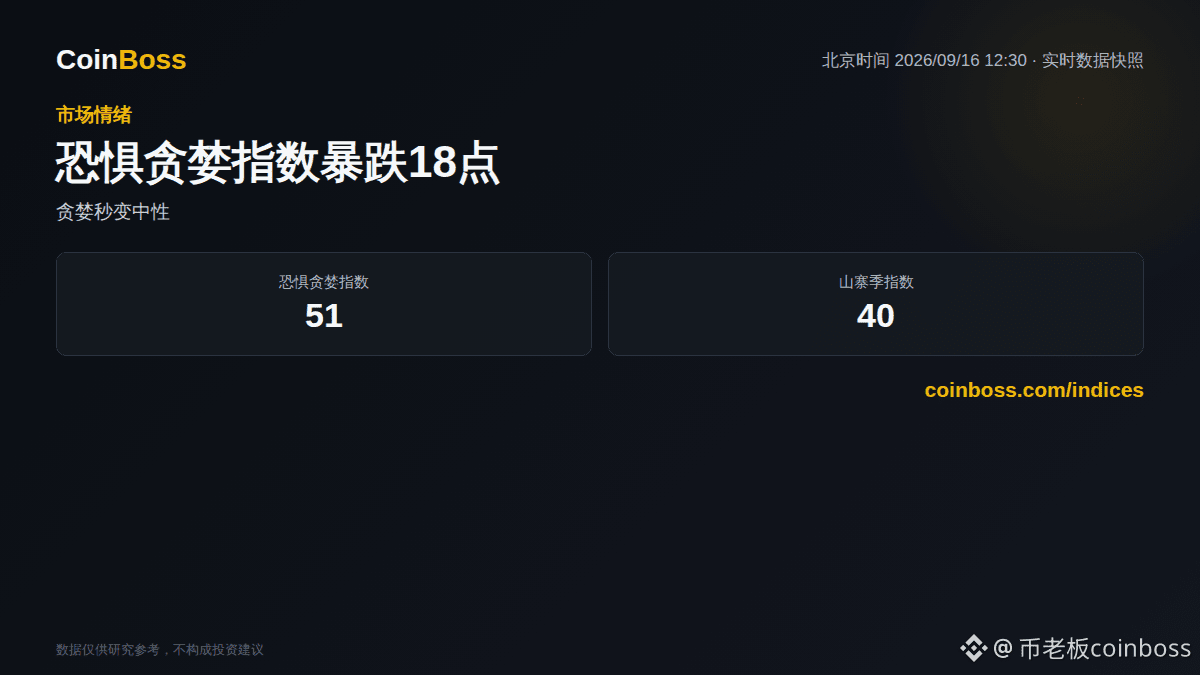
Fear & Greed Index plunges 18 points in a single day—Greed turns neutral in secondsConclusion first: sentiment flipped overnight. The Fear & Greed Index jumped from Greed to Neutral, and the 18:00 sharp single-day drop is the biggest move in nearly two weeks.
Yesterday, the index was still 69, with most people chasing gains. Today it has fallen to 51, stuck near the lower edge of the Neutral zone. Optimism isn’t gradually cooling off—it has been cut down by more than half within a single day.
Over the past 12 days, the Index has steadily slid from 73, hitting a low of 56, but it has not fallen below the Greed zone. This is the first time it has truly dropped into the Neutral zone.
The altcoin season index has weakened in sync, dropping from 52 on September 8 to 40 today. Over the past 90 days, Bitcoin is up 20.5%, while ZEC is up 150% and UNI is up 98%. Many altcoins have outperformed Bitcoin.
Fear & Greed Index plunges 18 points in a single day—Greed turns neutral in seconds
Conclusion first: sentiment flipped overnight. The Fear & Greed Index jumped from Greed to Neutral, and the 18:00 sharp single-day drop is the biggest move in nearly two weeks.
Yesterday, the index was still 69, with most people chasing gains. Today it has fallen to 51, stuck near the lower edge of the Neutral zone. Optimism isn’t gradually cooling off—it has been cut down by more than half within a single day.
Over the past 12 days, the Index has steadily slid from 73, hitting a low of 56, but it has not fallen below the Greed zone. This is the first time it has truly dropped into the Neutral zone.
The altcoin season index has weakened in sync, dropping from 52 on September 8 to 40 today. Over the past 90 days, Bitcoin is up 20.5%, while ZEC is up 150% and UNI is up 98%. Many altcoins have outperformed Bitcoin.
Yesterday, the index was still 69, with most people chasing gains. Today it has fallen to 51, stuck near the lower edge of the Neutral zone. Optimism isn’t gradually cooling off—it has been cut down by more than half within a single day.
Over the past 12 days, the Index has steadily slid from 73, hitting a low of 56, but it has not fallen below the Greed zone. This is the first time it has truly dropped into the Neutral zone.
The altcoin season index has weakened in sync, dropping from 52 on September 8 to 40 today. Over the past 90 days, Bitcoin is up 20.5%, while ZEC is up 150% and UNI is up 98%. Many altcoins have outperformed Bitcoin.
78
·
--
Article
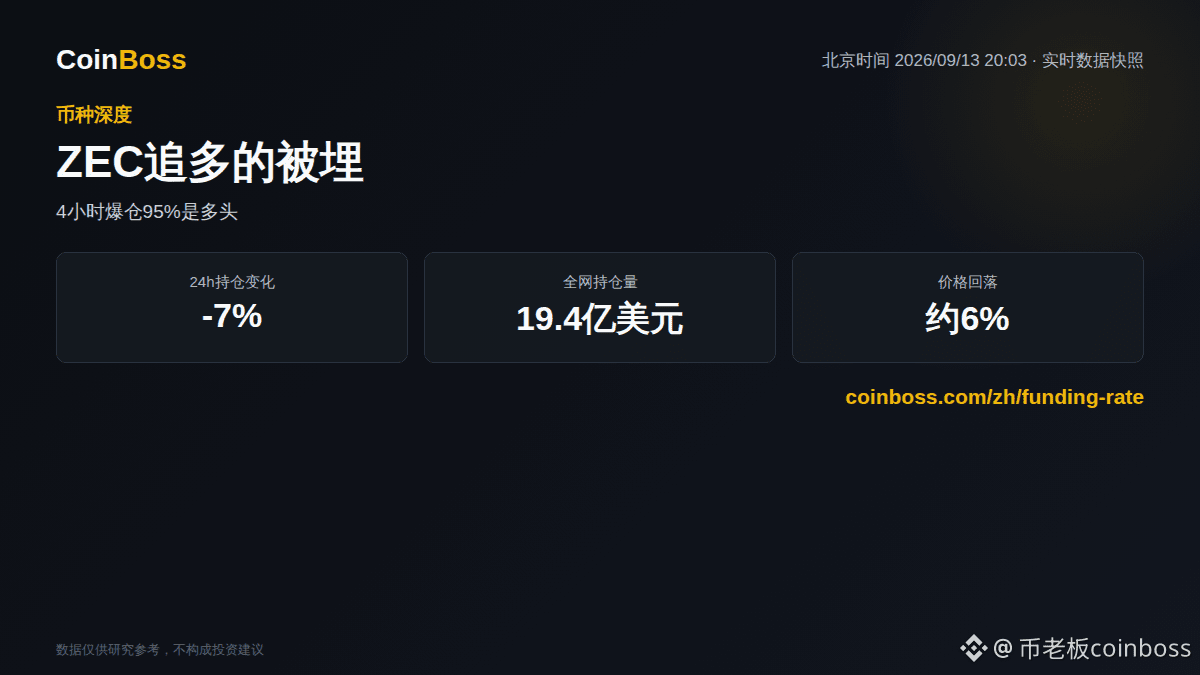
ZEC withdraws 7% of open interest in a day; in the past 4 hours, 95% of liquidations were longsIn this ZEC drop, it’s the longs who chased that are being wiped out.
The price fell from around the 24-hour high of 1166 back to 1095, a drop of about 6%. More important than price is positioning: the total open interest across the network is $1.94 billion; within a day, nearly 7% was withdrawn. Leveraged funds are actively reducing positions—this isn’t a hard撑-and-hold situation.
Liquidation structure is more straightforward: in the past 4 hours, ZEC liquidations totaled $6.6 million, with 95% being long positions. Extended to 24 hours, longs still account for 76%. The main bleeding point is the leveraged longs that chased the price up.
The funding rate is still positive. Across 21 exchanges, the average annualized rate is only around 6%, so longs are not really crowded. It’s more like a natural pullback after a rally, not a panic-style harvest.
ZEC withdraws 7% of open interest in a day; in the past 4 hours, 95% of liquidations were longs
In this ZEC drop, it’s the longs who chased that are being wiped out.
The price fell from around the 24-hour high of 1166 back to 1095, a drop of about 6%. More important than price is positioning: the total open interest across the network is $1.94 billion; within a day, nearly 7% was withdrawn. Leveraged funds are actively reducing positions—this isn’t a hard撑-and-hold situation.
Liquidation structure is more straightforward: in the past 4 hours, ZEC liquidations totaled $6.6 million, with 95% being long positions. Extended to 24 hours, longs still account for 76%. The main bleeding point is the leveraged longs that chased the price up.
The funding rate is still positive. Across 21 exchanges, the average annualized rate is only around 6%, so longs are not really crowded. It’s more like a natural pullback after a rally, not a panic-style harvest.
The price fell from around the 24-hour high of 1166 back to 1095, a drop of about 6%. More important than price is positioning: the total open interest across the network is $1.94 billion; within a day, nearly 7% was withdrawn. Leveraged funds are actively reducing positions—this isn’t a hard撑-and-hold situation.
Liquidation structure is more straightforward: in the past 4 hours, ZEC liquidations totaled $6.6 million, with 95% being long positions. Extended to 24 hours, longs still account for 76%. The main bleeding point is the leveraged longs that chased the price up.
The funding rate is still positive. Across 21 exchanges, the average annualized rate is only around 6%, so longs are not really crowded. It’s more like a natural pullback after a rally, not a panic-style harvest.
102
·
--
Partly True
Article
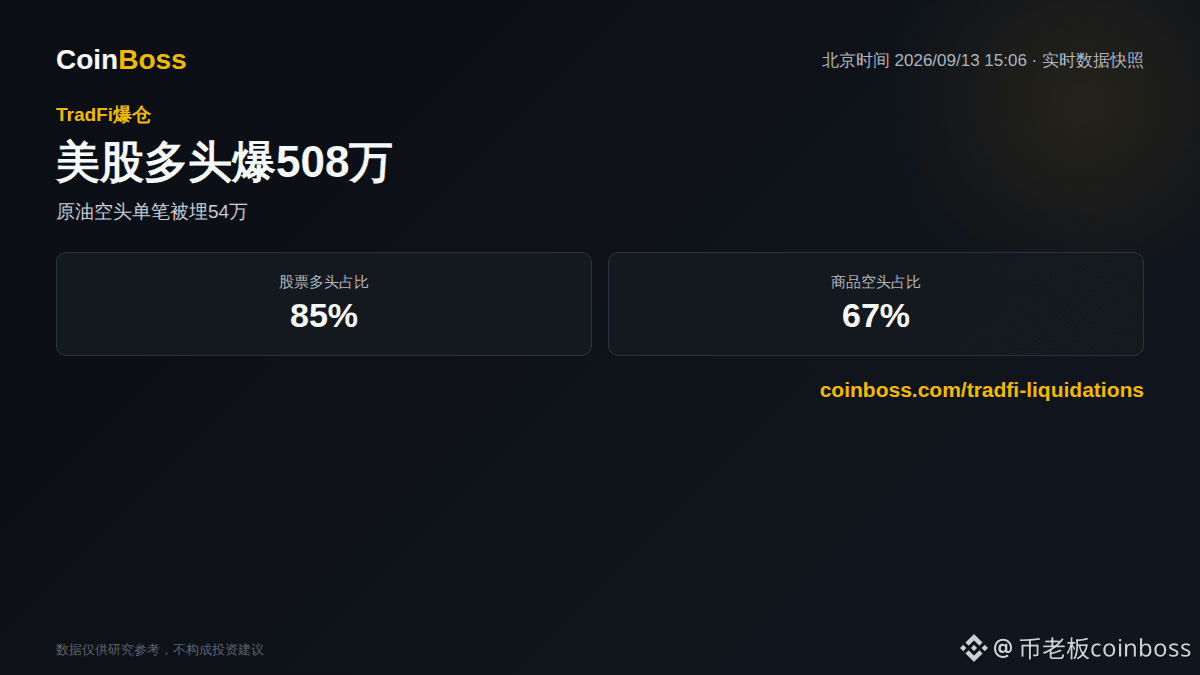
U.S. stocks: longs liquidated $5.08 million; a single WTI crude oil short order buried for $540,000Conclusion first: TradFi saw an unusual split between long and short—stocks were dragged down and longs got buried, while commodities and indices rose and shorts got buried.
In the past 24 hours across the whole web, TradFi liquidations totaled $81.8 million, with $5.76 million coming from long positions, accounting for 70%. Stock-related liquidations were $5.96 million, and 85% were longs—people who chased price got buried. Commodity liquidations were $1.75 million, with 67% being shorts—shorts on crude oil and gold took a beating. Index liquidations were $390,000, and 95% were shorts—those shorting the broad market were basically wiped out.
Largest single position in crude oil: Binance’s WTI short in a single order was liquidated for $541,000; second was Korea’s ETF index EWY, where a short was buried for $296,000; third was SanDisk (SNDK). A long position on OKX was liquidated for $275,000 as well—yet it couldn’t hold up either.
U.S. stocks: longs liquidated $5.08 million; a single WTI crude oil short order buried for $540,000
Conclusion first: TradFi saw an unusual split between long and short—stocks were dragged down and longs got buried, while commodities and indices rose and shorts got buried.
In the past 24 hours across the whole web, TradFi liquidations totaled $81.8 million, with $5.76 million coming from long positions, accounting for 70%. Stock-related liquidations were $5.96 million, and 85% were longs—people who chased price got buried. Commodity liquidations were $1.75 million, with 67% being shorts—shorts on crude oil and gold took a beating. Index liquidations were $390,000, and 95% were shorts—those shorting the broad market were basically wiped out.
Largest single position in crude oil: Binance’s WTI short in a single order was liquidated for $541,000; second was Korea’s ETF index EWY, where a short was buried for $296,000; third was SanDisk (SNDK). A long position on OKX was liquidated for $275,000 as well—yet it couldn’t hold up either.
In the past 24 hours across the whole web, TradFi liquidations totaled $81.8 million, with $5.76 million coming from long positions, accounting for 70%. Stock-related liquidations were $5.96 million, and 85% were longs—people who chased price got buried. Commodity liquidations were $1.75 million, with 67% being shorts—shorts on crude oil and gold took a beating. Index liquidations were $390,000, and 95% were shorts—those shorting the broad market were basically wiped out.
Largest single position in crude oil: Binance’s WTI short in a single order was liquidated for $541,000; second was Korea’s ETF index EWY, where a short was buried for $296,000; third was SanDisk (SNDK). A long position on OKX was liquidated for $275,000 as well—yet it couldn’t hold up either.
797
Log in to explore more content
Join global crypto users on Binance Square
⚡️ Get latest and useful information about crypto.
💬 Trusted by the world’s largest crypto exchange.
👍 Discover real insights from verified creators.
Email / Phone number
Trending Topics
BitcoinSurpasses$77000
640 views
40 Discussing
$BTC is ripping higher despite it all. 🚀
Today marked the first rate hike in over 3 years, while the CLARITY Act stalled again yesterday.
Setup big long again - thank me later
Entry : $75500 - $76500
Stoploss : $74900
Take profit : $77000 - $78000
Get ready for a crazy growth cycle. 🔥
TF_bnb
·14 Likes
·5.7k views
ParadigmDisclosesZECHolding
87 views
24 Discussing
BitcoinETFsShed$450M
13,426 views
124 Discussing