
看不懂的sol
2.4k Posts

看不懂的sol
 Square Verified+
Report
Block User
一生只玩一个币—sol,推特同名:看不懂的sol
82 Following
39.9K+ Followers
70.0K+ Liked
Posts
All
Quotes
Videos
·
--
Buy, buy, buy!!
With a new channel, why not scoop some up?
Draft a new strategy plan!……
Buy, buy, buy!!
With a new channel, why not scoop some up?
Draft a new strategy plan!……
With a new channel, why not scoop some up?
Draft a new strategy plan!……
20
22
23.4k
·
--
Always remember: performance is the primary driver of stock prices.
The second thing to keep in mind is: if you can only choose one logic, it must be the "volume and price rising together" logic.
The third point to remember is: focus on the first two, and ignore the rest. The more you focus, the easier it is to grasp the core.
Always remember: performance is the primary driver of stock prices.
The second thing to keep in mind is: if you can only choose one logic, it must be the "volume and price rising together" logic.
The third point to remember is: focus on the first two, and ignore the rest. The more you focus, the easier it is to grasp the core.
The second thing to keep in mind is: if you can only choose one logic, it must be the "volume and price rising together" logic.
The third point to remember is: focus on the first two, and ignore the rest. The more you focus, the easier it is to grasp the core.
16
14
18.8k
·
--
Partly True
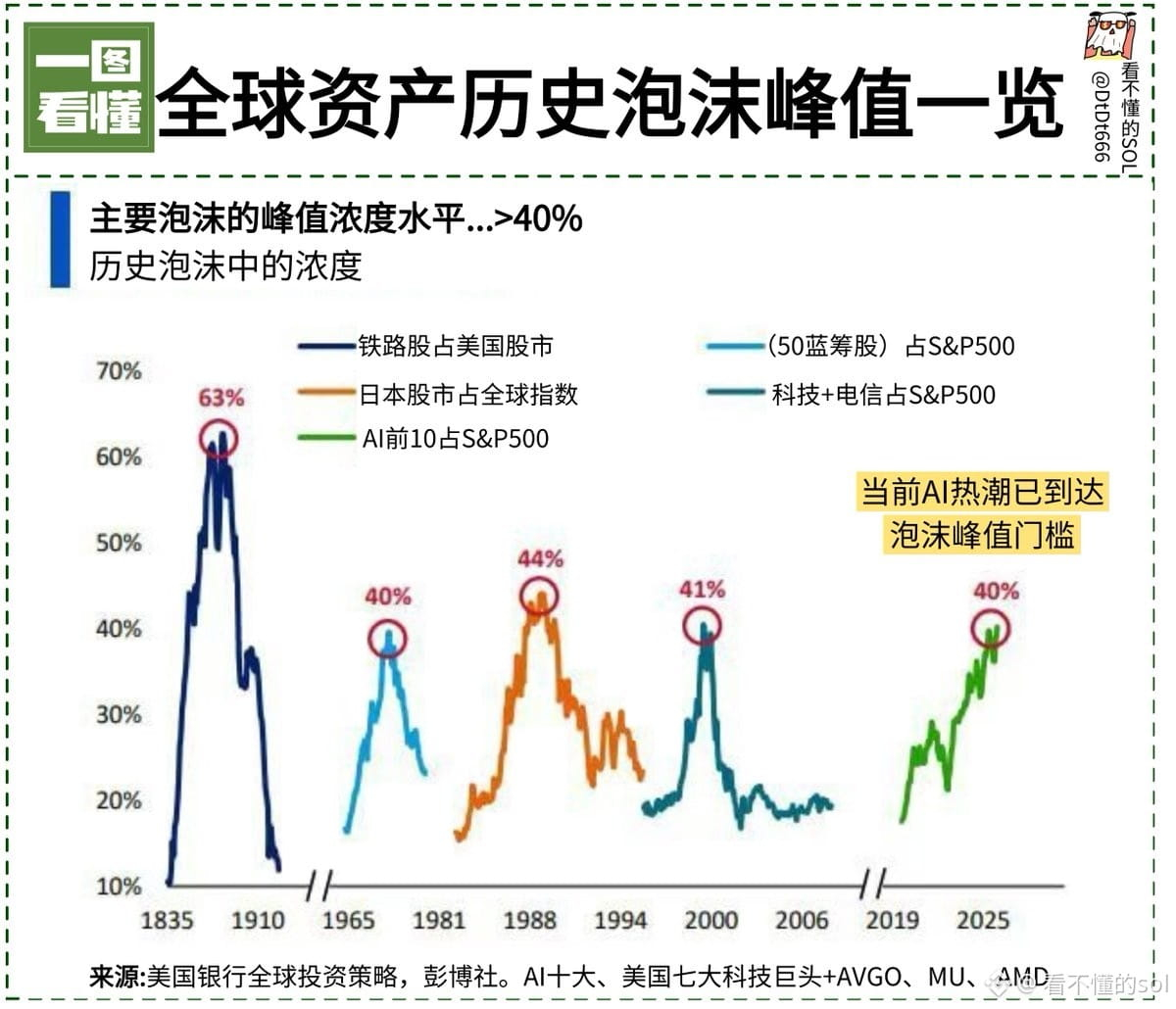
Strategy! AI-related stocks make up 40% of the US stock market; what does history remind us?
According to Bank of America data, AI-related stocks in the S&P 500 are nearing a 40% weight.
This proportion has only happened three times in history.
In 1972, during the "Nifty Fifty" bubble, top stocks accounted for about 40%, and afterwards, US indices phased down by about 50%.
In 1990, during the Japanese market bubble, it reached about 44%, and then the Nikkei dropped 63% within two years.
In 2000, during the dot-com bubble, it was around 41%, leading to a maximum drawdown of 78% for the Nasdaq.
All three instances featured high concentration, high valuation, and high volatility.
After each, the market underwent a prolonged adjustment.
Now, with the AI sector approaching 40%, valuations are not low, and the volatility is significant.
This isn't to say AI doesn't have a future, but rather that in the current structure, history hasn't favored comfortable entries and exits.
So, what to do?
I recommend keeping it super simple, two paths:
First, maintain dollar-cost averaging.
Regardless of peaks or troughs, buy a little each week/month; over time, this will average out your costs.
Even if there’s a pullback later, those who DCA have a far better mental capacity than those who go all-in at once, while ensuring they don't miss out.
Second, hold cash and wait for opportunities.
Not buying now doesn’t mean being bearish; it means waiting for a more favorable entry point.
The market never runs out of opportunities; it’s just that when they arise, you need to have cash on hand.
Buffett currently has nearly $400 billion in cash; why should we panic?
History may not repeat itself, but it sure does rhyme.
Keep dollar-cost averaging, hold cash, and wait for the wind to turn.
Strategy! AI-related stocks make up 40% of the US stock market; what does history remind us?
According to Bank of America data, AI-related stocks in the S&P 500 are nearing a 40% weight.
This proportion has only happened three times in history.
In 1972, during the "Nifty Fifty" bubble, top stocks accounted for about 40%, and afterwards, US indices phased down by about 50%.
In 1990, during the Japanese market bubble, it reached about 44%, and then the Nikkei dropped 63% within two years.
In 2000, during the dot-com bubble, it was around 41%, leading to a maximum drawdown of 78% for the Nasdaq.
All three instances featured high concentration, high valuation, and high volatility.
After each, the market underwent a prolonged adjustment.
Now, with the AI sector approaching 40%, valuations are not low, and the volatility is significant.
This isn't to say AI doesn't have a future, but rather that in the current structure, history hasn't favored comfortable entries and exits.
So, what to do?
I recommend keeping it super simple, two paths:
First, maintain dollar-cost averaging.
Regardless of peaks or troughs, buy a little each week/month; over time, this will average out your costs.
Even if there’s a pullback later, those who DCA have a far better mental capacity than those who go all-in at once, while ensuring they don't miss out.
Second, hold cash and wait for opportunities.
Not buying now doesn’t mean being bearish; it means waiting for a more favorable entry point.
The market never runs out of opportunities; it’s just that when they arise, you need to have cash on hand.
Buffett currently has nearly $400 billion in cash; why should we panic?
History may not repeat itself, but it sure does rhyme.
Keep dollar-cost averaging, hold cash, and wait for the wind to turn.
According to Bank of America data, AI-related stocks in the S&P 500 are nearing a 40% weight.
This proportion has only happened three times in history.
In 1972, during the "Nifty Fifty" bubble, top stocks accounted for about 40%, and afterwards, US indices phased down by about 50%.
In 1990, during the Japanese market bubble, it reached about 44%, and then the Nikkei dropped 63% within two years.
In 2000, during the dot-com bubble, it was around 41%, leading to a maximum drawdown of 78% for the Nasdaq.
All three instances featured high concentration, high valuation, and high volatility.
After each, the market underwent a prolonged adjustment.
Now, with the AI sector approaching 40%, valuations are not low, and the volatility is significant.
This isn't to say AI doesn't have a future, but rather that in the current structure, history hasn't favored comfortable entries and exits.
So, what to do?
I recommend keeping it super simple, two paths:
First, maintain dollar-cost averaging.
Regardless of peaks or troughs, buy a little each week/month; over time, this will average out your costs.
Even if there’s a pullback later, those who DCA have a far better mental capacity than those who go all-in at once, while ensuring they don't miss out.
Second, hold cash and wait for opportunities.
Not buying now doesn’t mean being bearish; it means waiting for a more favorable entry point.
The market never runs out of opportunities; it’s just that when they arise, you need to have cash on hand.
Buffett currently has nearly $400 billion in cash; why should we panic?
History may not repeat itself, but it sure does rhyme.
Keep dollar-cost averaging, hold cash, and wait for the wind to turn.
16
6
39
30.4k
·
--
Verified
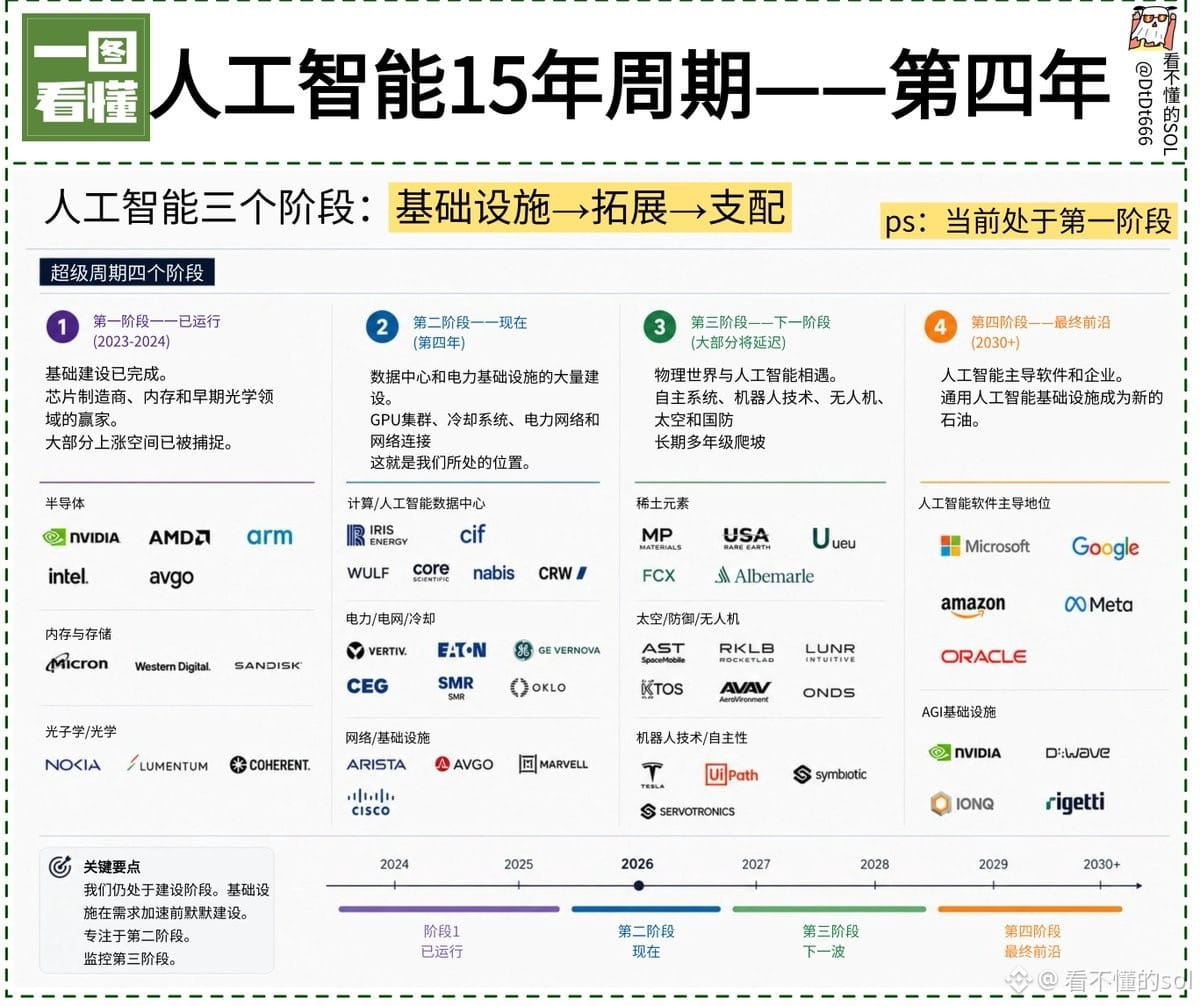
Where is the AI Supercycle heading?
The cloud giants just set their capital expenditure plans for 2026: $725 billion.
That's nearly double compared to last year.
Microsoft, Google, Amazon, Meta, each exceeding $100 billion.
This isn't just hype; it's real cash being thrown around.
But the question is, where should the money flow?
Most folks are still eyeing the first phase targets, while the smart money has already shifted to phase three.
Phase One: Chips (2023-2025)
The groundwork for foundational infrastructure has been laid.
NVDA surged 39%, and INTC's Q1 earnings pushed the Philadelphia Semiconductor Index above 10,000 points.
Chips remain central, but the low-entry window has closed.
Entering now doesn’t mean you can’t profit, but the risk-reward ratio isn’t as favorable as in the past two years.
Core targets: NVDA, AMD, AVGO, INTC, MU, GLW
Tracks: Semiconductors, Storage, Optical Communication
Phase Two: Power and Supporting Infrastructure (2025-2027)
This is the phase most people are just starting to grasp.
VST, after its acquisition, has become the largest private power producer in the U.S., and GEV has more than doubled in a year.
MOD is providing cooling solutions for Nvidia, and GLW has jumped 74% year-to-date, with optical fiber demand exploding.
The SMR small nuclear reactor is a dark horse, with OKLO, BWXT, and NNE positioning themselves to supply power directly to data centers.
There’s still room in the sector, but the obvious targets have already completed their major upswings.
Core targets: VST, GEV, CEG, ANET, MOD, OKLO, BWXT, NNE
Tracks: Power, Grid, Cooling, Networking Equipment, Nuclear/SMR
Phase Three: Robotics, Aerospace, Defense (2026-2028)
AI is stepping out of the data center and into the physical world.
Most people will miss out on this phase.
Tesla is retrofitting its Fremont factory to produce humanoid robots Optimus, planning a capital expenditure of $25 billion, aiming for mass production in the second half of 2026.
Rocket Lab reported record revenue of $602 million, with unfulfilled orders at $1.85 billion.
KTOS’s Valkyrie drone made the U.S. Marine Corps procurement list.
This stage offers the greatest asymmetrical returns, and the window is currently open.
Core targets: TSLA, RKLB, KTOS, PATH, MP, ALB, ASTS
Tracks: Robotics, Autonomous Driving, Aerospace, Defense, Drones, Rare Earths
Phase Four: Software and AGI (Post-2028)
The final battle.
Microsoft’s annual capital expenditure will reach $190 billion, Google $190 billion, Amazon $200 billion, Meta $145 billion.
Google Cloud’s unfulfilled orders will exceed $460 billion.
The giants are building the foundations for AI software supremacy and AGI.
Where is the AI Supercycle heading?
The cloud giants just set their capital expenditure plans for 2026: $725 billion.
That's nearly double compared to last year.
Microsoft, Google, Amazon, Meta, each exceeding $100 billion.
This isn't just hype; it's real cash being thrown around.
But the question is, where should the money flow?
Most folks are still eyeing the first phase targets, while the smart money has already shifted to phase three.
Phase One: Chips (2023-2025)
The groundwork for foundational infrastructure has been laid.
NVDA surged 39%, and INTC's Q1 earnings pushed the Philadelphia Semiconductor Index above 10,000 points.
Chips remain central, but the low-entry window has closed.
Entering now doesn’t mean you can’t profit, but the risk-reward ratio isn’t as favorable as in the past two years.
Core targets: NVDA, AMD, AVGO, INTC, MU, GLW
Tracks: Semiconductors, Storage, Optical Communication
Phase Two: Power and Supporting Infrastructure (2025-2027)
This is the phase most people are just starting to grasp.
VST, after its acquisition, has become the largest private power producer in the U.S., and GEV has more than doubled in a year.
MOD is providing cooling solutions for Nvidia, and GLW has jumped 74% year-to-date, with optical fiber demand exploding.
The SMR small nuclear reactor is a dark horse, with OKLO, BWXT, and NNE positioning themselves to supply power directly to data centers.
There’s still room in the sector, but the obvious targets have already completed their major upswings.
Core targets: VST, GEV, CEG, ANET, MOD, OKLO, BWXT, NNE
Tracks: Power, Grid, Cooling, Networking Equipment, Nuclear/SMR
Phase Three: Robotics, Aerospace, Defense (2026-2028)
AI is stepping out of the data center and into the physical world.
Most people will miss out on this phase.
Tesla is retrofitting its Fremont factory to produce humanoid robots Optimus, planning a capital expenditure of $25 billion, aiming for mass production in the second half of 2026.
Rocket Lab reported record revenue of $602 million, with unfulfilled orders at $1.85 billion.
KTOS’s Valkyrie drone made the U.S. Marine Corps procurement list.
This stage offers the greatest asymmetrical returns, and the window is currently open.
Core targets: TSLA, RKLB, KTOS, PATH, MP, ALB, ASTS
Tracks: Robotics, Autonomous Driving, Aerospace, Defense, Drones, Rare Earths
Phase Four: Software and AGI (Post-2028)
The final battle.
Microsoft’s annual capital expenditure will reach $190 billion, Google $190 billion, Amazon $200 billion, Meta $145 billion.
Google Cloud’s unfulfilled orders will exceed $460 billion.
The giants are building the foundations for AI software supremacy and AGI.
The cloud giants just set their capital expenditure plans for 2026: $725 billion.
That's nearly double compared to last year.
Microsoft, Google, Amazon, Meta, each exceeding $100 billion.
This isn't just hype; it's real cash being thrown around.
But the question is, where should the money flow?
Most folks are still eyeing the first phase targets, while the smart money has already shifted to phase three.
Phase One: Chips (2023-2025)
The groundwork for foundational infrastructure has been laid.
NVDA surged 39%, and INTC's Q1 earnings pushed the Philadelphia Semiconductor Index above 10,000 points.
Chips remain central, but the low-entry window has closed.
Entering now doesn’t mean you can’t profit, but the risk-reward ratio isn’t as favorable as in the past two years.
Core targets: NVDA, AMD, AVGO, INTC, MU, GLW
Tracks: Semiconductors, Storage, Optical Communication
Phase Two: Power and Supporting Infrastructure (2025-2027)
This is the phase most people are just starting to grasp.
VST, after its acquisition, has become the largest private power producer in the U.S., and GEV has more than doubled in a year.
MOD is providing cooling solutions for Nvidia, and GLW has jumped 74% year-to-date, with optical fiber demand exploding.
The SMR small nuclear reactor is a dark horse, with OKLO, BWXT, and NNE positioning themselves to supply power directly to data centers.
There’s still room in the sector, but the obvious targets have already completed their major upswings.
Core targets: VST, GEV, CEG, ANET, MOD, OKLO, BWXT, NNE
Tracks: Power, Grid, Cooling, Networking Equipment, Nuclear/SMR
Phase Three: Robotics, Aerospace, Defense (2026-2028)
AI is stepping out of the data center and into the physical world.
Most people will miss out on this phase.
Tesla is retrofitting its Fremont factory to produce humanoid robots Optimus, planning a capital expenditure of $25 billion, aiming for mass production in the second half of 2026.
Rocket Lab reported record revenue of $602 million, with unfulfilled orders at $1.85 billion.
KTOS’s Valkyrie drone made the U.S. Marine Corps procurement list.
This stage offers the greatest asymmetrical returns, and the window is currently open.
Core targets: TSLA, RKLB, KTOS, PATH, MP, ALB, ASTS
Tracks: Robotics, Autonomous Driving, Aerospace, Defense, Drones, Rare Earths
Phase Four: Software and AGI (Post-2028)
The final battle.
Microsoft’s annual capital expenditure will reach $190 billion, Google $190 billion, Amazon $200 billion, Meta $145 billion.
Google Cloud’s unfulfilled orders will exceed $460 billion.
The giants are building the foundations for AI software supremacy and AGI.
6
4
72
27k
·
--
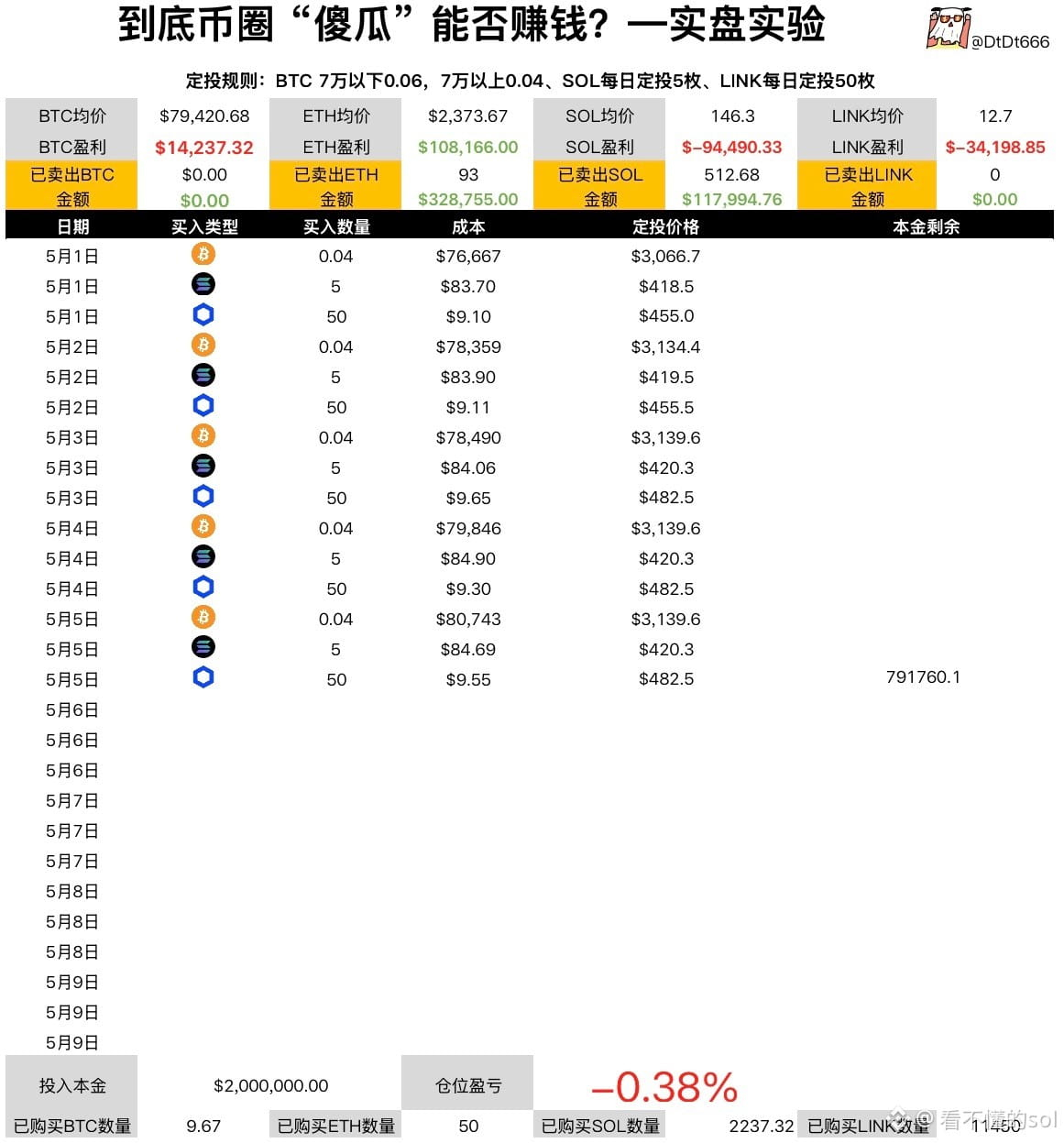
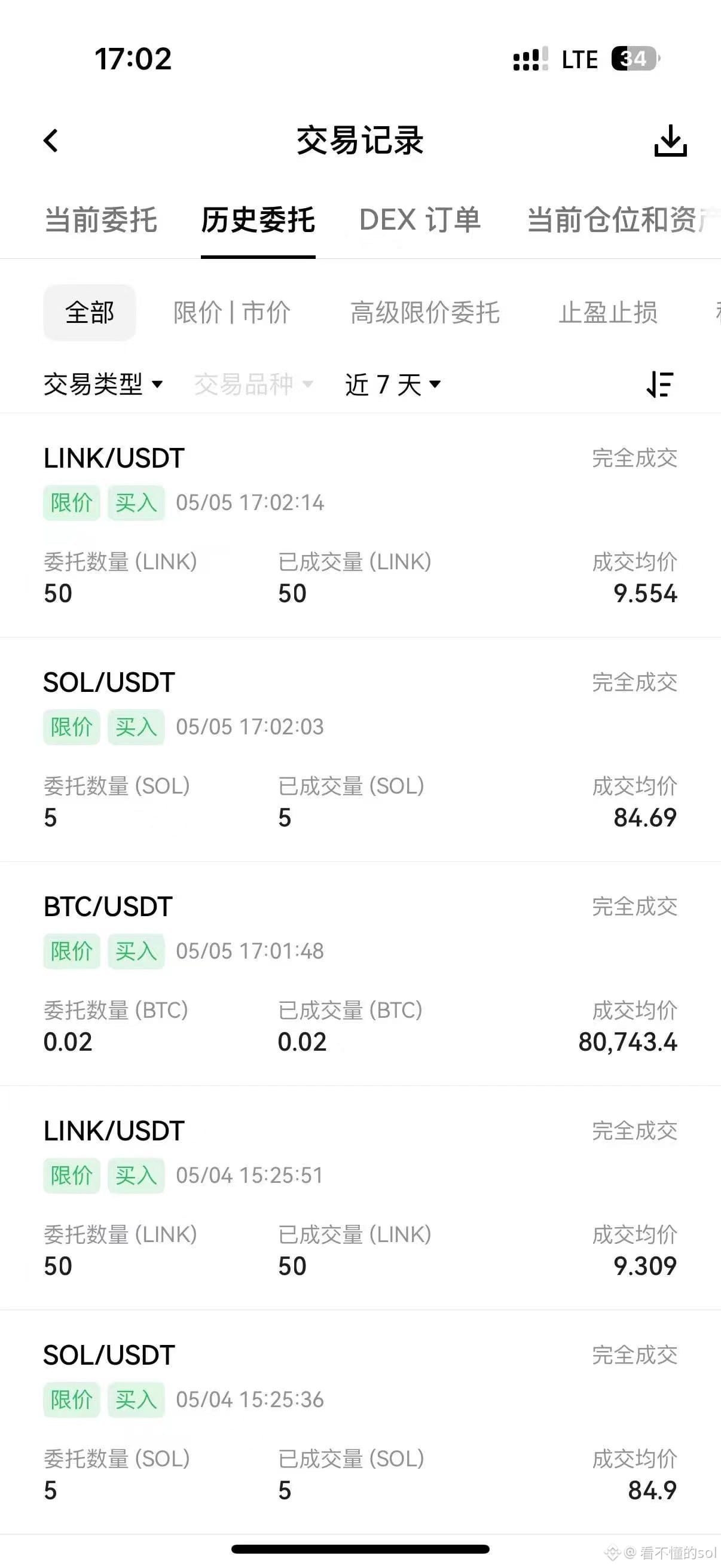
Investing, the lazier you are, the more you earn!!
Three pieces of life advice for my fellow traders:
1- Don't go into debt or owe anyone money to ensure your freedom.
2- Don't waste cash; spend it wisely to secure your financial independence.
3- Avoid random investments; stick to dollar-cost averaging into BTC, NASDAQ, S&P, and gold, and hold long-term to ensure your financial freedom in retirement.
Investing, the lazier you are, the more you earn!!
Three pieces of life advice for my fellow traders:
1- Don't go into debt or owe anyone money to ensure your freedom.
2- Don't waste cash; spend it wisely to secure your financial independence.
3- Avoid random investments; stick to dollar-cost averaging into BTC, NASDAQ, S&P, and gold, and hold long-term to ensure your financial freedom in retirement.
Three pieces of life advice for my fellow traders:
1- Don't go into debt or owe anyone money to ensure your freedom.
2- Don't waste cash; spend it wisely to secure your financial independence.
3- Avoid random investments; stick to dollar-cost averaging into BTC, NASDAQ, S&P, and gold, and hold long-term to ensure your financial freedom in retirement.
15
1
41
27.1k
·
--
Verified
Yu'e Bao dips below 1%, young folks in the walls need to wake up
It's explosive.
Following the bank's fixed deposit rates dipping below 1%, Yu'e Bao's yield has also dropped below 1%.
If you stash 1 million for a year, you won't even earn 10k.
To be frank, a 1% yield can't even keep up with the tail of inflation. Your purchasing power is actually shrinking.
This isn't wealth management, it's just warming up the banks.
------
Meanwhile, in the crypto space, stablecoin investments are yielding an annualized 7%.
For example, USD1, large capital users are raking in this interest, pulling in thousands, even tens of thousands each month.
Every week, equivalent WLFI is deposited into your Binance account, available for withdrawal anytime, with low risk, and it can accommodate big funds.
I put around 3 million into USD1, and it’s yielding over 7% in practice.
If you casually invest in US treasuries in the crypto space, you’re still looking at 4%; the efficiency of wealth management has already surpassed 99% of ordinary folks domestically.
------
Speaking of this, I think young people in the walls really need to wake up
You must enforce a savings mode.
The money you save decides the quality of life in your later years.
Sure, saving 10 million is tough.
But do you know what it means once you hit that 10 million mark?
You’re looking at 500-700k in interest every year.
That’s nearly 2000 a day, living in five-star hotels every day.
In a lifetime, you can’t even spend it all.
Those who truly achieve lasting success need to develop financial literacy early and make the leap from lavish spending to frugal living.
Yu'e Bao dips below 1%, young folks in the walls need to wake up
It's explosive.
Following the bank's fixed deposit rates dipping below 1%, Yu'e Bao's yield has also dropped below 1%.
If you stash 1 million for a year, you won't even earn 10k.
To be frank, a 1% yield can't even keep up with the tail of inflation. Your purchasing power is actually shrinking.
This isn't wealth management, it's just warming up the banks.
------
Meanwhile, in the crypto space, stablecoin investments are yielding an annualized 7%.
For example, USD1, large capital users are raking in this interest, pulling in thousands, even tens of thousands each month.
Every week, equivalent WLFI is deposited into your Binance account, available for withdrawal anytime, with low risk, and it can accommodate big funds.
I put around 3 million into USD1, and it’s yielding over 7% in practice.
If you casually invest in US treasuries in the crypto space, you’re still looking at 4%; the efficiency of wealth management has already surpassed 99% of ordinary folks domestically.
------
Speaking of this, I think young people in the walls really need to wake up
You must enforce a savings mode.
The money you save decides the quality of life in your later years.
Sure, saving 10 million is tough.
But do you know what it means once you hit that 10 million mark?
You’re looking at 500-700k in interest every year.
That’s nearly 2000 a day, living in five-star hotels every day.
In a lifetime, you can’t even spend it all.
Those who truly achieve lasting success need to develop financial literacy early and make the leap from lavish spending to frugal living.
It's explosive.
Following the bank's fixed deposit rates dipping below 1%, Yu'e Bao's yield has also dropped below 1%.
If you stash 1 million for a year, you won't even earn 10k.
To be frank, a 1% yield can't even keep up with the tail of inflation. Your purchasing power is actually shrinking.
This isn't wealth management, it's just warming up the banks.
------
Meanwhile, in the crypto space, stablecoin investments are yielding an annualized 7%.
For example, USD1, large capital users are raking in this interest, pulling in thousands, even tens of thousands each month.
Every week, equivalent WLFI is deposited into your Binance account, available for withdrawal anytime, with low risk, and it can accommodate big funds.
I put around 3 million into USD1, and it’s yielding over 7% in practice.
If you casually invest in US treasuries in the crypto space, you’re still looking at 4%; the efficiency of wealth management has already surpassed 99% of ordinary folks domestically.
------
Speaking of this, I think young people in the walls really need to wake up
You must enforce a savings mode.
The money you save decides the quality of life in your later years.
Sure, saving 10 million is tough.
But do you know what it means once you hit that 10 million mark?
You’re looking at 500-700k in interest every year.
That’s nearly 2000 a day, living in five-star hotels every day.
In a lifetime, you can’t even spend it all.
Those who truly achieve lasting success need to develop financial literacy early and make the leap from lavish spending to frugal living.
43
27
37.2k
·
--
Verified
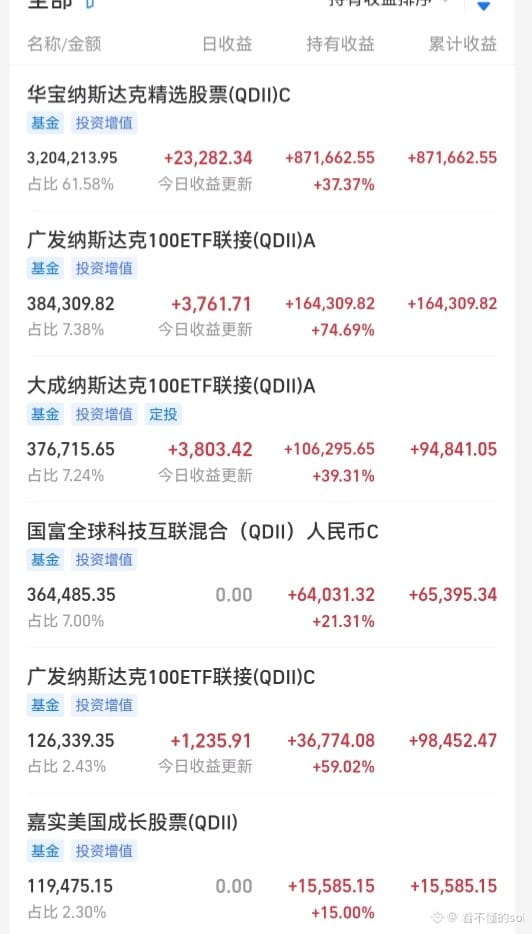
Let me tell you, if you DCA into the S&P 500 and Nasdaq 100 via Alipay and hold for 10 years, you're all set.
There's always some guys thinking about swapping for USD, opening an account in Hong Kong today, then getting a US account tomorrow, and just doing all sorts of fancy moves.
They think it’s more professional, more advanced, and a better way to make money.
To be frank, aside from the fees, there's really not much difference.
You can hustle all you want, I can't stop you, but I suggest you don't get too caught up in it.
01) The returns aren't that different
The QDII ETFs on Alipay track the same index.
The S&P 500 still has those 500 companies, and the Nasdaq 100 still has those 100 companies.
Buying on Alipay or buying on the Hong Kong Stock Exchange, the underlying assets are identical.
There’s a difference in fees, with Alipay's management fee at 0.5%-0.8%, while the ETFs on the Hong Kong Exchange might be 0.03%-0.2%.
But this fee difference is limited in impact for long-term holders.
To save on that little fee difference, you're hustling with currency swaps, account openings, and cross-border transfers, and the time and energy costs already exceed those fee differences.
02) If there's an issue with Alipay, just contact customer service
This is the point I value the most.
If there's a problem with Alipay, you can just reach out to customer service to sort it out.
If there's an issue with a Hong Kong bank account, it gets complicated.
I have a friend who opened a Hong Kong account last year, and his bank card got locked, and he couldn't withdraw his money.
He called Hong Kong, and customer service told him to go to the counter.
He's in the mainland, so to go to Hong Kong once, plane tickets and hotel cost thousands, plus he had to take leave.
In the end, it took two months to resolve.
You tell me, is it worth it for that little fee difference?
03) Don't overestimate your trading skills
Many people open accounts in Hong Kong thinking they can manage their trades more flexibly.
They think they can short, use leverage, and trade options.
Let me tell you, the more tools you have, the quicker you can get wrecked.
You think you're investing, but in reality, you’re gambling.
Shorting the Nasdaq? The Nasdaq has returned over 10% annually for the last 40 years; shorting it is like going against human technological progress.
Using leverage? The Nasdaq dropped 33% in 2022, and with 3x leverage, you're looking at a total liquidation.
Options? Time decay means even if you're right about the direction, you could still lose money.
These tools are meant for professional institutions, not for average folks.
04) Simplicity is the hardest
Buffett says investing is simple, but it’s not easy.
The simplicity lies in buying good companies and holding them long-term.
Let me tell you, if you DCA into the S&P 500 and Nasdaq 100 via Alipay and hold for 10 years, you're all set.
There's always some guys thinking about swapping for USD, opening an account in Hong Kong today, then getting a US account tomorrow, and just doing all sorts of fancy moves.
They think it’s more professional, more advanced, and a better way to make money.
To be frank, aside from the fees, there's really not much difference.
You can hustle all you want, I can't stop you, but I suggest you don't get too caught up in it.
01) The returns aren't that different
The QDII ETFs on Alipay track the same index.
The S&P 500 still has those 500 companies, and the Nasdaq 100 still has those 100 companies.
Buying on Alipay or buying on the Hong Kong Stock Exchange, the underlying assets are identical.
There’s a difference in fees, with Alipay's management fee at 0.5%-0.8%, while the ETFs on the Hong Kong Exchange might be 0.03%-0.2%.
But this fee difference is limited in impact for long-term holders.
To save on that little fee difference, you're hustling with currency swaps, account openings, and cross-border transfers, and the time and energy costs already exceed those fee differences.
02) If there's an issue with Alipay, just contact customer service
This is the point I value the most.
If there's a problem with Alipay, you can just reach out to customer service to sort it out.
If there's an issue with a Hong Kong bank account, it gets complicated.
I have a friend who opened a Hong Kong account last year, and his bank card got locked, and he couldn't withdraw his money.
He called Hong Kong, and customer service told him to go to the counter.
He's in the mainland, so to go to Hong Kong once, plane tickets and hotel cost thousands, plus he had to take leave.
In the end, it took two months to resolve.
You tell me, is it worth it for that little fee difference?
03) Don't overestimate your trading skills
Many people open accounts in Hong Kong thinking they can manage their trades more flexibly.
They think they can short, use leverage, and trade options.
Let me tell you, the more tools you have, the quicker you can get wrecked.
You think you're investing, but in reality, you’re gambling.
Shorting the Nasdaq? The Nasdaq has returned over 10% annually for the last 40 years; shorting it is like going against human technological progress.
Using leverage? The Nasdaq dropped 33% in 2022, and with 3x leverage, you're looking at a total liquidation.
Options? Time decay means even if you're right about the direction, you could still lose money.
These tools are meant for professional institutions, not for average folks.
04) Simplicity is the hardest
Buffett says investing is simple, but it’s not easy.
The simplicity lies in buying good companies and holding them long-term.
There's always some guys thinking about swapping for USD, opening an account in Hong Kong today, then getting a US account tomorrow, and just doing all sorts of fancy moves.
They think it’s more professional, more advanced, and a better way to make money.
To be frank, aside from the fees, there's really not much difference.
You can hustle all you want, I can't stop you, but I suggest you don't get too caught up in it.
01) The returns aren't that different
The QDII ETFs on Alipay track the same index.
The S&P 500 still has those 500 companies, and the Nasdaq 100 still has those 100 companies.
Buying on Alipay or buying on the Hong Kong Stock Exchange, the underlying assets are identical.
There’s a difference in fees, with Alipay's management fee at 0.5%-0.8%, while the ETFs on the Hong Kong Exchange might be 0.03%-0.2%.
But this fee difference is limited in impact for long-term holders.
To save on that little fee difference, you're hustling with currency swaps, account openings, and cross-border transfers, and the time and energy costs already exceed those fee differences.
02) If there's an issue with Alipay, just contact customer service
This is the point I value the most.
If there's a problem with Alipay, you can just reach out to customer service to sort it out.
If there's an issue with a Hong Kong bank account, it gets complicated.
I have a friend who opened a Hong Kong account last year, and his bank card got locked, and he couldn't withdraw his money.
He called Hong Kong, and customer service told him to go to the counter.
He's in the mainland, so to go to Hong Kong once, plane tickets and hotel cost thousands, plus he had to take leave.
In the end, it took two months to resolve.
You tell me, is it worth it for that little fee difference?
03) Don't overestimate your trading skills
Many people open accounts in Hong Kong thinking they can manage their trades more flexibly.
They think they can short, use leverage, and trade options.
Let me tell you, the more tools you have, the quicker you can get wrecked.
You think you're investing, but in reality, you’re gambling.
Shorting the Nasdaq? The Nasdaq has returned over 10% annually for the last 40 years; shorting it is like going against human technological progress.
Using leverage? The Nasdaq dropped 33% in 2022, and with 3x leverage, you're looking at a total liquidation.
Options? Time decay means even if you're right about the direction, you could still lose money.
These tools are meant for professional institutions, not for average folks.
04) Simplicity is the hardest
Buffett says investing is simple, but it’s not easy.
The simplicity lies in buying good companies and holding them long-term.
128
29
375
200.8k
·
--
Verified
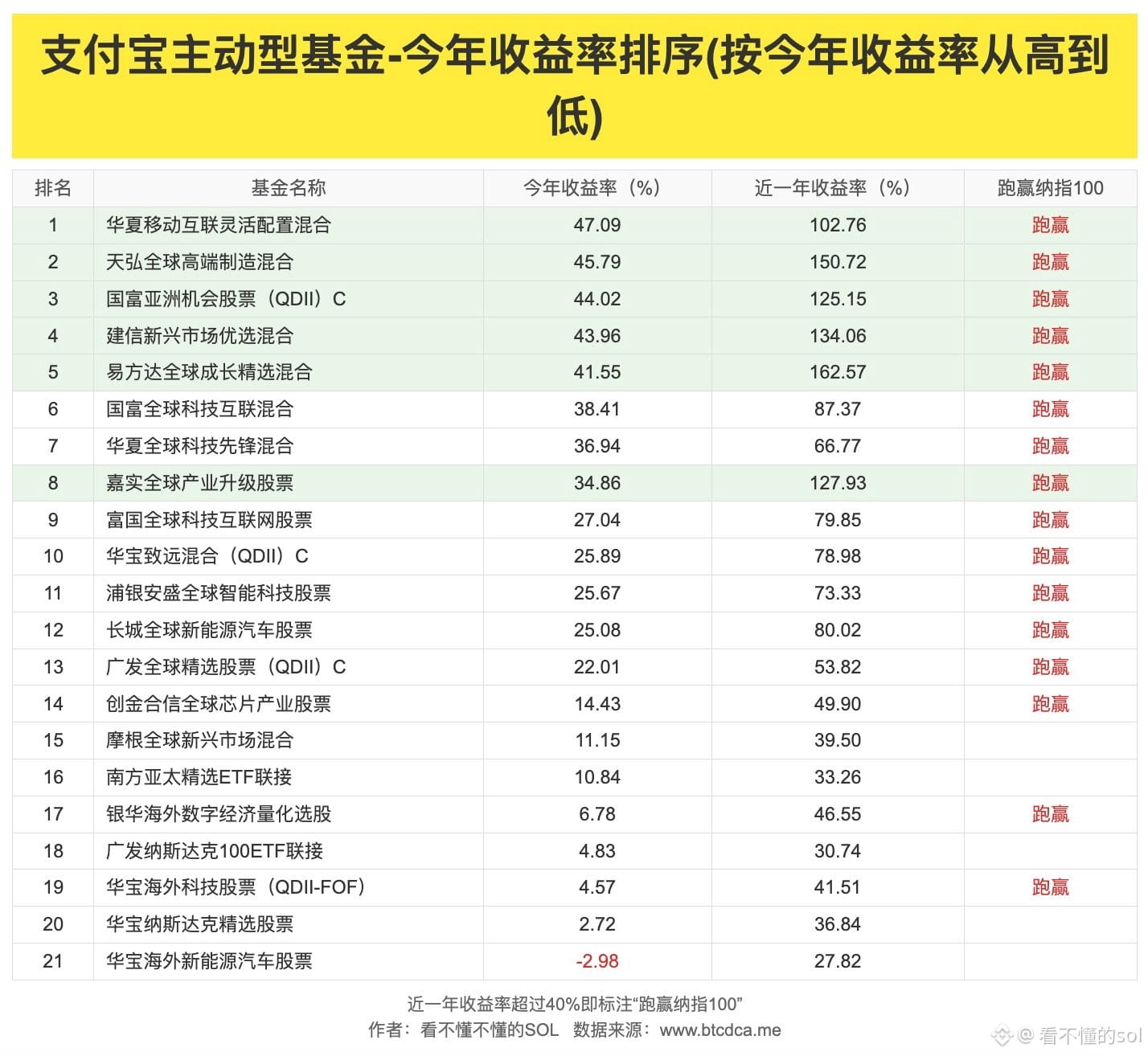
Top Active Funds Ranked on Alipay in China: How Many Outperform the Nasdaq 100?
Hey, fam, looking at the overall scene, the rankings for active Nasdaq funds in April have shifted.
This is different from the previous three months. Heavy investments in U.S. stock storage > U.S. CPO/Optical Communication > Korean storage.
1. Huaxia Mobile Internet Flexible Allocation Mixed
This Year: +47.09% Last Year: +102.76%
2. Tianhong Global High-End Manufacturing Mixed (QDII)
This Year: +45.79% Last Year: +150.72%
3. Guofu Asia Opportunity Stocks (QDII) C
This Year: +44.02% Last Year: +125.15%
4. Jianxin Emerging Markets Selected Mixed (QDII)
This Year: +43.96% Last Year: +134.06%
5. E Fund Global Growth Select Mixed (QDII)
This Year: +41.55% Last Year: +162.57%
6. Guofu Global Tech Connectivity Mixed (QDII)
This Year: +38.41% Last Year: +87.37%
7. Huaxia Global Tech Pioneer Mixed (QDII)
This Year: +36.94% Last Year: +66.77%
8. Harvest Global Industry Upgrade Stocks (QDII)
This Year: +34.86% Last Year: +127.93%
9. Fidelity Global Tech Internet Stocks (QDII)
This Year: +27.04% Last Year: +79.85%
10. Huabao Zhiyuan Mixed (QDII) C
This Year: +25.89% Last Year: +78.98%
11. Ping An Global Smart Tech Stocks (QDII)
This Year: +25.67% Last Year: +73.33%
12. Great Wall Global New Energy Vehicle Stocks (QDII)
This Year: +25.08% Last Year: +80.02%
13. GF Global Select Stocks (QDII) C
This Year: +22.01% Last Year: +53.82%
14. Chuangjin Hexin Global Chip Industry Stocks (QDII)
This Year: +14.43% Last Year: +49.90%
15. Morgan Global Emerging Markets Mixed (QDII)
This Year: +11.15% Last Year: +39.50%
16. Southern Asia Pacific Selected ETF Connection (QDII)
This Year: +10.84% Last Year: +33.26%
17. Yinhua Overseas Digital Economy Quantitative Stock Selection Mixed Initiation (QDII)
This Year: +6.78% Last Year: +46.55%
18. GF Nasdaq 100 ETF Connection (QDII)
This Year: +4.83% Last Year: +30.74%
Let’s talk.
The top 8 this year all exceeded 30% returns, with the top 5 over 40%.
The Nasdaq 100 ETF has only climbed less than 5% this year.
In the past year, the Nasdaq has risen about 40%, but among active funds, 6 have doubled (annualized returns over 100%).
The gap is that wide.
Top Active Funds Ranked on Alipay in China: How Many Outperform the Nasdaq 100?
Hey, fam, looking at the overall scene, the rankings for active Nasdaq funds in April have shifted.
This is different from the previous three months. Heavy investments in U.S. stock storage > U.S. CPO/Optical Communication > Korean storage.
1. Huaxia Mobile Internet Flexible Allocation Mixed
This Year: +47.09% Last Year: +102.76%
2. Tianhong Global High-End Manufacturing Mixed (QDII)
This Year: +45.79% Last Year: +150.72%
3. Guofu Asia Opportunity Stocks (QDII) C
This Year: +44.02% Last Year: +125.15%
4. Jianxin Emerging Markets Selected Mixed (QDII)
This Year: +43.96% Last Year: +134.06%
5. E Fund Global Growth Select Mixed (QDII)
This Year: +41.55% Last Year: +162.57%
6. Guofu Global Tech Connectivity Mixed (QDII)
This Year: +38.41% Last Year: +87.37%
7. Huaxia Global Tech Pioneer Mixed (QDII)
This Year: +36.94% Last Year: +66.77%
8. Harvest Global Industry Upgrade Stocks (QDII)
This Year: +34.86% Last Year: +127.93%
9. Fidelity Global Tech Internet Stocks (QDII)
This Year: +27.04% Last Year: +79.85%
10. Huabao Zhiyuan Mixed (QDII) C
This Year: +25.89% Last Year: +78.98%
11. Ping An Global Smart Tech Stocks (QDII)
This Year: +25.67% Last Year: +73.33%
12. Great Wall Global New Energy Vehicle Stocks (QDII)
This Year: +25.08% Last Year: +80.02%
13. GF Global Select Stocks (QDII) C
This Year: +22.01% Last Year: +53.82%
14. Chuangjin Hexin Global Chip Industry Stocks (QDII)
This Year: +14.43% Last Year: +49.90%
15. Morgan Global Emerging Markets Mixed (QDII)
This Year: +11.15% Last Year: +39.50%
16. Southern Asia Pacific Selected ETF Connection (QDII)
This Year: +10.84% Last Year: +33.26%
17. Yinhua Overseas Digital Economy Quantitative Stock Selection Mixed Initiation (QDII)
This Year: +6.78% Last Year: +46.55%
18. GF Nasdaq 100 ETF Connection (QDII)
This Year: +4.83% Last Year: +30.74%
Let’s talk.
The top 8 this year all exceeded 30% returns, with the top 5 over 40%.
The Nasdaq 100 ETF has only climbed less than 5% this year.
In the past year, the Nasdaq has risen about 40%, but among active funds, 6 have doubled (annualized returns over 100%).
The gap is that wide.
Hey, fam, looking at the overall scene, the rankings for active Nasdaq funds in April have shifted.
This is different from the previous three months. Heavy investments in U.S. stock storage > U.S. CPO/Optical Communication > Korean storage.
1. Huaxia Mobile Internet Flexible Allocation Mixed
This Year: +47.09% Last Year: +102.76%
2. Tianhong Global High-End Manufacturing Mixed (QDII)
This Year: +45.79% Last Year: +150.72%
3. Guofu Asia Opportunity Stocks (QDII) C
This Year: +44.02% Last Year: +125.15%
4. Jianxin Emerging Markets Selected Mixed (QDII)
This Year: +43.96% Last Year: +134.06%
5. E Fund Global Growth Select Mixed (QDII)
This Year: +41.55% Last Year: +162.57%
6. Guofu Global Tech Connectivity Mixed (QDII)
This Year: +38.41% Last Year: +87.37%
7. Huaxia Global Tech Pioneer Mixed (QDII)
This Year: +36.94% Last Year: +66.77%
8. Harvest Global Industry Upgrade Stocks (QDII)
This Year: +34.86% Last Year: +127.93%
9. Fidelity Global Tech Internet Stocks (QDII)
This Year: +27.04% Last Year: +79.85%
10. Huabao Zhiyuan Mixed (QDII) C
This Year: +25.89% Last Year: +78.98%
11. Ping An Global Smart Tech Stocks (QDII)
This Year: +25.67% Last Year: +73.33%
12. Great Wall Global New Energy Vehicle Stocks (QDII)
This Year: +25.08% Last Year: +80.02%
13. GF Global Select Stocks (QDII) C
This Year: +22.01% Last Year: +53.82%
14. Chuangjin Hexin Global Chip Industry Stocks (QDII)
This Year: +14.43% Last Year: +49.90%
15. Morgan Global Emerging Markets Mixed (QDII)
This Year: +11.15% Last Year: +39.50%
16. Southern Asia Pacific Selected ETF Connection (QDII)
This Year: +10.84% Last Year: +33.26%
17. Yinhua Overseas Digital Economy Quantitative Stock Selection Mixed Initiation (QDII)
This Year: +6.78% Last Year: +46.55%
18. GF Nasdaq 100 ETF Connection (QDII)
This Year: +4.83% Last Year: +30.74%
Let’s talk.
The top 8 this year all exceeded 30% returns, with the top 5 over 40%.
The Nasdaq 100 ETF has only climbed less than 5% this year.
In the past year, the Nasdaq has risen about 40%, but among active funds, 6 have doubled (annualized returns over 100%).
The gap is that wide.
3
15
9.4k
·
--
The Berkshire Hathaway 2026 shareholder meeting just wrapped up.
I’ve put together the 10 key takeaways from the meeting for you guys:
1) Buffett on the market:
Now is not an ideal investment environment. People’s gambling enthusiasm has never been higher.
The most likely buying opportunity is when everyone else is not picking up the phone.
What people discuss and worry about usually doesn’t happen; it’s the unexpected black swan events that shake the market.
This aligns with his old mantra: when others are greedy, I’m fearful; when others are fearful, I’m greedy. But the issue now is that no one is fearful; everyone is greedy.
2) Buffett on succession:
Buffett said Abel has done everything I used to do, and even more, and he does it all better.
We rate this decision a perfect 100.
I’m telling you, Buffett rarely gives full marks. His praise for Abel basically equates to saying, "the succession went right."
3) Buffett on Apple:
Investing $35 billion in Apple 10 years ago, including dividends, has now turned into $185 billion.
Buffett said, I didn’t do anything.
He also praised Cook, saying Cook took over from Jobs and created one of the miracles of American business management.
That’s classic Buffett. Buy a solid company and then just sit tight.
4) Abel on AI:
Abel said, AI must be beneficial to our business. We won’t deploy AI just for the sake of AI. It will be rolled out in a small, focused manner aimed at creating value.
They even showcased a deepfake Buffett video, highlighting the cybersecurity risks brought by AI.
The demand for data center construction presents huge growth opportunities for utility companies. However, the energy usage costs of data centers need to be separated from grid users.
The Berkshire Hathaway 2026 shareholder meeting just wrapped up.
I’ve put together the 10 key takeaways from the meeting for you guys:
1) Buffett on the market:
Now is not an ideal investment environment. People’s gambling enthusiasm has never been higher.
The most likely buying opportunity is when everyone else is not picking up the phone.
What people discuss and worry about usually doesn’t happen; it’s the unexpected black swan events that shake the market.
This aligns with his old mantra: when others are greedy, I’m fearful; when others are fearful, I’m greedy. But the issue now is that no one is fearful; everyone is greedy.
2) Buffett on succession:
Buffett said Abel has done everything I used to do, and even more, and he does it all better.
We rate this decision a perfect 100.
I’m telling you, Buffett rarely gives full marks. His praise for Abel basically equates to saying, "the succession went right."
3) Buffett on Apple:
Investing $35 billion in Apple 10 years ago, including dividends, has now turned into $185 billion.
Buffett said, I didn’t do anything.
He also praised Cook, saying Cook took over from Jobs and created one of the miracles of American business management.
That’s classic Buffett. Buy a solid company and then just sit tight.
4) Abel on AI:
Abel said, AI must be beneficial to our business. We won’t deploy AI just for the sake of AI. It will be rolled out in a small, focused manner aimed at creating value.
They even showcased a deepfake Buffett video, highlighting the cybersecurity risks brought by AI.
The demand for data center construction presents huge growth opportunities for utility companies. However, the energy usage costs of data centers need to be separated from grid users.
I’ve put together the 10 key takeaways from the meeting for you guys:
1) Buffett on the market:
Now is not an ideal investment environment. People’s gambling enthusiasm has never been higher.
The most likely buying opportunity is when everyone else is not picking up the phone.
What people discuss and worry about usually doesn’t happen; it’s the unexpected black swan events that shake the market.
This aligns with his old mantra: when others are greedy, I’m fearful; when others are fearful, I’m greedy. But the issue now is that no one is fearful; everyone is greedy.
2) Buffett on succession:
Buffett said Abel has done everything I used to do, and even more, and he does it all better.
We rate this decision a perfect 100.
I’m telling you, Buffett rarely gives full marks. His praise for Abel basically equates to saying, "the succession went right."
3) Buffett on Apple:
Investing $35 billion in Apple 10 years ago, including dividends, has now turned into $185 billion.
Buffett said, I didn’t do anything.
He also praised Cook, saying Cook took over from Jobs and created one of the miracles of American business management.
That’s classic Buffett. Buy a solid company and then just sit tight.
4) Abel on AI:
Abel said, AI must be beneficial to our business. We won’t deploy AI just for the sake of AI. It will be rolled out in a small, focused manner aimed at creating value.
They even showcased a deepfake Buffett video, highlighting the cybersecurity risks brought by AI.
The demand for data center construction presents huge growth opportunities for utility companies. However, the energy usage costs of data centers need to be separated from grid users.
4
1
81
34.5k
·
--
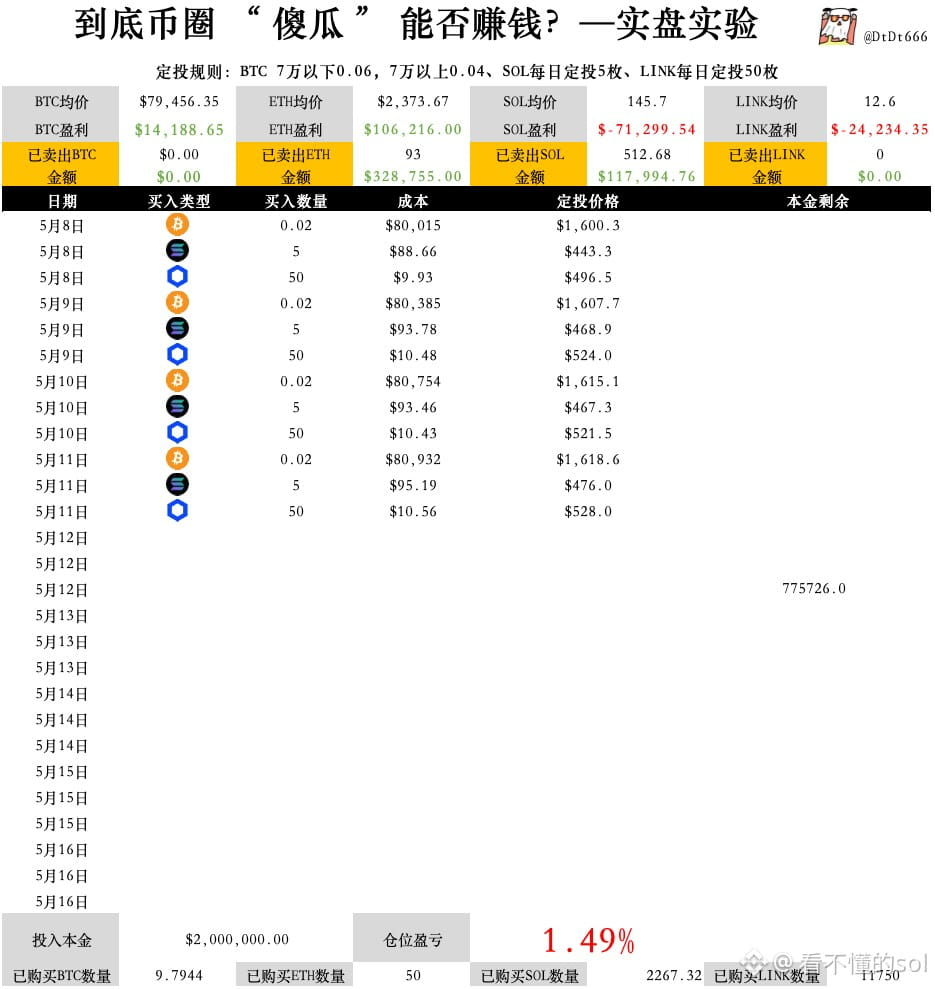
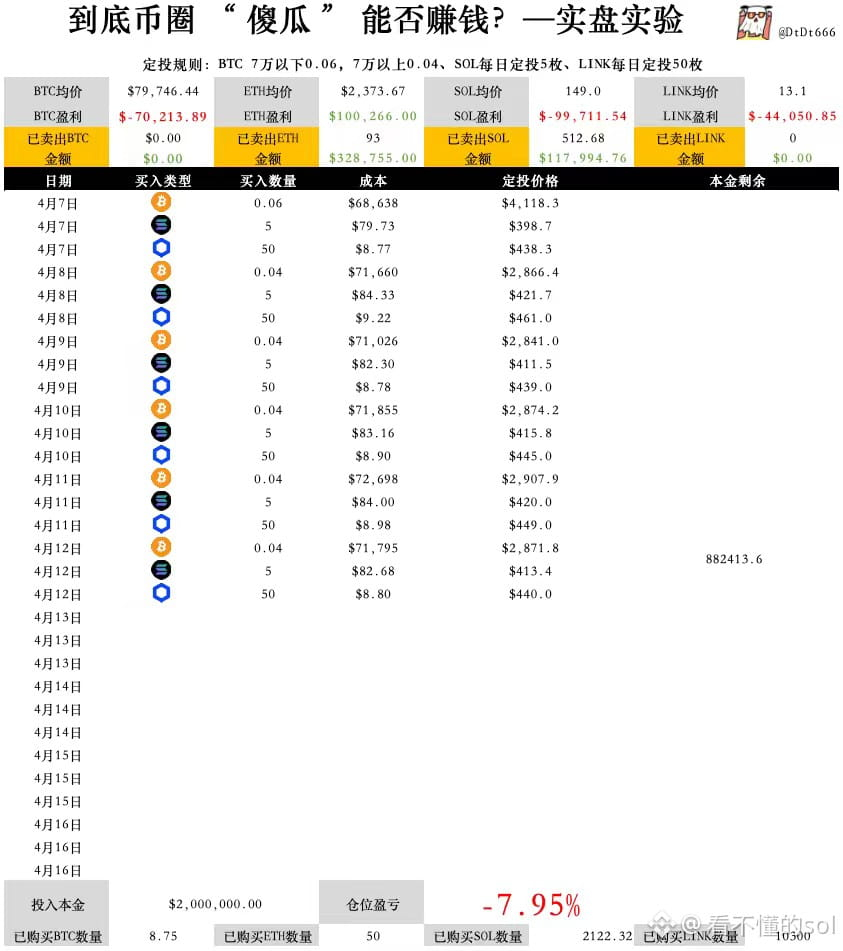
Reject noise, peaceful investment day 463
Currently holding 50 ETH, cost $2373.67
Currently holding 8.75 BTC, cost $79764
Currently holding 2122.32 SOL, cost $149
Currently holding 10300 LINK, cost $13.1
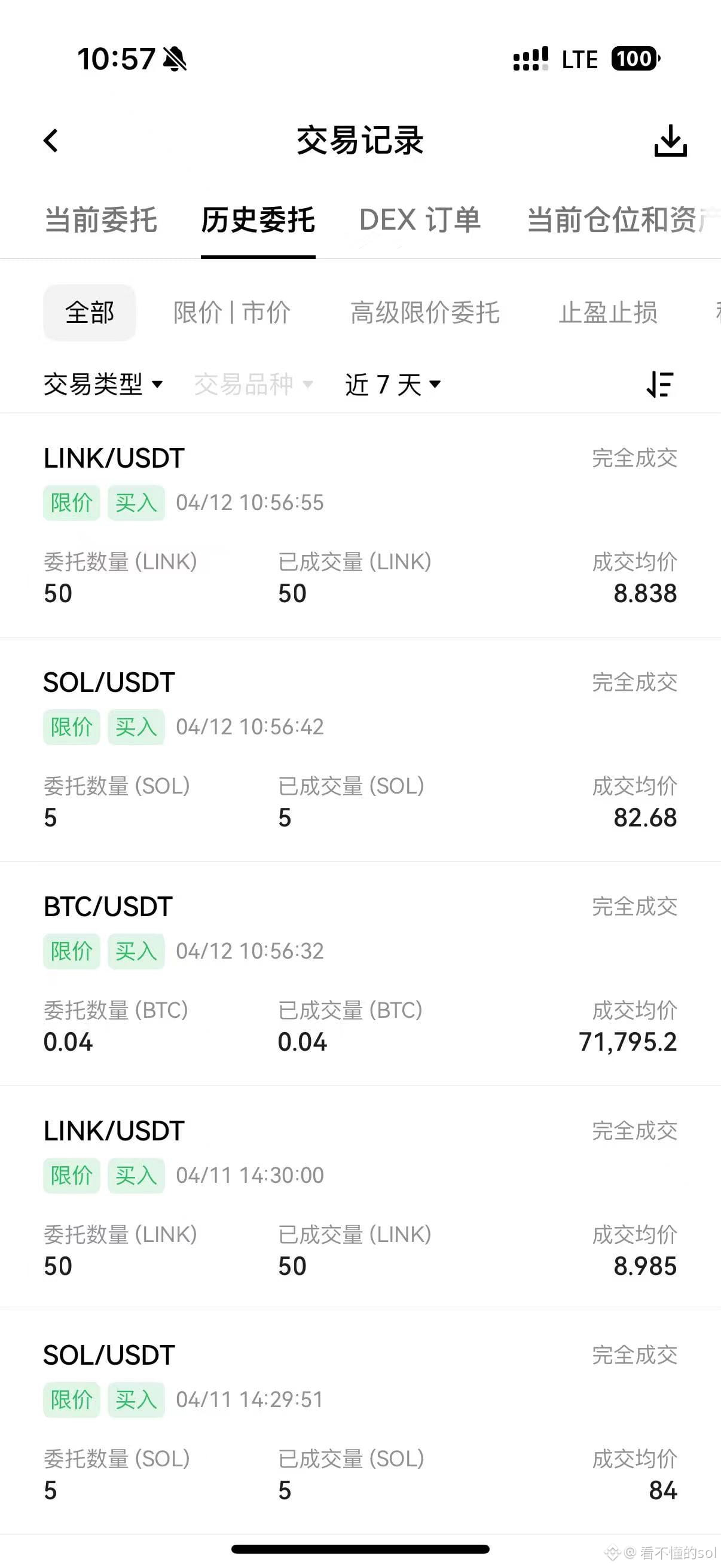
Today's operation: continue to mindlessly buy 0.04 BTC, 5 SOL, 50 LINK
Current overall account profit: -7.95%
Reject noise, peaceful investment day 463
Currently holding 50 ETH, cost $2373.67
Currently holding 8.75 BTC, cost $79764
Currently holding 2122.32 SOL, cost $149
Currently holding 10300 LINK, cost $13.1
Today's operation: continue to mindlessly buy 0.04 BTC, 5 SOL, 50 LINK
Current overall account profit: -7.95%
Currently holding 50 ETH, cost $2373.67
Currently holding 8.75 BTC, cost $79764
Currently holding 2122.32 SOL, cost $149
Currently holding 10300 LINK, cost $13.1
Today's operation: continue to mindlessly buy 0.04 BTC, 5 SOL, 50 LINK
Current overall account profit: -7.95%
13
27
13.5k
·
--
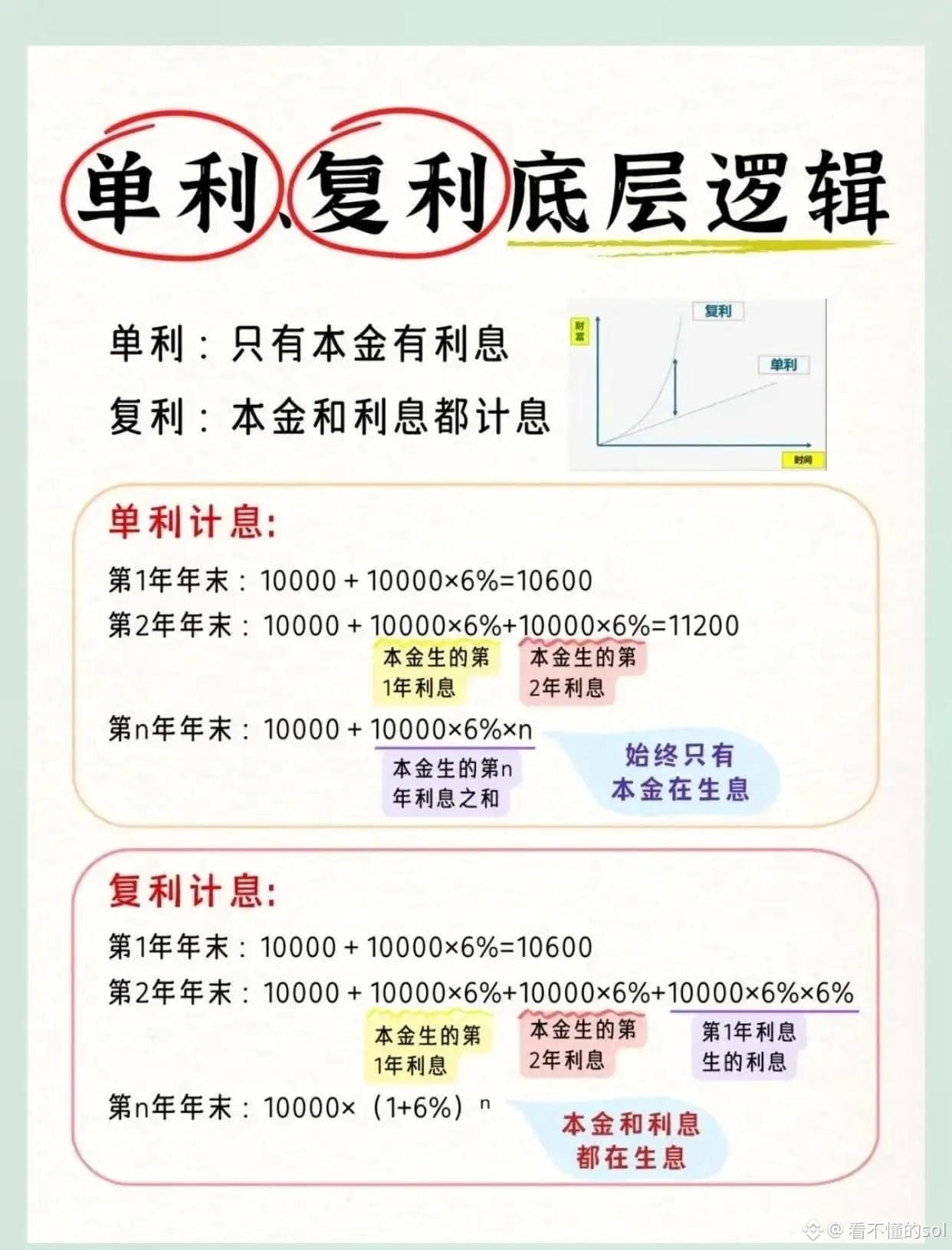
The Power of Compound Interest
Annualized 15%, double in 5 years, 8 times in 15 years. 1 million becomes 8 million. After another 15 years, 64 million.
A student from a 211 university, as long as they can understand the basics, if they can get 1 million as principal before the age of 30, there is a high probability that they can retire/live full-time by 50.
Even with an annualized 10%, double in 7 years, quadruple in 30 years, 1 million will become 16 million after 30 years, which is also acceptable. This surpasses 99% of peers who graduated from 985 universities.
Don't buy a house for your child; by the age of 30, just give them 1 million and gift them a value investment book, such as the complete works of Warren Buffett and the collection of Duan Yongping, and they will live well for the rest of their lives.
The Power of Compound Interest
Annualized 15%, double in 5 years, 8 times in 15 years. 1 million becomes 8 million. After another 15 years, 64 million.
A student from a 211 university, as long as they can understand the basics, if they can get 1 million as principal before the age of 30, there is a high probability that they can retire/live full-time by 50.
Even with an annualized 10%, double in 7 years, quadruple in 30 years, 1 million will become 16 million after 30 years, which is also acceptable. This surpasses 99% of peers who graduated from 985 universities.
Don't buy a house for your child; by the age of 30, just give them 1 million and gift them a value investment book, such as the complete works of Warren Buffett and the collection of Duan Yongping, and they will live well for the rest of their lives.
Annualized 15%, double in 5 years, 8 times in 15 years. 1 million becomes 8 million. After another 15 years, 64 million.
A student from a 211 university, as long as they can understand the basics, if they can get 1 million as principal before the age of 30, there is a high probability that they can retire/live full-time by 50.
Even with an annualized 10%, double in 7 years, quadruple in 30 years, 1 million will become 16 million after 30 years, which is also acceptable. This surpasses 99% of peers who graduated from 985 universities.
Don't buy a house for your child; by the age of 30, just give them 1 million and gift them a value investment book, such as the complete works of Warren Buffett and the collection of Duan Yongping, and they will live well for the rest of their lives.
5
1
19
15.8k
·
--
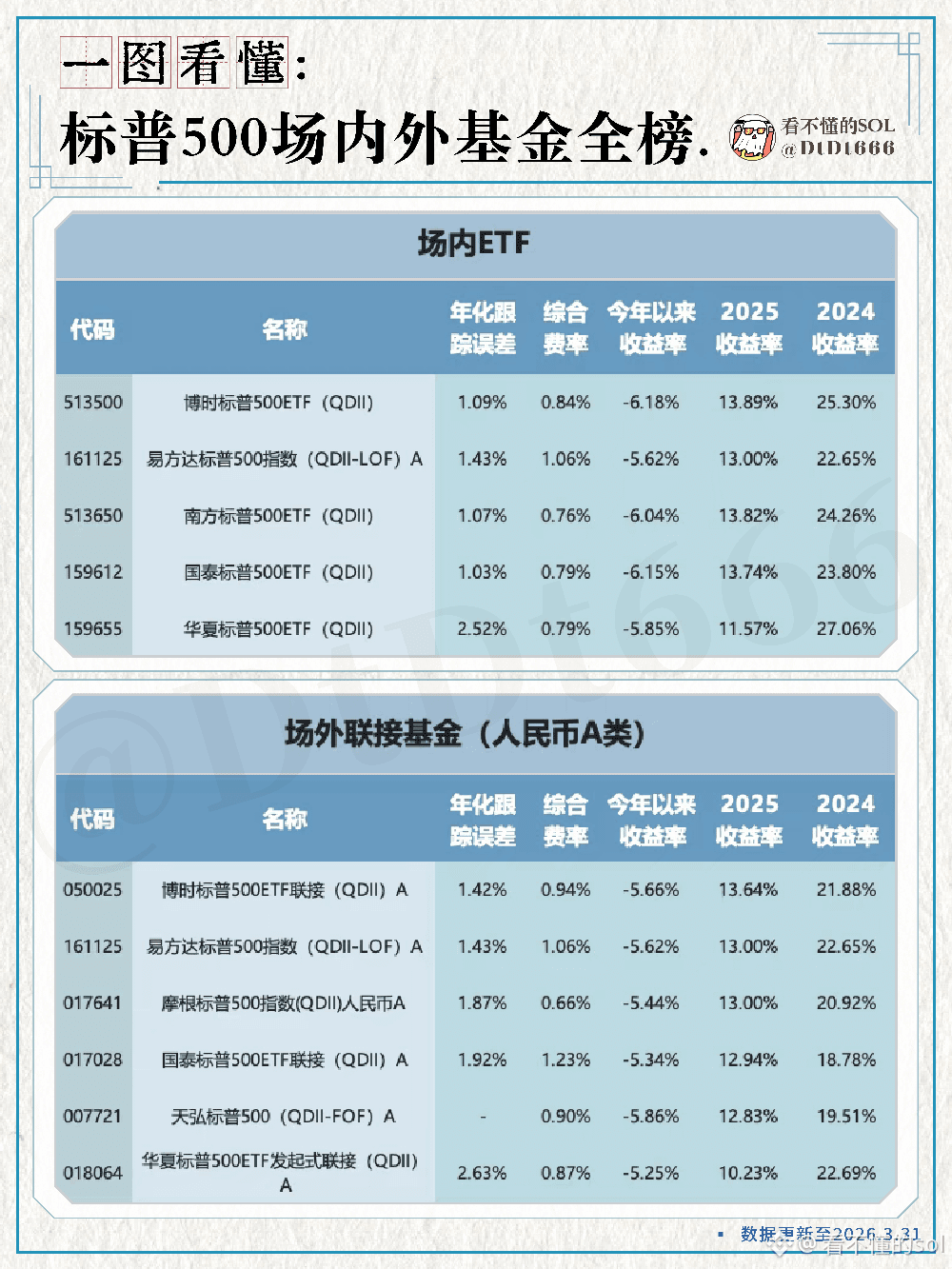
The domestic S&P 500 on-exchange & off-exchange fund full list is here!
We have specially compiled a latest comparison table of the current mainstream S&P 500 on-exchange ETFs and off-exchange linked funds (RMB Class A), including: annual tracking error, comprehensive fee rate, year-to-date return, 2025 return, and 2024 return.
Data updated until March 31, 2026, clear at a glance!
Currently available quotas:
1. Bosera S&P 500 Class E 1000 quota
2. Tianhong S&P 500 Class A and Class C each 1000 quota
3. Morgan S&P 500 Class A and Class C each 50 quota
The US stock market surged for two consecutive days, today the TACO sentiment has retreated, and futures have also dropped significantly, with premiums still being cut in the market. As the off-exchange quotas gradually open up, everyone can save this table and compare it based on their trading habits (on-exchange T+0 trading vs off-exchange subscription and redemption based on net value), fee preferences, and tolerances for tracking errors, to make their own choices~
The domestic S&P 500 on-exchange & off-exchange fund full list is here!
We have specially compiled a latest comparison table of the current mainstream S&P 500 on-exchange ETFs and off-exchange linked funds (RMB Class A), including: annual tracking error, comprehensive fee rate, year-to-date return, 2025 return, and 2024 return.
Data updated until March 31, 2026, clear at a glance!
Currently available quotas:
1. Bosera S&P 500 Class E 1000 quota
2. Tianhong S&P 500 Class A and Class C each 1000 quota
3. Morgan S&P 500 Class A and Class C each 50 quota
The US stock market surged for two consecutive days, today the TACO sentiment has retreated, and futures have also dropped significantly, with premiums still being cut in the market. As the off-exchange quotas gradually open up, everyone can save this table and compare it based on their trading habits (on-exchange T+0 trading vs off-exchange subscription and redemption based on net value), fee preferences, and tolerances for tracking errors, to make their own choices~
We have specially compiled a latest comparison table of the current mainstream S&P 500 on-exchange ETFs and off-exchange linked funds (RMB Class A), including: annual tracking error, comprehensive fee rate, year-to-date return, 2025 return, and 2024 return.
Data updated until March 31, 2026, clear at a glance!
Currently available quotas:
1. Bosera S&P 500 Class E 1000 quota
2. Tianhong S&P 500 Class A and Class C each 1000 quota
3. Morgan S&P 500 Class A and Class C each 50 quota
The US stock market surged for two consecutive days, today the TACO sentiment has retreated, and futures have also dropped significantly, with premiums still being cut in the market. As the off-exchange quotas gradually open up, everyone can save this table and compare it based on their trading habits (on-exchange T+0 trading vs off-exchange subscription and redemption based on net value), fee preferences, and tolerances for tracking errors, to make their own choices~
1
8
9k
·
--
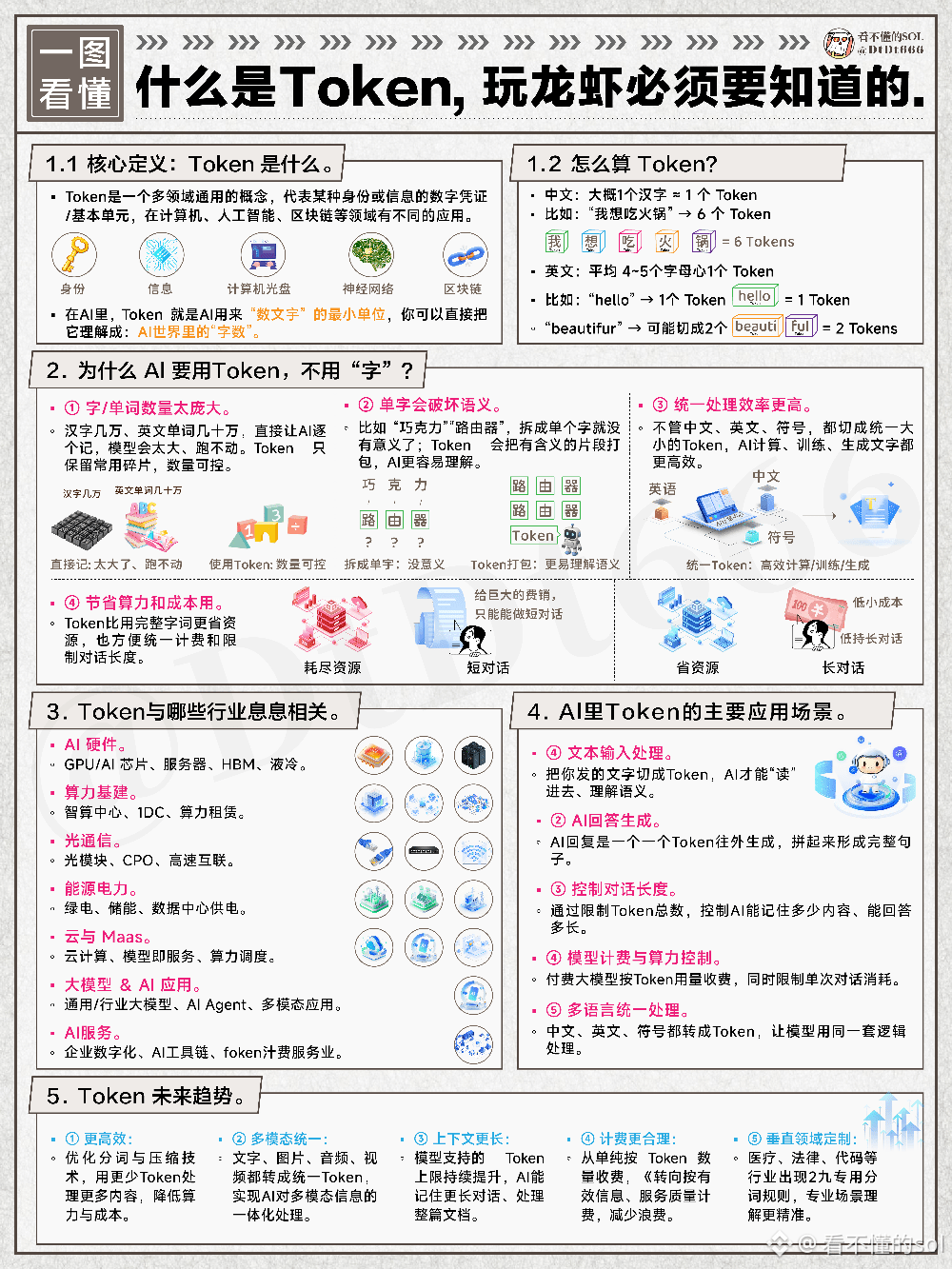
What is a Token, something you must know to play Lobster.
What is a Token, something you must know to play Lobster.
7
10k
·
--
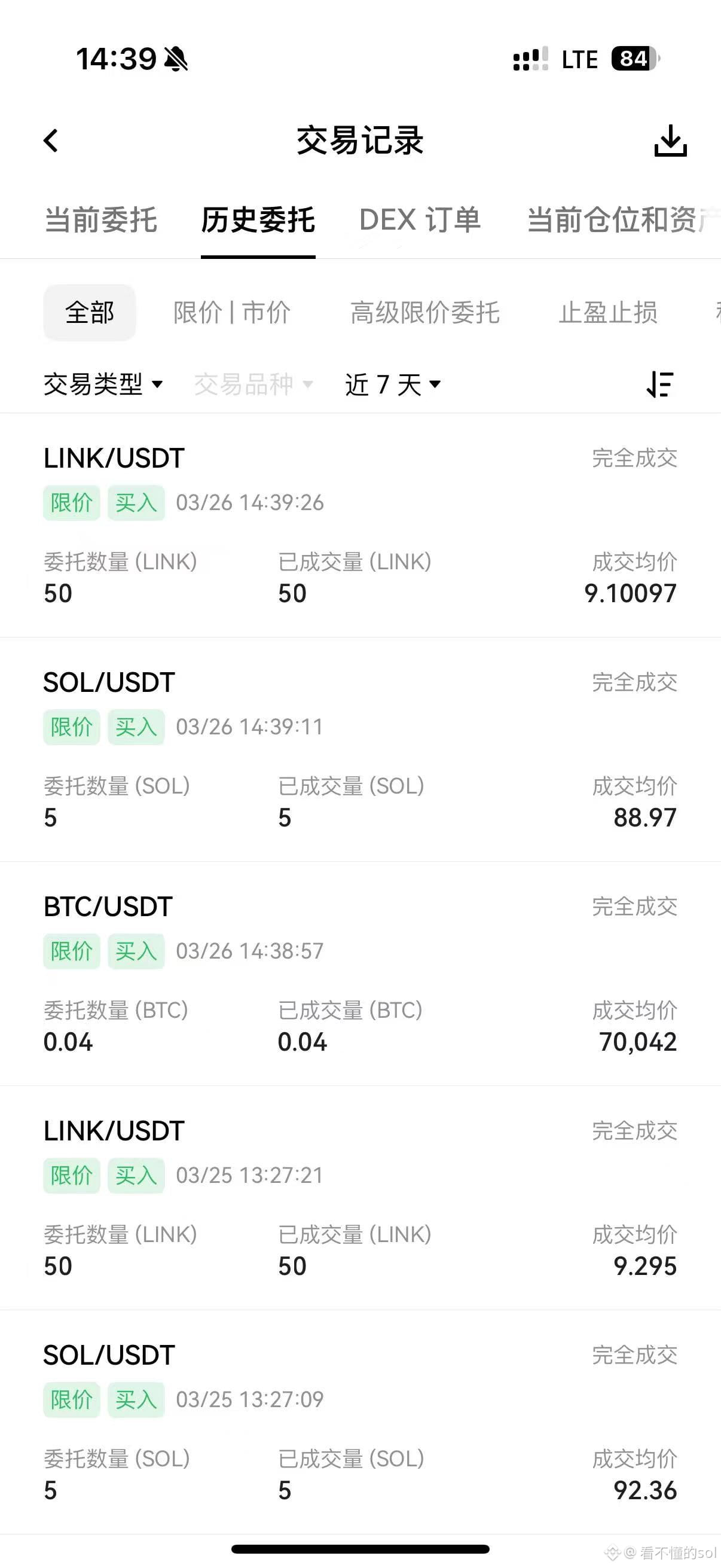
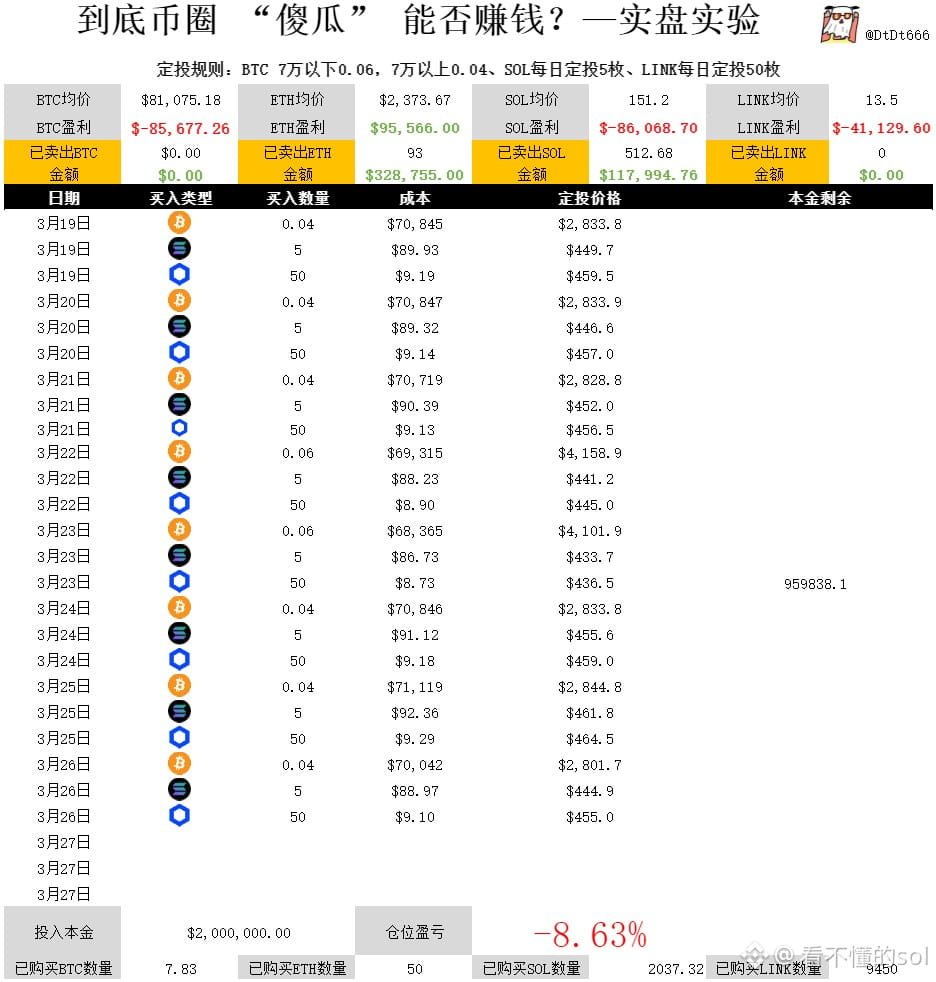
Refuse noise,安心定投 Day 448
Currently holding 50 ETH, cost $2373.67
Currently holding 7.83 BTC, cost $81075
Currently holding 2037.32 SOL, cost $151.2
Currently holding 9450 LINK, cost $13.5
Today's operation: continue to mindlessly buy 0.04 BTC, 5 SOL, 50 LINK
Current account overall profit: -8.63%
Refuse noise,安心定投 Day 448
Currently holding 50 ETH, cost $2373.67
Currently holding 7.83 BTC, cost $81075
Currently holding 2037.32 SOL, cost $151.2
Currently holding 9450 LINK, cost $13.5
Today's operation: continue to mindlessly buy 0.04 BTC, 5 SOL, 50 LINK
Current account overall profit: -8.63%
Currently holding 50 ETH, cost $2373.67
Currently holding 7.83 BTC, cost $81075
Currently holding 2037.32 SOL, cost $151.2
Currently holding 9450 LINK, cost $13.5
Today's operation: continue to mindlessly buy 0.04 BTC, 5 SOL, 50 LINK
Current account overall profit: -8.63%
27
3
47
31.3k
·
--
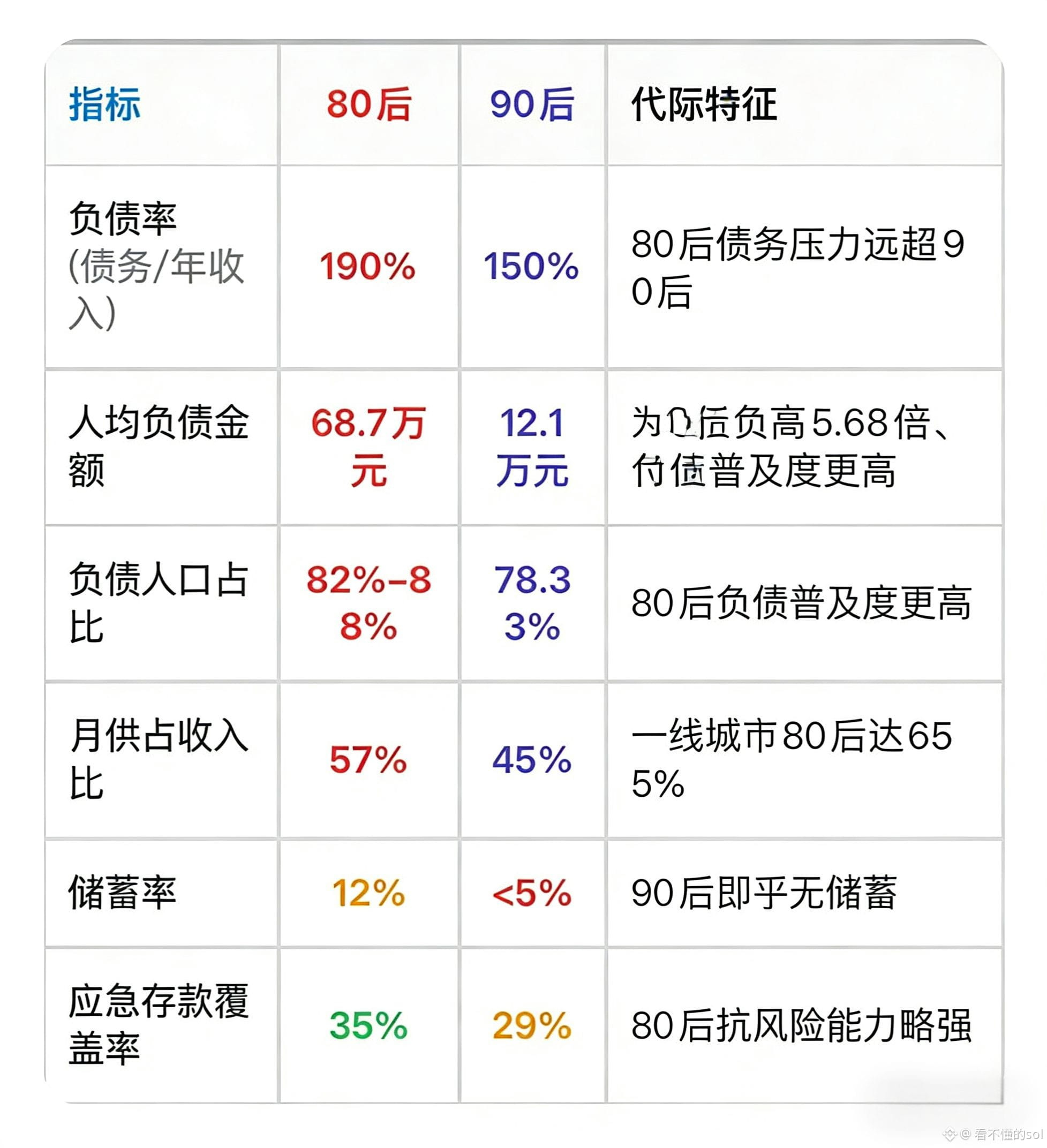
Chinese Middle Class: Burdened with Debt, Walking on Eggshells
Post-80s Debt Ratio 190%, Average Debt 697,000
Post-90s Debt Ratio 150%, Average Debt 121,000
Post-80s: Typical Responsibility-type Debt
Debt Structure: 70% Housing Loan + 15% Car Loan + 8% Business Loan + 5% Consumer Loan + 2% Education Loan
95% for family support expenditures, less than 5% for pleasure consumption, definitely supporting both elderly and children
Post-90s: Mostly Pleasure-type Debt
Debt Structure: 56.7% Housing Loan + 32.1% Consumer Loan + 10% Car Loan + 1.2% Business Loan
Over 30% of consumer loans are directed towards luxury goods, travel, and medical beauty, deeply trapped in pre-consumption and hedonism
Middle Class Bankruptcy Trio
1. High Housing Loan Monthly Payment over 20,000+
2. Spouse is a full-time homemaker
3. Second Child Attending International School
Four Core Reasons for Falling Back into Poverty
1. Sudden Unemployment
2. Severe Illness
3. Blind Investment
4. Rash Entrepreneurship
Nine Major Traps for Middle Class Returning to Poverty
Seaside Properties, P2P, Speculative Stock Trading, Speculative Cryptocurrency, Quitting Jobs to Start Businesses, Buying Apartments, Engaging in Fundraising, Purchasing Commercial Spaces, Franchise Store Openings, Running Homestays
Hitting any one of these is enough to cause the middle class to return to poverty overnight.
Chinese Middle Class: Burdened with Debt, Walking on Eggshells
Post-80s Debt Ratio 190%, Average Debt 697,000
Post-90s Debt Ratio 150%, Average Debt 121,000
Post-80s: Typical Responsibility-type Debt
Debt Structure: 70% Housing Loan + 15% Car Loan + 8% Business Loan + 5% Consumer Loan + 2% Education Loan
95% for family support expenditures, less than 5% for pleasure consumption, definitely supporting both elderly and children
Post-90s: Mostly Pleasure-type Debt
Debt Structure: 56.7% Housing Loan + 32.1% Consumer Loan + 10% Car Loan + 1.2% Business Loan
Over 30% of consumer loans are directed towards luxury goods, travel, and medical beauty, deeply trapped in pre-consumption and hedonism
Middle Class Bankruptcy Trio
1. High Housing Loan Monthly Payment over 20,000+
2. Spouse is a full-time homemaker
3. Second Child Attending International School
Four Core Reasons for Falling Back into Poverty
1. Sudden Unemployment
2. Severe Illness
3. Blind Investment
4. Rash Entrepreneurship
Nine Major Traps for Middle Class Returning to Poverty
Seaside Properties, P2P, Speculative Stock Trading, Speculative Cryptocurrency, Quitting Jobs to Start Businesses, Buying Apartments, Engaging in Fundraising, Purchasing Commercial Spaces, Franchise Store Openings, Running Homestays
Hitting any one of these is enough to cause the middle class to return to poverty overnight.
Post-80s Debt Ratio 190%, Average Debt 697,000
Post-90s Debt Ratio 150%, Average Debt 121,000
Post-80s: Typical Responsibility-type Debt
Debt Structure: 70% Housing Loan + 15% Car Loan + 8% Business Loan + 5% Consumer Loan + 2% Education Loan
95% for family support expenditures, less than 5% for pleasure consumption, definitely supporting both elderly and children
Post-90s: Mostly Pleasure-type Debt
Debt Structure: 56.7% Housing Loan + 32.1% Consumer Loan + 10% Car Loan + 1.2% Business Loan
Over 30% of consumer loans are directed towards luxury goods, travel, and medical beauty, deeply trapped in pre-consumption and hedonism
Middle Class Bankruptcy Trio
1. High Housing Loan Monthly Payment over 20,000+
2. Spouse is a full-time homemaker
3. Second Child Attending International School
Four Core Reasons for Falling Back into Poverty
1. Sudden Unemployment
2. Severe Illness
3. Blind Investment
4. Rash Entrepreneurship
Nine Major Traps for Middle Class Returning to Poverty
Seaside Properties, P2P, Speculative Stock Trading, Speculative Cryptocurrency, Quitting Jobs to Start Businesses, Buying Apartments, Engaging in Fundraising, Purchasing Commercial Spaces, Franchise Store Openings, Running Homestays
Hitting any one of these is enough to cause the middle class to return to poverty overnight.
10
2
30
13.9k
·
--
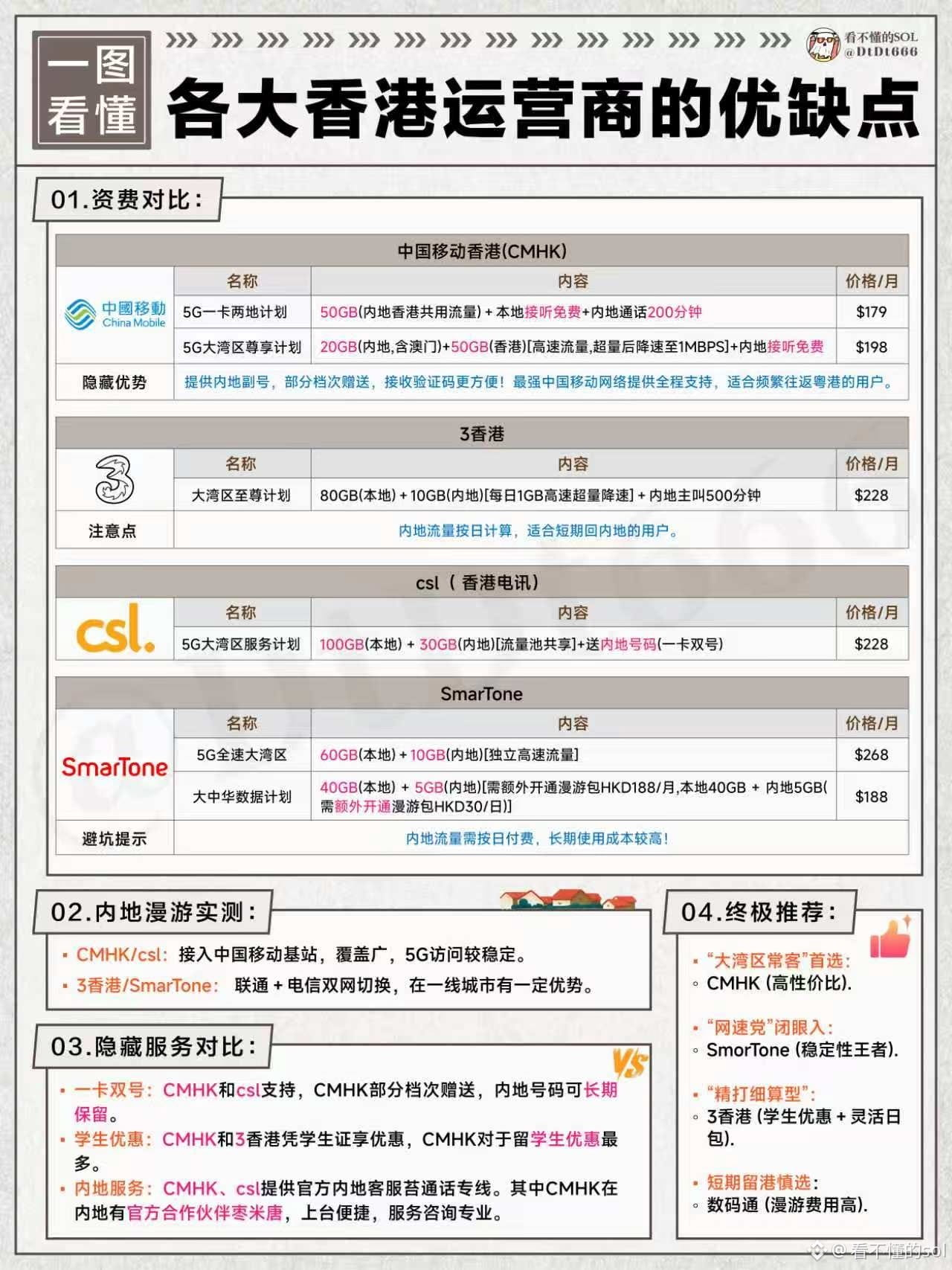
A picture to understand how mainland players can quickly obtain a Hong Kong phone number (recommended to bookmark)
Hong Kong cards not only bypass the exchange's ban on +86 numbers,
but also allow operations including US stocks, cryptocurrency, KYC, essential accounts for new project exploitation, etc.,
and can easily unlock services with regional restrictions such as OpenAI/Claude/X/YouTube
👇👇👇
A picture to understand how mainland players can quickly obtain a Hong Kong phone number (recommended to bookmark)
Hong Kong cards not only bypass the exchange's ban on +86 numbers,
but also allow operations including US stocks, cryptocurrency, KYC, essential accounts for new project exploitation, etc.,
and can easily unlock services with regional restrictions such as OpenAI/Claude/X/YouTube
👇👇👇
Hong Kong cards not only bypass the exchange's ban on +86 numbers,
but also allow operations including US stocks, cryptocurrency, KYC, essential accounts for new project exploitation, etc.,
and can easily unlock services with regional restrictions such as OpenAI/Claude/X/YouTube
👇👇👇
4
14
11.1k
·
--
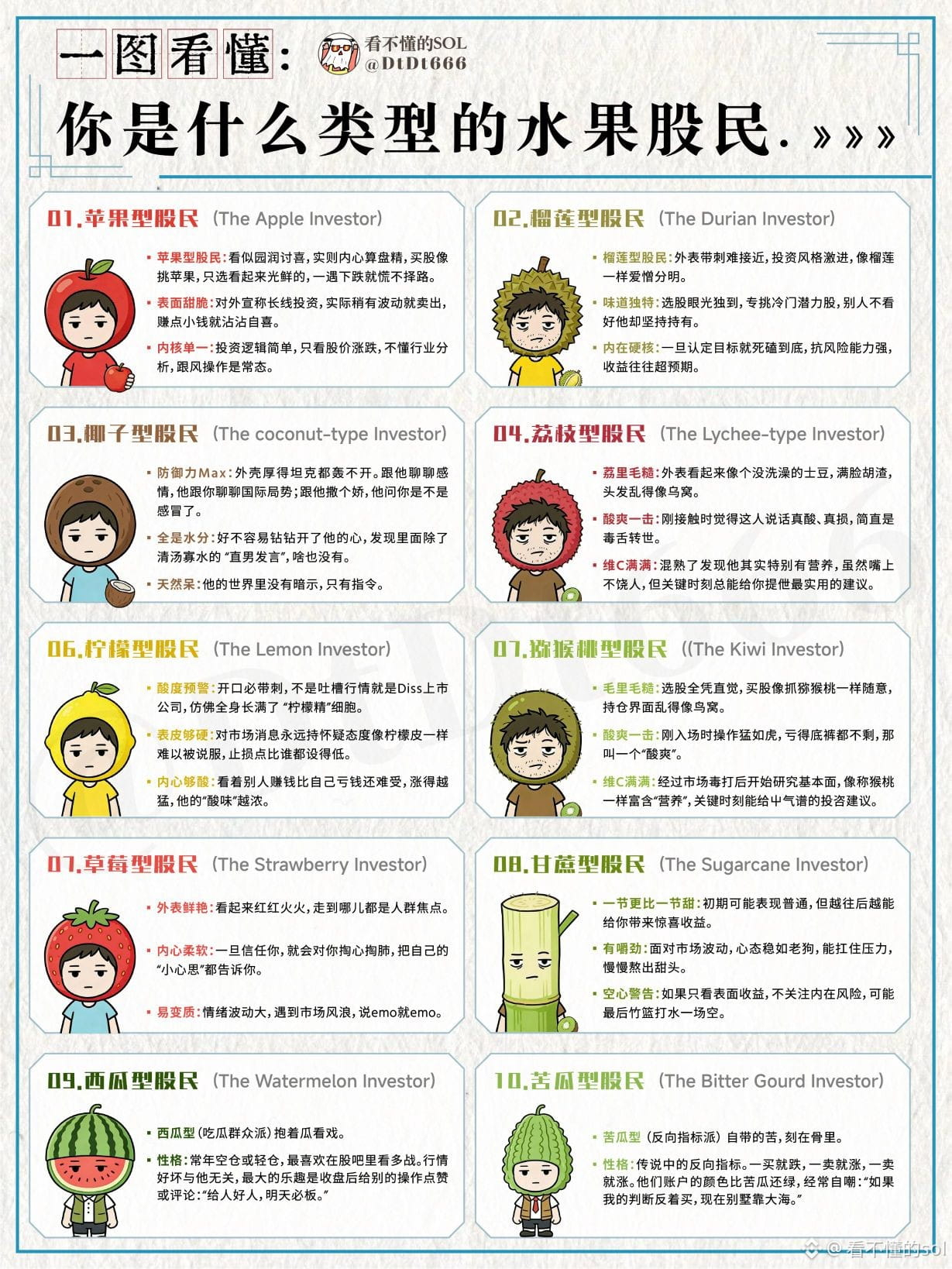
What type of fruit investor are you? What you peel is fruit, and it’s also the base color of your trading.
We often stay up late analyzing K-lines, studying financial reports, trying to understand the market's temperament, yet we rarely take a moment to stop and look at ourselves in the mirror.
Apple type: Appears round and pleasing, but is actually quite shrewd; claims to invest long-term but quickly seeks safety at the first sign of volatility; picks stocks based only on surface appeal, lacks understanding of industry logic, and tends to follow the crowd.
Durian type: Difficult to approach with a spiky exterior, aggressive investment style, and clear-cut likes and dislikes; has a unique eye for stock selection, specifically seeks out under-the-radar potential stocks, and once committed, will stick to it no matter what; possesses strong risk tolerance and often exceeds expectations in returns.
Coconut type: Has a shell as hard as a tank, fully defensive, but is hollow inside; can speak eloquently about macro topics, but when it comes to actual investments, only offers bland “straight talk”; in this world, there are only commands, no nuances.
Lychee type: Appears rough and unkempt, seems blunt upon first contact, but once familiar, reveals the ability to provide the most practical advice at crucial moments, hidden within a rough exterior as a “nutritional type.”
Lemon type: Full of “citric acid,” feels worse seeing others profit than suffering losses themselves; always skeptical of the market, challenges everyone’s opinions, and the stronger the surge, the more “sour” it gets.
Kiwi type: Selects stocks purely based on intuition, enters the market with fierce operations, and ends up losing everything; only after enduring market beatings do they start to study the fundamentals, gradually cultivating “nutrition” to become a mature investor capable of giving sound advice.
Strawberry type: Outwardly dazzling, the center of attention wherever they go, but internally soft and fragile; once they trust someone, they open up completely, experience extreme emotional fluctuations, and become emo at the slightest turbulence, easily spoiling like strawberries.
Sugarcane type: Initially performs mediocrely, but surprises you more and more as time goes on; maintains a steady mindset like an old dog in the face of fluctuations, can withstand pressure and slowly extract sweetness, but if they only focus on superficial returns and ignore risks, they may end up with nothing.
Watermelon type: A typical onlooker, often holding cash or light positions, loves watching ups and downs in stock forums and giving likes to others; the market's performance has nothing to do with them, and their greatest joy is “giving to good people, guaranteed to go up tomorrow.”
Bitter melon type: Naturally a contrarian indicator, buying leads to declines, selling leads to gains; their account is greener than bitter melon, often self-deprecatingly saying, “If I had bought against my judgment, I’d have a villa by the sea now.”
What type of fruit investor are you? What you peel is fruit, and it’s also the base color of your trading.
We often stay up late analyzing K-lines, studying financial reports, trying to understand the market's temperament, yet we rarely take a moment to stop and look at ourselves in the mirror.
Apple type: Appears round and pleasing, but is actually quite shrewd; claims to invest long-term but quickly seeks safety at the first sign of volatility; picks stocks based only on surface appeal, lacks understanding of industry logic, and tends to follow the crowd.
Durian type: Difficult to approach with a spiky exterior, aggressive investment style, and clear-cut likes and dislikes; has a unique eye for stock selection, specifically seeks out under-the-radar potential stocks, and once committed, will stick to it no matter what; possesses strong risk tolerance and often exceeds expectations in returns.
Coconut type: Has a shell as hard as a tank, fully defensive, but is hollow inside; can speak eloquently about macro topics, but when it comes to actual investments, only offers bland “straight talk”; in this world, there are only commands, no nuances.
Lychee type: Appears rough and unkempt, seems blunt upon first contact, but once familiar, reveals the ability to provide the most practical advice at crucial moments, hidden within a rough exterior as a “nutritional type.”
Lemon type: Full of “citric acid,” feels worse seeing others profit than suffering losses themselves; always skeptical of the market, challenges everyone’s opinions, and the stronger the surge, the more “sour” it gets.
Kiwi type: Selects stocks purely based on intuition, enters the market with fierce operations, and ends up losing everything; only after enduring market beatings do they start to study the fundamentals, gradually cultivating “nutrition” to become a mature investor capable of giving sound advice.
Strawberry type: Outwardly dazzling, the center of attention wherever they go, but internally soft and fragile; once they trust someone, they open up completely, experience extreme emotional fluctuations, and become emo at the slightest turbulence, easily spoiling like strawberries.
Sugarcane type: Initially performs mediocrely, but surprises you more and more as time goes on; maintains a steady mindset like an old dog in the face of fluctuations, can withstand pressure and slowly extract sweetness, but if they only focus on superficial returns and ignore risks, they may end up with nothing.
Watermelon type: A typical onlooker, often holding cash or light positions, loves watching ups and downs in stock forums and giving likes to others; the market's performance has nothing to do with them, and their greatest joy is “giving to good people, guaranteed to go up tomorrow.”
Bitter melon type: Naturally a contrarian indicator, buying leads to declines, selling leads to gains; their account is greener than bitter melon, often self-deprecatingly saying, “If I had bought against my judgment, I’d have a villa by the sea now.”
We often stay up late analyzing K-lines, studying financial reports, trying to understand the market's temperament, yet we rarely take a moment to stop and look at ourselves in the mirror.
Apple type: Appears round and pleasing, but is actually quite shrewd; claims to invest long-term but quickly seeks safety at the first sign of volatility; picks stocks based only on surface appeal, lacks understanding of industry logic, and tends to follow the crowd.
Durian type: Difficult to approach with a spiky exterior, aggressive investment style, and clear-cut likes and dislikes; has a unique eye for stock selection, specifically seeks out under-the-radar potential stocks, and once committed, will stick to it no matter what; possesses strong risk tolerance and often exceeds expectations in returns.
Coconut type: Has a shell as hard as a tank, fully defensive, but is hollow inside; can speak eloquently about macro topics, but when it comes to actual investments, only offers bland “straight talk”; in this world, there are only commands, no nuances.
Lychee type: Appears rough and unkempt, seems blunt upon first contact, but once familiar, reveals the ability to provide the most practical advice at crucial moments, hidden within a rough exterior as a “nutritional type.”
Lemon type: Full of “citric acid,” feels worse seeing others profit than suffering losses themselves; always skeptical of the market, challenges everyone’s opinions, and the stronger the surge, the more “sour” it gets.
Kiwi type: Selects stocks purely based on intuition, enters the market with fierce operations, and ends up losing everything; only after enduring market beatings do they start to study the fundamentals, gradually cultivating “nutrition” to become a mature investor capable of giving sound advice.
Strawberry type: Outwardly dazzling, the center of attention wherever they go, but internally soft and fragile; once they trust someone, they open up completely, experience extreme emotional fluctuations, and become emo at the slightest turbulence, easily spoiling like strawberries.
Sugarcane type: Initially performs mediocrely, but surprises you more and more as time goes on; maintains a steady mindset like an old dog in the face of fluctuations, can withstand pressure and slowly extract sweetness, but if they only focus on superficial returns and ignore risks, they may end up with nothing.
Watermelon type: A typical onlooker, often holding cash or light positions, loves watching ups and downs in stock forums and giving likes to others; the market's performance has nothing to do with them, and their greatest joy is “giving to good people, guaranteed to go up tomorrow.”
Bitter melon type: Naturally a contrarian indicator, buying leads to declines, selling leads to gains; their account is greener than bitter melon, often self-deprecatingly saying, “If I had bought against my judgment, I’d have a villa by the sea now.”
1
6
5k
·
--
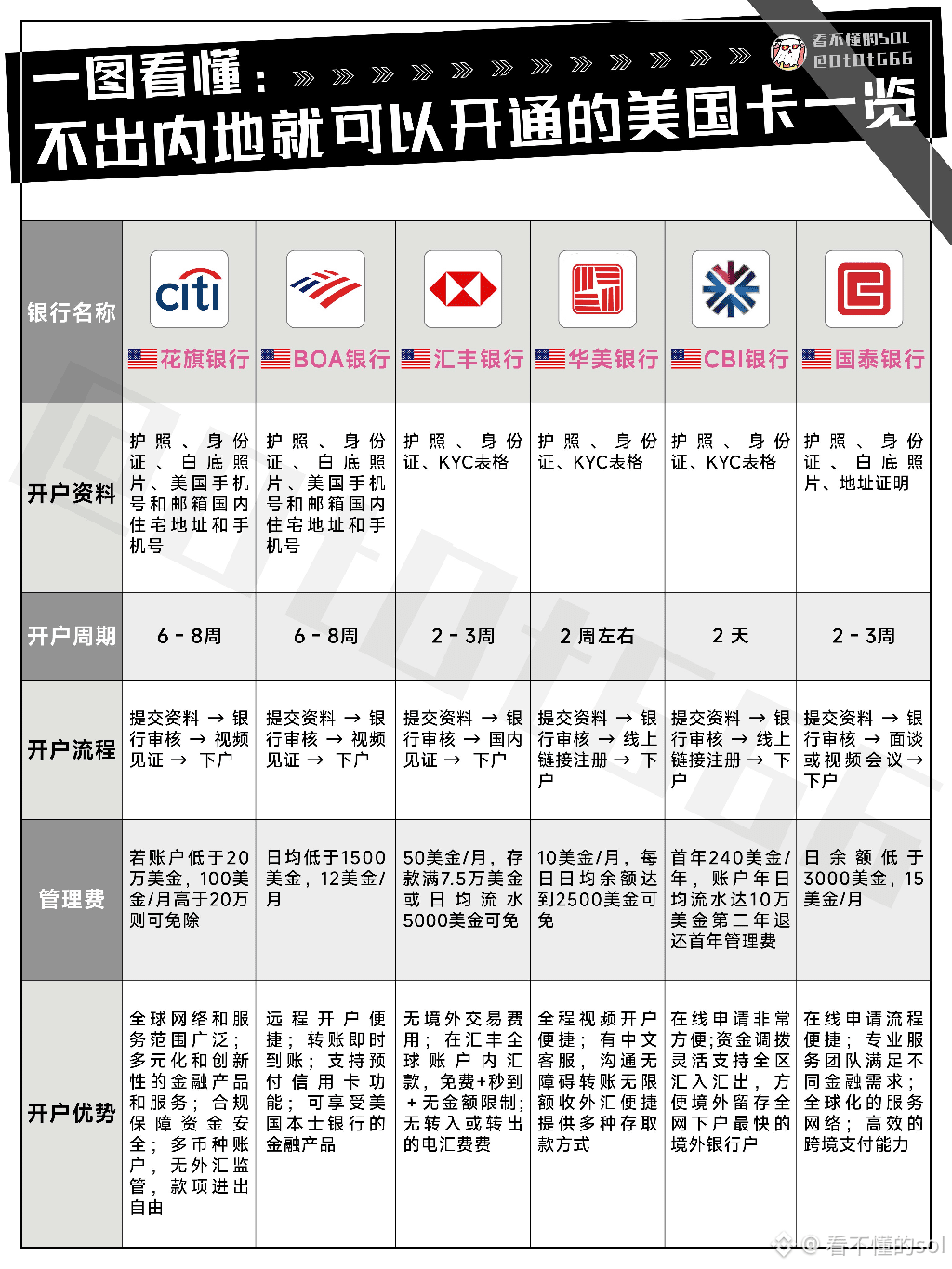
Listen to my advice: If you have the conditions and capability, you must take the opportunity to apply for an American card now — no need to fly to the United States, no need to go abroad, you can open it directly in mainland China. This is the ultimate gateway for ordinary people to embrace the global capital market.
Just look at this picture, from Citibank, BOA to HSBC and China Merchants Bank, you have 6 mainstream American banks to choose from, the threshold is much lower than you think:
Account opening materials: Passport + ID card are the basics, plus a KYC form / proof of address, and have a U.S. phone number ready in advance (universal on Xianyu), no need to struggle with overseas materials;
Account opening efficiency: The fastest can be opened in 2 days (CBI Bank directly maximizes efficiency), and the slowest takes only 6-8 weeks, with the entire process being online review in mainland China + video verification, no need to go to the bank branch, no need for in-person signatures;
Fund security: Regulated and compliant under U.S. supervision, multi-currency accounts can be freely deposited and withdrawn, 100 times more reliable than those unreliable cross-border platforms.
It’s that simple: Prepare the materials → Submit for review → Online video / verification → Account opening, and you will have a real American bank card, a strictly regulated 'global wallet'.
Then you can freely invest in U.S. stocks —
If you are optimistic about the future of AI, buy the Nasdaq 100 (code QQQM);
If you are optimistic about the global economy, buy the S&P 500 (code VOO);
Then invest a little in BTC and gold, for your retirement!
Listen to my advice: If you have the conditions and capability, you must take the opportunity to apply for an American card now — no need to fly to the United States, no need to go abroad, you can open it directly in mainland China. This is the ultimate gateway for ordinary people to embrace the global capital market.
Just look at this picture, from Citibank, BOA to HSBC and China Merchants Bank, you have 6 mainstream American banks to choose from, the threshold is much lower than you think:
Account opening materials: Passport + ID card are the basics, plus a KYC form / proof of address, and have a U.S. phone number ready in advance (universal on Xianyu), no need to struggle with overseas materials;
Account opening efficiency: The fastest can be opened in 2 days (CBI Bank directly maximizes efficiency), and the slowest takes only 6-8 weeks, with the entire process being online review in mainland China + video verification, no need to go to the bank branch, no need for in-person signatures;
Fund security: Regulated and compliant under U.S. supervision, multi-currency accounts can be freely deposited and withdrawn, 100 times more reliable than those unreliable cross-border platforms.
It’s that simple: Prepare the materials → Submit for review → Online video / verification → Account opening, and you will have a real American bank card, a strictly regulated 'global wallet'.
Then you can freely invest in U.S. stocks —
If you are optimistic about the future of AI, buy the Nasdaq 100 (code QQQM);
If you are optimistic about the global economy, buy the S&P 500 (code VOO);
Then invest a little in BTC and gold, for your retirement!
Just look at this picture, from Citibank, BOA to HSBC and China Merchants Bank, you have 6 mainstream American banks to choose from, the threshold is much lower than you think:
Account opening materials: Passport + ID card are the basics, plus a KYC form / proof of address, and have a U.S. phone number ready in advance (universal on Xianyu), no need to struggle with overseas materials;
Account opening efficiency: The fastest can be opened in 2 days (CBI Bank directly maximizes efficiency), and the slowest takes only 6-8 weeks, with the entire process being online review in mainland China + video verification, no need to go to the bank branch, no need for in-person signatures;
Fund security: Regulated and compliant under U.S. supervision, multi-currency accounts can be freely deposited and withdrawn, 100 times more reliable than those unreliable cross-border platforms.
It’s that simple: Prepare the materials → Submit for review → Online video / verification → Account opening, and you will have a real American bank card, a strictly regulated 'global wallet'.
Then you can freely invest in U.S. stocks —
If you are optimistic about the future of AI, buy the Nasdaq 100 (code QQQM);
If you are optimistic about the global economy, buy the S&P 500 (code VOO);
Then invest a little in BTC and gold, for your retirement!
15
5
30
11.7k
·
--
Phenomenal financial report, profits soared, far exceeding expectations!!
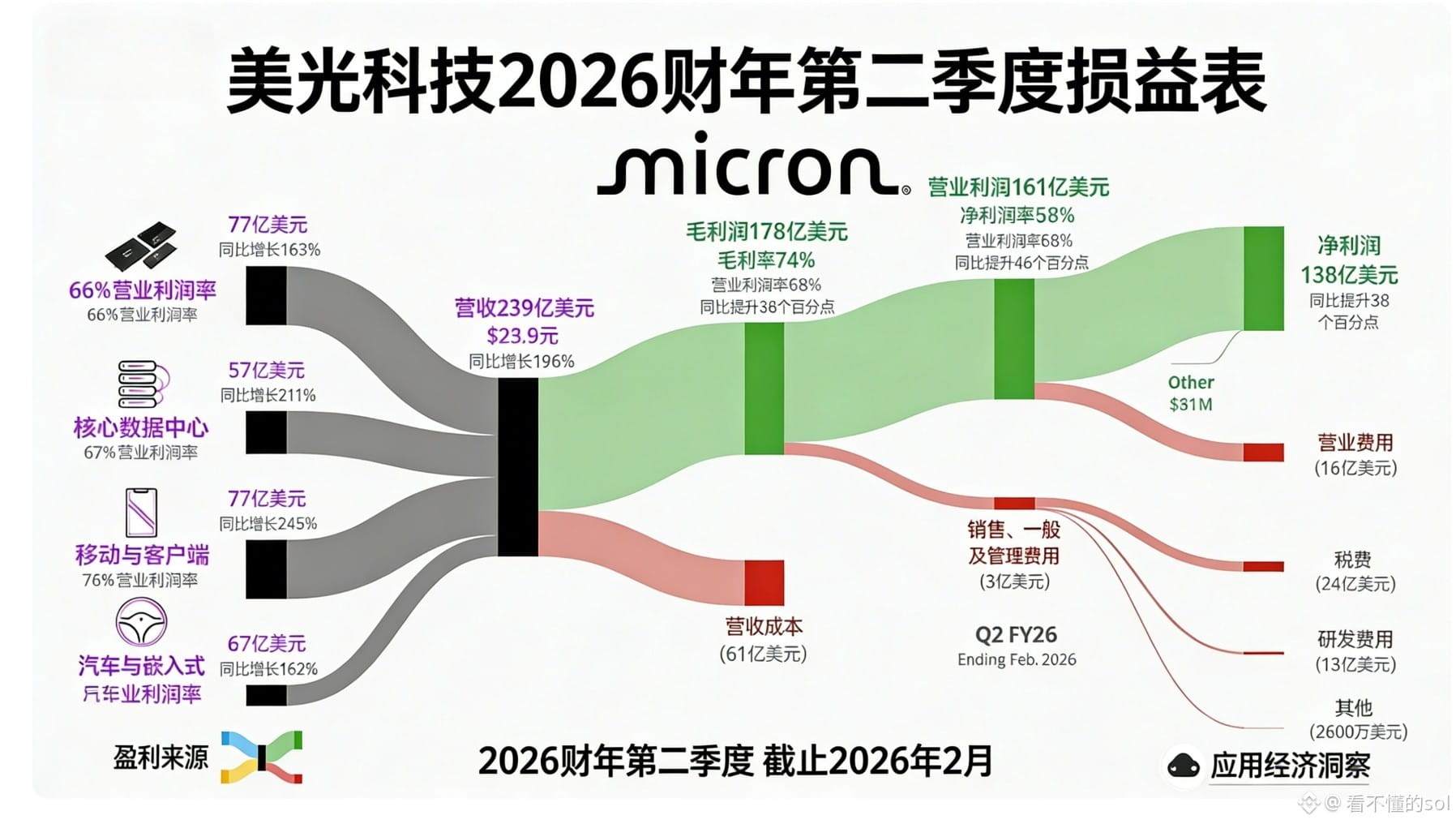
This morning, a major event occurred in the storage sector as Micron Technology released its second fiscal quarter report for the period ending this February.
The data is truly impressive—revenue skyrocketed by 197%, gross margin reached 74.4%, and all core indicators exploded.
Almost simultaneously, Alibaba Cloud also took action, with AI computing power and storage products rising by up to 34%, and the reason is straightforward: Token usage hit a historic high.
These two events happening on the same day is no coincidence.
It points to a core judgment: AI is pushing the storage industry from the previous “cyclical ups and downs” to a new phase of “value re-evaluation.”
First, let's look at Micron's financial report, which is indeed a phenomenon driven by AI.
How to describe the performance of the second fiscal quarter? Using the term “off the charts” is not an exaggeration:
Even more alarming is the expectation for the next quarter—third fiscal quarter revenue is expected to be $33.5 billion, while analysts are only predicting $24.3 billion; earnings per share are $19.15, with gross margin continuing to soar to around 81%.
With such confidence, the board directly announced a 30% increase in the quarterly dividend.
So the question arises: What is Micron's secret to such strength?
Just three words: AI is driving it.
Phenomenal financial report, profits soared, far exceeding expectations!!
This morning, a major event occurred in the storage sector as Micron Technology released its second fiscal quarter report for the period ending this February.
The data is truly impressive—revenue skyrocketed by 197%, gross margin reached 74.4%, and all core indicators exploded.
Almost simultaneously, Alibaba Cloud also took action, with AI computing power and storage products rising by up to 34%, and the reason is straightforward: Token usage hit a historic high.
These two events happening on the same day is no coincidence.
It points to a core judgment: AI is pushing the storage industry from the previous “cyclical ups and downs” to a new phase of “value re-evaluation.”
First, let's look at Micron's financial report, which is indeed a phenomenon driven by AI.
How to describe the performance of the second fiscal quarter? Using the term “off the charts” is not an exaggeration:
Even more alarming is the expectation for the next quarter—third fiscal quarter revenue is expected to be $33.5 billion, while analysts are only predicting $24.3 billion; earnings per share are $19.15, with gross margin continuing to soar to around 81%.
With such confidence, the board directly announced a 30% increase in the quarterly dividend.
So the question arises: What is Micron's secret to such strength?
Just three words: AI is driving it.
This morning, a major event occurred in the storage sector as Micron Technology released its second fiscal quarter report for the period ending this February.
The data is truly impressive—revenue skyrocketed by 197%, gross margin reached 74.4%, and all core indicators exploded.
Almost simultaneously, Alibaba Cloud also took action, with AI computing power and storage products rising by up to 34%, and the reason is straightforward: Token usage hit a historic high.
These two events happening on the same day is no coincidence.
It points to a core judgment: AI is pushing the storage industry from the previous “cyclical ups and downs” to a new phase of “value re-evaluation.”
First, let's look at Micron's financial report, which is indeed a phenomenon driven by AI.
How to describe the performance of the second fiscal quarter? Using the term “off the charts” is not an exaggeration:
Even more alarming is the expectation for the next quarter—third fiscal quarter revenue is expected to be $33.5 billion, while analysts are only predicting $24.3 billion; earnings per share are $19.15, with gross margin continuing to soar to around 81%.
With such confidence, the board directly announced a 30% increase in the quarterly dividend.
So the question arises: What is Micron's secret to such strength?
Just three words: AI is driving it.
7
6k
·
--
10 Recommended Efficient and Practical Tools for Investing in US Stocks!
1. Real-time Market Data and In-depth Analysis Tools
Yahoo Finance: Easily view real-time stock prices, pre-market and after-hours performance, and basic financial report data; a lightweight tool for quickly tracking fluctuations in selected stocks.
Seeking Alpha: Focused on crowdsourced research reports, covering bullish and bearish analysis viewpoints for individual stocks; its earnings call transcripts feature helps capture management communication content.
2. Macroeconomic and Authoritative Information Channels
WSJ (The Wall Street Journal): Focused on Federal Reserve policies, interest rates, US domestic economic data (non-farm payrolls, CPI, etc.), and the movements of large companies, it is the core of information that Wall Street funds pay attention to.
FT (Financial Times): With a more international perspective, it excels in analyzing the impact of global monetary policies and supply chain changes on US stocks, suitable for grasping macro trends.
3. Financial Knowledge and Systematic Learning Platforms
Coursera: Offers systematic courses such as "Company Valuation" and "Principles of Financial Markets," helping to build a proper financial analysis framework rather than relying solely on news-driven decisions.
Investopedia: Breaks down complex financial terms such as short selling, options, and EBITDA, serving as a practical financial dictionary for beginners and experienced investors looking to fill knowledge gaps.
4. Vertical Information Tools in the Tech Track
Tech Crunch: Covers startup dynamics, product launches, and venture capital trends, helping to uncover small and mid-cap targets in the tech sector; can also predict business layouts through acquisition trends of leading companies.
The Information: A subscription-based in-depth media outlet focused on insider information in the tech industry (such as competition among giants, internal company changes, etc.), catering to tech stock investors with high information density needs.
5. Market Sentiment and Alternative Observation Channels
Reddit: Through communities like r/wallstreetbets and r/stocks, it allows for sensing retail investor sentiment and irrational market fluctuations, making it easier to identify short squeezes and retail investor group dynamics.
Spotify: Through business podcasts such as "Acquired" and "All-in," gain insights into company histories, executive interviews, and other in-depth content, supplementing traditional data with business understanding.
10 Recommended Efficient and Practical Tools for Investing in US Stocks!
1. Real-time Market Data and In-depth Analysis Tools
Yahoo Finance: Easily view real-time stock prices, pre-market and after-hours performance, and basic financial report data; a lightweight tool for quickly tracking fluctuations in selected stocks.
Seeking Alpha: Focused on crowdsourced research reports, covering bullish and bearish analysis viewpoints for individual stocks; its earnings call transcripts feature helps capture management communication content.
2. Macroeconomic and Authoritative Information Channels
WSJ (The Wall Street Journal): Focused on Federal Reserve policies, interest rates, US domestic economic data (non-farm payrolls, CPI, etc.), and the movements of large companies, it is the core of information that Wall Street funds pay attention to.
FT (Financial Times): With a more international perspective, it excels in analyzing the impact of global monetary policies and supply chain changes on US stocks, suitable for grasping macro trends.
3. Financial Knowledge and Systematic Learning Platforms
Coursera: Offers systematic courses such as "Company Valuation" and "Principles of Financial Markets," helping to build a proper financial analysis framework rather than relying solely on news-driven decisions.
Investopedia: Breaks down complex financial terms such as short selling, options, and EBITDA, serving as a practical financial dictionary for beginners and experienced investors looking to fill knowledge gaps.
4. Vertical Information Tools in the Tech Track
Tech Crunch: Covers startup dynamics, product launches, and venture capital trends, helping to uncover small and mid-cap targets in the tech sector; can also predict business layouts through acquisition trends of leading companies.
The Information: A subscription-based in-depth media outlet focused on insider information in the tech industry (such as competition among giants, internal company changes, etc.), catering to tech stock investors with high information density needs.
5. Market Sentiment and Alternative Observation Channels
Reddit: Through communities like r/wallstreetbets and r/stocks, it allows for sensing retail investor sentiment and irrational market fluctuations, making it easier to identify short squeezes and retail investor group dynamics.
Spotify: Through business podcasts such as "Acquired" and "All-in," gain insights into company histories, executive interviews, and other in-depth content, supplementing traditional data with business understanding.
1. Real-time Market Data and In-depth Analysis Tools
Yahoo Finance: Easily view real-time stock prices, pre-market and after-hours performance, and basic financial report data; a lightweight tool for quickly tracking fluctuations in selected stocks.
Seeking Alpha: Focused on crowdsourced research reports, covering bullish and bearish analysis viewpoints for individual stocks; its earnings call transcripts feature helps capture management communication content.
2. Macroeconomic and Authoritative Information Channels
WSJ (The Wall Street Journal): Focused on Federal Reserve policies, interest rates, US domestic economic data (non-farm payrolls, CPI, etc.), and the movements of large companies, it is the core of information that Wall Street funds pay attention to.
FT (Financial Times): With a more international perspective, it excels in analyzing the impact of global monetary policies and supply chain changes on US stocks, suitable for grasping macro trends.
3. Financial Knowledge and Systematic Learning Platforms
Coursera: Offers systematic courses such as "Company Valuation" and "Principles of Financial Markets," helping to build a proper financial analysis framework rather than relying solely on news-driven decisions.
Investopedia: Breaks down complex financial terms such as short selling, options, and EBITDA, serving as a practical financial dictionary for beginners and experienced investors looking to fill knowledge gaps.
4. Vertical Information Tools in the Tech Track
Tech Crunch: Covers startup dynamics, product launches, and venture capital trends, helping to uncover small and mid-cap targets in the tech sector; can also predict business layouts through acquisition trends of leading companies.
The Information: A subscription-based in-depth media outlet focused on insider information in the tech industry (such as competition among giants, internal company changes, etc.), catering to tech stock investors with high information density needs.
5. Market Sentiment and Alternative Observation Channels
Reddit: Through communities like r/wallstreetbets and r/stocks, it allows for sensing retail investor sentiment and irrational market fluctuations, making it easier to identify short squeezes and retail investor group dynamics.
Spotify: Through business podcasts such as "Acquired" and "All-in," gain insights into company histories, executive interviews, and other in-depth content, supplementing traditional data with business understanding.
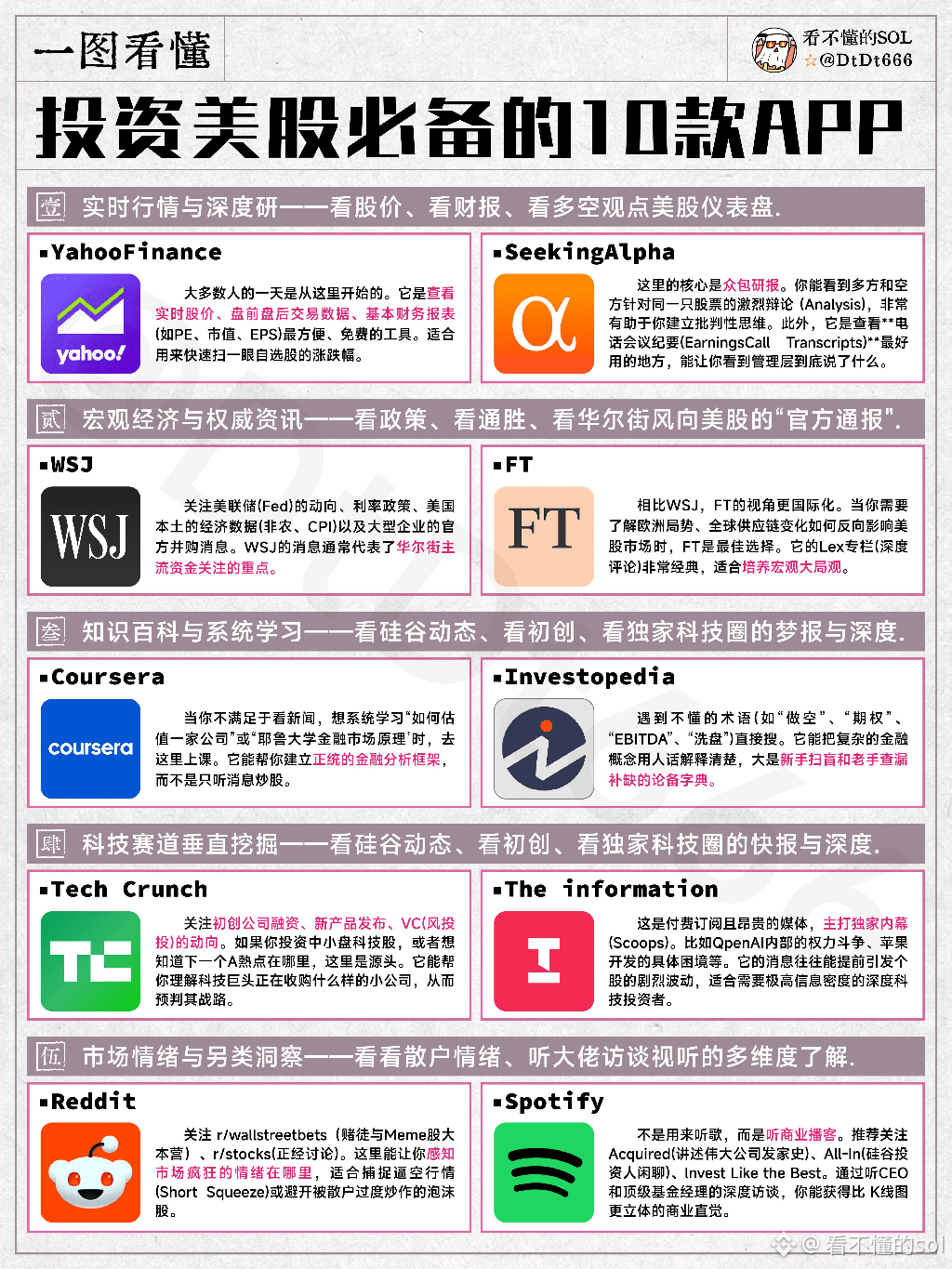
11
4.7k
Log in to explore more content
Join global crypto users on Binance Square
⚡️ Get latest and useful information about crypto.
💬 Trusted by the world’s largest crypto exchange.
👍 Discover real insights from verified creators.
Email / Phone number
Trending Topics
USAugustPPIRisesLessThanExpected
24,375 views
568 Discussing
🚨 US AUG PPI: Rises LESS Than Expected! Bullish for Crypto? 🚀
PPI +0.4% MoM as expected, but CORE PPI only +0.2% vs +0.3% expected - cooling!
What it means:
• Wholesale inflation softer than feared
• Fed rate hike chance now 62% - but dovish signals coming
• Core PCE revisions expected downward - bullish
• BTC usually pumps on softer PPI
Fed meeting Sep 15-16 - Market now expects pause, not hike?
Is this the green light for Q4 rally?
#Bitcoin #PPI #Fed #CryptoNews #BTC#usaugustppiriseslessthanexpected
True News
·1 Likes
·1.3k views
SECApprovesNasdaqTexasCommodityTrustRule
17,503 views
446 Discussing
ECBRaisesRatesSecondTimeTo2.5%
14,328 views
321 Discussing