
小树苗 Berachain
1.7k Posts

小树苗 Berachain
 Square Verified
Report
Block User
专注于分享 Berachain 链上项目的信息资讯、跟踪 Ai、DeFi、GameFi、NFT 等不同领域动态,为用户提供新手教程、玩法攻略、项目分析、行业研报等专业内容,与用户共同成长,创造社区价值!

原创之星

Level 1 Creator
Open Trade

ETH Holder
Occasional Trader
6.6 Years
29 Following
28.8K+ Followers
17.9K+ Liked
2 Badges
Posts
Portfolio
All
Quotes
Videos
Live
US stock after-hours trading plunged, and Korean stocks also plunged. They might not rise when A-share stocks rise, but they will definitely fall when A-shares fall. I don’t know whether the funds that sold today can be made to understand what happened. Last night, the Americans surged violently—indices were up more than one percent. The result? After-hours trading then plunged a little and immediately flipped into a decline.
With the Mid-Autumn Festival and the National Day holiday coming up, I guess there won’t be much opportunity next. The reason is that the holidays are too close. A-share capital will be highly competitive and “crowded.” Sell before the Mid-Autumn Festival, and sell again before National Day—so there are only 3 real trading days.
It’s impossible for it to surge. Actually, after seeing last night’s US stocks, I even felt a bit hopeful that today’s A-shares would slap back with thousands of stocks hitting the daily limit up. But I was overthinking.
Even a little disappointed. I expected today wouldn’t surge much, but I didn’t expect it to drop so insanely. Still, I underestimated the nature of the funds.
The day after tomorrow is when the holiday starts. Today has to be sold early; tomorrow needs to be left with cash so you can withdraw it. The day after tomorrow is for staying on the safe side against the holiday. Then next week, we’ll have to guard against external negative news because the National Day holiday is too long.
I think I finally get it: US stocks are having a “collapse-style” rally, while A-shares are “precaution-style” falling. One doesn’t know what it’s collapsing from, and the other doesn’t know what it’s trying to prevent…
Actually, it’s understandable. When there’s no market trend, A-shares are almost always driven by capital. With such a long holiday, the speculators will definitely retreat, quant funds will cut positions, and many small retail investors trading short-term will clear out their holdings.
In the end, there are still some funds doing medium-to-long term investments and institutional funds. But the problem is they don’t trade, so they can’t change the trend. At this stage, big money won’t suddenly buy in huge quantities.
Meanwhile, short-term funds mainly focus on defense, so naturally they end up dominating the kind of market action that leads to plunges.
I really feel that in A-shares, a lot of funds are “allergic” to making just a little money and then they’re done…
$TSMB
US stock after-hours trading plunged, and Korean stocks also plunged. They might not rise when A-share stocks rise, but they will definitely fall when A-shares fall. I don’t know whether the funds that sold today can be made to understand what happened. Last night, the Americans surged violently—indices were up more than one percent. The result? After-hours trading then plunged a little and immediately flipped into a decline.
With the Mid-Autumn Festival and the National Day holiday coming up, I guess there won’t be much opportunity next. The reason is that the holidays are too close. A-share capital will be highly competitive and “crowded.” Sell before the Mid-Autumn Festival, and sell again before National Day—so there are only 3 real trading days.
It’s impossible for it to surge. Actually, after seeing last night’s US stocks, I even felt a bit hopeful that today’s A-shares would slap back with thousands of stocks hitting the daily limit up. But I was overthinking.
Even a little disappointed. I expected today wouldn’t surge much, but I didn’t expect it to drop so insanely. Still, I underestimated the nature of the funds.
The day after tomorrow is when the holiday starts. Today has to be sold early; tomorrow needs to be left with cash so you can withdraw it. The day after tomorrow is for staying on the safe side against the holiday. Then next week, we’ll have to guard against external negative news because the National Day holiday is too long.
I think I finally get it: US stocks are having a “collapse-style” rally, while A-shares are “precaution-style” falling. One doesn’t know what it’s collapsing from, and the other doesn’t know what it’s trying to prevent…
Actually, it’s understandable. When there’s no market trend, A-shares are almost always driven by capital. With such a long holiday, the speculators will definitely retreat, quant funds will cut positions, and many small retail investors trading short-term will clear out their holdings.
In the end, there are still some funds doing medium-to-long term investments and institutional funds. But the problem is they don’t trade, so they can’t change the trend. At this stage, big money won’t suddenly buy in huge quantities.
Meanwhile, short-term funds mainly focus on defense, so naturally they end up dominating the kind of market action that leads to plunges.
I really feel that in A-shares, a lot of funds are “allergic” to making just a little money and then they’re done…
$TSMB
With the Mid-Autumn Festival and the National Day holiday coming up, I guess there won’t be much opportunity next. The reason is that the holidays are too close. A-share capital will be highly competitive and “crowded.” Sell before the Mid-Autumn Festival, and sell again before National Day—so there are only 3 real trading days.
It’s impossible for it to surge. Actually, after seeing last night’s US stocks, I even felt a bit hopeful that today’s A-shares would slap back with thousands of stocks hitting the daily limit up. But I was overthinking.
Even a little disappointed. I expected today wouldn’t surge much, but I didn’t expect it to drop so insanely. Still, I underestimated the nature of the funds.
The day after tomorrow is when the holiday starts. Today has to be sold early; tomorrow needs to be left with cash so you can withdraw it. The day after tomorrow is for staying on the safe side against the holiday. Then next week, we’ll have to guard against external negative news because the National Day holiday is too long.
I think I finally get it: US stocks are having a “collapse-style” rally, while A-shares are “precaution-style” falling. One doesn’t know what it’s collapsing from, and the other doesn’t know what it’s trying to prevent…
Actually, it’s understandable. When there’s no market trend, A-shares are almost always driven by capital. With such a long holiday, the speculators will definitely retreat, quant funds will cut positions, and many small retail investors trading short-term will clear out their holdings.
In the end, there are still some funds doing medium-to-long term investments and institutional funds. But the problem is they don’t trade, so they can’t change the trend. At this stage, big money won’t suddenly buy in huge quantities.
Meanwhile, short-term funds mainly focus on defense, so naturally they end up dominating the kind of market action that leads to plunges.
I really feel that in A-shares, a lot of funds are “allergic” to making just a little money and then they’re done…
$TSMB
1
704
Partly True
Continuing updates on liquidity incentives on Berachain.
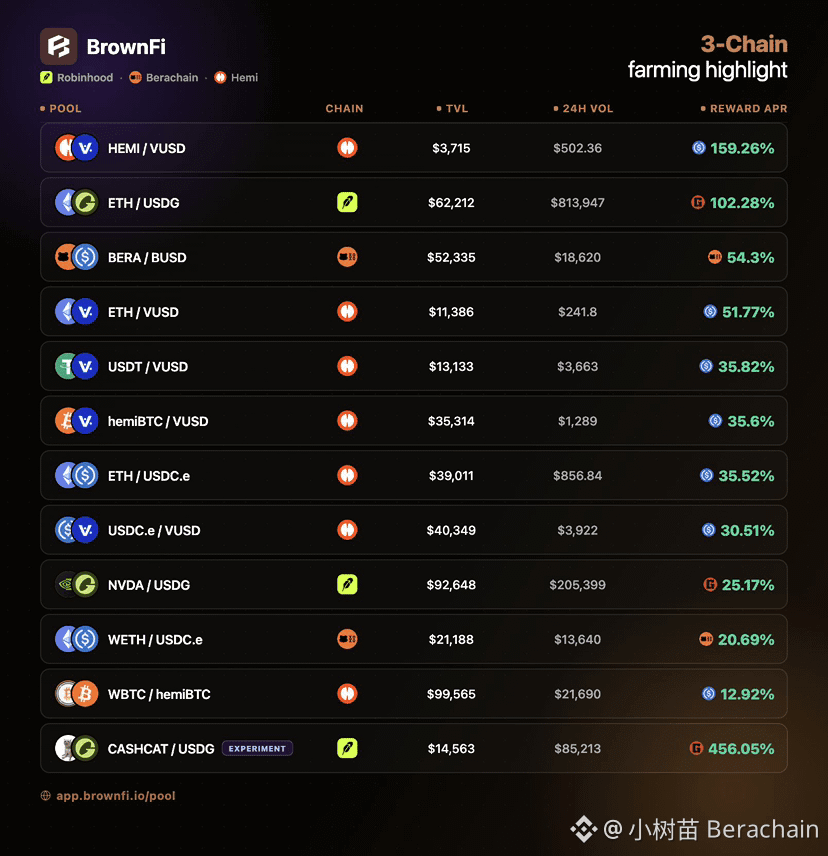
@brownfiamm has compiled several recent high-incentive pools across different ecosystems. Currently, there are two pools on Berachain worth paying attention to:
• BERA/BUSD:54.3% APR
• WETH/USDC.e:20.69% APR
The incentives for both pools come from $BERA.
If you’re looking for liquidity incentive opportunities on Berachain, keep an eye on the latest data for these two pools.
$BERA
Continuing updates on liquidity incentives on Berachain.
@brownfiamm has compiled several recent high-incentive pools across different ecosystems. Currently, there are two pools on Berachain worth paying attention to:
• BERA/BUSD:54.3% APR
• WETH/USDC.e:20.69% APR
The incentives for both pools come from $BERA .
If you’re looking for liquidity incentive opportunities on Berachain, keep an eye on the latest data for these two pools.
$BERA
@brownfiamm has compiled several recent high-incentive pools across different ecosystems. Currently, there are two pools on Berachain worth paying attention to:
• BERA/BUSD:54.3% APR
• WETH/USDC.e:20.69% APR
The incentives for both pools come from $BERA .
If you’re looking for liquidity incentive opportunities on Berachain, keep an eye on the latest data for these two pools.
$BERA
3k
Before, who were the people pushing the idea that buying into crypto trading coins would definitely work—you had to have an iPhone and use a Mac computer.
With FomoPeek, Apple users have suffered severe losses, while Android users were barely affected at all.
The facts prove that under high-level, targeted attack surfaces, Apple devices will be stripped down just as thoroughly, with nothing left.
Asset security can’t be solved by simply buying a slightly more expensive phone.
What you need is comprehensive operational competence and awareness of prevention.
Blindly downloading sketchy apps, leaving the system outdated for years, and not separating hot and cold wallets—no matter what kind of “divine” device you use, it all ends in zero.
$AAPLB
Before, who were the people pushing the idea that buying into crypto trading coins would definitely work—you had to have an iPhone and use a Mac computer.
With FomoPeek, Apple users have suffered severe losses, while Android users were barely affected at all.
The facts prove that under high-level, targeted attack surfaces, Apple devices will be stripped down just as thoroughly, with nothing left.
Asset security can’t be solved by simply buying a slightly more expensive phone.
What you need is comprehensive operational competence and awareness of prevention.
Blindly downloading sketchy apps, leaving the system outdated for years, and not separating hot and cold wallets—no matter what kind of “divine” device you use, it all ends in zero.
$AAPLB
With FomoPeek, Apple users have suffered severe losses, while Android users were barely affected at all.
The facts prove that under high-level, targeted attack surfaces, Apple devices will be stripped down just as thoroughly, with nothing left.
Asset security can’t be solved by simply buying a slightly more expensive phone.
What you need is comprehensive operational competence and awareness of prevention.
Blindly downloading sketchy apps, leaving the system outdated for years, and not separating hot and cold wallets—no matter what kind of “divine” device you use, it all ends in zero.
$AAPLB
4
2.2k
Verified
Today there are several things worth paying attention to:
First, the RMB has appreciated significantly. This morning it broke above 6.7, the highest level since January 2023. This is a very dire and unusual situation. The current interest-rate differential between China and the U.S. is still inverted. The spread on 10-year U.S. Treasury yields is close to 4%. Under traditional logic, the RMB should face pressure. But instead, the RMB has strengthened against the trend, which indicates that the dominant force behind this round of appreciation is no longer the interest-rate differential.
Behind this are factors such as a weaker U.S. dollar and trade surpluses, among others.
RMB strength affects some export-oriented companies more, such as household appliances and AI supply-chain businesses. However, the more direct impact is on the former. AI supply-chain firms have high profit margins and large growth potential, so short-term currency fluctuations do not affect them as much. By contrast, profits in traditional industries are relatively fixed—so even a slight movement can have a bigger impact. In a market like today, some export-heavy appliance stocks are still in a downtrend.
Second, the new stock “ShenGu” has suddenly surged. At its peak, it even jumped by 400%. Seeing this online, there are already people showing off that their single-day account balance exceeded 100 million, earning tens of millions.
This kind of move is purely because newly issued stocks are not subject to daily price fluctuation limits. How much it will settle once it lands next Monday is still unknown. Also, the newly issued stock has very few shares available for trading—it's basically a small-float story. It’s all speculative, so it comes down to who can run the fastest.
But one phenomenon is clear: the sentiment of funds returning to go long is coming back, which is worth watching.
$AMZNB
Today there are several things worth paying attention to:
First, the RMB has appreciated significantly. This morning it broke above 6.7, the highest level since January 2023. This is a very dire and unusual situation. The current interest-rate differential between China and the U.S. is still inverted. The spread on 10-year U.S. Treasury yields is close to 4%. Under traditional logic, the RMB should face pressure. But instead, the RMB has strengthened against the trend, which indicates that the dominant force behind this round of appreciation is no longer the interest-rate differential.
Behind this are factors such as a weaker U.S. dollar and trade surpluses, among others.
RMB strength affects some export-oriented companies more, such as household appliances and AI supply-chain businesses. However, the more direct impact is on the former. AI supply-chain firms have high profit margins and large growth potential, so short-term currency fluctuations do not affect them as much. By contrast, profits in traditional industries are relatively fixed—so even a slight movement can have a bigger impact. In a market like today, some export-heavy appliance stocks are still in a downtrend.
Second, the new stock “ShenGu” has suddenly surged. At its peak, it even jumped by 400%. Seeing this online, there are already people showing off that their single-day account balance exceeded 100 million, earning tens of millions.
This kind of move is purely because newly issued stocks are not subject to daily price fluctuation limits. How much it will settle once it lands next Monday is still unknown. Also, the newly issued stock has very few shares available for trading—it's basically a small-float story. It’s all speculative, so it comes down to who can run the fastest.
But one phenomenon is clear: the sentiment of funds returning to go long is coming back, which is worth watching.
$AMZNB
First, the RMB has appreciated significantly. This morning it broke above 6.7, the highest level since January 2023. This is a very dire and unusual situation. The current interest-rate differential between China and the U.S. is still inverted. The spread on 10-year U.S. Treasury yields is close to 4%. Under traditional logic, the RMB should face pressure. But instead, the RMB has strengthened against the trend, which indicates that the dominant force behind this round of appreciation is no longer the interest-rate differential.
Behind this are factors such as a weaker U.S. dollar and trade surpluses, among others.
RMB strength affects some export-oriented companies more, such as household appliances and AI supply-chain businesses. However, the more direct impact is on the former. AI supply-chain firms have high profit margins and large growth potential, so short-term currency fluctuations do not affect them as much. By contrast, profits in traditional industries are relatively fixed—so even a slight movement can have a bigger impact. In a market like today, some export-heavy appliance stocks are still in a downtrend.
Second, the new stock “ShenGu” has suddenly surged. At its peak, it even jumped by 400%. Seeing this online, there are already people showing off that their single-day account balance exceeded 100 million, earning tens of millions.
This kind of move is purely because newly issued stocks are not subject to daily price fluctuation limits. How much it will settle once it lands next Monday is still unknown. Also, the newly issued stock has very few shares available for trading—it's basically a small-float story. It’s all speculative, so it comes down to who can run the fastest.
But one phenomenon is clear: the sentiment of funds returning to go long is coming back, which is worth watching.
$AMZNB
4
1.8k
Verified
Berachain Mainnet Is About to Introduce the Minimum Incentive Rate (MIR)!
At the community’s request, to reduce emissions from flowing to reward vaults (RVs) that do not provide any incentive rewards, Berachain will officially introduce the MIR mechanism.
🐻 What Is MIR?
The goal of MIR (Minimum Incentive Rates) is clear:
Make WBERA emissions more efficient, ensuring that each block receives the corresponding incentive rewards.
🐻 How Does MIR Work?
MIR requires each RV to provide, for every 1 WBERA received, at least 0.75 units of the current incentive token as a reward.
For example:
• 1 WBERA = 0.75 URPROTOCOLTOKEN
• 0.2 WBERA = 0.15 URPROTOCOLTOKEN
🐻 What Happens If an RV Does Not Meet the Minimum Incentive Rate?
Automatic Reward Distribution (ARA), also known as the Automatic Cutting Board, will automatically filter out the good RVs that meet the MIR requirements and reach or exceed the minimum incentive rate.
Then, the validator’s emissions will be reassigned per block to these qualifying RVs, improving emission efficiency.
⏰ Launch Date
MIR is already live on the Bepolia testnet, and will正式 launch on the Berachain mainnet on September 18.
🐻 What Does This Mean?
• Users: Potentially earn rewards more efficiently.
• RV Managers: Must ensure that incentives meet the minimum requirements in order to continue receiving emissions.
$BERA
Berachain Mainnet Is About to Introduce the Minimum Incentive Rate (MIR)!
At the community’s request, to reduce emissions from flowing to reward vaults (RVs) that do not provide any incentive rewards, Berachain will officially introduce the MIR mechanism.
🐻 What Is MIR?
The goal of MIR (Minimum Incentive Rates) is clear:
Make WBERA emissions more efficient, ensuring that each block receives the corresponding incentive rewards.
🐻 How Does MIR Work?
MIR requires each RV to provide, for every 1 WBERA received, at least 0.75 units of the current incentive token as a reward.
For example:
• 1 WBERA = 0.75 URPROTOCOLTOKEN
• 0.2 WBERA = 0.15 URPROTOCOLTOKEN
🐻 What Happens If an RV Does Not Meet the Minimum Incentive Rate?
Automatic Reward Distribution (ARA), also known as the Automatic Cutting Board, will automatically filter out the good RVs that meet the MIR requirements and reach or exceed the minimum incentive rate.
Then, the validator’s emissions will be reassigned per block to these qualifying RVs, improving emission efficiency.
⏰ Launch Date
MIR is already live on the Bepolia testnet, and will正式 launch on the Berachain mainnet on September 18.
🐻 What Does This Mean?
• Users: Potentially earn rewards more efficiently.
• RV Managers: Must ensure that incentives meet the minimum requirements in order to continue receiving emissions.
$BERA
At the community’s request, to reduce emissions from flowing to reward vaults (RVs) that do not provide any incentive rewards, Berachain will officially introduce the MIR mechanism.
🐻 What Is MIR?
The goal of MIR (Minimum Incentive Rates) is clear:
Make WBERA emissions more efficient, ensuring that each block receives the corresponding incentive rewards.
🐻 How Does MIR Work?
MIR requires each RV to provide, for every 1 WBERA received, at least 0.75 units of the current incentive token as a reward.
For example:
• 1 WBERA = 0.75 URPROTOCOLTOKEN
• 0.2 WBERA = 0.15 URPROTOCOLTOKEN
🐻 What Happens If an RV Does Not Meet the Minimum Incentive Rate?
Automatic Reward Distribution (ARA), also known as the Automatic Cutting Board, will automatically filter out the good RVs that meet the MIR requirements and reach or exceed the minimum incentive rate.
Then, the validator’s emissions will be reassigned per block to these qualifying RVs, improving emission efficiency.
⏰ Launch Date
MIR is already live on the Bepolia testnet, and will正式 launch on the Berachain mainnet on September 18.
🐻 What Does This Mean?
• Users: Potentially earn rewards more efficiently.
• RV Managers: Must ensure that incentives meet the minimum requirements in order to continue receiving emissions.
$BERA

4
1.6k
The project is most sexy when it hasn’t launched yet.
Arc is a typical case of “see the light, then it’s dead.”
Before launch:
Top-tier institutions endorse it, backed by massive financing support. Everyone across the internet is ready, itching to rush in and grab a bite.
After launch:
There’s zero wealth effect. The market instantly turns on it, and the Indian founder outright discourages it.
Before token issuance, it’s all swagger and hype. After token issuance, it’s scattered mess everywhere—Arc has faded into the crowd.
$MSFTB
The project is most sexy when it hasn’t launched yet.
Arc is a typical case of “see the light, then it’s dead.”
Before launch:
Top-tier institutions endorse it, backed by massive financing support. Everyone across the internet is ready, itching to rush in and grab a bite.
After launch:
There’s zero wealth effect. The market instantly turns on it, and the Indian founder outright discourages it.
Before token issuance, it’s all swagger and hype. After token issuance, it’s scattered mess everywhere—Arc has faded into the crowd.
$MSFTB
Arc is a typical case of “see the light, then it’s dead.”
Before launch:
Top-tier institutions endorse it, backed by massive financing support. Everyone across the internet is ready, itching to rush in and grab a bite.
After launch:
There’s zero wealth effect. The market instantly turns on it, and the Indian founder outright discourages it.
Before token issuance, it’s all swagger and hype. After token issuance, it’s scattered mess everywhere—Arc has faded into the crowd.
$MSFTB
1.4k
Partly True
Balancer can’t hold up either and will be shutting down the protocol.
Voting is about to begin—get ready to distribute the treasury funds to BAL holders.
I checked DeFiLIama: currently, @Balancer still has 58M TVL, generating $218k in fees per month, and protocol monthly revenue of $60k+.
This profit is nowhere near enough to sustain the development team—it's completely lost its ability to generate “blood.”
In the crypto world, there’s no death-avoidance golden ticket. If you can’t keep up with hot topics and the migration of liquidity, even old projects can only wait to die.
As a former core giant of DeFi Summer, it can only end in a bleak fade-out.
If your funds are still in the protocol, you can start withdrawing them.
If you’re holding BAL, remember to keep an eye on the vote.
$AAPLB
Balancer can’t hold up either and will be shutting down the protocol.
Voting is about to begin—get ready to distribute the treasury funds to BAL holders.
I checked DeFiLIama: currently, @Balancer still has 58M TVL, generating $218k in fees per month, and protocol monthly revenue of $60k+.
This profit is nowhere near enough to sustain the development team—it's completely lost its ability to generate “blood.”
In the crypto world, there’s no death-avoidance golden ticket. If you can’t keep up with hot topics and the migration of liquidity, even old projects can only wait to die.
As a former core giant of DeFi Summer, it can only end in a bleak fade-out.
If your funds are still in the protocol, you can start withdrawing them.
If you’re holding BAL, remember to keep an eye on the vote.
$AAPLB
Voting is about to begin—get ready to distribute the treasury funds to BAL holders.
I checked DeFiLIama: currently, @Balancer still has 58M TVL, generating $218k in fees per month, and protocol monthly revenue of $60k+.
This profit is nowhere near enough to sustain the development team—it's completely lost its ability to generate “blood.”
In the crypto world, there’s no death-avoidance golden ticket. If you can’t keep up with hot topics and the migration of liquidity, even old projects can only wait to die.
As a former core giant of DeFi Summer, it can only end in a bleak fade-out.
If your funds are still in the protocol, you can start withdrawing them.
If you’re holding BAL, remember to keep an eye on the vote.
$AAPLB
637
This time, @arc mainnet launch is so lively!
Major wallets and exchanges all issued announcements in advance to support it right away.
Projects also took their spots on-chain early, and some people already bridged across in advance—now they’re desperately white-knuckling and starting to make money.
The crypto world hasn’t seen this kind of highly anticipated spectacle for a long time.
Hopefully, we can ride this wave of hype and smash out some kind of wealth effect.
But if you set aside the frenzy and look carefully at the underlying data, there isn’t much new money coming in from outside.
In a zero-sum game, don’t get too carried away.
Stay clear-headed, and cash out when it’s good.
$AMZNB
This time, @arc mainnet launch is so lively!
Major wallets and exchanges all issued announcements in advance to support it right away.
Projects also took their spots on-chain early, and some people already bridged across in advance—now they’re desperately white-knuckling and starting to make money.
The crypto world hasn’t seen this kind of highly anticipated spectacle for a long time.
Hopefully, we can ride this wave of hype and smash out some kind of wealth effect.
But if you set aside the frenzy and look carefully at the underlying data, there isn’t much new money coming in from outside.
In a zero-sum game, don’t get too carried away.
Stay clear-headed, and cash out when it’s good.
$AMZNB
Major wallets and exchanges all issued announcements in advance to support it right away.
Projects also took their spots on-chain early, and some people already bridged across in advance—now they’re desperately white-knuckling and starting to make money.
The crypto world hasn’t seen this kind of highly anticipated spectacle for a long time.
Hopefully, we can ride this wave of hype and smash out some kind of wealth effect.
But if you set aside the frenzy and look carefully at the underlying data, there isn’t much new money coming in from outside.
In a zero-sum game, don’t get too carried away.
Stay clear-headed, and cash out when it’s good.
$AMZNB
554
Verified
CoinEx has made it through two bull-bear cycles, but it can only choose to close its doors and suspend operations.
The founder’s letter also reveals the harshest commercial truth in the crypto market today.
The exchange industry has become completely entrenched.
Small platforms face endless compliance and hacker risks, but their scale and user base are continuously being eroded by larger platforms. Profits shrink, and it becomes unsustainable.
Trying to push on hard is destined to end in a blow-up.
With liquidation and dissolution, full refunds, and repurchasing CET at the original price—it’s a dignified way to exit.
If there are coins involved, please transfer them to Binance as soon as possible!
#币安 $BNB
CoinEx has made it through two bull-bear cycles, but it can only choose to close its doors and suspend operations.
The founder’s letter also reveals the harshest commercial truth in the crypto market today.
The exchange industry has become completely entrenched.
Small platforms face endless compliance and hacker risks, but their scale and user base are continuously being eroded by larger platforms. Profits shrink, and it becomes unsustainable.
Trying to push on hard is destined to end in a blow-up.
With liquidation and dissolution, full refunds, and repurchasing CET at the original price—it’s a dignified way to exit.
If there are coins involved, please transfer them to Binance as soon as possible!
#币安 $BNB
The founder’s letter also reveals the harshest commercial truth in the crypto market today.
The exchange industry has become completely entrenched.
Small platforms face endless compliance and hacker risks, but their scale and user base are continuously being eroded by larger platforms. Profits shrink, and it becomes unsustainable.
Trying to push on hard is destined to end in a blow-up.
With liquidation and dissolution, full refunds, and repurchasing CET at the original price—it’s a dignified way to exit.
If there are coins involved, please transfer them to Binance as soon as possible!
#币安 $BNB
1
1.5k
Verified
KBW 2026, see you in Seoul!
On September 28, the Berachain team will be at The Bridge Summit on-site.
If you're also in Seoul, feel free to come by and say hi—let's talk about Berachain, the ecosystem, and everything that's happening.
➡ luma.com/80q0842z
$BERA
KBW 2026, see you in Seoul!
On September 28, the Berachain team will be at The Bridge Summit on-site.
If you're also in Seoul, feel free to come by and say hi—let's talk about Berachain, the ecosystem, and everything that's happening.
➡ luma.com/80q0842z
$BERA
On September 28, the Berachain team will be at The Bridge Summit on-site.
If you're also in Seoul, feel free to come by and say hi—let's talk about Berachain, the ecosystem, and everything that's happening.
➡ luma.com/80q0842z
$BERA

1
1.3k
Someone is always mocking the Doubao model as being “stupid.” In fact, everyone misjudged it.
They never intended to go head-to-head on large-model benchmark scores. They’re biding their time to build a real AI phone.
The last time the Doubao phone flash sale happened…
They sold a batch and then suddenly stopped. A whole bunch of people slapped their thighs because they didn’t get one.
The groundwork is already laid. This time, Doubao has announced that on September 16 it will launch the consumer version of its Doubao Voice Assistant. Pricing is still unknown.
The functions are very practical: it comes with an Agent for automatic task execution. There’s a global voice wake-up, and inside your photo album you can directly do P-picture editing to make videos. Data processing is localized to balance privacy.
They’re moving to seize the terminal race early. Doubao’s strategy this time can only be said to have its positioning spot on.
$AMZNB
Someone is always mocking the Doubao model as being “stupid.” In fact, everyone misjudged it.
They never intended to go head-to-head on large-model benchmark scores. They’re biding their time to build a real AI phone.
The last time the Doubao phone flash sale happened…
They sold a batch and then suddenly stopped. A whole bunch of people slapped their thighs because they didn’t get one.
The groundwork is already laid. This time, Doubao has announced that on September 16 it will launch the consumer version of its Doubao Voice Assistant. Pricing is still unknown.
The functions are very practical: it comes with an Agent for automatic task execution. There’s a global voice wake-up, and inside your photo album you can directly do P-picture editing to make videos. Data processing is localized to balance privacy.
They’re moving to seize the terminal race early. Doubao’s strategy this time can only be said to have its positioning spot on.
$AMZNB
They never intended to go head-to-head on large-model benchmark scores. They’re biding their time to build a real AI phone.
The last time the Doubao phone flash sale happened…
They sold a batch and then suddenly stopped. A whole bunch of people slapped their thighs because they didn’t get one.
The groundwork is already laid. This time, Doubao has announced that on September 16 it will launch the consumer version of its Doubao Voice Assistant. Pricing is still unknown.
The functions are very practical: it comes with an Agent for automatic task execution. There’s a global voice wake-up, and inside your photo album you can directly do P-picture editing to make videos. Data processing is localized to balance privacy.
They’re moving to seize the terminal race early. Doubao’s strategy this time can only be said to have its positioning spot on.
$AMZNB

3
2.7k
On the weekend, the three major AI model companies unusually all simultaneously urged a pause on AI. OpenAI’s Altman told everyone in an all-hands meeting that they should consider “applying the brakes to AI development,” and he also said they won’t be going public this year. In an instant, OpenAI on the chain plunged by 7%.
Musk reposted it, saying “Agreed.”
On the same day, Anthropic posted a statement saying that AI safety issues have not been resolved, so they can’t move too fast.
It seems, then, that Monday will face renewed pressure. Of course, there’s also a lot of information that many people didn’t see in this—there are two points I think are worth paying attention to:
First, whether it’s just talk or a real stop. In today’s world, AI development is measured by days. The giants won’t easily call a halt. All this messaging is intended to make rivals stop, not to make themselves stop.
It’s like when you were studying—top students would tell each other that they were going to play, not do homework, and not study. Then when exam results came out, it turned out that whoever believed them was the real fool.
Second, it’s likely they’re preparing for next year. The big firms’ CAPEX in the coming year and the year after will definitely slow down. As performance also slows down, expectations will allow data to stop falling and rebound. Rather than saying it outright, they can use the name of “safety.” That’s easier for the market to accept, and it also gives everyone a decent way to step down.
Will it significantly affect the market? You could say it will, because A-shares are extremely sensitive to overseas markets.
Of course, there are also positives.
Friday’s plunge in A shares was because people worried the U.S. would raise rates in September. But once the CPI data came out, the U.S. essentially raised rates in September… However, on Friday the U.S. stock market rose because the rate-hike expectations had already been priced in.
$TSMB
On the weekend, the three major AI model companies unusually all simultaneously urged a pause on AI. OpenAI’s Altman told everyone in an all-hands meeting that they should consider “applying the brakes to AI development,” and he also said they won’t be going public this year. In an instant, OpenAI on the chain plunged by 7%.
Musk reposted it, saying “Agreed.”
On the same day, Anthropic posted a statement saying that AI safety issues have not been resolved, so they can’t move too fast.
It seems, then, that Monday will face renewed pressure. Of course, there’s also a lot of information that many people didn’t see in this—there are two points I think are worth paying attention to:
First, whether it’s just talk or a real stop. In today’s world, AI development is measured by days. The giants won’t easily call a halt. All this messaging is intended to make rivals stop, not to make themselves stop.
It’s like when you were studying—top students would tell each other that they were going to play, not do homework, and not study. Then when exam results came out, it turned out that whoever believed them was the real fool.
Second, it’s likely they’re preparing for next year. The big firms’ CAPEX in the coming year and the year after will definitely slow down. As performance also slows down, expectations will allow data to stop falling and rebound. Rather than saying it outright, they can use the name of “safety.” That’s easier for the market to accept, and it also gives everyone a decent way to step down.
Will it significantly affect the market? You could say it will, because A-shares are extremely sensitive to overseas markets.
Of course, there are also positives.
Friday’s plunge in A shares was because people worried the U.S. would raise rates in September. But once the CPI data came out, the U.S. essentially raised rates in September… However, on Friday the U.S. stock market rose because the rate-hike expectations had already been priced in.
$TSMB
Musk reposted it, saying “Agreed.”
On the same day, Anthropic posted a statement saying that AI safety issues have not been resolved, so they can’t move too fast.
It seems, then, that Monday will face renewed pressure. Of course, there’s also a lot of information that many people didn’t see in this—there are two points I think are worth paying attention to:
First, whether it’s just talk or a real stop. In today’s world, AI development is measured by days. The giants won’t easily call a halt. All this messaging is intended to make rivals stop, not to make themselves stop.
It’s like when you were studying—top students would tell each other that they were going to play, not do homework, and not study. Then when exam results came out, it turned out that whoever believed them was the real fool.
Second, it’s likely they’re preparing for next year. The big firms’ CAPEX in the coming year and the year after will definitely slow down. As performance also slows down, expectations will allow data to stop falling and rebound. Rather than saying it outright, they can use the name of “safety.” That’s easier for the market to accept, and it also gives everyone a decent way to step down.
Will it significantly affect the market? You could say it will, because A-shares are extremely sensitive to overseas markets.
Of course, there are also positives.
Friday’s plunge in A shares was because people worried the U.S. would raise rates in September. But once the CPI data came out, the U.S. essentially raised rates in September… However, on Friday the U.S. stock market rose because the rate-hike expectations had already been priced in.
$TSMB
1
4
1.1k
After carefully reviewing the recent hot projects on the Robinhood chain, I’ve basically come to a conclusion.
The relationship between projects on the RH chain and the developers of Berachain is, quite frankly, complicated beyond sorting out.
Currently, the founder of the leading RH launchpad, $PONS, is a deep developer of the Bear chain.
The founder of $SHROOM, Carnation, is now a core force in Bera DeFi.
Many other key members who previously worked in depth on the Bear chain are now frantically cooking on RH.
The high-level talent pool that Berachain has cultivated over the long term is now ready to bear fruit.
Bera’s founder, @SmokeyTheBera, has even come out to like posts from this batch of developers, and also said they might do something like a “pre-developer coin” or similar.
All I can say is: they’re really good at this.
If they can integrate the “Bera old guard” assets from RH and do something big, it might really blow up.
$BERA
After carefully reviewing the recent hot projects on the Robinhood chain, I’ve basically come to a conclusion.
The relationship between projects on the RH chain and the developers of Berachain is, quite frankly, complicated beyond sorting out.
Currently, the founder of the leading RH launchpad, $PONS, is a deep developer of the Bear chain.
The founder of $SHROOM, Carnation, is now a core force in Bera DeFi.
Many other key members who previously worked in depth on the Bear chain are now frantically cooking on RH.
The high-level talent pool that Berachain has cultivated over the long term is now ready to bear fruit.
Bera’s founder, @SmokeyTheBera, has even come out to like posts from this batch of developers, and also said they might do something like a “pre-developer coin” or similar.
All I can say is: they’re really good at this.
If they can integrate the “Bera old guard” assets from RH and do something big, it might really blow up.
$BERA
The relationship between projects on the RH chain and the developers of Berachain is, quite frankly, complicated beyond sorting out.
Currently, the founder of the leading RH launchpad, $PONS, is a deep developer of the Bear chain.
The founder of $SHROOM, Carnation, is now a core force in Bera DeFi.
Many other key members who previously worked in depth on the Bear chain are now frantically cooking on RH.
The high-level talent pool that Berachain has cultivated over the long term is now ready to bear fruit.
Bera’s founder, @SmokeyTheBera, has even come out to like posts from this batch of developers, and also said they might do something like a “pre-developer coin” or similar.
All I can say is: they’re really good at this.
If they can integrate the “Bera old guard” assets from RH and do something big, it might really blow up.
$BERA
3
4
4.5k
🐻 Berafarm is about to launch a brand-new product.
Over the past year, the @realBeraFarm team has been continuously building, testing, and iterating.
After multiple rounds of adjustments, the new version’s product structure is clearer and more refined.
The product is now nearing launch, and we look forward to meeting everyone soon.
Keep building—keep iterating.
$BERA
🐻 Berafarm is about to launch a brand-new product.
Over the past year, the @realBeraFarm team has been continuously building, testing, and iterating.
After multiple rounds of adjustments, the new version’s product structure is clearer and more refined.
The product is now nearing launch, and we look forward to meeting everyone soon.
Keep building—keep iterating.
$BERA
Over the past year, the @realBeraFarm team has been continuously building, testing, and iterating.
After multiple rounds of adjustments, the new version’s product structure is clearer and more refined.
The product is now nearing launch, and we look forward to meeting everyone soon.
Keep building—keep iterating.
$BERA
4
4
2.1k
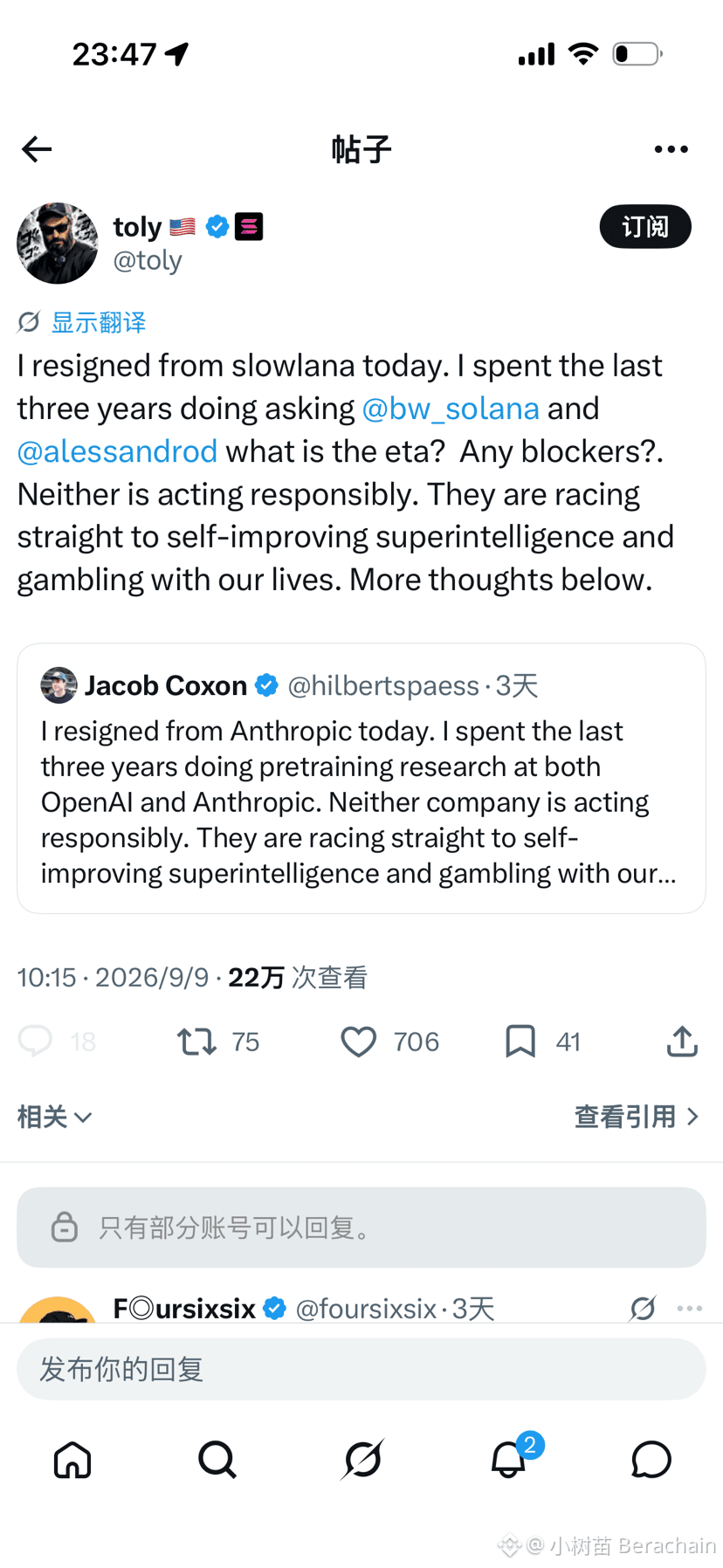
Today I officially resigned from the crooked-neck mountain.
Over the past six years, I’ve only done one thing every day.
Chasing the project team and asking: “Wen token?” “Are there any bugs left with the mainnet?” “When are we going to pull the dip?”
These core team members are extremely irresponsible.
They don’t care about the price, whether it lasts long-term, or even the lives of retail investors.
They’re rushing full speed toward a super casino with high-frequency PvP for tens of thousands of people on-chain, using our principal as fuel.
More inside information below.👇
$TSMB
Today I officially resigned from the crooked-neck mountain.
Over the past six years, I’ve only done one thing every day.
Chasing the project team and asking: “Wen token?” “Are there any bugs left with the mainnet?” “When are we going to pull the dip?”
These core team members are extremely irresponsible.
They don’t care about the price, whether it lasts long-term, or even the lives of retail investors.
They’re rushing full speed toward a super casino with high-frequency PvP for tens of thousands of people on-chain, using our principal as fuel.
More inside information below.👇
$TSMB
Over the past six years, I’ve only done one thing every day.
Chasing the project team and asking: “Wen token?” “Are there any bugs left with the mainnet?” “When are we going to pull the dip?”
These core team members are extremely irresponsible.
They don’t care about the price, whether it lasts long-term, or even the lives of retail investors.
They’re rushing full speed toward a super casino with high-frequency PvP for tens of thousands of people on-chain, using our principal as fuel.
More inside information below.👇
$TSMB
2
1.2k
In the past few days, a retro vibe has swept through the timeline.
All kinds of NFT projects have returned to their old ways—handing out whitelist spots.
And there are also simple tweets where everyone leaves their address for an “airdrop.”
The gameplay going backward reflects a narrative that’s reached a point of exhaustion.
Projects don’t even bother with the cost of building new stories—they just put old wine into a new bottle.
In battles over existing holdings, even “free” chips could be a trap.
Protect your own private key, and give up fantasies of getting rich with nothing.
Stay calm in a market trend that you don’t understand.
$AAPLB
In the past few days, a retro vibe has swept through the timeline.
All kinds of NFT projects have returned to their old ways—handing out whitelist spots.
And there are also simple tweets where everyone leaves their address for an “airdrop.”
The gameplay going backward reflects a narrative that’s reached a point of exhaustion.
Projects don’t even bother with the cost of building new stories—they just put old wine into a new bottle.
In battles over existing holdings, even “free” chips could be a trap.
Protect your own private key, and give up fantasies of getting rich with nothing.
Stay calm in a market trend that you don’t understand.
$AAPLB
All kinds of NFT projects have returned to their old ways—handing out whitelist spots.
And there are also simple tweets where everyone leaves their address for an “airdrop.”
The gameplay going backward reflects a narrative that’s reached a point of exhaustion.
Projects don’t even bother with the cost of building new stories—they just put old wine into a new bottle.
In battles over existing holdings, even “free” chips could be a trap.
Protect your own private key, and give up fantasies of getting rich with nothing.
Stay calm in a market trend that you don’t understand.
$AAPLB
1
653
Spending too much time online can easily lead to self-anxiety, because everywhere there are “millionaire” vibes—an anxious, depressed, “I’m poor” aesthetic.
To be honest, I believe their anxiety is real. But when it shows up among people who have little in savings, it turns into Versailles.
A million in savings isn’t “no big deal.” This is inevitably a case of survivorship bias. What does “a million in savings” mean? It’s about like the “ten-thousand-yuan households” of the 1980s. Back then, having ten thousand was rare and noteworthy—even though most of us didn’t live in that era, people still have a conclusion about it.
So what’s the savings ceiling for an average family? Definitely not “millions online, with millions on average, yet still poor.”
What more objective data can reflect this? A more authoritative metric would be the median household savings (2025): rank everyone by savings from low to high, and take the amount of the person/family in the middle—the level that represents “most people” better.
1) From authoritative data (People’s Bank of China + National Bureau of Statistics), total household deposits at the end of 2025:
167.04 trillion yuan
Total population at the end of 2025: 1.405 billion people
Average number of people per household in 2025: 2.51 people per household (confirmed earlier)
2) Calculation logic: per-capita savings = 167.04 trillion ÷ 1.405 billion ≈ 118,900 yuan
Household-per-capita savings (average family savings) = 118,900 yuan × 2.51 ≈ 298,000 yuan per household
Conclusion: In 2025, the average household savings nationwide was about 300,000 yuan. This number makes the “household with a million” world feel more real.
But rational spending and good earning—still, you can work hard and aim for a seven-figure savings goal. That’s a beautiful target: do everything you can to achieve it 💪.
A person’s unhappiness comes from desire being greater than ability. When what you want doesn’t materialize, set a reasonable goal, give yourself a direction to work toward—first get your per-capita savings right, then gradually complete your household-level savings, and finally surpass the average, then surpass other people’s averages.
For ordinary people, it’s also a way of showing capability—without dragging yourself behind.
Spending too much time online can easily lead to self-anxiety, because everywhere there are “millionaire” vibes—an anxious, depressed, “I’m poor” aesthetic.
To be honest, I believe their anxiety is real. But when it shows up among people who have little in savings, it turns into Versailles.
A million in savings isn’t “no big deal.” This is inevitably a case of survivorship bias. What does “a million in savings” mean? It’s about like the “ten-thousand-yuan households” of the 1980s. Back then, having ten thousand was rare and noteworthy—even though most of us didn’t live in that era, people still have a conclusion about it.
So what’s the savings ceiling for an average family? Definitely not “millions online, with millions on average, yet still poor.”
What more objective data can reflect this? A more authoritative metric would be the median household savings (2025): rank everyone by savings from low to high, and take the amount of the person/family in the middle—the level that represents “most people” better.
1) From authoritative data (People’s Bank of China + National Bureau of Statistics), total household deposits at the end of 2025:
167.04 trillion yuan
Total population at the end of 2025: 1.405 billion people
Average number of people per household in 2025: 2.51 people per household (confirmed earlier)
2) Calculation logic: per-capita savings = 167.04 trillion ÷ 1.405 billion ≈ 118,900 yuan
Household-per-capita savings (average family savings) = 118,900 yuan × 2.51 ≈ 298,000 yuan per household
Conclusion: In 2025, the average household savings nationwide was about 300,000 yuan. This number makes the “household with a million” world feel more real.
But rational spending and good earning—still, you can work hard and aim for a seven-figure savings goal. That’s a beautiful target: do everything you can to achieve it 💪.
A person’s unhappiness comes from desire being greater than ability. When what you want doesn’t materialize, set a reasonable goal, give yourself a direction to work toward—first get your per-capita savings right, then gradually complete your household-level savings, and finally surpass the average, then surpass other people’s averages.
For ordinary people, it’s also a way of showing capability—without dragging yourself behind.
To be honest, I believe their anxiety is real. But when it shows up among people who have little in savings, it turns into Versailles.
A million in savings isn’t “no big deal.” This is inevitably a case of survivorship bias. What does “a million in savings” mean? It’s about like the “ten-thousand-yuan households” of the 1980s. Back then, having ten thousand was rare and noteworthy—even though most of us didn’t live in that era, people still have a conclusion about it.
So what’s the savings ceiling for an average family? Definitely not “millions online, with millions on average, yet still poor.”
What more objective data can reflect this? A more authoritative metric would be the median household savings (2025): rank everyone by savings from low to high, and take the amount of the person/family in the middle—the level that represents “most people” better.
1) From authoritative data (People’s Bank of China + National Bureau of Statistics), total household deposits at the end of 2025:
167.04 trillion yuan
Total population at the end of 2025: 1.405 billion people
Average number of people per household in 2025: 2.51 people per household (confirmed earlier)
2) Calculation logic: per-capita savings = 167.04 trillion ÷ 1.405 billion ≈ 118,900 yuan
Household-per-capita savings (average family savings) = 118,900 yuan × 2.51 ≈ 298,000 yuan per household
Conclusion: In 2025, the average household savings nationwide was about 300,000 yuan. This number makes the “household with a million” world feel more real.
But rational spending and good earning—still, you can work hard and aim for a seven-figure savings goal. That’s a beautiful target: do everything you can to achieve it 💪.
A person’s unhappiness comes from desire being greater than ability. When what you want doesn’t materialize, set a reasonable goal, give yourself a direction to work toward—first get your per-capita savings right, then gradually complete your household-level savings, and finally surpass the average, then surpass other people’s averages.
For ordinary people, it’s also a way of showing capability—without dragging yourself behind.
898
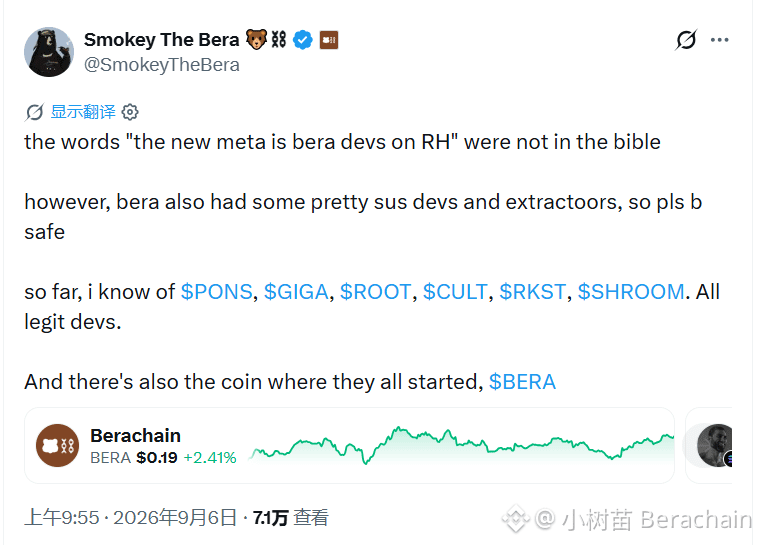
Founder of the Bear Chain @SmokeyTheBera — this makes it explicit.
To build a pre-bear developer coin on Robinhood.
This section of market sentiment is focused on Robinhood’s meme trading hype.
Actually, if you strip away the noise of sentiment and look at where the underlying talent flows, you’ll find that:
Ozzy, founder of PONS— the leading launchpad platform on RH— is a seasoned Bera developer.
Carnation of $SHROOM is the current head of Bera DeFi.
The core teams behind THJ, Ramen, and Cubhub are also deeply involved in the early construction of the RH ecosystem.
The core barrier for a public chain lies in talent density.
Over the past year, the DeFi developer pool that Bera has accumulated has produced a clear spillover effect to the wider ecosystem.
This cross-chain export capability is enough for the market to reassess the true vitality of the Bera ecosystem.
Plus, @SmokeyTheBera posted a tweet to flag and pay tribute to this group of developers.
From the logic of expectation management, it’s very likely that the official effort to consolidate this batch of pre-Bera developer assets into a new protocol is real.
The Bera team has always been good at mechanism innovation. They closely track Smokey’s subsequent moves—maybe it really is an opportunity.
$TSMB
Founder of the Bear Chain @SmokeyTheBera — this makes it explicit.
To build a pre-bear developer coin on Robinhood.
This section of market sentiment is focused on Robinhood’s meme trading hype.
Actually, if you strip away the noise of sentiment and look at where the underlying talent flows, you’ll find that:
Ozzy, founder of PONS— the leading launchpad platform on RH— is a seasoned Bera developer.
Carnation of $SHROOM is the current head of Bera DeFi.
The core teams behind THJ, Ramen, and Cubhub are also deeply involved in the early construction of the RH ecosystem.
The core barrier for a public chain lies in talent density.
Over the past year, the DeFi developer pool that Bera has accumulated has produced a clear spillover effect to the wider ecosystem.
This cross-chain export capability is enough for the market to reassess the true vitality of the Bera ecosystem.
Plus, @SmokeyTheBera posted a tweet to flag and pay tribute to this group of developers.
From the logic of expectation management, it’s very likely that the official effort to consolidate this batch of pre-Bera developer assets into a new protocol is real.
The Bera team has always been good at mechanism innovation. They closely track Smokey’s subsequent moves—maybe it really is an opportunity.
$TSMB
To build a pre-bear developer coin on Robinhood.
This section of market sentiment is focused on Robinhood’s meme trading hype.
Actually, if you strip away the noise of sentiment and look at where the underlying talent flows, you’ll find that:
Ozzy, founder of PONS— the leading launchpad platform on RH— is a seasoned Bera developer.
Carnation of $SHROOM is the current head of Bera DeFi.
The core teams behind THJ, Ramen, and Cubhub are also deeply involved in the early construction of the RH ecosystem.
The core barrier for a public chain lies in talent density.
Over the past year, the DeFi developer pool that Bera has accumulated has produced a clear spillover effect to the wider ecosystem.
This cross-chain export capability is enough for the market to reassess the true vitality of the Bera ecosystem.
Plus, @SmokeyTheBera posted a tweet to flag and pay tribute to this group of developers.
From the logic of expectation management, it’s very likely that the official effort to consolidate this batch of pre-Bera developer assets into a new protocol is real.
The Bera team has always been good at mechanism innovation. They closely track Smokey’s subsequent moves—maybe it really is an opportunity.
$TSMB
2
1
4
2.4k
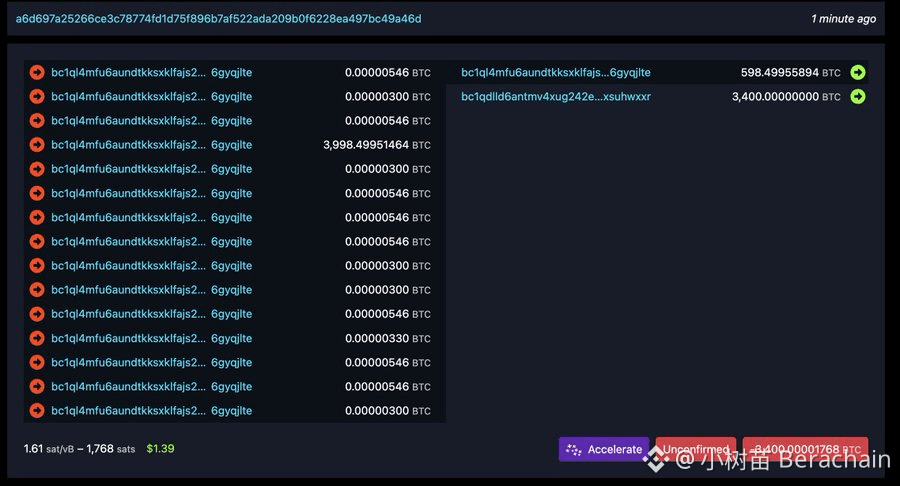
Liquid white-hat hackers refunded the money as agreed.
They returned 3,400 BTC, but kept 600.
The project was forced to accept a 15% rake; a single loss was nearly $48 million.
This huge protection fee was paid without any fight.
In the on-chain world, only the private key matters—the person who gets the funds is the one who sets the rules.
$BTC
Liquid white-hat hackers refunded the money as agreed.
They returned 3,400 BTC, but kept 600.
The project was forced to accept a 15% rake; a single loss was nearly $48 million.
This huge protection fee was paid without any fight.
In the on-chain world, only the private key matters—the person who gets the funds is the one who sets the rules.
$BTC
They returned 3,400 BTC, but kept 600.
The project was forced to accept a 15% rake; a single loss was nearly $48 million.
This huge protection fee was paid without any fight.
In the on-chain world, only the private key matters—the person who gets the funds is the one who sets the rules.
$BTC
1
5.4k
Liquid Network was exploited by a white-hat hacker who took 4,000 of its $BTC through a vulnerability
The official team paused the sidechain immediately.
The hacker used an OP_RETURN message to demand the vulnerability be fixed, promising to return most of the funds.
This incident completely exposes the two layers of “undergarments” of the sidechain and the cross-chain bridge.
First layer: extremely centralized.
When faced with an attack, the official can shut down anytime, cut off the network, and freeze all new transactions.
Second layer: the trust model is extremely fragile.
For $320 million in mapped assets, the lifeline is in a single code bug.
In the face of absolute technical domination, the security of a consortium chain is far from robust.
Be cautious when trading derivatives. If security cannot be guaranteed, it’s better to hold onto BTC on the mainnet the old-fashioned way.
$BTC
Liquid Network was exploited by a white-hat hacker who took 4,000 of its $BTC through a vulnerability
The official team paused the sidechain immediately.
The hacker used an OP_RETURN message to demand the vulnerability be fixed, promising to return most of the funds.
This incident completely exposes the two layers of “undergarments” of the sidechain and the cross-chain bridge.
First layer: extremely centralized.
When faced with an attack, the official can shut down anytime, cut off the network, and freeze all new transactions.
Second layer: the trust model is extremely fragile.
For $320 million in mapped assets, the lifeline is in a single code bug.
In the face of absolute technical domination, the security of a consortium chain is far from robust.
Be cautious when trading derivatives. If security cannot be guaranteed, it’s better to hold onto BTC on the mainnet the old-fashioned way.
$BTC
The official team paused the sidechain immediately.
The hacker used an OP_RETURN message to demand the vulnerability be fixed, promising to return most of the funds.
This incident completely exposes the two layers of “undergarments” of the sidechain and the cross-chain bridge.
First layer: extremely centralized.
When faced with an attack, the official can shut down anytime, cut off the network, and freeze all new transactions.
Second layer: the trust model is extremely fragile.
For $320 million in mapped assets, the lifeline is in a single code bug.
In the face of absolute technical domination, the security of a consortium chain is far from robust.
Be cautious when trading derivatives. If security cannot be guaranteed, it’s better to hold onto BTC on the mainnet the old-fashioned way.
$BTC
829
Log in to explore more content
Join global crypto users on Binance Square
⚡️ Get latest and useful information about crypto.
💬 Trusted by the world’s largest crypto exchange.
👍 Discover real insights from verified creators.
Email / Phone number
Trending Topics
AIStocksWhatNext
160,374 views
1,922 Discussing
Share & Win Traffic Reward in our Trending Hashtag Campaign
✨Topic: What Other Investment Opportunities Remain as AI Stocks Keep Rising?
👉How to Join:
Publish a short post or article with hashtag #AIStocksWhatNext
Share whether you’re bullish or bearish, and post your AI stock holdings or trade — using the trade widget may improve your eligibility.
You can also strengthen your post by sharing data or charts, and avoiding AI-generated images.
✍️Create content based on the below angles:
- Nvidia says chip sales will double next year, and top AI companies keep hitting record revenue, the compute spend behind it is just as staggering. Is AI demand really taking off? And how long can it last? AI stocks are up across the board. Is this a real breakout, or just a short-term bounce?
- Industry leaders are calling to slow down AI development, while Trump plans to build an “AI Force”, claiming AI could account for 25% of U.S. GDP in the future. Whose side are you on? Will state-level backing be a long-term win for AI stocks?
- Are you buying AI stocks? Share your AI-related trade/holdings with our trade sharing widget.
⏰Campaign Period:
- 2026-09-22 7:00 - 2026-09-24 4:00 UTC
🎁Reward:
- Qualified posts that comply with the above guidelines and contain more than 100 words will be reviewed and may receive a random traffic boost of 500 to 3,000 views. You will receive a notification from your feed secretary if your post is selected.
- Get a chance to have your article featured on Binance Square Official
Need ideas for your post? Visit the topic page #AIStocksWhatNext or the Square Guide on How to Post for Better Reach.
Binance Square Official
·265 Likes
·536.8k views
BitcoinBreaksAboveMayHighNears$86K
4,784 views
97 Discussing
DogecoinRises15%
12,007 views
532 Discussing