
吃饭
56 Posts

吃饭
Report
Block User
Open Trade
Occasional Trader
1.9 Years
3 Following
20 Followers
8 Liked
Posts
Portfolio
·
--
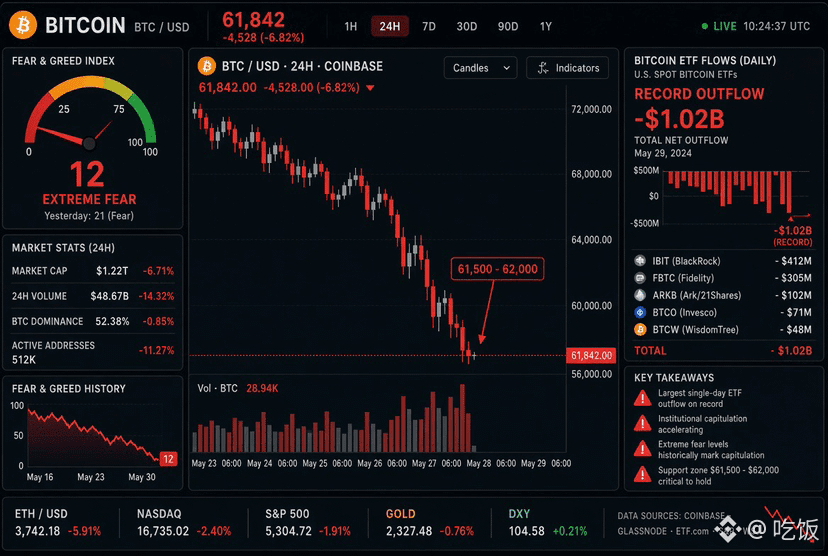
BTC dips below $62,000 again: record ETF outflows are the main culprit
BTC fell for a third consecutive day, with its low near $61,200. It is currently hovering in the $61,500–$62,000 range. BlackRock’s IBIT saw $541 million in outflows in a single day, a record high, while cumulative ETF outflows this month have exceeded $3 billion.
Tech stock sell-offs and macroeconomic pressures are weighing on prices simultaneously. Leveraged liquidations have amplified the decline. BTC is now testing the previous low’s support zone; if it breaks below that level, the next key level is lower. The fear index is extremely low, but funds are still flowing out. A rebound will require ETF flows to reverse.
169
·
--
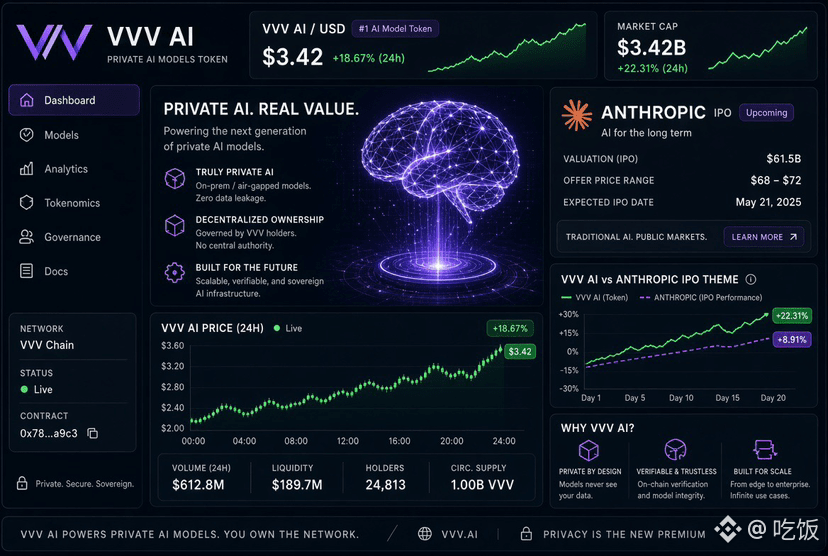
VVV: another thread in the AI narrative
VVV (Venice-related) and other AI tokens rose today, buoyed by tech sentiment surrounding Anthropic’s IPO. Like PEARL, this is a localized thematic trade.
In crypto, the AI sector is more a reflection of sentiment than a direct realization of revenue. Hype can build quickly, but if sentiment cools after the IPO, gains could easily be given back.
It’s worth watching how tech-stock sentiment spills over into crypto AI, rather than simply chasing the rally. Distinguishing event-driven moves from genuine adoption is important.
168
·
--
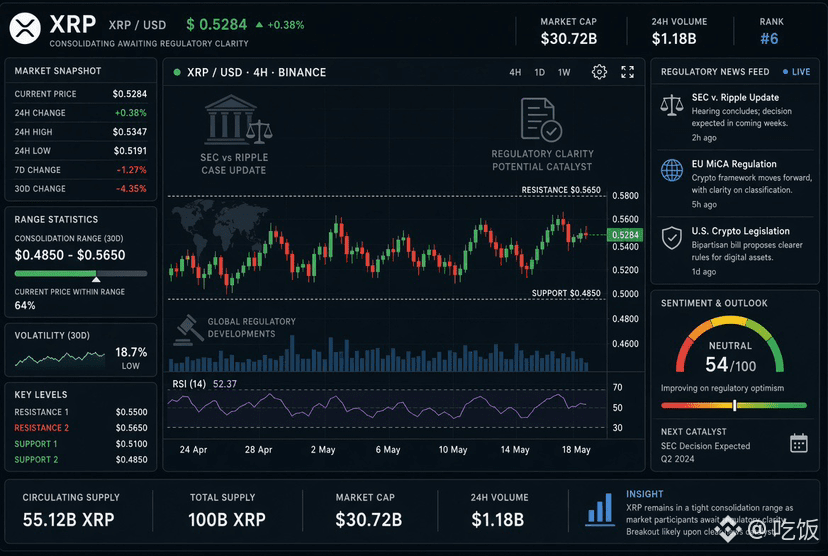
XRP’s range-bound movement: The regulatory narrative remains, but investors are cautious
XRP fluctuated slightly today, largely tracking the broader market. Regulatory expectations remain a long-term narrative, but amid extreme fear, investors are more inclined to sit on the sidelines.
Compared with the pockets of enthusiasm around AI themes, XRP looks more like an asset “waiting for a catalyst.” Its price sensitivity depends on external news rather than its own burn or revenue mechanisms.
It is suitable as an indicator for observing shifts in market sentiment. If risk appetite recovers, it may catch up; if pressure continues, it could easily fall further.
88
·
--
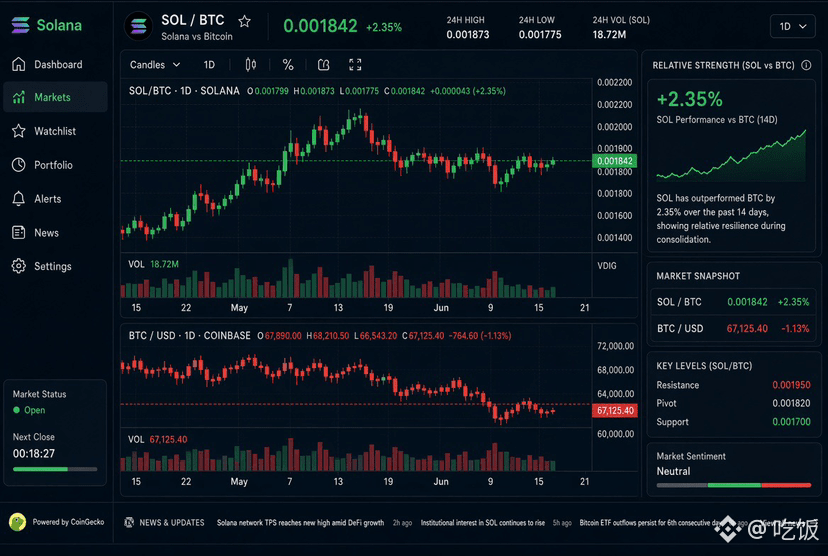
SOL’s Relative Resilience Amid Broader Market Pressure
SOL has held up relatively well today, posting modest gains at times while BTC continues to fluctuate above $63,000. Ecosystem activity and on-chain transaction volume are providing support.
In an environment of extreme fear, investors are more willing to stay in networks with real-world use cases. However, the broader market remains weighed down by macroeconomic factors and ETF outflows, limiting the strength of any rebound.
The key things to watch are whether SOL can continue to outperform BTC and whether ecosystem projects keep generating genuine demand. It is relatively strong in the short term, but its performance in the medium term still depends on the broader market.
308
·
--
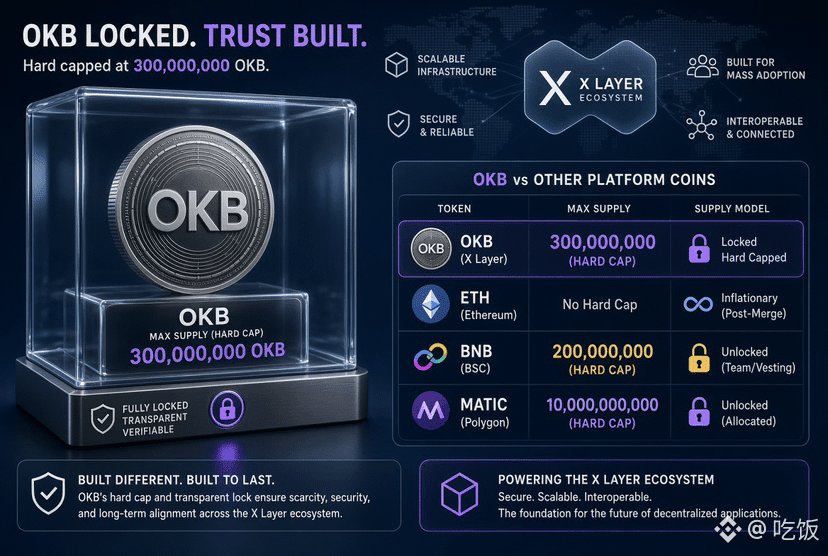
Demand test after OKB’s supply freeze: hard supply constraint vs. actual usage
After its supply was locked, OKB’s price performance has depended more on whether actual demand for new sectors such as X Layer materializes. During the current market consolidation, it is under pressure like other exchange tokens, but its hard supply cap sets it apart.
Compared with BNB’s ongoing burns and HYPE’s fee-funded buybacks, OKB puts greater emphasis on “no further increase in supply.” If usage in its new ecosystem can keep pace, the long-term thesis becomes clearer; if demand is insufficient, locking up tokens is just a numbers game.
In periods of extreme sentiment, it’s more useful to compare the mechanisms of the three exchange tokens than to focus only on short-term price movements. #okb
441
·
--
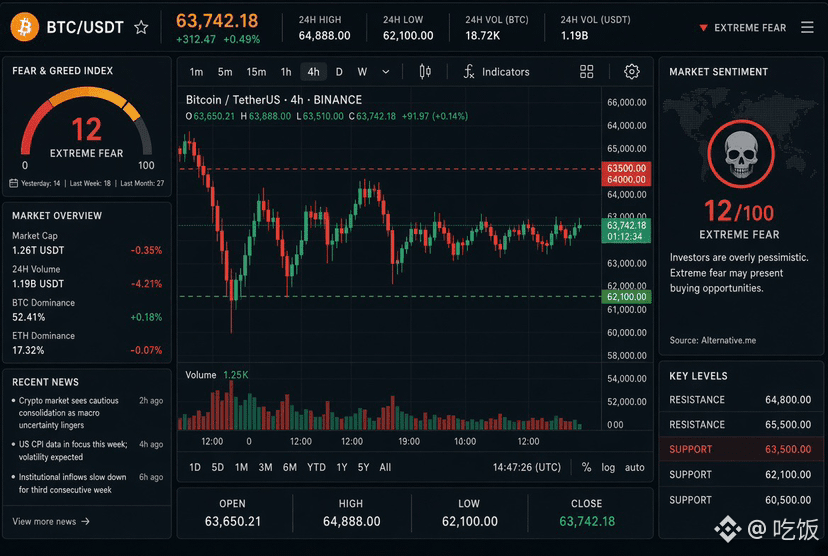
. BTC consolidates above $63,000: rebound or continued pressure?
After rebounding from lower levels, BTC is now trading in a narrow range above around $63,000, but remains below levels seen in previous days. The total crypto market capitalization remains near $2.18 trillion, and sentiment is in extreme fear.
The main sources of pressure are continued net outflows from ETFs and signals that the Federal Reserve may raise interest rates. Anthropic’s IPO has generated some localized interest in tech stocks and AI, but this has yet to clearly spill over into major cryptocurrencies.
For now, this looks more like sideways consolidation after a shakeout than a clear trend reversal. The key points to watch are whether prices can hold above the recent lows and whether ETF flows turn into sustained inflows. Macroeconomic data remains the dominant short-term driver.#BTC走势分析
108
·
--
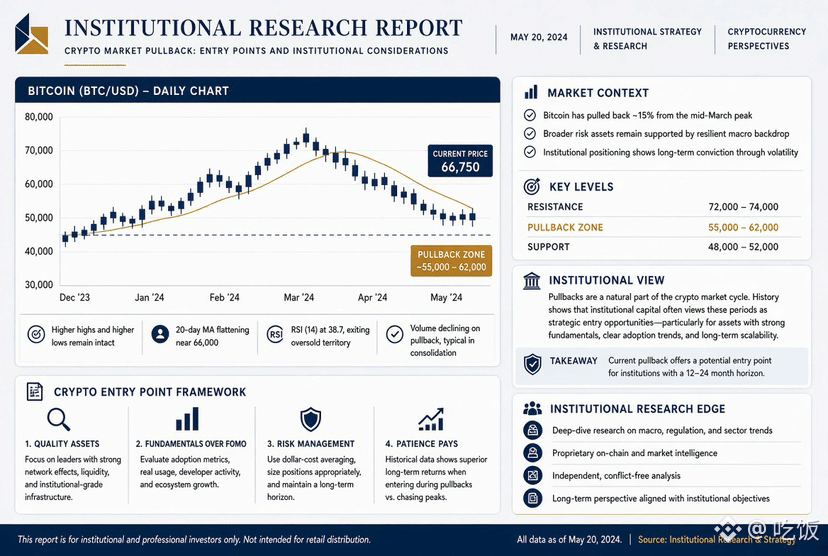
Institutional views, including Grayscale’s: An entry point during the pullback?
Some institutions, such as Grayscale, believe the current pullback offers an “attractive entry point” for the medium to long term, with fundamental demand still intact.
At the same time, keep in mind that the Fear Index is extremely low, ETFs are facing broad-based pressure, and macroeconomic uncertainty remains. Institutional views are for reference, not a guarantee.
For medium- to long-term holders, a pullback is an opportunity to reassess their positions and investment thesis; short-term traders should wait for clearer confirmation signals.
140
·
--
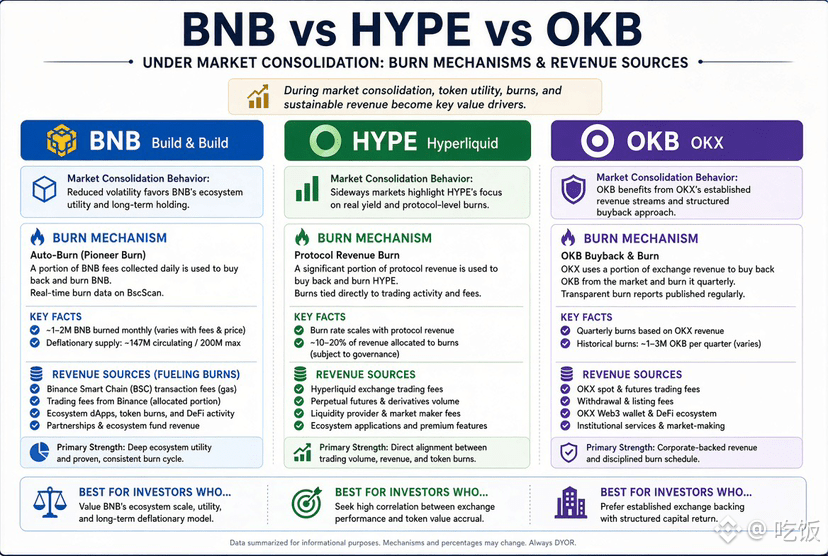
Comparing Exchange Tokens in a Choppy Market: Revenue and Supply Dynamics
Reassessing exchange tokens when BTC is moving sideways and sentiment is weak:
• BNB: A continuous burn mechanism plus ecosystem utility; trust comes from a track record built over time.
• HYPE: Real-time buybacks funded by trading fees, with burns becoming more effective during downturns.
• OKB: After its supply was locked, it came to depend on actual demand for X Layer.
Choppy markets amplify differences in token mechanisms. Those with real revenue or hard supply constraints have a clearer long-term narrative. What’s already priced in won’t be quickly reversed by burns.
192
·
--
After this week’s macro events: How will the crypto market react?
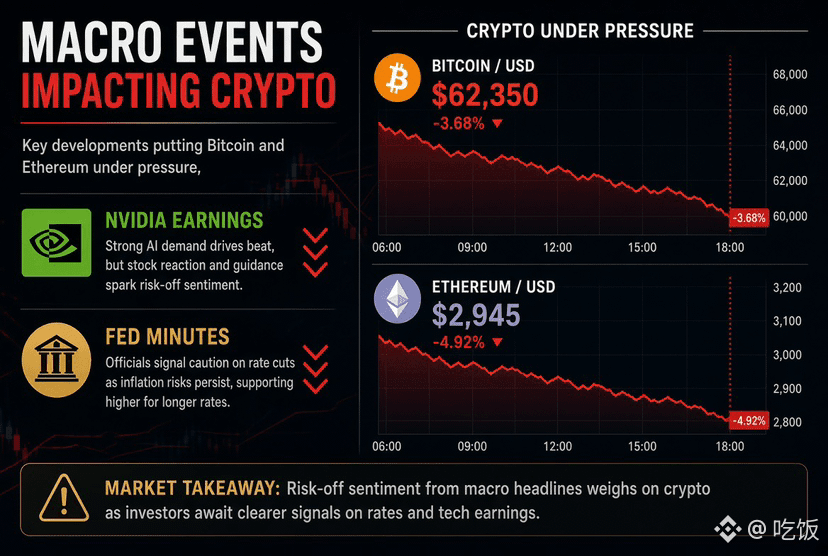
Key events this week include Nvidia’s earnings report (the first since Jensen Huang stepped down) and the FOMC minutes. Treasury yields are high, the dollar is strong, and rate hike expectations are rising, keeping overall risk appetite subdued.
Crypto’s correlation with macro and tech stock sentiment is growing stronger. If the earnings report and minutes are cautious or hawkish, they could continue to weigh on prices; if they offer some breathing room, a rebound could accelerate.
BTC is currently consolidating around $64,000, with the market waiting for clearer external signals. Short-term trading should take these factors into account.
879
·
--
ETF sees a modest net inflow: Has the outflow trend ended?
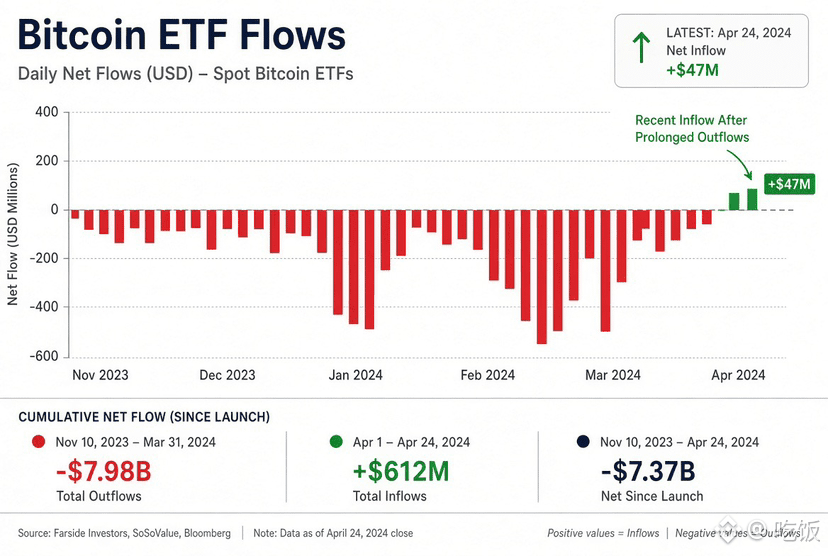
After several consecutive days of net outflows, spot BTC ETFs recorded a small net inflow of about $7.9 million in a single day, with BlackRock’s IBIT accounting for most of the inflows.
This is a positive sign, but a single day’s data is not enough to confirm a trend reversal. Cumulative outflows had previously been substantial, and institutional funds are sensitive to macroeconomic conditions.
The key thing to watch is whether net inflows continue for several consecutive days. If they do, they would provide more noticeable price support; if outflows resume, pressure will return.
BTC-4.82%
IBITETF+1.40%
112
·
--
HYPE Continues to Burn: Fee-Driven Resilience During a Downturn
Despite market volatility, HYPE continues to buy back and burn tokens through protocol fees. The Assistance Fund’s holdings continue to grow, with the cumulative burn rate at around 5%.
When prices fall, the same revenue can buy more tokens, increasing the efficiency of the burn. Unlike purely narrative-driven burns, this one is backed by real revenue.
However, potential variables such as changes in USDC reserves should be monitored. A shrinking supply supports long-term value, but short-term prices remain driven by market sentiment. In the current environment, it is one of the few platform tokens still consistently delivering on revenue.
1
383
·
--
The Fear Index remains in extreme fear: What does a move from 10 to 20 mean?
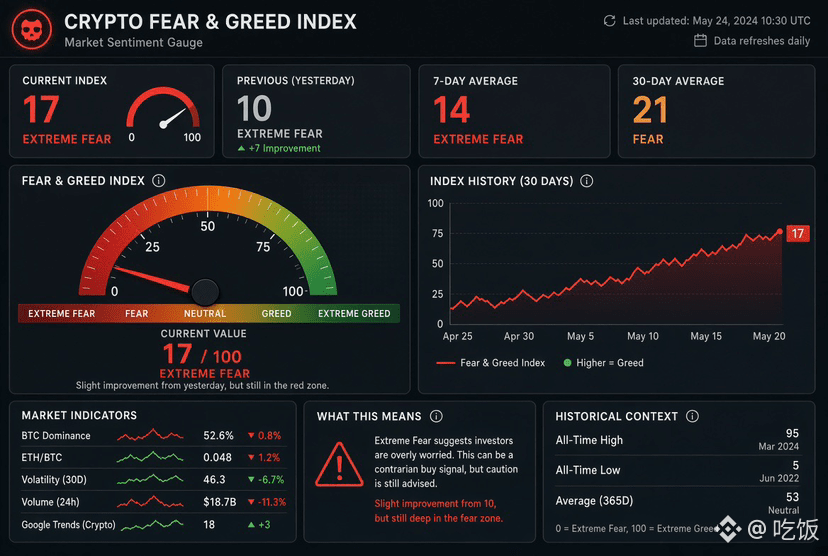
The Fear and Greed Index has rebounded from a low of around 10 to the 11–21 range, but it is still in extreme fear. Sentiment has eased somewhat, but is far from turning positive.
Historical experience shows that periods of extreme fear often coincide with the completion of leveraged position liquidations, but prices may still remain volatile or test new lows. A true sentiment bottom usually requires a longer period of apathy.
For now, monitor this alongside modest ETF inflows and slowing stablecoin outflows. It is an indicator to watch, not a signal to buy the dip. Managing position sizes is more important than trying to guess the turning point.
111
·
--
BTC stalls around $64K: a weak rebound or forming a bottom?
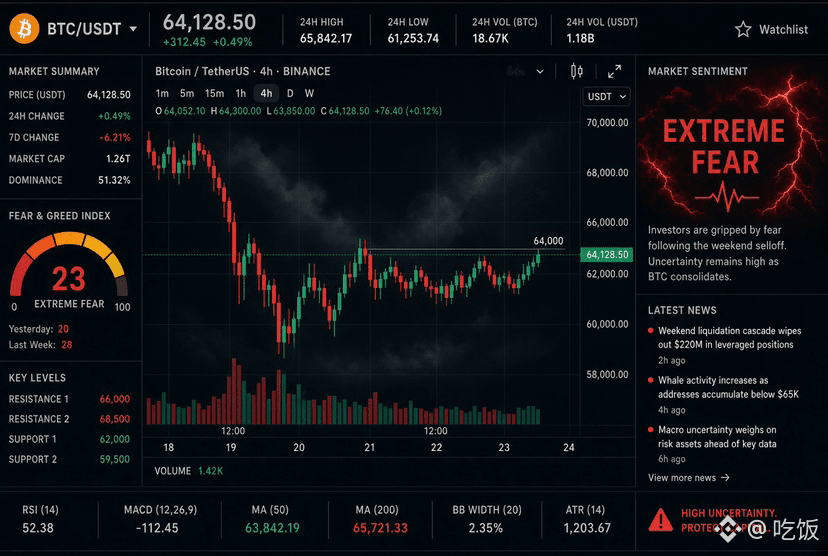
After rebounding from the weekend low of around $62,000, BTC is now trading in a narrow range around $64,000, with limited rebound momentum. ETH is also hovering around $1,800. The total market capitalization remains at around $2.2 trillion, in a fragile consolidation phase.
Key points:
• Price remains below the 200-week moving average (around $68,000).
• The Fear Index remains in extreme fear territory.
• After a streak of ETF outflows, there was a slight net inflow, but a single day of data is not enough to change the trend.
For now, this looks more like sideways trading after a shakeout than a clear reversal. Watch whether macro data (FOMC minutes and the fallout from Nvidia’s earnings report) and fund flows continue to improve. #btc
64
·
--
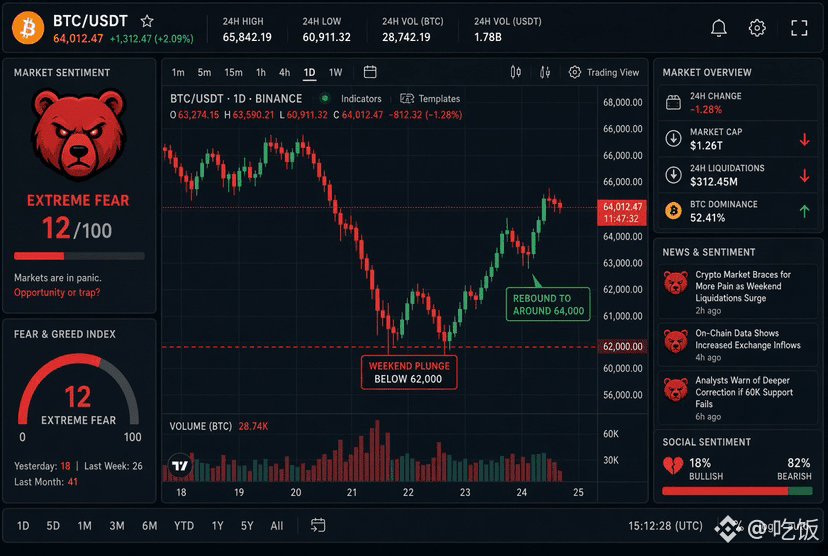
BTC rebounds to $64,000 after falling below $62,000: What really matters this week?
BTC briefly dipped to around $62,000 over the weekend, then rebounded above $64,000. ETH also fell to around $1,800. November’s cumulative losses have already been steep, with declines recorded for several consecutive weeks.
The focus this week isn’t on the short-term rebound, but on:
• Nvidia earnings (the first since Jensen Huang stepped down)
• FOMC meeting minutes
• New rules take effect allowing Russian retail investors to buy BTC, ETH, and USDT
With the dollar strong and Treasury yields high, risk assets are under broad pressure. Whether the rebound can last depends more on whether funds flow back into ETFs and whether macroeconomic conditions offer some breathing room.
This looks more like a shakeout than a clear bottom.
#BTC走势分析
879
·
--
76
·
--
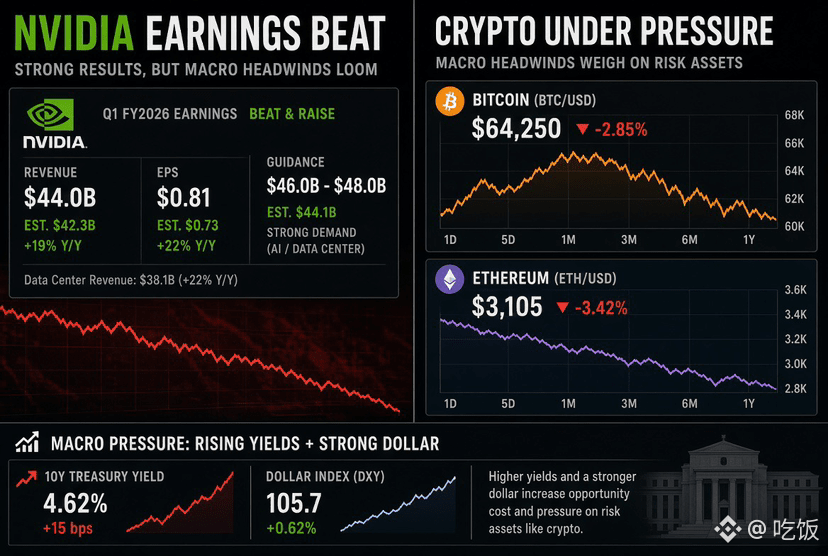
#英伟达财报夜!预期营收超千亿,AI股或迎大变盘 Nvidia reports earnings this week, its first report since Jensen Huang stepped down. AI-related stocks have been under pressure recently, and crypto has also been affected by risk appetite.
Also keep an eye on the FOMC minutes and U.S. Treasury yields. High yields and a strong dollar are generally unfavorable for crypto.
Crypto is no longer a completely independent asset class; macroeconomic conditions and sentiment toward tech stocks have a direct impact. If earnings and macro data are hawkish or fall short of expectations, risk assets may remain under pressure; if they offer some relief, a rebound could accelerate.
Short-term traders should factor in these external events.
1.1k
·
--
#韩国拟放宽加密服务商大股东规则 BTC The most awkward part lately: it moves more actively when it tracks the downside than when it tracks the upside.
When tech stocks soften, it moves first; but during rebounds, it often lags by half a beat.
The independent market trend is basically ineffective right now.
If it can't hold around 64,000, the mood will get even worse.
Are you continuing to hold, or have you already reduced your position to wait and watch?
$BTC
107
·
--
#BIP110软分叉尝试启动 Many people who are currently buying up semiconductors are mainly comforting themselves.
They think that when it drops enough, it becomes “cheap,” but “cheap” doesn’t mean it can rise.
AI demand is still there, but expectations have already been priced in early.
What truly determines the direction is earnings guidance—not your impulse to buy the dip.
Are you waiting for a rebound now, or have you already lost the will to admit you’re down?
$NVDA $MU #半导体
193
·
--
Semiconductors are taking a hit this wave—many people are still shouting “a golden opportunity.”
Is it a true “golden opportunity,” or are we just jumping off into flying knives? At this point, nobody can really tell.
AI demand is still there, but valuations and expectations have already been discounted far too much in advance.
For those trying to bottom-fish now, is it faith—or are their positions already too heavy to hold up?
$NVDA $MU #Semiconductors pull BTC down
126
·
--
What the market fears most right now isn’t a drop—it’s a rebound with no buyers
In this round of valuation compression for semiconductors and tech stocks, many people are still waiting for the “sell-off to fully wash out” before buying.
But the real issue is this: when the rebound comes, trading volume won’t pick up, and investors are hesitant.
The current environment is:
• The AI narrative is still there, but the payback timeline is being questioned
• Once high-valuation stocks start to loosen, the selling pressure is heavier than people expect
• Risk appetite has clearly declined, and more money is willing to wait and watch
In the short term, trying to quickly repair sentiment is no easy task.
What can truly change the direction is whether the big tech companies’ earnings reports and macro data can restore confidence.
Are you currently staying in cash and waiting, or have you started cautiously testing the waters?
#TechStocks #Semiconductors
96
Log in to explore more content
Join global crypto users on Binance Square
⚡️ Get latest and useful information about crypto.
💬 Trusted by the world’s largest crypto exchange.
👍 Discover real insights from verified creators.
Email / Phone number
Trending Topics
CanBTCReboundAfterFallingBelow60K?
88,137 views
455 Discussing
Bitcoin News | Bitcoin Falls Below $60,000 for the First Time Since July as IBIT Posts Record $541 Million Outflow
Binance News
·38 Likes
·65.9k views
GlobalStocksFaceLongestLosingStreakSince2023
43,509 views
468 Discussing
AnthropicPlungesTowardIPOPriceonDay2
12,329 views
175 Discussing