
智能合约-陈总
500 Posts

智能合约-陈总
Report
Block User
✅公众号:ChenZong888,八年币圈经验,专注团队与社区建设,精准洞察加密市场脉搏,深耕区块链技术与Web3生态布局,综合胜率达到80%-85%,现货周期性埋伏潜力币,熊市低吸、牛市高抛,把握市场趋势,关注我,让你稳定收益!
2 Following
94 Followers
882 Liked
Posts
All
Quotes
Videos
PINNED
·
--
On Binance’s official site, chatting is safer and more convenient across the way!
Entering the Binance chat room is actually very simple.
Strategy ID: Bow-Heavy-Hao-【ChenZong888】
1. First, save the QR code below.
2. Open the Binance homepage and search for chat rooms.
3. Tap the “+” in the top-right corner.
4. Click Scan to upload the QR code you just saved.
Then you can add me as a friend!
On Binance’s official site, chatting is safer and more convenient across the way!
Entering the Binance chat room is actually very simple.
Strategy ID: Bow-Heavy-Hao-【ChenZong888】
1. First, save the QR code below.
2. Open the Binance homepage and search for chat rooms.
3. Tap the “+” in the top-right corner.
4. Click Scan to upload the QR code you just saved.
Then you can add me as a friend!
Entering the Binance chat room is actually very simple.
Strategy ID: Bow-Heavy-Hao-【ChenZong888】
1. First, save the QR code below.
2. Open the Binance homepage and search for chat rooms.
3. Tap the “+” in the top-right corner.
4. Click Scan to upload the QR code you just saved.
Then you can add me as a friend!

2
52
·
--
#比特币金叉确认
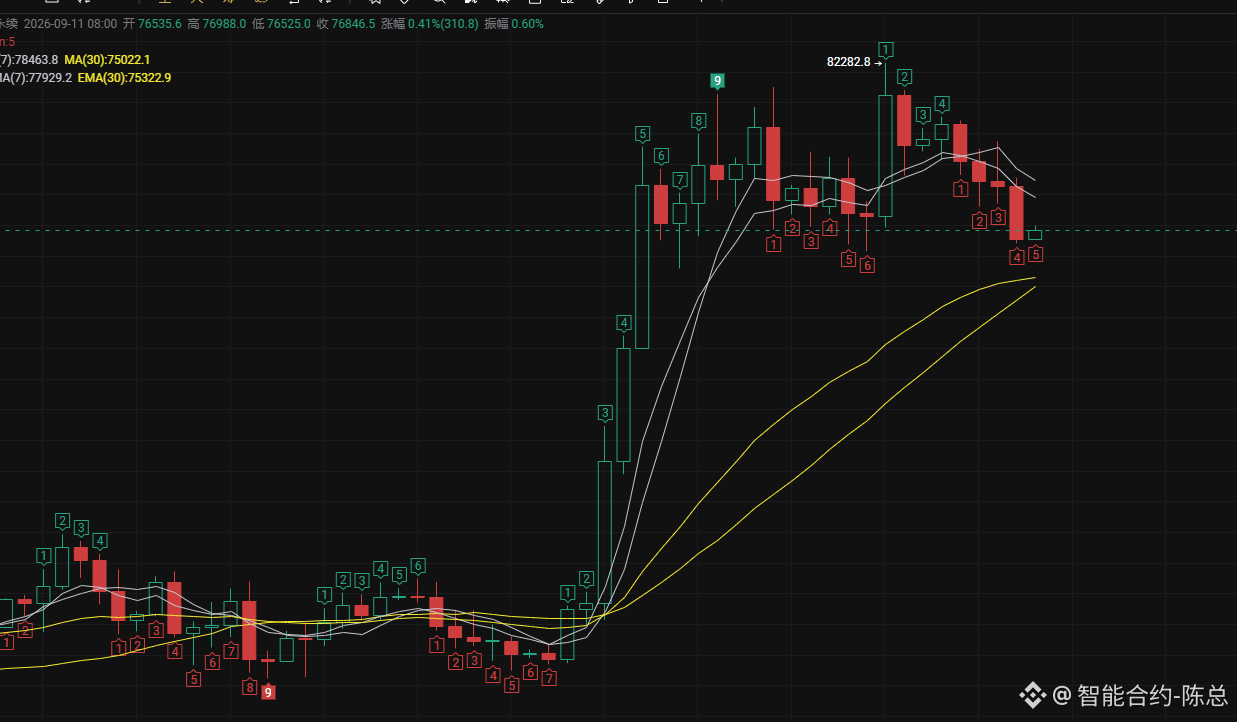
Bitcoin’s “golden cross” has been confirmed. This is a widely watched technical signal in the market. It refers to the short-term moving average (50-day) crossing above the long-term moving average (200-day), which is typically interpreted as a potentially bullish trend in the long run.
📈 Golden Cross Confirmation and Historical Performance
According to reports from multiple media outlets, Bitcoin’s 50-day exponential moving average (EMA) crossed above the 200-day EMA around Tuesday, September 8, 2026, officially confirming the golden cross pattern. This is Bitcoin’s first formation of this bullish signal since the “death cross” appeared in November 2025.
However, historical data suggests the long-term effectiveness of this signal is not consistent. Since 2012, Bitcoin has seen 12 golden crosses, but only 3 remained effective after one year. From a shorter-term perspective, the average return three months after a golden cross is about 24.9%, which is decent—though investors should note the limitations of using it as a lagging indicator.
🔍 Key Levels and Macroeconomic Context
Near-term resistance level: Currently, Bitcoin’s price is fluctuating in the $77,000 to $80,000 range. Market analysts generally view $80,000 as a key short-term resistance level. If it can break through effectively and hold, it may confirm a stronger upward trend. The next important resistance level is around $83,000 to $84,000.
Macroeconomic factors: Recently released U.S. August PPI data came in above expectations, sparking market concerns about inflation and the possibility of further Fed rate hikes. This has caused Bitcoin’s price to pull back from recent highs, partially offsetting the golden cross signal.
📊 Other Technical Indicators for Reference
In addition to the golden cross, other technical indicators also provide guidance:
Average Directional Index (ADX): Reading is 45.8, well above the threshold of 25, suggesting the current trend strength is relatively high.
Relative Strength Index (RSI): Reading is 55.6, which is in the bullish range but not yet in overbought territory.
Overall, the confirmation of a golden cross is a positive technical signal, but its long-term impact needs to be assessed in conjunction with the macro environment and whether key price levels are successfully broken.
#比特币金叉确认
Bitcoin’s “golden cross” has been confirmed. This is a widely watched technical signal in the market. It refers to the short-term moving average (50-day) crossing above the long-term moving average (200-day), which is typically interpreted as a potentially bullish trend in the long run.
📈 Golden Cross Confirmation and Historical Performance
According to reports from multiple media outlets, Bitcoin’s 50-day exponential moving average (EMA) crossed above the 200-day EMA around Tuesday, September 8, 2026, officially confirming the golden cross pattern. This is Bitcoin’s first formation of this bullish signal since the “death cross” appeared in November 2025.
However, historical data suggests the long-term effectiveness of this signal is not consistent. Since 2012, Bitcoin has seen 12 golden crosses, but only 3 remained effective after one year. From a shorter-term perspective, the average return three months after a golden cross is about 24.9%, which is decent—though investors should note the limitations of using it as a lagging indicator.
🔍 Key Levels and Macroeconomic Context
Near-term resistance level: Currently, Bitcoin’s price is fluctuating in the $77,000 to $80,000 range. Market analysts generally view $80,000 as a key short-term resistance level. If it can break through effectively and hold, it may confirm a stronger upward trend. The next important resistance level is around $83,000 to $84,000.
Macroeconomic factors: Recently released U.S. August PPI data came in above expectations, sparking market concerns about inflation and the possibility of further Fed rate hikes. This has caused Bitcoin’s price to pull back from recent highs, partially offsetting the golden cross signal.
📊 Other Technical Indicators for Reference
In addition to the golden cross, other technical indicators also provide guidance:
Average Directional Index (ADX): Reading is 45.8, well above the threshold of 25, suggesting the current trend strength is relatively high.
Relative Strength Index (RSI): Reading is 55.6, which is in the bullish range but not yet in overbought territory.
Overall, the confirmation of a golden cross is a positive technical signal, but its long-term impact needs to be assessed in conjunction with the macro environment and whether key price levels are successfully broken.
Bitcoin’s “golden cross” has been confirmed. This is a widely watched technical signal in the market. It refers to the short-term moving average (50-day) crossing above the long-term moving average (200-day), which is typically interpreted as a potentially bullish trend in the long run.
📈 Golden Cross Confirmation and Historical Performance
According to reports from multiple media outlets, Bitcoin’s 50-day exponential moving average (EMA) crossed above the 200-day EMA around Tuesday, September 8, 2026, officially confirming the golden cross pattern. This is Bitcoin’s first formation of this bullish signal since the “death cross” appeared in November 2025.
However, historical data suggests the long-term effectiveness of this signal is not consistent. Since 2012, Bitcoin has seen 12 golden crosses, but only 3 remained effective after one year. From a shorter-term perspective, the average return three months after a golden cross is about 24.9%, which is decent—though investors should note the limitations of using it as a lagging indicator.
🔍 Key Levels and Macroeconomic Context
Near-term resistance level: Currently, Bitcoin’s price is fluctuating in the $77,000 to $80,000 range. Market analysts generally view $80,000 as a key short-term resistance level. If it can break through effectively and hold, it may confirm a stronger upward trend. The next important resistance level is around $83,000 to $84,000.
Macroeconomic factors: Recently released U.S. August PPI data came in above expectations, sparking market concerns about inflation and the possibility of further Fed rate hikes. This has caused Bitcoin’s price to pull back from recent highs, partially offsetting the golden cross signal.
📊 Other Technical Indicators for Reference
In addition to the golden cross, other technical indicators also provide guidance:
Average Directional Index (ADX): Reading is 45.8, well above the threshold of 25, suggesting the current trend strength is relatively high.
Relative Strength Index (RSI): Reading is 55.6, which is in the bullish range but not yet in overbought territory.
Overall, the confirmation of a golden cross is a positive technical signal, but its long-term impact needs to be assessed in conjunction with the macro environment and whether key price levels are successfully broken.
9
2
7
8.6k
·
--
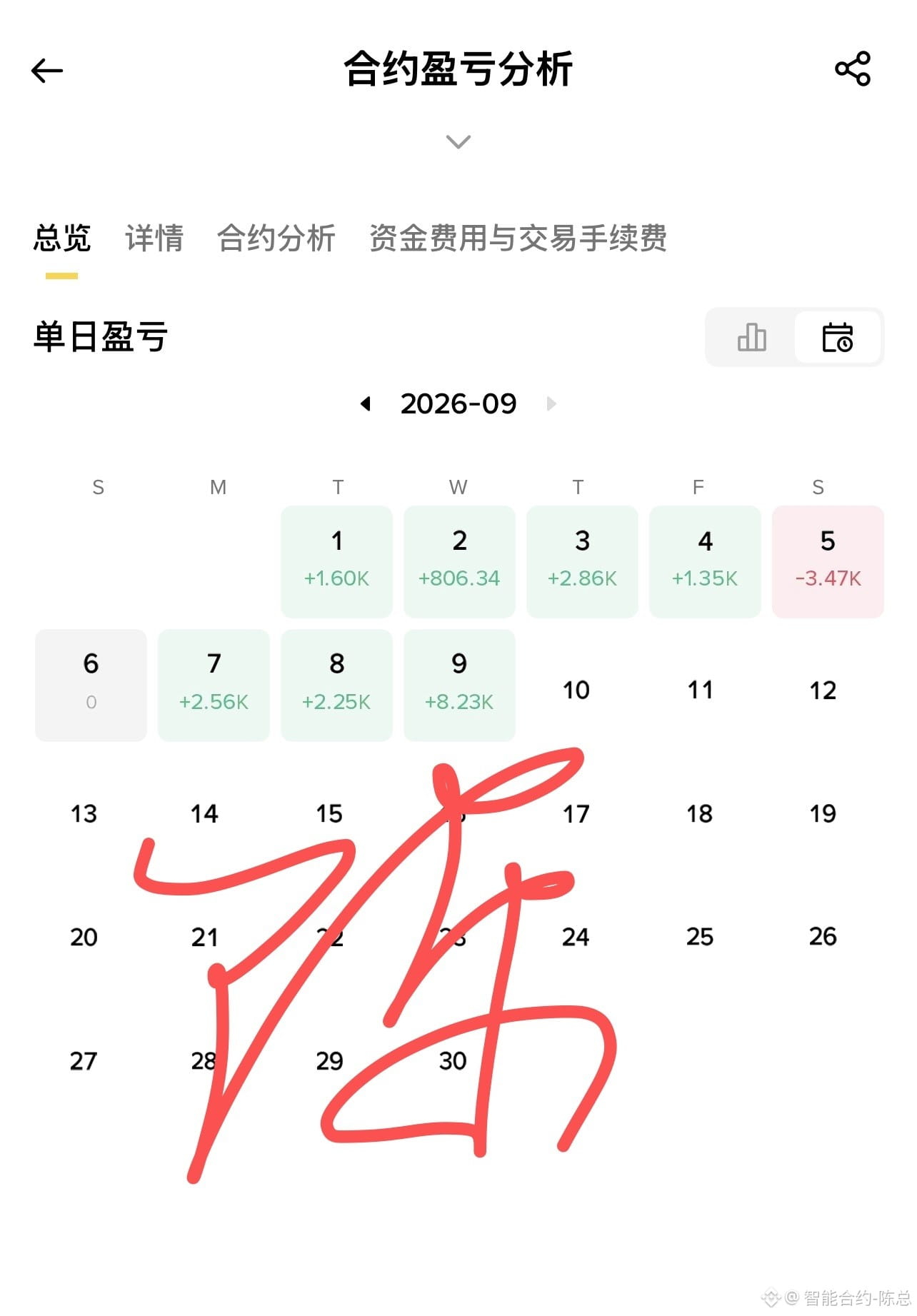
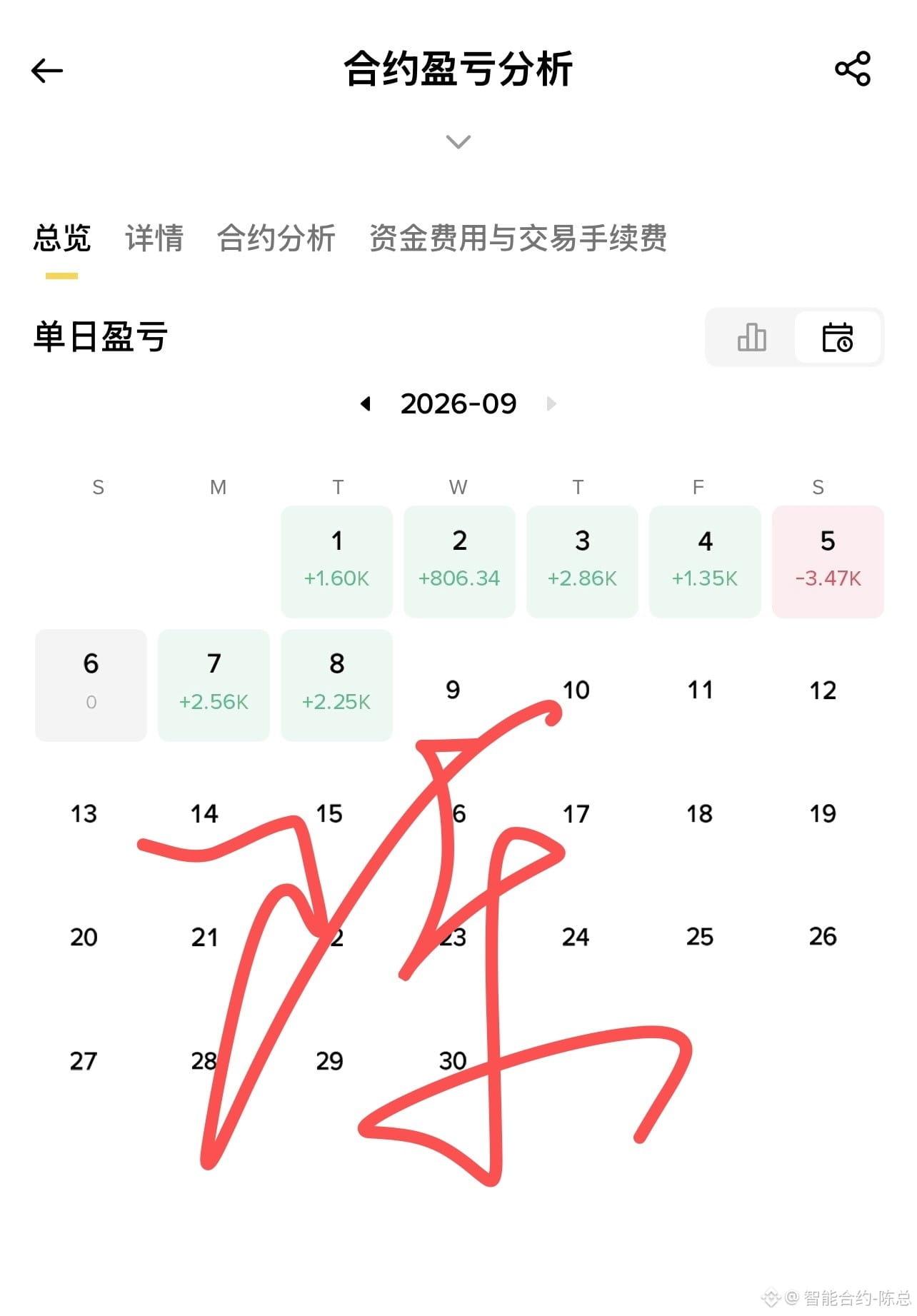
Many people only realize it when they’ve lost almost everything— the direction was actually correct, but the account is gone. The direction was right, but the money wasn’t kept. So what’s the problem?
Position sizing. The direction is right, but the position is too heavy. Just a normal pullback washes you out. The market hasn’t finished moving, but you’re already out.
Stop-loss. The direction is right, but the stop-loss is set too close—or not set at all. One small fluctuation and you get stopped out. Then the market starts moving only after you’ve been knocked out.
Holding the position. The direction is right, but you can’t hold it. You take profit after only a little gain, and you miss the next big run.
Direction accounts for only 20% of the profit. The remaining 80% is position sizing, stop-loss, and holding. Many people spend all their energy watching the direction. The other three are all based on guesswork—so even if the direction is right, you still lose money.
If you’re currently trapped in a position, ask yourself honestly— did you get the direction wrong, or did something go wrong with those three? If the direction isn’t the issue, then at least one of position sizing, stop-loss, or holding has a problem.
Come find me on the homepage. No empty promises, no boasting. I’ll break this trade down from start to finish. Once you find where the problem is, you’ll know exactly how to handle what comes next.
Many people only realize it when they’ve lost almost everything— the direction was actually correct, but the account is gone. The direction was right, but the money wasn’t kept. So what’s the problem?
Position sizing. The direction is right, but the position is too heavy. Just a normal pullback washes you out. The market hasn’t finished moving, but you’re already out.
Stop-loss. The direction is right, but the stop-loss is set too close—or not set at all. One small fluctuation and you get stopped out. Then the market starts moving only after you’ve been knocked out.
Holding the position. The direction is right, but you can’t hold it. You take profit after only a little gain, and you miss the next big run.
Direction accounts for only 20% of the profit. The remaining 80% is position sizing, stop-loss, and holding. Many people spend all their energy watching the direction. The other three are all based on guesswork—so even if the direction is right, you still lose money.
If you’re currently trapped in a position, ask yourself honestly— did you get the direction wrong, or did something go wrong with those three? If the direction isn’t the issue, then at least one of position sizing, stop-loss, or holding has a problem.
Come find me on the homepage. No empty promises, no boasting. I’ll break this trade down from start to finish. Once you find where the problem is, you’ll know exactly how to handle what comes next.
Position sizing. The direction is right, but the position is too heavy. Just a normal pullback washes you out. The market hasn’t finished moving, but you’re already out.
Stop-loss. The direction is right, but the stop-loss is set too close—or not set at all. One small fluctuation and you get stopped out. Then the market starts moving only after you’ve been knocked out.
Holding the position. The direction is right, but you can’t hold it. You take profit after only a little gain, and you miss the next big run.
Direction accounts for only 20% of the profit. The remaining 80% is position sizing, stop-loss, and holding. Many people spend all their energy watching the direction. The other three are all based on guesswork—so even if the direction is right, you still lose money.
If you’re currently trapped in a position, ask yourself honestly— did you get the direction wrong, or did something go wrong with those three? If the direction isn’t the issue, then at least one of position sizing, stop-loss, or holding has a problem.
Come find me on the homepage. No empty promises, no boasting. I’ll break this trade down from start to finish. Once you find where the problem is, you’ll know exactly how to handle what comes next.
1
62
·
--
#欧盟扩中央联络点框架至加密服务商
On September 8, 2026, the European Commission adopted an implementing act extending the “Central Contact Point” (CCP) framework to crypto-asset service providers (CASPs). As a result, member state regulators may require local intermediaries—such as crypto exchanges operating locally—to designate local contact persons.
Previously, this framework applied only to electronic money institutions and payment institutions. After the amendment, crypto service providers are brought into the anti-money-laundering and compliance supervisory network, enabling regulators to have a fixed point of contact within their jurisdictions, and strengthening information sharing and law-enforcement cooperation.
The rationale for this initiative is that, in recent years, the EU has continued to tighten its regulation of crypto-assets, particularly in the area of anti-money laundering. Under the Anti-Money Laundering Regulation (AMLR) adopted by the EU in 2024, crypto-asset service providers are required to apply risk-mitigation measures to transactions involving self-custody addresses, including identifying and verifying the identity of the transaction initiator or beneficiary. Extending the CCP framework to crypto service providers is a continuation and refinement of this regulatory direction.
The European Banking Authority (EBA) previously conducted a public consultation on the draft technical standards, which ended in February 2025, and the final report was published in April 2025. This implementing act will enter into force on the 20th day after publication in the EU Official Journal.
#欧盟扩中央联络点框架至加密服务商
On September 8, 2026, the European Commission adopted an implementing act extending the “Central Contact Point” (CCP) framework to crypto-asset service providers (CASPs). As a result, member state regulators may require local intermediaries—such as crypto exchanges operating locally—to designate local contact persons.
Previously, this framework applied only to electronic money institutions and payment institutions. After the amendment, crypto service providers are brought into the anti-money-laundering and compliance supervisory network, enabling regulators to have a fixed point of contact within their jurisdictions, and strengthening information sharing and law-enforcement cooperation.
The rationale for this initiative is that, in recent years, the EU has continued to tighten its regulation of crypto-assets, particularly in the area of anti-money laundering. Under the Anti-Money Laundering Regulation (AMLR) adopted by the EU in 2024, crypto-asset service providers are required to apply risk-mitigation measures to transactions involving self-custody addresses, including identifying and verifying the identity of the transaction initiator or beneficiary. Extending the CCP framework to crypto service providers is a continuation and refinement of this regulatory direction.
The European Banking Authority (EBA) previously conducted a public consultation on the draft technical standards, which ended in February 2025, and the final report was published in April 2025. This implementing act will enter into force on the 20th day after publication in the EU Official Journal.
On September 8, 2026, the European Commission adopted an implementing act extending the “Central Contact Point” (CCP) framework to crypto-asset service providers (CASPs). As a result, member state regulators may require local intermediaries—such as crypto exchanges operating locally—to designate local contact persons.
Previously, this framework applied only to electronic money institutions and payment institutions. After the amendment, crypto service providers are brought into the anti-money-laundering and compliance supervisory network, enabling regulators to have a fixed point of contact within their jurisdictions, and strengthening information sharing and law-enforcement cooperation.
The rationale for this initiative is that, in recent years, the EU has continued to tighten its regulation of crypto-assets, particularly in the area of anti-money laundering. Under the Anti-Money Laundering Regulation (AMLR) adopted by the EU in 2024, crypto-asset service providers are required to apply risk-mitigation measures to transactions involving self-custody addresses, including identifying and verifying the identity of the transaction initiator or beneficiary. Extending the CCP framework to crypto service providers is a continuation and refinement of this regulatory direction.
The European Banking Authority (EBA) previously conducted a public consultation on the draft technical standards, which ended in February 2025, and the final report was published in April 2025. This implementing act will enter into force on the 20th day after publication in the EU Official Journal.
1
79
·
--
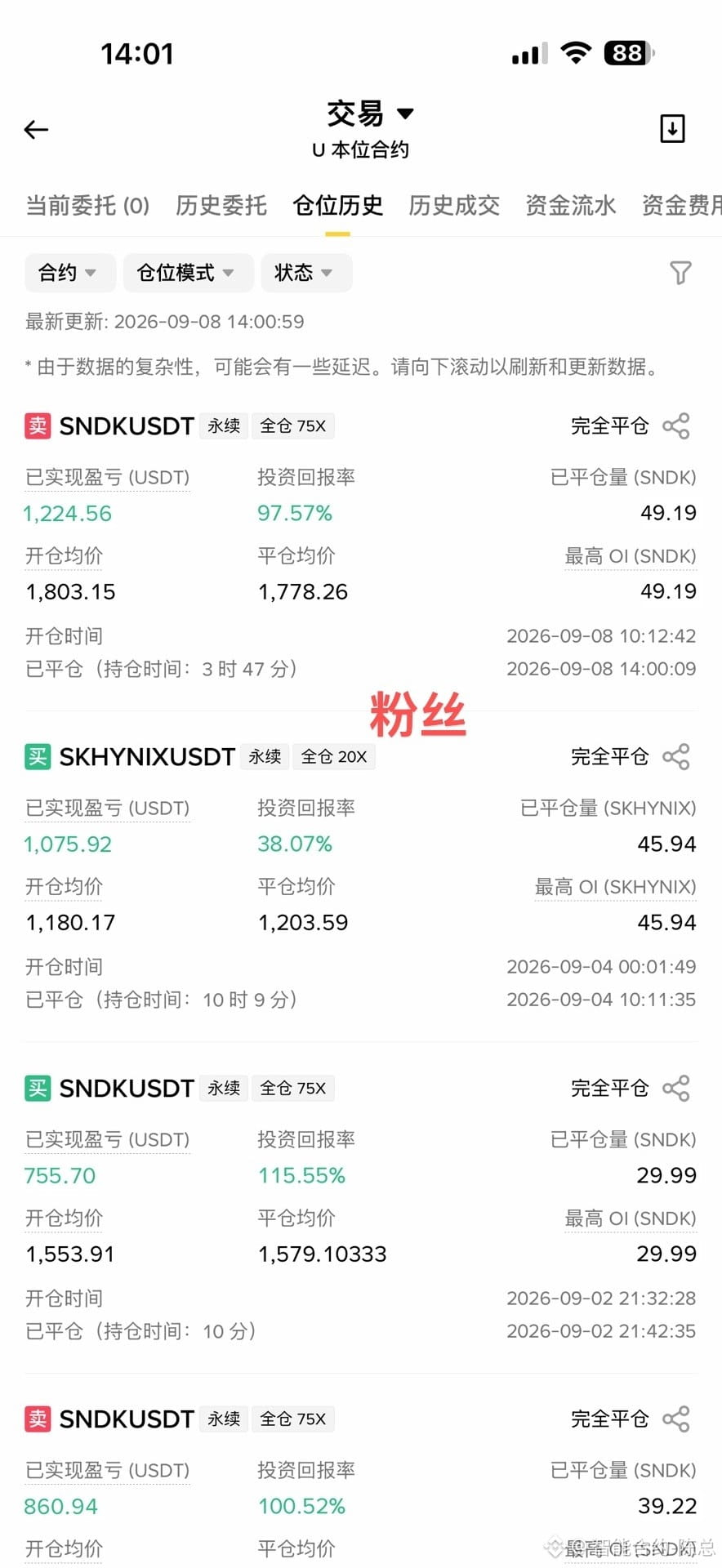
Want to turn small funds into big ones? Don’t think about hunting for opportunities every day—that’s not trading, it’s just having an itch to act. Opening ten or eight trades a day, the tiny profits you make aren’t even enough to cover trading fees. If you lose, you add more positions hoping to get it back—only to go deeper and deeper. The people who truly build their accounts don’t trade constantly. They make fewer moves, but each one is at the crucial point.
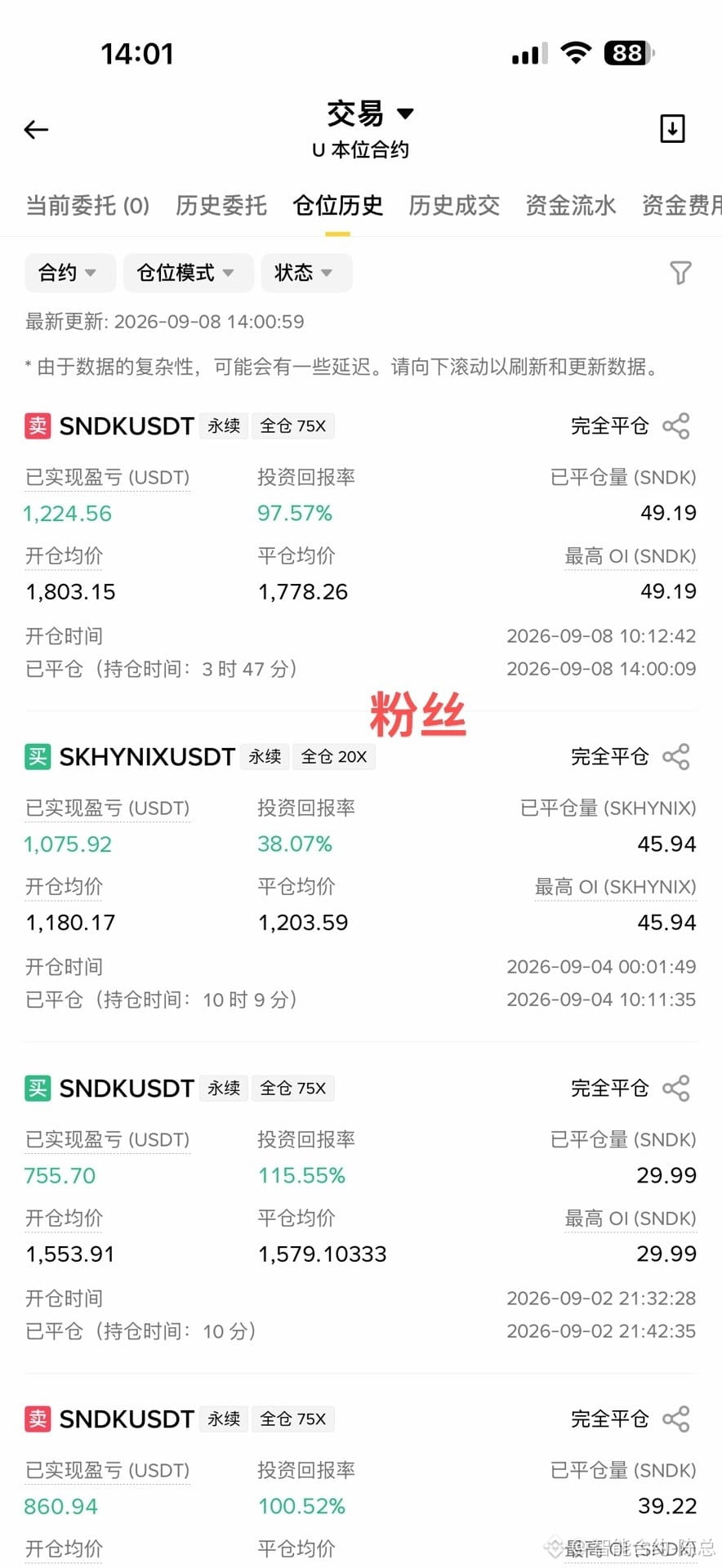
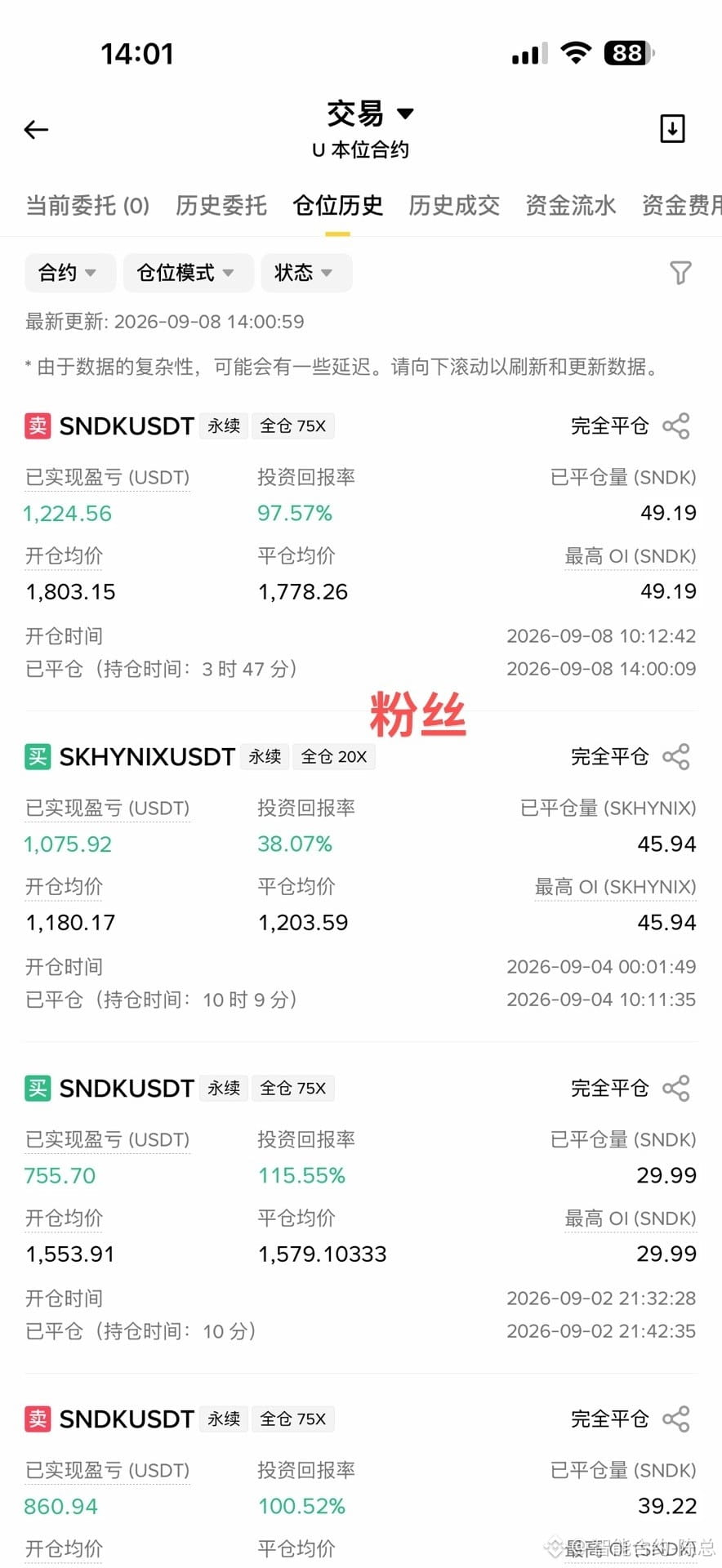
What counts as a high-certainty opportunity? The direction is clear, volume supports it, and a breakout at a key level happens—three conditions, and none of them can be missing. If you can’t understand the market, it’s not for you. If you can’t hold the trade, even if you make money, you’ll likely give it back. Many people lose money not because they misjudged, but because they treat price fluctuations that aren’t opportunities as opportunities. Markets move up and down every day, but the setups worth your action might only show up once or twice a week. If you force trades in dead time, you’re basically handing money to the market.$SNDK
Taking profit and stopping is more important than entering. If you can’t bear to exit and want to take “one more bite,” then when the market turns, you hand back all the profit. People who know when to stop see their accounts climb steadily. Greedy traders always end up on a roller coaster. Stopping isn’t being timid—it’s locking in the profit you’re supposed to have. The leftover scraps of meat are nobody’s business but yours.$SKHYNIX
The biggest advantage of small capital isn’t taking reckless risks—it’s flexibility. Use that flexibility to go after high-certainty opportunities, not to burn your principal in worthless market noise. Flexibility gives you a chance to start over after mistakes, and it gives you the initiative to leave at any time. Use it well and it’s an advantage. Use it poorly and it’s waste. The people who truly grow their money rely on waiting and exiting—not rushing and holding on. When the moment comes, you act. When it’s finished, you exit. No dragging, no hesitation.
If you’re still constantly tinkering every day, you might as well pause and think—are you waiting for opportunities that belong to you, or are you paying the market fees for nothing? Once you figure this out, the path gets a lot easier. If you’re still losing money, come talk to me—I’ll help you steady your rhythm. Follow me, and let’s get to shore together.@chenzong888
Want to turn small funds into big ones? Don’t think about hunting for opportunities every day—that’s not trading, it’s just having an itch to act. Opening ten or eight trades a day, the tiny profits you make aren’t even enough to cover trading fees. If you lose, you add more positions hoping to get it back—only to go deeper and deeper. The people who truly build their accounts don’t trade constantly. They make fewer moves, but each one is at the crucial point.
What counts as a high-certainty opportunity? The direction is clear, volume supports it, and a breakout at a key level happens—three conditions, and none of them can be missing. If you can’t understand the market, it’s not for you. If you can’t hold the trade, even if you make money, you’ll likely give it back. Many people lose money not because they misjudged, but because they treat price fluctuations that aren’t opportunities as opportunities. Markets move up and down every day, but the setups worth your action might only show up once or twice a week. If you force trades in dead time, you’re basically handing money to the market.$SNDK
Taking profit and stopping is more important than entering. If you can’t bear to exit and want to take “one more bite,” then when the market turns, you hand back all the profit. People who know when to stop see their accounts climb steadily. Greedy traders always end up on a roller coaster. Stopping isn’t being timid—it’s locking in the profit you’re supposed to have. The leftover scraps of meat are nobody’s business but yours.$SKHYNIX
The biggest advantage of small capital isn’t taking reckless risks—it’s flexibility. Use that flexibility to go after high-certainty opportunities, not to burn your principal in worthless market noise. Flexibility gives you a chance to start over after mistakes, and it gives you the initiative to leave at any time. Use it well and it’s an advantage. Use it poorly and it’s waste. The people who truly grow their money rely on waiting and exiting—not rushing and holding on. When the moment comes, you act. When it’s finished, you exit. No dragging, no hesitation.
If you’re still constantly tinkering every day, you might as well pause and think—are you waiting for opportunities that belong to you, or are you paying the market fees for nothing? Once you figure this out, the path gets a lot easier. If you’re still losing money, come talk to me—I’ll help you steady your rhythm. Follow me, and let’s get to shore together.@智能合约-陈总
What counts as a high-certainty opportunity? The direction is clear, volume supports it, and a breakout at a key level happens—three conditions, and none of them can be missing. If you can’t understand the market, it’s not for you. If you can’t hold the trade, even if you make money, you’ll likely give it back. Many people lose money not because they misjudged, but because they treat price fluctuations that aren’t opportunities as opportunities. Markets move up and down every day, but the setups worth your action might only show up once or twice a week. If you force trades in dead time, you’re basically handing money to the market.$SNDK
Taking profit and stopping is more important than entering. If you can’t bear to exit and want to take “one more bite,” then when the market turns, you hand back all the profit. People who know when to stop see their accounts climb steadily. Greedy traders always end up on a roller coaster. Stopping isn’t being timid—it’s locking in the profit you’re supposed to have. The leftover scraps of meat are nobody’s business but yours.$SKHYNIX
The biggest advantage of small capital isn’t taking reckless risks—it’s flexibility. Use that flexibility to go after high-certainty opportunities, not to burn your principal in worthless market noise. Flexibility gives you a chance to start over after mistakes, and it gives you the initiative to leave at any time. Use it well and it’s an advantage. Use it poorly and it’s waste. The people who truly grow their money rely on waiting and exiting—not rushing and holding on. When the moment comes, you act. When it’s finished, you exit. No dragging, no hesitation.
If you’re still constantly tinkering every day, you might as well pause and think—are you waiting for opportunities that belong to you, or are you paying the market fees for nothing? Once you figure this out, the path gets a lot easier. If you’re still losing money, come talk to me—I’ll help you steady your rhythm. Follow me, and let’s get to shore together.@智能合约-陈总
1
93
·
--
#苹果发布首款折叠屏手机
This smartphone features a book-style inward-fold design, with its size after folding close to that of a passport. In terms of the display, the external screen is 5.4 inches, and when unfolded the internal screen reaches 7.6 inches—making it the largest screen in iPhone history. For core performance, the iPhone Duo is powered by TSMC’s 2nm A20 Pro chip, comes with Apple’s latest C2 modem, and supports Apple Pencil touch input.
It’s also worth noting that this phone’s Touch ID is integrated into the side button, rather than Face ID. Storage capacity goes up to a 2TB option, a spec that current competing foldables don’t offer.
As for release timing, iPhone Duo will begin preorders on October 16 and go on sale officially on October 23.
#苹果发布首款折叠屏手机
This smartphone features a book-style inward-fold design, with its size after folding close to that of a passport. In terms of the display, the external screen is 5.4 inches, and when unfolded the internal screen reaches 7.6 inches—making it the largest screen in iPhone history. For core performance, the iPhone Duo is powered by TSMC’s 2nm A20 Pro chip, comes with Apple’s latest C2 modem, and supports Apple Pencil touch input.
It’s also worth noting that this phone’s Touch ID is integrated into the side button, rather than Face ID. Storage capacity goes up to a 2TB option, a spec that current competing foldables don’t offer.
As for release timing, iPhone Duo will begin preorders on October 16 and go on sale officially on October 23.
This smartphone features a book-style inward-fold design, with its size after folding close to that of a passport. In terms of the display, the external screen is 5.4 inches, and when unfolded the internal screen reaches 7.6 inches—making it the largest screen in iPhone history. For core performance, the iPhone Duo is powered by TSMC’s 2nm A20 Pro chip, comes with Apple’s latest C2 modem, and supports Apple Pencil touch input.
It’s also worth noting that this phone’s Touch ID is integrated into the side button, rather than Face ID. Storage capacity goes up to a 2TB option, a spec that current competing foldables don’t offer.
As for release timing, iPhone Duo will begin preorders on October 16 and go on sale officially on October 23.

1
1.4k
·
--
#美财政部拟回购最多60亿美元国债
First nail down the numbers: when Chinese says “$6 billion,” it means 6 billion dollars, not 60 billion dollars, and not 60 billion in another sense. What was said on August 19 was that each operation would be at least $4 billion—i.e., each transaction is at least 4 billion. Three weeks later it was said to be tripled, and that $6 billion would be used to repurchase long-term debt; that can match the “tripled” reading only if the single operation went from roughly $2 billion up to $6 billion.
$4 billion was the single-operation floor on Aug. 19, while $6 billion is the new size this time. Don’t add these two figures together, and don’t treat them as an annual quota. 20×3=60 only shows that the wording can line up—it doesn’t mean the Ministry of Finance had previously officially stated that the old baseline was $2 billion.
When the Ministry of Finance repurchases, it means using cash to buy older bonds with poorer liquidity and longer-duration notes. This is not the Fed expanding its balance sheet, and it doesn’t equal easing or tightening policy rates. The market will interpret it as: someone is helping to take some of the pressure off the supply of long-end bonds. Calling it a new round of QE would be overstating it.
Tech stocks care about discount rates. For high-valuation growth, AI hardware, and semiconductors, the more cash flows are pushed into the future, the more they fear a rise in the 10-year yield and real interest rates. When expectations for rate hikes rise by even a little, valuations get cut first. Even if the repurchase actually suppresses long-end yields, tech would only take a smaller hit—not suddenly see better orders. Framing the $6 billion as a catalyst for the tech sector is essentially turning bond operations into an indicator of improving industrial conditions. China’s A-share tech sector is the same: when offshore actual interest rates are loose, risk appetite returns; but when rate-hike expectations again push yields up, growth stocks still fall in valuation first.
Gold looks at real interest rates and the U.S. dollar. When rate hikes and real rates rise and the dollar stays firm, gold faces pressure. If the repurchase supports the long end and real rates ease alongside it, then gold only has room to breathe.
#美财政部拟回购最多60亿美元国债
First nail down the numbers: when Chinese says “$6 billion,” it means 6 billion dollars, not 60 billion dollars, and not 60 billion in another sense. What was said on August 19 was that each operation would be at least $4 billion—i.e., each transaction is at least 4 billion. Three weeks later it was said to be tripled, and that $6 billion would be used to repurchase long-term debt; that can match the “tripled” reading only if the single operation went from roughly $2 billion up to $6 billion.
$4 billion was the single-operation floor on Aug. 19, while $6 billion is the new size this time. Don’t add these two figures together, and don’t treat them as an annual quota. 20×3=60 only shows that the wording can line up—it doesn’t mean the Ministry of Finance had previously officially stated that the old baseline was $2 billion.
When the Ministry of Finance repurchases, it means using cash to buy older bonds with poorer liquidity and longer-duration notes. This is not the Fed expanding its balance sheet, and it doesn’t equal easing or tightening policy rates. The market will interpret it as: someone is helping to take some of the pressure off the supply of long-end bonds. Calling it a new round of QE would be overstating it.
Tech stocks care about discount rates. For high-valuation growth, AI hardware, and semiconductors, the more cash flows are pushed into the future, the more they fear a rise in the 10-year yield and real interest rates. When expectations for rate hikes rise by even a little, valuations get cut first. Even if the repurchase actually suppresses long-end yields, tech would only take a smaller hit—not suddenly see better orders. Framing the $6 billion as a catalyst for the tech sector is essentially turning bond operations into an indicator of improving industrial conditions. China’s A-share tech sector is the same: when offshore actual interest rates are loose, risk appetite returns; but when rate-hike expectations again push yields up, growth stocks still fall in valuation first.
Gold looks at real interest rates and the U.S. dollar. When rate hikes and real rates rise and the dollar stays firm, gold faces pressure. If the repurchase supports the long end and real rates ease alongside it, then gold only has room to breathe.
First nail down the numbers: when Chinese says “$6 billion,” it means 6 billion dollars, not 60 billion dollars, and not 60 billion in another sense. What was said on August 19 was that each operation would be at least $4 billion—i.e., each transaction is at least 4 billion. Three weeks later it was said to be tripled, and that $6 billion would be used to repurchase long-term debt; that can match the “tripled” reading only if the single operation went from roughly $2 billion up to $6 billion.
$4 billion was the single-operation floor on Aug. 19, while $6 billion is the new size this time. Don’t add these two figures together, and don’t treat them as an annual quota. 20×3=60 only shows that the wording can line up—it doesn’t mean the Ministry of Finance had previously officially stated that the old baseline was $2 billion.
When the Ministry of Finance repurchases, it means using cash to buy older bonds with poorer liquidity and longer-duration notes. This is not the Fed expanding its balance sheet, and it doesn’t equal easing or tightening policy rates. The market will interpret it as: someone is helping to take some of the pressure off the supply of long-end bonds. Calling it a new round of QE would be overstating it.
Tech stocks care about discount rates. For high-valuation growth, AI hardware, and semiconductors, the more cash flows are pushed into the future, the more they fear a rise in the 10-year yield and real interest rates. When expectations for rate hikes rise by even a little, valuations get cut first. Even if the repurchase actually suppresses long-end yields, tech would only take a smaller hit—not suddenly see better orders. Framing the $6 billion as a catalyst for the tech sector is essentially turning bond operations into an indicator of improving industrial conditions. China’s A-share tech sector is the same: when offshore actual interest rates are loose, risk appetite returns; but when rate-hike expectations again push yields up, growth stocks still fall in valuation first.
Gold looks at real interest rates and the U.S. dollar. When rate hikes and real rates rise and the dollar stays firm, gold faces pressure. If the repurchase supports the long end and real rates ease alongside it, then gold only has room to breathe.
1
363
·
--

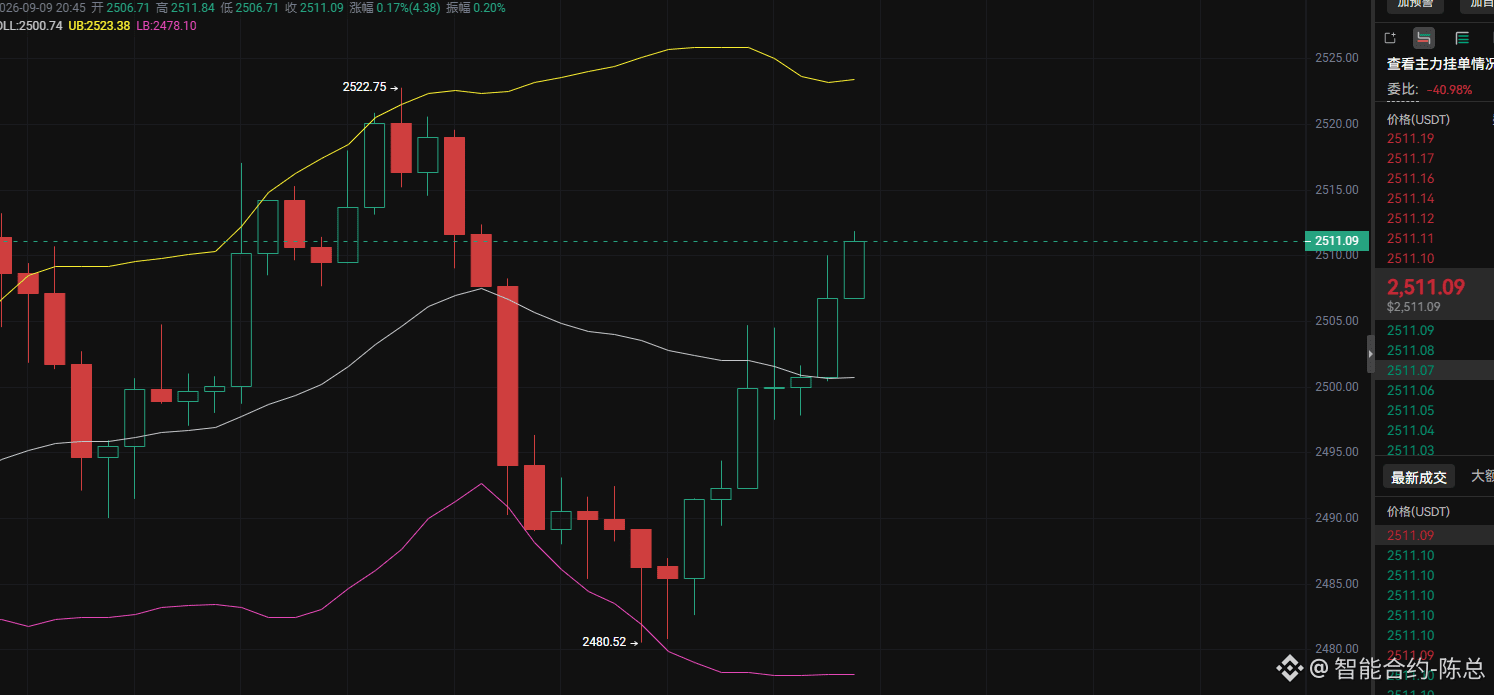
1
46

·
--
From three thousand to one million—this playbook, I’ve run through it for two rounds
“Turn three thousand into one million.” A lot of people hear it as a joke. I’m telling you, it really can work, but there are prerequisites.
First, don’t jump in directly with three thousand. Spend two to three months building up to ten thousand. With a thin principal, you don’t even have the right to fail—after two tries it’s gone.
When you enter, read the market’s mood. Only act once Bitcoin’s weekly chart has held firm above the MA20. If it breaks down, you leave without conditions. Pick new coins that still have people talking about them in bear markets. Back then, coins like APT and OP—ones with a story worth telling—have a chance of a violent pump. Don’t mess with “BTC meme” coins (“big pancake / small pancake” style). Their upside can’t support your target.
Split ten thousand into three or four portions and enter in batches. Don’t go all-in at once. Once you buy, hold. Don’t even look at the screen when it hits 20% or 30%. Hold until you reach 4–5x, then exit. Don’t get itchy and trade short-term in the middle.
Enter in a bear market and exit in a bull market. Catch the three chances for 5x moves—turn ten thousand into over a million. Fast: one year. Slow: three years.
If you fail all three times, it means this market isn’t meant for you for now. Go back to work—don’t touch futures. Wait until you’re in your thirties, your mindset is stable, then meet the next big bear market and try with twenty thousand one last time. If it doesn’t work, stop for good.
This playbook is just two words: patience. If you lose your rhythm and go bump into futures, everything before it was wasted. Enter when you should. Exit when you should. Don’t add your own plot twists.
From three thousand to one million—this playbook, I’ve run through it for two rounds
“Turn three thousand into one million.” A lot of people hear it as a joke. I’m telling you, it really can work, but there are prerequisites.
First, don’t jump in directly with three thousand. Spend two to three months building up to ten thousand. With a thin principal, you don’t even have the right to fail—after two tries it’s gone.
When you enter, read the market’s mood. Only act once Bitcoin’s weekly chart has held firm above the MA20. If it breaks down, you leave without conditions. Pick new coins that still have people talking about them in bear markets. Back then, coins like APT and OP—ones with a story worth telling—have a chance of a violent pump. Don’t mess with “BTC meme” coins (“big pancake / small pancake” style). Their upside can’t support your target.
Split ten thousand into three or four portions and enter in batches. Don’t go all-in at once. Once you buy, hold. Don’t even look at the screen when it hits 20% or 30%. Hold until you reach 4–5x, then exit. Don’t get itchy and trade short-term in the middle.
Enter in a bear market and exit in a bull market. Catch the three chances for 5x moves—turn ten thousand into over a million. Fast: one year. Slow: three years.
If you fail all three times, it means this market isn’t meant for you for now. Go back to work—don’t touch futures. Wait until you’re in your thirties, your mindset is stable, then meet the next big bear market and try with twenty thousand one last time. If it doesn’t work, stop for good.
This playbook is just two words: patience. If you lose your rhythm and go bump into futures, everything before it was wasted. Enter when you should. Exit when you should. Don’t add your own plot twists.
“Turn three thousand into one million.” A lot of people hear it as a joke. I’m telling you, it really can work, but there are prerequisites.
First, don’t jump in directly with three thousand. Spend two to three months building up to ten thousand. With a thin principal, you don’t even have the right to fail—after two tries it’s gone.
When you enter, read the market’s mood. Only act once Bitcoin’s weekly chart has held firm above the MA20. If it breaks down, you leave without conditions. Pick new coins that still have people talking about them in bear markets. Back then, coins like APT and OP—ones with a story worth telling—have a chance of a violent pump. Don’t mess with “BTC meme” coins (“big pancake / small pancake” style). Their upside can’t support your target.
Split ten thousand into three or four portions and enter in batches. Don’t go all-in at once. Once you buy, hold. Don’t even look at the screen when it hits 20% or 30%. Hold until you reach 4–5x, then exit. Don’t get itchy and trade short-term in the middle.
Enter in a bear market and exit in a bull market. Catch the three chances for 5x moves—turn ten thousand into over a million. Fast: one year. Slow: three years.
If you fail all three times, it means this market isn’t meant for you for now. Go back to work—don’t touch futures. Wait until you’re in your thirties, your mindset is stable, then meet the next big bear market and try with twenty thousand one last time. If it doesn’t work, stop for good.
This playbook is just two words: patience. If you lose your rhythm and go bump into futures, everything before it was wasted. Enter when you should. Exit when you should. Don’t add your own plot twists.
1
351
·
--
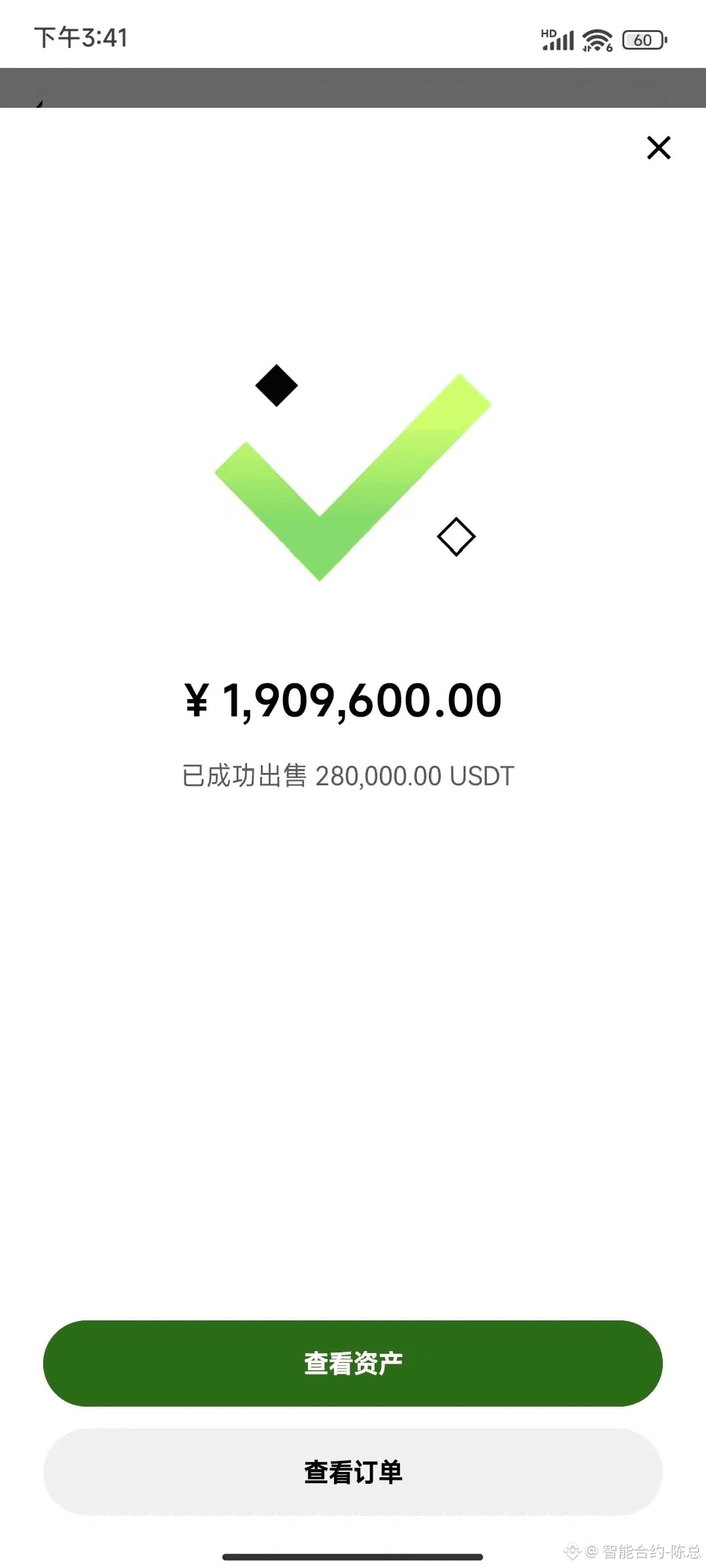
Did making money from buying and selling coins mean it’s all over? Don’t be naive. I’ve seen too many people fall at the withdrawal stage—money they earned never even got warm before it was gone.
Don’t get jealous of the black-market operators’ little exchange-rate markup. If you use them, you’ll end up in a frozen-card package: the money won’t be much, but your account gets disabled first. Never use your salary card for receiving—once your salary hits, it gets frozen, and the whole family’s living expenses are basically gone.
My own approach: I specifically opened a Postal Savings bank card for receiving payments only, completely separating it from my everyday card. Keep each transaction to no more than fifty thousand; once the funds arrive, transfer them out immediately so you don’t get flagged by the bank’s risk controls. If you can arrange transfers to the merchant’s name, that’s even better—lower “dirty money” risk by a lot.
If your card gets frozen, immediately stop using all your bank cards. Ask the bank clearly which unit froze it, and prepare the transfer records so you can cooperate proactively. Don’t mention trading coins—just say it’s normal investment and business settlement.
One more trick: go through Hong Kong/US stock channels or switch via a trusted offline contact. Do it in a distributed way—before you deal with big amounts, test with small ones first.
In the crypto world, earning money depends on skill. Only when the money can safely land in your pocket does it truly count as real ability. Get the details right—don’t end up falling at the final step.
Did making money from buying and selling coins mean it’s all over? Don’t be naive. I’ve seen too many people fall at the withdrawal stage—money they earned never even got warm before it was gone.
Don’t get jealous of the black-market operators’ little exchange-rate markup. If you use them, you’ll end up in a frozen-card package: the money won’t be much, but your account gets disabled first. Never use your salary card for receiving—once your salary hits, it gets frozen, and the whole family’s living expenses are basically gone.
My own approach: I specifically opened a Postal Savings bank card for receiving payments only, completely separating it from my everyday card. Keep each transaction to no more than fifty thousand; once the funds arrive, transfer them out immediately so you don’t get flagged by the bank’s risk controls. If you can arrange transfers to the merchant’s name, that’s even better—lower “dirty money” risk by a lot.
If your card gets frozen, immediately stop using all your bank cards. Ask the bank clearly which unit froze it, and prepare the transfer records so you can cooperate proactively. Don’t mention trading coins—just say it’s normal investment and business settlement.
One more trick: go through Hong Kong/US stock channels or switch via a trusted offline contact. Do it in a distributed way—before you deal with big amounts, test with small ones first.
In the crypto world, earning money depends on skill. Only when the money can safely land in your pocket does it truly count as real ability. Get the details right—don’t end up falling at the final step.
Don’t get jealous of the black-market operators’ little exchange-rate markup. If you use them, you’ll end up in a frozen-card package: the money won’t be much, but your account gets disabled first. Never use your salary card for receiving—once your salary hits, it gets frozen, and the whole family’s living expenses are basically gone.
My own approach: I specifically opened a Postal Savings bank card for receiving payments only, completely separating it from my everyday card. Keep each transaction to no more than fifty thousand; once the funds arrive, transfer them out immediately so you don’t get flagged by the bank’s risk controls. If you can arrange transfers to the merchant’s name, that’s even better—lower “dirty money” risk by a lot.
If your card gets frozen, immediately stop using all your bank cards. Ask the bank clearly which unit froze it, and prepare the transfer records so you can cooperate proactively. Don’t mention trading coins—just say it’s normal investment and business settlement.
One more trick: go through Hong Kong/US stock channels or switch via a trusted offline contact. Do it in a distributed way—before you deal with big amounts, test with small ones first.
In the crypto world, earning money depends on skill. Only when the money can safely land in your pocket does it truly count as real ability. Get the details right—don’t end up falling at the final step.
1
90
·
--
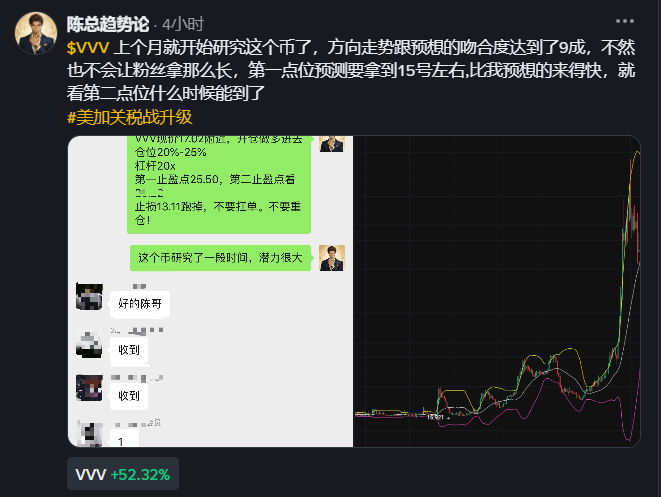
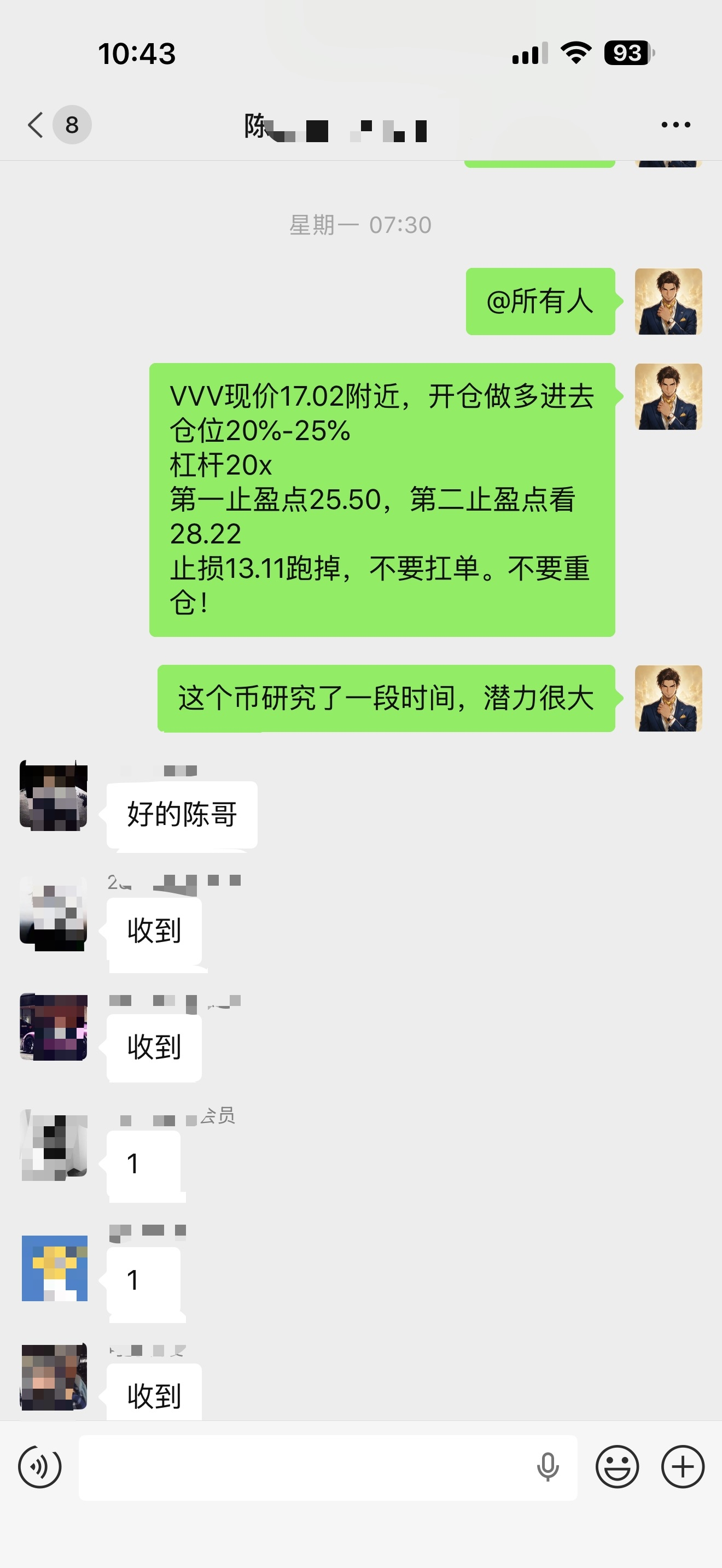
You’re all eating meat now, brothers!$VVV
You’re all eating meat now, brothers!$VVV

陈总趋势论
·
--
$VVV is coming very soon—given this momentum, it should hit the second take-profit level a little later! 🚀
1
102
·
--
#美军打击霍尔木兹岛及贾斯克目标
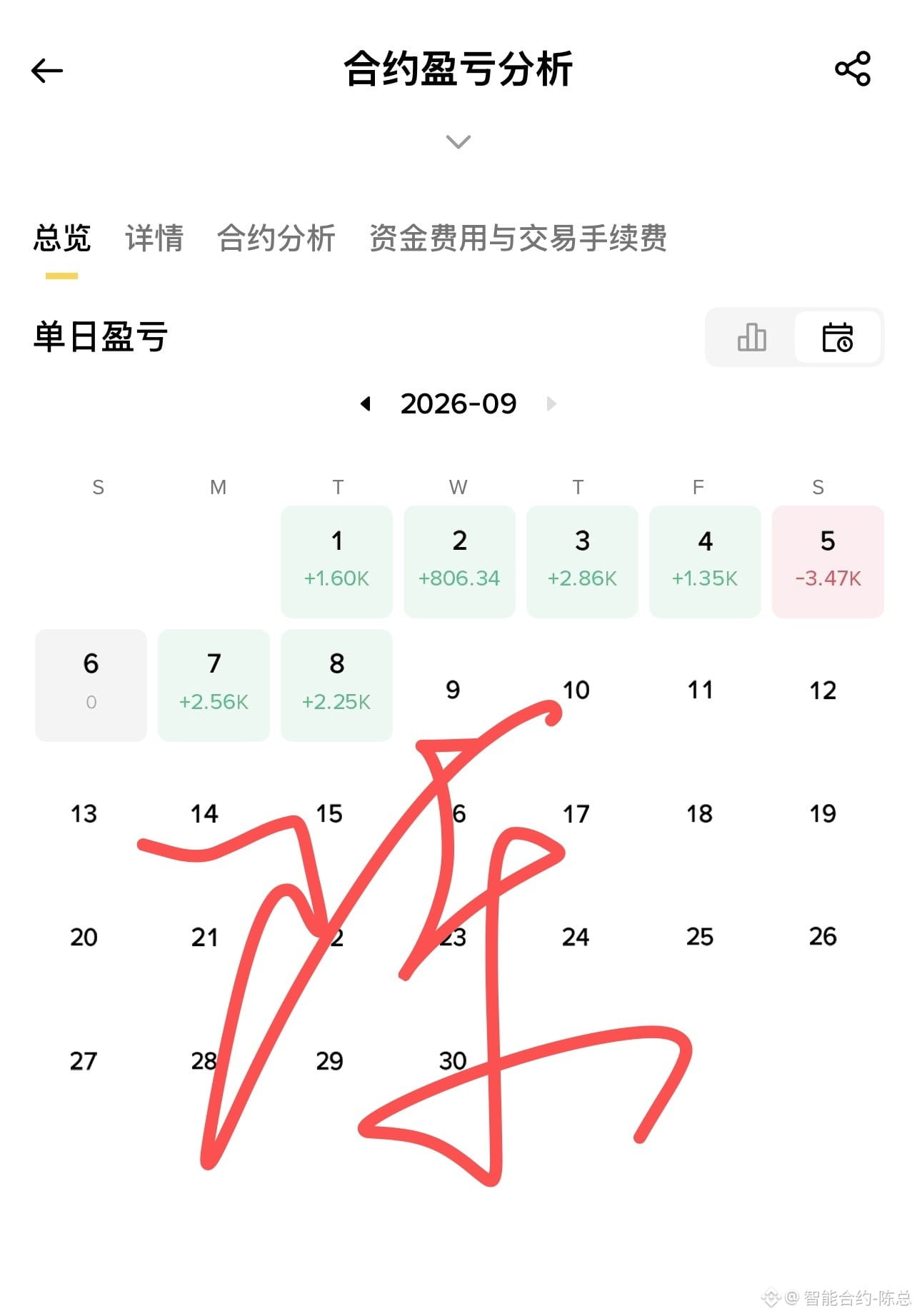
The US military has moved—let’s talk about how to handle a few coins.
Brent is heading toward 100. But $BTC was instead hammered down to around 78k—the move is pretty interesting.
First, BTC. Why is it dropping? The US military goes after oil tankers near the Strait of Hormuz and in the area of Jask, and oil prices jumped straight up. Then the August non-farm payroll data was strong again, and the market started betting on a September Fed rate hike. Once rate-hike expectations hit, risk assets were the first to get beaten. BTC was smashed from 80k down to 77.6k before catching its breath.
I’m bearish on BTC in the short term. The logic is macro pressure—oil prices rising pushes inflation up, and the Fed can’t loosen policy.
But I’m not shorting BTC. Below this level, 73k–75k has strong support. RSI has slipped back to around 60—not oversold yet—so the short trade odds aren’t good. If you really feel itchy to short, wait until it breaks below 77k, then reassess; if it doesn’t break, I won’t move.
What I’m really watching is $ETH . ETH is weaker than BTC and has already broken below 2500. Why? Rate-hike expectations hurt more liquidity-sensitive coins. In a high-interest environment, the appeal of ETH’s staking yield drops. The ETH/BTC ratio is on a weakening trend, and that short-term trend is hard to change.
How to set the entry points? For BTC, I placed a limit short at 82k. If it really bounces back to that level, I’ll consider getting in then. For ETH, I’m preparing to short around 2700, with a stop loss above 2800. Scale in, don’t go all-in—that’s a habit built from losses over years.
One thing to keep an eye on: stablecoins. Capital is flowing toward crypto assets from the Middle East, and demand for USDT/USDC is rising. If you’re going long, have some ammunition ready. If it truly drops below 75k, it could actually be an opportunity—don’t let emotions lead you astray.
For this market: move slowly, don’t take heavy positions. Take what you should take, wait for what you should wait for. Don’t get impulsive and chase—then get hammered.
#美军打击霍尔木兹岛及贾斯克目标
The US military has moved—let’s talk about how to handle a few coins.
Brent is heading toward 100. But $BTC was instead hammered down to around 78k—the move is pretty interesting.
First, BTC. Why is it dropping? The US military goes after oil tankers near the Strait of Hormuz and in the area of Jask, and oil prices jumped straight up. Then the August non-farm payroll data was strong again, and the market started betting on a September Fed rate hike. Once rate-hike expectations hit, risk assets were the first to get beaten. BTC was smashed from 80k down to 77.6k before catching its breath.
I’m bearish on BTC in the short term. The logic is macro pressure—oil prices rising pushes inflation up, and the Fed can’t loosen policy.
But I’m not shorting BTC. Below this level, 73k–75k has strong support. RSI has slipped back to around 60—not oversold yet—so the short trade odds aren’t good. If you really feel itchy to short, wait until it breaks below 77k, then reassess; if it doesn’t break, I won’t move.
What I’m really watching is $ETH . ETH is weaker than BTC and has already broken below 2500. Why? Rate-hike expectations hurt more liquidity-sensitive coins. In a high-interest environment, the appeal of ETH’s staking yield drops. The ETH/BTC ratio is on a weakening trend, and that short-term trend is hard to change.
How to set the entry points? For BTC, I placed a limit short at 82k. If it really bounces back to that level, I’ll consider getting in then. For ETH, I’m preparing to short around 2700, with a stop loss above 2800. Scale in, don’t go all-in—that’s a habit built from losses over years.
One thing to keep an eye on: stablecoins. Capital is flowing toward crypto assets from the Middle East, and demand for USDT/USDC is rising. If you’re going long, have some ammunition ready. If it truly drops below 75k, it could actually be an opportunity—don’t let emotions lead you astray.
For this market: move slowly, don’t take heavy positions. Take what you should take, wait for what you should wait for. Don’t get impulsive and chase—then get hammered.
The US military has moved—let’s talk about how to handle a few coins.
Brent is heading toward 100. But $BTC was instead hammered down to around 78k—the move is pretty interesting.
First, BTC. Why is it dropping? The US military goes after oil tankers near the Strait of Hormuz and in the area of Jask, and oil prices jumped straight up. Then the August non-farm payroll data was strong again, and the market started betting on a September Fed rate hike. Once rate-hike expectations hit, risk assets were the first to get beaten. BTC was smashed from 80k down to 77.6k before catching its breath.
I’m bearish on BTC in the short term. The logic is macro pressure—oil prices rising pushes inflation up, and the Fed can’t loosen policy.
But I’m not shorting BTC. Below this level, 73k–75k has strong support. RSI has slipped back to around 60—not oversold yet—so the short trade odds aren’t good. If you really feel itchy to short, wait until it breaks below 77k, then reassess; if it doesn’t break, I won’t move.
What I’m really watching is $ETH . ETH is weaker than BTC and has already broken below 2500. Why? Rate-hike expectations hurt more liquidity-sensitive coins. In a high-interest environment, the appeal of ETH’s staking yield drops. The ETH/BTC ratio is on a weakening trend, and that short-term trend is hard to change.
How to set the entry points? For BTC, I placed a limit short at 82k. If it really bounces back to that level, I’ll consider getting in then. For ETH, I’m preparing to short around 2700, with a stop loss above 2800. Scale in, don’t go all-in—that’s a habit built from losses over years.
One thing to keep an eye on: stablecoins. Capital is flowing toward crypto assets from the Middle East, and demand for USDT/USDC is rising. If you’re going long, have some ammunition ready. If it truly drops below 75k, it could actually be an opportunity—don’t let emotions lead you astray.
For this market: move slowly, don’t take heavy positions. Take what you should take, wait for what you should wait for. Don’t get impulsive and chase—then get hammered.
1
191
·
--
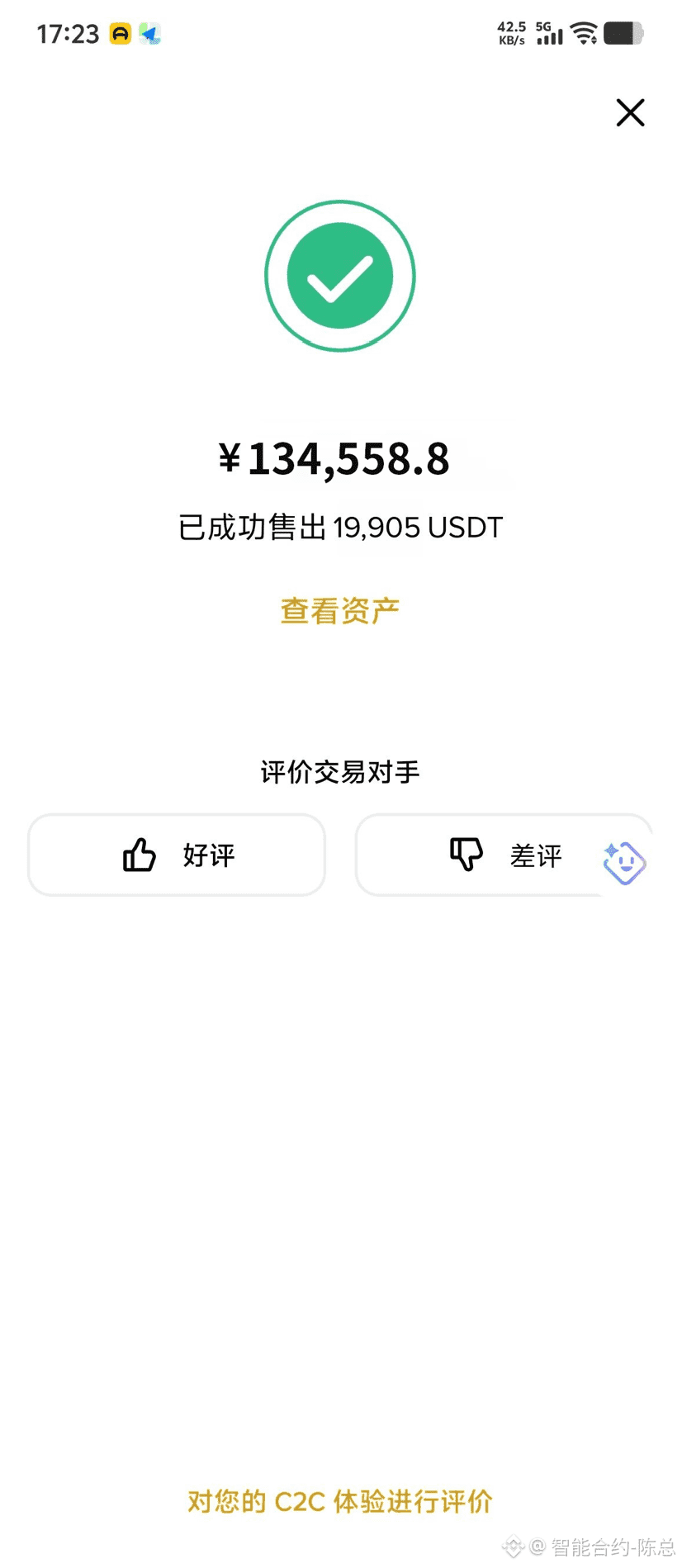
Don’t blame contracts for hurting people. You’re the one who put everything you have on the table.
A friend of mine once complained to me, saying contracts are basically untouchable and too easy to get liquidated. I asked him what leverage he used—he said only 5x. I was confused: how could 5x leverage liquidate someone so easily? After digging deeper, I found out he went all-in. He put his entire $10,000 USD balance into the trade.
In an instant, I understood: it wasn’t the 5x leverage that was dangerous—it was the fact that he shoved all his chips into the market at once. Going all-in with $10,000 at 5x means even a small move in the opposite direction can wipe you out instantly, leaving you with absolutely no room to react. Many people think liquidation is caused by leverage being too high, but the real root issue is that you didn’t leave yourself even a single path to retreat.
I’ve fallen into the same kind of trap in my early days. At first, I always assumed the risk came entirely from the leverage multiplier. Later, after going through every losing trade I’d made, I finally realized: it’s never the high leverage that kicks you out of the game—it’s taking on too much position size.
There was one time I used nearly half my funds for a trade. The direction was clearly right, but during the move, the market had a normal pullback. My position couldn’t withstand it, so I had to cut the position and exit in a hurry. And when the price later started moving according to my prediction, I could only stand by and watch.
After that, I set three hard rules for myself:
1. Fix your per-trade position size—never let a single trade decide whether you win or lose everything.
2. Add to your position only with profits. Don’t “average down” when you’re losing; fundamentally, you’re just compounding the mistake into something larger.
3. Keep reserve funds on hand at all times. The market is always full of opportunities, but once your principal is gone, you’ll never have the chance to enter again.
Too many people spend every day figuring out what leverage to use to make quick money, but they miss the most critical question: if this trade goes against you and you lose, can you still stay in the game?
Leverage is just a tool. Used correctly, it improves capital efficiency. Used incorrectly, it only amplifies your impulsiveness.
Remember this: leverage determines how fast you make money—position size determines how long you can survive.
Don’t blame contracts for hurting people. You’re the one who put everything you have on the table.
A friend of mine once complained to me, saying contracts are basically untouchable and too easy to get liquidated. I asked him what leverage he used—he said only 5x. I was confused: how could 5x leverage liquidate someone so easily? After digging deeper, I found out he went all-in. He put his entire $10,000 USD balance into the trade.
In an instant, I understood: it wasn’t the 5x leverage that was dangerous—it was the fact that he shoved all his chips into the market at once. Going all-in with $10,000 at 5x means even a small move in the opposite direction can wipe you out instantly, leaving you with absolutely no room to react. Many people think liquidation is caused by leverage being too high, but the real root issue is that you didn’t leave yourself even a single path to retreat.
I’ve fallen into the same kind of trap in my early days. At first, I always assumed the risk came entirely from the leverage multiplier. Later, after going through every losing trade I’d made, I finally realized: it’s never the high leverage that kicks you out of the game—it’s taking on too much position size.
There was one time I used nearly half my funds for a trade. The direction was clearly right, but during the move, the market had a normal pullback. My position couldn’t withstand it, so I had to cut the position and exit in a hurry. And when the price later started moving according to my prediction, I could only stand by and watch.
After that, I set three hard rules for myself:
1. Fix your per-trade position size—never let a single trade decide whether you win or lose everything.
2. Add to your position only with profits. Don’t “average down” when you’re losing; fundamentally, you’re just compounding the mistake into something larger.
3. Keep reserve funds on hand at all times. The market is always full of opportunities, but once your principal is gone, you’ll never have the chance to enter again.
Too many people spend every day figuring out what leverage to use to make quick money, but they miss the most critical question: if this trade goes against you and you lose, can you still stay in the game?
Leverage is just a tool. Used correctly, it improves capital efficiency. Used incorrectly, it only amplifies your impulsiveness.
Remember this: leverage determines how fast you make money—position size determines how long you can survive.
A friend of mine once complained to me, saying contracts are basically untouchable and too easy to get liquidated. I asked him what leverage he used—he said only 5x. I was confused: how could 5x leverage liquidate someone so easily? After digging deeper, I found out he went all-in. He put his entire $10,000 USD balance into the trade.
In an instant, I understood: it wasn’t the 5x leverage that was dangerous—it was the fact that he shoved all his chips into the market at once. Going all-in with $10,000 at 5x means even a small move in the opposite direction can wipe you out instantly, leaving you with absolutely no room to react. Many people think liquidation is caused by leverage being too high, but the real root issue is that you didn’t leave yourself even a single path to retreat.
I’ve fallen into the same kind of trap in my early days. At first, I always assumed the risk came entirely from the leverage multiplier. Later, after going through every losing trade I’d made, I finally realized: it’s never the high leverage that kicks you out of the game—it’s taking on too much position size.
There was one time I used nearly half my funds for a trade. The direction was clearly right, but during the move, the market had a normal pullback. My position couldn’t withstand it, so I had to cut the position and exit in a hurry. And when the price later started moving according to my prediction, I could only stand by and watch.
After that, I set three hard rules for myself:
1. Fix your per-trade position size—never let a single trade decide whether you win or lose everything.
2. Add to your position only with profits. Don’t “average down” when you’re losing; fundamentally, you’re just compounding the mistake into something larger.
3. Keep reserve funds on hand at all times. The market is always full of opportunities, but once your principal is gone, you’ll never have the chance to enter again.
Too many people spend every day figuring out what leverage to use to make quick money, but they miss the most critical question: if this trade goes against you and you lose, can you still stay in the game?
Leverage is just a tool. Used correctly, it improves capital efficiency. Used incorrectly, it only amplifies your impulsiveness.
Remember this: leverage determines how fast you make money—position size determines how long you can survive.
1
52
·
--
The market’s like that—up, down, back and forth, tug-of-war all the time. That’s simply normal. But many people can’t get past this hurdle: if it drops a little, they panic and cut positions in chaos; after it rebounds a bit, they get carried away and lose all sense of direction. Their emotions are completely controlled by the K-line, and their account naturally swings up and down with it. $ZEC
Think carefully—how many of the losses you’ve really taken were caused by normal fluctuations that your emotions amplified? $MU
When it’s falling, you panic because you think the trend is about to reverse. But most of the time, it’s just a normal pullback—its structure hasn’t actually broken yet. You sold at the lowest point, and then you watched the market continue in the original direction.
When it rises, you get euphoric because you think it’s about to take off.
But most of the time, it’s just a normal rebound, and the trend hasn’t been confirmed yet. You chase at the highest point, then watch the market correct and trap you.
Price movement itself isn’t the problem—your reaction to it is. The moment you panic and the moment you get carried away—those are the real times you lose money. $SKHYNIX
So how do you stay steady? Nail the rules down so emotions don’t get to decide for you. Set your stop-loss and take-profit in advance, and when it hits, execute—no hesitation. The market won’t stop just because you panic and wait for you, and it won’t move in the direction you want just because you get carried away. The more panicked you are, the more likely you are to act recklessly; the more carried away you are, the easier it is to make mistakes. After a few back-and-forth cycles, the principal gets ground down in that kind of repetition.
And those who can survive in the market don’t have zero emotions. They simply don’t let emotions participate in their trading. They know that a small drop doesn’t mean the trend is over, and a small rise doesn’t mean you’re suddenly unstoppable.
They’ve already written contingency plans in advance: what to do if it rises, what to do if it falls, and what to do during sideways trading—everything is in the plan. When the market comes, you just carry out the plan. You don’t need to make decisions on the spot based on impulse. Rules are there to block the frantic and erratic moments, so you can still stay calm through the rises and falls. Price movement is normal—but the moment you panic and the moment you get carried away are what truly become the enemy of your account.
If you’re still making trades that are chaotic because of volatility, you can come find me to chat—I’ll help you separate emotions from trading. Follow me, and let’s get through to the shore together.
The market’s like that—up, down, back and forth, tug-of-war all the time. That’s simply normal. But many people can’t get past this hurdle: if it drops a little, they panic and cut positions in chaos; after it rebounds a bit, they get carried away and lose all sense of direction. Their emotions are completely controlled by the K-line, and their account naturally swings up and down with it. $ZEC
Think carefully—how many of the losses you’ve really taken were caused by normal fluctuations that your emotions amplified? $MU
When it’s falling, you panic because you think the trend is about to reverse. But most of the time, it’s just a normal pullback—its structure hasn’t actually broken yet. You sold at the lowest point, and then you watched the market continue in the original direction.
When it rises, you get euphoric because you think it’s about to take off.
But most of the time, it’s just a normal rebound, and the trend hasn’t been confirmed yet. You chase at the highest point, then watch the market correct and trap you.
Price movement itself isn’t the problem—your reaction to it is. The moment you panic and the moment you get carried away—those are the real times you lose money. $SKHYNIX
So how do you stay steady? Nail the rules down so emotions don’t get to decide for you. Set your stop-loss and take-profit in advance, and when it hits, execute—no hesitation. The market won’t stop just because you panic and wait for you, and it won’t move in the direction you want just because you get carried away. The more panicked you are, the more likely you are to act recklessly; the more carried away you are, the easier it is to make mistakes. After a few back-and-forth cycles, the principal gets ground down in that kind of repetition.
And those who can survive in the market don’t have zero emotions. They simply don’t let emotions participate in their trading. They know that a small drop doesn’t mean the trend is over, and a small rise doesn’t mean you’re suddenly unstoppable.
They’ve already written contingency plans in advance: what to do if it rises, what to do if it falls, and what to do during sideways trading—everything is in the plan. When the market comes, you just carry out the plan. You don’t need to make decisions on the spot based on impulse. Rules are there to block the frantic and erratic moments, so you can still stay calm through the rises and falls. Price movement is normal—but the moment you panic and the moment you get carried away are what truly become the enemy of your account.
If you’re still making trades that are chaotic because of volatility, you can come find me to chat—I’ll help you separate emotions from trading. Follow me, and let’s get through to the shore together.
Think carefully—how many of the losses you’ve really taken were caused by normal fluctuations that your emotions amplified? $MU
When it’s falling, you panic because you think the trend is about to reverse. But most of the time, it’s just a normal pullback—its structure hasn’t actually broken yet. You sold at the lowest point, and then you watched the market continue in the original direction.
When it rises, you get euphoric because you think it’s about to take off.
But most of the time, it’s just a normal rebound, and the trend hasn’t been confirmed yet. You chase at the highest point, then watch the market correct and trap you.
Price movement itself isn’t the problem—your reaction to it is. The moment you panic and the moment you get carried away—those are the real times you lose money. $SKHYNIX
So how do you stay steady? Nail the rules down so emotions don’t get to decide for you. Set your stop-loss and take-profit in advance, and when it hits, execute—no hesitation. The market won’t stop just because you panic and wait for you, and it won’t move in the direction you want just because you get carried away. The more panicked you are, the more likely you are to act recklessly; the more carried away you are, the easier it is to make mistakes. After a few back-and-forth cycles, the principal gets ground down in that kind of repetition.
And those who can survive in the market don’t have zero emotions. They simply don’t let emotions participate in their trading. They know that a small drop doesn’t mean the trend is over, and a small rise doesn’t mean you’re suddenly unstoppable.
They’ve already written contingency plans in advance: what to do if it rises, what to do if it falls, and what to do during sideways trading—everything is in the plan. When the market comes, you just carry out the plan. You don’t need to make decisions on the spot based on impulse. Rules are there to block the frantic and erratic moments, so you can still stay calm through the rises and falls. Price movement is normal—but the moment you panic and the moment you get carried away are what truly become the enemy of your account.
If you’re still making trades that are chaotic because of volatility, you can come find me to chat—I’ll help you separate emotions from trading. Follow me, and let’s get through to the shore together.
1
15
·
--
Last year, when a fan found me, his account only had 800U left. He said he didn’t even have the confidence to speak anymore. “If I lose any more, I’ll just quit the scene and never touch this again.” $MU
I asked him to send me his recent trading records. After reading through them, the problem was very clear. It wasn’t that he couldn’t understand the market—he was gambling on every single trade. When prices went up, he wanted to chase; when they dropped, he tried to catch the dip. His position size was heavy, and his stop-loss was basically non-existent. The market kept cutting him back and forth. With only 800U left, he was still trading with the kind of “high-position-and-risk-it-all” approach—how could the account not shrink? I asked him why he didn’t leave himself some room. He said, “Anyway, I’ve already lost this much. I might as well place one more bet. If I lose, then that’s it.” $SKHYNIX
I told him to pause and go through his last ten losing trades, one by one, and we’d talk after finding the common thread. Later, he told me each trade had the same issue—he hadn’t thought about an exit plan before entering. $ZEC
When it went bad, he couldn’t bear to leave; when it went up, he didn’t dare to hold. His position was so heavy he couldn’t even withstand normal market fluctuations. I told him to reduce his position size: move only a small portion each time. If he was wrong, he would lose a small amount and leave; if he was right, he’d add slowly using profits. He followed my advice. He started splitting his positions, “welding” his stop-losses in place, and only trading the market setups he truly understood. Two months later, he told me his account had reached 4000U. He said he wasn’t getting worked up anymore. It wasn’t much, but it was the first time he felt like trading could actually stay stable.
Going from 800U back to where he is now wasn’t based on some magical trade. It was because he corrected those wrong trading habits one by one. I asked him: “Do you still think you were trading back then?” He said: “No, I wasn’t trading—I was gambling.” Then I asked: “What about now?” He said: “Now I’m balancing the books.” Going from gambling to reckoning cost him several tens of thousands of U in tuition, but being able to change is a good thing.
If you’re also in this stage—watching your account get smaller and your confidence getting lower—feel free to come talk to me. I’ll help you find the problems first. Once the problems are identified, the rest becomes much easier. Follow me and let’s get you back to shore together.
Last year, when a fan found me, his account only had 800U left. He said he didn’t even have the confidence to speak anymore. “If I lose any more, I’ll just quit the scene and never touch this again.” $MU
I asked him to send me his recent trading records. After reading through them, the problem was very clear. It wasn’t that he couldn’t understand the market—he was gambling on every single trade. When prices went up, he wanted to chase; when they dropped, he tried to catch the dip. His position size was heavy, and his stop-loss was basically non-existent. The market kept cutting him back and forth. With only 800U left, he was still trading with the kind of “high-position-and-risk-it-all” approach—how could the account not shrink? I asked him why he didn’t leave himself some room. He said, “Anyway, I’ve already lost this much. I might as well place one more bet. If I lose, then that’s it.” $SKHYNIX
I told him to pause and go through his last ten losing trades, one by one, and we’d talk after finding the common thread. Later, he told me each trade had the same issue—he hadn’t thought about an exit plan before entering. $ZEC
When it went bad, he couldn’t bear to leave; when it went up, he didn’t dare to hold. His position was so heavy he couldn’t even withstand normal market fluctuations. I told him to reduce his position size: move only a small portion each time. If he was wrong, he would lose a small amount and leave; if he was right, he’d add slowly using profits. He followed my advice. He started splitting his positions, “welding” his stop-losses in place, and only trading the market setups he truly understood. Two months later, he told me his account had reached 4000U. He said he wasn’t getting worked up anymore. It wasn’t much, but it was the first time he felt like trading could actually stay stable.
Going from 800U back to where he is now wasn’t based on some magical trade. It was because he corrected those wrong trading habits one by one. I asked him: “Do you still think you were trading back then?” He said: “No, I wasn’t trading—I was gambling.” Then I asked: “What about now?” He said: “Now I’m balancing the books.” Going from gambling to reckoning cost him several tens of thousands of U in tuition, but being able to change is a good thing.
If you’re also in this stage—watching your account get smaller and your confidence getting lower—feel free to come talk to me. I’ll help you find the problems first. Once the problems are identified, the rest becomes much easier. Follow me and let’s get you back to shore together.
I asked him to send me his recent trading records. After reading through them, the problem was very clear. It wasn’t that he couldn’t understand the market—he was gambling on every single trade. When prices went up, he wanted to chase; when they dropped, he tried to catch the dip. His position size was heavy, and his stop-loss was basically non-existent. The market kept cutting him back and forth. With only 800U left, he was still trading with the kind of “high-position-and-risk-it-all” approach—how could the account not shrink? I asked him why he didn’t leave himself some room. He said, “Anyway, I’ve already lost this much. I might as well place one more bet. If I lose, then that’s it.” $SKHYNIX
I told him to pause and go through his last ten losing trades, one by one, and we’d talk after finding the common thread. Later, he told me each trade had the same issue—he hadn’t thought about an exit plan before entering. $ZEC
When it went bad, he couldn’t bear to leave; when it went up, he didn’t dare to hold. His position was so heavy he couldn’t even withstand normal market fluctuations. I told him to reduce his position size: move only a small portion each time. If he was wrong, he would lose a small amount and leave; if he was right, he’d add slowly using profits. He followed my advice. He started splitting his positions, “welding” his stop-losses in place, and only trading the market setups he truly understood. Two months later, he told me his account had reached 4000U. He said he wasn’t getting worked up anymore. It wasn’t much, but it was the first time he felt like trading could actually stay stable.
Going from 800U back to where he is now wasn’t based on some magical trade. It was because he corrected those wrong trading habits one by one. I asked him: “Do you still think you were trading back then?” He said: “No, I wasn’t trading—I was gambling.” Then I asked: “What about now?” He said: “Now I’m balancing the books.” Going from gambling to reckoning cost him several tens of thousands of U in tuition, but being able to change is a good thing.
If you’re also in this stage—watching your account get smaller and your confidence getting lower—feel free to come talk to me. I’ll help you find the problems first. Once the problems are identified, the rest becomes much easier. Follow me and let’s get you back to shore together.
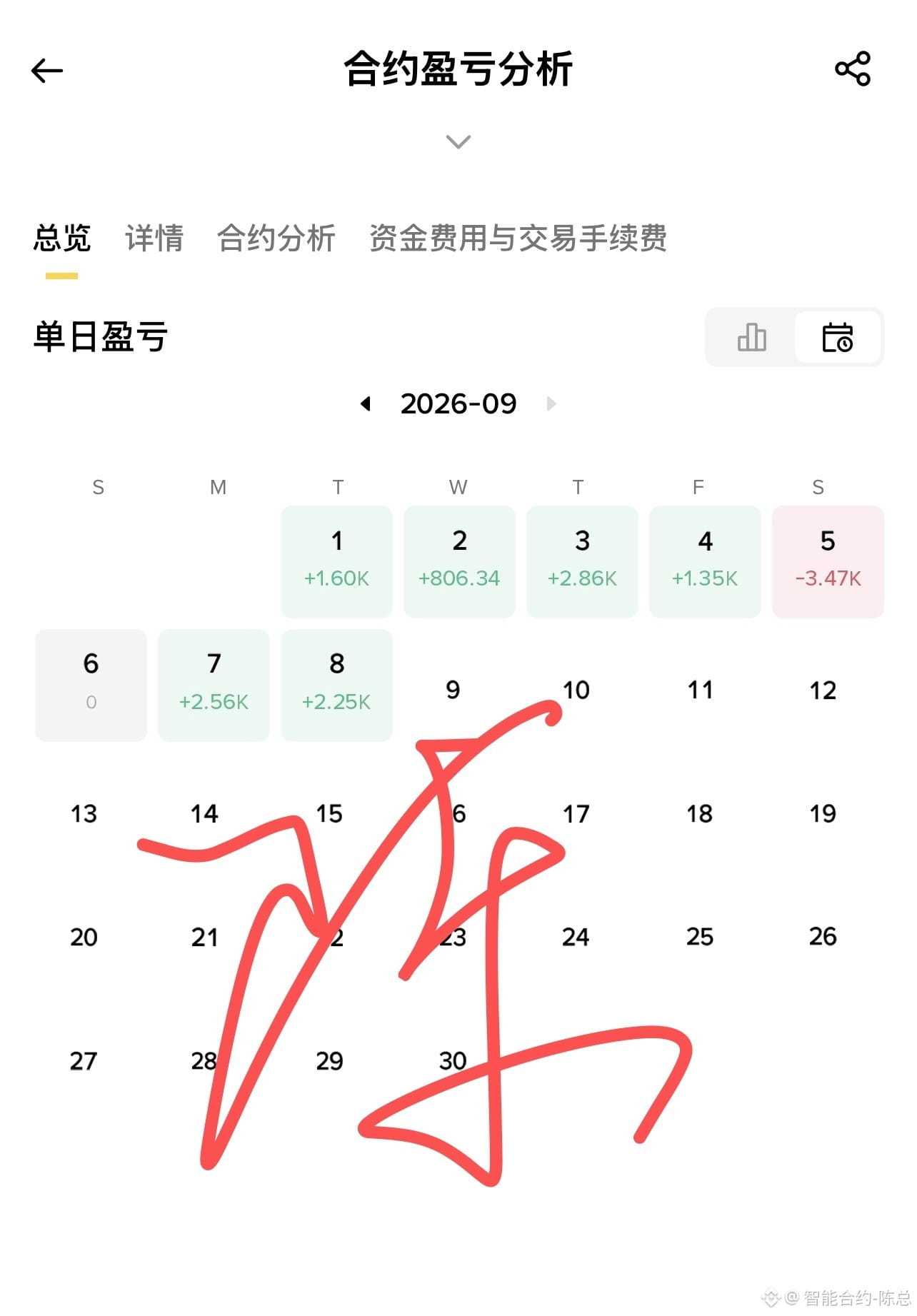
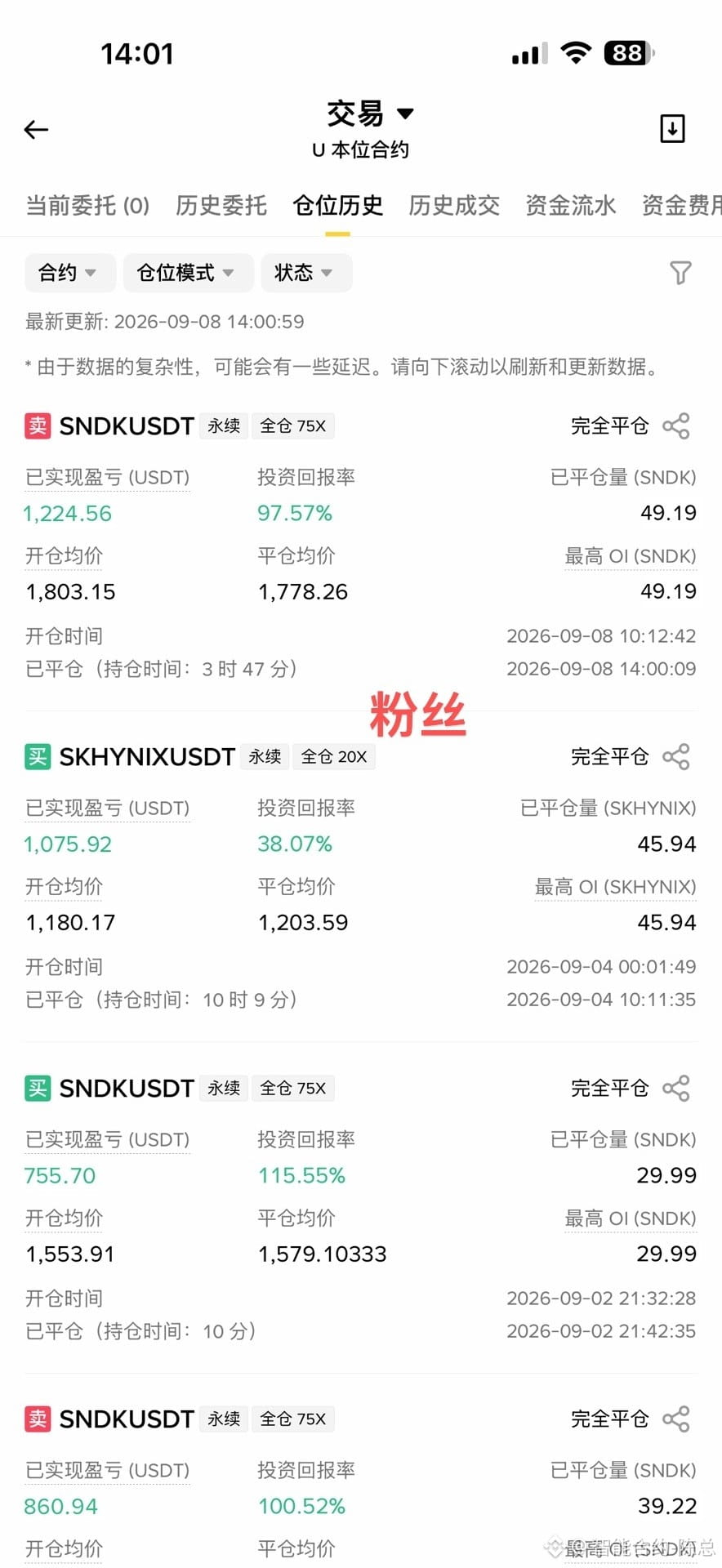
1
11
·
--
I turned 20,000U into 120,000U—I did it over more than half a year. In the beginning, I kept fine-tuning my rhythm; when I entered and exited, there wasn’t much fluctuation. But what I remember isn’t the profit curve—it’s the day my account dropped to 16,000U. $SKHYNIX
During that period, I would open a few trades each day and lose. My rhythm was completely thrown off—I did everything wrong, no matter what I tried. The account shrank steadily from 20,000U to 16,000U, and I was completely numb. Before opening the app, my hands were shaking. I didn’t know if this trade would lose again. That feeling can’t really be told to others—you can only say it to yourself: Can I keep going? Should I keep going? $ETH
Later, I made a very simple decision: stop. Don’t open any more trades. I went back through my previous records, marked all the losing trades, and looked for common patterns. I found a rule—those losing trades were opened when I was emotionally fired up. Losing made me急急想着翻本 (trying to win it back fast), and when I had floating profit I was急着加仓 (adding too quickly). When I should wait, I couldn’t; when I should exit, I couldn’t bear to. Even though the direction was right, the timing was wrong—so it was basically like seeing nothing. $HYPE
Later, I reduced my position size. Now I only move a small portion each time. I used to open several trades a day; now it’s one trade every few days. I sealed the stop-loss—once it hits, I leave immediately, no hesitation. After I slowed down my rhythm, the account started to creep upward again. After more than six months, it reached 120,000U. The process wasn’t very dramatic, but every step mattered.
When I made it through the worst part, the rest became easier. If you’re still holding on, friends, you can come talk to me—I’ll help you see where the road is. Follow me, and let’s make it to shore together.
I turned 20,000U into 120,000U—I did it over more than half a year. In the beginning, I kept fine-tuning my rhythm; when I entered and exited, there wasn’t much fluctuation. But what I remember isn’t the profit curve—it’s the day my account dropped to 16,000U. $SKHYNIX
During that period, I would open a few trades each day and lose. My rhythm was completely thrown off—I did everything wrong, no matter what I tried. The account shrank steadily from 20,000U to 16,000U, and I was completely numb. Before opening the app, my hands were shaking. I didn’t know if this trade would lose again. That feeling can’t really be told to others—you can only say it to yourself: Can I keep going? Should I keep going? $ETH
Later, I made a very simple decision: stop. Don’t open any more trades. I went back through my previous records, marked all the losing trades, and looked for common patterns. I found a rule—those losing trades were opened when I was emotionally fired up. Losing made me急急想着翻本 (trying to win it back fast), and when I had floating profit I was急着加仓 (adding too quickly). When I should wait, I couldn’t; when I should exit, I couldn’t bear to. Even though the direction was right, the timing was wrong—so it was basically like seeing nothing. $HYPE
Later, I reduced my position size. Now I only move a small portion each time. I used to open several trades a day; now it’s one trade every few days. I sealed the stop-loss—once it hits, I leave immediately, no hesitation. After I slowed down my rhythm, the account started to creep upward again. After more than six months, it reached 120,000U. The process wasn’t very dramatic, but every step mattered.
When I made it through the worst part, the rest became easier. If you’re still holding on, friends, you can come talk to me—I’ll help you see where the road is. Follow me, and let’s make it to shore together.
During that period, I would open a few trades each day and lose. My rhythm was completely thrown off—I did everything wrong, no matter what I tried. The account shrank steadily from 20,000U to 16,000U, and I was completely numb. Before opening the app, my hands were shaking. I didn’t know if this trade would lose again. That feeling can’t really be told to others—you can only say it to yourself: Can I keep going? Should I keep going? $ETH
Later, I made a very simple decision: stop. Don’t open any more trades. I went back through my previous records, marked all the losing trades, and looked for common patterns. I found a rule—those losing trades were opened when I was emotionally fired up. Losing made me急急想着翻本 (trying to win it back fast), and when I had floating profit I was急着加仓 (adding too quickly). When I should wait, I couldn’t; when I should exit, I couldn’t bear to. Even though the direction was right, the timing was wrong—so it was basically like seeing nothing. $HYPE
Later, I reduced my position size. Now I only move a small portion each time. I used to open several trades a day; now it’s one trade every few days. I sealed the stop-loss—once it hits, I leave immediately, no hesitation. After I slowed down my rhythm, the account started to creep upward again. After more than six months, it reached 120,000U. The process wasn’t very dramatic, but every step mattered.
When I made it through the worst part, the rest became easier. If you’re still holding on, friends, you can come talk to me—I’ll help you see where the road is. Follow me, and let’s make it to shore together.

1
23
·
--
The direction of SanDisk ($SNDK ) has been decided—it's just a matter of verifying it when the US stock market opens!
All my daytime predictions matched perfectly—structure, volume, and key levels, not a single one went off track. Now everything is in place; we just need tonight’s open to confirm the big trend.
In this kind of market, if you’re right but don’t act, it’s basically a waste of looking; if you enter but can’t hold, that’s also pointless. The real opportunity appears when most people hesitate.
My own position and entry logic are already sorted out. Tonight I’ll focus on which levels and what signals to watch before I make a move—it's all in the plan.
Want to know how I set up the trade? DM me @chenzong888 and we’ll watch the market together.
#Zcash周涨45%创2016年来新高
The direction of SanDisk ($SNDK ) has been decided—it's just a matter of verifying it when the US stock market opens!
All my daytime predictions matched perfectly—structure, volume, and key levels, not a single one went off track. Now everything is in place; we just need tonight’s open to confirm the big trend.
In this kind of market, if you’re right but don’t act, it’s basically a waste of looking; if you enter but can’t hold, that’s also pointless. The real opportunity appears when most people hesitate.
My own position and entry logic are already sorted out. Tonight I’ll focus on which levels and what signals to watch before I make a move—it's all in the plan.
Want to know how I set up the trade? DM me @智能合约-陈总 and we’ll watch the market together.
#Zcash周涨45%创2016年来新高
All my daytime predictions matched perfectly—structure, volume, and key levels, not a single one went off track. Now everything is in place; we just need tonight’s open to confirm the big trend.
In this kind of market, if you’re right but don’t act, it’s basically a waste of looking; if you enter but can’t hold, that’s also pointless. The real opportunity appears when most people hesitate.
My own position and entry logic are already sorted out. Tonight I’ll focus on which levels and what signals to watch before I make a move—it's all in the plan.
Want to know how I set up the trade? DM me @智能合约-陈总 and we’ll watch the market together.
#Zcash周涨45%创2016年来新高

1
21
·
--
How do you tell whether the market is trending or ranging?
Many people use various indicators to make this call: a bullish moving average alignment means a trend, and moving averages sticking together means a range. But I think all of these have lag—by the time the indicators tell you, the price action may have already been moving for a while.
My own method is very simple. Open the daily chart and just draw two lines. Connect the recent highs with one line, and the recent lows with another, then look at the direction of these two lines. If the highs keep making higher highs and the lows keep moving higher, that’s an uptrend.
If the highs keep getting lower and the lows keep moving down, that’s a downtrend. If the highs and lows move back and forth within a certain range, that’s a range.
That’s it—no complicated indicators needed. When drawing, pay attention to two things: for highs, choose clear local highs—don’t take every single minor high; for lows, choose clear local lows and ignore small fluctuations. Once you’ve drawn them, it’s immediately obvious what the current state is.
There’s also an easy-to-overlook issue: different timeframes can show different market states.
On the daily chart it might look like a range, but on the hourly chart it could look like a trend. So which one matters more? Based on my experience: follow the higher timeframe, and let the smaller timeframe comply with the higher timeframe. $BANK
If the daily chart is ranging, then the hourly chart’s “trend” should only be acted on within the smaller timeframe, with a position size lighter than usual. If the daily chart is trending, then the hourly chart’s pullbacks are opportunities to add to positions. $HYPE
Don’t get this order backwards—otherwise you’ll easily end up chasing the hourly trend when the daily chart is in a range, and you’ll likely get shaken out by the higher timeframe range.
So when you open the market today, spend one minute first checking what state the daily chart is in. If you do this, it will at least help you filter out half of the trades you shouldn’t be taking.
How do you tell whether the market is trending or ranging?
Many people use various indicators to make this call: a bullish moving average alignment means a trend, and moving averages sticking together means a range. But I think all of these have lag—by the time the indicators tell you, the price action may have already been moving for a while.
My own method is very simple. Open the daily chart and just draw two lines. Connect the recent highs with one line, and the recent lows with another, then look at the direction of these two lines. If the highs keep making higher highs and the lows keep moving higher, that’s an uptrend.
If the highs keep getting lower and the lows keep moving down, that’s a downtrend. If the highs and lows move back and forth within a certain range, that’s a range.
That’s it—no complicated indicators needed. When drawing, pay attention to two things: for highs, choose clear local highs—don’t take every single minor high; for lows, choose clear local lows and ignore small fluctuations. Once you’ve drawn them, it’s immediately obvious what the current state is.
There’s also an easy-to-overlook issue: different timeframes can show different market states.
On the daily chart it might look like a range, but on the hourly chart it could look like a trend. So which one matters more? Based on my experience: follow the higher timeframe, and let the smaller timeframe comply with the higher timeframe. $BANK
If the daily chart is ranging, then the hourly chart’s “trend” should only be acted on within the smaller timeframe, with a position size lighter than usual. If the daily chart is trending, then the hourly chart’s pullbacks are opportunities to add to positions. $HYPE
Don’t get this order backwards—otherwise you’ll easily end up chasing the hourly trend when the daily chart is in a range, and you’ll likely get shaken out by the higher timeframe range.
So when you open the market today, spend one minute first checking what state the daily chart is in. If you do this, it will at least help you filter out half of the trades you shouldn’t be taking.
Many people use various indicators to make this call: a bullish moving average alignment means a trend, and moving averages sticking together means a range. But I think all of these have lag—by the time the indicators tell you, the price action may have already been moving for a while.
My own method is very simple. Open the daily chart and just draw two lines. Connect the recent highs with one line, and the recent lows with another, then look at the direction of these two lines. If the highs keep making higher highs and the lows keep moving higher, that’s an uptrend.
If the highs keep getting lower and the lows keep moving down, that’s a downtrend. If the highs and lows move back and forth within a certain range, that’s a range.
That’s it—no complicated indicators needed. When drawing, pay attention to two things: for highs, choose clear local highs—don’t take every single minor high; for lows, choose clear local lows and ignore small fluctuations. Once you’ve drawn them, it’s immediately obvious what the current state is.
There’s also an easy-to-overlook issue: different timeframes can show different market states.
On the daily chart it might look like a range, but on the hourly chart it could look like a trend. So which one matters more? Based on my experience: follow the higher timeframe, and let the smaller timeframe comply with the higher timeframe. $BANK
If the daily chart is ranging, then the hourly chart’s “trend” should only be acted on within the smaller timeframe, with a position size lighter than usual. If the daily chart is trending, then the hourly chart’s pullbacks are opportunities to add to positions. $HYPE
Don’t get this order backwards—otherwise you’ll easily end up chasing the hourly trend when the daily chart is in a range, and you’ll likely get shaken out by the higher timeframe range.
So when you open the market today, spend one minute first checking what state the daily chart is in. If you do this, it will at least help you filter out half of the trades you shouldn’t be taking.
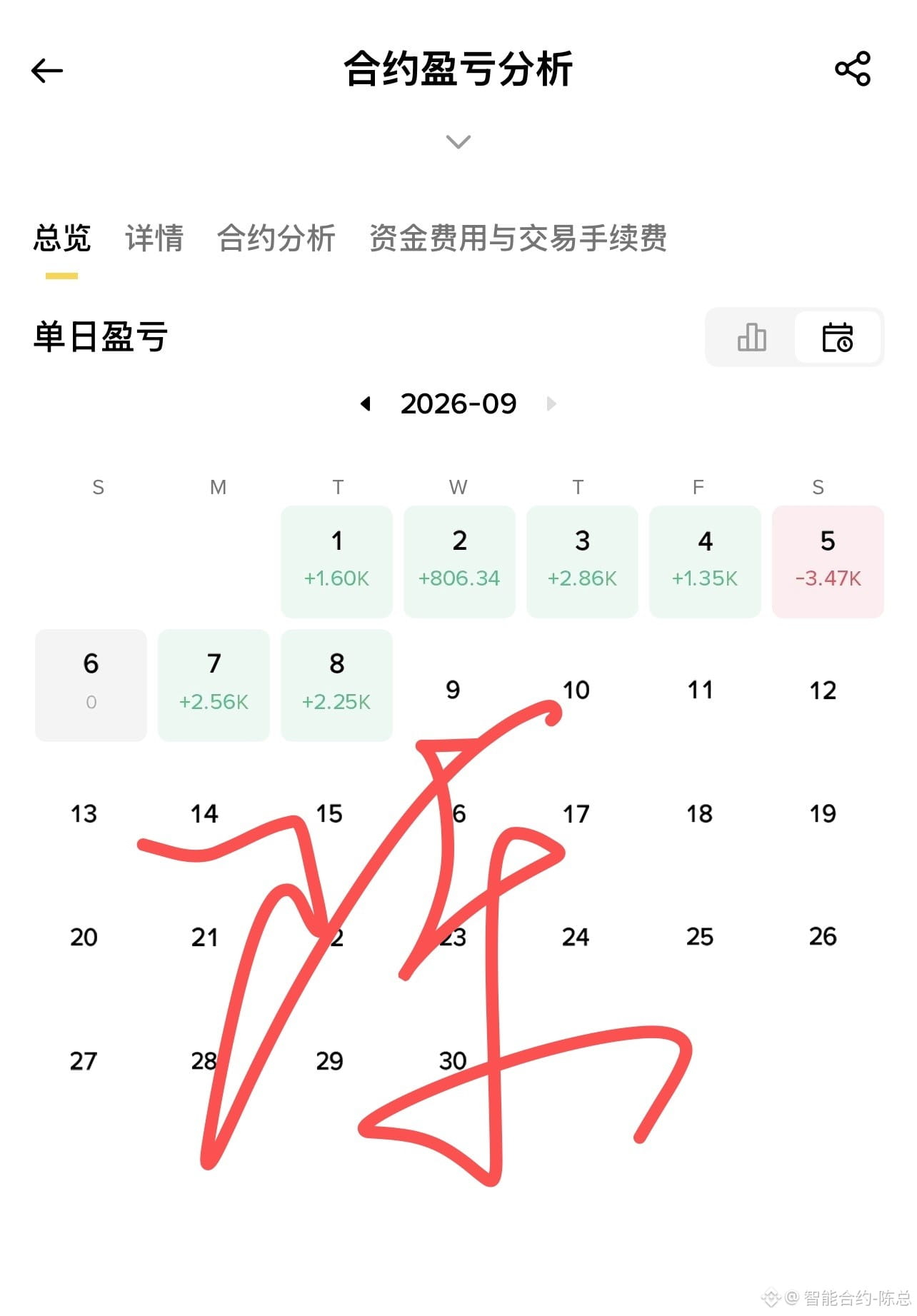
1
111
·
--
Today let’s talk about something different: desire.
I’ve seen someone place a trade—everything was right: the direction was correct, the position size was fine, and the stop-loss was set. But in the end, they got liquidated. Why? Because in the middle they changed the stop-loss several times—each time farther away. In the end, they couldn’t take it anymore, and it blew up. $HYPE
I asked him why he kept moving the stop-loss. He said he originally could have made a lot, but then it retraced. He felt unwilling to give up. He thought it could come back, so he kept moving it.
That’s desire wreaking havoc. You start out in profit, but you’re not satisfied—you want more. Then the profit turns into a loss, and you become even more unwilling. You start thinking about getting it back. While trying to get it back, you sink deeper and deeper—until everything gets wiped.
Desire is especially dangerous in trading.
When you enter the trade, it makes you impulsive. You feel like, “If I don’t chase, it’ll be gone,” so you enter at a position you shouldn’t. When you’re holding, it makes you greedy. Even when you’ve reached the target, you don’t exit—you wait for “more,” and end up giving back all your profit. When you’re losing, it makes you lose control. You急 to get it back; you push the position size larger and larger, and your trading decisions become more and more distorted.
Every step leaves a shadow of desire.
So how do you deal with desire? Honestly, I don’t have any particularly clever method—just one dumb trick. Before entering, write everything down and lock it in. Once you’re in, execute—don’t check the screen and don’t hesitate.
Because I know: the moment I see price moving, desire gets triggered. Seeing it rise makes me want to hold longer; seeing it fall makes me want to endure a bit more. The best solution is to not give myself the chance to be lured by desire.
Later, I found a pattern: most wrong trades are made when desire has been awakened. If you can pause for three seconds when desire first starts to show up and think, many orders wouldn’t even be placed—and many losses wouldn’t happen at all.
After trading for a long time, you’ll realize this: the biggest trap in the market isn’t that you get the direction wrong—it’s your own desire. It makes you not exit when you should, not stop when you should stop, and not admit defeat when you should.
If you can control desire, you’re stronger than most people.
Next time you want to place a trade, first ask yourself: is this decision based on rational judgment, or is it just impulse? Decisions made in impulse—nine times out of ten—are wrong.
Take a break and think again. When you cool down, it feels different. #俄乌交火库什纳维特科夫赴基辅
Today let’s talk about something different: desire.
I’ve seen someone place a trade—everything was right: the direction was correct, the position size was fine, and the stop-loss was set. But in the end, they got liquidated. Why? Because in the middle they changed the stop-loss several times—each time farther away. In the end, they couldn’t take it anymore, and it blew up. $HYPE
I asked him why he kept moving the stop-loss. He said he originally could have made a lot, but then it retraced. He felt unwilling to give up. He thought it could come back, so he kept moving it.
That’s desire wreaking havoc. You start out in profit, but you’re not satisfied—you want more. Then the profit turns into a loss, and you become even more unwilling. You start thinking about getting it back. While trying to get it back, you sink deeper and deeper—until everything gets wiped.
Desire is especially dangerous in trading.
When you enter the trade, it makes you impulsive. You feel like, “If I don’t chase, it’ll be gone,” so you enter at a position you shouldn’t. When you’re holding, it makes you greedy. Even when you’ve reached the target, you don’t exit—you wait for “more,” and end up giving back all your profit. When you’re losing, it makes you lose control. You急 to get it back; you push the position size larger and larger, and your trading decisions become more and more distorted.
Every step leaves a shadow of desire.
So how do you deal with desire? Honestly, I don’t have any particularly clever method—just one dumb trick. Before entering, write everything down and lock it in. Once you’re in, execute—don’t check the screen and don’t hesitate.
Because I know: the moment I see price moving, desire gets triggered. Seeing it rise makes me want to hold longer; seeing it fall makes me want to endure a bit more. The best solution is to not give myself the chance to be lured by desire.
Later, I found a pattern: most wrong trades are made when desire has been awakened. If you can pause for three seconds when desire first starts to show up and think, many orders wouldn’t even be placed—and many losses wouldn’t happen at all.
After trading for a long time, you’ll realize this: the biggest trap in the market isn’t that you get the direction wrong—it’s your own desire. It makes you not exit when you should, not stop when you should stop, and not admit defeat when you should.
If you can control desire, you’re stronger than most people.
Next time you want to place a trade, first ask yourself: is this decision based on rational judgment, or is it just impulse? Decisions made in impulse—nine times out of ten—are wrong.
Take a break and think again. When you cool down, it feels different. #俄乌交火库什纳维特科夫赴基辅
I’ve seen someone place a trade—everything was right: the direction was correct, the position size was fine, and the stop-loss was set. But in the end, they got liquidated. Why? Because in the middle they changed the stop-loss several times—each time farther away. In the end, they couldn’t take it anymore, and it blew up. $HYPE
I asked him why he kept moving the stop-loss. He said he originally could have made a lot, but then it retraced. He felt unwilling to give up. He thought it could come back, so he kept moving it.
That’s desire wreaking havoc. You start out in profit, but you’re not satisfied—you want more. Then the profit turns into a loss, and you become even more unwilling. You start thinking about getting it back. While trying to get it back, you sink deeper and deeper—until everything gets wiped.
Desire is especially dangerous in trading.
When you enter the trade, it makes you impulsive. You feel like, “If I don’t chase, it’ll be gone,” so you enter at a position you shouldn’t. When you’re holding, it makes you greedy. Even when you’ve reached the target, you don’t exit—you wait for “more,” and end up giving back all your profit. When you’re losing, it makes you lose control. You急 to get it back; you push the position size larger and larger, and your trading decisions become more and more distorted.
Every step leaves a shadow of desire.
So how do you deal with desire? Honestly, I don’t have any particularly clever method—just one dumb trick. Before entering, write everything down and lock it in. Once you’re in, execute—don’t check the screen and don’t hesitate.
Because I know: the moment I see price moving, desire gets triggered. Seeing it rise makes me want to hold longer; seeing it fall makes me want to endure a bit more. The best solution is to not give myself the chance to be lured by desire.
Later, I found a pattern: most wrong trades are made when desire has been awakened. If you can pause for three seconds when desire first starts to show up and think, many orders wouldn’t even be placed—and many losses wouldn’t happen at all.
After trading for a long time, you’ll realize this: the biggest trap in the market isn’t that you get the direction wrong—it’s your own desire. It makes you not exit when you should, not stop when you should stop, and not admit defeat when you should.
If you can control desire, you’re stronger than most people.
Next time you want to place a trade, first ask yourself: is this decision based on rational judgment, or is it just impulse? Decisions made in impulse—nine times out of ten—are wrong.
Take a break and think again. When you cool down, it feels different. #俄乌交火库什纳维特科夫赴基辅
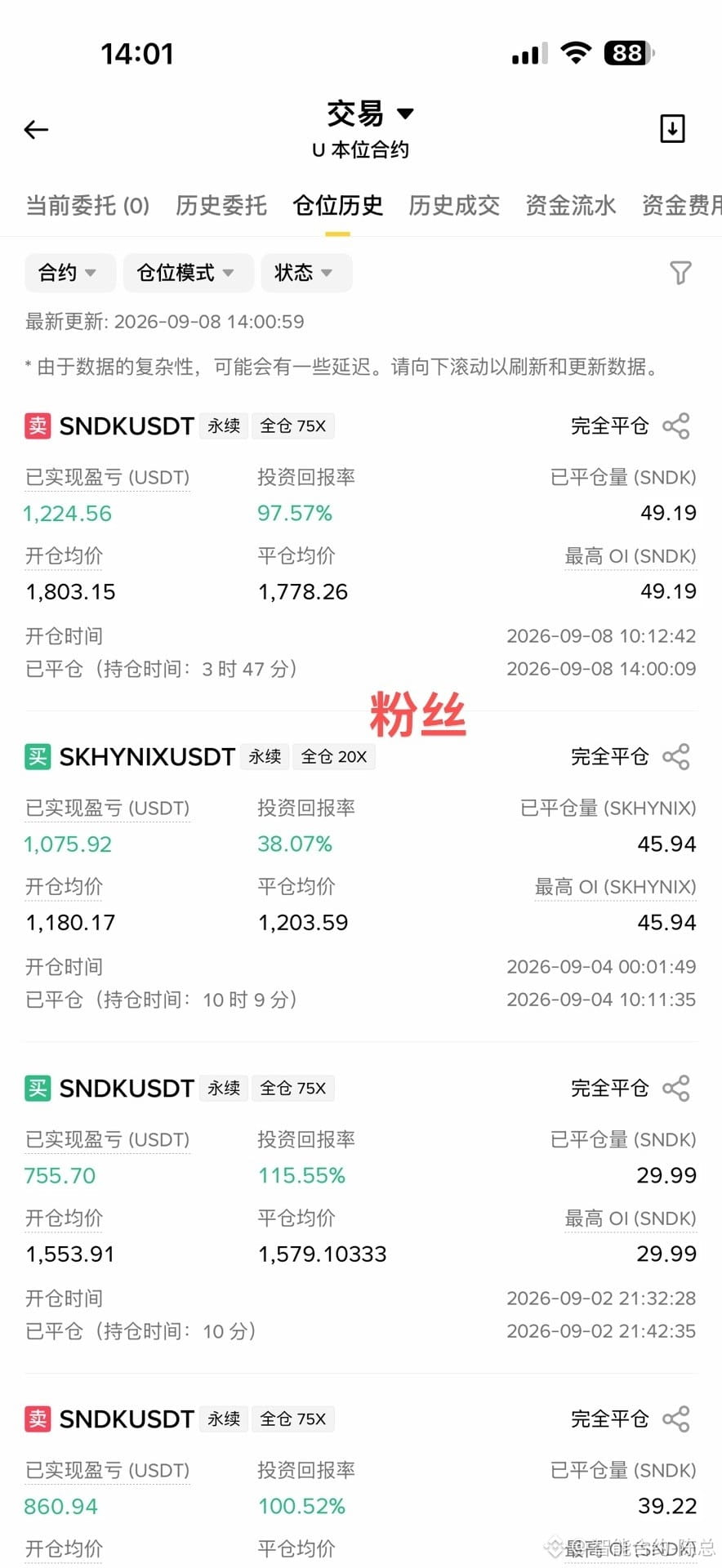
1
186
Log in to explore more content
Join global crypto users on Binance Square
⚡️ Get latest and useful information about crypto.
💬 Trusted by the world’s largest crypto exchange.
👍 Discover real insights from verified creators.
Email / Phone number
Trending Topics
BitcoinSurpasses$77000
16,045 views
217 Discussing
$BTC is ripping higher despite it all. 🚀
Today marked the first rate hike in over 3 years, while the CLARITY Act stalled again yesterday.
Setup big long again - thank me later
Entry : $75500 - $76500
Stoploss : $74900
Take profit : $77000 - $78000
Get ready for a crazy growth cycle. 🔥
TF_bnb
·17 Likes
·6.9k views
ParadigmDisclosesZECHolding
62,180 views
981 Discussing
BitcoinETFsShed$450M
25,192 views
216 Discussing