
CTSI官方中文社区
450 Posts

CTSI官方中文社区
 Square Verified+
Report
Block User
任何代码:以太坊的安全性。(Any code: Ethereum’s security.)使用您熟悉和喜爱的语言、库和工具构建应用链 Rollups。(Build appchain rollups with languages, libraries, and tool)
12 Following
936 Followers
3.9K+ Liked
Posts
All
Quotes
Videos
PINNED
·
--

Article
Erick de Moura (Cartesi): “Blockchain development is hard, it is our responsibility to make it easier.In an opinion piece, Erick, co-founder of Cartesi, believes that the industry needs to collaborate more to make the work of blockchain developers easier. Cartesi is a second-layer protocol based on Ethereum that is committed to simplifying blockchain development and promoting the development of modular blockchain infrastructure.
The blockchain industry is at a critical inflection point. Web3 lacks consumer applications that can achieve mass adoption, but new infrastructure projects continue to emerge. We have to face an unpleasant reality: 15 years later, our dream of a decentralized web has not yet been realized.
Erick de Moura (Cartesi): “Blockchain development is hard, it is our responsibility to make it easier.
In an opinion piece, Erick, co-founder of Cartesi, believes that the industry needs to collaborate more to make the work of blockchain developers easier. Cartesi is a second-layer protocol based on Ethereum that is committed to simplifying blockchain development and promoting the development of modular blockchain infrastructure.
The blockchain industry is at a critical inflection point. Web3 lacks consumer applications that can achieve mass adoption, but new infrastructure projects continue to emerge. We have to face an unpleasant reality: 15 years later, our dream of a decentralized web has not yet been realized.
The blockchain industry is at a critical inflection point. Web3 lacks consumer applications that can achieve mass adoption, but new infrastructure projects continue to emerge. We have to face an unpleasant reality: 15 years later, our dream of a decentralized web has not yet been realized.
1
4
452
·
--
Good morning on a new week! Sending greetings to all developers, no matter the time of day, who are enthusiastic about building on-chain based on Linux.🐧
Feel free to share and repost: https://x.com/cartesiproject/status/2099487789259915588
Good morning on a new week! Sending greetings to all developers, no matter the time of day, who are enthusiastic about building on-chain based on Linux.🐧
Feel free to share and repost: https://x.com/cartesiproject/status/2099487789259915588
Feel free to share and repost: https://x.com/cartesiproject/status/2099487789259915588
81
·
--
The weekend is here, and this week’s Cartesi newsletter arrives as promised 🐧
https://fxtwitter.com/cartesiproject/status/2098395902184661332?s=20
First, in three sentences, here’s our core philosophy: Linux execution environments, Ethereum security, and the Cartesi infrastructure.
→ https://x.com/cartesiproject/status/2096947613652451371
This week’s highlight: Dave 3.0.0-alpha.4. The settlement process is now split into two phases (staging and confirmation), giving the network an opportunity to catch errors before the final result is determined. Also, when all sentinels (sentry) reach agreement, the system can take the “fast track” to enable instant confirmation. This tweet thread includes a detailed breakdown, with an introductory guide to what Dave actually does.
→ https://x.com/cartesiproject/status/2097309810396164306
Big-picture view: our Technical Evolution Plan (TEP) page is the best place to understand what the technical team is focusing on right now, along with their priorities.
→ https://cartesi.io/technical-evolution-plan/
Friendly reminder: the blog is still the best destination for tracking monthly ecosystem updates and full-stack version releases. We recommend saving this page or subscribing to the newsletter to get the latest news directly.
→ https://x.com/cartesiproject/status/2097678146627912145
If you’ve read our latest newsletter, you already know: just follow us on TikTok and send us a DM to find a fun surprise. Go check it out.
→ https://www.tiktok.com/@cartesiproject
Spreading the word: if you know how to use Linux, you can apply it on-chain with Cartesi. → https://x.com/cartesiproject/status/2098034044529479945
If you missed the earlier announcement: co-founder Erick de Moura gave a special introduction to Danilo Tuler and his team’s latest work. Cartesi Machine’s TypeScript API now supports running on the client. That means any web application can instantiate, configure, and run a full Cartesi Machine directly inside a browser tab as a library. This is the same execution environment that supports Cartesi Rollups and Dave—now you can embed it directly into your applications.
→ https://x.com/erickdemoura/status/2095151386883203311
Weekly recap: please check out Dave’s changelog. If you haven’t subscribed to the newsletter yet, don’t forget to subscribe. And if you have any questions, feel free to join the conversation on Discord:
→ discord.gg/cartesi
Have a great weekend, everyone.
Repost: https://x.com/cartesiproject/status/2098395902184661332
The weekend is here, and this week’s Cartesi newsletter arrives as promised 🐧
https://fxtwitter.com/cartesiproject/status/2098395902184661332?s=20
First, in three sentences, here’s our core philosophy: Linux execution environments, Ethereum security, and the Cartesi infrastructure.
→ https://x.com/cartesiproject/status/2096947613652451371
This week’s highlight: Dave 3.0.0-alpha.4. The settlement process is now split into two phases (staging and confirmation), giving the network an opportunity to catch errors before the final result is determined. Also, when all sentinels (sentry) reach agreement, the system can take the “fast track” to enable instant confirmation. This tweet thread includes a detailed breakdown, with an introductory guide to what Dave actually does.
→ https://x.com/cartesiproject/status/2097309810396164306
Big-picture view: our Technical Evolution Plan (TEP) page is the best place to understand what the technical team is focusing on right now, along with their priorities.
→ https://cartesi.io/technical-evolution-plan/
Friendly reminder: the blog is still the best destination for tracking monthly ecosystem updates and full-stack version releases. We recommend saving this page or subscribing to the newsletter to get the latest news directly.
→ https://x.com/cartesiproject/status/2097678146627912145
If you’ve read our latest newsletter, you already know: just follow us on TikTok and send us a DM to find a fun surprise. Go check it out.
→ https://www.tiktok.com/@cartesiproject
Spreading the word: if you know how to use Linux, you can apply it on-chain with Cartesi. → https://x.com/cartesiproject/status/2098034044529479945
If you missed the earlier announcement: co-founder Erick de Moura gave a special introduction to Danilo Tuler and his team’s latest work. Cartesi Machine’s TypeScript API now supports running on the client. That means any web application can instantiate, configure, and run a full Cartesi Machine directly inside a browser tab as a library. This is the same execution environment that supports Cartesi Rollups and Dave—now you can embed it directly into your applications.
→ https://x.com/erickdemoura/status/2095151386883203311
Weekly recap: please check out Dave’s changelog. If you haven’t subscribed to the newsletter yet, don’t forget to subscribe. And if you have any questions, feel free to join the conversation on Discord:
→ discord.gg/cartesi
Have a great weekend, everyone.
Repost: https://x.com/cartesiproject/status/2098395902184661332
https://fxtwitter.com/cartesiproject/status/2098395902184661332?s=20
First, in three sentences, here’s our core philosophy: Linux execution environments, Ethereum security, and the Cartesi infrastructure.
→ https://x.com/cartesiproject/status/2096947613652451371
This week’s highlight: Dave 3.0.0-alpha.4. The settlement process is now split into two phases (staging and confirmation), giving the network an opportunity to catch errors before the final result is determined. Also, when all sentinels (sentry) reach agreement, the system can take the “fast track” to enable instant confirmation. This tweet thread includes a detailed breakdown, with an introductory guide to what Dave actually does.
→ https://x.com/cartesiproject/status/2097309810396164306
Big-picture view: our Technical Evolution Plan (TEP) page is the best place to understand what the technical team is focusing on right now, along with their priorities.
→ https://cartesi.io/technical-evolution-plan/
Friendly reminder: the blog is still the best destination for tracking monthly ecosystem updates and full-stack version releases. We recommend saving this page or subscribing to the newsletter to get the latest news directly.
→ https://x.com/cartesiproject/status/2097678146627912145
If you’ve read our latest newsletter, you already know: just follow us on TikTok and send us a DM to find a fun surprise. Go check it out.
→ https://www.tiktok.com/@cartesiproject
Spreading the word: if you know how to use Linux, you can apply it on-chain with Cartesi. → https://x.com/cartesiproject/status/2098034044529479945
If you missed the earlier announcement: co-founder Erick de Moura gave a special introduction to Danilo Tuler and his team’s latest work. Cartesi Machine’s TypeScript API now supports running on the client. That means any web application can instantiate, configure, and run a full Cartesi Machine directly inside a browser tab as a library. This is the same execution environment that supports Cartesi Rollups and Dave—now you can embed it directly into your applications.
→ https://x.com/erickdemoura/status/2095151386883203311
Weekly recap: please check out Dave’s changelog. If you haven’t subscribed to the newsletter yet, don’t forget to subscribe. And if you have any questions, feel free to join the conversation on Discord:
→ discord.gg/cartesi
Have a great weekend, everyone.
Repost: https://x.com/cartesiproject/status/2098395902184661332
1
241
·
--
Repeat after me:
“As long as I can use Linux, I can use it on the blockchain through Cartesi.”
No need to reinvent the wheel, and you’re not constrained by the limitations of smart contract execution. You can build using the programming languages, libraries, and tools you’re already familiar with, while also inheriting Ethereum’s full security.
Welcome to share: https://x.com/cartesiproject/status/2098034044529479945
Repeat after me:
“As long as I can use Linux, I can use it on the blockchain through Cartesi.”
No need to reinvent the wheel, and you’re not constrained by the limitations of smart contract execution. You can build using the programming languages, libraries, and tools you’re already familiar with, while also inheriting Ethereum’s full security.
Welcome to share: https://x.com/cartesiproject/status/2098034044529479945
“As long as I can use Linux, I can use it on the blockchain through Cartesi.”
No need to reinvent the wheel, and you’re not constrained by the limitations of smart contract execution. You can build using the programming languages, libraries, and tools you’re already familiar with, while also inheriting Ethereum’s full security.
Welcome to share: https://x.com/cartesiproject/status/2098034044529479945
197
·
--
Stay up to date with protocol progress and technical release updates!
Friendly reminder: The Cartesi blog is the best way to get our monthly ecosystem updates, covering the latest technical advancements, version releases, and developments across the ecosystem.
Bookmark our blog at https://cartesi.io/blog/ or subscribe to the newsletter to receive the latest news directly in your inbox: https://mailchi.mp/cartesi/email-newsletter
Share: https://x.com/cartesiproject/status/2097678146627912145
Stay up to date with protocol progress and technical release updates!
Friendly reminder: The Cartesi blog is the best way to get our monthly ecosystem updates, covering the latest technical advancements, version releases, and developments across the ecosystem.
Bookmark our blog at https://cartesi.io/blog/ or subscribe to the newsletter to receive the latest news directly in your inbox: https://mailchi.mp/cartesi/email-newsletter
Share: https://x.com/cartesiproject/status/2097678146627912145
Friendly reminder: The Cartesi blog is the best way to get our monthly ecosystem updates, covering the latest technical advancements, version releases, and developments across the ecosystem.
Bookmark our blog at https://cartesi.io/blog/ or subscribe to the newsletter to receive the latest news directly in your inbox: https://mailchi.mp/cartesi/email-newsletter
Share: https://x.com/cartesiproject/status/2097678146627912145
39
·
--
Earlier this month, we released a new version: Dave 3.0.0-alpha.4. Let’s take a closer look at how it works under the hood.
First, if you’re not yet familiar with what Dave is—and feel awkward asking—here’s a brief overview. ↓🧵
1/ Our fraud proof system—the “Permissionless Arbitration Tournament” (PRT)—is a mechanism that allows anyone to challenge incorrect computations on-chain without trusting any single validator.
Optimistic Rollups compute by default as if they’re correct, so there’s a challenge window—and PRT is the mechanism that resolves those challenges.
2/ New in version 3.0.0-alpha.4: PRT settlement is now split into two phases—“staged” and “accepted”—giving the network a time window to catch errors before the result is finalized.
If all sentry nodes (sentry) approve the staged result, that window is no longer needed, enabling faster finalization.
3/ Prototype nodes now have a name: Sling. It provides persistent storage and event tracking.
The original temporary tournament view of PRT has been replaced with “typed projections,” which can directly show the current actual stage without rolling back state.
In addition, this release includes: fairer distribution of tournament winner rewards, deployment files converted to plain text format, upgrades to the Cartesi Machine and Rollups contracts, adoption of an updated Foundry version, and more comprehensive test coverage.
4/ Thanks to the partners who contributed to this.
For the full changelog, see: https://github.com/cartesi/dave/releases/tag/v3.0.0-alpha.4
If you have any questions or feedback, feel free to join the Discord discussion: https://discord.gg/cartesi
Repost: https://x.com/cartesiproject/status/2097309810396164306
Earlier this month, we released a new version: Dave 3.0.0-alpha.4. Let’s take a closer look at how it works under the hood.
First, if you’re not yet familiar with what Dave is—and feel awkward asking—here’s a brief overview. ↓🧵
1/ Our fraud proof system—the “Permissionless Arbitration Tournament” (PRT)—is a mechanism that allows anyone to challenge incorrect computations on-chain without trusting any single validator.
Optimistic Rollups compute by default as if they’re correct, so there’s a challenge window—and PRT is the mechanism that resolves those challenges.
2/ New in version 3.0.0-alpha.4: PRT settlement is now split into two phases—“staged” and “accepted”—giving the network a time window to catch errors before the result is finalized.
If all sentry nodes (sentry) approve the staged result, that window is no longer needed, enabling faster finalization.
3/ Prototype nodes now have a name: Sling. It provides persistent storage and event tracking.
The original temporary tournament view of PRT has been replaced with “typed projections,” which can directly show the current actual stage without rolling back state.
In addition, this release includes: fairer distribution of tournament winner rewards, deployment files converted to plain text format, upgrades to the Cartesi Machine and Rollups contracts, adoption of an updated Foundry version, and more comprehensive test coverage.
4/ Thanks to the partners who contributed to this.
For the full changelog, see: https://github.com/cartesi/dave/releases/tag/v3.0.0-alpha.4
If you have any questions or feedback, feel free to join the Discord discussion: https://discord.gg/cartesi
Repost: https://x.com/cartesiproject/status/2097309810396164306
First, if you’re not yet familiar with what Dave is—and feel awkward asking—here’s a brief overview. ↓🧵
1/ Our fraud proof system—the “Permissionless Arbitration Tournament” (PRT)—is a mechanism that allows anyone to challenge incorrect computations on-chain without trusting any single validator.
Optimistic Rollups compute by default as if they’re correct, so there’s a challenge window—and PRT is the mechanism that resolves those challenges.
2/ New in version 3.0.0-alpha.4: PRT settlement is now split into two phases—“staged” and “accepted”—giving the network a time window to catch errors before the result is finalized.
If all sentry nodes (sentry) approve the staged result, that window is no longer needed, enabling faster finalization.
3/ Prototype nodes now have a name: Sling. It provides persistent storage and event tracking.
The original temporary tournament view of PRT has been replaced with “typed projections,” which can directly show the current actual stage without rolling back state.
In addition, this release includes: fairer distribution of tournament winner rewards, deployment files converted to plain text format, upgrades to the Cartesi Machine and Rollups contracts, adoption of an updated Foundry version, and more comprehensive test coverage.
4/ Thanks to the partners who contributed to this.
For the full changelog, see: https://github.com/cartesi/dave/releases/tag/v3.0.0-alpha.4
If you have any questions or feedback, feel free to join the Discord discussion: https://discord.gg/cartesi
Repost: https://x.com/cartesiproject/status/2097309810396164306
155
·
--
GM, welcome the new week. Welcome Linux's efficient operation. Welcome Ethereum's security assurance. Welcome Cartesi's infrastructure.
Good morning, everyone at Cartesi.
Repost from: https://x.com/cartesiproject/status/2096947613652451371
GM, welcome the new week. Welcome Linux's efficient operation. Welcome Ethereum's security assurance. Welcome Cartesi's infrastructure.
Good morning, everyone at Cartesi.
Repost from: https://x.com/cartesiproject/status/2096947613652451371
Good morning, everyone at Cartesi.
Repost from: https://x.com/cartesiproject/status/2096947613652451371
109
·
--
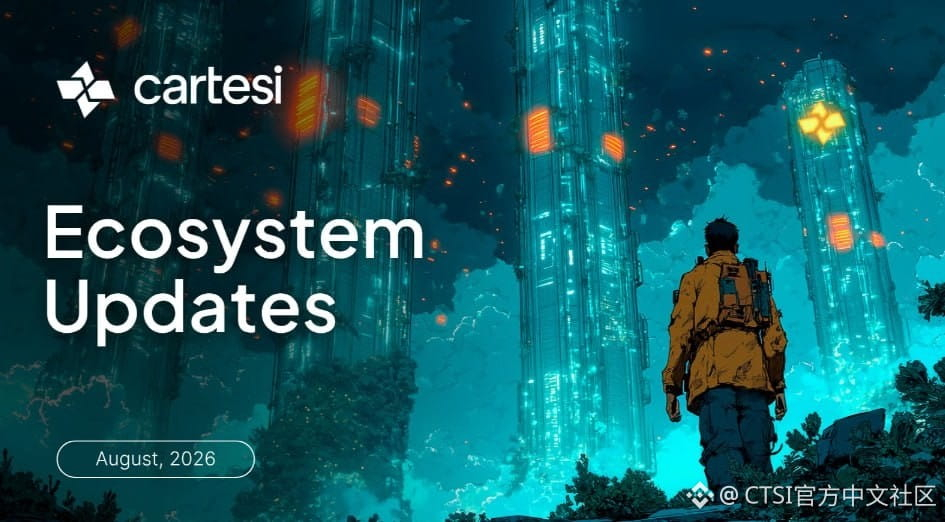
August review, let’s take a look together
https://mp.weixin.qq.com/s/3p6YXqsCB65fbsHDHhvZyg
August review, let’s take a look together
https://mp.weixin.qq.com/s/3p6YXqsCB65fbsHDHhvZyg
https://mp.weixin.qq.com/s/3p6YXqsCB65fbsHDHhvZyg
136
·
--
Last month, we released brand-new alpha versions of Rollups Contracts, Sequencer, and Machine browser bindings, and the Machine Emulator was also updated to v0.21.0. In addition, we celebrated 35 years of the software stack that underpins all of this—Linux.
Read the full update to learn about all the highlights ↓
https://cartesi.io/blog/ecosystem-updates-august-2026/
Reposted from: https://x.com/cartesiproject/status/2095912523837133180
Last month, we released brand-new alpha versions of Rollups Contracts, Sequencer, and Machine browser bindings, and the Machine Emulator was also updated to v0.21.0. In addition, we celebrated 35 years of the software stack that underpins all of this—Linux.
Read the full update to learn about all the highlights ↓
https://cartesi.io/blog/ecosystem-updates-august-2026/
Reposted from: https://x.com/cartesiproject/status/2095912523837133180
Read the full update to learn about all the highlights ↓
https://cartesi.io/blog/ecosystem-updates-august-2026/
Reposted from: https://x.com/cartesiproject/status/2095912523837133180
135
·
--
Great to see the Cartesi community continue to grow on CoinMarketCap! We’ve just officially surpassed 90,200 followers, and we’d like to sincerely thank every partner who has joined us.
If you haven’t joined our CoinMarketCap community (CMC) yet, here’s a great platform to break out of the traditional CT information bubble, get official updates, use the $CTSI tag, and connect with other developers and supporters.
Come say hi here: https://coinmarketcap.com/community/profile/cartesiproject/
Repost: https://x.com/cartesiproject/status/2095496533634646341
Great to see the Cartesi community continue to grow on CoinMarketCap! We’ve just officially surpassed 90,200 followers, and we’d like to sincerely thank every partner who has joined us.
If you haven’t joined our CoinMarketCap community (CMC) yet, here’s a great platform to break out of the traditional CT information bubble, get official updates, use the $CTSI tag, and connect with other developers and supporters.
Come say hi here: https://coinmarketcap.com/community/profile/cartesiproject/
Repost: https://x.com/cartesiproject/status/2095496533634646341
If you haven’t joined our CoinMarketCap community (CMC) yet, here’s a great platform to break out of the traditional CT information bubble, get official updates, use the $CTSI tag, and connect with other developers and supporters.
Come say hi here: https://coinmarketcap.com/community/profile/cartesiproject/
Repost: https://x.com/cartesiproject/status/2095496533634646341
1
169
·
--
Contributors have released a new alpha version of the Cartesi Machine bindings library, making it easier to run a machine in the browser 🐧
You can try it on its dedicated Playground: no installation required—configure, create, and run machines directly, including the terminal: https://cartesi-playground.vercel.app/
As Danilo emphasized, this simulator is powerful, runs on WASM, and includes TypeScript bindings for use in the browser. In addition, this alpha version adds the following features: the machine can connect to the network, run and be controlled from a remote server, and display real-time terminal output—everything can be done within a browser tab.
Also, comprehensive browser support documentation has been published at https://cartesi.github.io/rollups-ts/machine/
Feel free to ask any questions or share feedback on Discord: https://discord.gg/cartesi
Repost: https://x.com/cartesiproject/status/2095135408409784799
Contributors have released a new alpha version of the Cartesi Machine bindings library, making it easier to run a machine in the browser 🐧
You can try it on its dedicated Playground: no installation required—configure, create, and run machines directly, including the terminal: https://cartesi-playground.vercel.app/
As Danilo emphasized, this simulator is powerful, runs on WASM, and includes TypeScript bindings for use in the browser. In addition, this alpha version adds the following features: the machine can connect to the network, run and be controlled from a remote server, and display real-time terminal output—everything can be done within a browser tab.
Also, comprehensive browser support documentation has been published at https://cartesi.github.io/rollups-ts/machine/
Feel free to ask any questions or share feedback on Discord: https://discord.gg/cartesi
Repost: https://x.com/cartesiproject/status/2095135408409784799
You can try it on its dedicated Playground: no installation required—configure, create, and run machines directly, including the terminal: https://cartesi-playground.vercel.app/
As Danilo emphasized, this simulator is powerful, runs on WASM, and includes TypeScript bindings for use in the browser. In addition, this alpha version adds the following features: the machine can connect to the network, run and be controlled from a remote server, and display real-time terminal output—everything can be done within a browser tab.
Also, comprehensive browser support documentation has been published at https://cartesi.github.io/rollups-ts/machine/
Feel free to ask any questions or share feedback on Discord: https://discord.gg/cartesi
Repost: https://x.com/cartesiproject/status/2095135408409784799
54
·
--
Wishing all friends who believe in Linux supremacy a happy September!
Cartesian, come and spread the word!
https://x.com/cartesiproject/status/2094787246511567067
Wishing all friends who believe in Linux supremacy a happy September!
Cartesian, come and spread the word!
https://x.com/cartesiproject/status/2094787246511567067
Cartesian, come and spread the word!
https://x.com/cartesiproject/status/2094787246511567067
1
39
·
--
We are once again inviting you to join us in working together to drive the thriving development of the computer vision field, and to build on Linux, on-chain, and on Ethereum.
August is coming to an end, but product releases are still ongoing. Good morning!
Repost: https://x.com/cartesiproject/status/2058896948762128472
We are once again inviting you to join us in working together to drive the thriving development of the computer vision field, and to build on Linux, on-chain, and on Ethereum.
August is coming to an end, but product releases are still ongoing. Good morning!
Repost: https://x.com/cartesiproject/status/2058896948762128472
August is coming to an end, but product releases are still ongoing. Good morning!
Repost: https://x.com/cartesiproject/status/2058896948762128472
147
·
--
Another week of burying our heads in hard work finally brings us the Cartesi Weekly Report—and this issue is even more celebratory 🐧
https://fxtwitter.com/cartesiproject/status/2093323347832807597
This week marks Linux’s 35th anniversary. How could we miss such an important day? We sent birthday wishes to the operating systems running on Cartesi machines, and our tweets expressed our feelings just as they should. Linus Torvalds released Linux in 1991 and called it “just a hobby,” but fortunately, the rest of the world doesn’t see it that way. Many members of the ecosystem joined in the celebrations, proud to be part of the big Linux family:
→ https://x.com/cartesiproject/status/2092292063718973745
In “Throwback Thursday”: Linux has more than 35 years of battle-tested software history, yet DeFi has been repeating the wheel. We explain why we should stop re-inventing the wheel now and instead build DeFi on top of Linux. For details, see the referenced post:
→ https://x.com/cartesiproject/status/2092952840671240369
This week, we’d like to give a special thanks to Alchemy. Cartesian João Garcia appreciates our team’s report on intermittent failures of the eth_estimateGas function on the OP Sepolia server. The report includes reproduction steps, A/B/C tests, and comparisons across different providers. Alchemy tracked down the issue, fixed it, and confirmed that the fix is effective.
→ https://x.com/joaopdgarcia/status/2092581129765245399
Uttam from Alchemy praised their support as top-tier in the industry. A full discussion thread explains what excellent developer support looks like. We’re happy to recognize great practices:
→ https://x.com/uttam_singhk/status/2092653343990857977
This week’s theme is “set the tone from the start”: Cartesi’s infrastructure is built from the ground up, made for developers—providing more tools, more libraries, stronger programmability, and more powerful compute so developers can fully leverage these resources. If you missed it before, take a look at this short article:
→ https://x.com/cartesiproject/status/2091874346537251118
If you haven’t celebrated Linux’s 35th anniversary yet, go celebrate it now! Read the full case to learn why DeFi needs Linux, and submit your questions on Discord: discord.gg/cartesi.
Next week, we’ll directly publish an ecosystem update blog—stay tuned. Have a great weekend!
Repost: https://x.com/cartesiproject/status/2093323347832807597
Another week of burying our heads in hard work finally brings us the Cartesi Weekly Report—and this issue is even more celebratory 🐧
https://fxtwitter.com/cartesiproject/status/2093323347832807597
This week marks Linux’s 35th anniversary. How could we miss such an important day? We sent birthday wishes to the operating systems running on Cartesi machines, and our tweets expressed our feelings just as they should. Linus Torvalds released Linux in 1991 and called it “just a hobby,” but fortunately, the rest of the world doesn’t see it that way. Many members of the ecosystem joined in the celebrations, proud to be part of the big Linux family:
→ https://x.com/cartesiproject/status/2092292063718973745
In “Throwback Thursday”: Linux has more than 35 years of battle-tested software history, yet DeFi has been repeating the wheel. We explain why we should stop re-inventing the wheel now and instead build DeFi on top of Linux. For details, see the referenced post:
→ https://x.com/cartesiproject/status/2092952840671240369
This week, we’d like to give a special thanks to Alchemy. Cartesian João Garcia appreciates our team’s report on intermittent failures of the eth_estimateGas function on the OP Sepolia server. The report includes reproduction steps, A/B/C tests, and comparisons across different providers. Alchemy tracked down the issue, fixed it, and confirmed that the fix is effective.
→ https://x.com/joaopdgarcia/status/2092581129765245399
Uttam from Alchemy praised their support as top-tier in the industry. A full discussion thread explains what excellent developer support looks like. We’re happy to recognize great practices:
→ https://x.com/uttam_singhk/status/2092653343990857977
This week’s theme is “set the tone from the start”: Cartesi’s infrastructure is built from the ground up, made for developers—providing more tools, more libraries, stronger programmability, and more powerful compute so developers can fully leverage these resources. If you missed it before, take a look at this short article:
→ https://x.com/cartesiproject/status/2091874346537251118
If you haven’t celebrated Linux’s 35th anniversary yet, go celebrate it now! Read the full case to learn why DeFi needs Linux, and submit your questions on Discord: discord.gg/cartesi.
Next week, we’ll directly publish an ecosystem update blog—stay tuned. Have a great weekend!
Repost: https://x.com/cartesiproject/status/2093323347832807597
https://fxtwitter.com/cartesiproject/status/2093323347832807597
This week marks Linux’s 35th anniversary. How could we miss such an important day? We sent birthday wishes to the operating systems running on Cartesi machines, and our tweets expressed our feelings just as they should. Linus Torvalds released Linux in 1991 and called it “just a hobby,” but fortunately, the rest of the world doesn’t see it that way. Many members of the ecosystem joined in the celebrations, proud to be part of the big Linux family:
→ https://x.com/cartesiproject/status/2092292063718973745
In “Throwback Thursday”: Linux has more than 35 years of battle-tested software history, yet DeFi has been repeating the wheel. We explain why we should stop re-inventing the wheel now and instead build DeFi on top of Linux. For details, see the referenced post:
→ https://x.com/cartesiproject/status/2092952840671240369
This week, we’d like to give a special thanks to Alchemy. Cartesian João Garcia appreciates our team’s report on intermittent failures of the eth_estimateGas function on the OP Sepolia server. The report includes reproduction steps, A/B/C tests, and comparisons across different providers. Alchemy tracked down the issue, fixed it, and confirmed that the fix is effective.
→ https://x.com/joaopdgarcia/status/2092581129765245399
Uttam from Alchemy praised their support as top-tier in the industry. A full discussion thread explains what excellent developer support looks like. We’re happy to recognize great practices:
→ https://x.com/uttam_singhk/status/2092653343990857977
This week’s theme is “set the tone from the start”: Cartesi’s infrastructure is built from the ground up, made for developers—providing more tools, more libraries, stronger programmability, and more powerful compute so developers can fully leverage these resources. If you missed it before, take a look at this short article:
→ https://x.com/cartesiproject/status/2091874346537251118
If you haven’t celebrated Linux’s 35th anniversary yet, go celebrate it now! Read the full case to learn why DeFi needs Linux, and submit your questions on Discord: discord.gg/cartesi.
Next week, we’ll directly publish an ecosystem update blog—stay tuned. Have a great weekend!
Repost: https://x.com/cartesiproject/status/2093323347832807597
1
1
151
·
--
#Thursday Recap “Why DeFi Needs Linux”. Brought on-chain by Cartesi, with Ethereum providing security.
Linux has over 35 years of software development history. However, DeFi has continued to reinvent the wheel.
It’s time to stop repeating the wheel and start using Linux. Who’s with us?
Share: https://x.com/cartesiproject/status/2067246406763704757
#Thursday Recap “Why DeFi Needs Linux”. Brought on-chain by Cartesi, with Ethereum providing security.
Linux has over 35 years of software development history. However, DeFi has continued to reinvent the wheel.
It’s time to stop repeating the wheel and start using Linux. Who’s with us?
Share: https://x.com/cartesiproject/status/2067246406763704757
Linux has over 35 years of software development history. However, DeFi has continued to reinvent the wheel.
It’s time to stop repeating the wheel and start using Linux. Who’s with us?
Share: https://x.com/cartesiproject/status/2067246406763704757
178
·
--
GM, Cartesi is a bottom-layer architecture built specifically for developers. It starts from scratch and offers more tools and libraries, stronger programmability and expressiveness, and more powerful computing capabilities.
Now, let’s begin building and putting these features into real use.
Reposted from: https://x.com/cartesiproject/status/2091874346537251118
GM, Cartesi is a bottom-layer architecture built specifically for developers. It starts from scratch and offers more tools and libraries, stronger programmability and expressiveness, and more powerful computing capabilities.
Now, let’s begin building and putting these features into real use.
Reposted from: https://x.com/cartesiproject/status/2091874346537251118
Now, let’s begin building and putting these features into real use.
Reposted from: https://x.com/cartesiproject/status/2091874346537251118
1
180
·
--
Cartesi Weekly Report has been published. The week flew by—yet it was packed with excitement 🐧
https://fxtwitter.com/cartesiproject/status/2090786513579913225
We’ve taken a deep dive into the updates to the Cartesi Machine Emulator v0.21.0. The game documentation has been completely rewritten. The CLI can now run the full anti-fraud program independently. Improvements have also been made to the underlying state layer—resulting in faster performance and greater stability. Thanks to Eduardo Bart (https://x.com/edubart) for the release. If you’d like to learn more, please check out the tweet we shared:
→ https://x.com/cartesiproject/status/2089698617829597516
But that’s not all—Cartesi Rollups Contracts 3.0.0-alpha.9 has also been released. This version fixes issues with the Cartesi Rollups PRT contract, improves contract import functionality, updates dependencies, and provides more reproducible release artifacts. Thanks to Guilherme Dantas for the hard work! GitHub release link:
→ https://github.com/cartesi/rollups-contracts/releases/tag/v3.0.0-alpha.9
This week, House of Chimera published an in-depth review of Cartesi, showcasing the features of the Cartesi Machine and discussing DeFi applications and unique prototypes. It clearly explains how the PRT reduces disputes down to a single RISC-V instruction, as well as the lifecycle of the honeypot, and more. Want to learn about our technical specifications? Feel free to share:
→ https://x.com/HouseofChimera/status/2090096426315575745
Also gaining a lot of traction is Bhavya’s discussion: he talks about what makes Linux great and the wonders of building on-chain with Linux. Thanks for the video, Bhavya:
→ https://x.com/Bhavyaztwt/status/2089733481966559455
Our TikTok account is getting more and more active too. Take a look at this great clip from Diego Nehab, the founder of Cartesi Machine. Follow us and help us grow the channel:
→ https://www.tiktok.com/@cartesiproject/video/7675021194436955406
We’re continuing to move the project forward. The motto we proposed earlier this week remains unchanged: DeFi is just the starting point, not the endpoint.
→ https://x.com/cartesiproject/status/2087161705415811160
That’s it for this week’s content. For the latest updates, if you have any questions, feel free to join our Discord server: discord.gg/cartesi. Have a great weekend!
Repost: https://x.com/cartesiproject/status/2090786513579913225
Cartesi Weekly Report has been published. The week flew by—yet it was packed with excitement 🐧
https://fxtwitter.com/cartesiproject/status/2090786513579913225
We’ve taken a deep dive into the updates to the Cartesi Machine Emulator v0.21.0. The game documentation has been completely rewritten. The CLI can now run the full anti-fraud program independently. Improvements have also been made to the underlying state layer—resulting in faster performance and greater stability. Thanks to Eduardo Bart (https://x.com/edubart) for the release. If you’d like to learn more, please check out the tweet we shared:
→ https://x.com/cartesiproject/status/2089698617829597516
But that’s not all—Cartesi Rollups Contracts 3.0.0-alpha.9 has also been released. This version fixes issues with the Cartesi Rollups PRT contract, improves contract import functionality, updates dependencies, and provides more reproducible release artifacts. Thanks to Guilherme Dantas for the hard work! GitHub release link:
→ https://github.com/cartesi/rollups-contracts/releases/tag/v3.0.0-alpha.9
This week, House of Chimera published an in-depth review of Cartesi, showcasing the features of the Cartesi Machine and discussing DeFi applications and unique prototypes. It clearly explains how the PRT reduces disputes down to a single RISC-V instruction, as well as the lifecycle of the honeypot, and more. Want to learn about our technical specifications? Feel free to share:
→ https://x.com/HouseofChimera/status/2090096426315575745
Also gaining a lot of traction is Bhavya’s discussion: he talks about what makes Linux great and the wonders of building on-chain with Linux. Thanks for the video, Bhavya:
→ https://x.com/Bhavyaztwt/status/2089733481966559455
Our TikTok account is getting more and more active too. Take a look at this great clip from Diego Nehab, the founder of Cartesi Machine. Follow us and help us grow the channel:
→ https://www.tiktok.com/@cartesiproject/video/7675021194436955406
We’re continuing to move the project forward. The motto we proposed earlier this week remains unchanged: DeFi is just the starting point, not the endpoint.
→ https://x.com/cartesiproject/status/2087161705415811160
That’s it for this week’s content. For the latest updates, if you have any questions, feel free to join our Discord server: discord.gg/cartesi. Have a great weekend!
Repost: https://x.com/cartesiproject/status/2090786513579913225
https://fxtwitter.com/cartesiproject/status/2090786513579913225
We’ve taken a deep dive into the updates to the Cartesi Machine Emulator v0.21.0. The game documentation has been completely rewritten. The CLI can now run the full anti-fraud program independently. Improvements have also been made to the underlying state layer—resulting in faster performance and greater stability. Thanks to Eduardo Bart (https://x.com/edubart) for the release. If you’d like to learn more, please check out the tweet we shared:
→ https://x.com/cartesiproject/status/2089698617829597516
But that’s not all—Cartesi Rollups Contracts 3.0.0-alpha.9 has also been released. This version fixes issues with the Cartesi Rollups PRT contract, improves contract import functionality, updates dependencies, and provides more reproducible release artifacts. Thanks to Guilherme Dantas for the hard work! GitHub release link:
→ https://github.com/cartesi/rollups-contracts/releases/tag/v3.0.0-alpha.9
This week, House of Chimera published an in-depth review of Cartesi, showcasing the features of the Cartesi Machine and discussing DeFi applications and unique prototypes. It clearly explains how the PRT reduces disputes down to a single RISC-V instruction, as well as the lifecycle of the honeypot, and more. Want to learn about our technical specifications? Feel free to share:
→ https://x.com/HouseofChimera/status/2090096426315575745
Also gaining a lot of traction is Bhavya’s discussion: he talks about what makes Linux great and the wonders of building on-chain with Linux. Thanks for the video, Bhavya:
→ https://x.com/Bhavyaztwt/status/2089733481966559455
Our TikTok account is getting more and more active too. Take a look at this great clip from Diego Nehab, the founder of Cartesi Machine. Follow us and help us grow the channel:
→ https://www.tiktok.com/@cartesiproject/video/7675021194436955406
We’re continuing to move the project forward. The motto we proposed earlier this week remains unchanged: DeFi is just the starting point, not the endpoint.
→ https://x.com/cartesiproject/status/2087161705415811160
That’s it for this week’s content. For the latest updates, if you have any questions, feel free to join our Discord server: discord.gg/cartesi. Have a great weekend!
Repost: https://x.com/cartesiproject/status/2090786513579913225
202
·
--
Linux is awesome!
From a streamlined custom environment to powerful computing, Cartesi brings a complete Linux runtime directly on-chain for Web3 developers to use.
Thanks to Bhavya for the video.
Repost: https://x.com/cartesiproject/status/2090060465745674403
Linux is awesome!
From a streamlined custom environment to powerful computing, Cartesi brings a complete Linux runtime directly on-chain for Web3 developers to use.
Thanks to Bhavya for the video.
Repost: https://x.com/cartesiproject/status/2090060465745674403
From a streamlined custom environment to powerful computing, Cartesi brings a complete Linux runtime directly on-chain for Web3 developers to use.
Thanks to Bhavya for the video.
Repost: https://x.com/cartesiproject/status/2090060465745674403
1k
·
--
Let’s take a deeper look at the Cartesi Machine Emulator v0.21.0 release. This update is packed with new features, including brand-new documentation for the “verification game,” a CLI tool for running the fraud proof flow on your own, and infrastructure improvements designed to boost the state layer’s speed and persistence. Here are the details:🧵↓
https://fxtwitter.com/cartesiproject/status/2089698617829597516
1/ The documentation has been completely rewritten and moved into the emulator’s code repository, with a new step-by-step walkthrough chapter on the “verification game.” Want to understand the underlying mechanics of Cartesi fraud proofs? Start here: https://github.com/cartesi/machine-emulator/blob/v0.21.0/doc/README.md
2/ The CLI can now compute computation hashes, track output Merkle trees, and generate proofs for a single output as well as output Merkle root proofs. This means you can perform most of the steps required to run the fraud proof flow directly from the command line.
3/ The NVRAM address range feature allows applications to map their state directly into a physical address range via the Linux UIO driver. The state remains persistent during the advance state process, without the overhead of kernel page cache synchronization—so even as application state keeps growing, write performance stays efficient.
4/ Rolling stored machines: The CLI now supports advancing using machine states stored on disk, and rolling back (revert) via cloned stored snapshots. These operations can be done locally or against remote servers. This provides a persistent state solution for applications that don’t want to keep the entire machine state resident in memory.
5/ Enhanced state advancing mechanism: Each state advance now ends with a clear and provable result—namely “accepted,” “rejected,” “halted,” or “out of cycles.” This is crucial when disputes enter the “verification game” phase, because in that stage every outcome must be provable, not merely observable.
6/ A heads-up for developers: This version includes some breaking changes, including renamed public header files, a refactored revert flag, and an upgraded JSON-RPC protocol. These changes don’t alter the emulator’s core behavior; they only mean you’ll need to update some calling code. For full details, see the changelog. 7/ This release also includes: new Lua helper tools (including a hash tree library for building fraud proof protocol prototypes), RISC-V Zcb compressed instruction support (needed for a kernel built with GCC 14), bash auto-completion for the CLI, and stronger guarantees for snapshot persistence.
8/ Full release details: https://github.com/cartesi/machine-emulator/releases/tag/v0.21.0
Developers, this update is made for you. Dive into the new verification game documentation, try the CLI proof tools, and ask questions or share feedback on Discord: https://discord.gg/cartesi
Reposted from: https://x.com/cartesiproject/status/2089698617829597516
Let’s take a deeper look at the Cartesi Machine Emulator v0.21.0 release. This update is packed with new features, including brand-new documentation for the “verification game,” a CLI tool for running the fraud proof flow on your own, and infrastructure improvements designed to boost the state layer’s speed and persistence. Here are the details:🧵↓
https://fxtwitter.com/cartesiproject/status/2089698617829597516
1/ The documentation has been completely rewritten and moved into the emulator’s code repository, with a new step-by-step walkthrough chapter on the “verification game.” Want to understand the underlying mechanics of Cartesi fraud proofs? Start here: https://github.com/cartesi/machine-emulator/blob/v0.21.0/doc/README.md
2/ The CLI can now compute computation hashes, track output Merkle trees, and generate proofs for a single output as well as output Merkle root proofs. This means you can perform most of the steps required to run the fraud proof flow directly from the command line.
3/ The NVRAM address range feature allows applications to map their state directly into a physical address range via the Linux UIO driver. The state remains persistent during the advance state process, without the overhead of kernel page cache synchronization—so even as application state keeps growing, write performance stays efficient.
4/ Rolling stored machines: The CLI now supports advancing using machine states stored on disk, and rolling back (revert) via cloned stored snapshots. These operations can be done locally or against remote servers. This provides a persistent state solution for applications that don’t want to keep the entire machine state resident in memory.
5/ Enhanced state advancing mechanism: Each state advance now ends with a clear and provable result—namely “accepted,” “rejected,” “halted,” or “out of cycles.” This is crucial when disputes enter the “verification game” phase, because in that stage every outcome must be provable, not merely observable.
6/ A heads-up for developers: This version includes some breaking changes, including renamed public header files, a refactored revert flag, and an upgraded JSON-RPC protocol. These changes don’t alter the emulator’s core behavior; they only mean you’ll need to update some calling code. For full details, see the changelog. 7/ This release also includes: new Lua helper tools (including a hash tree library for building fraud proof protocol prototypes), RISC-V Zcb compressed instruction support (needed for a kernel built with GCC 14), bash auto-completion for the CLI, and stronger guarantees for snapshot persistence.
8/ Full release details: https://github.com/cartesi/machine-emulator/releases/tag/v0.21.0
Developers, this update is made for you. Dive into the new verification game documentation, try the CLI proof tools, and ask questions or share feedback on Discord: https://discord.gg/cartesi
Reposted from: https://x.com/cartesiproject/status/2089698617829597516
https://fxtwitter.com/cartesiproject/status/2089698617829597516
1/ The documentation has been completely rewritten and moved into the emulator’s code repository, with a new step-by-step walkthrough chapter on the “verification game.” Want to understand the underlying mechanics of Cartesi fraud proofs? Start here: https://github.com/cartesi/machine-emulator/blob/v0.21.0/doc/README.md
2/ The CLI can now compute computation hashes, track output Merkle trees, and generate proofs for a single output as well as output Merkle root proofs. This means you can perform most of the steps required to run the fraud proof flow directly from the command line.
3/ The NVRAM address range feature allows applications to map their state directly into a physical address range via the Linux UIO driver. The state remains persistent during the advance state process, without the overhead of kernel page cache synchronization—so even as application state keeps growing, write performance stays efficient.
4/ Rolling stored machines: The CLI now supports advancing using machine states stored on disk, and rolling back (revert) via cloned stored snapshots. These operations can be done locally or against remote servers. This provides a persistent state solution for applications that don’t want to keep the entire machine state resident in memory.
5/ Enhanced state advancing mechanism: Each state advance now ends with a clear and provable result—namely “accepted,” “rejected,” “halted,” or “out of cycles.” This is crucial when disputes enter the “verification game” phase, because in that stage every outcome must be provable, not merely observable.
6/ A heads-up for developers: This version includes some breaking changes, including renamed public header files, a refactored revert flag, and an upgraded JSON-RPC protocol. These changes don’t alter the emulator’s core behavior; they only mean you’ll need to update some calling code. For full details, see the changelog. 7/ This release also includes: new Lua helper tools (including a hash tree library for building fraud proof protocol prototypes), RISC-V Zcb compressed instruction support (needed for a kernel built with GCC 14), bash auto-completion for the CLI, and stronger guarantees for snapshot persistence.
8/ Full release details: https://github.com/cartesi/machine-emulator/releases/tag/v0.21.0
Developers, this update is made for you. Dive into the new verification game documentation, try the CLI proof tools, and ask questions or share feedback on Discord: https://discord.gg/cartesi
Reposted from: https://x.com/cartesiproject/status/2089698617829597516
111
·
--
Good morning.
DeFi is the foundation, not the ceiling.
We keep building.
Share: https://x.com/cartesiproject/status/2089335971733246404
Good morning.
DeFi is the foundation, not the ceiling.
We keep building.
Share: https://x.com/cartesiproject/status/2089335971733246404
DeFi is the foundation, not the ceiling.
We keep building.
Share: https://x.com/cartesiproject/status/2089335971733246404
1
121
Log in to explore more content
Join global crypto users on Binance Square
⚡️ Get latest and useful information about crypto.
💬 Trusted by the world’s largest crypto exchange.
👍 Discover real insights from verified creators.
Email / Phone number
Trending Topics
FedRateWatch
156,007 views
1,019 Discussing
Share & Win Traffic Reward in our Trending Hashtag Campaign
✨Topic: FOMC September, What's The Fed's Next Move?
👉How to Join:
Publish a short post or article with hashtag #FedRateWatch
Create content based on the below angles:
- August core CPI rose 0.3% month-over-month, and the odds of a 25bp hike this week are now close to 90%. Do you anticipate a rate hike this week? Is it a one-off, or the start of a longer hiking cycle?
- If the hike lands, how does it play out for BTC, tech stocks, and gold? Bullish or bearish?
- How are you planning to trade next? Share your BTC, stocks or gold trade/holdings with our trade sharing widget.
⏰Campaign Period:
- 2026-09-15 11:00 - 2026-09-17 3:00 UTC
🎁Reward:
- Qualified posts that comply with the above guidelines and contain more than 100 words will be reviewed and may receive a random traffic boost of 500 to 3,000 views. You will receive a notification from your feed secretary if your post is selected.
- Get a chance to have your article featured on Binance Square Official
Need ideas for your post? Visit the topic page #FedRateWatch or the Square Guide on How to Post for Better Reach.
Binance Square Official
·218 Likes
·366.7k views
BitcoinSlidesTo$76000
24 views
24 Discussing
BitcoinReboundsTo$79K
42,844 views
327 Discussing