
Caesar jn
123 Posts

Caesar jn
Report
Block User
Crypto educator and investor, influencer and KOL manager. DM for collaboration
47 Following
10 Followers
13 Liked
Posts
All
Live
·
--
𝗚𝗔𝗦𝗙𝗥𝗘𝗘: 𝗧𝗛𝗘 𝗚𝗥𝗢𝗪𝗜𝗡𝗚 𝗥𝗢𝗟𝗘 𝗢𝗙 𝗦𝗜𝗠𝗣𝗟𝗘𝗥 𝗦𝗧𝗔𝗕𝗟𝗘𝗖𝗢𝗜𝗡 𝗧𝗥𝗔𝗡𝗦𝗙𝗘𝗥𝗦 𝗢𝗡 𝗧𝗥𝗢𝗡
Stablecoin adoption is not just about how much value exists on a blockchain. It is also about how easily people can move that value.
A network can have significant stablecoin liquidity, but everyday usability becomes a different challenge when users must navigate transaction fees, wallet balances, and additional technical requirements.
This is where GasFree introduces an interesting approach to the TRON ecosystem.
By enabling supported USDT and USDD transfers without requiring users to hold TRX for transaction fees, GasFree helps simplify an important part of the stablecoin experience.
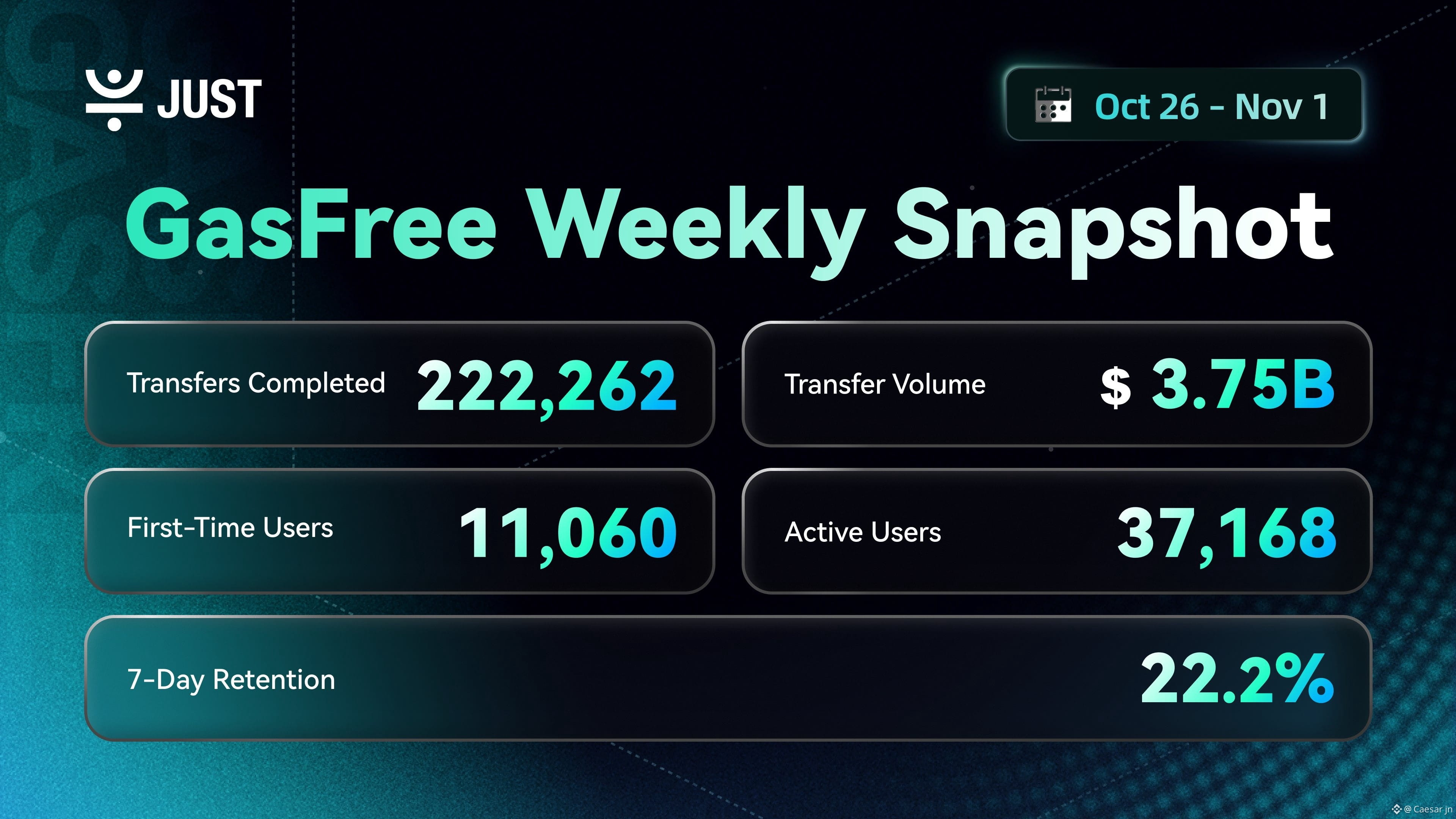
Its latest weekly snapshot covering October 26 – November 1 provides some interesting adoption indicators.
THE NUMBERS DESERVE ATTENTION:
⚡ 222,262 completed transfers.
💵 $3.75 BILLION in transfer volume.
👥 11,060 first-time users.
🌐 37,168 active users.
📊 22.2% seven-day retention.
These figures reveal several dimensions of platform activity.
1. TRANSACTION ACTIVITY
More than 222,000 completed transfers demonstrate substantial usage during the reporting period.
2. ECONOMIC ACTIVITY
The $3.75 billion transfer volume highlights the scale of stablecoin value moving through the service.
3. USER ACQUISITION
Over 11,000 first-time users indicate continued onboarding and an expanding user base.
4. RETENTION
The 22.2% seven-day retention figure introduces another important measurement: whether users return after their initial experience.
And this last metric deserves particular attention.
Acquiring users is important, but creating an experience that encourages repeated usage is what can support sustainable adoption
For blockchain infrastructure, reducing friction is not a minor improvement. It can make the difference between technology that people admire and technology they actually use.
@DeFi_JUST @JustinSun #TRONEcoStar
𝗚𝗔𝗦𝗙𝗥𝗘𝗘: 𝗧𝗛𝗘 𝗚𝗥𝗢𝗪𝗜𝗡𝗚 𝗥𝗢𝗟𝗘 𝗢𝗙 𝗦𝗜𝗠𝗣𝗟𝗘𝗥 𝗦𝗧𝗔𝗕𝗟𝗘𝗖𝗢𝗜𝗡 𝗧𝗥𝗔𝗡𝗦𝗙𝗘𝗥𝗦 𝗢𝗡 𝗧𝗥𝗢𝗡
Stablecoin adoption is not just about how much value exists on a blockchain. It is also about how easily people can move that value.
A network can have significant stablecoin liquidity, but everyday usability becomes a different challenge when users must navigate transaction fees, wallet balances, and additional technical requirements.
This is where GasFree introduces an interesting approach to the TRON ecosystem.
By enabling supported USDT and USDD transfers without requiring users to hold TRX for transaction fees, GasFree helps simplify an important part of the stablecoin experience.
Its latest weekly snapshot covering October 26 – November 1 provides some interesting adoption indicators.
THE NUMBERS DESERVE ATTENTION:
⚡ 222,262 completed transfers.
💵 $3.75 BILLION in transfer volume.
👥 11,060 first-time users.
🌐 37,168 active users.
📊 22.2% seven-day retention.
These figures reveal several dimensions of platform activity.
1. TRANSACTION ACTIVITY
More than 222,000 completed transfers demonstrate substantial usage during the reporting period.
2. ECONOMIC ACTIVITY
The $3.75 billion transfer volume highlights the scale of stablecoin value moving through the service.
3. USER ACQUISITION
Over 11,000 first-time users indicate continued onboarding and an expanding user base.
4. RETENTION
The 22.2% seven-day retention figure introduces another important measurement: whether users return after their initial experience.
And this last metric deserves particular attention.
Acquiring users is important, but creating an experience that encourages repeated usage is what can support sustainable adoption
For blockchain infrastructure, reducing friction is not a minor improvement. It can make the difference between technology that people admire and technology they actually use.
@JUST DAO @Justin Sun孙宇晨 #TRONEcoStar
1
74
·
--
𝗕𝗜𝗧𝗧𝗢𝗥𝗥𝗘𝗡𝗧: 𝗙𝗥𝗢𝗠 𝗦𝗛𝗔𝗥𝗜𝗡𝗚 𝗙𝗜𝗟𝗘𝗦 𝗧𝗢 𝗦𝗛𝗔𝗥𝗜𝗡𝗚 𝗜𝗡𝗧𝗘𝗟𝗟𝗜𝗚𝗘𝗡𝗖𝗘
The way people create and distribute digital content is changing faster than ever.
There was a time when digital sharing revolved around documents, music, software, and .iso files. Today, a simple text prompt can instruct an AI system to generate code, design experiences, and build complex digital projects.
That is a remarkable shift.
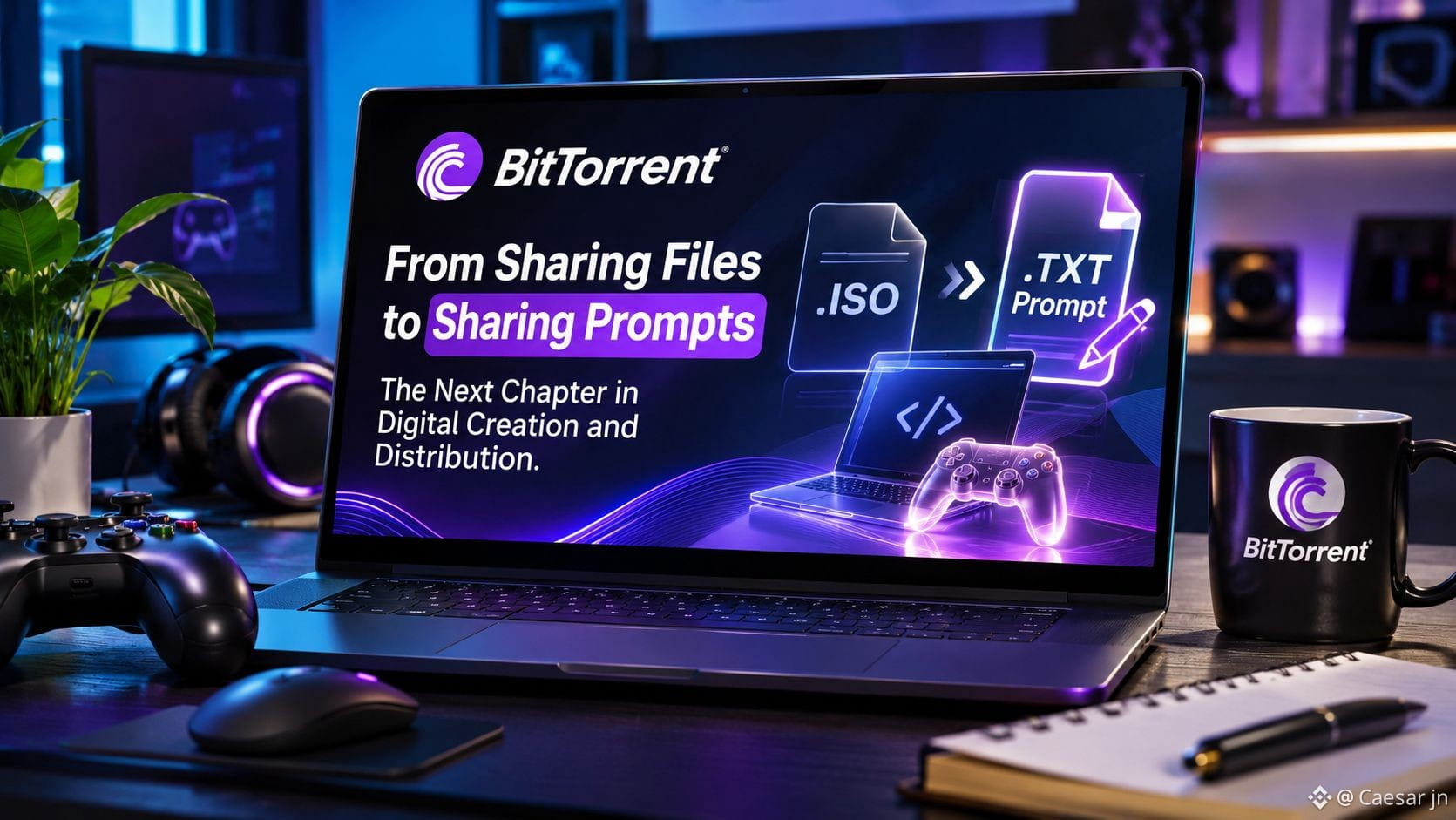
BitTorrent's observation about moving from sharing .iso files to sharing .txt prompts captures an interesting transition in internet culture.
WE ARE MOVING FROM SHARING DIGITAL CONTENT TO SHARING THE INSTRUCTIONS THAT CREATE IT.
Consider what this means for the future:
🔹 1. PROMPTS ARE BECOMING DIGITAL ASSETS
A well-designed prompt can contain workflows, instructions, creative direction, and technical logic that others can reuse and improve.
🔹 2. AI IS LOWERING DEVELOPMENT BARRIERS
People with ideas but limited programming experience can now use AI tools to experiment, prototype, and build software much faster.
🔹 3. DISTRIBUTION IS EVOLVING
The value of digital sharing is expanding beyond finished files. Templates, datasets, prompts, workflows, and reusable AI resources are becoming important parts of the digital economy.
🔹 4. INTELLECTUAL PROPERTY MATTERS MORE THAN EVER
The ability to recreate software and games using AI also raises important questions about copyright, originality, licensing, and creative ownership.
AI-generated work should not automatically be confused with permission to reproduce someone else's protected creation.
WHERE DOES BITTORRENT FIT INTO THIS EVOLUTION?
BitTorrent's peer-to-peer foundation demonstrates how digital resources can be distributed through networks of participating users.
As AI expands the volume of digital assets being created, efficient distribution and access to information will remain important infrastructure challenges.
@BitTorrent_Official @JustinSun #TRONEcoStar
𝗕𝗜𝗧𝗧𝗢𝗥𝗥𝗘𝗡𝗧: 𝗙𝗥𝗢𝗠 𝗦𝗛𝗔𝗥𝗜𝗡𝗚 𝗙𝗜𝗟𝗘𝗦 𝗧𝗢 𝗦𝗛𝗔𝗥𝗜𝗡𝗚 𝗜𝗡𝗧𝗘𝗟𝗟𝗜𝗚𝗘𝗡𝗖𝗘
The way people create and distribute digital content is changing faster than ever.
There was a time when digital sharing revolved around documents, music, software, and .iso files. Today, a simple text prompt can instruct an AI system to generate code, design experiences, and build complex digital projects.
That is a remarkable shift.
BitTorrent's observation about moving from sharing .iso files to sharing .txt prompts captures an interesting transition in internet culture.
WE ARE MOVING FROM SHARING DIGITAL CONTENT TO SHARING THE INSTRUCTIONS THAT CREATE IT.
Consider what this means for the future:
🔹 1. PROMPTS ARE BECOMING DIGITAL ASSETS
A well-designed prompt can contain workflows, instructions, creative direction, and technical logic that others can reuse and improve.
🔹 2. AI IS LOWERING DEVELOPMENT BARRIERS
People with ideas but limited programming experience can now use AI tools to experiment, prototype, and build software much faster.
🔹 3. DISTRIBUTION IS EVOLVING
The value of digital sharing is expanding beyond finished files. Templates, datasets, prompts, workflows, and reusable AI resources are becoming important parts of the digital economy.
🔹 4. INTELLECTUAL PROPERTY MATTERS MORE THAN EVER
The ability to recreate software and games using AI also raises important questions about copyright, originality, licensing, and creative ownership.
AI-generated work should not automatically be confused with permission to reproduce someone else's protected creation.
WHERE DOES BITTORRENT FIT INTO THIS EVOLUTION?
BitTorrent's peer-to-peer foundation demonstrates how digital resources can be distributed through networks of participating users.
As AI expands the volume of digital assets being created, efficient distribution and access to information will remain important infrastructure challenges.
@BitTorrent_Official @Justin Sun孙宇晨 #TRONEcoStar
1
·
--
𝗕𝗜𝗧𝗧𝗢𝗥𝗥𝗘𝗡𝗧: 𝗪𝗛𝗘𝗡 𝗥𝗘𝗔𝗟 𝗡𝗘𝗧𝗪𝗢𝗥𝗞 𝗥𝗘𝗩𝗘𝗡𝗨𝗘 𝗕𝗘𝗖𝗢𝗠𝗘𝗦 𝗣𝗔𝗥𝗧 𝗢𝗙 𝗧𝗢𝗞𝗘𝗡 𝗘𝗖𝗢𝗡𝗢𝗠𝗜𝗖𝗦
Token burns are not all created equal.
The more important question is not simply how many tokens are removed from circulation, but what economic activity supports the mechanism behind those reductions.
BitTorrent's first $BTT buyback and burn milestone introduces an interesting dimension to this conversation.
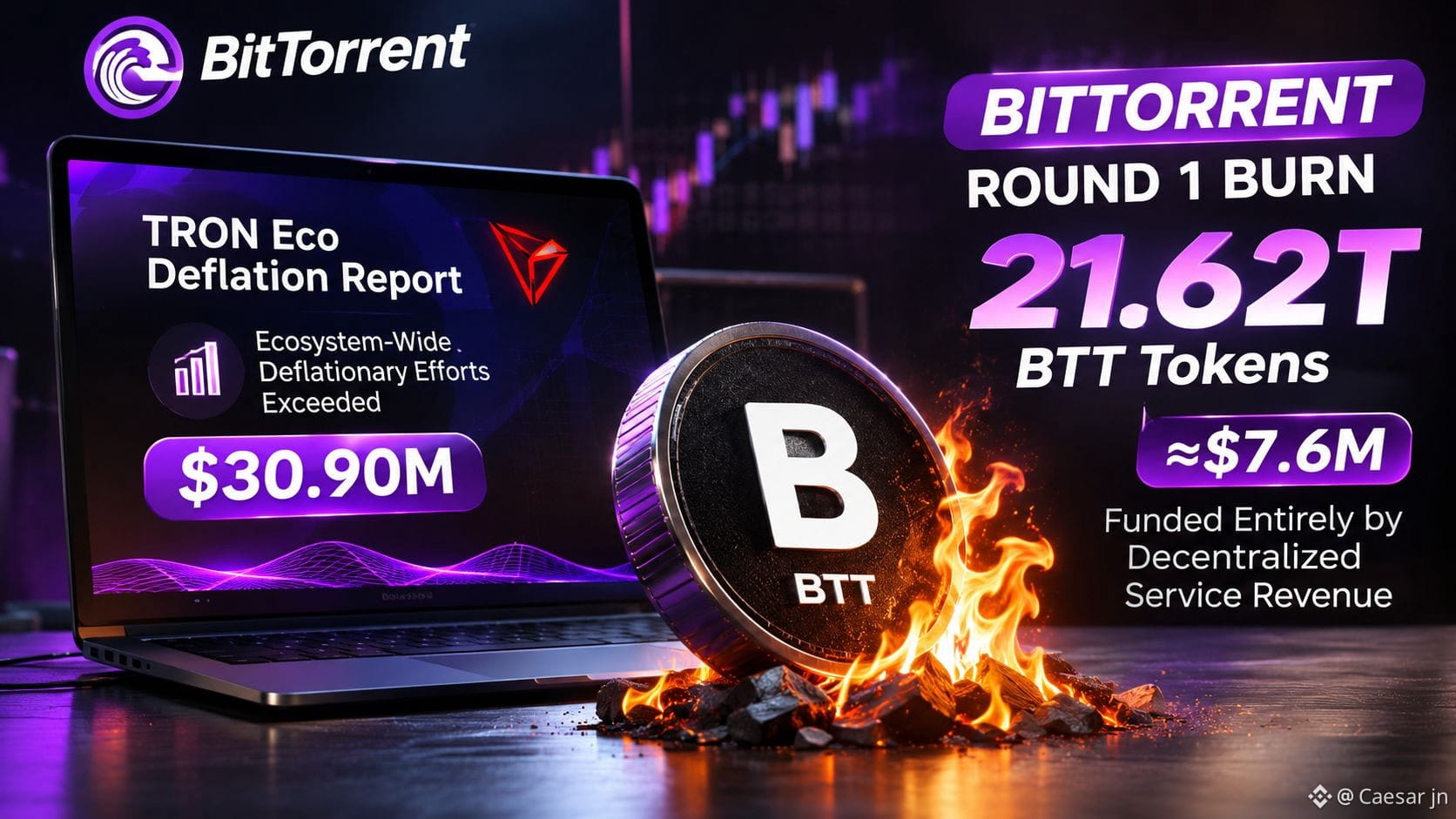
According to the TRON Eco Deflation Report, Round 1 has resulted in the burn of approximately 21.62 TRILLION BTT TOKENS, valued at around $7.6 MILLION.
What makes this particularly interesting is the reported funding source: revenue generated by decentralized services.
This creates a connection between network activity and token economics.
WHY DOES THIS MODEL DESERVE ATTENTION?
🔹 1. REVENUE-BACKED EXECUTION
Rather than relying solely on discretionary token allocations, the reported mechanism connects buybacks and burns to revenue generated by decentralized services.
🔹 2. VERIFIABLE ON-CHAIN ACTIVITY
Blockchain records allow participants to examine token movements and verify burn transactions, strengthening transparency around execution.
🔹 3. CONNECTION BETWEEN UTILITY AND TOKENOMICS
The model creates an important economic relationship: decentralized services generate revenue, and that revenue can support a predefined token reduction mechanism.
🔹 4. LONG-TERM ECONOMIC DISCIPLINE
A recurring mechanism funded by actual service revenue offers a framework worth monitoring as the ecosystem develops.
THE BIGGER PICTURE
The report places BTT's milestone within a wider TRON ecosystem deflationary effort that has exceeded $30.90 million in reported buyback and burn value.
This is significant because token economics should not exist independently of the products and services surrounding a blockchain ecosystem.
@BitTorrent_Official @JustinSun #TRONEcoStar
𝗕𝗜𝗧𝗧𝗢𝗥𝗥𝗘𝗡𝗧: 𝗪𝗛𝗘𝗡 𝗥𝗘𝗔𝗟 𝗡𝗘𝗧𝗪𝗢𝗥𝗞 𝗥𝗘𝗩𝗘𝗡𝗨𝗘 𝗕𝗘𝗖𝗢𝗠𝗘𝗦 𝗣𝗔𝗥𝗧 𝗢𝗙 𝗧𝗢𝗞𝗘𝗡 𝗘𝗖𝗢𝗡𝗢𝗠𝗜𝗖𝗦
Token burns are not all created equal.
The more important question is not simply how many tokens are removed from circulation, but what economic activity supports the mechanism behind those reductions.
BitTorrent's first $BTT buyback and burn milestone introduces an interesting dimension to this conversation.
According to the TRON Eco Deflation Report, Round 1 has resulted in the burn of approximately 21.62 TRILLION BTT TOKENS, valued at around $7.6 MILLION.
What makes this particularly interesting is the reported funding source: revenue generated by decentralized services.
This creates a connection between network activity and token economics.
WHY DOES THIS MODEL DESERVE ATTENTION?
🔹 1. REVENUE-BACKED EXECUTION
Rather than relying solely on discretionary token allocations, the reported mechanism connects buybacks and burns to revenue generated by decentralized services.
🔹 2. VERIFIABLE ON-CHAIN ACTIVITY
Blockchain records allow participants to examine token movements and verify burn transactions, strengthening transparency around execution.
🔹 3. CONNECTION BETWEEN UTILITY AND TOKENOMICS
The model creates an important economic relationship: decentralized services generate revenue, and that revenue can support a predefined token reduction mechanism.
🔹 4. LONG-TERM ECONOMIC DISCIPLINE
A recurring mechanism funded by actual service revenue offers a framework worth monitoring as the ecosystem develops.
THE BIGGER PICTURE
The report places BTT's milestone within a wider TRON ecosystem deflationary effort that has exceeded $30.90 million in reported buyback and burn value.
This is significant because token economics should not exist independently of the products and services surrounding a blockchain ecosystem.
@BitTorrent_Official @Justin Sun孙宇晨 #TRONEcoStar
1
·
--
𝗕𝗜𝗧𝗧𝗢𝗥𝗥𝗘𝗡𝗧: 𝗪𝗛𝗬 𝗗𝗜𝗚𝗜𝗧𝗔𝗟 𝗗𝗜𝗦𝗧𝗥𝗜𝗕𝗨𝗧𝗜𝗢𝗡 𝗡𝗘𝗘𝗗𝗦 𝗔 𝗡𝗘𝗪 𝗪𝗔𝗬 𝗢𝗙 𝗧𝗛𝗜𝗡𝗞𝗜𝗡𝗚
For years, the internet has operated around a simple relationship: platforms provide infrastructure, and users consume the services.
Peer-to-peer technology introduced a different possibility.
What if users could contribute to the infrastructure that distributes the content they access?
This is the principle that made BitTorrent an important part of internet history.
Rather than relying exclusively on a central server, its architecture allows participating peers to exchange pieces of content directly.
WHY IS THIS MODEL STILL RELEVANT?
🔹 Distributed Resources: Network participants can contribute bandwidth and upload capacity.
🔹 Shared Responsibility: Content distribution becomes a collaborative process involving multiple peers.
🔹 Flexible Infrastructure: Files can be exchanged through different available sources rather than depending entirely on one distribution point.
🔹 Decentralized Thinking: The model demonstrates how collective participation can support large-scale digital services.
But there is an even bigger opportunity.
As digital content grows and AI-generated information becomes more widespread, efficient distribution infrastructure will become increasingly important.
Moving information efficiently, maintaining availability, and coordinating distributed resources are challenges that the next generation of internet services must address.
BitTorrent's peer-to-peer foundation offers a valuable perspective on how these challenges can be approached.
Its history also highlights an important lesson: infrastructure does not need to be invisible to users to be powerful. Sometimes, the users themselves can become part of the infrastructure.
Of course, practical performance still depends on connectivity, peer availability, content availability, and network design.
@BitTorrent_Official @JustinSun #TRONEcoStar
𝗕𝗜𝗧𝗧𝗢𝗥𝗥𝗘𝗡𝗧: 𝗪𝗛𝗬 𝗗𝗜𝗚𝗜𝗧𝗔𝗟 𝗗𝗜𝗦𝗧𝗥𝗜𝗕𝗨𝗧𝗜𝗢𝗡 𝗡𝗘𝗘𝗗𝗦 𝗔 𝗡𝗘𝗪 𝗪𝗔𝗬 𝗢𝗙 𝗧𝗛𝗜𝗡𝗞𝗜𝗡𝗚
For years, the internet has operated around a simple relationship: platforms provide infrastructure, and users consume the services.
Peer-to-peer technology introduced a different possibility.
What if users could contribute to the infrastructure that distributes the content they access?
This is the principle that made BitTorrent an important part of internet history.
Rather than relying exclusively on a central server, its architecture allows participating peers to exchange pieces of content directly.
WHY IS THIS MODEL STILL RELEVANT?
🔹 Distributed Resources: Network participants can contribute bandwidth and upload capacity.
🔹 Shared Responsibility: Content distribution becomes a collaborative process involving multiple peers.
🔹 Flexible Infrastructure: Files can be exchanged through different available sources rather than depending entirely on one distribution point.
🔹 Decentralized Thinking: The model demonstrates how collective participation can support large-scale digital services.
But there is an even bigger opportunity.
As digital content grows and AI-generated information becomes more widespread, efficient distribution infrastructure will become increasingly important.
Moving information efficiently, maintaining availability, and coordinating distributed resources are challenges that the next generation of internet services must address.
BitTorrent's peer-to-peer foundation offers a valuable perspective on how these challenges can be approached.
Its history also highlights an important lesson: infrastructure does not need to be invisible to users to be powerful. Sometimes, the users themselves can become part of the infrastructure.
Of course, practical performance still depends on connectivity, peer availability, content availability, and network design.
@BitTorrent_Official @Justin Sun孙宇晨 #TRONEcoStar
1
4
·
--
𝗕𝗜𝗧𝗧𝗢𝗥𝗥𝗘𝗡𝗧: 𝗕𝗨𝗜𝗟𝗗𝗜𝗡𝗚 𝗔 𝗟𝗔𝗦𝗧𝗜𝗡𝗚 𝗜𝗗𝗘𝗡𝗧𝗜𝗧𝗬 𝗜𝗡 𝗗𝗘𝗖𝗘𝗡𝗧𝗥𝗔𝗟𝗜𝗭𝗘𝗗 𝗧𝗘𝗖𝗛𝗡𝗢𝗟𝗢𝗚𝗬
Technology builds recognition, but identity builds connection.
In Web3, projects often compete for attention through product launches, technical developments, and ecosystem announcements. Yet there is another important element behind long-term brand recognition: creating something people can identify with.
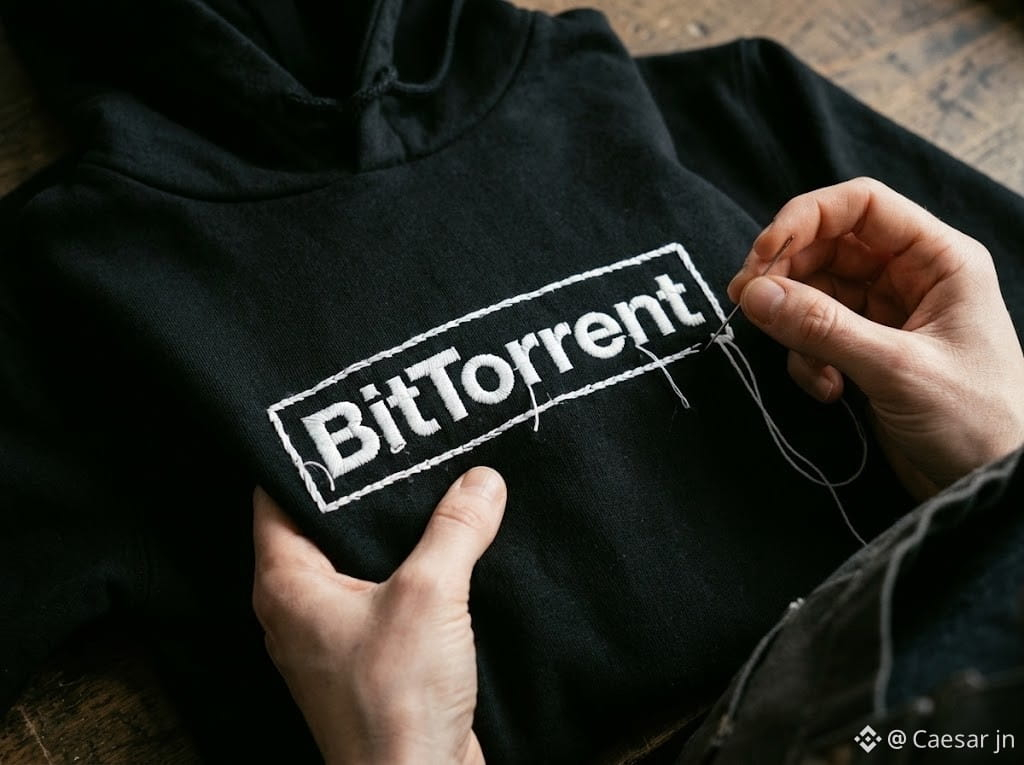
BitTorrent's simple thread-fixing visual offers an interesting metaphor.
Just as individual threads come together to create a finished piece of clothing, decentralized networks depend on individual participants contributing to a much larger system.
THERE IS A DEEPER CONNECTION HERE.
🔹 Community: Strong ecosystems are built through consistent participation, not occasional attention.
🔹 Identity: A recognizable brand helps people connect with the technology beyond its technical features.
🔹 Consistency: Long-term relevance comes from continuously developing products and maintaining meaningful engagement.
🔹 Innovation: Established technologies must keep adapting to changing user expectations and digital infrastructure needs.
BitTorrent has a distinctive position in this conversation because peer-to-peer distribution helped shape how millions of people access and share digital content.
Its evolution within the broader TRON ecosystem creates another opportunity to connect established technology with emerging decentralized applications.
But lasting relevance requires more than a recognizable name. It requires continued utility, reliable infrastructure, and real reasons for users to participate.
A strong ecosystem is not stitched together overnight. It is built thread by thread, contribution by contribution, and innovation by innovation.
That is the kind of foundation that can stand the test of time.
@BitTorrent_Official @JustinSun #TRONEcoStar
𝗕𝗜𝗧𝗧𝗢𝗥𝗥𝗘𝗡𝗧: 𝗕𝗨𝗜𝗟𝗗𝗜𝗡𝗚 𝗔 𝗟𝗔𝗦𝗧𝗜𝗡𝗚 𝗜𝗗𝗘𝗡𝗧𝗜𝗧𝗬 𝗜𝗡 𝗗𝗘𝗖𝗘𝗡𝗧𝗥𝗔𝗟𝗜𝗭𝗘𝗗 𝗧𝗘𝗖𝗛𝗡𝗢𝗟𝗢𝗚𝗬
Technology builds recognition, but identity builds connection.
In Web3, projects often compete for attention through product launches, technical developments, and ecosystem announcements. Yet there is another important element behind long-term brand recognition: creating something people can identify with.
BitTorrent's simple thread-fixing visual offers an interesting metaphor.
Just as individual threads come together to create a finished piece of clothing, decentralized networks depend on individual participants contributing to a much larger system.
THERE IS A DEEPER CONNECTION HERE.
🔹 Community: Strong ecosystems are built through consistent participation, not occasional attention.
🔹 Identity: A recognizable brand helps people connect with the technology beyond its technical features.
🔹 Consistency: Long-term relevance comes from continuously developing products and maintaining meaningful engagement.
🔹 Innovation: Established technologies must keep adapting to changing user expectations and digital infrastructure needs.
BitTorrent has a distinctive position in this conversation because peer-to-peer distribution helped shape how millions of people access and share digital content.
Its evolution within the broader TRON ecosystem creates another opportunity to connect established technology with emerging decentralized applications.
But lasting relevance requires more than a recognizable name. It requires continued utility, reliable infrastructure, and real reasons for users to participate.
A strong ecosystem is not stitched together overnight. It is built thread by thread, contribution by contribution, and innovation by innovation.
That is the kind of foundation that can stand the test of time.
@BitTorrent_Official @Justin Sun孙宇晨 #TRONEcoStar
21
·
--
𝗕𝗜𝗧𝗧𝗢𝗥𝗥𝗘𝗡𝗧: 𝗪𝗛𝗔𝗧 𝗗𝗘𝗖𝗘𝗡𝗧𝗥𝗔𝗟𝗜𝗭𝗘𝗗 𝗡𝗘𝗧𝗪𝗢𝗥𝗞𝗦 𝗖𝗔𝗡 𝗧𝗘𝗔𝗖𝗛 𝗨𝗦 𝗔𝗕𝗢𝗨𝗧 𝗥𝗘𝗦𝗜𝗟𝗜𝗘𝗡𝗖𝗘
A centralized system often depends on a limited number of infrastructure points.
A decentralized network takes a different approach: distributing participation across multiple nodes, reducing dependence on a single source of operation.
This is one of the fundamental ideas behind BitTorrent.
Its Halloween-themed comparison of zombies to offline nodes attempting to reconnect carries a technical idea worth exploring beyond the joke.
A NETWORK'S STRENGTH IS NOT JUST ABOUT HOW MANY NODES EXIST. IT IS ALSO ABOUT HOW THE NETWORK RESPONDS WHEN SOME GO OFFLINE.
Consider three important principles:
🔹 Distributed Participation: Multiple peers can contribute to sharing and distributing content across a network.
🔹 Network Resilience: Temporary disconnections do not necessarily mean the entire network stops functioning.
🔹 Reconnection: When peers return online, they can rejoin the network and resume participating, depending on the protocol and availability of content.
This is an important distinction between centralized infrastructure and peer-to-peer architecture.
BitTorrent helped popularize a model where users are not merely consumers of digital content; they can also become contributors to its distribution.
That concept remains relevant as decentralized infrastructure continues to evolve.
The broader Web3 conversation is increasingly about building systems that can distribute resources, coordinate participation, and remain useful without depending entirely on centralized intermediaries.
BitTorrent's long-standing peer-to-peer architecture offers an interesting foundation for understanding these principles.
Of course, decentralization does not automatically guarantee uninterrupted availability. Network participation...
@BitTorrent_Official @JustinSun #TRONEcoStar
𝗕𝗜𝗧𝗧𝗢𝗥𝗥𝗘𝗡𝗧: 𝗪𝗛𝗔𝗧 𝗗𝗘𝗖𝗘𝗡𝗧𝗥𝗔𝗟𝗜𝗭𝗘𝗗 𝗡𝗘𝗧𝗪𝗢𝗥𝗞𝗦 𝗖𝗔𝗡 𝗧𝗘𝗔𝗖𝗛 𝗨𝗦 𝗔𝗕𝗢𝗨𝗧 𝗥𝗘𝗦𝗜𝗟𝗜𝗘𝗡𝗖𝗘
A centralized system often depends on a limited number of infrastructure points.
A decentralized network takes a different approach: distributing participation across multiple nodes, reducing dependence on a single source of operation.
This is one of the fundamental ideas behind BitTorrent.
Its Halloween-themed comparison of zombies to offline nodes attempting to reconnect carries a technical idea worth exploring beyond the joke.
A NETWORK'S STRENGTH IS NOT JUST ABOUT HOW MANY NODES EXIST. IT IS ALSO ABOUT HOW THE NETWORK RESPONDS WHEN SOME GO OFFLINE.
Consider three important principles:
🔹 Distributed Participation: Multiple peers can contribute to sharing and distributing content across a network.
🔹 Network Resilience: Temporary disconnections do not necessarily mean the entire network stops functioning.
🔹 Reconnection: When peers return online, they can rejoin the network and resume participating, depending on the protocol and availability of content.
This is an important distinction between centralized infrastructure and peer-to-peer architecture.
BitTorrent helped popularize a model where users are not merely consumers of digital content; they can also become contributors to its distribution.
That concept remains relevant as decentralized infrastructure continues to evolve.
The broader Web3 conversation is increasingly about building systems that can distribute resources, coordinate participation, and remain useful without depending entirely on centralized intermediaries.
BitTorrent's long-standing peer-to-peer architecture offers an interesting foundation for understanding these principles.
Of course, decentralization does not automatically guarantee uninterrupted availability. Network participation...
@BitTorrent_Official @Justin Sun孙宇晨 #TRONEcoStar

1
·
--
𝗧𝗥𝗢𝗡: 𝗪𝗛𝗬 𝗖𝗢𝗠𝗠𝗨𝗡𝗜𝗧𝗬 𝗘𝗡𝗚𝗔𝗚𝗘𝗠𝗘𝗡𝗧 𝗜𝗦 𝗔𝗡 𝗢𝗩𝗘𝗥𝗟𝗢𝗢𝗞𝗘𝗗 𝗣𝗔𝗥𝗧 𝗢𝗙 𝗪𝗘𝗕𝟯 𝗚𝗥𝗢𝗪𝗧𝗛 🎃
Blockchain adoption is often measured through transactions, wallet activity, TVL, and network performance.
Those metrics are important, but they don't tell the entire story.
There is another dimension of ecosystem growth that deserves attention: community engagement.
TRON's Halloween campaign offers an interesting example of how an ecosystem can connect with its audience beyond technical announcements and product updates.
Why does this matter?
1. COMMUNITY IS A GROWTH ENGINE
An active community creates conversations, shares information, introduces new participants, and helps projects maintain visibility across digital platforms.
2. CULTURE MAKES BRANDS MEMORABLE
Seasonal campaigns and creative interactions give blockchain ecosystems opportunities to develop a recognizable personality beyond their technical capabilities.
3. PARTICIPATION BUILDS CONNECTION
When users engage with ecosystem campaigns, they become part of a shared experience rather than simply passive observers.
4. VISIBILITY CREATES OPPORTUNITIES
Consistent community engagement can introduce projects to new audiences and encourage people to explore the products and services within an ecosystem.
However, engagement should be connected to something more substantial.
Likes, reposts, and impressions are useful visibility indicators, but they are not substitutes for genuine adoption, developer activity, product usage, or long-term ecosystem growth.
The bigger opportunity for TRON is combining strong network infrastructure with a community culture that encourages people to participate, contribute, and build.
That is how an ecosystem develops an identity beyond its technology.
Web3 is not just about connecting wallets and executing transactions. It is also about connecting people around shared ideas and opportunities
@TRONDAO @JustinSun #TRONEcoStar
𝗧𝗥𝗢𝗡: 𝗪𝗛𝗬 𝗖𝗢𝗠𝗠𝗨𝗡𝗜𝗧𝗬 𝗘𝗡𝗚𝗔𝗚𝗘𝗠𝗘𝗡𝗧 𝗜𝗦 𝗔𝗡 𝗢𝗩𝗘𝗥𝗟𝗢𝗢𝗞𝗘𝗗 𝗣𝗔𝗥𝗧 𝗢𝗙 𝗪𝗘𝗕𝟯 𝗚𝗥𝗢𝗪𝗧𝗛 🎃
Blockchain adoption is often measured through transactions, wallet activity, TVL, and network performance.
Those metrics are important, but they don't tell the entire story.
There is another dimension of ecosystem growth that deserves attention: community engagement.
TRON's Halloween campaign offers an interesting example of how an ecosystem can connect with its audience beyond technical announcements and product updates.
Why does this matter?
1. COMMUNITY IS A GROWTH ENGINE
An active community creates conversations, shares information, introduces new participants, and helps projects maintain visibility across digital platforms.
2. CULTURE MAKES BRANDS MEMORABLE
Seasonal campaigns and creative interactions give blockchain ecosystems opportunities to develop a recognizable personality beyond their technical capabilities.
3. PARTICIPATION BUILDS CONNECTION
When users engage with ecosystem campaigns, they become part of a shared experience rather than simply passive observers.
4. VISIBILITY CREATES OPPORTUNITIES
Consistent community engagement can introduce projects to new audiences and encourage people to explore the products and services within an ecosystem.
However, engagement should be connected to something more substantial.
Likes, reposts, and impressions are useful visibility indicators, but they are not substitutes for genuine adoption, developer activity, product usage, or long-term ecosystem growth.
The bigger opportunity for TRON is combining strong network infrastructure with a community culture that encourages people to participate, contribute, and build.
That is how an ecosystem develops an identity beyond its technology.
Web3 is not just about connecting wallets and executing transactions. It is also about connecting people around shared ideas and opportunities
@TRON DAO @Justin Sun孙宇晨 #TRONEcoStar

14
·
--
𝗧𝗥𝗢𝗡: 𝗪𝗛𝗘𝗡 𝗕𝗟𝗢𝗖𝗞𝗖𝗛𝗔𝗜𝗡 𝗖𝗨𝗟𝗧𝗨𝗥𝗘 𝗠𝗘𝗘𝗧𝗦 𝗖𝗢𝗠𝗠𝗨𝗡𝗜𝗧𝗬 𝗖𝗥𝗘𝗔𝗧𝗜𝗩𝗜𝗧𝗬 🎃
Not every important moment in Web3 needs to revolve around technical upgrades, transaction statistics, or market movements.
Sometimes, the strongest ecosystem moments come from something simpler: community participation.
TRON's Halloween-themed engagement is a good example of how a blockchain brand can participate in internet culture while keeping its identity recognizable.
But there is a bigger strategic idea behind this.
COMMUNITY IS MORE THAN A COLLECTION OF WALLET ADDRESSES.
It is built through shared experiences, conversations, creativity, and consistent participation.
Why does this matter?
🎃 1. BRAND RECOGNITION
Creative campaigns give people another opportunity to recognize and interact with an ecosystem beyond its technical products.
👥 2. COMMUNITY PARTICIPATION
Interactive themes create opportunities for users, developers, and ecosystem projects to contribute their own personalities and ideas.
🌐 3. CULTURAL RELEVANCE
Web3 operates in a highly competitive attention economy. Brands that understand digital culture can create more memorable community experiences.
🚀 4. ECOSYSTEM CONNECTIVITY
When different projects participate in a shared ecosystem identity, they help create a stronger sense of belonging and collective visibility.
However, community engagement should complement real ecosystem development, not replace it.
The strongest blockchain communities combine cultural relevance with meaningful products, reliable infrastructure, developer activity, and practical utility.
That combination is what creates a more complete ecosystem identity.
TRON has an opportunity to keep bringing these dimensions together: technology that delivers value and a community that makes the ecosystem recognizable.
A blockchain network can attract attention through technology, but a connected community
@TRONDAO @JustinSun #TRONEcoStar
𝗧𝗥𝗢𝗡: 𝗪𝗛𝗘𝗡 𝗕𝗟𝗢𝗖𝗞𝗖𝗛𝗔𝗜𝗡 𝗖𝗨𝗟𝗧𝗨𝗥𝗘 𝗠𝗘𝗘𝗧𝗦 𝗖𝗢𝗠𝗠𝗨𝗡𝗜𝗧𝗬 𝗖𝗥𝗘𝗔𝗧𝗜𝗩𝗜𝗧𝗬 🎃
Not every important moment in Web3 needs to revolve around technical upgrades, transaction statistics, or market movements.
Sometimes, the strongest ecosystem moments come from something simpler: community participation.
TRON's Halloween-themed engagement is a good example of how a blockchain brand can participate in internet culture while keeping its identity recognizable.
But there is a bigger strategic idea behind this.
COMMUNITY IS MORE THAN A COLLECTION OF WALLET ADDRESSES.
It is built through shared experiences, conversations, creativity, and consistent participation.
Why does this matter?
🎃 1. BRAND RECOGNITION
Creative campaigns give people another opportunity to recognize and interact with an ecosystem beyond its technical products.
👥 2. COMMUNITY PARTICIPATION
Interactive themes create opportunities for users, developers, and ecosystem projects to contribute their own personalities and ideas.
🌐 3. CULTURAL RELEVANCE
Web3 operates in a highly competitive attention economy. Brands that understand digital culture can create more memorable community experiences.
🚀 4. ECOSYSTEM CONNECTIVITY
When different projects participate in a shared ecosystem identity, they help create a stronger sense of belonging and collective visibility.
However, community engagement should complement real ecosystem development, not replace it.
The strongest blockchain communities combine cultural relevance with meaningful products, reliable infrastructure, developer activity, and practical utility.
That combination is what creates a more complete ecosystem identity.
TRON has an opportunity to keep bringing these dimensions together: technology that delivers value and a community that makes the ecosystem recognizable.
A blockchain network can attract attention through technology, but a connected community
@TRON DAO @Justin Sun孙宇晨 #TRONEcoStar

1
18
·
--
𝗨𝗦𝗗𝗗 𝟮.𝟬: 𝗧𝗛𝗘 𝗕𝗜𝗚𝗚𝗘𝗥 𝗦𝗧𝗢𝗥𝗬 𝗕𝗘𝗛𝗜𝗡𝗗 𝗦𝗨𝗣𝗣𝗟𝗬 𝗠𝗜𝗡𝗜𝗡𝗚
DeFi incentives are often discussed in terms of rewards and APY.
But there is a more important question worth asking:
What happens to an ecosystem when incentives encourage people to supply and participate in its stablecoin markets?
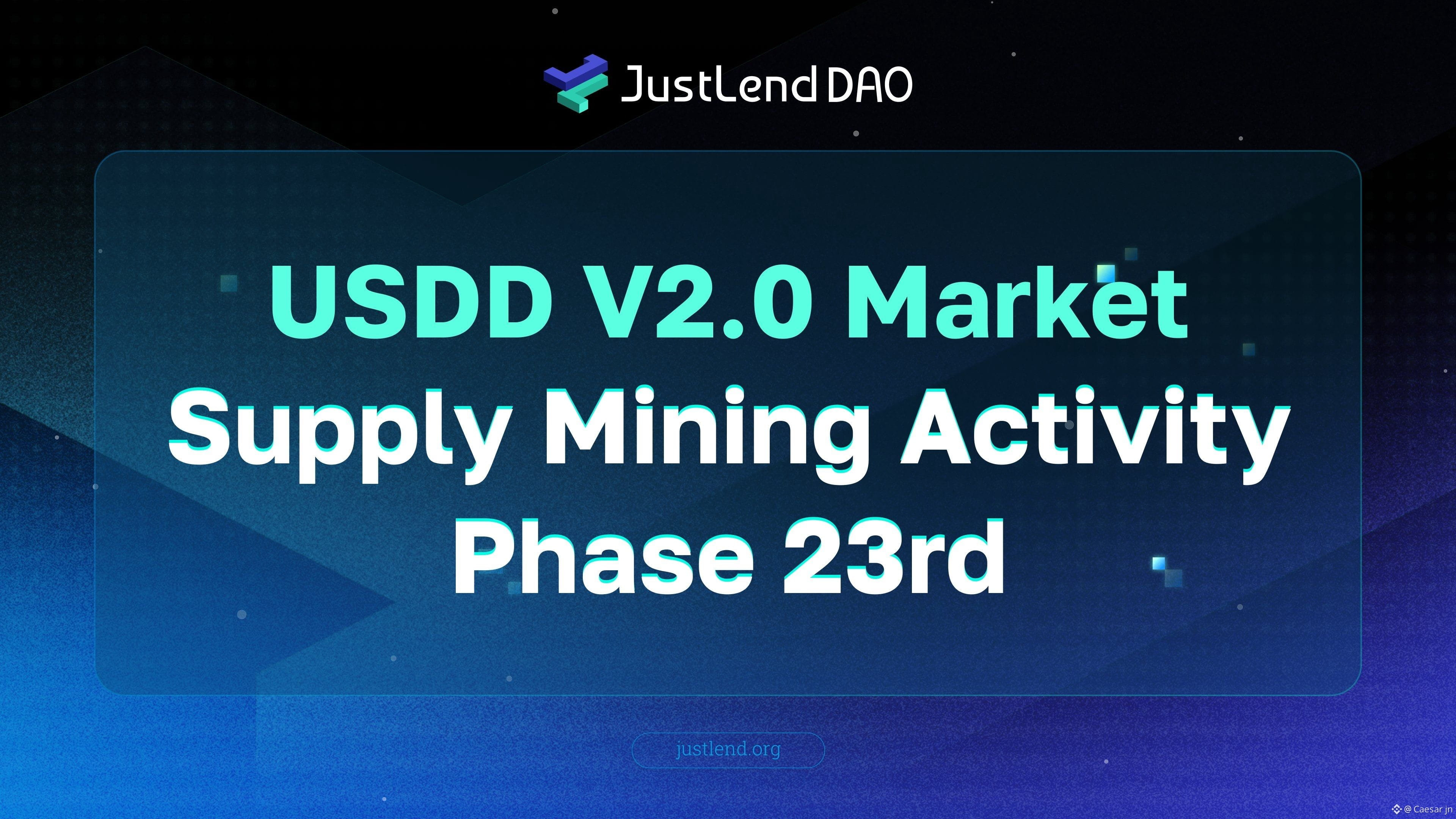
This is where USDD 2.0 Supply Mining becomes an interesting development within the TRON ecosystem.
With Phase 23 underway and Week 3 rewards available for eligible participants, the program continues to provide a structured incentive mechanism through JustLend.
However, the significance goes beyond claiming rewards.
THREE IMPORTANT DIMENSIONS DESERVE ATTENTION:
🔹 Liquidity Participation: Supply mining can encourage users to allocate eligible assets within supported markets, contributing to available liquidity.
🔹 Stablecoin Utility: Incentive programs can help increase engagement with USDD and its associated DeFi applications.
🔹 Ecosystem Connectivity: Integrating reward participation with JustLend creates a connection between stablecoin adoption and decentralized lending infrastructure.
There is also an important economic consideration.
Incentives can attract liquidity, but sustainable adoption requires users to find genuine utility beyond the reward period.
That means monitoring liquidity conditions, borrowing demand, stablecoin usage, protocol security, and the long-term economics of the program.
A high APY alone does not establish the quality or sustainability of a DeFi opportunity.
For users, understanding the applicable terms, reward calculations, risks, and claiming requirements is just as important as the headline return.
For the ecosystem, the real objective should be turning temporary participation into lasting utility.
REWARDS CAN ATTRACT ATTENTION. USEFUL FINANCIAL PRODUCTS GIVE PEOPLE A REASON TO STAY.
That distinction will matter as USDD 2.0 continues developing its position within TRON's
@DeFi_JUST @usddio @JustinSun #TRONEcoStar
𝗨𝗦𝗗𝗗 𝟮.𝟬: 𝗧𝗛𝗘 𝗕𝗜𝗚𝗚𝗘𝗥 𝗦𝗧𝗢𝗥𝗬 𝗕𝗘𝗛𝗜𝗡𝗗 𝗦𝗨𝗣𝗣𝗟𝗬 𝗠𝗜𝗡𝗜𝗡𝗚
DeFi incentives are often discussed in terms of rewards and APY.
But there is a more important question worth asking:
What happens to an ecosystem when incentives encourage people to supply and participate in its stablecoin markets?
This is where USDD 2.0 Supply Mining becomes an interesting development within the TRON ecosystem.
With Phase 23 underway and Week 3 rewards available for eligible participants, the program continues to provide a structured incentive mechanism through JustLend.
However, the significance goes beyond claiming rewards.
THREE IMPORTANT DIMENSIONS DESERVE ATTENTION:
🔹 Liquidity Participation: Supply mining can encourage users to allocate eligible assets within supported markets, contributing to available liquidity.
🔹 Stablecoin Utility: Incentive programs can help increase engagement with USDD and its associated DeFi applications.
🔹 Ecosystem Connectivity: Integrating reward participation with JustLend creates a connection between stablecoin adoption and decentralized lending infrastructure.
There is also an important economic consideration.
Incentives can attract liquidity, but sustainable adoption requires users to find genuine utility beyond the reward period.
That means monitoring liquidity conditions, borrowing demand, stablecoin usage, protocol security, and the long-term economics of the program.
A high APY alone does not establish the quality or sustainability of a DeFi opportunity.
For users, understanding the applicable terms, reward calculations, risks, and claiming requirements is just as important as the headline return.
For the ecosystem, the real objective should be turning temporary participation into lasting utility.
REWARDS CAN ATTRACT ATTENTION. USEFUL FINANCIAL PRODUCTS GIVE PEOPLE A REASON TO STAY.
That distinction will matter as USDD 2.0 continues developing its position within TRON's
@JUST DAO @USDD - Decentralized USD @Justin Sun孙宇晨 #TRONEcoStar
1
14
·
--
𝗝𝗨𝗦𝗧 𝗗𝗔𝗢: 𝗪𝗛𝗬 𝗟𝗜𝗤𝗨𝗜𝗗𝗜𝗧𝗬 𝗗𝗘𝗣𝗧𝗛 𝗠𝗔𝗧𝗧𝗘𝗥𝗦 𝗠𝗢𝗥𝗘 𝗧𝗛𝗔𝗡 𝗛𝗘𝗔𝗗𝗟𝗜𝗡𝗘 𝗩𝗢𝗟𝗨𝗠𝗘
A DeFi market can record impressive trading volume, but that does not automatically mean it offers a healthy trading environment.
There is another important factor investors and users should examine: liquidity depth.
Trading volume tells us how much activity is taking place. Liquidity depth helps us understand how much capital is available to facilitate those trades without excessive price impact.
The distinction is important.
Why should DeFi participants pay attention to liquidity depth?
🔹 Trade Execution: Deeper liquidity can help larger trades execute with less price impact.
🔹 Market Resilience: Adequate liquidity can help markets absorb buying and selling pressure.
🔹 Capital Efficiency: Well-distributed liquidity can make better use of the capital available within a trading ecosystem.
🔹 User Experience: More efficient execution can make decentralized trading more practical and predictable.
JUST DAO's recent $JST activity snapshot reported $11.65M in liquidity alongside $23.46M in trading volume.
These figures provide an interesting starting point for examining market activity, but they should not be confused with a complete measure of liquidity depth or market health.
The more important question is how consistently liquidity is maintained, how it is distributed, and how the market responds when trading conditions change.
This is where long-term DeFi development becomes interesting.
A sustainable ecosystem needs more than transactions and trading activity. It needs dependable markets where participants can exchange assets efficiently and manage risk.
Volume shows that people are trading. Liquidity determines how effectively the market can accommodate that activity.
Both deserve attention when evaluating the progress of decentralized finance.
@DeFi_JUST @JustinSun #TRONEcoStar
𝗝𝗨𝗦𝗧 𝗗𝗔𝗢: 𝗪𝗛𝗬 𝗟𝗜𝗤𝗨𝗜𝗗𝗜𝗧𝗬 𝗗𝗘𝗣𝗧𝗛 𝗠𝗔𝗧𝗧𝗘𝗥𝗦 𝗠𝗢𝗥𝗘 𝗧𝗛𝗔𝗡 𝗛𝗘𝗔𝗗𝗟𝗜𝗡𝗘 𝗩𝗢𝗟𝗨𝗠𝗘
A DeFi market can record impressive trading volume, but that does not automatically mean it offers a healthy trading environment.
There is another important factor investors and users should examine: liquidity depth.
Trading volume tells us how much activity is taking place. Liquidity depth helps us understand how much capital is available to facilitate those trades without excessive price impact.
The distinction is important.
Why should DeFi participants pay attention to liquidity depth?
🔹 Trade Execution: Deeper liquidity can help larger trades execute with less price impact.
🔹 Market Resilience: Adequate liquidity can help markets absorb buying and selling pressure.
🔹 Capital Efficiency: Well-distributed liquidity can make better use of the capital available within a trading ecosystem.
🔹 User Experience: More efficient execution can make decentralized trading more practical and predictable.
JUST DAO's recent $JST activity snapshot reported $11.65M in liquidity alongside $23.46M in trading volume.
These figures provide an interesting starting point for examining market activity, but they should not be confused with a complete measure of liquidity depth or market health.
The more important question is how consistently liquidity is maintained, how it is distributed, and how the market responds when trading conditions change.
This is where long-term DeFi development becomes interesting.
A sustainable ecosystem needs more than transactions and trading activity. It needs dependable markets where participants can exchange assets efficiently and manage risk.
Volume shows that people are trading. Liquidity determines how effectively the market can accommodate that activity.
Both deserve attention when evaluating the progress of decentralized finance.
@JUST DAO @Justin Sun孙宇晨 #TRONEcoStar

27
·
--
𝗗𝗘𝗙𝗜 𝗜𝗦 𝗘𝗩𝗢𝗟𝗩𝗜𝗡𝗚: 𝗪𝗛𝗬 𝗖𝗔𝗣𝗜𝗧𝗔𝗟 𝗘𝗙𝗙𝗜𝗖𝗜𝗘𝗡𝗖𝗬 𝗠𝗔𝗧𝗧𝗘𝗥𝗦 𝗙𝗢𝗥 𝗦𝗨𝗡.𝗶𝗼
The next stage of decentralized finance will not be defined simply by how much capital enters an ecosystem.
It will also depend on how efficiently that capital is used.
This is an important distinction.
A DeFi platform can attract liquidity, but the real challenge is creating an environment where that liquidity supports meaningful financial activity rather than remaining idle.
For platforms like SUN.io, capital efficiency is an important concept worth understanding.
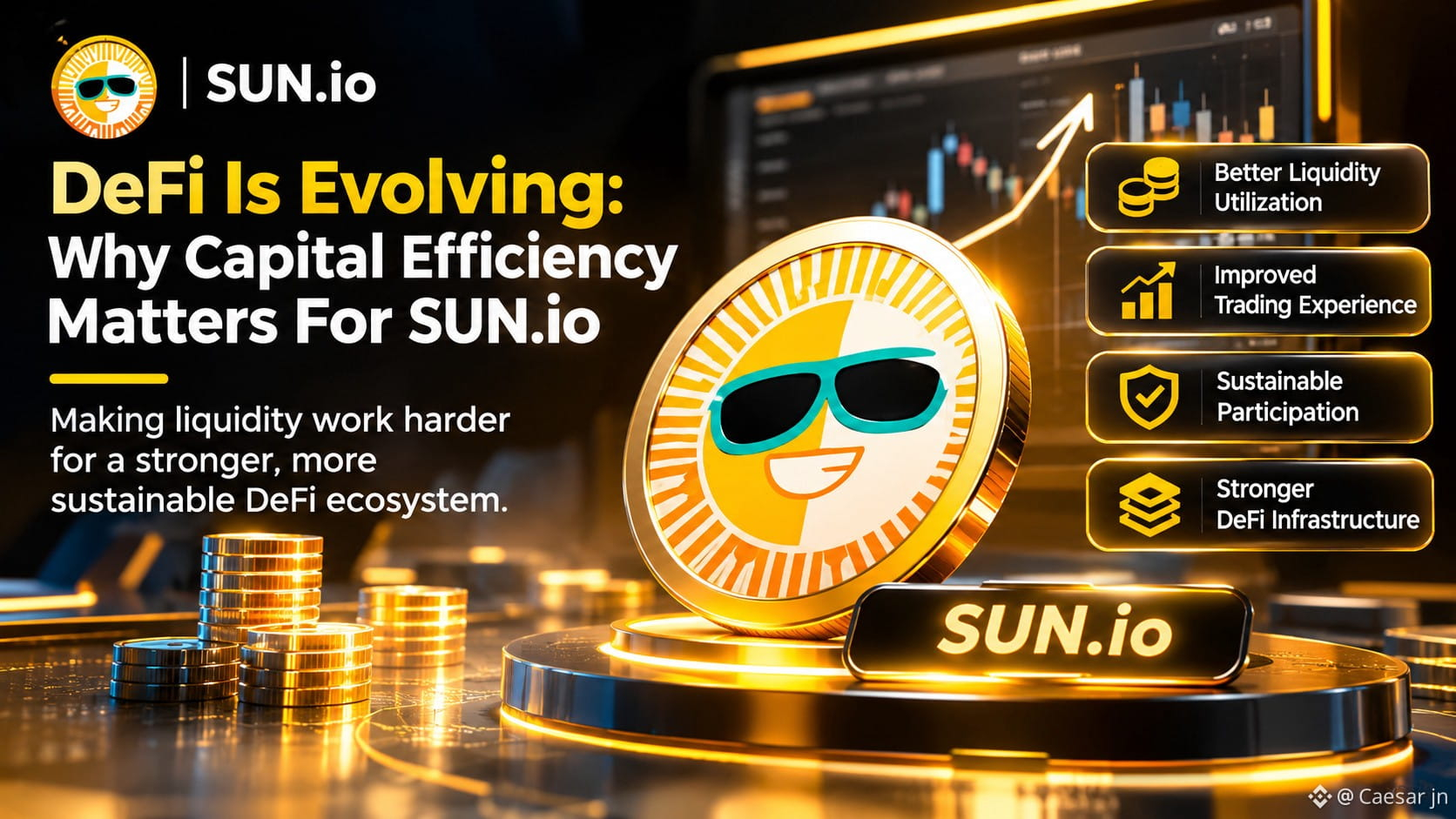
What makes capital efficiency valuable?
🔹 Better Liquidity Utilization: Capital should support active markets and useful trading opportunities.
🔹 Improved Trading Experience: Efficient liquidity allocation can help reduce unnecessary price impact and improve execution.
🔹 Sustainable Participation: Liquidity providers need transparent mechanisms and a reasonable understanding of the risks and potential returns.
🔹 Stronger DeFi Infrastructure: Better coordination between liquidity, trading, and financial applications can strengthen the overall ecosystem.
There is also an important challenge.
Capital efficiency should never come at the expense of security or sustainable risk management. Smart contract vulnerabilities, liquidity concentration, market volatility, and impermanent loss remain important considerations.
This is why the quality of DeFi infrastructure matters just as much as the amount of capital it attracts.
SUN.io's broader opportunity is to contribute to a TRON DeFi environment where decentralized trading and liquidity services create practical value for participants.
As the industry matures, users will increasingly look beyond headline TVL figures.
They will want to understand how liquidity is being used, how markets perform under pressure, and whether platforms can sustain meaningful activity.
@SunPump_meme @JustinSun #TRONEcoStar
𝗗𝗘𝗙𝗜 𝗜𝗦 𝗘𝗩𝗢𝗟𝗩𝗜𝗡𝗚: 𝗪𝗛𝗬 𝗖𝗔𝗣𝗜𝗧𝗔𝗟 𝗘𝗙𝗙𝗜𝗖𝗜𝗘𝗡𝗖𝗬 𝗠𝗔𝗧𝗧𝗘𝗥𝗦 𝗙𝗢𝗥 𝗦𝗨𝗡.𝗶𝗼
The next stage of decentralized finance will not be defined simply by how much capital enters an ecosystem.
It will also depend on how efficiently that capital is used.
This is an important distinction.
A DeFi platform can attract liquidity, but the real challenge is creating an environment where that liquidity supports meaningful financial activity rather than remaining idle.
For platforms like SUN.io, capital efficiency is an important concept worth understanding.
What makes capital efficiency valuable?
🔹 Better Liquidity Utilization: Capital should support active markets and useful trading opportunities.
🔹 Improved Trading Experience: Efficient liquidity allocation can help reduce unnecessary price impact and improve execution.
🔹 Sustainable Participation: Liquidity providers need transparent mechanisms and a reasonable understanding of the risks and potential returns.
🔹 Stronger DeFi Infrastructure: Better coordination between liquidity, trading, and financial applications can strengthen the overall ecosystem.
There is also an important challenge.
Capital efficiency should never come at the expense of security or sustainable risk management. Smart contract vulnerabilities, liquidity concentration, market volatility, and impermanent loss remain important considerations.
This is why the quality of DeFi infrastructure matters just as much as the amount of capital it attracts.
SUN.io's broader opportunity is to contribute to a TRON DeFi environment where decentralized trading and liquidity services create practical value for participants.
As the industry matures, users will increasingly look beyond headline TVL figures.
They will want to understand how liquidity is being used, how markets perform under pressure, and whether platforms can sustain meaningful activity.
@OfficialSUNio @Justin Sun孙宇晨 #TRONEcoStar
47
·
--
𝗦𝗨𝗡.𝗶𝗼: 𝗪𝗵𝘆 𝗟𝗶𝗾𝘂𝗶𝗱𝗶𝘁𝘆 𝗜𝘀 𝗢𝗻𝗲 𝗢𝗳 𝗧𝗵𝗲 𝗠𝗼𝘀𝘁 𝗜𝗺𝗽𝗼𝗿𝘁𝗮𝗻𝘁 𝗣𝗶𝗹𝗹𝗮𝗿𝘀 𝗢𝗳 𝗗𝗲𝗙𝗶
A decentralized finance platform can offer impressive features, attractive incentives, and sophisticated technology.
But without sufficient liquidity, its ability to deliver a smooth trading experience becomes limited.
Liquidity is one of the fundamental components of a functioning DeFi market.
It influences how easily users can exchange assets, how much price impact trades create, and how efficiently markets respond to changing demand.
This is why liquidity infrastructure deserves more attention when evaluating DeFi platforms like SUN.io.
Four factors explain its importance:
🔹 Trading Efficiency: Deeper liquidity can help users execute trades with less price impact, particularly when markets are active.
🔹 Market Stability: Adequate liquidity helps markets absorb buying and selling pressure more effectively.
🔹 User Experience: Efficient swaps and competitive execution make decentralized trading more practical.
🔹 Ecosystem Connectivity: Liquidity across different assets and applications can support broader participation in decentralized finance.
However, liquidity is not simply about how much capital is available.
Its distribution, depth across trading pairs, concentration, and resilience during volatile market conditions also matter.
For SUN.io, continued development of its DeFi infrastructure and trading environment is important because sustainable adoption requires more than attracting temporary attention.
It requires creating an environment where users have practical reasons to trade, participate, and return.
The broader TRON ecosystem also benefits when decentralized financial applications become more connected and useful.
As DeFi matures, platforms will increasingly need to demonstrate not just activity, but the quality and
@SunPump_meme @JustinSun #TRONEcoStar
𝗦𝗨𝗡.𝗶𝗼: 𝗪𝗵𝘆 𝗟𝗶𝗾𝘂𝗶𝗱𝗶𝘁𝘆 𝗜𝘀 𝗢𝗻𝗲 𝗢𝗳 𝗧𝗵𝗲 𝗠𝗼𝘀𝘁 𝗜𝗺𝗽𝗼𝗿𝘁𝗮𝗻𝘁 𝗣𝗶𝗹𝗹𝗮𝗿𝘀 𝗢𝗳 𝗗𝗲𝗙𝗶
A decentralized finance platform can offer impressive features, attractive incentives, and sophisticated technology.
But without sufficient liquidity, its ability to deliver a smooth trading experience becomes limited.
Liquidity is one of the fundamental components of a functioning DeFi market.
It influences how easily users can exchange assets, how much price impact trades create, and how efficiently markets respond to changing demand.
This is why liquidity infrastructure deserves more attention when evaluating DeFi platforms like SUN.io.
Four factors explain its importance:
🔹 Trading Efficiency: Deeper liquidity can help users execute trades with less price impact, particularly when markets are active.
🔹 Market Stability: Adequate liquidity helps markets absorb buying and selling pressure more effectively.
🔹 User Experience: Efficient swaps and competitive execution make decentralized trading more practical.
🔹 Ecosystem Connectivity: Liquidity across different assets and applications can support broader participation in decentralized finance.
However, liquidity is not simply about how much capital is available.
Its distribution, depth across trading pairs, concentration, and resilience during volatile market conditions also matter.
For SUN.io, continued development of its DeFi infrastructure and trading environment is important because sustainable adoption requires more than attracting temporary attention.
It requires creating an environment where users have practical reasons to trade, participate, and return.
The broader TRON ecosystem also benefits when decentralized financial applications become more connected and useful.
As DeFi matures, platforms will increasingly need to demonstrate not just activity, but the quality and
@OfficialSUNio @Justin Sun孙宇晨 #TRONEcoStar

1
23
·
--
𝗦𝗧𝗥𝗢𝗡𝗚 𝗪𝗲𝗯𝟯 𝗕𝗥𝗔𝗡𝗗𝗦 𝗗𝗢𝗡'𝗧 𝗝𝗨𝗦𝗧 𝗕𝗨𝗜𝗟𝗗 𝗣𝗥𝗢𝗗𝗨𝗖𝗧𝗦. 𝗧𝗛𝗘𝗬 𝗕𝗨𝗜𝗟𝗗 𝗜𝗗𝗘𝗡𝗧𝗜𝗧𝗬.
Technology may attract users, but creativity is often what makes a brand memorable.
In the competitive Web3 landscape, projects spend considerable attention developing products, improving infrastructure, and expanding their ecosystems. Those things matter, but there is another dimension that should not be overlooked: how people emotionally connect with a brand.
SUN.io offers an interesting example of why visual identity and community culture deserve attention.
A recognizable personality, consistent creative direction, and engaging visual storytelling can make a project stand out in an industry where many platforms communicate through similar technical language.
Why does this matter for Web3?
🔹 Brand Recognition: Distinctive visual identities help communities recognize and remember projects across crowded digital platforms.
🔹 Community Connection: Creative content gives people something to engage with beyond product announcements and technical updates.
🔹 Cultural Relevance: A brand that understands internet culture can communicate in ways that feel more natural to its audience.
🔹 Long-Term Identity: Consistent branding helps establish a recognizable personality as an ecosystem evolves.
But creativity should never replace utility.
For a DeFi ecosystem, the foundation must still be useful products, reliable infrastructure, security, liquidity, and meaningful user experiences.
The strongest approach is combining both sides: technology that delivers practical value and a brand identity that makes people want to participate in the ecosystem.
This is particularly important as Web3 moves beyond its early adopters and competes for broader mainstream attention.
People don't connect with technology through technical specifications alone. They also connect
@SunPump_meme @JustinSun
#TRONEcoStar
𝗦𝗧𝗥𝗢𝗡𝗚 𝗪𝗲𝗯𝟯 𝗕𝗥𝗔𝗡𝗗𝗦 𝗗𝗢𝗡'𝗧 𝗝𝗨𝗦𝗧 𝗕𝗨𝗜𝗟𝗗 𝗣𝗥𝗢𝗗𝗨𝗖𝗧𝗦. 𝗧𝗛𝗘𝗬 𝗕𝗨𝗜𝗟𝗗 𝗜𝗗𝗘𝗡𝗧𝗜𝗧𝗬.
Technology may attract users, but creativity is often what makes a brand memorable.
In the competitive Web3 landscape, projects spend considerable attention developing products, improving infrastructure, and expanding their ecosystems. Those things matter, but there is another dimension that should not be overlooked: how people emotionally connect with a brand.
SUN.io offers an interesting example of why visual identity and community culture deserve attention.
A recognizable personality, consistent creative direction, and engaging visual storytelling can make a project stand out in an industry where many platforms communicate through similar technical language.
Why does this matter for Web3?
🔹 Brand Recognition: Distinctive visual identities help communities recognize and remember projects across crowded digital platforms.
🔹 Community Connection: Creative content gives people something to engage with beyond product announcements and technical updates.
🔹 Cultural Relevance: A brand that understands internet culture can communicate in ways that feel more natural to its audience.
🔹 Long-Term Identity: Consistent branding helps establish a recognizable personality as an ecosystem evolves.
But creativity should never replace utility.
For a DeFi ecosystem, the foundation must still be useful products, reliable infrastructure, security, liquidity, and meaningful user experiences.
The strongest approach is combining both sides: technology that delivers practical value and a brand identity that makes people want to participate in the ecosystem.
This is particularly important as Web3 moves beyond its early adopters and competes for broader mainstream attention.
People don't connect with technology through technical specifications alone. They also connect
@OfficialSUNio @Justin Sun孙宇晨
#TRONEcoStar

1
56
·
--
𝗧𝗵𝗲 𝗢𝗿𝗮𝗰𝗹𝗲 𝗟𝗮𝘆𝗲𝗿: 𝗪𝗵𝘆 𝗥𝗲𝘃𝗲𝗻𝘂𝗲-𝗗𝗿𝗶𝘃𝗲𝗻 𝗗𝗲𝗙𝗶 𝗡𝗲𝗲𝗱𝘀 𝗥𝗲𝗹𝗶𝗮𝗯𝗹𝗲 𝗗𝗮𝘁𝗮
As DeFi evolves towards stronger economic models, one important component deserves more attention: the quality of information powering decentralized financial applications.
Revenue generation, token buybacks, and sustainable protocol economics are important conversations. But none of these developments removes the need for dependable infrastructure underneath.
Consider a decentralized lending protocol.
It needs accurate market prices to evaluate collateral, calculate borrowing positions, and execute liquidation mechanisms when predefined conditions are reached.
If the information feeding these operations is unreliable, the entire financial process can be affected.
This is why oracle infrastructure matters.
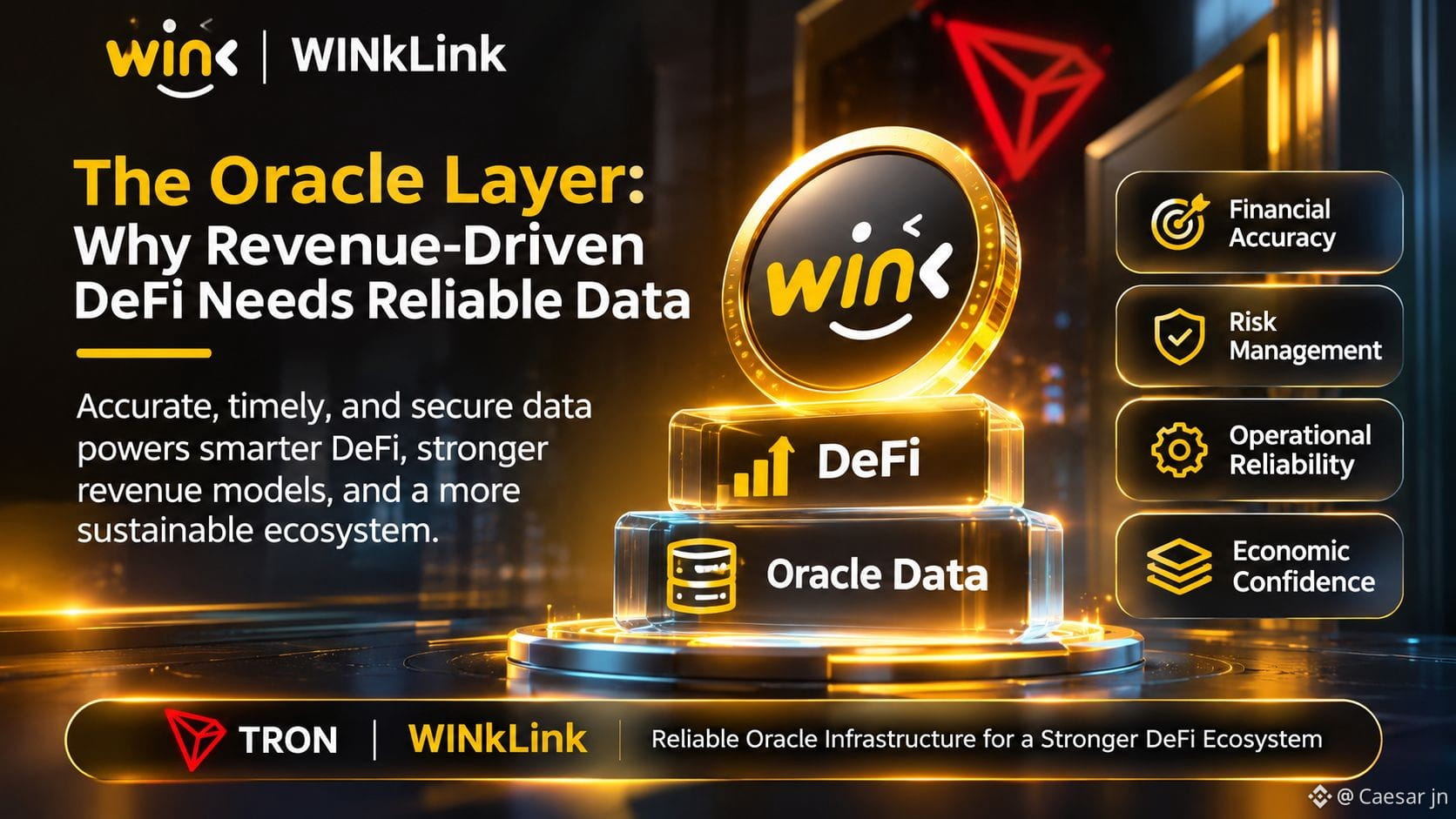
There are four important areas where reliable data makes a difference:
🔹 Financial Accuracy: Applications need dependable external information to support their financial calculations.
🔹 Risk Management: Timely price feeds help protocols evaluate changing market conditions.
🔹 Operational Reliability: Consistent data delivery supports smart contracts that depend on external information.
🔹 Economic Confidence: Reliable infrastructure helps developers build applications that users can interact with more confidently.
WINkLink operates within this essential infrastructure layer of the TRON ecosystem.
Its role in connecting external information with blockchain applications makes oracle technology relevant to the broader development of DeFi.
But there is a bigger strategic connection worth understanding.
As decentralized finance becomes more focused on real utility and sustainable revenue, infrastructure providers also have an opportunity to demonstrate their importance through actual developer adoption and service demand.
The future of DeFi will not be determined by financial incentives
@WINkLink_Official @JustinSun #TRONEcoStar
𝗧𝗵𝗲 𝗢𝗿𝗮𝗰𝗹𝗲 𝗟𝗮𝘆𝗲𝗿: 𝗪𝗵𝘆 𝗥𝗲𝘃𝗲𝗻𝘂𝗲-𝗗𝗿𝗶𝘃𝗲𝗻 𝗗𝗲𝗙𝗶 𝗡𝗲𝗲𝗱𝘀 𝗥𝗲𝗹𝗶𝗮𝗯𝗹𝗲 𝗗𝗮𝘁𝗮
As DeFi evolves towards stronger economic models, one important component deserves more attention: the quality of information powering decentralized financial applications.
Revenue generation, token buybacks, and sustainable protocol economics are important conversations. But none of these developments removes the need for dependable infrastructure underneath.
Consider a decentralized lending protocol.
It needs accurate market prices to evaluate collateral, calculate borrowing positions, and execute liquidation mechanisms when predefined conditions are reached.
If the information feeding these operations is unreliable, the entire financial process can be affected.
This is why oracle infrastructure matters.
There are four important areas where reliable data makes a difference:
🔹 Financial Accuracy: Applications need dependable external information to support their financial calculations.
🔹 Risk Management: Timely price feeds help protocols evaluate changing market conditions.
🔹 Operational Reliability: Consistent data delivery supports smart contracts that depend on external information.
🔹 Economic Confidence: Reliable infrastructure helps developers build applications that users can interact with more confidently.
WINkLink operates within this essential infrastructure layer of the TRON ecosystem.
Its role in connecting external information with blockchain applications makes oracle technology relevant to the broader development of DeFi.
But there is a bigger strategic connection worth understanding.
As decentralized finance becomes more focused on real utility and sustainable revenue, infrastructure providers also have an opportunity to demonstrate their importance through actual developer adoption and service demand.
The future of DeFi will not be determined by financial incentives
@WINkLink_Official @Justin Sun孙宇晨 #TRONEcoStar
1
142
·
--
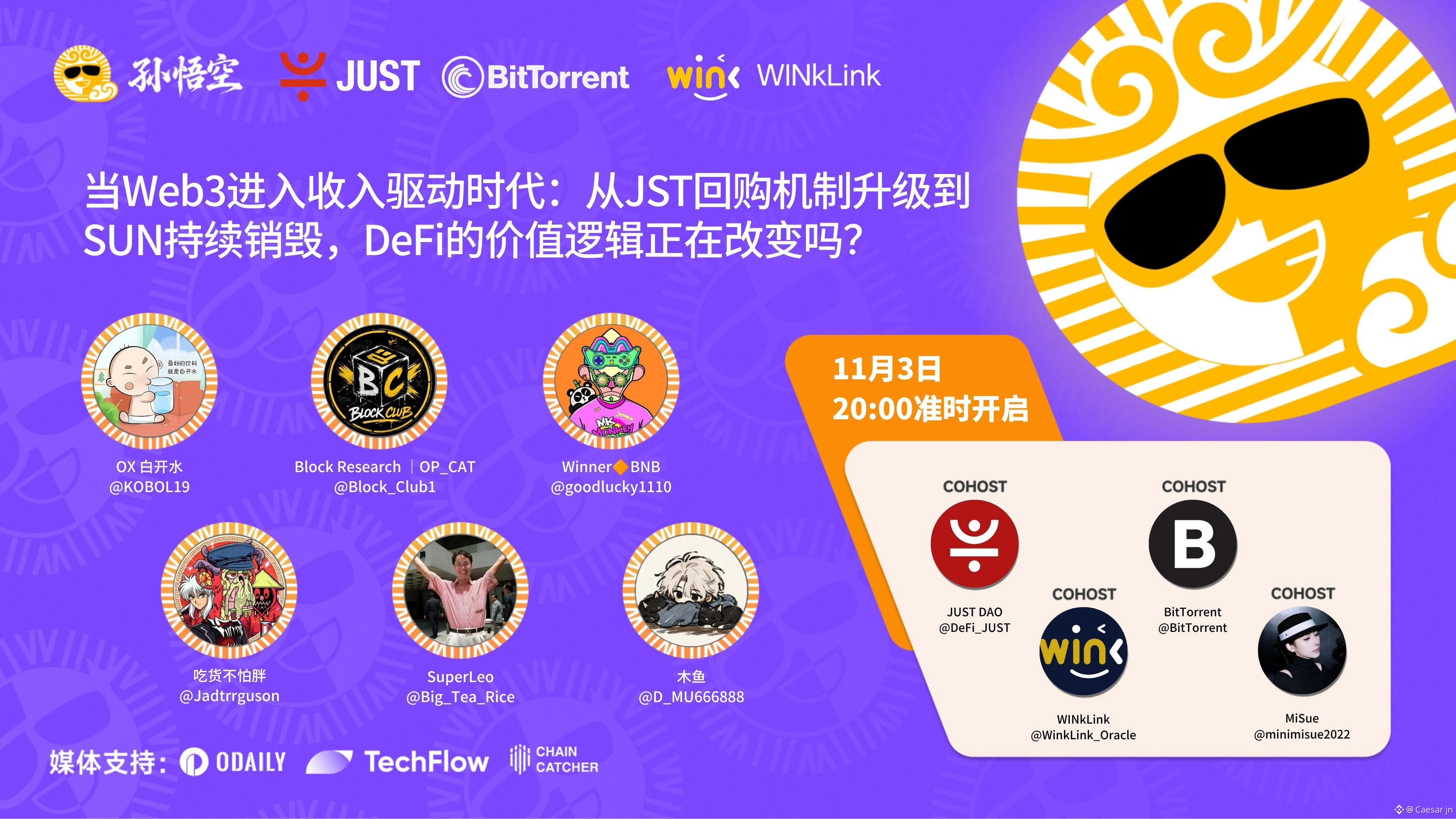
𝗗𝗲𝗙𝗶'𝘀 𝗡𝗲𝘅𝘁 𝗘𝘃𝗼𝗹𝘂𝘁𝗶𝗼𝗻: 𝗙𝗿𝗼𝗺 𝗧𝗼𝗸𝗲𝗻 𝗘𝘅𝗰𝗶𝘁𝗲𝗺𝗲𝗻𝘁 𝗧𝗼 𝗥𝗲𝗮𝗹 𝗘𝗰𝗼𝗻𝗼𝗺𝗶𝗰 𝗩𝗮𝗹𝘂𝗲
The DeFi industry is entering an important stage of maturity.
For years, much of the conversation around decentralized finance revolved around token prices, liquidity incentives, staking rewards, and market speculation.
But a more fundamental question is becoming increasingly important:
How does a DeFi ecosystem create sustainable economic value beyond token market activity?
This question deserves attention because the long-term strength of decentralized finance cannot depend entirely on speculation.
It must be supported by useful products, real economic activity, sustainable revenue, and infrastructure capable of serving growing demand.
Consider four important pillars of this transition.
1. Real Utility Must Come First
Decentralized applications need to solve meaningful problems. Lending, trading, payments, data services, and other financial activities provide the foundation for a functioning ecosystem.
2. Revenue Creates Another Economic Dimension
Protocol revenue introduces a way to evaluate business activity beyond token market capitalization. It helps communities examine whether products and services are generating measurable economic activity.
3. Tokenomics Must Connect With Execution
Buybacks and burns can introduce mechanisms for managing token supply. However, their long-term significance depends on sustainable funding, transparent execution, and genuine ecosystem demand.
4. Infrastructure Makes Everything Possible
Behind financial applications are essential services such as blockchain networks, oracle providers, liquidity systems, and developer tools.
This is where WINkLink deserves attention.
DeFi applications need dependable external information to support their operations. Oracle infrastructure connects blockchain environments
@WINkLink_Official @JustinSun @SunPump_meme #TRONEcoStar
𝗗𝗲𝗙𝗶'𝘀 𝗡𝗲𝘅𝘁 𝗘𝘃𝗼𝗹𝘂𝘁𝗶𝗼𝗻: 𝗙𝗿𝗼𝗺 𝗧𝗼𝗸𝗲𝗻 𝗘𝘅𝗰𝗶𝘁𝗲𝗺𝗲𝗻𝘁 𝗧𝗼 𝗥𝗲𝗮𝗹 𝗘𝗰𝗼𝗻𝗼𝗺𝗶𝗰 𝗩𝗮𝗹𝘂𝗲
The DeFi industry is entering an important stage of maturity.
For years, much of the conversation around decentralized finance revolved around token prices, liquidity incentives, staking rewards, and market speculation.
But a more fundamental question is becoming increasingly important:
How does a DeFi ecosystem create sustainable economic value beyond token market activity?
This question deserves attention because the long-term strength of decentralized finance cannot depend entirely on speculation.
It must be supported by useful products, real economic activity, sustainable revenue, and infrastructure capable of serving growing demand.
Consider four important pillars of this transition.
1. Real Utility Must Come First
Decentralized applications need to solve meaningful problems. Lending, trading, payments, data services, and other financial activities provide the foundation for a functioning ecosystem.
2. Revenue Creates Another Economic Dimension
Protocol revenue introduces a way to evaluate business activity beyond token market capitalization. It helps communities examine whether products and services are generating measurable economic activity.
3. Tokenomics Must Connect With Execution
Buybacks and burns can introduce mechanisms for managing token supply. However, their long-term significance depends on sustainable funding, transparent execution, and genuine ecosystem demand.
4. Infrastructure Makes Everything Possible
Behind financial applications are essential services such as blockchain networks, oracle providers, liquidity systems, and developer tools.
This is where WINkLink deserves attention.
DeFi applications need dependable external information to support their operations. Oracle infrastructure connects blockchain environments
@WINkLink_Official @Justin Sun孙宇晨 @OfficialSUNio #TRONEcoStar
1
·
--
𝗪𝗜𝗡𝗸𝗟𝗶𝗻𝗸: 𝗧𝗵𝗲 𝗥𝗲𝗮𝗹 𝗧𝗲𝘀𝘁 𝗢𝗳 𝗔 𝗪𝗲𝗯𝟯 𝗣𝗿𝗼𝗷𝗲𝗰𝘁 𝗜𝘀 𝗟𝗼𝗻𝗴-𝗧𝗲𝗿𝗺 𝗨𝘁𝗶𝗹𝗶𝘁𝘆
In Web3, attention can be generated through announcements, campaigns, and token incentives.
But maintaining relevance requires something much more difficult: delivering value consistently.
This is an important way to look at WINkLink and its position within the TRON ecosystem.
Oracle infrastructure may not always receive the same attention as decentralized exchanges, lending platforms, or popular tokens, but it supports something fundamental to blockchain applications: access to external information.
Consider what happens when a decentralized application needs market prices, external data, or information from outside its blockchain.
It requires a dependable connection between that information and its smart contracts.
That is the role oracle infrastructure helps fulfil.
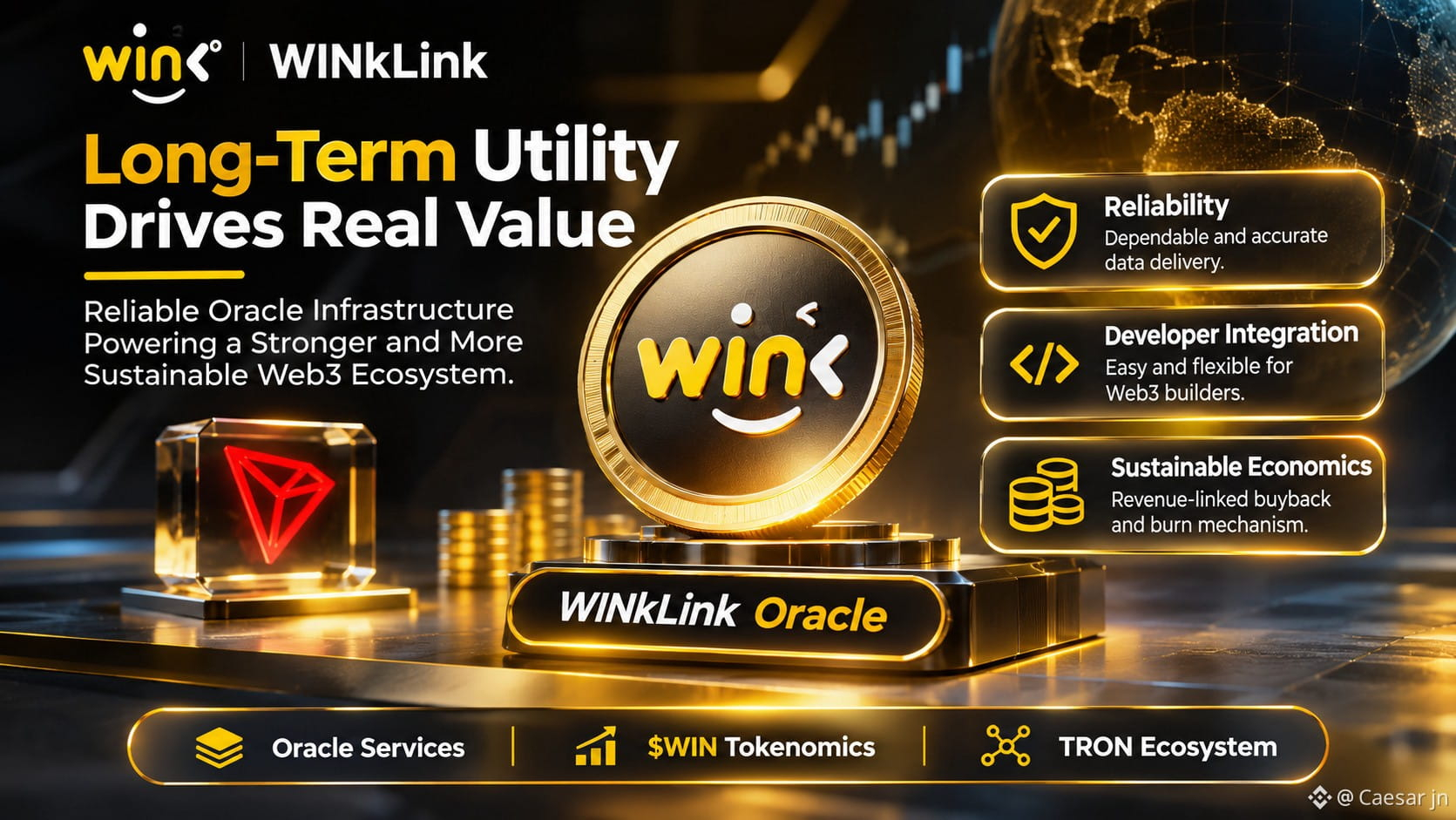
Three factors will matter for long-term oracle adoption:
🔹 Reliability: Applications need dependable data delivery to operate effectively.
🔹 Developer Integration: Oracle services become more valuable when developers can incorporate them into useful applications.
🔹 Sustainable Economics: A viable business model must support continued infrastructure development and service delivery.
WINkLink's oracle services and its revenue-linked $WIN buyback and burn initiative create two connected areas worth monitoring.
One focuses on infrastructure and data delivery. The other introduces a mechanism connecting service revenue with token supply reduction.
However, neither should be evaluated in isolation.
The real measure of progress will be whether oracle adoption grows, services generate sustainable revenue, and the tokenomics mechanism continues to execute transparently.
This is where long-term ecosystem development becomes more meaningful than short-term attention.
A project becomes valuable when people have a reason to keep
@WINkLink_Official @JustinSun #TRONEcoStar
𝗪𝗜𝗡𝗸𝗟𝗶𝗻𝗸: 𝗧𝗵𝗲 𝗥𝗲𝗮𝗹 𝗧𝗲𝘀𝘁 𝗢𝗳 𝗔 𝗪𝗲𝗯𝟯 𝗣𝗿𝗼𝗷𝗲𝗰𝘁 𝗜𝘀 𝗟𝗼𝗻𝗴-𝗧𝗲𝗿𝗺 𝗨𝘁𝗶𝗹𝗶𝘁𝘆
In Web3, attention can be generated through announcements, campaigns, and token incentives.
But maintaining relevance requires something much more difficult: delivering value consistently.
This is an important way to look at WINkLink and its position within the TRON ecosystem.
Oracle infrastructure may not always receive the same attention as decentralized exchanges, lending platforms, or popular tokens, but it supports something fundamental to blockchain applications: access to external information.
Consider what happens when a decentralized application needs market prices, external data, or information from outside its blockchain.
It requires a dependable connection between that information and its smart contracts.
That is the role oracle infrastructure helps fulfil.
Three factors will matter for long-term oracle adoption:
🔹 Reliability: Applications need dependable data delivery to operate effectively.
🔹 Developer Integration: Oracle services become more valuable when developers can incorporate them into useful applications.
🔹 Sustainable Economics: A viable business model must support continued infrastructure development and service delivery.
WINkLink's oracle services and its revenue-linked $WIN buyback and burn initiative create two connected areas worth monitoring.
One focuses on infrastructure and data delivery. The other introduces a mechanism connecting service revenue with token supply reduction.
However, neither should be evaluated in isolation.
The real measure of progress will be whether oracle adoption grows, services generate sustainable revenue, and the tokenomics mechanism continues to execute transparently.
This is where long-term ecosystem development becomes more meaningful than short-term attention.
A project becomes valuable when people have a reason to keep
@WINkLink_Official @Justin Sun孙宇晨 #TRONEcoStar
55
·
--
𝗪𝗜𝗡𝗸𝗟𝗶𝗻𝗸: 𝗪𝗵𝘆 𝗥𝗲𝘃𝗲𝗻𝘂𝗲-𝗕𝗮𝗰𝗸𝗲𝗱 𝗧𝗼𝗸𝗲𝗻𝗼𝗺𝗶𝗰𝘀 𝗗𝗲𝘀𝗲𝗿𝘃𝗲𝘀 𝗠𝗼𝗿𝗲 𝗔𝘁𝘁𝗲𝗻𝘁𝗶𝗼𝗻
One of the biggest questions in Web3 is how blockchain projects can create sustainable economic models around their native tokens.
For too long, tokenomics discussions have focused heavily on supply, emissions, and speculative demand while giving less attention to the revenue generated by actual products and services.
A more interesting approach is connecting ecosystem activity with transparent economic mechanisms.
WINkLink's $WIN buyback and burn program brings this conversation into focus.
By allocating revenue from oracle services toward quarterly token buybacks and burns, the initiative introduces a direct relationship between service-generated revenue and token supply management.
Why is this model worth examining?
🔹 Product-Driven Economics: Oracle services provide the underlying business activity that can support the buyback mechanism.
🔹 Supply Management: Burning purchased tokens permanently removes them from circulation.
🔹 Transparency: On-chain records make it possible for the community to examine completed transactions.
🔹 Long-Term Perspective: A recurring mechanism places emphasis on continued execution rather than one-time announcements.
However, an important distinction must remain clear: a decreasing token supply does not automatically create increasing token value.
Sustainable demand, genuine product adoption, service revenue, liquidity, and consistent execution still matter.
That is why the underlying oracle business is just as important as the tokenomics mechanism itself.
WINkLink's opportunity is not simply to reduce $WIN supply. It is to continue developing useful oracle services while maintaining a transparent relationship between business activity and its token economy.
This is a more meaningful way to evaluate long-term progress.
The strongest
@WINkLink_Official @JustinSun #TRONEcoStar
𝗪𝗜𝗡𝗸𝗟𝗶𝗻𝗸: 𝗪𝗵𝘆 𝗥𝗲𝘃𝗲𝗻𝘂𝗲-𝗕𝗮𝗰𝗸𝗲𝗱 𝗧𝗼𝗸𝗲𝗻𝗼𝗺𝗶𝗰𝘀 𝗗𝗲𝘀𝗲𝗿𝘃𝗲𝘀 𝗠𝗼𝗿𝗲 𝗔𝘁𝘁𝗲𝗻𝘁𝗶𝗼𝗻
One of the biggest questions in Web3 is how blockchain projects can create sustainable economic models around their native tokens.
For too long, tokenomics discussions have focused heavily on supply, emissions, and speculative demand while giving less attention to the revenue generated by actual products and services.
A more interesting approach is connecting ecosystem activity with transparent economic mechanisms.
WINkLink's $WIN buyback and burn program brings this conversation into focus.
By allocating revenue from oracle services toward quarterly token buybacks and burns, the initiative introduces a direct relationship between service-generated revenue and token supply management.
Why is this model worth examining?
🔹 Product-Driven Economics: Oracle services provide the underlying business activity that can support the buyback mechanism.
🔹 Supply Management: Burning purchased tokens permanently removes them from circulation.
🔹 Transparency: On-chain records make it possible for the community to examine completed transactions.
🔹 Long-Term Perspective: A recurring mechanism places emphasis on continued execution rather than one-time announcements.
However, an important distinction must remain clear: a decreasing token supply does not automatically create increasing token value.
Sustainable demand, genuine product adoption, service revenue, liquidity, and consistent execution still matter.
That is why the underlying oracle business is just as important as the tokenomics mechanism itself.
WINkLink's opportunity is not simply to reduce $WIN supply. It is to continue developing useful oracle services while maintaining a transparent relationship between business activity and its token economy.
This is a more meaningful way to evaluate long-term progress.
The strongest
@WINkLink_Official @Justin Sun孙宇晨 #TRONEcoStar
35
·
--
𝗪𝗜𝗡𝗸𝗟𝗶𝗻𝗸: 𝗙𝗿𝗼𝗺 𝗧𝗼𝗸𝗲𝗻𝗼𝗺𝗶𝗰𝘀 𝗧𝗼 𝗘𝘅𝗲𝗰𝘂𝘁𝗶𝗼𝗻 — 𝗧𝗵𝗲 𝗩𝗮𝗹𝘂𝗲 𝗢𝗳 𝗔𝗰𝘁𝗶𝗼𝗻
In the blockchain industry, announcing a token buyback program is one thing. Actually executing it, recording the activity on-chain, and permanently reducing token supply is another.
That distinction matters.
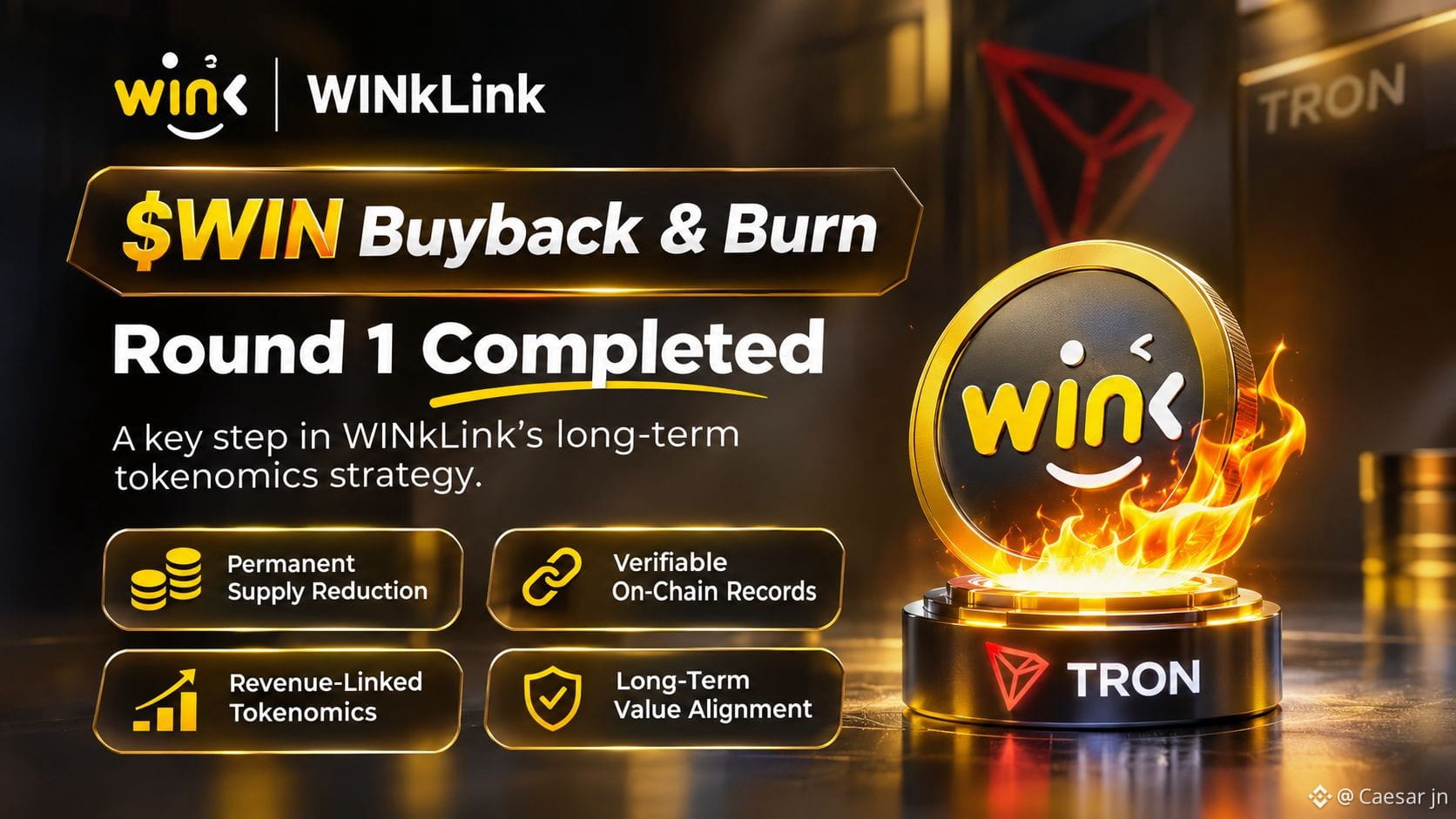
WINkLink has completed Round 1 of its $WIN buyback and burn program, marking an important step in turning its tokenomics strategy into measurable execution.
But the bigger conversation goes beyond the completion of one round.
Why Does Buyback And Burn Execution Matter?
🔹 Permanent Supply Reduction: Burning tokens removes them from circulation permanently, reducing the existing token supply.
🔹 Verifiable Transparency: On-chain records allow the community to independently examine transactions and verify that the mechanism has been executed.
🔹 Revenue-Linked Tokenomics: WINkLink's buyback initiative connects revenue generated by its oracle services with a structured token buyback and burn mechanism.
🔹 Long-Term Alignment: A clearly executed mechanism creates a more transparent relationship between project activity and its token economics.
There is an important distinction worth understanding: reducing token supply does not automatically guarantee price appreciation. Market demand, utility, liquidity, revenue generation, and broader market conditions remain important factors.
What makes this development particularly interesting is the emphasis on execution.
The wider TRON ecosystem is also demonstrating how buyback and burn mechanisms are becoming part of its economic strategy. The accompanying TRON ECO Deflation Report highlights more than $30.90 million in cumulative buyback and burn value across the ecosystem.
That figure represents the broader ecosystem, not WINkLink alone.
For WINkLink, the next important measure will be consistency: continued oracle adoption,
👇
@WINkLink_Official @JustinSun #TRONEcoStar
𝗪𝗜𝗡𝗸𝗟𝗶𝗻𝗸: 𝗙𝗿𝗼𝗺 𝗧𝗼𝗸𝗲𝗻𝗼𝗺𝗶𝗰𝘀 𝗧𝗼 𝗘𝘅𝗲𝗰𝘂𝘁𝗶𝗼𝗻 — 𝗧𝗵𝗲 𝗩𝗮𝗹𝘂𝗲 𝗢𝗳 𝗔𝗰𝘁𝗶𝗼𝗻
In the blockchain industry, announcing a token buyback program is one thing. Actually executing it, recording the activity on-chain, and permanently reducing token supply is another.
That distinction matters.
WINkLink has completed Round 1 of its $WIN buyback and burn program, marking an important step in turning its tokenomics strategy into measurable execution.
But the bigger conversation goes beyond the completion of one round.
Why Does Buyback And Burn Execution Matter?
🔹 Permanent Supply Reduction: Burning tokens removes them from circulation permanently, reducing the existing token supply.
🔹 Verifiable Transparency: On-chain records allow the community to independently examine transactions and verify that the mechanism has been executed.
🔹 Revenue-Linked Tokenomics: WINkLink's buyback initiative connects revenue generated by its oracle services with a structured token buyback and burn mechanism.
🔹 Long-Term Alignment: A clearly executed mechanism creates a more transparent relationship between project activity and its token economics.
There is an important distinction worth understanding: reducing token supply does not automatically guarantee price appreciation. Market demand, utility, liquidity, revenue generation, and broader market conditions remain important factors.
What makes this development particularly interesting is the emphasis on execution.
The wider TRON ecosystem is also demonstrating how buyback and burn mechanisms are becoming part of its economic strategy. The accompanying TRON ECO Deflation Report highlights more than $30.90 million in cumulative buyback and burn value across the ecosystem.
That figure represents the broader ecosystem, not WINkLink alone.
For WINkLink, the next important measure will be consistency: continued oracle adoption,
👇
@WINkLink_Official @Justin Sun孙宇晨 #TRONEcoStar
1
1
89
·
--
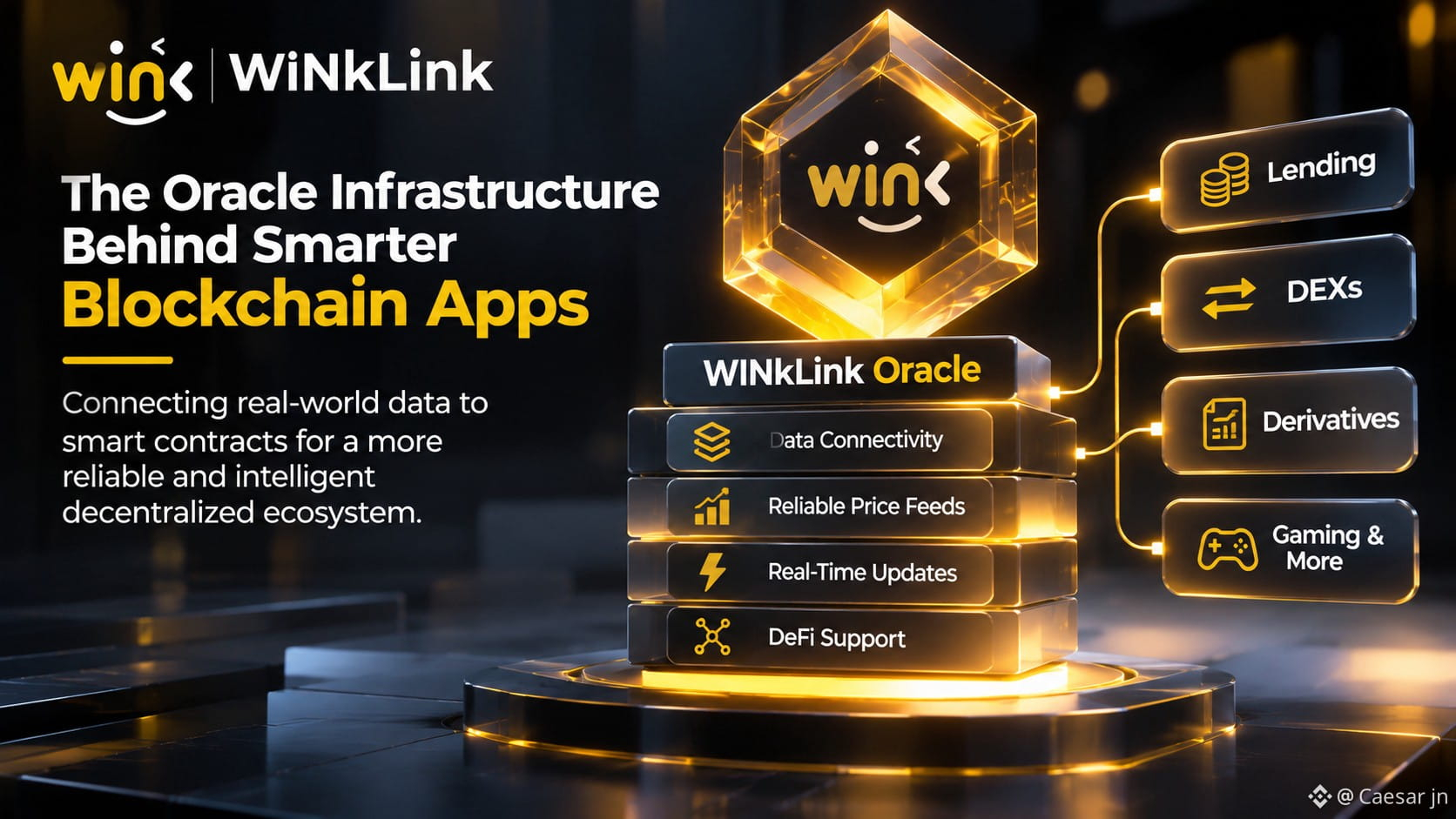
𝗪𝗜𝗡𝗸𝗟𝗶𝗻𝗸: 𝗧𝗵𝗲 𝗛𝗶𝗱𝗱𝗲𝗻 𝗜𝗻𝗳𝗿𝗮𝘀𝘁𝗿𝘂𝗰𝘁𝘂𝗿𝗲 𝗕𝗲𝗵𝗶𝗻𝗱 𝗦𝗺𝗮𝗿𝘁𝗲𝗿 𝗕𝗹𝗼𝗰𝗸𝗰𝗵𝗮𝗶𝗻 𝗔𝗽𝗽𝘀
When people discuss blockchain innovation, attention usually goes to tokens, decentralized applications, and smart contracts.
But there is another layer that deserves just as much attention: the infrastructure supplying those applications with reliable external information.
Without dependable data, even a sophisticated smart contract has limitations.
Consider a decentralized lending protocol. It needs accurate asset prices to assess collateral, monitor market conditions, and determine when predefined liquidation conditions are met.
A decentralized exchange may also depend on external price information for certain operations.
These systems cannot afford to treat data quality as an afterthought.
This is where oracle infrastructure creates value.
🔹 Data Connectivity: Oracles bridge blockchain environments with information from external sources.
🔹 Application Intelligence: Reliable external inputs allow smart contracts to respond to conditions beyond their own blockchain.
🔹 Financial Utility: Price feeds support important mechanisms across lending, derivatives, and other DeFi applications.
🔹 Developer Opportunities: Dependable oracle services give developers more flexibility when designing data-driven blockchain products.
For WINkLink, this represents an important position within the TRON ecosystem.
Its relevance is connected to a fundamental requirement of decentralized applications: the ability to access external information through dependable oracle infrastructure.
However, the quality of an oracle solution must be judged through accuracy, security, availability, data freshness, and resilience.
These factors matter because every application built on external information inherits some level of dependence on that information.
As blockchain applications
@WINkLink_Official @JustinSun #TRONEcoStar
𝗪𝗜𝗡𝗸𝗟𝗶𝗻𝗸: 𝗧𝗵𝗲 𝗛𝗶𝗱𝗱𝗲𝗻 𝗜𝗻𝗳𝗿𝗮𝘀𝘁𝗿𝘂𝗰𝘁𝘂𝗿𝗲 𝗕𝗲𝗵𝗶𝗻𝗱 𝗦𝗺𝗮𝗿𝘁𝗲𝗿 𝗕𝗹𝗼𝗰𝗸𝗰𝗵𝗮𝗶𝗻 𝗔𝗽𝗽𝘀
When people discuss blockchain innovation, attention usually goes to tokens, decentralized applications, and smart contracts.
But there is another layer that deserves just as much attention: the infrastructure supplying those applications with reliable external information.
Without dependable data, even a sophisticated smart contract has limitations.
Consider a decentralized lending protocol. It needs accurate asset prices to assess collateral, monitor market conditions, and determine when predefined liquidation conditions are met.
A decentralized exchange may also depend on external price information for certain operations.
These systems cannot afford to treat data quality as an afterthought.
This is where oracle infrastructure creates value.
🔹 Data Connectivity: Oracles bridge blockchain environments with information from external sources.
🔹 Application Intelligence: Reliable external inputs allow smart contracts to respond to conditions beyond their own blockchain.
🔹 Financial Utility: Price feeds support important mechanisms across lending, derivatives, and other DeFi applications.
🔹 Developer Opportunities: Dependable oracle services give developers more flexibility when designing data-driven blockchain products.
For WINkLink, this represents an important position within the TRON ecosystem.
Its relevance is connected to a fundamental requirement of decentralized applications: the ability to access external information through dependable oracle infrastructure.
However, the quality of an oracle solution must be judged through accuracy, security, availability, data freshness, and resilience.
These factors matter because every application built on external information inherits some level of dependence on that information.
As blockchain applications
@WINkLink_Official @Justin Sun孙宇晨 #TRONEcoStar
1
43
·
--
𝗪𝗜𝗡𝗸𝗟𝗶𝗻𝗸: 𝗪𝗵𝘆 𝗗𝗮𝘁𝗮 𝗙𝗿𝗲𝘀𝗵𝗻𝗲𝘀𝘀 𝗖𝗼𝘂𝗹𝗱 𝗕𝗲 𝗗𝗲𝗙𝗶'𝘀 𝗠𝗼𝘀𝘁 𝗢𝘃𝗲𝗿𝗹𝗼𝗼𝗸𝗲𝗱 𝗔𝗱𝘃𝗮𝗻𝘁𝗮𝗴𝗲
In decentralized finance, accuracy is important. But accuracy without freshness can still create problems.
Imagine a lending protocol relying on a price that was correct five minutes ago but no longer reflects current market conditions.
The number might look legitimate, yet the market may have already moved.
This highlights an important part of oracle infrastructure: data freshness.
Why does it matter?
🔹 Price-Sensitive Decisions: DeFi protocols use external market information to support collateral valuation, liquidations, and other financial operations.
🔹 Market Responsiveness: Timely data helps applications respond to changing market conditions instead of relying on outdated information.
🔹 Risk Awareness: Stale information can create inaccurate valuations and increase exposure to unexpected market movements.
🔹 Smarter Smart Contracts: Reliable timestamps and freshness checks help developers establish conditions for accepting external data.
This is why oracle infrastructure should be evaluated beyond whether it can deliver a price feed.
How frequently is the information updated? How is data validity assessed? What happens when an update becomes outdated?
These are important questions for any application depending on external information.
WINkLink operates in this critical layer between external data sources and blockchain applications.
As DeFi becomes more sophisticated, dependable oracle infrastructure will remain essential to building applications that can respond to real-world conditions.
Of course, freshness must work alongside accuracy, security, and reliability. Faster updates alone do not guarantee better data.
In DeFi, yesterday's accurate information can become today's risk.
@WINkLink_Official @JustinSun #TRONEcoStar
𝗪𝗜𝗡𝗸𝗟𝗶𝗻𝗸: 𝗪𝗵𝘆 𝗗𝗮𝘁𝗮 𝗙𝗿𝗲𝘀𝗵𝗻𝗲𝘀𝘀 𝗖𝗼𝘂𝗹𝗱 𝗕𝗲 𝗗𝗲𝗙𝗶'𝘀 𝗠𝗼𝘀𝘁 𝗢𝘃𝗲𝗿𝗹𝗼𝗼𝗸𝗲𝗱 𝗔𝗱𝘃𝗮𝗻𝘁𝗮𝗴𝗲
In decentralized finance, accuracy is important. But accuracy without freshness can still create problems.
Imagine a lending protocol relying on a price that was correct five minutes ago but no longer reflects current market conditions.
The number might look legitimate, yet the market may have already moved.
This highlights an important part of oracle infrastructure: data freshness.
Why does it matter?
🔹 Price-Sensitive Decisions: DeFi protocols use external market information to support collateral valuation, liquidations, and other financial operations.
🔹 Market Responsiveness: Timely data helps applications respond to changing market conditions instead of relying on outdated information.
🔹 Risk Awareness: Stale information can create inaccurate valuations and increase exposure to unexpected market movements.
🔹 Smarter Smart Contracts: Reliable timestamps and freshness checks help developers establish conditions for accepting external data.
This is why oracle infrastructure should be evaluated beyond whether it can deliver a price feed.
How frequently is the information updated? How is data validity assessed? What happens when an update becomes outdated?
These are important questions for any application depending on external information.
WINkLink operates in this critical layer between external data sources and blockchain applications.
As DeFi becomes more sophisticated, dependable oracle infrastructure will remain essential to building applications that can respond to real-world conditions.
Of course, freshness must work alongside accuracy, security, and reliability. Faster updates alone do not guarantee better data.
In DeFi, yesterday's accurate information can become today's risk.
@WINkLink_Official @Justin Sun孙宇晨 #TRONEcoStar
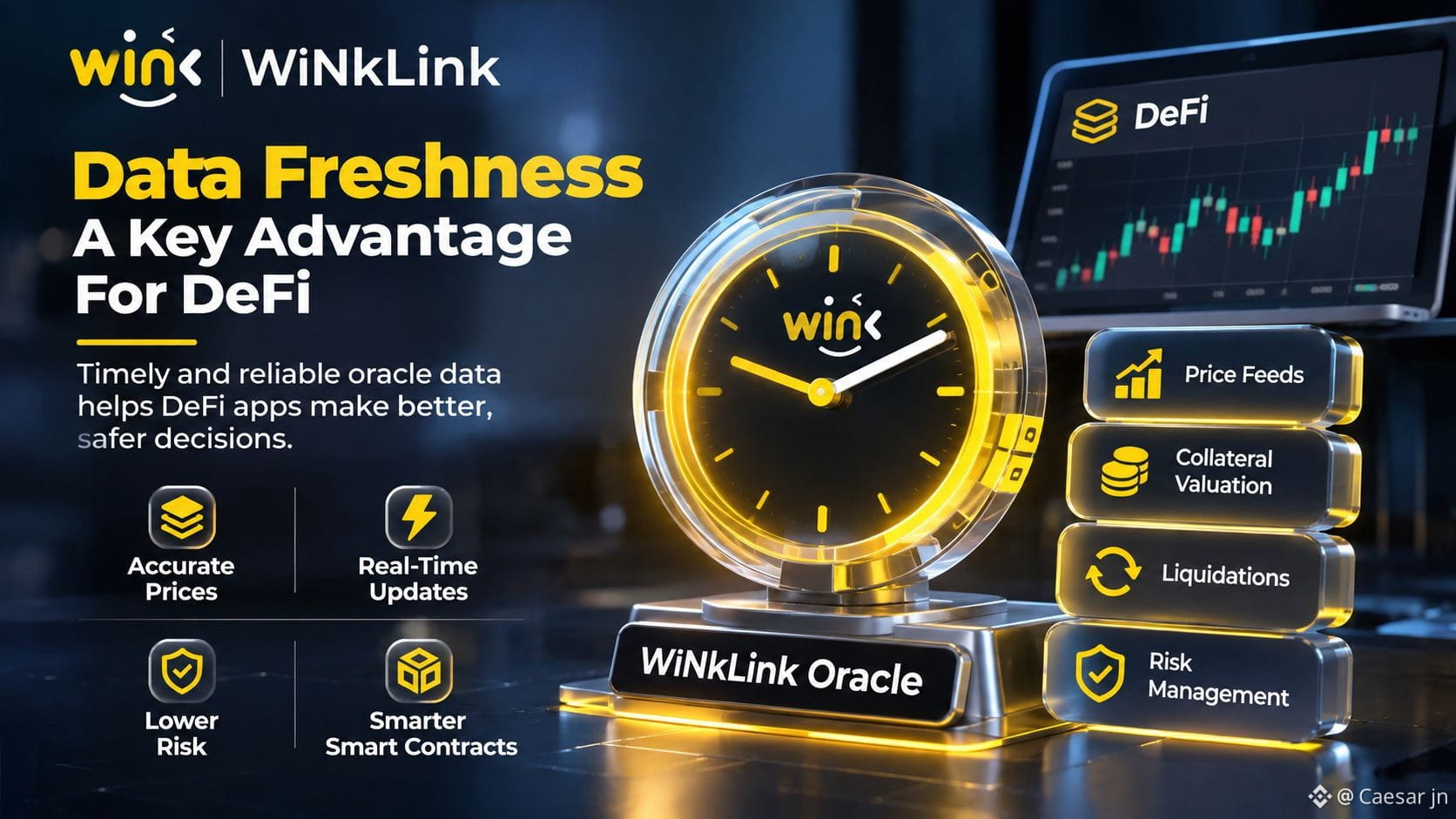
1
35
Log in to explore more content
Join global crypto users on Binance Square
⚡️ Get latest and useful information about crypto.
💬 Trusted by the world’s largest crypto exchange.
👍 Discover real insights from verified creators.
Email / Phone number
Trending Topics
BinanceWithdrawalScamWarning
22,955 views
511 Discussing
Binance Warns Users of Withdrawal Scams as Services Resume: It Will Never Charge Fees, Sell Queue Spots or Ask You to Move Funds to a “Vault”
Binance News
·10 Likes
·6.6k views
USMidtermElections
578,829 views
3,095 Discussing
USOctoberNFP-AreRateCutsStillPossible
31,404 views
453 Discussing