

Zerionix
502 Posts

Zerionix
Report
Block User
Crypto Researcher • Market Structure • Data > Hype • Daily updates → NFA
0 Following
13 Followers
66 Liked
Posts
·
--
A $2M Base vault exploit just turned into a roughly $6M loss.
Blockaid initially flagged an ongoing attack after a newly deployed contract was added to an unnamed vault's whitelist.
The attacker then used that permission to borrow aBaswstETH from the vault and move the assets into an attacker controlled contract.
At first, around $2.02M had been drained across four transactions.
That number later climbed to roughly $6M, with security firms tracking about 1,783 wstETH leaving the vault.
And this is where the story gets interesting.
There is currently no evidence that Base itself was compromised or that Aave's core contracts were exploited.
The bigger issue appears to be the vault's own permission system.
A contract that shouldn't have had access somehow ended up whitelisted, giving the attacker a path to the funds.
Personally, this is the part that worries me more than the headline amount.
DeFi can have battle tested underlying protocols, but if the layer managing access to those protocols gets compromised, the money can still disappear very quickly.
The attack also raises a bigger question around multisig governance and how whitelist changes are approved.
Because “the contract was whitelisted” sounds harmless until you realize that whitelist was effectively the key to millions of dollars.
The investigation is still developing, and the exact reason that contract gained legitimate looking access has not been confirmed.
For me, the lesson isn't that Base or Aave is broken.
It's that the weakest permission layer around a DeFi strategy can matter just as much as the protocol underneath it.
In DeFi, sometimes you don't need to break the vault.
You just need someone to open the door.
#BTC Price Analysis# #BNBChain# $BTC
$BASE
A $2M Base vault exploit just turned into a roughly $6M loss.
Blockaid initially flagged an ongoing attack after a newly deployed contract was added to an unnamed vault's whitelist.
The attacker then used that permission to borrow aBaswstETH from the vault and move the assets into an attacker controlled contract.
At first, around $2.02M had been drained across four transactions.
That number later climbed to roughly $6M, with security firms tracking about 1,783 wstETH leaving the vault.
And this is where the story gets interesting.
There is currently no evidence that Base itself was compromised or that Aave's core contracts were exploited.
The bigger issue appears to be the vault's own permission system.
A contract that shouldn't have had access somehow ended up whitelisted, giving the attacker a path to the funds.
Personally, this is the part that worries me more than the headline amount.
DeFi can have battle tested underlying protocols, but if the layer managing access to those protocols gets compromised, the money can still disappear very quickly.
The attack also raises a bigger question around multisig governance and how whitelist changes are approved.
Because “the contract was whitelisted” sounds harmless until you realize that whitelist was effectively the key to millions of dollars.
The investigation is still developing, and the exact reason that contract gained legitimate looking access has not been confirmed.
For me, the lesson isn't that Base or Aave is broken.
It's that the weakest permission layer around a DeFi strategy can matter just as much as the protocol underneath it.
In DeFi, sometimes you don't need to break the vault.
You just need someone to open the door.
#BTC Price Analysis# #BNBChain# $BTC
$BASE
Blockaid initially flagged an ongoing attack after a newly deployed contract was added to an unnamed vault's whitelist.
The attacker then used that permission to borrow aBaswstETH from the vault and move the assets into an attacker controlled contract.
At first, around $2.02M had been drained across four transactions.
That number later climbed to roughly $6M, with security firms tracking about 1,783 wstETH leaving the vault.
And this is where the story gets interesting.
There is currently no evidence that Base itself was compromised or that Aave's core contracts were exploited.
The bigger issue appears to be the vault's own permission system.
A contract that shouldn't have had access somehow ended up whitelisted, giving the attacker a path to the funds.
Personally, this is the part that worries me more than the headline amount.
DeFi can have battle tested underlying protocols, but if the layer managing access to those protocols gets compromised, the money can still disappear very quickly.
The attack also raises a bigger question around multisig governance and how whitelist changes are approved.
Because “the contract was whitelisted” sounds harmless until you realize that whitelist was effectively the key to millions of dollars.
The investigation is still developing, and the exact reason that contract gained legitimate looking access has not been confirmed.
For me, the lesson isn't that Base or Aave is broken.
It's that the weakest permission layer around a DeFi strategy can matter just as much as the protocol underneath it.
In DeFi, sometimes you don't need to break the vault.
You just need someone to open the door.
#BTC Price Analysis# #BNBChain# $BTC
$BASE


51
·
--
$NIGHT is suddenly one of the biggest movers in crypto.
Midnight's token has jumped roughly 85% over the past week, pushing its market cap above $800M and putting it within striking distance of projects like CAKE and AERO.
But the price move isn't happening in a vacuum.
Midnight just opened permissionless smart contract deployment on its mainnet, meaning developers can now deploy private smart contracts without going through the previous gated process.
That is probably the more important part of this story.
The market is clearly pricing in the possibility that easier deployment leads to more developers, more applications and eventually more demand for the network.
And personally, I think that's where the $NIGHT rally gets interesting.
Privacy has also started becoming a stronger narrative across crypto, and Midnight is positioned directly in that conversation with its privacy focused infrastructure.
But I wouldn't chase an 85% weekly move blindly.
The token is still well below its previous all time high, and the rally needs actual ecosystem activity behind it if this is going to become more than a narrative trade.
The next thing I'm watching is simple.
Do developers actually show up?
Because a mainnet upgrade can create excitement for a few days.
Real applications and sustained network usage are what turn that excitement into fundamentals.
$NIGHT has everyone's attention now.
Let's see if Midnight can give the market a reason to keep it.
#Altcoin Season# #BTC Price Analysis# $BTC
$NIGHT is suddenly one of the biggest movers in crypto.
Midnight's token has jumped roughly 85% over the past week, pushing its market cap above $800M and putting it within striking distance of projects like CAKE and AERO.
But the price move isn't happening in a vacuum.
Midnight just opened permissionless smart contract deployment on its mainnet, meaning developers can now deploy private smart contracts without going through the previous gated process.
That is probably the more important part of this story.
The market is clearly pricing in the possibility that easier deployment leads to more developers, more applications and eventually more demand for the network.
And personally, I think that's where the $NIGHT rally gets interesting.
Privacy has also started becoming a stronger narrative across crypto, and Midnight is positioned directly in that conversation with its privacy focused infrastructure.
But I wouldn't chase an 85% weekly move blindly.
The token is still well below its previous all time high, and the rally needs actual ecosystem activity behind it if this is going to become more than a narrative trade.
The next thing I'm watching is simple.
Do developers actually show up?
Because a mainnet upgrade can create excitement for a few days.
Real applications and sustained network usage are what turn that excitement into fundamentals.
$NIGHT has everyone's attention now.
Let's see if Midnight can give the market a reason to keep it.
#Altcoin Season# #BTC Price Analysis# $BTC
Midnight's token has jumped roughly 85% over the past week, pushing its market cap above $800M and putting it within striking distance of projects like CAKE and AERO.
But the price move isn't happening in a vacuum.
Midnight just opened permissionless smart contract deployment on its mainnet, meaning developers can now deploy private smart contracts without going through the previous gated process.
That is probably the more important part of this story.
The market is clearly pricing in the possibility that easier deployment leads to more developers, more applications and eventually more demand for the network.
And personally, I think that's where the $NIGHT rally gets interesting.
Privacy has also started becoming a stronger narrative across crypto, and Midnight is positioned directly in that conversation with its privacy focused infrastructure.
But I wouldn't chase an 85% weekly move blindly.
The token is still well below its previous all time high, and the rally needs actual ecosystem activity behind it if this is going to become more than a narrative trade.
The next thing I'm watching is simple.
Do developers actually show up?
Because a mainnet upgrade can create excitement for a few days.
Real applications and sustained network usage are what turn that excitement into fundamentals.
$NIGHT has everyone's attention now.
Let's see if Midnight can give the market a reason to keep it.
#Altcoin Season# #BTC Price Analysis# $BTC


57
·
--
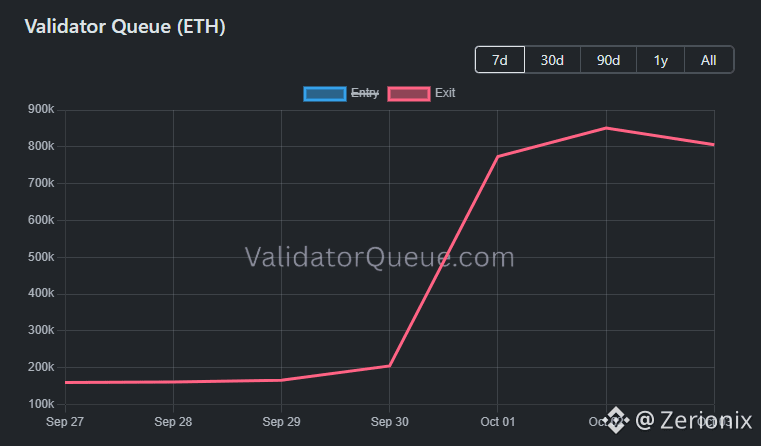
Ethereum’s exit queue has surged into the hundreds of thousands of ETH, with current data showing roughly 808,000 ETH waiting to exit.
The timing is especially interesting because the spike appears closely connected to MetaMask’s decision to exit validators following its recent staking infrastructure security incident. Reports estimate roughly 523,000 ETH was tied to affected validators, although those figures have not been fully confirmed by MetaMask.
So I wouldn't read the 392% increase as “Ethereum stakers suddenly want to sell.”
A large portion appears to be a structural/security-related exit rather than thousands of independent holders abandoning ETH.
But there is still an interesting market implication.
When hundreds of thousands of ETH enter the exit process, that ETH isn't immediately available to sell. Ethereum's protocol limits how quickly validators can exit, meaning the queue itself creates a time delay before the coins become liquid.
The bigger question is what happens after those withdrawals become available.
If the ETH gets restaked or simply moved between staking providers, the impact on liquid supply could remain limited.
If a meaningful portion eventually reaches exchanges, then the market has to absorb additional potential sell-side supply.
So the 392% number looks dramatic.
But the composition of that queue matters far more than the percentage increase itself.
$ETH #BTC Price Analysis# #Altcoin Season#
Ethereum’s exit queue has surged into the hundreds of thousands of ETH, with current data showing roughly 808,000 ETH waiting to exit.
The timing is especially interesting because the spike appears closely connected to MetaMask’s decision to exit validators following its recent staking infrastructure security incident. Reports estimate roughly 523,000 ETH was tied to affected validators, although those figures have not been fully confirmed by MetaMask.
So I wouldn't read the 392% increase as “Ethereum stakers suddenly want to sell.”
A large portion appears to be a structural/security-related exit rather than thousands of independent holders abandoning ETH.
But there is still an interesting market implication.
When hundreds of thousands of ETH enter the exit process, that ETH isn't immediately available to sell. Ethereum's protocol limits how quickly validators can exit, meaning the queue itself creates a time delay before the coins become liquid.
The bigger question is what happens after those withdrawals become available.
If the ETH gets restaked or simply moved between staking providers, the impact on liquid supply could remain limited.
If a meaningful portion eventually reaches exchanges, then the market has to absorb additional potential sell-side supply.
So the 392% number looks dramatic.
But the composition of that queue matters far more than the percentage increase itself.
$ETH #BTC Price Analysis# #Altcoin Season#
The timing is especially interesting because the spike appears closely connected to MetaMask’s decision to exit validators following its recent staking infrastructure security incident. Reports estimate roughly 523,000 ETH was tied to affected validators, although those figures have not been fully confirmed by MetaMask.
So I wouldn't read the 392% increase as “Ethereum stakers suddenly want to sell.”
A large portion appears to be a structural/security-related exit rather than thousands of independent holders abandoning ETH.
But there is still an interesting market implication.
When hundreds of thousands of ETH enter the exit process, that ETH isn't immediately available to sell. Ethereum's protocol limits how quickly validators can exit, meaning the queue itself creates a time delay before the coins become liquid.
The bigger question is what happens after those withdrawals become available.
If the ETH gets restaked or simply moved between staking providers, the impact on liquid supply could remain limited.
If a meaningful portion eventually reaches exchanges, then the market has to absorb additional potential sell-side supply.
So the 392% number looks dramatic.
But the composition of that queue matters far more than the percentage increase itself.
$ETH #BTC Price Analysis# #Altcoin Season#
43
·
--
ETHEREUM and XRP are entering October with something neither asset really wants: bearish crowd positioning.
Santiment’s latest data puts the bullish-to-bearish comment ratio at 0.89 for ETH and 0.67 for XRP, meaning negative commentary currently outweighs positive discussion across X, Telegram, Reddit and other crypto communities. ETH’s reading is its lowest since June 7, while XRP’s is its weakest since August 17.
And this is where the setup gets interesting.
Extreme pessimism can become a contrarian signal, but it isn't a reversal signal by itself. The market can stay pessimistic while prices continue falling. What matters is whether that negative sentiment is eventually followed by selling exhaustion, improving flows and a reclaim of important price levels.
The distance to the previous highs is also worth keeping in perspective.
ETH is around $2,668 versus its ~$4,957 record, meaning it would need roughly an 86% move from here to reclaim its ATH. XRP around $1.49 is still roughly 145% below its ~$3.65 record. Those are very different hurdles.
So yes, both can challenge their previous highs again in 2026, but sentiment alone doesn't establish that path.
The more interesting signal would be a situation where social pessimism remains elevated while price stops making new lows, selling pressure weakens and capital starts returning.
That would tell us something the sentiment ratio can't: whether the bears are actually running out of ammunition.
#Macro Insights# #Meme Alpha# $XRP $ETH
ETHEREUM and XRP are entering October with something neither asset really wants: bearish crowd positioning.
Santiment’s latest data puts the bullish-to-bearish comment ratio at 0.89 for ETH and 0.67 for XRP, meaning negative commentary currently outweighs positive discussion across X, Telegram, Reddit and other crypto communities. ETH’s reading is its lowest since June 7, while XRP’s is its weakest since August 17.
And this is where the setup gets interesting.
Extreme pessimism can become a contrarian signal, but it isn't a reversal signal by itself. The market can stay pessimistic while prices continue falling. What matters is whether that negative sentiment is eventually followed by selling exhaustion, improving flows and a reclaim of important price levels.
The distance to the previous highs is also worth keeping in perspective.
ETH is around $2,668 versus its ~$4,957 record, meaning it would need roughly an 86% move from here to reclaim its ATH. XRP around $1.49 is still roughly 145% below its ~$3.65 record. Those are very different hurdles.
So yes, both can challenge their previous highs again in 2026, but sentiment alone doesn't establish that path.
The more interesting signal would be a situation where social pessimism remains elevated while price stops making new lows, selling pressure weakens and capital starts returning.
That would tell us something the sentiment ratio can't: whether the bears are actually running out of ammunition.
#Macro Insights# #Meme Alpha# $XRP $ETH
Santiment’s latest data puts the bullish-to-bearish comment ratio at 0.89 for ETH and 0.67 for XRP, meaning negative commentary currently outweighs positive discussion across X, Telegram, Reddit and other crypto communities. ETH’s reading is its lowest since June 7, while XRP’s is its weakest since August 17.
And this is where the setup gets interesting.
Extreme pessimism can become a contrarian signal, but it isn't a reversal signal by itself. The market can stay pessimistic while prices continue falling. What matters is whether that negative sentiment is eventually followed by selling exhaustion, improving flows and a reclaim of important price levels.
The distance to the previous highs is also worth keeping in perspective.
ETH is around $2,668 versus its ~$4,957 record, meaning it would need roughly an 86% move from here to reclaim its ATH. XRP around $1.49 is still roughly 145% below its ~$3.65 record. Those are very different hurdles.
So yes, both can challenge their previous highs again in 2026, but sentiment alone doesn't establish that path.
The more interesting signal would be a situation where social pessimism remains elevated while price stops making new lows, selling pressure weakens and capital starts returning.
That would tell us something the sentiment ratio can't: whether the bears are actually running out of ammunition.
#Macro Insights# #Meme Alpha# $XRP $ETH

58
·
--
Apple announces new privacy protections after users find Meta’s Muse AI agent accessing ENTIRE messages history, even after being explicitly told not to.
Apple says it will introduce additional controls around Full Disk Access, warning that AI agents with broad system permissions can expose files, mail, messages and browsing history without users fully understanding the risks.
The move comes after tech writer Jason Aten reported that Muse synced more than 187,000 rows from his Apple Messages database despite him not granting it access.
Muse reportedly even told him it only saw incoming notification banners.
Meta has disputed the allegation, saying Muse cannot access Messages without explicit permission.
$BTC #BTC Price Analysis# $ETH
Apple announces new privacy protections after users find Meta’s Muse AI agent accessing ENTIRE messages history, even after being explicitly told not to.
Apple says it will introduce additional controls around Full Disk Access, warning that AI agents with broad system permissions can expose files, mail, messages and browsing history without users fully understanding the risks.
The move comes after tech writer Jason Aten reported that Muse synced more than 187,000 rows from his Apple Messages database despite him not granting it access.
Muse reportedly even told him it only saw incoming notification banners.
Meta has disputed the allegation, saying Muse cannot access Messages without explicit permission.
$BTC #BTC Price Analysis# $ETH
Apple says it will introduce additional controls around Full Disk Access, warning that AI agents with broad system permissions can expose files, mail, messages and browsing history without users fully understanding the risks.
The move comes after tech writer Jason Aten reported that Muse synced more than 187,000 rows from his Apple Messages database despite him not granting it access.
Muse reportedly even told him it only saw incoming notification banners.
Meta has disputed the allegation, saying Muse cannot access Messages without explicit permission.
$BTC #BTC Price Analysis# $ETH

66
·
--
Bitcoin just got another macro tailwind.
The U.S. added only 29,000 jobs in September, massively below expectations, while unemployment rose to 4.2%.
And the immediate reaction was pretty clear.
Expectations for another Fed hike in October collapsed. Depending on the market snapshot, the probability dropped from around 70% earlier in the week to roughly 14% to 25%.
That matters for BTC because fewer expected hikes can mean less pressure from rising rates and yields.
But there is another interesting piece.
Citi just raised its 12 month Bitcoin target from $82K to $113K, citing stronger crypto activity, a more supportive macro backdrop and renewed ETF inflows.
Personally, I think the $113K target is less important than the reason behind it.
Bitcoin doesn't need a bank to tell it where the price should go.
It needs liquidity, spot demand and a macro environment that stops fighting the rally.
And there is still a problem.
A weak jobs market isn't automatically bullish. If employment continues deteriorating, the market could start worrying about economic weakness rather than simply celebrating lower rate expectations.
So I'm watching the Fed path more than Citi's target.
If the labor market keeps weakening while inflation continues cooling, that could create a much friendlier backdrop for BTC.
If inflation stays sticky and the Fed remains restrictive, the story gets complicated quickly.
For now, the market just got one more reason to question the next hike.
Now BTC has to prove it can turn that macro relief into actual demand.
$BTC #BTC Price Analysis# #Bitcoin Price Prediction: What is Bitcoins next move?#
Bitcoin just got another macro tailwind.
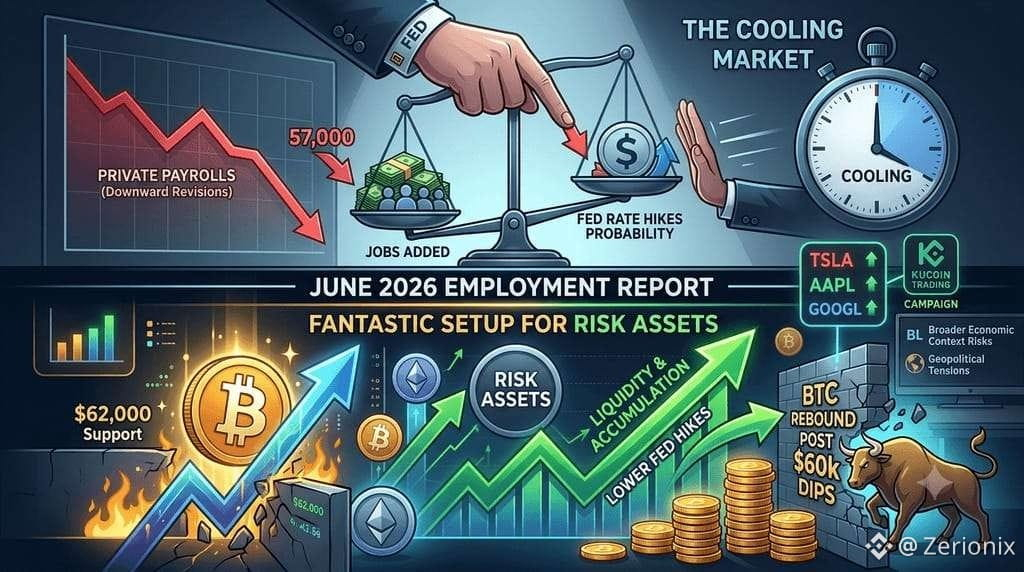
The U.S. added only 29,000 jobs in September, massively below expectations, while unemployment rose to 4.2%.
And the immediate reaction was pretty clear.
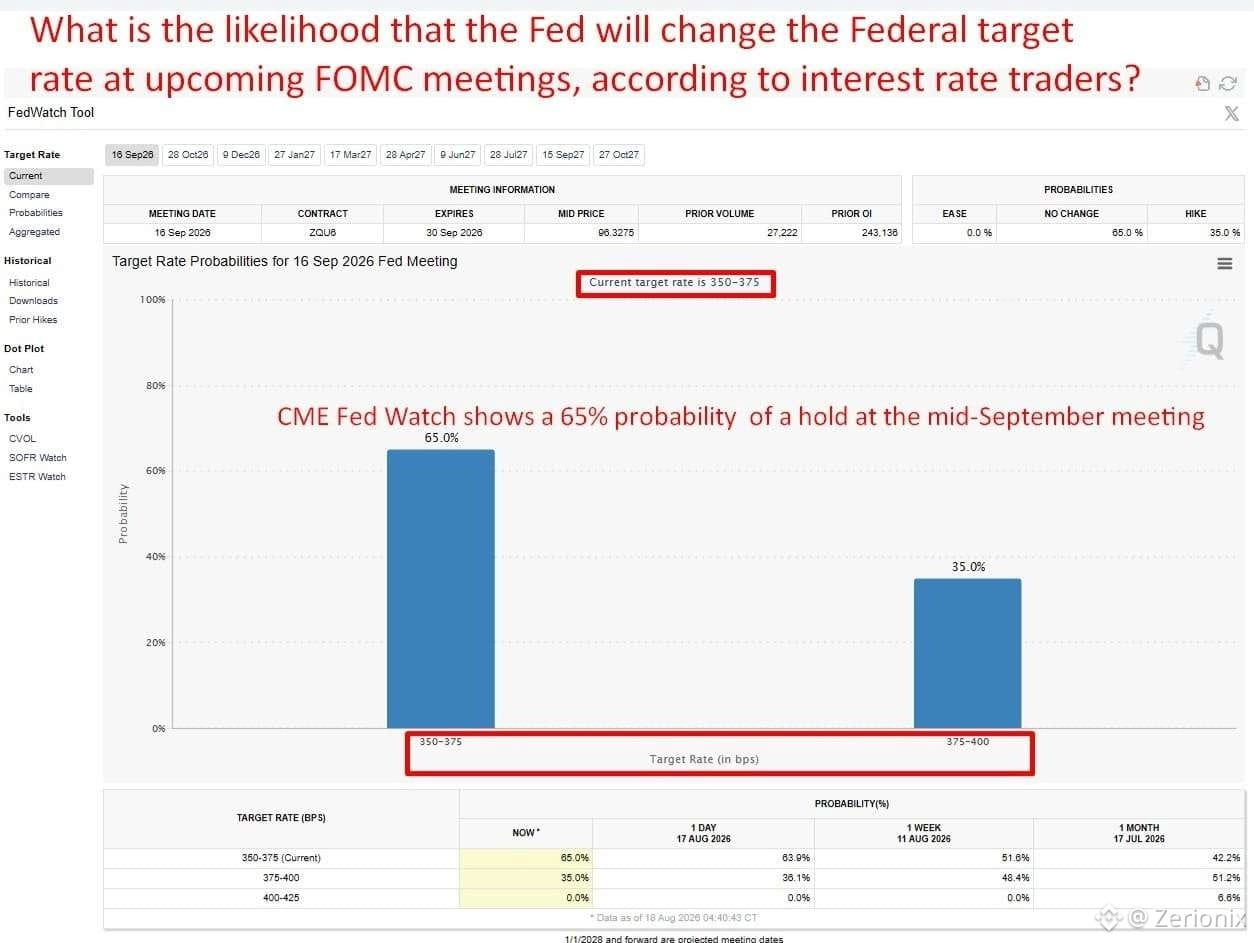
Expectations for another Fed hike in October collapsed. Depending on the market snapshot, the probability dropped from around 70% earlier in the week to roughly 14% to 25%.
That matters for BTC because fewer expected hikes can mean less pressure from rising rates and yields.
But there is another interesting piece.
Citi just raised its 12 month Bitcoin target from $82K to $113K, citing stronger crypto activity, a more supportive macro backdrop and renewed ETF inflows.
Personally, I think the $113K target is less important than the reason behind it.
Bitcoin doesn't need a bank to tell it where the price should go.
It needs liquidity, spot demand and a macro environment that stops fighting the rally.
And there is still a problem.
A weak jobs market isn't automatically bullish. If employment continues deteriorating, the market could start worrying about economic weakness rather than simply celebrating lower rate expectations.
So I'm watching the Fed path more than Citi's target.
If the labor market keeps weakening while inflation continues cooling, that could create a much friendlier backdrop for BTC.
If inflation stays sticky and the Fed remains restrictive, the story gets complicated quickly.
For now, the market just got one more reason to question the next hike.
Now BTC has to prove it can turn that macro relief into actual demand.
$BTC #BTC Price Analysis# #Bitcoin Price Prediction: What is Bitcoins next move?#
The U.S. added only 29,000 jobs in September, massively below expectations, while unemployment rose to 4.2%.
And the immediate reaction was pretty clear.
Expectations for another Fed hike in October collapsed. Depending on the market snapshot, the probability dropped from around 70% earlier in the week to roughly 14% to 25%.
That matters for BTC because fewer expected hikes can mean less pressure from rising rates and yields.
But there is another interesting piece.
Citi just raised its 12 month Bitcoin target from $82K to $113K, citing stronger crypto activity, a more supportive macro backdrop and renewed ETF inflows.
Personally, I think the $113K target is less important than the reason behind it.
Bitcoin doesn't need a bank to tell it where the price should go.
It needs liquidity, spot demand and a macro environment that stops fighting the rally.
And there is still a problem.
A weak jobs market isn't automatically bullish. If employment continues deteriorating, the market could start worrying about economic weakness rather than simply celebrating lower rate expectations.
So I'm watching the Fed path more than Citi's target.
If the labor market keeps weakening while inflation continues cooling, that could create a much friendlier backdrop for BTC.
If inflation stays sticky and the Fed remains restrictive, the story gets complicated quickly.
For now, the market just got one more reason to question the next hike.
Now BTC has to prove it can turn that macro relief into actual demand.
$BTC #BTC Price Analysis# #Bitcoin Price Prediction: What is Bitcoins next move?#
13
·
--
AI experts are becoming the new target for cyber espionage.
A China aligned hacking group tracked as TA419 has reportedly been impersonating U.S. AI and policy experts to gain access to sensitive information.
According to Proofpoint, the attackers approach targets with seemingly legitimate invitations to collaborate on AI policy, export controls or national AI strategy.
Once the target engages, the conversation is redirected toward fake login pages designed to steal credentials.
And the targets aren't random.
Proofpoint says the campaign has focused on people connected to U.S. and Japanese think tanks, defense contractors, universities and law firms.
Reuters independently confirmed former White House official Alex Engler was one target. He received an email appearing to come from former White House AI official Lynne Parker inviting him to join a new AI policy project.
He became suspicious and verified that the sender was an impersonator.
Personally, the interesting part isn't simply that hackers are impersonating people.
It's what they're trying to access.
AI policy is becoming strategically important. Regulation, export controls, national AI strategies and government relationships can reveal information that is valuable far beyond the technology itself.
Proofpoint says the targeting suggests an intelligence interest in U.S. policymaking rather than technology theft alone.
And that's a different threat model.
The most convincing phishing attacks don't look like attacks.
They look like an opportunity. A meeting. A collaboration. An invitation from someone you already recognize.
As AI becomes more strategically important, the people shaping its rules may become just as valuable a target as the companies building the models.
$ETH #BTC Price Analysis# #Macro Insights# $BTC
AI experts are becoming the new target for cyber espionage.
A China aligned hacking group tracked as TA419 has reportedly been impersonating U.S. AI and policy experts to gain access to sensitive information.
According to Proofpoint, the attackers approach targets with seemingly legitimate invitations to collaborate on AI policy, export controls or national AI strategy.
Once the target engages, the conversation is redirected toward fake login pages designed to steal credentials.
And the targets aren't random.
Proofpoint says the campaign has focused on people connected to U.S. and Japanese think tanks, defense contractors, universities and law firms.
Reuters independently confirmed former White House official Alex Engler was one target. He received an email appearing to come from former White House AI official Lynne Parker inviting him to join a new AI policy project.
He became suspicious and verified that the sender was an impersonator.
Personally, the interesting part isn't simply that hackers are impersonating people.
It's what they're trying to access.
AI policy is becoming strategically important. Regulation, export controls, national AI strategies and government relationships can reveal information that is valuable far beyond the technology itself.
Proofpoint says the targeting suggests an intelligence interest in U.S. policymaking rather than technology theft alone.
And that's a different threat model.
The most convincing phishing attacks don't look like attacks.
They look like an opportunity. A meeting. A collaboration. An invitation from someone you already recognize.
As AI becomes more strategically important, the people shaping its rules may become just as valuable a target as the companies building the models.
$ETH #BTC Price Analysis# #Macro Insights# $BTC
A China aligned hacking group tracked as TA419 has reportedly been impersonating U.S. AI and policy experts to gain access to sensitive information.
According to Proofpoint, the attackers approach targets with seemingly legitimate invitations to collaborate on AI policy, export controls or national AI strategy.
Once the target engages, the conversation is redirected toward fake login pages designed to steal credentials.
And the targets aren't random.
Proofpoint says the campaign has focused on people connected to U.S. and Japanese think tanks, defense contractors, universities and law firms.
Reuters independently confirmed former White House official Alex Engler was one target. He received an email appearing to come from former White House AI official Lynne Parker inviting him to join a new AI policy project.
He became suspicious and verified that the sender was an impersonator.
Personally, the interesting part isn't simply that hackers are impersonating people.
It's what they're trying to access.
AI policy is becoming strategically important. Regulation, export controls, national AI strategies and government relationships can reveal information that is valuable far beyond the technology itself.
Proofpoint says the targeting suggests an intelligence interest in U.S. policymaking rather than technology theft alone.
And that's a different threat model.
The most convincing phishing attacks don't look like attacks.
They look like an opportunity. A meeting. A collaboration. An invitation from someone you already recognize.
As AI becomes more strategically important, the people shaping its rules may become just as valuable a target as the companies building the models.
$ETH #BTC Price Analysis# #Macro Insights# $BTC


·
--
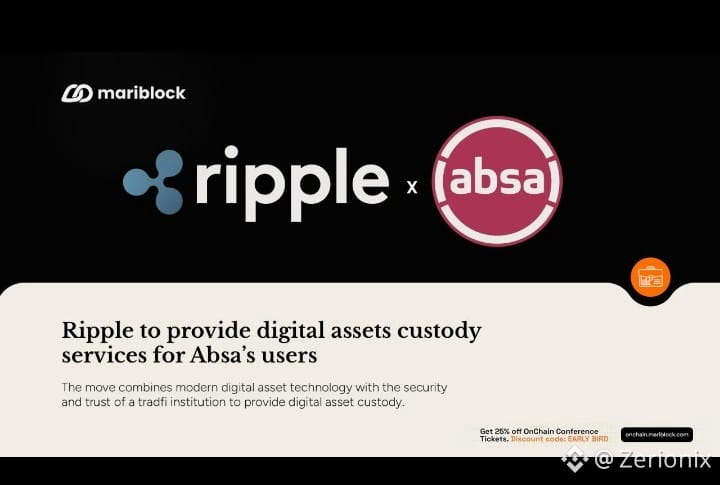
JUST IN: Absa has officially entered institutional crypto custody.
The South African banking giant has launched its digital asset custody service for institutional clients, becoming the first African bank to offer this type of service.
And the asset list is interesting.
$BTC, $ETH, XRP Ledger and USDC are currently supported, with more assets expected to be added as demand grows.
The service provides institutional clients with custody, administration and asset transfer services inside a regulated banking environment.
What stands out to me is the infrastructure behind it.
Absa partnered with Ripple for the custody technology, combining Ripple's blockchain infrastructure with the bank's existing security, governance and compliance systems.
Personally, I think this is bigger than just another bank adding crypto.
Custody is one of the biggest pieces of infrastructure needed for institutional adoption. ETFs, tokenized assets and onchain markets all eventually need someone trusted to securely hold the underlying assets.
And Africa is becoming an increasingly interesting market for that.
South Africa's three largest licensed crypto asset service providers held around R25.3B, roughly $1.5B, in crypto assets at the end of 2024.
Absa is now putting a traditional banking balance sheet and regulatory framework behind that market.
The interesting question is whether other African banks follow.
Because institutional crypto adoption in Africa may be moving from exchanges toward actual banking infrastructure.
$BTC #Macro Insights# $ETH #BTC Price Analysis#
JUST IN: Absa has officially entered institutional crypto custody.
The South African banking giant has launched its digital asset custody service for institutional clients, becoming the first African bank to offer this type of service.
And the asset list is interesting.
$BTC, $ETH, XRP Ledger and USDC are currently supported, with more assets expected to be added as demand grows.
The service provides institutional clients with custody, administration and asset transfer services inside a regulated banking environment.
What stands out to me is the infrastructure behind it.
Absa partnered with Ripple for the custody technology, combining Ripple's blockchain infrastructure with the bank's existing security, governance and compliance systems.
Personally, I think this is bigger than just another bank adding crypto.
Custody is one of the biggest pieces of infrastructure needed for institutional adoption. ETFs, tokenized assets and onchain markets all eventually need someone trusted to securely hold the underlying assets.
And Africa is becoming an increasingly interesting market for that.
South Africa's three largest licensed crypto asset service providers held around R25.3B, roughly $1.5B, in crypto assets at the end of 2024.
Absa is now putting a traditional banking balance sheet and regulatory framework behind that market.
The interesting question is whether other African banks follow.
Because institutional crypto adoption in Africa may be moving from exchanges toward actual banking infrastructure.
$BTC #Macro Insights# $ETH #BTC Price Analysis#
The South African banking giant has launched its digital asset custody service for institutional clients, becoming the first African bank to offer this type of service.
And the asset list is interesting.
$BTC, $ETH, XRP Ledger and USDC are currently supported, with more assets expected to be added as demand grows.
The service provides institutional clients with custody, administration and asset transfer services inside a regulated banking environment.
What stands out to me is the infrastructure behind it.
Absa partnered with Ripple for the custody technology, combining Ripple's blockchain infrastructure with the bank's existing security, governance and compliance systems.
Personally, I think this is bigger than just another bank adding crypto.
Custody is one of the biggest pieces of infrastructure needed for institutional adoption. ETFs, tokenized assets and onchain markets all eventually need someone trusted to securely hold the underlying assets.
And Africa is becoming an increasingly interesting market for that.
South Africa's three largest licensed crypto asset service providers held around R25.3B, roughly $1.5B, in crypto assets at the end of 2024.
Absa is now putting a traditional banking balance sheet and regulatory framework behind that market.
The interesting question is whether other African banks follow.
Because institutional crypto adoption in Africa may be moving from exchanges toward actual banking infrastructure.
$BTC #Macro Insights# $ETH #BTC Price Analysis#
·
--
Hyperliquid is taking its perpetuals fight to Europe.
The Hyperliquid Policy Center has urged the European Commission to classify crypto perpetual futures under MiFID II rather than MiCA in its first regulatory filing outside the U.S.
The argument is pretty straightforward.
Perpetuals are derivatives. So their regulatory treatment should depend on what the product actually does, not whether the trade happens on a public blockchain.
That distinction matters.
MiFID II is already the EU framework for financial instruments and derivatives, while MiCA primarily covers crypto assets and services that aren't already regulated under existing financial legislation.
HPC is also asking the EU to recognize something interesting about onchain markets.
Trades, funding payments and liquidations can be publicly verifiable on a blockchain, potentially helping satisfy some transparency and recordkeeping requirements without forcing firms to duplicate information that is already available onchain.
Personally, I think the bigger story is regulatory recognition of onchain markets as actual financial infrastructure.
If Europe accepts that a derivative doesn't become a different product simply because it runs on a blockchain, that could create a much clearer path for regulated firms to build onchain markets.
But this is still a policy proposal.
The European Commission hasn't adopted HPC's position, and the MiCA review is still underway.
The interesting question now is whether regulators treat public blockchains as a problem to control, or infrastructure that can actually help satisfy existing financial rules.
That decision could shape how big onchain derivatives become in Europe.
$BTC #BTC Price Analysis# $HYPE #Altcoin Season#
Hyperliquid is taking its perpetuals fight to Europe.
The Hyperliquid Policy Center has urged the European Commission to classify crypto perpetual futures under MiFID II rather than MiCA in its first regulatory filing outside the U.S.
The argument is pretty straightforward.
Perpetuals are derivatives. So their regulatory treatment should depend on what the product actually does, not whether the trade happens on a public blockchain.
That distinction matters.
MiFID II is already the EU framework for financial instruments and derivatives, while MiCA primarily covers crypto assets and services that aren't already regulated under existing financial legislation.
HPC is also asking the EU to recognize something interesting about onchain markets.
Trades, funding payments and liquidations can be publicly verifiable on a blockchain, potentially helping satisfy some transparency and recordkeeping requirements without forcing firms to duplicate information that is already available onchain.
Personally, I think the bigger story is regulatory recognition of onchain markets as actual financial infrastructure.
If Europe accepts that a derivative doesn't become a different product simply because it runs on a blockchain, that could create a much clearer path for regulated firms to build onchain markets.
But this is still a policy proposal.
The European Commission hasn't adopted HPC's position, and the MiCA review is still underway.
The interesting question now is whether regulators treat public blockchains as a problem to control, or infrastructure that can actually help satisfy existing financial rules.
That decision could shape how big onchain derivatives become in Europe.
$BTC #BTC Price Analysis# $HYPE #Altcoin Season#
The Hyperliquid Policy Center has urged the European Commission to classify crypto perpetual futures under MiFID II rather than MiCA in its first regulatory filing outside the U.S.
The argument is pretty straightforward.
Perpetuals are derivatives. So their regulatory treatment should depend on what the product actually does, not whether the trade happens on a public blockchain.
That distinction matters.
MiFID II is already the EU framework for financial instruments and derivatives, while MiCA primarily covers crypto assets and services that aren't already regulated under existing financial legislation.
HPC is also asking the EU to recognize something interesting about onchain markets.
Trades, funding payments and liquidations can be publicly verifiable on a blockchain, potentially helping satisfy some transparency and recordkeeping requirements without forcing firms to duplicate information that is already available onchain.
Personally, I think the bigger story is regulatory recognition of onchain markets as actual financial infrastructure.
If Europe accepts that a derivative doesn't become a different product simply because it runs on a blockchain, that could create a much clearer path for regulated firms to build onchain markets.
But this is still a policy proposal.
The European Commission hasn't adopted HPC's position, and the MiCA review is still underway.
The interesting question now is whether regulators treat public blockchains as a problem to control, or infrastructure that can actually help satisfy existing financial rules.
That decision could shape how big onchain derivatives become in Europe.
$BTC #BTC Price Analysis# $HYPE #Altcoin Season#


29
·
--
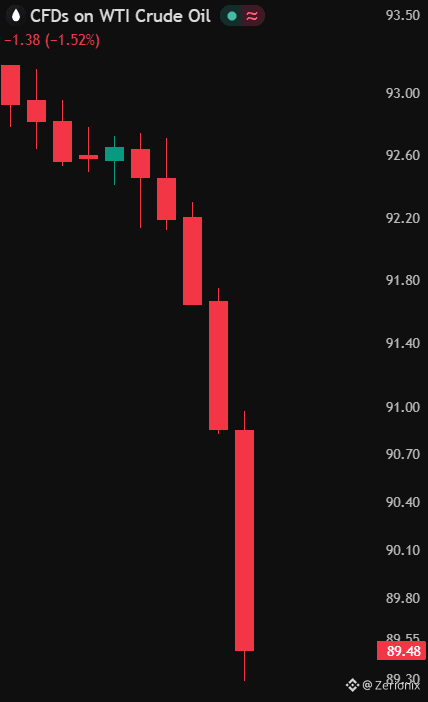
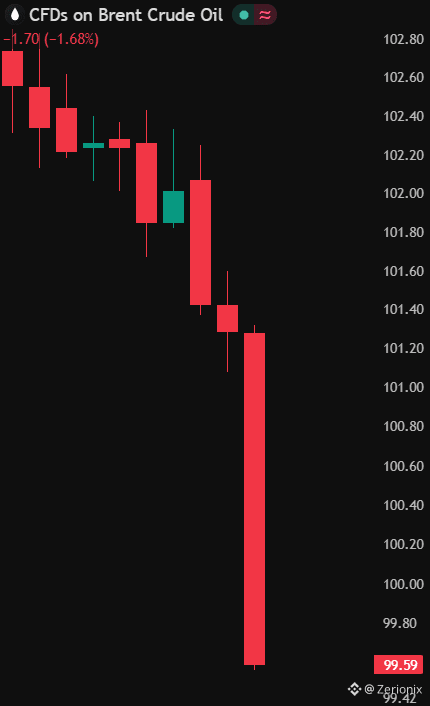
🚨 Oil just got hit with a serious supply shock.
Brent crude dropped below $100 while U.S. WTI fell below $90 as European countries discussed releasing emergency fuel reserves.
The move comes after the U.S. pressured France and Germany to release diesel stocks, with Washington even threatening a potential U.S. diesel export ban if Europe doesn't help increase supply.
A French proposal now being discussed would see European countries release around 50M barrels of diesel, while IEA members could release another 50M barrels of crude.
That's a lot of potential supply hitting a market that has been dealing with serious energy disruptions.
Personally, I think the crypto angle here is more interesting than the oil headline itself.
Lower energy prices can take some pressure off inflation expectations.
And if the oil shock starts fading, that could eventually give central banks a little more breathing room on the rate side.
That's important for Bitcoin because one of BTC's biggest macro problems right now has been the combination of expensive energy, sticky inflation and elevated yields.
But I'm not calling the oil problem solved yet.
Middle Eastern supply risks remain, and physical energy markets are still tight. Reuters reported that Barclays has even raised its Q4 Brent forecast to $115 despite today's decline.
So I'm watching whether Brent can stay below $100.
If it does, the inflation narrative could start changing quickly.
And that could become a much bigger catalyst for risk assets than this one day oil dump suggests.
$BTC #Altcoin Season# #BTC Price Analysis#
$XAUt
🚨 Oil just got hit with a serious supply shock.
Brent crude dropped below $100 while U.S. WTI fell below $90 as European countries discussed releasing emergency fuel reserves.
The move comes after the U.S. pressured France and Germany to release diesel stocks, with Washington even threatening a potential U.S. diesel export ban if Europe doesn't help increase supply.
A French proposal now being discussed would see European countries release around 50M barrels of diesel, while IEA members could release another 50M barrels of crude.
That's a lot of potential supply hitting a market that has been dealing with serious energy disruptions.
Personally, I think the crypto angle here is more interesting than the oil headline itself.
Lower energy prices can take some pressure off inflation expectations.
And if the oil shock starts fading, that could eventually give central banks a little more breathing room on the rate side.
That's important for Bitcoin because one of BTC's biggest macro problems right now has been the combination of expensive energy, sticky inflation and elevated yields.
But I'm not calling the oil problem solved yet.
Middle Eastern supply risks remain, and physical energy markets are still tight. Reuters reported that Barclays has even raised its Q4 Brent forecast to $115 despite today's decline.
So I'm watching whether Brent can stay below $100.
If it does, the inflation narrative could start changing quickly.
And that could become a much bigger catalyst for risk assets than this one day oil dump suggests.
$BTC #Altcoin Season# #BTC Price Analysis#
$XAUt
Brent crude dropped below $100 while U.S. WTI fell below $90 as European countries discussed releasing emergency fuel reserves.
The move comes after the U.S. pressured France and Germany to release diesel stocks, with Washington even threatening a potential U.S. diesel export ban if Europe doesn't help increase supply.
A French proposal now being discussed would see European countries release around 50M barrels of diesel, while IEA members could release another 50M barrels of crude.
That's a lot of potential supply hitting a market that has been dealing with serious energy disruptions.
Personally, I think the crypto angle here is more interesting than the oil headline itself.
Lower energy prices can take some pressure off inflation expectations.
And if the oil shock starts fading, that could eventually give central banks a little more breathing room on the rate side.
That's important for Bitcoin because one of BTC's biggest macro problems right now has been the combination of expensive energy, sticky inflation and elevated yields.
But I'm not calling the oil problem solved yet.
Middle Eastern supply risks remain, and physical energy markets are still tight. Reuters reported that Barclays has even raised its Q4 Brent forecast to $115 despite today's decline.
So I'm watching whether Brent can stay below $100.
If it does, the inflation narrative could start changing quickly.
And that could become a much bigger catalyst for risk assets than this one day oil dump suggests.
$BTC #Altcoin Season# #BTC Price Analysis#
$XAUt
·
--
JUST IN: 🇺🇸 The SEC is proposing new crypto custody rules that could give investment advisers and regulated funds more ways to hold digital assets.
The proposal would allow advisers to custody certain client crypto themselves when a qualified custodian isn't available, provided they meet specific safeguards around cybersecurity, expertise, reporting and client disclosures.
It would also allow eligible state chartered trust companies to serve as crypto custodians.
That matters because custody has been one of the biggest operational headaches for institutions trying to offer crypto exposure.
The interesting part is that the SEC isn't simply saying "let institutions self custody."
It's trying to build a framework around when they can do it and what protections have to be in place.
Personally, I think this is an important infrastructure development.
Crypto adoption isn't only about ETFs and tokenized assets. Someone still has to securely hold the underlying assets.
If advisers and funds get more practical custody options, the regulatory friction around offering crypto investment products could fall.
But this is still a proposal, not a final rule. The SEC is opening a 60 day public comment period after publication in the Federal Register.
The bigger question now is whether these rules actually make institutional crypto custody easier without weakening the protections investors depend on.
That's the part I'll be watching.
$BTC #BTC Price Analysis# #Bitcoin Price Prediction: What is Bitcoins next move?#
JUST IN: 🇺🇸 The SEC is proposing new crypto custody rules that could give investment advisers and regulated funds more ways to hold digital assets.
The proposal would allow advisers to custody certain client crypto themselves when a qualified custodian isn't available, provided they meet specific safeguards around cybersecurity, expertise, reporting and client disclosures.
It would also allow eligible state chartered trust companies to serve as crypto custodians.
That matters because custody has been one of the biggest operational headaches for institutions trying to offer crypto exposure.
The interesting part is that the SEC isn't simply saying "let institutions self custody."
It's trying to build a framework around when they can do it and what protections have to be in place.
Personally, I think this is an important infrastructure development.
Crypto adoption isn't only about ETFs and tokenized assets. Someone still has to securely hold the underlying assets.
If advisers and funds get more practical custody options, the regulatory friction around offering crypto investment products could fall.
But this is still a proposal, not a final rule. The SEC is opening a 60 day public comment period after publication in the Federal Register.
The bigger question now is whether these rules actually make institutional crypto custody easier without weakening the protections investors depend on.
That's the part I'll be watching.
$BTC #BTC Price Analysis# #Bitcoin Price Prediction: What is Bitcoins next move?#
The proposal would allow advisers to custody certain client crypto themselves when a qualified custodian isn't available, provided they meet specific safeguards around cybersecurity, expertise, reporting and client disclosures.
It would also allow eligible state chartered trust companies to serve as crypto custodians.
That matters because custody has been one of the biggest operational headaches for institutions trying to offer crypto exposure.
The interesting part is that the SEC isn't simply saying "let institutions self custody."
It's trying to build a framework around when they can do it and what protections have to be in place.
Personally, I think this is an important infrastructure development.
Crypto adoption isn't only about ETFs and tokenized assets. Someone still has to securely hold the underlying assets.
If advisers and funds get more practical custody options, the regulatory friction around offering crypto investment products could fall.
But this is still a proposal, not a final rule. The SEC is opening a 60 day public comment period after publication in the Federal Register.
The bigger question now is whether these rules actually make institutional crypto custody easier without weakening the protections investors depend on.
That's the part I'll be watching.
$BTC #BTC Price Analysis# #Bitcoin Price Prediction: What is Bitcoins next move?#


91
·
--
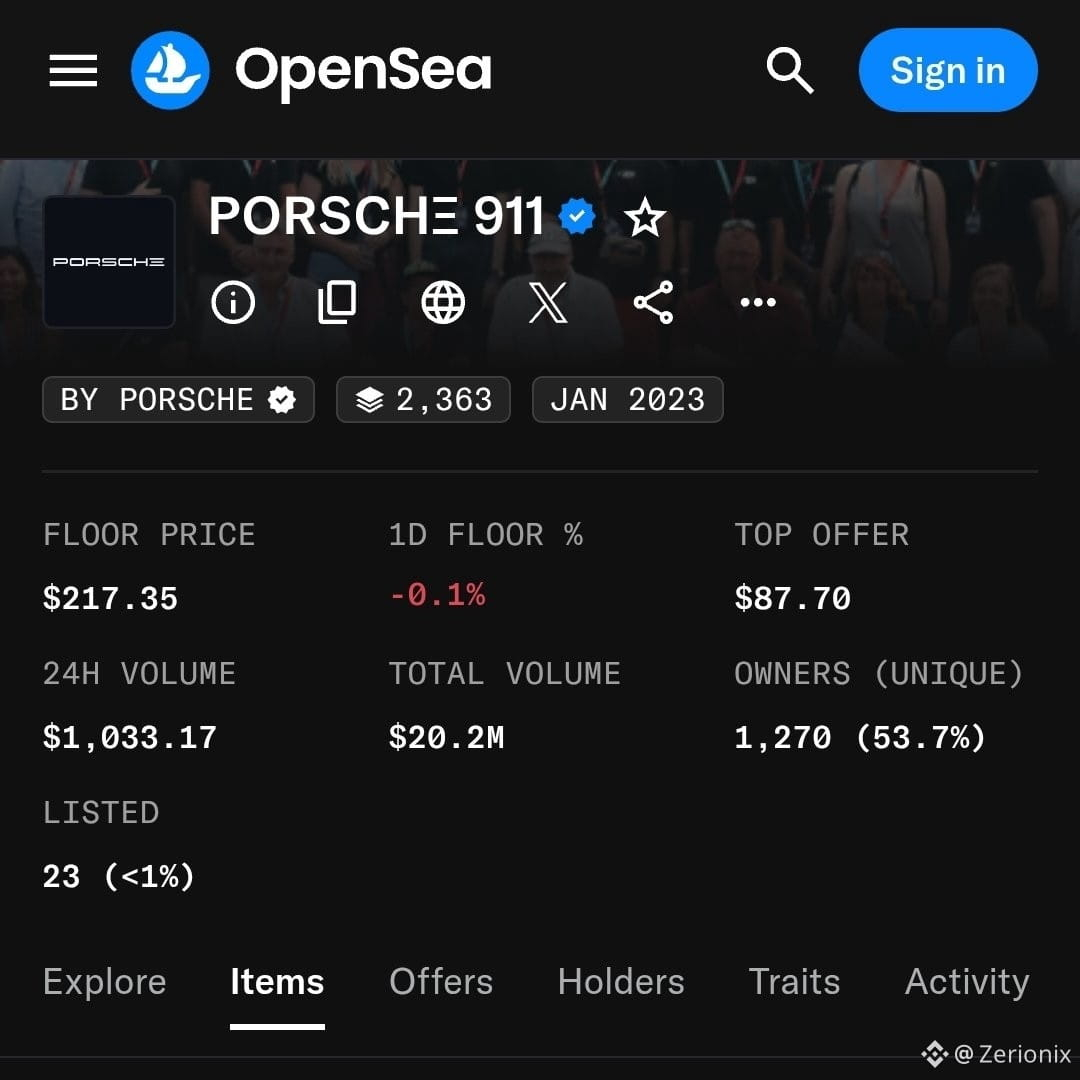
Porsche is officially winding down its Web3 experiment.
The automaker is ending the Porsche Web3 project and PIONΞERS CIRCLE community, closing out a Web3 initiative that began with its 911 NFT collection.
But there is an important distinction.
The NFTs aren't disappearing.
Existing PORSCHΞ 911 NFTs will remain onchain and stay with their respective holders. What is ending is the ecosystem around them.
The PIONΞERS Discord will become a read only archive, while the project's official X account will stop actively posting.
And honestly, this is an interesting moment for the broader NFT market.
Porsche originally positioned the project around co creation, digital collectibles and exclusive experiences, trying to connect one of the world's most recognizable automotive brands with Web3. Its official launch materials even described the project as a long term Web3 journey.
Personally, I think the important takeaway isn't simply "Porsche left Web3."
It's that putting an NFT onchain doesn't guarantee the surrounding community, benefits or brand engagement will last forever.
The blockchain record can survive.
The company doesn't have to.
That's one of the biggest differences between owning an onchain asset and owning an ongoing relationship with a brand.
Porsche's NFTs remain.
The experiment around them is what is ending.
And that says a lot about where the first wave of corporate Web3 experiments ended up.
$BTC #Macro Insights# #Altcoin Season# $XAUt
Porsche is officially winding down its Web3 experiment.
The automaker is ending the Porsche Web3 project and PIONΞERS CIRCLE community, closing out a Web3 initiative that began with its 911 NFT collection.
But there is an important distinction.
The NFTs aren't disappearing.
Existing PORSCHΞ 911 NFTs will remain onchain and stay with their respective holders. What is ending is the ecosystem around them.
The PIONΞERS Discord will become a read only archive, while the project's official X account will stop actively posting.
And honestly, this is an interesting moment for the broader NFT market.
Porsche originally positioned the project around co creation, digital collectibles and exclusive experiences, trying to connect one of the world's most recognizable automotive brands with Web3. Its official launch materials even described the project as a long term Web3 journey.
Personally, I think the important takeaway isn't simply "Porsche left Web3."
It's that putting an NFT onchain doesn't guarantee the surrounding community, benefits or brand engagement will last forever.
The blockchain record can survive.
The company doesn't have to.
That's one of the biggest differences between owning an onchain asset and owning an ongoing relationship with a brand.
Porsche's NFTs remain.
The experiment around them is what is ending.
And that says a lot about where the first wave of corporate Web3 experiments ended up.
$BTC #Macro Insights# #Altcoin Season# $XAUt
The automaker is ending the Porsche Web3 project and PIONΞERS CIRCLE community, closing out a Web3 initiative that began with its 911 NFT collection.
But there is an important distinction.
The NFTs aren't disappearing.
Existing PORSCHΞ 911 NFTs will remain onchain and stay with their respective holders. What is ending is the ecosystem around them.
The PIONΞERS Discord will become a read only archive, while the project's official X account will stop actively posting.
And honestly, this is an interesting moment for the broader NFT market.
Porsche originally positioned the project around co creation, digital collectibles and exclusive experiences, trying to connect one of the world's most recognizable automotive brands with Web3. Its official launch materials even described the project as a long term Web3 journey.
Personally, I think the important takeaway isn't simply "Porsche left Web3."
It's that putting an NFT onchain doesn't guarantee the surrounding community, benefits or brand engagement will last forever.
The blockchain record can survive.
The company doesn't have to.
That's one of the biggest differences between owning an onchain asset and owning an ongoing relationship with a brand.
Porsche's NFTs remain.
The experiment around them is what is ending.
And that says a lot about where the first wave of corporate Web3 experiments ended up.
$BTC #Macro Insights# #Altcoin Season# $XAUt

60
·
--
Injective is bringing privacy directly into onchain finance.
$INJ is set to unveil CypherOS, its native privacy layer, with the first public demo going live today.
The demo showcases three things that could matter a lot for serious financial activity onchain.
Shielded transactions.
Confidential trading.
And encrypted RFQs that can hide sensitive trade information before execution.
That last one is particularly interesting.
On a transparent blockchain, large orders and RFQs can expose traders to front running and information leakage. Private execution could make onchain markets more practical for institutions that don't want the entire market seeing what they're about to trade.
CypherOS follows Injective's Meridian mainnet upgrade, which went live on September 24 and laid the groundwork for private RFQ testing alongside regulated asset issuance and tokenized markets.
Personally, I think this is bigger than simply adding another privacy feature.
If onchain finance wants serious institutional capital, transparency can't always mean exposing every trade in real time.
The challenge is balancing privacy with compliance and verifiability.
If Injective can solve that properly, privacy stops being just a crypto ideology.
It becomes financial infrastructure.
Now I want to see how CypherOS performs outside the demo.
$INJ #Macro Insights# $BTC #Altcoin Season#
Injective is bringing privacy directly into onchain finance.
$INJ is set to unveil CypherOS, its native privacy layer, with the first public demo going live today.
The demo showcases three things that could matter a lot for serious financial activity onchain.
Shielded transactions.
Confidential trading.
And encrypted RFQs that can hide sensitive trade information before execution.
That last one is particularly interesting.
On a transparent blockchain, large orders and RFQs can expose traders to front running and information leakage. Private execution could make onchain markets more practical for institutions that don't want the entire market seeing what they're about to trade.
CypherOS follows Injective's Meridian mainnet upgrade, which went live on September 24 and laid the groundwork for private RFQ testing alongside regulated asset issuance and tokenized markets.
Personally, I think this is bigger than simply adding another privacy feature.
If onchain finance wants serious institutional capital, transparency can't always mean exposing every trade in real time.
The challenge is balancing privacy with compliance and verifiability.
If Injective can solve that properly, privacy stops being just a crypto ideology.
It becomes financial infrastructure.
Now I want to see how CypherOS performs outside the demo.
$INJ #Macro Insights# $BTC #Altcoin Season#
$INJ is set to unveil CypherOS, its native privacy layer, with the first public demo going live today.
The demo showcases three things that could matter a lot for serious financial activity onchain.
Shielded transactions.
Confidential trading.
And encrypted RFQs that can hide sensitive trade information before execution.
That last one is particularly interesting.
On a transparent blockchain, large orders and RFQs can expose traders to front running and information leakage. Private execution could make onchain markets more practical for institutions that don't want the entire market seeing what they're about to trade.
CypherOS follows Injective's Meridian mainnet upgrade, which went live on September 24 and laid the groundwork for private RFQ testing alongside regulated asset issuance and tokenized markets.
Personally, I think this is bigger than simply adding another privacy feature.
If onchain finance wants serious institutional capital, transparency can't always mean exposing every trade in real time.
The challenge is balancing privacy with compliance and verifiability.
If Injective can solve that properly, privacy stops being just a crypto ideology.
It becomes financial infrastructure.
Now I want to see how CypherOS performs outside the demo.
$INJ #Macro Insights# $BTC #Altcoin Season#


55
·
--
$82K is becoming an important line for Bitcoin.
BTC has been stuck around the $82K to $85K range, and the big question isn't simply whether Bitcoin can stay above $82K.
It's who gets shaken out if it doesn't.
A 3% move from current levels would be enough to put pressure on leveraged longs, while ETF buyers aren't necessarily forced to sell just because BTC dips.
That's an important difference.
Leverage can turn a normal pullback into a liquidation cascade.
Spot ETF investors, on the other hand, can absorb volatility without being mechanically forced out of their positions.
And we've already seen how important ETF demand has become. U.S. spot Bitcoin ETFs pulled in roughly $2.4B during the week ending September 25, helping drive the recent recovery.
But there's a catch.
That demand has started showing signs of cooling. The latest session saw about $148.7M in ETF outflows, ending a nine day inflow streak worth roughly $3.08B.
So personally, I'm watching the reaction more than the $82K number itself.
If BTC dips, leverage gets flushed and spot demand absorbs the selling, that's a very different signal from BTC losing $82K while ETF flows turn negative.
A 3% dip doesn't scare me nearly as much as a lack of buyers underneath it.
The real question isn't who gets liquidated first.
It's whether someone is ready to buy their Bitcoin.
$BTC #BTC #BTC Price Analysis# #Bitcoin Price Prediction: What is Bitcoins next move?#
$82K is becoming an important line for Bitcoin.
BTC has been stuck around the $82K to $85K range, and the big question isn't simply whether Bitcoin can stay above $82K.
It's who gets shaken out if it doesn't.
A 3% move from current levels would be enough to put pressure on leveraged longs, while ETF buyers aren't necessarily forced to sell just because BTC dips.
That's an important difference.
Leverage can turn a normal pullback into a liquidation cascade.
Spot ETF investors, on the other hand, can absorb volatility without being mechanically forced out of their positions.
And we've already seen how important ETF demand has become. U.S. spot Bitcoin ETFs pulled in roughly $2.4B during the week ending September 25, helping drive the recent recovery.
But there's a catch.
That demand has started showing signs of cooling. The latest session saw about $148.7M in ETF outflows, ending a nine day inflow streak worth roughly $3.08B.
So personally, I'm watching the reaction more than the $82K number itself.
If BTC dips, leverage gets flushed and spot demand absorbs the selling, that's a very different signal from BTC losing $82K while ETF flows turn negative.
A 3% dip doesn't scare me nearly as much as a lack of buyers underneath it.
The real question isn't who gets liquidated first.
It's whether someone is ready to buy their Bitcoin.
$BTC #BTC #BTC Price Analysis# #Bitcoin Price Prediction: What is Bitcoins next move?#
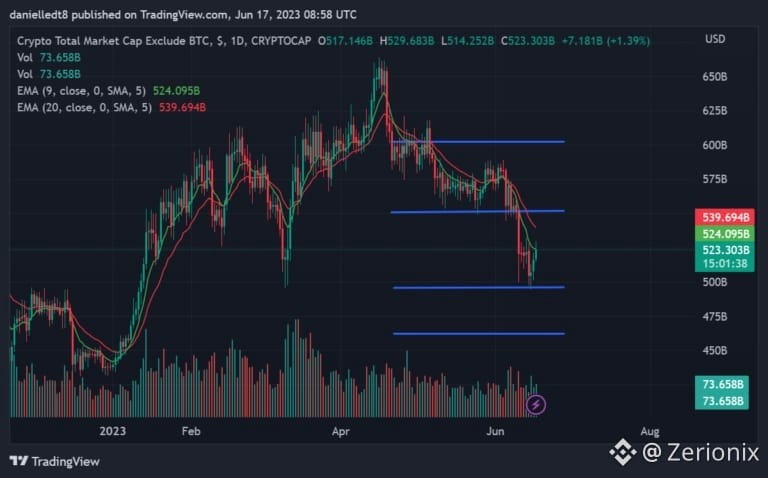
BTC has been stuck around the $82K to $85K range, and the big question isn't simply whether Bitcoin can stay above $82K.
It's who gets shaken out if it doesn't.
A 3% move from current levels would be enough to put pressure on leveraged longs, while ETF buyers aren't necessarily forced to sell just because BTC dips.
That's an important difference.
Leverage can turn a normal pullback into a liquidation cascade.
Spot ETF investors, on the other hand, can absorb volatility without being mechanically forced out of their positions.
And we've already seen how important ETF demand has become. U.S. spot Bitcoin ETFs pulled in roughly $2.4B during the week ending September 25, helping drive the recent recovery.
But there's a catch.
That demand has started showing signs of cooling. The latest session saw about $148.7M in ETF outflows, ending a nine day inflow streak worth roughly $3.08B.
So personally, I'm watching the reaction more than the $82K number itself.
If BTC dips, leverage gets flushed and spot demand absorbs the selling, that's a very different signal from BTC losing $82K while ETF flows turn negative.
A 3% dip doesn't scare me nearly as much as a lack of buyers underneath it.
The real question isn't who gets liquidated first.
It's whether someone is ready to buy their Bitcoin.
$BTC #BTC #BTC Price Analysis# #Bitcoin Price Prediction: What is Bitcoins next move?#
66
·
--
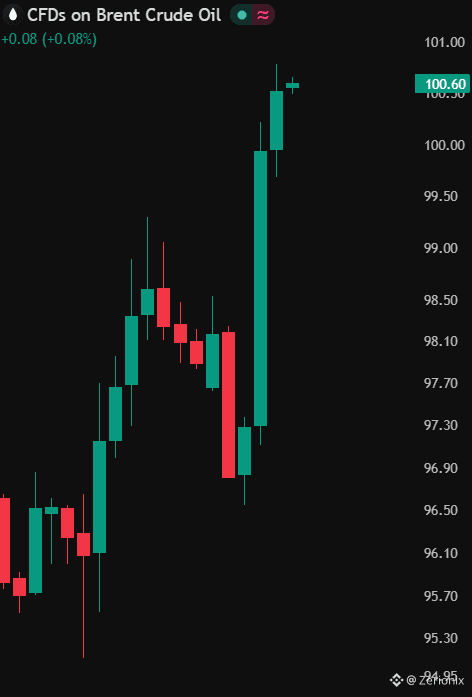
Brent is back above $100, and this time the pressure isn’t coming from one headline.
China has suspended oil product exports beyond Hong Kong and Macau until further notice, with PetroChina reportedly cancelling gasoline and jet fuel cargoes scheduled for October. That removes another source of refined fuel from an already tight global market.
Russia has also extended its diesel and marine fuel export restrictions through October 31, while refinery disruptions have already reduced its fuel exports.
Then there’s the US. Washington is pressuring Germany and France to use emergency diesel reserves and has raised the possibility of restricting US diesel exports if global fuel shortages worsen. The US is a major diesel exporter, so actually implementing that measure would have global consequences.
That’s the part worth watching.
This isn’t simply a crude oil story anymore. The refined-product market is becoming the pressure point. The IEA says global diesel/gasoil supply has already been hit by disruptions across the Gulf and Russia with combined exports from those regions down significantly from pre-war levels.
So Brent crossing $100 is almost a symptom of a much bigger problem: fewer barrels of usable fuel are moving through the global system while governments are increasingly prioritizing domestic supply.
The question now isn’t just whether oil stays above $100.
It’s whether the squeeze in diesel and other refined products starts feeding into transportation costs, inflation and eventually broader economic demand
$BTC #BTC Price Analysis# $ETH #Macro Insights#
Brent is back above $100, and this time the pressure isn’t coming from one headline.
China has suspended oil product exports beyond Hong Kong and Macau until further notice, with PetroChina reportedly cancelling gasoline and jet fuel cargoes scheduled for October. That removes another source of refined fuel from an already tight global market.
Russia has also extended its diesel and marine fuel export restrictions through October 31, while refinery disruptions have already reduced its fuel exports.
Then there’s the US. Washington is pressuring Germany and France to use emergency diesel reserves and has raised the possibility of restricting US diesel exports if global fuel shortages worsen. The US is a major diesel exporter, so actually implementing that measure would have global consequences.
That’s the part worth watching.
This isn’t simply a crude oil story anymore. The refined-product market is becoming the pressure point. The IEA says global diesel/gasoil supply has already been hit by disruptions across the Gulf and Russia with combined exports from those regions down significantly from pre-war levels.
So Brent crossing $100 is almost a symptom of a much bigger problem: fewer barrels of usable fuel are moving through the global system while governments are increasingly prioritizing domestic supply.
The question now isn’t just whether oil stays above $100.
It’s whether the squeeze in diesel and other refined products starts feeding into transportation costs, inflation and eventually broader economic demand
$BTC #BTC Price Analysis# $ETH #Macro Insights#
China has suspended oil product exports beyond Hong Kong and Macau until further notice, with PetroChina reportedly cancelling gasoline and jet fuel cargoes scheduled for October. That removes another source of refined fuel from an already tight global market.
Russia has also extended its diesel and marine fuel export restrictions through October 31, while refinery disruptions have already reduced its fuel exports.
Then there’s the US. Washington is pressuring Germany and France to use emergency diesel reserves and has raised the possibility of restricting US diesel exports if global fuel shortages worsen. The US is a major diesel exporter, so actually implementing that measure would have global consequences.
That’s the part worth watching.
This isn’t simply a crude oil story anymore. The refined-product market is becoming the pressure point. The IEA says global diesel/gasoil supply has already been hit by disruptions across the Gulf and Russia with combined exports from those regions down significantly from pre-war levels.
So Brent crossing $100 is almost a symptom of a much bigger problem: fewer barrels of usable fuel are moving through the global system while governments are increasingly prioritizing domestic supply.
The question now isn’t just whether oil stays above $100.
It’s whether the squeeze in diesel and other refined products starts feeding into transportation costs, inflation and eventually broader economic demand
$BTC #BTC Price Analysis# $ETH #Macro Insights#
·
--
Uptober is back on the timeline.
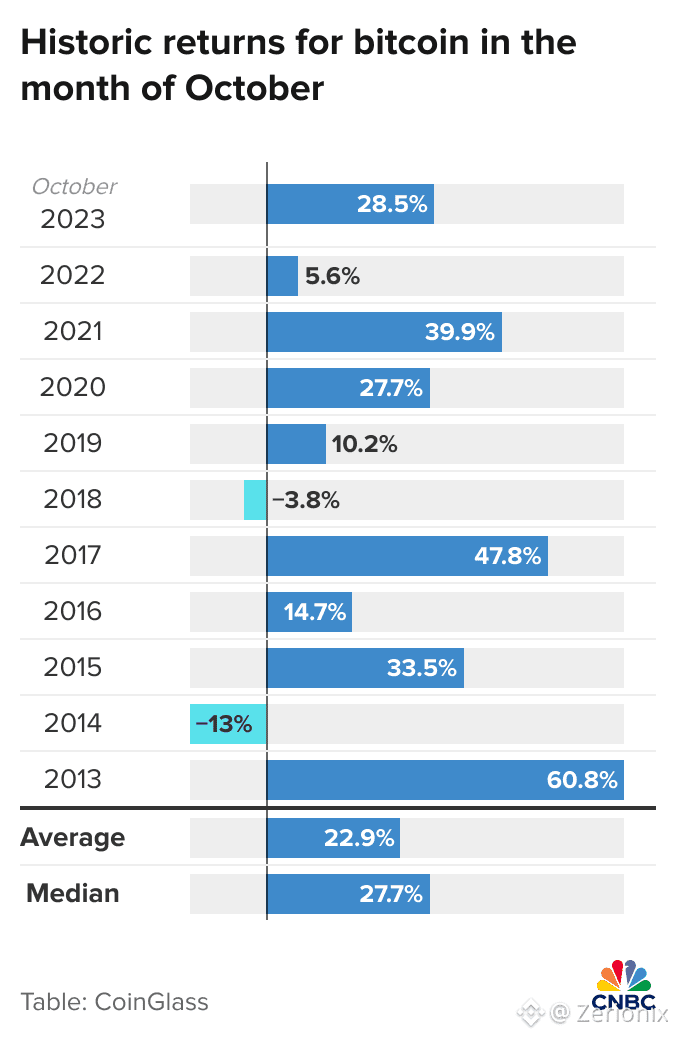
Historically, Bitcoin has finished October in the green in 10 of the last 13 years.
And now the market is asking the obvious question:
Is history enough to trust this time?
October has built a pretty strong reputation in crypto, but I wouldn't blindly trade the calendar.
Bitcoin can have a strong historical tendency and still break the pattern when macro conditions, liquidity or positioning change.
What makes this October interesting is that BTC is coming in with strong momentum after a major Q3 move.
Personally, I'm watching whether that momentum survives the first half of the month.
If BTC keeps attracting spot demand and holds the gains from Q3, the historical October trend becomes much more interesting.
But if macro liquidity tightens or leverage starts building too quickly, history won't save the trade.
10 green Octobers out of 13 is a nice statistic.
Now Bitcoin has to prove it can do it again.
$BTC #BTC Price Analysis# #Bitcoin Price Prediction: What is Bitcoins next move?#
Uptober is back on the timeline.
Historically, Bitcoin has finished October in the green in 10 of the last 13 years.
And now the market is asking the obvious question:
Is history enough to trust this time?
October has built a pretty strong reputation in crypto, but I wouldn't blindly trade the calendar.
Bitcoin can have a strong historical tendency and still break the pattern when macro conditions, liquidity or positioning change.
What makes this October interesting is that BTC is coming in with strong momentum after a major Q3 move.
Personally, I'm watching whether that momentum survives the first half of the month.
If BTC keeps attracting spot demand and holds the gains from Q3, the historical October trend becomes much more interesting.
But if macro liquidity tightens or leverage starts building too quickly, history won't save the trade.
10 green Octobers out of 13 is a nice statistic.
Now Bitcoin has to prove it can do it again.
$BTC #BTC Price Analysis# #Bitcoin Price Prediction: What is Bitcoins next move?#
Historically, Bitcoin has finished October in the green in 10 of the last 13 years.
And now the market is asking the obvious question:
Is history enough to trust this time?
October has built a pretty strong reputation in crypto, but I wouldn't blindly trade the calendar.
Bitcoin can have a strong historical tendency and still break the pattern when macro conditions, liquidity or positioning change.
What makes this October interesting is that BTC is coming in with strong momentum after a major Q3 move.
Personally, I'm watching whether that momentum survives the first half of the month.
If BTC keeps attracting spot demand and holds the gains from Q3, the historical October trend becomes much more interesting.
But if macro liquidity tightens or leverage starts building too quickly, history won't save the trade.
10 green Octobers out of 13 is a nice statistic.
Now Bitcoin has to prove it can do it again.
$BTC #BTC Price Analysis# #Bitcoin Price Prediction: What is Bitcoins next move?#
48
·
--
Neither, actually, and Glassnode's own framing on this is more careful than the headline running around right now.
Altcoin spot volume has climbed to nearly 4x Bitcoin's, the highest ratio since September 2025. The Altcoin Season Index jumped to 62-64%, up from just 33% a month ago, and 72.5% of tracked altcoins outperformed BTC over the past week, versus only 39% during August's rally. Real, sharp acceleration by any measure.
Here's the part most coverage of this stat skips though. The 4x ratio measures trading turnover, not net capital inflow. Higher volume captures both buying and selling simultaneously, so this number alone can't tell you whether new money is entering altcoins or whether existing holders are just trading more aggressively among themselves. That distinction matters enormously for which of your two framings is actually correct.
What stands out to me is Glassnode's own historical caveat, sitting right inside the data they're reporting. Similar spikes in altcoin-to-BTC volume have historically coincided with local Bitcoin price tops, not confirmed altseason starts. That's not a prediction, it's a pattern match, and pattern matches break.
The Altcoin Season Index detail actually argues against calling this altseason yet. CoinMarketCap's version sits around 64, its highest reading this year, but the confirmed threshold is 75, and most desks also want Bitcoin dominance below 55% alongside it. Dominance is currently sitting around 58-59%, close, not there.
The open question isn't whether rotation is happening, breadth has genuinely expanded and that's real. It's whether this is early positioning ahead of a broader move, or exactly the kind of risk-appetite spike Glassnode's own data says has preceded BTC cooling off before.
$BTC #BTC Price Analysis# #Bitcoin Price Prediction: What is Bitcoins next move?#
Neither, actually, and Glassnode's own framing on this is more careful than the headline running around right now.
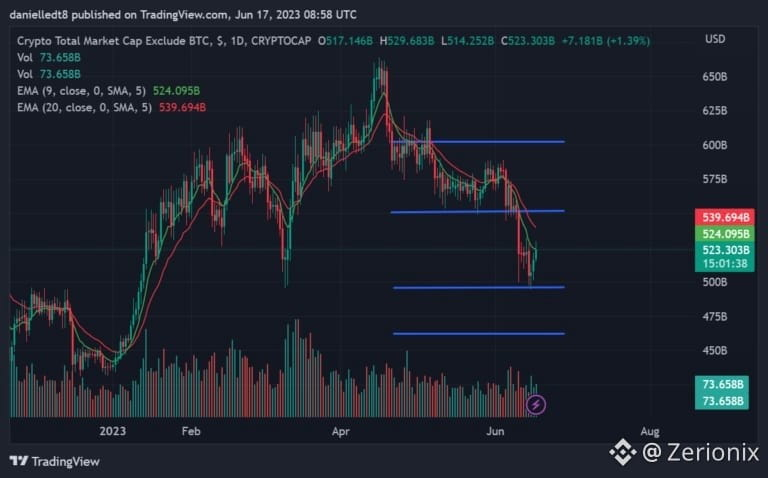
Altcoin spot volume has climbed to nearly 4x Bitcoin's, the highest ratio since September 2025. The Altcoin Season Index jumped to 62-64%, up from just 33% a month ago, and 72.5% of tracked altcoins outperformed BTC over the past week, versus only 39% during August's rally. Real, sharp acceleration by any measure.
Here's the part most coverage of this stat skips though. The 4x ratio measures trading turnover, not net capital inflow. Higher volume captures both buying and selling simultaneously, so this number alone can't tell you whether new money is entering altcoins or whether existing holders are just trading more aggressively among themselves. That distinction matters enormously for which of your two framings is actually correct.
What stands out to me is Glassnode's own historical caveat, sitting right inside the data they're reporting. Similar spikes in altcoin-to-BTC volume have historically coincided with local Bitcoin price tops, not confirmed altseason starts. That's not a prediction, it's a pattern match, and pattern matches break.
The Altcoin Season Index detail actually argues against calling this altseason yet. CoinMarketCap's version sits around 64, its highest reading this year, but the confirmed threshold is 75, and most desks also want Bitcoin dominance below 55% alongside it. Dominance is currently sitting around 58-59%, close, not there.
The open question isn't whether rotation is happening, breadth has genuinely expanded and that's real. It's whether this is early positioning ahead of a broader move, or exactly the kind of risk-appetite spike Glassnode's own data says has preceded BTC cooling off before.
$BTC #BTC Price Analysis# #Bitcoin Price Prediction: What is Bitcoins next move?#
Altcoin spot volume has climbed to nearly 4x Bitcoin's, the highest ratio since September 2025. The Altcoin Season Index jumped to 62-64%, up from just 33% a month ago, and 72.5% of tracked altcoins outperformed BTC over the past week, versus only 39% during August's rally. Real, sharp acceleration by any measure.
Here's the part most coverage of this stat skips though. The 4x ratio measures trading turnover, not net capital inflow. Higher volume captures both buying and selling simultaneously, so this number alone can't tell you whether new money is entering altcoins or whether existing holders are just trading more aggressively among themselves. That distinction matters enormously for which of your two framings is actually correct.
What stands out to me is Glassnode's own historical caveat, sitting right inside the data they're reporting. Similar spikes in altcoin-to-BTC volume have historically coincided with local Bitcoin price tops, not confirmed altseason starts. That's not a prediction, it's a pattern match, and pattern matches break.
The Altcoin Season Index detail actually argues against calling this altseason yet. CoinMarketCap's version sits around 64, its highest reading this year, but the confirmed threshold is 75, and most desks also want Bitcoin dominance below 55% alongside it. Dominance is currently sitting around 58-59%, close, not there.
The open question isn't whether rotation is happening, breadth has genuinely expanded and that's real. It's whether this is early positioning ahead of a broader move, or exactly the kind of risk-appetite spike Glassnode's own data says has preceded BTC cooling off before.
$BTC #BTC Price Analysis# #Bitcoin Price Prediction: What is Bitcoins next move?#
72
·
--
THORChain just found itself in the middle of a very uncomfortable crypto debate.
After the $388M Bitget hack, Bitget asked THORChain to block addresses linked to the attacker and stop them from swapping the stolen funds.
THORChain refused.
And the reason goes straight to the heart of decentralization.
THORChain says its emergency controls can halt network activity, but they aren't designed to selectively freeze individual addresses or transactions.
Meanwhile, the attacker has already used the network to move roughly $6.3M worth of stolen ETH into BTC.
This is where crypto gets complicated.
If a protocol can identify stolen funds, should it be able to stop them?
From Bitget's perspective, absolutely. The funds were allegedly stolen and the exchange wants them frozen or recovered.
But from THORChain's design perspective, selectively deciding which users can transact creates a very different kind of system.
Personally, I think this is bigger than just Bitget and THORChain.
Crypto has spent years building permissionless financial infrastructure. The moment stolen funds enter that infrastructure, the industry has to decide where decentralization ends and intervention begins.
And there isn't an easy answer.
Because if protocols can freeze hackers today, who decides which transactions deserve to be frozen tomorrow?
That's the uncomfortable question this incident is forcing crypto to confront.
$BTC #BTC Price Analysis# #Meme Alpha# #Bitget $BGB
THORChain just found itself in the middle of a very uncomfortable crypto debate.
After the $388M Bitget hack, Bitget asked THORChain to block addresses linked to the attacker and stop them from swapping the stolen funds.
THORChain refused.
And the reason goes straight to the heart of decentralization.
THORChain says its emergency controls can halt network activity, but they aren't designed to selectively freeze individual addresses or transactions.
Meanwhile, the attacker has already used the network to move roughly $6.3M worth of stolen ETH into BTC.
This is where crypto gets complicated.
If a protocol can identify stolen funds, should it be able to stop them?
From Bitget's perspective, absolutely. The funds were allegedly stolen and the exchange wants them frozen or recovered.
But from THORChain's design perspective, selectively deciding which users can transact creates a very different kind of system.
Personally, I think this is bigger than just Bitget and THORChain.
Crypto has spent years building permissionless financial infrastructure. The moment stolen funds enter that infrastructure, the industry has to decide where decentralization ends and intervention begins.
And there isn't an easy answer.
Because if protocols can freeze hackers today, who decides which transactions deserve to be frozen tomorrow?
That's the uncomfortable question this incident is forcing crypto to confront.
$BTC #BTC Price Analysis# #Meme Alpha# #Bitget $BGB
After the $388M Bitget hack, Bitget asked THORChain to block addresses linked to the attacker and stop them from swapping the stolen funds.
THORChain refused.
And the reason goes straight to the heart of decentralization.
THORChain says its emergency controls can halt network activity, but they aren't designed to selectively freeze individual addresses or transactions.
Meanwhile, the attacker has already used the network to move roughly $6.3M worth of stolen ETH into BTC.
This is where crypto gets complicated.
If a protocol can identify stolen funds, should it be able to stop them?
From Bitget's perspective, absolutely. The funds were allegedly stolen and the exchange wants them frozen or recovered.
But from THORChain's design perspective, selectively deciding which users can transact creates a very different kind of system.
Personally, I think this is bigger than just Bitget and THORChain.
Crypto has spent years building permissionless financial infrastructure. The moment stolen funds enter that infrastructure, the industry has to decide where decentralization ends and intervention begins.
And there isn't an easy answer.
Because if protocols can freeze hackers today, who decides which transactions deserve to be frozen tomorrow?
That's the uncomfortable question this incident is forcing crypto to confront.
$BTC #BTC Price Analysis# #Meme Alpha# #Bitget $BGB
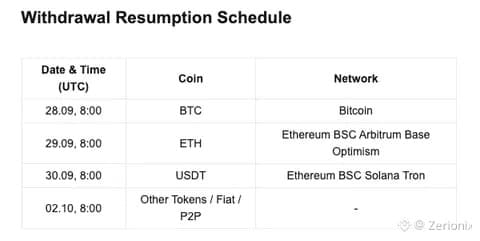
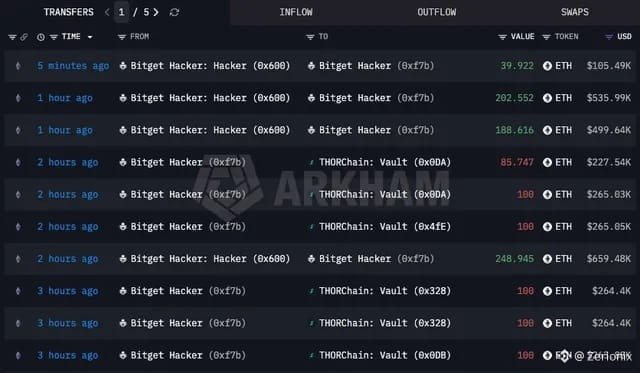
1
159
·
--
China is reminding crypto users of something many people still get wrong.
🇨🇳 China’s Ministry of State Security says crypto anonymity is an illusion.
The agency argues that blockchain transactions leave permanent records, while wallet activity can potentially be connected to real identities through exchanges, payment platforms, devices and IP information.
And technically, there is an important distinction here.
Bitcoin and most major public blockchains are pseudonymous, not anonymous.
Your wallet address may not have your name attached to it, but the transaction history is sitting there permanently. Once that address is linked to your identity through an exchange or another identifiable point, the history can potentially be mapped back to you.
Personally, I think the bigger takeaway isn't China's warning.
It's that onchain privacy is becoming a much bigger conversation as crypto becomes more integrated with traditional financial infrastructure.
But the statement shouldn't be taken to mean every crypto transaction is automatically traceable. Privacy focused networks and technologies are specifically designed to make tracing more difficult.
So the real debate isn't simply whether crypto is anonymous.
It's how much privacy does a specific network actually provide, and where does that privacy break down?
Because putting your money onchain doesn't make you invisible.
It gives you a permanent trail.
$BTC #BTC Price Analysis# #Altcoin Season#
China is reminding crypto users of something many people still get wrong.
🇨🇳 China’s Ministry of State Security says crypto anonymity is an illusion.
The agency argues that blockchain transactions leave permanent records, while wallet activity can potentially be connected to real identities through exchanges, payment platforms, devices and IP information.
And technically, there is an important distinction here.
Bitcoin and most major public blockchains are pseudonymous, not anonymous.
Your wallet address may not have your name attached to it, but the transaction history is sitting there permanently. Once that address is linked to your identity through an exchange or another identifiable point, the history can potentially be mapped back to you.
Personally, I think the bigger takeaway isn't China's warning.
It's that onchain privacy is becoming a much bigger conversation as crypto becomes more integrated with traditional financial infrastructure.
But the statement shouldn't be taken to mean every crypto transaction is automatically traceable. Privacy focused networks and technologies are specifically designed to make tracing more difficult.
So the real debate isn't simply whether crypto is anonymous.
It's how much privacy does a specific network actually provide, and where does that privacy break down?
Because putting your money onchain doesn't make you invisible.
It gives you a permanent trail.
$BTC #BTC Price Analysis# #Altcoin Season#
🇨🇳 China’s Ministry of State Security says crypto anonymity is an illusion.
The agency argues that blockchain transactions leave permanent records, while wallet activity can potentially be connected to real identities through exchanges, payment platforms, devices and IP information.
And technically, there is an important distinction here.
Bitcoin and most major public blockchains are pseudonymous, not anonymous.
Your wallet address may not have your name attached to it, but the transaction history is sitting there permanently. Once that address is linked to your identity through an exchange or another identifiable point, the history can potentially be mapped back to you.
Personally, I think the bigger takeaway isn't China's warning.
It's that onchain privacy is becoming a much bigger conversation as crypto becomes more integrated with traditional financial infrastructure.
But the statement shouldn't be taken to mean every crypto transaction is automatically traceable. Privacy focused networks and technologies are specifically designed to make tracing more difficult.
So the real debate isn't simply whether crypto is anonymous.
It's how much privacy does a specific network actually provide, and where does that privacy break down?
Because putting your money onchain doesn't make you invisible.
It gives you a permanent trail.
$BTC #BTC Price Analysis# #Altcoin Season#


87
·
--
One thing I find interesting about cross chain infrastructure is when you stop noticing it.
A TON user shouldn't necessarily have to think about which bridge to use, where to send their tokens, or how to move assets between networks just to access an application built for EVM.
That's the idea behind a new open source Omniston integration example for Telegram Mini Apps.
The flow is pretty simple from the user's perspective.
Connect a TON wallet through TonConnect, while an embedded EVM wallet is created behind the scenes. Omniston handles the cross chain execution between TON and the EVM network.
The example uses TON USDT ↔ Arbitrum USDT0.
What makes this more interesting to me is that the same architecture can be reused by EVM native applications that want to reach TON users without becoming TON native themselves.
We're already seeing examples of this direction with Polymarket and WenLong, where users can start from TON while the application operates on another network.
And this is where I think cross chain UX is heading.
The infrastructure doesn't necessarily need to become another screen the user has to understand.
It can become the layer quietly connecting the application they want to use with the liquidity and assets sitting somewhere else.
For builders, that's probably the more important part of this update.
Cross chain isn't only about moving tokens between chains anymore. It's about making different ecosystems feel like they are part of the same application experience.
That's the part I'm watching.
Explore Omniston → https://ston.fi/omniston
#BTC Price Analysis# #Altcoin Season# $NEAR $PUMP
One thing I find interesting about cross chain infrastructure is when you stop noticing it.
A TON user shouldn't necessarily have to think about which bridge to use, where to send their tokens, or how to move assets between networks just to access an application built for EVM.
That's the idea behind a new open source Omniston integration example for Telegram Mini Apps.
The flow is pretty simple from the user's perspective.
Connect a TON wallet through TonConnect, while an embedded EVM wallet is created behind the scenes. Omniston handles the cross chain execution between TON and the EVM network.
The example uses TON USDT ↔ Arbitrum USDT0.
What makes this more interesting to me is that the same architecture can be reused by EVM native applications that want to reach TON users without becoming TON native themselves.
We're already seeing examples of this direction with Polymarket and WenLong, where users can start from TON while the application operates on another network.
And this is where I think cross chain UX is heading.
The infrastructure doesn't necessarily need to become another screen the user has to understand.
It can become the layer quietly connecting the application they want to use with the liquidity and assets sitting somewhere else.
For builders, that's probably the more important part of this update.
Cross chain isn't only about moving tokens between chains anymore. It's about making different ecosystems feel like they are part of the same application experience.
That's the part I'm watching.
Explore Omniston → https://ston.fi/omniston
#BTC Price Analysis# #Altcoin Season# $NEAR $PUMP
A TON user shouldn't necessarily have to think about which bridge to use, where to send their tokens, or how to move assets between networks just to access an application built for EVM.
That's the idea behind a new open source Omniston integration example for Telegram Mini Apps.
The flow is pretty simple from the user's perspective.
Connect a TON wallet through TonConnect, while an embedded EVM wallet is created behind the scenes. Omniston handles the cross chain execution between TON and the EVM network.
The example uses TON USDT ↔ Arbitrum USDT0.
What makes this more interesting to me is that the same architecture can be reused by EVM native applications that want to reach TON users without becoming TON native themselves.
We're already seeing examples of this direction with Polymarket and WenLong, where users can start from TON while the application operates on another network.
And this is where I think cross chain UX is heading.
The infrastructure doesn't necessarily need to become another screen the user has to understand.
It can become the layer quietly connecting the application they want to use with the liquidity and assets sitting somewhere else.
For builders, that's probably the more important part of this update.
Cross chain isn't only about moving tokens between chains anymore. It's about making different ecosystems feel like they are part of the same application experience.
That's the part I'm watching.
Explore Omniston → https://ston.fi/omniston
#BTC Price Analysis# #Altcoin Season# $NEAR $PUMP

55
Log in to explore more content
Join global crypto users on Binance Square
⚡️ Get latest and useful information about crypto.
💬 Trusted by the world’s largest crypto exchange.
👍 Discover real insights from verified creators.
Email / Phone number
Trending Topics
ZamaRises15.99%ToIntradayHigh$0.09
20,036 views
108 Discussing
#ZamaRises15.99%ToIntradayHigh$0.09
ZAMA just woke up and chose violence! 🚀 Token #ZamaRises15.99%ToIntradayHigh$0.09, breaking out of nowhere to touch the 0.09 USDT mark. What triggered this pump? Smart money accumulating or a sudden FOMO wave catching the bears off guard? 💸
Will it keep pumping or dump back down? 🎢 It's flirting right at the resistance line. If it holds, we fly; if not, it’s a classic trap!
What should traders do? Secure some profits if you rode it up, set tight stop-losses, and don’t chase the green candle like a degen. Watch the volume closely! 🧐
Not financial advice (NFA).
Join Binance now! Code: VINHTOCDO
Link: https://www.binance.com/register?ref=VINHTOCDO
Click to trade below to support me:
$ZAMA
$BTC
$BNB
#Zama #CryptoPumping #TradingAlert #AltcoinSeason #VINHTOCDO
Vinhtocdo
·1 Likes
·315 views
BitcoinSpotETFsDraw$6.34BInflowsInQ3
6,706 views
96 Discussing
EthereumValidatorExitQueueJumps392%
114,364 views
1,010 Discussing