
alert的会所
882 Posts

alert的会所
 Square Verified
推特:@BTC_Alert_ 有一家做海外电商的公司,自己玩币,没社区,不抽奖,不pua,不收钱开课。你说的都对,不争不抢。分享宏观经济、周期性交易,投资点项目和团队,寻找公司转型方向。

原创之星

BTC Holder
High-Frequency Trader
8.7 Years
32 Following
8.8K+ Followers
9.4K+ Liked
1 Badges
Posts
All
Quotes
Videos
Live
PINNED
alert的会所
·
--
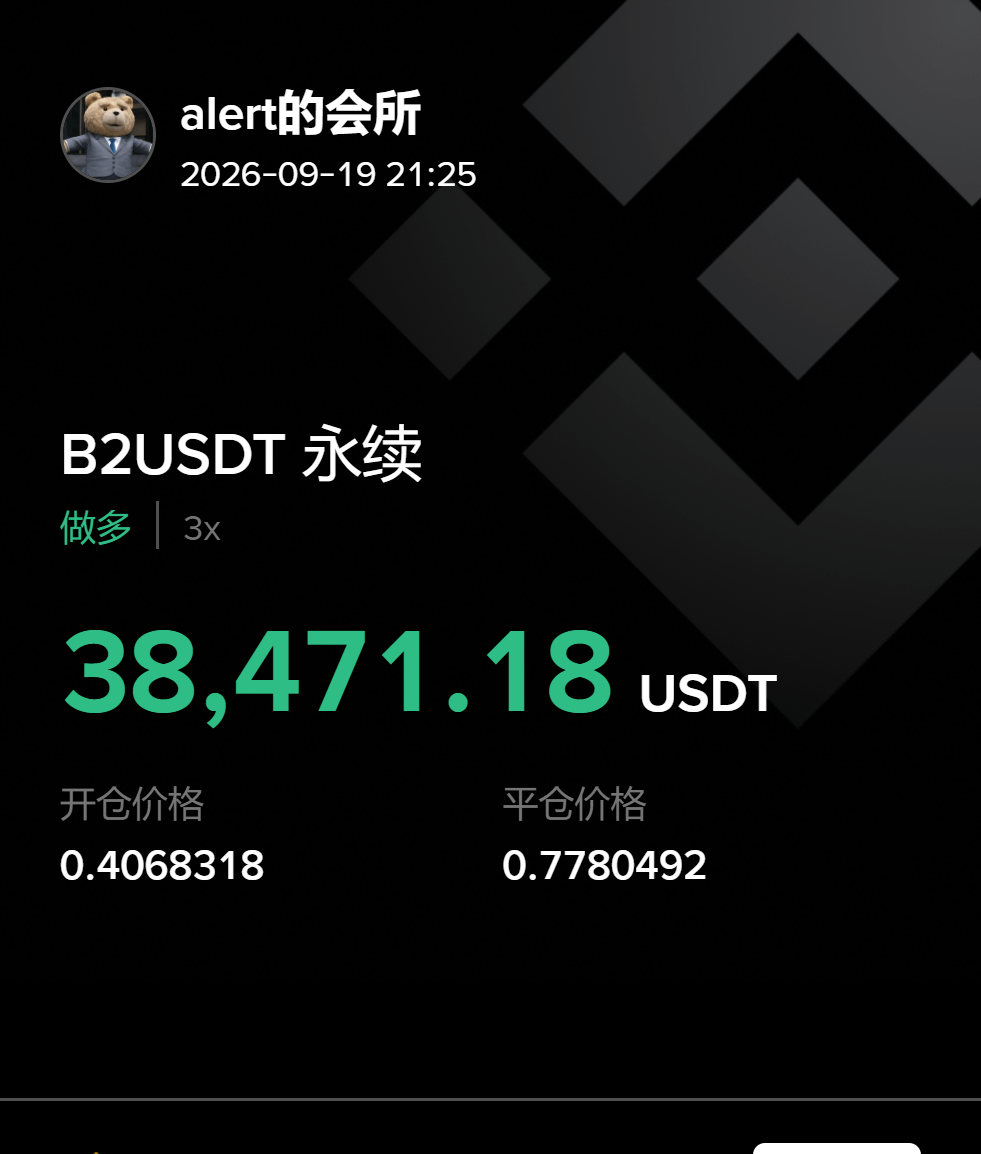
Let’s talk about trading again: about a month ago, I bought six coins on BSC.
Not being able to hold isn’t the reason you don’t make money. The real reason you don’t make money is self-deception and trying only a little.
A month ago, I traded $AKE . The volatility was too high, and in the end I woke up too early and caught the late train.
I’ve been thinking: is there a more reliable way to find some “hot” coins—maybe even set a trap and wait?
There are two expectations here:
1. Coins on BSC with a market cap below 2000w, and the liquidity/position holders have redistribution and concentration.
The “shell” price on Binance perps is around 1000w. Even if the 2000w spot price may not be sold for 1000w, they’re still controlling the float—then it will launch.
Monitoring point: when OI is close to the market cap or greater than the market cap.
2. There’s some level of consensus/“narrative” injected.
Take Binance Life as an example: as a meme, if there’s a team behind it, they’ll definitely consider risk.
Especially during the bear market, and when they were reducing the number of listings.
And the biggest advantage of Life is there’s no delisting risk. Even if four does some dirty, tiring work, they’re still treated like the “real child”—just the same.
No matter whether it’s the cost of accumulating positions or the time involved, you can get reliable returns.
In summary: whether it’s spot or futures, you can buy and hold.
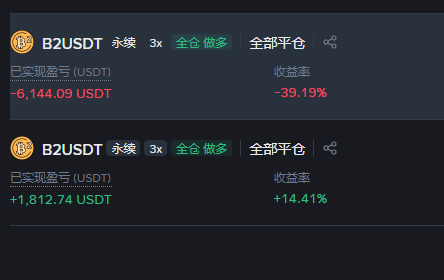
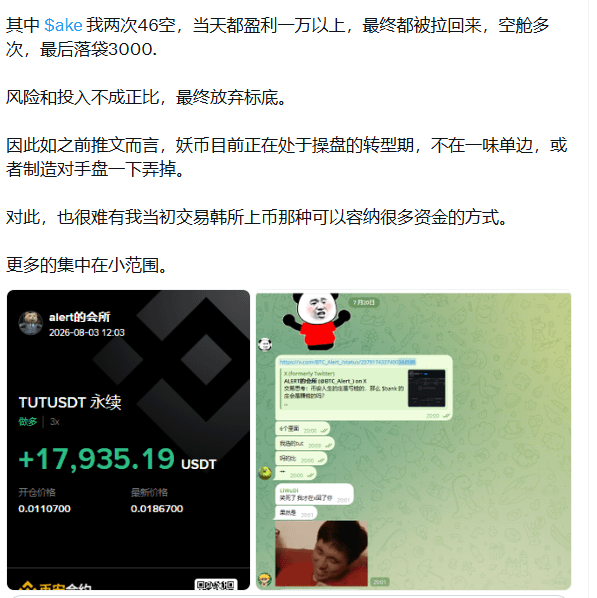
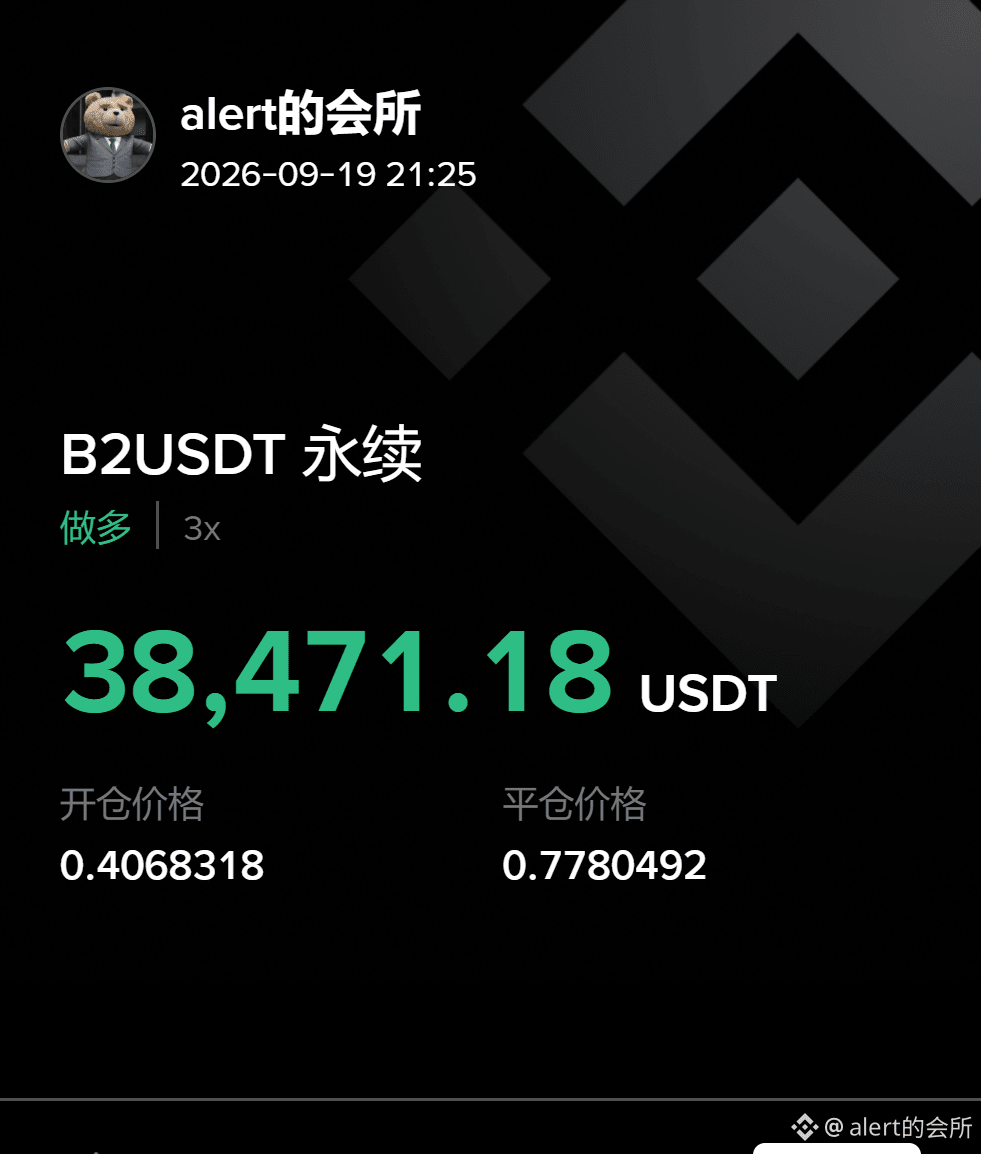
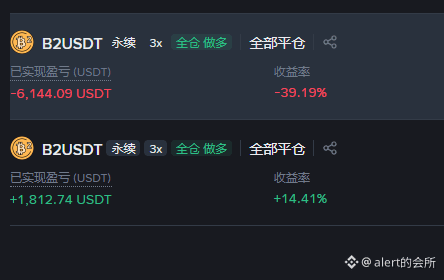
What I chose is 4 — White Cloth $Lobster $B2 tut tst I’m here, damn it.
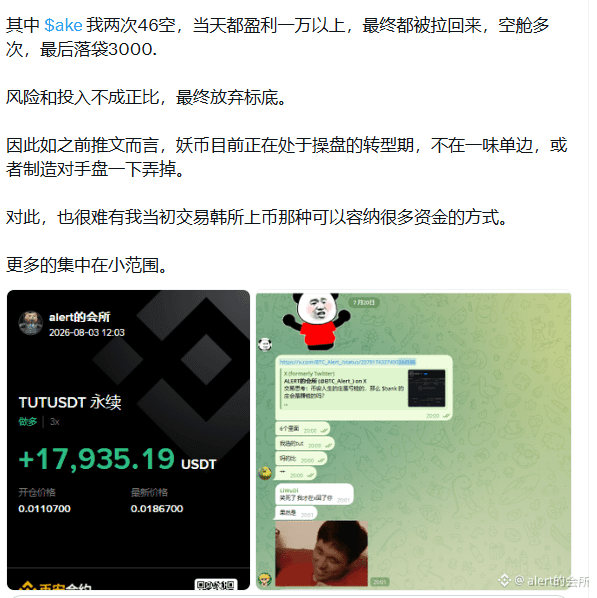
From the whole community, only $TUT made money.
The reason is simple: the holding experience is good—after 4-5 days, it brought more trades and even compensation events from other exchanges.
But many people didn’t hold.
The info I saw was:
“Brother, are you still there?”
“I’m screwed—lost a lot!”
“I’m still here. I added.”
“Or they started daydreaming.”
Why they added? No one knows. Whether expectations changed is unclear. I don’t know if OI or the order book changed, whether the float increased on-chain, or whether there were any suspicious transfer operations—nobody mentions any of that.
This is simply the most basic thing in futures trading: no special technique needed. You could even just pick any monitor and do it.
I spent a long time writing a recap post, and they seemed excited, but they didn’t dig into it much.
It seems like: they think they can find a convincing-sounding rationale to persuade themselves, then have a sudden realization and treat it as a “gain,” reassuring themselves that everything makes sense.
In the end: consoling themselves for missing out—haha, I’m the one who didn’t hold.
But: is it only that you didn’t hold?
Even up to today, there are still people talking about the -2% futures fee cap.
And that was already after so many versions passed.
Not being able to hold isn’t the reason you don’t make money. The real reason you don’t make money is self-deception and trying only a little.
A month ago, I traded $AKE . The volatility was too high, and in the end I woke up too early and caught the late train.
I’ve been thinking: is there a more reliable way to find some “hot” coins—maybe even set a trap and wait?
There are two expectations here:
1. Coins on BSC with a market cap below 2000w, and the liquidity/position holders have redistribution and concentration.
The “shell” price on Binance perps is around 1000w. Even if the 2000w spot price may not be sold for 1000w, they’re still controlling the float—then it will launch.
Monitoring point: when OI is close to the market cap or greater than the market cap.
2. There’s some level of consensus/“narrative” injected.
Take Binance Life as an example: as a meme, if there’s a team behind it, they’ll definitely consider risk.
Especially during the bear market, and when they were reducing the number of listings.
And the biggest advantage of Life is there’s no delisting risk. Even if four does some dirty, tiring work, they’re still treated like the “real child”—just the same.
No matter whether it’s the cost of accumulating positions or the time involved, you can get reliable returns.
In summary: whether it’s spot or futures, you can buy and hold.
What I chose is 4 — White Cloth $Lobster $B2 tut tst I’m here, damn it.
From the whole community, only $TUT made money.
The reason is simple: the holding experience is good—after 4-5 days, it brought more trades and even compensation events from other exchanges.
But many people didn’t hold.
The info I saw was:
“Brother, are you still there?”
“I’m screwed—lost a lot!”
“I’m still here. I added.”
“Or they started daydreaming.”
Why they added? No one knows. Whether expectations changed is unclear. I don’t know if OI or the order book changed, whether the float increased on-chain, or whether there were any suspicious transfer operations—nobody mentions any of that.
This is simply the most basic thing in futures trading: no special technique needed. You could even just pick any monitor and do it.
I spent a long time writing a recap post, and they seemed excited, but they didn’t dig into it much.
It seems like: they think they can find a convincing-sounding rationale to persuade themselves, then have a sudden realization and treat it as a “gain,” reassuring themselves that everything makes sense.
In the end: consoling themselves for missing out—haha, I’m the one who didn’t hold.
But: is it only that you didn’t hold?
Even up to today, there are still people talking about the -2% futures fee cap.
And that was already after so many versions passed.


alert的会所
·
--
Let’s talk about trading again:
$TUT
0.027 closed the position and sold too early—now it’s 0.03, but the profit barely comes to under 30k in cash-in.
$GRVT
On the Hong Kong Exchange (Han?), shorting 0.313, and 0.34+ on the way. The basis is from the past few days’ tweets:
1. The Hong Kong/Han exchange has not provided any basis data.
2. With the air drop, he can place orders and stack bids at the GRVT main site, using the spread protection zone to push down the air drop selling price; then on OK, he unloads the goods. So after this UP, it will definitely be sold too—the character is there.
b2 has accumulated positions/chips.
$TUT
0.027 closed the position and sold too early—now it’s 0.03, but the profit barely comes to under 30k in cash-in.
$GRVT
On the Hong Kong Exchange (Han?), shorting 0.313, and 0.34+ on the way. The basis is from the past few days’ tweets:
1. The Hong Kong/Han exchange has not provided any basis data.
2. With the air drop, he can place orders and stack bids at the GRVT main site, using the spread protection zone to push down the air drop selling price; then on OK, he unloads the goods. So after this UP, it will definitely be sold too—the character is there.
b2 has accumulated positions/chips.

月半771
·
--
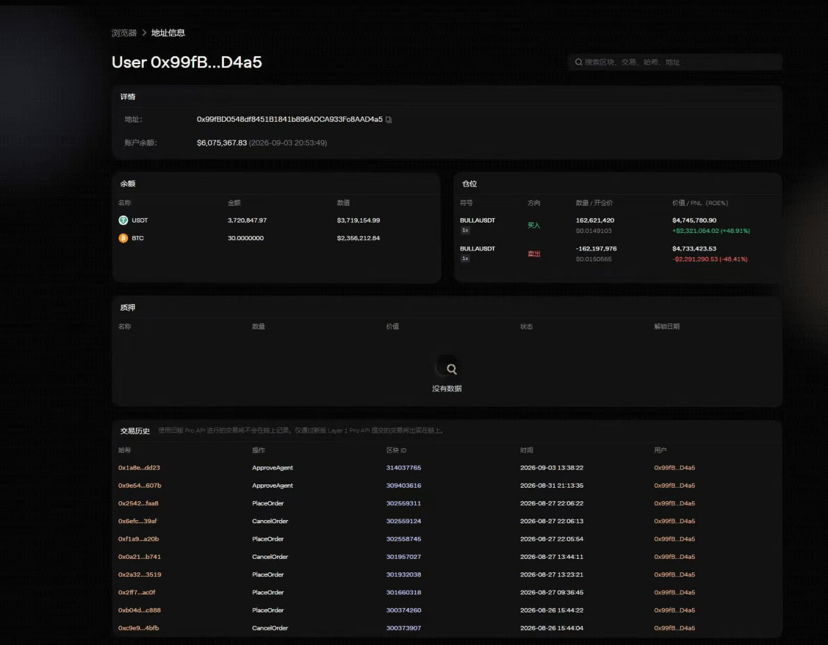
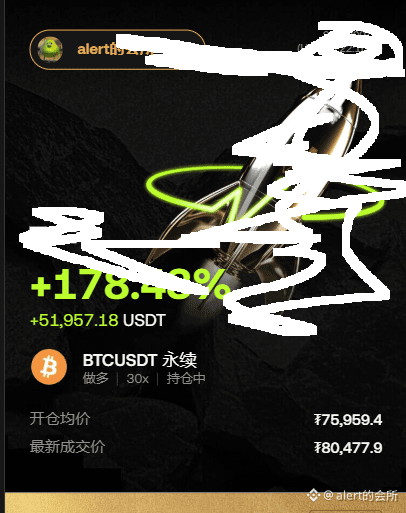
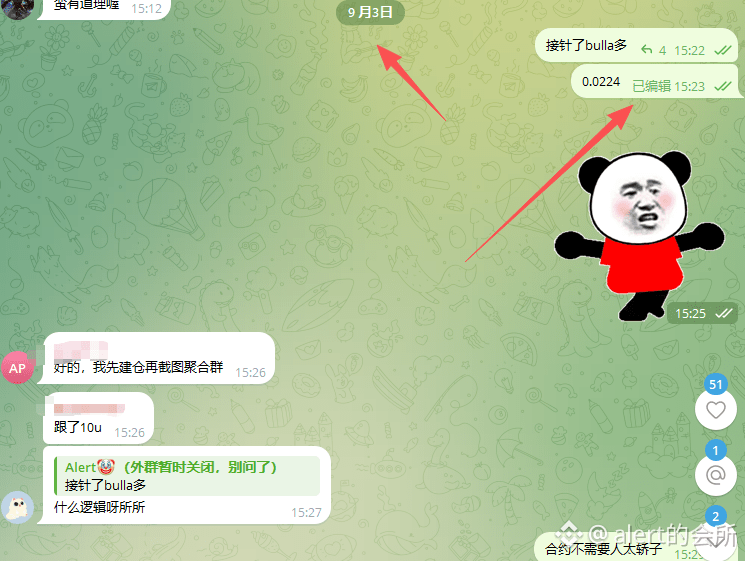
$BULLA Some friends asked me how I noticed it, so I’ll briefly explain. I’ve been paying attention to this for more than a month. What’s relatively unusual is that he opened a two-way single, so I only dared to play short-term.
Also, the on-chain big player has recently withdrawn a lot. Last night he removed the two-way single. It’s bound to pick a direction, so I’m taking a gamble. I won’t explain the details. I’m tired.
Also, the on-chain big player has recently withdrawn a lot. Last night he removed the two-way single. It’s bound to pick a direction, so I’m taking a gamble. I won’t explain the details. I’m tired.

alert的会所
·
--
Let’s talk about trading again: My bet that the Federal Reserve will most likely not raise rates this month is probably about to go away. How should I hedge it?
No desire to watch the drama—closed-door trading.
Earlier, I mentioned that since January this year, I’ve only been looking at two trades the market could take:
The Strait of Hormuz won’t open for business before June. (That one’s already won)
The Federal Reserve for this year. (Won for 9 months)
It seems that tonight/early this morning, my win rate is about to be broken.
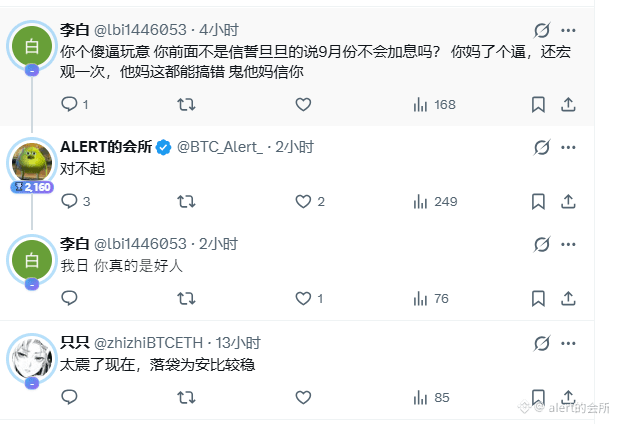
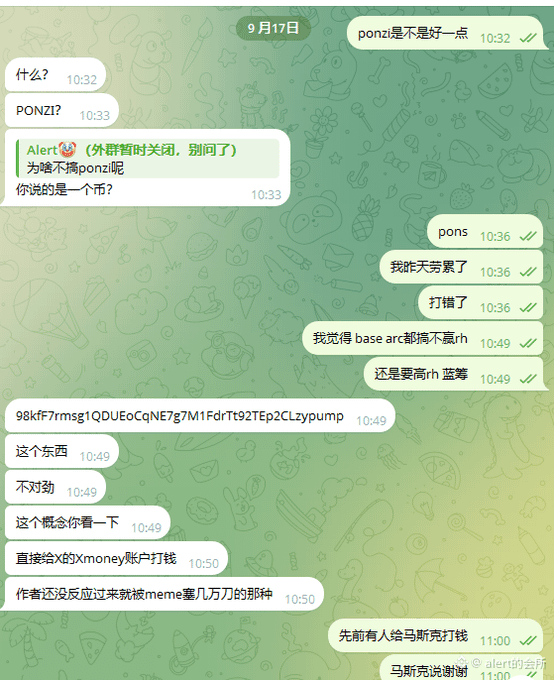
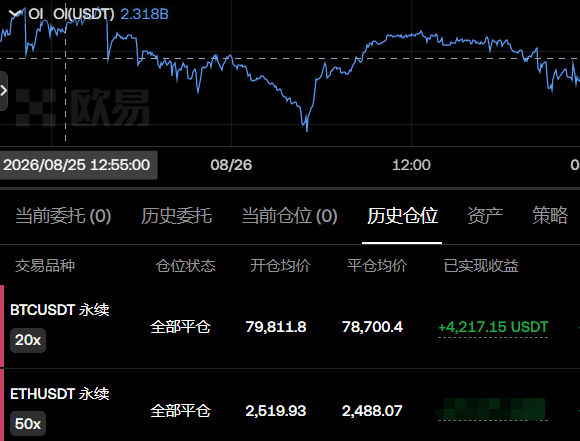
A few days ago, I went long on $BTC with a peak profit of over 10k. After taking some profits in partial sells, some positions are still open. I’m planning to add some tonight as a hedge.
What many group members find strange is this: With inflation, employment, and the economy not that high, why raise rates?
Wosh said it plainly: I won’t give forward guidance—everything is up to the market.
The bond market is pricing in two rate hikes. Will Wosh actually do it or not?
Many bloggers write that the market’s odds of a rate hike are 91%, and that if it happens, it’s bearish.
I don’t think so. Wosh is about independence; Bessent is about U.S. Treasuries— and what Bessent cares about most is the Japanese yen.
Reasoning: Bessent buys U.S. Treasuries to prop up the yen. After the CPI is around the point, he pressures the Bank of Japan to hike. Around the CPI release, most assets don’t change much; the yen is the one that moves a lot. After Bessent takes a tougher stance, the yen strengthens.
So it can be defined as a high-sensitivity baseline tied to macroeconomic factors.
If it’s the yen that’s the baseline, you don’t need to dump U.S. Treasuries to rescue the yen.
If both the U.S. and Japan hike together, it’s essentially the same as not hiking.
If we take the yen as the baseline, this rate hike is more like a preventative rate hike. Then the low-long prediction should be hedged against the market.
So even if Wosh sounds hawkish, it should still be okay—looking back historically, it’s usually fine.
Also, the next FOMC meeting is very close to the midterm election. Historically, there basically hasn’t been a situation where they do something like aggressive rate hikes in that period.
Right now, there are still enough events until December to push oil down, then you can start the rate-cut cycle.
What you need to watch is whether oil has gone below 90.
No desire to watch the drama—closed-door trading.
Earlier, I mentioned that since January this year, I’ve only been looking at two trades the market could take:
The Strait of Hormuz won’t open for business before June. (That one’s already won)
The Federal Reserve for this year. (Won for 9 months)
It seems that tonight/early this morning, my win rate is about to be broken.
A few days ago, I went long on $BTC with a peak profit of over 10k. After taking some profits in partial sells, some positions are still open. I’m planning to add some tonight as a hedge.
What many group members find strange is this: With inflation, employment, and the economy not that high, why raise rates?
Wosh said it plainly: I won’t give forward guidance—everything is up to the market.
The bond market is pricing in two rate hikes. Will Wosh actually do it or not?
Many bloggers write that the market’s odds of a rate hike are 91%, and that if it happens, it’s bearish.
I don’t think so. Wosh is about independence; Bessent is about U.S. Treasuries— and what Bessent cares about most is the Japanese yen.
Reasoning: Bessent buys U.S. Treasuries to prop up the yen. After the CPI is around the point, he pressures the Bank of Japan to hike. Around the CPI release, most assets don’t change much; the yen is the one that moves a lot. After Bessent takes a tougher stance, the yen strengthens.
So it can be defined as a high-sensitivity baseline tied to macroeconomic factors.
If it’s the yen that’s the baseline, you don’t need to dump U.S. Treasuries to rescue the yen.
If both the U.S. and Japan hike together, it’s essentially the same as not hiking.
If we take the yen as the baseline, this rate hike is more like a preventative rate hike. Then the low-long prediction should be hedged against the market.
So even if Wosh sounds hawkish, it should still be okay—looking back historically, it’s usually fine.
Also, the next FOMC meeting is very close to the midterm election. Historically, there basically hasn’t been a situation where they do something like aggressive rate hikes in that period.
Right now, there are still enough events until December to push oil down, then you can start the rate-cut cycle.
What you need to watch is whether oil has gone below 90.
alert的会所
·
--
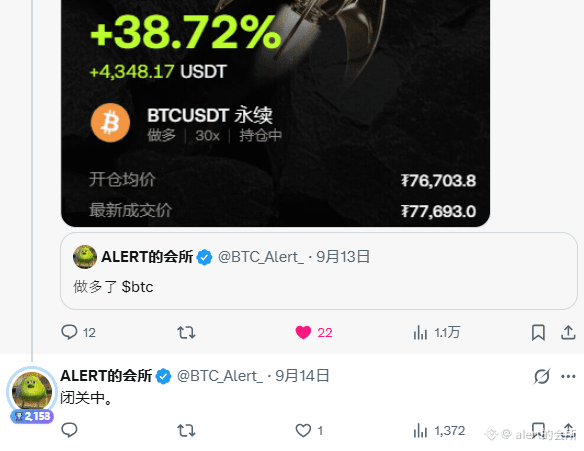
Let’s talk about trading again: what kind of “art” is it when you’re buying late, resulting in a loss of $110k.
$MEME
The highest floating profit was $130k, and then I sold off more than half at 0.1–0.13. After that, the rest I went into alpha and then sold as well. I took out $40k in total—so that’s basically a loss of $80k.
$牛来 I’m on spot. On BSC, it was another whole round of being killed; Robinhood got its valuation smashed.
I sold the RH hype and went to chase Robinhood’s “dragon one,” betting on a rebound.
$PONS Loss of $16k. Actually, the expectation was that it wouldn’t break 0.6 and would bounce back. The last bounce was very strong, but this one was weak. There was selling from the front seats, so I made a quick swing trade and wanted to claw back the loss on a small altcoin. When I saw the front-seat selling, I just left.
That altcoin loss was $7,200.
I don’t know how it happened—before, everyone would sweep in together and then discuss trade expectations. Now everyone’s just turned into late buyers.
A group mate originally went long at 0.658. Seeing the price was higher than mine, he bailed immediately—insisting on being the late buyer.
I was mocking that this isn’t trading. What kind of trade has “good lights only for late buyers”?
In the end, he just chuckled. He didn’t get the art of late buying.
How can the group admin go first, and then the next few thousand people wait to be late buyers?
$MEME
The highest floating profit was $130k, and then I sold off more than half at 0.1–0.13. After that, the rest I went into alpha and then sold as well. I took out $40k in total—so that’s basically a loss of $80k.
$牛来 I’m on spot. On BSC, it was another whole round of being killed; Robinhood got its valuation smashed.
I sold the RH hype and went to chase Robinhood’s “dragon one,” betting on a rebound.
$PONS Loss of $16k. Actually, the expectation was that it wouldn’t break 0.6 and would bounce back. The last bounce was very strong, but this one was weak. There was selling from the front seats, so I made a quick swing trade and wanted to claw back the loss on a small altcoin. When I saw the front-seat selling, I just left.
That altcoin loss was $7,200.
I don’t know how it happened—before, everyone would sweep in together and then discuss trade expectations. Now everyone’s just turned into late buyers.
A group mate originally went long at 0.658. Seeing the price was higher than mine, he bailed immediately—insisting on being the late buyer.
I was mocking that this isn’t trading. What kind of trade has “good lights only for late buyers”?
In the end, he just chuckled. He didn’t get the art of late buying.
How can the group admin go first, and then the next few thousand people wait to be late buyers?
alert的会所
·
--
Let’s talk about trading again: what kind of “art” is it when you’re buying late, resulting in a loss of $110k.
$MEME
The highest floating profit was $130k, and then I sold off more than half at 0.1–0.13. After that, the rest I went into alpha and then sold as well. I took out $40k in total—so that’s basically a loss of $80k.
$牛来 I’m on spot. On BSC, it was another whole round of being killed; Robinhood got its valuation smashed.
I sold the RH hype and went to chase Robinhood’s “dragon one,” betting on a rebound.
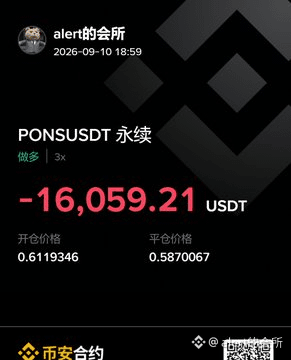
$PONS Loss of $16k. Actually, the expectation was that it wouldn’t break 0.6 and would bounce back. The last bounce was very strong, but this one was weak. There was selling from the front seats, so I made a quick swing trade and wanted to claw back the loss on a small altcoin. When I saw the front-seat selling, I just left.
That altcoin loss was $7,200.
I don’t know how it happened—before, everyone would sweep in together and then discuss trade expectations. Now everyone’s just turned into late buyers.
A group mate originally went long at 0.658. Seeing the price was higher than mine, he bailed immediately—insisting on being the late buyer.
I was mocking that this isn’t trading. What kind of trade has “good lights only for late buyers”?
In the end, he just chuckled. He didn’t get the art of late buying.
How can the group admin go first, and then the next few thousand people wait to be late buyers?
$MEME
The highest floating profit was $130k, and then I sold off more than half at 0.1–0.13. After that, the rest I went into alpha and then sold as well. I took out $40k in total—so that’s basically a loss of $80k.
$牛来 I’m on spot. On BSC, it was another whole round of being killed; Robinhood got its valuation smashed.
I sold the RH hype and went to chase Robinhood’s “dragon one,” betting on a rebound.
$PONS Loss of $16k. Actually, the expectation was that it wouldn’t break 0.6 and would bounce back. The last bounce was very strong, but this one was weak. There was selling from the front seats, so I made a quick swing trade and wanted to claw back the loss on a small altcoin. When I saw the front-seat selling, I just left.
That altcoin loss was $7,200.
I don’t know how it happened—before, everyone would sweep in together and then discuss trade expectations. Now everyone’s just turned into late buyers.
A group mate originally went long at 0.658. Seeing the price was higher than mine, he bailed immediately—insisting on being the late buyer.
I was mocking that this isn’t trading. What kind of trade has “good lights only for late buyers”?
In the end, he just chuckled. He didn’t get the art of late buying.
How can the group admin go first, and then the next few thousand people wait to be late buyers?

alert的会所
·
--
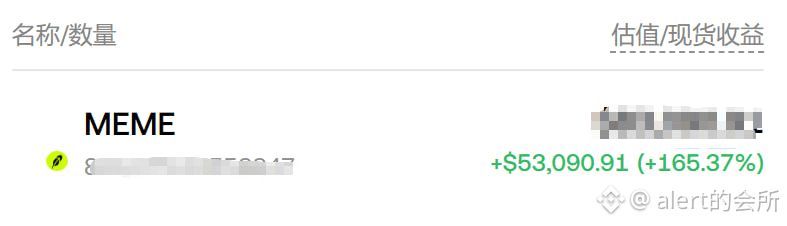
I slept too soundly and lost $80k.
Previously bought with the expectation of $MEME
I thought this week the war of words would escalate, and then more people would join in.
Last night it reached 0.21, and I fell asleep; a friend reminded me.
The highest it reached was 0.21.
Now it's 0.1, with a peak profit of $130k.
Now there's only $50k left, 13-5=8.
Missed out on making $80k.
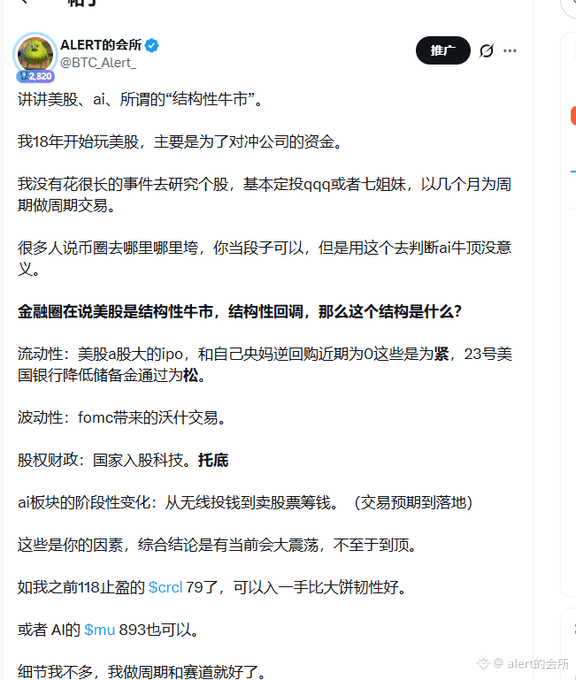
For the order entry and expectations, see the tweet/image as shown.
Previously bought with the expectation of $MEME
I thought this week the war of words would escalate, and then more people would join in.
Last night it reached 0.21, and I fell asleep; a friend reminded me.
The highest it reached was 0.21.
Now it's 0.1, with a peak profit of $130k.
Now there's only $50k left, 13-5=8.
Missed out on making $80k.
For the order entry and expectations, see the tweet/image as shown.
Partly True


alert的会所
·
--
About trading again: I don’t have the energy to play Robinhood; I’ll stick to what I’m good at.
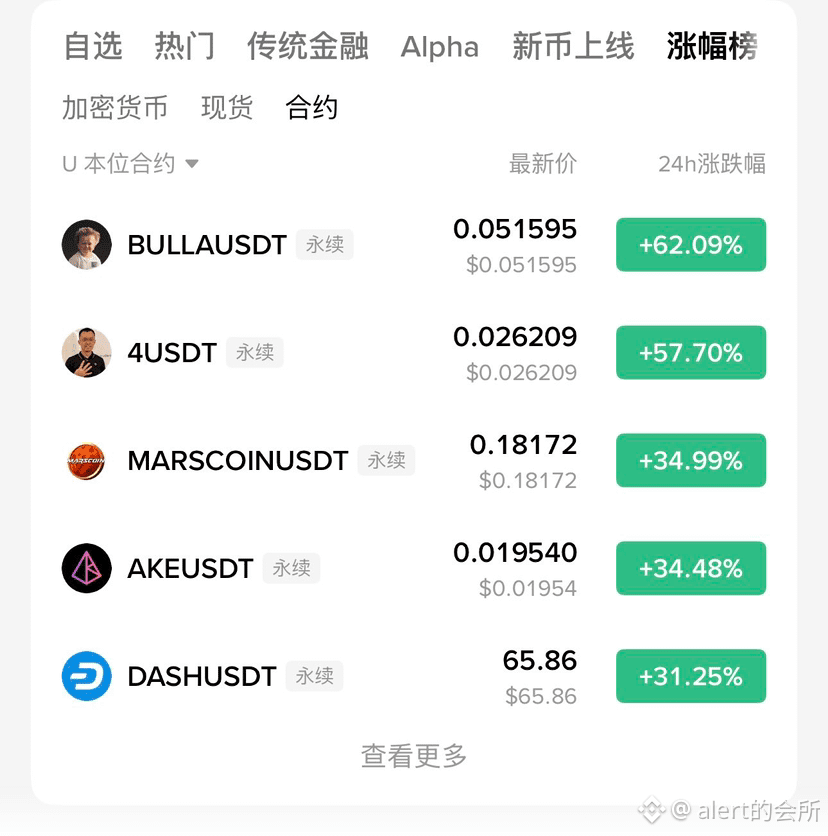
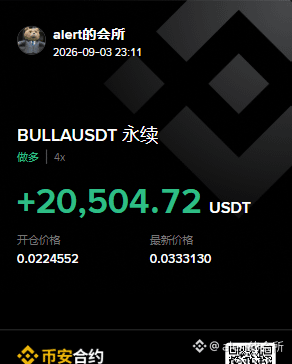
1. $BULLA : Last night I detected extraction from Matcha. By midday, the order book became thinner—around 2 million OI.
Consolidate the chips, reduce liquidity, and earlier they only poked OI for themselves.
Getting in to go long—calling it a “妖币” doesn’t help. When the OI from non-firms increases, the market maker will definitely keep washing. You can only discuss it in the community.
2. CP’s transfer went to dgrid’s test address. It seemed likely to go up on Alpha, but it never got announced.
cb and okx have spot trading; if it does go up on Alpha, it might surge into futures. I’m preparing 200 million to take it.
Maybe it was because the cake deployment of liquidity couldn’t be worked out—no Alpha, so I gave up on the trade.
3. $AKE triggered an alert. Did it mean abandoning BTR and continuing to do AKE instead—cutting the cross-exchange arbitrage? I’m impotent; I went to bed and woke up early and missed it.
I basically don’t check Twitter or news anymore—everything is just shitcoins making money.
Many people also write “Robinhood” because writing it gets traffic. Exchanges are competing for trading volume, and they’re all reducing trading fees.
BN’s delisting happened faster than its listing; the shell token price skyrocketed. Lots of other shitcoins are also taking advantage while the market still has room to move.
Focus on what you’re good at. Traffic is of little use—make money first.
Good night.
1. $BULLA : Last night I detected extraction from Matcha. By midday, the order book became thinner—around 2 million OI.
Consolidate the chips, reduce liquidity, and earlier they only poked OI for themselves.
Getting in to go long—calling it a “妖币” doesn’t help. When the OI from non-firms increases, the market maker will definitely keep washing. You can only discuss it in the community.
2. CP’s transfer went to dgrid’s test address. It seemed likely to go up on Alpha, but it never got announced.
cb and okx have spot trading; if it does go up on Alpha, it might surge into futures. I’m preparing 200 million to take it.
Maybe it was because the cake deployment of liquidity couldn’t be worked out—no Alpha, so I gave up on the trade.
3. $AKE triggered an alert. Did it mean abandoning BTR and continuing to do AKE instead—cutting the cross-exchange arbitrage? I’m impotent; I went to bed and woke up early and missed it.
I basically don’t check Twitter or news anymore—everything is just shitcoins making money.
Many people also write “Robinhood” because writing it gets traffic. Exchanges are competing for trading volume, and they’re all reducing trading fees.
BN’s delisting happened faster than its listing; the shell token price skyrocketed. Lots of other shitcoins are also taking advantage while the market still has room to move.
Focus on what you’re good at. Traffic is of little use—make money first.
Good night.
alert的会所
·
--
$BTR On-chain no action, oi reduced it.
Seeing the profit drawdown feels bad in my heart; it was up to almost 4w at its highest.
I can’t be bothered to gamble anymore—let it be, close it out.
The rest of you go ahead and profit.
Seeing the profit drawdown feels bad in my heart; it was up to almost 4w at its highest.
I can’t be bothered to gamble anymore—let it be, close it out.
The rest of you go ahead and profit.
Verified
alert的会所
·
--
Let’s talk about trading again:
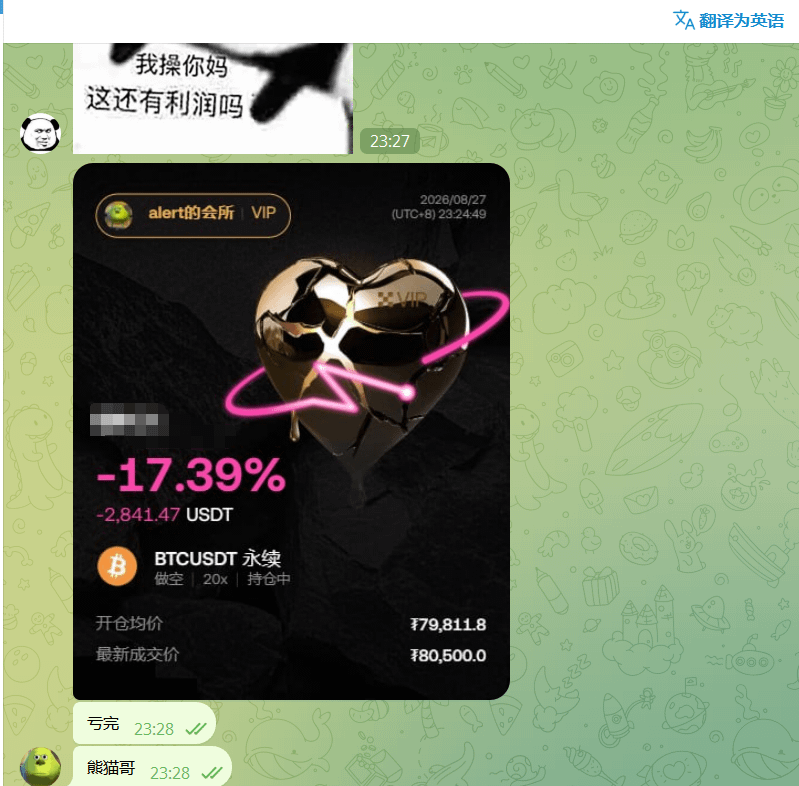
By betting that the Washman has a slightly more hawkish expectation, we’ve been fighting against the trade since yesterday.
$BTC said it yesterday and lost all the way until today.
$ETH went in with high leverage on a short-term trade, originally hoping to take a big win.
But who knew that Wash is such a softie.
We haven’t clawed back the $18k loss yet, and overall it’s just been giving a hawkish expectation.
But when he said he’s looking at prices, then it provides a path.
If the relevant departments give price data, then he has an excuse.
The market will still think Wash is a softie.
By betting that the Washman has a slightly more hawkish expectation, we’ve been fighting against the trade since yesterday.
$BTC said it yesterday and lost all the way until today.
$ETH went in with high leverage on a short-term trade, originally hoping to take a big win.
But who knew that Wash is such a softie.
We haven’t clawed back the $18k loss yet, and overall it’s just been giving a hawkish expectation.
But when he said he’s looking at prices, then it provides a path.
If the relevant departments give price data, then he has an excuse.
The market will still think Wash is a softie.
Log in to explore more content