
小饼的撸毛日记
1.3k Posts

小饼的撸毛日记
19年入圈。穿越两轮牛熊。全职Crypto,Trader,BTC/BNB 长期持有者。Alpha撸毛策略探索者,深度分享:alpha交流 LH688E
Open Trade

BNB Holder
High-Frequency Trader
5.8 Years
86 Following
2.5K+ Followers
6.2K+ Liked
Posts
Portfolio
All
Quotes
Videos
Live
A friend asked: “I’m watching a Dusk validator. He missed blocks consecutively and got penalized—does that count as malicious intent?” At first I thought: a penalty is a penalty; there’s nothing to argue. The Cosmos-style double-signing just locks them up—no point debating.
Later I looked up Dusk’s slashing/penalty mechanism and found there are two types. Soft Slashing, a soft penalty, is designed for non-malicious mistakes—for example, the node goes offline when it should produce blocks, or it fails to broadcast within the window. It’s not about wrongdoing; it’s an operational issue. The penalty is: each time a validator violates consecutively, it deducts N multiplied by 10% of its staked rewards. Here, N is the number of consecutive violations. At the same time, it removes the node from consensus for N epochs. An epoch is Dusk’s consensus period; at the end of each round, the validator set rotates once. The DUSK that gets penalized isn’t destroyed—it’s transferred out of the active stake, and the node can retrieve it itself.
Hard Slashing, a hard penalty, is for malicious behavior. Generating invalid blocks costs 10% of the stake and destroys it. Double voting or double block production costs 20% of the stake and destroys it. Destruction is real—gone permanently, not locked for a while and then returned.
I couldn’t understand why they split it into two types. Later I realized from the documentation section on accountability/pursuability. If a node simply misses blocks due to network fluctuations, and it gets punished heavily, validators will put nodes on the most expensive cloud setups. That drives up operational costs, and decentralization actually gets worse. The point of Soft Slashing is to push unreliable nodes out of the active set, while giving them a chance to recover. Penalize a little each time; honest operators won’t be driven into bankruptcy.
What truly changed my mind was the setting of N. The more consecutive violations there are, the more you lose, and the longer the time you’re kicked out. The first time you go offline you lose 10% and are removed for 1 epoch; the second time it’s 20% and removed for 2 epochs—an exponential kind of pressure. The node either recovers and becomes stable, or it automatically steps away. Hard Slashing is reserved for clear-cut malicious acts: one time, destroyed, with no recovery window.
Compare that to Polkadot. Polkadot’s Slashing is also tiered, but the penalty ratios are more granular—from 0.1% up to 100%—and the fines are distributed to the reporters. Dusk’s approach is simpler: either it’s negligence or it’s malicious intent; the ratios are fixed; destroying stake doesn’t reward reporting. The advantage is that validators can predict the cost of making mistakes. They won’t hesitate to run nodes just because the rules are too complex.
After hearing this, my friend said he accepts this time’s Soft Slashing—because his home network dropped for half an hour. I also understand why Dusk is so careful about separating the mechanisms. Without tiered penalties, honest nodes and malicious nodes would effectively be treated the same. #dusk $DUSK @Dusk
Later I looked up Dusk’s slashing/penalty mechanism and found there are two types. Soft Slashing, a soft penalty, is designed for non-malicious mistakes—for example, the node goes offline when it should produce blocks, or it fails to broadcast within the window. It’s not about wrongdoing; it’s an operational issue. The penalty is: each time a validator violates consecutively, it deducts N multiplied by 10% of its staked rewards. Here, N is the number of consecutive violations. At the same time, it removes the node from consensus for N epochs. An epoch is Dusk’s consensus period; at the end of each round, the validator set rotates once. The DUSK that gets penalized isn’t destroyed—it’s transferred out of the active stake, and the node can retrieve it itself.
Hard Slashing, a hard penalty, is for malicious behavior. Generating invalid blocks costs 10% of the stake and destroys it. Double voting or double block production costs 20% of the stake and destroys it. Destruction is real—gone permanently, not locked for a while and then returned.
I couldn’t understand why they split it into two types. Later I realized from the documentation section on accountability/pursuability. If a node simply misses blocks due to network fluctuations, and it gets punished heavily, validators will put nodes on the most expensive cloud setups. That drives up operational costs, and decentralization actually gets worse. The point of Soft Slashing is to push unreliable nodes out of the active set, while giving them a chance to recover. Penalize a little each time; honest operators won’t be driven into bankruptcy.
What truly changed my mind was the setting of N. The more consecutive violations there are, the more you lose, and the longer the time you’re kicked out. The first time you go offline you lose 10% and are removed for 1 epoch; the second time it’s 20% and removed for 2 epochs—an exponential kind of pressure. The node either recovers and becomes stable, or it automatically steps away. Hard Slashing is reserved for clear-cut malicious acts: one time, destroyed, with no recovery window.
Compare that to Polkadot. Polkadot’s Slashing is also tiered, but the penalty ratios are more granular—from 0.1% up to 100%—and the fines are distributed to the reporters. Dusk’s approach is simpler: either it’s negligence or it’s malicious intent; the ratios are fixed; destroying stake doesn’t reward reporting. The advantage is that validators can predict the cost of making mistakes. They won’t hesitate to run nodes just because the rules are too complex.
After hearing this, my friend said he accepts this time’s Soft Slashing—because his home network dropped for half an hour. I also understand why Dusk is so careful about separating the mechanisms. Without tiered penalties, honest nodes and malicious nodes would effectively be treated the same. #dusk $DUSK @Dusk
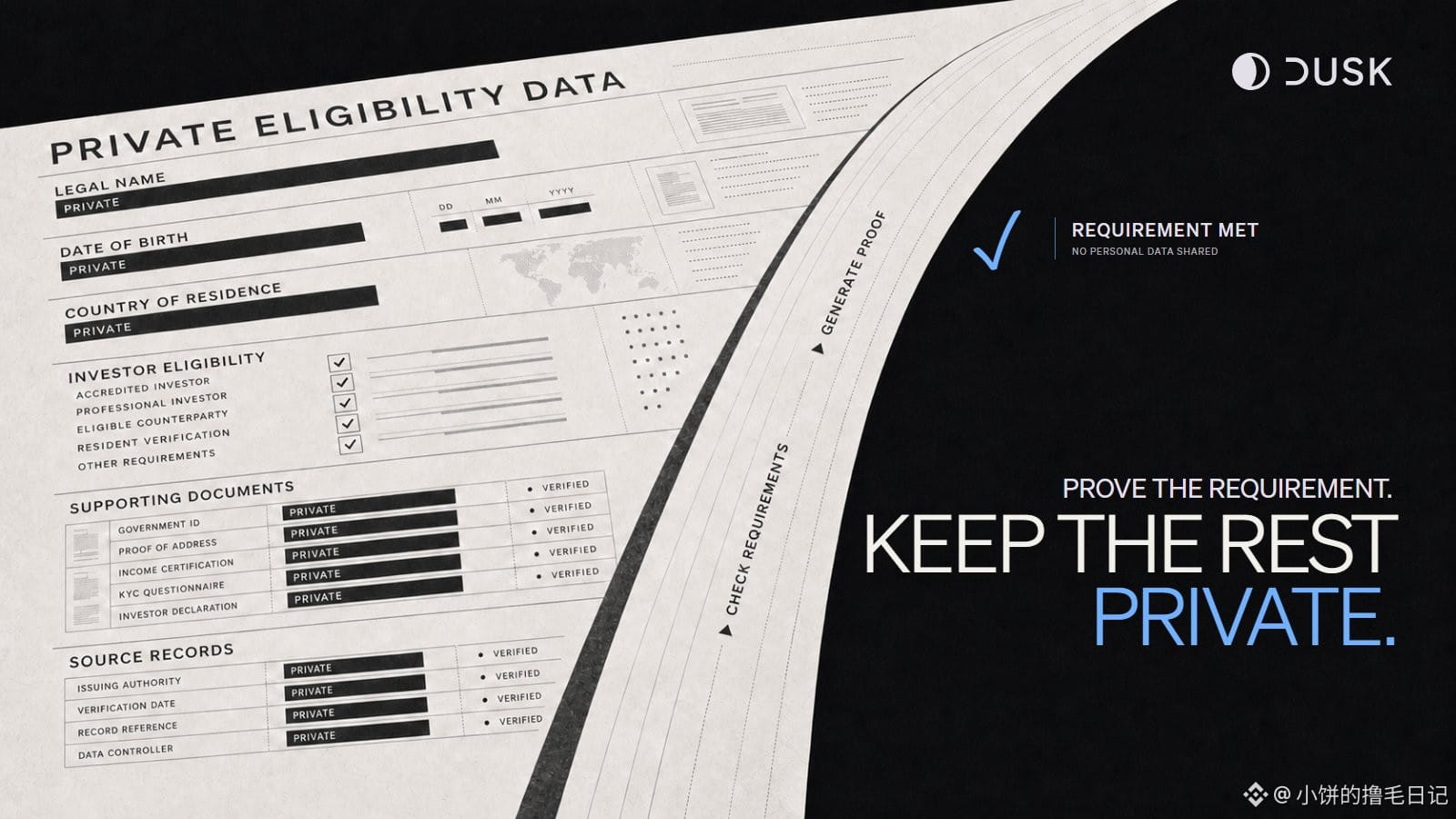
I翻t Dusk's node documentation that day, and the official minimum requirements for Provisioner nodes said 2 CPU cores, 4GB of memory, and 50GB of storage. It doesn’t sound high, right? A typical cloud server can run it.
But I also looked up the Archive node: 4 CPU cores, 8GB of memory, and 500GB of storage. The Prover node is even more extreme—just 1 CPU core plus 1GB of memory per worker, with a minimum configuration of 4 CPU cores and 8GB of memory.
I was puzzled: in the same network, why are the hardware differences between nodes that huge?
It was only after looking into Dusk’s consensus design that I found out the SBA categorizes participants into two types. One is the Block Generator, which is selected anonymously through Proof-of-Blind-Bid, and then produces blocks anonymously. The other is the Provisioner, responsible for vote verification and finalizing blocks. For each successfully produced block, 1 Generator and 192 Provisioners receive rewards. The Provisioner voting committee is reselected every round via deterministic selection.
Provisioners must verify the legitimacy of blocks, check the ZK proofs, broadcast BLS signature votes, and they have to do it every round. The Generator is only the one that gets selected to do the work, while the Provisioner must stay on standby at all times. Archive nodes don’t just participate in consensus—they also have to store the entire blockchain history. Prover nodes are specialized for generating ZK proofs, and that process is single-threaded and computationally intensive.
I used to think PoS networks were basically the same: as long as you stake enough DUSK, you can run a node. But later I realized Dusk is absolutely not like that. The hardware requirements for each node type vary drastically. With anonymous generator selection, Provisioner committee voting, Prover handling ZK computation, and Archive storing full history, each layer consumes different hardware resources.
But what worries me even more is this: Dusk now has 206 active Provisioners, and the top 20 control more than 35% of the stake. After the hardware tiers are in place, only a small group can run Archive and Prover nodes—and it’s likely that these people are also the ones with the most capital. This isn’t just a token distribution issue. The hardware threshold itself is the first filter. Ordinary retail users can’t even reach the door—they can only put their coins into Hyperstaking pools and let others handle the rest.
Now when I look at Dusk’s decentralization, I check the node docs first, then the actual number of nodes running the three types, and finally the distribution of validator stakes. Since the three data points don’t match, “decentralization” is just a piece of rhetoric. #dusk $DUSK @Dusk
But I also looked up the Archive node: 4 CPU cores, 8GB of memory, and 500GB of storage. The Prover node is even more extreme—just 1 CPU core plus 1GB of memory per worker, with a minimum configuration of 4 CPU cores and 8GB of memory.
I was puzzled: in the same network, why are the hardware differences between nodes that huge?
It was only after looking into Dusk’s consensus design that I found out the SBA categorizes participants into two types. One is the Block Generator, which is selected anonymously through Proof-of-Blind-Bid, and then produces blocks anonymously. The other is the Provisioner, responsible for vote verification and finalizing blocks. For each successfully produced block, 1 Generator and 192 Provisioners receive rewards. The Provisioner voting committee is reselected every round via deterministic selection.
Provisioners must verify the legitimacy of blocks, check the ZK proofs, broadcast BLS signature votes, and they have to do it every round. The Generator is only the one that gets selected to do the work, while the Provisioner must stay on standby at all times. Archive nodes don’t just participate in consensus—they also have to store the entire blockchain history. Prover nodes are specialized for generating ZK proofs, and that process is single-threaded and computationally intensive.
I used to think PoS networks were basically the same: as long as you stake enough DUSK, you can run a node. But later I realized Dusk is absolutely not like that. The hardware requirements for each node type vary drastically. With anonymous generator selection, Provisioner committee voting, Prover handling ZK computation, and Archive storing full history, each layer consumes different hardware resources.
But what worries me even more is this: Dusk now has 206 active Provisioners, and the top 20 control more than 35% of the stake. After the hardware tiers are in place, only a small group can run Archive and Prover nodes—and it’s likely that these people are also the ones with the most capital. This isn’t just a token distribution issue. The hardware threshold itself is the first filter. Ordinary retail users can’t even reach the door—they can only put their coins into Hyperstaking pools and let others handle the rest.
Now when I look at Dusk’s decentralization, I check the node docs first, then the actual number of nodes running the three types, and finally the distribution of validator stakes. Since the three data points don’t match, “decentralization” is just a piece of rhetoric. #dusk $DUSK @Dusk
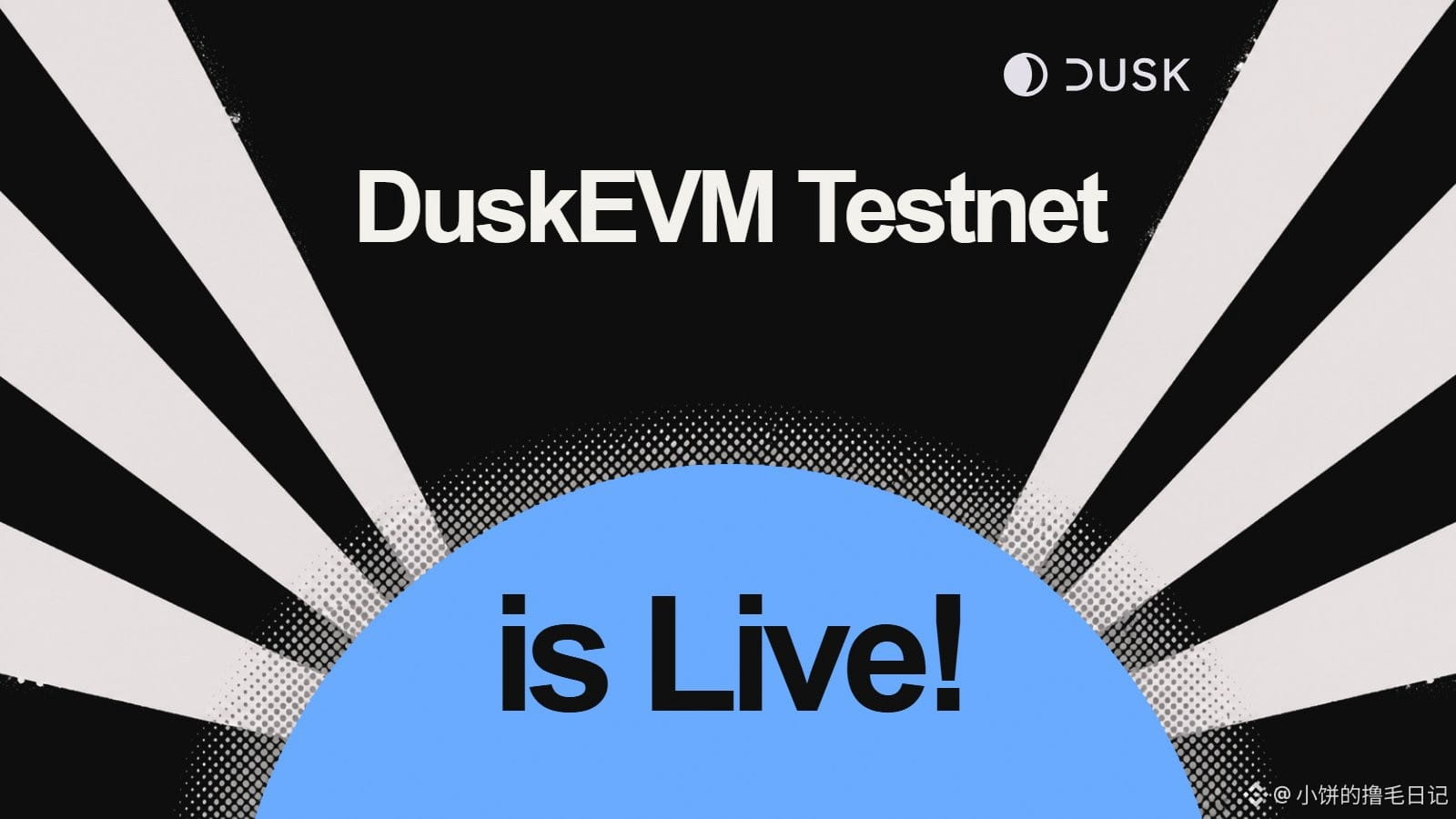
When I first researched Dusk, I was a bit skeptical about “privacy finance.” In the past, many projects claimed that privacy means “hiding,” but when you face institutions and regulated markets, it isn’t that simple. What a financial system needs isn’t invisibility—it needs to be able to prove certain things are true when verification is required.
Later, after going back through the Dusk Citadel documentation, I realized my earlier understanding was off. Citadel splits identity verification into two steps. First, the user sends an on-chain transaction, attaching a stealth address that only the user can control. The license issuer continuously scans the chain; once it sees the request sent to itself, it verifies it, mints the license to that address, and then the user scans the link to receive it. Second, the user applies for a service with the license, sends another on-chain transaction with a zero-knowledge proof attached—proving that they hold a valid license—while also computing a session cookie. This is a value that can be validated using on-chain data, and only the user and the service provider know what it means. The cookie is delivered to the service provider through an encrypted channel. The service provider then checks the session ID on-chain; only if it matches are they granted access. Everything is completed entirely on-chain, yet aside from the user and the service provider, no one knows who is applying for what.
The constraints of this zero-knowledge proof circuit are roughly 35,000; generating the proof takes on the order of a dozen seconds, while on-chain verification takes just 0.007 seconds. For users, waiting an extra dozen seconds for each initial application isn’t great, but after that, every subsequent verification is on the millisecond scale. Fortunately, licenses can be preemptively revoked, so you don’t need to wait for expiry—meaning that initial 10–odd second generation time doesn’t significantly impact the protocol’s overall performance.
Citadel aims to guarantee five things: you can prove you truly have a valid credential without exposing additional information; the service provider can revoke it, but the proof remains valid until the credential is revoked; your activity can’t be tracked; the credential can’t be reused; and only the necessary information is disclosed. These five properties, together with the Moat developer tools already encapsulated into an SDK, form the core of Dusk’s identity layer. It’s on par with DuskDS and DuskVM—it isn’t built as a standalone privacy solution. Instead, it determines who is eligible to conduct Moonlight’s public trading and Phoenix’s private trading.
After reading this, I paused and thought of something: a truly mature privacy system isn’t one where everything is invisible—it’s one where different roles can only see what they’re supposed to see. As assets move on-chain in the future, the competitive edge won’t be who can hide the most #dusk $DUSK @Dusk
Later, after going back through the Dusk Citadel documentation, I realized my earlier understanding was off. Citadel splits identity verification into two steps. First, the user sends an on-chain transaction, attaching a stealth address that only the user can control. The license issuer continuously scans the chain; once it sees the request sent to itself, it verifies it, mints the license to that address, and then the user scans the link to receive it. Second, the user applies for a service with the license, sends another on-chain transaction with a zero-knowledge proof attached—proving that they hold a valid license—while also computing a session cookie. This is a value that can be validated using on-chain data, and only the user and the service provider know what it means. The cookie is delivered to the service provider through an encrypted channel. The service provider then checks the session ID on-chain; only if it matches are they granted access. Everything is completed entirely on-chain, yet aside from the user and the service provider, no one knows who is applying for what.
The constraints of this zero-knowledge proof circuit are roughly 35,000; generating the proof takes on the order of a dozen seconds, while on-chain verification takes just 0.007 seconds. For users, waiting an extra dozen seconds for each initial application isn’t great, but after that, every subsequent verification is on the millisecond scale. Fortunately, licenses can be preemptively revoked, so you don’t need to wait for expiry—meaning that initial 10–odd second generation time doesn’t significantly impact the protocol’s overall performance.
Citadel aims to guarantee five things: you can prove you truly have a valid credential without exposing additional information; the service provider can revoke it, but the proof remains valid until the credential is revoked; your activity can’t be tracked; the credential can’t be reused; and only the necessary information is disclosed. These five properties, together with the Moat developer tools already encapsulated into an SDK, form the core of Dusk’s identity layer. It’s on par with DuskDS and DuskVM—it isn’t built as a standalone privacy solution. Instead, it determines who is eligible to conduct Moonlight’s public trading and Phoenix’s private trading.
After reading this, I paused and thought of something: a truly mature privacy system isn’t one where everything is invisible—it’s one where different roles can only see what they’re supposed to see. As assets move on-chain in the future, the competitive edge won’t be who can hide the most #dusk $DUSK @Dusk

When researching Dusk, the first thing I stared at was the DuskEVM. In the past, when I looked at projects, I used to start by checking the execution environment first—whether developers can get in, and that determines whether a chain has a future.
After going through the materials, I looked back again. This time, what truly made me stop was DuskDS.
I used to think the biggest hurdles for putting finance on-chain were speed and cost. But once I broke down Dusk’s design, I realized the real trouble is something else: after a transaction executes, who confirms that it has reached the final state?
Dusk separates execution and settlement into two layers. DuskEVM runs applications, built on OP Stack. Solidity developers can deploy directly using the same toolchain—Hardhat, MetaMask, and so on. The sequencer handles transactions, while the batcher bundles data into an EIP-4844 blob and uploads it to DuskDS. DuskDS doesn’t care what applications run on top; it only concerns consensus, data availability, and final-state confirmation.
I stared at the part of DuskDS for a long time before I finally understood what it actually does. What it runs is Succinct Attestation, a committee-based PoS protocol. Each round, a Provisioner proposes a block, one committee verifies it, and another committee finalizes it. Once finalized, it achieves deterministic finality—not like Bitcoin, which only has probabilistic finality. In normal circumstances, there is no reorg that users can perceive. To become a Provisioner, the minimum stake is 1,000 DUSK; nodes must be online 24/7. Being offline for too long or acting maliciously leads to penalties.
Only at this point did it click for me: I used to think the biggest value of blockchains is making transactions faster. But what financial markets truly fear isn’t slowness—it’s uncertainty. In a securities trade, once asset transfer is completed but the payment isn’t synchronized, or different participants see different states, then no matter how efficient it is, nobody would dare to use it.
Dusk’s deterministic settlement, in essence, is solving that problem. Finality compressed to two or three seconds, combined with delivery that fits the native payment workflow—this combination is what gives real practical value in financial settlement scenarios.
Of course, this design still ultimately needs ecosystem validation. Getting the infrastructure right is only the first step; the real value depends on whether assets and applications are willing to come in.
But after researching Dusk, the biggest change for me is this: I no longer focus only on how many transactions a single chain can process—I start to care whether it can make financial participants feel secure
#dusk $DUSK @Dusk
After going through the materials, I looked back again. This time, what truly made me stop was DuskDS.
I used to think the biggest hurdles for putting finance on-chain were speed and cost. But once I broke down Dusk’s design, I realized the real trouble is something else: after a transaction executes, who confirms that it has reached the final state?
Dusk separates execution and settlement into two layers. DuskEVM runs applications, built on OP Stack. Solidity developers can deploy directly using the same toolchain—Hardhat, MetaMask, and so on. The sequencer handles transactions, while the batcher bundles data into an EIP-4844 blob and uploads it to DuskDS. DuskDS doesn’t care what applications run on top; it only concerns consensus, data availability, and final-state confirmation.
I stared at the part of DuskDS for a long time before I finally understood what it actually does. What it runs is Succinct Attestation, a committee-based PoS protocol. Each round, a Provisioner proposes a block, one committee verifies it, and another committee finalizes it. Once finalized, it achieves deterministic finality—not like Bitcoin, which only has probabilistic finality. In normal circumstances, there is no reorg that users can perceive. To become a Provisioner, the minimum stake is 1,000 DUSK; nodes must be online 24/7. Being offline for too long or acting maliciously leads to penalties.
Only at this point did it click for me: I used to think the biggest value of blockchains is making transactions faster. But what financial markets truly fear isn’t slowness—it’s uncertainty. In a securities trade, once asset transfer is completed but the payment isn’t synchronized, or different participants see different states, then no matter how efficient it is, nobody would dare to use it.
Dusk’s deterministic settlement, in essence, is solving that problem. Finality compressed to two or three seconds, combined with delivery that fits the native payment workflow—this combination is what gives real practical value in financial settlement scenarios.
Of course, this design still ultimately needs ecosystem validation. Getting the infrastructure right is only the first step; the real value depends on whether assets and applications are willing to come in.
But after researching Dusk, the biggest change for me is this: I no longer focus only on how many transactions a single chain can process—I start to care whether it can make financial participants feel secure
#dusk $DUSK @Dusk
After Dusk announced mainnet operation, I didn’t forward it right away. Over the past few years, I’ve seen many projects: things are lively at launch, but after a few months the blocks don’t really grow and the nodes don’t change much. So this time I didn’t rush to write—instead, I kept watching on-chain data for several straight days.
First, I checked whether block height kept changing consistently, whether the block production cadence was stable, and whether participation had truly kept up. In the past, when judging a chain’s value, I was used to looking at marketing and transaction volume. But after observing these days, what can’t lie is whether the network has formed a continuous running state. This conclusion is cold, but the more I look, the more I agree.
What really made me pause was Dusk’s Succinct Attestation. It’s DuskDS’s underlying committee-based PoS consensus protocol, where a randomly selected Provisioner proposes, validates, and finalizes blocks. Each consensus round has three steps: in the Proposal phase, a selected Provisioner creates and broadcasts a candidate block; in the Validation phase, a committee checks the block’s validity, and three-quarters absolute majority approval is required; in the Ratification phase, another committee confirms and finally finalizes the block. Once a block passes Ratification, it enters a deterministic final state and will not be rolled back.
I read this detail twice, because it’s not about “probabilistic safety,” but about “once confirmed, it really is over.”
This matters a lot for financial scenarios. Many chains’ logic is to wait a bit longer—there’s a high probability it won’t roll back. But securities, clearing and settlement, and compliant assets don’t accept “high probability.” What they need is a clear outcome: if it’s confirmed yesterday, it shouldn’t be overturned today. I used to think finality was just a technical metric; only now do I realize it’s the threshold for whether institutions are willing to put real assets on-chain.
Becoming a Provisioner isn’t complicated. Stake at least 1000 DUSK and run a node. The node must be online 24/7, with a minimum of 2 CPU cores, 4GB of memory, and 50GB of storage. After staking, about 12 hours are needed for maturity, and then you can participate in consensus. The committees select Provisioners randomly every time based on the staking-weight lottery—each time is different.
After watching these days, the biggest change isn’t that I trust Dusk more, but that I’m clearer about what I should look for. For infrastructure serving privacy and compliant finance, going live on mainnet is just the starting point. What truly matters is whether the network can stably produce a trustworthy state #dusk $DUSK @Dusk
First, I checked whether block height kept changing consistently, whether the block production cadence was stable, and whether participation had truly kept up. In the past, when judging a chain’s value, I was used to looking at marketing and transaction volume. But after observing these days, what can’t lie is whether the network has formed a continuous running state. This conclusion is cold, but the more I look, the more I agree.
What really made me pause was Dusk’s Succinct Attestation. It’s DuskDS’s underlying committee-based PoS consensus protocol, where a randomly selected Provisioner proposes, validates, and finalizes blocks. Each consensus round has three steps: in the Proposal phase, a selected Provisioner creates and broadcasts a candidate block; in the Validation phase, a committee checks the block’s validity, and three-quarters absolute majority approval is required; in the Ratification phase, another committee confirms and finally finalizes the block. Once a block passes Ratification, it enters a deterministic final state and will not be rolled back.
I read this detail twice, because it’s not about “probabilistic safety,” but about “once confirmed, it really is over.”
This matters a lot for financial scenarios. Many chains’ logic is to wait a bit longer—there’s a high probability it won’t roll back. But securities, clearing and settlement, and compliant assets don’t accept “high probability.” What they need is a clear outcome: if it’s confirmed yesterday, it shouldn’t be overturned today. I used to think finality was just a technical metric; only now do I realize it’s the threshold for whether institutions are willing to put real assets on-chain.
Becoming a Provisioner isn’t complicated. Stake at least 1000 DUSK and run a node. The node must be online 24/7, with a minimum of 2 CPU cores, 4GB of memory, and 50GB of storage. After staking, about 12 hours are needed for maturity, and then you can participate in consensus. The committees select Provisioners randomly every time based on the staking-weight lottery—each time is different.
After watching these days, the biggest change isn’t that I trust Dusk more, but that I’m clearer about what I should look for. For infrastructure serving privacy and compliant finance, going live on mainnet is just the starting point. What truly matters is whether the network can stably produce a trustworthy state #dusk $DUSK @Dusk
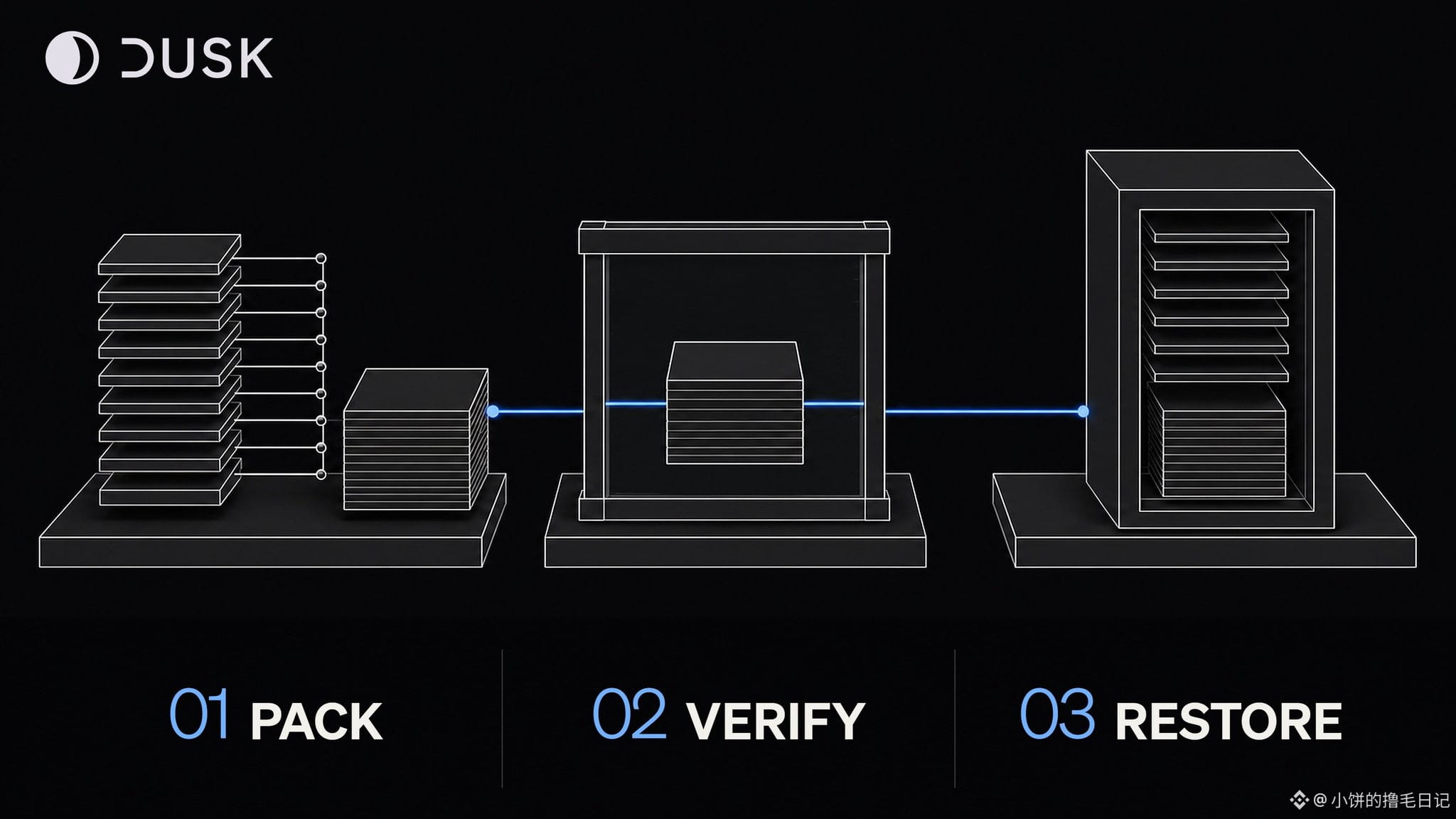
When I first started studying the Dusk consensus mechanism, I stared at the whitepaper for a long time and still couldn’t figure out what “deterministic finality” really meant. No way around it—I ended up drawing a three-column timeline comparison chart on paper and grinding through it line by line.
Ethereum’s Gasper uses probabilistic finality: blocks need to stack up across several epochs before they’re considered basically safe. Solana’s Tower BFT also takes dozens of seconds to confirm. What about Dusk’s Succinct Attestation? Once a block is approved, it’s hard, deterministic, and won’t be rolled back.
Back then, I kept looking at those three lines on my paper for a long time. A few seconds might be barely noticeable in crypto transactions, but waiting a bit longer is just fine. In a securities settlement scenario, though, those few seconds are the final safety lock for assets worth billions. You sell a stock on an exchange—settlement happens at T+2. In the meantime, whose assets are they really? If, at the moment of settlement, the chain can still roll back, who would dare put real assets on it? For retail trading, “unlikely to roll back” might be enough, but institutional settlement can’t. “Unlikely” plus “probably not” doesn’t translate to anything meaningful at the level of law and compliance.
Later, I finally figured out how Succinct Attestation actually runs by reading the official documentation. After reading that section, I could breathe easier—the confusion I’d had earlier finally had an answer. It’s a permissionless, committee-based PoS consensus protocol. The system randomly selects a set of nodes called Provisioners to propose blocks; another set of nodes is responsible for verification; and then a committee confirms the verification results and formally approves the block. Once a block completes the ratification step, it reaches deterministic finality—under normal operations, there will be no user-facing reorgs.
Dusk mainnet officially launched on January 7, 2026. It can process over 20,000 transactions per second. After a six-year development cycle, it finally moved from testnet to a stage where it can run real assets. Before Dusk, my understanding of consensus was basically that whoever produces the blocks gets the rewards, and I assumed it had little to do with ordinary users. But Dusk made me look at it differently: the choice of a consensus mechanism ultimately answers one core question—once you put your money in, does it truly count? Succinct Attestation’s answer is yes, and you don’t need the words “with probability.” #dusk $DUSK @Dusk
Ethereum’s Gasper uses probabilistic finality: blocks need to stack up across several epochs before they’re considered basically safe. Solana’s Tower BFT also takes dozens of seconds to confirm. What about Dusk’s Succinct Attestation? Once a block is approved, it’s hard, deterministic, and won’t be rolled back.
Back then, I kept looking at those three lines on my paper for a long time. A few seconds might be barely noticeable in crypto transactions, but waiting a bit longer is just fine. In a securities settlement scenario, though, those few seconds are the final safety lock for assets worth billions. You sell a stock on an exchange—settlement happens at T+2. In the meantime, whose assets are they really? If, at the moment of settlement, the chain can still roll back, who would dare put real assets on it? For retail trading, “unlikely to roll back” might be enough, but institutional settlement can’t. “Unlikely” plus “probably not” doesn’t translate to anything meaningful at the level of law and compliance.
Later, I finally figured out how Succinct Attestation actually runs by reading the official documentation. After reading that section, I could breathe easier—the confusion I’d had earlier finally had an answer. It’s a permissionless, committee-based PoS consensus protocol. The system randomly selects a set of nodes called Provisioners to propose blocks; another set of nodes is responsible for verification; and then a committee confirms the verification results and formally approves the block. Once a block completes the ratification step, it reaches deterministic finality—under normal operations, there will be no user-facing reorgs.
Dusk mainnet officially launched on January 7, 2026. It can process over 20,000 transactions per second. After a six-year development cycle, it finally moved from testnet to a stage where it can run real assets. Before Dusk, my understanding of consensus was basically that whoever produces the blocks gets the rewards, and I assumed it had little to do with ordinary users. But Dusk made me look at it differently: the choice of a consensus mechanism ultimately answers one core question—once you put your money in, does it truly count? Succinct Attestation’s answer is yes, and you don’t need the words “with probability.” #dusk $DUSK @Dusk
Last week, after completing an ETH-collateralized borrowing on the TermMax testnet, I opened my wallet and took a look at the balance. Something new showed up: an NFT. I honestly don’t remember claiming it. At the time my head was all over the place. My first reaction was that my wallet was infected, or that the testnet had air-dropped some kind of junk. I refreshed three times and it was still there. To be honest, I started to get a little panicky—what if the ETH I deposited as collateral got messed up or disappeared?
Then I went to read the official documentation. I spent almost half an hour on it, even going through community posts from the early days, and only then did I figure out that this was the GT I hadn’t paid much attention to before. Do you know what the core logic of this thing is? You borrow some money, and the protocol immediately mints you an NFT. That NFT records how much collateral you put in, how many FT you borrowed, and what MLTV parameter corresponds to the specific term. Each borrowing is its own independent NFT.
I’ve been burned by something similar on other fixed-rate lending protocols before. Even though I had already paid back part of the loan, the system still showed the original collateral ratio. It scared me into thinking I still owed again. Later I spent a long time checking with customer support and only then realized it was a frontend state synchronization delay. But that kind of anxiety—“Have I actually paid it off or not?”—is something I really don’t want to go through a second time.
Later, I thought it through, and the truly interesting part of GT is actually more than that. You can think of GT as your leveraged position packaged into a tradable item. If you don’t want to wait until maturity, you can just sell it. If someone else takes over, the debt and the collateral inside the position get transferred to them together. This is completely different from traditional borrowing. In traditional lending, your position is just a set of states inside a contract. If you want to transfer it to someone else, there’s no way—you can only close your position, withdraw collateral, and then the other party has to open a new position again. It’s a hassle. GT packages the entire position into an NFT. Want to transfer? Transfer. Want to sell? Sell. One position equals one NFT, clearly and cleanly—no mutual interference.
I used to think GT was just a basic proof-of-rights token, but now I finally understand its real value: it hands over the full ownership of your loan to the user themselves, completely and intact. After the mainnet goes live, I’m planning to open several positions with different terms and then track them one by one, watching the entire end-to-end process when GT is settled at maturity. #termmax @TermMax
Then I went to read the official documentation. I spent almost half an hour on it, even going through community posts from the early days, and only then did I figure out that this was the GT I hadn’t paid much attention to before. Do you know what the core logic of this thing is? You borrow some money, and the protocol immediately mints you an NFT. That NFT records how much collateral you put in, how many FT you borrowed, and what MLTV parameter corresponds to the specific term. Each borrowing is its own independent NFT.
I’ve been burned by something similar on other fixed-rate lending protocols before. Even though I had already paid back part of the loan, the system still showed the original collateral ratio. It scared me into thinking I still owed again. Later I spent a long time checking with customer support and only then realized it was a frontend state synchronization delay. But that kind of anxiety—“Have I actually paid it off or not?”—is something I really don’t want to go through a second time.
Later, I thought it through, and the truly interesting part of GT is actually more than that. You can think of GT as your leveraged position packaged into a tradable item. If you don’t want to wait until maturity, you can just sell it. If someone else takes over, the debt and the collateral inside the position get transferred to them together. This is completely different from traditional borrowing. In traditional lending, your position is just a set of states inside a contract. If you want to transfer it to someone else, there’s no way—you can only close your position, withdraw collateral, and then the other party has to open a new position again. It’s a hassle. GT packages the entire position into an NFT. Want to transfer? Transfer. Want to sell? Sell. One position equals one NFT, clearly and cleanly—no mutual interference.
I used to think GT was just a basic proof-of-rights token, but now I finally understand its real value: it hands over the full ownership of your loan to the user themselves, completely and intact. After the mainnet goes live, I’m planning to open several positions with different terms and then track them one by one, watching the entire end-to-end process when GT is settled at maturity. #termmax @TermMax

When I was looking at privacy chains before, I always thought that zero-knowledge proofs were already sufficient to handle most cryptographic needs. As long as you embed the transaction parameters into the proof, execution can be handled by a ZK virtual machine. But after researching Dusk’s Phoenix transaction model, I changed my mind. The real difficulty isn’t generating an anonymous transaction, but continuously maintaining the ever-changing privacy permission rules in a complex environment.
I think the Phoenix transaction model is more like a layered access control system in an office building. A typical privacy contract is like a fixed key: once you generate a valid proof, it unlocks. The Phoenix system, however, is like a dynamic permission manager. It doesn’t just check whether you have a valid proof—it also determines whether the transaction context, disclosure permissions, audit requirements, and compliance level all meet the criteria. For on-chain privacy applications, this kind of dynamic permission checking is more important than simply generating an anonymous proof.
By choosing to separate the privacy layer from the transparent EVM layer, Dusk is essentially addressing a long-term problem. In the past, many privacy chains hard-coded all privacy rules directly into the underlying smart contracts, which made modification costly and also increased upgrade risks. As application scenarios become more complex and users’ privacy needs become more diverse, a single anonymous mode can hardly accommodate business requirements that change frequently. With the separation of dual-mode accounts, developers can adjust the privacy level more flexibly, so that transaction privacy is no longer a permanent blanket permission.
But this design also introduces new engineering challenges. As the number of cross-layer transactions increases, the cost of state synchronization will rise. Version compatibility will become more complicated, and developers will need to invest more time to understand the dual-mode interaction logic. In addition, ZK proof generation speed, the Rusk SDK integration experience, and whether institutional users are willing to migrate will all affect the real-world deployment outcome.
In my view, what Dusk truly needs to validate isn’t whether the ZK privacy concept is sound, but whether this dual-mode privacy system can be used by a large number of developers over the long term. In the future, I will continue monitoring and testing the cross-layer transaction data on the testnet, the state of developer onboarding, and how often privacy permission updates occur in real applications. One question is worth thinking about: if more and more on-chain privacy scenarios emerge in the future, do we need stronger cryptographic capabilities, or better ways to manage privacy permissions?
#dusk $DUSK @Dusk
I think the Phoenix transaction model is more like a layered access control system in an office building. A typical privacy contract is like a fixed key: once you generate a valid proof, it unlocks. The Phoenix system, however, is like a dynamic permission manager. It doesn’t just check whether you have a valid proof—it also determines whether the transaction context, disclosure permissions, audit requirements, and compliance level all meet the criteria. For on-chain privacy applications, this kind of dynamic permission checking is more important than simply generating an anonymous proof.
By choosing to separate the privacy layer from the transparent EVM layer, Dusk is essentially addressing a long-term problem. In the past, many privacy chains hard-coded all privacy rules directly into the underlying smart contracts, which made modification costly and also increased upgrade risks. As application scenarios become more complex and users’ privacy needs become more diverse, a single anonymous mode can hardly accommodate business requirements that change frequently. With the separation of dual-mode accounts, developers can adjust the privacy level more flexibly, so that transaction privacy is no longer a permanent blanket permission.
But this design also introduces new engineering challenges. As the number of cross-layer transactions increases, the cost of state synchronization will rise. Version compatibility will become more complicated, and developers will need to invest more time to understand the dual-mode interaction logic. In addition, ZK proof generation speed, the Rusk SDK integration experience, and whether institutional users are willing to migrate will all affect the real-world deployment outcome.
In my view, what Dusk truly needs to validate isn’t whether the ZK privacy concept is sound, but whether this dual-mode privacy system can be used by a large number of developers over the long term. In the future, I will continue monitoring and testing the cross-layer transaction data on the testnet, the state of developer onboarding, and how often privacy permission updates occur in real applications. One question is worth thinking about: if more and more on-chain privacy scenarios emerge in the future, do we need stronger cryptographic capabilities, or better ways to manage privacy permissions?
#dusk $DUSK @Dusk
@TermMaxFi Previously, I deposited funds into Aave for 30 days at a fixed interest rate. I ran into a parameter hardcoding issue and couldn’t change it—so I lost out on a few hundred dollars of potential yield. That’s why I’m especially sensitive to the underlying assumptions behind fixed-rate products. When I was reading the TermMax whitepaper, I saw a line the team has been using as a core narrative: “Bucketed maturity AMMs are the optimal path to achieve fixed interest rates on the current chain.” The logic is pretty straightforward—floating-rate interest can’t support long-term pricing, so you lock the maturity yield by using bucketed pools.
But there’s a deadly silence: the TermMax team has never discussed what happens if, based on my personal reasoning, future mainstream lending protocols natively support fixed-rate tranches. In that case, what becomes of this bucketed AMM system? Native tranching would allow floating-rate pools to directly carve out separate fixed-rate sub-pools—no need to deploy an additional standalone maturity pool. This is the “holy grail” of long-term pricing for DeFi lending believers. Once mainstream lending protocols complete their upgrade, the schemes that currently can’t be bypassed and require standalone fixed-rate protocols will immediately be revived with full strength. A product that can open fixed-rate positions directly within the existing lending pool—without migrating liquidity across protocols—or a product that requires building a separate market-making and independent maturity pool, where every trade must match with a counterparty tied to the maturity? Which would you choose?
It’s like the old feature phones perfecting key-based interaction—then the moment full touch screens came along, they delivered an immediate dimension-reduction attack. Bucketed maturity AMMs are the feature phones now—an elegant compromise when on-chain native interest-rate capabilities are limited. Once the “straw” of native fixed-rate tranching falls, the current narrative could flip overnight.
What about $TMX? TermMax says its value capture comes from fixed-rate trading being continuously used: market making is locked with TMX collateral, fee sharing comes from TMX staking, and protocol revenue is continuously burned by destroying TMX. But once native tranching enables truly native fixed-rate capability, who would still route around to standalone bucketed maturity pools? TMX’s economic model is built on the premise that “general lending protocols can’t do fixed interest rates.” If that premise is overturned, the deflationary narrative
My view: bucketed AMMs are a locally optimal solution under current constraints—don’t treat them as eternal truth. The underlying lending protocols are evolving. The hurdle that blocks long-term fixed-rate today might be crossed with a single version iteration tomorrow. Can TermMax transition from being a “fixed-rate product provider” into a “chain interest-rate infrastructure layer #termmax @TermMax ”?
But there’s a deadly silence: the TermMax team has never discussed what happens if, based on my personal reasoning, future mainstream lending protocols natively support fixed-rate tranches. In that case, what becomes of this bucketed AMM system? Native tranching would allow floating-rate pools to directly carve out separate fixed-rate sub-pools—no need to deploy an additional standalone maturity pool. This is the “holy grail” of long-term pricing for DeFi lending believers. Once mainstream lending protocols complete their upgrade, the schemes that currently can’t be bypassed and require standalone fixed-rate protocols will immediately be revived with full strength. A product that can open fixed-rate positions directly within the existing lending pool—without migrating liquidity across protocols—or a product that requires building a separate market-making and independent maturity pool, where every trade must match with a counterparty tied to the maturity? Which would you choose?
It’s like the old feature phones perfecting key-based interaction—then the moment full touch screens came along, they delivered an immediate dimension-reduction attack. Bucketed maturity AMMs are the feature phones now—an elegant compromise when on-chain native interest-rate capabilities are limited. Once the “straw” of native fixed-rate tranching falls, the current narrative could flip overnight.
What about $TMX? TermMax says its value capture comes from fixed-rate trading being continuously used: market making is locked with TMX collateral, fee sharing comes from TMX staking, and protocol revenue is continuously burned by destroying TMX. But once native tranching enables truly native fixed-rate capability, who would still route around to standalone bucketed maturity pools? TMX’s economic model is built on the premise that “general lending protocols can’t do fixed interest rates.” If that premise is overturned, the deflationary narrative
My view: bucketed AMMs are a locally optimal solution under current constraints—don’t treat them as eternal truth. The underlying lending protocols are evolving. The hurdle that blocks long-term fixed-rate today might be crossed with a single version iteration tomorrow. Can TermMax transition from being a “fixed-rate product provider” into a “chain interest-rate infrastructure layer #termmax @TermMax ”?
I recently ran several sets of transaction-flow parallel tests with multiple accounts on Dusk. I originally thought that privacy chains mainly handle encryption and anonymity. After running transparent EVM account transactions together with privacy ZK account transactions, I realized the real headache isn’t how to encrypt—it's how the system performs validation without leaking plaintext when two “legitimate” transactions are submitted to the chain at the same time.
I used to think that privacy networks only needed to pass the proof. But increasingly, I believe that conflict handling for parallel transactions is the core long-term challenge for practical deployment.
This is a bit like two parallel lanes in a shopping district. Looking at each lane in isolation, the traffic rules seem fine. But if the lane-change rules for neighboring lanes aren’t coordinated, the whole road will jam up—or even lead to collisions. The same applies to privacy transaction networks: a single ZK transaction’s proof being valid doesn’t mean that once multiple transactions are submitted in parallel, the on-chain state will remain consistent.
Dusk combines the Phoenix privacy UTXO model, the Moonlight transparent EVM layer, the Citadel billing proof module, and the VEP targeted disclosure mechanism. In essence, it allows users to independently choose the transaction privacy level. The benefits are clear: regular users can protect the traceability of their assets with privacy accounts, while institutional users can complete compliant settlements using transparent accounts—without being constrained to a single privacy mode. But issues also arise: when one privacy transaction needs to call a transparent contract address, and another transparent transaction needs to read a privacy account’s balance, how should nodes synchronize state without revealing plaintext? Many privacy chains in the past didn’t have this problem, because they were either fully anonymous or fully transparent—there was no double-mode parallelism to begin with.
The Trade-off I’m seeing now is very clear. As privacy flexibility increases, the complexity of state validation rises; the more dual-mode accounts there are, the higher the cost of generating ZK proofs; and when cross-layer transactions become frequent, the boundaries for Gas accounting and audit traceability can become blurry. Metrics such as cross-layer transaction latency, proof verification failure rates, and the time spent validating targeted disclosures may reflect the real maturity of privacy public chains more than TPS.
In the future, I’ll continue to monitor cross-layer transaction data on the testnet, official updates and conflict-resolution records, and how nodes handle dual-mode parallel transactions. #dusk $DUSK @Dusk
I used to think that privacy networks only needed to pass the proof. But increasingly, I believe that conflict handling for parallel transactions is the core long-term challenge for practical deployment.
This is a bit like two parallel lanes in a shopping district. Looking at each lane in isolation, the traffic rules seem fine. But if the lane-change rules for neighboring lanes aren’t coordinated, the whole road will jam up—or even lead to collisions. The same applies to privacy transaction networks: a single ZK transaction’s proof being valid doesn’t mean that once multiple transactions are submitted in parallel, the on-chain state will remain consistent.
Dusk combines the Phoenix privacy UTXO model, the Moonlight transparent EVM layer, the Citadel billing proof module, and the VEP targeted disclosure mechanism. In essence, it allows users to independently choose the transaction privacy level. The benefits are clear: regular users can protect the traceability of their assets with privacy accounts, while institutional users can complete compliant settlements using transparent accounts—without being constrained to a single privacy mode. But issues also arise: when one privacy transaction needs to call a transparent contract address, and another transparent transaction needs to read a privacy account’s balance, how should nodes synchronize state without revealing plaintext? Many privacy chains in the past didn’t have this problem, because they were either fully anonymous or fully transparent—there was no double-mode parallelism to begin with.
The Trade-off I’m seeing now is very clear. As privacy flexibility increases, the complexity of state validation rises; the more dual-mode accounts there are, the higher the cost of generating ZK proofs; and when cross-layer transactions become frequent, the boundaries for Gas accounting and audit traceability can become blurry. Metrics such as cross-layer transaction latency, proof verification failure rates, and the time spent validating targeted disclosures may reflect the real maturity of privacy public chains more than TPS.
In the future, I’ll continue to monitor cross-layer transaction data on the testnet, official updates and conflict-resolution records, and how nodes handle dual-mode parallel transactions. #dusk $DUSK @Dusk

Just finished testing TermMax’s 7-day pool interaction. Most people talk on-chain about fixed interest rates, only caring whether the yield is high; very few dare to mention: what if order matching is wrong, or there are problems with funds settlement—who takes responsibility, and what cost does the person who made the mistake pay? This issue is common in traditional fixed-income markets, but on-chain protocols rarely give a straightforward answer. After looking at @TermMaxFi’s mainnet and testnet up to this level, I finally felt that the real hard work is here—and I also took the opportunity to补上 a spot from before that wasn’t described precisely enough.
For the same fixed-rate order, the on-chain Fixed-Term TimeLock Module and an independent oracle must validate it via dual checks. Only after matching is completed will it be recorded on-chain for evidence. The official wording says that this end-to-end validation mechanism only counts as fully configured once the entire public test/launch phase has fully completed. At this stage, coverage is still being expanded across all maturity pools; it isn’t fully open across all terms from day one on mainnet. The market maker’s margin is posted into the protocol’s isolated margin pool. I tested it: in the dispute window period—24 hours—if, after an order is filled, the maker maliciously cancels, or deliberately reports a fake interest rate to disrupt the market, and the chain arbitration node successfully challenges it, that margin is immediately confiscated. This is what’s called default penalties and forfeiture—your cost for wrongdoing is real money that can’t be recovered.
Last time, I described $TMX and this security system too generally, which can make people think the market maker’s posted collateral is simply TMX. But that’s not the same thing. In the official token disclosure materials (looking at the token distribution section on page 17), TMX’s current role is fourfold: mining rewards for liquidity providers; protocol fees when creating and placing orders; the TMX margin that market makers themselves post when providing services; and governance voting power over the interest-rate parameters obtained after staking. The official position is that TMX becoming the network’s native unit for fees and staking support only lands fully once the V2 version’s cross-chain term pools are formally running. We’re not at that step yet.
Putting the two timelines together, the project’s complete fixed-rate closed loop is still being assembled in phases. At present, $TMX is more focused on governance and early incentives, while the true responsibility for carrying the network-wide funds settlement security burden is currently on the isolated time-lock contract side. #termmax @TermMax
For the same fixed-rate order, the on-chain Fixed-Term TimeLock Module and an independent oracle must validate it via dual checks. Only after matching is completed will it be recorded on-chain for evidence. The official wording says that this end-to-end validation mechanism only counts as fully configured once the entire public test/launch phase has fully completed. At this stage, coverage is still being expanded across all maturity pools; it isn’t fully open across all terms from day one on mainnet. The market maker’s margin is posted into the protocol’s isolated margin pool. I tested it: in the dispute window period—24 hours—if, after an order is filled, the maker maliciously cancels, or deliberately reports a fake interest rate to disrupt the market, and the chain arbitration node successfully challenges it, that margin is immediately confiscated. This is what’s called default penalties and forfeiture—your cost for wrongdoing is real money that can’t be recovered.
Last time, I described $TMX and this security system too generally, which can make people think the market maker’s posted collateral is simply TMX. But that’s not the same thing. In the official token disclosure materials (looking at the token distribution section on page 17), TMX’s current role is fourfold: mining rewards for liquidity providers; protocol fees when creating and placing orders; the TMX margin that market makers themselves post when providing services; and governance voting power over the interest-rate parameters obtained after staking. The official position is that TMX becoming the network’s native unit for fees and staking support only lands fully once the V2 version’s cross-chain term pools are formally running. We’re not at that step yet.
Putting the two timelines together, the project’s complete fixed-rate closed loop is still being assembled in phases. At present, $TMX is more focused on governance and early incentives, while the true responsibility for carrying the network-wide funds settlement security burden is currently on the isolated time-lock contract side. #termmax @TermMax

I spent almost an entire afternoon staring at the node logs of the Dusk testnet. The ice in the iced Americano on my desk finally melted through, the water condensation clinging to the cup wall seeped into the mouse pad in a ring-shaped wet mark. I set my mouse down on the wireless charging pad and just sat there, stunned for five minutes—then it hit me: there’s been one question that’s been stuck in my mind the whole time. Now there are quite a few projects building privacy public chains. Why did Dusk ultimately choose Rusk as the native privacy virtual machine instead of simply adding a privacy layer via a ZK plugin on top of EVM? At first I thought it was purely a matter of technical route selection. But after I flipped through the official materials about the Phoenix transaction model and end-to-end privacy again and again, I realized I’d been oversimplifying things.
The most pressing part of privacy applications isn’t actually zero-knowledge proofs themselves—it’s the risk of state leakage across the entire chain. If you only wrap a privacy “shell” around the EVM transaction layer, then plaintext traces remain everywhere: in contract storage, in the execution stack, in event logs, and so on. As long as any one stage leaks, all the privacy protection you built beforehand becomes pointless. Dusk starts with a native privacy design at the bottom with the Rusk virtual machine, and uses PLONK recursive proofs to anchor state. Verifying a single privacy transaction on one node takes only 1.2 seconds—nearly 4x faster than the EVM + ZK plugin approach. In other words, it’s a clear trade-off among privacy depth, development efficiency, and security—not blindly chasing “faster bootstrapping of an EVM-compatible ecosystem,” a short-term payoff.
What truly changed my mind was another detail. The official documentation repeatedly emphasizes that nodes handle transaction verification, not—on behalf of users—storing plaintext data. Transaction execution can rely on encrypted state spaces, but control of assets and the keys for view-specific access are always held by the users themselves. That’s when I realized: Dusk isn’t changing the way privacy is implemented for its own sake—it’s adjusting the most core layer of trust in a public chain. It minimizes the parts that must be trusted to nodes, and maximizes the parts that can be validated via cryptography.
In the end, end-to-end privacy is just the presentation of a product feature. It’s this trust model of “nodes are unaware + users keep control” that @dusk_foundation is truly worth pondering—and also the hardest to copy.#dusk $DUSK @Dusk
The most pressing part of privacy applications isn’t actually zero-knowledge proofs themselves—it’s the risk of state leakage across the entire chain. If you only wrap a privacy “shell” around the EVM transaction layer, then plaintext traces remain everywhere: in contract storage, in the execution stack, in event logs, and so on. As long as any one stage leaks, all the privacy protection you built beforehand becomes pointless. Dusk starts with a native privacy design at the bottom with the Rusk virtual machine, and uses PLONK recursive proofs to anchor state. Verifying a single privacy transaction on one node takes only 1.2 seconds—nearly 4x faster than the EVM + ZK plugin approach. In other words, it’s a clear trade-off among privacy depth, development efficiency, and security—not blindly chasing “faster bootstrapping of an EVM-compatible ecosystem,” a short-term payoff.
What truly changed my mind was another detail. The official documentation repeatedly emphasizes that nodes handle transaction verification, not—on behalf of users—storing plaintext data. Transaction execution can rely on encrypted state spaces, but control of assets and the keys for view-specific access are always held by the users themselves. That’s when I realized: Dusk isn’t changing the way privacy is implemented for its own sake—it’s adjusting the most core layer of trust in a public chain. It minimizes the parts that must be trusted to nodes, and maximizes the parts that can be validated via cryptography.
In the end, end-to-end privacy is just the presentation of a product feature. It’s this trust model of “nodes are unaware + users keep control” that @dusk_foundation is truly worth pondering—and also the hardest to copy.#dusk $DUSK @Dusk

I’ve been re-reading @TermMaxFi’s fixed-rate AMM mechanism lately, and what’s been stumping me for days is a pretty dumb question: as DeFi lending moves into more mainstream finance use cases, is what’s missing simply more lending assets, or is it a pricing method that doesn’t require users to bear interest-rate volatility risk? After looking at the whitepaper’s Chapter 4 and the real trading data on the official site side by side a few times, I’m inclined to think TermMax isn’t trying to solve the superficial issue of whether rates are high or low. The core is how to make the cost of on-chain borrowing predictable.
In the past, most DeFi lending followed floating-rate models. When you borrow, you can only see the current APY—you have no idea whether, three days from now, a huge order will pull the rate to something outrageous. Whether it’s Compound, Aave, or Morpho: capital efficiency may improve, but the trade-off is that every participant must absorb uncertainty from interest-rate fluctuations. With more lending instruments available, the most important thing for borrowers—stability of capital cost—has also become a variable that can change at any moment. TermMax feels different to me in that it doesn’t tweak floating-rate models at all. According to the official explanation, each funding pool with a specific maturity date corresponds to its own independent fixed-rate curve. Using an AMM market-making approach with maturity-based buckets and tiered liquidity pricing mechanisms, it effectively locks in the borrowing costs for different terms upfront. The logic behind interest-rate pricing doesn’t change from the ground up; what changes is how predictable a user’s future funding cost becomes.
I think what really needs to be “scrutinized” is the pricing layer. Users don’t have to guess whether the next block will include a large borrowing that sends rates soaring, and they don’t have to bet on whether the protocol will suddenly adjust parameters to change the interest-rate model. TermMax uses maturity-bucket automatic market making, and then adds a layer by leveraging the protocol’s reserve fund built from accumulated liquidation penalties, translating different-term interest rates into fixed costs users can lock in directly.
Honestly, parameters like $TMX liquidity depth, interest-rate deviation rate, and risk reserve fund still need time to validate—I can’t draw conclusions right now. But at least TermMax has reminded me of something: when DeFi lending connects with mainstream capital, it may not be necessary to blindly copy the floating-rate playbook. You can try, while maintaining decentralized security on-chain, to let users get certainty about their funding costs first. #termmax @TermMax
In the past, most DeFi lending followed floating-rate models. When you borrow, you can only see the current APY—you have no idea whether, three days from now, a huge order will pull the rate to something outrageous. Whether it’s Compound, Aave, or Morpho: capital efficiency may improve, but the trade-off is that every participant must absorb uncertainty from interest-rate fluctuations. With more lending instruments available, the most important thing for borrowers—stability of capital cost—has also become a variable that can change at any moment. TermMax feels different to me in that it doesn’t tweak floating-rate models at all. According to the official explanation, each funding pool with a specific maturity date corresponds to its own independent fixed-rate curve. Using an AMM market-making approach with maturity-based buckets and tiered liquidity pricing mechanisms, it effectively locks in the borrowing costs for different terms upfront. The logic behind interest-rate pricing doesn’t change from the ground up; what changes is how predictable a user’s future funding cost becomes.
I think what really needs to be “scrutinized” is the pricing layer. Users don’t have to guess whether the next block will include a large borrowing that sends rates soaring, and they don’t have to bet on whether the protocol will suddenly adjust parameters to change the interest-rate model. TermMax uses maturity-bucket automatic market making, and then adds a layer by leveraging the protocol’s reserve fund built from accumulated liquidation penalties, translating different-term interest rates into fixed costs users can lock in directly.
Honestly, parameters like $TMX liquidity depth, interest-rate deviation rate, and risk reserve fund still need time to validate—I can’t draw conclusions right now. But at least TermMax has reminded me of something: when DeFi lending connects with mainstream capital, it may not be necessary to blindly copy the floating-rate playbook. You can try, while maintaining decentralized security on-chain, to let users get certainty about their funding costs first. #termmax @TermMax

I used to pick DeFi protocols with a simple, no-nonsense standard: the larger the TVL, the safer.
That logic held up for me for years. Big-name protocols like Aave and Morpho have TVL in the tens or even hundreds of billions—so the money’s all in there. What could possibly go wrong? So when TermMax TVL was “only” 90 million, I really didn’t give it a second glance.
What changed my mind was a casual chat.
A friend asked, “How long are you planning to put that USDC in?” I said I’d wait for the opportunity—uncertain how long. “Then what’s the capital cost during this period?” I paused. Since it’s sitting in Aave earning floating interest—today it might be 4%, tomorrow maybe 3%—I literally couldn’t answer the question, “What’s the cost?” I set my phone on the table and didn’t respond. The second half of that meal was a bit distracted.
When I went back and studied TermMax seriously, I realized it solves a completely different problem from Aave.
TermMax’s core logic is fixed-rate tokenization. A debt token is split into FT and XT: FT is a zero-coupon bond, sold at a discount price before maturity; XT is a yield-right token that approaches zero in value as maturity approaches. At any time, 1 FT + 1 XT = 1 debt token—this identity ensures transparent pricing for the fixed-rate market. GT is an ERC-721 standard leveraged token, representing an independent loan position. Borrowers lock their collateral into GT and mint the corresponding amount of FT based on the maximum loan-to-value ratio (MLTV) set by the market. If the collateral value drops and the loan-to-value ratio (LTV) exceeds the MLTV, the position will be liquidated.
When I went through the relationship between FT and XT the first time, it didn’t click. Only on the second pass did I notice that one line—and after it all made sense, the entire logic became clear.
This mechanism solves a problem that Aave has never been able to solve—certainty of the cost of capital.
Aave is more like an on-chain bank, focused on capital flow efficiency. TermMax lets the two sides of the lending transaction agree on a fixed interest rate and a fixed term right at the start. I started doing the math: if I had locked that idle capital at a fixed rate via TermMax half a year ago, I wouldn’t just be able to know in advance how much I’d receive at maturity—the waiting period for limit orders wouldn’t leave the funds idle either. They would automatically go into the Morpho vault to earn floating returns, and once matched, seamlessly switch to a fixed-rate position.
TVL is a measure of scale; fixed interest rates are a measure of certainty. #termmax @TermMax
That logic held up for me for years. Big-name protocols like Aave and Morpho have TVL in the tens or even hundreds of billions—so the money’s all in there. What could possibly go wrong? So when TermMax TVL was “only” 90 million, I really didn’t give it a second glance.
What changed my mind was a casual chat.
A friend asked, “How long are you planning to put that USDC in?” I said I’d wait for the opportunity—uncertain how long. “Then what’s the capital cost during this period?” I paused. Since it’s sitting in Aave earning floating interest—today it might be 4%, tomorrow maybe 3%—I literally couldn’t answer the question, “What’s the cost?” I set my phone on the table and didn’t respond. The second half of that meal was a bit distracted.
When I went back and studied TermMax seriously, I realized it solves a completely different problem from Aave.
TermMax’s core logic is fixed-rate tokenization. A debt token is split into FT and XT: FT is a zero-coupon bond, sold at a discount price before maturity; XT is a yield-right token that approaches zero in value as maturity approaches. At any time, 1 FT + 1 XT = 1 debt token—this identity ensures transparent pricing for the fixed-rate market. GT is an ERC-721 standard leveraged token, representing an independent loan position. Borrowers lock their collateral into GT and mint the corresponding amount of FT based on the maximum loan-to-value ratio (MLTV) set by the market. If the collateral value drops and the loan-to-value ratio (LTV) exceeds the MLTV, the position will be liquidated.
When I went through the relationship between FT and XT the first time, it didn’t click. Only on the second pass did I notice that one line—and after it all made sense, the entire logic became clear.
This mechanism solves a problem that Aave has never been able to solve—certainty of the cost of capital.
Aave is more like an on-chain bank, focused on capital flow efficiency. TermMax lets the two sides of the lending transaction agree on a fixed interest rate and a fixed term right at the start. I started doing the math: if I had locked that idle capital at a fixed rate via TermMax half a year ago, I wouldn’t just be able to know in advance how much I’d receive at maturity—the waiting period for limit orders wouldn’t leave the funds idle either. They would automatically go into the Morpho vault to earn floating returns, and once matched, seamlessly switch to a fixed-rate position.
TVL is a measure of scale; fixed interest rates are a measure of certainty. #termmax @TermMax


This time, I saw the announcement about Dusk mainnet launching the Citadel compliant module. I originally wanted to look into the security audit details of the zero-knowledge proof circuit, but when I saw the first batch of partners officially named, I was stunned—these aren’t security companies that do cryptography audits; they are the Dutch-licensed digital securities exchange NPEX and the EU MiCA compliance advisory firm DAC8.
My first reaction was that it felt strange. Dusk is building an end-to-end privacy public chain—so why would the initial lineup for the compliance module include two licensed financial service institutions, rather than a security team focused on cryptography offense and defense?
After reading several official technical blogs, I finally understood the purpose of this arrangement. Dusk’s zkUT compliant module is essentially a privacy transaction executor. No matter how rigorous the ZK circuit code is, whether a transaction can be legally executed and actually land in the real world ultimately depends on whether the proof it outputs can meet regulatory compliance requirements.
For example, for a tokenized stock transaction, even if anonymity is perfect, if it does not satisfy MiCA’s targeted, auditable requirements, the issuer simply cannot obtain the issuance license—so institutional funds won’t dare to enter the market. Similarly, for an institutional transfer that meets the whitelist requirements, even if anonymity is handled extremely well, without identity endorsement from a licensed institution and backing for the whitelist, there’s no way to flow within the compliance brokerage ecosystem.
With the mainnet naming these two firms as the first launch partners, it’s equivalent to the official effectively admitting one thing: whether this compliant module can be trusted on day one of its release. Half the credit lies with Dusk’s own ZK circuit and Citadel’s anonymous staking logic, and the other half is directly placed on these two compliant cooperation partners.
This discovery made me re-evaluate its touted end-to-end privacy. The PLONK recursive proofs combined with the Phoenix privacy transaction model ensure that the transaction execution process can’t be tampered with, and that the part involving computation and privacy is trustworthy. But whether the transaction can be recognized by regulators and whether it can integrate into the traditional financial system is an entirely separate deployment threshold. Dusk’s technical code can’t control that. It can only rely on partnering with licensed compliance entities to have each compliant transaction’s authorization records signed into time-stamped, directed, verifiable proofs and store them on-chain for regulators to verify afterward.
I initially thought the trustworthiness of this privacy system was a whole. Now I realize it’s actually two layers of trust layered together. Technical privacy trust does not automatically mean compliance admission trust—it has to be viewed separately. Once I figure out this layer, my judgment about the compliant module’s mainnet launch
#dusk $DUSK @Dusk
My first reaction was that it felt strange. Dusk is building an end-to-end privacy public chain—so why would the initial lineup for the compliance module include two licensed financial service institutions, rather than a security team focused on cryptography offense and defense?
After reading several official technical blogs, I finally understood the purpose of this arrangement. Dusk’s zkUT compliant module is essentially a privacy transaction executor. No matter how rigorous the ZK circuit code is, whether a transaction can be legally executed and actually land in the real world ultimately depends on whether the proof it outputs can meet regulatory compliance requirements.
For example, for a tokenized stock transaction, even if anonymity is perfect, if it does not satisfy MiCA’s targeted, auditable requirements, the issuer simply cannot obtain the issuance license—so institutional funds won’t dare to enter the market. Similarly, for an institutional transfer that meets the whitelist requirements, even if anonymity is handled extremely well, without identity endorsement from a licensed institution and backing for the whitelist, there’s no way to flow within the compliance brokerage ecosystem.
With the mainnet naming these two firms as the first launch partners, it’s equivalent to the official effectively admitting one thing: whether this compliant module can be trusted on day one of its release. Half the credit lies with Dusk’s own ZK circuit and Citadel’s anonymous staking logic, and the other half is directly placed on these two compliant cooperation partners.
This discovery made me re-evaluate its touted end-to-end privacy. The PLONK recursive proofs combined with the Phoenix privacy transaction model ensure that the transaction execution process can’t be tampered with, and that the part involving computation and privacy is trustworthy. But whether the transaction can be recognized by regulators and whether it can integrate into the traditional financial system is an entirely separate deployment threshold. Dusk’s technical code can’t control that. It can only rely on partnering with licensed compliance entities to have each compliant transaction’s authorization records signed into time-stamped, directed, verifiable proofs and store them on-chain for regulators to verify afterward.
I initially thought the trustworthiness of this privacy system was a whole. Now I realize it’s actually two layers of trust layered together. Technical privacy trust does not automatically mean compliance admission trust—it has to be viewed separately. Once I figure out this layer, my judgment about the compliant module’s mainnet launch
#dusk $DUSK @Dusk

I got stuck staring at testnet logs for almost an entire afternoon. The ice in the iced Americano on my desk had all melted, and the condensation on the cup had seeped into my mousepad, leaving a ring-shaped wet mark. I placed my mouse on the wireless charging stand and just sat there for five minutes, before it suddenly clicked on me: for PoS chains, the validators’ staking records are all publicly visible on-chain. An attacker can simply trace the staking address to find the node IP. Privacy chains even encrypt transaction amounts—so how could they possibly let a validator’s identity be exposed in the clear? I used to assume the staking logic of a privacy chain is basically the same as regular PoS, until I dug into Dusk’s Citadel anonymous staking module and realized that even the block-production identity layer is protected with end-to-end privacy.
At first, I thought it was just about wrapping the staking address in some kind of mixer. But when I scrutinized the ZK circuitry in the staking contract, I realized it’s not that simple. What it’s trying to achieve is: without exposing your staking address or the specific staking amount, you can still prove to the whole network that you meet the minimum threshold and are eligible to participate in consensus.
This Citadel mechanism, based on PLONK recursive proofs, is fundamentally about solving the dead-end that every PoS chain struggles with—public staking records. When users stake DUSK, their tokens are locked into a unified anonymous staking pool. The staking amount, lock period, and address linkage are all blinded. Other nodes only need about 8 seconds to verify. They can neither see the linkage between staking address and identity, nor map the block-production signature back to a specific address.
But I have to be honest: this design demands extremely high precision from the ZK circuit. If any constraint is written incorrectly or missed, it can open up the risk of forged proofs. Accurately penalizing and cutting off malicious nodes is also far more difficult than on chains with public staking. This part is still undergoing continuous testing. Whether this path can really hold up still depends on time and real-world validation, but at least it shows that Dusk’s commitment to privacy starts at the very bottom of the consensus layer. Do you think a PoS privacy chain’s validator identity should be public? Let’s discuss it in the comments.
#dusk $DUSK @Dusk
At first, I thought it was just about wrapping the staking address in some kind of mixer. But when I scrutinized the ZK circuitry in the staking contract, I realized it’s not that simple. What it’s trying to achieve is: without exposing your staking address or the specific staking amount, you can still prove to the whole network that you meet the minimum threshold and are eligible to participate in consensus.
This Citadel mechanism, based on PLONK recursive proofs, is fundamentally about solving the dead-end that every PoS chain struggles with—public staking records. When users stake DUSK, their tokens are locked into a unified anonymous staking pool. The staking amount, lock period, and address linkage are all blinded. Other nodes only need about 8 seconds to verify. They can neither see the linkage between staking address and identity, nor map the block-production signature back to a specific address.
But I have to be honest: this design demands extremely high precision from the ZK circuit. If any constraint is written incorrectly or missed, it can open up the risk of forged proofs. Accurately penalizing and cutting off malicious nodes is also far more difficult than on chains with public staking. This part is still undergoing continuous testing. Whether this path can really hold up still depends on time and real-world validation, but at least it shows that Dusk’s commitment to privacy starts at the very bottom of the consensus layer. Do you think a PoS privacy chain’s validator identity should be public? Let’s discuss it in the comments.
#dusk $DUSK @Dusk
Stayed up late working overtime last night and accidentally “fished” into Dusk’s new website just as it went live. I went in thinking, “It’s probably just a project overhaul with a skin change.” The old site made it a pain to find technical docs—you had to click through three or four links and it would sometimes even throw 404s. But this time, I stared at the layered architecture diagram on the new site for 20 minutes, and it finally tied together all the scattered bits of my prior understanding of the project.
The new site doesn’t really pile on marketing fluff. It lays the technology stack out from the bottom up. At the very bottom is DuskDS, which handles consensus, settlement, and data availability. The consensus layer uses SBA, a committee-based PoS mechanism. It uses Proof-of-Blind-Bid anonymity to select block producers, and the validator set changes every round. That design is meant to prevent validators from being targeted or pre-locked, and to avoid the “big fish dominance” problem common in traditional PoS.
The transaction layer uses Phoenix. It’s based on the UTXO note model: funds exist as encrypted “notes.” Pedersen commitments are used to hide amounts, and invalidators prevent double-spends. Nodes only need to verify whether the zero-knowledge proofs are valid. When I tested it earlier by stuffing plaintext directly into the transaction, it was rejected—so I realized this is a hard rule baked in from the consensus layer.
Then moving up: the Dusk Trade layer. I originally assumed it was just a typical privacy-DEX wrapper, but the website walkthrough showed that it directly taps into the underlying settlement channels. The order book is encrypted by default. It uses ElGamal homomorphic encryption—so the order’s price and quantity are ciphertext on-chain. The matching engine computes matches against the ciphertext. Once the execution price and quantity are determined, it decrypts to complete the trade. Throughout the whole process, order details aren’t exposed.
Above that is DuskEVM, the execution layer based on an OP Stack modification. It settles directly on DuskDS. So if you plug Solidity in, it can inherit the underlying privacy capabilities without reinventing the wheel.
At the very top is a compliance market workflow. Citadel is packaged as a natively callable module. Users don’t need to send passport photos; they use zero-knowledge proofs to demonstrate to the system that they’ve “completed compliance verification.”
I used to think Dusk’s technical path was kind of scattered, piece by piece. This new website laid the entire stack bare, and only then did I realize—this isn’t a project built for anonymous transfer “toy” features from day one. It’s building a complete compliant privacy finance infrastructure.
After reading it, I topped up a bit of DUSK. Honestly, projects that put their technical architecture so plainly on display for everyone to see aren’t that common. #dusk $DUSK @Dusk
The new site doesn’t really pile on marketing fluff. It lays the technology stack out from the bottom up. At the very bottom is DuskDS, which handles consensus, settlement, and data availability. The consensus layer uses SBA, a committee-based PoS mechanism. It uses Proof-of-Blind-Bid anonymity to select block producers, and the validator set changes every round. That design is meant to prevent validators from being targeted or pre-locked, and to avoid the “big fish dominance” problem common in traditional PoS.
The transaction layer uses Phoenix. It’s based on the UTXO note model: funds exist as encrypted “notes.” Pedersen commitments are used to hide amounts, and invalidators prevent double-spends. Nodes only need to verify whether the zero-knowledge proofs are valid. When I tested it earlier by stuffing plaintext directly into the transaction, it was rejected—so I realized this is a hard rule baked in from the consensus layer.
Then moving up: the Dusk Trade layer. I originally assumed it was just a typical privacy-DEX wrapper, but the website walkthrough showed that it directly taps into the underlying settlement channels. The order book is encrypted by default. It uses ElGamal homomorphic encryption—so the order’s price and quantity are ciphertext on-chain. The matching engine computes matches against the ciphertext. Once the execution price and quantity are determined, it decrypts to complete the trade. Throughout the whole process, order details aren’t exposed.
Above that is DuskEVM, the execution layer based on an OP Stack modification. It settles directly on DuskDS. So if you plug Solidity in, it can inherit the underlying privacy capabilities without reinventing the wheel.
At the very top is a compliance market workflow. Citadel is packaged as a natively callable module. Users don’t need to send passport photos; they use zero-knowledge proofs to demonstrate to the system that they’ve “completed compliance verification.”
I used to think Dusk’s technical path was kind of scattered, piece by piece. This new website laid the entire stack bare, and only then did I realize—this isn’t a project built for anonymous transfer “toy” features from day one. It’s building a complete compliant privacy finance infrastructure.
After reading it, I topped up a bit of DUSK. Honestly, projects that put their technical architecture so plainly on display for everyone to see aren’t that common. #dusk $DUSK @Dusk
Honestly, I initially thought Dusk was just another old套路 of anonymous narrative marketing. Until last week, when I followed the Discord community and sat in on the mainnet RC2 tests—at 3:00 a.m., my iced Americano had already gone lukewarm. I set the Gas low, and it got stuck for 20 minutes; I ended up complaining to an admin. Only while testing did I realize this thing is fundamentally not the same as the privacy chains I’d played before.
Most privacy chains put encryption at the smart-contract layer. It’s like your home’s door lock is installed in the living room—if a thief breaks in through a window, everything inside is visible. Last year, when I tested a certain popular privacy chain, it was because of a contract permission vulnerability: all transfer data in plaintext was directly exposed in the block explorer. The test address I left behind got harassed by junk airdrops for two months. Dusk hardwires Pedersen commitment encryption into the SBA consensus layer. From the moment assets enter the mempool, they’re already in encrypted state. Even if a node has the full block data, it can only read a zero-knowledge proof that says the transaction is “valid”—not a single cent plaintext amount or address. I even tried to shove plaintext transaction data into the node interface on purpose, and it got rejected back by the consensus layer; it couldn’t even make it past the verification step.
I used to be most annoyed by privacy chains’ KYC problem. Last year, I used a compliant privacy chain, uploaded my passport photo via a third-party plugin, and then—turns out—I immediately started getting spam SMS about offshore wealth management. Dusk’s ZkKYC is directly embedded in the Rusk virtual machine. Your KYC credentials stay on your own local device. When you transact, it only generates a proof that “I meet regulatory requirements.” Even the project team can’t obtain your identity information. And even if regulators open an audit view, they can only see the specific transactions they’re allowed to see. Now they’ve just merged the PR combining FRI + PLONK mixed proofs: single-tx verification is down to 1.4 milliseconds. The Gas for running encrypted smart contracts is 67% lower than the EVM approach with a ZK layer. I deployed a test bond contract and it was under 20 lines of code, and the Gas cost was only 0.28 $DUSK .
Before, I got trapped and lost nearly two thousand U on an older privacy chain. I always felt that privacy and compliance are natural enemies: either you build a fully anonymous gray-market hotbed, or you build a “compliance chain” that rips users’ privacy apart. After running the Dusk tests, I finally understood that privacy shouldn’t be a fig leaf for gray markets in the first place. Users’ asset and identity data should always be in the users’ own hands. Compliance also shouldn’t come at the cost of sacrificing privacy. Dusk truly untied that twisted knot they’ve been struggling with for almost a decade at the underlying level, cutting it open: @Dusk
#dusk $DUSK
Most privacy chains put encryption at the smart-contract layer. It’s like your home’s door lock is installed in the living room—if a thief breaks in through a window, everything inside is visible. Last year, when I tested a certain popular privacy chain, it was because of a contract permission vulnerability: all transfer data in plaintext was directly exposed in the block explorer. The test address I left behind got harassed by junk airdrops for two months. Dusk hardwires Pedersen commitment encryption into the SBA consensus layer. From the moment assets enter the mempool, they’re already in encrypted state. Even if a node has the full block data, it can only read a zero-knowledge proof that says the transaction is “valid”—not a single cent plaintext amount or address. I even tried to shove plaintext transaction data into the node interface on purpose, and it got rejected back by the consensus layer; it couldn’t even make it past the verification step.
I used to be most annoyed by privacy chains’ KYC problem. Last year, I used a compliant privacy chain, uploaded my passport photo via a third-party plugin, and then—turns out—I immediately started getting spam SMS about offshore wealth management. Dusk’s ZkKYC is directly embedded in the Rusk virtual machine. Your KYC credentials stay on your own local device. When you transact, it only generates a proof that “I meet regulatory requirements.” Even the project team can’t obtain your identity information. And even if regulators open an audit view, they can only see the specific transactions they’re allowed to see. Now they’ve just merged the PR combining FRI + PLONK mixed proofs: single-tx verification is down to 1.4 milliseconds. The Gas for running encrypted smart contracts is 67% lower than the EVM approach with a ZK layer. I deployed a test bond contract and it was under 20 lines of code, and the Gas cost was only 0.28 $DUSK .
Before, I got trapped and lost nearly two thousand U on an older privacy chain. I always felt that privacy and compliance are natural enemies: either you build a fully anonymous gray-market hotbed, or you build a “compliance chain” that rips users’ privacy apart. After running the Dusk tests, I finally understood that privacy shouldn’t be a fig leaf for gray markets in the first place. Users’ asset and identity data should always be in the users’ own hands. Compliance also shouldn’t come at the cost of sacrificing privacy. Dusk truly untied that twisted knot they’ve been struggling with for almost a decade at the underlying level, cutting it open: @Dusk
#dusk $DUSK
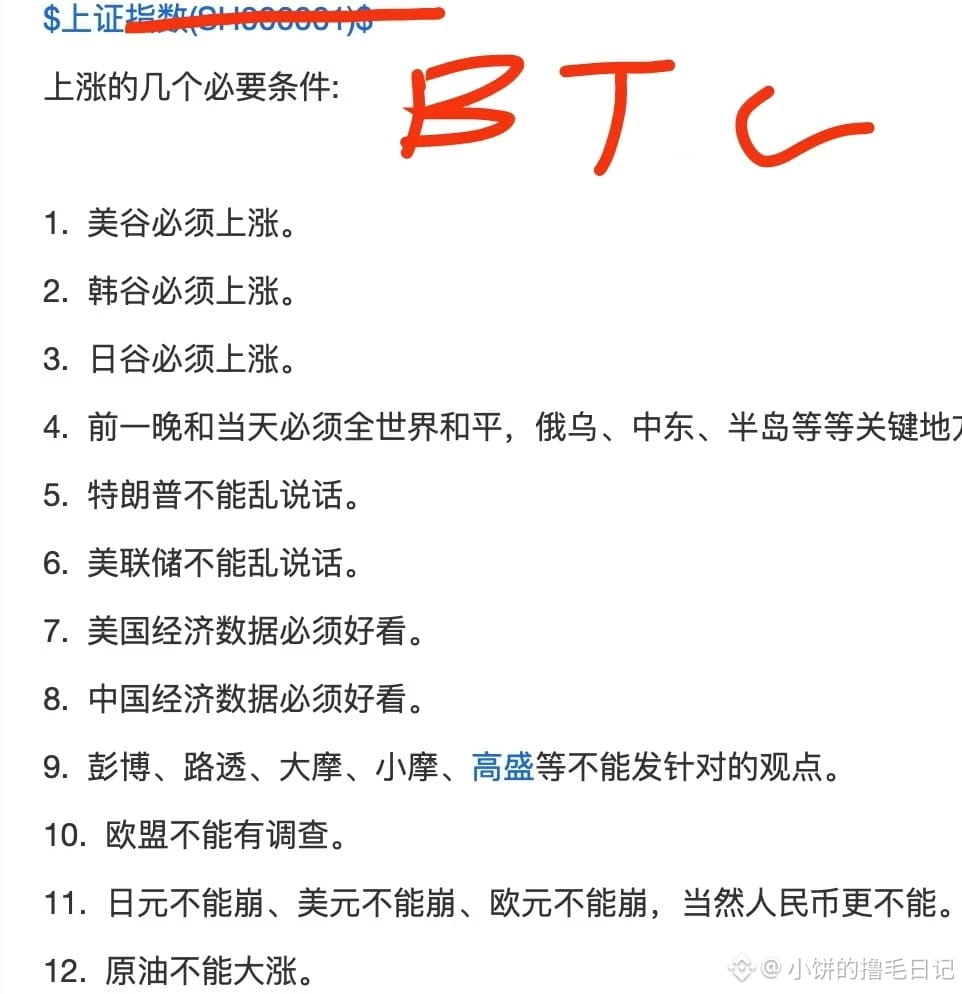
On the weekend, I was hanging out downstairs at a café,蹭ing the air conditioner while waiting to test the Dusk testnet, and I kept getting the password wrong three times in a row. It took me half an hour just to finish the 21st transaction. I stared at the execution logs of the Rusk virtual machine for a long time—before this, I’d played with a few old privacy chains: either they would stall for hours before producing blocks, or they would complete anonymity in a way that satisfied compliance but made it impossible to even grant audit privileges. I originally had no expectation for so-called “privacy blockchains,” until I personally fell into the trap and realized this stuff really isn’t just a shell wrapped around a marketing concept.
At the beginning, when I was acting as an SBA consensus node, I assumed it was just a skinned PoS. After reading through the node rules and running my own 10,000 double-spend simulations, I finally understood: SBA (Segregated Byzantine Agreement) splits nodes into two layers—one layer is a block-producing committee responsible for packaging transactions, and the other is a set of randomly audited verifiers that perform spot checks. The random spot-check seed is generated by a VDF (verifiable delay function), so nobody can predict in advance who will be checked. The testnet explorer shows that there are 3 nodes penalized for submitting invalid blocks. Two of them were soft-penalized: they missed a few blocks, were temporarily removed from the consensus queue, and their effective staked amount was cut down. The other one was hard-penalized: it was caught with a double signature, and its staked tokens were directly docked by 20% and destroyed. These kinds of penalty mechanisms raise the cost of malicious behavior enormously—trial and error is extremely expensive.
When testing transactions, I accidentally entered an extra 0. The amount immediately exceeded the Range Proof limits, and the transaction was rejected in an instant—there wasn’t even a leftover “failed transaction” trace on-chain. Phoenix’s Range Proof hard-rejects amounts outside the allowed range, and together with Pedersen commitments locking the total asset amount for each transaction, it prevents any form of minting out of thin air. On top of that, a one-time Stealth Address automatically generates a new address for each transaction. I sent 5 test tokens in a row, and on-chain it was basically impossible to link these five transfers to the same account. The recursive aggregated PLONK proof compresses to 287 bytes; per-transaction verification takes only 1.8 milliseconds. Everything ran smoothly, and at peak testnet hours I didn’t encounter any congestion.
The Rusk virtual machine is written from scratch entirely in Rust. It natively supports the confidential asset standard. When I deployed the test Token, I didn’t even need to write more than 200 lines of privacy code. Contract gas costs run 63% lower than EVM with a ZK layer. And it also leaves an audit-privilege entry point for compliant parties—privacy and compliance don’t have to be mutually exclusive; you can have both. The night the testnet finished, I felt more at ease than when I’d invested in any project before.
#dusk $DUSK @Dusk
At the beginning, when I was acting as an SBA consensus node, I assumed it was just a skinned PoS. After reading through the node rules and running my own 10,000 double-spend simulations, I finally understood: SBA (Segregated Byzantine Agreement) splits nodes into two layers—one layer is a block-producing committee responsible for packaging transactions, and the other is a set of randomly audited verifiers that perform spot checks. The random spot-check seed is generated by a VDF (verifiable delay function), so nobody can predict in advance who will be checked. The testnet explorer shows that there are 3 nodes penalized for submitting invalid blocks. Two of them were soft-penalized: they missed a few blocks, were temporarily removed from the consensus queue, and their effective staked amount was cut down. The other one was hard-penalized: it was caught with a double signature, and its staked tokens were directly docked by 20% and destroyed. These kinds of penalty mechanisms raise the cost of malicious behavior enormously—trial and error is extremely expensive.
When testing transactions, I accidentally entered an extra 0. The amount immediately exceeded the Range Proof limits, and the transaction was rejected in an instant—there wasn’t even a leftover “failed transaction” trace on-chain. Phoenix’s Range Proof hard-rejects amounts outside the allowed range, and together with Pedersen commitments locking the total asset amount for each transaction, it prevents any form of minting out of thin air. On top of that, a one-time Stealth Address automatically generates a new address for each transaction. I sent 5 test tokens in a row, and on-chain it was basically impossible to link these five transfers to the same account. The recursive aggregated PLONK proof compresses to 287 bytes; per-transaction verification takes only 1.8 milliseconds. Everything ran smoothly, and at peak testnet hours I didn’t encounter any congestion.
The Rusk virtual machine is written from scratch entirely in Rust. It natively supports the confidential asset standard. When I deployed the test Token, I didn’t even need to write more than 200 lines of privacy code. Contract gas costs run 63% lower than EVM with a ZK layer. And it also leaves an audit-privilege entry point for compliant parties—privacy and compliance don’t have to be mutually exclusive; you can have both. The night the testnet finished, I felt more at ease than when I’d invested in any project before.
#dusk $DUSK @Dusk
Log in to explore more content