

lixiaolong
1.7k Posts
lixiaolong
Report
Block User
疏杂念,
身如水之虚,体似水之流。
入杯,即杯;
至瓶,成瓶;
进壶,为壶。
亦舒亦急,可湍可缓。
可谓人水合一也。
67 Following
150 Followers
741 Liked
Posts
All
Quotes
Videos
·
--
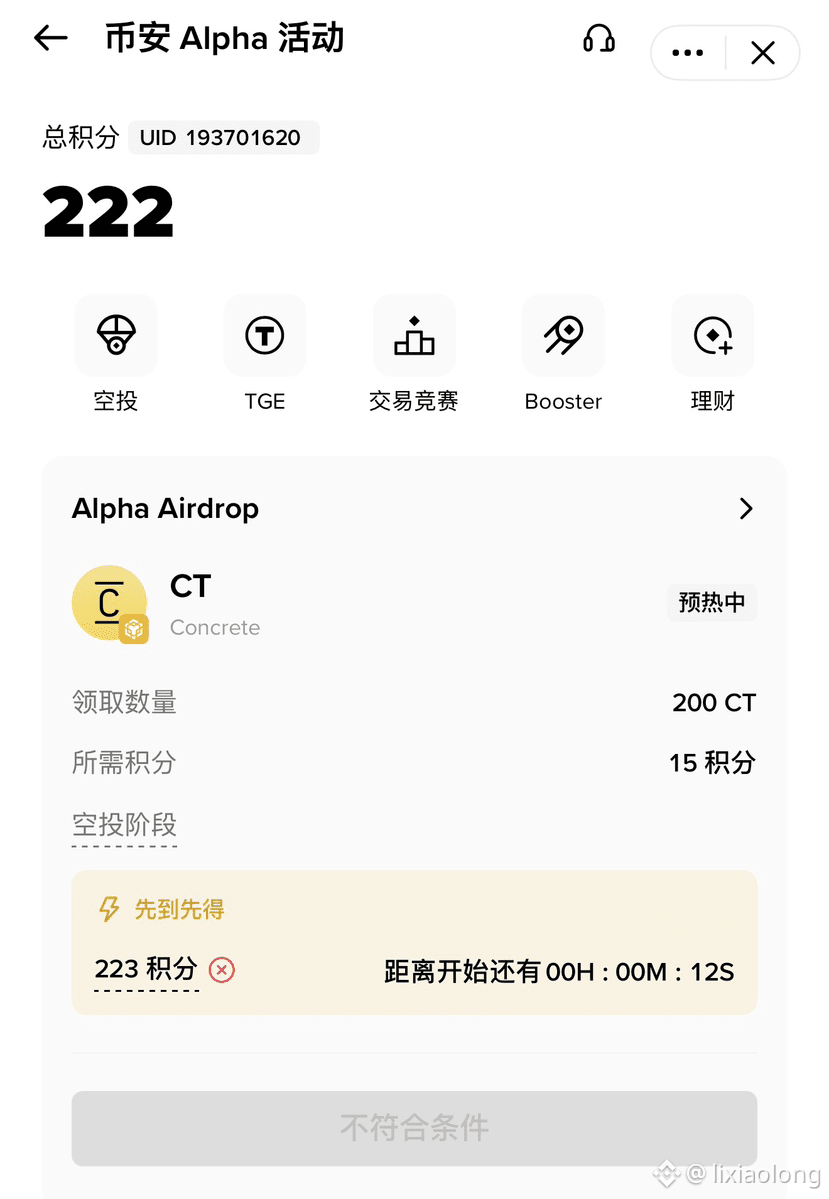
Does Alpha’s $CT today have anyone more speechless than me…
Does Alpha’s $CT today have anyone more speechless than me…
8
1
28
6.8k
·
--
Midday Alpha leaderboard sees a major reshuffle. $AKE leads new entries into the top 30. The BSC funds in this batch are substantial—worth taking a quick look.
$AKE|BSC|Alpha New Entries
Liquidity about 3.97M, #1 on this round’s new entries—big enough of a pool.
No buy signals during this period, and no entries on the 1h inflow leaderboard.
Alpha new entries top 30—Tier 1.
The capital has just come in, but no clear active buying yet; heat first, signals not following.
$Lobster|BSC|Alpha New Entries
Liquidity about 2.62M, close behind.
No buy signals during this period; not on the 1h inflow leaderboard.
Alpha new entries in the front positions.
Only momentum/heat, no signal—don’t chase the price while watching.
$COLLECT|BSC|Alpha New Entries
Liquidity about 2.50M—an established collectible-asset narrative makes the leaderboard again.
No buy signals during this period; not on the 1h inflow leaderboard.
Alpha new entries top 30, steady in the list.
Capital is holding, but there’s a lack of active buy orders—pure heat/momentum.
Not investment advice.
#$AKE
Midday Alpha leaderboard sees a major reshuffle. $AKE leads new entries into the top 30. The BSC funds in this batch are substantial—worth taking a quick look.
$AKE |BSC|Alpha New Entries
Liquidity about 3.97M, #1 on this round’s new entries—big enough of a pool.
No buy signals during this period, and no entries on the 1h inflow leaderboard.
Alpha new entries top 30—Tier 1.
The capital has just come in, but no clear active buying yet; heat first, signals not following.
$Lobster|BSC|Alpha New Entries
Liquidity about 2.62M, close behind.
No buy signals during this period; not on the 1h inflow leaderboard.
Alpha new entries in the front positions.
Only momentum/heat, no signal—don’t chase the price while watching.
$COLLECT |BSC|Alpha New Entries
Liquidity about 2.50M—an established collectible-asset narrative makes the leaderboard again.
No buy signals during this period; not on the 1h inflow leaderboard.
Alpha new entries top 30, steady in the list.
Capital is holding, but there’s a lack of active buy orders—pure heat/momentum.
Not investment advice.
#$AKE
$AKE |BSC|Alpha New Entries
Liquidity about 3.97M, #1 on this round’s new entries—big enough of a pool.
No buy signals during this period, and no entries on the 1h inflow leaderboard.
Alpha new entries top 30—Tier 1.
The capital has just come in, but no clear active buying yet; heat first, signals not following.
$Lobster|BSC|Alpha New Entries
Liquidity about 2.62M, close behind.
No buy signals during this period; not on the 1h inflow leaderboard.
Alpha new entries in the front positions.
Only momentum/heat, no signal—don’t chase the price while watching.
$COLLECT |BSC|Alpha New Entries
Liquidity about 2.50M—an established collectible-asset narrative makes the leaderboard again.
No buy signals during this period; not on the 1h inflow leaderboard.
Alpha new entries top 30, steady in the list.
Capital is holding, but there’s a lack of active buy orders—pure heat/momentum.
Not investment advice.
#$AKE
1.9k
·
--
$O Leads the Newcomers: Top 30 in BSC Alpha—Big Shake-Up on the Board
In this BSC Alpha time window, a batch of new faces entered the top 30. $O, $SHARE, and $ZEST squeezed into the front ranks, with liquidity all in the million range—how fast they’re climbing is worth a close look.
$O|BSC|Alpha Newcomer
Liquidity is about 2.63 million, the highest among this round of newcomers.
1h Inflow: Not on the inflow leaderboard during this period—funds haven’t clearly piled in yet.
Signal: No buy signals in this period; no smart money moves observed.
Board: In Alpha Top 30 as a newcomer, not shown on the inflow board.
One-liner: The rankings are propped up by trading volume—there’s some heat, but the capital hasn’t followed. Watch first.
$SHARE|BSC|Alpha Newcomer
Liquidity is about 1.87 million—an old-timer back in the Top 30.
1h Inflow: No presence on the inflow board in this period.
Signal: No buy signals.
Board: New Alpha entry; not on the inflow board.
One-liner: Existing liquidity can still carry the momentum, but no new money came in this hour—more like a lukewarm state.
$ZEST|BSC|Alpha Newcomer
Liquidity is about 1.6 million, following right after $SHARE .
1h Inflow: Not on the inflow board.
Signal: No buy signals in this period.
Board: New Alpha entry in the Top 30.
One-liner: Same—only driven by board heat. There’s no real inflow of funds within the hour, so it doesn’t count as a hot start.
Not investment advice.#O #SHARE #ZEST
$O Leads the Newcomers: Top 30 in BSC Alpha—Big Shake-Up on the Board
In this BSC Alpha time window, a batch of new faces entered the top 30. $O , $SHARE , and $ZEST squeezed into the front ranks, with liquidity all in the million range—how fast they’re climbing is worth a close look.
$O |BSC|Alpha Newcomer
Liquidity is about 2.63 million, the highest among this round of newcomers.
1h Inflow: Not on the inflow leaderboard during this period—funds haven’t clearly piled in yet.
Signal: No buy signals in this period; no smart money moves observed.
Board: In Alpha Top 30 as a newcomer, not shown on the inflow board.
One-liner: The rankings are propped up by trading volume—there’s some heat, but the capital hasn’t followed. Watch first.
$SHARE |BSC|Alpha Newcomer
Liquidity is about 1.87 million—an old-timer back in the Top 30.
1h Inflow: No presence on the inflow board in this period.
Signal: No buy signals.
Board: New Alpha entry; not on the inflow board.
One-liner: Existing liquidity can still carry the momentum, but no new money came in this hour—more like a lukewarm state.
$ZEST |BSC|Alpha Newcomer
Liquidity is about 1.6 million, following right after $SHARE .
1h Inflow: Not on the inflow board.
Signal: No buy signals in this period.
Board: New Alpha entry in the Top 30.
One-liner: Same—only driven by board heat. There’s no real inflow of funds within the hour, so it doesn’t count as a hot start.
Not investment advice.#O #SHARE #ZEST
In this BSC Alpha time window, a batch of new faces entered the top 30. $O , $SHARE , and $ZEST squeezed into the front ranks, with liquidity all in the million range—how fast they’re climbing is worth a close look.
$O |BSC|Alpha Newcomer
Liquidity is about 2.63 million, the highest among this round of newcomers.
1h Inflow: Not on the inflow leaderboard during this period—funds haven’t clearly piled in yet.
Signal: No buy signals in this period; no smart money moves observed.
Board: In Alpha Top 30 as a newcomer, not shown on the inflow board.
One-liner: The rankings are propped up by trading volume—there’s some heat, but the capital hasn’t followed. Watch first.
$SHARE |BSC|Alpha Newcomer
Liquidity is about 1.87 million—an old-timer back in the Top 30.
1h Inflow: No presence on the inflow board in this period.
Signal: No buy signals.
Board: New Alpha entry; not on the inflow board.
One-liner: Existing liquidity can still carry the momentum, but no new money came in this hour—more like a lukewarm state.
$ZEST |BSC|Alpha Newcomer
Liquidity is about 1.6 million, following right after $SHARE .
1h Inflow: Not on the inflow board.
Signal: No buy signals in this period.
Board: New Alpha entry in the Top 30.
One-liner: Same—only driven by board heat. There’s no real inflow of funds within the hour, so it doesn’t count as a hot start.
Not investment advice.#O #SHARE #ZEST
1.1k
·
--
In this period, there’s a reshuffle within the first 30—$GSTOCK leads the new entries; $KII and $AIN also enter the rankings in the same batch. The BSC has a new meme going around (Tang Ba, “Me Star People,” etc.) and it’s still trending on-screen. First, let’s look at these few with more liquidity.
$GSTOCK|BSC|Alpha New Entry
Liquidity is about $2.82M, the highest among the three, and Alpha is near the front among new entries. It shows up on the 1h inflow ranking, but over the past 1 hour the net amount is slightly negative (around -1.98k)—it doesn’t look like fresh money is being poured in. There’s no active buying signal in this period; the funds seem more like they’ve already moved in, but the price is a bit expensive and the “heat” is higher than the fundamentals. If there are many similar tickers, make sure to distinguish names.
$KII|BSC|Alpha New Entry
Liquidity is about $1.81M; Alpha new entry ranks #30. It’s not on the inflow ranking, and there’s no buying signal in this period—at this stage, there’s only attention from the leaderboard, not real follow-through. If you’re thinking of getting on board, first check whether liquidity and volume are expanding.
$AIN|BSC|Alpha New Entry
Liquidity is about $1.22M; Alpha new entry ranks #25. It’s not on the inflow ranking, and there’s no buying signal in this period—the funds haven’t moved along with it. For this kind of new-entry leaderboard coin, the price often hasn’t stabilized yet; attention comes first, and you should wait for volume/quantity to confirm.
Not investment advice.
#$GSTOCK #$KII #$AIN
In this period, there’s a reshuffle within the first 30—$GSTOCK leads the new entries; $KII and $AIN also enter the rankings in the same batch. The BSC has a new meme going around (Tang Ba, “Me Star People,” etc.) and it’s still trending on-screen. First, let’s look at these few with more liquidity.
$GSTOCK |BSC|Alpha New Entry
Liquidity is about $2.82M, the highest among the three, and Alpha is near the front among new entries. It shows up on the 1h inflow ranking, but over the past 1 hour the net amount is slightly negative (around -1.98k)—it doesn’t look like fresh money is being poured in. There’s no active buying signal in this period; the funds seem more like they’ve already moved in, but the price is a bit expensive and the “heat” is higher than the fundamentals. If there are many similar tickers, make sure to distinguish names.
$KII |BSC|Alpha New Entry
Liquidity is about $1.81M; Alpha new entry ranks #30. It’s not on the inflow ranking, and there’s no buying signal in this period—at this stage, there’s only attention from the leaderboard, not real follow-through. If you’re thinking of getting on board, first check whether liquidity and volume are expanding.
$AIN |BSC|Alpha New Entry
Liquidity is about $1.22M; Alpha new entry ranks #25. It’s not on the inflow ranking, and there’s no buying signal in this period—the funds haven’t moved along with it. For this kind of new-entry leaderboard coin, the price often hasn’t stabilized yet; attention comes first, and you should wait for volume/quantity to confirm.
Not investment advice.
#$GSTOCK #$KII #$AIN
$GSTOCK |BSC|Alpha New Entry
Liquidity is about $2.82M, the highest among the three, and Alpha is near the front among new entries. It shows up on the 1h inflow ranking, but over the past 1 hour the net amount is slightly negative (around -1.98k)—it doesn’t look like fresh money is being poured in. There’s no active buying signal in this period; the funds seem more like they’ve already moved in, but the price is a bit expensive and the “heat” is higher than the fundamentals. If there are many similar tickers, make sure to distinguish names.
$KII |BSC|Alpha New Entry
Liquidity is about $1.81M; Alpha new entry ranks #30. It’s not on the inflow ranking, and there’s no buying signal in this period—at this stage, there’s only attention from the leaderboard, not real follow-through. If you’re thinking of getting on board, first check whether liquidity and volume are expanding.
$AIN |BSC|Alpha New Entry
Liquidity is about $1.22M; Alpha new entry ranks #25. It’s not on the inflow ranking, and there’s no buying signal in this period—the funds haven’t moved along with it. For this kind of new-entry leaderboard coin, the price often hasn’t stabilized yet; attention comes first, and you should wait for volume/quantity to confirm.
Not investment advice.
#$GSTOCK #$KII #$AIN
2
1.7k
·
--
Midday Alpha leaderboard hits a new three-in-a-row: #$UB leads the top 30 by rotation
The themes in this sweep have shifted quite a bit: BSC is discussing lobster-related materialization, BNB Chain’s 6th anniversary and OpenAI’s assistants (O), while on Solana, shark memes and brand-new meme plays are also showing up. Even more worth watching, though, is the big reshuffle in Alpha’s top 30—among the 17 new faces, the top three by liquidity are the following.
$UB|BSC|Alpha new entry #21
Liquidity is about $4.28M; it ranks #9 on the 1h inflow leaderboard (net inflow is negative). No buy signal in this period. Board: 1h inflow leaderboard has it, Alpha new entry #21. Takeaway: a sudden Alpha entry and it has a board position, but capital hasn’t clearly moved in yet—only worth observing if follow-up signals come through.
$TAG|BSC|Alpha new entry #20
Liquidity is about $2.48M; not on the inflow leaderboard. No buy signal in this period. Board: Alpha new entry #20, but not on the inflow leaderboard. Only having a board position without capital—the hype is higher than the signal.
$AIOT|BSC|Alpha new entry #10
Liquidity is about $1.78M; not on the inflow leaderboard. No buy signal in this period. Board: Alpha new entry #10, not on the inflow leaderboard. Of the three, it has the highest rank, but again only hype, no signal.
#$UB #$TAG #$AIOT
There are many pools with the same name—stick to the $ code. Not investment advice.
Midday Alpha leaderboard hits a new three-in-a-row: #$UB leads the top 30 by rotation
The themes in this sweep have shifted quite a bit: BSC is discussing lobster-related materialization, BNB Chain’s 6th anniversary and OpenAI’s assistants (O), while on Solana, shark memes and brand-new meme plays are also showing up. Even more worth watching, though, is the big reshuffle in Alpha’s top 30—among the 17 new faces, the top three by liquidity are the following.
$UB |BSC|Alpha new entry #21
Liquidity is about $4.28M; it ranks #9 on the 1h inflow leaderboard (net inflow is negative). No buy signal in this period. Board: 1h inflow leaderboard has it, Alpha new entry #21. Takeaway: a sudden Alpha entry and it has a board position, but capital hasn’t clearly moved in yet—only worth observing if follow-up signals come through.
$TAG |BSC|Alpha new entry #20
Liquidity is about $2.48M; not on the inflow leaderboard. No buy signal in this period. Board: Alpha new entry #20, but not on the inflow leaderboard. Only having a board position without capital—the hype is higher than the signal.
$AIOT |BSC|Alpha new entry #10
Liquidity is about $1.78M; not on the inflow leaderboard. No buy signal in this period. Board: Alpha new entry #10, not on the inflow leaderboard. Of the three, it has the highest rank, but again only hype, no signal.
#$UB #$TAG #$AIOT
There are many pools with the same name—stick to the $ code. Not investment advice.
The themes in this sweep have shifted quite a bit: BSC is discussing lobster-related materialization, BNB Chain’s 6th anniversary and OpenAI’s assistants (O), while on Solana, shark memes and brand-new meme plays are also showing up. Even more worth watching, though, is the big reshuffle in Alpha’s top 30—among the 17 new faces, the top three by liquidity are the following.
$UB |BSC|Alpha new entry #21
Liquidity is about $4.28M; it ranks #9 on the 1h inflow leaderboard (net inflow is negative). No buy signal in this period. Board: 1h inflow leaderboard has it, Alpha new entry #21. Takeaway: a sudden Alpha entry and it has a board position, but capital hasn’t clearly moved in yet—only worth observing if follow-up signals come through.
$TAG |BSC|Alpha new entry #20
Liquidity is about $2.48M; not on the inflow leaderboard. No buy signal in this period. Board: Alpha new entry #20, but not on the inflow leaderboard. Only having a board position without capital—the hype is higher than the signal.
$AIOT |BSC|Alpha new entry #10
Liquidity is about $1.78M; not on the inflow leaderboard. No buy signal in this period. Board: Alpha new entry #10, not on the inflow leaderboard. Of the three, it has the highest rank, but again only hype, no signal.
#$UB #$TAG #$AIOT
There are many pools with the same name—stick to the $ code. Not investment advice.
1.2k
·
--
Alpha reshuffles its roster—$Haqqimi leads with three new BSC faces entering the Top 30
In this period, Alpha’s Top 30 saw a major turnover. The newcomers are concentrated on BSC: in one go, they added 13 seats, while the Solana leaderboard basically stayed put. On the theme side, BSC mostly consists of official account engagement posts and cultural memes. Solana, by contrast, is launching a dense cluster of accelerationism-related narratives. It’s lively, but there aren’t many that capital is actually following. Let’s pick the three new coins with the highest liquidity from the latest newcomer list.
$Haqqimi|BSC|Alpha New Entry #18
Liquidity: ~2.68M U. 1h inflow: not in the inflow leaderboard this period. Signal: no buy signal this period. Rank: Alpha new entry #18—after having dropped out of the Top 30, it has returned this round. One-liner: There’s ranking and some attention, but no accompanying capital signal right now—purely leaderboard-driven.
$SHARE|BSC|Alpha New Entry #15
Liquidity: ~1.89M U. 1h inflow: not in the inflow leaderboard this period. Signal: no buy signal this period. Rank: Alpha new entry #15. One-liner: Its rank is higher than Haqqimi, but it similarly has only attention and no signals—capital hasn’t moved.
$ARX|BSC|Alpha New Entry #14
Liquidity: ~1.20M U. 1h inflow: not in the inflow leaderboard this period. Signal: no buy signal this period. Rank: Alpha new entry #14. One-liner: Audit MID risk, and the contract can be issued/increased more—on-chain it only has rank and attention; you’ll need to judge the contract side yourself.
#Haqqimi
Not investment advice.
Alpha reshuffles its roster—$Haqqimi leads with three new BSC faces entering the Top 30
In this period, Alpha’s Top 30 saw a major turnover. The newcomers are concentrated on BSC: in one go, they added 13 seats, while the Solana leaderboard basically stayed put. On the theme side, BSC mostly consists of official account engagement posts and cultural memes. Solana, by contrast, is launching a dense cluster of accelerationism-related narratives. It’s lively, but there aren’t many that capital is actually following. Let’s pick the three new coins with the highest liquidity from the latest newcomer list.
$Haqqimi|BSC|Alpha New Entry #18
Liquidity: ~2.68M U. 1h inflow: not in the inflow leaderboard this period. Signal: no buy signal this period. Rank: Alpha new entry #18—after having dropped out of the Top 30, it has returned this round. One-liner: There’s ranking and some attention, but no accompanying capital signal right now—purely leaderboard-driven.
$SHARE |BSC|Alpha New Entry #15
Liquidity: ~1.89M U. 1h inflow: not in the inflow leaderboard this period. Signal: no buy signal this period. Rank: Alpha new entry #15. One-liner: Its rank is higher than Haqqimi, but it similarly has only attention and no signals—capital hasn’t moved.
$ARX |BSC|Alpha New Entry #14
Liquidity: ~1.20M U. 1h inflow: not in the inflow leaderboard this period. Signal: no buy signal this period. Rank: Alpha new entry #14. One-liner: Audit MID risk, and the contract can be issued/increased more—on-chain it only has rank and attention; you’ll need to judge the contract side yourself.
#Haqqimi
Not investment advice.
In this period, Alpha’s Top 30 saw a major turnover. The newcomers are concentrated on BSC: in one go, they added 13 seats, while the Solana leaderboard basically stayed put. On the theme side, BSC mostly consists of official account engagement posts and cultural memes. Solana, by contrast, is launching a dense cluster of accelerationism-related narratives. It’s lively, but there aren’t many that capital is actually following. Let’s pick the three new coins with the highest liquidity from the latest newcomer list.
$Haqqimi|BSC|Alpha New Entry #18
Liquidity: ~2.68M U. 1h inflow: not in the inflow leaderboard this period. Signal: no buy signal this period. Rank: Alpha new entry #18—after having dropped out of the Top 30, it has returned this round. One-liner: There’s ranking and some attention, but no accompanying capital signal right now—purely leaderboard-driven.
$SHARE |BSC|Alpha New Entry #15
Liquidity: ~1.89M U. 1h inflow: not in the inflow leaderboard this period. Signal: no buy signal this period. Rank: Alpha new entry #15. One-liner: Its rank is higher than Haqqimi, but it similarly has only attention and no signals—capital hasn’t moved.
$ARX |BSC|Alpha New Entry #14
Liquidity: ~1.20M U. 1h inflow: not in the inflow leaderboard this period. Signal: no buy signal this period. Rank: Alpha new entry #14. One-liner: Audit MID risk, and the contract can be issued/increased more—on-chain it only has rank and attention; you’ll need to judge the contract side yourself.
#Haqqimi
Not investment advice.
1.6k
·
--
$CNPY Leads the Way—BSC New Coin Group Storms Into Alpha’s Top 30
This period sees a major reshuffle on the Alpha ranking. In one go, BSC has added more than a dozen new faces—led by $CNPY , with $ARIA and $4Stock also moving onto the chart.
$CNPY|BSC|Alpha New Entries
Liquidity: $1.596M, Market Cap: $13.07M, 24h change: +6.58%. Signal: No buy signals in this period. Chart: Not yet on the inflow ranking list; Alpha new entry at #19. Interpretation: There’s chart buzz but no clear signs of capital entering—still in the observation phase.
$ARIA|BSC|Alpha New Entries
Liquidity: $1.35M, Market Cap: $38.83M, 24h change: +6.48%. Signal: No buy signals in this period. Chart: Not yet on the inflow ranking list; Alpha new entry at #21. Interpretation: Highest market cap, but capital isn’t present—attention and money haven’t lined up yet.
$4Stock|BSC|Alpha New Entries
Liquidity: $1.01M, Market Cap: $11.42M, 24h change: +6.09%. Signal: No buy signals in this period. Chart: Not yet on the inflow ranking list; Alpha new entry at #20. Interpretation: Moving in step with CNPY—listed on the chart, but the wallet hasn’t moved.
With many similarly named pools, go by the code. #$CNPY #$ARIA #$4Stock
Not investment advice.
$CNPY Leads the Way—BSC New Coin Group Storms Into Alpha’s Top 30
This period sees a major reshuffle on the Alpha ranking. In one go, BSC has added more than a dozen new faces—led by $CNPY , with $ARIA and $4Stock also moving onto the chart.
$CNPY |BSC|Alpha New Entries
Liquidity: $1.596M, Market Cap: $13.07M, 24h change: +6.58%. Signal: No buy signals in this period. Chart: Not yet on the inflow ranking list; Alpha new entry at #19. Interpretation: There’s chart buzz but no clear signs of capital entering—still in the observation phase.
$ARIA |BSC|Alpha New Entries
Liquidity: $1.35M, Market Cap: $38.83M, 24h change: +6.48%. Signal: No buy signals in this period. Chart: Not yet on the inflow ranking list; Alpha new entry at #21. Interpretation: Highest market cap, but capital isn’t present—attention and money haven’t lined up yet.
$4Stock|BSC|Alpha New Entries
Liquidity: $1.01M, Market Cap: $11.42M, 24h change: +6.09%. Signal: No buy signals in this period. Chart: Not yet on the inflow ranking list; Alpha new entry at #20. Interpretation: Moving in step with CNPY—listed on the chart, but the wallet hasn’t moved.
With many similarly named pools, go by the code. #$CNPY #$ARIA #$4Stock
Not investment advice.
This period sees a major reshuffle on the Alpha ranking. In one go, BSC has added more than a dozen new faces—led by $CNPY , with $ARIA and $4Stock also moving onto the chart.
$CNPY |BSC|Alpha New Entries
Liquidity: $1.596M, Market Cap: $13.07M, 24h change: +6.58%. Signal: No buy signals in this period. Chart: Not yet on the inflow ranking list; Alpha new entry at #19. Interpretation: There’s chart buzz but no clear signs of capital entering—still in the observation phase.
$ARIA |BSC|Alpha New Entries
Liquidity: $1.35M, Market Cap: $38.83M, 24h change: +6.48%. Signal: No buy signals in this period. Chart: Not yet on the inflow ranking list; Alpha new entry at #21. Interpretation: Highest market cap, but capital isn’t present—attention and money haven’t lined up yet.
$4Stock|BSC|Alpha New Entries
Liquidity: $1.01M, Market Cap: $11.42M, 24h change: +6.09%. Signal: No buy signals in this period. Chart: Not yet on the inflow ranking list; Alpha new entry at #20. Interpretation: Moving in step with CNPY—listed on the chart, but the wallet hasn’t moved.
With many similarly named pools, go by the code. #$CNPY #$ARIA #$4Stock
Not investment advice.
1.9k
·
--
Early-morning Alpha board refresh: $4 leads with three new faces entering the Top 30
In this Alpha Top 30 round, BSC added a batch of new entries: three liquidity leaders—$4, $CROSS, and $IN —pushed into the front ranks. The themes are still mostly short AI-related posts and various new “memes,” but the ones that truly made the list are mainly long-standing names. Let’s pick the three with the highest liquidity.
$4|BSC|Alpha new entry
Liquidity: ~1.95M, up 6.5% in 24h. No buy signal in this period. Not on the inflow board; Alpha new entry ranks 24th. More than 140k holders, with active attention, but there’s no obvious new capital flow—more of a shift in leaderboard position.
$CROSS|BSC|Alpha new entry
Liquidity: ~1.3M, up 6.5% in 24h. No buy signal in this period. Not on the inflow board; Alpha new entry ranks 23rd. Among the three, it has the largest market cap and the most active trading, but it also lacks matching signals.
$IN|BSC|Alpha new entry
Liquidity: ~1.28M, up 7.5% in 24h. No buy signal in this period. Not on the inflow board; Alpha new entry ranks 20th. Market cap is relatively small, but turnover is active, with some attention—still missing confirmation from the capital flow.
These tickers are short and have many same-name pools, so before acting, make sure you’ve got the correct $ code. Not investment advice.
#$4 #$CROSS #$IN
Early-morning Alpha board refresh: $4 leads with three new faces entering the Top 30
In this Alpha Top 30 round, BSC added a batch of new entries: three liquidity leaders—$4, $CROSS , and $IN —pushed into the front ranks. The themes are still mostly short AI-related posts and various new “memes,” but the ones that truly made the list are mainly long-standing names. Let’s pick the three with the highest liquidity.
$4|BSC|Alpha new entry
Liquidity: ~1.95M, up 6.5% in 24h. No buy signal in this period. Not on the inflow board; Alpha new entry ranks 24th. More than 140k holders, with active attention, but there’s no obvious new capital flow—more of a shift in leaderboard position.
$CROSS |BSC|Alpha new entry
Liquidity: ~1.3M, up 6.5% in 24h. No buy signal in this period. Not on the inflow board; Alpha new entry ranks 23rd. Among the three, it has the largest market cap and the most active trading, but it also lacks matching signals.
$IN |BSC|Alpha new entry
Liquidity: ~1.28M, up 7.5% in 24h. No buy signal in this period. Not on the inflow board; Alpha new entry ranks 20th. Market cap is relatively small, but turnover is active, with some attention—still missing confirmation from the capital flow.
These tickers are short and have many same-name pools, so before acting, make sure you’ve got the correct $ code. Not investment advice.
#$4 #$CROSS #$IN
In this Alpha Top 30 round, BSC added a batch of new entries: three liquidity leaders—$4, $CROSS , and $IN —pushed into the front ranks. The themes are still mostly short AI-related posts and various new “memes,” but the ones that truly made the list are mainly long-standing names. Let’s pick the three with the highest liquidity.
$4|BSC|Alpha new entry
Liquidity: ~1.95M, up 6.5% in 24h. No buy signal in this period. Not on the inflow board; Alpha new entry ranks 24th. More than 140k holders, with active attention, but there’s no obvious new capital flow—more of a shift in leaderboard position.
$CROSS |BSC|Alpha new entry
Liquidity: ~1.3M, up 6.5% in 24h. No buy signal in this period. Not on the inflow board; Alpha new entry ranks 23rd. Among the three, it has the largest market cap and the most active trading, but it also lacks matching signals.
$IN |BSC|Alpha new entry
Liquidity: ~1.28M, up 7.5% in 24h. No buy signal in this period. Not on the inflow board; Alpha new entry ranks 20th. Market cap is relatively small, but turnover is active, with some attention—still missing confirmation from the capital flow.
These tickers are short and have many same-name pools, so before acting, make sure you’ve got the correct $ code. Not investment advice.
#$4 #$CROSS #$IN
1.2k
·
--
$BR Leading the pack, BSC brings three brand-new faces into Alpha Top 30
In this time period, the BSC theme leaderboard saw yet another shuffle (JOJO collectible figures, Tubby Nugget, and the national debt meme are all simmering). Alpha Top 30 also underwent a major rotation: 14 brand-new faces surged in at once, while the Solana leaderboard remained unchanged. Taking the top three by liquidity, all are the “new-to-Alpha” type hits. There are no buy signals for this time period.
$BR|BSC|Alpha New Entries
With liquidity of about $5.05 million (the highest among the three), it did not appear on the inflow leaderboard within 1h. Signal: no buy signal in this time period. Rank: Alpha Top 30 new entry (BSC #14); no appearance on the inflow leaderboard. Interpretation: at the moment, it only has leaderboard heat—funds haven’t clearly moved in. Only if subsequent 1h inflows follow through can it be considered supported; otherwise it’s just pure hype.
$COLLECT|BSC|Alpha New Entries
Liquidity of about $1.36 million; similarly, it did not make the inflow leaderboard within 1h. Signal: no buy signal in this time period. Rank: Alpha Top 30 new entry (BSC #30). Interpretation: pure leaderboard appearance—no signal, no inflow. For now, it’s mainly a watchlist item.
$BASED|BSC|Alpha New Entries
Liquidity of about $1.17 million; did not make the inflow leaderboard within 1h. Signal: no buy signal in this time period. Rank: Alpha Top 30 new entry (BSC #27). Interpretation: similar to COLLECT—only heat, no signal. It currently does not constitute a basis for entry.
#$BR #$COLLECT #$BASED
Not investment advice.
$BR Leading the pack, BSC brings three brand-new faces into Alpha Top 30
In this time period, the BSC theme leaderboard saw yet another shuffle (JOJO collectible figures, Tubby Nugget, and the national debt meme are all simmering). Alpha Top 30 also underwent a major rotation: 14 brand-new faces surged in at once, while the Solana leaderboard remained unchanged. Taking the top three by liquidity, all are the “new-to-Alpha” type hits. There are no buy signals for this time period.
$BR |BSC|Alpha New Entries
With liquidity of about $5.05 million (the highest among the three), it did not appear on the inflow leaderboard within 1h. Signal: no buy signal in this time period. Rank: Alpha Top 30 new entry (BSC #14); no appearance on the inflow leaderboard. Interpretation: at the moment, it only has leaderboard heat—funds haven’t clearly moved in. Only if subsequent 1h inflows follow through can it be considered supported; otherwise it’s just pure hype.
$COLLECT |BSC|Alpha New Entries
Liquidity of about $1.36 million; similarly, it did not make the inflow leaderboard within 1h. Signal: no buy signal in this time period. Rank: Alpha Top 30 new entry (BSC #30). Interpretation: pure leaderboard appearance—no signal, no inflow. For now, it’s mainly a watchlist item.
$BASED |BSC|Alpha New Entries
Liquidity of about $1.17 million; did not make the inflow leaderboard within 1h. Signal: no buy signal in this time period. Rank: Alpha Top 30 new entry (BSC #27). Interpretation: similar to COLLECT—only heat, no signal. It currently does not constitute a basis for entry.
#$BR #$COLLECT #$BASED
Not investment advice.
In this time period, the BSC theme leaderboard saw yet another shuffle (JOJO collectible figures, Tubby Nugget, and the national debt meme are all simmering). Alpha Top 30 also underwent a major rotation: 14 brand-new faces surged in at once, while the Solana leaderboard remained unchanged. Taking the top three by liquidity, all are the “new-to-Alpha” type hits. There are no buy signals for this time period.
$BR |BSC|Alpha New Entries
With liquidity of about $5.05 million (the highest among the three), it did not appear on the inflow leaderboard within 1h. Signal: no buy signal in this time period. Rank: Alpha Top 30 new entry (BSC #14); no appearance on the inflow leaderboard. Interpretation: at the moment, it only has leaderboard heat—funds haven’t clearly moved in. Only if subsequent 1h inflows follow through can it be considered supported; otherwise it’s just pure hype.
$COLLECT |BSC|Alpha New Entries
Liquidity of about $1.36 million; similarly, it did not make the inflow leaderboard within 1h. Signal: no buy signal in this time period. Rank: Alpha Top 30 new entry (BSC #30). Interpretation: pure leaderboard appearance—no signal, no inflow. For now, it’s mainly a watchlist item.
$BASED |BSC|Alpha New Entries
Liquidity of about $1.17 million; did not make the inflow leaderboard within 1h. Signal: no buy signal in this time period. Rank: Alpha Top 30 new entry (BSC #27). Interpretation: similar to COLLECT—only heat, no signal. It currently does not constitute a basis for entry.
#$BR #$COLLECT #$BASED
Not investment advice.
1
1.5k
·
--
$Lobster Leads With New Faces Breaking Into the Top 30 of Alpha, BSC Ranking Gets a Refresh
After this sweep, XMoney and PAID-theme still dominate the screens; Trump’s repost and the Bitget CEO meme continue to gain traction. The real change is that a batch of new faces pushed into the Alpha top 30, and $Lobster is at the very front.
$Lobster|BSC|Alpha New Entry
Liquidity is about $3.22 million. There’s no 1h inflow data, and there’s no buy signal in this time period. New entry at #27 in Alpha, and among the new faces in the same batch, it has the highest liquidity. The funds have just started to show up on the leaderboard—this is still the early stage of being listed. Hype is ahead of signals; now we should see whether the capital will keep moving in.
$TAG|BSC|Alpha New Entry
Liquidity is about $2.47 million. There’s no 1h inflow data, and there’s no buy signal in this time period. New entry at #24 in Alpha—its ranking is higher than $Lobster. Right now there’s only leaderboard heat, without matching signals. More capital is watching, and fewer are taking action.
$quq|BSC|Alpha New Entry
Liquidity is about $1.06 million. There’s no 1h inflow data, and there’s no buy signal in this time period. New entry at #30 in Alpha, and it has the lowest liquidity among the same batch. The data is thin—maybe it’s driven only by attention. There are multiple tokens with the same name; stick with $quq.
Not investment advice.
#$Lobster #$TAG #$quq
$Lobster Leads With New Faces Breaking Into the Top 30 of Alpha, BSC Ranking Gets a Refresh
After this sweep, XMoney and PAID-theme still dominate the screens; Trump’s repost and the Bitget CEO meme continue to gain traction. The real change is that a batch of new faces pushed into the Alpha top 30, and $Lobster is at the very front.
$Lobster|BSC|Alpha New Entry
Liquidity is about $3.22 million. There’s no 1h inflow data, and there’s no buy signal in this time period. New entry at #27 in Alpha, and among the new faces in the same batch, it has the highest liquidity. The funds have just started to show up on the leaderboard—this is still the early stage of being listed. Hype is ahead of signals; now we should see whether the capital will keep moving in.
$TAG |BSC|Alpha New Entry
Liquidity is about $2.47 million. There’s no 1h inflow data, and there’s no buy signal in this time period. New entry at #24 in Alpha—its ranking is higher than $Lobster. Right now there’s only leaderboard heat, without matching signals. More capital is watching, and fewer are taking action.
$quq|BSC|Alpha New Entry
Liquidity is about $1.06 million. There’s no 1h inflow data, and there’s no buy signal in this time period. New entry at #30 in Alpha, and it has the lowest liquidity among the same batch. The data is thin—maybe it’s driven only by attention. There are multiple tokens with the same name; stick with $quq.
Not investment advice.
#$Lobster #$TAG #$quq
After this sweep, XMoney and PAID-theme still dominate the screens; Trump’s repost and the Bitget CEO meme continue to gain traction. The real change is that a batch of new faces pushed into the Alpha top 30, and $Lobster is at the very front.
$Lobster|BSC|Alpha New Entry
Liquidity is about $3.22 million. There’s no 1h inflow data, and there’s no buy signal in this time period. New entry at #27 in Alpha, and among the new faces in the same batch, it has the highest liquidity. The funds have just started to show up on the leaderboard—this is still the early stage of being listed. Hype is ahead of signals; now we should see whether the capital will keep moving in.
$TAG |BSC|Alpha New Entry
Liquidity is about $2.47 million. There’s no 1h inflow data, and there’s no buy signal in this time period. New entry at #24 in Alpha—its ranking is higher than $Lobster. Right now there’s only leaderboard heat, without matching signals. More capital is watching, and fewer are taking action.
$quq|BSC|Alpha New Entry
Liquidity is about $1.06 million. There’s no 1h inflow data, and there’s no buy signal in this time period. New entry at #30 in Alpha, and it has the lowest liquidity among the same batch. The data is thin—maybe it’s driven only by attention. There are multiple tokens with the same name; stick with $quq.
Not investment advice.
#$Lobster #$TAG #$quq
1.5k
·
--
$APM heads the list, BSC Alpha brings in a new batch of faces, $ACU and $MPLX also make the same list
In this time slot, the BSC theme leaderboard sees a major reshuffle. New topics like Sunshine Comments and EARLIER tokens quickly come to the fore, and the Alpha list also swaps in a fresh batch of new contracts. The capital inflows and signals from the three newly entered names are still in the early stage—let’s first position their liquidity and leaderboard spots.
$APM|BSC|Alpha New Entry
Liquidity about $1.76 million, with ~ $1.83 million in 24h trading. No buy signals in this period; it did not make it onto the 1h inflow leaderboard. Alpha new entry at #15. The newly listed momentum pick is still waiting for capital and signals to resonate—watch for now.
$ACU|BSC|Alpha New Entry
Liquidity about $1.03 million, with ~ $520,000 in 24h trading. No buy signals in this period; not on the inflow leaderboard. Alpha new entry at #22. Risk in auditing (can be further issued). If you want to track it, the risk-control conditions need to be tightened.
$MPLX|BSC|Alpha New Entry
Liquidity about $570,000, with ~ $63,000 in 24h trading. No buy signals in this period; not on the inflow leaderboard. Alpha new entry at #16. Audit shows low risk, but the contract can be upgraded—this is in the early stage right after making the list.
Not investment advice.
#$APM #$ACU #$MPLX
$APM heads the list, BSC Alpha brings in a new batch of faces, $ACU and $MPLX also make the same list
In this time slot, the BSC theme leaderboard sees a major reshuffle. New topics like Sunshine Comments and EARLIER tokens quickly come to the fore, and the Alpha list also swaps in a fresh batch of new contracts. The capital inflows and signals from the three newly entered names are still in the early stage—let’s first position their liquidity and leaderboard spots.
$APM |BSC|Alpha New Entry
Liquidity about $1.76 million, with ~ $1.83 million in 24h trading. No buy signals in this period; it did not make it onto the 1h inflow leaderboard. Alpha new entry at #15. The newly listed momentum pick is still waiting for capital and signals to resonate—watch for now.
$ACU |BSC|Alpha New Entry
Liquidity about $1.03 million, with ~ $520,000 in 24h trading. No buy signals in this period; not on the inflow leaderboard. Alpha new entry at #22. Risk in auditing (can be further issued). If you want to track it, the risk-control conditions need to be tightened.
$MPLX |BSC|Alpha New Entry
Liquidity about $570,000, with ~ $63,000 in 24h trading. No buy signals in this period; not on the inflow leaderboard. Alpha new entry at #16. Audit shows low risk, but the contract can be upgraded—this is in the early stage right after making the list.
Not investment advice.
#$APM #$ACU #$MPLX
In this time slot, the BSC theme leaderboard sees a major reshuffle. New topics like Sunshine Comments and EARLIER tokens quickly come to the fore, and the Alpha list also swaps in a fresh batch of new contracts. The capital inflows and signals from the three newly entered names are still in the early stage—let’s first position their liquidity and leaderboard spots.
$APM |BSC|Alpha New Entry
Liquidity about $1.76 million, with ~ $1.83 million in 24h trading. No buy signals in this period; it did not make it onto the 1h inflow leaderboard. Alpha new entry at #15. The newly listed momentum pick is still waiting for capital and signals to resonate—watch for now.
$ACU |BSC|Alpha New Entry
Liquidity about $1.03 million, with ~ $520,000 in 24h trading. No buy signals in this period; not on the inflow leaderboard. Alpha new entry at #22. Risk in auditing (can be further issued). If you want to track it, the risk-control conditions need to be tightened.
$MPLX |BSC|Alpha New Entry
Liquidity about $570,000, with ~ $63,000 in 24h trading. No buy signals in this period; not on the inflow leaderboard. Alpha new entry at #16. Audit shows low risk, but the contract can be upgraded—this is in the early stage right after making the list.
Not investment advice.
#$APM #$ACU #$MPLX
1
877
·
--
Alpha undergoes a major overhaul; $BNCB headlines 15 new faces on the list
Tonight, on the Alpha leaderboard for the BSC side, a total of 15 new coins were swapped in at once. The narrative themes have also been fully rotated—this is a typical large reshuffle within the ranking.
$BNCB|BSC|Alpha new entries
Liquidity is about $6.85 million, the highest among these new entries, ranking Alpha #30. In the past 1 hour, there was an inflow of $877—small in magnitude, but still on the inflow leaderboard. No buy signals in this time period. Interpretation: Funds have just arrived on the leaderboard, and momentum is only just starting—signals haven’t caught up yet, so for now, watch and observe.
$BTW|BSC|Alpha new entries
Alpha #16, liquidity about $2.96 million. No appearance on the inflow leaderboard in the past 1 hour. No buy signals in this time period. It has ranking positions but the liquidity is quiet—more of a popularity/momentum type. There are multiple pools with the same name; be sure to follow the $ code.
$GSTOCK|BSC|Alpha new entries
Alpha #1, liquidity about $2.34 million. It is also #1 on the BSC 1-hour inflow leaderboard, with an estimated 1h inflow of about $42.8k. No buy signals in this time period. Interpretation: Highest ranking; money is coming in—only missing signal confirmation. Focus on it under certain conditions.
#BNCB #BTW #GSTOCK
Not investment advice.
Alpha undergoes a major overhaul; $BNCB headlines 15 new faces on the list
Tonight, on the Alpha leaderboard for the BSC side, a total of 15 new coins were swapped in at once. The narrative themes have also been fully rotated—this is a typical large reshuffle within the ranking.
$BNCB |BSC|Alpha new entries
Liquidity is about $6.85 million, the highest among these new entries, ranking Alpha #30. In the past 1 hour, there was an inflow of $877—small in magnitude, but still on the inflow leaderboard. No buy signals in this time period. Interpretation: Funds have just arrived on the leaderboard, and momentum is only just starting—signals haven’t caught up yet, so for now, watch and observe.
$BTW |BSC|Alpha new entries
Alpha #16, liquidity about $2.96 million. No appearance on the inflow leaderboard in the past 1 hour. No buy signals in this time period. It has ranking positions but the liquidity is quiet—more of a popularity/momentum type. There are multiple pools with the same name; be sure to follow the $ code.
$GSTOCK |BSC|Alpha new entries
Alpha #1, liquidity about $2.34 million. It is also #1 on the BSC 1-hour inflow leaderboard, with an estimated 1h inflow of about $42.8k. No buy signals in this time period. Interpretation: Highest ranking; money is coming in—only missing signal confirmation. Focus on it under certain conditions.
#BNCB #BTW #GSTOCK
Not investment advice.
Tonight, on the Alpha leaderboard for the BSC side, a total of 15 new coins were swapped in at once. The narrative themes have also been fully rotated—this is a typical large reshuffle within the ranking.
$BNCB |BSC|Alpha new entries
Liquidity is about $6.85 million, the highest among these new entries, ranking Alpha #30. In the past 1 hour, there was an inflow of $877—small in magnitude, but still on the inflow leaderboard. No buy signals in this time period. Interpretation: Funds have just arrived on the leaderboard, and momentum is only just starting—signals haven’t caught up yet, so for now, watch and observe.
$BTW |BSC|Alpha new entries
Alpha #16, liquidity about $2.96 million. No appearance on the inflow leaderboard in the past 1 hour. No buy signals in this time period. It has ranking positions but the liquidity is quiet—more of a popularity/momentum type. There are multiple pools with the same name; be sure to follow the $ code.
$GSTOCK |BSC|Alpha new entries
Alpha #1, liquidity about $2.34 million. It is also #1 on the BSC 1-hour inflow leaderboard, with an estimated 1h inflow of about $42.8k. No buy signals in this time period. Interpretation: Highest ranking; money is coming in—only missing signal confirmation. Focus on it under certain conditions.
#BNCB #BTW #GSTOCK
Not investment advice.
2.1k

·
--
$AGT Leading a new batch of fresh faces; Alpha collective. This BSC “blood swap” is a bit intense
In this midday Alpha round, the top 30 saw a one-time switch of 13 new faces—almost all on BSC. On the theme side, Solana’s Claude-Chan is the buzz kicked off by Marc Andreessen’s post. On BSC, there’s also frequent issuance of a similarly named Marstate. When it comes to selection, discernment matters more than chasing heat. Ranked by liquidity, $AGT, $BSB, $CROSS are the ones worth checking first.
$AGT|BSC|New Alpha
$AGT is ranked 15th in the top 30 for the new Alpha entries. Liquidity is about 1.486 million, the highest among the three. 1h inflow ranking: none. Signal: no buy signal in this period. Charts: Alpha new entry at #15, not on the inflow chart. In one sentence: the hype was first spotted by the chart, but the capital data hasn’t caught up yet.
$BSB|BSC|New Alpha
$BSB is ranked 30th in the top 30 for new Alpha entries. Liquidity is about 1.405 million. 1h inflow ranking: none. Signal: no buy signal in this period. Charts: Alpha new entry at #30. In one sentence: similar to $AGT —the list moves first, but Smart Money hasn’t given the signal yet.
$CROSS|BSC|New Alpha
$CROSS is ranked 17th in the top 30 for new Alpha entries. Liquidity is about 1.305 million. 1h inflow ranking: none. Signal: no buy signal in this period. Charts: Alpha new entry at #17. In one sentence: in the middle among the three—again, only hype with no buy signal.
One more reminder for same-name projects: make sure you’ve got the correct $code before acting—same-name tokens are easy to confuse. Not investment advice.
#$AGT #$BSB #$CROSS
$AGT Leading a new batch of fresh faces; Alpha collective. This BSC “blood swap” is a bit intense
In this midday Alpha round, the top 30 saw a one-time switch of 13 new faces—almost all on BSC. On the theme side, Solana’s Claude-Chan is the buzz kicked off by Marc Andreessen’s post. On BSC, there’s also frequent issuance of a similarly named Marstate. When it comes to selection, discernment matters more than chasing heat. Ranked by liquidity, $AGT , $BSB , $CROSS are the ones worth checking first.
$AGT |BSC|New Alpha
$AGT is ranked 15th in the top 30 for the new Alpha entries. Liquidity is about 1.486 million, the highest among the three. 1h inflow ranking: none. Signal: no buy signal in this period. Charts: Alpha new entry at #15, not on the inflow chart. In one sentence: the hype was first spotted by the chart, but the capital data hasn’t caught up yet.
$BSB |BSC|New Alpha
$BSB is ranked 30th in the top 30 for new Alpha entries. Liquidity is about 1.405 million. 1h inflow ranking: none. Signal: no buy signal in this period. Charts: Alpha new entry at #30. In one sentence: similar to $AGT —the list moves first, but Smart Money hasn’t given the signal yet.
$CROSS |BSC|New Alpha
$CROSS is ranked 17th in the top 30 for new Alpha entries. Liquidity is about 1.305 million. 1h inflow ranking: none. Signal: no buy signal in this period. Charts: Alpha new entry at #17. In one sentence: in the middle among the three—again, only hype with no buy signal.
One more reminder for same-name projects: make sure you’ve got the correct $code before acting—same-name tokens are easy to confuse. Not investment advice.
#$AGT #$BSB #$CROSS
In this midday Alpha round, the top 30 saw a one-time switch of 13 new faces—almost all on BSC. On the theme side, Solana’s Claude-Chan is the buzz kicked off by Marc Andreessen’s post. On BSC, there’s also frequent issuance of a similarly named Marstate. When it comes to selection, discernment matters more than chasing heat. Ranked by liquidity, $AGT , $BSB , $CROSS are the ones worth checking first.
$AGT |BSC|New Alpha
$AGT is ranked 15th in the top 30 for the new Alpha entries. Liquidity is about 1.486 million, the highest among the three. 1h inflow ranking: none. Signal: no buy signal in this period. Charts: Alpha new entry at #15, not on the inflow chart. In one sentence: the hype was first spotted by the chart, but the capital data hasn’t caught up yet.
$BSB |BSC|New Alpha
$BSB is ranked 30th in the top 30 for new Alpha entries. Liquidity is about 1.405 million. 1h inflow ranking: none. Signal: no buy signal in this period. Charts: Alpha new entry at #30. In one sentence: similar to $AGT —the list moves first, but Smart Money hasn’t given the signal yet.
$CROSS |BSC|New Alpha
$CROSS is ranked 17th in the top 30 for new Alpha entries. Liquidity is about 1.305 million. 1h inflow ranking: none. Signal: no buy signal in this period. Charts: Alpha new entry at #17. In one sentence: in the middle among the three—again, only hype with no buy signal.
One more reminder for same-name projects: make sure you’ve got the correct $code before acting—same-name tokens are easy to confuse. Not investment advice.
#$AGT #$BSB #$CROSS
978
·
--
$4 surged into Alpha’s top 30 before 30, and this BSC round saw a major reshuffle
In this BSC Alpha top 30 reshuffle, the swap is quite obvious: $4 leads as a new entry, followed by $Broccoli and $LAB as they make the list as well. On the narrative side, new talking points like Gemini 3.8 and IPO on-chain are also emerging. Overall, it’s in a rotation-and-turnover phase—worth a quick look at the new faces.
$4|BSC|New Alpha Entry
Liquidity is about $1.94 million, ranking first among the newly entered list—solid enough. No new buy signals appeared in this period, and it also didn’t make the 1h inflow leaderboard. It’s in a state where list heat is up first, but capital hasn’t clearly followed yet. Alpha’s new entry ranks 29th—watch to see whether funds will acknowledge it later. There are multiple tokens with the same name—make sure you’re checking the correct $ code.
$Broccoli|BSC|New Alpha Entry
Liquidity is about $1.15 million. Alpha’s new entry ranks 25th. No buy signals in this period, and it didn’t appear on the 1h inflow leaderboard. The 1h price change is +0.42%, and the chart still looks steady. There’s some buzz, but the capital signals are missing—it’s in the stage of waiting for volume to expand.
$LAB|BSC|New Alpha Entry
Liquidity is about $1.10 million. Alpha’s new entry ranks 24th, and among the three it has the strongest 1h performance (+4.44%). No buy signals in this period, and it hasn’t appeared on the inflow leaderboard yet. It’s more of a “heat on the list” type—funds haven’t taken a clear stance. There are multiple tokens with the same name—confirm the correct $ code before placing an order.
Not investment advice #4 #Broccoli #LAB
$4 surged into Alpha’s top 30 before 30, and this BSC round saw a major reshuffle
In this BSC Alpha top 30 reshuffle, the swap is quite obvious: $4 leads as a new entry, followed by $Broccoli and $LAB as they make the list as well. On the narrative side, new talking points like Gemini 3.8 and IPO on-chain are also emerging. Overall, it’s in a rotation-and-turnover phase—worth a quick look at the new faces.
$4|BSC|New Alpha Entry
Liquidity is about $1.94 million, ranking first among the newly entered list—solid enough. No new buy signals appeared in this period, and it also didn’t make the 1h inflow leaderboard. It’s in a state where list heat is up first, but capital hasn’t clearly followed yet. Alpha’s new entry ranks 29th—watch to see whether funds will acknowledge it later. There are multiple tokens with the same name—make sure you’re checking the correct $ code.
$Broccoli|BSC|New Alpha Entry
Liquidity is about $1.15 million. Alpha’s new entry ranks 25th. No buy signals in this period, and it didn’t appear on the 1h inflow leaderboard. The 1h price change is +0.42%, and the chart still looks steady. There’s some buzz, but the capital signals are missing—it’s in the stage of waiting for volume to expand.
$LAB |BSC|New Alpha Entry
Liquidity is about $1.10 million. Alpha’s new entry ranks 24th, and among the three it has the strongest 1h performance (+4.44%). No buy signals in this period, and it hasn’t appeared on the inflow leaderboard yet. It’s more of a “heat on the list” type—funds haven’t taken a clear stance. There are multiple tokens with the same name—confirm the correct $ code before placing an order.
Not investment advice #4 #Broccoli #LAB
In this BSC Alpha top 30 reshuffle, the swap is quite obvious: $4 leads as a new entry, followed by $Broccoli and $LAB as they make the list as well. On the narrative side, new talking points like Gemini 3.8 and IPO on-chain are also emerging. Overall, it’s in a rotation-and-turnover phase—worth a quick look at the new faces.
$4|BSC|New Alpha Entry
Liquidity is about $1.94 million, ranking first among the newly entered list—solid enough. No new buy signals appeared in this period, and it also didn’t make the 1h inflow leaderboard. It’s in a state where list heat is up first, but capital hasn’t clearly followed yet. Alpha’s new entry ranks 29th—watch to see whether funds will acknowledge it later. There are multiple tokens with the same name—make sure you’re checking the correct $ code.
$Broccoli|BSC|New Alpha Entry
Liquidity is about $1.15 million. Alpha’s new entry ranks 25th. No buy signals in this period, and it didn’t appear on the 1h inflow leaderboard. The 1h price change is +0.42%, and the chart still looks steady. There’s some buzz, but the capital signals are missing—it’s in the stage of waiting for volume to expand.
$LAB |BSC|New Alpha Entry
Liquidity is about $1.10 million. Alpha’s new entry ranks 24th, and among the three it has the strongest 1h performance (+4.44%). No buy signals in this period, and it hasn’t appeared on the inflow leaderboard yet. It’s more of a “heat on the list” type—funds haven’t taken a clear stance. There are multiple tokens with the same name—confirm the correct $ code before placing an order.
Not investment advice #4 #Broccoli #LAB
1.4k
·
--
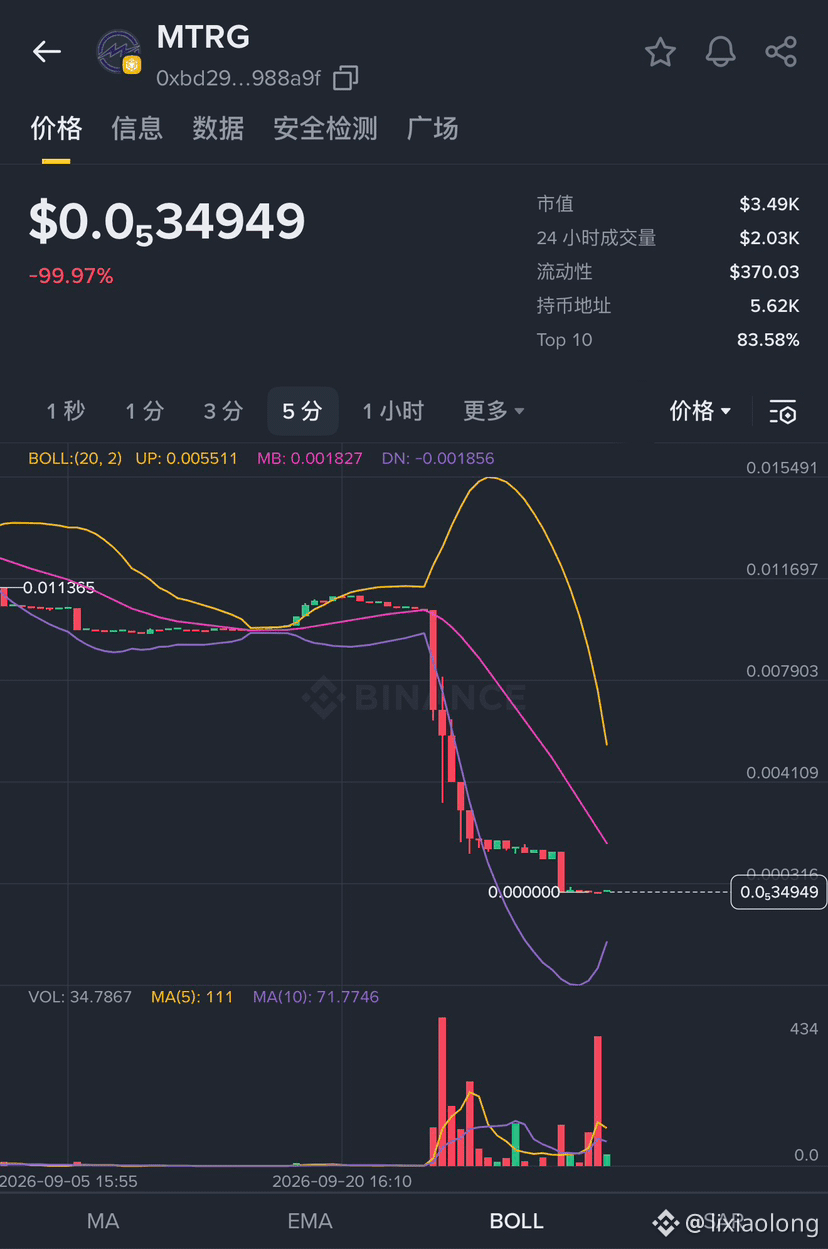
Meter. io’s Meter Passport on the BNB Chain is under attack. The attacker has been minting large amounts of uncollateralized wrapped tokens wMTRG through a cross-chain channel, and has already sold a portion of the tokens on PancakeSwap. Currently, the attacker has minted wMTRG worth approximately $2.3 million through about two transactions, and the attack is still ongoing.
The pool was already small—just crashed it to zero…
$mtrg
Meter. io’s Meter Passport on the BNB Chain is under attack. The attacker has been minting large amounts of uncollateralized wrapped tokens wMTRG through a cross-chain channel, and has already sold a portion of the tokens on PancakeSwap. Currently, the attacker has minted wMTRG worth approximately $2.3 million through about two transactions, and the attack is still ongoing.
The pool was already small—just crashed it to zero…
$mtrg
The pool was already small—just crashed it to zero…
$mtrg
48
·
--
$pPOLY leads the BSC Alpha major reshuffle with a whole new lineup—15 fresh faces enter the top 30
This round of BSC Alpha shows a clear shake-up: of the top 30, 15 new coins came in at once, and $pPOLY goes straight to the top. On the narrative side, new memes and themes keep emerging as well—US government endorsements for meme coins, trumpFish, ChatGPT voice, and more. The newly listed coins generally have volume, but most only have hype without a signal—so pick three based on liquidity.
$pPOLY|BSC|Alpha enters at #1
Liquidity: $4.57M, highest within the BSC ranking; in the 1h inflow ranking it made it onto the list, net inflow around -36.
Signal: No buy signal during this period.
Ranking: Appears in the 1h inflow ranking; enters at #1 in Alpha and takes the top spot directly.
One-liner: Funds just arrived but no signal yet—treat it as hype for now.
$SHARE|BSC|Alpha enters at #23
Liquidity: $1.84M; no appearance in the 1h inflow ranking.
Signal: No buy signal during this period.
Ranking: Enters Alpha at #23, not in the inflow ranking.
One-liner: Hype only, no signal.
$CNPY|BSC|Alpha enters at #12
Liquidity: $1.60M; no appearance in the 1h inflow ranking.
Signal: No buy signal during this period.
Ranking: Enters Alpha at #12, not in the inflow ranking.
One-liner: Hype only, no signal.
Many pools share the same name—make sure you use the $ code.
#$pPOLY #$SHARE #$CNPY
Not investment advice.
$pPOLY leads the BSC Alpha major reshuffle with a whole new lineup—15 fresh faces enter the top 30
This round of BSC Alpha shows a clear shake-up: of the top 30, 15 new coins came in at once, and $pPOLY goes straight to the top. On the narrative side, new memes and themes keep emerging as well—US government endorsements for meme coins, trumpFish, ChatGPT voice, and more. The newly listed coins generally have volume, but most only have hype without a signal—so pick three based on liquidity.
$pPOLY|BSC|Alpha enters at #1
Liquidity: $4.57M, highest within the BSC ranking; in the 1h inflow ranking it made it onto the list, net inflow around -36.
Signal: No buy signal during this period.
Ranking: Appears in the 1h inflow ranking; enters at #1 in Alpha and takes the top spot directly.
One-liner: Funds just arrived but no signal yet—treat it as hype for now.
$SHARE |BSC|Alpha enters at #23
Liquidity: $1.84M; no appearance in the 1h inflow ranking.
Signal: No buy signal during this period.
Ranking: Enters Alpha at #23, not in the inflow ranking.
One-liner: Hype only, no signal.
$CNPY |BSC|Alpha enters at #12
Liquidity: $1.60M; no appearance in the 1h inflow ranking.
Signal: No buy signal during this period.
Ranking: Enters Alpha at #12, not in the inflow ranking.
One-liner: Hype only, no signal.
Many pools share the same name—make sure you use the $ code.
#$pPOLY #$SHARE #$CNPY
Not investment advice.
This round of BSC Alpha shows a clear shake-up: of the top 30, 15 new coins came in at once, and $pPOLY goes straight to the top. On the narrative side, new memes and themes keep emerging as well—US government endorsements for meme coins, trumpFish, ChatGPT voice, and more. The newly listed coins generally have volume, but most only have hype without a signal—so pick three based on liquidity.
$pPOLY|BSC|Alpha enters at #1
Liquidity: $4.57M, highest within the BSC ranking; in the 1h inflow ranking it made it onto the list, net inflow around -36.
Signal: No buy signal during this period.
Ranking: Appears in the 1h inflow ranking; enters at #1 in Alpha and takes the top spot directly.
One-liner: Funds just arrived but no signal yet—treat it as hype for now.
$SHARE |BSC|Alpha enters at #23
Liquidity: $1.84M; no appearance in the 1h inflow ranking.
Signal: No buy signal during this period.
Ranking: Enters Alpha at #23, not in the inflow ranking.
One-liner: Hype only, no signal.
$CNPY |BSC|Alpha enters at #12
Liquidity: $1.60M; no appearance in the 1h inflow ranking.
Signal: No buy signal during this period.
Ranking: Enters Alpha at #12, not in the inflow ranking.
One-liner: Hype only, no signal.
Many pools share the same name—make sure you use the $ code.
#$pPOLY #$SHARE #$CNPY
Not investment advice.
1k
·
--
Midday Alpha Board sees major turnover: $NES leads three fresh BSC newcomers into the top 30. With nearly half the board refreshed in this update, it’s worth taking a look.
$NES|BSC|Alpha New entry at #21
Liquidity around 1.18M. Slight dip of 0.14% over the past hour, while still up 4% over the last 24 hours. No buy signals in this period, and it’s not on the capital inflow leaderboard. This is a new face that entered due to the board reshuffle—there’s no clear sign of capital yet. At the moment, it only has attention, not matching signals.
$ARX|BSC|Alpha New entry at #25
Liquidity around 1.16M. Up 3.4% over the last 24 hours. No buy signals in this period; it’s not on the inflow leaderboard. Like $NES , it’s also a new entrant to the board—capital signals are currently quiet.
$UP|BSC|Alpha New entry at #29
Liquidity around 710K. Up 2.5% over the last 24 hours. No buy signals in this period; it’s not on the inflow leaderboard. Among the three, it has the largest market cap. It’s also just been noticed by the board, and capital movements are not significant.
#NES #ARX #UP does not constitute investment advice.
Midday Alpha Board sees major turnover: $NES leads three fresh BSC newcomers into the top 30. With nearly half the board refreshed in this update, it’s worth taking a look.
$NES |BSC|Alpha New entry at #21
Liquidity around 1.18M. Slight dip of 0.14% over the past hour, while still up 4% over the last 24 hours. No buy signals in this period, and it’s not on the capital inflow leaderboard. This is a new face that entered due to the board reshuffle—there’s no clear sign of capital yet. At the moment, it only has attention, not matching signals.
$ARX |BSC|Alpha New entry at #25
Liquidity around 1.16M. Up 3.4% over the last 24 hours. No buy signals in this period; it’s not on the inflow leaderboard. Like $NES , it’s also a new entrant to the board—capital signals are currently quiet.
$UP |BSC|Alpha New entry at #29
Liquidity around 710K. Up 2.5% over the last 24 hours. No buy signals in this period; it’s not on the inflow leaderboard. Among the three, it has the largest market cap. It’s also just been noticed by the board, and capital movements are not significant.
#NES #ARX #UP does not constitute investment advice.
$NES |BSC|Alpha New entry at #21
Liquidity around 1.18M. Slight dip of 0.14% over the past hour, while still up 4% over the last 24 hours. No buy signals in this period, and it’s not on the capital inflow leaderboard. This is a new face that entered due to the board reshuffle—there’s no clear sign of capital yet. At the moment, it only has attention, not matching signals.
$ARX |BSC|Alpha New entry at #25
Liquidity around 1.16M. Up 3.4% over the last 24 hours. No buy signals in this period; it’s not on the inflow leaderboard. Like $NES , it’s also a new entrant to the board—capital signals are currently quiet.
$UP |BSC|Alpha New entry at #29
Liquidity around 710K. Up 2.5% over the last 24 hours. No buy signals in this period; it’s not on the inflow leaderboard. Among the three, it has the largest market cap. It’s also just been noticed by the board, and capital movements are not significant.
#NES #ARX #UP does not constitute investment advice.
1
862
·
--
At dawn, Alpha’s big reshuffle: $BR leads the return of familiar old faces on the BSC as they collectively come back among the top 30
In this dawn sweep of the rankings, Alpha’s top 30 has swapped out another batch: three new BSC tokens—$BR, $UB, and $龙虾—have entered the leaderboard. Their liquidity is all in the million‑dollar range, and topic heat has clearly returned. At the moment, we haven’t seen buy signals for any of the three yet; they’re in a “rankings first” state. The key is whether the capital will follow next.
$BR|BSC|Alpha #22
Liquidity is about $5.45M, the highest among the newly listed this round. There are no buy signals in this period, and it hasn’t entered the inflow list. The contract includes prompts about Mintable and blacklist permissions, which puts it in the medium‑risk category. There are multiple token pools with the same name—make sure you verify the code: $BR . Funds just returned to the leaderboard, but there’s only heat and no signal yet—watch how the chart moves.
$UB|BSC|Alpha #25
Liquidity is about $4.30M. There’s no 1h inflow, and there are no buy signals in this period. Alpha is newly at #25, with lower contract risk. Only ranking momentum is present—signals haven’t caught up yet. Stand by for now.
$龙虾|BSC|Alpha #15
Liquidity is about $3.67M. There’s no 1h inflow, and there are no buy signals in this period. Alpha is newly at #15. There are many pools with the same Chinese name—confirm the code: $龙虾. Funds have returned, but there’s no signal confirmation yet—be cautious.
#BR #UB #龙虾
Not investment advice.
At dawn, Alpha’s big reshuffle: $BR leads the return of familiar old faces on the BSC as they collectively come back among the top 30
In this dawn sweep of the rankings, Alpha’s top 30 has swapped out another batch: three new BSC tokens—$BR , $UB , and $龙虾—have entered the leaderboard. Their liquidity is all in the million‑dollar range, and topic heat has clearly returned. At the moment, we haven’t seen buy signals for any of the three yet; they’re in a “rankings first” state. The key is whether the capital will follow next.
$BR |BSC|Alpha #22
Liquidity is about $5.45M, the highest among the newly listed this round. There are no buy signals in this period, and it hasn’t entered the inflow list. The contract includes prompts about Mintable and blacklist permissions, which puts it in the medium‑risk category. There are multiple token pools with the same name—make sure you verify the code: $BR . Funds just returned to the leaderboard, but there’s only heat and no signal yet—watch how the chart moves.
$UB |BSC|Alpha #25
Liquidity is about $4.30M. There’s no 1h inflow, and there are no buy signals in this period. Alpha is newly at #25, with lower contract risk. Only ranking momentum is present—signals haven’t caught up yet. Stand by for now.
$龙虾|BSC|Alpha #15
Liquidity is about $3.67M. There’s no 1h inflow, and there are no buy signals in this period. Alpha is newly at #15. There are many pools with the same Chinese name—confirm the code: $龙虾. Funds have returned, but there’s no signal confirmation yet—be cautious.
#BR #UB #龙虾
Not investment advice.
In this dawn sweep of the rankings, Alpha’s top 30 has swapped out another batch: three new BSC tokens—$BR , $UB , and $龙虾—have entered the leaderboard. Their liquidity is all in the million‑dollar range, and topic heat has clearly returned. At the moment, we haven’t seen buy signals for any of the three yet; they’re in a “rankings first” state. The key is whether the capital will follow next.
$BR |BSC|Alpha #22
Liquidity is about $5.45M, the highest among the newly listed this round. There are no buy signals in this period, and it hasn’t entered the inflow list. The contract includes prompts about Mintable and blacklist permissions, which puts it in the medium‑risk category. There are multiple token pools with the same name—make sure you verify the code: $BR . Funds just returned to the leaderboard, but there’s only heat and no signal yet—watch how the chart moves.
$UB |BSC|Alpha #25
Liquidity is about $4.30M. There’s no 1h inflow, and there are no buy signals in this period. Alpha is newly at #25, with lower contract risk. Only ranking momentum is present—signals haven’t caught up yet. Stand by for now.
$龙虾|BSC|Alpha #15
Liquidity is about $3.67M. There’s no 1h inflow, and there are no buy signals in this period. Alpha is newly at #15. There are many pools with the same Chinese name—confirm the code: $龙虾. Funds have returned, but there’s no signal confirmation yet—be cautious.
#BR #UB #龙虾
Not investment advice.
996
·
--
Verified
After Nvidia’s earnings report came out, I was genuinely stunned.
This quarter’s revenue hit $96.2 billion—more than doubled year-over-year. And for one segment alone, data center revenue was $89 billion. Jensen Huang even gave guidance a full year early for the first time, implying that annual revenue still needs to grow by another 70%. Thirteen major banks queued up to raise their price targets—the most aggressive one directly called for 550, which is basically another doubling. Now the market cap is $5.5 trillion. One company is basically half the entire A-shares. Tell me if that’s exaggerated or not.
And these past few days the market’s been cooperating, too: AMD’s market cap first broke $1 trillion, Meta’s AI assistant topped the free App Store ranking within just 24 hours of launch, the Nasdaq hit a new high since June, and the Philadelphia Semiconductor Index surged 4% in a single day. Who still tells me this is just a “rebound”? A rebound could it really rally with this kind of lineup?
Anyway I’m bullish, but let me be honest—this rally is getting too concentrated right now. Nearly half of the S&P’s move this round was driven by five companies. It’s like the whole room has only five people working, and everyone else is just watching. So my position didn’t go to chase the hype at the highs. What I’m mainly holding is the “shovel” batch—chips, networking equipment, power, data centers, and so on. The logic is simple: no matter which model ultimately comes out on top, nobody can save on electricity bills and server expenses. The toll-collecting businesses are guaranteed to do well—whether it’s dry or flood.
People outside are saying that global AI infrastructure in 2028 will be a $3 trillion investment. That money has to be spent layer by layer, and every layer has someone earning.
Don’t chase in the short term—buy on pullbacks. Just keep the shovels held firmly.
What do you think? Want to show your positions?
#AI股持续上涨还有哪些投资机会
After Nvidia’s earnings report came out, I was genuinely stunned.
This quarter’s revenue hit $96.2 billion—more than doubled year-over-year. And for one segment alone, data center revenue was $89 billion. Jensen Huang even gave guidance a full year early for the first time, implying that annual revenue still needs to grow by another 70%. Thirteen major banks queued up to raise their price targets—the most aggressive one directly called for 550, which is basically another doubling. Now the market cap is $5.5 trillion. One company is basically half the entire A-shares. Tell me if that’s exaggerated or not.
And these past few days the market’s been cooperating, too: AMD’s market cap first broke $1 trillion, Meta’s AI assistant topped the free App Store ranking within just 24 hours of launch, the Nasdaq hit a new high since June, and the Philadelphia Semiconductor Index surged 4% in a single day. Who still tells me this is just a “rebound”? A rebound could it really rally with this kind of lineup?
Anyway I’m bullish, but let me be honest—this rally is getting too concentrated right now. Nearly half of the S&P’s move this round was driven by five companies. It’s like the whole room has only five people working, and everyone else is just watching. So my position didn’t go to chase the hype at the highs. What I’m mainly holding is the “shovel” batch—chips, networking equipment, power, data centers, and so on. The logic is simple: no matter which model ultimately comes out on top, nobody can save on electricity bills and server expenses. The toll-collecting businesses are guaranteed to do well—whether it’s dry or flood.
People outside are saying that global AI infrastructure in 2028 will be a $3 trillion investment. That money has to be spent layer by layer, and every layer has someone earning.
Don’t chase in the short term—buy on pullbacks. Just keep the shovels held firmly.
What do you think? Want to show your positions?
#AI股持续上涨还有哪些投资机会
This quarter’s revenue hit $96.2 billion—more than doubled year-over-year. And for one segment alone, data center revenue was $89 billion. Jensen Huang even gave guidance a full year early for the first time, implying that annual revenue still needs to grow by another 70%. Thirteen major banks queued up to raise their price targets—the most aggressive one directly called for 550, which is basically another doubling. Now the market cap is $5.5 trillion. One company is basically half the entire A-shares. Tell me if that’s exaggerated or not.
And these past few days the market’s been cooperating, too: AMD’s market cap first broke $1 trillion, Meta’s AI assistant topped the free App Store ranking within just 24 hours of launch, the Nasdaq hit a new high since June, and the Philadelphia Semiconductor Index surged 4% in a single day. Who still tells me this is just a “rebound”? A rebound could it really rally with this kind of lineup?
Anyway I’m bullish, but let me be honest—this rally is getting too concentrated right now. Nearly half of the S&P’s move this round was driven by five companies. It’s like the whole room has only five people working, and everyone else is just watching. So my position didn’t go to chase the hype at the highs. What I’m mainly holding is the “shovel” batch—chips, networking equipment, power, data centers, and so on. The logic is simple: no matter which model ultimately comes out on top, nobody can save on electricity bills and server expenses. The toll-collecting businesses are guaranteed to do well—whether it’s dry or flood.
People outside are saying that global AI infrastructure in 2028 will be a $3 trillion investment. That money has to be spent layer by layer, and every layer has someone earning.
Don’t chase in the short term—buy on pullbacks. Just keep the shovels held firmly.
What do you think? Want to show your positions?
#AI股持续上涨还有哪些投资机会
2
179
Log in to explore more content
Join global crypto users on Binance Square
⚡️ Get latest and useful information about crypto.
💬 Trusted by the world’s largest crypto exchange.
👍 Discover real insights from verified creators.
Email / Phone number
Trending Topics
BitcoinSpotETFsDraw$6.34BInflowsInQ3
6,945 views
103 Discussing
🚨 $6.34 BILLION JUST CHASED BITCOIN — BUT THE REAL STORY IS WHAT COMES NEXT
Bitcoin spot ETFs pulled in $6.34 billion during Q3.
That number deserves attention — but not because “institutions are buying Bitcoin” is new.
What matters is the change in money flow.
When billions move into spot ETFs within a single quarter, Bitcoin is no longer relying only on crypto-native traders. A deeper pool of capital is participating through regulated market infrastructure.
And that changes the game.
Think about it:
Bitcoin’s supply does not expand because demand increases.
There will still only ever be 21 million BTC.
So when large pools of capital compete for exposure to an asset with structurally limited supply, the important question becomes:
How much Bitcoin is actually available when everyone wants it at the same time?
That is where things can get interesting.
ETF inflows don’t guarantee the next candle will be green. Institutions can sell just as easily as they buy.
But $6.34B entering in one quarter is not background noise.
I’m watching the flows now more closely than the headlines.
Because sometimes the biggest move starts before retail realizes the money has already moved. 👀
Master CX Watch: Follow the money. Then watch the price.
$BTC #BitcoinSpotETFsDraw$6.34BInflowsInQ3
Master CX
·0 Likes
·231 views
EthereumValidatorExitQueueJumps392%
123,105 views
1,047 Discussing
IMFApprovesElSalvador$138MWithBitcoinWaiver
14,838 views
70 Discussing