
boxbo
79 Posts

boxbo
Report
Block User
Join and earn And following me
Open Trade
Occasional Trader
3 Years
13 Following
27 Followers
64 Liked
Posts
Portfolio
All
Quotes
Videos
Live
·
--
#bchjumps28%oncmefutureslisting
Topic: Institutional Derivatives & Market Dynamics
Institutional Validation: Why $CME.US
{stock_us}(CME.US)
Futures Sparked a 28% Bitcoin Cash Surge
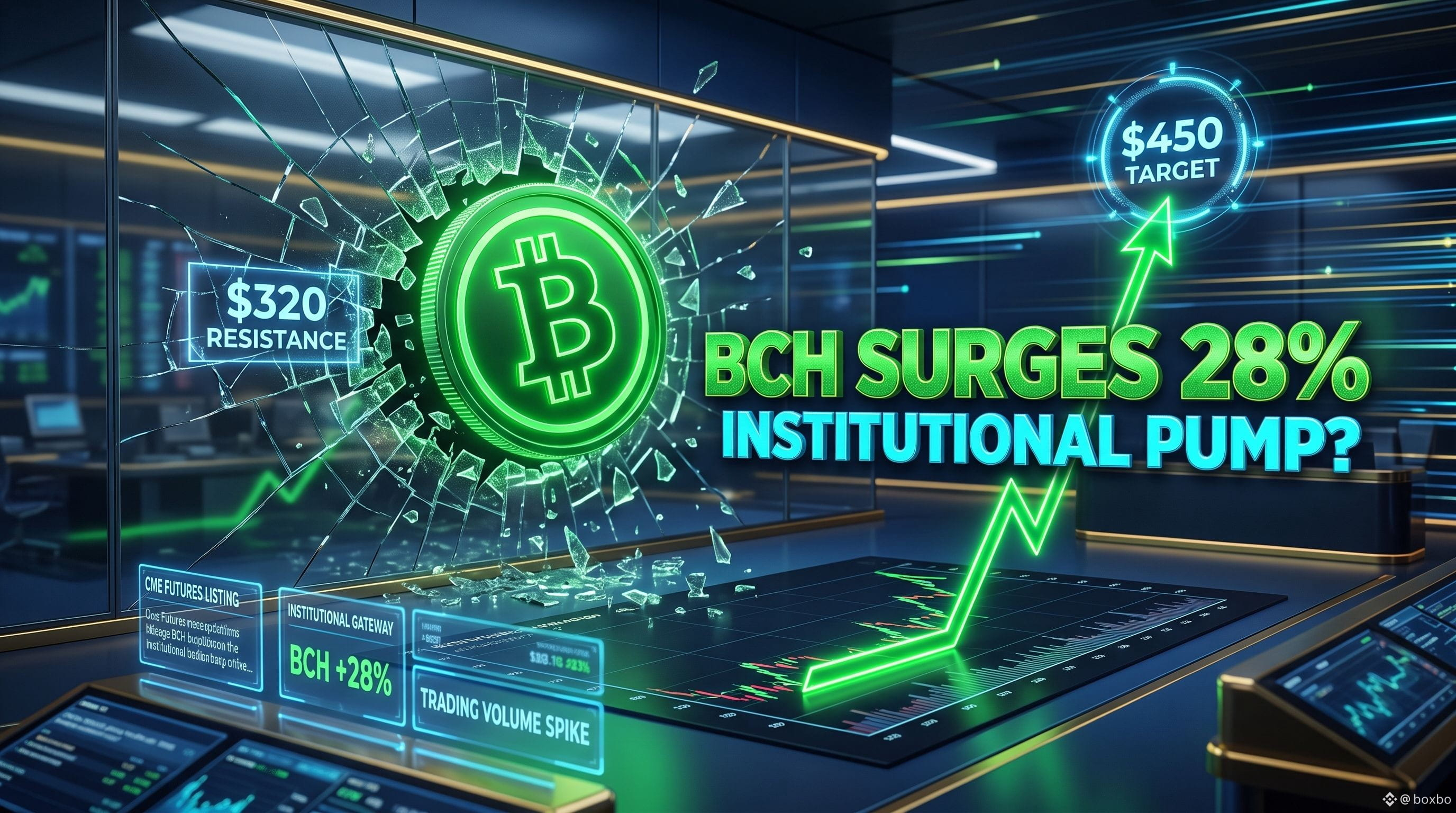
Bitcoin Cash (BCH) rallied 28% toward $349 following CME Group's announcement to launch cash-settled $BCH
{spot}(BCHUSDT)
and Micro BCH futures. Scheduled to list alongside Uniswap futures pending regulatory approval, CME’s expansion opens regulated access for institutional capital, enabling sophisticated basis trades, risk hedging, and direct directional exposure without custody constraints. The immediate spot breakout reflects market participants front-running expected institutional liquidity and leverage. Practically, while flipping key multi-month moving averages signals strong bullish momentum, traders should exercise risk controls: historical data indicates post-announcement pumps frequently experience mean-reversion pullbacks prior to product launch dates as initial speculative momentum digests.
#bchjumps28%oncmefutureslisting
Topic: Institutional Derivatives & Market Dynamics
Institutional Validation: Why $CME.US
Futures Sparked a 28% Bitcoin Cash Surge
Bitcoin Cash (BCH) rallied 28% toward $349 following CME Group's announcement to launch cash-settled $BCH
and Micro BCH futures. Scheduled to list alongside Uniswap futures pending regulatory approval, CME’s expansion opens regulated access for institutional capital, enabling sophisticated basis trades, risk hedging, and direct directional exposure without custody constraints. The immediate spot breakout reflects market participants front-running expected institutional liquidity and leverage. Practically, while flipping key multi-month moving averages signals strong bullish momentum, traders should exercise risk controls: historical data indicates post-announcement pumps frequently experience mean-reversion pullbacks prior to product launch dates as initial speculative momentum digests.
Topic: Institutional Derivatives & Market Dynamics
Institutional Validation: Why $CME.US
Futures Sparked a 28% Bitcoin Cash Surge
Bitcoin Cash (BCH) rallied 28% toward $349 following CME Group's announcement to launch cash-settled $BCH
and Micro BCH futures. Scheduled to list alongside Uniswap futures pending regulatory approval, CME’s expansion opens regulated access for institutional capital, enabling sophisticated basis trades, risk hedging, and direct directional exposure without custody constraints. The immediate spot breakout reflects market participants front-running expected institutional liquidity and leverage. Practically, while flipping key multi-month moving averages signals strong bullish momentum, traders should exercise risk controls: historical data indicates post-announcement pumps frequently experience mean-reversion pullbacks prior to product launch dates as initial speculative momentum digests.
BCH+3.80%
CMEUS+1.47%
1
526
·
--
#BitcoinRejectedAt$87 ,300Twice
#BitcoinRejectedAt$87,300Twice
Double Resistance Barrier: Analyzing Bitcoin’s Repeated Rejection at $87,300
Bitcoin’s consecutive rejections at $87,300 signal an intense supply barrier just below the critical 100-week moving average (~$89,000). This double-top pattern highlights a lack of sustained spot-buying aggression needed to absorb overhead profit-taking and US spot $ETFT.ETF
{etf_us}(ETFT.ETF)
cost$ bases, causing prices to slide back toward the $84,600 support zone. Macro headwinds further exacerbate the exhaustion: a rising US Dollar Index (DXY reaching 101) and elevated Treasury yields continue to tighten conditions across risk assets. From a tactical standpoint, holding the $83,000–$86,000 long-term holder base remains critical to prevent a deeper mean-reversion retest toward the 50-week simple moving average (~$81,081). A decisive daily candle close above $87,300 is mandatory to reignite momentum toward the $89,000–$90,000 target. $BTC
{spot}(BTCUSDT)
#BitcoinRejectedAt$87 ,300Twice
#BitcoinRejectedAt$87,300Twice
Double Resistance Barrier: Analyzing Bitcoin’s Repeated Rejection at $87,300
Bitcoin’s consecutive rejections at $87,300 signal an intense supply barrier just below the critical 100-week moving average (~$89,000). This double-top pattern highlights a lack of sustained spot-buying aggression needed to absorb overhead profit-taking and US spot $ETFT.ETF
cost$ bases, causing prices to slide back toward the $84,600 support zone. Macro headwinds further exacerbate the exhaustion: a rising US Dollar Index (DXY reaching 101) and elevated Treasury yields continue to tighten conditions across risk assets. From a tactical standpoint, holding the $83,000–$86,000 long-term holder base remains critical to prevent a deeper mean-reversion retest toward the 50-week simple moving average (~$81,081). A decisive daily candle close above $87,300 is mandatory to reignite momentum toward the $89,000–$90,000 target. $BTC
#BitcoinRejectedAt$87,300Twice
Double Resistance Barrier: Analyzing Bitcoin’s Repeated Rejection at $87,300
Bitcoin’s consecutive rejections at $87,300 signal an intense supply barrier just below the critical 100-week moving average (~$89,000). This double-top pattern highlights a lack of sustained spot-buying aggression needed to absorb overhead profit-taking and US spot $ETFT.ETF
cost$ bases, causing prices to slide back toward the $84,600 support zone. Macro headwinds further exacerbate the exhaustion: a rising US Dollar Index (DXY reaching 101) and elevated Treasury yields continue to tighten conditions across risk assets. From a tactical standpoint, holding the $83,000–$86,000 long-term holder base remains critical to prevent a deeper mean-reversion retest toward the 50-week simple moving average (~$81,081). A decisive daily candle close above $87,300 is mandatory to reignite momentum toward the $89,000–$90,000 target. $BTC

1
97
·
--
Verified
#cardanojoinsx402paymentstandard
Autonomous Machine Economy: Cardano Integrates Official x402 Open Payment Standard
Cardano has integrated into the official x402 open payment SDK, reviving the long-dormant web status code HTTP 402 ("Payment Required") to enable seamless machine-to-machine microtransactions. This implementation allows software services, web APIs, and autonomous AI agents to make instant, pay-per-request settlements using $ADA
{spot}(ADAUSDT)
or Cardano-native tokens (including stablecoins like USDM and DJED) over standard HTTP calls without user registration or account creation. Leveraging Cardano’s extended UTxO (eUTxO) model, clients pre-build and sign precise transactions that servers or facilitators verify and submit, preventing unauthorized spending or destination tampering. From a practical developer and trader standpoint, while this unlocks major infrastructure capabilities for automated Web3/AI agentic commerce, scaling solutions like Hydra Layer-2 will remain vital to lower per-request transaction fees for ultra-high-frequency API calls. $BTC
{spot}(BTCUSDT)
#cardanojoinsx402paymentstandard
Autonomous Machine Economy: Cardano Integrates Official x402 Open Payment Standard
Cardano has integrated into the official x402 open payment SDK, reviving the long-dormant web status code HTTP 402 ("Payment Required") to enable seamless machine-to-machine microtransactions. This implementation allows software services, web APIs, and autonomous AI agents to make instant, pay-per-request settlements using $ADA
or Cardano-native tokens (including stablecoins like USDM and DJED) over standard HTTP calls without user registration or account creation. Leveraging Cardano’s extended UTxO (eUTxO) model, clients pre-build and sign precise transactions that servers or facilitators verify and submit, preventing unauthorized spending or destination tampering. From a practical developer and trader standpoint, while this unlocks major infrastructure capabilities for automated Web3/AI agentic commerce, scaling solutions like Hydra Layer-2 will remain vital to lower per-request transaction fees for ultra-high-frequency API calls. $BTC
Autonomous Machine Economy: Cardano Integrates Official x402 Open Payment Standard
Cardano has integrated into the official x402 open payment SDK, reviving the long-dormant web status code HTTP 402 ("Payment Required") to enable seamless machine-to-machine microtransactions. This implementation allows software services, web APIs, and autonomous AI agents to make instant, pay-per-request settlements using $ADA
or Cardano-native tokens (including stablecoins like USDM and DJED) over standard HTTP calls without user registration or account creation. Leveraging Cardano’s extended UTxO (eUTxO) model, clients pre-build and sign precise transactions that servers or facilitators verify and submit, preventing unauthorized spending or destination tampering. From a practical developer and trader standpoint, while this unlocks major infrastructure capabilities for automated Web3/AI agentic commerce, scaling solutions like Hydra Layer-2 will remain vital to lower per-request transaction fees for ultra-high-frequency API calls. $BTC

2
942
·
--
Verified
#21shareslauncheseuropesfirstzcashetp
Institutional Access Expands: 21Shares Debuts Europe’s First Spot Zcash ETP 👀
Topic: Crypto Institutional Adoption & ETP Products
21Shares has officially listed Europe’s first physically backed Zcash ETP (ticker: ZCASH) on Euronext Paris and Euronext Amsterdam. Carrying a 2.5% annual management fee, the product offers European institutional and retail investors direct, regulated exposure to $ZEC
{spot}(ZECUSDT)
without requiring self-custody or complex wallet management. Coming closely after Grayscale’s US launch of its Zcash trust (ZCSH), this ETP reinforces growing institutional demand for privacy-focused, fixed-supply digital assets. Functionally, the listing unlocks new traditional capital channels for Zcash—which has gained over 1,100% over the past year—while establishing a compliant bridge for asset managers looking to gain exposure to zero-knowledge privacy infrastructure through standard brokerage accounts.
#21shareslauncheseuropesfirstzcashetp
Institutional Access Expands: 21Shares Debuts Europe’s First Spot Zcash ETP 👀
Topic: Crypto Institutional Adoption & ETP Products
21Shares has officially listed Europe’s first physically backed Zcash ETP (ticker: ZCASH) on Euronext Paris and Euronext Amsterdam. Carrying a 2.5% annual management fee, the product offers European institutional and retail investors direct, regulated exposure to $ZEC
without requiring self-custody or complex wallet management. Coming closely after Grayscale’s US launch of its Zcash trust (ZCSH), this ETP reinforces growing institutional demand for privacy-focused, fixed-supply digital assets. Functionally, the listing unlocks new traditional capital channels for Zcash—which has gained over 1,100% over the past year—while establishing a compliant bridge for asset managers looking to gain exposure to zero-knowledge privacy infrastructure through standard brokerage accounts.
Institutional Access Expands: 21Shares Debuts Europe’s First Spot Zcash ETP 👀
Topic: Crypto Institutional Adoption & ETP Products
21Shares has officially listed Europe’s first physically backed Zcash ETP (ticker: ZCASH) on Euronext Paris and Euronext Amsterdam. Carrying a 2.5% annual management fee, the product offers European institutional and retail investors direct, regulated exposure to $ZEC
without requiring self-custody or complex wallet management. Coming closely after Grayscale’s US launch of its Zcash trust (ZCSH), this ETP reinforces growing institutional demand for privacy-focused, fixed-supply digital assets. Functionally, the listing unlocks new traditional capital channels for Zcash—which has gained over 1,100% over the past year—while establishing a compliant bridge for asset managers looking to gain exposure to zero-knowledge privacy infrastructure through standard brokerage accounts.

2
3.9k
·
--
Verified
#aistockswhatnext
Beyond the Hardware Boom: What Is Next for AI Stocks?
The artificial intelligence trade is transitioning from the initial semiconductor buildout phase into a secondary utility and infrastructure wave. While hardware leaders like $NVIDIA continue to post massive top-line expansion, market focus is shifting toward software monetization, custom $ASIC.US
{stock_us}(ASIC.US)
design, and data center energy constraints. Major hyperscalers are driving enterprise AI integration, but investors are increasingly evaluating return on capital expenditures (CapEx) rather than pure spending capacity. From a practical portfolio stance, the key structural risk is elevated forward valuation multiples across hypergrowth software, which demand consistent 30%+ revenue acceleration to justify current levels. Tactical investors should monitor the rotation from primary chip fabricators toward specialized networking, liquid cooling providers, and software platforms demonstrating clear enterprise pricing power.
#aistockswhatnext
Beyond the Hardware Boom: What Is Next for AI Stocks?
The artificial intelligence trade is transitioning from the initial semiconductor buildout phase into a secondary utility and infrastructure wave. While hardware leaders like $NVIDIA continue to post massive top-line expansion, market focus is shifting toward software monetization, custom $ASIC.US
design, and data center energy constraints. Major hyperscalers are driving enterprise AI integration, but investors are increasingly evaluating return on capital expenditures (CapEx) rather than pure spending capacity. From a practical portfolio stance, the key structural risk is elevated forward valuation multiples across hypergrowth software, which demand consistent 30%+ revenue acceleration to justify current levels. Tactical investors should monitor the rotation from primary chip fabricators toward specialized networking, liquid cooling providers, and software platforms demonstrating clear enterprise pricing power.
Beyond the Hardware Boom: What Is Next for AI Stocks?
The artificial intelligence trade is transitioning from the initial semiconductor buildout phase into a secondary utility and infrastructure wave. While hardware leaders like $NVIDIA continue to post massive top-line expansion, market focus is shifting toward software monetization, custom $ASIC.US
design, and data center energy constraints. Major hyperscalers are driving enterprise AI integration, but investors are increasingly evaluating return on capital expenditures (CapEx) rather than pure spending capacity. From a practical portfolio stance, the key structural risk is elevated forward valuation multiples across hypergrowth software, which demand consistent 30%+ revenue acceleration to justify current levels. Tactical investors should monitor the rotation from primary chip fabricators toward specialized networking, liquid cooling providers, and software platforms demonstrating clear enterprise pricing power.

NVDAB-2.06%
ASICUS-1.49%
2
887
·
--
#dogecoinrises15% Breakthrough Momentum: What Is Driving Dogecoin’s 15% Single-Day Surge?
Dogecoin (DOGE) has broken out of its multi-week accumulation range with a sharp 15% single-day price surge, driven by a combination of surging derivative volume, network activity, and renewed institutional interest. On-chain data indicates that daily active addresses crossed a multi-month high alongside a massive expansion in futures open interest, signaling that leveraged traders are positioning for a broader trend continuation rather than a temporary spot pump. Practically, DOGE has flipped its immediate resistance zone into temporary support, but it now faces heavy sell-side liquidity at the $0.18 to $0.20 structural level. Traders should watch key momentum oscillators like the 4-hour RSI to monitor overbought conditions: a sustained daily close above $0.20 paves the way toward $0.25, while failure to hold immediate support could trigger a quick mean-reversion retest toward $0.15. $DOGE $DOGS
{spot}(DOGSUSDT)
{spot}(DOGEUSDT)
#dogecoinrises15% Breakthrough Momentum: What Is Driving Dogecoin’s 15% Single-Day Surge?
Dogecoin (DOGE) has broken out of its multi-week accumulation range with a sharp 15% single-day price surge, driven by a combination of surging derivative volume, network activity, and renewed institutional interest. On-chain data indicates that daily active addresses crossed a multi-month high alongside a massive expansion in futures open interest, signaling that leveraged traders are positioning for a broader trend continuation rather than a temporary spot pump. Practically, DOGE has flipped its immediate resistance zone into temporary support, but it now faces heavy sell-side liquidity at the $0.18 to $0.20 structural level. Traders should watch key momentum oscillators like the 4-hour RSI to monitor overbought conditions: a sustained daily close above $0.20 paves the way toward $0.25, while failure to hold immediate support could trigger a quick mean-reversion retest toward $0.15. $DOGE $DOGS
Dogecoin (DOGE) has broken out of its multi-week accumulation range with a sharp 15% single-day price surge, driven by a combination of surging derivative volume, network activity, and renewed institutional interest. On-chain data indicates that daily active addresses crossed a multi-month high alongside a massive expansion in futures open interest, signaling that leveraged traders are positioning for a broader trend continuation rather than a temporary spot pump. Practically, DOGE has flipped its immediate resistance zone into temporary support, but it now faces heavy sell-side liquidity at the $0.18 to $0.20 structural level. Traders should watch key momentum oscillators like the 4-hour RSI to monitor overbought conditions: a sustained daily close above $0.20 paves the way toward $0.25, while failure to hold immediate support could trigger a quick mean-reversion retest toward $0.15. $DOGE $DOGS

2
229
·
--
#aistockswhatnext
The Next AI Frontier: From Chipmakers to Infrastructure and Monetization
The AI stock narrative is rapidly evolving beyond hardware hyper-scalers into its next structural phase: infrastructure resilience and software monetization. While early semiconductor leaders captured the initial expansion wave, market focus is pivoting toward the energy grid, liquid cooling, and custom silicon needed to sustain massive data center power demands. Concurrently, enterprise software providers face a strict "prove-it" period, where investors demand measurable revenue growth from co-pilots and AI integrations rather than speculative hype. For practical investors, navigating what’s next requires looking beyond index heavyweights to identify mid-chain infrastructure beneficiaries, tracking corporate capital expenditure conversion rates, and monitoring whether software earnings can justify current enterprise valuations as hardware supply chains normalize. $NVDAB $NVDA.US $AAPLB
{spot}(AAPLBUSDT)
{stock_us}(NVDA.US)
{spot}(NVDABUSDT)
#aistockswhatnext
The Next AI Frontier: From Chipmakers to Infrastructure and Monetization
The AI stock narrative is rapidly evolving beyond hardware hyper-scalers into its next structural phase: infrastructure resilience and software monetization. While early semiconductor leaders captured the initial expansion wave, market focus is pivoting toward the energy grid, liquid cooling, and custom silicon needed to sustain massive data center power demands. Concurrently, enterprise software providers face a strict "prove-it" period, where investors demand measurable revenue growth from co-pilots and AI integrations rather than speculative hype. For practical investors, navigating what’s next requires looking beyond index heavyweights to identify mid-chain infrastructure beneficiaries, tracking corporate capital expenditure conversion rates, and monitoring whether software earnings can justify current enterprise valuations as hardware supply chains normalize. $NVDAB $NVDA.US $AAPLB
The Next AI Frontier: From Chipmakers to Infrastructure and Monetization
The AI stock narrative is rapidly evolving beyond hardware hyper-scalers into its next structural phase: infrastructure resilience and software monetization. While early semiconductor leaders captured the initial expansion wave, market focus is pivoting toward the energy grid, liquid cooling, and custom silicon needed to sustain massive data center power demands. Concurrently, enterprise software providers face a strict "prove-it" period, where investors demand measurable revenue growth from co-pilots and AI integrations rather than speculative hype. For practical investors, navigating what’s next requires looking beyond index heavyweights to identify mid-chain infrastructure beneficiaries, tracking corporate capital expenditure conversion rates, and monitoring whether software earnings can justify current enterprise valuations as hardware supply chains normalize. $NVDAB $NVDA.US $AAPLB

100
·
--
Capital Efficiency Unlocked: Borrowing Dollars Against Bitcoin via Circle
Circle’s institutional Bitcoin-backed borrowing program (DABB) changes how hedge funds, corporate treasuries, and high-net-worth entities manage capital. By posting Bitcoin as collateral to mint cir $BTC
{spot}(BTCUSDT)
on a 1:1 basis and borrowing $USDC
{spot}(USDCUSDT)
against it via institutional lending pools like Morpho, market participants can unlock non-dilutive liquidity without triggering taxable capital gains events. The practical breakthrough lies in automated risk management and over-collateralized liquidation safeguards, allowing institutions to fund operations, yield strategies, or new investments while retaining 100% upside exposure to their underlying Bitcoin. For crypto-native and traditional financial firms alike, this framework transforms idle balance-sheet assets into active working capital without the market impact or tax friction of spot selling.
Capital Efficiency Unlocked: Borrowing Dollars Against Bitcoin via Circle
Circle’s institutional Bitcoin-backed borrowing program (DABB) changes how hedge funds, corporate treasuries, and high-net-worth entities manage capital. By posting Bitcoin as collateral to mint cir $BTC
on a 1:1 basis and borrowing $USDC
against it via institutional lending pools like Morpho, market participants can unlock non-dilutive liquidity without triggering taxable capital gains events. The practical breakthrough lies in automated risk management and over-collateralized liquidation safeguards, allowing institutions to fund operations, yield strategies, or new investments while retaining 100% upside exposure to their underlying Bitcoin. For crypto-native and traditional financial firms alike, this framework transforms idle balance-sheet assets into active working capital without the market impact or tax friction of spot selling.
Circle’s institutional Bitcoin-backed borrowing program (DABB) changes how hedge funds, corporate treasuries, and high-net-worth entities manage capital. By posting Bitcoin as collateral to mint cir $BTC
on a 1:1 basis and borrowing $USDC
against it via institutional lending pools like Morpho, market participants can unlock non-dilutive liquidity without triggering taxable capital gains events. The practical breakthrough lies in automated risk management and over-collateralized liquidation safeguards, allowing institutions to fund operations, yield strategies, or new investments while retaining 100% upside exposure to their underlying Bitcoin. For crypto-native and traditional financial firms alike, this framework transforms idle balance-sheet assets into active working capital without the market impact or tax friction of spot selling.

61
·
--
Verified
#circlelaunchesinstitutionalbtcbackedborrowing
Institutional Liquidity Unlocked: Circle Launches Bitcoin-Collateralized $USDC
{spot}(USDCUSDT)
Borrowing
Circle has launched its Digital Asset-Backed Borrowing (DABB) service through Circle Mint, giving eligible institutional clients a regulated gateway to access dollar liquidity without liquidating their Bitcoin reserves. By depositing spot $BTC
{spot}(BTCUSDT)
, institutional treasuries can mint Circle Wrapped Bitcoin (cirBTC) at a 1:1 peg and post it as collateral in decentralized lending protocols like Morpho to borrow USDC. This bridges traditional corporate finance with DeFi infrastructure, enabling institutions to preserve upside exposure, avoid taxable capital gains events, and instantly deploy working capital. The strategic impact goes beyond simple leverage: it integrates institutional balance sheets deeper into on-chain credit markets and provides a secure blueprint for corporate treasury management.
#circlelaunchesinstitutionalbtcbackedborrowing
Institutional Liquidity Unlocked: Circle Launches Bitcoin-Collateralized $USDC
Borrowing
Circle has launched its Digital Asset-Backed Borrowing (DABB) service through Circle Mint, giving eligible institutional clients a regulated gateway to access dollar liquidity without liquidating their Bitcoin reserves. By depositing spot $BTC
, institutional treasuries can mint Circle Wrapped Bitcoin (cirBTC) at a 1:1 peg and post it as collateral in decentralized lending protocols like Morpho to borrow USDC. This bridges traditional corporate finance with DeFi infrastructure, enabling institutions to preserve upside exposure, avoid taxable capital gains events, and instantly deploy working capital. The strategic impact goes beyond simple leverage: it integrates institutional balance sheets deeper into on-chain credit markets and provides a secure blueprint for corporate treasury management.
Institutional Liquidity Unlocked: Circle Launches Bitcoin-Collateralized $USDC
Borrowing
Circle has launched its Digital Asset-Backed Borrowing (DABB) service through Circle Mint, giving eligible institutional clients a regulated gateway to access dollar liquidity without liquidating their Bitcoin reserves. By depositing spot $BTC
, institutional treasuries can mint Circle Wrapped Bitcoin (cirBTC) at a 1:1 peg and post it as collateral in decentralized lending protocols like Morpho to borrow USDC. This bridges traditional corporate finance with DeFi infrastructure, enabling institutions to preserve upside exposure, avoid taxable capital gains events, and instantly deploy working capital. The strategic impact goes beyond simple leverage: it integrates institutional balance sheets deeper into on-chain credit markets and provides a secure blueprint for corporate treasury management.

628
·
--
#multiversxplanshardforkrecovery
Containing the Breach: Inside MultiversX’s Coordinated Hard Fork Recovery $EGLD
{spot}(EGLDUSDT)
Following a mainnet exploit stemming from a VM-level atomicity state error, MultiversX has halted transaction progression and outlined a coordinated hard fork recovery plan to restore protocol integrity. Developers identified the vulnerability as an edge-case transaction sequence flaw, quickly freezing the attacker's illicitly acquired assets across centralized exchanges through active law enforcement coordination. To repair state discrepancies, validators are executing a targeted hard fork to roll back network state to a confirmed "known good checkpoint" before the breach. Practically, users must refrain from submitting transactions or attempting EGLD/ESDT bridge transfers until testnet drills finalize and mainnet consensus is formally restored, as major exchanges like Upbit and Kraken maintain deposit and withdrawal halts.
#multiversxplanshardforkrecovery
Containing the Breach: Inside MultiversX’s Coordinated Hard Fork Recovery $EGLD
Following a mainnet exploit stemming from a VM-level atomicity state error, MultiversX has halted transaction progression and outlined a coordinated hard fork recovery plan to restore protocol integrity. Developers identified the vulnerability as an edge-case transaction sequence flaw, quickly freezing the attacker's illicitly acquired assets across centralized exchanges through active law enforcement coordination. To repair state discrepancies, validators are executing a targeted hard fork to roll back network state to a confirmed "known good checkpoint" before the breach. Practically, users must refrain from submitting transactions or attempting EGLD/ESDT bridge transfers until testnet drills finalize and mainnet consensus is formally restored, as major exchanges like Upbit and Kraken maintain deposit and withdrawal halts.
Containing the Breach: Inside MultiversX’s Coordinated Hard Fork Recovery $EGLD
Following a mainnet exploit stemming from a VM-level atomicity state error, MultiversX has halted transaction progression and outlined a coordinated hard fork recovery plan to restore protocol integrity. Developers identified the vulnerability as an edge-case transaction sequence flaw, quickly freezing the attacker's illicitly acquired assets across centralized exchanges through active law enforcement coordination. To repair state discrepancies, validators are executing a targeted hard fork to roll back network state to a confirmed "known good checkpoint" before the breach. Practically, users must refrain from submitting transactions or attempting EGLD/ESDT bridge transfers until testnet drills finalize and mainnet consensus is formally restored, as major exchanges like Upbit and Kraken maintain deposit and withdrawal halts.

3
498
·
--
#nearrisesnearly80%inaweek
Breaking the Supply Barrier: What Driven NEAR’s 80% Explosive Surge?
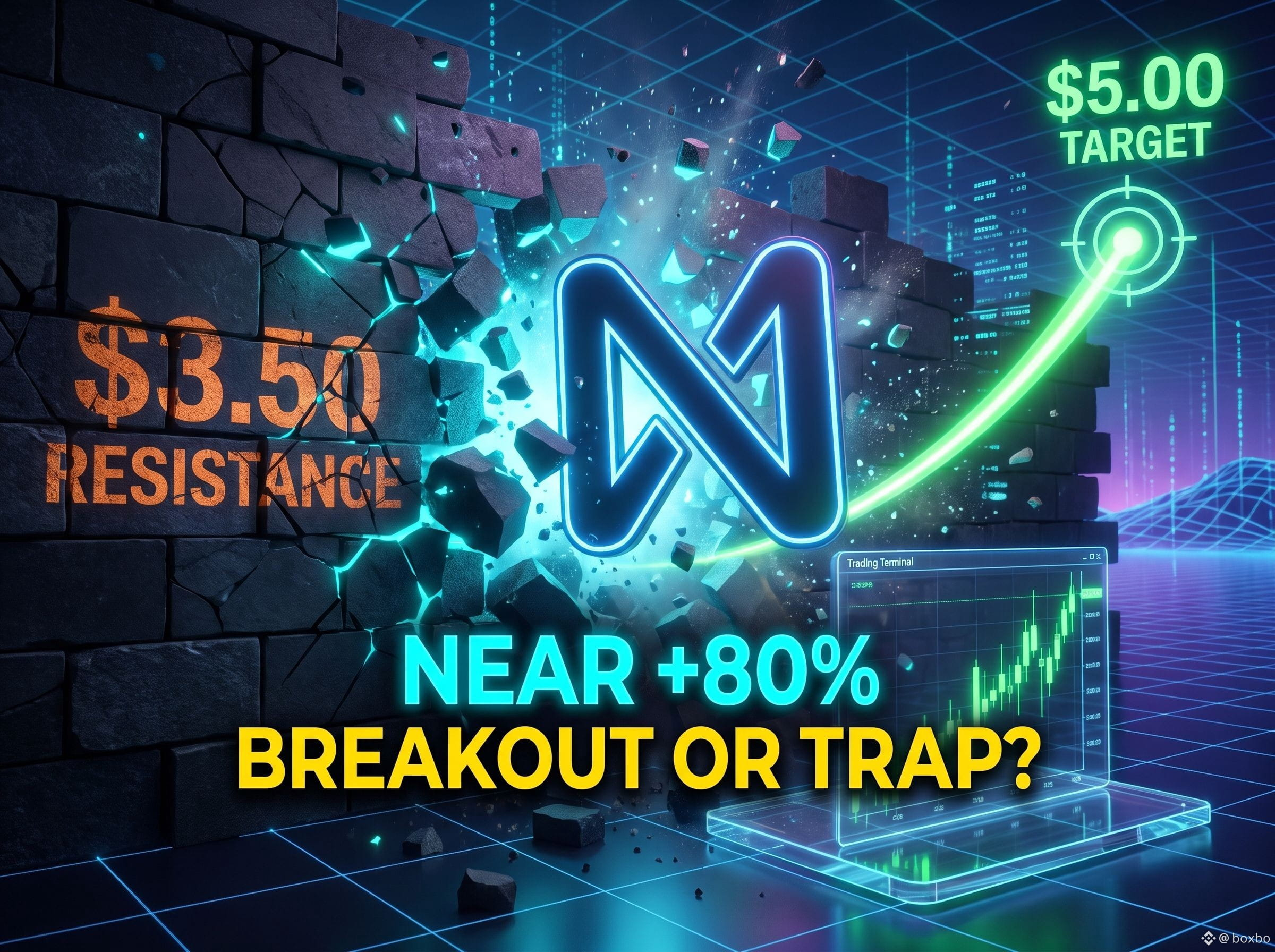
The sudden 80% rally in NEAR Protocol—surging from $2.20 to over $4.20—is driven by strong fundamental catalysts rather than pure retail hype. The core driver is the rapid expansion of NEAR’s Confidential Finance ecosystem, marked by default private perpetual trading and NEAR Intents cross-chain swap volume approaching $30 billion. This utility surge—combined with supply-locking incentive programs like NEAR@3.33—has drastically reduced sell-side liquid supply. From a practical standpoint, NEAR has broken through major multi-year trendlines, but it now faces a critical supply wall at the $4.10 to $4.40 resistance zone. With daily RSI hovering in heavily overbought territory, tactical traders should watch for whether sustained spot buying clears $4.40 toward the $5.00 level or if a short-term liquidity retest back to the $3.30–$3.50 support band occurs first. $NEAR
{spot}(NEARUSDT)
#nearrisesnearly80%inaweek
Breaking the Supply Barrier: What Driven NEAR’s 80% Explosive Surge?
The sudden 80% rally in NEAR Protocol—surging from $2.20 to over $4.20—is driven by strong fundamental catalysts rather than pure retail hype. The core driver is the rapid expansion of NEAR’s Confidential Finance ecosystem, marked by default private perpetual trading and NEAR Intents cross-chain swap volume approaching $30 billion. This utility surge—combined with supply-locking incentive programs like NEAR@3.33—has drastically reduced sell-side liquid supply. From a practical standpoint, NEAR has broken through major multi-year trendlines, but it now faces a critical supply wall at the $4.10 to $4.40 resistance zone. With daily RSI hovering in heavily overbought territory, tactical traders should watch for whether sustained spot buying clears $4.40 toward the $5.00 level or if a short-term liquidity retest back to the $3.30–$3.50 support band occurs first. $NEAR
Breaking the Supply Barrier: What Driven NEAR’s 80% Explosive Surge?
The sudden 80% rally in NEAR Protocol—surging from $2.20 to over $4.20—is driven by strong fundamental catalysts rather than pure retail hype. The core driver is the rapid expansion of NEAR’s Confidential Finance ecosystem, marked by default private perpetual trading and NEAR Intents cross-chain swap volume approaching $30 billion. This utility surge—combined with supply-locking incentive programs like NEAR@3.33—has drastically reduced sell-side liquid supply. From a practical standpoint, NEAR has broken through major multi-year trendlines, but it now faces a critical supply wall at the $4.10 to $4.40 resistance zone. With daily RSI hovering in heavily overbought territory, tactical traders should watch for whether sustained spot buying clears $4.40 toward the $5.00 level or if a short-term liquidity retest back to the $3.30–$3.50 support band occurs first. $NEAR
146
·
--
#bojraisesratesto31yearhigh
$BTC
{spot}(BTCUSDT)
The Bank of Japan’s move raising its policy benchmark to 1.25%—a 31-year high—signals a structural shift away from decades of ultra-loose monetary policy and zero-rate regimes. Beyond controlling local inflation, this rate hike targets the global yen carry trade, where investors historically borrowed cheap yen to fund higher-yielding assets worldwide. For modern traders and risk managers, the technical outcome is immediate portfolio re-leveraging: rising Japanese borrowing costs exert upward pressure on domestic bond yields, compress global interest rate differentials, and create sudden volatility across equities, foreign exchange, and crypto spot markets.
#bojraisesratesto31yearhigh
$BTC
The Bank of Japan’s move raising its policy benchmark to 1.25%—a 31-year high—signals a structural shift away from decades of ultra-loose monetary policy and zero-rate regimes. Beyond controlling local inflation, this rate hike targets the global yen carry trade, where investors historically borrowed cheap yen to fund higher-yielding assets worldwide. For modern traders and risk managers, the technical outcome is immediate portfolio re-leveraging: rising Japanese borrowing costs exert upward pressure on domestic bond yields, compress global interest rate differentials, and create sudden volatility across equities, foreign exchange, and crypto spot markets.
$BTC
The Bank of Japan’s move raising its policy benchmark to 1.25%—a 31-year high—signals a structural shift away from decades of ultra-loose monetary policy and zero-rate regimes. Beyond controlling local inflation, this rate hike targets the global yen carry trade, where investors historically borrowed cheap yen to fund higher-yielding assets worldwide. For modern traders and risk managers, the technical outcome is immediate portfolio re-leveraging: rising Japanese borrowing costs exert upward pressure on domestic bond yields, compress global interest rate differentials, and create sudden volatility across equities, foreign exchange, and crypto spot markets.

2
68
·
--
#saylorhintsstrategybitcoinbuy
PlanB’s declaration that the Bitcoin bear market is over centers on reclaiming moving averages and improving technical metrics, but the claim faces significant market resistance. While key indicators like supply in profit rising to 72% and monthly RSI crossing above 50 signal recovering momentum, technical consensus places the critical 50-week simple moving average closer to $81,000 rather than his cited $79,000 level. Furthermore, reaching his $89,000 target requires clearing a dense supply wall between $80,000 and $82,000, where nearly 8% of total $BTC
{spot}(BTCUSDT)
supply, and US spot ETF cost bases sit. Because spot buying remains constrained by negative demand metrics, mixed $ETFT.ETF
{etf_us}(ETFT.ETF)
flows, and low futures open interest, the market reflects neutral consolidation and seller exhaustion rather than a confirmed structural bull breakout.
#saylorhintsstrategybitcoinbuy
PlanB’s declaration that the Bitcoin bear market is over centers on reclaiming moving averages and improving technical metrics, but the claim faces significant market resistance. While key indicators like supply in profit rising to 72% and monthly RSI crossing above 50 signal recovering momentum, technical consensus places the critical 50-week simple moving average closer to $81,000 rather than his cited $79,000 level. Furthermore, reaching his $89,000 target requires clearing a dense supply wall between $80,000 and $82,000, where nearly 8% of total $BTC
supply, and US spot ETF cost bases sit. Because spot buying remains constrained by negative demand metrics, mixed $ETFT.ETF
flows, and low futures open interest, the market reflects neutral consolidation and seller exhaustion rather than a confirmed structural bull breakout.
PlanB’s declaration that the Bitcoin bear market is over centers on reclaiming moving averages and improving technical metrics, but the claim faces significant market resistance. While key indicators like supply in profit rising to 72% and monthly RSI crossing above 50 signal recovering momentum, technical consensus places the critical 50-week simple moving average closer to $81,000 rather than his cited $79,000 level. Furthermore, reaching his $89,000 target requires clearing a dense supply wall between $80,000 and $82,000, where nearly 8% of total $BTC
supply, and US spot ETF cost bases sit. Because spot buying remains constrained by negative demand metrics, mixed $ETFT.ETF
flows, and low futures open interest, the market reflects neutral consolidation and seller exhaustion rather than a confirmed structural bull breakout.

1
8

·
--
Verified
#bojraisesratesto31yearhigh
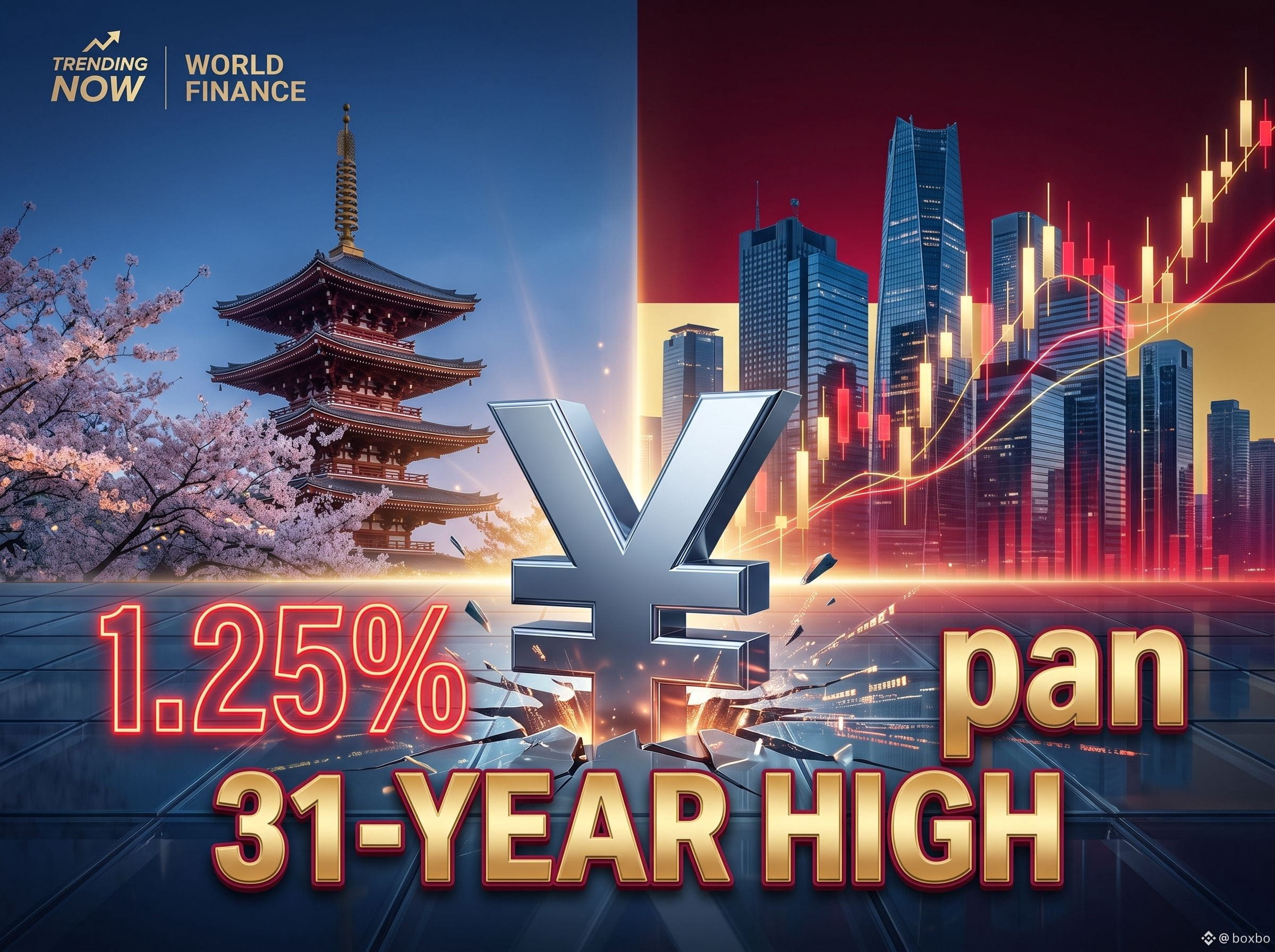
The Bank of Japan (BOJ) delivered a historic 7–2 vote to raise its benchmark policy rate to 1.25%, marking its highest interest rate level in 31 years as Governor Kazuo Ueda officially declared monetary policy has entered a "new phase". This rate hike—coming just three months after the prior increase—aims directly at curbing accelerating inflation driven by a weak yen, rising wages, and soaring energy import costs sparked by Middle East conflicts. Beyond controlling local price pass-throughs, the aggressive shift fundamentally unwinds decades of ultra-cheap global liquidity, unwinding carry trades and signaling that Japan's long-standing era of free borrowing costs has firmly ended. $BTC
{spot}(BTCUSDT)
#bojraisesratesto31yearhigh
The Bank of Japan (BOJ) delivered a historic 7–2 vote to raise its benchmark policy rate to 1.25%, marking its highest interest rate level in 31 years as Governor Kazuo Ueda officially declared monetary policy has entered a "new phase". This rate hike—coming just three months after the prior increase—aims directly at curbing accelerating inflation driven by a weak yen, rising wages, and soaring energy import costs sparked by Middle East conflicts. Beyond controlling local price pass-throughs, the aggressive shift fundamentally unwinds decades of ultra-cheap global liquidity, unwinding carry trades and signaling that Japan's long-standing era of free borrowing costs has firmly ended. $BTC
The Bank of Japan (BOJ) delivered a historic 7–2 vote to raise its benchmark policy rate to 1.25%, marking its highest interest rate level in 31 years as Governor Kazuo Ueda officially declared monetary policy has entered a "new phase". This rate hike—coming just three months after the prior increase—aims directly at curbing accelerating inflation driven by a weak yen, rising wages, and soaring energy import costs sparked by Middle East conflicts. Beyond controlling local price pass-throughs, the aggressive shift fundamentally unwinds decades of ultra-cheap global liquidity, unwinding carry trades and signaling that Japan's long-standing era of free borrowing costs has firmly ended. $BTC
1k
·
--
PlanB’s declaration that the Bitcoin bear market is over centers on reclaiming moving averages and improving technical metrics, but the claim faces significant market resistance. While key indicators like supply in profit rising to 72% and monthly RSI crossing above 50 signal recovering momentum, technical consensus places the critical 50-week simple moving average closer to $81,000 rather than his cited $79,000 level. Furthermore, reaching his $89,000 target requires clearing a dense supply wall between $80,000 and $82,000, where nearly 8% of total BTC supply and US spot ETF cost bases sit. Because spot buying remains constrained by negative demand metrics, mixed ETF flows, and low futures open interest, the market reflects neutral consolidation and seller exhaustion rather than a confirmed structural bull breakout. $BTC
{spot}(BTCUSDT)
PlanB’s declaration that the Bitcoin bear market is over centers on reclaiming moving averages and improving technical metrics, but the claim faces significant market resistance. While key indicators like supply in profit rising to 72% and monthly RSI crossing above 50 signal recovering momentum, technical consensus places the critical 50-week simple moving average closer to $81,000 rather than his cited $79,000 level. Furthermore, reaching his $89,000 target requires clearing a dense supply wall between $80,000 and $82,000, where nearly 8% of total BTC supply and US spot ETF cost bases sit. Because spot buying remains constrained by negative demand metrics, mixed ETF flows, and low futures open interest, the market reflects neutral consolidation and seller exhaustion rather than a confirmed structural bull breakout. $BTC


Binance News
·
--
Bitcoin News | PlanB Says the Bear Market Is Over With $89,000 Next, But the Level He Cites Is Disputed
Analyst PlanB has declared the Bitcoin bear market over, saying the token has reclaimed the 50-week moving average at approximately $79,000 with the 100-week average around $89,000 as the next target.He pointed to Bitcoin's August close of $78,571 alongside improving indicators: the proportion of supply in profit rising from 50% to 72%, and monthly RSI climbing from 41 to 51.Two Different 50-Week Lines Are in CirculationThe level PlanB cites does not match the figure appearing elsewhere this month.Glassnode and technical coverage through September have placed the 50-week simple moving average at $81,081, where Bitcoin was rejected at an $81,265 intraday high in late August and has not cleared since.The 50-week exponential moving average sits lower at $77,430. Bitcoin reclaimed that line on Monday, lost it Tuesday when price fell below $75,000, and recovered it again this week.The EMA weights recent prices more heavily, which pulls it down during a drawdown and makes it the first line reclaimed on a recovery. The SMA is the slower, more demanding test.At $78,000, Bitcoin sits above the EMA and below the SMA. Which line counts determines whether the reclaim has happened, and PlanB's $79,000 figure matches neither exactly.The Underlying Indicators Are VerifiableThe supporting data is stronger than the level dispute suggests.Supply in profit rising from 50% to 72% is a substantial shift. That metric tracks what share of circulating Bitcoin was acquired below the current price, and a 22-point move means a large cohort of holders has crossed from underwater to profitable.It is also a lagging measure. Supply in profit rises mechanically as price rises, so it confirms the move rather than predicting the next one.Monthly RSI moving from 41 to 51 crosses the midpoint that separates bearish from bullish momentum on that timeframe. Monthly RSI is slow enough that the crossing is meaningful, though a reading of 51 is barely above neutral.The $89,000 Target Requires Clearing the Supply Wall FirstWhatever the 50-week line is worth, the obstacle between here and $89,000 is well documented.Glassnode data shows nearly 8% of total supply was acquired between $80,000 and $82,000 — the largest concentration at any comparable range — with the US spot ETF cohort's average cost basis in the same band.Bitcoin reached $82,284 on September 4 and has not cleared it. FxPro's Alex Kuptsikevich placed the upper edge of the established range near $82,000.Roughly 8% of supply becoming profitable simultaneously creates the conditions for selling into strength, which is what "supply wall" describes. Clearing it requires sustained spot demand rather than leverage.The Demand Data Has Not Confirmed the CallSpot buying does not currently match the bullish read.CryptoQuant's spot demand metric sits at −145,000 BTC after nearly turning positive at −5,000 in late August, giving back roughly 70% of a month's improvement. The Coinbase premium index turned negative, indicating US institutional buyers paying below the global market.Spot Bitcoin ETFs shed $450 million on September 15, the heaviest single-day outflow since June 25, and the funds remain roughly $1 billion negative year-to-date.Positioning is light. Santiment showed BTC-denominated open contracts falling 13.5% between September 3 and 11 against a 5% price decline, leaving positioning about 20% below pre-rally levels.Blockware Intelligence's Mitchell Askew reads that as seller exhaustion — "anybody who was going to sell bitcoin based on events like these has already sold." The competing reading is that thin positioning means absent buyers as well as absent sellers, which produces the same chart with different implications.The Week Supplied Reasons for Both ReadingsBitcoin traded around $78,000 Friday in a third consecutive day of gains, with every major higher and none of the 40 most liquid coins down.The Fed delivered its first hike since 2023 with a dot plot pointing to just one more in 2026 — below the 75 basis points markets had priced. The SEC granted an innovation exemption for tokenized securities venues two days after the Clarity Act failed its Senate cloture vote 49-50.WTI fell more than 5% to below $96 and the 10-year Treasury yield eased to 4.96%, snapping an eight-day rising streak.Bitcoin is down 1.5% in September against a historical average of roughly 3% since 2013, and remains up about 32% for the quarter.PlanB's track record is mixed. His stock-to-flow model produced price targets that did not materialise across prior cycles, and the bottom call is a directional judgment rather than a model output.
34
·
--
Verified
#xrpexchangereserveshitsevenyearlow
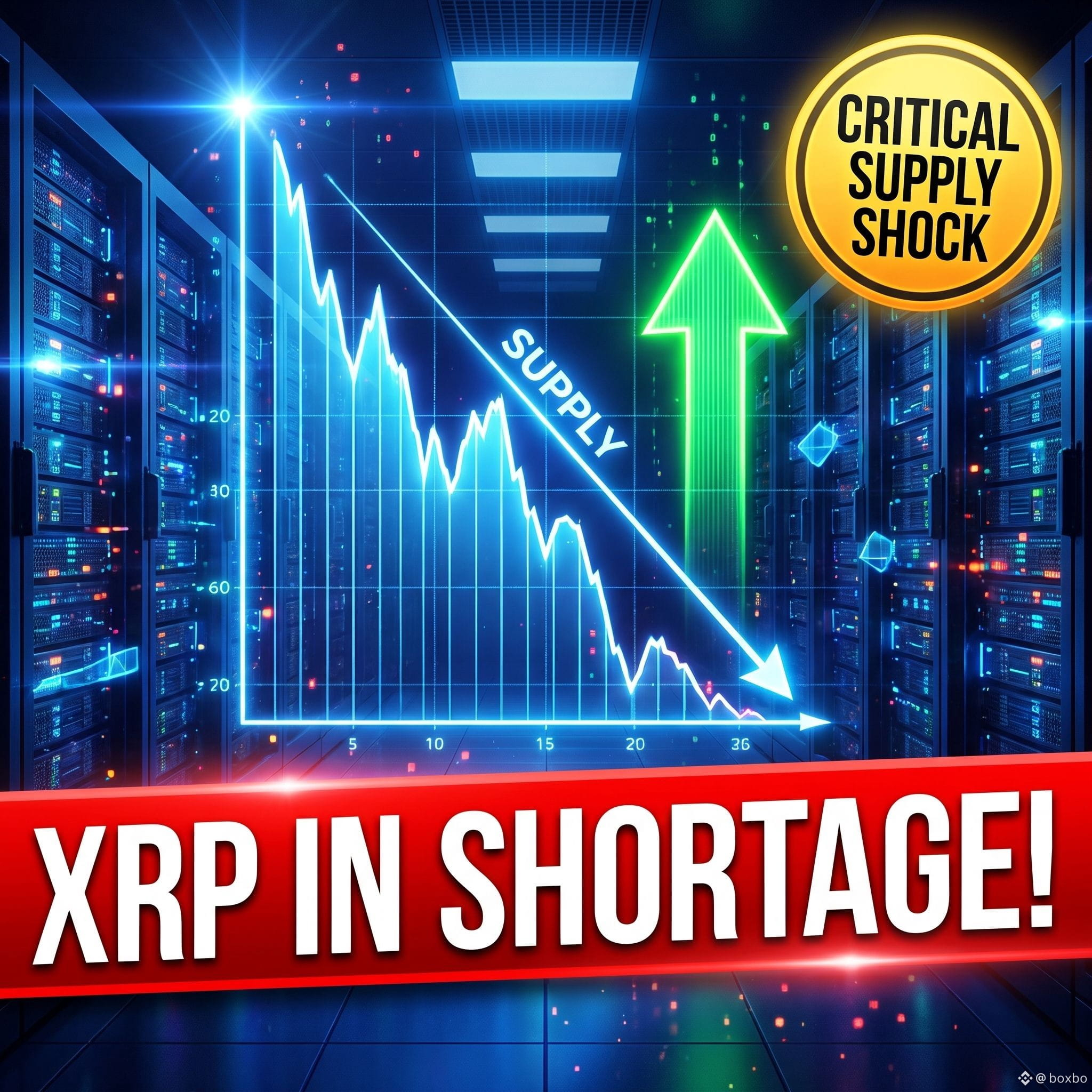
XRP exchange reserves have plummeted to a dramatic seven-year low, signaling a massive structural supply crunch across the digital asset ecosystem. On-chain ledger data reveals that the total volume of XRP sitting on centralized trading platforms has fallen to approximately 1.7 billion tokens. This represents a sharp drop from its historic multi-billion peak, systematically drying up the available open-market inventory ready for immediate spot selling.
$XRP
{spot}(XRPUSDT)
💡 Tech & Macro Mechanics
The dramatic drain is primarily driven by heavy institutional accumulation and shifting participant behaviors. Over the past several quarters, large-scale holders and spot XRP ETF products have quietly absorbed liquid supply, pulling massive asset blocks directly off exchange order books and into secure, self-custodial cold storage. Concurrently, derivatives participation is migrating to regulated venues, with CME XRP futures activity surging to a 17% share of the market. While exchange reserve metrics are not a definitive guarantee of immediate upward price direction, a compressed sell-side float leaves the asset highly sensitive to sudden demand shifts.
🛠️ Practical Market Strategy
For active derivatives participants and spot allocators, this structural supply squeeze completely reframes short-term risk management profiles. When exchange liquid reserves sit at multi-year lows, traditional overhead resistance blocks become structurally weaker, meaning even moderate buying spikes can trigger outsized, vertical price extensions. Monitor the daily spot $ETFT.ETF
{etf_us}(ETFT.ETF)
#xrpexchangereserveshitsevenyearlow
XRP exchange reserves have plummeted to a dramatic seven-year low, signaling a massive structural supply crunch across the digital asset ecosystem. On-chain ledger data reveals that the total volume of XRP sitting on centralized trading platforms has fallen to approximately 1.7 billion tokens. This represents a sharp drop from its historic multi-billion peak, systematically drying up the available open-market inventory ready for immediate spot selling.
$XRP
💡 Tech & Macro Mechanics
The dramatic drain is primarily driven by heavy institutional accumulation and shifting participant behaviors. Over the past several quarters, large-scale holders and spot XRP ETF products have quietly absorbed liquid supply, pulling massive asset blocks directly off exchange order books and into secure, self-custodial cold storage. Concurrently, derivatives participation is migrating to regulated venues, with CME XRP futures activity surging to a 17% share of the market. While exchange reserve metrics are not a definitive guarantee of immediate upward price direction, a compressed sell-side float leaves the asset highly sensitive to sudden demand shifts.
🛠️ Practical Market Strategy
For active derivatives participants and spot allocators, this structural supply squeeze completely reframes short-term risk management profiles. When exchange liquid reserves sit at multi-year lows, traditional overhead resistance blocks become structurally weaker, meaning even moderate buying spikes can trigger outsized, vertical price extensions. Monitor the daily spot $ETFT.ETF
XRP exchange reserves have plummeted to a dramatic seven-year low, signaling a massive structural supply crunch across the digital asset ecosystem. On-chain ledger data reveals that the total volume of XRP sitting on centralized trading platforms has fallen to approximately 1.7 billion tokens. This represents a sharp drop from its historic multi-billion peak, systematically drying up the available open-market inventory ready for immediate spot selling.
$XRP
💡 Tech & Macro Mechanics
The dramatic drain is primarily driven by heavy institutional accumulation and shifting participant behaviors. Over the past several quarters, large-scale holders and spot XRP ETF products have quietly absorbed liquid supply, pulling massive asset blocks directly off exchange order books and into secure, self-custodial cold storage. Concurrently, derivatives participation is migrating to regulated venues, with CME XRP futures activity surging to a 17% share of the market. While exchange reserve metrics are not a definitive guarantee of immediate upward price direction, a compressed sell-side float leaves the asset highly sensitive to sudden demand shifts.
🛠️ Practical Market Strategy
For active derivatives participants and spot allocators, this structural supply squeeze completely reframes short-term risk management profiles. When exchange liquid reserves sit at multi-year lows, traditional overhead resistance blocks become structurally weaker, meaning even moderate buying spikes can trigger outsized, vertical price extensions. Monitor the daily spot $ETFT.ETF
2
2.4k
·
--
#buffettstepsdownasberkshirechairman
💡 Tech & Macro Mechanics
The market is closely monitoring the potential erosion of the "Buffett Premium"—the implicit premium valuation investors assigned to Berkshire shares based solely on the Oracle of Omaha's unique capital allocation logic. Day-to-day operations and macro asset investments will remain entirely under the control of CEO Greg Abel, who assumed operational leadership earlier this year, making this final transition largely symbolic. Despite Buffett’s historical reluctance toward hyper-complex tech, Berkshire enters this new era heavily anchored in digital architecture, with its largest public equity concentration tied directly to global tech giants.
🛠️ Practical Market Strategy
The formal completion of this executive shift moves Berkshire Hathaway from a founder-guided vehicle to a process-driven institutional engine. Investors holding positions or managing corporate asset portfolios should look past the headline noise, as the underlying investment operations remain intact. Track upcoming quarterly institutional filing disclosures for any major asset reallocation shifts by Abel, monitor the Class A and Class B share support zones, and treat this milestone as a structural blueprint for multi-generational corporate survival.
#buffettstepsdownasberkshirechairman
💡 Tech & Macro Mechanics
The market is closely monitoring the potential erosion of the "Buffett Premium"—the implicit premium valuation investors assigned to Berkshire shares based solely on the Oracle of Omaha's unique capital allocation logic. Day-to-day operations and macro asset investments will remain entirely under the control of CEO Greg Abel, who assumed operational leadership earlier this year, making this final transition largely symbolic. Despite Buffett’s historical reluctance toward hyper-complex tech, Berkshire enters this new era heavily anchored in digital architecture, with its largest public equity concentration tied directly to global tech giants.
🛠️ Practical Market Strategy
The formal completion of this executive shift moves Berkshire Hathaway from a founder-guided vehicle to a process-driven institutional engine. Investors holding positions or managing corporate asset portfolios should look past the headline noise, as the underlying investment operations remain intact. Track upcoming quarterly institutional filing disclosures for any major asset reallocation shifts by Abel, monitor the Class A and Class B share support zones, and treat this milestone as a structural blueprint for multi-generational corporate survival.
💡 Tech & Macro Mechanics
The market is closely monitoring the potential erosion of the "Buffett Premium"—the implicit premium valuation investors assigned to Berkshire shares based solely on the Oracle of Omaha's unique capital allocation logic. Day-to-day operations and macro asset investments will remain entirely under the control of CEO Greg Abel, who assumed operational leadership earlier this year, making this final transition largely symbolic. Despite Buffett’s historical reluctance toward hyper-complex tech, Berkshire enters this new era heavily anchored in digital architecture, with its largest public equity concentration tied directly to global tech giants.
🛠️ Practical Market Strategy
The formal completion of this executive shift moves Berkshire Hathaway from a founder-guided vehicle to a process-driven institutional engine. Investors holding positions or managing corporate asset portfolios should look past the headline noise, as the underlying investment operations remain intact. Track upcoming quarterly institutional filing disclosures for any major asset reallocation shifts by Abel, monitor the Class A and Class B share support zones, and treat this milestone as a structural blueprint for multi-generational corporate survival.

1
171
Log in to explore more content
Join global crypto users on Binance Square
⚡️ Get latest and useful information about crypto.
💬 Trusted by the world’s largest crypto exchange.
👍 Discover real insights from verified creators.
Email / Phone number
Trending Topics
AIStocksWhatNext
880,466 views
6,622 Discussing
Share & Win Traffic Reward in our Trending Hashtag Campaign
✨Topic: What Other Investment Opportunities Remain as AI Stocks Keep Rising?
👉How to Join:
Publish a short post or article with hashtag #AIStocksWhatNext
Share whether you’re bullish or bearish, and post your AI stock holdings or trade — using the trade widget may improve your eligibility.
You can also strengthen your post by sharing data or charts, and avoiding AI-generated images.
✍️Create content based on the below angles:
- Nvidia says chip sales will double next year, and top AI companies keep hitting record revenue, the compute spend behind it is just as staggering. Is AI demand really taking off? And how long can it last? AI stocks are up across the board. Is this a real breakout, or just a short-term bounce?
- Industry leaders are calling to slow down AI development, while Trump plans to build an “AI Force”, claiming AI could account for 25% of U.S. GDP in the future. Whose side are you on? Will state-level backing be a long-term win for AI stocks?
- Are you buying AI stocks? Share your AI-related trade/holdings with our trade sharing widget.
⏰Campaign Period:
- 2026-09-22 7:00 - 2026-09-24 4:00 UTC
🎁Reward:
- Qualified posts that comply with the above guidelines and contain more than 100 words will be reviewed and may receive a random traffic boost of 500 to 3,000 views. You will receive a notification from your feed secretary if your post is selected.
- Get a chance to have your article featured on Binance Square Official
Need ideas for your post? Visit the topic page #AIStocksWhatNext or the Square Guide on How to Post for Better Reach.
Binance Square Official
·586 Likes
·1.7M views
BitcoinRejectedAt$87,300Twice
0 views
0 Discussing
BCHJumps28%OnCMEFuturesListing
10,718 views
512 Discussing