Binance Square

Bluechip

image
Verified Creator
Frequent Trader
5.2 Years
17 Following
61.9K+ Followers
80.1K+ Liked
25.7K+ Shared
Posts
PINNED
·
--
Article
I’ve been in crypto for more than 7 years...Here’s 12 brutal mistakes I made (so you don’t have to)) Lesson 1: Chasing pumps is a tax on impatience Every time I rushed into a coin just because it was pumping, I ended up losing. You’re not early. You’re someone else's exit. Lesson 2: Most coins die quietly Most tokens don’t crash — they just slowly fade away. No big news. Just less trading, fewer updates... until they’re worthless. Lesson 3: Stories beat tech I used to back projects with amazing tech. The market backed the ones with the best story. The best product doesn’t always win — the best narrative usually does. Lesson 4: Liquidity is key If you can't sell your token easily, it doesn’t matter how high it goes. It might show a 10x gain, but if you can’t cash out, it’s worthless. Liquidity = freedom. Lesson 5: Most people quit too soon Crypto messes with your emotions. People buy the top, panic sell at the bottom, and then watch the market recover without them. If you stick around, you give yourself a real chance to win. Lesson 6: Take security seriously - I’ve been SIM-swapped. - I’ve been phished. - I’ve lost wallets. Lesson 7: Don’t trade everything Sometimes, the best move is to do nothing. Holding strong projects beats chasing every pump. Traders make the exchanges rich. Patient holders build wealth. Lesson 8: Regulation is coming Governments move slow — but when they act, they hit hard. Lots of “freedom tokens” I used to hold are now banned or delisted. Plan for the future — not just for hype. Lesson 9: Communities are everything A good dev team is great. But a passionate community? That’s what makes projects last. I learned to never underestimate the power of memes and culture. Lesson 10: 100x opportunities don’t last long By the time everyone’s talking about a coin — it’s too late. Big gains come from spotting things early, then holding through the noise. There are no shortcuts. Lesson 11: Bear markets are where winners are made The best time to build and learn is when nobody else is paying attention. That’s when I made my best moves. If you're emotional, you’ll get used as someone else's exit. Lesson 12: Don’t risk everything I’ve seen people lose everything on one bad trade. No matter how sure something seems — don’t bet the house. Play the long game with money you can afford to wait on. 7 years. Countless mistakes. Hard lessons. If even one of these helps you avoid a costly mistake, then it was worth sharing. Follow for more real talk — no hype, just lessons. Always DYOR and size accordingly. NFA! 📌 Follow @Bluechip for unfiltered crypto intelligence, feel free to bookmark & share.

I’ve been in crypto for more than 7 years...

Here’s 12 brutal mistakes I made (so you don’t have to))

Lesson 1: Chasing pumps is a tax on impatience
Every time I rushed into a coin just because it was pumping, I ended up losing.
You’re not early.
You’re someone else's exit.

Lesson 2: Most coins die quietly
Most tokens don’t crash — they just slowly fade away.
No big news. Just less trading, fewer updates... until they’re worthless.

Lesson 3: Stories beat tech
I used to back projects with amazing tech.
The market backed the ones with the best story.
The best product doesn’t always win — the best narrative usually does.

Lesson 4: Liquidity is key
If you can't sell your token easily, it doesn’t matter how high it goes.
It might show a 10x gain, but if you can’t cash out, it’s worthless.
Liquidity = freedom.

Lesson 5: Most people quit too soon
Crypto messes with your emotions.
People buy the top, panic sell at the bottom, and then watch the market recover without them.
If you stick around, you give yourself a real chance to win.

Lesson 6: Take security seriously
- I’ve been SIM-swapped.
- I’ve been phished.
- I’ve lost wallets.

Lesson 7: Don’t trade everything
Sometimes, the best move is to do nothing.
Holding strong projects beats chasing every pump.
Traders make the exchanges rich. Patient holders build wealth.

Lesson 8: Regulation is coming
Governments move slow — but when they act, they hit hard.
Lots of “freedom tokens” I used to hold are now banned or delisted.
Plan for the future — not just for hype.

Lesson 9: Communities are everything
A good dev team is great.
But a passionate community? That’s what makes projects last.
I learned to never underestimate the power of memes and culture.

Lesson 10: 100x opportunities don’t last long
By the time everyone’s talking about a coin — it’s too late.
Big gains come from spotting things early, then holding through the noise.
There are no shortcuts.

Lesson 11: Bear markets are where winners are made
The best time to build and learn is when nobody else is paying attention.
That’s when I made my best moves.
If you're emotional, you’ll get used as someone else's exit.

Lesson 12: Don’t risk everything
I’ve seen people lose everything on one bad trade.
No matter how sure something seems — don’t bet the house.
Play the long game with money you can afford to wait on.

7 years.
Countless mistakes.
Hard lessons.
If even one of these helps you avoid a costly mistake, then it was worth sharing.
Follow for more real talk — no hype, just lessons.

Always DYOR and size accordingly. NFA!
📌 Follow @Bluechip for unfiltered crypto intelligence, feel free to bookmark & share.
PINNED
Article
How Market Cap Works?Many believe the market needs trillions to get the altseason. But $SOL , $ONDO, $WIF , $MKR or any of your low-cap gems don't need new tons of millions to pump. Think a $10 coin at $10M market cap needs another $10M to hit $20? Wrong! Here's the secret I often hear from major traders that the growth of certain altcoins is impossible due to their high market cap. They often say, "It takes $N billion for the price to grow N times" about large assets like Solana. These opinions are incorrect, and I'll explain why ⇩ But first, let's clarify some concepts: Market capitalization is a metric used to estimate the total market value of a cryptocurrency asset. It is determined by two components: ➜ Asset's price ➜ Its supply Price is the point where the demand and supply curves intersect. Therefore, it is determined by both demand and supply. How most people think, even those with years of market experience: ● Example: $STRK at $1 with a 1B Supply = $1B Market Cap. "To double the price, you would need $1B in investments." This seems like a simple logic puzzle, but reality introduces a crucial factor: liquidity. Liquidity in cryptocurrencies refers to the ability to quickly exchange a cryptocurrency at its current market price without a significant loss in value. Those involved in memecoins often encounter this issue: a large market cap but zero liquidity. For trading tokens on exchanges, sufficient liquidity is essential. You can't sell more tokens than the available liquidity permits. Imagine our $STRK for $1 is listed only on 1inch, with $100M available liquidity in the $STRK - $USDC pool. We have: - Price: $1 - Market Cap: $1B - Liquidity in pair: $100M ➜ Based on the price definition, buying $50M worth of $STRK will inevitably double the token price, without needing to inject $1B. The market cap will be set at $2 billion, with only $50 million in infusions. Big players understand these mechanisms and use them in their manipulations, as I explained in my recent thread. Memcoin creators often use this strategy. Typically, most memcoins are listed on one or two decentralized exchanges with limited liquidity pools. This setup allows for significant price manipulation, creating a FOMO among investors. You don't always need multi-billion dollar investments to change the market cap or increase a token's price. Limited liquidity combined with high demand can drive prices up due to basic economic principles. Keep this in mind during your research. I hope you've found this article helpful. Follow me @Bluechip for more. Like/Share if you can #BluechipInsights

How Market Cap Works?

Many believe the market needs trillions to get the altseason.

But $SOL , $ONDO, $WIF , $MKR or any of your low-cap gems don't need new tons of millions to pump.
Think a $10 coin at $10M market cap needs another $10M to hit $20?
Wrong!
Here's the secret

I often hear from major traders that the growth of certain altcoins is impossible due to their high market cap.

They often say, "It takes $N billion for the price to grow N times" about large assets like Solana.

These opinions are incorrect, and I'll explain why ⇩
But first, let's clarify some concepts:

Market capitalization is a metric used to estimate the total market value of a cryptocurrency asset.

It is determined by two components:

➜ Asset's price
➜ Its supply

Price is the point where the demand and supply curves intersect.

Therefore, it is determined by both demand and supply.

How most people think, even those with years of market experience:

● Example:
$STRK at $1 with a 1B Supply = $1B Market Cap.
"To double the price, you would need $1B in investments."

This seems like a simple logic puzzle, but reality introduces a crucial factor: liquidity.

Liquidity in cryptocurrencies refers to the ability to quickly exchange a cryptocurrency at its current market price without a significant loss in value.

Those involved in memecoins often encounter this issue: a large market cap but zero liquidity.

For trading tokens on exchanges, sufficient liquidity is essential. You can't sell more tokens than the available liquidity permits.

Imagine our $STRK for $1 is listed only on 1inch, with $100M available liquidity in the $STRK - $USDC pool.
We have:
- Price: $1
- Market Cap: $1B
- Liquidity in pair: $100M
➜ Based on the price definition, buying $50M worth of $STRK will inevitably double the token price, without needing to inject $1B.

The market cap will be set at $2 billion, with only $50 million in infusions.
Big players understand these mechanisms and use them in their manipulations, as I explained in my recent thread.
Memcoin creators often use this strategy.

Typically, most memcoins are listed on one or two decentralized exchanges with limited liquidity pools.

This setup allows for significant price manipulation, creating a FOMO among investors.

You don't always need multi-billion dollar investments to change the market cap or increase a token's price.

Limited liquidity combined with high demand can drive prices up due to basic economic principles. Keep this in mind during your research.
I hope you've found this article helpful.
Follow me @Bluechip for more.
Like/Share if you can
#BluechipInsights
BREAKING: $BTC reclaims $75,000 for the second time since the US-Iran war started. It is now up 7% in the last 24 hours, adding roughly $98 billion to its market cap. $500 million in short positions were liquidated in the same period. The entire crypto market added $135 billion in a single day. {future}(BTCUSDT)
BREAKING: $BTC reclaims $75,000 for the second time since the US-Iran war started.

It is now up 7% in the last 24 hours, adding roughly $98 billion to its market cap.

$500 million in short positions were liquidated in the same period. The entire crypto market added $135 billion in a single day.
Bluechip
·
--
$BTC
Some bears were aggressive and entered high leverage in the short term.

After the liquidity sweep above 73K, there is still remaining liquidity sitting above 75K.

However, the broader structure hasn’t changed. Longs remain the dominant side exposed to future liquidations.

The market is still operating within a downtrend, and the ongoing accumulation phase is likely to persist for some time.

This is not something to ignore.
{future}(BTCUSDT)
Article
The Perfect Storm for Gold… Has It Really Failed?During the first month of the Iran war, gold posted a shocking return of -11.5%. At first glance, it looks like the collapse of a myth: Gold is no longer a safe havenIt has lost its role as a store of valueIt has failed investors in times of crisis But the reality is completely different. What’s happening today is not failure it’s a natural pattern that has repeated for over 50 years. Let’s take a step back When analyzing gold’s performance during major energy-driven geopolitical shocks (1973, 1979, 1990, 2022), one key truth emerges: Gold doesn’t move on emotion it follows a precise equation. What actually drives gold? There are three main factors: U.S. 10-year Treasury yieldsThe strength of the U.S. dollarGold valuation (overvalued or undervalued) But here’s the surprise: these factors are not equally important. The big myth: Higher rates kill gold The common belief is: when interest rates rise, gold falls. But historical data shows no strong statistical relationship. Examples: In 1973 and 1979, rates fell and gold fellIn 1990 and 2022, rates rose and gold rose The reason is that rising rates often reflect higher inflation expectations which can actually support gold rather than pressure it. The real driver: The dollar The strongest relationship in the market is: A stronger dollar leads to weaker gold Why? Because gold is priced in dollars. When the dollar strengthens, gold becomes more expensive globally, reducing demand. And this is exactly what is happening now. What about 2022? In 2022, both the dollar and gold rose together. Is that a contradiction? No. Because gold was undervalued by about 109%. There was strong demand and little selling pressure making it a clear buying opportunity. The current situation: Why gold is falling Today, the picture is different: Gold was overvalued by about 53%Investors were sitting on large profitsThe incentive to sell and take profits was high Simply put: overextended assets get sold even during crises. The numbers don’t lie The analytical model shows: A 1% rise in the dollar leads to a 3.6% drop in goldA 1% increase in gold valuation leads to a 0.1% drop The model explains 99.8% of gold’s movement during shock periods. Conclusion Gold has not failed. Gold has not changed. Gold doesn’t fail you, you just need to understand its rules. What we’re seeing today is a familiar historical pattern: The dollar risesGold is overvaluedThe result: a temporary decline $XAU {future}(XAUUSDT)

The Perfect Storm for Gold… Has It Really Failed?

During the first month of the Iran war, gold posted a shocking return of -11.5%.
At first glance, it looks like the collapse of a myth:
Gold is no longer a safe havenIt has lost its role as a store of valueIt has failed investors in times of crisis
But the reality is completely different.
What’s happening today is not failure it’s a natural pattern that has repeated for over 50 years.

Let’s take a step back
When analyzing gold’s performance during major energy-driven geopolitical shocks (1973, 1979, 1990, 2022), one key truth emerges:
Gold doesn’t move on emotion it follows a precise equation.

What actually drives gold?
There are three main factors:
U.S. 10-year Treasury yieldsThe strength of the U.S. dollarGold valuation (overvalued or undervalued)
But here’s the surprise: these factors are not equally important.

The big myth: Higher rates kill gold
The common belief is: when interest rates rise, gold falls.
But historical data shows no strong statistical relationship.
Examples:
In 1973 and 1979, rates fell and gold fellIn 1990 and 2022, rates rose and gold rose
The reason is that rising rates often reflect higher inflation expectations which can actually support gold rather than pressure it.

The real driver: The dollar
The strongest relationship in the market is:
A stronger dollar leads to weaker gold
Why?
Because gold is priced in dollars. When the dollar strengthens, gold becomes more expensive globally, reducing demand.
And this is exactly what is happening now.

What about 2022?
In 2022, both the dollar and gold rose together.
Is that a contradiction?
No.
Because gold was undervalued by about 109%.
There was strong demand and little selling pressure making it a clear buying opportunity.

The current situation: Why gold is falling
Today, the picture is different:
Gold was overvalued by about 53%Investors were sitting on large profitsThe incentive to sell and take profits was high
Simply put: overextended assets get sold even during crises.

The numbers don’t lie
The analytical model shows:
A 1% rise in the dollar leads to a 3.6% drop in goldA 1% increase in gold valuation leads to a 0.1% drop
The model explains 99.8% of gold’s movement during shock periods.
Conclusion
Gold has not failed.
Gold has not changed.
Gold doesn’t fail you, you just need to understand its rules.
What we’re seeing today is a familiar historical pattern:
The dollar risesGold is overvaluedThe result: a temporary decline
$XAU
Whales are not excited about $SOL compared to retail!
·
--
Bearish
$RAVE I knew that pump smelled fishy. Already down 40%+ from the highs. Mega pump on zero volume. Heavy team/insider allocation. Somebody has some explaining to do. Hopefully I saved/made you money with my post 🤝
$RAVE

I knew that pump smelled fishy. Already down 40%+ from the highs.

Mega pump on zero volume. Heavy team/insider allocation.

Somebody has some explaining to do.

Hopefully I saved/made you money with my post 🤝
Bluechip
·
--
$RAVE
This move is fishy as hell.

Up over 300% from the last high volume pop and low/declining volume since then.

Potential for a top soon. Be careful.
{future}(RAVEUSDT)
Article
Weekly Market RoundupHey everyone, and welcome to the Weekly Market Roundup. Markets enter the week balancing a fragile relief rally against unresolved macro pressure. Bitcoin has reclaimed ~$74,500, briefly pushing toward the $75,000 psychological resistance, and is now trading back within its broader ~$70K–$75K range. The move comes despite a sharp intraday shock over the weekend, where $BTC dropped more than $2,000 in under an hour following headlines that U.S.–Iran ceasefire talks had collapsed. Price action suggests positioning remains light rather than conviction-driven. On the macro side, the U.S. blockade around the Strait of Hormuz officially began Monday at 10 a.m. EDT. Crucially, restrictions are limited to Iran-linked shipping, with non-Iran-bound traffic still allowed to pass. That distinction is driving the current market response. Oil remains elevated but not disorderly, and equities are attempting a relief bounce rather than pricing a full-scale supply shock. The result is a split regime. Bitcoin and equities are stabilizing on partial positives, while underlying pressures persist: energy-driven inflation, constrained policy flexibility, and unresolved geopolitical risk. Markets are holding levels, not breaking out. In this issue, I’ll break down what actually drove the movement, how macro catalysts are compressing into a high-impact window, what on-chain flows are revealing about holder behaviour, and where structural momentum may emerge next. Let’s get into it. Note to Readers: Over the past months, many readers have told us that the Crypto Market Weekly has become a core part of their routine, and we will continue publishing these weekly updates here on Substack as usual. As we evolve our research offerings, our long-form institutional research will gradually move from Substack to a dedicated research hub on our community platform. As part of this transition, paid Substack subscriptions for long-form reports will be discontinued going forward. Existing subscriptions will be cancelled as we shift to this new model, while the weekly market updates will remain available here unchanged. We are building a more focused research environment designed for deeper, curated, institutional-grade analysis for investors. More details on the transition to new research hub and access model will be shared soon. 1. Sector Performance & Key Developments Bitget Unlocks Pre-IPO Access for VIPsStrategy buys 13,927 Bitcoin for $1B, holdings near 800,000 BTCBitmine ramps up Ether buys, pushes holdings toward 5% of total supplyJito, KODA team up on institutional staking in South KoreaGoldman Sachs Strategist Says AI Disruption Fears Will Linger for Years in Software StocksRAVE Token Rockets Past $9, Weekly Gains Top 3,400%Starkware Cuts Jobs as Starknet Revenue CollapsesRobinhood Restricts High-Risk Prediction Contracts Amid Israel Insider Trading Charges, Iran Bet ScrutinyKraken Targeted by Extortion Group Threatening to Leak Internal Support VideosSouth Korea Fines Coinone $3.5M, Suspends New User Services for 3 Months Over AML Violations 2. Strait of Hormuz Blockade, Sharp Supply Shock Risk but Markets Treat as Negotiation The U.S. military has begun enforcing a blockade on vessels entering or departing Iranian ports and coastal areas, effective 10 a.m. Eastern on Monday. While non-Iran-bound traffic is still allowed to transit the strait, operational control has effectively expanded beyond the Strait of Hormuz into the Gulf of Oman and the Arabian Sea, per U.S. military communication cited by Bloomberg. Shipping activity has already collapsed, with daily transits dropping to single digits from ~135 in peacetime conditions. A full enforcement scenario could push this even lower, implying a near-complete chokehold on one of the world’s most critical energy arteries. Iran has publicly dismissed the move. National security commission spokesperson Ebrahim Rezaei called the blockade a “bluff,” while warning that Iran retains escalation levers it has not yet deployed, according to The Washington Times. This keeps asymmetric retaliation risk elevated. The economic impact is already skewed toward Asia, which depends on more than 80% of energy flows transiting the strait. The disruption is beginning to cascade downstream into industrial sectors, with early signs of stress across fertilizers, packaging, and broader manufacturing supply chains. Timing remains critical. The current ceasefire window expires on April 22, compressing the timeline for any diplomatic resolution and increasing the probability of further escalation if no agreement is reached. Market reaction, however, remains notably restrained. Oil has moved higher by ~5%, reflecting immediate supply concerns, but the lack of a meaningful drawdown in equities suggests markets are still pricing this as a tactical pressure move rather than a sustained geopolitical shock Positioning data aligns with this interpretation. Prediction markets are skewed toward a prolonged standoff, with low probability assigned to a near-term rollback of the blockade under Donald Trump, reinforcing the base case of continued tension without immediate resolution. Risk is also now expanding beyond a single chokepoint. With talks failing, Iran is signaling escalation via Houthi forces toward the Bab el-Mandeb Strait. Major carriers such as Maersk and CMA CGM have reverted to Red Sea avoidance, rerouting via the Cape of Good Hope. Despite partial offsets via alternative pipelines (Saudi East-West, Iran-China routes), global energy and shipping flows remain materially impaired. 3. Macro Backdrop 1. Energy Outperforms, Fed Put Removed March was a clean divergence. The S&P 500 declined 5.09%, while the energy sector surged 10.31%, the only segment closing the month in positive territory.  The driver is straightforward: escalating Middle East tensions have constrained flows through the Strait of Hormuz and disrupted broader energy infrastructure. In a supply-shocked environment, commodities and producers have acted as the primary hedge, and March reinforced that dynamic. The second-order effect is monetary. Oil-led inflation has effectively sidelined the Federal Reserve. Rate futures that entered the year pricing two to three cuts have sharply repriced, with markets now assigning ~95% probability to no change at the April meeting and largely removing expected cuts through 2026. The Fed has shifted from a supportive tailwind to neutral inertia, materially tightening conditions across risk assets. 2. Sharp Reversal Beneath the Surface The S&P 500 recorded its strongest week since November, while the Nasdaq Composite extended gains to 8 consecutive sessions, its longest streak since 2023. Small caps and Nasdaq have now retraced nearly all war-driven losses, while the Dow Jones Industrial Average continues to lag. Under the surface, leadership has been highly concentrated. Semiconductors outperformed software every single day of the week, marking the worst relative performance stretch for software on record and signaling a decisive shift toward hard-tech and cyclical leverage over duration-sensitive growth.In commodities, WTI crude oil saw its largest weekly decline since 2020, settling near ~$95, though still materially elevated versus pre-war levels.FX and hard assets moved in tandem. The US Dollar declined every day of the week, its steepest weekly drop since April 2025’s Liberation Day move, while Gold extended gains for a third straight week, now up over 18% from March 23 lows. 3. 10Y Holding the System in Place US 10-year Treasury yield anchored around ~4.25–4.3%, acting as the market’s equilibrium levelRecent volatility (spike on inflation fears, drop on ceasefire hopes) has mean-reverted back to this rangeAt these levels, cost of capital remains structurally high with sustained pressure on valuations and risk assetsFederal Reserve remains effectively sidelined, with limited room to easeClear macro loop in place: energy-driven geopolitics → inflation → Fed inaction → pressure on growth assets (especially tech)Regime unlikely to shift without either Middle East de-escalation or a meaningful decline in inflationEarnings season becomes the next key datapoint to validate whether fundamentals can withstand this macro backdrop 4. Regulatory: SEC Defines DeFi Front-End Rules (5-Year Window) On April 13, 2026, the U.S. Securities and Exchange Commission released new guidance for DeFi front ends like Uniswap and MetaMask.  The core shift is clear: these interfaces do not need to register as broker-dealers if they remain purely facilitative layers. Users must retain full control over transactions, and platforms must stay non-custodial, meaning no handling of private keys.At the same time, the boundaries are tight: Interfaces cannot provide investment advice, manipulate order routing, or monetize through payment for order flow. Fees must be simple and transparent, and all conflicts, routing logic, and security practices must be explicitly disclosed. The critical nuance is temporal. This framework expires on April 13, 2031, effectively giving DeFi a 5-year regulatory runway rather than permanent clarity. It signals tolerance, not full endorsement. For markets, this removes a major overhang. DeFi front ends have operated in legal gray zones, and this guidance lowers immediate regulatory risk, opening the door for more institutional-grade development on top of existing infrastructure. Net impact is constructive for DeFi, but explicitly time-bound. 5. ETF / ETP Flow Insights Crypto ETPs saw a strong resurgence last week, recording $1.1B in inflows, the second-largest weekly print of 2026. Flows were driven by improving macro signals, softer US inflation data, and tentative geopolitical stabilization, reinforcing institutional appetite despite continued spot market volatility. Bitcoin led flows with $871M in inflows, continuing to anchor institutional exposure. Year-to-date, Bitcoin has attracted ~$1.9B, accounting for ~83% of total crypto ETP inflows (~$2.3B), reinforcing its position as the primary macro proxy within crypto.Nearly $1B of inflows originated from the US, ~95% of global flows. US spot Bitcoin ETFs alone contributed ~$786M, highlighting that regulated US vehicles remain the dominant channel for institutional capital deployment$ETH recorded ~$196.5M in inflows, its first positive week after three consecutive outflows. However, it remains net negative YTD (~$130M outflows), indicating weaker conviction relative to BitcoinXRP saw ~$19M in inflows, while Solana recorded minor outflows (~$2.5M), indicating selective and low-conviction positioning beyond majors. Net, despite weak broader sentiment, ETP flows signal continued institutional accumulation, with Bitcoin as the clear focal point and Ethereum still lagging in relative positioning. 6. The Week Ahead The setup is low data density but high sensitivity. Tuesday’s PPI is the primary catalyst, but Thursday’s cluster (claims + Philly Fed + industrial production) is equally capable of shifting rate expectations. With markets leaning toward a softer inflation path, upside surprises carry asymmetric risk. Fed commentary remains the wild card, with policy signaling capable of overriding data. Focus: This week tests whether the recent macro stabilization narrative can sustain under real data. 7. Conclusion Sentiment marginally improved but is now again deeply suppressed at 12, still firmly in extreme fear. There has been no sustained recovery in confidence year-to-date, reflecting a market that remains cautious and reactive rather than conviction-driven. Positioning reinforces this fragility.  Retail has turned decisively bearish, while hedge funds, despite covering some shorts, remain net bearish overall. This is not a clean risk-on setup, but rather a market stabilizing under skepticism.Macro conditions continue to tighten. US growth is slowing while inflation remains elevated, keeping the Federal Reserve constrained. At the same time, stress is building in the US private credit market, adding another layer of systemic risk beneath the surface. Overlaying all of this is the geopolitical shock. Disruptions around the Strait of Hormuz are reshaping global flows, impacting energy pricing, logistics, and cross-asset dynamics. Secondary effects are emerging across commodities (including helium), transportation (airfares), sovereign debt (notably Japan), and global equity valuations, while also creating asymmetric benefits for producers like Saudi Arabia and geopolitical actors such as Russia and Iran. Net: sentiment remains weak, positioning is defensive, and macro + geopolitical pressures are compounding rather than easing. $BNB {future}(BNBUSDT)

Weekly Market Roundup

Hey everyone, and welcome to the Weekly Market Roundup.
Markets enter the week balancing a fragile relief rally against unresolved macro pressure. Bitcoin has reclaimed ~$74,500, briefly pushing toward the $75,000 psychological resistance, and is now trading back within its broader ~$70K–$75K range. The move comes despite a sharp intraday shock over the weekend, where $BTC dropped more than $2,000 in under an hour following headlines that U.S.–Iran ceasefire talks had collapsed. Price action suggests positioning remains light rather than conviction-driven.
On the macro side, the U.S. blockade around the Strait of Hormuz officially began Monday at 10 a.m. EDT. Crucially, restrictions are limited to Iran-linked shipping, with non-Iran-bound traffic still allowed to pass. That distinction is driving the current market response. Oil remains elevated but not disorderly, and equities are attempting a relief bounce rather than pricing a full-scale supply shock.
The result is a split regime. Bitcoin and equities are stabilizing on partial positives, while underlying pressures persist: energy-driven inflation, constrained policy flexibility, and unresolved geopolitical risk. Markets are holding levels, not breaking out.
In this issue, I’ll break down what actually drove the movement, how macro catalysts are compressing into a high-impact window, what on-chain flows are revealing about holder behaviour, and where structural momentum may emerge next.
Let’s get into it.
Note to Readers:
Over the past months, many readers have told us that the Crypto Market Weekly has become a core part of their routine, and we will continue publishing these weekly updates here on Substack as usual.
As we evolve our research offerings, our long-form institutional research will gradually move from Substack to a dedicated research hub on our community platform. As part of this transition, paid Substack subscriptions for long-form reports will be discontinued going forward. Existing subscriptions will be cancelled as we shift to this new model, while the weekly market updates will remain available here unchanged.
We are building a more focused research environment designed for deeper, curated, institutional-grade analysis for investors. More details on the transition to new research hub and access model will be shared soon.
1. Sector Performance & Key Developments

Bitget Unlocks Pre-IPO Access for VIPsStrategy buys 13,927 Bitcoin for $1B, holdings near 800,000 BTCBitmine ramps up Ether buys, pushes holdings toward 5% of total supplyJito, KODA team up on institutional staking in South KoreaGoldman Sachs Strategist Says AI Disruption Fears Will Linger for Years in Software StocksRAVE Token Rockets Past $9, Weekly Gains Top 3,400%Starkware Cuts Jobs as Starknet Revenue CollapsesRobinhood Restricts High-Risk Prediction Contracts Amid Israel Insider Trading Charges, Iran Bet ScrutinyKraken Targeted by Extortion Group Threatening to Leak Internal Support VideosSouth Korea Fines Coinone $3.5M, Suspends New User Services for 3 Months Over AML Violations
2. Strait of Hormuz Blockade, Sharp Supply Shock Risk but Markets Treat as Negotiation
The U.S. military has begun enforcing a blockade on vessels entering or departing Iranian ports and coastal areas, effective 10 a.m. Eastern on Monday. While non-Iran-bound traffic is still allowed to transit the strait, operational control has effectively expanded beyond the Strait of Hormuz into the Gulf of Oman and the Arabian Sea, per U.S. military communication cited by Bloomberg.
Shipping activity has already collapsed, with daily transits dropping to single digits from ~135 in peacetime conditions. A full enforcement scenario could push this even lower, implying a near-complete chokehold on one of the world’s most critical energy arteries.

Iran has publicly dismissed the move. National security commission spokesperson Ebrahim Rezaei called the blockade a “bluff,” while warning that Iran retains escalation levers it has not yet deployed, according to The Washington Times. This keeps asymmetric retaliation risk elevated.
The economic impact is already skewed toward Asia, which depends on more than 80% of energy flows transiting the strait. The disruption is beginning to cascade downstream into industrial sectors, with early signs of stress across fertilizers, packaging, and broader manufacturing supply chains.
Timing remains critical. The current ceasefire window expires on April 22, compressing the timeline for any diplomatic resolution and increasing the probability of further escalation if no agreement is reached.

Market reaction, however, remains notably restrained. Oil has moved higher by ~5%, reflecting immediate supply concerns, but the lack of a meaningful drawdown in equities suggests markets are still pricing this as a tactical pressure move rather than a sustained geopolitical shock

Positioning data aligns with this interpretation. Prediction markets are skewed toward a prolonged standoff, with low probability assigned to a near-term rollback of the blockade under Donald Trump, reinforcing the base case of continued tension without immediate resolution.
Risk is also now expanding beyond a single chokepoint. With talks failing, Iran is signaling escalation via Houthi forces toward the Bab el-Mandeb Strait. Major carriers such as Maersk and CMA CGM have reverted to Red Sea avoidance, rerouting via the Cape of Good Hope. Despite partial offsets via alternative pipelines (Saudi East-West, Iran-China routes), global energy and shipping flows remain materially impaired.
3. Macro Backdrop
1. Energy Outperforms, Fed Put Removed
March was a clean divergence. The S&P 500 declined 5.09%, while the energy sector surged 10.31%, the only segment closing the month in positive territory. 
The driver is straightforward: escalating Middle East tensions have constrained flows through the Strait of Hormuz and disrupted broader energy infrastructure. In a supply-shocked environment, commodities and producers have acted as the primary hedge, and March reinforced that dynamic.
The second-order effect is monetary. Oil-led inflation has effectively sidelined the Federal Reserve. Rate futures that entered the year pricing two to three cuts have sharply repriced, with markets now assigning ~95% probability to no change at the April meeting and largely removing expected cuts through 2026. The Fed has shifted from a supportive tailwind to neutral inertia, materially tightening conditions across risk assets.

2. Sharp Reversal Beneath the Surface
The S&P 500 recorded its strongest week since November, while the Nasdaq Composite extended gains to 8 consecutive sessions, its longest streak since 2023. Small caps and Nasdaq have now retraced nearly all war-driven losses, while the Dow Jones Industrial Average continues to lag.

Under the surface, leadership has been highly concentrated. Semiconductors outperformed software every single day of the week, marking the worst relative performance stretch for software on record and signaling a decisive shift toward hard-tech and cyclical leverage over duration-sensitive growth.In commodities, WTI crude oil saw its largest weekly decline since 2020, settling near ~$95, though still materially elevated versus pre-war levels.FX and hard assets moved in tandem. The US Dollar declined every day of the week, its steepest weekly drop since April 2025’s Liberation Day move, while Gold extended gains for a third straight week, now up over 18% from March 23 lows.
3. 10Y Holding the System in Place
US 10-year Treasury yield anchored around ~4.25–4.3%, acting as the market’s equilibrium levelRecent volatility (spike on inflation fears, drop on ceasefire hopes) has mean-reverted back to this rangeAt these levels, cost of capital remains structurally high with sustained pressure on valuations and risk assetsFederal Reserve remains effectively sidelined, with limited room to easeClear macro loop in place: energy-driven geopolitics → inflation → Fed inaction → pressure on growth assets (especially tech)Regime unlikely to shift without either Middle East de-escalation or a meaningful decline in inflationEarnings season becomes the next key datapoint to validate whether fundamentals can withstand this macro backdrop
4. Regulatory: SEC Defines DeFi Front-End Rules (5-Year Window)
On April 13, 2026, the U.S. Securities and Exchange Commission released new guidance for DeFi front ends like Uniswap and MetaMask. 

The core shift is clear: these interfaces do not need to register as broker-dealers if they remain purely facilitative layers. Users must retain full control over transactions, and platforms must stay non-custodial, meaning no handling of private keys.At the same time, the boundaries are tight: Interfaces cannot provide investment advice, manipulate order routing, or monetize through payment for order flow. Fees must be simple and transparent, and all conflicts, routing logic, and security practices must be explicitly disclosed.
The critical nuance is temporal. This framework expires on April 13, 2031, effectively giving DeFi a 5-year regulatory runway rather than permanent clarity. It signals tolerance, not full endorsement.
For markets, this removes a major overhang. DeFi front ends have operated in legal gray zones, and this guidance lowers immediate regulatory risk, opening the door for more institutional-grade development on top of existing infrastructure. Net impact is constructive for DeFi, but explicitly time-bound.
5. ETF / ETP Flow Insights
Crypto ETPs saw a strong resurgence last week, recording $1.1B in inflows, the second-largest weekly print of 2026. Flows were driven by improving macro signals, softer US inflation data, and tentative geopolitical stabilization, reinforcing institutional appetite despite continued spot market volatility.

Bitcoin led flows with $871M in inflows, continuing to anchor institutional exposure. Year-to-date, Bitcoin has attracted ~$1.9B, accounting for ~83% of total crypto ETP inflows (~$2.3B), reinforcing its position as the primary macro proxy within crypto.Nearly $1B of inflows originated from the US, ~95% of global flows. US spot Bitcoin ETFs alone contributed ~$786M, highlighting that regulated US vehicles remain the dominant channel for institutional capital deployment$ETH recorded ~$196.5M in inflows, its first positive week after three consecutive outflows. However, it remains net negative YTD (~$130M outflows), indicating weaker conviction relative to BitcoinXRP saw ~$19M in inflows, while Solana recorded minor outflows (~$2.5M), indicating selective and low-conviction positioning beyond majors.
Net, despite weak broader sentiment, ETP flows signal continued institutional accumulation, with Bitcoin as the clear focal point and Ethereum still lagging in relative positioning.
6. The Week Ahead

The setup is low data density but high sensitivity. Tuesday’s PPI is the primary catalyst, but Thursday’s cluster (claims + Philly Fed + industrial production) is equally capable of shifting rate expectations.
With markets leaning toward a softer inflation path, upside surprises carry asymmetric risk. Fed commentary remains the wild card, with policy signaling capable of overriding data.
Focus: This week tests whether the recent macro stabilization narrative can sustain under real data.
7. Conclusion

Sentiment marginally improved but is now again deeply suppressed at 12, still firmly in extreme fear. There has been no sustained recovery in confidence year-to-date, reflecting a market that remains cautious and reactive rather than conviction-driven.
Positioning reinforces this fragility. 
Retail has turned decisively bearish, while hedge funds, despite covering some shorts, remain net bearish overall. This is not a clean risk-on setup, but rather a market stabilizing under skepticism.Macro conditions continue to tighten. US growth is slowing while inflation remains elevated, keeping the Federal Reserve constrained. At the same time, stress is building in the US private credit market, adding another layer of systemic risk beneath the surface.
Overlaying all of this is the geopolitical shock. Disruptions around the Strait of Hormuz are reshaping global flows, impacting energy pricing, logistics, and cross-asset dynamics. Secondary effects are emerging across commodities (including helium), transportation (airfares), sovereign debt (notably Japan), and global equity valuations, while also creating asymmetric benefits for producers like Saudi Arabia and geopolitical actors such as Russia and Iran.
Net: sentiment remains weak, positioning is defensive, and macro + geopolitical pressures are compounding rather than easing.
$BNB
$BTC Short Liquidations starting to rumble. 😬 {future}(BTCUSDT)
$BTC Short Liquidations starting to rumble. 😬
Bluechip
·
--
Bullish
$BTC extends gains to +5% on the day and rises above $74,000.
{future}(BTCUSDT)
·
--
Bullish
$BTC extends gains to +5% on the day and rises above $74,000. {future}(BTCUSDT)
$BTC extends gains to +5% on the day and rises above $74,000.
$RAVE This move is fishy as hell. Up over 300% from the last high volume pop and low/declining volume since then. Potential for a top soon. Be careful. {future}(RAVEUSDT)
$RAVE
This move is fishy as hell.

Up over 300% from the last high volume pop and low/declining volume since then.

Potential for a top soon. Be careful.
Bluechip
·
--
$RAVE

Measured breakout target basically reached here. 🎯🎯

Almost 20% pump. Beautiful! 🔥
{future}(RAVEUSDT)
$HYPE Bullish scenario is playing out nicely! 🔥 How high do you think it goes? {future}(HYPEUSDT)
$HYPE
Bullish scenario is playing out nicely! 🔥

How high do you think it goes?
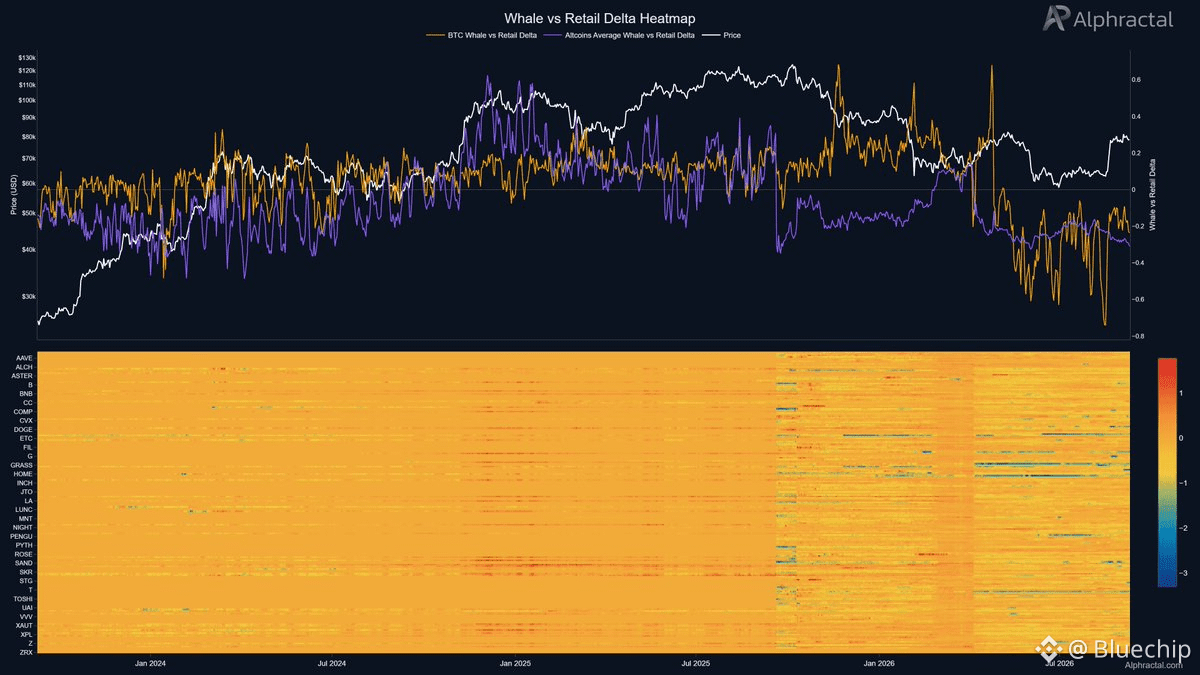
The Dogecoin price bottom is closer than Bitcoin’s. Even though whales are pushing for short positions in the short term, according to the Whale vs. Retail Delta, the CVDD Channel indicates that Dogecoin’s cycle bottom is very close. $DOGE
The Dogecoin price bottom is closer than Bitcoin’s.

Even though whales are pushing for short positions in the short term, according to the Whale vs. Retail Delta, the CVDD Channel indicates that Dogecoin’s cycle bottom is very close.

$DOGE
$BTC News, war, macro pressure, fear all at once. The hashrate has dropped. The price has dropped. They couldn't hold, they sold at the lowest. In the background, the Bitcoin market capitulation oscillator reached 0.8. He saw it in 2011. In 2014. In 2018. In 2020. In 2021. In 2022 and finally in 2026. Each time, this is the picture that those who made panic sales encounter when they turn around. The oscillator is currently at the same level. Those who sold at a loss realized their mistake much later. When the war ended, when the fear dissipated, looking at the price of bitcoin, it had already progressed significantly.
$BTC
News, war, macro pressure, fear all at once.

The hashrate has dropped. The price has dropped. They couldn't hold, they sold at the lowest.

In the background, the Bitcoin market capitulation oscillator reached 0.8.

He saw it in 2011. In 2014. In 2018. In 2020. In 2021. In 2022 and finally in 2026.

Each time, this is the picture that those who made panic sales encounter when they turn around.

The oscillator is currently at the same level.

Those who sold at a loss realized their mistake much later. When the war ended, when the fear dissipated, looking at the price of bitcoin, it had already progressed significantly.
$SOL At the end of the sharp drop earlier this year, on February 5th, a daily candle was formed with a body ranging between 78 and 92. 84 days have passed since then, and we’re still trading inside the body of that candle. Every time price goes up, people get hit with FOMO and start mocking the bears. And every time price drops, panic kicks in and people start mocking the bulls. Celebrations on every move up, pessimism on every move down… yet in reality, nothing has changed. We’ve been stuck in a tight range for nearly 3 months. If you’re a trader, you buy at the bottom of the range and sell in the middle or near the top until a breakout happens in either direction. I honestly don’t know what people calling for a breakout to the upside are basing it on, because almost all altcoins have been stuck in the same tight range for the past 3 months no real breakout has happened. Whether this is a bearish flag for a bigger drop (which is my expectation), or a long accumulation zone… A proper accumulation phase usually includes a capitulation move, a fake breakdown, and trading below the range for a while to create fear as we’ve seen historically. If you’re accumulating quietly and want to buy here, don’t take on too much risk. We likely still have months of consolidation ahead, possibly until September–October. Take it slow. The 75 zone was a target I mentioned earlier in my analysis when people were mocking it got hit as a second target. Right now, the reaction is still slow, as you can see. If you believe this is accumulation, then accumulate calmly and cautiously. {future}(SOLUSDT)
$SOL
At the end of the sharp drop earlier this year, on February 5th, a daily candle was formed with a body ranging between 78 and 92.

84 days have passed since then, and we’re still trading inside the body of that candle. Every time price goes up, people get hit with FOMO and start mocking the bears. And every time price drops, panic kicks in and people start mocking the bulls.

Celebrations on every move up, pessimism on every move down… yet in reality, nothing has changed. We’ve been stuck in a tight range for nearly 3 months. If you’re a trader, you buy at the bottom of the range and sell in the middle or near the top until a breakout happens in either direction.

I honestly don’t know what people calling for a breakout to the upside are basing it on, because almost all altcoins have been stuck in the same tight range for the past 3 months no real breakout has happened.

Whether this is a bearish flag for a bigger drop (which is my expectation), or a long accumulation zone…

A proper accumulation phase usually includes a capitulation move, a fake breakdown, and trading below the range for a while to create fear as we’ve seen historically.

If you’re accumulating quietly and want to buy here, don’t take on too much risk. We likely still have months of consolidation ahead, possibly until September–October. Take it slow.

The 75 zone was a target I mentioned earlier in my analysis when people were mocking it got hit as a second target. Right now, the reaction is still slow, as you can see.
If you believe this is accumulation, then accumulate calmly and cautiously.
$RAVE Measured breakout target basically reached here. 🎯🎯 Almost 20% pump. Beautiful! 🔥 {future}(RAVEUSDT)
$RAVE

Measured breakout target basically reached here. 🎯🎯

Almost 20% pump. Beautiful! 🔥
Bluechip
·
--
$RAVE

LTF bull break 🔥
$RAVE LTF bull break 🔥
$RAVE

LTF bull break 🔥
Bluechip
·
--
$RAVE
If you're a low time frame trader you can probably focus on these trendlines.
Article
Most people think the Bitcoin 4-year cycle is about the halving.It's not.Here's what's actually driving it and why getting this wrong will cost you the next bull run: The popular narrative: Bitcoin halves every ~4 years -> supply shock -> price goes up. Simple. Clean. And only half the story. The halving is a catalyst. Not the cause. The real driver is liquidity cycles. Every ~4 years, global macro conditions shift - interest rates, money supply, risk appetite. Bitcoin doesn't pump because supply drops. It pumps because capital is looking for somewhere to go. The halving just happens to align with that window. Look at the data: - 2013 bull run: Fed balance sheet expanding post-2008 QE - 2017 bull run: cheap debt era, risk assets peaking globally - 2021 bull run: $5T in stimulus injected into the economy Every cycle had one thing in common: loose money chasing returns. This is why the "halving = pump" model keeps failing people. 2024 halving happened in April. People expected an immediate supply shock moon. But macro liquidity wasn't fully cooperating yet. The cycle doesn't run on a halving clock. It runs on a liquidity clock. The 4-year cycle also isn't guaranteed to continue. It's a pattern, not a law. As Bitcoin matures, institutionalizes, and correlates more with macro - the cycle will compress, extend, or distort. Anyone telling you "cycle top is Q4 20XX" with certainty is guessing. What should you actually be watching instead? - Global M2 money supply - Fed liquidity conditions - Bitcoin dominance trends - Realized cap vs. market cap (MVRV) These tell you where we are in the cycle far more accurately than a halving countdown clock. The traders who win cycles aren't the ones who bought the halving date. They're the ones who understood the macro setup behind it and positioned before the narrative caught up. Make sure to follow me if you enjoy #bitcoin updates like this. $BTC {future}(BTCUSDT)

Most people think the Bitcoin 4-year cycle is about the halving.It's not.

Here's what's actually driving it and why getting this wrong will cost you the next bull run:

The popular narrative:
Bitcoin halves every ~4 years -> supply shock -> price goes up.
Simple. Clean. And only half the story.
The halving is a catalyst. Not the cause.

The real driver is liquidity cycles.
Every ~4 years, global macro conditions shift - interest rates, money supply, risk appetite.
Bitcoin doesn't pump because supply drops.
It pumps because capital is looking for somewhere to go.
The halving just happens to align with that window.

Look at the data:
- 2013 bull run: Fed balance sheet expanding post-2008 QE
- 2017 bull run: cheap debt era, risk assets peaking globally
- 2021 bull run: $5T in stimulus injected into the economy
Every cycle had one thing in common: loose money chasing returns.

This is why the "halving = pump" model keeps failing people.
2024 halving happened in April.
People expected an immediate supply shock moon.
But macro liquidity wasn't fully cooperating yet.
The cycle doesn't run on a halving clock. It runs on a liquidity clock.

The 4-year cycle also isn't guaranteed to continue.
It's a pattern, not a law.
As Bitcoin matures, institutionalizes, and correlates more with macro - the cycle will compress, extend, or distort.
Anyone telling you "cycle top is Q4 20XX" with certainty is guessing.

What should you actually be watching instead?
- Global M2 money supply
- Fed liquidity conditions
- Bitcoin dominance trends
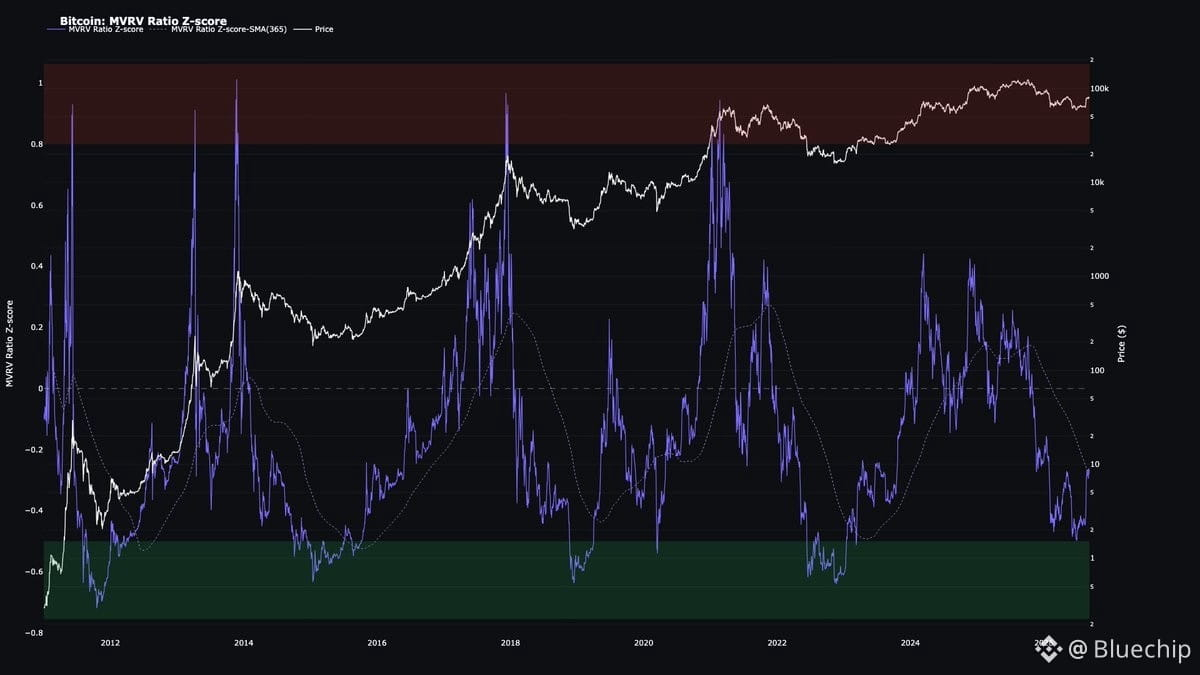
- Realized cap vs. market cap (MVRV)
These tell you where we are in the cycle far more accurately than a halving countdown clock.

The traders who win cycles aren't the ones who bought the halving date.
They're the ones who understood the macro setup behind it and positioned before the narrative caught up.

Make sure to follow me if you enjoy #bitcoin updates like this.
$BTC
$RAVE If you're a low time frame trader you can probably focus on these trendlines.
$RAVE
If you're a low time frame trader you can probably focus on these trendlines.
Binance just dropped its April PoR👀 618,951 BTC user balances 619,136 BTC held 100.03% reserve ratio But here’s the part people might miss👇 Third-party custody is down 25% MoM That’s less dependency on external custodians
Binance just dropped its April PoR👀

618,951 BTC user balances
619,136 BTC held
100.03% reserve ratio

But here’s the part people might miss👇

Third-party custody is down 25% MoM

That’s less dependency on external custodians
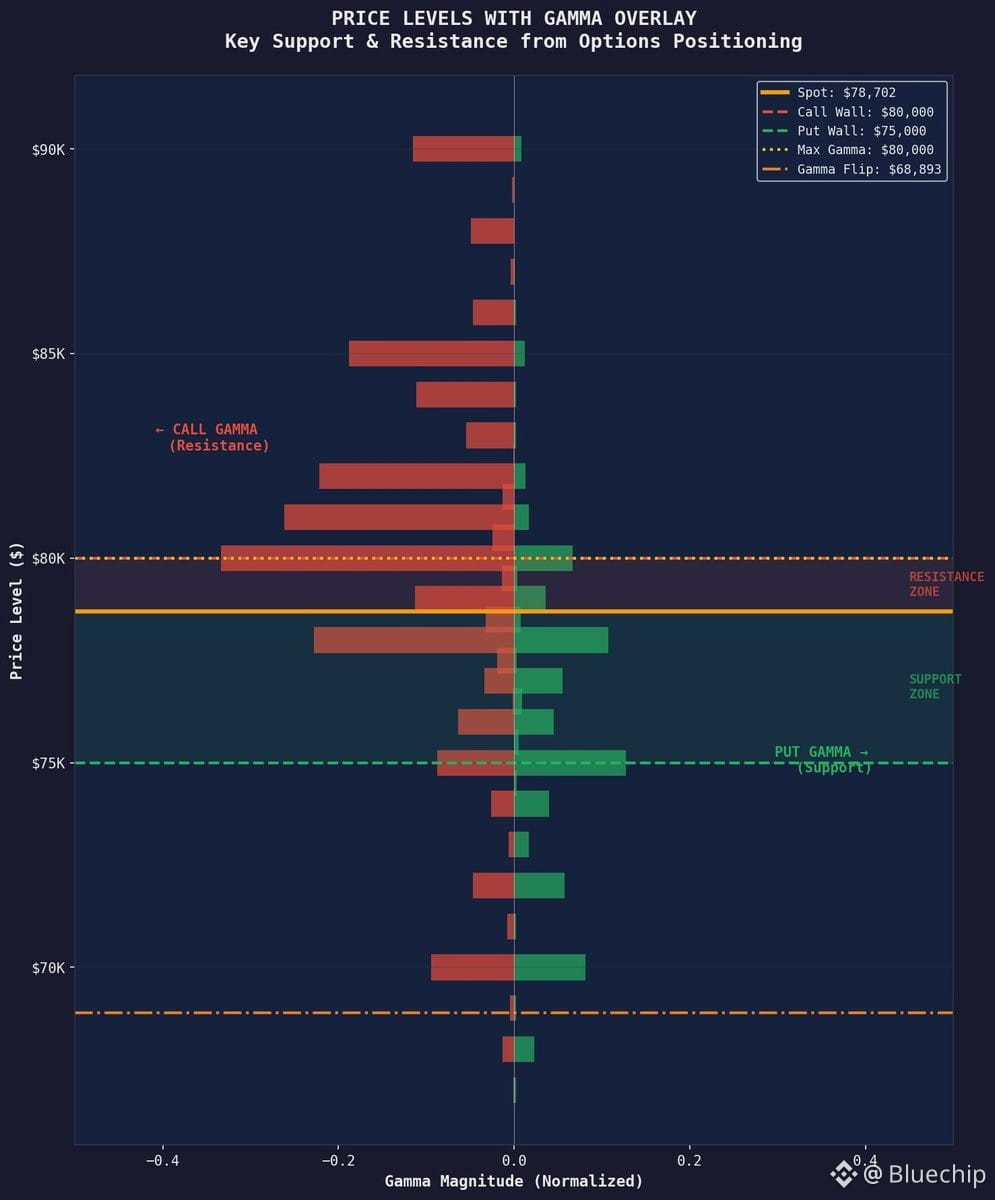
$BTC Cleared the Flip. 70K Is the Magnet. 72K Is the Wall. 80K Is the Ceiling. The main update is that 70K has replaced 72K as the gamma magnet. $71,594 spot $67,815 flip $70,000 max gamma / magnet $72,000 call wall $70,000 put wall $80,000 primary ceiling strike +$91M net gamma Above the flip, dealer hedging usually suppresses volatility rather than amplifies it. That lowers the odds of a disorderly move unless spot pushes decisively into a major wall. 70K is now the magnet because that is where gamma is heaviest. 72K is the first resistance because that is the nearest call wall just above spot. 80K remains the bigger ceiling because it is still the strongest call OI strike and the main upside resistance zone. 42.0% realized vol Expiry: April 14: 6.3% of total gamma April 17: 11.3% of total gamma April 24: 36.7% of total gamma
$BTC Cleared the Flip. 70K Is the Magnet. 72K Is the Wall. 80K Is the Ceiling.

The main update is that 70K has replaced 72K as the gamma magnet.

$71,594 spot
$67,815 flip
$70,000 max gamma / magnet
$72,000 call wall
$70,000 put wall
$80,000 primary ceiling strike

+$91M net gamma

Above the flip, dealer hedging usually suppresses volatility rather than amplifies it. That lowers the odds of a disorderly move unless spot pushes decisively into a major wall.

70K is now the magnet because that is where gamma is heaviest.

72K is the first resistance because that is the nearest call wall just above spot.

80K remains the bigger ceiling because it is still the strongest call OI strike and the main upside resistance zone.

42.0% realized vol

Expiry:
April 14: 6.3% of total gamma
April 17: 11.3% of total gamma
April 24: 36.7% of total gamma
Login to explore more contents
Join global crypto users on Binance Square
⚡️ Get latest and useful information about crypto.
💬 Trusted by the world’s largest crypto exchange.
👍 Discover real insights from verified creators.
Email / Phone number
Sitemap
Cookie Preferences
Platform T&Cs