

朱老师区块链
4.6k Posts

朱老师区块链
 Square Verified+
Report
Block User
价值投机社区,项目投研专家,返佣码:BC3001。2项国家级区块链重点研发项目核心成员,10年讲3000个项目。公众号:共识偏差,油管:朱老师区块链3000问,b站知乎,喜马拉雅同名节目,推特:朱老师区块链

2025 Blockchain 100 — Independent Researcher

原创之星
Frequent Trader
8.3 Years
500 Following
40.3K+ Followers
32.6K+ Liked
2 Badges
Posts
All
Quotes
Videos
Live
PINNED
·
--
Please vote for me! Voting resets every day at 8. Arigato.
The market is still consolidating overall, weighed down by the month-end FOMC meeting, the midterm elections, and expectations of a December rate hike.
But the longer it consolidates sideways, the higher it may rise.
$BNB
Please vote for me! Voting resets every day at 8. Arigato.
The market is still consolidating overall, weighed down by the month-end FOMC meeting, the midterm elections, and expectations of a December rate hike.
But the longer it consolidates sideways, the higher it may rise.
$BNB
The market is still consolidating overall, weighed down by the month-end FOMC meeting, the midterm elections, and expectations of a December rate hike.
But the longer it consolidates sideways, the higher it may rise.
$BNB

13
10
2.3k
PINNED
·
--
Partly True

Article
The strongest project research report collection in the universe - Portal (All)Here is all the research report on blockchain projects you want to know, fundamental analysis! Not finished yet, there are still a lot of projects that have not moved into the square! Like and bookmark, we have already done research reports on over 800 projects, good projects are easy to identify from bad ones. Although many projects are added to the crypto space every day, quality projects are few and far between. I hope we are all value investors, finding projects that can withstand market fluctuations. You can follow me!
Public Chain:
[国产公链之光-CFX超强潜力分析](https://www.binance.com/zh-CN/square/post/956987)
[波卡上的以太坊-GLMR目前进入到了价值洼地了吗?](https://www.binance.com/zh-CN/square/post/960591)
The strongest project research report collection in the universe - Portal (All)
Here is all the research report on blockchain projects you want to know, fundamental analysis! Not finished yet, there are still a lot of projects that have not moved into the square! Like and bookmark, we have already done research reports on over 800 projects, good projects are easy to identify from bad ones. Although many projects are added to the crypto space every day, quality projects are few and far between. I hope we are all value investors, finding projects that can withstand market fluctuations. You can follow me!
Public Chain:
国产公链之光-CFX超强潜力分析
波卡上的以太坊-GLMR目前进入到了价值洼地了吗?
Public Chain:
国产公链之光-CFX超强潜力分析
波卡上的以太坊-GLMR目前进入到了价值洼地了吗?
12
5
48
4.1k
·
--

Article
Rate hikes, U.S. stocks, and AI: a triple whammy of bearish catalysts. Will Bitcoin repeat its 2023 performance and surge to $150,000 in 2027?This is a very important week, as it’s a major week for U.S. corporate earnings. Microsoft, Google, Amazon, and Intel will report their results, and these Mag 7 companies will determine the future of AI. The recent decline in U.S. stocks is mainly due to rising oil prices and Meta starting to cut back on AI investment. The market is worried that, in this macroeconomic environment, big tech companies will all reduce their capital spending on AI. If so, the AI narrative may come to an end, and AI-related sectors such as memory, optical modules, and cloud providers could all fall accordingly, followed by a further decline in U.S. stocks.
Another major event is the FOMC meeting at the end of the month. Although there is already a fairly clear consensus that the Fed will take no action, could Waller make more hawkish remarks? The data released this month has been very poor, so even if the FOMC announces no rate cut this time, I think the market will definitely interpret it as bearish, because the current consensus for December is a rate hike!
Rate hikes, U.S. stocks, and AI: a triple whammy of bearish catalysts. Will Bitcoin repeat its 2023 performance and surge to $150,000 in 2027?
This is a very important week, as it’s a major week for U.S. corporate earnings. Microsoft, Google, Amazon, and Intel will report their results, and these Mag 7 companies will determine the future of AI. The recent decline in U.S. stocks is mainly due to rising oil prices and Meta starting to cut back on AI investment. The market is worried that, in this macroeconomic environment, big tech companies will all reduce their capital spending on AI. If so, the AI narrative may come to an end, and AI-related sectors such as memory, optical modules, and cloud providers could all fall accordingly, followed by a further decline in U.S. stocks.
Another major event is the FOMC meeting at the end of the month. Although there is already a fairly clear consensus that the Fed will take no action, could Waller make more hawkish remarks? The data released this month has been very poor, so even if the FOMC announces no rate cut this time, I think the market will definitely interpret it as bearish, because the current consensus for December is a rate hike!
Another major event is the FOMC meeting at the end of the month. Although there is already a fairly clear consensus that the Fed will take no action, could Waller make more hawkish remarks? The data released this month has been very poor, so even if the FOMC announces no rate cut this time, I think the market will definitely interpret it as bearish, because the current consensus for December is a rate hike!
2k
·
--
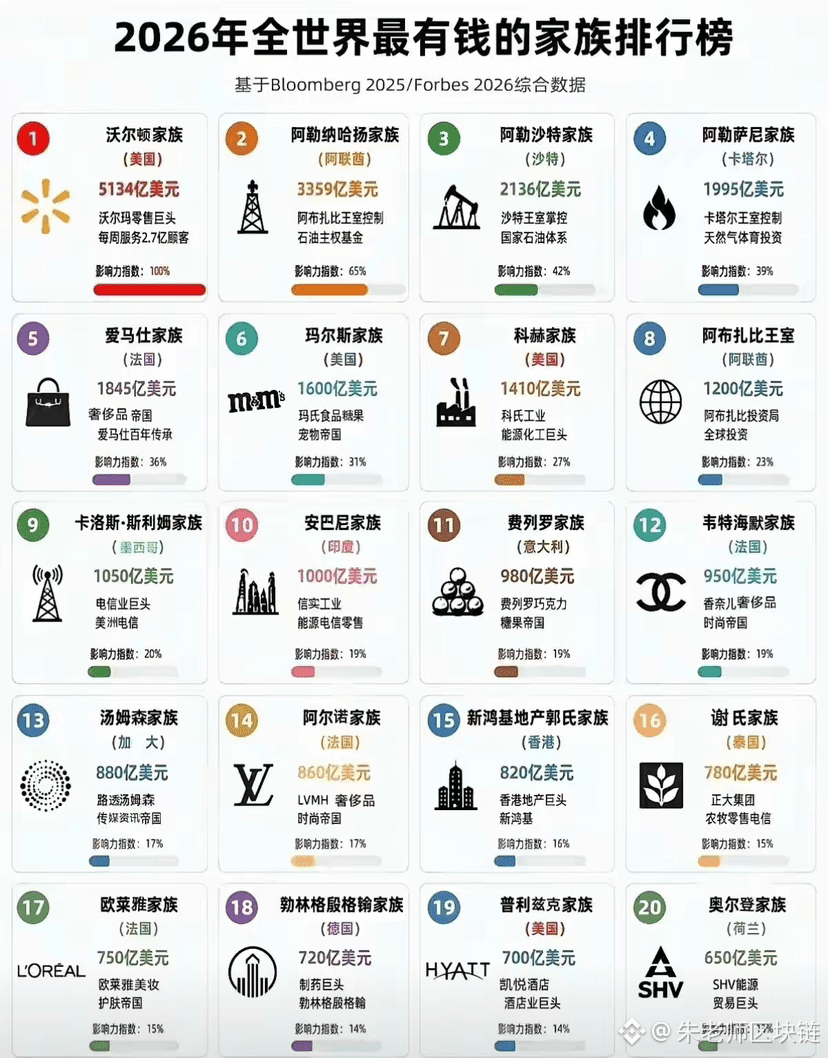
The richest families in the world—see if yours is on the list.
The UAE isn't even on it? Hard to believe.
$XAU
The richest families in the world—see if yours is on the list.
The UAE isn't even on it? Hard to believe.
$XAU
The UAE isn't even on it? Hard to believe.
$XAU
1
6
13.2k
·
--
Guys, please vote for me. Happy Monday! Thanks 🙏
[点击投票](https://app.binance.com/uni-qr/cact26user/758)
$BNB
Guys, please vote for me. Happy Monday! Thanks 🙏
点击投票
$BNB
点击投票
$BNB

1.9k
1
75
1.9k
·
--
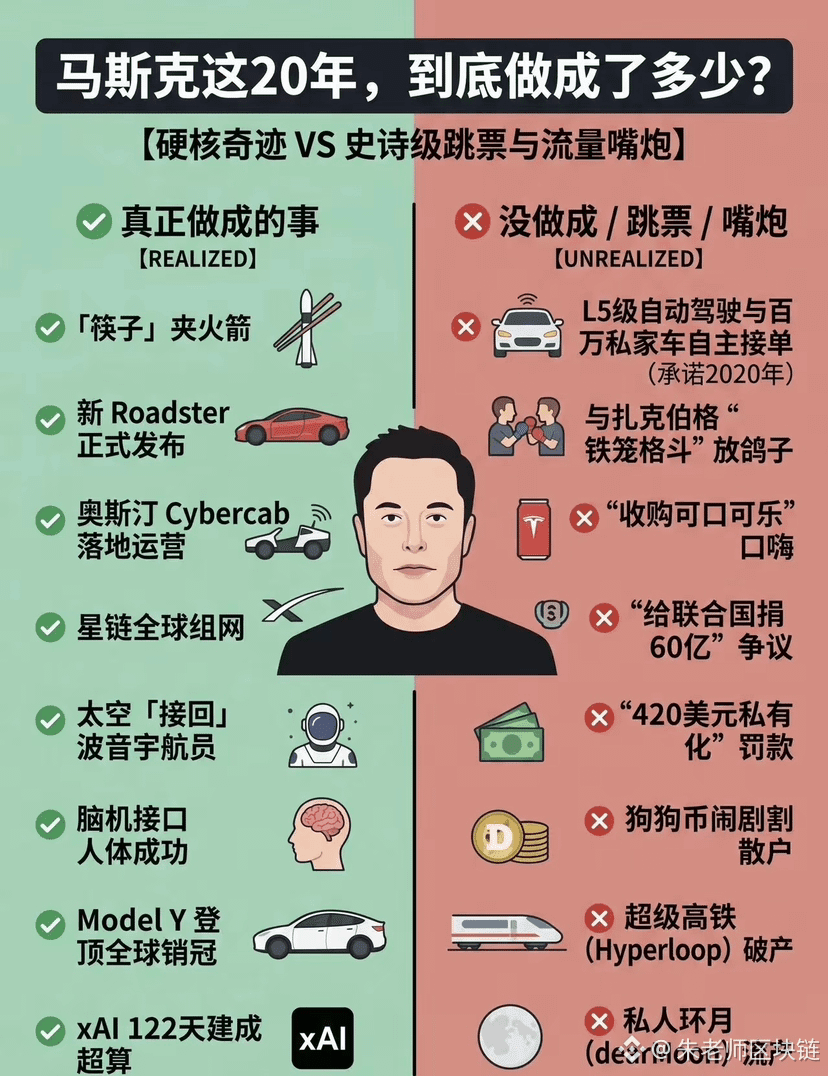
How many of Musk’s big promises over the years have actually come true?
$SPCX
How many of Musk’s big promises over the years have actually come true?
$SPCX
$SPCX
2
1
10
40.1k
·
--
7
12
17.8k
·
--
Have a lovely weekend! Please keep voting for me. Thank you, my friends!
[点击投票](https://app.binance.com/uni-qr/cact26user/758)
$BNB
Have a lovely weekend! Please keep voting for me. Thank you, my friends!
点击投票
$BNB
点击投票
$BNB

1.5k
2
58
1.5k
·
--
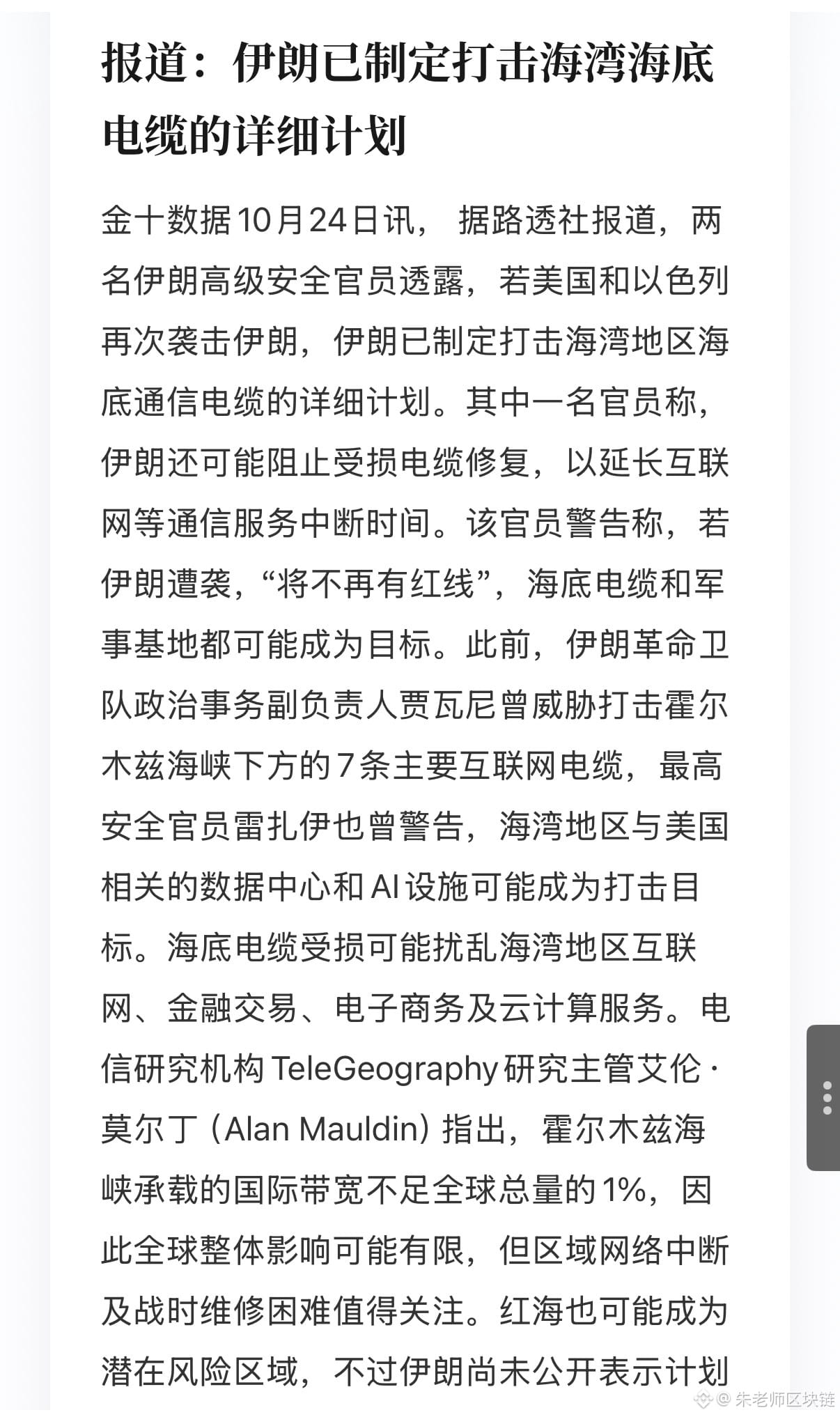
I suggest these two go live and duke it out directly. I’ll send you little hearts when they do...
Now Trump is talking about a prolonged war again, while Iran is cutting cables. How is this supposed to work? Could this turn into a black swan event?
[感谢投票](https://app.binance.com/uni-qr/cact26user/758)
$CL
I suggest these two go live and duke it out directly. I’ll send you little hearts when they do...
Now Trump is talking about a prolonged war again, while Iran is cutting cables. How is this supposed to work? Could this turn into a black swan event?
感谢投票
$CL
Now Trump is talking about a prolonged war again, while Iran is cutting cables. How is this supposed to work? Could this turn into a black swan event?
感谢投票
$CL
2
4.8k
·
--
Friends, please vote. Thank you 🙏
[点击投票](https://app.binance.com/uni-qr/cact26user/758)
$BNB
Friends, please vote. Thank you 🙏
点击投票
$BNB
点击投票
$BNB

1.2k
50
1.8k
·
--

Article
What Stage Is the Market in? 5 Key IndicatorsRecently, crude oil prices have continued to rise, and U.S. stocks have fallen for several days in a row. But crypto has actually held up reasonably well. Bitcoin didn’t fall much along with U.S. stocks last night and is still hovering around $81,000. Its overall decline is only about 8%, which is quite resilient.
Based on past experience, when U.S. stocks fall 2%, Bitcoin would usually drop 3–5%. So Bitcoin has held up fairly well overall. Next, let’s look at the broader market data and see how things are really shaping up.
1. Overall Market Cap
The total crypto market cap is currently still at $2.7 trillion, compared with a peak of $2.9 trillion—a decline of 7%, roughly in line with Bitcoin’s drop. This suggests that altcoin market caps haven’t fallen much, and major capital is probably still in the market.
What Stage Is the Market in? 5 Key Indicators
Recently, crude oil prices have continued to rise, and U.S. stocks have fallen for several days in a row. But crypto has actually held up reasonably well. Bitcoin didn’t fall much along with U.S. stocks last night and is still hovering around $81,000. Its overall decline is only about 8%, which is quite resilient.
Based on past experience, when U.S. stocks fall 2%, Bitcoin would usually drop 3–5%. So Bitcoin has held up fairly well overall. Next, let’s look at the broader market data and see how things are really shaping up.
1. Overall Market Cap
The total crypto market cap is currently still at $2.7 trillion, compared with a peak of $2.9 trillion—a decline of 7%, roughly in line with Bitcoin’s drop. This suggests that altcoin market caps haven’t fallen much, and major capital is probably still in the market.
Based on past experience, when U.S. stocks fall 2%, Bitcoin would usually drop 3–5%. So Bitcoin has held up fairly well overall. Next, let’s look at the broader market data and see how things are really shaping up.
1. Overall Market Cap
The total crypto market cap is currently still at $2.7 trillion, compared with a peak of $2.9 trillion—a decline of 7%, roughly in line with Bitcoin’s drop. This suggests that altcoin market caps haven’t fallen much, and major capital is probably still in the market.
1
1.2k
·
--
Is there really no story left to tell in crypto? a16Z Crypto has been renamed a16z frontier, and now established crypto investment firms are all turning to AI and robotics. If crypto keeps going like this, things are only going to get harder! Fewer projects that fleece investors, and more projects that actually get things done!
$BTC
Is there really no story left to tell in crypto? a16Z Crypto has been renamed a16z frontier, and now established crypto investment firms are all turning to AI and robotics. If crypto keeps going like this, things are only going to get harder! Fewer projects that fleece investors, and more projects that actually get things done!
$BTC
$BTC

1
3
1.7k
·
--
US-Iran talks are deadlocked, and oil prices are setting their sights on $120! Is the next global economic crisis on the way?$BTC
[感谢投票](https://app.binance.com/uni-qr/cact26user/758)
US-Iran talks are deadlocked, and oil prices are setting their sights on $120! Is the next global economic crisis on the way?$BTC
感谢投票
感谢投票
1.5k
·
--

Article
U.S.-Iran Talks at an Impasse, Oil Prices Target $120! Is Another Global Economic Crisis on the Way?Markets have been extremely volatile over the past few days, and the macroeconomic environment is changing by the minute. Oil prices have once again climbed above $100. U.S. stocks fell another 1.6% in premarket trading today, gold dropped below $4,100, and South Korean semiconductor stocks continued to slide.
The main reason should be clear to everyone: tensions between the U.S. and Iran remain high, with no sign of easing. On Tuesday, Iran even put forward seven conditions for peace talks. Then, a dramatic turn of events unfolded that evening. Trump said talks were underway, and oil prices immediately fell. But 10 minutes later, Iran said it was not negotiating with the U.S. Trump called that fake news, and oil prices surged back up. U.S. stocks had been enjoying a solid rally, but they too were dragged lower.
U.S.-Iran Talks at an Impasse, Oil Prices Target $120! Is Another Global Economic Crisis on the Way?
Markets have been extremely volatile over the past few days, and the macroeconomic environment is changing by the minute. Oil prices have once again climbed above $100. U.S. stocks fell another 1.6% in premarket trading today, gold dropped below $4,100, and South Korean semiconductor stocks continued to slide.
The main reason should be clear to everyone: tensions between the U.S. and Iran remain high, with no sign of easing. On Tuesday, Iran even put forward seven conditions for peace talks. Then, a dramatic turn of events unfolded that evening. Trump said talks were underway, and oil prices immediately fell. But 10 minutes later, Iran said it was not negotiating with the U.S. Trump called that fake news, and oil prices surged back up. U.S. stocks had been enjoying a solid rally, but they too were dragged lower.
The main reason should be clear to everyone: tensions between the U.S. and Iran remain high, with no sign of easing. On Tuesday, Iran even put forward seven conditions for peace talks. Then, a dramatic turn of events unfolded that evening. Trump said talks were underway, and oil prices immediately fell. But 10 minutes later, Iran said it was not negotiating with the U.S. Trump called that fake news, and oil prices surged back up. U.S. stocks had been enjoying a solid rally, but they too were dragged lower.
4
2.7k
·
--
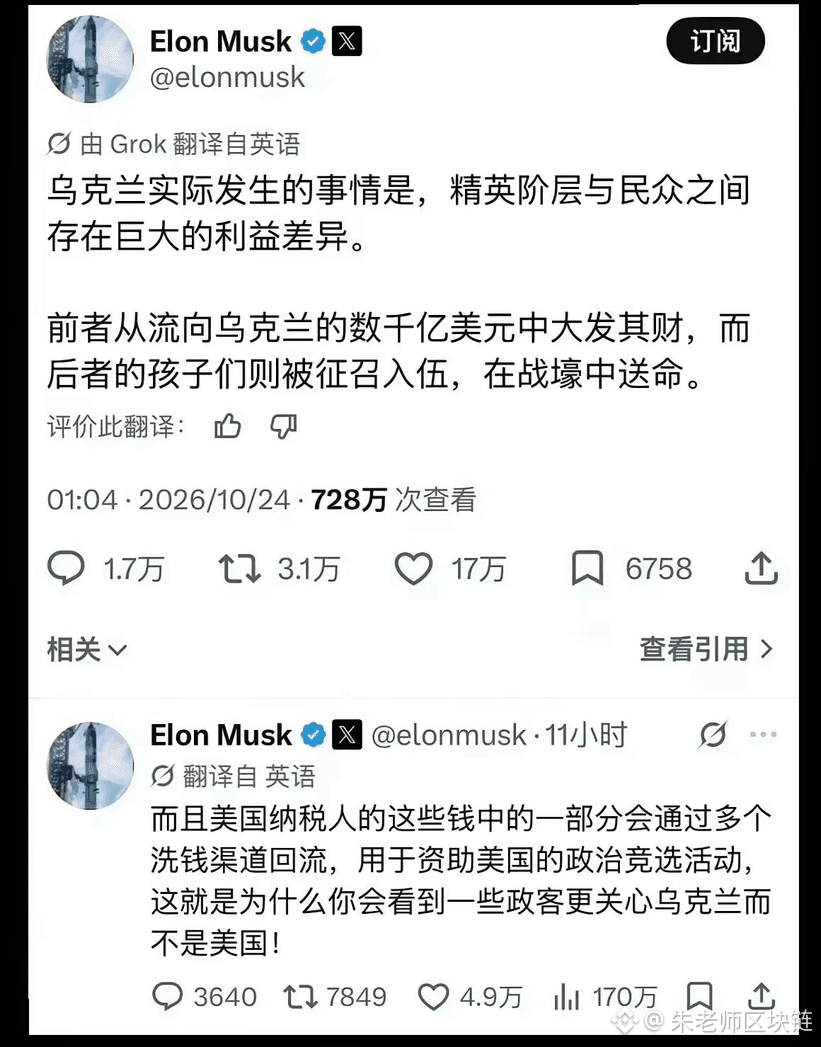
Comparing the richest person in America with the richest person in China—I'm dying laughing! Someone in the group chat sent this. Musk is seriously badass!
$SPCX
Comparing the richest person in America with the richest person in China—I'm dying laughing! Someone in the group chat sent this. Musk is seriously badass!
$SPCX
$SPCX

8
47
38.3k
·
--
Trump says he won’t strike Iran before the election. In other words: “Just wait till I’m done with the election—I’ll beat you to a pulp.”
Now Trump’s fake news isn’t working anymore. Iran quickly denied it, and even said it would return my frozen $6 billion with interest. Talk about pushing your luck.
Things are pretty turbulent right now, so it’s best to sit on the sidelines and watch. I said on last night’s livestream that the market looked really strange, like there was a bit of a short squeeze brewing. Sure enough, it plunged today. October could see some big swings in either direction.
And finally, thank you for casting your free and precious vote for me! $CL [立即投票](https://app.binance.com/uni-qr/cact26user/758)
Trump says he won’t strike Iran before the election. In other words: “Just wait till I’m done with the election—I’ll beat you to a pulp.”
Now Trump’s fake news isn’t working anymore. Iran quickly denied it, and even said it would return my frozen $6 billion with interest. Talk about pushing your luck.
Things are pretty turbulent right now, so it’s best to sit on the sidelines and watch. I said on last night’s livestream that the market looked really strange, like there was a bit of a short squeeze brewing. Sure enough, it plunged today. October could see some big swings in either direction.
And finally, thank you for casting your free and precious vote for me! $CL 立即投票
Now Trump’s fake news isn’t working anymore. Iran quickly denied it, and even said it would return my frozen $6 billion with interest. Talk about pushing your luck.
Things are pretty turbulent right now, so it’s best to sit on the sidelines and watch. I said on last night’s livestream that the market looked really strange, like there was a bit of a short squeeze brewing. Sure enough, it plunged today. October could see some big swings in either direction.
And finally, thank you for casting your free and precious vote for me! $CL 立即投票
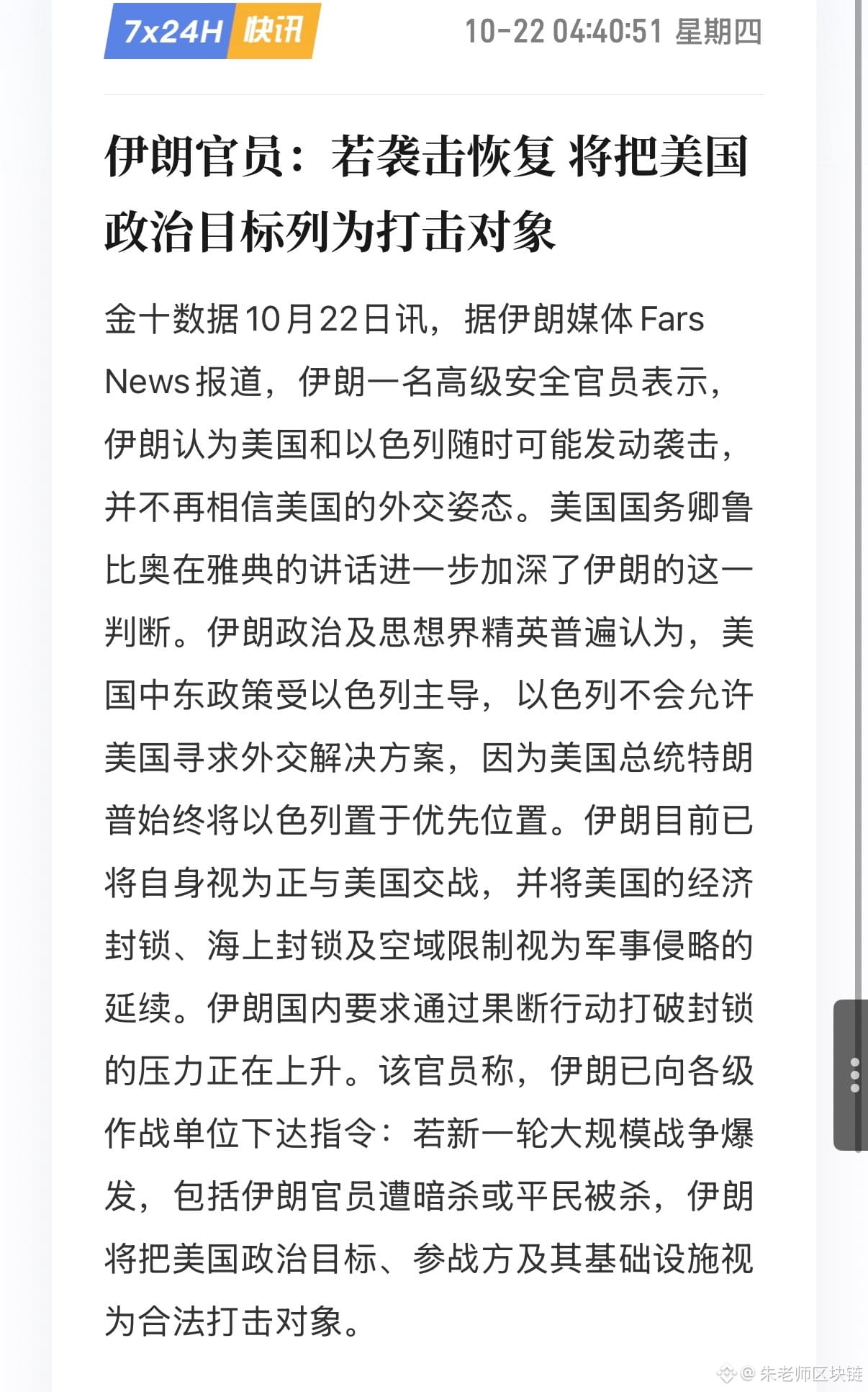
1
1
14.3k
·
--
Could Q-Day become the biggest black swan in Bitcoin's history? $BTC
Could Q-Day become the biggest black swan in Bitcoin's history? $BTC
2
2k
·
--

Article
Could Q-Day become the biggest black swan in Bitcoin’s history?What is Q-Day? It’s the tipping point at which quantum computers can break traditional cryptography!
The threat quantum computers pose to Bitcoin has been discussed before, but their progress is now moving quite quickly. In a paper published this March, Google Quantum AI (in collaboration with the Ethereum Foundation, Stanford, and others) said that the resources required to crack ECC-256 could be significantly reduced: to fewer than approximately 500,000 physical qubits (about 20 times lower than earlier estimates), with the theoretical attack taking as little as around 9 minutes.
Some researchers now say there is at least a 10% chance that quantum computers capable of cracking secp256k1 private keys will exist by 2032.
Could Q-Day become the biggest black swan in Bitcoin’s history?
What is Q-Day? It’s the tipping point at which quantum computers can break traditional cryptography!
The threat quantum computers pose to Bitcoin has been discussed before, but their progress is now moving quite quickly. In a paper published this March, Google Quantum AI (in collaboration with the Ethereum Foundation, Stanford, and others) said that the resources required to crack ECC-256 could be significantly reduced: to fewer than approximately 500,000 physical qubits (about 20 times lower than earlier estimates), with the theoretical attack taking as little as around 9 minutes.
Some researchers now say there is at least a 10% chance that quantum computers capable of cracking secp256k1 private keys will exist by 2032.
The threat quantum computers pose to Bitcoin has been discussed before, but their progress is now moving quite quickly. In a paper published this March, Google Quantum AI (in collaboration with the Ethereum Foundation, Stanford, and others) said that the resources required to crack ECC-256 could be significantly reduced: to fewer than approximately 500,000 physical qubits (about 20 times lower than earlier estimates), with the theoretical attack taking as little as around 9 minutes.
Some researchers now say there is at least a 10% chance that quantum computers capable of cracking secp256k1 private keys will exist by 2032.
3
1
1
3.8k
Log in to explore more content
Join global crypto users on Binance Square
⚡️ Get latest and useful information about crypto.
💬 Trusted by the world’s largest crypto exchange.
👍 Discover real insights from verified creators.
Email / Phone number