
Link Crypto
5.2k Posts

Link Crypto
 Square Verified+
Report
Block User
HODL 💎 💎 💎
3 Following
13.8K+ Followers
16.9K+ Liked
Posts
All
Quotes
PINNED
·
--
Account registration link:
https://affiliate.basalpay.com/invite?ref=6533424219
Account registration link:
https://affiliate.basalpay.com/invite?ref=6533424219
https://affiliate.basalpay.com/invite?ref=6533424219
Link Crypto
·
--
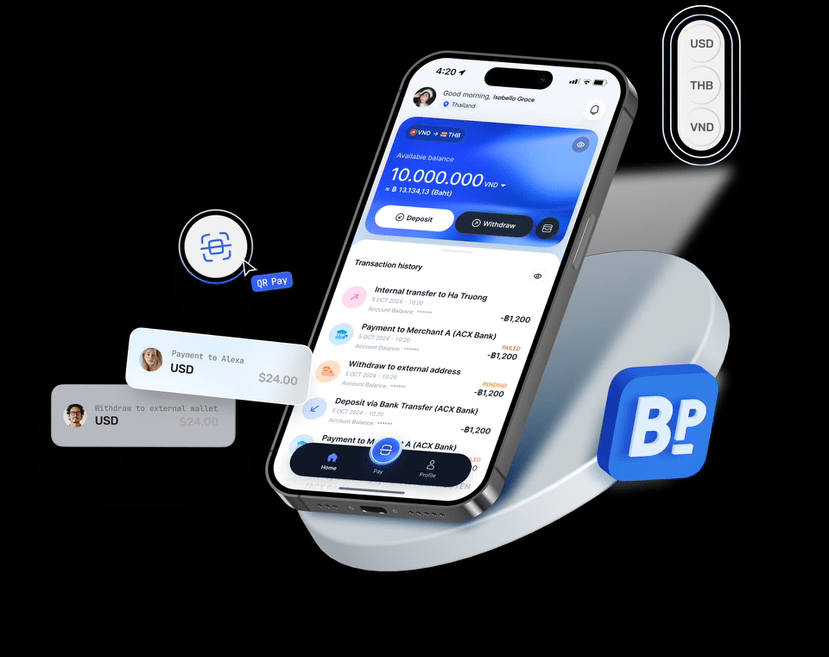
Hot 🚀🚀🚀 Vietnam grants sandbox license for the first USDT payment project in Da Nang. This project is aimed at foreign tourists. It allows payment for services using USDT via QR code (which will automatically convert to VND)
You can quickly register using your email, transfer USDT, and use it immediately. If anyone needs detailed support, please comment.
Registration link: https://affiliate.basalpay.com/invite?ref=6533424219
You can quickly register using your email, transfer USDT, and use it immediately. If anyone needs detailed support, please comment.
Registration link: https://affiliate.basalpay.com/invite?ref=6533424219
5
170
PINNED
·
--
Transfer ref to reduce 20% of Spot trading fees and 10% of Futures for those who already have a Binance account and register without using anyone's ref link.
+ Step 1:
Go to my ref link: [LINK](https://www.binance.com/join?ref=HMSLATJU)
+ Step 2:
Select login and log in to your current account.
After logging in, a confirmation window will appear.
+ Step 3:
Select [Bind Now] [Link Now] and you will be under my ref.
Note: If you have registered Binance through any previous ref link, you will not be able to do it. If you want my ref to get a refund as above, please re-register for a Binance account with a new email, then verify the account and transfer assets to the new account. I hope you will support me so that I have the motivation to write articles every day.
#FutureTarding
Transfer ref to reduce 20% of Spot trading fees and 10% of Futures for those who already have a Binance account and register without using anyone's ref link.
+ Step 1:
Go to my ref link: LINK
+ Step 2:
Select login and log in to your current account.
After logging in, a confirmation window will appear.
+ Step 3:
Select [Bind Now] [Link Now] and you will be under my ref.
Note: If you have registered Binance through any previous ref link, you will not be able to do it. If you want my ref to get a refund as above, please re-register for a Binance account with a new email, then verify the account and transfer assets to the new account. I hope you will support me so that I have the motivation to write articles every day.
#FutureTarding
+ Step 1:
Go to my ref link: LINK
+ Step 2:
Select login and log in to your current account.
After logging in, a confirmation window will appear.
+ Step 3:
Select [Bind Now] [Link Now] and you will be under my ref.
Note: If you have registered Binance through any previous ref link, you will not be able to do it. If you want my ref to get a refund as above, please re-register for a Binance account with a new email, then verify the account and transfer assets to the new account. I hope you will support me so that I have the motivation to write articles every day.
#FutureTarding

5
3
12
265
·
--
U.S. Bank Tests USBDC Stablecoin on StellarU.S. Bank completes cross-border transaction using the USBDC stablecoin on the Stellar blockchain, verifying the self-developed Digital Asset Platform.
U.S. Bank, the fifth-largest commercial bank in the United States, has completed a real cross-border payment transaction using its proprietary USBDC stablecoin on the Stellar blockchain.
In the experiment, funds were transferred between U.S. Bank units in North America and Europe, where USBDC was issued and transferred on the public Stellar network, while also testing the token minting, conversion, freezing, and asset recovery functions of the stablecoin, as well as its ability to integrate with the bank’s existing risk management, compliance, and operational systems.
U.S. Bank Tests USBDC Stablecoin on Stellar
U.S. Bank completes cross-border transaction using the USBDC stablecoin on the Stellar blockchain, verifying the self-developed Digital Asset Platform.
U.S. Bank, the fifth-largest commercial bank in the United States, has completed a real cross-border payment transaction using its proprietary USBDC stablecoin on the Stellar blockchain.
In the experiment, funds were transferred between U.S. Bank units in North America and Europe, where USBDC was issued and transferred on the public Stellar network, while also testing the token minting, conversion, freezing, and asset recovery functions of the stablecoin, as well as its ability to integrate with the bank’s existing risk management, compliance, and operational systems.
U.S. Bank, the fifth-largest commercial bank in the United States, has completed a real cross-border payment transaction using its proprietary USBDC stablecoin on the Stellar blockchain.
In the experiment, funds were transferred between U.S. Bank units in North America and Europe, where USBDC was issued and transferred on the public Stellar network, while also testing the token minting, conversion, freezing, and asset recovery functions of the stablecoin, as well as its ability to integrate with the bank’s existing risk management, compliance, and operational systems.
65
·
--
Consensys Splits MetaMask Into Two Separate CompaniesConsensys will split into MetaMask for individual use and a new Consensys responsible for organizational infrastructure, to be completed by the end of 2026.
Consensys Software Inc., the Ethereum software company behind MetaMask, plans to split into two independent companies, thereby separating its business area for individual users from blockchain infrastructure activities serving organizations.
According to the notice on Wednesday, the separation process is expected to be completed by the end of 2026, with Joe Lubin serving as President and CEO of MetaMask, while also taking on the role of Executive Chairman of the new Consensys.
Consensys Splits MetaMask Into Two Separate Companies
Consensys will split into MetaMask for individual use and a new Consensys responsible for organizational infrastructure, to be completed by the end of 2026.
Consensys Software Inc., the Ethereum software company behind MetaMask, plans to split into two independent companies, thereby separating its business area for individual users from blockchain infrastructure activities serving organizations.
According to the notice on Wednesday, the separation process is expected to be completed by the end of 2026, with Joe Lubin serving as President and CEO of MetaMask, while also taking on the role of Executive Chairman of the new Consensys.
Consensys Software Inc., the Ethereum software company behind MetaMask, plans to split into two independent companies, thereby separating its business area for individual users from blockchain infrastructure activities serving organizations.
According to the notice on Wednesday, the separation process is expected to be completed by the end of 2026, with Joe Lubin serving as President and CEO of MetaMask, while also taking on the role of Executive Chairman of the new Consensys.
49
·
--
India Calls for Removal of 15 Crypto Asset Platforms for Money Laundering ViolationsIndia’s FIU sent notices of non-compliance to 15 cryptocurrency asset platforms, requiring the removal of the apps and URLs for violating PMLA regulations.
India’s Financial Intelligence Unit (FIU) on Wednesday sent notices of non-compliance to 15 cryptocurrency asset platforms under the Prevention of Money Laundering Act (PMLA), including Weex, Blofin, Bitunix, DigiFinex and Toobit.
This agency also sent a notice requesting the removal of the app and the online access addresses of the platforms from public access, on the grounds that these organizations are operating in violation of regulations in India for failing to comply with the requirements related to PMLA. In addition to the names mentioned above, the list also includes Rezorex, XT.com, Latoken, WOO X, Pionex, ChangeNow, SimpleSwap, FixedFloat, WhiteBIT and Guardarian.
India Calls for Removal of 15 Crypto Asset Platforms for Money Laundering Violations
India’s FIU sent notices of non-compliance to 15 cryptocurrency asset platforms, requiring the removal of the apps and URLs for violating PMLA regulations.
India’s Financial Intelligence Unit (FIU) on Wednesday sent notices of non-compliance to 15 cryptocurrency asset platforms under the Prevention of Money Laundering Act (PMLA), including Weex, Blofin, Bitunix, DigiFinex and Toobit.
This agency also sent a notice requesting the removal of the app and the online access addresses of the platforms from public access, on the grounds that these organizations are operating in violation of regulations in India for failing to comply with the requirements related to PMLA. In addition to the names mentioned above, the list also includes Rezorex, XT.com, Latoken, WOO X, Pionex, ChangeNow, SimpleSwap, FixedFloat, WhiteBIT and Guardarian.
India’s Financial Intelligence Unit (FIU) on Wednesday sent notices of non-compliance to 15 cryptocurrency asset platforms under the Prevention of Money Laundering Act (PMLA), including Weex, Blofin, Bitunix, DigiFinex and Toobit.
This agency also sent a notice requesting the removal of the app and the online access addresses of the platforms from public access, on the grounds that these organizations are operating in violation of regulations in India for failing to comply with the requirements related to PMLA. In addition to the names mentioned above, the list also includes Rezorex, XT.com, Latoken, WOO X, Pionex, ChangeNow, SimpleSwap, FixedFloat, WhiteBIT and Guardarian.
4
·
--
Tether and Fasanara Set Up $400 Million Credit FundTether and Fasanara Capital launch StableFund, a $400 million private credit fund using USDT, with plans to raise an additional $3 billion.
Tether and Fasanara Capital have committed to invest $400 million in a new private credit fund called StableFund. The fund will deploy capital through Fasanara’s global fintech lending network. According to a statement released on Wednesday, the two companies will co-sponsor StableFund and plan to raise up to an additional $3 billion from third-party institutional investors.
Tether and Fasanara Set Up $400 Million Credit Fund
Tether and Fasanara Capital launch StableFund, a $400 million private credit fund using USDT, with plans to raise an additional $3 billion.
Tether and Fasanara Capital have committed to invest $400 million in a new private credit fund called StableFund. The fund will deploy capital through Fasanara’s global fintech lending network. According to a statement released on Wednesday, the two companies will co-sponsor StableFund and plan to raise up to an additional $3 billion from third-party institutional investors.
Tether and Fasanara Capital have committed to invest $400 million in a new private credit fund called StableFund. The fund will deploy capital through Fasanara’s global fintech lending network. According to a statement released on Wednesday, the two companies will co-sponsor StableFund and plan to raise up to an additional $3 billion from third-party institutional investors.
10
·
--
Germany Drafts 25% Tax on Crypto Asset Profits From 2027Germany is expected to impose a fixed 25% tax on profits from crypto assets purchased from 2027, abolishing the tax exemption mechanism after 12 months of holding.
According to the draft law prepared by Germany’s Deputy Chancellor and Minister of Finance Lars Klingbeil that Handelsblatt was able to access, Germany is expected to apply a fixed tax rate of 25% to profits from the sale of crypto assets, regardless of how long the assets have been held. Welt was the first outlet to report on this on Tuesday, based on a ministry-level draft prepared in mid-August.
Germany Drafts 25% Tax on Crypto Asset Profits From 2027
Germany is expected to impose a fixed 25% tax on profits from crypto assets purchased from 2027, abolishing the tax exemption mechanism after 12 months of holding.
According to the draft law prepared by Germany’s Deputy Chancellor and Minister of Finance Lars Klingbeil that Handelsblatt was able to access, Germany is expected to apply a fixed tax rate of 25% to profits from the sale of crypto assets, regardless of how long the assets have been held. Welt was the first outlet to report on this on Tuesday, based on a ministry-level draft prepared in mid-August.
According to the draft law prepared by Germany’s Deputy Chancellor and Minister of Finance Lars Klingbeil that Handelsblatt was able to access, Germany is expected to apply a fixed tax rate of 25% to profits from the sale of crypto assets, regardless of how long the assets have been held. Welt was the first outlet to report on this on Tuesday, based on a ministry-level draft prepared in mid-August.
83
·
--
IonQ Unveils Superion 256-Qubit Quantum ComputerIonQ introduces the Superion 256 quantum computer, combining technology from two acquisition deals, with delivery planned for 2027.
Listed technology company IonQ on Tuesday launched the Superion 256 quantum computer and began accepting orders for the system the company expects to deliver in 2027 as it expands its production capacity. Headquartered in the state of Maryland, the company develops quantum computers and provides access through cloud computing services, alongside technologies in quantum networking, quantum sensors, and quantum security.
IonQ Unveils Superion 256-Qubit Quantum Computer
IonQ introduces the Superion 256 quantum computer, combining technology from two acquisition deals, with delivery planned for 2027.
Listed technology company IonQ on Tuesday launched the Superion 256 quantum computer and began accepting orders for the system the company expects to deliver in 2027 as it expands its production capacity. Headquartered in the state of Maryland, the company develops quantum computers and provides access through cloud computing services, alongside technologies in quantum networking, quantum sensors, and quantum security.
Listed technology company IonQ on Tuesday launched the Superion 256 quantum computer and began accepting orders for the system the company expects to deliver in 2027 as it expands its production capacity. Headquartered in the state of Maryland, the company develops quantum computers and provides access through cloud computing services, alongside technologies in quantum networking, quantum sensors, and quantum security.
BTC-1.45%
IONQUS-2.64%
135
·
--
U.S. Secret Service Freezes $52.8 Million Linked to the Xinbi MarketplaceThe U.S. Secret Service, in cooperation with Elliptic, froze $52.8 million in cryptocurrency assets of Xinbi; the Telegram marketplace handled $24 billion in scam transactions.
The U.S. Secret Service on September 8 froze $52.8 million in cryptocurrency assets linked to Xinbi Guarantee, a Chinese-language trading platform operating on Telegram that specializes in the tools used by scammer groups to steal victims' assets worldwide.
U.S. Secret Service Freezes $52.8 Million Linked to the Xinbi Marketplace
The U.S. Secret Service, in cooperation with Elliptic, froze $52.8 million in cryptocurrency assets of Xinbi; the Telegram marketplace handled $24 billion in scam transactions.
The U.S. Secret Service on September 8 froze $52.8 million in cryptocurrency assets linked to Xinbi Guarantee, a Chinese-language trading platform operating on Telegram that specializes in the tools used by scammer groups to steal victims' assets worldwide.
The U.S. Secret Service on September 8 froze $52.8 million in cryptocurrency assets linked to Xinbi Guarantee, a Chinese-language trading platform operating on Telegram that specializes in the tools used by scammer groups to steal victims' assets worldwide.
59
·
--
Apple Unveils New AI Siri and the A20 Pro Chip Under New CEOApple introduced AI Siri, the 2-nanometer A20 Pro chip, and a foldable iPhone priced at $1,999 at its first event hosted by John Ternus.
On Wednesday, John Ternus for the first time chaired a product launch event in his capacity as Apple CEO, opening the “Surprise and Shine” event just eight days after officially taking the role.
He took over the role from Tim Cook on September 1, while Cook moved into the position of Chief Executive Officer after 15 years leading the company. Ternus used the occasion to introduce a redesigned version of Siri and a new 2-nanometer chip, developed with a focus on AI performance.
Apple Unveils New AI Siri and the A20 Pro Chip Under New CEO
Apple introduced AI Siri, the 2-nanometer A20 Pro chip, and a foldable iPhone priced at $1,999 at its first event hosted by John Ternus.
On Wednesday, John Ternus for the first time chaired a product launch event in his capacity as Apple CEO, opening the “Surprise and Shine” event just eight days after officially taking the role.
He took over the role from Tim Cook on September 1, while Cook moved into the position of Chief Executive Officer after 15 years leading the company. Ternus used the occasion to introduce a redesigned version of Siri and a new 2-nanometer chip, developed with a focus on AI performance.
On Wednesday, John Ternus for the first time chaired a product launch event in his capacity as Apple CEO, opening the “Surprise and Shine” event just eight days after officially taking the role.
He took over the role from Tim Cook on September 1, while Cook moved into the position of Chief Executive Officer after 15 years leading the company. Ternus used the occasion to introduce a redesigned version of Siri and a new 2-nanometer chip, developed with a focus on AI performance.
1
98
·
--
Cryptocurrency Assets and Banks: Lobbying Campaign on the Clarity ActThe cryptocurrency assets industry and community banking groups have jointly rallied to lobby senators in their home states ahead of a procedural vote on September 15 regarding the Clarity Act.
The standoff over the Clarity Act is being taken directly by cryptocurrency asset-supporting organizations and community banks to the senators’ home states ahead of an important vote next week. The U.S. Senate is expected to hold a procedural vote on the bill on September 15.
Cryptocurrency Assets and Banks: Lobbying Campaign on the Clarity Act
The cryptocurrency assets industry and community banking groups have jointly rallied to lobby senators in their home states ahead of a procedural vote on September 15 regarding the Clarity Act.
The standoff over the Clarity Act is being taken directly by cryptocurrency asset-supporting organizations and community banks to the senators’ home states ahead of an important vote next week. The U.S. Senate is expected to hold a procedural vote on the bill on September 15.
The standoff over the Clarity Act is being taken directly by cryptocurrency asset-supporting organizations and community banks to the senators’ home states ahead of an important vote next week. The U.S. Senate is expected to hold a procedural vote on the bill on September 15.
95
·
--
Swiss Banks Continue to Test the CHFD StablecoinThe CHFD pilot project, a stablecoin tied to the Swiss franc, adds SIX and TWINT, increasing the number of participating organizations from 7 to 9.
The CHFD pilot project—an on stablecoin denominated in Swiss franc—has just entered the real-world testing phase with the participation of two new players: financial market infrastructure operator SIX and digital payment service TWINT. This addition brings the total number of participating organizations in the initiative from 7 to 9, reflecting the growing interest of Switzerland’s banking industry in tokenized assets amid global competition for ledger-technology-based payment infrastructure.
Swiss Banks Continue to Test the CHFD Stablecoin
The CHFD pilot project, a stablecoin tied to the Swiss franc, adds SIX and TWINT, increasing the number of participating organizations from 7 to 9.
The CHFD pilot project—an on stablecoin denominated in Swiss franc—has just entered the real-world testing phase with the participation of two new players: financial market infrastructure operator SIX and digital payment service TWINT. This addition brings the total number of participating organizations in the initiative from 7 to 9, reflecting the growing interest of Switzerland’s banking industry in tokenized assets amid global competition for ledger-technology-based payment infrastructure.
The CHFD pilot project—an on stablecoin denominated in Swiss franc—has just entered the real-world testing phase with the participation of two new players: financial market infrastructure operator SIX and digital payment service TWINT. This addition brings the total number of participating organizations in the initiative from 7 to 9, reflecting the growing interest of Switzerland’s banking industry in tokenized assets amid global competition for ledger-technology-based payment infrastructure.
75
·
--
Trezor Warns of Compromised Email Service ProviderThe manufacturer of Bitcoin wallet Trezor confirms that the email warning about an STM32 vulnerability is fake, spread via a compromised email service provider, targeting both BitBox users.
The hardware wallet maker Trezor on Wednesday warned users that hackers had breached the company’s third-party email service provider, using it to distribute a phishing email disguised as a severe security warning.
Trezor Warns of Compromised Email Service Provider
The manufacturer of Bitcoin wallet Trezor confirms that the email warning about an STM32 vulnerability is fake, spread via a compromised email service provider, targeting both BitBox users.
The hardware wallet maker Trezor on Wednesday warned users that hackers had breached the company’s third-party email service provider, using it to distribute a phishing email disguised as a severe security warning.
The hardware wallet maker Trezor on Wednesday warned users that hackers had breached the company’s third-party email service provider, using it to distribute a phishing email disguised as a severe security warning.
123
·
--
Uzbekistan Pilots HUMO Stablecoin Backed by Government BondsHumo Digital is testing payments using the HUMO stablecoin, pegged to the Uzbek som, at more than 20 merchants in Uzbekistan, within the framework of a 12-month sandbox.
Uzbekistan has officially launched a pilot program for payments using a new stablecoin pegged to the country’s domestic currency, the som, and backed by government securities.
According to a notice on Monday, the National Agency for Prospective Projects (NAPP) said it has registered Humo Digital as a participating entity in a special mechanism overseen by the agency in coordination with the Central Bank of Uzbekistan. The program will test the entire lifecycle of the HUMO token, from issuance and circulation to buyback, with each token being pegged to the value of one som.
Uzbekistan Pilots HUMO Stablecoin Backed by Government Bonds
Humo Digital is testing payments using the HUMO stablecoin, pegged to the Uzbek som, at more than 20 merchants in Uzbekistan, within the framework of a 12-month sandbox.
Uzbekistan has officially launched a pilot program for payments using a new stablecoin pegged to the country’s domestic currency, the som, and backed by government securities.
According to a notice on Monday, the National Agency for Prospective Projects (NAPP) said it has registered Humo Digital as a participating entity in a special mechanism overseen by the agency in coordination with the Central Bank of Uzbekistan. The program will test the entire lifecycle of the HUMO token, from issuance and circulation to buyback, with each token being pegged to the value of one som.
Uzbekistan has officially launched a pilot program for payments using a new stablecoin pegged to the country’s domestic currency, the som, and backed by government securities.
According to a notice on Monday, the National Agency for Prospective Projects (NAPP) said it has registered Humo Digital as a participating entity in a special mechanism overseen by the agency in coordination with the Central Bank of Uzbekistan. The program will test the entire lifecycle of the HUMO token, from issuance and circulation to buyback, with each token being pegged to the value of one som.
17
·
--
Gemini Receives a Major Payment License from MAS, Expands Services in SingaporeThe Monetary Authority of Singapore grants a license to Gemini’s Large Payment Institution, allowing the provision of unlimited-volume digital payment token services.
The Gemini crypto asset exchange has just completed an important legal milestone in the Asian market after the Monetary Authority of Singapore (MAS) officially granted a Large Payment Institution (MPI) license, marking the end of the transformation process from an in-principle approved status nearly two years ago.
Gemini Receives a Major Payment License from MAS, Expands Services in Singapore
The Monetary Authority of Singapore grants a license to Gemini’s Large Payment Institution, allowing the provision of unlimited-volume digital payment token services.
The Gemini crypto asset exchange has just completed an important legal milestone in the Asian market after the Monetary Authority of Singapore (MAS) officially granted a Large Payment Institution (MPI) license, marking the end of the transformation process from an in-principle approved status nearly two years ago.
The Gemini crypto asset exchange has just completed an important legal milestone in the Asian market after the Monetary Authority of Singapore (MAS) officially granted a Large Payment Institution (MPI) license, marking the end of the transformation process from an in-principle approved status nearly two years ago.
13
·
--
Leader of $245 Million Crypto Theft Ring Pleads GuiltyMalone Lam, 22, pleaded guilty to conspiracy to commit organized crime after leading a cross-border social-engineering ring that stole and laundered more than $245 million in cryptocurrency assets.
Malone Lam, a 22-year-old Singapore citizen who previously lived in Miami, on Tuesday pleaded guilty to a federal charge of conspiracy to commit organized crime, related to his leadership role in a cross-border social-engineering operation that stole and laundered more than $245 million in cryptocurrency assets.
Leader of $245 Million Crypto Theft Ring Pleads Guilty
Malone Lam, 22, pleaded guilty to conspiracy to commit organized crime after leading a cross-border social-engineering ring that stole and laundered more than $245 million in cryptocurrency assets.
Malone Lam, a 22-year-old Singapore citizen who previously lived in Miami, on Tuesday pleaded guilty to a federal charge of conspiracy to commit organized crime, related to his leadership role in a cross-border social-engineering operation that stole and laundered more than $245 million in cryptocurrency assets.
Malone Lam, a 22-year-old Singapore citizen who previously lived in Miami, on Tuesday pleaded guilty to a federal charge of conspiracy to commit organized crime, related to his leadership role in a cross-border social-engineering operation that stole and laundered more than $245 million in cryptocurrency assets.
58
·
--
Jack Dorsey’s Block Seeks Federal Banking License From the OCCFile submission block for establishing a national trust bank Builders Bank & Trust, joining a wave that includes Coinbase, Ripple, Circle and Revolut seeking a license from the OCC.
Block, Inc., the payments company founded by Jack Dorsey, has just filed an application with the U.S. Office of the Comptroller of the Currency (OCC) to establish a non-deposit-insured national trust bank named Builders Bank & Trust, N.A.
According to a statement released on Tuesday, Lee Woolley, who is expected to serve as Chairman and CEO of Builders Bank, said that based on Block’s experience in the digital asset space, operating history with Square Financial Services, and the team’s deep banking expertise, the company believes Builders Bank is well positioned to support Block’s broader vision of economic empowerment.
Jack Dorsey’s Block Seeks Federal Banking License From the OCC
File submission block for establishing a national trust bank Builders Bank & Trust, joining a wave that includes Coinbase, Ripple, Circle and Revolut seeking a license from the OCC.
Block, Inc., the payments company founded by Jack Dorsey, has just filed an application with the U.S. Office of the Comptroller of the Currency (OCC) to establish a non-deposit-insured national trust bank named Builders Bank & Trust, N.A.
According to a statement released on Tuesday, Lee Woolley, who is expected to serve as Chairman and CEO of Builders Bank, said that based on Block’s experience in the digital asset space, operating history with Square Financial Services, and the team’s deep banking expertise, the company believes Builders Bank is well positioned to support Block’s broader vision of economic empowerment.
Block, Inc., the payments company founded by Jack Dorsey, has just filed an application with the U.S. Office of the Comptroller of the Currency (OCC) to establish a non-deposit-insured national trust bank named Builders Bank & Trust, N.A.
According to a statement released on Tuesday, Lee Woolley, who is expected to serve as Chairman and CEO of Builders Bank, said that based on Block’s experience in the digital asset space, operating history with Square Financial Services, and the team’s deep banking expertise, the company believes Builders Bank is well positioned to support Block’s broader vision of economic empowerment.
40
·
--
First Staking ETF Linked With Tron Officially Starts Trading in the U.S.Canary Staked TRX ETF, TRXS ticker, launched on Wednesday, paving the way for institutional investors to access TRX, a shared tokenized asset with a market capitalization of $32.1 billion, ranking eighth in the market.
The tokenized-asset ETF market in the U.S. continues to expand its product lineup as the Canary Staked TRX ETF, the first staking exchange-traded fund linked to Tron, officially begins trading on Wednesday under the TRXS ticker. This product offers investors a new way to access the TRX token through traditional financial markets, rather than having to directly hold or trade the asset on cryptocurrency exchanges.
First Staking ETF Linked With Tron Officially Starts Trading in the U.S.
Canary Staked TRX ETF, TRXS ticker, launched on Wednesday, paving the way for institutional investors to access TRX, a shared tokenized asset with a market capitalization of $32.1 billion, ranking eighth in the market.
The tokenized-asset ETF market in the U.S. continues to expand its product lineup as the Canary Staked TRX ETF, the first staking exchange-traded fund linked to Tron, officially begins trading on Wednesday under the TRXS ticker. This product offers investors a new way to access the TRX token through traditional financial markets, rather than having to directly hold or trade the asset on cryptocurrency exchanges.
The tokenized-asset ETF market in the U.S. continues to expand its product lineup as the Canary Staked TRX ETF, the first staking exchange-traded fund linked to Tron, officially begins trading on Wednesday under the TRXS ticker. This product offers investors a new way to access the TRX token through traditional financial markets, rather than having to directly hold or trade the asset on cryptocurrency exchanges.
48
·
--
Visa Uses Payment Data to Unlock Lending for Stablecoin CardsCombine VisaNet data with lending on-chain, helping fintechs access working capital as the volume of payments through linked cards using stablecoins has increased by nearly 200%.
Visa is looking to leverage the strengths of its payment data to address liquidity challenges for fintech companies and stablecoin-linked card programs. In a notice on Tuesday, the global payments group said that lenders can combine settlement data from the VisaNet network with transaction data on the blockchain to assess the performance of payment businesses and thereby determine appropriate financing conditions.
Visa Uses Payment Data to Unlock Lending for Stablecoin Cards
Combine VisaNet data with lending on-chain, helping fintechs access working capital as the volume of payments through linked cards using stablecoins has increased by nearly 200%.
Visa is looking to leverage the strengths of its payment data to address liquidity challenges for fintech companies and stablecoin-linked card programs. In a notice on Tuesday, the global payments group said that lenders can combine settlement data from the VisaNet network with transaction data on the blockchain to assess the performance of payment businesses and thereby determine appropriate financing conditions.
Visa is looking to leverage the strengths of its payment data to address liquidity challenges for fintech companies and stablecoin-linked card programs. In a notice on Tuesday, the global payments group said that lenders can combine settlement data from the VisaNet network with transaction data on the blockchain to assess the performance of payment businesses and thereby determine appropriate financing conditions.
37
·
--
Cronos Rewinds Nearly Two Hours of Trading to Reverse a $111 Million AttackCronos has erased 1 hour 54 minutes of trading to recover 111.2 million USD after the Tectonic exploitation incident, while 9.19 million USD has still not been recovered.
Cronos, the blockchain network backed by Crypto.com, made a controversial decision by rewinding nearly two hours of transaction history to reverse around 111.2 million USD related to an exploitation of a vulnerability in the Tectonic lending protocol.
According to the incident post-mortem report released on Monday, the network’s validator nodes decided to reverse transactions that had already been completed in order to preserve around 92% of the funds affected, which remain on the network—contrary to the immutability principle that is considered a foundation of blockchain technology.
Cronos Rewinds Nearly Two Hours of Trading to Reverse a $111 Million Attack
Cronos has erased 1 hour 54 minutes of trading to recover 111.2 million USD after the Tectonic exploitation incident, while 9.19 million USD has still not been recovered.
Cronos, the blockchain network backed by Crypto.com, made a controversial decision by rewinding nearly two hours of transaction history to reverse around 111.2 million USD related to an exploitation of a vulnerability in the Tectonic lending protocol.
According to the incident post-mortem report released on Monday, the network’s validator nodes decided to reverse transactions that had already been completed in order to preserve around 92% of the funds affected, which remain on the network—contrary to the immutability principle that is considered a foundation of blockchain technology.
Cronos, the blockchain network backed by Crypto.com, made a controversial decision by rewinding nearly two hours of transaction history to reverse around 111.2 million USD related to an exploitation of a vulnerability in the Tectonic lending protocol.
According to the incident post-mortem report released on Monday, the network’s validator nodes decided to reverse transactions that had already been completed in order to preserve around 92% of the funds affected, which remain on the network—contrary to the immutability principle that is considered a foundation of blockchain technology.
82
Log in to explore more content
Join global crypto users on Binance Square
⚡️ Get latest and useful information about crypto.
💬 Trusted by the world’s largest crypto exchange.
👍 Discover real insights from verified creators.
Email / Phone number
Trending Topics
USAugustPPIRisesLessThanExpected
33,905 views
653 Discussing
🚨 US AUG PPI: Rises LESS Than Expected! Bullish for Crypto? 🚀
PPI +0.4% MoM as expected, but CORE PPI only +0.2% vs +0.3% expected - cooling!
What it means:
• Wholesale inflation softer than feared
• Fed rate hike chance now 62% - but dovish signals coming
• Core PCE revisions expected downward - bullish
• BTC usually pumps on softer PPI
Fed meeting Sep 15-16 - Market now expects pause, not hike?
Is this the green light for Q4 rally?
#Bitcoin #PPI #Fed #CryptoNews #BTC#usaugustppiriseslessthanexpected
True News
·1 Likes
·1.3k views
SECApprovesNasdaqTexasCommodityTrustRule
20,892 views
487 Discussing
ECBRaisesRatesSecondTimeTo2.5%
17,972 views
361 Discussing