
Salvia XPSR
258 Posts

Salvia XPSR
Report
Block User
Bringing you the latest in crypto, gaming, and AI 🤖🔥 Stay ahead of the curve.
0 Following
14 Followers
11 Liked
Posts
·
--
Selling Equity Without Showing The Bids 📈
Selling shares before a company lists has always run on sealed bids, because a buyer who can see the other offers just bids a little above the highest one.
Crafts brings that format to tokenized equity on $SOL as what Arcium’s ecosystem thread calls sealed-bid sales for tokenized equity, built on $ARX as the compute layer underneath.
Why an open order book is the wrong format for this:
Late buyers anchor on early bids instead of their own valuation
Sellers lose the price discovery a sealed round is meant to produce
Large buyers stay away from rounds where their size is readable
On Arcium each bid is split into fragments across a cluster of nodes, no single node holds a readable bid before the sale closes, and the clearing result still comes out correct before settling on Solana as an ordinary public transaction.
The limit is regulation. Tokenized equity carries securities rules that differ by jurisdiction, and sealed bidding does not change who is allowed to buy, so eligibility still sits with the issuer.
Tokenized equity has mostly copied the public order book, and sealed rounds are the format real equity sales have used for decades.
#Solana
63
·
--
Altseason Needs More Than Recycled Narratives 🔥
$ZEC helped establish privacy as one of crypto's earliest sectors. $NIGHT is bringing an entirely new generation of privacy infrastructure into that conversation.
The strongest crypto narratives have a reason to exist beyond market attention.
Programmable privacy has several.
DeFi needs confidential financial activity.
Institutions need selective disclosure.
AI systems need to protect sensitive information.
Real-world assets need verifiable records without exposing customer data.
Midnight sits at the intersection of those requirements.
Its architecture allows applications to combine private information with zero-knowledge verification.
That's why privacy is bigger than a single sector.
Altseason rewards attention. Real utility gives that attention somewhere to go.
And programmable privacy is one of the most compelling infrastructure narratives to follow.
#Altcoin Season# #Privacy
78
·
--
The next AI trade needs real demand 🧠
$NEAR has revenue-funded buybacks. $PROMPT has a different token utility model worth watching.
NEAR Intents has reportedly funded roughly $2.7M in Q4 buybacks so far, already close to the $3.07M recorded in all of Q3.
Those purchases come from cross-chain swap activity. The tokens aren't burned, but they give investors something concrete to track.
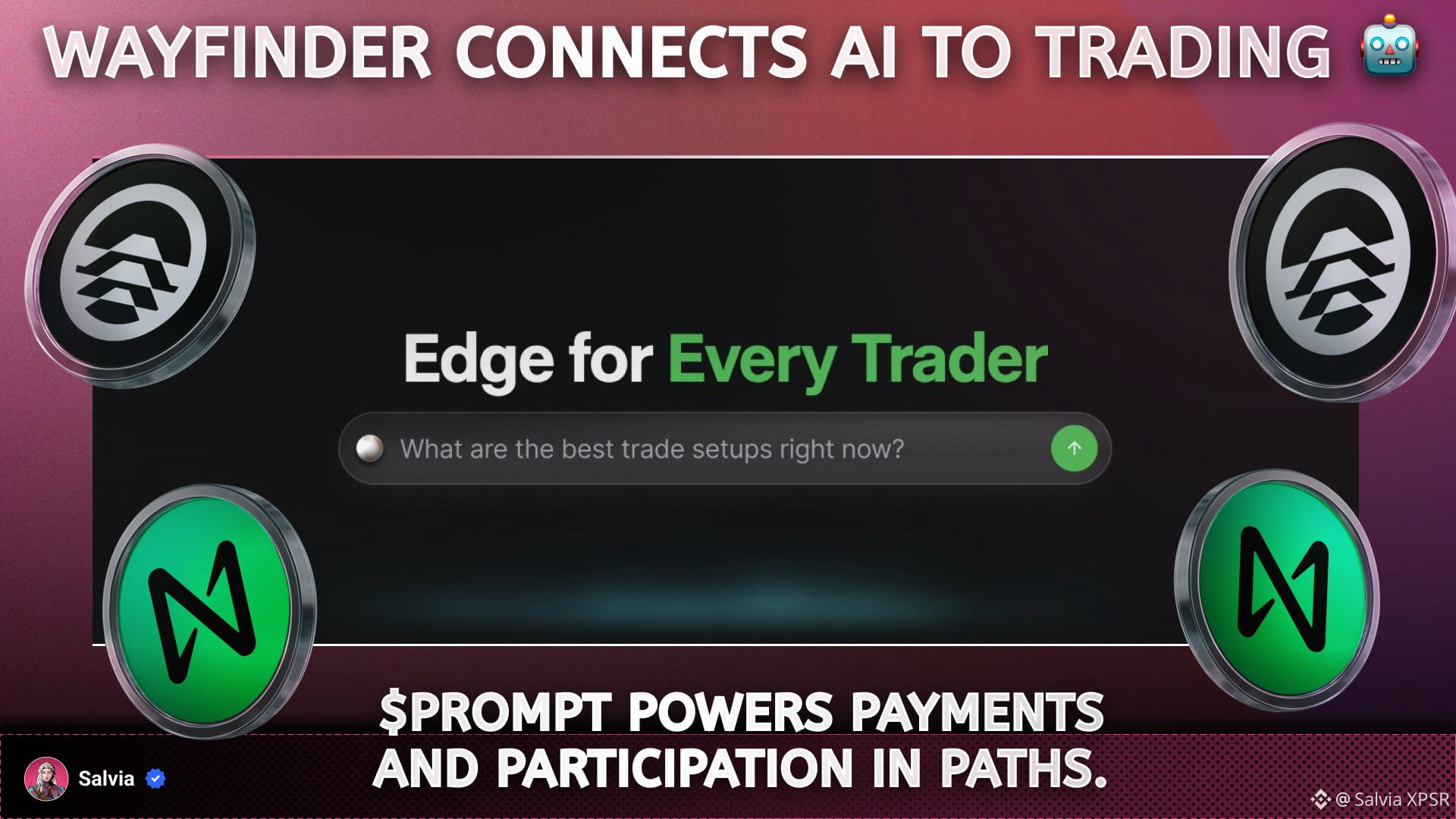
It made me take another look at Wayfinder, which connects PROMPT to actual trading activity.
Wayfinder is built for people who trade. Its AI agent can research setups, watch market conditions and place orders when a trader's rules are met. Pro keeps that process running even with the browser closed.
Since November 2, users have been able to pay for Pro and top up credits with $PROMPT or USDC. Paying in PROMPT comes with a 10% discount.
Then there are Paths, Wayfinder's marketplace of community-built trading tools and strategies.
Creators bond PROMPT behind their Paths, while holders can stake behind the ones they trust. Rewards are linked to participation and usage.
I like the structure, but I'm watching the numbers before drawing big conclusions.
NEAR already has measurable revenue and buybacks.
For Wayfinder, I'd want to see how many Pro customers choose PROMPT, how much gets bonded behind Paths, and how many traders keep using them.
If those numbers grow, the PROMPT investment thesis becomes much more interesting.
#Altcoin Season# #AI
64
·
--
Who Can Submit The Proof? 🔐
I've been looking into one of zkVerify's lesser-discussed capabilities, and I think it deserves more attention.
Not every application should allow anyone to submit proofs into its verification workflow.
Imagine a financial institution using cryptographic proofs to demonstrate that certain compliance calculations were performed correctly.
The institution might want specific systems or approved operators to submit those proofs.
Why?
Because verification isn't only about checking mathematics.
It's also about controlling how an application interacts with the verification infrastructure.
That's where zkVerify's $domain allow-list functionality becomes interesting.
The network introduced functionality allowing domain owners to manage which accounts can submit proofs to their domains.
Think about the implications for regulated applications, enterprise systems and specialized verification workflows.
Developers gain greater control over who can participate in the submission process.
This doesn't mean an approved sender's proof is automatically trustworthy.
The proof still needs independent verification.
But it adds another layer of operational control.
As institutional blockchain ecosystems like $ONDO continue expanding the conversation around tokenized finance, I think capabilities like this become increasingly relevant.
It's also why I'm watching $VFY
zkVerify is developing specialized infrastructure that addresses more than proof verification alone.
It's supporting the operational requirements that can make verification practical for sophisticated applications.
#Infrastructure #Altcoin Season#
67
·
--
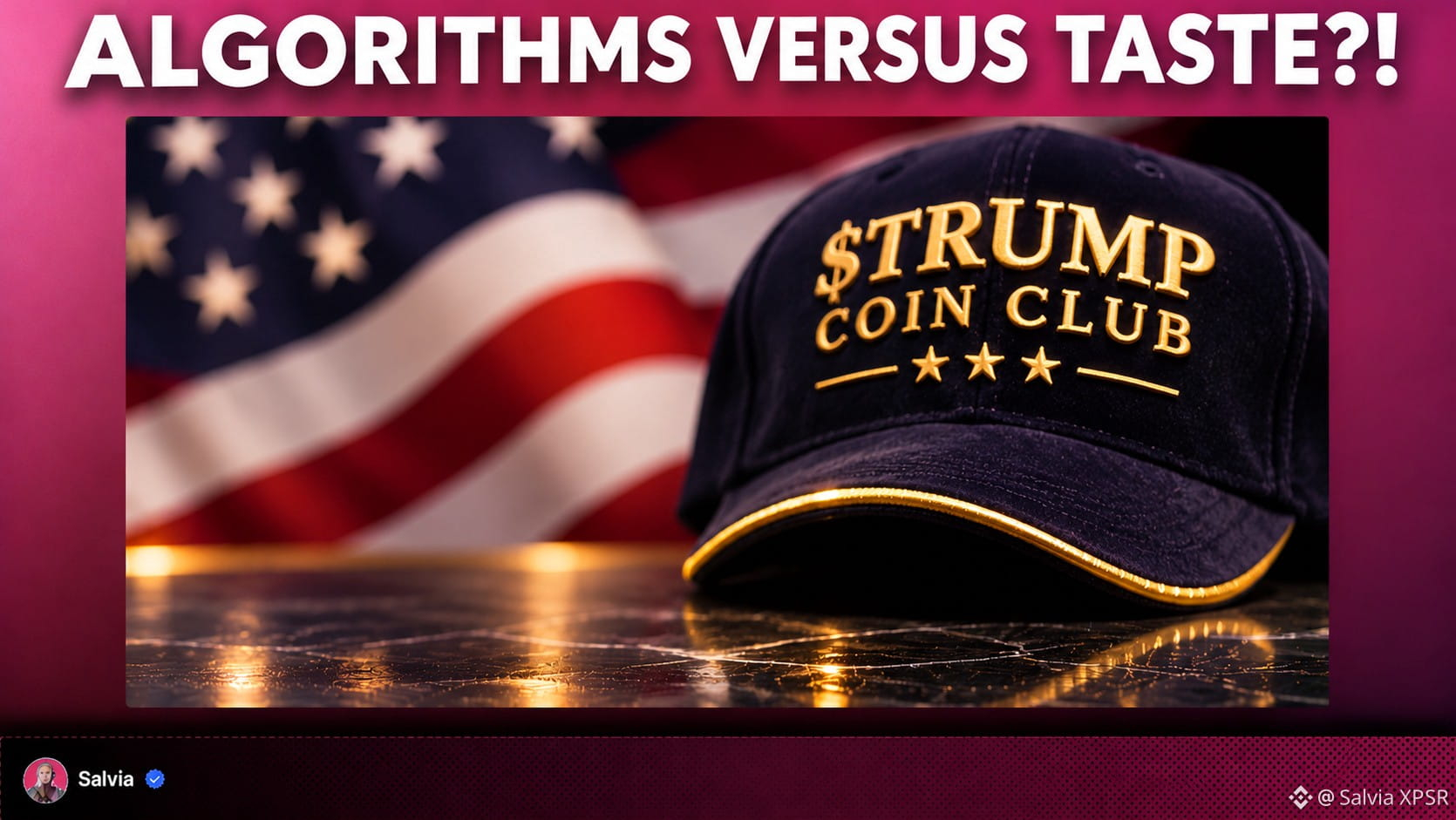
Algorithms cannot manufacture good taste 👀
The discussion around $SHIB and $WIF shows how quickly crypto audiences can recognize a strong cultural signal.
Algorithms can measure which ideas spread, but they cannot decide which format or atmosphere genuinely suits a community.
That judgment becomes visible through the occasions a Club chooses to create.
The November 22 $Trump Coin Club gala brings a different tone to the event calendar after the completed multi-day Singapore chapter.
The contrast gives the Club another way to express its identity through experience.
I think taste becomes a community advantage when each format feels intentionally selected.
A strong event calendar reveals the judgment behind its choices 🔥
#Macro Insights#
63
·
--
Institutional Finance Could Now Drive $ZK Demand 👀
The biggest question around institutional blockchain adoption has always been how that activity translates into value for the underlying crypto ecosystem.
ZKsync is getting closer to that answer.
Prividium Connect launches today, enabling institutions to transact privately across supported blockchains without relying on a trusted intermediary. Asset exchanges are cryptographically enforced, so both sides fulfill their obligations or neither transfer completes.
But what I'm really interested in is that for the first time, ZKsync is proposing a path for institutional adoption to translate into ZK token value accrual.
The fee switch is built and being audited. If approved through governance, fees collected through canonical public deployments of Prividium Connect could be converted into ZK and allocated according to governance decisions.
The $LINK and Mastercard partnership already connects traditional payments to onchain crypto purchases. ZKsync is tackling institutional blockchain transactions, with a proposed fee mechanism tied to its token economy.
They're collaborating with DTCC on privacy infrastructure, and 30+ banks and institutions are participating in Cari Network, built on Prividium. The institutional relationships are there.
I'd be super surprised if governance didn't approve it.
Let's go! This is the kinda news I wanted to hear!
#Altcoin Season#
56
·
--
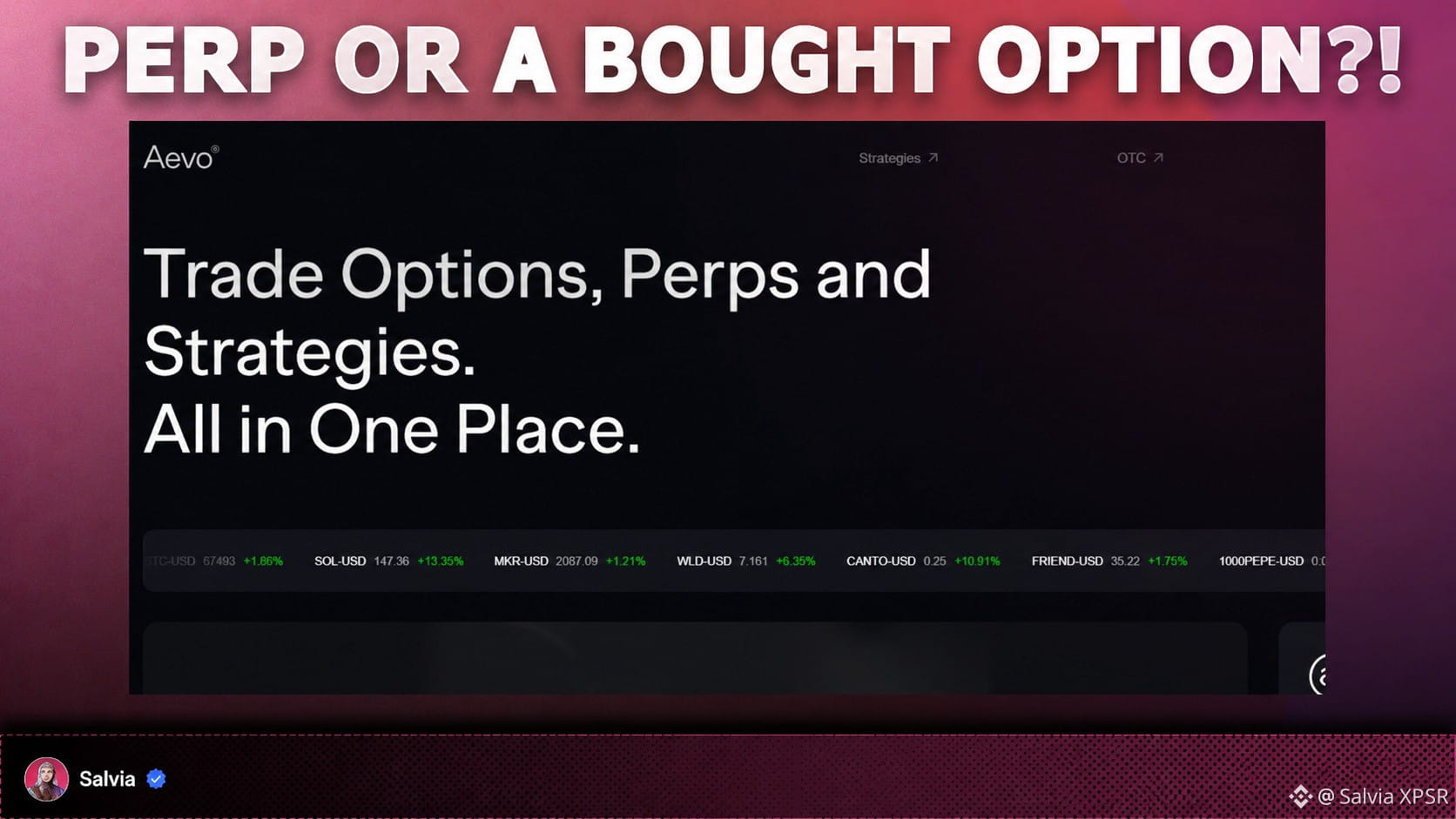
The same view can trade differently 👀
If I expect $HYPE or $ETH to recover but do not trust the path there, a leveraged long is not my only choice.
The perp keeps the upside open, but a hard move against the position can trigger liquidation before the thesis has time to work.
A bought option changes that payoff because the premium defines the maximum loss and there is no liquidation price.
The catch is expiry, as the expected move still needs to happen in time.
Aevo’s Easy Mode lets me start with the direction and target instead of working through an options chain or learning Greeks first.
I would rather compare both trades and choose the payoff that fits the view than force every bullish thesis into another perp.
#Altcoin Season#
67
·
--
The Token Is The Stocks Now 🧺
Memes paired with stocks proved people want equity exposure onchain. The founder of $BNKR says indexes take that a level deeper, and calls them a new onchain primitive.
An index on Bankr is one token backed by a basket. MAG7 holds seven tech stocks on Robinhood Chain, AI12 holds nine AI stocks and three AI coins on Base, and buying either one buys everything underneath in a single transaction.
The plumbing is the Bankr Index Hook. Rebalancing is built in, nobody has to seed an LP, and 0.30% of every trade goes to the people holding the index.
The community has already started building its own. MUSEX bundles META with three Muse ecosystem tokens, and its creator takes nothing from the fees.
Index tokens have existed for years, and a basket still falls when its holdings fall. Tokenized stocks are limited to eligible users outside the US.
What is new is index infrastructure that runs across chains, pays the holder, and lives inside the launchpad on Base and Robinhood Chain.
#DeFi #Base
75
·
--
AI Agents Face a Real Test 🏆
November 2 could be an interesting date for the verifiable AI conversation.
zkVerify's Agent Games has an in-person showdown scheduled in Mumbai during DevCon week.
And I think the concept deserves more attention than a typical crypto competition.
We've spent years evaluating AI systems based on their outputs.
How accurate are their predictions?
How convincing are their responses?
How quickly can they complete tasks?
But what if the challenge is proving that an agent actually followed the rules?
That's the idea behind Agent Games.
The competition includes four tracks and a total prize pool of 400,000 VFY tokens.
Some challenges explore proof-backed decisions and competitive strategies.
Others focus on building useful agents and documenting their development.
The broader concept is what interests me.
As decentralized AI ecosystems like $TAO continue attracting attention, independently verifiable agent behavior could become an increasingly important part of the conversation.
zkVerify specializes in checking supported cryptographic proofs.
It doesn't judge whether an AI strategy was intelligent.
It checks the mathematical evidence submitted for verification.
And with $VFY supporting verification activity on the network, there's a clear infrastructure role behind the technology.
I'm interested to see what developers build during the competition.
Because the next phase of AI might not be about producing the most impressive answer.
It might be about demonstrating that the system followed the rules.
#AI #Altcoin Season#
4
·
--
Algorithms cannot own real relationships 🧠
$LINK and $DOT sit at the center of crypto’s interoperability conversation, which makes online fragmentation difficult to ignore.
Most community discovery still happens through platforms that decide which voices receive visibility.
That works for reach, while relationships become more resilient when they can continue beyond the feed.
The $Trump Coin Club event programme interests me through this lens.
Singapore has concluded, and a gala dinner is scheduled for November 22 as another occasion for the community to gather.
An algorithm can introduce people, but shared experiences give those introductions somewhere to develop.
The strongest community relationships eventually stop depending on who sees the next post 🔥
#Macro Insights#

65
·
--
ETFs are becoming a signal of who’s entering the big leagues 👀
We've seen $SOL and $XRP attract institutional attention through the ETF narrative, and I believe the next wave could bring more overlooked networks into the spotlight.
This is where Injective gets interesting.
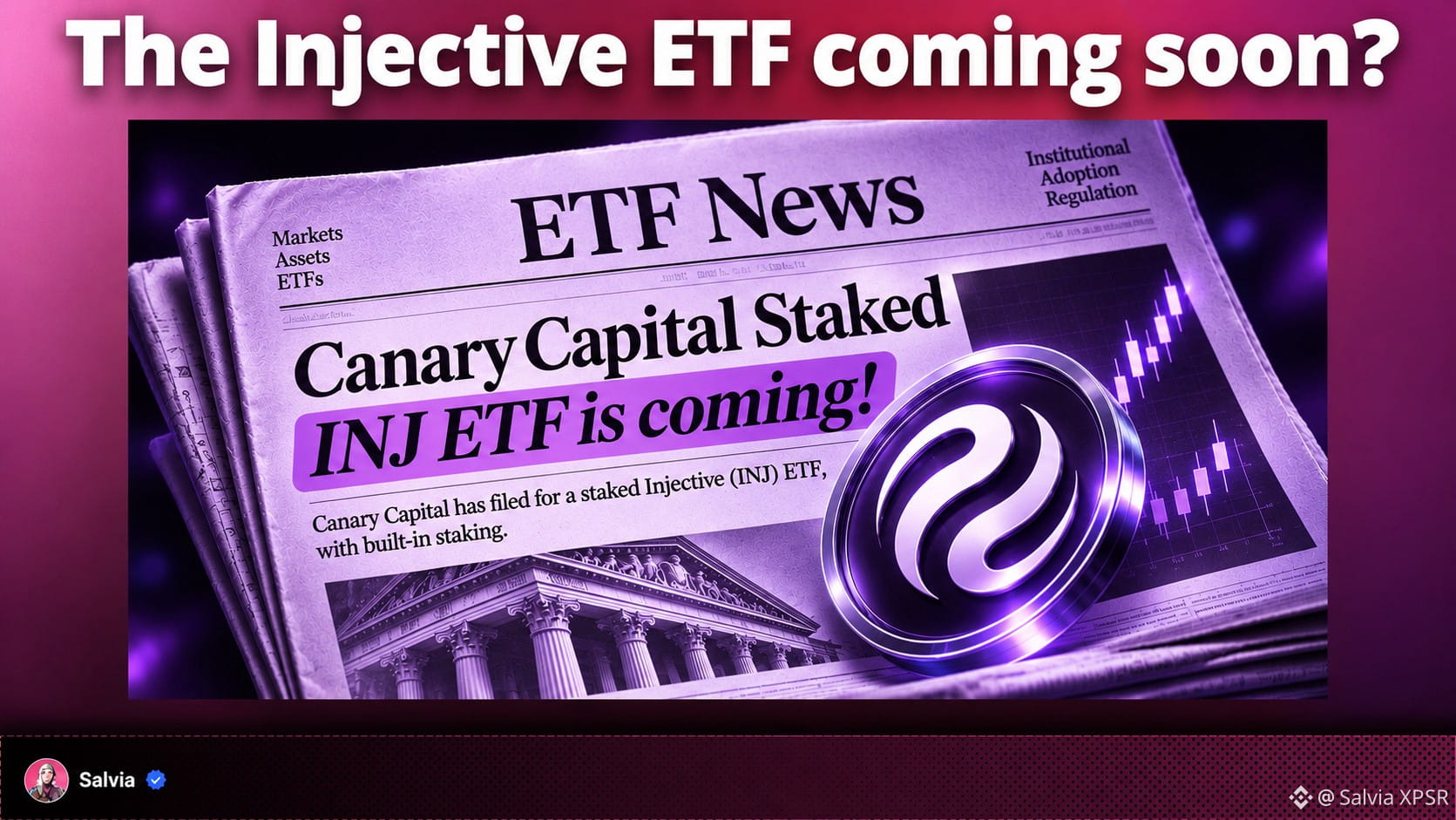
Canary Capital's proposed Staked INJ ETF signals that traditional finance is beginning to explore INJ as an investable asset, with staking potentially built into the product.
To me, that's a meaningful step toward the same institutional conversation surrounding much larger crypto assets.
Yet I believe Injective remains undervalued relative to its ambitions, infrastructure, and growing institutional relevance.
The market may still be underestimating where $INJ is heading 🔥
#Altcoin Season#
54
·
--
Crypto's Next Cycle Is About More Than Speed 🚀
$ETH helped make programmable blockchain applications a reality. $NIGHT is advancing the next major capability: programmable privacy.
For years, crypto infrastructure has competed on familiar metrics.
More transactions.
Lower fees.
Faster finality.
More liquidity.
Those improvements matter.
But mainstream adoption requires something performance benchmarks cannot deliver on their own.
Control over sensitive information.
Financial institutions need confidential records.
Businesses need private commercial activity.
Users need protection for their identities and financial histories.
And applications still need to verify that the rules were followed.
Midnight brings those requirements together through selective disclosure and zero-knowledge proofs.
That's why programmable privacy matters far beyond the traditional privacy-coin category.
The next era of blockchain needs verification without unnecessary exposure.
And Midnight is building the infrastructure to make it possible.
#Privacy #Altcoin Season#
81
·
--
Lower fees can still count 👀
For traders in markets such as $ZEC and $NEAR an affiliate code only becomes useful when it changes the economics of the trade rather than acting as another tracking link.
Aevo Affiliates lets community operators set maker and taker rates within approved ranges, while attached traders pay less than Aevo’s standard fees on perps and no more than standard on options.
The rates appear before the wallet joins, so the trader can compare the offer before making a permanent attachment.
Paid qualifying options and Perp Majors volume can still count toward weekly AEVO rewards and the year-end leaderboard under the normal rules.
I think that distinction matters because lower fees and reward eligibility can coexist, but the exact type of trade still determines what qualifies.
#Altcoin Season#
44
·
--
AI Agents Enter the Arena 🏆
AI agents are becoming a major narrative across ecosystems like $FET and $TAO .
But zkVerify's Agent Games is exploring an interesting question.
How do you prove that an AI agent actually followed the rules?
The competition features four tracks and a 400,000 VFY prize pool, with the event running from October 21 to November 19.
One challenge involves agents committing to strategies before competing.
Participants shouldn't be able to secretly change their declared strategy after seeing how a match unfolds.
Instead, the system can use cryptographic evidence to make specific actions and outcomes independently checkable.
Other challenges explore authorization, practical agent applications and creative development.
What interests me isn't simply the competition.
It's the opportunity to experiment with verification techniques that could eventually extend beyond gaming.
zkVerify independently checks supported cryptographic proofs produced by applications.
That allows developers to explore systems where certain outcomes can be checked without relying entirely on an operator's word.
As autonomous agents become more economically relevant, this distinction could have implications far beyond competitive environments.
AI agents shouldn't just compete.
They should be able to provide checkable evidence that they followed the agreed rules.
#AI #Altcoin Season#
63
·
--
Credibility Needs Context 🏛️
I pay attention when institutional capital enters blockchain infrastructure.
But I also look closely at what the investment actually supports.
Take Space and Time.
One of the notable connections in its history is Microsoft M12, Microsoft's venture capital fund.
The important detail?
M12's investment was in MakeInfinite Labs, the company behind Space and Time's development, rather than a direct investment in the Space and Time Foundation.
That distinction matters.
Beyond the funding story, I find the underlying infrastructure more interesting.
Space and Time focuses on making supported data computations independently verifiable.
That has potential relevance across blockchain applications, financial reporting, and tokenized assets.
As ecosystems like $POL continue supporting different types of onchain applications, the broader demand for dependable data infrastructure becomes worth examining.
For me, institutional credibility is useful context.
But the technology and what developers can actually build with it are what deserve the closest attention.
#Altcoin Season#
68
·
--
Better Data Paths Become More Valuable In Faster Markets ⚡
$2Z gives distributed systems purpose-built routes for time-sensitive traffic. $SOL shows why the path between machines matters once everything above it is optimized for performance.
You can upgrade hardware.
You can optimize software.
You can improve execution.
But data still needs to travel.
DoubleZero optimizes that journey with specialized network infrastructure.
As crypto markets become faster and more competitive, reducing unnecessary friction underneath them becomes increasingly valuable.
The next performance battle is not only inside the machine.
It is between the machines too.
#Macro Insights# #Altcoin Season#
82
·
--
Institutional attention needs crypto-native depth 🥷
RWA narratives around $ONDO attract one type of audience, while trading ecosystems around $HYPE attract another, and most projects are still strongly associated with only one side of that market.
I think the strongest onchain finance ecosystems will connect institutional credibility with products that crypto-native users actually want to explore.
Injective has been building both sides of that equation.
Injective is leading with tokenization, RWAs, and institutional adoption, then gives users an active ecosystem to enter once that narrative catches their attention.
That depth takes much longer to build than a single announcement or partnership.
For me, this combination is what makes Injective’s position in onchain finance more interesting than a standalone RWA thesis 🔥
#Altcoin Season#
67
·
--
ZK Is Bigger Than Privacy 🔍
Something I find fascinating about zero-knowledge technology is how far its applications extend beyond private transactions.
Take Space and Time's Proof of SQL.
Imagine a DeFi application needs to analyze thousands of historical transactions before executing a smart contract.
Rather than performing that entire calculation onchain, Space and Time allows supported SQL queries to be executed offchain while generating cryptographic proofs of correctness.
The process is relatively straightforward:
1️⃣ Execute the query against committed data.
2️⃣ Generate a proof that the computation was performed correctly.
3️⃣ Verify the result before the application uses it.
For developers building on $POL , this approach could support more sophisticated applications without requiring expensive onchain data processing.
I think verifiable computation is one of the more interesting applications of ZK technology.
It's not just about hiding information. It's also about proving that calculations can be trusted.
#Altcoin Season#
73
·
--
The L1 race is becoming financial ⚡️
As $AVAX and $SUI compete for onchain financial activity, I think the real differentiator will be what happens after an asset is created.
Issuance gives an asset an onchain representation, but it still needs markets, liquidity, settlement, and applications before people can use it productively.
Injective takes a more connected approach to that lifecycle.
Assets issued on the network can move into its spot and perpetual markets while remaining available across apps throughout the ecosystem.
For me, this is the part of the finance-native L1 thesis that matters most.
The value of financial infra grows when every new asset can strengthen the markets and applications already operating around it.
This is why Injective’s connected financial stack makes sense to me as a long-term ecosystem thesis 🥷
#Altcoin Season#
68
·
--
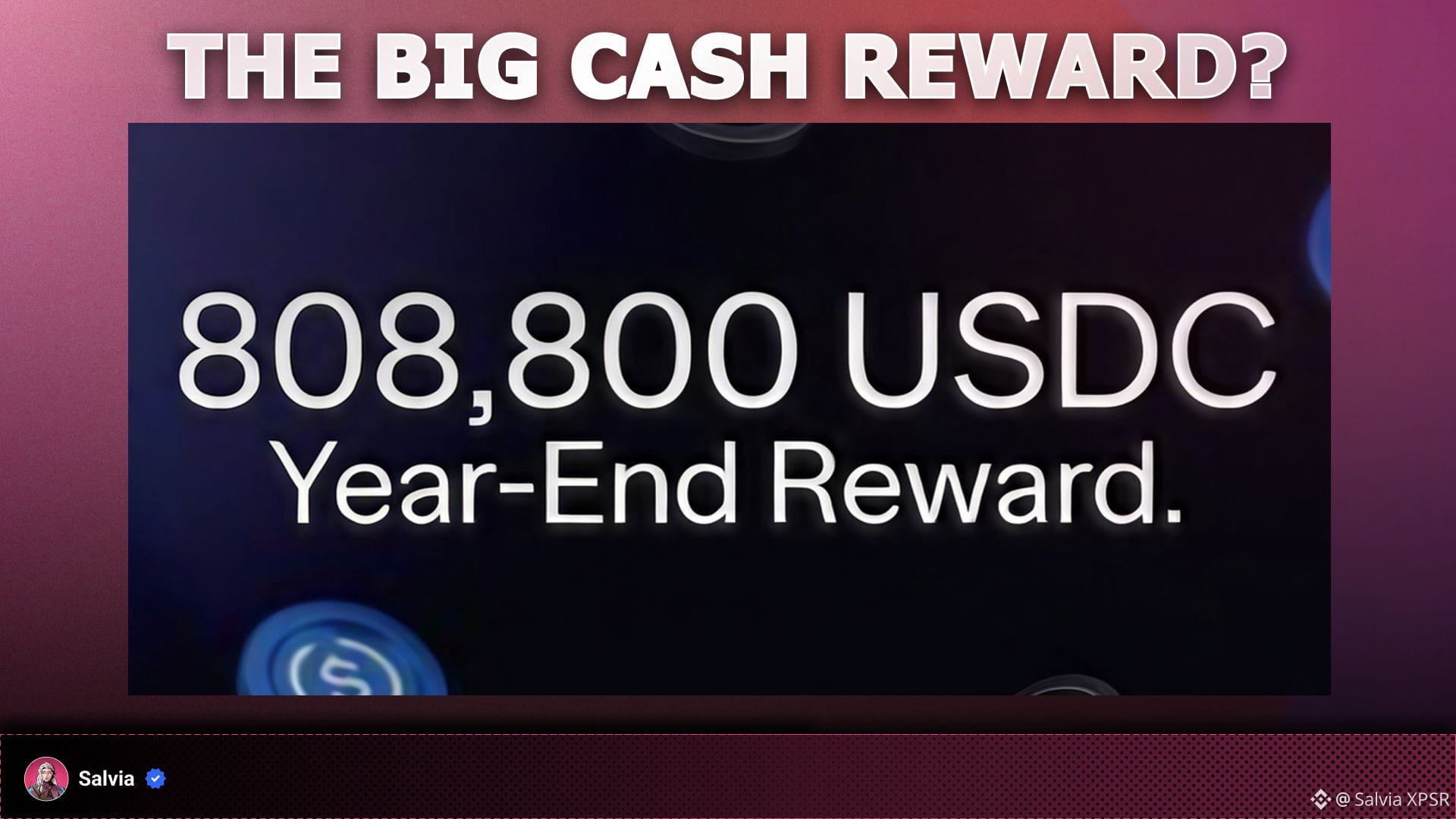
The biggest USDC reward still out there? 👀
The rise of $HYPE and $LIT showed how strongly rewards can influence where traders place volume and I understand why points work early on.
They give traders something to accumulate before the final economics are known.
But that also means farming without knowing what each point will eventually become.
For me, the better question is simple: what am I actually building toward? And Aevo’s year-end reward already has an answer.
The projected distribution is 808,800 USDC, with every qualifying trader’s expected share visible on the permanent leaderboard.
Qualification requires an active COMMANDER or LEGEND stake and 10m in cumulative eligible options and Perp Majors volume.
I would rather build toward a visible USDC distribution than guess what another points balance may become 🔥
#Altcoin Season#
90
Log in to explore more content
Join global crypto users on Binance Square
⚡️ Get latest and useful information about crypto.
💬 Trusted by the world’s largest crypto exchange.
👍 Discover real insights from verified creators.
Email / Phone number
Trending Topics
NvidiaBeatsEstimatesAICloudStocksRiseAfterHours
3,646 views
61 Discussing
Nvidia Beats With $115.8 Billion in Revenue, Guides to $130 Billion and Adds $150 Billion Buyback
Binance News
·4 Likes
·7.6k views
A Packed Week of Earnings and Data Tests Markets
151,543 views
667 Discussing
AnthropicIPOTestsInvestorAppetiteForAI
334,787 views
2,920 Discussing