
比特币百舸争流
2.4k Posts

比特币百舸争流
X推特:@bitcoin100ships /YouTube:@bitcoinbaige 百舸争流/擅长威科夫量价分析,每天在YouTube日更行情分析交流视频。
18 Following
2.6K+ Followers
19.2K+ Liked
Posts
All
Quotes
Videos
PINNED

#美股超话 Entering September | Trading Notes
Core Thinking: The market is about to enter September (the worst-return month in history), and there are several key points to watch.
Today the market dipped slightly. S&P 500 futures (ES) have already completed a 1-hour bearish order flow, while Nasdaq futures (NQ) are relatively stronger, but overall conditions remain weak.
Today is a typical tape: semiconductors and other tech stocks are stronger, while most other stocks are weaker. The S&P and other broad indexes like RSP are down -0.6%. What matters is that RSP directly dropped below the short-term moving average—this move needs attention. Based on experience, this is often the start of a downward swing. Since the end of March, RSP has risen as much as nearly 20%; taking some adjustment from here is completely reasonable.
With the market about to enter September (the worst-return month in history), since 1950 the average return of the S&P 500 in September is -0.6%, the weakest month of the year historically. This is also a U.S. midterm election year. Historical data shows that in midterm election years, September market volatility typically increases and often exceeds the historical average.
Another especially important point: the VIX index is currently below 15, in an extremely low range. Historical data indicates that VIX usually rises from late August to mid-September and reaches around 18–19 in October. The structural reason is that Wall Street traders and fund managers return after the Labor Day holiday at the beginning of September. Institutions typically conduct quarter-end asset allocation adjustments at this time and increase hedging positions, which directly drives options demand and volatility pricing. Several major past market crashes (such as the 1929 Great Depression, the 1987 Black Monday, and the 2008 financial crisis) have occurred in September and October. Therefore, when market makers price options expiring in the autumn, they usually expand bid-ask spreads and raise the risk premium as a precaution—giving VIX an upward structural support during this period.
In short: with volatility so extremely low, it is prone to quickly rebound when negative shocks unexpectedly catalyze it. No one knows what will happen, but you need to stay alert—let your mind see it first.
The market may keep churning back and forth; do not blindly follow others.
Core Thinking: The market is about to enter September (the worst-return month in history), and there are several key points to watch.
Today the market dipped slightly. S&P 500 futures (ES) have already completed a 1-hour bearish order flow, while Nasdaq futures (NQ) are relatively stronger, but overall conditions remain weak.
Today is a typical tape: semiconductors and other tech stocks are stronger, while most other stocks are weaker. The S&P and other broad indexes like RSP are down -0.6%. What matters is that RSP directly dropped below the short-term moving average—this move needs attention. Based on experience, this is often the start of a downward swing. Since the end of March, RSP has risen as much as nearly 20%; taking some adjustment from here is completely reasonable.
With the market about to enter September (the worst-return month in history), since 1950 the average return of the S&P 500 in September is -0.6%, the weakest month of the year historically. This is also a U.S. midterm election year. Historical data shows that in midterm election years, September market volatility typically increases and often exceeds the historical average.
Another especially important point: the VIX index is currently below 15, in an extremely low range. Historical data indicates that VIX usually rises from late August to mid-September and reaches around 18–19 in October. The structural reason is that Wall Street traders and fund managers return after the Labor Day holiday at the beginning of September. Institutions typically conduct quarter-end asset allocation adjustments at this time and increase hedging positions, which directly drives options demand and volatility pricing. Several major past market crashes (such as the 1929 Great Depression, the 1987 Black Monday, and the 2008 financial crisis) have occurred in September and October. Therefore, when market makers price options expiring in the autumn, they usually expand bid-ask spreads and raise the risk premium as a precaution—giving VIX an upward structural support during this period.
In short: with volatility so extremely low, it is prone to quickly rebound when negative shocks unexpectedly catalyze it. No one knows what will happen, but you need to stay alert—let your mind see it first.
The market may keep churning back and forth; do not blindly follow others.
$BTC 【After Wosh’s hawkish remarks, Trump: “Raising rates” is absurd; Wosh will do what he must】
On Monday, Trump said: “I have a great deal of respect for Wosh. He will do what he has to do. In my view, we should pay far lower interest rates than anywhere else in the world. Raising rates is absurd.” After Wosh delivered hawkish remarks at the Jackson Hole conference last Friday, market pricing for a September rate hike rose to about 60%. Barclays expects the Federal Reserve to raise rates twice this year, in September and December. Previously, Barclays had expected no further rate hikes this year.
On Monday, Trump said: “I have a great deal of respect for Wosh. He will do what he has to do. In my view, we should pay far lower interest rates than anywhere else in the world. Raising rates is absurd.” After Wosh delivered hawkish remarks at the Jackson Hole conference last Friday, market pricing for a September rate hike rose to about 60%. Barclays expects the Federal Reserve to raise rates twice this year, in September and December. Previously, Barclays had expected no further rate hikes this year.
Partly True
After gold and SNDK topped one after another, the most crowded trade in the market has shifted from AI hardware to biotech. The clearest representative is Moderna (MRNA). Over the past month it rose 156%, up 350% year-to-date, and surged 177% in a single day. This indicates that capital is no longer trading near-term profits, but instead trading the unlimited imagination around a cancer vaccine platform.
————————————
#MRNA is now the most crowded trade in the market. Friends who hold it, be careful!
————————————
#MRNA is now the most crowded trade in the market. Friends who hold it, be careful!
$BTC The market has begun to price in the possibility of a “hawkish pause.”
But the Fed definitely wouldn’t dare to raise rates— or even if there is a rate hike in September, in the next few days the market will likely have to digest the pricing.
On September 8, Anthropic officially files for an IPO, and all this week’s trading will revolve around the upcoming speculation.
Before the speculation, there will be some jitters—that’s perfectly normal market volatility.
But the Fed definitely wouldn’t dare to raise rates— or even if there is a rate hike in September, in the next few days the market will likely have to digest the pricing.
On September 8, Anthropic officially files for an IPO, and all this week’s trading will revolve around the upcoming speculation.
Before the speculation, there will be some jitters—that’s perfectly normal market volatility.
Partly True
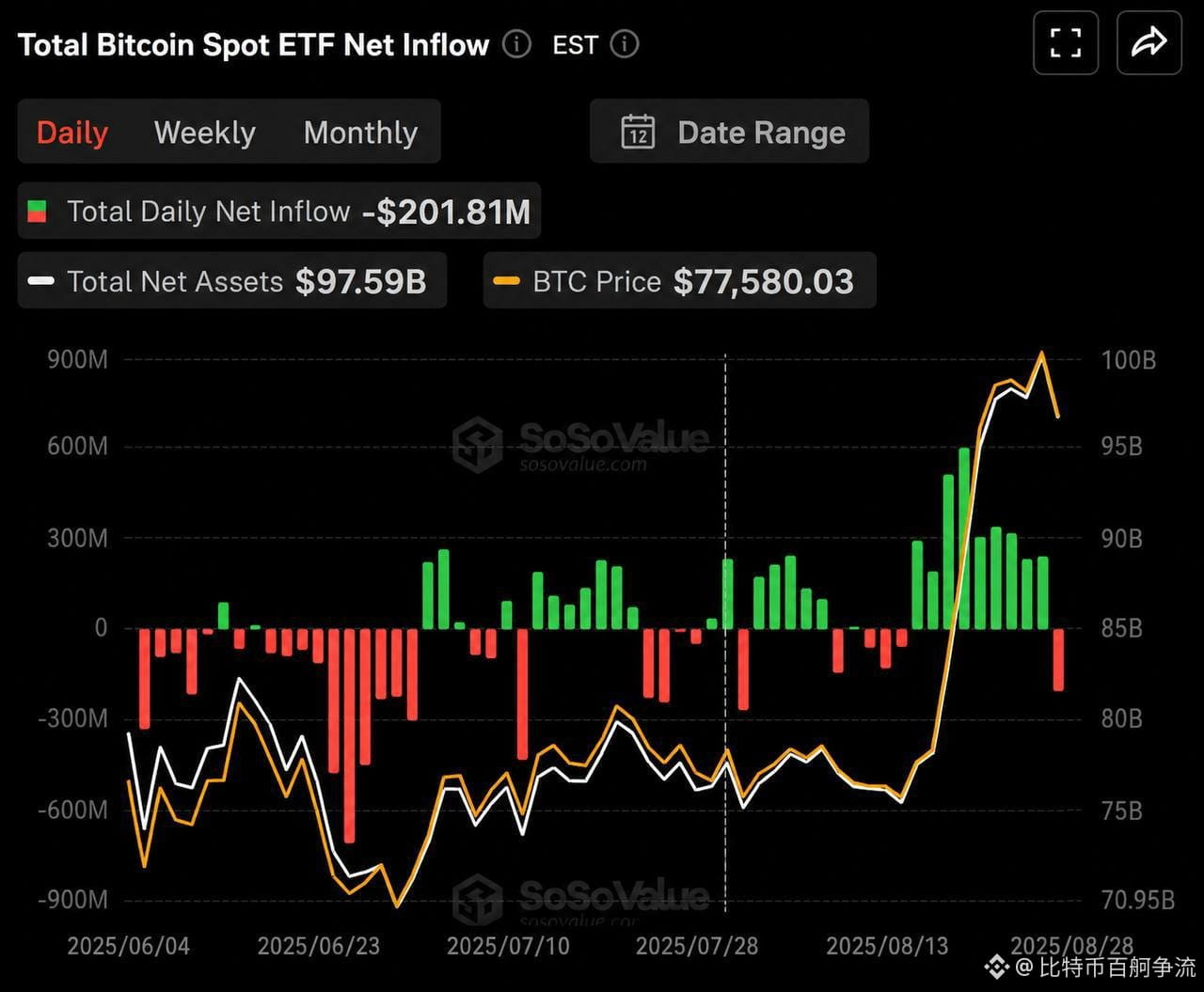
$BTC 🪙 Bitcoin ETF ends a streak of 9 consecutive days of inflows
From August 17 to August 25, spot Bitcoin ETFs attracted substantial capital every day. The total net inflow was about $3.04 billion, but on August 28, there was an outflow of $202 million.
This nine-day stretch set a record for Bitcoin ETFs, reaching a level many people had not expected. On August 27, the funds’ total assets surpassed $10 billion.
This year, Bitcoin ETFs have seen significant volatility. In May, there were 9 straight days of fund outflows, totaling about $2.8 billion.
However, it’s still too early—we need to wait until next week to see how the trend develops.
From August 17 to August 25, spot Bitcoin ETFs attracted substantial capital every day. The total net inflow was about $3.04 billion, but on August 28, there was an outflow of $202 million.
This nine-day stretch set a record for Bitcoin ETFs, reaching a level many people had not expected. On August 27, the funds’ total assets surpassed $10 billion.
This year, Bitcoin ETFs have seen significant volatility. In May, there were 9 straight days of fund outflows, totaling about $2.8 billion.
However, it’s still too early—we need to wait until next week to see how the trend develops.
#加拿大 Canada will impose 50% retaliatory tariffs on U.S. goods on September 8, with only the last 10 days remaining in the time window.
Trump claims, “The U.S. doesn’t need anything from Canada.” In fact, more than 86% of the U.S.’s imported potash comes from Saskatchewan; Ontario’s electricity exports (affecting 1.5 million U.S. users) and 34 kinds of defense-critical strategic minerals.
Canadian provincial premiers are hotly debating over the weekend whether to list “weaponizing potash and critical minerals” as a next-round countermeasure. The Trudeau government’s C$7.5 billion relief fund is in place, and North American cross-border supply chains have fully entered a high-tariff preparedness state for September.
Trump claims, “The U.S. doesn’t need anything from Canada.” In fact, more than 86% of the U.S.’s imported potash comes from Saskatchewan; Ontario’s electricity exports (affecting 1.5 million U.S. users) and 34 kinds of defense-critical strategic minerals.
Canadian provincial premiers are hotly debating over the weekend whether to list “weaponizing potash and critical minerals” as a next-round countermeasure. The Trudeau government’s C$7.5 billion relief fund is in place, and North American cross-border supply chains have fully entered a high-tariff preparedness state for September.
#美股超话 #AMZN #GOOG #MSFT Wall Street is warming up; this time, the focus of speculation is very likely the three major cloud computing giants. The main points are as follows:
① The major shareholders in Anthropic will almost certainly see their valuations rise accordingly: AMZN holds 21%, GOOG holds 14%, and MSFT holds 1.5%.
② AWS is Anthropic’s main cloud service provider and training partner. Anthropic is the most important large-scale customer for AWS’s internally developed chips. Over the next decade, the scale of infrastructure Anthropic plans to buy from AWS is expected to exceed $100 billion.
③ Google provides Anthropic with two key resources: Google Cloud computing power and Google TPU chips. This helps Anthropic avoid relying entirely on Amazon, and at the same time gives Google’s TPU a highly weighty external customer.
④ The biggest difference between Microsoft and Amazon/Google is that, for Microsoft, Anthropic’s strategic value lies not mainly in its equity stake, but in “de-OpenAI single dependence.”
⑤ If Anthropic were to list with a valuation of $1.5 trillion–$2 trillion, Amazon’s theoretical economic interest value at around 20% could reach $300 billion–$400 billion, while Google’s theoretical stake value would be about $210 billion–$280 billion. For MSFT, Anthropic’s IPO would bring limited direct equity returns, but the indirect value is substantial. If Claude continues to erode the enterprise software and programming markets, Microsoft can still become a primary monetization gateway by relying on Azure, GitHub, and Microsoft 365.
⑥ AMZN and GOOG are the top priorities—these two companies not only hold shares in Anthropic, but can also secure Anthropic’s cloud computing orders. In practice, they are also chip suppliers for Anthropic, and to some extent, they can be considered “half chip stocks.”
① The major shareholders in Anthropic will almost certainly see their valuations rise accordingly: AMZN holds 21%, GOOG holds 14%, and MSFT holds 1.5%.
② AWS is Anthropic’s main cloud service provider and training partner. Anthropic is the most important large-scale customer for AWS’s internally developed chips. Over the next decade, the scale of infrastructure Anthropic plans to buy from AWS is expected to exceed $100 billion.
③ Google provides Anthropic with two key resources: Google Cloud computing power and Google TPU chips. This helps Anthropic avoid relying entirely on Amazon, and at the same time gives Google’s TPU a highly weighty external customer.
④ The biggest difference between Microsoft and Amazon/Google is that, for Microsoft, Anthropic’s strategic value lies not mainly in its equity stake, but in “de-OpenAI single dependence.”
⑤ If Anthropic were to list with a valuation of $1.5 trillion–$2 trillion, Amazon’s theoretical economic interest value at around 20% could reach $300 billion–$400 billion, while Google’s theoretical stake value would be about $210 billion–$280 billion. For MSFT, Anthropic’s IPO would bring limited direct equity returns, but the indirect value is substantial. If Claude continues to erode the enterprise software and programming markets, Microsoft can still become a primary monetization gateway by relying on Azure, GitHub, and Microsoft 365.
⑥ AMZN and GOOG are the top priorities—these two companies not only hold shares in Anthropic, but can also secure Anthropic’s cloud computing orders. In practice, they are also chip suppliers for Anthropic, and to some extent, they can be considered “half chip stocks.”
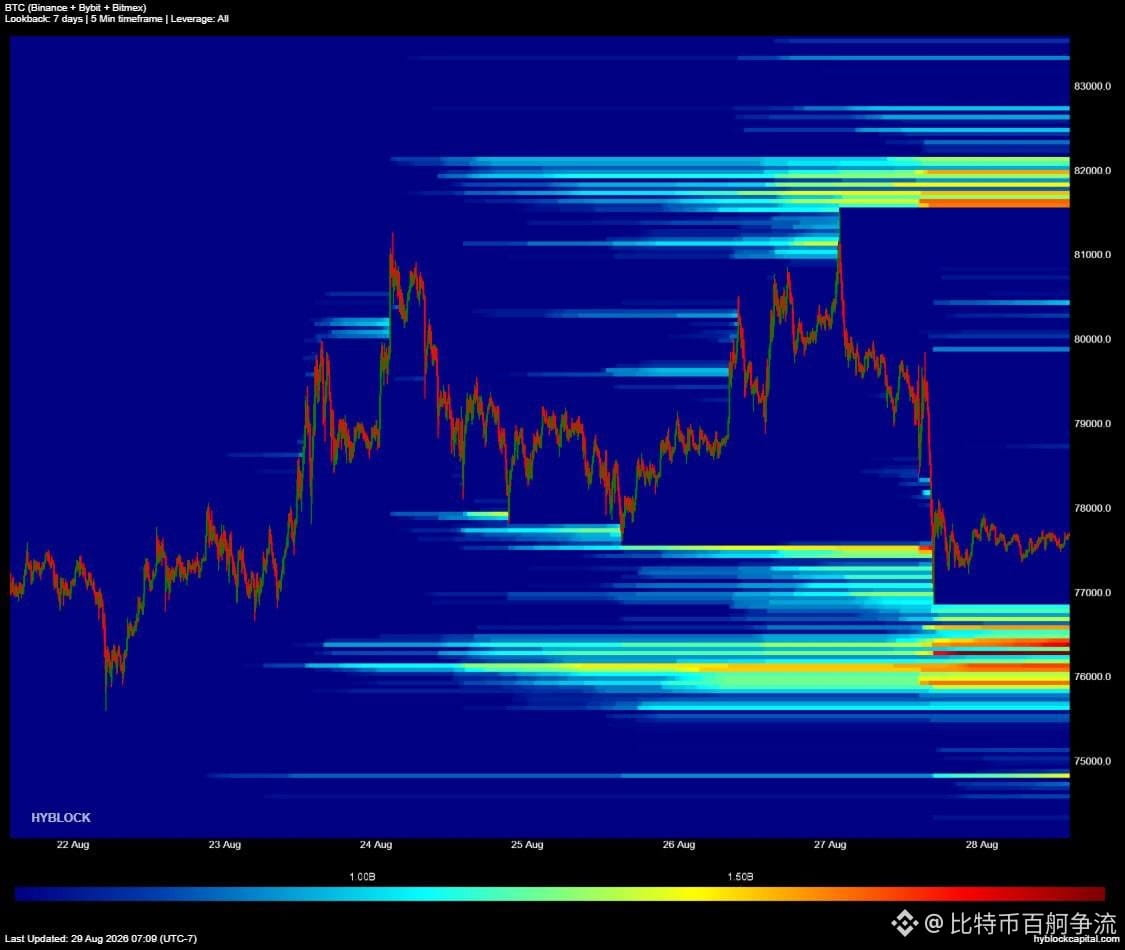
$BTC 8Aug 30 evening 💰 BTC 7-day settlement distribution
The densest settlement area is below about $76,000
The densest settlement area is below about $76,000
$BTC Right now, the two core metrics that are most worth paying attention to are the S&P 500 and the U.S. Dollar Index (DXY).
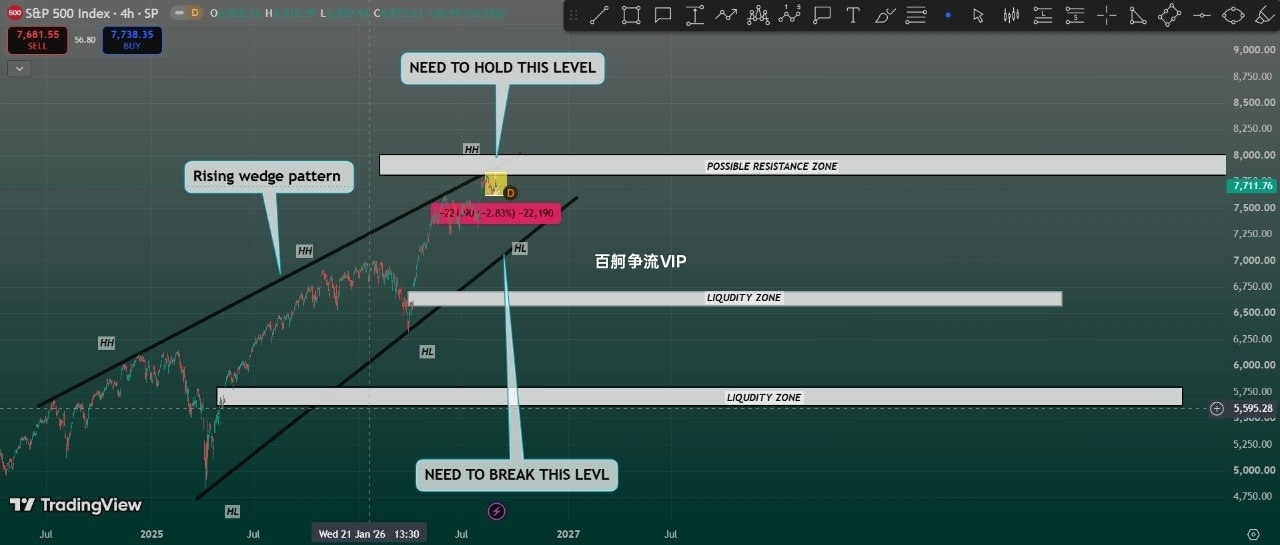
Members, I mentioned earlier that I expected the S&P 500 to meet resistance and pull back in the 7,800–8,000 range—and that’s exactly what happened. The market has since fallen by nearly 3% from that area.
Now, listen carefully.
There are signs pointing to BTC’s recent peak. I said in my July market analysis: once BTC breaks above the $65,000 range, the next key target zone should be near $74,000.
And that $74,000 range is the “golden zone.”
So what does that mean?
- Break above $74,000 → a bullish market structure
- Drop below $74,000 → a bearish market structure
When the timing is right, you’ll naturally understand the true meaning of the “golden zone.”
What I’m focused on now is this setup:
If the S&P 500 pulls back into the 7,100–6,800 area, I think BTC may first run a bit of a bull trap—an induced fake breakout—while the DXY continues to strengthen.
After this manipulation, BTC could fall toward the support zone I mentioned in my market analysis—put simply, a break below $68,500.
As long as BTC holds the $62,000 area, I’ll consider opening another long position.
That’s it.
Members, whether it’s BTC or the entire crypto market, compared with the total market value, it’s insignificant next to the S&P 500 and commodities.
That’s why it’s crucial to pay attention to the bigger market picture.
Remember what I said:
When the S&P 500 makes a new high, BTC will rise. I firmly believe that if the S&P 500 surges hard, BTC can also rally strongly from there.
But when the S&P 500 starts to fall, BTC may first pump as a fake move, and then follow lower.
Why?
Because institutional players and exchanges can create liquidity traps to shake out retail traders.
There’s also one specific coin—I’m closely watching it all the time. It’s not BTC, and it’s not ETH. Whenever this coin shows major volatility, the whole market often moves in sync.
Once I see clear signals, I’ll announce the name of that coin.
Stay vigilant.
Focus on the big picture.
Don’t let short-term market manipulation control your emotions.
#百哥VIP
Members, I mentioned earlier that I expected the S&P 500 to meet resistance and pull back in the 7,800–8,000 range—and that’s exactly what happened. The market has since fallen by nearly 3% from that area.
Now, listen carefully.
There are signs pointing to BTC’s recent peak. I said in my July market analysis: once BTC breaks above the $65,000 range, the next key target zone should be near $74,000.
And that $74,000 range is the “golden zone.”
So what does that mean?
- Break above $74,000 → a bullish market structure
- Drop below $74,000 → a bearish market structure
When the timing is right, you’ll naturally understand the true meaning of the “golden zone.”
What I’m focused on now is this setup:
If the S&P 500 pulls back into the 7,100–6,800 area, I think BTC may first run a bit of a bull trap—an induced fake breakout—while the DXY continues to strengthen.
After this manipulation, BTC could fall toward the support zone I mentioned in my market analysis—put simply, a break below $68,500.
As long as BTC holds the $62,000 area, I’ll consider opening another long position.
That’s it.
Members, whether it’s BTC or the entire crypto market, compared with the total market value, it’s insignificant next to the S&P 500 and commodities.
That’s why it’s crucial to pay attention to the bigger market picture.
Remember what I said:
When the S&P 500 makes a new high, BTC will rise. I firmly believe that if the S&P 500 surges hard, BTC can also rally strongly from there.
But when the S&P 500 starts to fall, BTC may first pump as a fake move, and then follow lower.
Why?
Because institutional players and exchanges can create liquidity traps to shake out retail traders.
There’s also one specific coin—I’m closely watching it all the time. It’s not BTC, and it’s not ETH. Whenever this coin shows major volatility, the whole market often moves in sync.
Once I see clear signals, I’ll announce the name of that coin.
Stay vigilant.
Focus on the big picture.
Don’t let short-term market manipulation control your emotions.
#百哥VIP
$ETH 🐲August Monthly Trading Recap🦅
My dear followers, August was an extraordinary month for the market, but more importantly, it reminded us again of a core principle I’ve always emphasized:
We don’t need to chase every single fluctuation. What we need is to hold onto the strongest opportunities and grow through compounding with discipline.
📊 August performance delivered a great answer:
🔥 BTC trades: 27% gain without leverage — using 5x leverage
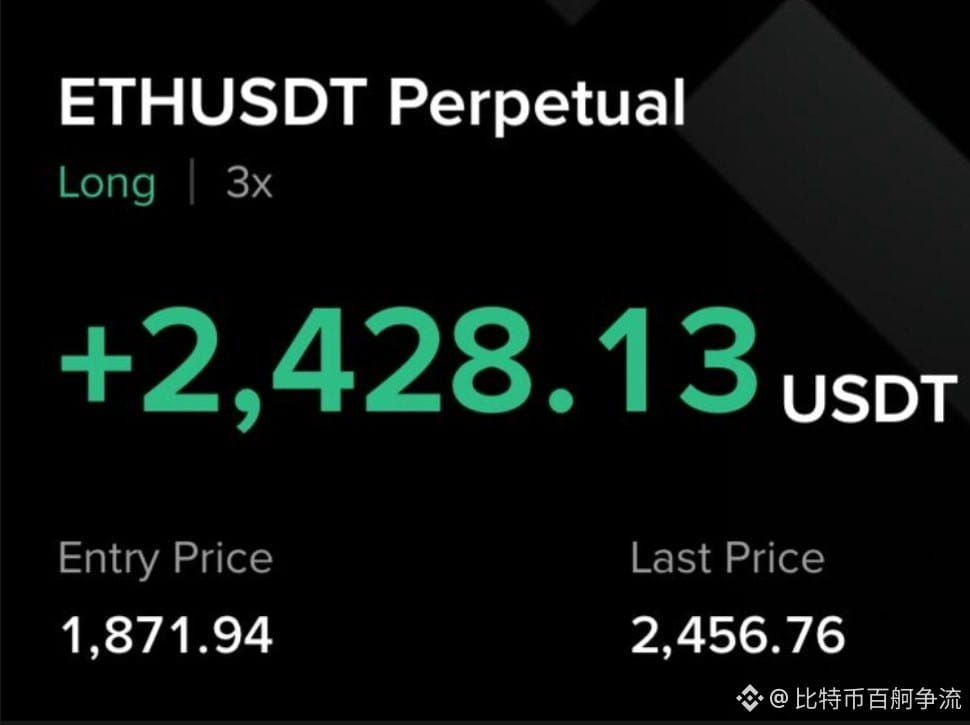
🔥 ETH trades: 35% gain without leverage — using 3x leverage
🔥 ONDO trades: 37% gain
🔥 BTC and ETH trades: based on their respective leverage setups, both achieved roughly 100% profit.
Almost all pre-set take-profit levels were reached. Looking back at the overall big-picture of the market, the analysis from our previous major market update also played out perfectly.
🧠 Conviction beats noise
One of the cases I’m most proud of is the ETH and altcoin entry range.
I’ve shared publicly that when ETH was trading in the 1,500–1,600 range, I allocated about 20% of my personal net worth into ETH and altcoins.
Recently, I’ve closed out 50% of that position.
But for me, it’s not about getting recognition.
What matters is that when the market gives us opportunities, our analysis, patience, and conviction are all in place. I’ve repeatedly emphasized that $1,550 is a “legendary support level”—even when the market sentiment was extremely bearish back then, this belief never wavered.
And what I want you to remember is:
A losing trade cannot invalidate a good trading system.
🎯 13 to 15 cryptocurrency trades — zero stop-loss triggers
This month I made about 15 cryptocurrency trades, and not a single one hit a stop-loss—including the one where I started a spot position from the $1,550 range.
But don’t misunderstand the core lesson. The goal isn’t to pursue a perfect win rate.
The goal is to build a system: risk is controllable, conviction is backed by evidence, and winning trades can compound consistently.
💰 Stop chasing pumps and selling off, and start growing through compounding.
I’ve said this many times, and I’ll say it again today:
Catching every fluctuation isn’t our goal.
The most important thing is compounding.
My dear followers, August was an extraordinary month for the market, but more importantly, it reminded us again of a core principle I’ve always emphasized:
We don’t need to chase every single fluctuation. What we need is to hold onto the strongest opportunities and grow through compounding with discipline.
📊 August performance delivered a great answer:
🔥 BTC trades: 27% gain without leverage — using 5x leverage
🔥 ETH trades: 35% gain without leverage — using 3x leverage
🔥 ONDO trades: 37% gain
🔥 BTC and ETH trades: based on their respective leverage setups, both achieved roughly 100% profit.
Almost all pre-set take-profit levels were reached. Looking back at the overall big-picture of the market, the analysis from our previous major market update also played out perfectly.
🧠 Conviction beats noise
One of the cases I’m most proud of is the ETH and altcoin entry range.
I’ve shared publicly that when ETH was trading in the 1,500–1,600 range, I allocated about 20% of my personal net worth into ETH and altcoins.
Recently, I’ve closed out 50% of that position.
But for me, it’s not about getting recognition.
What matters is that when the market gives us opportunities, our analysis, patience, and conviction are all in place. I’ve repeatedly emphasized that $1,550 is a “legendary support level”—even when the market sentiment was extremely bearish back then, this belief never wavered.
And what I want you to remember is:
A losing trade cannot invalidate a good trading system.
🎯 13 to 15 cryptocurrency trades — zero stop-loss triggers
This month I made about 15 cryptocurrency trades, and not a single one hit a stop-loss—including the one where I started a spot position from the $1,550 range.
But don’t misunderstand the core lesson. The goal isn’t to pursue a perfect win rate.
The goal is to build a system: risk is controllable, conviction is backed by evidence, and winning trades can compound consistently.
💰 Stop chasing pumps and selling off, and start growing through compounding.
I’ve said this many times, and I’ll say it again today:
Catching every fluctuation isn’t our goal.
The most important thing is compounding.
$SPXL.ETF Brother’s Trading Notes 2026-08-29
Today, Fed Chair Powell delivered a speech. What he said isn’t important—what matters is the market’s reaction.
The 2-year Treasury yield surged, which indicates that the market expects the Fed to take rate-hike measures rather than staying on hold (pretending to be easy). Today, gold also dropped sharply, further confirming this market expectation;
The 30-year yield fell first and then rose. The 30-year minus 2-year spread narrowed, suggesting the market has confidence that both long- and short-term yields will decline.
In short, the market realizes the Fed may raise rates, and the probability of a rate hike in September is close to 60%. If long- and short-term yields can indeed fall, that would create a “short the front, long the back” sentiment.
Overall, the market was steady today, with major indices maintaining a solid bullish trend. However, market breadth is narrowing and participation is declining; the semiconductor sector still faces enormous resistance. On the other hand, today Mag7 (except NVDA and TSLA) all rose significantly, showing investors have strong risk-avoidance sentiment—these companies remain the most profitable, and they’re better able to withstand rate hikes and inflation. So while the indices didn’t perform badly today, individual stocks were highly split.
In conclusion, the current market is very hard to trade: individual stock moves lack follow-through, and the friction cost of shorting the index is very high. As we head into September, it is historically the worst month for U.S. stocks. I don’t know what will happen, but the only thing I can do is prepare.
Wall Street has an old saying: don’t fight the Fed (Don’t fight the Fed). If the Fed is leaning toward tightening, it will become the biggest headwind for the market. The 10-year yield that everyone is watching—if it gets close to or breaks 5%, it could have a major psychological impact on the market.
However, Wall Street also has another old saying: don’t fight the market (Don’t fight the Market). If the market hasn’t shown signs of falling, don’t short it easily.
Today during the session, I closed out my earlier protective short positions according to plan. If the two major indices weaken again, hedge when it’s necessary (when the signs appear).
Today, Fed Chair Powell delivered a speech. What he said isn’t important—what matters is the market’s reaction.
The 2-year Treasury yield surged, which indicates that the market expects the Fed to take rate-hike measures rather than staying on hold (pretending to be easy). Today, gold also dropped sharply, further confirming this market expectation;
The 30-year yield fell first and then rose. The 30-year minus 2-year spread narrowed, suggesting the market has confidence that both long- and short-term yields will decline.
In short, the market realizes the Fed may raise rates, and the probability of a rate hike in September is close to 60%. If long- and short-term yields can indeed fall, that would create a “short the front, long the back” sentiment.
Overall, the market was steady today, with major indices maintaining a solid bullish trend. However, market breadth is narrowing and participation is declining; the semiconductor sector still faces enormous resistance. On the other hand, today Mag7 (except NVDA and TSLA) all rose significantly, showing investors have strong risk-avoidance sentiment—these companies remain the most profitable, and they’re better able to withstand rate hikes and inflation. So while the indices didn’t perform badly today, individual stocks were highly split.
In conclusion, the current market is very hard to trade: individual stock moves lack follow-through, and the friction cost of shorting the index is very high. As we head into September, it is historically the worst month for U.S. stocks. I don’t know what will happen, but the only thing I can do is prepare.
Wall Street has an old saying: don’t fight the Fed (Don’t fight the Fed). If the Fed is leaning toward tightening, it will become the biggest headwind for the market. The 10-year yield that everyone is watching—if it gets close to or breaks 5%, it could have a major psychological impact on the market.
However, Wall Street also has another old saying: don’t fight the market (Don’t fight the Market). If the market hasn’t shown signs of falling, don’t short it easily.
Today during the session, I closed out my earlier protective short positions according to plan. If the two major indices weaken again, hedge when it’s necessary (when the signs appear).
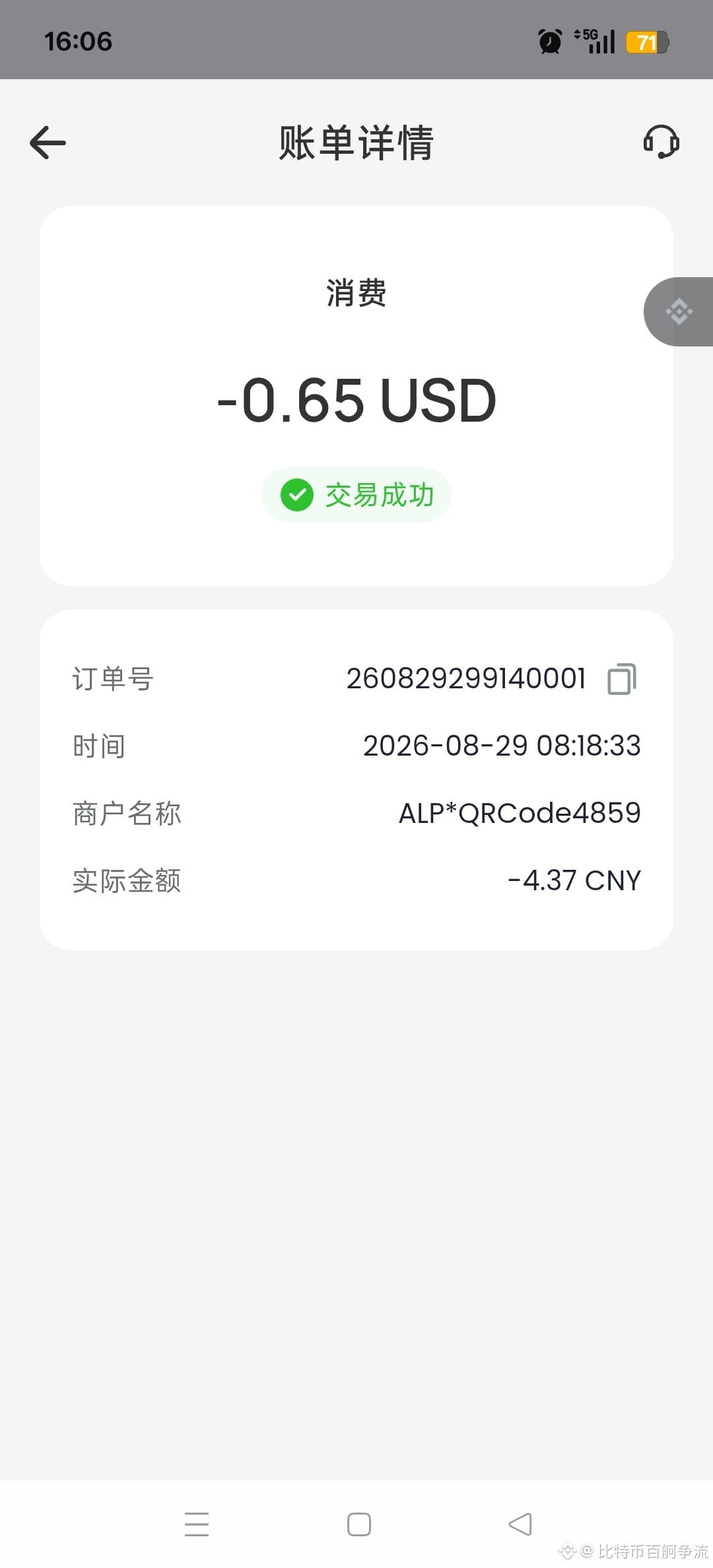
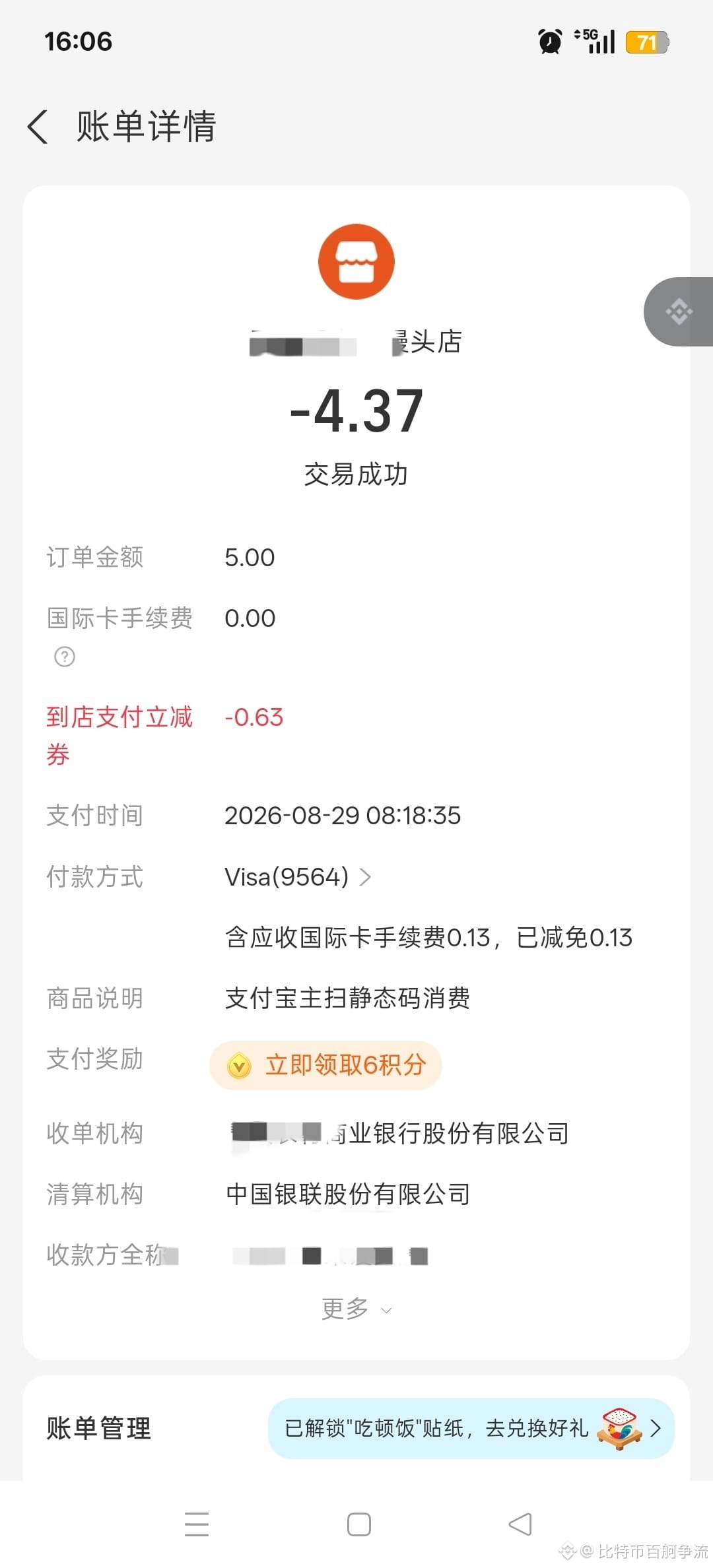
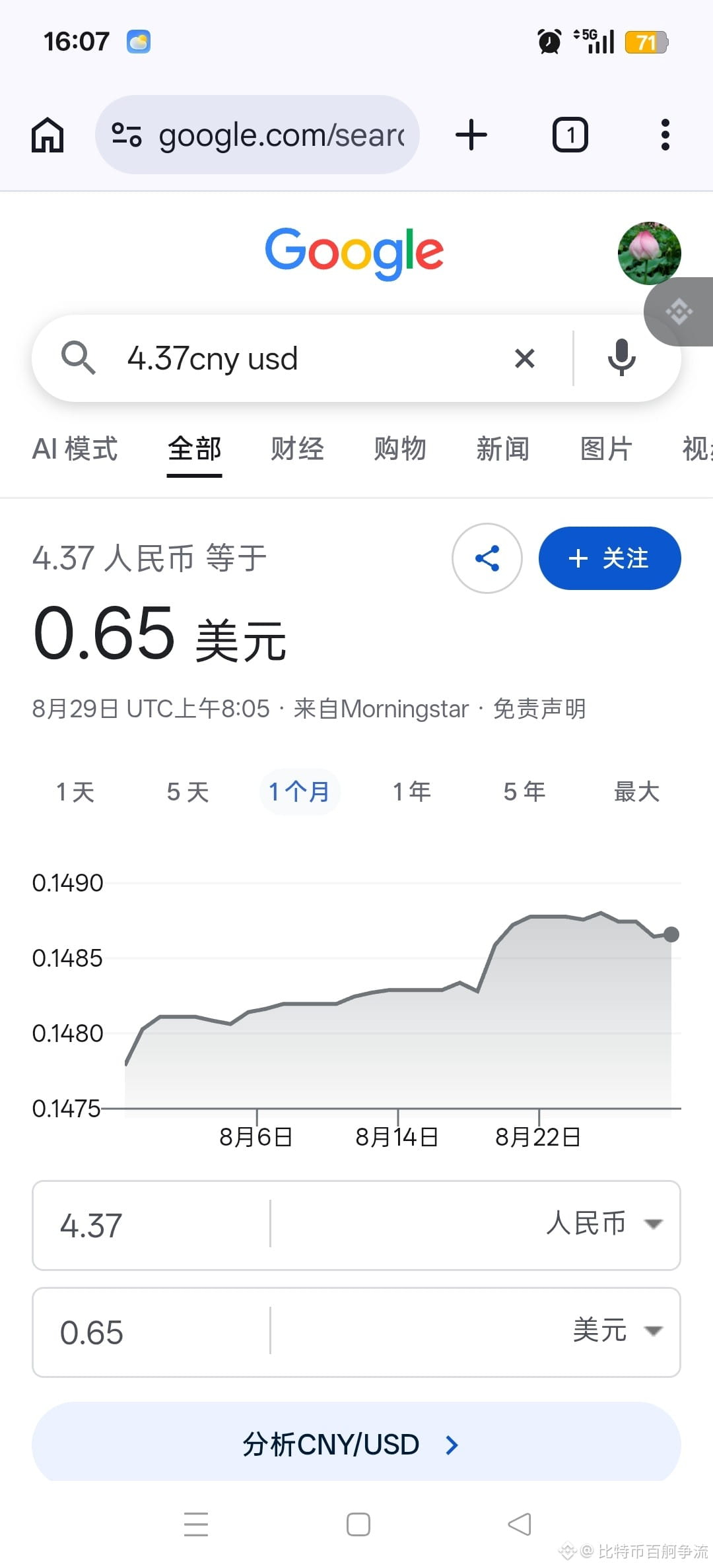
Found an awesome U card, with absolutely no loss when spending! UUwallet virtual card, invitation code is q3yqj5
I’ll give you a cash reward! Register with my invitation code, and you’ll get 12 USDT immediately in the UU Wallet! Invite friends and they’ll each get 12 USDT too—instant credit, withdraw anytime.
I’ll give you a cash reward! Register with my invitation code, and you’ll get 12 USDT immediately in the UU Wallet! Invite friends and they’ll each get 12 USDT too—instant credit, withdraw anytime.

Disputed
$BTC After tonight's Worsh speech, the 2-year Treasury yield rose, while the 30-year yield fell. This combination is usually viewed as relatively “healthy”
The market acknowledges near-term tightening without pretending that policy is easing.
At the same time, the long end has not spiraled higher, which indicates there’s no panic about “the Fed being unable to restrain inflation.”
A decline in long-term bond yields lowers the discount rate for future cash flows, reducing valuation pressure on high-multiple growth stocks.
The market acknowledges near-term tightening without pretending that policy is easing.
At the same time, the long end has not spiraled higher, which indicates there’s no panic about “the Fed being unable to restrain inflation.”
A decline in long-term bond yields lowers the discount rate for future cash flows, reducing valuation pressure on high-multiple growth stocks.
Verified
$MU.US #MU Why did the NVDA earnings report far exceed market expectations yesterday, and why did MU fall against the trend~~
There’s one very important reason: NVDA raised its earnings guidance, but due to the cost of memory chips, its profit margin also declined. Memory prices have risen so high that even Nvidia can’t fully pass the increase on to customers.
In the earnings call, Nvidia’s CFO explicitly stated that the company is facing an “extreme memory pricing environment.” The price increase is higher than previously expected, and it will continue to rise. As a result, gross margin is expected to fall to 71%–72% in the fourth fiscal quarter.
Micron’s long-term AI storage thesis hasn’t been broken by Nvidia’s report, but storage transactions have moved from the first phase—“higher prices bring more profit”—to a second phase: “prices are too high and suppress customer demand.” The cycle may not be over yet, but the acceleration in price growth and profit expectations could already be peaking. What institutions sold yesterday was precisely this acceleration.
There’s one very important reason: NVDA raised its earnings guidance, but due to the cost of memory chips, its profit margin also declined. Memory prices have risen so high that even Nvidia can’t fully pass the increase on to customers.
In the earnings call, Nvidia’s CFO explicitly stated that the company is facing an “extreme memory pricing environment.” The price increase is higher than previously expected, and it will continue to rise. As a result, gross margin is expected to fall to 71%–72% in the fourth fiscal quarter.
Micron’s long-term AI storage thesis hasn’t been broken by Nvidia’s report, but storage transactions have moved from the first phase—“higher prices bring more profit”—to a second phase: “prices are too high and suppress customer demand.” The cycle may not be over yet, but the acceleration in price growth and profit expectations could already be peaking. What institutions sold yesterday was precisely this acceleration.
NVDAB+1.39%
MUUS+2.87%
August 28, $TRX . In the crypto world, Sun Yuchen really has unstoppable attention—he’s like a force of nature. For entertainment industry news, it was a “request-only refund” situation; it directly blew up yesterday. Is Bitcoin currently in a distribution phase? Everyone can take a look at whether, around the prior high point, it keeps moving up and down—churning in a range—while on the hour-level charts there are bearish candles with volume. If the up candles have shrinking volume, that’s the pattern you’re looking for.
Through what happened with “Brother Sun,” one takeaway is: beauty is worth nothing in the face of money. And indirectly, it shows that attention can matter more than money. A top-tier billionaire worth 8.5 billion USD became a widely discussed topic just because of a few words—people kept spreading it, making it the talk of the town.
So to sum up: in today’s society, attention is the key to making money. This is also the solution to the question asked by a classmate during the livestream the day before yesterday: for ordinary people, how can they make money?
Through what happened with “Brother Sun,” one takeaway is: beauty is worth nothing in the face of money. And indirectly, it shows that attention can matter more than money. A top-tier billionaire worth 8.5 billion USD became a widely discussed topic just because of a few words—people kept spreading it, making it the talk of the town.
So to sum up: in today’s society, attention is the key to making money. This is also the solution to the question asked by a classmate during the livestream the day before yesterday: for ordinary people, how can they make money?
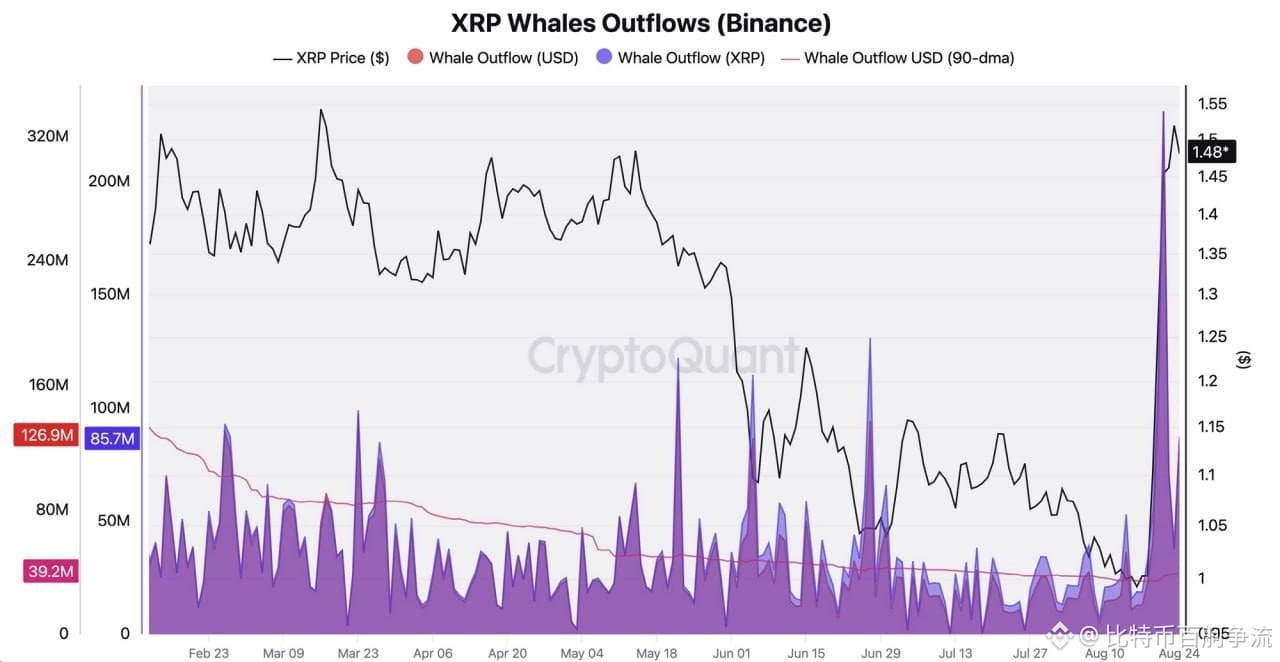
$XRP 💰 According to CryptoQuant data, large investors are actively withdrawing XRP from exchanges.
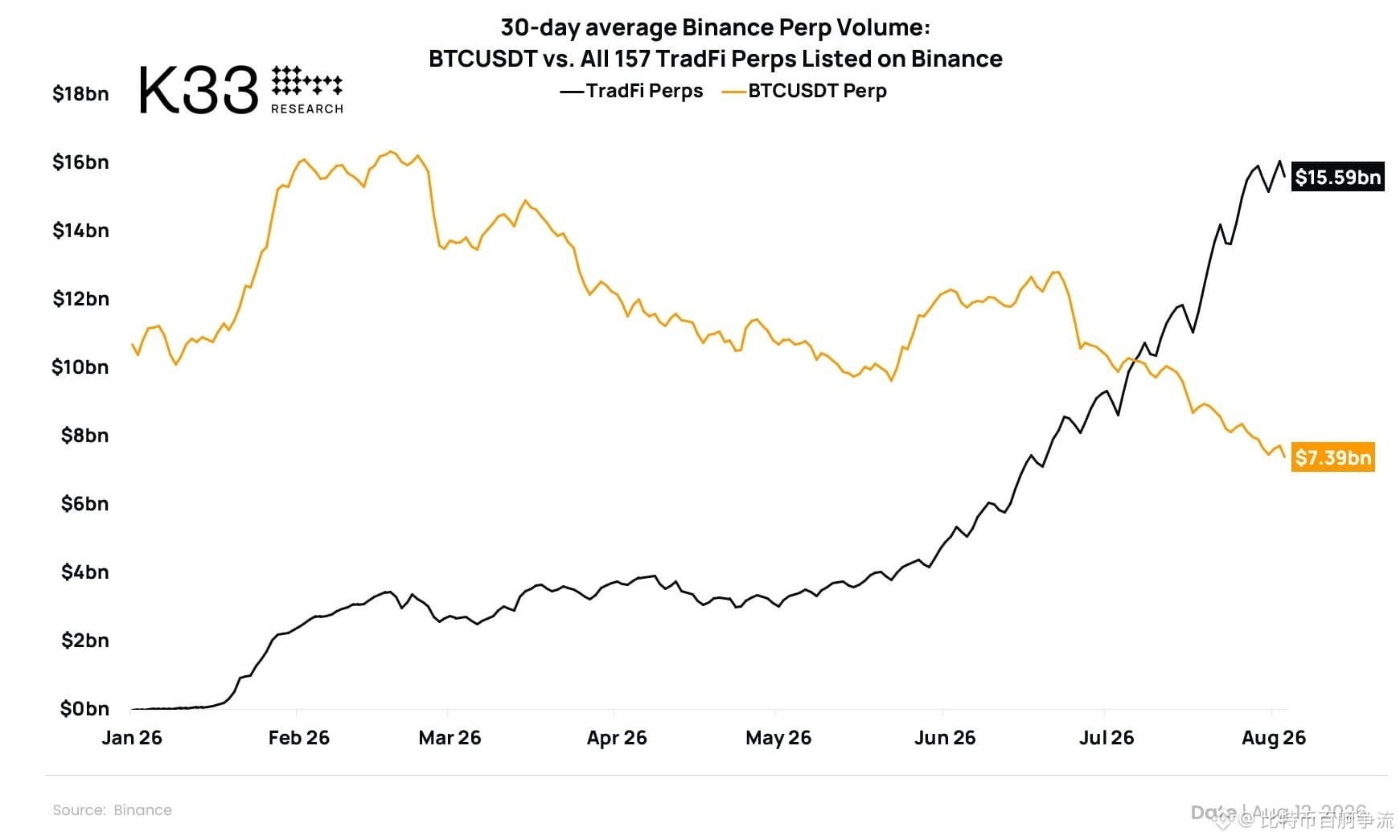
$BTC The trading volume of perpetual contracts in traditional finance (TradFi) over the past month was twice that of Binance’s BTCUSDT perpetual contract.
Over the past month, more than one-third of Binance perpetual contract trading volume came from perpetual contracts in traditional finance.
Over the past month, more than one-third of Binance perpetual contract trading volume came from perpetual contracts in traditional finance.
$TRX Sun Yuchen?! Jing Tian?!
Wow, what the hell is this shocking century-level blockbuster?!
$30 million, $50 million, surrogacy, a rich boyfriend… somehow all these keywords somehow ended up together!
Sun Yuchen himself revealed on Twitter that he’s dating Jing Tian. Sun Yuchen paid Jing Tian $30 million, and the woman agreed to provide eggs for surrogacy. Then at the very last moment, Jing Tian temporarily increased the price, demanding $50 million!
Sun Yuchen didn’t pay. Jing Tian took the $30 million and ran off, blocking Sun Yuchen.
Sun ge’s temper—how could he swallow this?! “If you can’t have it, destroy it.” He immediately used Twitter to lay it out with undeniable proof and spilled all the details—overnight, the woman’s reputation completely collapsed across the whole internet!
This plot… even TV drama writers wouldn’t dare write it like this. I’m genuinely stunned...
Wow, what the hell is this shocking century-level blockbuster?!
$30 million, $50 million, surrogacy, a rich boyfriend… somehow all these keywords somehow ended up together!
Sun Yuchen himself revealed on Twitter that he’s dating Jing Tian. Sun Yuchen paid Jing Tian $30 million, and the woman agreed to provide eggs for surrogacy. Then at the very last moment, Jing Tian temporarily increased the price, demanding $50 million!
Sun Yuchen didn’t pay. Jing Tian took the $30 million and ran off, blocking Sun Yuchen.
Sun ge’s temper—how could he swallow this?! “If you can’t have it, destroy it.” He immediately used Twitter to lay it out with undeniable proof and spilled all the details—overnight, the woman’s reputation completely collapsed across the whole internet!
This plot… even TV drama writers wouldn’t dare write it like this. I’m genuinely stunned...

$BTC Korean Bank (Bank of Korea) today, in its monetary policy meeting, decided to raise the benchmark interest rate by 0.25 percentage points, from 2.75% to 3.00%
An interest rate hike in South Korea is bearish for the stock market! Funds will be believed to keep flowing into the crypto market
An interest rate hike in South Korea is bearish for the stock market! Funds will be believed to keep flowing into the crypto market
Log in to explore more content