


Binance Academy
 Binance Officially Verified Account
Your complete guide to crypto and blockchain
6 Following
891.4K+ Followers
210.1K+ Liked
Posts
All
Quotes
Videos
Live



Binance Academy
·
--
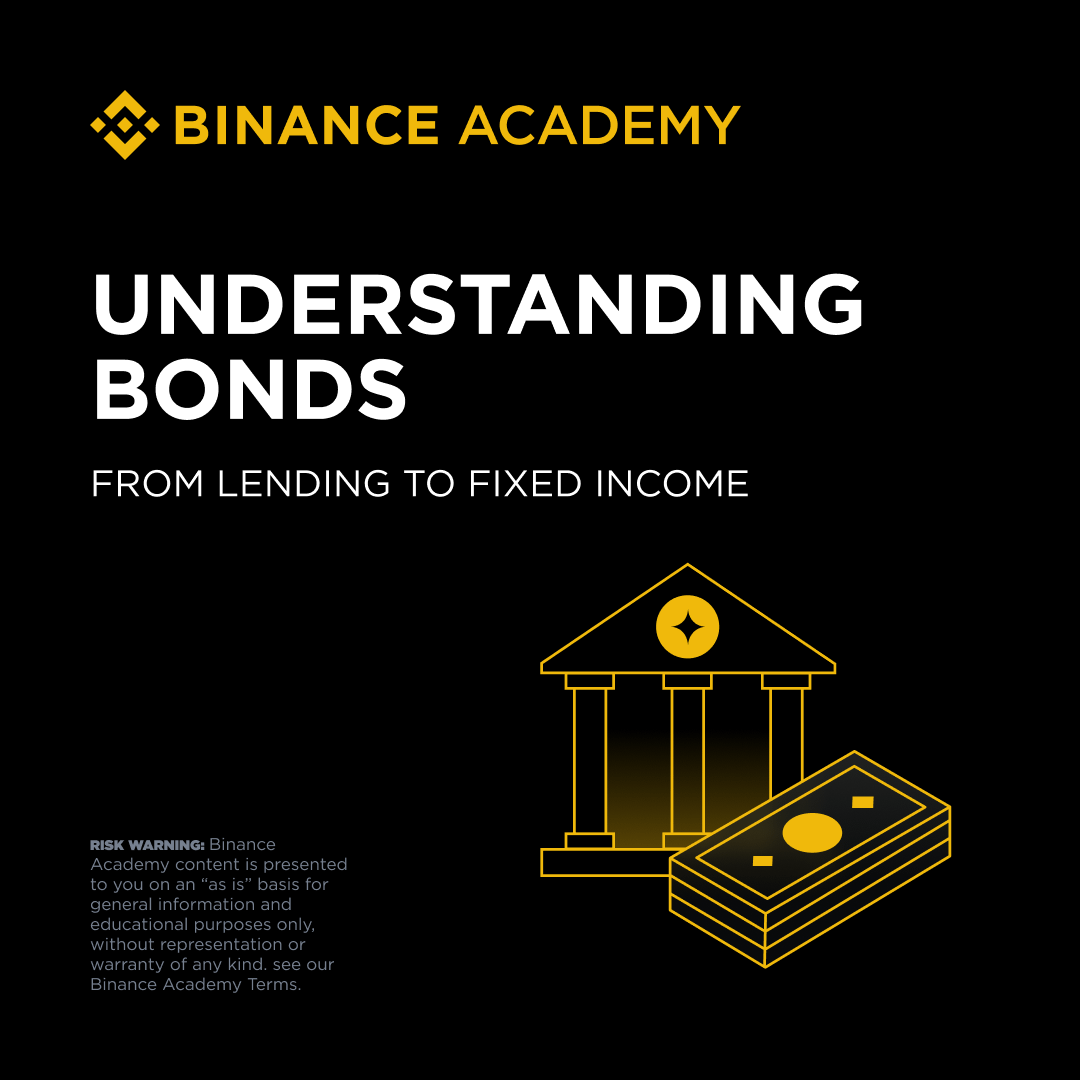
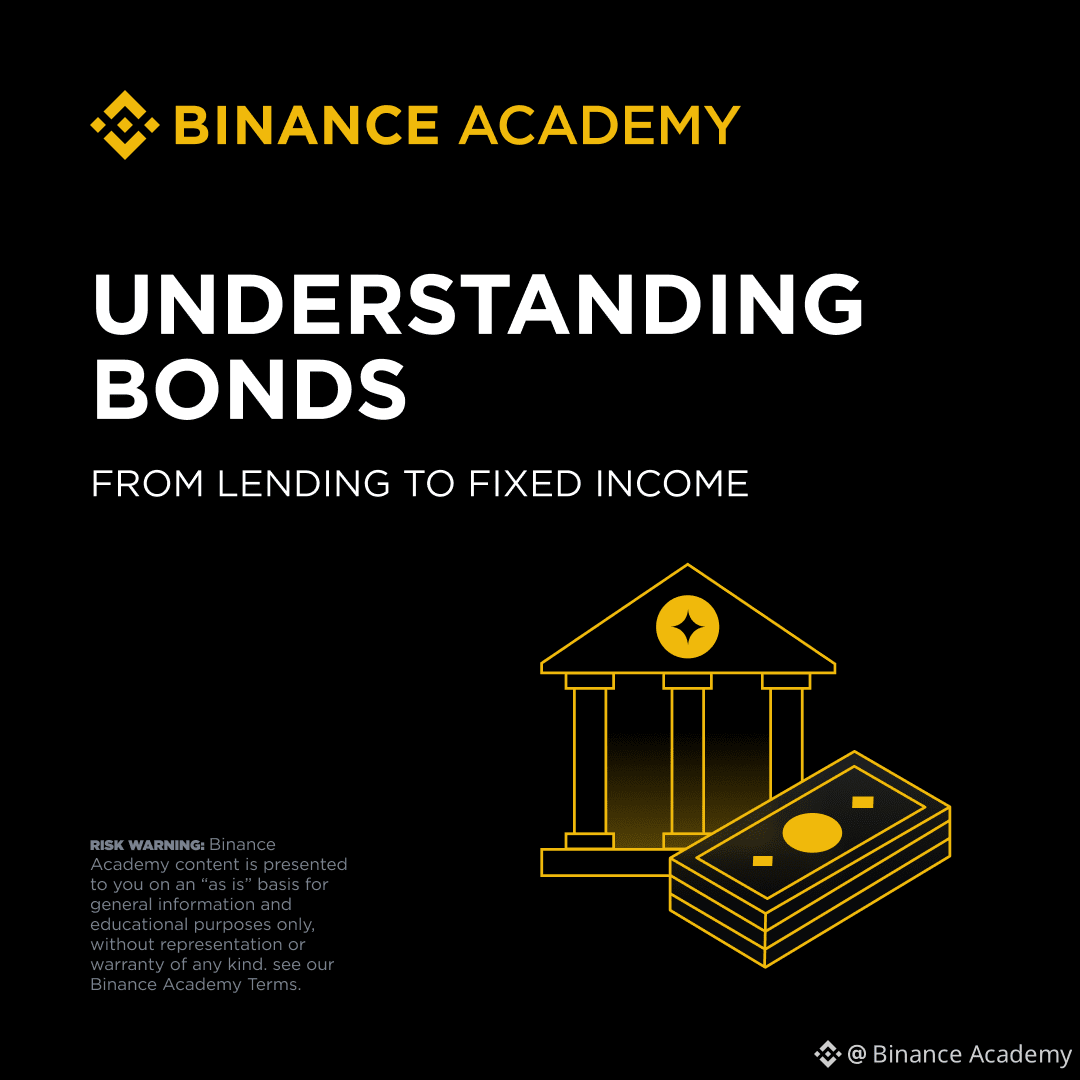
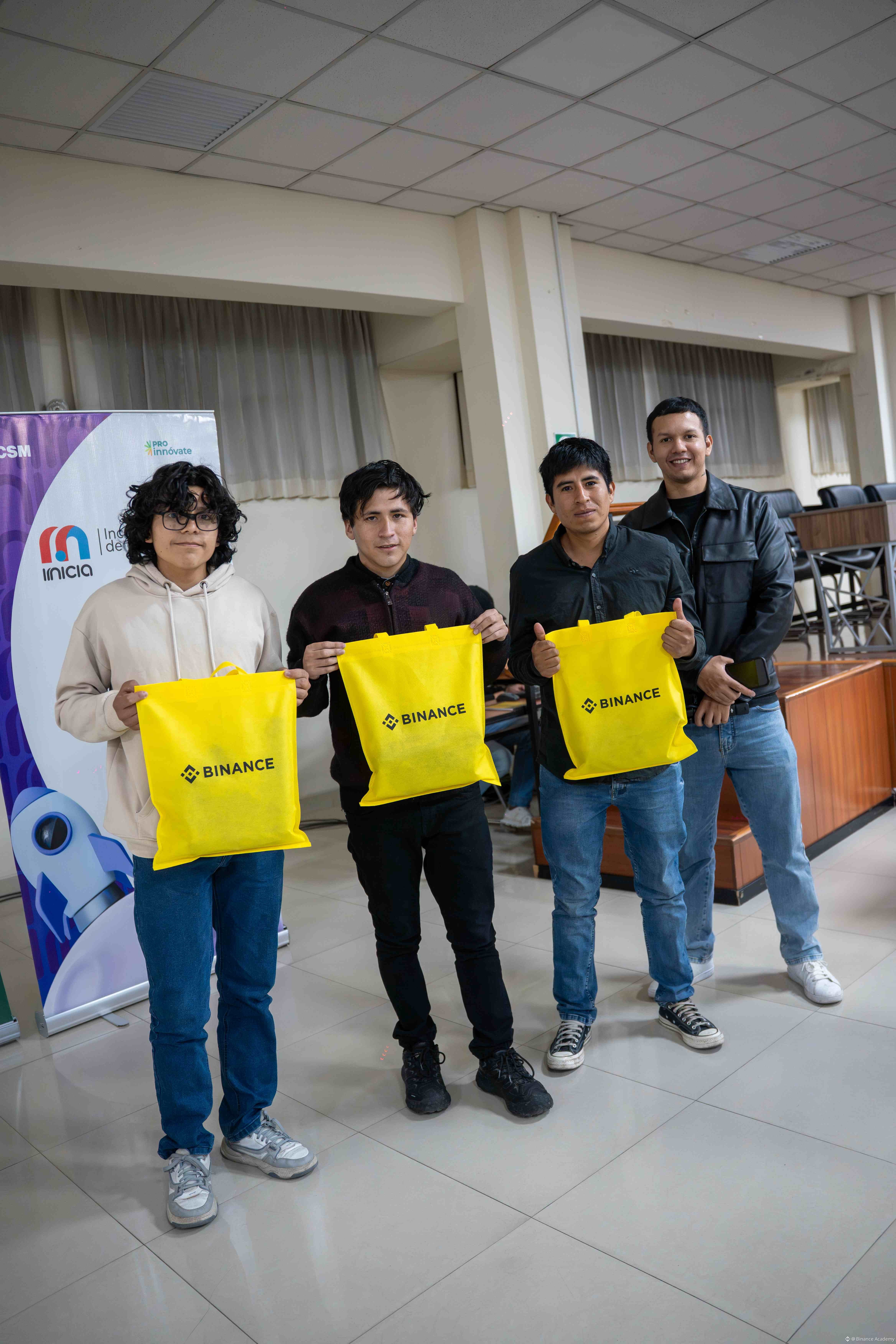
🎓 One sentence explains half of financial news: when rates rise, bond prices fall. Our new course 👉Understanding Bonds teaches you the other half.
Learn, share the certificate, and win Binance swag.
Campaign period: Oct 15, 2026, 12:00 PM (UTC) – Oct 25, 2026, 12:00 PM (UTC)
🔸 Complete Understanding Bonds course & earn your certificate
🔸 Follow @Binance Academy on Square
🔸 Share your certificate with #BinanceAcademyCourse
🔸 Fill in the shipping info
🔸 Wait for results!
10 winners will be selected on Oct 26, 2026 — chosen based on creativity and relevance in sharing their certificate and learning journey. Make your post stand out. 🏆
Note: Campaign unavailable in certain regions due to compliance requirements. This campaign is not open to residents or citizens of the United States, the United Kingdom, the European Economic Area (all 30 member states), Hong Kong, Singapore, or any other jurisdiction on Binance's List of Prohibited Countries.
Learn, share the certificate, and win Binance swag.
Campaign period: Oct 15, 2026, 12:00 PM (UTC) – Oct 25, 2026, 12:00 PM (UTC)
🔸 Complete Understanding Bonds course & earn your certificate
🔸 Follow @Binance Academy on Square
🔸 Share your certificate with #BinanceAcademyCourse
🔸 Fill in the shipping info
🔸 Wait for results!
10 winners will be selected on Oct 26, 2026 — chosen based on creativity and relevance in sharing their certificate and learning journey. Make your post stand out. 🏆
Note: Campaign unavailable in certain regions due to compliance requirements. This campaign is not open to residents or citizens of the United States, the United Kingdom, the European Economic Area (all 30 member states), Hong Kong, Singapore, or any other jurisdiction on Binance's List of Prohibited Countries.

Binance Announcement
·
--
Introducing Binance Pick: Predict and Climb the Leaderboards to Share 1,000,000 USDC!
This is a general announcement. Products and services referred to here may not be available in your region. Terms and conditions apply.
Fellow Binancians,
Binance is excited to introduce Binance Pick, a flagship campaign that rewards your trading activity. Early Bird reservation opens on 2026-10-19, while the campaign officially launches on 2026-10-21 (UTC). The more users who reserve during Early Bird, the larger the prize pool unlocked, up to 1,000,000 USDC. Eligible users can start completing tasks and making predictions for a share of the prize pool.
Join Now
Promotion Period:
Reservation Period: 2026-10-19 to 2026-10-20 23:59:59 (UTC)Prediction Period: 2026-10-21 00:00:00 to 2026-11-15 23:59:59 (UTC)
How It Works:
Step 1. Join the Campaign
Visit the Binance Pick campaign page and select [Join Now]. Reserve during Early Bird to earn bonus Scores. Eligible new users who join the campaign earn additional bonus Scores.
Step 2. Complete Tasks to Earn Scores
Complete the tasks available to you to earn Scores. Tasks include Join Campaign / Early Bird reservation, New User Welcome, referrals, daily check-in, Spot/Convert/Futures Trading Task, post on Square and the Refill Station.
Step 3. Use Your Scores to Predict in Binance Pick
For users who are from an eligible jurisdiction, use your Scores to join available markets in Binance Pick. Close your position before it ends or hold until settlement. A correct prediction increases your Scores.
Please note that Scores are campaign-only points used only for campaign ranking and reward allocation. They have no monetary value and cannot be redeemed, transferred, or exchanged for cash. Scores reset at the end of the season under the Campaign Terms.
Step 4. Climb the Leaderboard and Win Rewards
Track your ranking on the Leaderboard page. Rewards are distributed across three pools:
Season Leaderboard — 500,000 USDC: The top 20,000 participants on the leaderboard after the campaign ends can share rewards. Participants must have more than 0 Season Scores to be eligible.The Season Leaderboard closes on 2026-11-15 at 23:59:59 (UTC).Weekly Leaderboard — 400,000 USDC in total (100,000 USDC/week): The top 8,000 participants on the leaderboard at the end of each weekly ranking period can share rewards. Participants must have a Weekly PnL greater than 0 from predictions made with Scores. The Weekly Leaderboard closes every Sunday at 23:59:59 (UTC).Participation Reward — 100,000 USDC: Participants who are not ranked on the Season Leaderboard or any Weekly Leaderboard and have completed at least 5 check-ins during the season can share rewards, with a maximum of 5 USDC per eligible participant.
*Complete Prediction Market Bonus Trading Task to Earn Scores
The Prediction Market Trading Task is offered by Binance Wallet and available to eligible Binance Wallet users in selected regions only. Binance Wallet’s Prediction Market is an independent product powered by Predict.fun, whose features, terms and regional availability are subject to Binance Wallet’s own terms.
Notes:
Due to compliance requirements, available tasks may vary by region. Please refer to the tasks shown on your campaign page.Due to the scale of this rollout, there may be a brief delay before the feature appears in users' accounts.Scores are campaign-only points used only for campaign ranking and reward allocation. They have no monetary value and cannot be redeemed, transferred, or exchanged for cash. Scores reset at the end of the season under the Campaign Terms.Leaderboard data is based on the total of your Available Scores and Open Orders Frozen shown on your Portfolio page. Position Value is not included. The snapshot time of the Scores displayed on the leaderboard is subject to the leaderboard system update time.Season Leaderboard rewards will be distributed within 7 business days after the season ends; Weekly Leaderboard rewards within 3 business days after each week ends; and the Participation Reward within 14 business days after the season ends.Any unclaimed rewards will expire according to the Campaign Terms.This Campaign and all rewards are subject to the Campaign Terms and Conditions. Please refer to the full Campaign Terms and Conditions for details.There may be discrepancies between this original content in English and any translated versions. Please refer to the original English version for the most accurate information, in case any discrepancies arise.
Terms & Conditions:
These terms and conditions (“Promotion Terms”) govern users’ participation in the promotion above (“Promotion”). By participating in this Promotion, users agree to these Promotion Terms, and the following additional terms: (a) Binance Terms and Conditions for Prize Promotions; (b) Binance Terms of Use; and (c) Binance Privacy Notice; all of which are incorporated by reference into these terms and conditions. In the case of any inconsistency or conflict between these Promotion Terms, and any other incorporated terms, the provisions of these Promotion Terms shall prevail, followed by the following in this order of precedence, and to the extent of such conflict: (a) Binance Terms and Conditions for Prize Promotions; (b) Binance Terms of Use; and (c) Binance Privacy Notice.Only users who complete identity verification and confirm their participation during the Promotion Period can qualify for rewards in the Promotion. The products or features referred to above may not be available in your region. Users are responsible for informing themselves about and observing any restrictions and/or requirements imposed with respect to the access to and use of Binance services in each country from which the services are accessed.All participants are subject to periodic risk assessment. Failure to pass the risk review may result in ineligibility for rewards.This campaign is not open to residents or citizens of the United States, the United Kingdom, the European Economic Area (all 30 member states), Hong Kong, Singapore, or any other jurisdiction on Binance's List of Prohibited Countries. For the avoidance of doubt, any content, posts, entries, or submissions made by users from these jurisdictions — however submitted or tagged — will not be counted, considered, or eligible for any reward, recognition, or prize. Binance reserves the right to verify the jurisdiction of any participant and to disregard any entry at its sole discretion.During the Promotion Period, users may earn "Scores" by completing designated tasks, such as sign-up, daily check-in, referrals, trading, prediction, and posting on Binance Square, as described on the Promotion page. Scores are virtual points used solely within this Promotion for gameplay and leaderboard ranking; they have no monetary value, are non-transferable and non-redeemable, and cannot be redeemed or exchanged for any value outside this Promotion. Users may spend Scores to make predictions on a virtual, simulated market involving no real funds, with their Scores balance changing based on prediction outcomes. Rewards are distributed by leaderboard ranking rather than by redeeming Scores, with the reward pool, tiers, and distribution as displayed on the Promotion page. Certain tasks, including the live prediction task, are available only in jurisdictions where permitted. Task details, score values, thresholds, and rewards may vary by region and are subject to adjustment as set out on the Promotion page. Binance Square Terms apply.Binance reserves the right to disqualify a user’s reward eligibility if the account is involved in any dishonest behavior (e.g., wash trading, illegally bulk account registrations/logins, self dealing, or market manipulation). Binance further reserves the right to disqualify any participants who tamper with Binance program code, or interfere with the operation of Binance program code with other software.Binance reserves the right at any time in its sole and absolute discretion to determine and/or amend or vary these terms and conditions without prior notice, including but not limited to canceling, extending, terminating or suspending this Promotion, the eligibility terms and criteria, the selection and number of winners, and the timing of any act to be done, and all Participants shall be bound by these amendments. There may be discrepancies between this original content in English and any translated versions. Please refer to the original English version for the most accurate information, in case any discrepancies arise.
Thank you for your support!
Binance Team
2026-10-19
USDC is an e-money token issued by Circle Internet Financial Europe SAS (https://www.circle.com/). USDC’s whitepaper is available here. You may contact Circle using the following contact information: +33(1)59000130 and EEA-Customer-Support@circle.com. Holders of USDC have a legal claim against Circle SAS as the EU issuer of USDC. These holders are entitled to request redemption of their USDC from Circle SAS. Such redemption will be made at any time and at par value.
Trade on-the-go with Binance's crypto trading app (iOS/Android)
Find us on
TelegramWhatsAppXFacebookInstagramDiscord
Binance reserves the right in its sole discretion to amend or cancel this announcement at any time and for any reasons without prior notice.
Disclaimer: Prediction Markets are not provided by Binance ADGM entities and can only be accessed if you hold a Binance Wallet. The Binance Wallet Services are provided by Binance Barbados Limited. The Binance Wallet Services are not under the supervision of the Financial Services Regulatory Authority or any other regulatory authority. Binance Wallet does not sponsor, endorse, or guarantee such third-party services. Binance does not act as the counterparty in any investments in the Prediction Markets feature. Investment using the Prediction Markets feature comes with significant risk, including financial risk, market volatility, regulatory risk, third-party risks. You may lose part or all of what you have invested through the Prediction Markets feature. For more information, see our Terms of Use and Risk Warning.
Digital asset prices are subject to high market risk and price volatility. The value of your investment may go down or up, and you may not get back the amount invested. You are solely responsible for your investment decisions and Binance is not liable for any losses you may incur. Past performance is not a reliable predictor of future performance. You should only invest in products you are familiar with and where you understand the risks. You should carefully consider your investment experience, financial situation, investment objectives and risk tolerance and consult an independent financial adviser prior to making any investment. This material should not be construed as financial advice. For more information, see our Terms of Use and Risk Warning.
Fellow Binancians,
Binance is excited to introduce Binance Pick, a flagship campaign that rewards your trading activity. Early Bird reservation opens on 2026-10-19, while the campaign officially launches on 2026-10-21 (UTC). The more users who reserve during Early Bird, the larger the prize pool unlocked, up to 1,000,000 USDC. Eligible users can start completing tasks and making predictions for a share of the prize pool.
Join Now
Promotion Period:
Reservation Period: 2026-10-19 to 2026-10-20 23:59:59 (UTC)Prediction Period: 2026-10-21 00:00:00 to 2026-11-15 23:59:59 (UTC)
How It Works:
Step 1. Join the Campaign
Visit the Binance Pick campaign page and select [Join Now]. Reserve during Early Bird to earn bonus Scores. Eligible new users who join the campaign earn additional bonus Scores.
Step 2. Complete Tasks to Earn Scores
Complete the tasks available to you to earn Scores. Tasks include Join Campaign / Early Bird reservation, New User Welcome, referrals, daily check-in, Spot/Convert/Futures Trading Task, post on Square and the Refill Station.
Step 3. Use Your Scores to Predict in Binance Pick
For users who are from an eligible jurisdiction, use your Scores to join available markets in Binance Pick. Close your position before it ends or hold until settlement. A correct prediction increases your Scores.
Please note that Scores are campaign-only points used only for campaign ranking and reward allocation. They have no monetary value and cannot be redeemed, transferred, or exchanged for cash. Scores reset at the end of the season under the Campaign Terms.
Step 4. Climb the Leaderboard and Win Rewards
Track your ranking on the Leaderboard page. Rewards are distributed across three pools:
Season Leaderboard — 500,000 USDC: The top 20,000 participants on the leaderboard after the campaign ends can share rewards. Participants must have more than 0 Season Scores to be eligible.The Season Leaderboard closes on 2026-11-15 at 23:59:59 (UTC).Weekly Leaderboard — 400,000 USDC in total (100,000 USDC/week): The top 8,000 participants on the leaderboard at the end of each weekly ranking period can share rewards. Participants must have a Weekly PnL greater than 0 from predictions made with Scores. The Weekly Leaderboard closes every Sunday at 23:59:59 (UTC).Participation Reward — 100,000 USDC: Participants who are not ranked on the Season Leaderboard or any Weekly Leaderboard and have completed at least 5 check-ins during the season can share rewards, with a maximum of 5 USDC per eligible participant.
*Complete Prediction Market Bonus Trading Task to Earn Scores
The Prediction Market Trading Task is offered by Binance Wallet and available to eligible Binance Wallet users in selected regions only. Binance Wallet’s Prediction Market is an independent product powered by Predict.fun, whose features, terms and regional availability are subject to Binance Wallet’s own terms.
Notes:
Due to compliance requirements, available tasks may vary by region. Please refer to the tasks shown on your campaign page.Due to the scale of this rollout, there may be a brief delay before the feature appears in users' accounts.Scores are campaign-only points used only for campaign ranking and reward allocation. They have no monetary value and cannot be redeemed, transferred, or exchanged for cash. Scores reset at the end of the season under the Campaign Terms.Leaderboard data is based on the total of your Available Scores and Open Orders Frozen shown on your Portfolio page. Position Value is not included. The snapshot time of the Scores displayed on the leaderboard is subject to the leaderboard system update time.Season Leaderboard rewards will be distributed within 7 business days after the season ends; Weekly Leaderboard rewards within 3 business days after each week ends; and the Participation Reward within 14 business days after the season ends.Any unclaimed rewards will expire according to the Campaign Terms.This Campaign and all rewards are subject to the Campaign Terms and Conditions. Please refer to the full Campaign Terms and Conditions for details.There may be discrepancies between this original content in English and any translated versions. Please refer to the original English version for the most accurate information, in case any discrepancies arise.
Terms & Conditions:
These terms and conditions (“Promotion Terms”) govern users’ participation in the promotion above (“Promotion”). By participating in this Promotion, users agree to these Promotion Terms, and the following additional terms: (a) Binance Terms and Conditions for Prize Promotions; (b) Binance Terms of Use; and (c) Binance Privacy Notice; all of which are incorporated by reference into these terms and conditions. In the case of any inconsistency or conflict between these Promotion Terms, and any other incorporated terms, the provisions of these Promotion Terms shall prevail, followed by the following in this order of precedence, and to the extent of such conflict: (a) Binance Terms and Conditions for Prize Promotions; (b) Binance Terms of Use; and (c) Binance Privacy Notice.Only users who complete identity verification and confirm their participation during the Promotion Period can qualify for rewards in the Promotion. The products or features referred to above may not be available in your region. Users are responsible for informing themselves about and observing any restrictions and/or requirements imposed with respect to the access to and use of Binance services in each country from which the services are accessed.All participants are subject to periodic risk assessment. Failure to pass the risk review may result in ineligibility for rewards.This campaign is not open to residents or citizens of the United States, the United Kingdom, the European Economic Area (all 30 member states), Hong Kong, Singapore, or any other jurisdiction on Binance's List of Prohibited Countries. For the avoidance of doubt, any content, posts, entries, or submissions made by users from these jurisdictions — however submitted or tagged — will not be counted, considered, or eligible for any reward, recognition, or prize. Binance reserves the right to verify the jurisdiction of any participant and to disregard any entry at its sole discretion.During the Promotion Period, users may earn "Scores" by completing designated tasks, such as sign-up, daily check-in, referrals, trading, prediction, and posting on Binance Square, as described on the Promotion page. Scores are virtual points used solely within this Promotion for gameplay and leaderboard ranking; they have no monetary value, are non-transferable and non-redeemable, and cannot be redeemed or exchanged for any value outside this Promotion. Users may spend Scores to make predictions on a virtual, simulated market involving no real funds, with their Scores balance changing based on prediction outcomes. Rewards are distributed by leaderboard ranking rather than by redeeming Scores, with the reward pool, tiers, and distribution as displayed on the Promotion page. Certain tasks, including the live prediction task, are available only in jurisdictions where permitted. Task details, score values, thresholds, and rewards may vary by region and are subject to adjustment as set out on the Promotion page. Binance Square Terms apply.Binance reserves the right to disqualify a user’s reward eligibility if the account is involved in any dishonest behavior (e.g., wash trading, illegally bulk account registrations/logins, self dealing, or market manipulation). Binance further reserves the right to disqualify any participants who tamper with Binance program code, or interfere with the operation of Binance program code with other software.Binance reserves the right at any time in its sole and absolute discretion to determine and/or amend or vary these terms and conditions without prior notice, including but not limited to canceling, extending, terminating or suspending this Promotion, the eligibility terms and criteria, the selection and number of winners, and the timing of any act to be done, and all Participants shall be bound by these amendments. There may be discrepancies between this original content in English and any translated versions. Please refer to the original English version for the most accurate information, in case any discrepancies arise.
Thank you for your support!
Binance Team
2026-10-19
USDC is an e-money token issued by Circle Internet Financial Europe SAS (https://www.circle.com/). USDC’s whitepaper is available here. You may contact Circle using the following contact information: +33(1)59000130 and EEA-Customer-Support@circle.com. Holders of USDC have a legal claim against Circle SAS as the EU issuer of USDC. These holders are entitled to request redemption of their USDC from Circle SAS. Such redemption will be made at any time and at par value.
Trade on-the-go with Binance's crypto trading app (iOS/Android)
Find us on
TelegramWhatsAppXFacebookInstagramDiscord
Binance reserves the right in its sole discretion to amend or cancel this announcement at any time and for any reasons without prior notice.
Disclaimer: Prediction Markets are not provided by Binance ADGM entities and can only be accessed if you hold a Binance Wallet. The Binance Wallet Services are provided by Binance Barbados Limited. The Binance Wallet Services are not under the supervision of the Financial Services Regulatory Authority or any other regulatory authority. Binance Wallet does not sponsor, endorse, or guarantee such third-party services. Binance does not act as the counterparty in any investments in the Prediction Markets feature. Investment using the Prediction Markets feature comes with significant risk, including financial risk, market volatility, regulatory risk, third-party risks. You may lose part or all of what you have invested through the Prediction Markets feature. For more information, see our Terms of Use and Risk Warning.
Digital asset prices are subject to high market risk and price volatility. The value of your investment may go down or up, and you may not get back the amount invested. You are solely responsible for your investment decisions and Binance is not liable for any losses you may incur. Past performance is not a reliable predictor of future performance. You should only invest in products you are familiar with and where you understand the risks. You should carefully consider your investment experience, financial situation, investment objectives and risk tolerance and consult an independent financial adviser prior to making any investment. This material should not be construed as financial advice. For more information, see our Terms of Use and Risk Warning.





Log in to explore more content