Binance Square
十四境
1.1k Posts

十四境

链游爱好者,致力于分析和研究新兴的数字货币市场和链游,总要尝试一些新的事物,就像是这个领域里的一份子,所有分享的内容仅仅代表我个人的观点,不构成任何投资建议
26 Following
10.5K+ Followers
3.4K+ Liked
Posts
·
--
$XPL latest spot price 0.09921 USDT, bid-ask spread 1.01 bp. This spread level is usually quite narrow, but since orders can be cancelled at any time, I didn’t think too much of it. I just feel there might be something else behind such a narrow spread, but I haven’t figured it out yet—I'll just observe for now.
Many people think high leverage amplifies profits, but actually it first amplifies sensitivity to losses and price fluctuations. When the market moves slightly against you, the account may react dramatically. Before opening a position next time, first figure out whether you can withstand this kind of volatility. The key is not to treat leverage as a simple profit amplifier.
I went through the order book surface—$XRP’s active buy difference of +$6.1M is pretty noticeable. It accounts for 56.7%, but the 15m price only moved +0.17%, while OI actually shrank by -0.79%. The three 5m sub-windows all move in the same direction; it just feels like something isn’t quite right. I’ll watch for now.
Linking tracking to real cases—this kind of storytelling has always left me somewhat skeptical. But seeing that $93,000 in Tether was frozen at least suggests that someone is actually doing something. Robbery profits of $667,000—being able to intercept part of it is better than having nothing at all.
$TUT Quick 15-minute pullback—this kind of short-term fluctuation is the easiest to misjudge the direction. I haven’t figured it out yet; just observe for now, don’t rush to act.
$AAVE spot latest price 136.65 USDT, bid-ask spread 0.73 bp. This width isn’t usually seen in normal times, but since orders can be cancelled at any time, I didn’t really think much about it. I’m just wondering—if the spread suddenly narrows, will the price move along with it?
When looking back at the block size debate, it’s actually quite clear who won. But what concerns me more is that the main reason for the shift in activity was never block size—it was programmability. In this respect, Bitcoin really shouldn’t have been trying to compete with others.
First remind yourself not to take it too seriously. $ETH actively bought up 62.3%, active spread +$38.7M, but the price only moved 0.29% and OI rose 0.61%. The volume doesn’t quite match the price response—it feels like something’s off. Watch from the sidelines first.
Tariffs seem to be going in circles: earlier they said they wouldn’t drive up prices, and now they’re using exemptions to push prices down. I’d rather first check which specific categories and scope are covered by the exemptions, instead of just hearing each side explain things their own way.
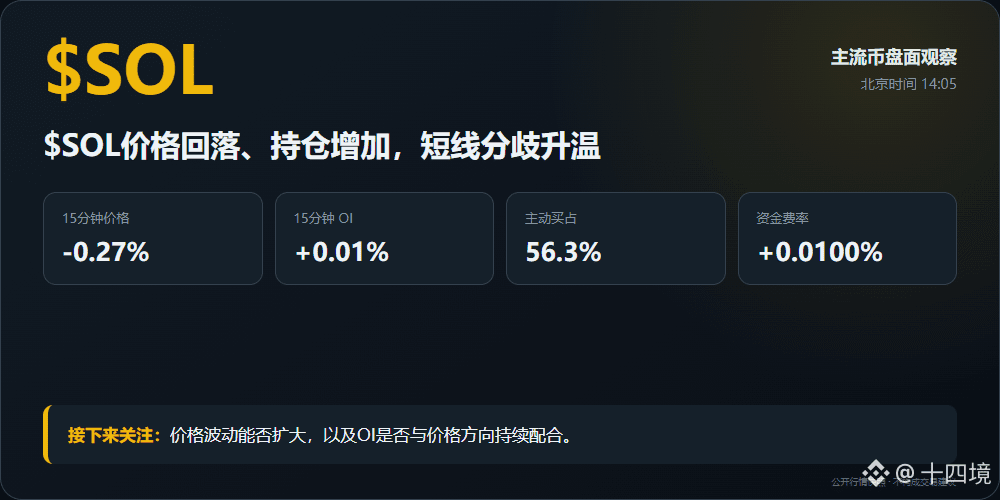
$SOL In the last 15 minutes, the price basically didn’t move, down 0.13%, but OI actually rose by 0.37%. The aggressive buying accounts for 52.8%, and the fee rate is still positive. I just feel like the price hasn’t caught up with the changes in positions—I'll just watch for now.
Many people tend to think the relationship between interest rates and the price of a currency is a straight line. In fact, there are several layers in between. When interest rates rise, the cost of borrowing increases. Naturally, funds become more willing to take the risk-free interest rather than make risky bets on assets with high volatility. First, understand this transmission logic. Next time you see changes in macroeconomic data, don’t rush to chase or sell in panic—think about whether the opportunity cost of capital has changed.
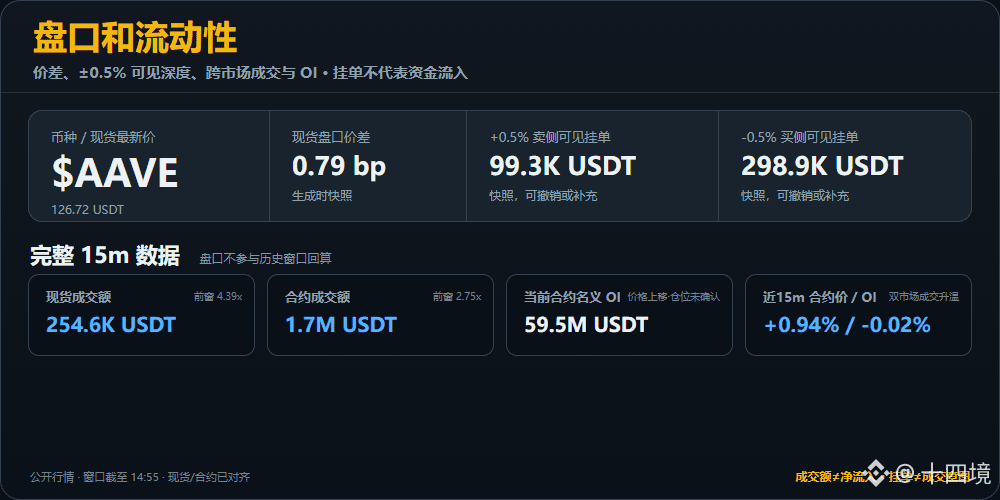
$AAVE latest spot price 125.37 USDT. The order book spread is only 0.80 bp—this thickness looks pretty comfortable. But with the spread so narrow, it just feels a bit off. I’ll observe first.
Just looking at this minting, some people may interpret it as capital coming into the market. I’d rather first treat it as a normal liquidity management operation. The issuance and redemption of USDC on Solana is already routine, and an amount on the order of 250,000,000 isn’t unusual. We can discuss the direction only after seeing whether similar actions continue in the future.
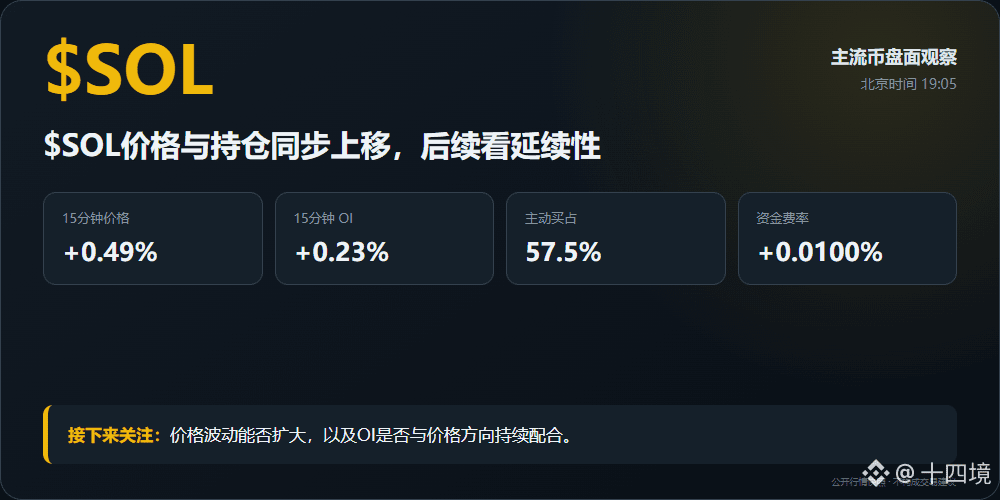
$SOL In the past 15 minutes, both the price and OI have been gradually falling. Active buying accounts for only 43.1%, and the fee rate is still positive. It feels like the market is a bit hesitant—I'll just observe for now.
That Zcash chart has something, but what I care more about is the few physical coins I have in hand. If the market drops, I’ll buy a little in batches. I’ll hold steady and wait for time to give me the answer. Patience, in the end, is about whether you can control your hands.
$STX latest spot price is 0.2043 USDT. The bid-ask spread is 9.78 bp. This spread isn’t very common during normal times, but since outstanding orders can be canceled at any time, I didn’t take it too seriously. I just feel something’s off—let’s first take a look at how things change at the order book level.
Many people get confused between limit orders and market orders when placing an order. In reality, they solve different problems. A limit order is one where you specify the price; it only gets executed when the market reaches that level, making it suitable when you want to control costs. A market order immediately buys or sells at the currently available price, which is suitable when you value speed and don’t want to wait. Before placing your next order, make sure you know whether you’re trying to lock in a price or get it done quickly—then you won’t place the wrong order.
$TUT spot latest price 0.06403 USDT, order book bid-ask spread 4.69 bp. In this kind of market environment, this spread is relatively narrow, but the orders can be canceled at any time—don’t take it too seriously. I just feel like liquidity looks okay, but actual trades might not go that smoothly.
The whale alert shows that 120,000,000 USDC has been transferred from the treasury to a competitor. At this scale, it’s not a small amount. I generally don’t focus too much on one-off large transfers; I care more about whether there’s continued activity afterward. For now, I’ll set it aside and observe for a few days before making any conclusions. No rush.
$FF In 15 minutes it rose 2.17%, current price is 0.08153, with a 24-hour cumulative increase of 9.51%. Turnover is $4.7873 million. This volume seems to match this surge—yet it just feels a bit off. I'll just observe for now and see if it can hold this level.
Log in to explore more content
Join global crypto users on Binance Square
⚡️ Get latest and useful information about crypto.
💬 Trusted by the world’s largest crypto exchange.
👍 Discover real insights from verified creators.
Email / Phone number
Sitemap
Cookie Preferences
Platform T&Cs