
Noor221
6.9k Posts

Noor221
 Square Verified+
Spot & Alpha Trader | Web3 Holder | Verified Creator Market Analyst . started from zero, now driven by patience, structure, and consistency. Alhamdulillah
Frequent Trader
1.5 Years
3.1K+ Following
33.0K+ Followers
21.0K+ Liked
Posts
All
Quotes
Videos
Live
PINNED
PINNED



Sara_ k
·
--
Your Exclusive Web3 Reward Is Waiting — Claim It Today! ⚡
.
click here 👈🎁
.
Don’t Miss Today’s Reward — Click & Claim Now! 🔥
.
.
click here 👈🎁
.
Don’t Miss Today’s Reward — Click & Claim Now! 🔥
.

NVDAUS+1.88%


⁰MR RAJ⁰
·
--
Bullish22 years later, Voyager 1’s “dead” thrusters roared back to life, keeping the legendary spacecraft connected to Earth. 🚀❤️
$CVC $LSK $FIL
#AnthropicCEOCallsForAISlowdown #CPIWatch #BitcoinThirdSingleBlockReorgInFourWeeks #WhiteHouseRejectsAISlowdownCalls #UKMayExemptTokenizedGoldFromFundRules
$CVC $LSK $FIL
#AnthropicCEOCallsForAISlowdown #CPIWatch #BitcoinThirdSingleBlockReorgInFourWeeks #WhiteHouseRejectsAISlowdownCalls #UKMayExemptTokenizedGoldFromFundRules





Flora Firdos
·
--
💸 FREE $USDT GIVEAWAY IS HERE! 🎉👀
Want to take part? It only takes a few simple steps! 🎁🔥
💬 Drop 999 in the comments
❤️ Hit the Like button
🔄 Repost and share
➕ Follow the account
Once you’re done, you’re in! 🚀
Don’t miss the opportunity to join the giveaway and test your luck. 🍀💰
Best of luck to everyone participating! 🤞🔥
#USDT🔥🔥🔥 #CryptoGiveaway #AirdropAlert #USDTfree
Want to take part? It only takes a few simple steps! 🎁🔥
💬 Drop 999 in the comments
❤️ Hit the Like button
🔄 Repost and share
➕ Follow the account
Once you’re done, you’re in! 🚀
Don’t miss the opportunity to join the giveaway and test your luck. 🍀💰
Best of luck to everyone participating! 🤞🔥
#USDT🔥🔥🔥 #CryptoGiveaway #AirdropAlert #USDTfree

NVDAUS+1.88%

Bilverse
·
--
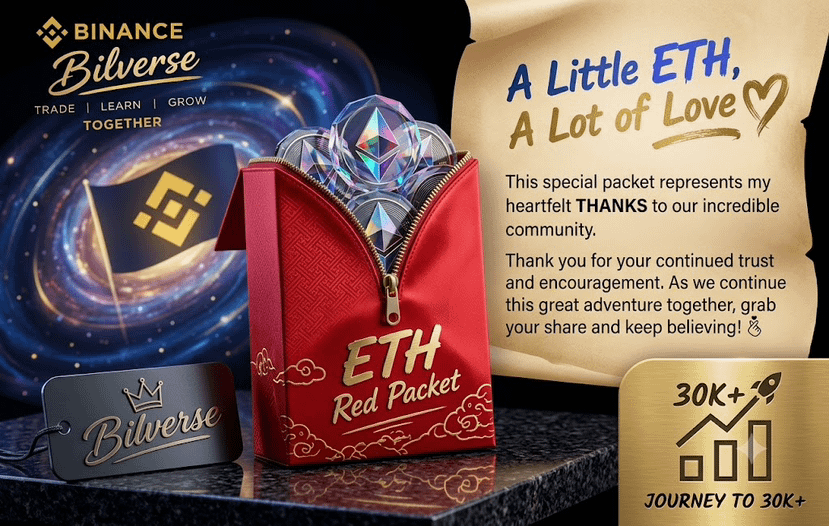
🧧 $ETH believers, where you at? 👀🔥
Markets test your conviction.
Real communities strengthen it. 🧡
If you’ve been building, supporting, and holding through the highs & lows, this one’s for you.
🎁 $ETH Red Packet is BACK!
💬 Comment “5000”
❤️ Like + Repost
✅ Follow @Bilverse
No complicated quests.
Just a little ETH love for the community. 🧧
Still bullish? 🚀
#ETH #Bilverse #RedPacketMission
Markets test your conviction.
Real communities strengthen it. 🧡
If you’ve been building, supporting, and holding through the highs & lows, this one’s for you.
🎁 $ETH Red Packet is BACK!
💬 Comment “5000”
❤️ Like + Repost
✅ Follow @Bilverse
No complicated quests.
Just a little ETH love for the community. 🧧
Still bullish? 🚀
#ETH #Bilverse #RedPacketMission

圣克斯Lucky1688
·
--
🧧🔥🧧🔥🧧🔥 The recent market action is genuinely a back-and-forth probing. Here are 3 supporting indicators to help you verify a true breakout:
Spot CVD (Cumulative Volume Delta): Check whether the breakout is driven by spot active buying or by leveraged futures. If spot CVD and the contract price both make new highs at the same time, the odds of a real breakout are extremely high. If only the contracts pump while spot CVD stays flat, it’s often a false breakout.
SR-Flip (Resistance-to-Support confirmation): After a breakout, wait for the first pullback on the 5M/15M timeframe. If, when price retests the prior high resistance zone, it shows reduced volume and does not break down, it confirms that resistance has successfully flipped into support—an excellent right-side entry point with relatively low risk.
Liquidation Heatmap: If a large short liquidation pool (Liquidation Pool) has accumulated above key highs, then after price pierces through that area, if OI drops sharply, it indicates the liquidation has been completed and short-term momentum has largely been exhausted.
Follow me—answer 1 and take the $SOL red envelope.
🧧🔥🧧🔥🧧🔥
Spot CVD (Cumulative Volume Delta): Check whether the breakout is driven by spot active buying or by leveraged futures. If spot CVD and the contract price both make new highs at the same time, the odds of a real breakout are extremely high. If only the contracts pump while spot CVD stays flat, it’s often a false breakout.
SR-Flip (Resistance-to-Support confirmation): After a breakout, wait for the first pullback on the 5M/15M timeframe. If, when price retests the prior high resistance zone, it shows reduced volume and does not break down, it confirms that resistance has successfully flipped into support—an excellent right-side entry point with relatively low risk.
Liquidation Heatmap: If a large short liquidation pool (Liquidation Pool) has accumulated above key highs, then after price pierces through that area, if OI drops sharply, it indicates the liquidation has been completed and short-term momentum has largely been exhausted.
Follow me—answer 1 and take the $SOL red envelope.
🧧🔥🧧🔥🧧🔥



khalid_1688
·
--
@周周1688 congratulations
Congratulations on 1ook well done! Wishing you continued growth and new achievements ahead.........
Congratulations on 1ook well done! Wishing you continued growth and new achievements ahead.........

楠楠nannan势不可挡
·
--
🧧🧧🧧🧧🧧🧧🧧🧧🧧🧧
The burdens of life often make it hard to breathe. Confusion and setbacks don’t mean you should doubt yourself. Everything has its own process—there’s no need to force results. Time will slowly heal everything. $BNB
The burdens of life often make it hard to breathe. Confusion and setbacks don’t mean you should doubt yourself. Everything has its own process—there’s no need to force results. Time will slowly heal everything. $BNB


帮帮Bonnie
·
--
BullishLiving amidst the mortal world, drift and waver in it, yet keep one corner of clear-mindedness; don’t follow the ways of the world, don’t flatter vulgarity.
Floating in the mortal world, keep clarity in your heart. Don’t conform to vulgarity, and don’t cater to it.
#美联储加息是否已成定局
$PONS
Floating in the mortal world, keep clarity in your heart. Don’t conform to vulgarity, and don’t cater to it.
#美联储加息是否已成定局
$PONS

钞机八蛋
·
--
Family and friends, during our journey, we will temporarily pause broadcasts for today. Thank you for your attention and support!


NVDAUS+1.88%

白鲨观点
·
--
I checked the news after getting up this morning—the Clarity Act didn’t pass in the Senate.
Unexpected, but in a way, it makes sense.
In fact, everyone who’s been following this bill knows that the two parties have never been able to agree on many key issues—conflicts of interest, stablecoin regulation, anti–money laundering… We’ve been dragging this out for almost two years. This time, the vote failing is, at bottom, the result of political maneuvering, not really related to the crypto industry itself.
But the market doesn’t care. As soon as the news broke, BTC and ETH both dumped together, and Coinbase’s stock price dropped 10 points. All kinds of characters come out again—calling for a bear market, predicting a collapse, saying regulators should “crush” the crypto space. It’s exactly the same script as every time there’s a bad piece of news.
I don’t think there’s anything to panic about.
First, this isn’t a rejection—it's just that it didn’t pass a procedural vote. There’s still room to revise it and vote again later. Second, even if the bill dies, the sky isn’t falling. Crypto has not been living on day one in an uncertain regulatory environment; over the years, hasn’t it managed to get through all this?
Besides, what truly affects crypto’s long-term trajectory has never been a specific bill or policy, but the development of the technology itself and people’s demand for it. The ones who need to use it will still use it, and the ones who want to buy will still buy. Short-term emotional swings, viewed over a longer horizon, are just small waves.
Of course, the risks you should avoid in the short term still need to be avoided.
Reduce positions a bit if you’re heavily allocated, lower leverage a bit if it’s high,
don’t try to fight the market.
At 4:00 p.m. I’ll chat about this bill in the chat room—what it actually is, and what impact it may have on the future行情. If you’re interested, come sit in.
$BTC $ETH #BinanceSquare #加密监管 #行情分析📈
Unexpected, but in a way, it makes sense.
In fact, everyone who’s been following this bill knows that the two parties have never been able to agree on many key issues—conflicts of interest, stablecoin regulation, anti–money laundering… We’ve been dragging this out for almost two years. This time, the vote failing is, at bottom, the result of political maneuvering, not really related to the crypto industry itself.
But the market doesn’t care. As soon as the news broke, BTC and ETH both dumped together, and Coinbase’s stock price dropped 10 points. All kinds of characters come out again—calling for a bear market, predicting a collapse, saying regulators should “crush” the crypto space. It’s exactly the same script as every time there’s a bad piece of news.
I don’t think there’s anything to panic about.
First, this isn’t a rejection—it's just that it didn’t pass a procedural vote. There’s still room to revise it and vote again later. Second, even if the bill dies, the sky isn’t falling. Crypto has not been living on day one in an uncertain regulatory environment; over the years, hasn’t it managed to get through all this?
Besides, what truly affects crypto’s long-term trajectory has never been a specific bill or policy, but the development of the technology itself and people’s demand for it. The ones who need to use it will still use it, and the ones who want to buy will still buy. Short-term emotional swings, viewed over a longer horizon, are just small waves.
Of course, the risks you should avoid in the short term still need to be avoided.
Reduce positions a bit if you’re heavily allocated, lower leverage a bit if it’s high,
don’t try to fight the market.
At 4:00 p.m. I’ll chat about this bill in the chat room—what it actually is, and what impact it may have on the future行情. If you’re interested, come sit in.
$BTC $ETH #BinanceSquare #加密监管 #行情分析📈


最佳第6人
·
--
💰Sunlight on Golden Mountain—wealth in sight💰

AAPLUS+0.48%

唯一 Bruce
·
--
Bullish$NVDA.US
$NVDAB
$AAPLB
#USDTLaunchesOnZamaPrivacyProtocol
$NVDAB
$AAPLB
#USDTLaunchesOnZamaPrivacyProtocol

AAPLUS+0.48%

橙子Joyce
·
--
BullishWill the Federal Reserve raise rates as expected this week? Wall Street is debating: will it end the U.S. stock bull market?
After an unexpectedly strong U.S. CPI report came out last Friday, traders generally expect the Federal Reserve to begin raising rates at this week’s policy meeting—marking the first rate hike in more than three years.
Historically, previous rounds of rate hikes have offered a reference point for today’s market. Based on past experience (though history of course can’t guarantee the future), U.S. stocks may first weaken, then rebound.
Among the six tightening cycles since 1994, during the first four months after the rate-hike cycle began, the S&P 500’s average return was negative.
This suggests that once the “rate-hike shoe” drops, U.S. stocks may look lackluster through the beginning of next year.
As of the close last Friday, the benchmark U.S. equity index, the S&P 500, is up nearly 12% year to date. Strong corporate earnings and a fairly resilient economy have provided solid support for bulls in the stock market.
If you extend the time horizon, the S&P 500’s performance tends to improve gradually: in the 12 months after the start of a rate-hiking cycle, the index’s average return is close to 7%, with a median return of about 11%. (Using median-based statistics helps remove distortions from extreme outliers—for example, the index surged more than 40% after hikes began in March 1997.)
If the Federal Reserve implements a rate hike this Wednesday, it will be the first hike since July 2023—when the Fed raised rates to a range of 5.25% to 5.50%.
Currently, the federal funds rate in the U.S. is at 3.50% to 3.75%. According to the CME Group’s FedWatch tool, futures traders currently assign an 86% probability to a 25-basis-point hike this week.
One positive factor for the market is that mega-scale cloud service providers are still driving growth in excess returns through large-scale AI spending. The S&P 500 component stocks’ forecast for earnings growth in 2027 is expected to reach double digits. If the outlook for AI spending remains unchanged, it may be enough to offset any cooling in optimistic sentiment caused by the rate hikes.
Another bright spot for equities is that although inflation remains sticky, it appears to be slowing. The inflation rate has fallen from a May peak of 4.2%. This should allow the Federal Reserve to take a more gradual approach, and the data shows that the pace of rate hikes is crucial for stock performance—slower pacing gives investors more time to absorb policy changes!
$BZ
$CL
Energy
After an unexpectedly strong U.S. CPI report came out last Friday, traders generally expect the Federal Reserve to begin raising rates at this week’s policy meeting—marking the first rate hike in more than three years.
Historically, previous rounds of rate hikes have offered a reference point for today’s market. Based on past experience (though history of course can’t guarantee the future), U.S. stocks may first weaken, then rebound.
Among the six tightening cycles since 1994, during the first four months after the rate-hike cycle began, the S&P 500’s average return was negative.
This suggests that once the “rate-hike shoe” drops, U.S. stocks may look lackluster through the beginning of next year.
As of the close last Friday, the benchmark U.S. equity index, the S&P 500, is up nearly 12% year to date. Strong corporate earnings and a fairly resilient economy have provided solid support for bulls in the stock market.
If you extend the time horizon, the S&P 500’s performance tends to improve gradually: in the 12 months after the start of a rate-hiking cycle, the index’s average return is close to 7%, with a median return of about 11%. (Using median-based statistics helps remove distortions from extreme outliers—for example, the index surged more than 40% after hikes began in March 1997.)
If the Federal Reserve implements a rate hike this Wednesday, it will be the first hike since July 2023—when the Fed raised rates to a range of 5.25% to 5.50%.
Currently, the federal funds rate in the U.S. is at 3.50% to 3.75%. According to the CME Group’s FedWatch tool, futures traders currently assign an 86% probability to a 25-basis-point hike this week.
One positive factor for the market is that mega-scale cloud service providers are still driving growth in excess returns through large-scale AI spending. The S&P 500 component stocks’ forecast for earnings growth in 2027 is expected to reach double digits. If the outlook for AI spending remains unchanged, it may be enough to offset any cooling in optimistic sentiment caused by the rate hikes.
Another bright spot for equities is that although inflation remains sticky, it appears to be slowing. The inflation rate has fallen from a May peak of 4.2%. This should allow the Federal Reserve to take a more gradual approach, and the data shows that the pace of rate hikes is crucial for stock performance—slower pacing gives investors more time to absorb policy changes!
$BZ
$CL
Energy
NVDAUS+1.88%

静心1688
·
--
💥 With grit and determination, we reach the mountains and seas; with hard work, we earn glory. May the road ahead be smooth, and may all things be possible to look forward to.
#贝森特支持CLARITY法案终稿 #美联储加息是否已成定局
#贝森特支持CLARITY法案终稿 #美联储加息是否已成定局

NVDAUS+1.88%
Log in to explore more content