

CRYPTONIC 1
596 Posts

CRYPTONIC 1
Report
Block User
Technical Analyst | Trader | tg: Cryptonhic
0 Following
8 Followers
26 Liked
Posts
·
--
A token can have a familiar name, a convincing logo and plenty of hype around it, yet still be completely different from the asset you think you’re buying. Before swapping an unfamiliar token, check its contract address and make sure it belongs to the correct network. Names and tickers can be copied, so verify the address through reliable official sources. Then look beyond the chart. Thin liquidity and low trading activity can make it harder to exit a position without significant price impact. Check the pool metrics and the estimated output for your intended trade before confirming. The project’s documentation and official channels matter too. Look for clear information about the team, token purpose and contract mechanics rather than relying on promotional posts alone. On STON.fi, labels such as Fake, Honeypot, Taxable and Suspicious provide additional context. Fake and Honeypot tokens aren’t swappable through its dApp, while other flagged categories may carry warnings or restrictions. Read the label carefully instead of treating every token the same way. Also check for unusual transfer taxes or other rules that could affect buying and selling. None of these checks guarantees a token is safe. They help you spot warning signs before risking your funds. In crypto, knowing what you’re interacting with matters just as much as deciding when to buy. Always check before proceeding to buy or swap.. And that’s why Stonfi is here to help you detect easily.. https://ston.fi/cross-chain-swap-from-ton-to-base #BTC Price Analysis# #TON $GRAM $BTC
A token can have a familiar name, a convincing logo and plenty of hype around it, yet still be completely different from the asset you think you’re buying. Before swapping an unfamiliar token, check its contract address and make sure it belongs to the correct network. Names and tickers can be copied, so verify the address through reliable official sources. Then look beyond the chart. Thin liquidity and low trading activity can make it harder to exit a position without significant price impact. Check the pool metrics and the estimated output for your intended trade before confirming. The project’s documentation and official channels matter too. Look for clear information about the team, token purpose and contract mechanics rather than relying on promotional posts alone. On STON.fi, labels such as Fake, Honeypot, Taxable and Suspicious provide additional context. Fake and Honeypot tokens aren’t swappable through its dApp, while other flagged categories may carry warnings or restrictions. Read the label carefully instead of treating every token the same way. Also check for unusual transfer taxes or other rules that could affect buying and selling. None of these checks guarantees a token is safe. They help you spot warning signs before risking your funds. In crypto, knowing what you’re interacting with matters just as much as deciding when to buy. Always check before proceeding to buy or swap.. And that’s why Stonfi is here to help you detect easily.. https://ston.fi/cross-chain-swap-from-ton-to-base #BTC Price Analysis# #TON $GRAM $BTC

59
·
--
U.S. spot crypto ETFs showed a clear divergence on October 19, with Bitcoin attracting $526.6 million in net inflows, while Ethereum and Solana funds recorded withdrawals. BTC: +$526.6M ETH: −$103.28M SOL: −$6.72M Bitcoin is getting a strong institutional bid, but that demand isn’t spreading evenly across the market. Ethereum saw the largest outflows of the three, while Solana experienced a smaller pullback. The key question is whether this is a temporary rotation toward BTC or the beginning of a broader shift in institutional positioning. #BTC Price Analysis# #Macro Insights# $BTC $ETH
U.S. spot crypto ETFs showed a clear divergence on October 19, with Bitcoin attracting $526.6 million in net inflows, while Ethereum and Solana funds recorded withdrawals. BTC: +$526.6M ETH: −$103.28M SOL: −$6.72M Bitcoin is getting a strong institutional bid, but that demand isn’t spreading evenly across the market. Ethereum saw the largest outflows of the three, while Solana experienced a smaller pullback. The key question is whether this is a temporary rotation toward BTC or the beginning of a broader shift in institutional positioning. #BTC Price Analysis# #Macro Insights# $BTC $ETH

77
·
--
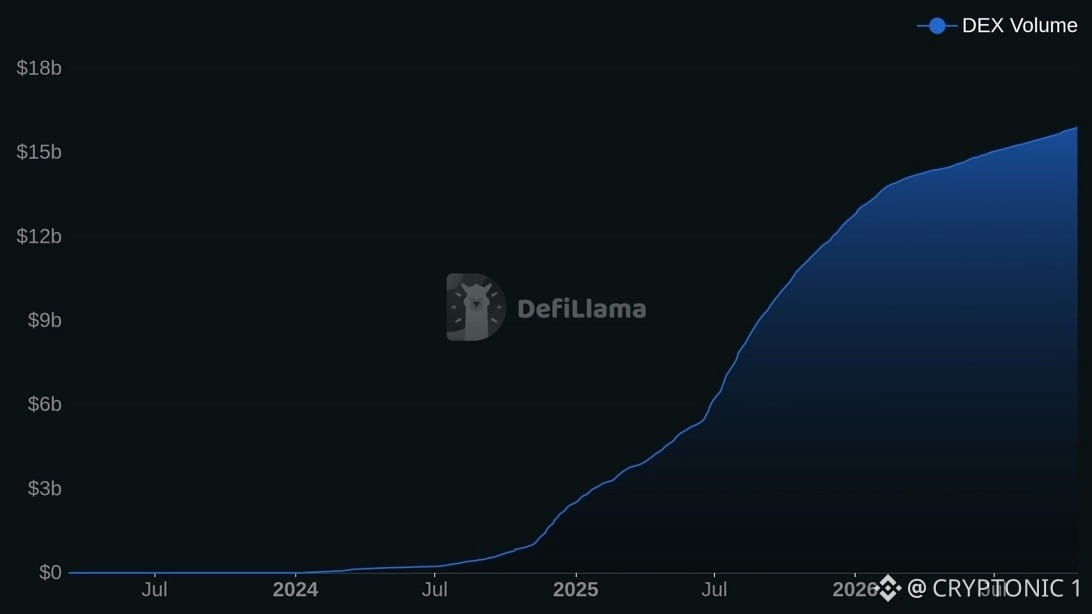
Sei Network has reached $15.9 billion in cumulative decentralized exchange trading volume, marking another milestone for a blockchain built around fast, low cost trading. The achievement highlights the activity taking place across Sei’s DeFi ecosystem, where decentralized exchanges let users trade assets directly onchain without relying on a centralized intermediary. Sei has been positioning itself as infrastructure for high performance trading, and growing DEX volume is one metric worth tracking as the network competes for liquidity and users. However, cumulative volume alone doesn’t tell the full story. Sustained trading activity, liquidity and returning users will matter more than a single milestone when judging whether Sei’s ecosystem is growing sustainably. $15.9B traded. The next challenge is turning that volume into lasting adoption. #BTC Price Analysis# #Macro Insights# $SEI
Sei Network has reached $15.9 billion in cumulative decentralized exchange trading volume, marking another milestone for a blockchain built around fast, low cost trading. The achievement highlights the activity taking place across Sei’s DeFi ecosystem, where decentralized exchanges let users trade assets directly onchain without relying on a centralized intermediary. Sei has been positioning itself as infrastructure for high performance trading, and growing DEX volume is one metric worth tracking as the network competes for liquidity and users. However, cumulative volume alone doesn’t tell the full story. Sustained trading activity, liquidity and returning users will matter more than a single milestone when judging whether Sei’s ecosystem is growing sustainably. $15.9B traded. The next challenge is turning that volume into lasting adoption. #BTC Price Analysis# #Macro Insights# $SEI
·
--
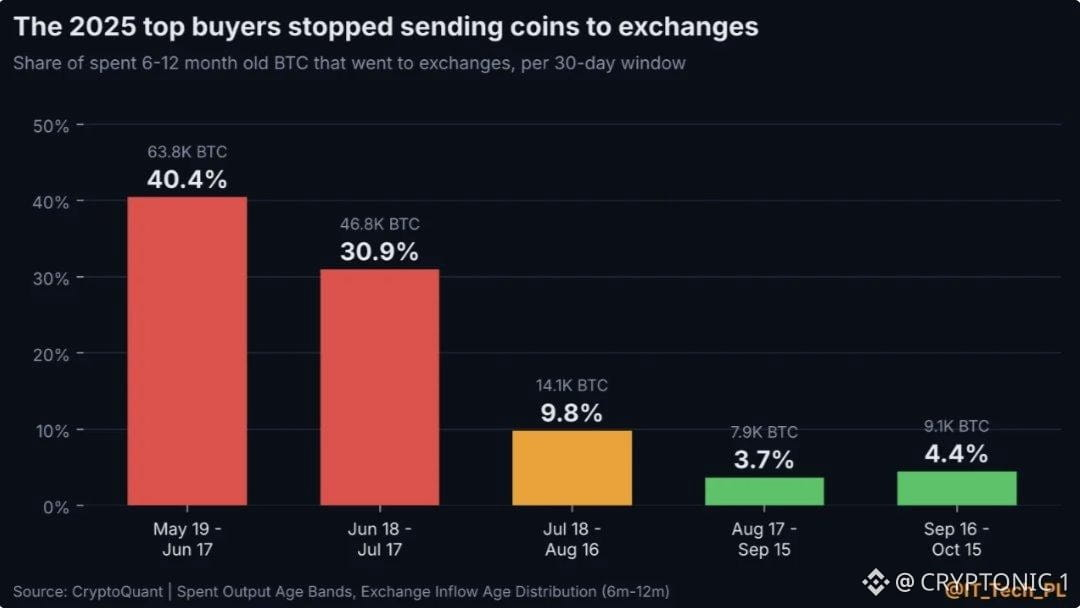
📊 BITCOIN SELLING PRESSURE MAY BE COOLING DOWN Only 4.4% of moved Bitcoin aged 6–12 months reached exchanges, down sharply from 40.4% in June, according to CryptoQuant. This is worth watching because older coins moving to exchanges can signal that holders are preparing to sell. The steep decline suggests fewer coins from this group are reaching exchanges, potentially reducing one source of selling pressure. However, it doesn’t guarantee that Bitcoin is ready to rally. Short term traders can still sell, and exchange deposits don’t always result in actual sales. Fewer older coins heading to exchanges could give BTC some breathing room. The next question is whether buying demand is strong enough to take advantage. #BTC Price Analysis# #Macro Insights# $BTC
📊 BITCOIN SELLING PRESSURE MAY BE COOLING DOWN Only 4.4% of moved Bitcoin aged 6–12 months reached exchanges, down sharply from 40.4% in June, according to CryptoQuant. This is worth watching because older coins moving to exchanges can signal that holders are preparing to sell. The steep decline suggests fewer coins from this group are reaching exchanges, potentially reducing one source of selling pressure. However, it doesn’t guarantee that Bitcoin is ready to rally. Short term traders can still sell, and exchange deposits don’t always result in actual sales. Fewer older coins heading to exchanges could give BTC some breathing room. The next question is whether buying demand is strong enough to take advantage. #BTC Price Analysis# #Macro Insights# $BTC
28
·
--
Circle has minted 250 million USDC on Solana, adding another major issuance of dollar-backed stablecoins to the network. This matters because USDC is a key source of dollar liquidity across crypto trading, DeFi and onchain payments. More supply can help meet demand for those activities, especially as Solana continues attracting trading volume. But a mint doesn’t automatically mean $250M in fresh money has entered the market. The real signal is where the newly created USDC moves next, into exchanges, DeFi protocols or other active wallets. #BTC Price Analysis# #Solana $BTC $SOL
Circle has minted 250 million USDC on Solana, adding another major issuance of dollar-backed stablecoins to the network. This matters because USDC is a key source of dollar liquidity across crypto trading, DeFi and onchain payments. More supply can help meet demand for those activities, especially as Solana continues attracting trading volume. But a mint doesn’t automatically mean $250M in fresh money has entered the market. The real signal is where the newly created USDC moves next, into exchanges, DeFi protocols or other active wallets. #BTC Price Analysis# #Solana $BTC $SOL
48
·
--
BNB Chain has completed its 37th quarterly token burn, permanently removing approximately 1.65 million BNB from circulation, valued at roughly $1.2 billion. The burn is part of BNB’s long-term supply reduction mechanism, which aims to gradually bring the total supply down to 100 million BNB. Following this latest burn, approximately 131.51 million BNB remain in total supply. The key point is that burning tokens reduces the available supply, but it doesn’t automatically push the price higher. Demand, network activity and broader market conditions still matter. $1.2 billion removed. BNB’s supply keeps shrinking. Now the market decides how much that matters for price. #BTC Price Analysis# #Macro Insights# $BTC $BNB
BNB Chain has completed its 37th quarterly token burn, permanently removing approximately 1.65 million BNB from circulation, valued at roughly $1.2 billion. The burn is part of BNB’s long-term supply reduction mechanism, which aims to gradually bring the total supply down to 100 million BNB. Following this latest burn, approximately 131.51 million BNB remain in total supply. The key point is that burning tokens reduces the available supply, but it doesn’t automatically push the price higher. Demand, network activity and broader market conditions still matter. $1.2 billion removed. BNB’s supply keeps shrinking. Now the market decides how much that matters for price. #BTC Price Analysis# #Macro Insights# $BTC $BNB
52
·
--
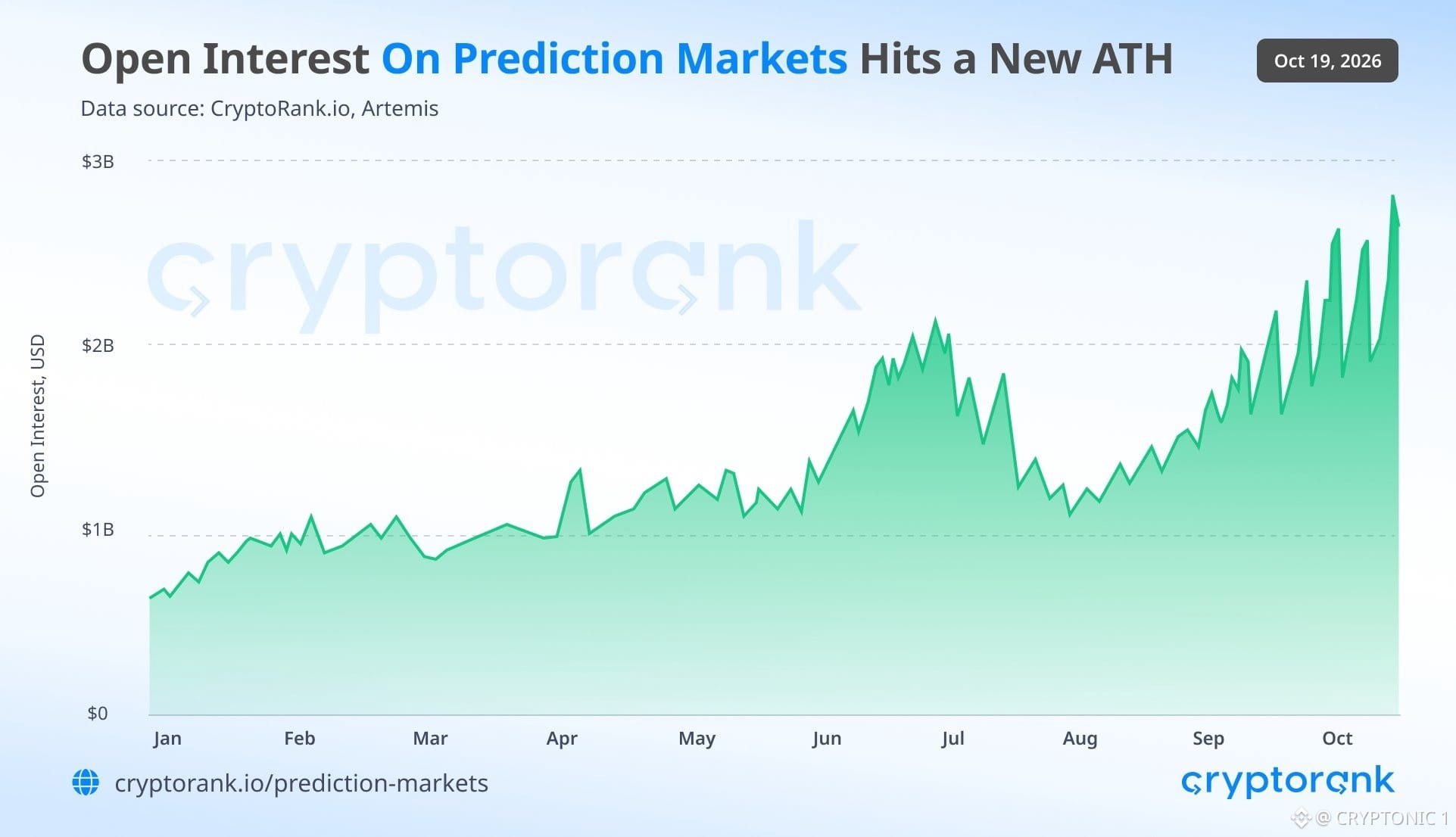
Open interest across prediction markets has climbed from roughly $1.1 billion in August to a record $2.8 billion last week. That’s a huge jump in just a few months, showing that more capital is being committed to predicting real world outcomes, from politics and economics to crypto and major global events. But the market is heavily concentrated. Kalshi controls around 71% of total open interest, while Polymarket holds roughly 24%. Together, the two platforms account for about 95% of the market. The growth is impressive, but the concentration is worth watching. Prediction markets are expanding rapidly, yet a large share of the capital is still flowing through just two platforms. #BTC Price Analysis# #Altcoin Season# $BTC $ARB
Open interest across prediction markets has climbed from roughly $1.1 billion in August to a record $2.8 billion last week. That’s a huge jump in just a few months, showing that more capital is being committed to predicting real world outcomes, from politics and economics to crypto and major global events. But the market is heavily concentrated. Kalshi controls around 71% of total open interest, while Polymarket holds roughly 24%. Together, the two platforms account for about 95% of the market. The growth is impressive, but the concentration is worth watching. Prediction markets are expanding rapidly, yet a large share of the capital is still flowing through just two platforms. #BTC Price Analysis# #Altcoin Season# $BTC $ARB
63
·
--
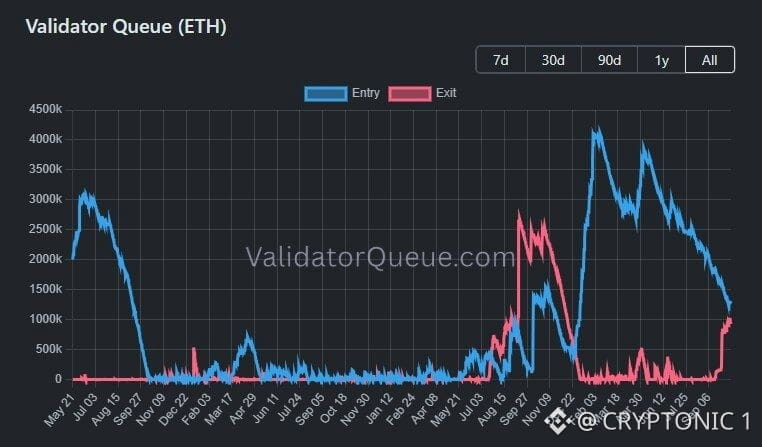
Ethereum’s staking entry and exit queues are getting dangerously close, with almost as much ETH waiting to leave staking as there is waiting to enter. The gap is now the narrowest since late 2025. That’s a notable shift after months when demand to stake ETH heavily outweighed withdrawals. If the exit queue overtakes the entry queue, it would signal a change in staking demand. But there’s an important catch, ETH waiting to unstake isn’t automatically ETH being sold. Some holders may be moving funds between staking providers or repositioning their assets. Still, this is worth watching. If exits keep rising while new staking demand weakens, it could add to concerns about ETH’s near-term supply dynamics. #BTC Price Analysis# #Altcoin Season# $ETH
Ethereum’s staking entry and exit queues are getting dangerously close, with almost as much ETH waiting to leave staking as there is waiting to enter. The gap is now the narrowest since late 2025. That’s a notable shift after months when demand to stake ETH heavily outweighed withdrawals. If the exit queue overtakes the entry queue, it would signal a change in staking demand. But there’s an important catch, ETH waiting to unstake isn’t automatically ETH being sold. Some holders may be moving funds between staking providers or repositioning their assets. Still, this is worth watching. If exits keep rising while new staking demand weakens, it could add to concerns about ETH’s near-term supply dynamics. #BTC Price Analysis# #Altcoin Season# $ETH
71
·
--
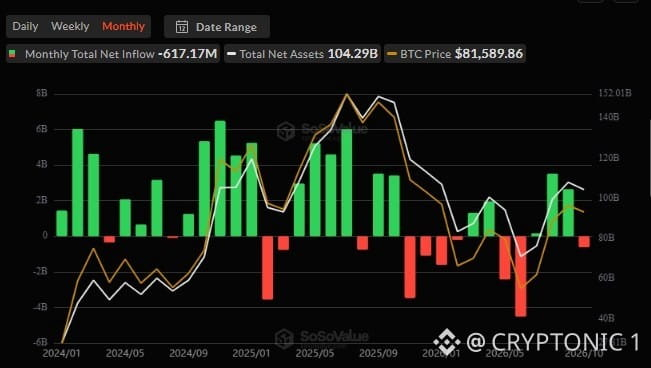
U.S. spot Bitcoin ETFs have a notable historical pattern, their longest recorded streak of monthly net outflows has never exceeded four consecutive months. That’s worth watching because ETF flows have become an important indicator of institutional demand for Bitcoin. Sustained outflows can signal weakening appetite, while a return to positive flows may suggest investors are stepping back in. But history isn’t a guarantee. ETF flows can remain negative for longer than expected, especially when macroeconomic uncertainty and risk aversion weigh on markets. If another outflow streak develops, the key question is whether institutional buyers return before selling pressure builds further. #BTC Price Analysis# #Macro Insights# $BTC
U.S. spot Bitcoin ETFs have a notable historical pattern, their longest recorded streak of monthly net outflows has never exceeded four consecutive months. That’s worth watching because ETF flows have become an important indicator of institutional demand for Bitcoin. Sustained outflows can signal weakening appetite, while a return to positive flows may suggest investors are stepping back in. But history isn’t a guarantee. ETF flows can remain negative for longer than expected, especially when macroeconomic uncertainty and risk aversion weigh on markets. If another outflow streak develops, the key question is whether institutional buyers return before selling pressure builds further. #BTC Price Analysis# #Macro Insights# $BTC
61
·
--
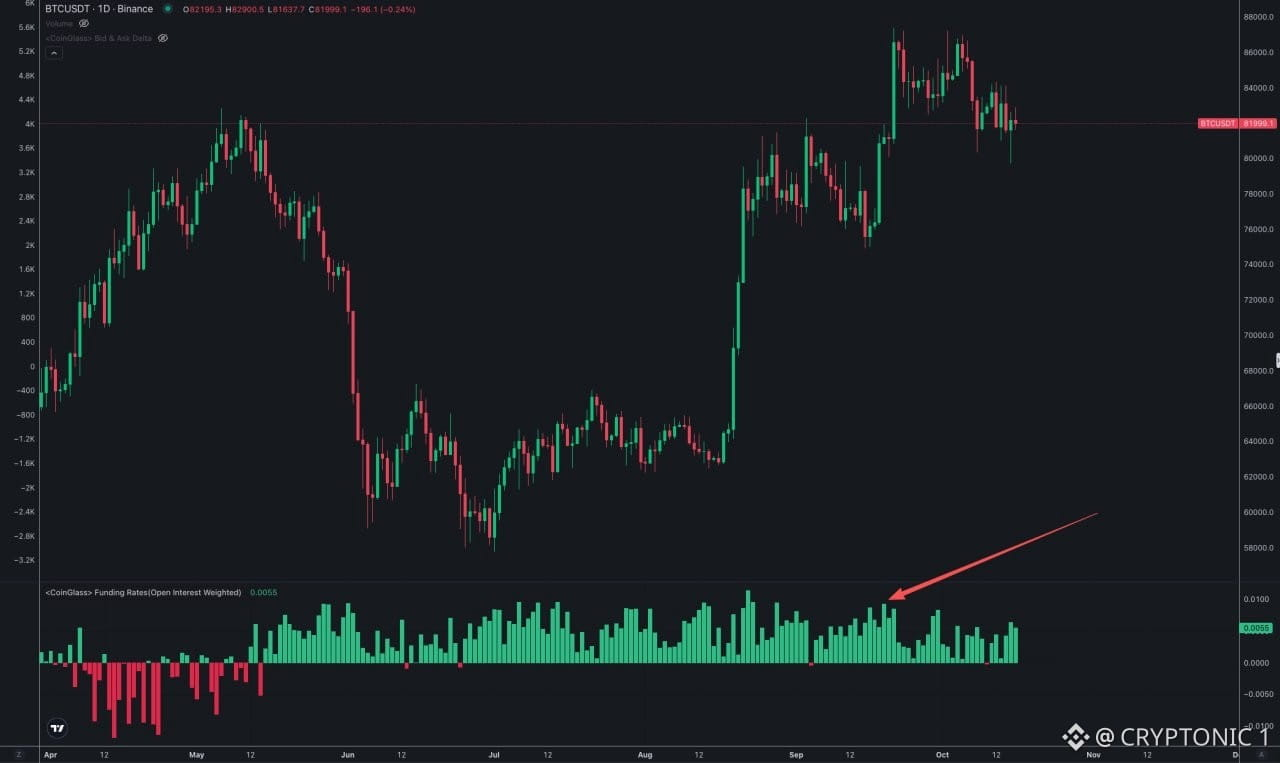
🔥 BITCOIN RALLIED FROM $60K TO $87K WITHOUT A SURGE IN FUNDING RATES Bitcoin’s recovery is showing a signal that bulls will want to watch. BTC climbed from around $60,000 to $87,000 without a significant rise in funding rates. Why does this matter? Funding rates help show how aggressively traders are using leverage to bet on price direction. If Bitcoin rises while funding remains relatively flat, it may suggest the rally isn’t being driven purely by crowded, leveraged long positions. That could leave less excess leverage in the market and reduce the risk of a sudden long squeeze. The key question now is whether spot demand can keep supporting BTC. If it can, this rally may have a healthier foundation than one fueled by excessive leverage alone. #BTC Price Analysis# #BTC Above 60K# $BTC
🔥 BITCOIN RALLIED FROM $60K TO $87K WITHOUT A SURGE IN FUNDING RATES Bitcoin’s recovery is showing a signal that bulls will want to watch. BTC climbed from around $60,000 to $87,000 without a significant rise in funding rates. Why does this matter? Funding rates help show how aggressively traders are using leverage to bet on price direction. If Bitcoin rises while funding remains relatively flat, it may suggest the rally isn’t being driven purely by crowded, leveraged long positions. That could leave less excess leverage in the market and reduce the risk of a sudden long squeeze. The key question now is whether spot demand can keep supporting BTC. If it can, this rally may have a healthier foundation than one fueled by excessive leverage alone. #BTC Price Analysis# #BTC Above 60K# $BTC
35
·
--
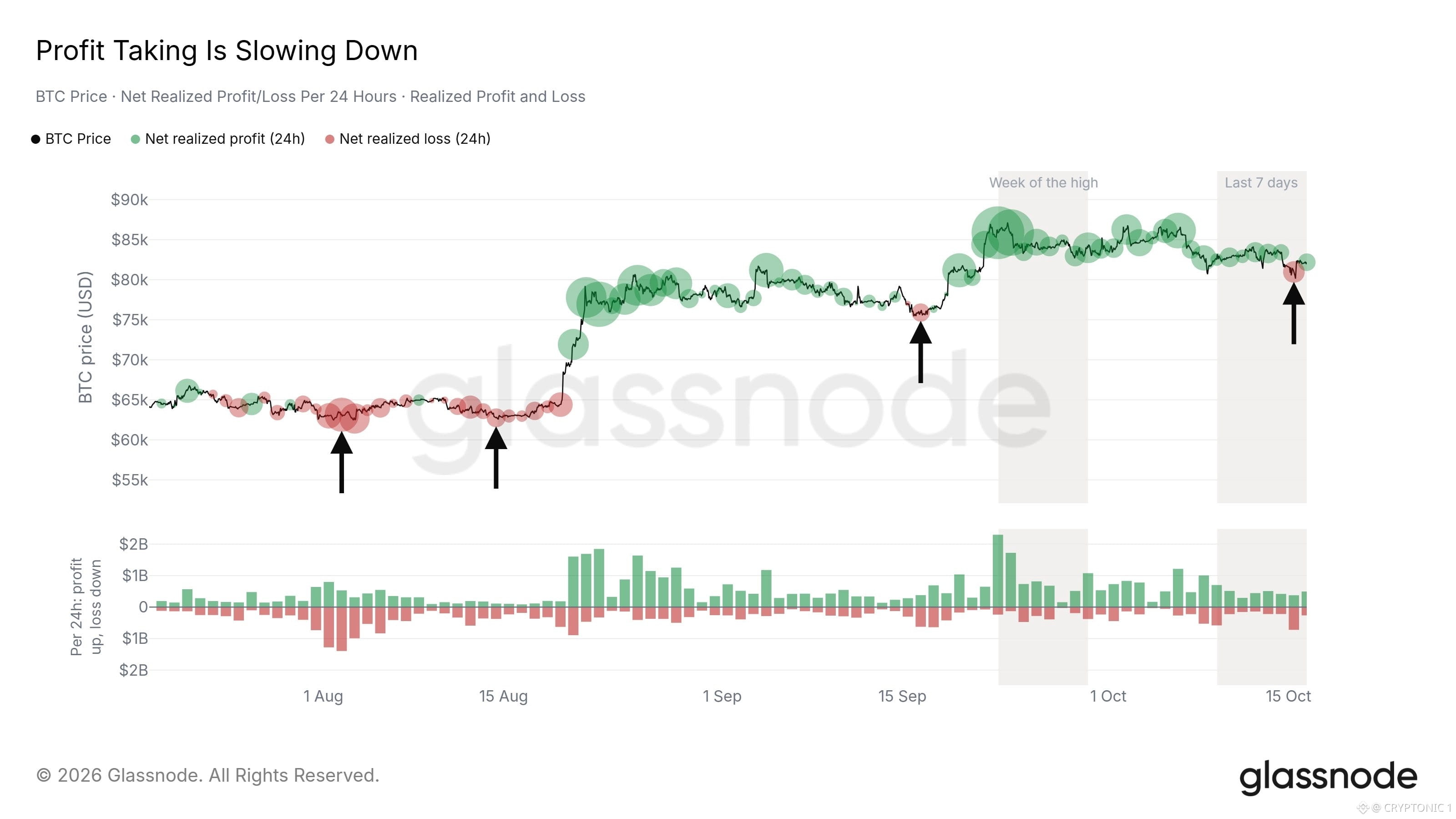
📊 BITCOIN SELLERS MAY HAVE JUST SET ANOTHER LOCAL BOTTOM Bitcoin saw another burst of loss selling yesterday, with BTC trading just above $80K. Interestingly, similar spikes in selling pressure in early August, mid August and mid September were followed by local bottoms. The pattern suggests that when weaker holders rush to exit at a loss, much of the immediate selling pressure may already be exhausted. Another detail worth watching, profit taking has slowed since Bitcoin’s September high. That could mean fewer holders are rushing to lock in gains, potentially giving the market room to stabilize. Still, a capitulation spike alone doesn’t confirm a bottom. Buyers need to step in and defend the area for the pattern to hold. If history repeats itself, yesterday’s sell off above $80K could mark Bitcoin’s next local floor. #BTC Price Analysis# #Macro Insights# $BTC
📊 BITCOIN SELLERS MAY HAVE JUST SET ANOTHER LOCAL BOTTOM Bitcoin saw another burst of loss selling yesterday, with BTC trading just above $80K. Interestingly, similar spikes in selling pressure in early August, mid August and mid September were followed by local bottoms. The pattern suggests that when weaker holders rush to exit at a loss, much of the immediate selling pressure may already be exhausted. Another detail worth watching, profit taking has slowed since Bitcoin’s September high. That could mean fewer holders are rushing to lock in gains, potentially giving the market room to stabilize. Still, a capitulation spike alone doesn’t confirm a bottom. Buyers need to step in and defend the area for the pattern to hold. If history repeats itself, yesterday’s sell off above $80K could mark Bitcoin’s next local floor. #BTC Price Analysis# #Macro Insights# $BTC
47
·
--
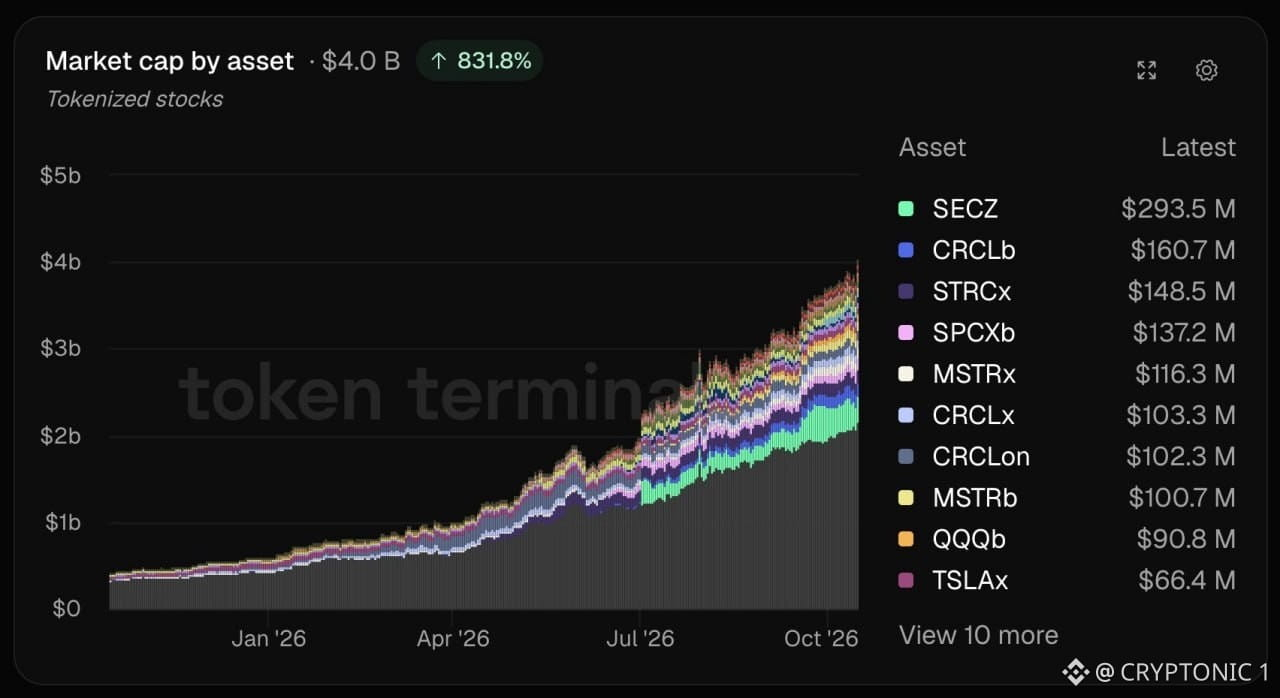
Tokenized stocks have reached a record $4 billion market capitalization, surging 831.8% over the past year, according to Token Terminal. That’s a huge jump for a market bringing traditional equities onto blockchain networks. Investors are increasingly gaining access to tokenized versions of stocks through crypto infrastructure, opening the door to new ways of trading and interacting with traditional financial assets. The growth also reflects a broader shift toward bringing more of the financial system onchain. But market cap alone doesn’t tell the whole story, trading volume, liquidity and the rights attached to each token will determine how useful these products become. An 831.8% increase in a year is hard to ignore. Tokenized equities are becoming a market worth watching. #BTC Price Analysis# #Altcoin Season# $ETH $INJ
Tokenized stocks have reached a record $4 billion market capitalization, surging 831.8% over the past year, according to Token Terminal. That’s a huge jump for a market bringing traditional equities onto blockchain networks. Investors are increasingly gaining access to tokenized versions of stocks through crypto infrastructure, opening the door to new ways of trading and interacting with traditional financial assets. The growth also reflects a broader shift toward bringing more of the financial system onchain. But market cap alone doesn’t tell the whole story, trading volume, liquidity and the rights attached to each token will determine how useful these products become. An 831.8% increase in a year is hard to ignore. Tokenized equities are becoming a market worth watching. #BTC Price Analysis# #Altcoin Season# $ETH $INJ
56
·
--
In DeFi, people often spend more time deciding which token to buy than checking the transaction they’re about to make. But even when you’ve found the right opportunity, the small details can make a difference. Cross-chain swaps are a good example. You’re moving assets between networks, so it’s worth understanding the full transaction before approving it. On Stonfi, start by checking the source network and token, then verify the destination network, the asset you expect to receive and the destination address if one is required. Take a closer look at the quoted amount, fees, estimated timing and available route details. Make sure your wallet supports both networks and has the necessary gas tokens to cover transaction costs. Just before signing, review the live quote again. Prices and expected output can change, so don’t assume the details are still the same as when you started. A swap shouldn’t be a race to press confirm. Knowing what leaves your wallet, what should arrive and what you’re paying to make it happen is part of using DeFi carefully. keep swapping: https://ston.fi/cross-chain-swap-from-ton-to-base #BTC Price Analysis# #Macro Insights# $GRAM $BTC
In DeFi, people often spend more time deciding which token to buy than checking the transaction they’re about to make. But even when you’ve found the right opportunity, the small details can make a difference. Cross-chain swaps are a good example. You’re moving assets between networks, so it’s worth understanding the full transaction before approving it. On Stonfi, start by checking the source network and token, then verify the destination network, the asset you expect to receive and the destination address if one is required. Take a closer look at the quoted amount, fees, estimated timing and available route details. Make sure your wallet supports both networks and has the necessary gas tokens to cover transaction costs. Just before signing, review the live quote again. Prices and expected output can change, so don’t assume the details are still the same as when you started. A swap shouldn’t be a race to press confirm. Knowing what leaves your wallet, what should arrive and what you’re paying to make it happen is part of using DeFi carefully. keep swapping: https://ston.fi/cross-chain-swap-from-ton-to-base #BTC Price Analysis# #Macro Insights# $GRAM $BTC

68
·
--
🔥 HYPERLIQUID DOESN’T WANT TO REPLACE WALL STREET Hyperliquid co-founder Jeff Yan says the network’s ambition is to provide trading infrastructure for financial institutions, rather than compete directly with traditional Wall Street firms. The idea is to let financial companies build trading services on top of Hyperliquid’s technology instead of forcing them to create everything from scratch. Yan also argues that regulation should focus on the companies operating financial services, not the underlying blockchain itself. That distinction could become important as institutions explore onchain markets. Hyperliquid wants to be the infrastructure Wall Street uses, not Wall Street’s replacement. #BTC Price Analysis# #Macro Insights# $HYPE $BTC
🔥 HYPERLIQUID DOESN’T WANT TO REPLACE WALL STREET Hyperliquid co-founder Jeff Yan says the network’s ambition is to provide trading infrastructure for financial institutions, rather than compete directly with traditional Wall Street firms. The idea is to let financial companies build trading services on top of Hyperliquid’s technology instead of forcing them to create everything from scratch. Yan also argues that regulation should focus on the companies operating financial services, not the underlying blockchain itself. That distinction could become important as institutions explore onchain markets. Hyperliquid wants to be the infrastructure Wall Street uses, not Wall Street’s replacement. #BTC Price Analysis# #Macro Insights# $HYPE $BTC

47
·
--
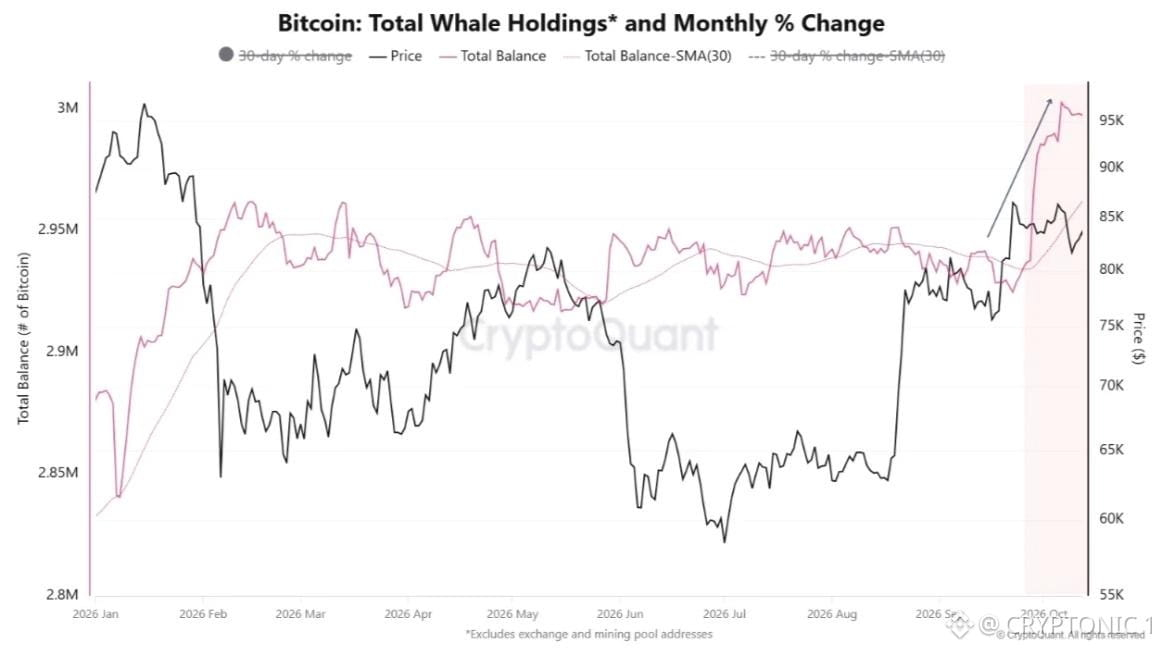
🐋 BITCOIN WHALES ARE BUILDING EXPOSURE INTO THE RECOVERY Bitcoin’s biggest holders are increasing their balances as the market strengthens, according to CryptoQuant analyst MorenoDV_. The important detail is the timing. Large holders appear to be retaining more BTC even after prices have recovered, suggesting they may be absorbing available supply rather than simply chasing a short term rally. If this trend continues, it could help reduce the amount of Bitcoin available for sale and support the recovery. But whale accumulation alone doesn’t guarantee further upside, especially if broader demand starts weakening. #BTC Price Analysis# #BTC Above 60K# $BTC
🐋 BITCOIN WHALES ARE BUILDING EXPOSURE INTO THE RECOVERY Bitcoin’s biggest holders are increasing their balances as the market strengthens, according to CryptoQuant analyst MorenoDV_. The important detail is the timing. Large holders appear to be retaining more BTC even after prices have recovered, suggesting they may be absorbing available supply rather than simply chasing a short term rally. If this trend continues, it could help reduce the amount of Bitcoin available for sale and support the recovery. But whale accumulation alone doesn’t guarantee further upside, especially if broader demand starts weakening. #BTC Price Analysis# #BTC Above 60K# $BTC
57
·
--
Crypto ETF flows turned mixed on October 14, with BTC and ETH leading the withdrawals, while XRP and ZEC attracted fresh capital. > BTC: -$261.46M > ETH: -$129.51M > SOL: -$1.29M > XRP: +$740.41K > ZEC: +$3.68M > HYPE: -$4.95M Bitcoin and Ethereum together lost nearly $391M in a single day, suggesting some investors are reducing exposure to the two largest crypto assets. Meanwhile, XRP and ZEC recorded net inflows, offering a contrasting picture of investor demand. However, one day’s flows aren’t enough to confirm a lasting rotation into these assets. Nearly $391M out of BTC and ETH, while XRP and ZEC attracted capital. Is this temporary profit taking or a broader shift in positioning? #BTC Price Analysis# #Macro Insights# $BTC $ZEC
Crypto ETF flows turned mixed on October 14, with BTC and ETH leading the withdrawals, while XRP and ZEC attracted fresh capital. > BTC: -$261.46M > ETH: -$129.51M > SOL: -$1.29M > XRP: +$740.41K > ZEC: +$3.68M > HYPE: -$4.95M Bitcoin and Ethereum together lost nearly $391M in a single day, suggesting some investors are reducing exposure to the two largest crypto assets. Meanwhile, XRP and ZEC recorded net inflows, offering a contrasting picture of investor demand. However, one day’s flows aren’t enough to confirm a lasting rotation into these assets. Nearly $391M out of BTC and ETH, while XRP and ZEC attracted capital. Is this temporary profit taking or a broader shift in positioning? #BTC Price Analysis# #Macro Insights# $BTC $ZEC

76
·
--
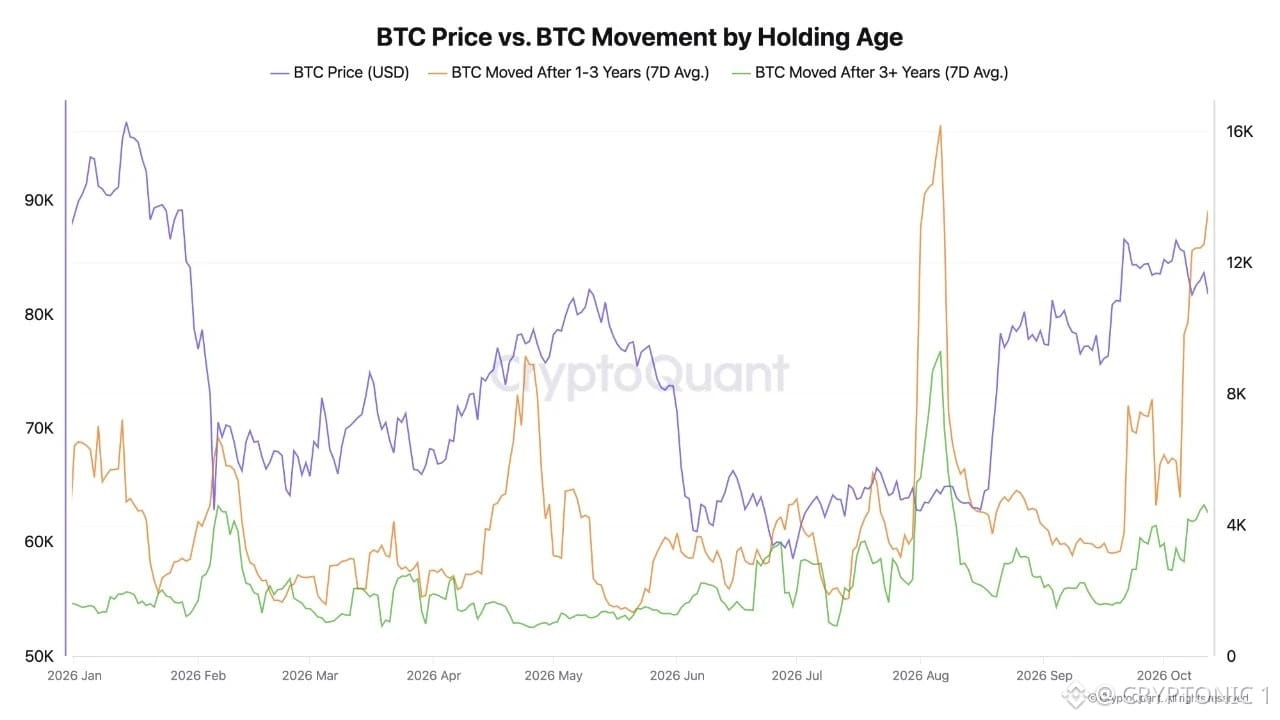
Bitcoin that had remained untouched for at least a year has seen increased movement since late September, raising questions about what long term holders are doing. The activity is worth watching because older coins moving after years of inactivity can signal profit-taking, wallet reorganizations or transfers to new custodians. It does not automatically mean these holders are selling. September alone saw more than 5,400 BTC from long-dormant wallets move to new addresses, worth roughly $457 million at the time, according to onchain tracking data. The key signal is what happens next, whether these coins reach exchanges, whether selling pressure increases, and how Bitcoin absorbs the additional supply. Old Bitcoin is waking up. The destination of those coins matters more than the movement itself. #BTC Price Analysis# #Macro Insights# $BTC
Bitcoin that had remained untouched for at least a year has seen increased movement since late September, raising questions about what long term holders are doing. The activity is worth watching because older coins moving after years of inactivity can signal profit-taking, wallet reorganizations or transfers to new custodians. It does not automatically mean these holders are selling. September alone saw more than 5,400 BTC from long-dormant wallets move to new addresses, worth roughly $457 million at the time, according to onchain tracking data. The key signal is what happens next, whether these coins reach exchanges, whether selling pressure increases, and how Bitcoin absorbs the additional supply. Old Bitcoin is waking up. The destination of those coins matters more than the movement itself. #BTC Price Analysis# #Macro Insights# $BTC
41
·
--
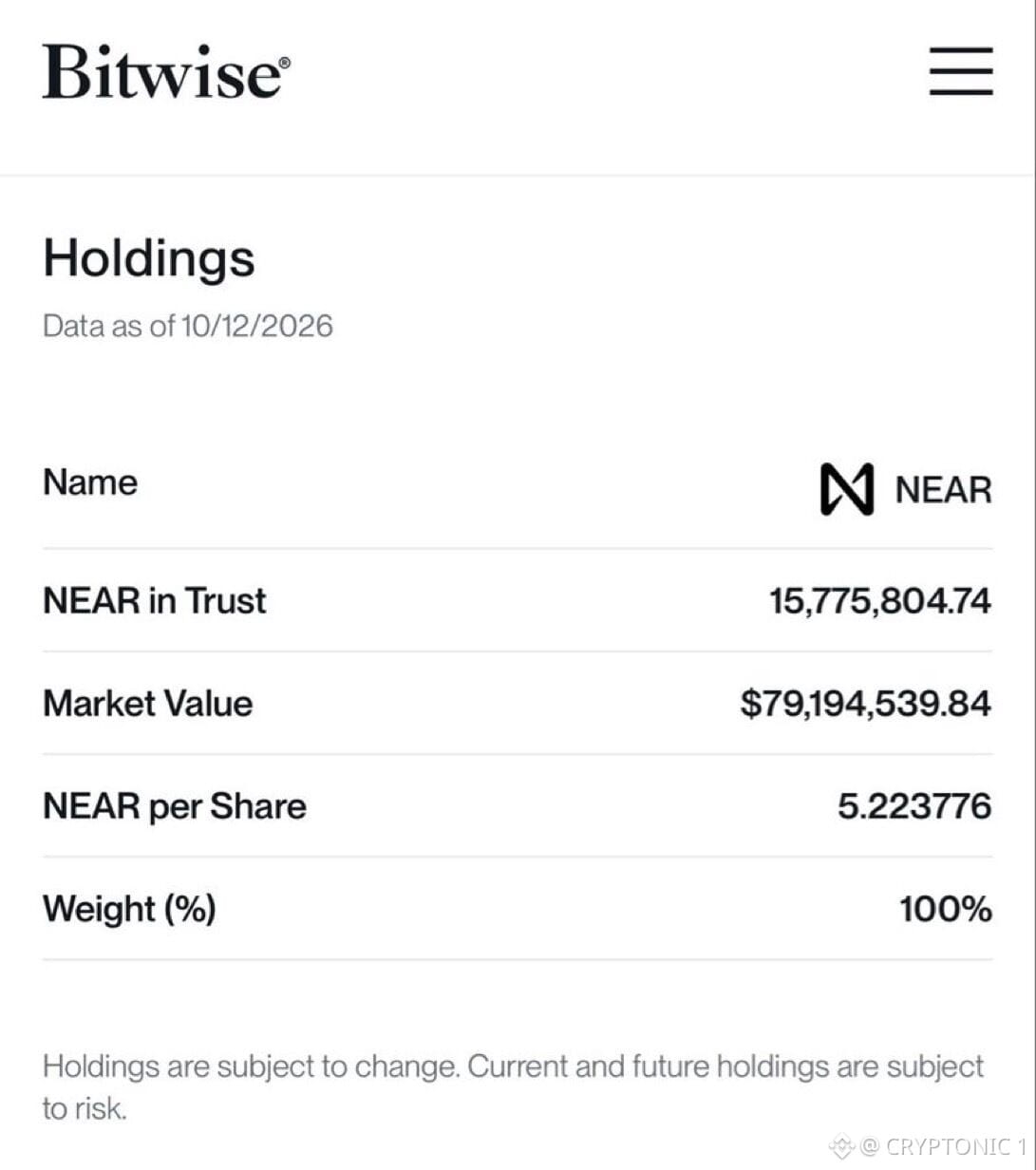
🔥 BITWISE’S NEAR ETF IS ACCUMULATING MILLIONS OF TOKENS Bitwise’s NEAR ETF has reportedly accumulated 15.7 million NEAR just two weeks after launch, highlighting growing institutional access to the token. The fund gives traditional investors exposure to NEAR through a spot exchange-traded product, with Bitwise also planning to stake its holdings to generate staking rewards. The important thing to watch is whether ETF demand continues building. Sustained inflows could mean more NEAR being held by the fund, although ETF holdings alone don’t guarantee an immediate price increase. Institutional exposure to NEAR is growing. Now the question is whether that demand can keep up. #BTC Price Analysis# #Macro Insights# $NEAR $BTC
🔥 BITWISE’S NEAR ETF IS ACCUMULATING MILLIONS OF TOKENS Bitwise’s NEAR ETF has reportedly accumulated 15.7 million NEAR just two weeks after launch, highlighting growing institutional access to the token. The fund gives traditional investors exposure to NEAR through a spot exchange-traded product, with Bitwise also planning to stake its holdings to generate staking rewards. The important thing to watch is whether ETF demand continues building. Sustained inflows could mean more NEAR being held by the fund, although ETF holdings alone don’t guarantee an immediate price increase. Institutional exposure to NEAR is growing. Now the question is whether that demand can keep up. #BTC Price Analysis# #Macro Insights# $NEAR $BTC

58
·
--
🔥 CHAINLINK IS NOW LIVE ON STELLAR Chainlink Data Feeds and Data Streams are now available on Stellar, bringing verifiable market data to a blockchain ecosystem with more than $4 billion in real world assets. This matters because tokenized assets need more than blockchain infrastructure. Lending protocols, trading platforms and tokenized financial products also need reliable price data to function properly and manage risk. Chainlink Data Feeds provide market data for onchain applications, while Data Streams deliver low-latency updates designed for applications that need faster market information. With Stellar continuing to build around tokenized assets and financial services, this integration could help developers create more advanced onchain financial products. More real world assets are moving onchain. Reliable data is what helps make those markets work. #BTC Price Analysis# #Macro Insights# $LINK $XLM
🔥 CHAINLINK IS NOW LIVE ON STELLAR Chainlink Data Feeds and Data Streams are now available on Stellar, bringing verifiable market data to a blockchain ecosystem with more than $4 billion in real world assets. This matters because tokenized assets need more than blockchain infrastructure. Lending protocols, trading platforms and tokenized financial products also need reliable price data to function properly and manage risk. Chainlink Data Feeds provide market data for onchain applications, while Data Streams deliver low-latency updates designed for applications that need faster market information. With Stellar continuing to build around tokenized assets and financial services, this integration could help developers create more advanced onchain financial products. More real world assets are moving onchain. Reliable data is what helps make those markets work. #BTC Price Analysis# #Macro Insights# $LINK $XLM

75
·
--
🚨BITWISE DOGECOIN ETF FACES DELISTING A key detail behind the latest filing, Form 25 is used to remove a security from exchange listing and registration, not to launch a new ETF. Bitwise has already announced plans to close its Dogecoin ETF, which trades under the ticker BWOW. Trading is scheduled to end on October 14, with liquidation proceeds expected to be distributed to remaining shareholders around October 22. So this isn’t necessarily bullish news for DOGE. It appears to be part of the fund’s wind down process, following limited investor demand. The important distinction: an ETF filing can signal a product’s exit, not new institutional adoption. #BTC Price Analysis# #Altcoin Season# $DOGE
🚨BITWISE DOGECOIN ETF FACES DELISTING A key detail behind the latest filing, Form 25 is used to remove a security from exchange listing and registration, not to launch a new ETF. Bitwise has already announced plans to close its Dogecoin ETF, which trades under the ticker BWOW. Trading is scheduled to end on October 14, with liquidation proceeds expected to be distributed to remaining shareholders around October 22. So this isn’t necessarily bullish news for DOGE. It appears to be part of the fund’s wind down process, following limited investor demand. The important distinction: an ETF filing can signal a product’s exit, not new institutional adoption. #BTC Price Analysis# #Altcoin Season# $DOGE
58
Log in to explore more content
Join global crypto users on Binance Square
⚡️ Get latest and useful information about crypto.
💬 Trusted by the world’s largest crypto exchange.
👍 Discover real insights from verified creators.
Email / Phone number