

Waven
71 Posts

Waven
Report
Block User
Exploring Web3 for fun!
Open Trade
Occasional Trader
4.3 Years
69 Following
74 Followers
166 Liked
Posts
Portfolio
All
Quotes
·
--
Just became Agent #17421
My Binance Agent handled the whole on-chain mint, and now I've got a soulbound Proof of Agent card for being early to the agent era. Pulled the Knowledge series, No. 628 📜
This is the kind of thing that makes Web3 fun again: free to mint, gas only, one per Binance Agent ID, and the art actually slaps.
If you've got a Binance Agent, don't sleep on it. The window closes Nov 8 ⏳
ptah.trade/poa
#PtahTrade
#ProofofAgent
Which series did you pull? Drop it below

1
83
·
--
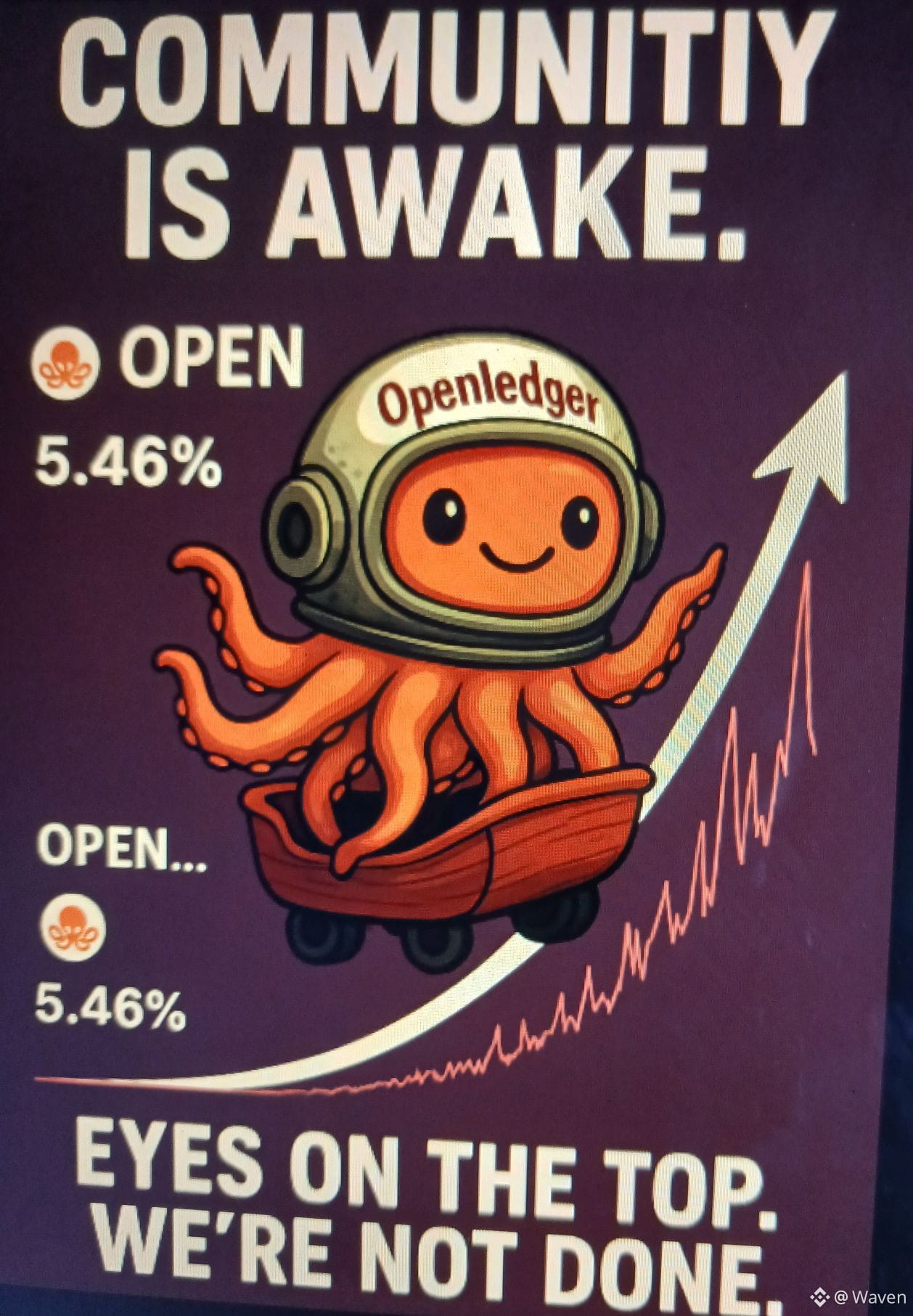
There’s some serious momentum building around @Openledger and Binance Square is feeling it already
That 5.46% surge isn’t just a number… it’s proof that the signal is getting louder.
Every post, every yap, every snap, every whisper on Binance Square is pushing the movement forward. The leaderboard wasn’t built overnight, it’s powered by creators showing up daily with energy, consistency, and quality content.
This is more than engagement farming. Growing ecosystem breaking through the noise and getting the attention it deserves.
The community is active. The builders are locked in. And the momentum keeps climbing
Eyes on the top because we’re far from done.
Dive deeper into OpenLedger today 🐙
#openledger $OPEN
There’s some serious momentum building around @OpenLedger and Binance Square is feeling it already
That 5.46% surge isn’t just a number… it’s proof that the signal is getting louder.
Every post, every yap, every snap, every whisper on Binance Square is pushing the movement forward. The leaderboard wasn’t built overnight, it’s powered by creators showing up daily with energy, consistency, and quality content.
This is more than engagement farming. Growing ecosystem breaking through the noise and getting the attention it deserves.
The community is active. The builders are locked in. And the momentum keeps climbing
Eyes on the top because we’re far from done.
Dive deeper into OpenLedger today 🐙
#openledger $OPEN
1
90
·
--
Sometimes I wonder if we’re getting a little too excited about AI agents. From the outside, it all looks smooth agents trading, handling data, executing smart contracts autonomously. But if these systems eventually control real money, enterprise data or on-chain infrastructure, then security becomes everything.
That’s why @Openledger feels different to me. They’re not only focused on the AI agent future narrative, they’re also thinking deeply about the defense layer behind it. If another autonomous system continuously validates an agent’s actions before execution, that adds a real trust layer.
And honestly, blockchain history has shown that major failures often come from small overlooked vulnerabilities. Once AI agents manage wallets, liquidity or sensitive data, prompt injections and adversarial attacks will become serious risks. OpenLedger addressing those uncomfortable problems early feels like the logical long-term direction
#openledger $OPEN
Sometimes I wonder if we’re getting a little too excited about AI agents. From the outside, it all looks smooth agents trading, handling data, executing smart contracts autonomously. But if these systems eventually control real money, enterprise data or on-chain infrastructure, then security becomes everything.
That’s why @OpenLedger feels different to me. They’re not only focused on the AI agent future narrative, they’re also thinking deeply about the defense layer behind it. If another autonomous system continuously validates an agent’s actions before execution, that adds a real trust layer.
And honestly, blockchain history has shown that major failures often come from small overlooked vulnerabilities. Once AI agents manage wallets, liquidity or sensitive data, prompt injections and adversarial attacks will become serious risks. OpenLedger addressing those uncomfortable problems early feels like the logical long-term direction
#openledger $OPEN
99
·
--
After a long break, a fresh CreatorPad campaign is finally here and this one looks worth grinding for 🔥
To join, create original content on Binance Square, use the hashtag #OpenLedger, tag $OPEN, mention @Openledger and complete at least a $10 trade in $OPEN.
What makes this campaign interesting is that quality actually matters. The more engaging and valuable your posts are, the better your chances of climbing the leaderboard and securing bigger rewards 📈
There’s a massive 50,000 USDC prize pool waiting for top creators, so consistency and creativity will definitely pay off.
The campaign runs until June 2, which gives enough time to cook up solid content and stay active.
Looks like Binance Square grinding season is officially back 🔥
Who’s joining?
#openledger $OPEN
After a long break, a fresh CreatorPad campaign is finally here and this one looks worth grinding for 🔥
To join, create original content on Binance Square, use the hashtag #OpenLedger, tag $OPEN , mention @OpenLedger and complete at least a $10 trade in $OPEN .
What makes this campaign interesting is that quality actually matters. The more engaging and valuable your posts are, the better your chances of climbing the leaderboard and securing bigger rewards 📈
There’s a massive 50,000 USDC prize pool waiting for top creators, so consistency and creativity will definitely pay off.
The campaign runs until June 2, which gives enough time to cook up solid content and stay active.
Looks like Binance Square grinding season is officially back 🔥
Who’s joining?
#openledger $OPEN

73
·
--
Most platforms treat your data like a free resource.
@Openledger is trying something different by turning it into something contributors can actually earn from.
You can upload labeled clips, launch mini training jobs, and track everything through Proof of Attribution, so every dataset contribution is tied back to the models and agents using it. The interesting part is that rewards aren’t vague promises, contributors get paid when their data powers inference.
The ecosystem already looks active too: millions of transactions, thousands of deployed contracts, and growing wallet activity around $OPEN.
I’ve been exploring the staking side lately, especially the attestation reputation layer. Curious to see how far decentralized AI data markets can really go.
Who’s already experimenting with monetizing their datasets or LoRAs? #OpenLedger
#openledger $OPEN
Most platforms treat your data like a free resource.
@OpenLedger is trying something different by turning it into something contributors can actually earn from.
You can upload labeled clips, launch mini training jobs, and track everything through Proof of Attribution, so every dataset contribution is tied back to the models and agents using it. The interesting part is that rewards aren’t vague promises, contributors get paid when their data powers inference.
The ecosystem already looks active too: millions of transactions, thousands of deployed contracts, and growing wallet activity around $OPEN .
I’ve been exploring the staking side lately, especially the attestation reputation layer. Curious to see how far decentralized AI data markets can really go.
Who’s already experimenting with monetizing their datasets or LoRAs? #OpenLedger
#openledger $OPEN

71
·
--
A lot of people believe AI will always be controlled by a few big companies.
@Openledger OpenLedger is trying to change that.
The project is building a system where people who contribute to AI whether through data, ideas, development, or activity can actually get recognized and rewarded for it.
Instead of keeping everything closed and controlled, OpenLedger wants AI to be more open, transparent, and community driven.
One thing that stands out is their focus on “Proof of Attribution,” which is basically about tracking contributions so the value created by AI doesn’t only benefit large corporations.
As AI keeps growing, ownership and fairness will matter more than ever.
That’s why OpenLedger is becoming one of the more interesting projects to watch in the AI and blockchain space.
#openledger $OPEN
A lot of people believe AI will always be controlled by a few big companies.
@OpenLedger OpenLedger is trying to change that.
The project is building a system where people who contribute to AI whether through data, ideas, development, or activity can actually get recognized and rewarded for it.
Instead of keeping everything closed and controlled, OpenLedger wants AI to be more open, transparent, and community driven.
One thing that stands out is their focus on “Proof of Attribution,” which is basically about tracking contributions so the value created by AI doesn’t only benefit large corporations.
As AI keeps growing, ownership and fairness will matter more than ever.
That’s why OpenLedger is becoming one of the more interesting projects to watch in the AI and blockchain space.
#openledger $OPEN

·
--
Most people still think AI will be controlled by a few centralized companies forever.
That’s exactly the narrative @Openledger is trying to challenge.
Instead of building another closed AI ecosystem where users contribute data, attention, and creativity for free, OpenLedger is building infrastructure designed to make AI more transparent, verifiable, and community powered.
At the core of the project is the idea that contributors to AI systems should actually be rewarded. Whether it’s data providers, developers, model creators, or everyday users interacting with the network, OpenLedger wants attribution and value distribution to become part of the AI economy itself.
They describe this through concepts like “Proof of Attribution” a system focused on tracking who contributed what within AI workflows so rewards and ownership don’t stay concentrated at the top.
The bigger vision goes beyond crypto narratives.
OpenLedger is positioning itself as a bridge between blockchain and artificial intelligence, creating an ecosystem where AI models can operate with transparency, accountability, and decentralized coordination instead of depending entirely on black box corporations.
As AI adoption accelerates globally, questions around ownership, monetization, and trust are becoming impossible to ignore.
OpenLedger seems to be building for that future early.
Definitely a project worth paying attention to.
#openledger $OPEN
Most people still think AI will be controlled by a few centralized companies forever.
That’s exactly the narrative @OpenLedger is trying to challenge.
Instead of building another closed AI ecosystem where users contribute data, attention, and creativity for free, OpenLedger is building infrastructure designed to make AI more transparent, verifiable, and community powered.
At the core of the project is the idea that contributors to AI systems should actually be rewarded. Whether it’s data providers, developers, model creators, or everyday users interacting with the network, OpenLedger wants attribution and value distribution to become part of the AI economy itself.
They describe this through concepts like “Proof of Attribution” a system focused on tracking who contributed what within AI workflows so rewards and ownership don’t stay concentrated at the top.
The bigger vision goes beyond crypto narratives.
OpenLedger is positioning itself as a bridge between blockchain and artificial intelligence, creating an ecosystem where AI models can operate with transparency, accountability, and decentralized coordination instead of depending entirely on black box corporations.
As AI adoption accelerates globally, questions around ownership, monetization, and trust are becoming impossible to ignore.
OpenLedger seems to be building for that future early.
Definitely a project worth paying attention to.
#openledger $OPEN

1
77
·
--
Got a quick Question,
how do y'all get to know once a newly campaign is live on Binance ?
Got a quick Question,
how do y'all get to know once a newly campaign is live on Binance ?
how do y'all get to know once a newly campaign is live on Binance ?
·
--

Article
From Hype to Infrastructure: How $SIGN Is Powering the Next Phase of Blockchain AdoptionThe conversation around blockchain is evolving. For years, the space has been dominated by speculation, price movements, and short-term narratives. But today, a more meaningful shift is taking place one that focuses on real utility, scalable systems, and long-term impact. At the center of this transition is a new wave of projects building beyond hype, and among them, @SignOfficial nOfficial with $SIGN stands out as a clear example of where the industry is heading.
Rather than positioning itself as just another digital asset, SIGNrepresents something much deeper: the foundation for digital sovereign infrastructure. This means creating systems that governments, businesses, and institutions can rely on to manage identity, verify data, and enable secure interactions at scale. In a world that is becoming increasingly digital, the need for such infrastructure is not optional it is essential.
The idea of digital sovereignty is gaining traction globally. Countries are beginning to recognize the importance of owning and controlling their digital frameworks instead of relying entirely on external or centralized systems. Blockchain technology, when applied correctly, offers a unique advantage here. It allows for transparency, security, and decentralization while still being adaptable to national and regional needs. This is where $SIGN’s vision becomes particularly relevant.
One of the most compelling aspects of this movement is its regional focus, especially in areas like the Middle East. This region is undergoing rapid transformation, with governments actively investing in technology to diversify their economies and reduce dependence on traditional sectors. There is a strong push toward digital innovation, smart governance, and future-ready infrastructure. In such an environment, solutions like those being developed by @SignOfficial are not just useful they are timely.
The Middle East presents a unique opportunity for blockchain adoption because of its openness to innovation and its strategic approach to economic growth. Instead of gradual adoption, many countries in the region are taking bold steps, integrating advanced technologies into national strategies. This creates fertile ground for projects that offer real utility rather than speculative value. SIGN fits naturally into this landscape by providing tools that can support identity systems, cross-border verification, and trusted digital interactions.
Beyond regional impact, the broader implication of $SIGN’s approach is the shift from fragmented systems to unified digital ecosystems. Today, many processes from identity verification to data sharing are still siloed, inefficient, and vulnerable to manipulation. Blockchain-based infrastructure has the potential to change this by creating a single layer of trust that different systems can build upon. This not only improves efficiency but also enhances security and transparency across sectors.
Another important aspect of this transition is the move from passive participation to active empowerment. Traditional digital systems often place users at the mercy of centralized authorities, with limited control over their own data. In contrast, blockchain-based solutions enable individuals and organizations to take ownership of their digital presence. With $SIGN, this shift becomes more tangible, as it contributes to building systems where users are not just participants but stakeholders.
Ultimately, the rise of projects like @SignOfficial signals a broader transformation within the blockchain industry. The focus is no longer on proving that the technology works that phase is over. The new challenge is to integrate it into real-world systems in a way that delivers measurable value. This requires vision, execution, and a deep understanding of both technology and economic structures.
SIGN represents a step in that direction. It embodies the transition from speculation to implementation, from isolated use cases to scalable infrastructure, and from global hype to regional impact with global implications. As blockchain continues to mature, the projects that will define its future are those that build quietly but effectively creating the systems that others will eventually rely on.
In that sense, SIGN is not just part of the conversation. It is helping to shape what comes next
#signdigitalsovereigninfra $SIGN
From Hype to Infrastructure: How $SIGN Is Powering the Next Phase of Blockchain Adoption
The conversation around blockchain is evolving. For years, the space has been dominated by speculation, price movements, and short-term narratives. But today, a more meaningful shift is taking place one that focuses on real utility, scalable systems, and long-term impact. At the center of this transition is a new wave of projects building beyond hype, and among them, @SignOfficial nOfficial with $SIGN stands out as a clear example of where the industry is heading.
Rather than positioning itself as just another digital asset, SIGNrepresents something much deeper: the foundation for digital sovereign infrastructure. This means creating systems that governments, businesses, and institutions can rely on to manage identity, verify data, and enable secure interactions at scale. In a world that is becoming increasingly digital, the need for such infrastructure is not optional it is essential.
The idea of digital sovereignty is gaining traction globally. Countries are beginning to recognize the importance of owning and controlling their digital frameworks instead of relying entirely on external or centralized systems. Blockchain technology, when applied correctly, offers a unique advantage here. It allows for transparency, security, and decentralization while still being adaptable to national and regional needs. This is where $SIGN ’s vision becomes particularly relevant.
One of the most compelling aspects of this movement is its regional focus, especially in areas like the Middle East. This region is undergoing rapid transformation, with governments actively investing in technology to diversify their economies and reduce dependence on traditional sectors. There is a strong push toward digital innovation, smart governance, and future-ready infrastructure. In such an environment, solutions like those being developed by @SignOfficial are not just useful they are timely.
The Middle East presents a unique opportunity for blockchain adoption because of its openness to innovation and its strategic approach to economic growth. Instead of gradual adoption, many countries in the region are taking bold steps, integrating advanced technologies into national strategies. This creates fertile ground for projects that offer real utility rather than speculative value. SIGN fits naturally into this landscape by providing tools that can support identity systems, cross-border verification, and trusted digital interactions.
Beyond regional impact, the broader implication of $SIGN ’s approach is the shift from fragmented systems to unified digital ecosystems. Today, many processes from identity verification to data sharing are still siloed, inefficient, and vulnerable to manipulation. Blockchain-based infrastructure has the potential to change this by creating a single layer of trust that different systems can build upon. This not only improves efficiency but also enhances security and transparency across sectors.
Another important aspect of this transition is the move from passive participation to active empowerment. Traditional digital systems often place users at the mercy of centralized authorities, with limited control over their own data. In contrast, blockchain-based solutions enable individuals and organizations to take ownership of their digital presence. With $SIGN , this shift becomes more tangible, as it contributes to building systems where users are not just participants but stakeholders.
Ultimately, the rise of projects like @SignOfficial signals a broader transformation within the blockchain industry. The focus is no longer on proving that the technology works that phase is over. The new challenge is to integrate it into real-world systems in a way that delivers measurable value. This requires vision, execution, and a deep understanding of both technology and economic structures.
SIGN represents a step in that direction. It embodies the transition from speculation to implementation, from isolated use cases to scalable infrastructure, and from global hype to regional impact with global implications. As blockchain continues to mature, the projects that will define its future are those that build quietly but effectively creating the systems that others will eventually rely on.
In that sense, SIGN is not just part of the conversation. It is helping to shape what comes next
#signdigitalsovereigninfra $SIGN
1
·
--
From Hype to Infrastructure: How $SIGN Is Powering the Next Phase of Blockchain AdoptionThe conversation around blockchain is evolving. For years, the space has been dominated by speculation, price movements, and short-term narratives. But today, a more meaningful shift is taking place one that focuses on real utility, scalable systems, and long-term impact. At the center of this transition is a new wave of projects building beyond hype, and among them, @SignOfficial fficial with $SIGN stands out as a clear example of where the industry is heading.
Rather than positioning itself as just another digital asset, $SIGN represents something much deeper: the foundation for digital sovereign infrastructure. This means creating systems that governments, businesses, and institutions can rely on to manage identity, verify data, and enable secure interactions at scale. In a world that is becoming increasingly digital, the need for such infrastructure is not optional, it is essential.
The idea of digital sovereignty is gaining traction globally. Countries are beginning to recognize the importance of owning and controlling their digital frameworks instead of relying entirely on external or centralized systems. Blockchain technology, when applied correctly, offers a unique advantage here. It allows for transparency, security, and decentralization while still being adaptable to national and regional needs. This is where $SIGN’s vision becomes particularly relevant.
One of the most compelling aspects of this movement is its regional focus, especially in areas like the Middle East. This region is undergoing rapid transformation, with governments actively investing in technology to diversify their economies and reduce dependence on traditional sectors. There is a strong push toward digital innovation, smart governance, and future-ready infrastructure. In such an environment, solutions like those being developed by it are not just useful they are timely.
The Middle East presents a unique opportunity for blockchain adoption because of its openness to innovation and its strategic approach to economic growth. Instead of gradual adoption, many countries in the region are taking bold steps, integrating advanced technologies into national strategies. This creates fertile ground for projects that offer real utility rather than speculative value. $SIGN fits naturally into this landscape by providing tools that can support identity systems, cross-border verification, and trusted digital interactions.
Beyond regional impact, the broader implication of $SIGN’s approach is the shift from fragmented systems to unified digital ecosystems. Today, many processes from identity verification to data sharing are still siloed, inefficient, and vulnerable to manipulation. Blockchain-based infrastructure has the potential to change this by creating a single layer of trust that different systems can build upon. This not only improves efficiency but also enhances security and transparency across sectors.
Another important aspect of this transition is the move from passive participation to active empowerment. Traditional digital systems often place users at the mercy of centralized authorities, with limited control over their own data. In contrast, blockchain-based solutions enable individuals and organizations to take ownership of their digital presence. With $SIGN, this shift becomes more tangible, as it contributes to building systems where users are not just participants but stakeholders.
Ultimately, the rise of projects like @SignOfficial signals a broader transformation within the blockchain industry. The focus is no longer on proving that the technology works that phase is over. The new challenge is to integrate it into real-world systems in a way that delivers measurable value. This requires vision, execution, and a deep understanding of both technology and economic structures.
$SIGN represents a step in that direction. It embodies the transition from speculation to implementation, from isolated use cases to scalable infrastructure, and from global hype to regional impact with global implications. As blockchain continues to mature, the projects that will define its future are those that build quietly but effectively creating the systems that others will eventually rely on.
In that sense, $SIGN is not just part of the conversation. It is helping to shape what comes next.
#SignDigitalSovereignInfra
From Hype to Infrastructure: How $SIGN Is Powering the Next Phase of Blockchain Adoption
The conversation around blockchain is evolving. For years, the space has been dominated by speculation, price movements, and short-term narratives. But today, a more meaningful shift is taking place one that focuses on real utility, scalable systems, and long-term impact. At the center of this transition is a new wave of projects building beyond hype, and among them, @SignOfficial fficial with $SIGN stands out as a clear example of where the industry is heading.
Rather than positioning itself as just another digital asset, $SIGN represents something much deeper: the foundation for digital sovereign infrastructure. This means creating systems that governments, businesses, and institutions can rely on to manage identity, verify data, and enable secure interactions at scale. In a world that is becoming increasingly digital, the need for such infrastructure is not optional, it is essential.
The idea of digital sovereignty is gaining traction globally. Countries are beginning to recognize the importance of owning and controlling their digital frameworks instead of relying entirely on external or centralized systems. Blockchain technology, when applied correctly, offers a unique advantage here. It allows for transparency, security, and decentralization while still being adaptable to national and regional needs. This is where $SIGN’s vision becomes particularly relevant.
One of the most compelling aspects of this movement is its regional focus, especially in areas like the Middle East. This region is undergoing rapid transformation, with governments actively investing in technology to diversify their economies and reduce dependence on traditional sectors. There is a strong push toward digital innovation, smart governance, and future-ready infrastructure. In such an environment, solutions like those being developed by it are not just useful they are timely.
The Middle East presents a unique opportunity for blockchain adoption because of its openness to innovation and its strategic approach to economic growth. Instead of gradual adoption, many countries in the region are taking bold steps, integrating advanced technologies into national strategies. This creates fertile ground for projects that offer real utility rather than speculative value. $SIGN fits naturally into this landscape by providing tools that can support identity systems, cross-border verification, and trusted digital interactions.
Beyond regional impact, the broader implication of $SIGN’s approach is the shift from fragmented systems to unified digital ecosystems. Today, many processes from identity verification to data sharing are still siloed, inefficient, and vulnerable to manipulation. Blockchain-based infrastructure has the potential to change this by creating a single layer of trust that different systems can build upon. This not only improves efficiency but also enhances security and transparency across sectors.
Another important aspect of this transition is the move from passive participation to active empowerment. Traditional digital systems often place users at the mercy of centralized authorities, with limited control over their own data. In contrast, blockchain-based solutions enable individuals and organizations to take ownership of their digital presence. With $SIGN, this shift becomes more tangible, as it contributes to building systems where users are not just participants but stakeholders.
Ultimately, the rise of projects like @SignOfficial signals a broader transformation within the blockchain industry. The focus is no longer on proving that the technology works that phase is over. The new challenge is to integrate it into real-world systems in a way that delivers measurable value. This requires vision, execution, and a deep understanding of both technology and economic structures.
$SIGN represents a step in that direction. It embodies the transition from speculation to implementation, from isolated use cases to scalable infrastructure, and from global hype to regional impact with global implications. As blockchain continues to mature, the projects that will define its future are those that build quietly but effectively creating the systems that others will eventually rely on.
In that sense, $SIGN is not just part of the conversation. It is helping to shape what comes next.
#SignDigitalSovereignInfra
41
·
--
The shift toward real blockchain utility is accelerating faster than most people realize, and @SignOfficial cial is positioning itself right at the center of that transformation with $SIGN.
This isn’t just another token riding hype cycles it’s about laying the groundwork for digital sovereign infrastructure that can actually support economies at scale. We’re talking about systems that enable trust, identity, and verifiable data across borders without relying on outdated centralized frameworks.
What makes this even more compelling is the focus on regions like the Middle East, where rapid technological adoption meets a strong push for economic diversification and digital leadership. The opportunity here isn’t theoretical it’s practical, immediate, and massive.
$SIGN represents a shift from speculation to real-world implementation. From fragmented systems to unified digital rails. From passive users to empowered participants.
The future of blockchain isn’t just global it’s regional, strategic, and deeply integrated into how economies evolve. And @SignOfficial is building exactly for that reality.
#signdigitalsovereigninfra $SIGN
The shift toward real blockchain utility is accelerating faster than most people realize, and @SignOfficial cial is positioning itself right at the center of that transformation with $SIGN .
This isn’t just another token riding hype cycles it’s about laying the groundwork for digital sovereign infrastructure that can actually support economies at scale. We’re talking about systems that enable trust, identity, and verifiable data across borders without relying on outdated centralized frameworks.
What makes this even more compelling is the focus on regions like the Middle East, where rapid technological adoption meets a strong push for economic diversification and digital leadership. The opportunity here isn’t theoretical it’s practical, immediate, and massive.
$SIGN represents a shift from speculation to real-world implementation. From fragmented systems to unified digital rails. From passive users to empowered participants.
The future of blockchain isn’t just global it’s regional, strategic, and deeply integrated into how economies evolve. And @SignOfficial is building exactly for that reality.
#signdigitalsovereigninfra $SIGN
7
·
--

Article
$SIGN: Building the Future of Digital Sovereign InfrastructureThe next phase of blockchain adoption is no longer about speculation it’s about infrastructure. And that’s exactly where @SignOfficial cial is positioning itself with SIGN
For years, the crypto space has been driven by narratives around tokens, trading, and short-term gains. But real, lasting impact comes from building systems that people, businesses, and even governments can depend on. This is where Sign stands out as a digital sovereign infrastructure layer designed to support scalable and secure economic activity.
At its core, $SIGN represents more than just a token. It is a gateway to a new kind of digital framework where identity, trust, and ownership are seamlessly integrated. In regions like the Middle East, where rapid digital transformation is already underway, this kind of infrastructure can play a key role in accelerating economic growth. Governments are increasingly looking for ways to digitize services, improve transparency, and empower citizens with more control over their data. Sign aligns perfectly with these goals.
One of the most powerful ideas behind Sign is digital sovereignty. Instead of relying on fragmented systems or centralized platforms, countries and institutions can leverage blockchain-based infrastructure to build systems that are transparent, efficient, and secure. This means better public services, stronger financial systems, and more inclusive access to opportunities.
Beyond government use cases, SIGN also opens doors for businesses and developers. Imagine applications where verification is instant, transactions are trustless, and user ownership is guaranteed. From finance to gaming to digital identity, the potential applications are massive. Builders can create solutions on top of Sign’s infrastructure, knowing they are working with a system designed for long-term scalability.
What makes this even more compelling is timing. The world is shifting toward decentralized technologies, but adoption only happens when the user experience is seamless and the value is clear. Sign focuses on making blockchain invisible to the end user while delivering real benefits underneath. This approach is critical for onboarding the next wave of users who care more about utility than technical complexity.
As the global economy becomes more digital, infrastructure will define the winners. Projects that solve real problems and integrate into everyday systems will outlast those built purely on hype. SIGN is positioning itself in that category focused, practical, and aligned with the future of digital economies.
In the long run, digital sovereignty will not be optional; it will be essential. And platforms like SING are laying the groundwork for that future.
#SignDigitalSovereignInfra
$SIGN: Building the Future of Digital Sovereign Infrastructure
The next phase of blockchain adoption is no longer about speculation it’s about infrastructure. And that’s exactly where @SignOfficial cial is positioning itself with SIGN
For years, the crypto space has been driven by narratives around tokens, trading, and short-term gains. But real, lasting impact comes from building systems that people, businesses, and even governments can depend on. This is where Sign stands out as a digital sovereign infrastructure layer designed to support scalable and secure economic activity.
At its core, $SIGN represents more than just a token. It is a gateway to a new kind of digital framework where identity, trust, and ownership are seamlessly integrated. In regions like the Middle East, where rapid digital transformation is already underway, this kind of infrastructure can play a key role in accelerating economic growth. Governments are increasingly looking for ways to digitize services, improve transparency, and empower citizens with more control over their data. Sign aligns perfectly with these goals.
One of the most powerful ideas behind Sign is digital sovereignty. Instead of relying on fragmented systems or centralized platforms, countries and institutions can leverage blockchain-based infrastructure to build systems that are transparent, efficient, and secure. This means better public services, stronger financial systems, and more inclusive access to opportunities.
Beyond government use cases, SIGN also opens doors for businesses and developers. Imagine applications where verification is instant, transactions are trustless, and user ownership is guaranteed. From finance to gaming to digital identity, the potential applications are massive. Builders can create solutions on top of Sign’s infrastructure, knowing they are working with a system designed for long-term scalability.
What makes this even more compelling is timing. The world is shifting toward decentralized technologies, but adoption only happens when the user experience is seamless and the value is clear. Sign focuses on making blockchain invisible to the end user while delivering real benefits underneath. This approach is critical for onboarding the next wave of users who care more about utility than technical complexity.
As the global economy becomes more digital, infrastructure will define the winners. Projects that solve real problems and integrate into everyday systems will outlast those built purely on hype. SIGN is positioning itself in that category focused, practical, and aligned with the future of digital economies.
In the long run, digital sovereignty will not be optional; it will be essential. And platforms like SING are laying the groundwork for that future.
#SignDigitalSovereignInfra
2
·
--
The future of digital infrastructure is being rewritten, and @SignOfficial is right at the center of it. 🌍
With $SIGN , we’re not just talking about blockchain anymore, we’re talking about real digital sovereignty, scalable systems, and infrastructure that can power economic growth across regions like the Middle East.
This is bigger than hype. It’s about building trust, ownership, and efficient digital frameworks that governments, businesses, and users can rely on long term.
As adoption grows, projects like $SIGN will define how nations interact with technology and value in a decentralized world.
#signdigitalsovereigninfra $SIGN
3
·
--

Article
Introduction: The Missing Piece in Web3$SIGN and the Trust Layer Problem Why Web3 Needs More Than Just Speed
Introduction: The Missing Piece in Web3
For years, the conversation around Web3 has been dominated by speed, scalability, and transaction costs. New chains launch promising higher throughput. Protocols compete on efficiency. Users chase incentives across ecosystems.
But beneath all of that progress lies a deeper issue that hasn’t been fully solved:
Trust.
Not the kind enforced by centralized platforms but trust that is verifiable, portable, and resistant to manipulation.
This is where SIGN enters the conversation, not as another trend-driven token, but as a foundational layer addressing one of Web3’s most overlooked problems.
The Internet Still Struggles With Proof
Today’s internet is built on weak verification systems.
Accounts can be faked.
Engagement can be botted.
Reputation is locked inside platforms.
Even in Web3, where transparency is supposed to be a strength, the situation isn’t perfect. Wallets are anonymous by default, and while that protects privacy, it also creates a gap:
How do you prove legitimacy without sacrificing decentralization?
Without reliable proof systems, ecosystems face:
Sybil attacks in airdrops
Fake participation in DAOs
Inflated metrics across platforms
The result? Distrust at scale.
SIGN’s Core Idea: Verifiable Everything
SIGN approaches this problem from a simple but powerful angle:
Make claims verifiable.
Instead of relying on centralized authorities or blind assumptions, it enables users and applications to attach cryptographic proofs to identities, actions, and credentials.
This creates a new layer where:
Identity isn’t just a wallet address
Participation isn’t just a transaction
Reputation isn’t just a number
Everything can be backed by verifiable data.
Why This Changes Airdrops and Incentives
One of the most immediate use cases is in token distribution.
Airdrops have become a major growth strategy in Web3 but they’re deeply flawed. Bots and multi-wallet farmers often capture a large share of rewards, leaving genuine users behind.
With SIGN:
Projects can target real contributors
Eligibility can be based on verified actions
Rewards become more meaningful and fair
This shifts the dynamic from exploitation to genuine participation.
Beyond Tokens: A New Reputation Economy
The bigger vision goes beyond airdrops.
Imagine a Web3 ecosystem where your contributions across platforms are provable:
Your DAO participation
Your development work
Your governance history
All verifiable. All portable.
This creates the foundation for a reputation economy, where trust is earned through transparent actions rather than centralized validation.
In such a system:
Builders gain credibility faster
Communities become more resilient
Users are rewarded based on real impact
Balancing Privacy and Transparency
A critical challenge in any identity-related system is privacy.
Too much transparency can expose users.
Too much privacy can enable abuse. SIGN operates in the middle ground by focusing on verifiable proofs, not unnecessary exposure.
This means users can prove that something is true without revealing everything about themselves a key principle for the future of decentralized identity.
Why This Matters for Adoption
Mainstream adoption of Web3 won’t come from technology alone.
It will come from confidence.
People need to trust that:
Systems are fair
Rewards are earned
Interactions are authentic
Without that, even the fastest blockchain won’t matter.
By addressing trust at the infrastructure level, SIGN plays a role that many projects overlook but every ecosystem needs.
Conclusion: Building the Trust Layer of the Future
Web3 doesn’t just need better tools.
It needs better truth systems.
SIGN represents a shift from speculation-driven narratives to infrastructure-driven value focusing on something fundamental: making the internet more trustworthy without sacrificing decentralization.
In the long run, the projects that matter won’t be the loudest.
They’ll be the ones solving real problems.
And trust?
That’s one of the biggest problems Web3 still has to solve.
#signdigitalsovereigninfra $SIGN
Introduction: The Missing Piece in Web3
$SIGN and the Trust Layer Problem Why Web3 Needs More Than Just Speed
Introduction: The Missing Piece in Web3
For years, the conversation around Web3 has been dominated by speed, scalability, and transaction costs. New chains launch promising higher throughput. Protocols compete on efficiency. Users chase incentives across ecosystems.
But beneath all of that progress lies a deeper issue that hasn’t been fully solved:
Trust.
Not the kind enforced by centralized platforms but trust that is verifiable, portable, and resistant to manipulation.
This is where SIGN enters the conversation, not as another trend-driven token, but as a foundational layer addressing one of Web3’s most overlooked problems.
The Internet Still Struggles With Proof
Today’s internet is built on weak verification systems.
Accounts can be faked.
Engagement can be botted.
Reputation is locked inside platforms.
Even in Web3, where transparency is supposed to be a strength, the situation isn’t perfect. Wallets are anonymous by default, and while that protects privacy, it also creates a gap:
How do you prove legitimacy without sacrificing decentralization?
Without reliable proof systems, ecosystems face:
Sybil attacks in airdrops
Fake participation in DAOs
Inflated metrics across platforms
The result? Distrust at scale.
SIGN’s Core Idea: Verifiable Everything
SIGN approaches this problem from a simple but powerful angle:
Make claims verifiable.
Instead of relying on centralized authorities or blind assumptions, it enables users and applications to attach cryptographic proofs to identities, actions, and credentials.
This creates a new layer where:
Identity isn’t just a wallet address
Participation isn’t just a transaction
Reputation isn’t just a number
Everything can be backed by verifiable data.
Why This Changes Airdrops and Incentives
One of the most immediate use cases is in token distribution.
Airdrops have become a major growth strategy in Web3 but they’re deeply flawed. Bots and multi-wallet farmers often capture a large share of rewards, leaving genuine users behind.
With SIGN:
Projects can target real contributors
Eligibility can be based on verified actions
Rewards become more meaningful and fair
This shifts the dynamic from exploitation to genuine participation.
Beyond Tokens: A New Reputation Economy
The bigger vision goes beyond airdrops.
Imagine a Web3 ecosystem where your contributions across platforms are provable:
Your DAO participation
Your development work
Your governance history
All verifiable. All portable.
This creates the foundation for a reputation economy, where trust is earned through transparent actions rather than centralized validation.
In such a system:
Builders gain credibility faster
Communities become more resilient
Users are rewarded based on real impact
Balancing Privacy and Transparency
A critical challenge in any identity-related system is privacy.
Too much transparency can expose users.
Too much privacy can enable abuse. SIGN operates in the middle ground by focusing on verifiable proofs, not unnecessary exposure.
This means users can prove that something is true without revealing everything about themselves a key principle for the future of decentralized identity.
Why This Matters for Adoption
Mainstream adoption of Web3 won’t come from technology alone.
It will come from confidence.
People need to trust that:
Systems are fair
Rewards are earned
Interactions are authentic
Without that, even the fastest blockchain won’t matter.
By addressing trust at the infrastructure level, SIGN plays a role that many projects overlook but every ecosystem needs.
Conclusion: Building the Trust Layer of the Future
Web3 doesn’t just need better tools.
It needs better truth systems.
SIGN represents a shift from speculation-driven narratives to infrastructure-driven value focusing on something fundamental: making the internet more trustworthy without sacrificing decentralization.
In the long run, the projects that matter won’t be the loudest.
They’ll be the ones solving real problems.
And trust?
That’s one of the biggest problems Web3 still has to solve.
#signdigitalsovereigninfra $SIGN
Introduction: The Missing Piece in Web3
For years, the conversation around Web3 has been dominated by speed, scalability, and transaction costs. New chains launch promising higher throughput. Protocols compete on efficiency. Users chase incentives across ecosystems.
But beneath all of that progress lies a deeper issue that hasn’t been fully solved:
Trust.
Not the kind enforced by centralized platforms but trust that is verifiable, portable, and resistant to manipulation.
This is where SIGN enters the conversation, not as another trend-driven token, but as a foundational layer addressing one of Web3’s most overlooked problems.
The Internet Still Struggles With Proof
Today’s internet is built on weak verification systems.
Accounts can be faked.
Engagement can be botted.
Reputation is locked inside platforms.
Even in Web3, where transparency is supposed to be a strength, the situation isn’t perfect. Wallets are anonymous by default, and while that protects privacy, it also creates a gap:
How do you prove legitimacy without sacrificing decentralization?
Without reliable proof systems, ecosystems face:
Sybil attacks in airdrops
Fake participation in DAOs
Inflated metrics across platforms
The result? Distrust at scale.
SIGN’s Core Idea: Verifiable Everything
SIGN approaches this problem from a simple but powerful angle:
Make claims verifiable.
Instead of relying on centralized authorities or blind assumptions, it enables users and applications to attach cryptographic proofs to identities, actions, and credentials.
This creates a new layer where:
Identity isn’t just a wallet address
Participation isn’t just a transaction
Reputation isn’t just a number
Everything can be backed by verifiable data.
Why This Changes Airdrops and Incentives
One of the most immediate use cases is in token distribution.
Airdrops have become a major growth strategy in Web3 but they’re deeply flawed. Bots and multi-wallet farmers often capture a large share of rewards, leaving genuine users behind.
With SIGN:
Projects can target real contributors
Eligibility can be based on verified actions
Rewards become more meaningful and fair
This shifts the dynamic from exploitation to genuine participation.
Beyond Tokens: A New Reputation Economy
The bigger vision goes beyond airdrops.
Imagine a Web3 ecosystem where your contributions across platforms are provable:
Your DAO participation
Your development work
Your governance history
All verifiable. All portable.
This creates the foundation for a reputation economy, where trust is earned through transparent actions rather than centralized validation.
In such a system:
Builders gain credibility faster
Communities become more resilient
Users are rewarded based on real impact
Balancing Privacy and Transparency
A critical challenge in any identity-related system is privacy.
Too much transparency can expose users.
Too much privacy can enable abuse. SIGN operates in the middle ground by focusing on verifiable proofs, not unnecessary exposure.
This means users can prove that something is true without revealing everything about themselves a key principle for the future of decentralized identity.
Why This Matters for Adoption
Mainstream adoption of Web3 won’t come from technology alone.
It will come from confidence.
People need to trust that:
Systems are fair
Rewards are earned
Interactions are authentic
Without that, even the fastest blockchain won’t matter.
By addressing trust at the infrastructure level, SIGN plays a role that many projects overlook but every ecosystem needs.
Conclusion: Building the Trust Layer of the Future
Web3 doesn’t just need better tools.
It needs better truth systems.
SIGN represents a shift from speculation-driven narratives to infrastructure-driven value focusing on something fundamental: making the internet more trustworthy without sacrificing decentralization.
In the long run, the projects that matter won’t be the loudest.
They’ll be the ones solving real problems.
And trust?
That’s one of the biggest problems Web3 still has to solve.
#signdigitalsovereigninfra $SIGN
1
58
·
--
Most people think Web3 adoption is about faster chains or bigger airdrops…
They’re wrong.
The real bottleneck is trust and that’s exactly where $SIGN comes in 🧵
Right now, proving anything on the internet is messy: Who you are
What you own
What you’ve done
It’s all fragmented, easy to fake, and hard to verify.
Sign flips that.
Instead of relying on platforms to “vouch” for users, it builds a system where credentials, identities, and proofs are verifiable on-chain — clean, portable, and tamper-resistant.
Think about what that unlocks: • Smarter airdrops (real users, not bots)
• Reputation that actually travels with you
• Trust layers for apps without middlemen
This isn’t just another token chasing hype.
It’s infrastructure for a more honest internet.
And in a space full of noise, the projects that win… are the ones that make trust scalable.
$SIGN is quietly doing exactly that.
#signdigitalsovereigninfra $SIGN
9
·
--
Article
Why $SIGN Might Be One of the Most Important Infrastructure Tokens in Web3The evolution of Web3 has followed a familiar pattern: hype first, utility later. We’ve seen waves of innovation driven by speculation DeFi, NFTs, GameFi all pushing boundaries, yet still lacking one critical piece: trust infrastructure.
This is where SINGcomes in.
Rather than competing for attention in crowded narratives, focuses on something more fundamental building the underlying systems that make Web3 more reliable, verifiable and usable at scale.
The Missing Layer in Web3
At its core, Web3 promises decentralization, ownership, and transparency. But in practice, it still struggles with identity and verification.
Wallets are anonymous.
Credentials are fragmented.
Reputation is hard to prove.
This creates friction everywhere from airdrops and governance to community building and security.
Without a way to verify who someone is (or what they’ve done), projects are forced to rely on inefficient or centralized solutions. And users, in turn, are left navigating a system where trust is often assumed rather than proven.
Sign is designed to solve exactly this problem.
What SING Actually Does
$SIGN powers an ecosystem built around on-chain verification and credential systems.
Instead of relying on screenshots, manual checks, or centralized databases, users and projects can create verifiable records directly on the blockchain.
These records can represent:
Identity
Achievements
Roles within communities
Participation in events
Eligibility for rewards or airdrops
Everything becomes transparent, tamper-proof, and easily accessible across platforms.
This isn’t just a technical improvement it’s a shift in how trust is established online.
From Airdrops to Identity: Real Use Cases
One of the most immediate applications of SING is in token distribution.
Airdrops have become a major growth strategy in Web3, but they come with challenges:
Sybil attacks (fake accounts farming rewards)
Inefficient targeting
Lack of verifiable eligibility criteria
With $SIGN, projects can define clear, verifiable conditions for participation. Instead of guessing who qualifies, they can rely on on-chain credentials.
Beyond airdrops, the use cases expand quickly:
DAOs can assign roles and voting rights based on verified contributions
Communities can reward genuine engagement
Platforms can build reputation systems that actually mean something
Over time, this creates a more merit-based and trustworthy ecosystem.
Invisible Infrastructure, Real Impact
One of the most powerful aspects of is that it operates largely in the background.
Users don’t need to understand the complexity of verification protocols or data structures. They simply experience smoother interactions:
Fairer rewards
Better access control
More credible communities
This “invisible infrastructure” approach is often what separates hype projects from lasting ones. The most important technologies are not always the loudest they’re the ones quietly powering everything else.
Why It Matters Now
As Web3 matures, the focus is shifting from experimentation to sustainability.
Projects are no longer just asking, “Can we build this?”
They’re asking, “Can this scale? Can this be trusted?”
Without reliable identity and verification systems, large-scale adoption becomes difficult. Enterprises, institutions, and even everyday users need assurance that the systems they interact with are secure and credible.
positions itself right at this intersection — enabling trust without sacrificing decentralization.
A Shift From Speculation to Utility
The broader crypto market is also evolving. Narratives based purely on hype are losing momentum, while infrastructure projects with real-world applications are gaining attention.
Fits squarely into this new phase.
It doesn’t try to replace existing systems it enhances them. It doesn’t demand attention it earns relevance through utility.
And in a space where long-term success depends on real adoption, that distinction matters.
Final Thoughts represents a different kind of value proposition in Web3.
Not flashy.
Not speculative.
But deeply necessary.
By focusing on verification, identity, and trust, it addresses one of the most fundamental challenges in decentralized systems.
As the ecosystem continues to grow, the projects that enable trust will become the backbone of everything else.
And that’s exactly where $SIGN is positioning itself.
#SignDigitalSovereignInfra
Why $SIGN Might Be One of the Most Important Infrastructure Tokens in Web3
The evolution of Web3 has followed a familiar pattern: hype first, utility later. We’ve seen waves of innovation driven by speculation DeFi, NFTs, GameFi all pushing boundaries, yet still lacking one critical piece: trust infrastructure.
This is where SINGcomes in.
Rather than competing for attention in crowded narratives, focuses on something more fundamental building the underlying systems that make Web3 more reliable, verifiable and usable at scale.
The Missing Layer in Web3
At its core, Web3 promises decentralization, ownership, and transparency. But in practice, it still struggles with identity and verification.
Wallets are anonymous.
Credentials are fragmented.
Reputation is hard to prove.
This creates friction everywhere from airdrops and governance to community building and security.
Without a way to verify who someone is (or what they’ve done), projects are forced to rely on inefficient or centralized solutions. And users, in turn, are left navigating a system where trust is often assumed rather than proven.
Sign is designed to solve exactly this problem.
What SING Actually Does
$SIGN powers an ecosystem built around on-chain verification and credential systems.
Instead of relying on screenshots, manual checks, or centralized databases, users and projects can create verifiable records directly on the blockchain.
These records can represent:
Identity
Achievements
Roles within communities
Participation in events
Eligibility for rewards or airdrops
Everything becomes transparent, tamper-proof, and easily accessible across platforms.
This isn’t just a technical improvement it’s a shift in how trust is established online.
From Airdrops to Identity: Real Use Cases
One of the most immediate applications of SING is in token distribution.
Airdrops have become a major growth strategy in Web3, but they come with challenges:
Sybil attacks (fake accounts farming rewards)
Inefficient targeting
Lack of verifiable eligibility criteria
With $SIGN , projects can define clear, verifiable conditions for participation. Instead of guessing who qualifies, they can rely on on-chain credentials.
Beyond airdrops, the use cases expand quickly:
DAOs can assign roles and voting rights based on verified contributions
Communities can reward genuine engagement
Platforms can build reputation systems that actually mean something
Over time, this creates a more merit-based and trustworthy ecosystem.
Invisible Infrastructure, Real Impact
One of the most powerful aspects of is that it operates largely in the background.
Users don’t need to understand the complexity of verification protocols or data structures. They simply experience smoother interactions:
Fairer rewards
Better access control
More credible communities
This “invisible infrastructure” approach is often what separates hype projects from lasting ones. The most important technologies are not always the loudest they’re the ones quietly powering everything else.
Why It Matters Now
As Web3 matures, the focus is shifting from experimentation to sustainability.
Projects are no longer just asking, “Can we build this?”
They’re asking, “Can this scale? Can this be trusted?”
Without reliable identity and verification systems, large-scale adoption becomes difficult. Enterprises, institutions, and even everyday users need assurance that the systems they interact with are secure and credible.
positions itself right at this intersection — enabling trust without sacrificing decentralization.
A Shift From Speculation to Utility
The broader crypto market is also evolving. Narratives based purely on hype are losing momentum, while infrastructure projects with real-world applications are gaining attention.
Fits squarely into this new phase.
It doesn’t try to replace existing systems it enhances them. It doesn’t demand attention it earns relevance through utility.
And in a space where long-term success depends on real adoption, that distinction matters.
Final Thoughts represents a different kind of value proposition in Web3.
Not flashy.
Not speculative.
But deeply necessary.
By focusing on verification, identity, and trust, it addresses one of the most fundamental challenges in decentralized systems.
As the ecosystem continues to grow, the projects that enable trust will become the backbone of everything else.
And that’s exactly where $SIGN is positioning itself.
#SignDigitalSovereignInfra
2
21
·
--
$SIGN isn’t just another token riding hype, it’s building the rails for trust in Web3.
In a space filled with anonymous wallets and fragmented identities, Sign Protocol introduces something powerful: verifiable credentials on-chain. Not just wallets, but reputations. Not just transactions, but proof.
Think about it a future where your airdrops, achievements, roles, and identity are all provable across chains without relying on centralized systems. That’s whats unlocking.
From powering token distributions to enabling secure verification systems, it quietly sits at the core of what Web3 has been missing: trust infrastructure.
And the best part? Users don’t need to “feel” the complexity. It just works in the background while they play, earn, and interact.
We’ve moved from speculation → utility.
From noise → infrastructure.
$SIGN is not trying to be loud it’s trying to be essential.
#signdigitalsovereigninfra $SIGN

1
3
·
--

Article
FOGO TECHGuys, I’ve been seriously eyeing $FOGO lately and doing deep research on it.
The more I look into it, the more it feels like one of those projects that isn’t trying to compete on hype it’s trying to compete on performance.
And in this market, performance matters.
What is Fogo?
Fogo ($FOGO) is an SVM Layer 1, meaning it’s built using the Solana Virtual Machine (SVM) architecture. That instantly makes it compatible with the growing Solana developer ecosystem, tooling, and smart contract environment.
But here’s where it gets interesting:
Fogo isn’t just “another SVM chain.”
It’s built specifically for people who need speed.
👉 Market makers
👉 Perpetual traders
👉 High-frequency strategies
👉 Real-time auction systems
This isn’t casual DeFi infrastructure.
This is execution-layer optimization.
Why Speed Actually Matters
Most people underestimate how critical latency is in modern crypto markets.
When you're:
Arbitraging across exchanges
Managing delta-neutral positions
Running automated trading strategies
Participating in competitive auctions
Milliseconds matter.
We’ve seen what high-performance chains like Solana achieved by optimizing throughput and execution speed. But even then, block times and confirmation layers can still create friction for ultra-fast strategies.
Fogo is pushing that boundary further.
40 Millisecond Block Times
Fogo is targeting block times as fast as 40 milliseconds with near-instant final confirmation.
Let that sink in.
That’s not “fast for crypto.”
That’s approaching traditional financial infrastructure speeds.
We’re talking about:
Real-time DeFi execution
Minimal slippage environments
Reduced MEV windows
Faster liquidation responses
More precise order matching
This changes the design space for DeFi.
Instead of building protocols that work around latency, builders can design applications that assume near real-time execution.
That’s a big mental shift.
Solana Compatibility = Strategic Move
By using SVM architecture, Fogo benefits from:
Familiar tooling
Developer portability
Ecosystem interoperability
Lower switching friction
Developers don’t have to reinvent everything from scratch.
They can port, optimize, and build with speed in mind.
This is important because the next wave of innovation won’t just be about “new primitives.”
It’ll be about better execution quality.
Who Benefits Most?
Fogo seems tailor-made for:
• Market makers who need ultra-tight spreads
• Perp traders who depend on fast liquidations
• Auction protocols that require synchronized timing
• On-chain gaming & prediction systems
• Real-time financial infrastructure
Basically anyone building where milliseconds = money.
Retail users may not consciously think about latency, but they feel it through:
Slippage
Failed transactions
Delayed confirmations
Missed entries
Faster chains reduce friction at the base layer.
The Bigger Narrative
Crypto infrastructure is maturing.
The first era was decentralization.
The second era was scalability.
The next era is performance optimization.
We’re moving from: “Can it run?”
To
“How fast can it execute under pressure?”
If Fogo delivers on its technical promises, it won’t just be another L1.
It could position itself as: ⚡ The execution chain
⚡ The trading-native chain
⚡ The high-performance DeFi layer
Of course, like every early-stage L1, execution matters more than marketing. Network stability, validator incentives, ecosystem growth — all of that still needs to prove itself.
But from a thesis perspective?
The focus makes sense.
Speed is alpha.
In markets where bots compete in milliseconds, infrastructure becomes the competitive edge.
And Fogo is clearly optimizing for that edge.
I’m not saying “ape blindly.”
But I am saying:
Don’t fade infrastructure that’s solving a real bottleneck.
Because when real-time DeFi becomes the norm, chains built for it won’t feel optional.
They’ll feel necessary.
What’s your take on #fogo ?
FOGO TECH
Guys, I’ve been seriously eyeing $FOGO lately and doing deep research on it.
The more I look into it, the more it feels like one of those projects that isn’t trying to compete on hype it’s trying to compete on performance.
And in this market, performance matters.
What is Fogo?
Fogo ($FOGO ) is an SVM Layer 1, meaning it’s built using the Solana Virtual Machine (SVM) architecture. That instantly makes it compatible with the growing Solana developer ecosystem, tooling, and smart contract environment.
But here’s where it gets interesting:
Fogo isn’t just “another SVM chain.”
It’s built specifically for people who need speed.
👉 Market makers
👉 Perpetual traders
👉 High-frequency strategies
👉 Real-time auction systems
This isn’t casual DeFi infrastructure.
This is execution-layer optimization.
Why Speed Actually Matters
Most people underestimate how critical latency is in modern crypto markets.
When you're:
Arbitraging across exchanges
Managing delta-neutral positions
Running automated trading strategies
Participating in competitive auctions
Milliseconds matter.
We’ve seen what high-performance chains like Solana achieved by optimizing throughput and execution speed. But even then, block times and confirmation layers can still create friction for ultra-fast strategies.
Fogo is pushing that boundary further.
40 Millisecond Block Times
Fogo is targeting block times as fast as 40 milliseconds with near-instant final confirmation.
Let that sink in.
That’s not “fast for crypto.”
That’s approaching traditional financial infrastructure speeds.
We’re talking about:
Real-time DeFi execution
Minimal slippage environments
Reduced MEV windows
Faster liquidation responses
More precise order matching
This changes the design space for DeFi.
Instead of building protocols that work around latency, builders can design applications that assume near real-time execution.
That’s a big mental shift.
Solana Compatibility = Strategic Move
By using SVM architecture, Fogo benefits from:
Familiar tooling
Developer portability
Ecosystem interoperability
Lower switching friction
Developers don’t have to reinvent everything from scratch.
They can port, optimize, and build with speed in mind.
This is important because the next wave of innovation won’t just be about “new primitives.”
It’ll be about better execution quality.
Who Benefits Most?
Fogo seems tailor-made for:
• Market makers who need ultra-tight spreads
• Perp traders who depend on fast liquidations
• Auction protocols that require synchronized timing
• On-chain gaming & prediction systems
• Real-time financial infrastructure
Basically anyone building where milliseconds = money.
Retail users may not consciously think about latency, but they feel it through:
Slippage
Failed transactions
Delayed confirmations
Missed entries
Faster chains reduce friction at the base layer.
The Bigger Narrative
Crypto infrastructure is maturing.
The first era was decentralization.
The second era was scalability.
The next era is performance optimization.
We’re moving from: “Can it run?”
To
“How fast can it execute under pressure?”
If Fogo delivers on its technical promises, it won’t just be another L1.
It could position itself as: ⚡ The execution chain
⚡ The trading-native chain
⚡ The high-performance DeFi layer
Of course, like every early-stage L1, execution matters more than marketing. Network stability, validator incentives, ecosystem growth — all of that still needs to prove itself.
But from a thesis perspective?
The focus makes sense.
Speed is alpha.
In markets where bots compete in milliseconds, infrastructure becomes the competitive edge.
And Fogo is clearly optimizing for that edge.
I’m not saying “ape blindly.”
But I am saying:
Don’t fade infrastructure that’s solving a real bottleneck.
Because when real-time DeFi becomes the norm, chains built for it won’t feel optional.
They’ll feel necessary.
What’s your take on #fogo ?
2
21
·
--
#fogo $FOGO
Guys, really eyeing $FOGO and doing alot of research on it lately.
@fogo is built for people who need speed:
👉 Market makers
👉 Perp traders
👉 High-frequency strategies
👉 Real-time auctions
$FOGO Is an SVM L1 that combines Solana compatibility with ultra-low latency With block times as fast as 40 milliseconds and near instant final confirmation.
Think real time DeFi execution, not waiting minutes for confirmation.
Don't fade this. Tell me your thought.
#fogo $FOGO
Guys, really eyeing $FOGO and doing alot of research on it lately.
@Fogo Official is built for people who need speed:
👉 Market makers
👉 Perp traders
👉 High-frequency strategies
👉 Real-time auctions
$FOGO Is an SVM L1 that combines Solana compatibility with ultra-low latency With block times as fast as 40 milliseconds and near instant final confirmation.
Think real time DeFi execution, not waiting minutes for confirmation.
Don't fade this. Tell me your thought.
1
12
·
--
#plasma $XPL
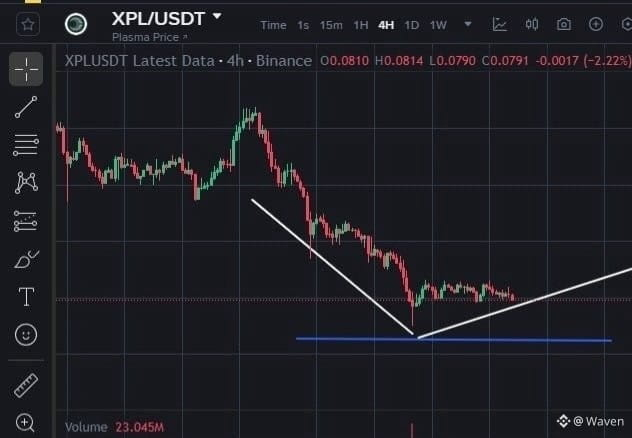
$XPL is in that quiet phase markets hit before a move.
Price isn’t loud, volume cooled off, and most people stopped paying attention — but structure is shifting. Selling pressure faded, lower lows stopped printing, and price is stabilizing in a “boring” zone that often comes before expansion.
While the chart rests, Plasma keeps building.
The MassPay partnership is real adoption — enabling stablecoin payouts across 230+ regions, near-instant and low-cost. That’s not hype, that’s infrastructure. Marketplaces, gig workers, and creators getting paid in seconds, not days.
Quiet charts. Real utility.
These are the setups that matter later.
1
10
Log in to explore more content
Join global crypto users on Binance Square
⚡️ Get latest and useful information about crypto.
💬 Trusted by the world’s largest crypto exchange.
👍 Discover real insights from verified creators.
Email / Phone number
Trending Topics
BinancePick
2.7M views
143,694 Discussing
Join #EarningsSeason: Predict Earnings on Binance Pick, Share Your Take on Binance Square!
Binance Square Official
·402 Likes
·339.2k views
EarningsSeason
5M views
24,648 Discussing
SouthKoreaReportedlyWeighsFourthCryptoTaxDelay
2,343 views
107 Discussing