K线人生飞哥

Square Verified+
公众号:K线人生飞哥 手续费反20%注册邀请码:ZO25P9WZ 币安有VIP带单社区 需要加入的看主页第二条帖子
Level 2 Creator
Level 2 Creator
NEAR Holder
NEAR Holder
High-Frequency Trader
8.2 Years
190 Following
61.9K+ Followers
228.8K+ Liked
1 Badges
Posts
PINNED
·
--
Article
Check out how to get trading fee rebates 👇👇👇Crypto traders may not realize how much trading fees can add up. Some even think these fees are negligible, not realizing that frequent trading can rack up a hefty bill—possibly even exceeding your initial capital. Open the Binance app and go to Funds → Futures → Today’s P&L → Funding Fees and Trading Fees to see how much you’ve paid in fees over the past year. If you trade futures frequently or with large positions, your fees could exceed your initial capital in just one month. To check whether your account is eligible for trading fee rebates, follow these steps 👉👉👉[如何查看自己手续费是否有返佣](https://app.binance.com/uni-qr/cpos/33565201575482?r=aj7zad89&l=zh-cn&uco=w_lxukcvfic1glolhxdeog&uc=app_square_share_link&us=copylink)

Check out how to get trading fee rebates 👇👇👇

Crypto traders may not realize how much trading fees can add up. Some even think these fees are negligible, not realizing that frequent trading can rack up a hefty bill—possibly even exceeding your initial capital.
Open the Binance app and go to Funds → Futures → Today’s P&L → Funding Fees and Trading Fees to see how much you’ve paid in fees over the past year. If you trade futures frequently or with large positions, your fees could exceed your initial capital in just one month.
To check whether your account is eligible for trading fee rebates, follow these steps 👉👉👉如何查看自己手续费是否有返佣
PINNED
To introduce myself to my followers Hello everyone, I am Feige. I entered the circle in 2017, and I consider myself an old player. Along the way, I have encountered countless pitfalls and have summarized some of my own methodologies. From initially blindly following trends to now focusing more on studying cycles, macro trends, and funding logic, I have gradually found my own rhythm. Throughout this journey, I have realized that the crypto world is not just about rises and falls; it is more like a cyclical game: some are FOMOing during the highs, while others are quietly positioning during the lows. I currently work as a blogger at Binance Square, sharing some personal thoughts and observations. I am not a guru; I am just an old player who has experienced several rounds of bull and bear markets. I hope to share the pitfalls I have encountered and the lessons I have learned, so that newcomers can avoid detours, and also gain new inspirations through communication. If you also believe in cycles, believe in logic, and believe in long-term accumulation, then perhaps we can become fellow travelers here. Regarding the viewpoints of my posts, please note the following points: 1: The crypto market is constantly changing, so my viewpoints will also change with the market. This industry changes too quickly; only by continuously following industry progress can we keep growing. Sticking rigidly to conventional wisdom will only lead to being eliminated by the times. I hope everyone can be more open-minded. 2: My viewpoints published in the square are divided into short-term and long-term. For example, even if the long-term outlook is bullish, there will still be pullbacks; and even if the long-term outlook is bearish, there will be rebounds. Don’t let short-term viewpoints affect your long-term perspectives. An upward trend does not mean it will only rise without looking back; more often, it is a trend of rises and falls. Similarly, a downward trend is not a continuous crash without rebounds; more often, it is a downward trend with fluctuations. I hope everyone can understand the differences between short-term and long-term viewpoints. 3: In this market, apart from BTC, which can be blindly trusted, other coins have market cycles, especially altcoins. Before buying a coin, you should at least investigate a bit; some things need to be understood to a certain extent. You can't just buy whatever others say. Especially if you have limited funds, you need to consider the actual situation and be more cautious. Thank you to every friend who follows and supports me. You are my motivation to keep sharing, and I hope we can all reap our own rewards in the cycle. If you need a commission rebate, scan the QR code on Binance to add me as a friend. It's simple and easy to understand, and you can easily get in touch with me 🤝
To introduce myself to my followers

Hello everyone, I am Feige. I entered the circle in 2017, and I consider myself an old player. Along the way, I have encountered countless pitfalls and have summarized some of my own methodologies. From initially blindly following trends to now focusing more on studying cycles, macro trends, and funding logic, I have gradually found my own rhythm.

Throughout this journey, I have realized that the crypto world is not just about rises and falls; it is more like a cyclical game: some are FOMOing during the highs, while others are quietly positioning during the lows.

I currently work as a blogger at Binance Square, sharing some personal thoughts and observations. I am not a guru; I am just an old player who has experienced several rounds of bull and bear markets. I hope to share the pitfalls I have encountered and the lessons I have learned, so that newcomers can avoid detours, and also gain new inspirations through communication.

If you also believe in cycles, believe in logic, and believe in long-term accumulation, then perhaps we can become fellow travelers here.

Regarding the viewpoints of my posts, please note the following points:

1: The crypto market is constantly changing, so my viewpoints will also change with the market. This industry changes too quickly; only by continuously following industry progress can we keep growing. Sticking rigidly to conventional wisdom will only lead to being eliminated by the times. I hope everyone can be more open-minded.

2: My viewpoints published in the square are divided into short-term and long-term. For example, even if the long-term outlook is bullish, there will still be pullbacks; and even if the long-term outlook is bearish, there will be rebounds. Don’t let short-term viewpoints affect your long-term perspectives. An upward trend does not mean it will only rise without looking back; more often, it is a trend of rises and falls. Similarly, a downward trend is not a continuous crash without rebounds; more often, it is a downward trend with fluctuations. I hope everyone can understand the differences between short-term and long-term viewpoints.

3: In this market, apart from BTC, which can be blindly trusted, other coins have market cycles, especially altcoins. Before buying a coin, you should at least investigate a bit; some things need to be understood to a certain extent. You can't just buy whatever others say. Especially if you have limited funds, you need to consider the actual situation and be more cautious.

Thank you to every friend who follows and supports me. You are my motivation to keep sharing, and I hope we can all reap our own rewards in the cycle.

If you need a commission rebate, scan the QR code on Binance to add me as a friend. It's simple and easy to understand, and you can easily get in touch with me 🤝
$UNI has been tougher than a high school student lately. During the pullback of $BTC , even $HYPE fell below a key level, while UNI remained remarkably resilient. If BTC can stabilize and begin a new major rally, I think UNI could have exceptional upside potential, possibly even outperforming HYPE. Looking at the weekly chart structure, UNI has formed a multi-year flag consolidation pattern since its all-time high in 2021. I expect it may first pull back to around $4 in the short term, then gradually move toward $15, $30, $45, and even $50. In a more optimistic scenario, UNI could retest its previous high of $45 from the last cycle and break above it, with an extreme target of $67. However, I don't think there is enough evidence at this stage to expect it to reach above $100. {future}(HYPEUSDT) {future}(BTCUSDT) {future}(UNIUSDT)
$UNI has been tougher than a high school student lately. During the pullback of $BTC , even $HYPE fell below a key level, while UNI remained remarkably resilient. If BTC can stabilize and begin a new major rally, I think UNI could have exceptional upside potential, possibly even outperforming HYPE.

Looking at the weekly chart structure, UNI has formed a multi-year flag consolidation pattern since its all-time high in 2021. I expect it may first pull back to around $4 in the short term, then gradually move toward $15, $30, $45, and even $50.

In a more optimistic scenario, UNI could retest its previous high of $45 from the last cycle and break above it, with an extreme target of $67. However, I don't think there is enough evidence at this stage to expect it to reach above $100.
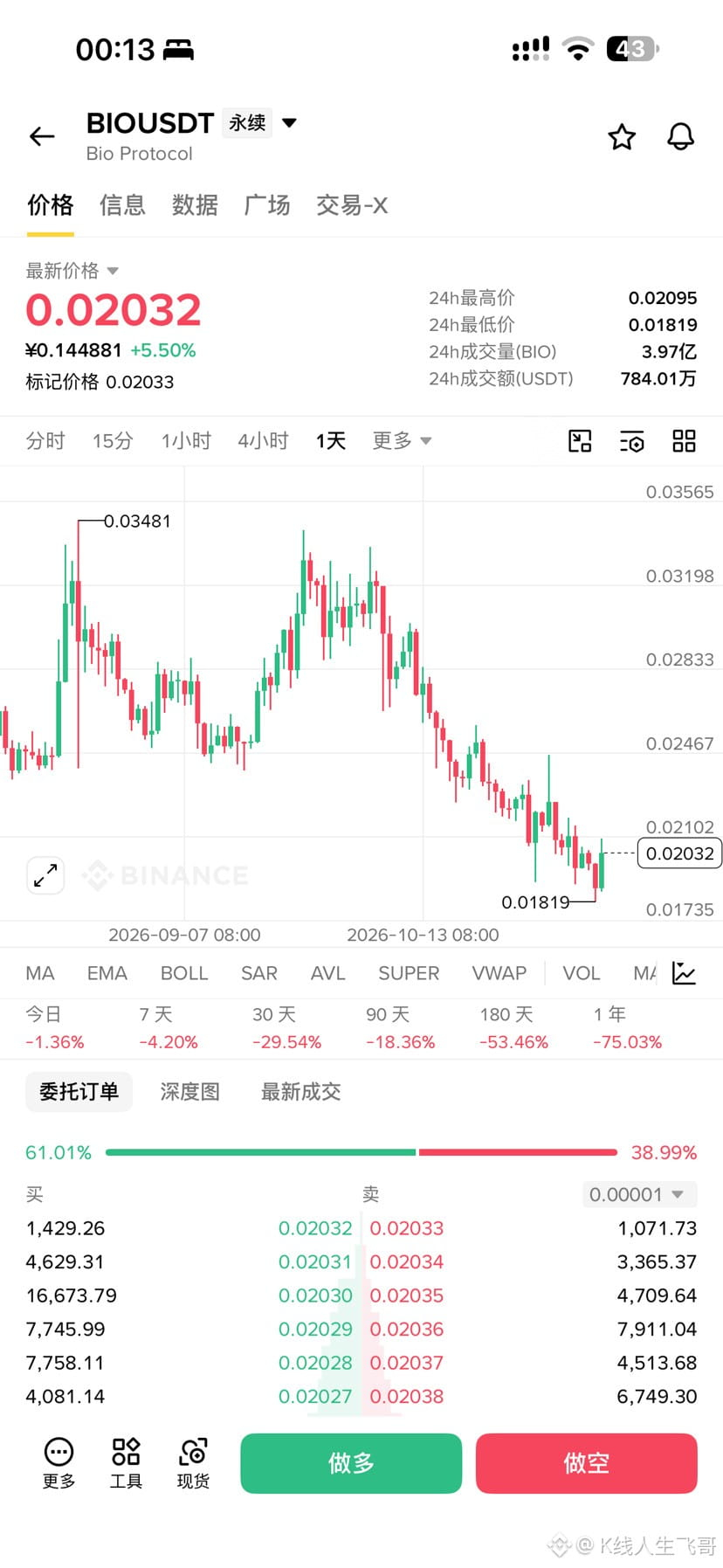
Justin Sun’s latest views Bearish on storage, Nvidia, and the Nasdaq Bullish on AI applications and AI healthcare From this perspective, you could keep an eye on $BIO . In my personal opinion, it could be one of the altcoins worth positioning in ahead of the next bull market. Right now, global financial markets are largely focused on AI, while the DeSci life sciences sector is still in its very early stages. Whether in pharmaceuticals or life sciences, both require a great deal of time and effort upfront. By the next bull market in 2028, the DeSci life sciences sector may be just beginning to take off. On the daily chart, BIO shows a classic pattern of three steps forward and two steps back. Although its price action has been volatile, the overall trend is still range-bound near the bottom, and the candlestick pattern is quite textbook. The price has only just started to turn upward. People joke that this coin is the elixir of immortality researched by CZ, but as a leading project in the DeSci sector, I think BIO will still attract market attention in the next bull market. BIO’s market cap is currently modest, and I estimate its upside in a bull market starts at 5x. {future}(BIOUSDT)
Justin Sun’s latest views
Bearish on storage, Nvidia, and the Nasdaq
Bullish on AI applications and AI healthcare

From this perspective, you could keep an eye on $BIO . In my personal opinion, it could be one of the altcoins worth positioning in ahead of the next bull market. Right now, global financial markets are largely focused on AI, while the DeSci life sciences sector is still in its very early stages. Whether in pharmaceuticals or life sciences, both require a great deal of time and effort upfront. By the next bull market in 2028, the DeSci life sciences sector may be just beginning to take off.

On the daily chart, BIO shows a classic pattern of three steps forward and two steps back. Although its price action has been volatile, the overall trend is still range-bound near the bottom, and the candlestick pattern is quite textbook. The price has only just started to turn upward. People joke that this coin is the elixir of immortality researched by CZ, but as a leading project in the DeSci sector, I think BIO will still attract market attention in the next bull market. BIO’s market cap is currently modest, and I estimate its upside in a bull market starts at 5x.
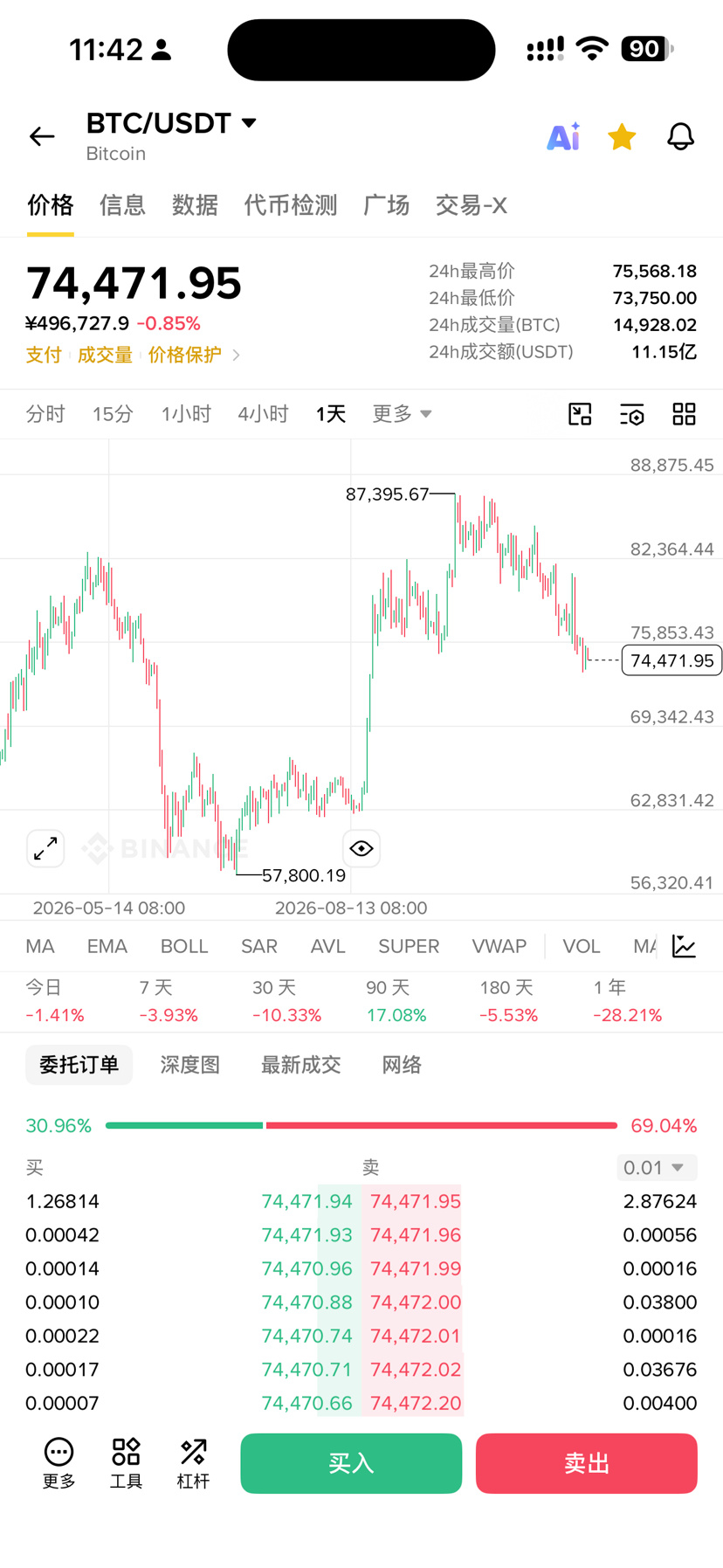
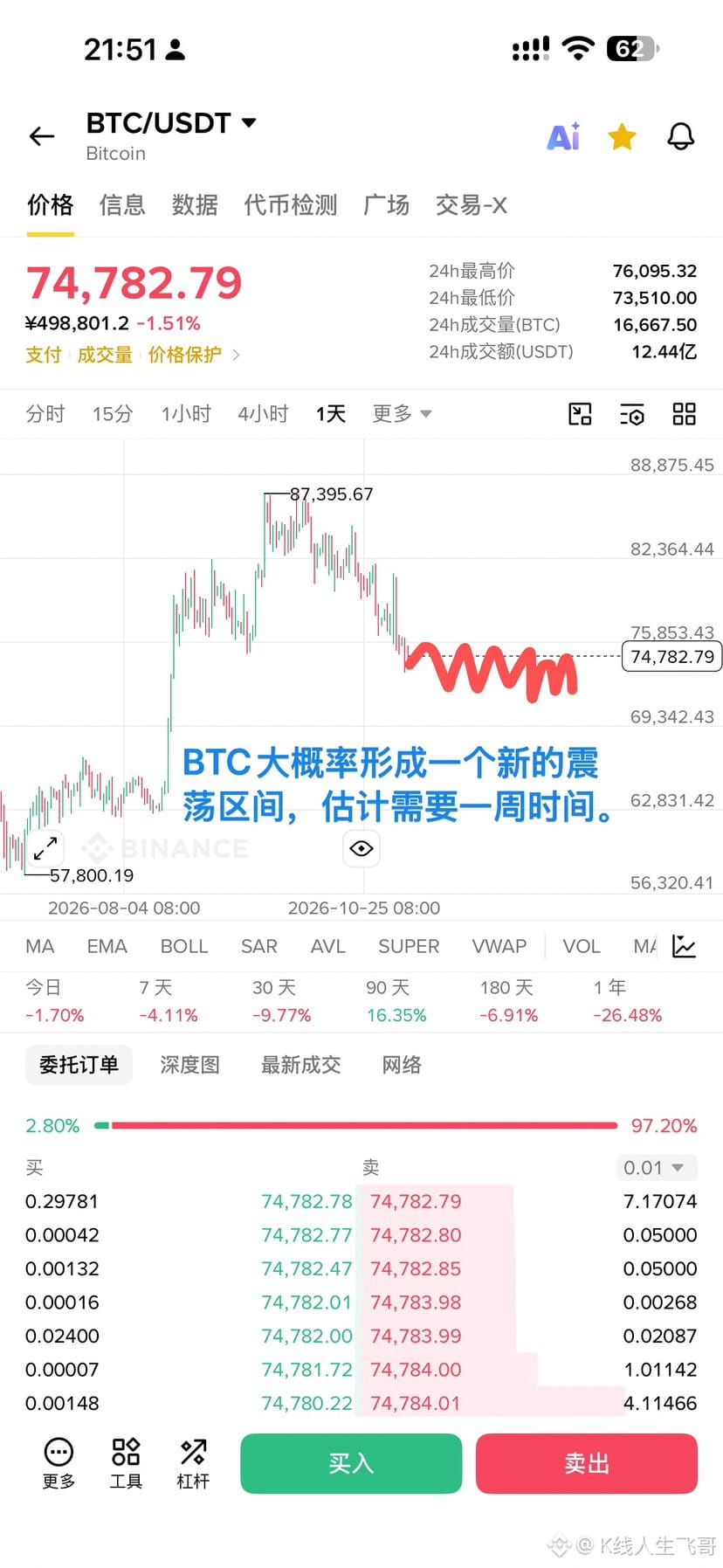
Following up on my previous post, $BTC , if we go by my rigid, historical-pattern-based analysis, yesterday’s 73,500 probably wasn’t the bottom of this pullback. I reckon it could retrace to around 70,000. But from a dip-buying perspective, I don’t think there’s a huge difference between around 70,000 and 74,000. Looking back at BTC’s bull market this cycle, it’s not exactly the same as 2023, but it’s pretty close: three steps forward, two steps back. Most altcoins have fallen back to where they started. Just looking at the candlestick chart, it seems like nothing has changed—the market is simply repeating itself. The retail investors in the market may not be the same people as in 2023, though, so everyone’s mindset has changed too. {future}(BTCUSDT)
Following up on my previous post, $BTC , if we go by my rigid, historical-pattern-based analysis, yesterday’s 73,500 probably wasn’t the bottom of this pullback. I reckon it could retrace to around 70,000. But from a dip-buying perspective, I don’t think there’s a huge difference between around 70,000 and 74,000. Looking back at BTC’s bull market this cycle, it’s not exactly the same as 2023, but it’s pretty close: three steps forward, two steps back. Most altcoins have fallen back to where they started. Just looking at the candlestick chart, it seems like nothing has changed—the market is simply repeating itself. The retail investors in the market may not be the same people as in 2023, though, so everyone’s mindset has changed too.
K线人生飞哥
·
--
Yesterday during the livestream, I shared my thoughts with everyone about the upcoming market outlook for $BTC .

During Bitcoin’s bear-to-bull transition in 2023, the first trend wave rebounded from 15,000 to its first high, around 22,000. It then pulled back to around 20,500, where support was confirmed, before continuing its rebound to a second high of 22,500. The first trend wave then came to an end, and a daily-chart correction began, breaking below the 20,500 support level that had been tested during the pullback from the first high. The price fell to around 19,000, found support, and rebounded, before the second trend wave began.

Now, let’s compare that with the market in 2026. Bitcoin bottomed around 58,000, then spent a long time accumulating in the 60,000 range before the first trend wave began. It rebounded to its first high, around 82,000, then pulled back to support around 76,000. After that support held, it rebounded to around 87,000, the peak of our first trend wave. A daily-chart correction then began, and the price is currently testing the support around 76,000 that was established during the pullback from the first high. If we follow the 2023 playbook, this support level will most likely break. I expect a further pullback to around 70,000, followed by range-bound trading. However, because of the recent hacking incident, this period of consolidation may last longer. The second trend wave will need time to rebuild confidence.

I looked at a Bitcoin candlestick chart from 2023, when it broke out of its bottoming range, and compared it with the current 2026 chart as Bitcoin emerges from its bottoming range. They’re not exactly identical, but they’re pretty close. Why would there be a false breakdown? Because 76,000 is the psychological line in the sand for most retail investors. A decisive break below this level toward 70,000 would trigger widespread panic. Everyone would think this is just another bear-market rally, not a transition from a bear market to a bull market. Then panicked investors would sell, completing this phase of the shakeout before the second wave begins. Will history repeat itself? Let’s wait and see.
How can you tell whether an altcoin is worth holding long term??? Just look at whether its price action is sustained. At the moment, most altcoins on the market are at the top of the gainers list one day and the top of the losers list the next. These coins are simply being pumped and dumped by unscrupulous market makers, who’ll take whatever profit they can get. Take ZKC, ZKP, TUT, and POL, for example: the project teams have basically given up, while the market makers still have coins on hand and use a market rally to pump them and sell to unsuspecting buyers. So, let’s look at this latest pullback: if an altcoin hasn’t fallen below—or back to—its previous low, that basically means the market makers are still in and haven’t abandoned it. Altcoins with sustained price action are a sign that the project teams haven’t given up and are still following the broader market. Examples include AAVE, UNI, ZEC, NEAR, MORPHO, LINK, AERO, RAY, ENA, and LIT. These are all blockchain infrastructure or trending projects. Compared with other altcoins, they may be suitable for a medium- to long-term position—in other words, holding through a full market cycle. Choosing the right altcoins is important right now. If both the project team and the market makers have already abandoned a coin, holding it long term means you’ll have wasted another market cycle.
How can you tell whether an altcoin is worth holding long term???

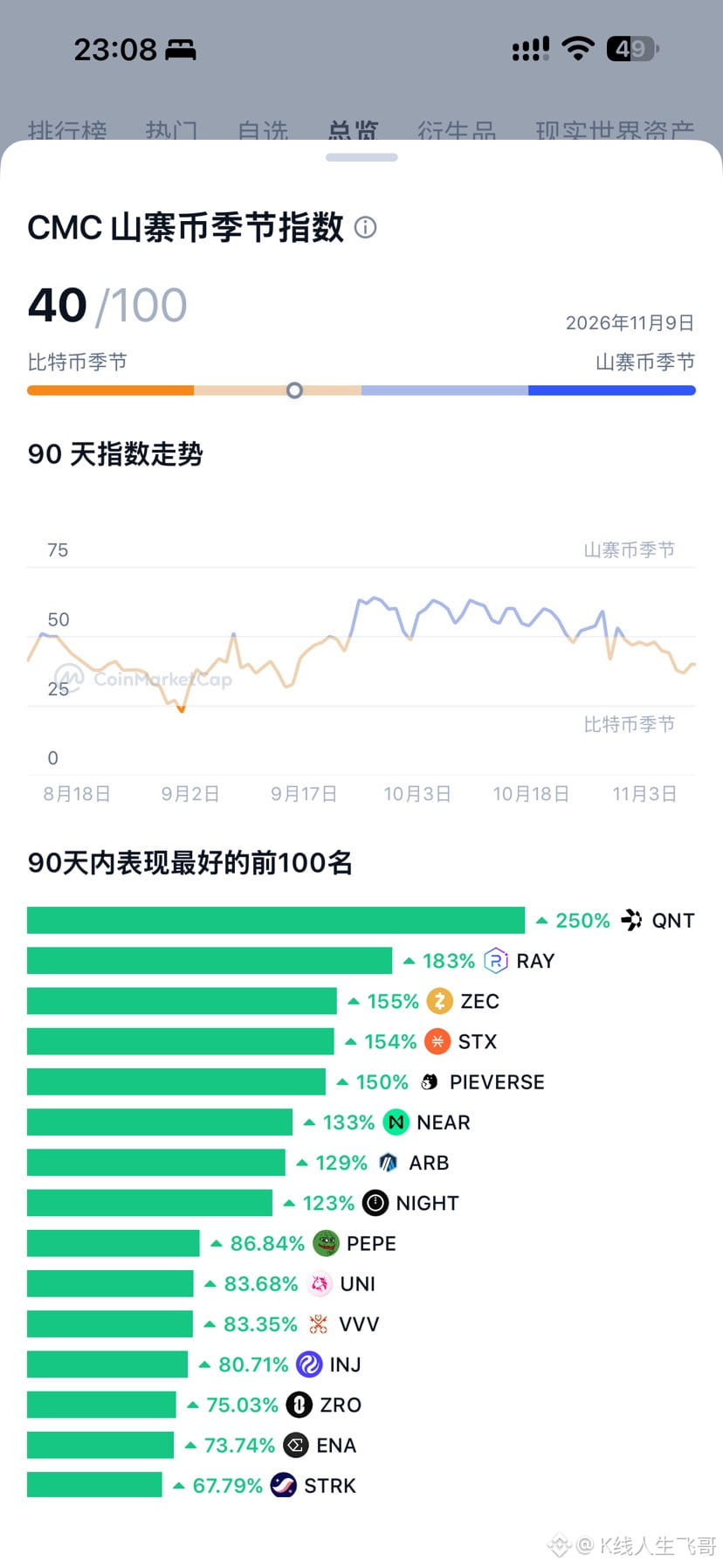
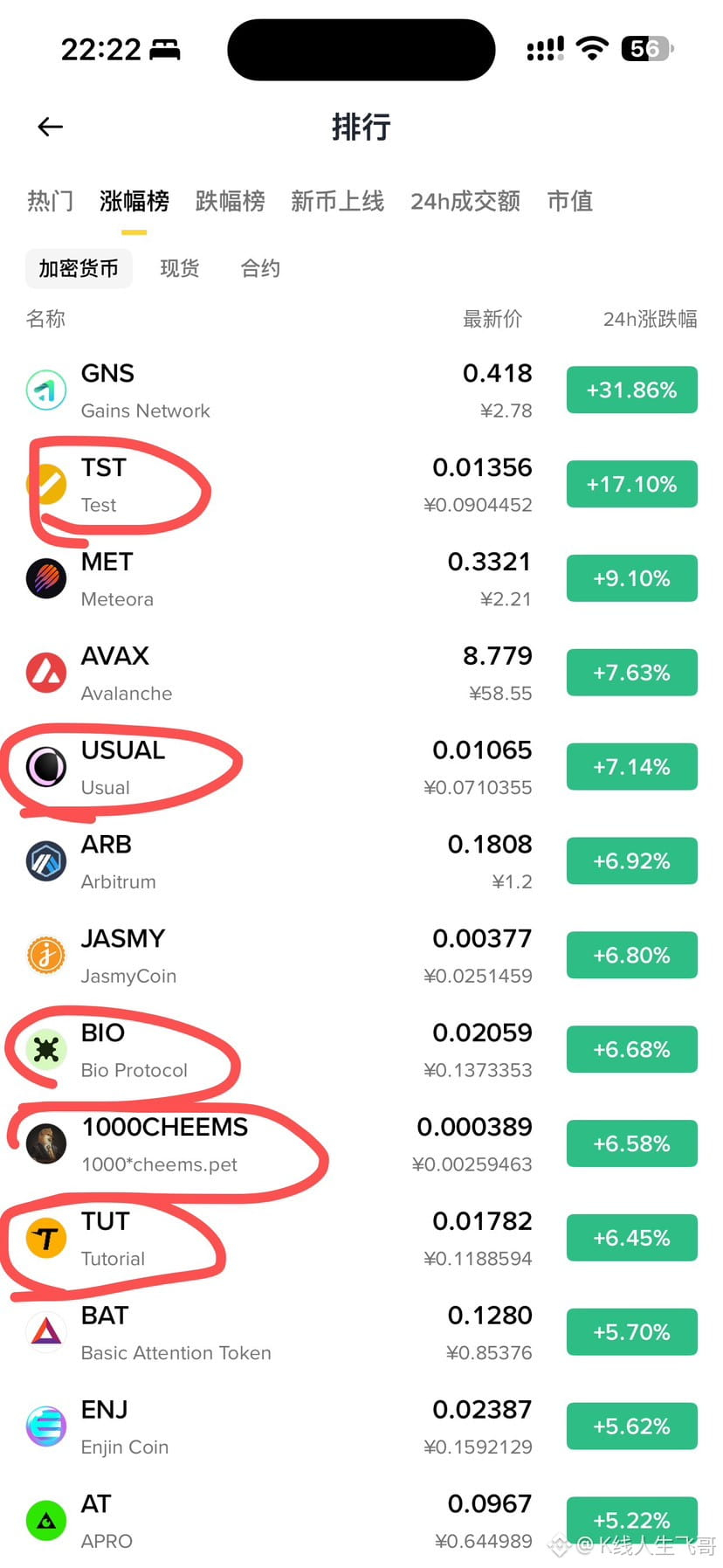
Just look at whether its price action is sustained. At the moment, most altcoins on the market are at the top of the gainers list one day and the top of the losers list the next. These coins are simply being pumped and dumped by unscrupulous market makers, who’ll take whatever profit they can get. Take ZKC, ZKP, TUT, and POL, for example: the project teams have basically given up, while the market makers still have coins on hand and use a market rally to pump them and sell to unsuspecting buyers. So, let’s look at this latest pullback: if an altcoin hasn’t fallen below—or back to—its previous low, that basically means the market makers are still in and haven’t abandoned it.

Altcoins with sustained price action are a sign that the project teams haven’t given up and are still following the broader market. Examples include AAVE, UNI, ZEC, NEAR, MORPHO, LINK, AERO, RAY, ENA, and LIT. These are all blockchain infrastructure or trending projects. Compared with other altcoins, they may be suitable for a medium- to long-term position—in other words, holding through a full market cycle.

Choosing the right altcoins is important right now. If both the project team and the market makers have already abandoned a coin, holding it long term means you’ll have wasted another market cycle.
Partly True
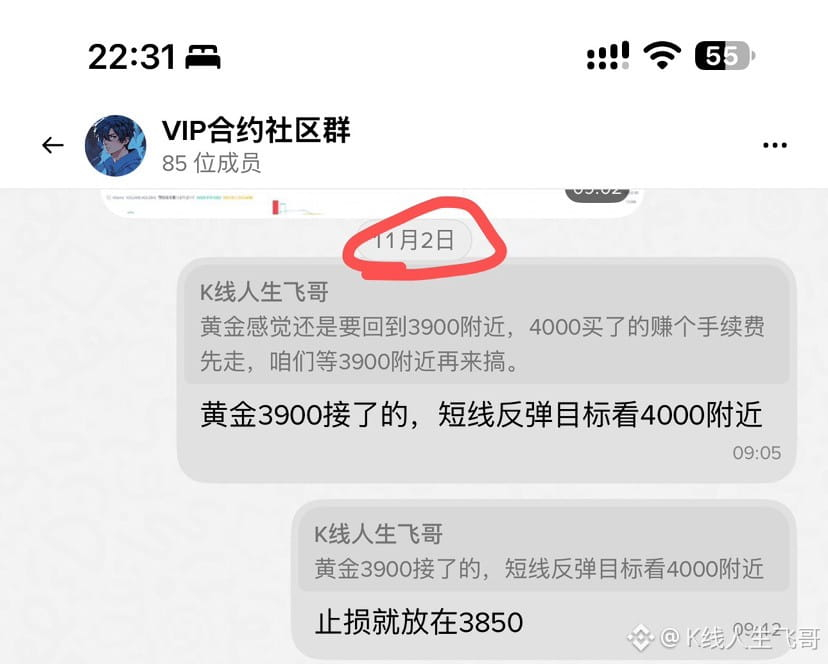
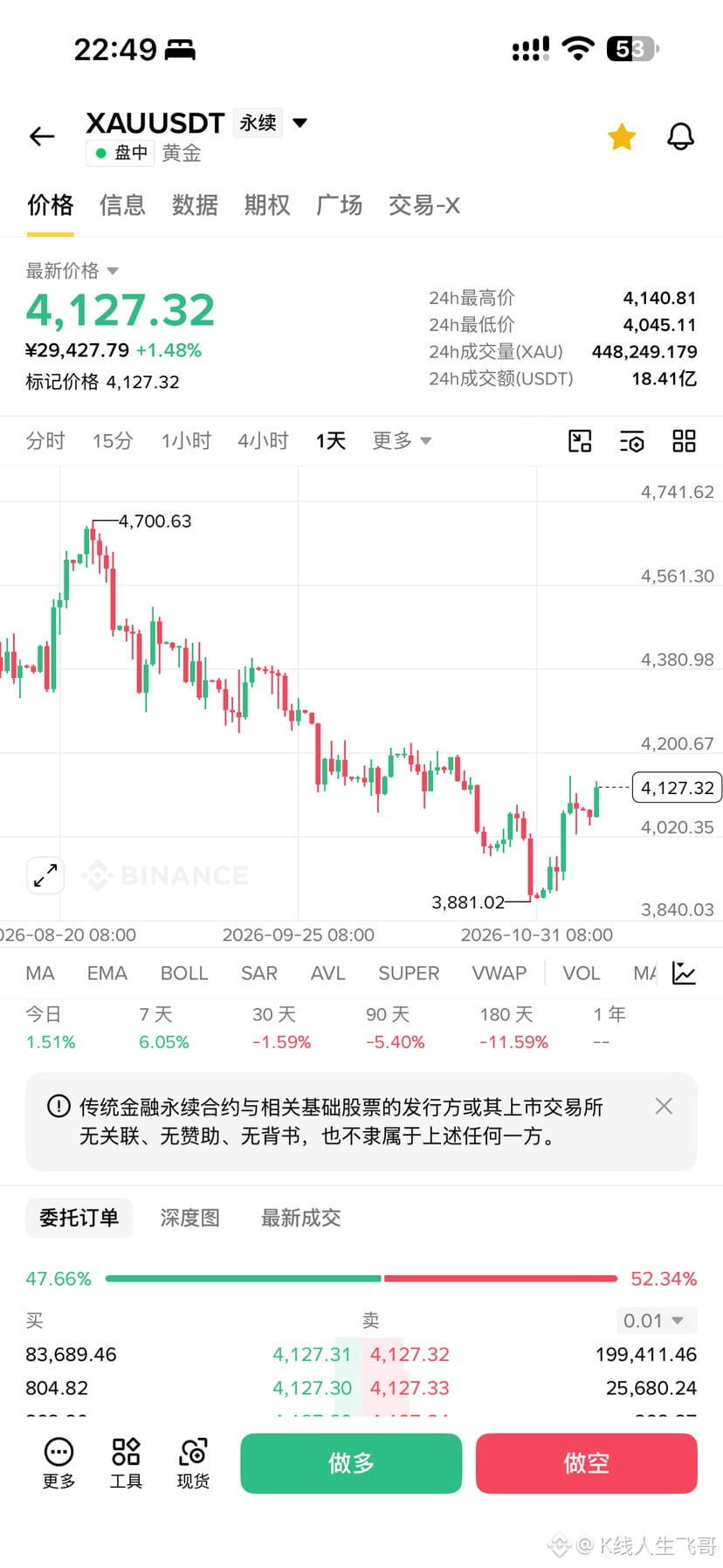
Continuing to track gold’s movements$XAU Since our community discussed buying the dip at 3900 on November 2, with an initial target of 4000, gold has since reached that first target. We’ve continued to track it, and the latest target is now 👀4200. Next, I’ll share a public post on the Square to analyze my forecast for gold’s upcoming movements. For now, I’m more inclined to view this rebound as a return to the 3950–4200 dollar trading range, rather than a sign that the broader trend has turned bullish. Last week, gold reclaimed 3950 dollars on strong volume, with clear volume support on both the weekly and daily charts. This suggests that buyers did step in at lower levels. However, the subsequent increase in volume alongside stalled price action near 4150 dollars shows that selling pressure overhead remains significant. The two key levels to watch next are: 4150 dollars: The first short-term resistance level. If gold continues to meet resistance here, a pullback remains possible. 4200 dollars: The upper boundary of the range and a key level for determining whether the market can truly turn stronger. My approach remains to treat this as range-bound trading for now, while maintaining a bearish view on the broader time frame. If clear selling pressure emerges around 4150–4200 dollars, we’ll need to watch whether 3950 dollars can hold. If gold breaks decisively above 4200 dollars on strong volume, we’ll need to reassess the original bearish outlook. Returning to the range doesn’t mean breaking out of it. The key thing to watch next is price and volume action at these important levels. {future}(XAUUSDT)
Continuing to track gold’s movements$XAU

Since our community discussed buying the dip at 3900 on November 2, with an initial target of 4000, gold has since reached that first target. We’ve continued to track it, and the latest target is now 👀4200.

Next, I’ll share a public post on the Square to analyze my forecast for gold’s upcoming movements.

For now, I’m more inclined to view this rebound as a return to the 3950–4200 dollar trading range, rather than a sign that the broader trend has turned bullish.

Last week, gold reclaimed 3950 dollars on strong volume, with clear volume support on both the weekly and daily charts. This suggests that buyers did step in at lower levels. However, the subsequent increase in volume alongside stalled price action near 4150 dollars shows that selling pressure overhead remains significant.

The two key levels to watch next are:

4150 dollars: The first short-term resistance level. If gold continues to meet resistance here, a pullback remains possible.
4200 dollars: The upper boundary of the range and a key level for determining whether the market can truly turn stronger.

My approach remains to treat this as range-bound trading for now, while maintaining a bearish view on the broader time frame. If clear selling pressure emerges around 4150–4200 dollars, we’ll need to watch whether 3950 dollars can hold. If gold breaks decisively above 4200 dollars on strong volume, we’ll need to reassess the original bearish outlook.

Returning to the range doesn’t mean breaking out of it. The key thing to watch next is price and volume action at these important levels.
K线人生飞哥
·
--
There hasn’t been much trading activity in the community lately. Aside from a few altcoins we’re bullish on, like PEPE and RAY, and BTC, we’ve mainly been trading gold in the community. $XAU

Let me explain the basic logic behind gold and the price levels I’ve discussed in the community, and why I’m still bearish even though I expect a short-term rebound.

First, let’s look at the long-term fundamentals. Ultimately, gold’s long-term trend depends on the direction of global monetary and credit expansion.

According to the Kondratiev wave theory, the global economy may now be gradually moving from recession into depression. The momentum behind credit expansion among businesses and households is weakening, while the global broad money-to-GDP ratio is also under pressure to peak and decline.

Over the past decade or so, credit cycles in China and the U.S. have diverged significantly: China has continued to expand countercyclically, providing important support for gold demand. But since 2025, China’s credit growth has slowed, and consumption and investment have been weak. The U.S., meanwhile, has relied mainly on AI infrastructure to support growth. If the global trend of credit expansion reverses, gold could lose an important driver of price gains.

At the same time, global capital is still flowing into the U.S., with dollar liquidity fueling major investments in AI infrastructure. This trend may continue until AI is truly commercialized and its productivity gains are realized.

My view is that gains in major global asset classes don’t rotate endlessly. Real estate, Bitcoin, and gold have all gone through their own periods of valuation expansion, and there may not be another broad-based rally in the future. By contrast, AI technology could become the main destination for capital in the next phase.

If global credit expansion continues to slow while dollar capital remains concentrated in the U.S., the long-term case for gold will need to be reassessed. AI technology, on the other hand, could become the core beneficiary of the next cycle.

Goldman Sachs cut its gold price forecast for the end of 2026 from $4,650 to $4,150 per ounce, and lowered its year-end 2027 target from $5,400 to $4,800.

So my view is clear: a short-term rebound in gold is not a reversal. If you followed our community and bought the dip at 3,900, you should still sell after this rebound runs its course. When the next major buying opportunity comes, I’ll let you know in the community. 🔔
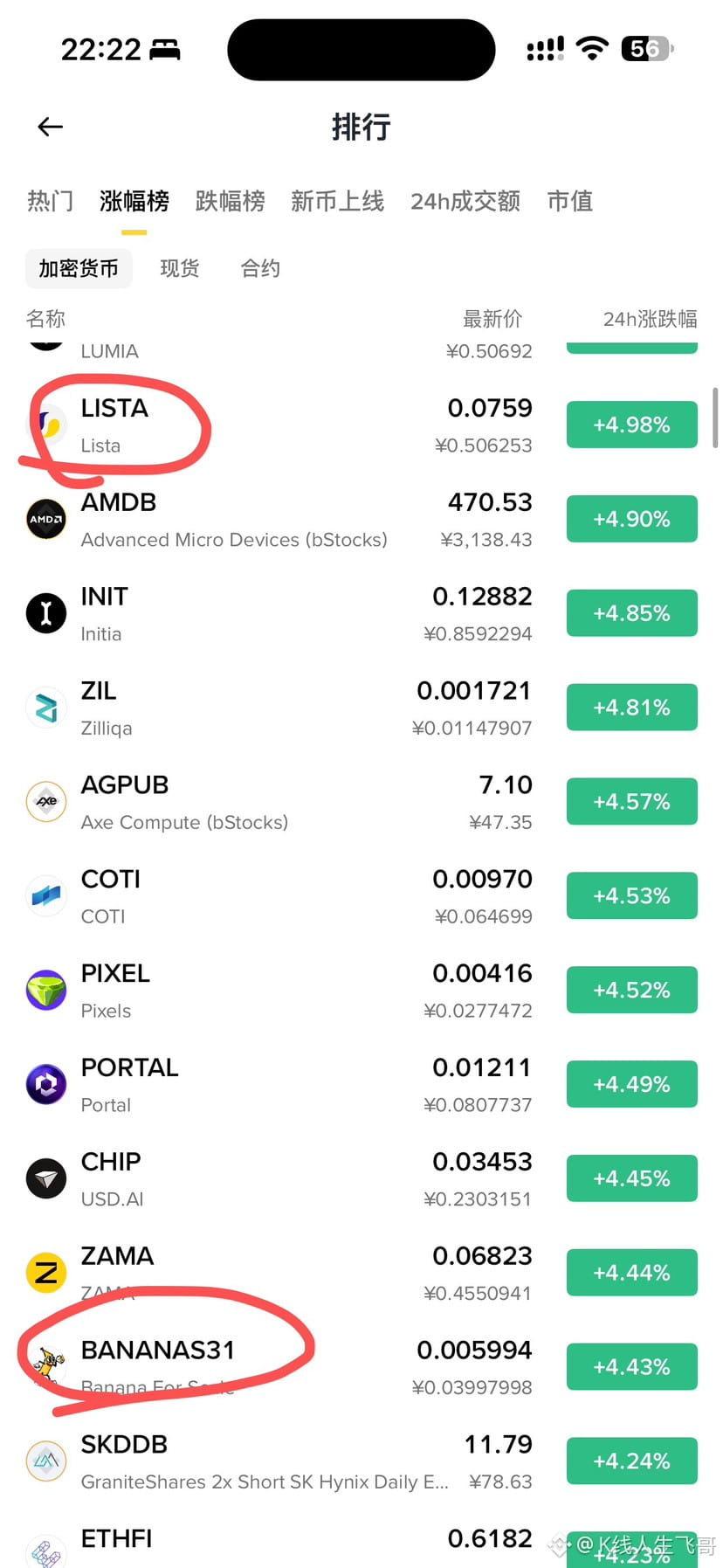
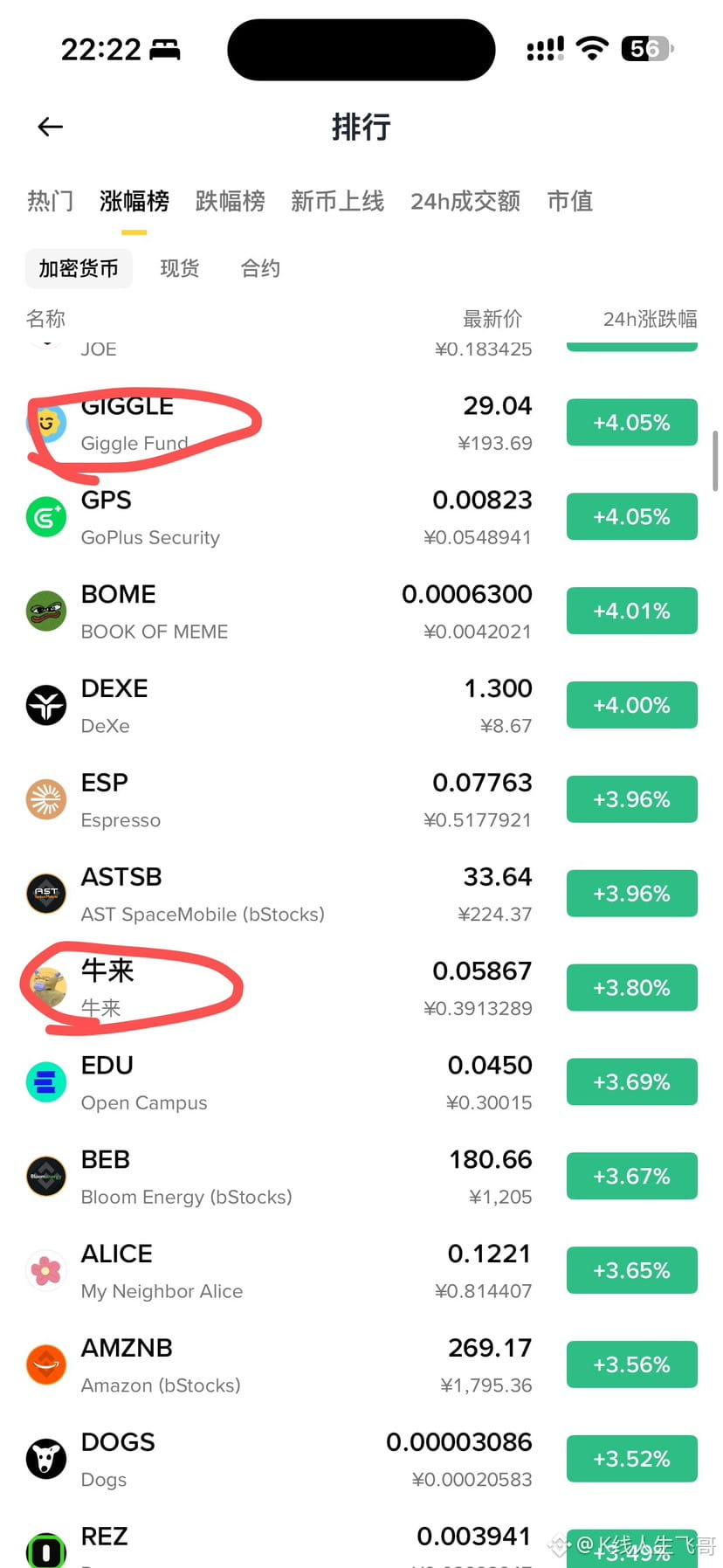
I took a look at the top gainers, and the ones rebounding the hardest are all BSC-related altcoins. As I’ve told you before, in my experience, whenever Binance faces a major negative event, it pumps $BNB and BSC-related altcoins to restore its reputation and retain users. The recent pump of $牛来 is a case in point. Other BSC-related altcoins will follow suit too. I don’t need to spell out which altcoins to buy for a short-term rebound next, do I? I’ve already given you the secret to making money. Of course, if you’re looking for stability, choose BNB. If you think the returns are too low, just use low leverage. {future}(牛来USDT) {future}(BNBUSDT)
I took a look at the top gainers, and the ones rebounding the hardest are all BSC-related altcoins. As I’ve told you before, in my experience, whenever Binance faces a major negative event, it pumps $BNB and BSC-related altcoins to restore its reputation and retain users. The recent pump of $牛来 is a case in point. Other BSC-related altcoins will follow suit too. I don’t need to spell out which altcoins to buy for a short-term rebound next, do I? I’ve already given you the secret to making money.

Of course, if you’re looking for stability, choose BNB. If you think the returns are too low, just use low leverage.
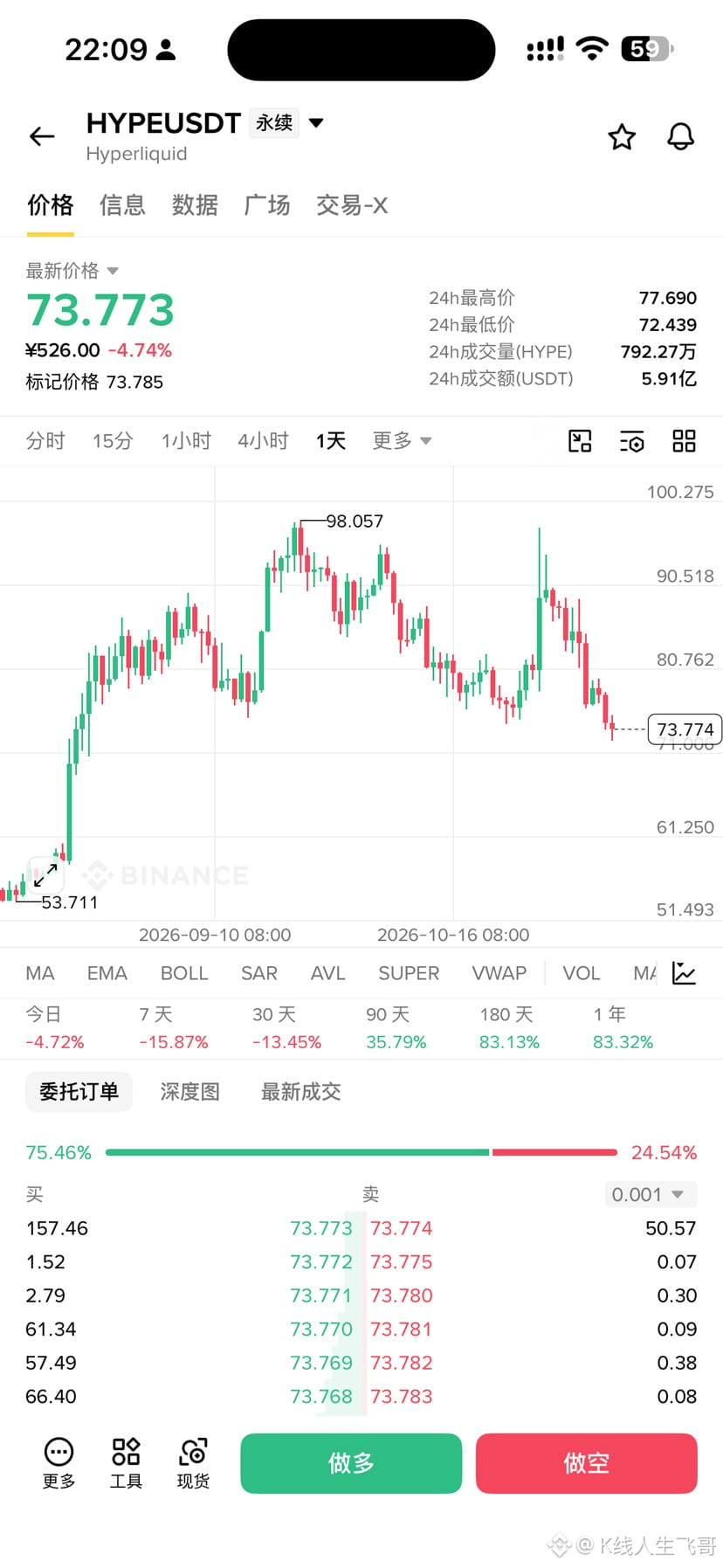
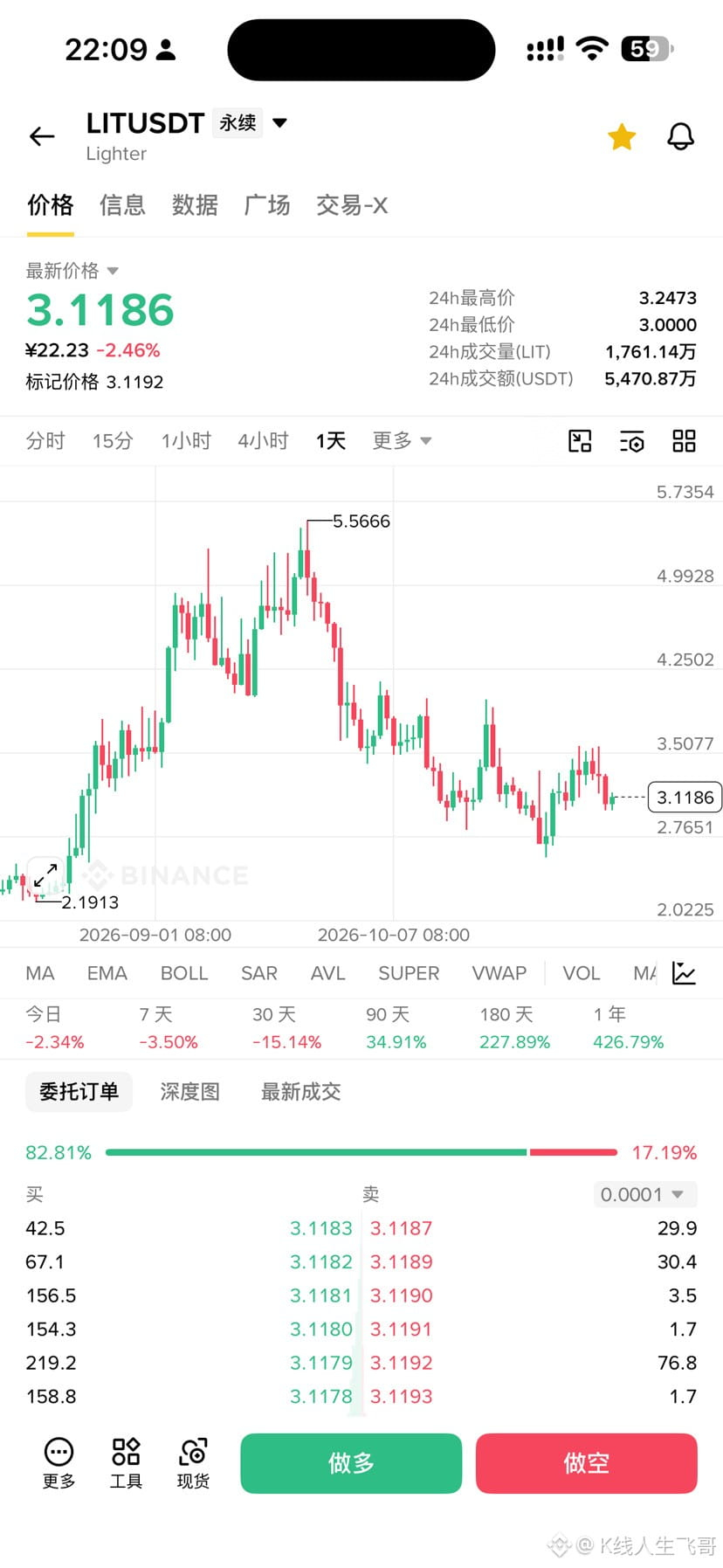
The on-chain contracts sector has already proven to be the trend of the future. The reason is simple: $BTC volatility is getting lower and lower, so the only option is to make up for it with leverage. Because of regulation and mandatory KYC, many funds on traditional CEXs have no choice but to trade on DEXs. This is also one of the reasons for $HYPE 's rise. There are many projects in the perpDEX sector right now, but the only ones that really stand out are HYPE $LIT ASTER. If you're looking to buy the dip, ASTER has been stuck in a prolonged shakeout, so those without the patience to hold should avoid it. HYPE has already risen too much from its lows, and its current circulating market cap is 17.6 billion, so it is no longer cheap from a valuation perspective. LIT's current circulating market cap is around 700 million. So, comparing on-chain data and market-maker tactics, LIT offers the best value for buying this dip. {future}(LITUSDT) {future}(HYPEUSDT) {future}(BTCUSDT)
The on-chain contracts sector has already proven to be the trend of the future. The reason is simple: $BTC volatility is getting lower and lower, so the only option is to make up for it with leverage. Because of regulation and mandatory KYC, many funds on traditional CEXs have no choice but to trade on DEXs. This is also one of the reasons for $HYPE 's rise.

There are many projects in the perpDEX sector right now, but the only ones that really stand out are HYPE $LIT ASTER. If you're looking to buy the dip, ASTER has been stuck in a prolonged shakeout, so those without the patience to hold should avoid it. HYPE has already risen too much from its lows, and its current circulating market cap is 17.6 billion, so it is no longer cheap from a valuation perspective. LIT's current circulating market cap is around 700 million. So, comparing on-chain data and market-maker tactics, LIT offers the best value for buying this dip.
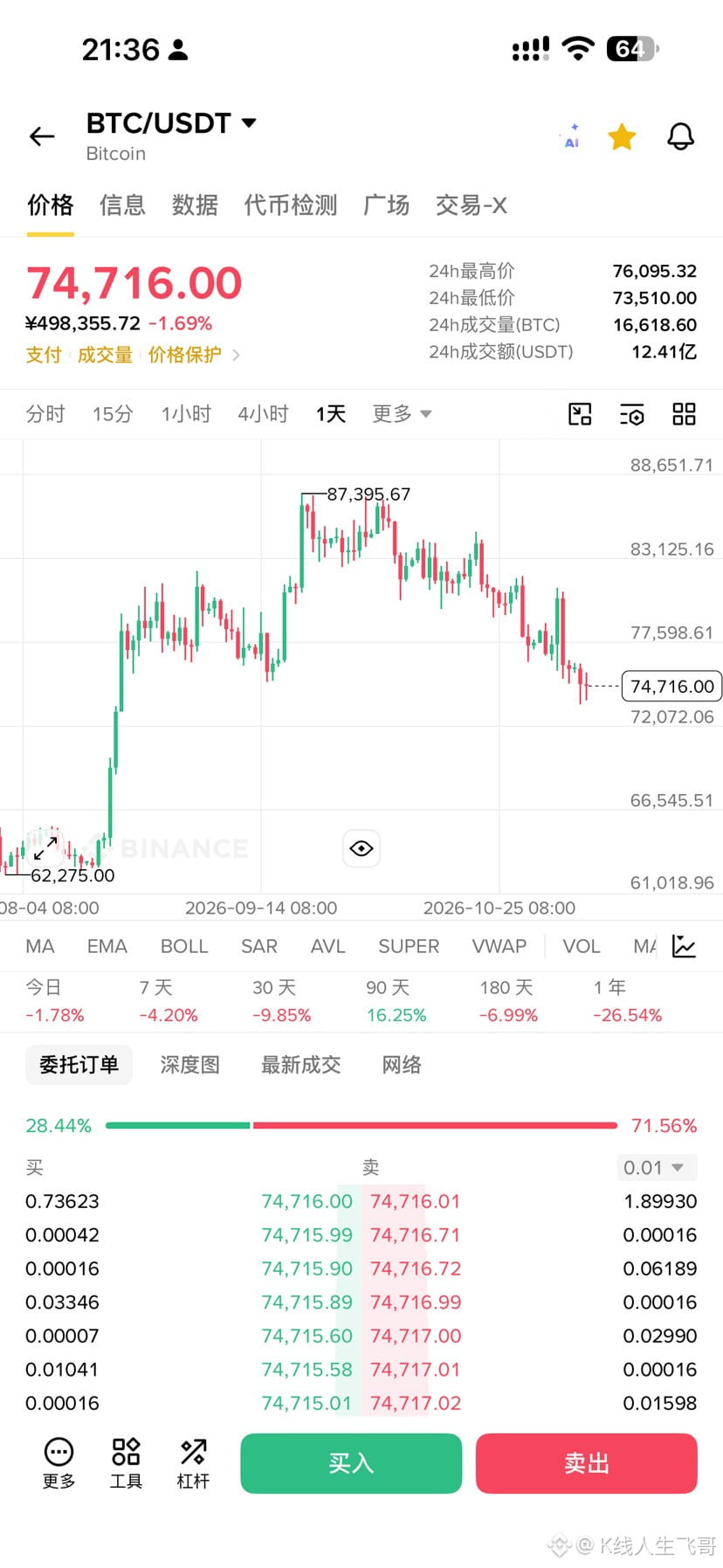
$BTC What’s the outlook for the market from here??? Back on November 4, when BTC rebounded to around $81,000, I warned that this might only be a short-term rebound, and that the price could still retest its previous low. I made it clear that a rebound is not a reversal. The price action over the past two days has largely matched expectations, with yesterday’s low already falling to around $73,000. Looking at the current structure, I think there may not be much downside left, perhaps another $1,000–$2,000. The key area to watch next is $70,000–$75,000, which could become a new consolidation zone for the next bottoming process. However, reaching these levels doesn’t mean the price will reverse immediately. I expect it will take another 5–7 trading days to absorb selling pressure. After that, we can see whether the daily chart forms a clear bottoming structure. There’s no need to rush into the market at this stage. It’s better to wait for a reversal signal on the right side of the chart. If you choose to position yourself early, you should only scale in at levels where the risk-reward ratio is attractive enough. {future}(BTCUSDT)
$BTC What’s the outlook for the market from here???

Back on November 4, when BTC rebounded to around $81,000, I warned that this might only be a short-term rebound, and that the price could still retest its previous low. I made it clear that a rebound is not a reversal. The price action over the past two days has largely matched expectations, with yesterday’s low already falling to around $73,000.

Looking at the current structure, I think there may not be much downside left, perhaps another $1,000–$2,000. The key area to watch next is $70,000–$75,000, which could become a new consolidation zone for the next bottoming process.

However, reaching these levels doesn’t mean the price will reverse immediately. I expect it will take another 5–7 trading days to absorb selling pressure. After that, we can see whether the daily chart forms a clear bottoming structure.

There’s no need to rush into the market at this stage. It’s better to wait for a reversal signal on the right side of the chart. If you choose to position yourself early, you should only scale in at levels where the risk-reward ratio is attractive enough.
K线人生飞哥
·
--
$BTC What’s next for the market— a rebound or a reversal?

After Bitcoin briefly dipped below $76,000, strong buying demand stepped in and the price began to rebound. I think it’s quite likely to test the area around $80,000 next, but whether it can continue higher will depend on the selling pressure at that level.

There’s a notable contradiction right now: buyers are stepping in to support the price, but both futures and spot CVD continue to make new lows. Futures open interest has started to recover more quickly, but it remains low overall.

So personally, I think some bears may have already started building positions. If the price rebounds to $80,000 and meets clear selling pressure, while open interest rises sharply and CVD struggles to rebound, the bearish signal will become clearer, and any subsequent decline could be more sustained.

I’ve consistently encouraged everyone to buy the dip at $76,000, whether in spot or futures, and whether on livestreams, in the VIP community, or on the public forum. My view hasn’t changed. In any case, I believe anyone who followed my trades during this period will have caught this major rebound.

Next, keep a close eye on order-book activity around $80,000. Personally, I still lean toward this being a rebound rather than a reversal. After all, the hacking incident has had a major impact on the market, and it will take time to rebuild confidence. However, a much deeper decline also seems unlikely. I’m more inclined to expect a choppy, whipsawing market that shakes out weak hands before the second trend wave begins.
$BTC Bitcoin is increasingly behaving like a U.S. stock, and the get-rich-quick days are over. In 2026, Bitcoin’s implied volatility index, DVOL, has fallen to a historic low, averaging around 42% for the year. That means this thing is now less volatile than Nvidia. A 10% daily move in Bitcoin is extremely rare—there are only a handful of days like that in a year. But among individual U.S. stocks, earnings reports can cause daily swings of over 10% several times in a single day. So Bitcoin today is much like an individual stock in the Seven Sisters: it’s no longer a legend, and it’s not going to zero either. It’s just ordinary. In this bull market, BTC could easily rise to $150,000–$200,000. Taking the high end of $200,000, the return from this bear market’s low of $57,000 would be only 3.5x over the three years until 2029. That return may not even beat U.S. tech stocks. So going forward, BTC can settle into the role of a high-yield investment product: the risk will keep shrinking, and the returns will correspondingly get smaller. If you’re determined to chase high returns, go buy MicroStrategy stock (MSTR), CRCL, or COIN. {future}(BTCUSDT)
$BTC Bitcoin is increasingly behaving like a U.S. stock, and the get-rich-quick days are over.

In 2026, Bitcoin’s implied volatility index, DVOL, has fallen to a historic low, averaging around 42% for the year.

That means this thing is now less volatile than Nvidia.

A 10% daily move in Bitcoin is extremely rare—there are only a handful of days like that in a year. But among individual U.S. stocks, earnings reports can cause daily swings of over 10% several times in a single day.

So Bitcoin today is much like an individual stock in the Seven Sisters: it’s no longer a legend, and it’s not going to zero either. It’s just ordinary.

In this bull market, BTC could easily rise to $150,000–$200,000. Taking the high end of $200,000, the return from this bear market’s low of $57,000 would be only 3.5x over the three years until 2029. That return may not even beat U.S. tech stocks. So going forward, BTC can settle into the role of a high-yield investment product: the risk will keep shrinking, and the returns will correspondingly get smaller. If you’re determined to chase high returns, go buy MicroStrategy stock (MSTR), CRCL, or COIN.
Verified
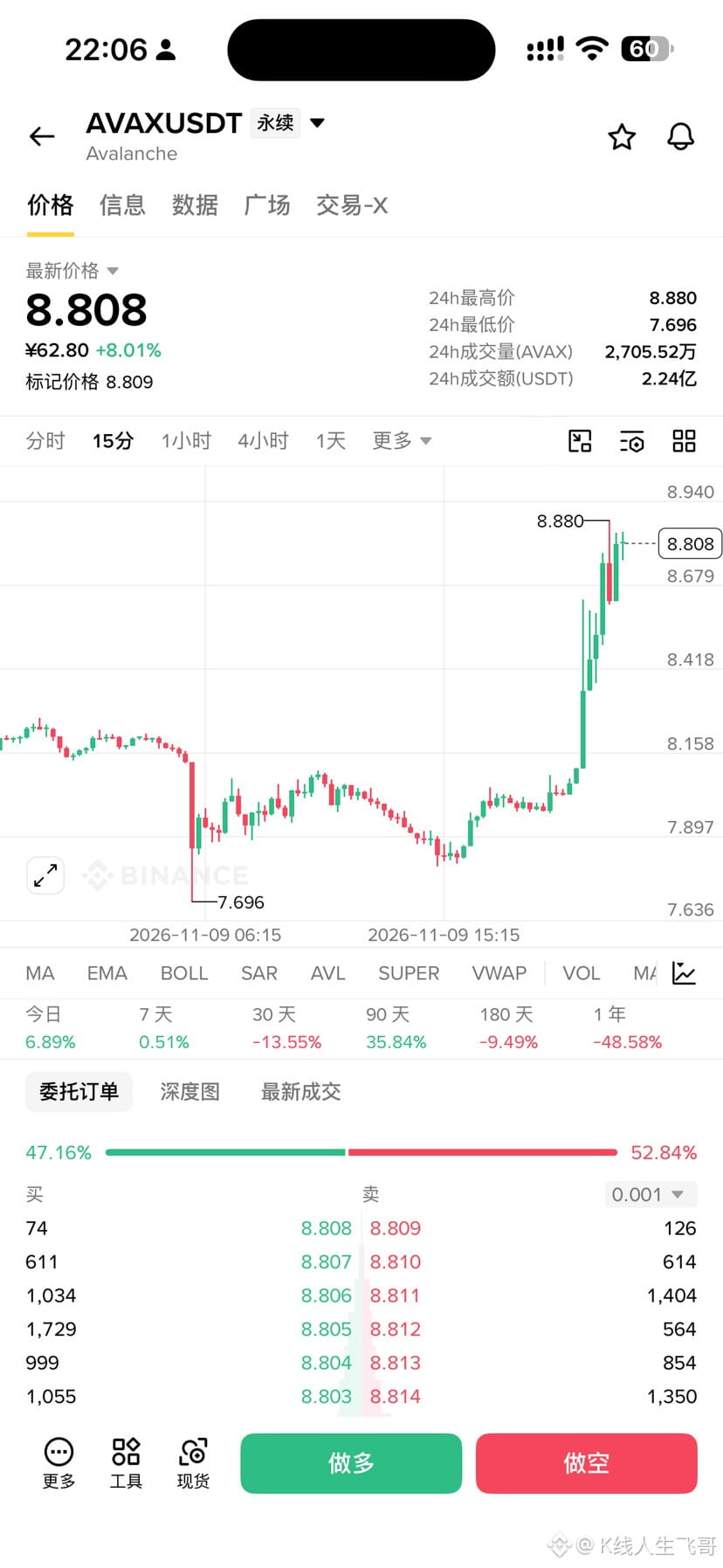
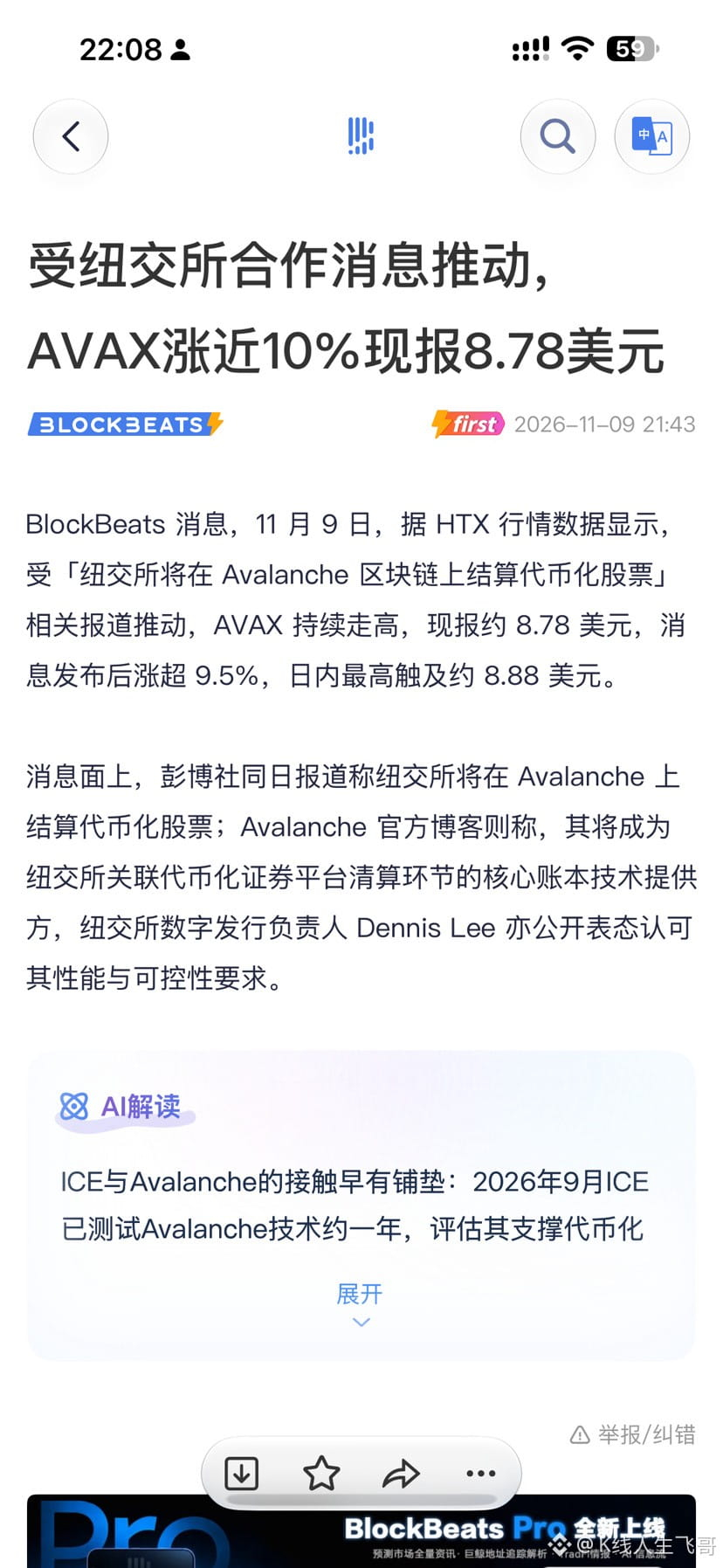
The established public chain $AVAX is pumping. Based on the usual ecosystem correlation, $JOE should follow suit. AVAX has a positive catalyst: the NYSE will settle tokenized stocks on the Avalanche blockchain. AVAX has already broken through its daily resistance level. JOE could be worth getting into early, following the usual pattern, but trading volume is too low, so it’s really only worth playing as a shitcoin. {future}(JOEUSDT) {future}(AVAXUSDT)
The established public chain $AVAX is pumping. Based on the usual ecosystem correlation, $JOE should follow suit. AVAX has a positive catalyst: the NYSE will settle tokenized stocks on the Avalanche blockchain. AVAX has already broken through its daily resistance level. JOE could be worth getting into early, following the usual pattern, but trading volume is too low, so it’s really only worth playing as a shitcoin.
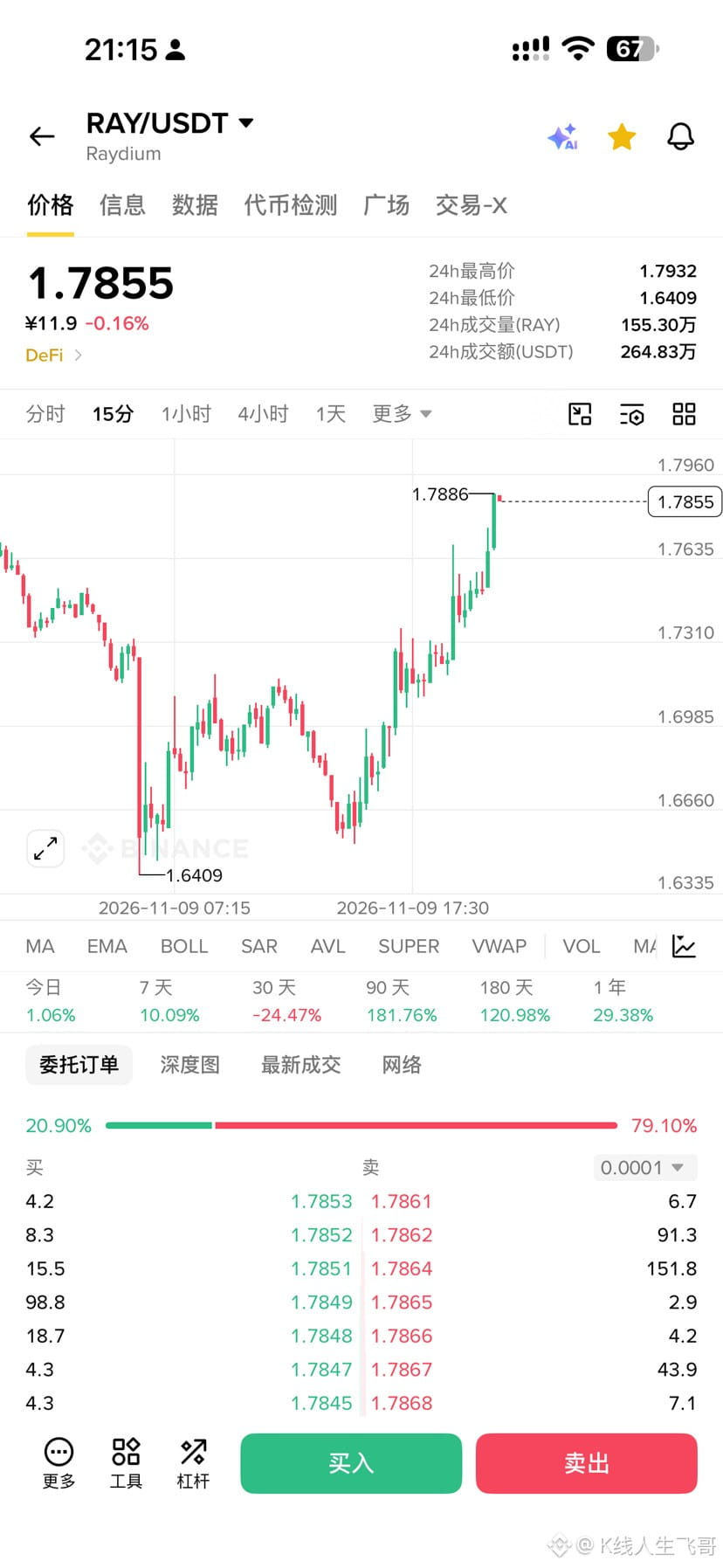
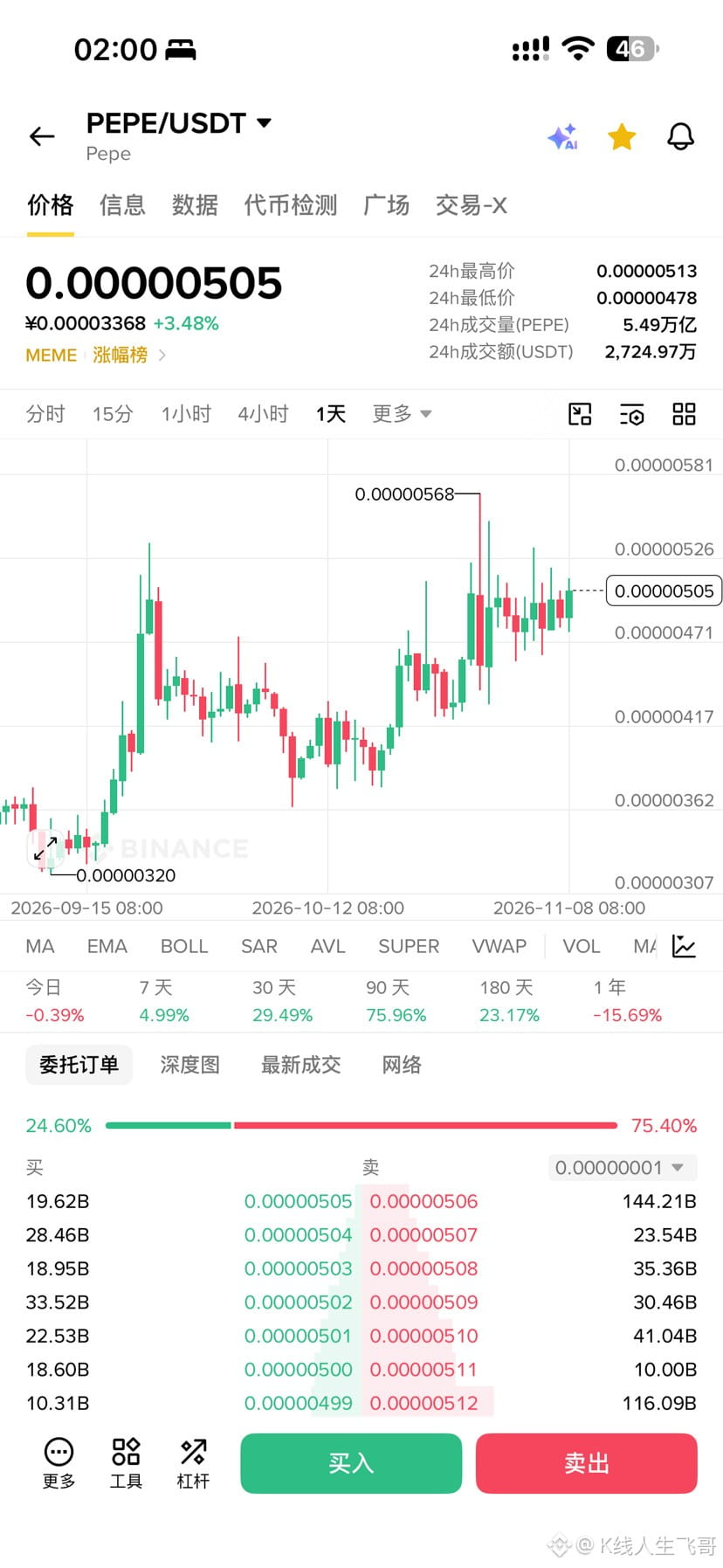
$RAY Keep soaring 🛫—do you think Brother Fei would lead you astray? The RAY coin has outperformed the vast majority of altcoins on every rebound. That’s why I had everyone in the VIP community lie in wait. A few days ago, I told everyone to buy around 1.6 and sell around 1.8. When the market plunged on Friday, I told everyone in the VIP community that they could still buy if it returned to around 1.6. Now it’s rebounded to our target of around 1.8, so we can trade the swings directly. RAY is one of the few strong altcoins in the market. Another is $PEPE . These are both altcoins our community has been accumulating during this period. I’ve said that when trading altcoins, you have to choose carefully. Choose poorly, and all your efforts are wasted. Just follow the strategies from our VIP community 🤝🤝🤝 {spot}(PEPEUSDT) {spot}(RAYUSDT)
$RAY Keep soaring 🛫—do you think Brother Fei would lead you astray?

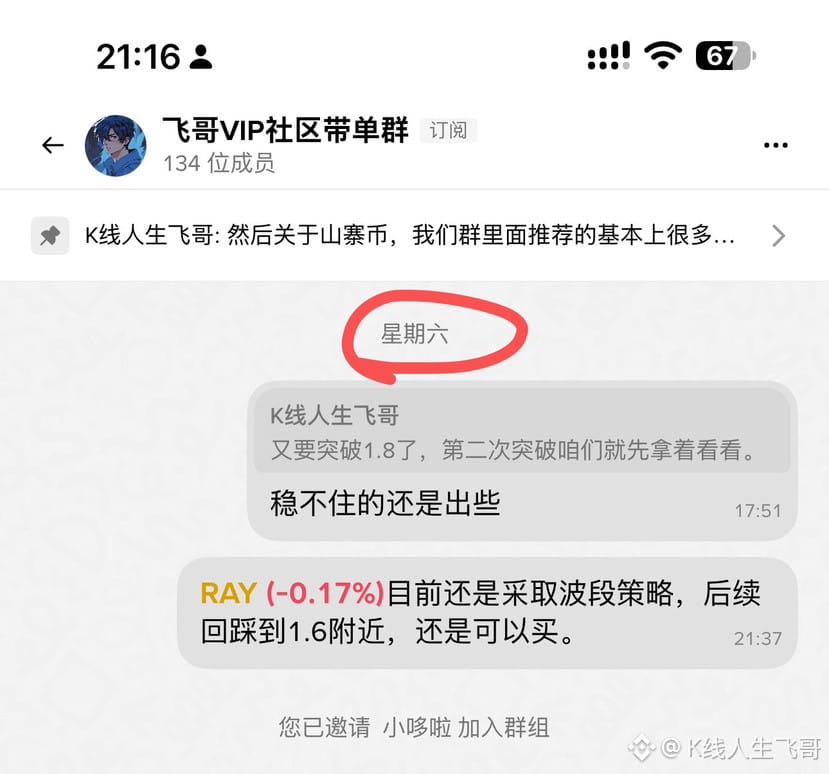
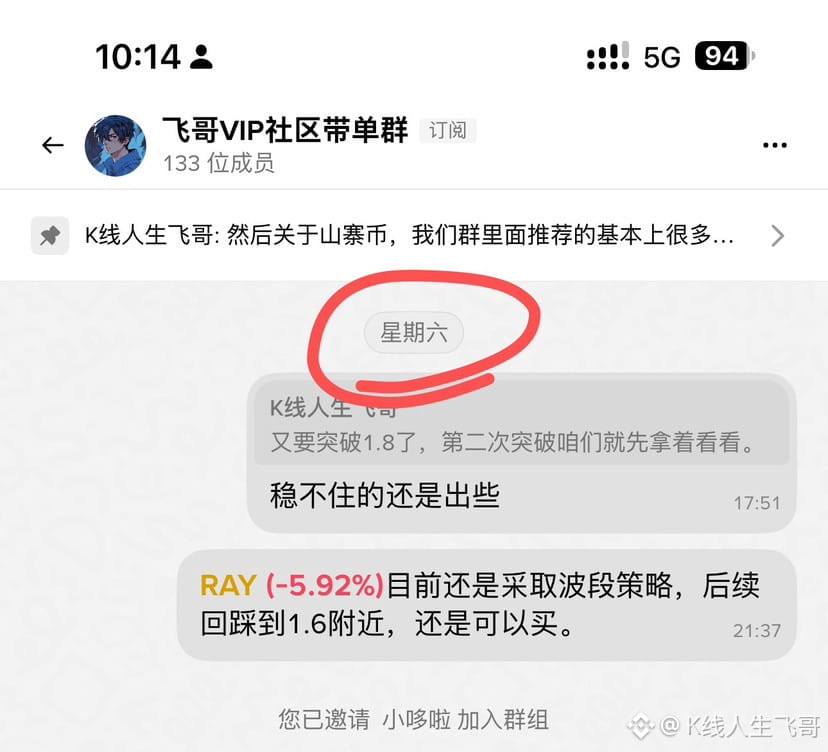
The RAY coin has outperformed the vast majority of altcoins on every rebound. That’s why I had everyone in the VIP community lie in wait. A few days ago, I told everyone to buy around 1.6 and sell around 1.8. When the market plunged on Friday, I told everyone in the VIP community that they could still buy if it returned to around 1.6. Now it’s rebounded to our target of around 1.8, so we can trade the swings directly. RAY is one of the few strong altcoins in the market. Another is $PEPE . These are both altcoins our community has been accumulating during this period. I’ve said that when trading altcoins, you have to choose carefully. Choose poorly, and all your efforts are wasted. Just follow the strategies from our VIP community 🤝🤝🤝
K线人生飞哥
·
--
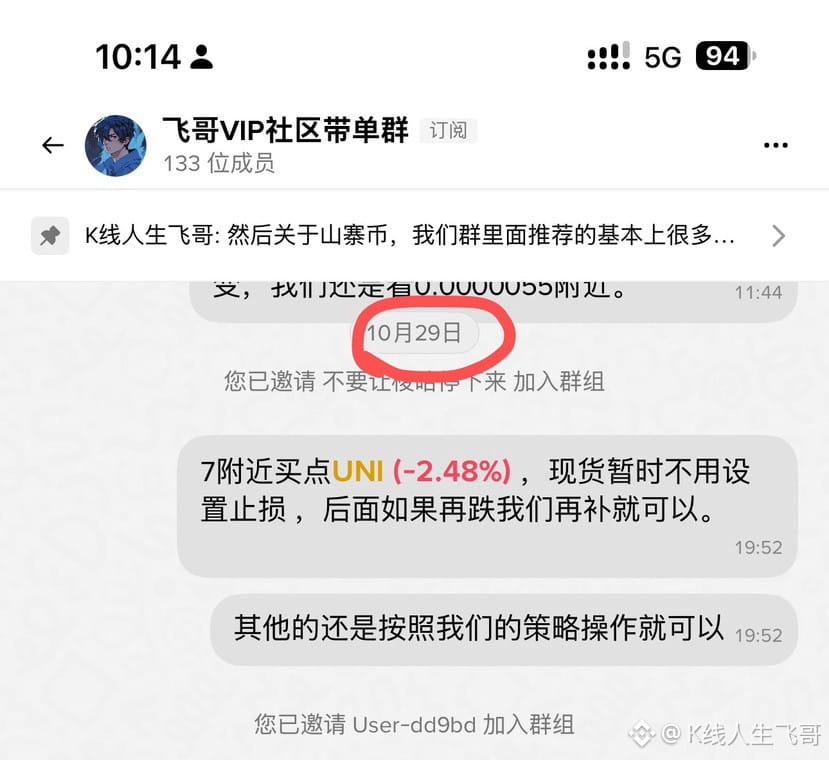
Altcoins are currently holding up fairly well. I took a look at the VIP community’s recent trades, and we haven’t bought many altcoins—just these: $PEPE $UNI $RAY . PEPE was bought around 0.0000044 and is still showing a small profit. UNI was bought at $7 and is now fluctuating around its cost basis. RAY was bought around 1.6 and sold at 1.8, then bought again around 1.6, following a swing-trading strategy.

These altcoins have all performed very well in the short-term market: either they’ve rebounded sharply or held up relatively well. Once this round of shakeout is over, altcoins will likely become increasingly polarized. So, when it comes to our dip-buying strategy, we should try to choose coins with strong market makers controlling the price, or fundamentally sound value coins.

Lastly, a word of advice: don’t get attached to the junk coins you’re holding, and don’t fantasize that they’ll return to their all-time highs. Often, you just need to act decisively, because many junk coins are already on their way to zero. Many people console themselves by saying, “The worst that can happen is it goes to zero,” but when it actually does, you won’t be so calm. So if you’re holding junk coins, treat every rebound as an opportunity to sell. You can reposition your portfolio later on your own or follow our community’s approach. Don’t repeat what happened in the last bull market, when many people held onto junk coins and ended up losing money instead of making it. The market has only just turned from bear to bull, so there’s still time to act.
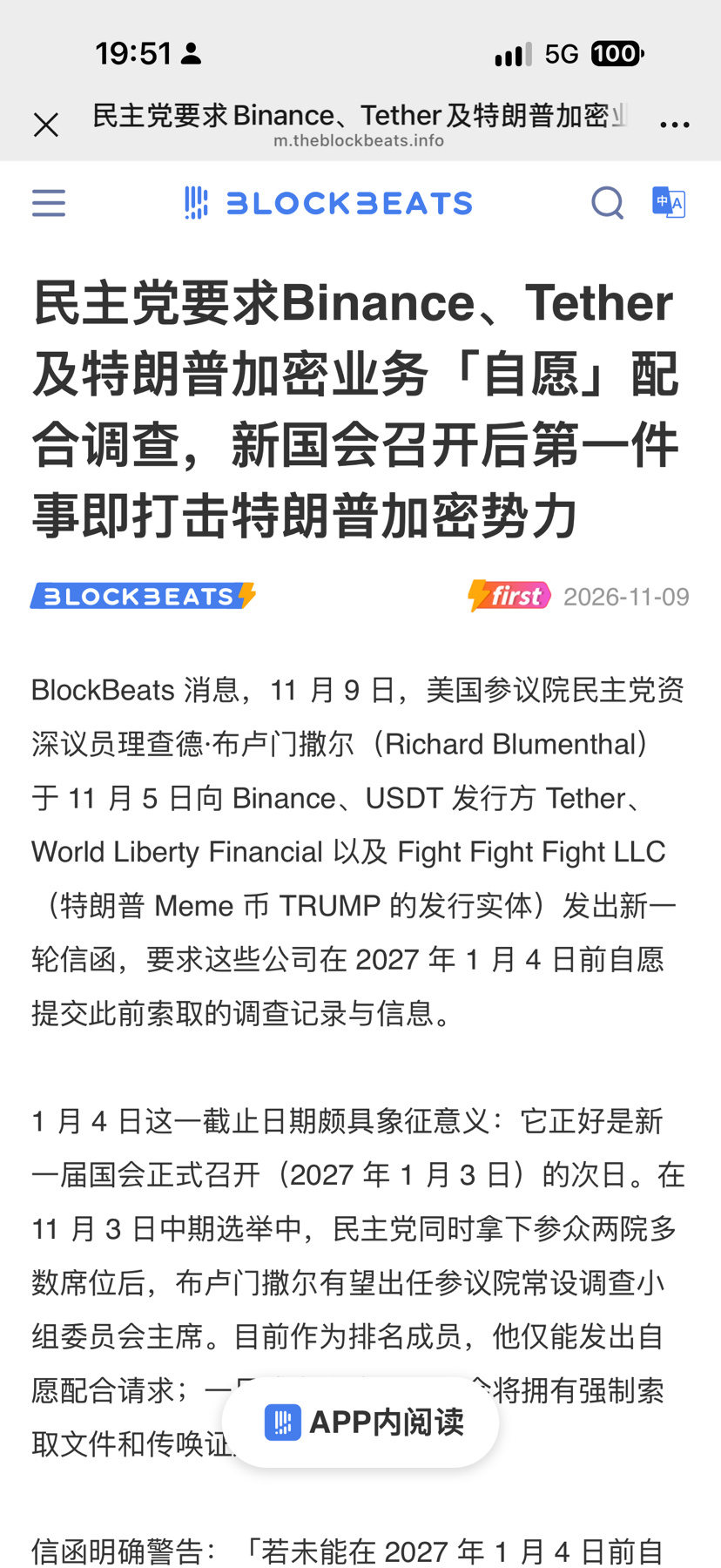
The Democrats are asking Binance, Tether, and Trump’s crypto businesses to “voluntarily” cooperate with the investigation. The first thing they’ll do after the new Congress convenes is crack down on Trump’s crypto influence. The Democrats haven’t even taken office yet, and they’re already cracking down on the crypto sector. But I don’t think it’s a big deal. The crypto market’s strongest wealth effect during the last bull run came while the Democrats were in power. Clear regulatory red lines are actually good news for the crypto sector. There’s no need to pay too much attention to these headlines: when prices are falling, everything you see is bad news; when they’re rising, everything you see is good news. It’s all just emotion and human nature.
The Democrats are asking Binance, Tether, and Trump’s crypto businesses to “voluntarily” cooperate with the investigation. The first thing they’ll do after the new Congress convenes is crack down on Trump’s crypto influence.

The Democrats haven’t even taken office yet, and they’re already cracking down on the crypto sector. But I don’t think it’s a big deal. The crypto market’s strongest wealth effect during the last bull run came while the Democrats were in power. Clear regulatory red lines are actually good news for the crypto sector. There’s no need to pay too much attention to these headlines: when prices are falling, everything you see is bad news; when they’re rising, everything you see is good news. It’s all just emotion and human nature.
A few suggestions for everyone during a bear market 1. Core idea: Don’t doubt crypto. It’s one of the few paths available today that can help ordinary people with no social connections turn their lives around. 2. The four-year bull-and-bear cycle is having less and less of an effect. Stay alert so you can keep participating in all kinds of new projects and earning short-term or even ultra-short-term returns—but don’t FOMO. 3. The best strategy in a bear market is to stick with promising sectors. As someone who has personally weathered both bull and bear markets, I’ve seen people sell at a loss and leave, and I’ve seen others return after leaving. The most heartbreaking cases are always those who couldn’t hold on through the bear market and left—buying at the top and selling at the bottom. Buy when nobody’s paying attention; sell when everyone’s talking about it. But that’s easier said than done. The best returns always go to those who find the right sector and stick with it. The market rewards those who weather both bull and bear markets. 4. Great projects are those that have survived both bull and bear markets. Most projects that take off in a bull market were born in the depths of the previous bear market. This cycle’s HYPE, LIT, TAO, PONS, and others are examples. A bear market is a project’s proving ground and a powerful filter: it eliminates 90% of projects and helps us find the great ones. 5. The best way to get through a bear market is to follow an excellent team or a knowledgeable blogger, and diligently build your understanding over time. Let your knowledge accumulate as you observe the market, improve your insight and sensitivity to information, put small amounts into localized hot trends, and dollar-cost average into BTC. Compared with its previous bull-market peak, BTC has already fallen by more than 50%. Dollar-cost averaging may not catch the bottom, but it can lower your average cost and spread out your risk. It’s the best way to buy the dip. 6. Save some of your ammunition for the next two years. You’ll need it to make the most of the next bull market, and to ensure you aren’t forced to leave during the bear market. It’s heartbreaking to spend your last bullet in the bear market and give up just before the dawn. 7. Stick around. Crypto is one of the best opportunities to turn your life around. Countless stories passed from person to person began in the early stages of the transition from bear to bull. One bull-and-bear cycle can change everything.
A few suggestions for everyone during a bear market

1. Core idea: Don’t doubt crypto. It’s one of the few paths available today that can help ordinary people with no social connections turn their lives around.

2. The four-year bull-and-bear cycle is having less and less of an effect. Stay alert so you can keep participating in all kinds of new projects and earning short-term or even ultra-short-term returns—but don’t FOMO.

3. The best strategy in a bear market is to stick with promising sectors. As someone who has personally weathered both bull and bear markets, I’ve seen people sell at a loss and leave, and I’ve seen others return after leaving. The most heartbreaking cases are always those who couldn’t hold on through the bear market and left—buying at the top and selling at the bottom. Buy when nobody’s paying attention; sell when everyone’s talking about it. But that’s easier said than done. The best returns always go to those who find the right sector and stick with it. The market rewards those who weather both bull and bear markets.

4. Great projects are those that have survived both bull and bear markets. Most projects that take off in a bull market were born in the depths of the previous bear market. This cycle’s HYPE, LIT, TAO, PONS, and others are examples. A bear market is a project’s proving ground and a powerful filter: it eliminates 90% of projects and helps us find the great ones.

5. The best way to get through a bear market is to follow an excellent team or a knowledgeable blogger, and diligently build your understanding over time. Let your knowledge accumulate as you observe the market, improve your insight and sensitivity to information, put small amounts into localized hot trends, and dollar-cost average into BTC. Compared with its previous bull-market peak, BTC has already fallen by more than 50%. Dollar-cost averaging may not catch the bottom, but it can lower your average cost and spread out your risk. It’s the best way to buy the dip.

6. Save some of your ammunition for the next two years. You’ll need it to make the most of the next bull market, and to ensure you aren’t forced to leave during the bear market. It’s heartbreaking to spend your last bullet in the bear market and give up just before the dawn.

7. Stick around. Crypto is one of the best opportunities to turn your life around. Countless stories passed from person to person began in the early stages of the transition from bear to bull. One bull-and-bear cycle can change everything.
Continue firmly buying the dip in BTC and crypto assets I’m bullish on I’m gradually increasing the share of my personal portfolio allocated to crypto, for three main reasons worth considering. First, the market may have entered a new cycle. Historically, Bitcoin bear markets have typically lasted about a year. The previous cycle peaked at around $120,000, while the low in the current cycle was $57,000. The correction has already lasted more than a year, and about 15 months have passed since the bear market began. From a cyclical perspective, the market may be nearing the end of the bear market and gradually transitioning into a new bull market. Second, BTC itself has limited upside, but related assets offer greater leverage. The gains in each Bitcoin bull market have been diminishing—from several hundred times in the early days to less than 8 times at the peak of the previous cycle. If BTC rises only 3–4 times this cycle, simply holding BTC may no longer meet some investors’ expectations for returns. As a result, assets such as MSTR and ASST, which are highly correlated with BTC and more volatile, may offer a way to amplify returns in a bull market. Of course, they also entail greater downside risk, and their performance is not simply a fixed multiple of BTC’s. Third, it’s currently difficult to find investment opportunities more attractive than BTC. In recent times, global capital has been concentrated mainly in AI and semiconductor stocks. But valuations for these assets are already high, making it increasingly difficult for ordinary investors to keep participating. By contrast, BTC has just undergone a deep correction, allowing valuations and market sentiment to reset. Even if its future gains may not match those of some AI stocks, I believe BTC remains an asset worth paying close attention to, given its position in the current cycle and its role in a long-term portfolio. My core thesis is this: the cycle may be turning, BTC offers a relatively clear direction, while related high-leverage assets offer the potential for greater returns.
Continue firmly buying the dip in BTC and crypto assets I’m bullish on

I’m gradually increasing the share of my personal portfolio allocated to crypto, for three main reasons worth considering.

First, the market may have entered a new cycle.

Historically, Bitcoin bear markets have typically lasted about a year. The previous cycle peaked at around $120,000, while the low in the current cycle was $57,000. The correction has already lasted more than a year, and about 15 months have passed since the bear market began. From a cyclical perspective, the market may be nearing the end of the bear market and gradually transitioning into a new bull market.

Second, BTC itself has limited upside, but related assets offer greater leverage.

The gains in each Bitcoin bull market have been diminishing—from several hundred times in the early days to less than 8 times at the peak of the previous cycle. If BTC rises only 3–4 times this cycle, simply holding BTC may no longer meet some investors’ expectations for returns.

As a result, assets such as MSTR and ASST, which are highly correlated with BTC and more volatile, may offer a way to amplify returns in a bull market. Of course, they also entail greater downside risk, and their performance is not simply a fixed multiple of BTC’s.

Third, it’s currently difficult to find investment opportunities more attractive than BTC.

In recent times, global capital has been concentrated mainly in AI and semiconductor stocks. But valuations for these assets are already high, making it increasingly difficult for ordinary investors to keep participating.

By contrast, BTC has just undergone a deep correction, allowing valuations and market sentiment to reset. Even if its future gains may not match those of some AI stocks, I believe BTC remains an asset worth paying close attention to, given its position in the current cycle and its role in a long-term portfolio.

My core thesis is this: the cycle may be turning, BTC offers a relatively clear direction, while related high-leverage assets offer the potential for greater returns.
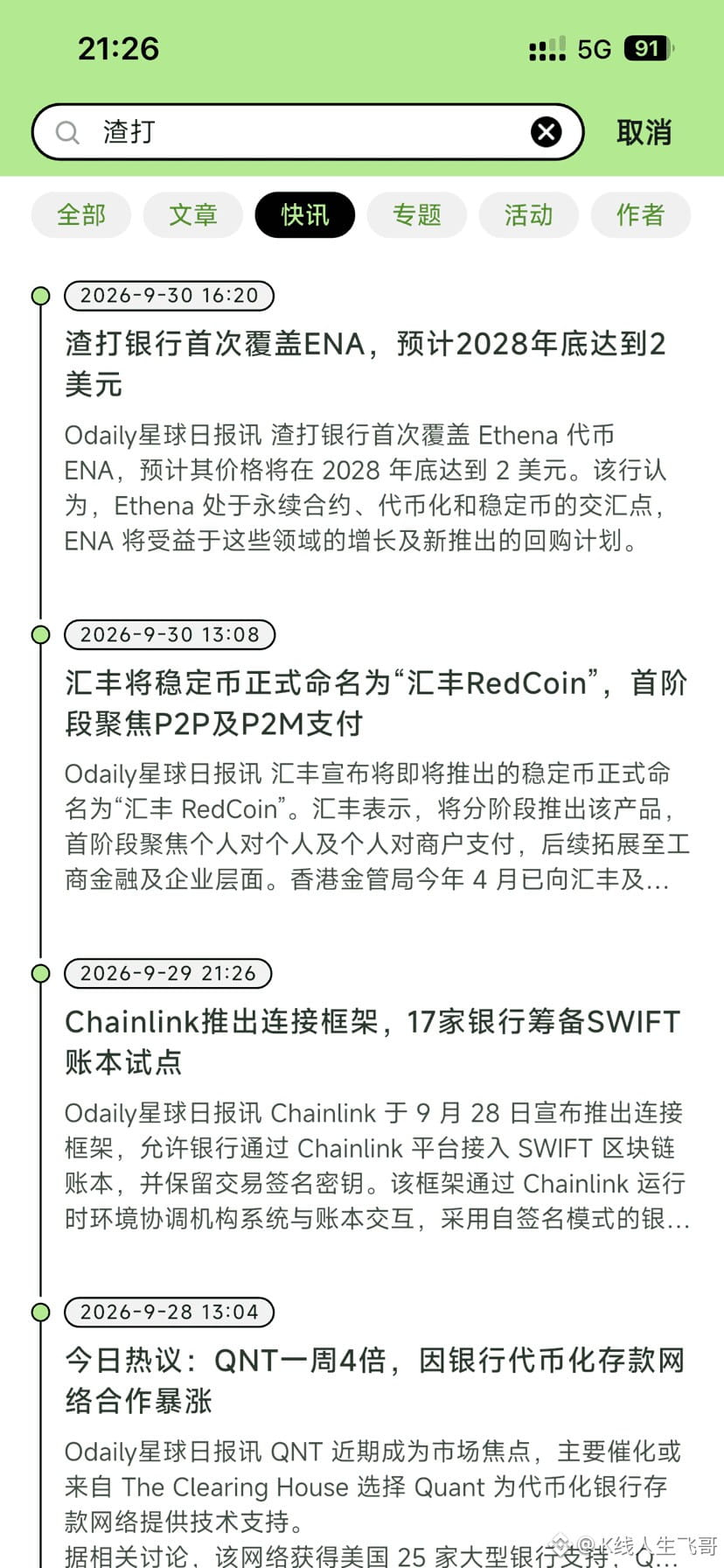
Let’s recap Standard Chartered’s bullish claims this year. They’ve basically called out just about every altcoin that’s been hot in the market. UNI: Lows of 2.7; Standard Chartered’s 2030 target is 100, about 37x AAVE: Lows of 74; Standard Chartered’s 2030 target is 3,500, about 47x MORPHO: Currently at 2; Standard Chartered’s 2030 target is 60, about 30x LINK: Lows of 8; Standard Chartered’s 2030 target is 200, about 25x ARB: Called at 0.13; Standard Chartered’s 2030 target is 10, about 77x SKY: Called at 0.065; Standard Chartered’s 2028 target is 0.325, about 5x ENA: Called at 0.26; Standard Chartered’s 2028 target is 2, about 7.7x When the market was doing well a couple of months ago, everyone believed Standard Chartered’s calls. Now that the market’s down, I reckon a lot of people don’t believe them anymore. Do you think Standard Chartered is just talking big, or are they genuinely bullish??? A reminder: In 2025, when ETH fell to 1,900, Standard Chartered published a research report claiming that ETH’s technical upgrades had failed and its transition was facing a midlife crisis. Later, when ETH rose to 4,700, Standard Chartered published another report claiming that as the second-largest cryptocurrency, ETH could reach 7,500 😂😂😂
Let’s recap Standard Chartered’s bullish claims this year.
They’ve basically called out just about every altcoin that’s been hot in the market.

UNI: Lows of 2.7; Standard Chartered’s 2030 target is 100, about 37x

AAVE: Lows of 74; Standard Chartered’s 2030 target is 3,500, about 47x

MORPHO: Currently at 2; Standard Chartered’s 2030 target is 60, about 30x

LINK: Lows of 8; Standard Chartered’s 2030 target is 200, about 25x

ARB: Called at 0.13; Standard Chartered’s 2030 target is 10, about 77x

SKY: Called at 0.065; Standard Chartered’s 2028 target is 0.325, about 5x

ENA: Called at 0.26; Standard Chartered’s 2028 target is 2, about 7.7x

When the market was doing well a couple of months ago, everyone believed Standard Chartered’s calls. Now that the market’s down, I reckon a lot of people don’t believe them anymore. Do you think Standard Chartered is just talking big, or are they genuinely bullish???

A reminder: In 2025, when ETH fell to 1,900, Standard Chartered published a research report claiming that ETH’s technical upgrades had failed and its transition was facing a midlife crisis. Later, when ETH rose to 4,700, Standard Chartered published another report claiming that as the second-largest cryptocurrency, ETH could reach 7,500 😂😂😂
Altcoins are currently holding up fairly well. I took a look at the VIP community’s recent trades, and we haven’t bought many altcoins—just these: $PEPE $UNI $RAY . PEPE was bought around 0.0000044 and is still showing a small profit. UNI was bought at $7 and is now fluctuating around its cost basis. RAY was bought around 1.6 and sold at 1.8, then bought again around 1.6, following a swing-trading strategy. These altcoins have all performed very well in the short-term market: either they’ve rebounded sharply or held up relatively well. Once this round of shakeout is over, altcoins will likely become increasingly polarized. So, when it comes to our dip-buying strategy, we should try to choose coins with strong market makers controlling the price, or fundamentally sound value coins. Lastly, a word of advice: don’t get attached to the junk coins you’re holding, and don’t fantasize that they’ll return to their all-time highs. Often, you just need to act decisively, because many junk coins are already on their way to zero. Many people console themselves by saying, “The worst that can happen is it goes to zero,” but when it actually does, you won’t be so calm. So if you’re holding junk coins, treat every rebound as an opportunity to sell. You can reposition your portfolio later on your own or follow our community’s approach. Don’t repeat what happened in the last bull market, when many people held onto junk coins and ended up losing money instead of making it. The market has only just turned from bear to bull, so there’s still time to act. {spot}(RAYUSDT) {future}(UNIUSDT) {spot}(PEPEUSDT)
Altcoins are currently holding up fairly well. I took a look at the VIP community’s recent trades, and we haven’t bought many altcoins—just these: $PEPE $UNI $RAY . PEPE was bought around 0.0000044 and is still showing a small profit. UNI was bought at $7 and is now fluctuating around its cost basis. RAY was bought around 1.6 and sold at 1.8, then bought again around 1.6, following a swing-trading strategy.

These altcoins have all performed very well in the short-term market: either they’ve rebounded sharply or held up relatively well. Once this round of shakeout is over, altcoins will likely become increasingly polarized. So, when it comes to our dip-buying strategy, we should try to choose coins with strong market makers controlling the price, or fundamentally sound value coins.

Lastly, a word of advice: don’t get attached to the junk coins you’re holding, and don’t fantasize that they’ll return to their all-time highs. Often, you just need to act decisively, because many junk coins are already on their way to zero. Many people console themselves by saying, “The worst that can happen is it goes to zero,” but when it actually does, you won’t be so calm. So if you’re holding junk coins, treat every rebound as an opportunity to sell. You can reposition your portfolio later on your own or follow our community’s approach. Don’t repeat what happened in the last bull market, when many people held onto junk coins and ended up losing money instead of making it. The market has only just turned from bear to bull, so there’s still time to act.
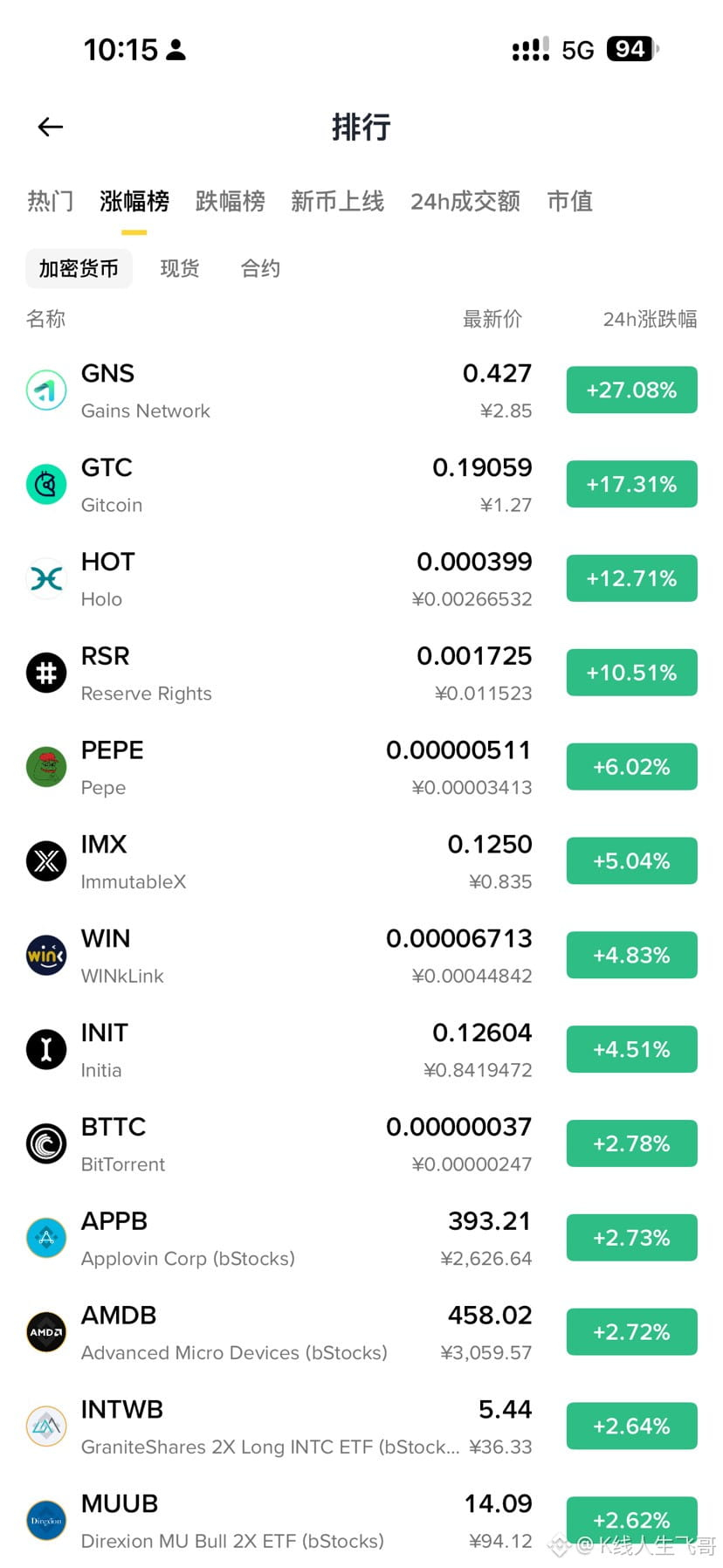
$PEPE Besides ETF speculation, another reason PEPE is so strong right now is the Binance hacking incident, in which a large amount of PEPE was stolen and transferred to a wallet for sale. Binance still hasn’t bought it all back on the secondary market, so buying pressure remains in the short term. Once Binance enables PEPE withdrawals, that buying pressure will disappear, and PEPE will probably see a further correction 📉 {spot}(PEPEUSDT)
$PEPE Besides ETF speculation, another reason PEPE is so strong right now is the Binance hacking incident, in which a large amount of PEPE was stolen and transferred to a wallet for sale. Binance still hasn’t bought it all back on the secondary market, so buying pressure remains in the short term. Once Binance enables PEPE withdrawals, that buying pressure will disappear, and PEPE will probably see a further correction 📉
To ensnare me: First, Binance gets hacked Second, the Republicans lose the election Third, U.S. stocks plunge, triggering a circuit breaker Fourth, Jensen Huang has an affair
To ensnare me:
First, Binance gets hacked
Second, the Republicans lose the election
Third, U.S. stocks plunge, triggering a circuit breaker
Fourth, Jensen Huang has an affair
Log in to explore more content
Join global crypto users on Binance Square
⚡️ Get latest and useful information about crypto.
💬 Trusted by the world’s largest crypto exchange.
👍 Discover real insights from verified creators.
Email / Phone number
Sitemap
Cookie Preferences
Platform T&Cs