Binance Square
Tongrun
326 Posts

Tongrun

Joining the Movement & Ecosystem Building.
586 Following
148 Followers
363 Liked
Posts
·
--
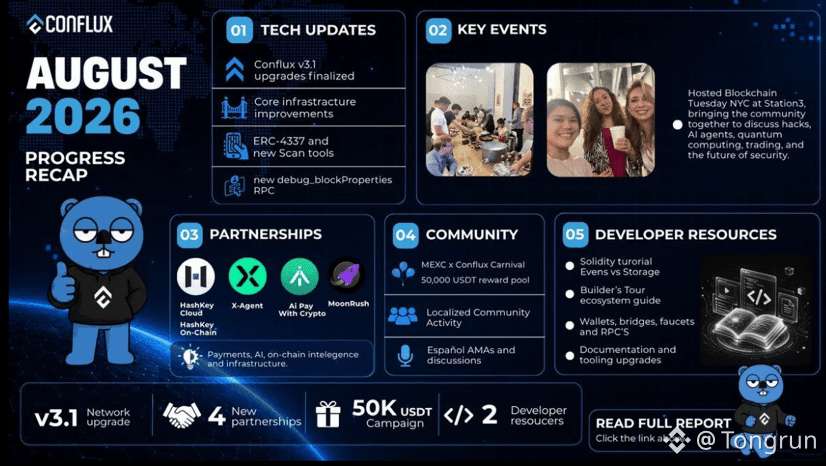
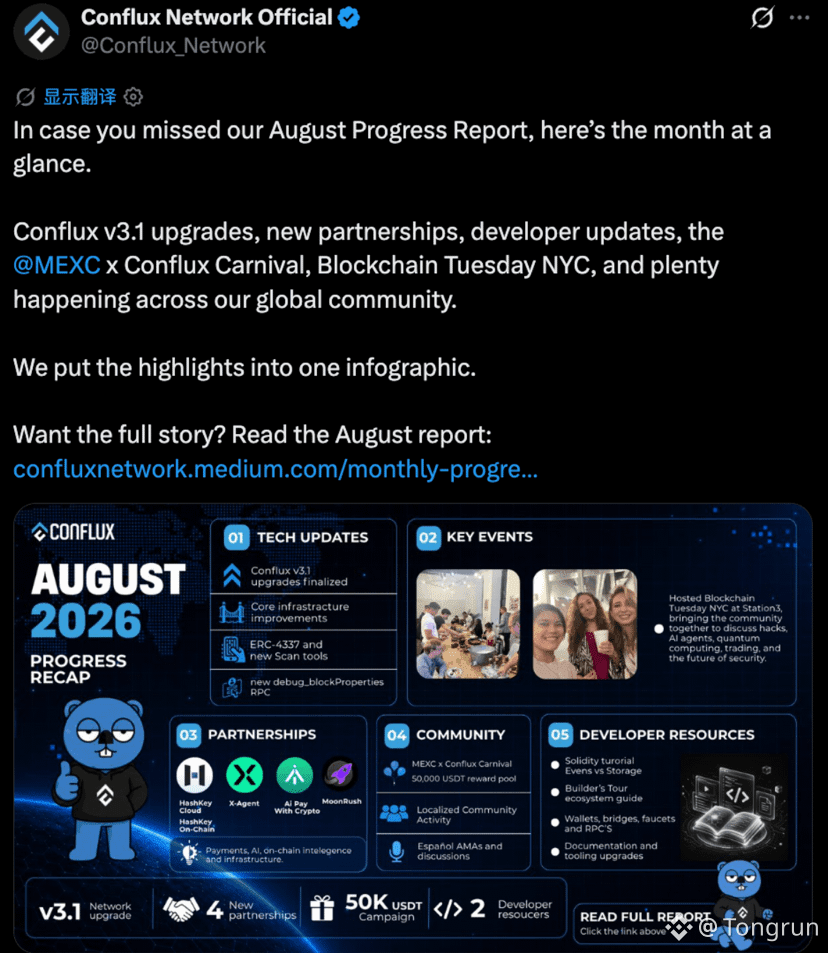
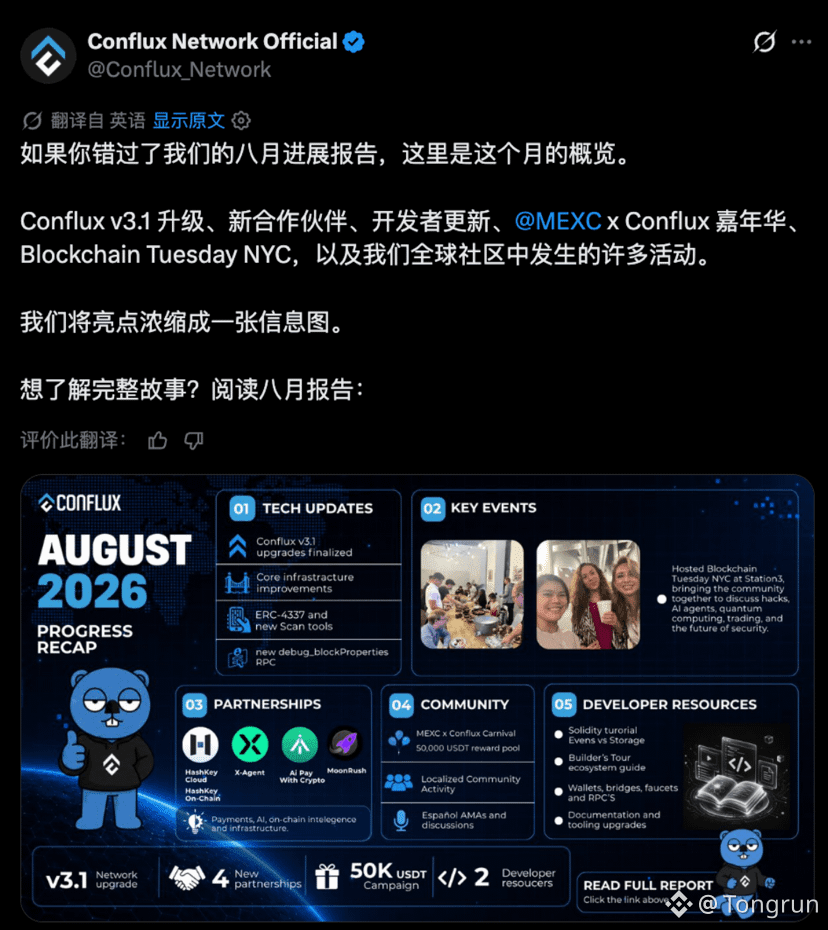
Conflux continues to build: technology is advancing, use cases are being integrated, and the ecosystem is expanding. If you missed the August progress report, here’s an overview that condenses the highlights into a single infographic. {spot}(CFXUSDT)
Conflux continues to build: technology is advancing, use cases are being integrated, and the ecosystem is expanding.

If you missed the August progress report, here’s an overview that condenses the highlights into a single infographic.
The current Hong Kong policy window is very favorable for Conflux: as digital assets achieve large-scale development within regulatory frameworks, particularly with tokenization and stablecoins established as core infrastructure; Conflux, being a compliant public chain with cross-border settlement capabilities, is highly aligned with this trend. This strategic fit provides a solid foundation for expanding its business in Hong Kong. Even though market opportunities are already emerging, obtaining specific orders and relevant licenses, as well as establishing partnerships, still needs to be advanced step by step.
Tongrun
·
--
The Hong Kong policy window is favorable for Conflux Tree Graph. Conflux’s project development and its ecosystem positioning align with Hong Kong’s policies.
The Hong Kong policy window is favorable for Conflux’s Tree Graph. Conflux’s own project development and its ecosystem positioning align with Hong Kong’s policies.
The compliance public-chain positioning of Tree Graph, along with stablecoins and cross-border settlement, fits this window perfectly. I’m optimistic about Conflux’s development in Hong Kong.

What Conflux Tree Graph can do is connect a compliant public chain, stablecoins, and cross-border settlement to this track being laid out. It’s recommended that once you enter the premises—even though the market doors are already open—the actual business operations will rely on on-chain technology and be carried out within a licensed regulatory ecosystem.
The current Hong Kong policy window is very favorable for Conflux: as digital assets achieve scaled development within the regulatory framework—especially with tokenization and stablecoins established as core foundational infrastructure—Conflux, as a compliant public chain with cross-border settlement capabilities, is highly aligned with this trend. This strategic fit lays a solid foundation for its business expansion in Hong Kong. Even though market opportunities are already there, obtaining specific orders, relevant licenses, and partnerships still needs to be advanced step by step.
The Hong Kong policy window is favorable for Conflux Tree Graph. Conflux’s project development and its ecosystem positioning align with Hong Kong’s policies.The Hong Kong policy window is favorable for Conflux’s Tree Graph. Conflux’s own project development and its ecosystem positioning align with Hong Kong’s policies. The compliance public-chain positioning of Tree Graph, along with stablecoins and cross-border settlement, fits this window perfectly. I’m optimistic about Conflux’s development in Hong Kong. What Conflux Tree Graph can do is connect a compliant public chain, stablecoins, and cross-border settlement to this track being laid out. It’s recommended that once you enter the premises—even though the market doors are already open—the actual business operations will rely on on-chain technology and be carried out within a licensed regulatory ecosystem. The current Hong Kong policy window is very favorable for Conflux: as digital assets achieve scaled development within the regulatory framework—especially with tokenization and stablecoins established as core foundational infrastructure—Conflux, as a compliant public chain with cross-border settlement capabilities, is highly aligned with this trend. This strategic fit lays a solid foundation for its business expansion in Hong Kong. Even though market opportunities are already there, obtaining specific orders, relevant licenses, and partnerships still needs to be advanced step by step.

The Hong Kong policy window is favorable for Conflux Tree Graph. Conflux’s project development and its ecosystem positioning align with Hong Kong’s policies.

The Hong Kong policy window is favorable for Conflux’s Tree Graph. Conflux’s own project development and its ecosystem positioning align with Hong Kong’s policies.
The compliance public-chain positioning of Tree Graph, along with stablecoins and cross-border settlement, fits this window perfectly. I’m optimistic about Conflux’s development in Hong Kong.
What Conflux Tree Graph can do is connect a compliant public chain, stablecoins, and cross-border settlement to this track being laid out. It’s recommended that once you enter the premises—even though the market doors are already open—the actual business operations will rely on on-chain technology and be carried out within a licensed regulatory ecosystem.
The current Hong Kong policy window is very favorable for Conflux: as digital assets achieve scaled development within the regulatory framework—especially with tokenization and stablecoins established as core foundational infrastructure—Conflux, as a compliant public chain with cross-border settlement capabilities, is highly aligned with this trend. This strategic fit lays a solid foundation for its business expansion in Hong Kong. Even though market opportunities are already there, obtaining specific orders, relevant licenses, and partnerships still needs to be advanced step by step.
Yao Qizhi turned “China needs its own underlying protocol” into a blockchain that can run payments, connect to stablecoins, and provide developers with practical tools—this is Conflux
Tongrun
·
--
Do you know: how did the tree graph come about, and what makes it strong?

Conflux (Tree-Graph) isn’t a chain that tells a story first and then adds the technology. In late 2017, during a discussion in a cryptography class at Tsinghua University, Turing Award winner Prof. QI Yao’s conversation became the starting point of this journey. The core team largely comes from the Yao Class and tackles the hardest layer of a public blockchain: how to record ledgers, and how to confirm transactions quickly.

Many chains are like a single-lane road—fast is needed, and many people also need to record at the same time—but they often can’t have both.

Tree-Graph uses its own Tree-Graph ledger and the GHAST consensus, enabling transactions to be processed in parallel and then safely consolidated into a single, deterministic history. In simple terms: it’s not about squeezing the cars into one lane; it’s about widening the road—while still keeping the ledger orderly.

The project went live in 2020 in Shanghai. Public materials have noted: cross-continent node networking, peak TPS reaching the 6000-range, and attempts to break the performance wall of “many users online at the same time + high throughput” in real-world wide-area networks.

In 2023, it also took on research topics related to large-scale blockchain infrastructure platforms for the “Belt and Road” initiative. The scenarios target real-world needs in cross-border logistics, settlement, and cultural exchange—things that must run smoothly and stand the test.

Tree-Graph’s advantages aren’t just slogans—they are:

Clear origins: top-tier academic work from the very start, not a concept-driven project.

Performance built for real networks: it must still confirm transactions under global nodes and high concurrency.

Two spaces to use: Core supports compliance and payment-facing applications, and eSpace is compatible with Ethereum tooling—so both developers and funds can enter.

Prof. QI Yao’s idea of “China having its own underlying protocol” is realized on a public chain that can run payments, integrate stablecoins, and also be used by developers—that’s Conflux.

#Conflux #CFX #Web3‌‌

Material source: official media / online news. Content is for reference, learning, and communication only. Please strictly comply with the laws and regulations in your location. This article does not represent any investment advice.
Do you know: how did the tree graph come about, and what makes it strong? Conflux (Tree-Graph) isn’t a chain that tells a story first and then adds the technology. In late 2017, during a discussion in a cryptography class at Tsinghua University, Turing Award winner Prof. QI Yao’s conversation became the starting point of this journey. The core team largely comes from the Yao Class and tackles the hardest layer of a public blockchain: how to record ledgers, and how to confirm transactions quickly. Many chains are like a single-lane road—fast is needed, and many people also need to record at the same time—but they often can’t have both. Tree-Graph uses its own Tree-Graph ledger and the GHAST consensus, enabling transactions to be processed in parallel and then safely consolidated into a single, deterministic history. In simple terms: it’s not about squeezing the cars into one lane; it’s about widening the road—while still keeping the ledger orderly. The project went live in 2020 in Shanghai. Public materials have noted: cross-continent node networking, peak TPS reaching the 6000-range, and attempts to break the performance wall of “many users online at the same time + high throughput” in real-world wide-area networks. In 2023, it also took on research topics related to large-scale blockchain infrastructure platforms for the “Belt and Road” initiative. The scenarios target real-world needs in cross-border logistics, settlement, and cultural exchange—things that must run smoothly and stand the test. Tree-Graph’s advantages aren’t just slogans—they are: Clear origins: top-tier academic work from the very start, not a concept-driven project. Performance built for real networks: it must still confirm transactions under global nodes and high concurrency. Two spaces to use: Core supports compliance and payment-facing applications, and eSpace is compatible with Ethereum tooling—so both developers and funds can enter. Prof. QI Yao’s idea of “China having its own underlying protocol” is realized on a public chain that can run payments, integrate stablecoins, and also be used by developers—that’s Conflux. #Conflux #CFX #Web3‌‌ Material source: official media / online news. Content is for reference, learning, and communication only. Please strictly comply with the laws and regulations in your location. This article does not represent any investment advice.
Do you know: how did the tree graph come about, and what makes it strong?

Conflux (Tree-Graph) isn’t a chain that tells a story first and then adds the technology. In late 2017, during a discussion in a cryptography class at Tsinghua University, Turing Award winner Prof. QI Yao’s conversation became the starting point of this journey. The core team largely comes from the Yao Class and tackles the hardest layer of a public blockchain: how to record ledgers, and how to confirm transactions quickly.

Many chains are like a single-lane road—fast is needed, and many people also need to record at the same time—but they often can’t have both.

Tree-Graph uses its own Tree-Graph ledger and the GHAST consensus, enabling transactions to be processed in parallel and then safely consolidated into a single, deterministic history. In simple terms: it’s not about squeezing the cars into one lane; it’s about widening the road—while still keeping the ledger orderly.

The project went live in 2020 in Shanghai. Public materials have noted: cross-continent node networking, peak TPS reaching the 6000-range, and attempts to break the performance wall of “many users online at the same time + high throughput” in real-world wide-area networks.

In 2023, it also took on research topics related to large-scale blockchain infrastructure platforms for the “Belt and Road” initiative. The scenarios target real-world needs in cross-border logistics, settlement, and cultural exchange—things that must run smoothly and stand the test.

Tree-Graph’s advantages aren’t just slogans—they are:

Clear origins: top-tier academic work from the very start, not a concept-driven project.

Performance built for real networks: it must still confirm transactions under global nodes and high concurrency.

Two spaces to use: Core supports compliance and payment-facing applications, and eSpace is compatible with Ethereum tooling—so both developers and funds can enter.

Prof. QI Yao’s idea of “China having its own underlying protocol” is realized on a public chain that can run payments, integrate stablecoins, and also be used by developers—that’s Conflux.

#Conflux #CFX #Web3‌‌

Material source: official media / online news. Content is for reference, learning, and communication only. Please strictly comply with the laws and regulations in your location. This article does not represent any investment advice.
Conflux significantly outperforms Ethereum mainnet in performance (TPS increased by hundreds of times, fees reduced by thousands of times). Compared with Solana, it is also more advantageous in terms of stability—although it has a lower theoretical peak TPS, its real-world operation is more reliable and it has never gone down. Its core competitive edge lies in the combination of tree-graph consensus, a compliance-oriented positioning, and stable operation.
Conflux significantly outperforms Ethereum mainnet in performance (TPS increased by hundreds of times, fees reduced by thousands of times). Compared with Solana, it is also more advantageous in terms of stability—although it has a lower theoretical peak TPS, its real-world operation is more reliable and it has never gone down.

Its core competitive edge lies in the combination of tree-graph consensus, a compliance-oriented positioning, and stable operation.
Tongrun
·
--
Performance comparison between Conflux and other blockchains (ETH, SOL), and its core advantages
1. Throughput performance
Conflux’s tree-graph consensus allows it to achieve 3,000–6,000 TPS at the L1 layer (actual stable operating value), and the latest version 3.0 has a theoretical upper limit of 15,000+ TPS. By comparison, Ethereum mainnet supports only 15–30 TPS and relies on Layer 2 scaling; Solana’s theoretical value is 65,000 TPS, but in actual operation it often fluctuates between 2,000–4,000 TPS.
2. Stability advantage
Conflux has processed over 400 million transactions in total, and during this period there has never been a network outage or transaction congestion, whereas Solana has experienced full-network downtime multiple times. Its tree-structured design enables parallel block processing, so even during traffic spikes the network will not get congested.
Performance comparison between Conflux and other blockchains (ETH, SOL), and its core advantages1. Throughput performance Conflux’s tree-graph consensus allows it to achieve 3,000–6,000 TPS at the L1 layer (actual stable operating value), and the latest version 3.0 has a theoretical upper limit of 15,000+ TPS. By comparison, Ethereum mainnet supports only 15–30 TPS and relies on Layer 2 scaling; Solana’s theoretical value is 65,000 TPS, but in actual operation it often fluctuates between 2,000–4,000 TPS. 2. Stability advantage Conflux has processed over 400 million transactions in total, and during this period there has never been a network outage or transaction congestion, whereas Solana has experienced full-network downtime multiple times. Its tree-structured design enables parallel block processing, so even during traffic spikes the network will not get congested.

Performance comparison between Conflux and other blockchains (ETH, SOL), and its core advantages

1. Throughput performance
Conflux’s tree-graph consensus allows it to achieve 3,000–6,000 TPS at the L1 layer (actual stable operating value), and the latest version 3.0 has a theoretical upper limit of 15,000+ TPS. By comparison, Ethereum mainnet supports only 15–30 TPS and relies on Layer 2 scaling; Solana’s theoretical value is 65,000 TPS, but in actual operation it often fluctuates between 2,000–4,000 TPS.
2. Stability advantage
Conflux has processed over 400 million transactions in total, and during this period there has never been a network outage or transaction congestion, whereas Solana has experienced full-network downtime multiple times. Its tree-structured design enables parallel block processing, so even during traffic spikes the network will not get congested.
Conflux builds a complete security system from the underlying consensus to the application layer by defending against attacks with a hybrid PoW+PoS consensus, eliminating fork waste with a Tree-Graph structure, preventing malicious forks with the GHAST algorithm, and reducing selfish mining with a dynamic incentive mechanism. While maintaining high performance, it achieves decentralized security at the same level as Bitcoin and Ethereum.
Tongrun
·
--
Conflux—How does it ensure blockchain data security?
Conflux ensures the security of blockchain data through multi-layered, multi-dimensional security mechanisms, mainly reflected in the following aspects:

1. Hybrid consensus mechanism: PoW + PoS dual protection
Conflux adopts a hybrid consensus mechanism that combines Proof of Work (PoW) and Proof of Stake (PoS), which is the core foundation of its security:
The PoW layer is responsible for resisting attacks, ensuring that attackers need to incur high computational power costs to launch an attack
The PoS layer provides final confirmation of transactions, effectively preventing long fork or reorganization attacks and reducing the risk of 51% attacks
Conflux—How does it ensure blockchain data security?Conflux ensures the security of blockchain data through multi-layered, multi-dimensional security mechanisms, mainly reflected in the following aspects: 1. Hybrid consensus mechanism: PoW + PoS dual protection Conflux adopts a hybrid consensus mechanism that combines Proof of Work (PoW) and Proof of Stake (PoS), which is the core foundation of its security: The PoW layer is responsible for resisting attacks, ensuring that attackers need to incur high computational power costs to launch an attack The PoS layer provides final confirmation of transactions, effectively preventing long fork or reorganization attacks and reducing the risk of 51% attacks

Conflux—How does it ensure blockchain data security?

Conflux ensures the security of blockchain data through multi-layered, multi-dimensional security mechanisms, mainly reflected in the following aspects:
1. Hybrid consensus mechanism: PoW + PoS dual protection
Conflux adopts a hybrid consensus mechanism that combines Proof of Work (PoW) and Proof of Stake (PoS), which is the core foundation of its security:
The PoW layer is responsible for resisting attacks, ensuring that attackers need to incur high computational power costs to launch an attack
The PoS layer provides final confirmation of transactions, effectively preventing long fork or reorganization attacks and reducing the risk of 51% attacks
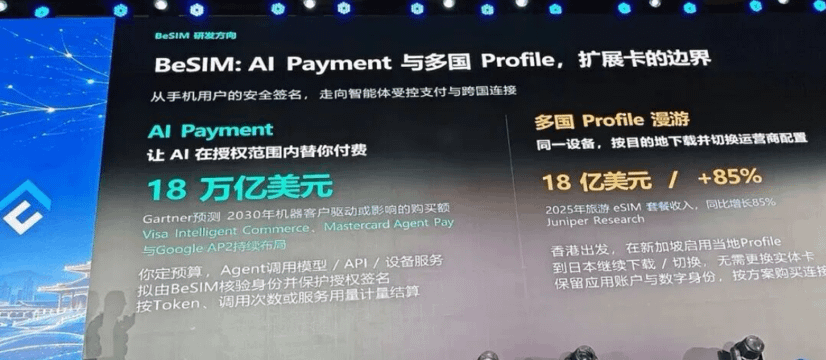
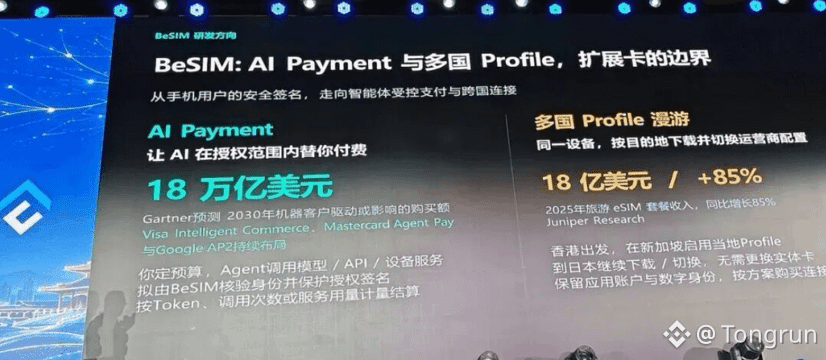
The meaning for community partners is straightforward: use your phone to configure on-chain applications, with fewer mnemonic phrases and fewer piles of plugins. If staking, transfers, and identity authorization can also be made into one-tap confirmations on the card side, Web3 will move from a niche geek tool to an everyday feature.
Tongrun
·
--
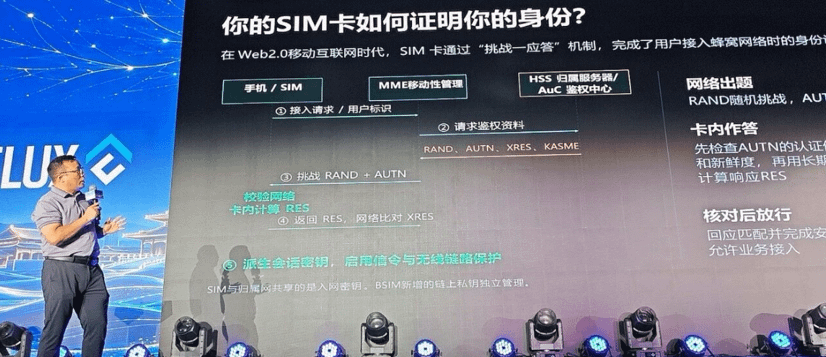
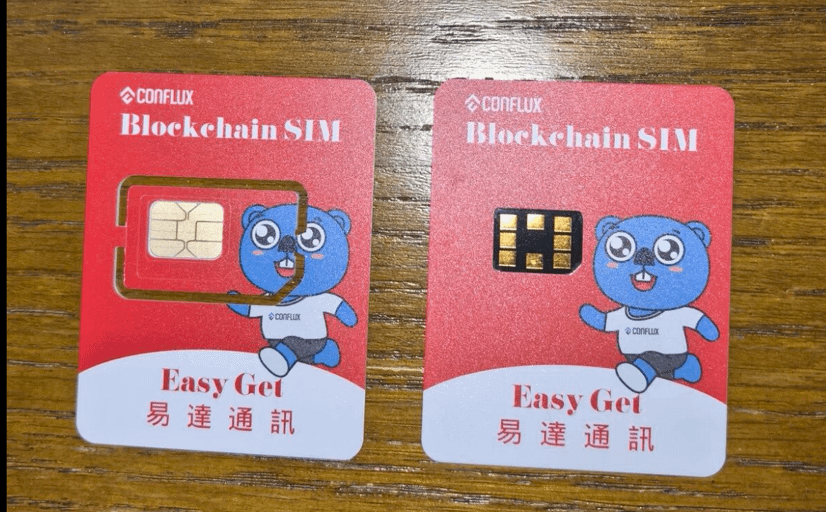
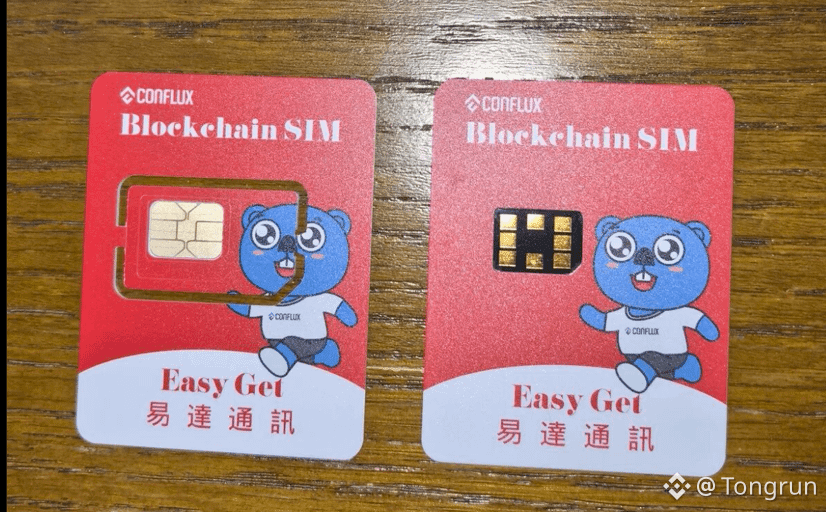
BSIM (Blockchain SIM) was jointly developed by Shudu and China Telecom. Its appearance is the same as a normal SIM, but it integrates blockchain account management into the card.

The three most important points are: 👇 👇

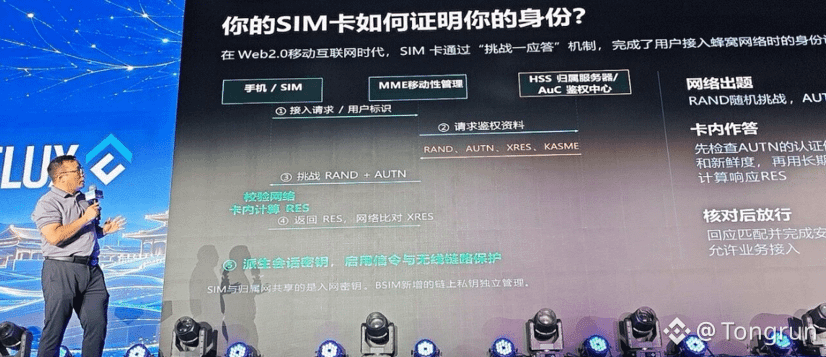
Hardware-level security Public/private keys are generated and stored inside the card. Transaction signing is completed in the chip, and the private key never leaves the card. Even if the phone is infected with a virus or targeted by a trojan, it becomes much harder to copy the keys.

More powerful Performance claims are: storage capacity expands by roughly 10–20x, and computing power increases by dozens of times. In addition to communication, it can also be used for encrypted storage, key recovery, and even integrated capabilities similar to a hardware USB key (U盾).

A compliant identity access point Your mobile number has been real-name verified. With the on-chain account established via BSIM, “operator real-name verification” can be matched with “on-chain identity,” making it more suitable for applications that must pass compliance requirements.

The significance for community partners is very direct: you remember fewer mnemonic phrases, install fewer plugins, and can access on-chain applications directly from your phone. If staking, transfers, and identity authorization are also made into one-click confirmations on the card side, then Web3 will truly shift from being a tool for geeks to an everyday feature. 👏👏

This is not about urging everyone to blindly go on-chain right away; it’s about expanding the entry point from “people who know how to use wallets” to “people who know how to use phones.”

The deployment timeline, coverage cities, and specific apps still need to follow the telecom operator’s announcements and official notices.

Source of materials: official media / online news. The content is for reference, learning, and交流 only. Please strictly comply with the laws and regulations in your location. This article does not represent any investment advice.
BSIM (Blockchain SIM) was jointly developed by Shudu and China Telecom. Its appearance is the same as a normal SIM, but it integrates blockchain account management into the card. The three most important points are: 👇 👇 Hardware-level security Public/private keys are generated and stored inside the card. Transaction signing is completed in the chip, and the private key never leaves the card. Even if the phone is infected with a virus or targeted by a trojan, it becomes much harder to copy the keys. More powerful Performance claims are: storage capacity expands by roughly 10–20x, and computing power increases by dozens of times. In addition to communication, it can also be used for encrypted storage, key recovery, and even integrated capabilities similar to a hardware USB key (U盾). A compliant identity access point Your mobile number has been real-name verified. With the on-chain account established via BSIM, “operator real-name verification” can be matched with “on-chain identity,” making it more suitable for applications that must pass compliance requirements. The significance for community partners is very direct: you remember fewer mnemonic phrases, install fewer plugins, and can access on-chain applications directly from your phone. If staking, transfers, and identity authorization are also made into one-click confirmations on the card side, then Web3 will truly shift from being a tool for geeks to an everyday feature. 👏👏 This is not about urging everyone to blindly go on-chain right away; it’s about expanding the entry point from “people who know how to use wallets” to “people who know how to use phones.” The deployment timeline, coverage cities, and specific apps still need to follow the telecom operator’s announcements and official notices. Source of materials: official media / online news. The content is for reference, learning, and交流 only. Please strictly comply with the laws and regulations in your location. This article does not represent any investment advice. {spot}(CFXUSDT)
BSIM (Blockchain SIM) was jointly developed by Shudu and China Telecom. Its appearance is the same as a normal SIM, but it integrates blockchain account management into the card.

The three most important points are: 👇 👇

Hardware-level security Public/private keys are generated and stored inside the card. Transaction signing is completed in the chip, and the private key never leaves the card. Even if the phone is infected with a virus or targeted by a trojan, it becomes much harder to copy the keys.

More powerful Performance claims are: storage capacity expands by roughly 10–20x, and computing power increases by dozens of times. In addition to communication, it can also be used for encrypted storage, key recovery, and even integrated capabilities similar to a hardware USB key (U盾).

A compliant identity access point Your mobile number has been real-name verified. With the on-chain account established via BSIM, “operator real-name verification” can be matched with “on-chain identity,” making it more suitable for applications that must pass compliance requirements.

The significance for community partners is very direct: you remember fewer mnemonic phrases, install fewer plugins, and can access on-chain applications directly from your phone. If staking, transfers, and identity authorization are also made into one-click confirmations on the card side, then Web3 will truly shift from being a tool for geeks to an everyday feature. 👏👏

This is not about urging everyone to blindly go on-chain right away; it’s about expanding the entry point from “people who know how to use wallets” to “people who know how to use phones.”

The deployment timeline, coverage cities, and specific apps still need to follow the telecom operator’s announcements and official notices.

Source of materials: official media / online news. The content is for reference, learning, and交流 only. Please strictly comply with the laws and regulations in your location. This article does not represent any investment advice.
Conflux Security Ecosystem: From Audits to a Systematic Real-Time Monitoring FrameworkA foundation laid by top-tier security audits September 25, 2025, the Conflux network completed a rigorous audit conducted by Halborn and Least Authority, two internationally recognized security firms. The audit report has been published on the official GitHub repository. This move is intended to strengthen the network’s security resilience and provide developers and institutions with a safe and reliable infrastructure. 2026, security exposure and rapid response May, v3.0.3 testnet emergency patch In May 2026, Conflux released a v3.0.3 testnet upgrade, aiming to fix a critical security vulnerability that could cause nodes to fail under certain conditions. The upgrade is a recommended update, but the official stated clearly that unupgraded nodes may face operational risks. The market reaction was steady.

Conflux Security Ecosystem: From Audits to a Systematic Real-Time Monitoring Framework

A foundation laid by top-tier security audits
September 25, 2025, the Conflux network completed a rigorous audit conducted by Halborn and Least Authority, two internationally recognized security firms. The audit report has been published on the official GitHub repository. This move is intended to strengthen the network’s security resilience and provide developers and institutions with a safe and reliable infrastructure.
2026, security exposure and rapid response
May, v3.0.3 testnet emergency patch
In May 2026, Conflux released a v3.0.3 testnet upgrade, aiming to fix a critical security vulnerability that could cause nodes to fail under certain conditions. The upgrade is a recommended update, but the official stated clearly that unupgraded nodes may face operational risks. The market reaction was steady.
Conflux brings in security company BlockSec to provide protection for the ecosystem Conflux has teamed up with security company BlockSec to offer full-cycle support for ecosystem projects. At the end of July, the two companies announced their collaboration. Going forward, Conflux developers can receive security support from writing code to going live and operating in production. Keep a close watch on the entire project lifecycle: check for vulnerabilities before launch, and monitor smart contracts and funds after launch. If something really goes wrong, they can respond quickly. Give promising projects a green light: during the initial pilot, they will select some projects with potential. They will provide free technical integration, monitoring, and promotion. A longtime partner fills new gaps: Conflux has worked with several audit firms in the past, but mostly for pre-launch code reviews. This time, BlockSec addresses the shortcoming in real-time on-chain monitoring. In short, the goal is to help applications land more securely.
Conflux brings in security company BlockSec to provide protection for the ecosystem

Conflux has teamed up with security company BlockSec to offer full-cycle support for ecosystem projects.

At the end of July, the two companies announced their collaboration. Going forward, Conflux developers can receive security support from writing code to going live and operating in production.

Keep a close watch on the entire project lifecycle: check for vulnerabilities before launch, and monitor smart contracts and funds after launch. If something really goes wrong, they can respond quickly.

Give promising projects a green light: during the initial pilot, they will select some projects with potential. They will provide free technical integration, monitoring, and promotion.

A longtime partner fills new gaps: Conflux has worked with several audit firms in the past, but mostly for pre-launch code reviews. This time, BlockSec addresses the shortcoming in real-time on-chain monitoring.

In short, the goal is to help applications land more securely.
Tongrun
·
--
Conflux Security Ecosystem: Systematizing from Audits to Real-Time Monitoring
I. 2025: Establishing a Foundation for Top-Tier Security Audits

In September 2025, the Conflux network completed a rigorous audit conducted by two internationally renowned security firms, Halborn and Least Authority. The audit report has been published on the official GitHub repository. This initiative is intended to strengthen the network’s security resilience, providing developers and organizations with a safe and reliable infrastructure foundation.
II. 2026: Security Exposure and Rapid Response

May: v3.0.3 testnet emergency patch

In May 2026, Conflux released the v3.0.3 testnet upgrade, aimed at fixing a critical security vulnerability that could cause nodes to fail in certain situations. The upgrade is recommended, but the official clearly states that un-upgraded nodes may face operational risks. The market reaction was steady.
Conflux’s security framework is shifting from "passive patching" to "proactive defense and ecosystem co-building": it has external endorsements from top auditing institutions such as Halborn and Least Authority, as well as full-lifecycle dynamic monitoring provided by BlockSec. At the same time, it can respond quickly when vulnerabilities are discovered. However, its unique regulatory positioning and relatively newer consensus mechanism remain factors that external rating agencies continue to pay close attention to.
Tongrun
·
--
Conflux Security Ecosystem: Systematizing from Audits to Real-Time Monitoring
I. 2025: Establishing a Foundation for Top-Tier Security Audits

In September 2025, the Conflux network completed a rigorous audit conducted by two internationally renowned security firms, Halborn and Least Authority. The audit report has been published on the official GitHub repository. This initiative is intended to strengthen the network’s security resilience, providing developers and organizations with a safe and reliable infrastructure foundation.
II. 2026: Security Exposure and Rapid Response

May: v3.0.3 testnet emergency patch

In May 2026, Conflux released the v3.0.3 testnet upgrade, aimed at fixing a critical security vulnerability that could cause nodes to fail in certain situations. The upgrade is recommended, but the official clearly states that un-upgraded nodes may face operational risks. The market reaction was steady.
Conflux Security Ecosystem: Systematizing from Audits to Real-Time MonitoringI. 2025: Establishing a Foundation for Top-Tier Security Audits In September 2025, the Conflux network completed a rigorous audit conducted by two internationally renowned security firms, Halborn and Least Authority. The audit report has been published on the official GitHub repository. This initiative is intended to strengthen the network’s security resilience, providing developers and organizations with a safe and reliable infrastructure foundation. II. 2026: Security Exposure and Rapid Response May: v3.0.3 testnet emergency patch In May 2026, Conflux released the v3.0.3 testnet upgrade, aimed at fixing a critical security vulnerability that could cause nodes to fail in certain situations. The upgrade is recommended, but the official clearly states that un-upgraded nodes may face operational risks. The market reaction was steady.

Conflux Security Ecosystem: Systematizing from Audits to Real-Time Monitoring

I. 2025: Establishing a Foundation for Top-Tier Security Audits
In September 2025, the Conflux network completed a rigorous audit conducted by two internationally renowned security firms, Halborn and Least Authority. The audit report has been published on the official GitHub repository. This initiative is intended to strengthen the network’s security resilience, providing developers and organizations with a safe and reliable infrastructure foundation.
II. 2026: Security Exposure and Rapid Response
May: v3.0.3 testnet emergency patch
In May 2026, Conflux released the v3.0.3 testnet upgrade, aimed at fixing a critical security vulnerability that could cause nodes to fail in certain situations. The upgrade is recommended, but the official clearly states that un-upgraded nodes may face operational risks. The market reaction was steady.
What are some real-world use cases of Conflux?1. Cross-border payments and trade finance 1. TradeGo cross-border trade digitalization cooperation (May 2025) TradeGo signed a strategic cooperation agreement with Conflux Network and AnchorX, the issuer of the offshore RMB stablecoin. Centered on “Belt and Road” cross-border trade scenarios, the initiative takes electronic bills of lading (eBL) as the entry point, connecting the flow of trade information with the flow of funds. This solution will replace the traditional workflow of “scanning paper documents + sending PDFs by email + TT payment,” achieving more than an 80% improvement in transaction efficiency and reducing costs. 2. Hong Kong–Shanghai cross-border financial cooperation (March 2026) The Hong Kong Monetary Authority, the Shanghai Municipal Data Bureau, and the National Blockchain Technology Innovation Center (Conflux’s core supporting entity) jointly signed a memorandum of understanding on digital cooperation for Hong Kong–Shanghai freight trade and finance, to jointly build a blockchain-based cross-border platform. With Conflux 3.0 as the technological foundation, it provides a high-performance public chain and stablecoin infrastructure, supporting the implementation of offshore RMB stablecoins, cross-border payments, and RWA on-chain settlement.

What are some real-world use cases of Conflux?

1. Cross-border payments and trade finance
1. TradeGo cross-border trade digitalization cooperation (May 2025)
TradeGo signed a strategic cooperation agreement with Conflux Network and AnchorX, the issuer of the offshore RMB stablecoin. Centered on “Belt and Road” cross-border trade scenarios, the initiative takes electronic bills of lading (eBL) as the entry point, connecting the flow of trade information with the flow of funds. This solution will replace the traditional workflow of “scanning paper documents + sending PDFs by email + TT payment,” achieving more than an 80% improvement in transaction efficiency and reducing costs.
2. Hong Kong–Shanghai cross-border financial cooperation (March 2026)
The Hong Kong Monetary Authority, the Shanghai Municipal Data Bureau, and the National Blockchain Technology Innovation Center (Conflux’s core supporting entity) jointly signed a memorandum of understanding on digital cooperation for Hong Kong–Shanghai freight trade and finance, to jointly build a blockchain-based cross-border platform. With Conflux 3.0 as the technological foundation, it provides a high-performance public chain and stablecoin infrastructure, supporting the implementation of offshore RMB stablecoins, cross-border payments, and RWA on-chain settlement.
FIP-0118 (Solstice) has officially been marked as Accepted, signaling a critical step forward in the most significant economic model reform in Filecoin’s history. The proposal’s core is shifting from “reward capacity supply” to “reward paid service demand”
Tongrun
·
--
A key step toward the most significant economic model reform in Filecoin
FIP-0118 (Solstice) proposal has officially been marked as Accepted, marking a crucial step in the most significant economic model reform in Filecoin’s history. The core of this proposal is to shift from “reward capacity supply” to “reward paid service demand,” and its specific impacts are as follows:

Key changes: three major reforms

Fully abolish Fil+
All newly sealed sectors will automatically receive a 10x Quality Adjusted Power (QAP). No application for DataCap or manual review will be required, fully addressing issues such as low efficiency and centralization under the old mechanism.

Block rewards split into three streams
The essence of the Solstice proposal is to shift Filecoin’s incentives from “rewarding storage” to “rewarding business.” In the long run, participants who have real data sources and customer capabilities will benefit comprehensively, while models that rely solely on hardware and arbitrage will face challenges.
Tongrun
·
--
A key step toward the most significant economic model reform in Filecoin
FIP-0118 (Solstice) proposal has officially been marked as Accepted, marking a crucial step in the most significant economic model reform in Filecoin’s history. The core of this proposal is to shift from “reward capacity supply” to “reward paid service demand,” and its specific impacts are as follows:

Key changes: three major reforms

Fully abolish Fil+
All newly sealed sectors will automatically receive a 10x Quality Adjusted Power (QAP). No application for DataCap or manual review will be required, fully addressing issues such as low efficiency and centralization under the old mechanism.

Block rewards split into three streams
Verified
A key step toward the most significant economic model reform in FilecoinFIP-0118 (Solstice) proposal has officially been marked as Accepted, marking a crucial step in the most significant economic model reform in Filecoin’s history. The core of this proposal is to shift from “reward capacity supply” to “reward paid service demand,” and its specific impacts are as follows: Key changes: three major reforms Fully abolish Fil+ All newly sealed sectors will automatically receive a 10x Quality Adjusted Power (QAP). No application for DataCap or manual review will be required, fully addressing issues such as low efficiency and centralization under the old mechanism. Block rewards split into three streams

A key step toward the most significant economic model reform in Filecoin

FIP-0118 (Solstice) proposal has officially been marked as Accepted, marking a crucial step in the most significant economic model reform in Filecoin’s history. The core of this proposal is to shift from “reward capacity supply” to “reward paid service demand,” and its specific impacts are as follows:
Key changes: three major reforms
Fully abolish Fil+
All newly sealed sectors will automatically receive a 10x Quality Adjusted Power (QAP). No application for DataCap or manual review will be required, fully addressing issues such as low efficiency and centralization under the old mechanism.
Block rewards split into three streams
Filecoin is shifting from “mining-driven” to “application-driven”. The upcoming first block reward halving is an important catalyst for this transition
Tongrun
·
--
Filecoin has shifted from “mining-driven” to “application-driven”—the imminent first block reward halving is an important catalyst for this transition
In 2026, Filecoin is in a critical transition period, with its core logic shifting from “mining-driven” to “application-driven.” The upcoming first block reward halving is an important catalyst for this transition.
Key changes: the halving and optimization of the supply structure
Filecoin’s first block reward halving is expected to be triggered in October 2026. At that time, block rewards will drop from about 32 FIL to 16 FIL (only the simple minting portion is halved). More importantly, the early investors’ (SAFT) and the team’s 6-year linear vesting schedule—both of which end in sync with the halving—will combine to reduce the daily新增流通量 (newly circulating supply) from about 250,000 FIL to about 50,000 FIL, a decline of nearly 80%. This fundamentally alleviates the prolonged inflation sell-pressure that has persisted for years.
Log in to explore more content
Join global crypto users on Binance Square
⚡️ Get latest and useful information about crypto.
💬 Trusted by the world’s largest crypto exchange.
👍 Discover real insights from verified creators.
Email / Phone number
Sitemap
Cookie Preferences
Platform T&Cs