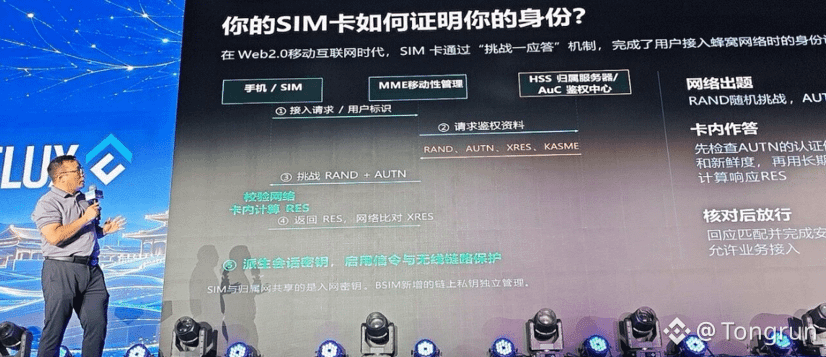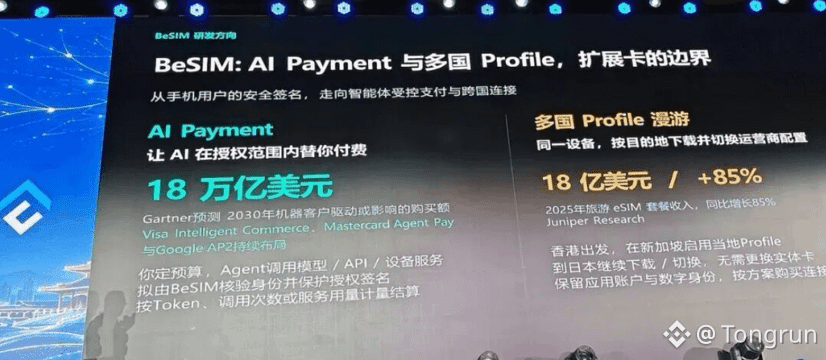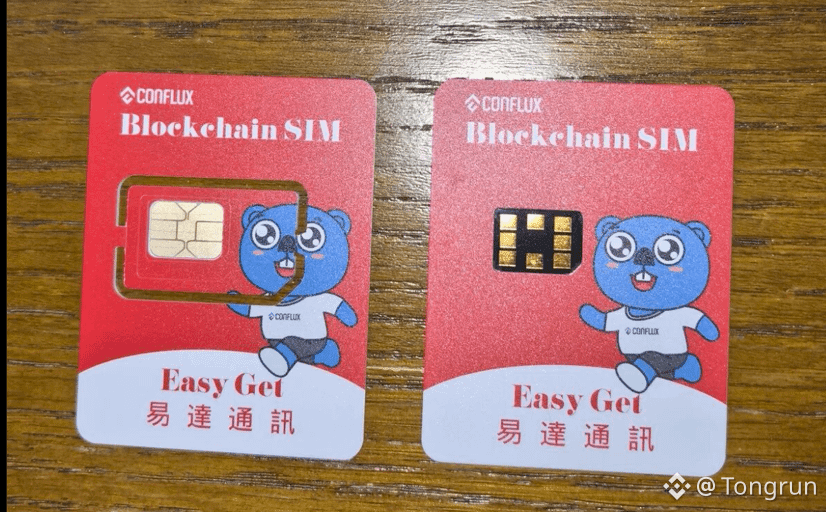
BSIM (Blockchain SIM) was jointly developed by Shudu and China Telecom. Its appearance is the same as a normal SIM, but it integrates blockchain account management into the card.
The three most important points are: 👇 👇
Hardware-level security Public/private keys are generated and stored inside the card. Transaction signing is completed in the chip, and the private key never leaves the card. Even if the phone is infected with a virus or targeted by a trojan, it becomes much harder to copy the keys.
More powerful Performance claims are: storage capacity expands by roughly 10–20x, and computing power increases by dozens of times. In addition to communication, it can also be used for encrypted storage, key recovery, and even integrated capabilities similar to a hardware USB key (U盾).
A compliant identity access point Your mobile number has been real-name verified. With the on-chain account established via BSIM, “operator real-name verification” can be matched with “on-chain identity,” making it more suitable for applications that must pass compliance requirements.
The significance for community partners is very direct: you remember fewer mnemonic phrases, install fewer plugins, and can access on-chain applications directly from your phone. If staking, transfers, and identity authorization are also made into one-click confirmations on the card side, then Web3 will truly shift from being a tool for geeks to an everyday feature. 👏👏
This is not about urging everyone to blindly go on-chain right away; it’s about expanding the entry point from “people who know how to use wallets” to “people who know how to use phones.”
The deployment timeline, coverage cities, and specific apps still need to follow the telecom operator’s announcements and official notices.
Source of materials: official media / online news. The content is for reference, learning, and交流 only. Please strictly comply with the laws and regulations in your location. This article does not represent any investment advice.
The three most important points are: 👇 👇
Hardware-level security Public/private keys are generated and stored inside the card. Transaction signing is completed in the chip, and the private key never leaves the card. Even if the phone is infected with a virus or targeted by a trojan, it becomes much harder to copy the keys.
More powerful Performance claims are: storage capacity expands by roughly 10–20x, and computing power increases by dozens of times. In addition to communication, it can also be used for encrypted storage, key recovery, and even integrated capabilities similar to a hardware USB key (U盾).
A compliant identity access point Your mobile number has been real-name verified. With the on-chain account established via BSIM, “operator real-name verification” can be matched with “on-chain identity,” making it more suitable for applications that must pass compliance requirements.
The significance for community partners is very direct: you remember fewer mnemonic phrases, install fewer plugins, and can access on-chain applications directly from your phone. If staking, transfers, and identity authorization are also made into one-click confirmations on the card side, then Web3 will truly shift from being a tool for geeks to an everyday feature. 👏👏
This is not about urging everyone to blindly go on-chain right away; it’s about expanding the entry point from “people who know how to use wallets” to “people who know how to use phones.”
The deployment timeline, coverage cities, and specific apps still need to follow the telecom operator’s announcements and official notices.
Source of materials: official media / online news. The content is for reference, learning, and交流 only. Please strictly comply with the laws and regulations in your location. This article does not represent any investment advice.